Sunday of the holiday weekend and I am feeling pretty good. I am up earlier than I would prefe, but it seems sleeping in later than six is something rare for me now and it’s okay; it gives me more awake time to get things done. I’m getting some reading done every morning when I get up, and yesterday I did do some chores, but tried to mostly relax while processing Victoria’s death. I also read a little bit, and mostly just tried to relax and gather my strength back. I have to run an errand today–a library book is ready for me, and I can swing by Fresh Market on the way home; oh, never mind, the library is closed for the holiday so that will have to wait until Tuesday after work, but I do need to go to Fresh Market anyway, maybe even wash the car while I’m on Louisiana Avenue. But I did get the bathroom and part of the kitchen under control and finished; so the downstairs looks a lot nice than it has since I fell ill, which is a lovely thing. I can finish it today and then work on the living room next, and maybe, just maybe, my house will finally be under control again and presentable and won’t make me groan with despair every time I walk in.
I also watched one of the few Hitchcock films I’ve never seen–mainly because it’s never been available before when I thought about watching: Suspicion, which stars Joan Fontaine (the only performer to win an Oscar for a Hitchcock movie, although she should have won for Rebecca and Anthony Perkins’ failure to be even be nominated for Psycho remains a hate crime) and Cary Grant. It’s based on the Francis Iles novel Before the Fact (of which I have a copy and have been assured it’s better than the film). It did make me think about a theory I have about domestic suspense and Gothics–that they are about women’s fears and therefore women’s noir of a type–and Suspicion is definitely one of those–does her husband–whom she catches in lies all the time and is kind of a bounder–love her or did her marry her for her money? (This is a very common theme in Victoria Holt novels, by the way, which I loved.) Something to write about for another time, methinks. The film itself was okay, and I am now more convinced than ever that Fontaine’s Oscar was a make-up for Rebecca, a far superior film in every way. (It may be time for my annual reread of Rebecca, in fact.)
I also read a bit more into Moonraker, which is fascinating in its casual misogyny, and it’s really hard-boiled attitude; as I said, Fleming’s Bond is so far removed from the Roger Moore/Timothy Dalton/Pierce Brosnan Bond that they may as well be different characters; Connery and Daniel Craig more captured the Fleming feel of the sociopathic killer/spy. The parallels between the villain in the book, Hugo Drax, and Elon Musk are so prescient as to make me wonder whether Fleming could see the future. More on that later, of course.
We finished watching Overcompensating last night, and it’s such a good show. It does an excellent job of depicting how terrifying it is to come out–to anyone and everyone–and how you wind up being a liar for self-preservation; I think all those lies is why I am so triggered by people calling me a liar these days, and I’ve never really seen this depicted in anything queer before–about how you can’t really be a good friend with people you can’t be honest with and have to lie to all the time. It really can’t be explained, but I still have a lot of shame from that time in my life, from when I was overcompensating and making an absolute fool of myself because no one was actually fooled and my true friends were delighted when I came out. The depression and faulty wiring in my brain certainly didn’t help.
And yes, I will always be grateful to those friends who were delighted.
I’m looking forward to relaxing some more today, to be honest. Paul has his trainer this afternoon, and when he gets home I am going to barbecue burgers and cheese dogs. Yes, I know you’re supposed to actually cook out on Memorial Day itself, but I’d rather do it today. I’ve been experiencing hunger a lot more lately than I can recall, and I am snacking on top of it all. I’ve been spending a lot of time looking at Door Dash to have something delivered, and I’ll probably pop that cherry next weekend. I’ve also been missing my mom’s cooking–her chicken and dumplings were sublime, and she made everything from scratch and from memory; her biscuits and gravy were to die for, and somehow she made the best pancakes I’ve ever had anywhere. I am going to make an easy chicken-and-dumplings recipe tomorrow; will definitely report back.
I am getting stronger every day, but I also still tire far too easily and am not even close to being back to 100% yet, which is fine. I just need to be patient–never my strongest suit–and let my body heal itself from the trauma.
And on that note, I am heading into the spice mines. Have a lovely Sunday, Constant Reader, and I may be back later; I hope to get my newsletter done today as well.
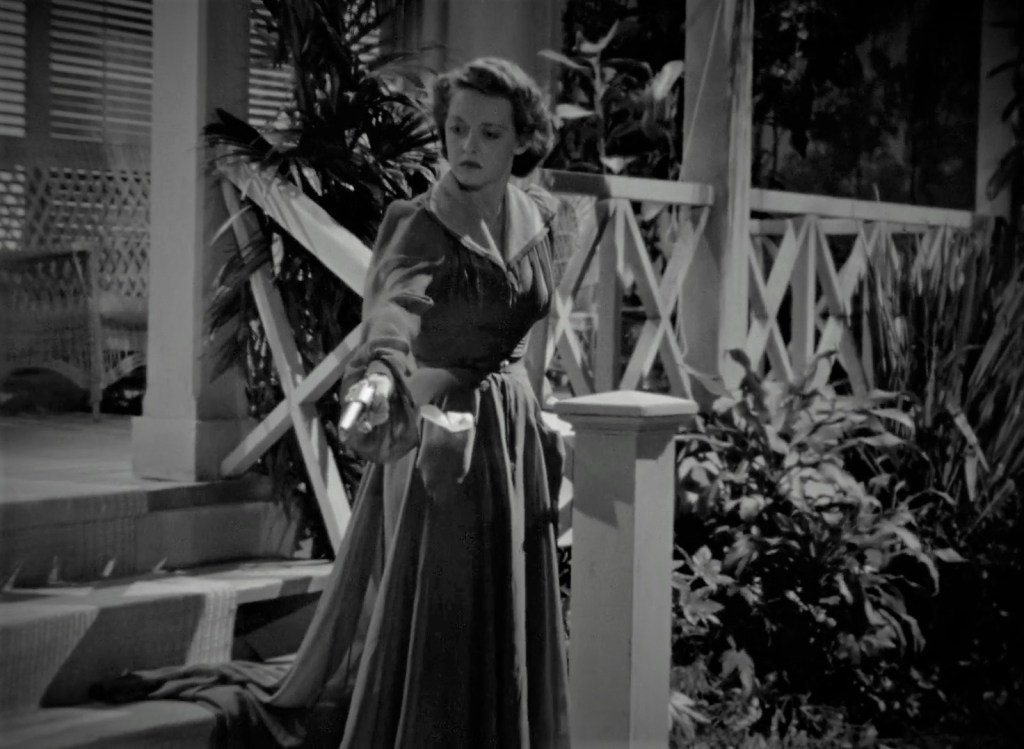
Bette Davis in the opening scene of her Oscar nominated performance in The Letter.
Saturday in the Lost Apartment, and a three day weekend, at that. Memorial Day weekend has some rough memories for me–this was the weekend of Paul’s attack and the loss of his eye–but it’s been over twenty years now at this point and that seems like that all happened to other people at this point, unless I dig too deeply into my memory banks. So, I just don’t dive too deeply into those memory banks and I am fine. But alas and alack, the Memorial Day curse has struck again; one of my oldest and dearest friends in the world, Victoria A. Brownworth, died and I found out yesterday evening. I am bereft and bereaved; I can’t believe I’m never going to get another email or phone call from her. Hell, I still haven’t written about Felice Picano’s death and what he meant to me yet, and now I have to do Victoria too? We were friends for nearly three decades; Victoria was one of the few people left who knew me when I was unpublished.
The worst part of getting old is losing people.
Dorothy, Felice, Victoria. What a horrible stretch of time since the election. So many early supporters of me and my career, now gone forever.
I think I need to wrap Jean Redmann in bubble wrap and protect her at all costs.
Yesterday was a decent day before I found out about Victoria. I did my work at home duties, ran an errand, and did some cleaning and organizing around here. I also ate a lot, more than I usually do, and was even snacking throughout the evening. We watched Fear Street: Prom Queen, which was sillier than scary, frankly, and then moved on to Overcompensating, which is cute and relatable and kind of funny; I’m sure it will get even funnier and relatable as the main character keeps burrowing deeper into the college closet. I also spent some time reading the three books I am currently reading: The Silver Ring Mystery by Helen Wells, The Get Off by Christa Faust, and Moonraker by Ian Fleming. I am going to do some straightening up around here, and definitely get the kitchen floor taken care of, but today I am mostly going to chill out and relax and read some more and get rest so my body can get past the trauma of this illness. (My blood work came back good; the specialist’s office called me yesterday to let me know that we’re all systems go for the treatment plan for after the steroid taper off–and I’ll be glad to be done with the steroids; I do not like the sudden anger and aggression they trigger.)
And maybe this weekend I can get back to writing. The blog has been helping, and I need to do a newsletter, but am not sure which one to finish. The one about Christianity needs a lot of work, as does the one about the Lost Cause Mythology. But maybe there’s something else in there in draft form I can finish up in the meantime? I have a lot of drafts….as always with everything, you know? SO many ideas, so little time…and I do need to rest.
We’ll see.
Have a lovely Saturday, everyone, and I’ll check in with you again, possibly later today–one never knows.
“We Are Family” is one of those songs from the disco era–the ones that still get played on oldies nights in queer bars and continues to live on. Obviously, it’s an iconic gay anthem–about our found families rather than the blood ones that so often want nothing to do with us–and it’s also really popular with sororities…at least it was back then. It’s a very joyful and uplifting song, lyrically, so it’s also fun to belt out at the top of your lungs. Disco was a really fun time for a gay boy in sparsely populated Kansas…it’s where my love of dancing really took off. The dance floor was, for many years, the only place where I felt free.
Yesterday was a decent day. We were very fortunate to not have any of that bad weather that was forecast, at least not here in the Lost Apartment. I’ve not checked on the storm toll throughout the rest of the South yet, primarily because I’ve not even finished my first cup of coffee yet. But I did see yesterday some horrific weather was happening throughout the South as the result of that storm cell yesterday, so I hope everyone got through it okay and is doing well this morning. Weather events are both terrible and terrifying. It’s kind of ironic that my current book I am writing is set during a weather event. But I feel rested this morning and I got up early (Sparky wasn’t quite as kind about letting me sleep later), and am about to start my second cup. I did okay yesterday. I was still mentally fatigued yesterday so wasn’t able to get a lot of creative work done, but managed some. I also did some chores and picked up around here, and walked to Walgreens in the morning to get butter, which I’d forgotten at the store on Friday (and I need a stick of butter for today’s dinner). Aside–Walgreens actually had stock. The one-two punch of Hurricane Ida and the pandemic dealt it a blow I didn’t think it was going to ever recover from; there were empty shelves everywhere, empty refrigeration cases, and you could never be sure they’d the one thing you needed–which happened more than once over the years since then. But I was very pleasantly surprised to see they had finally restocked, and they had things….not just the butter I needed but some other things I also needed and didn’t think they would have. NARRATOR VOICE: They did have those things, which was most pleasing to mine eyes.
This is delightful news–not quite “oh they opened a new Rouse’s in the CBD that’s actually on my way home” delightful, but it’s nice to know that I don’t have to get in the car to go get things necessarily anymore. I love when my life becomes more convenient.
I spent some more time with Moonraker yesterday, and it’s…something. There’s an unemotional distance in Fleming’s voice (he also uses the distant third person omniscient narrator style of writing, which I was trained so long ago not to use–I always use first or close third person, and it always surprises me when I read a legendary author’s work to find they use it), and there’s no sentimentality to it, either. The casual misogyny of the time is an eyeful, as well as the way Bond (and by extension, the secret service and the culture/society as whole) doesn’t really view women as people, but rather as almost ignorant children who need the guiding of a man). It’s also a good reminder that the Bond novels weren’t as over-the-top and tongue-in-cheek as the films1. The original novels definitely have a completely different feel from the movies, that is for damned sure. Fleming died around the time the first film was being made, so he never saw what Hollywood did to his characters and stories. I suspect he wouldn’t have cared much for them; the books are very cold. But it’s interesting to revisit it, and the similarities/prescience of Hugo Drax to Elmo Dusk are definitely eerie and make the book more compelling to read than it would have been a year ago.
Three out of four of the Lefty Awards last night went to friends–James L’etoile won Best Novel; Rob Osler won Best Humorous; and John Copenhaver won Best Historical–and two were openly queer writers writing about openly queer characters! Woo-hoo! The times, they are a-changing! There were also a number of other friends also nominated, so shout out to one and all the nominees and winners! Huzzah!
We did finish watching Running Point, which was a lot of fun and we greatly enjoyed it. We then watched the first three episodes of Adolescence on Netflix, which is disturbingly real. It opens with a 13 year old boy being arrested for the murder of a classmate, and the child is very definitely disturbed. We’ll finish that today probably, but I also have a lot of writing to do. We’ll see how everything goes.
And on that note I am heading into the spice mines. Have a lovely Sunday, all, and I’ll be back at some point.
Ayn Rand, in writing about “heroes” in film and novels, wrote about the early Bond films in an essay about art. I remember how much she loved Dr. No–really one of the only Bonds to be done as a serious film–and how much she hated Goldfinger.↩︎
Sunday morning where we’ve sprung forward (I hate Daylight Savings Time) and I feel off, like always when this happens. I’ve never cared for the spring part of it, but must admit I do enjoy the “extra” hour in the fall. I did go to bed early last night, and slept well–it apparently rained overnight, which undoubtedly helped with that. Of course, Sparky’s body clock didn’t change, so he wasn’t hungry enough to bother me until it was actually time for me to go ahead and get up, which was nice. (It’s this fall when he’ll annoy me early, isn’t it?) I have some things I need to get done today, which should be easy enough to do. I finished reading The Bell in the Fog yesterday (my thoughts are posted here) and really enjoyed it; and I am going to revisit an old Ian Fleming James Bond novel, Moonraker1next I think. I may read something new alongside of it, but I haven’t decided which yet. Revisiting the original Fleming Bond novels will also give me something to think and write about on the subject of toxic masculinity and sociopathy. (So many post-war “heroes” defined masculinity so narrowly–and dangerously; Mike Hammer, James Bond…and yes, reading The Bell in the Fog put me in mind of post-war crime fiction.)
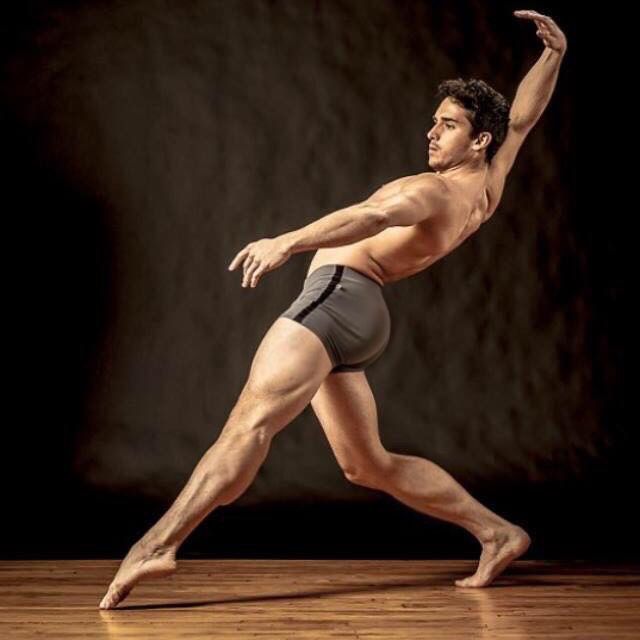
I am kind of working on a long essay–I have been since last spring, actually–about gay men and masculinity, and how societal norms and mores about them impact/twist our lives and makes it harder for us to just, I don’t know, be. I just read a great piece on the taboo of the male body that also plays into the paradigm I’m writing about. The societal reticence about the male body, and male nudity, is almost always centered on the groin area; you could depict a male completely nude as long as there was a fig leaf over the genitals. A lot of Renaissance paintings and sculptures at one point had “modesty leaves” placed over make genitals–and why is that? (Don’t even get me started on women…I’d be here for the rest of the year) Because whenever someone sees a limp penis resting on a pair of testicles they go mad with desire and sexual lust? (Although the way websites for gays drool and get “parched” over revealing pictures of influencers, actors, musicians, and other celebrities has always turned my stomach a little bit. I know, I know, but at the same time there’s something a little ‘junior high locker room” about that I find personally distasteful and almost cringe-y. Your mileage might vary and I am only speaking for myself. I enjoy looking at gorgeous men as much as the next gay man or cishet woman; I post one on here with every entry that isn’t about a book, movie or TV show. I like eye candy! There’s nothing wrong with it! I just feel the way the links and emails and so forth are shared, and the language used, is kind of juvenile and pandering and Tiger Beat-esque.)
You see how reading can influence my work? Lev’s got me thinking about writing queer historicals again–not that I was ever not going to write Chlorine, and I am hoping to get that done this summer or fall, finally–but the next book I am writing is Never Kiss a Stranger, which is also kind of a historical, since it is set in New Orleans in the summer of 1994. (An excerpt from it will be published in an upcoming anthology, which is very exciting for me. I also sold an excerpt from Chlorine recently also as a short story, so guess what, Constant Reader? You’ll be able to get a preview of both books soon! How fucking fun is that?) I often think of all the things I want to write–books, essays, short stories–and get overwhelmed because I know I’ll never get to them all before I expire. It doesn’t look like I will ever be able to retire now (fuck you again, MAGA, now and forever and ever, amen), so it really is going to be about managing my energy, being selfish, and being able to continue to write in my free time. It’s also going to make doing research no easier. Sigh. I am starting to resent all the volunteer time I’ve done over the last twenty years or so–not for Saints and Sinners, but pretty much everything else. I used to think I was making a difference, not only in the world but in various writing communities, but the truth is I wasn’t.
I’ve always wanted to make a difference in the world, and the reality is I should have realized that difference I could make would be best served from my writing, not from anything else. I think that comes from a lifetime of never taking myself seriously because no one else ever did. I did learn things about myself, the community, and other people from the volunteering; so that was something gained, and while I hardly consider myself to be a “sage” or even a “community elder” 2, I have been around a long time. I always thought I got started in publishing way too late, but the number of people who published their first novel before forty isn’t that long, actually. But that also means I’ve been doing this now for almost thirty years (I started writing for a queer paper in Minneapolis in 1996, and my how things have changed over the years. I also never really had any desire to be famous; sure, when I was a kid I fantasized about being a movie star or a singer (alas, couldn’t act or sing), but writing was what I always wanted to do, hungered to do, and basically that desire subsumed every other ambition or fantasy. I also never wanted to be a celebrity author, or have the kind of success others have. All I ever wanted was to just write and make a living from that. I don’t need to be rich; I’ve never needed that. I’d prefer to be comfortable, and never have to worry about bills and things.
But the thing with money and success is most people never think they have enough, isn’t it?
Look at Space Nazi, for example. Isn’t he about the right age to be a boy from Brazil?
And on that note, I am heading into the spice mines. Have a lovely Sunday, Constant Reader, and I will chat at you again soon, most likely tomorrow morning.
I saw a meme on-line that pointed out how dated Moonraker was–since it’s about a billionaire who moves to England and gets involved in the government with an ulterior motive… ↩︎
I can’t deny I am old, so therefore it stands to reason I am, in fact, an elder. But I don’t think I’m a sage at all. ↩︎
Masculinity is something I’ve always felt I viewed from the outside.
It’s very strange; for someone who doesn’t look back very often and has a rather healthy disdain for nostalgia, for some reason since the pandemic started, I’ve been revisiting my past a lot. I don’t know, perhaps it was triggered by having dinner with an old friend from high school a while back (which also inspired me to write a horribly dark short story); or perhaps it’s because of short stories or novel ideas I’ve been toying with, but lately, I’ve been thinking about my past much more so than I usually do, and what it was like for me growing up. I wrote a Sisters in Crime quarterly column several years ago about the first time I realized, once and for all, that I was indeed different from everyone else–it centered the first time I heard the word fairy used towards me as a pejorative, as well as the first time I was called a faggot. I’ve also been examining and turning over issues of masculinity inside my head for quite some time (most of my life). #shedeservedit was itself an examination of toxic masculinity and how it reverberates through a small community when it’s allowed to run rampant and unchecked: boys will be boys. Some short stories I’ve published have also examined the same subject.
What can I say? My not being the American masculine ideal has played a very major part in shaping my life and who I am; how could it not? I used to, when I was a kid, pray that I’d wake up the next morning and magically be turned into the kind of boy I was supposed to be, the kind that every other boy I knew–from classmates to cousins to everything I watched on television and at the movies.
Society and culture have changed in many ways since I was a little boy who didn’t fit so easily into the conformist role for little boys; roles for male and female were very narrowly defined when I was a child, and children were forced into conforming to those roles almost from birth. Boys were supposed to be rough and tumble and play sports and get dirty and like bugs and frogs and so forth; girls were supposed to be feminine and play with dolls or play house, wear dresses and mother their baby dolls. Boys weren’t supposed to read or enjoy reading (but I was also supposed to get good grades and be smart), and that was all I wanted to do when I was a kid. I used to love Saturdays, when my mother would go to the grocery store and drop me off at the library on her way. I loved looking at the books on the shelves, looking at the cover art and reading the descriptions on the back. I loved getting the Scholastic Book Club catalog and picking out a few books; the excitement of the day when the books I’d ordered arrived and I could go out on the back porch when I got home and read them cover to cover. I was constantly, endlessly, pushed to do more “boyish” things; I played Pee-wee baseball (very much against my will), and later was pushed into playing football in high school–which I hated at first but eventually came to love…which just goes to show, don’t automatically hate something without trying it. But yeah, I never loved playing baseball. I was enormously happy when we moved to Kansas and I discovered, to my great joy, that my new high school didn’t have a team.
One less traditionally masculine thing for me to participate in was always a bonus.
The things that I really wanted to do weren’t considered masculine pursuits, and as a general rule I was denied them as much as possible. My parents forbade me from reading books about girls–Nancy Drew, the Dana Girls, Trixie Belden–which, quite naturally, made me want them more (my entire life the best way to get me to do something is to tell me either not to do it or tell me I can’t do it…either always makes me want to do it). Oddly enough, when my reading tastes became more adult–when I moved from children’s books to reading fiction for adults–they didn’t seem to care that I was reading books by women about women quite so much as they did when I was younger; either that, or they gave up trying as they finally saw me as a lost cause–one or the other; I don’t know which was the actual case. Maybe my embrace of football in high school overrode everything else suspect about me. It’s possible. My family has always worshipped at the goalposts…and I kind of still do. GEAUX TIGERS!
I spent a lot of my early life trying to understand masculinity and how it worked; what it was and why it was something I should aspire to–and never could quite wrap my mind around it. The role models for men always pointed out to me–John Wayne, etc.–never resonated with me; I always thought they were kind of dicks, to be honest. The whole “boys don’t cry, men never show emotions, men make the money and the entire household revolves around their wants and needs” shtick never took with me, and of course, as I never had any real sexual interest in women…the whole “locker room talk” thing was always kind of revolting to me, because I always saw girls as people. It probably had something to do with the fact that I was more likely to be able to trust girls than boys; I had so many boys decide they couldn’t be friends with me anymore because at some point other kids calling me a fairy began having an negative impact on their own lives all through junior and senior high school (to this day, I’ve never understood this; why were we friends before, and what changed? It wasn’t me…I didn’t suddenly switch gears from butch boy to effeminate overnight) it’s little wonder I have difficulty ever trusting straight men…but in fairness, I have trouble trusting everyone. But I never quite understood the entire “boys are studs girls are sluts” thing, but I also never truly understood the dynamics of male/female attraction. Yes, I dated in high school; I dated women in college before I finally stopped entirely. And yes, I also have had sex with women, back then–but never really enjoyed it much.
In all honesty, I still don’t understand masculinity, at least not as it was defined in my earlier decades of life. I’ve never understood the cavemen-like mentality of responding with violence (no matter how angry I get, I never get violent); I’ve never understood the refusal to recognize that women are human beings rather than life support systems for vaginas and wombs and breasts; I’ve never understood the mentality that a man’s desires should trump (see what I did there?) bodily autonomy for women. No man has a right to a woman’s body, nor does any man have a right to tell a woman what she can or cannot do with her body. Maybe always being an outsider looking in and observing has something to do with my mindset, maybe my difference and always having mostly female friends most of my life is what shaped me into understanding these things.
I also mostly only read women’s books, to be honest. There are some straight male writers I read and admire (Ace Atkins, Bill Loefhelm, Michael Koryta, Harlan Coben, Chris Holm, Stephen King, Jeff Abbott and Paul Tremblay, just to name a few) but I really have no desire to read straight male fantasies that reduce women to caricatures and gay men, if they do appear, as stereotypes; but after I recently read I the Jury by Mickey Spillane, a comment someone left on my post gave me a whole new perspective on how to read such books from the 40’s 50’s, and 60’s; the perspective of reading these books as examples of post-war PTSD…and that opened my eyes to all kinds of questions and potential critical analyses; that the horrors of World War II and what the veterans saw and experienced shaped the development of the culture of toxic masculinity that arose after the war (not that toxic masculinity didn’t exist before the war, of course, but the war experience certainly didn’t help any and it most definitely reshaped what “being a man” meant). I was thinking about doing a lengthier critical piece, on I the Jury, along with the first Travis McGee novel, and possibly including Ross Macdonald, Richard Stark and possibly Alistair MacLean. There’s certainly a wealth of material there to take a look at, evaluate, and deconstruct–and that’s not even getting into Ian Fleming and James Bond.
I’ve also always found it rather interesting that Mickey Spillane was Ayn Rand’s favorite writer. Make of that what you will.And on that note, I am off to bed. The last two days have been long ones, and tomorrow and Sunday will also be long days. I’m planning on driving back to New Orleans on Sunday–timing it so I get back after the parades are over so I can actually get home–regardless of what happens here. It’s not been an easy time here, and I am very tired.
I did not want to get out of bed this morning. I didn’t sleep as deeply or restfully last night as I have been, but it was still a good night’s sleep–at least, one that wasn’t riddled with insomnia, so I’ll take it and be grateful. I mean, I don’t feel fatigued or anything. I’m still fighting this cold I caught in New York (the COVID tests have been consistently negative since my return, but I haven’t taken one this morning yet, either) which is miserable, and means I’ll probably continue masking at work. They lifted the masking requirement yesterday, which was kind of a surprise, but…making those kinds of decisions is way above my pay grade. I don’t know why people were so hateful and nasty about the masks, but I know I’ve kind of enjoyed not getting sick (other than COVID) over the last three years–which is why I hate this cold even more than I ordinarily would because I haven’t had one in three years.
Sigh.
I made more than quota yesterday, which was also nice–the deadline looms, which makes every word more important–and I hope to do so again tonight. I also managed to get some dishes done last night, some cleaning up around the kitchen, and even made dinner, which I rarely do on weeknights (mainly because Paul gets home so late, but yesterday was his work-at-home day, so he was here and it wasn’t an issue). I need to do some more dishes tonight and more clean-up/organizing around the kitchen. I have to do that signing event for two hours at ALA on Saturday at the Convention Center (which I keep forgetting about, like I keep forgetting about my doctor’s appointment tomorrow, which isn’t good or smart), so getting ahead of the game is better for me and I should take advantage of the writing being easy and write as much as I can when its flowing, right?
We also started watching Jack Ryan on Amazon Prime last night. I like John Kasinski, but have never been much of a fan of Tom Clancy’s. I did read The Hunt for Red October when it was the “it” book of the year, but didn’t much care for it and never went back to Clancy afterwards. It’s just not my thing. I preferred Alistair MacLean, to be honest–no one really talks about him anymore, but I read a lot of his canon; I think if there’s any one book he might be known for it’s either The Guns of Navarone or Where Eagles Dare. My personal favorite was the one whose name I cannot recall right now, but it was about a lifeboat full of people escaping Singapore in December 1941; their ship is torpedoed and sinks, and they are trying to make it to Australia. South by Java Head! I also enjoyed Circus and Bear Island. I’ve been meaning to revisit MacLean again now that I’m an older and more sophisticated (!) reader, just as I’ve been meaning to revisit Robert Ludlum (the actual Ludlum) in the last few years. I’ve also been meaning to revisit Helen MacInnes–her The Salzburg Connection is one of my favorite espionage thrillers (you can never go wrong with Nazis as your villains, seriously). I’ve also wanted to reread Ian Fleming for the first time since I was a teenager as well; I think I would appreciate the books more than I did then. Anyway, we weren’t terribly engrossed by Jack Ryan and I don’t think we’ll be continuing with it.
This morning’s COVID test is negative, as I had suspected and hoped, so I know this is just a cold. Is it annoying that I still have it? You bet your ass it is. I can’t believe I used to get colds and think nothing of it and just went about my day and business like it was nothing. Clearly, I am out of practice with being ill. I don’t think it’s just me, either; I finished off my DayQuil yesterday so it was on my list on the way home from work and they didn’t have much in stock–either DayQuil or NyQuil, and none of the extra strength kind I always use. Supply chain issues? One thing I’ve really been noticing over the last year or so is how empty the shelves in the grocery stores are, and things that I used to pick up regularly without concern sometimes aren’t there. I don’t know if this is a New Orleans issue–it really became noticeable after Hurricane Ida, and the stores here never have seemed to bounce back from having to toss all that food back then–or if it’s across the board, but it’s strange and one of those things that makes you wonder about how serious the decline of the American democracy actually must be. (It also goes to show how spoiled we are–do other countries even have supermarkets? They didn’t in the village in Italy we vacationed in all those years ago–and I never saw one in either Florence or Venice, but wasn’t looking either. Or is even thinking that part of American exceptionalism? It’s hard to know anymore.)
And on that note, I am heading into the spice mines. Have a lovely Tuesday, Constant Reader!
Tuesday and it’s back into the office with me today. Huzzah.
Yesterday I entered data until my eyes crossed, but I got everything caught up. I also, once I was finished with my work for the day, walked over to Office Depot and got some more organizational items to try to make the kitchen workspace–and the kitchen overall–better organized and pulled together. It’s better now–looking around at the space this morning it certainly looks better than the hot mess it’s been for quite some time–so that’s something, I think. I slept fairly well last night, so as I am slowly waking up this morning over my coffee I am thinking this looks pretty good around here this morning. I also decided that since it’s still Pride Month my reading should continue to be queer books, at least for this month, so I plucked John Copenhaver’s The Savage Kind out of the TBR pile (it did win the Lambda Award for Best Mystery this past weekend after all) and hope to start reading it this evening when I get home from work. I made a binder for “Never Kiss a Stranger” as well as ones for Chlorine and Mississippi River Mischief–which definitely helped getting loose piles of paper and file folders off the counter tops, and at the same time felt strangely like I actually was making some kind of progress, which is always enormously helpful with feeling like you’ve gotten some place, accomplished something.
I just feel like I’m not getting anywhere with anything these days, but my mind has really worked strangely over the past few years. My concept of time is completely altered–not that it was ever really strong to begin with, honestly–and I struggle with memory lapses; my memory doesn’t really work the way it used to, which is incredibly concerning, or used to be; it seems like everyone is having the same kind of problems, and it probably is pandemic/interesting times causing it for everyone that seems to be affected (of course, if this was a suspense thriller, some mad genius would have done something to trigger this in people around the world for their own nefarious purposes–you can tell I watched a James Bond film last night), but it still is distressing to say the least.
I am also glad I took the weekend off. I feel like it was absolutely necessary, and there’s a three day weekend coming up this weekend, which is really nice as well. I don’t think I’ll be able to take the entire weekend off again this weekend–certainly not all three days–but it’s a very pleasant thought, I must say, and I am looking forward to getting through the rest of this week so I can rest up this weekend.
Whine, whine, whine.
And yes, we did watch the final Daniel Craig as James Bond thriller No Time to Die last night. It was gorgeously shot, and Craig is much closer to the Bond Ian Fleming wrote about in the books so many decades ago (I was very young when Fleming died), and while watching last night I thought about the original thirteen Bond books that Fleming wrote all those years ago and how badly those stories have aged–and how little the movies based on them resemble the books. The book Live and Let Die was horrifically racist (I read it again a few years ago, since it’s been decades since I read them) and then watched the movie again, which is also bad in that respect. Live and Let Die was also the first Bond movie I saw in the theater–and parts of it were filmed/set in and around New Orleans, so that part of it has always been sentimental for me in some ways…but yikes. The stereotypes! And the Bond books themselves celebrated imperialistic colonialism–many of the books are set in Jamaica or other possessions of the British empire, and that oh-so-British sense of superiority is very present in the books. But No Time to Die was a perfectly adequate Bond thriller film; Daniel Craig is a commanding presence on the screen, even if the villain, played by Oscar winner Rami Malek (which prompted me to say, “Freddie Mercury would have made a great Bond villain”) wasn’t really developed enough to really hit hard as the bad guy.
Then again, are any of the Bond villains ever really developed?
But watching a James Bond movie, coupled with me reading The Great Betrayal about the 4th Crusade, has me in mind of writing a Colin thriller again–I could of course set it at any time, so it doesn’t necessarily have to be current; the lovely thing about a Colin series is I could literally go back and set them in and around Scotty books, which would/could be very fun to do–but I am just not so great about writing action, I suppose–and thrillers are a lot of action, from beginning to end. I also don’t know enough about guns, really–how can I write about a gunfight or being shot at, or shooting back–but it could be fun….I already know the opening scene (set in 1204, as the city is on the brink of falling; the Patriarch of the Eastern Orthodox Church calls in a couple of warrior priests to smuggle something to safety, and that something is the MacGuffin the entire story turns on: the Pope/Rome wants whatever it is, and the Patriarch would rather burn in hell than let what he considers the Roman heretics have it) and I also know what the first chapter would be–Colin rescuing a politician’s daughter from the terrorists who kidnapped her–and then we would get into the MacGuffin/treasure hunt, with of course the Vatican being the bad guys (seriously, only Nazis make better bad guys than the Vatican) and all kinds of fun stuff.
Someday, perhaps.
And on that note, tis time for me to get back into the spice mines. Have a lovely Tuesday, Constant Reader.
Well good morning, Constant Reader, and I hope your Saturday is off to a lovely start. I actually missed blogging yesterday–I had started the entry, but wasn’t able to finish before I had to start my work-at-home start time, and by the time I was finished for the day, it was time for the gym, and somehow I never got back here to finish. Deepest apologies, Constant Reader.
It’s chilly this morning in the Lost Apartment, but the sun is bright and shining and it looks absolutely beautiful outside this morning, which is kind of cool. I don’t have to leave the house all weekend other than the gym tomorrow, which is lovely, and I’m hoping to get some good work on the book done today. The last two days I was low energy and unable to think about getting much done, let alone do anything, so today I really need to press my nose to the grindstone and push myself to get back on track. Chapter Eighteen is proving a very tough nut to crack, but I am very pleased with the book (for a change) and am looking very forward to getting back into the groove with it.
LSU’s final game of the football season is today, against Mississippi (I refuse to call them ole miss anymore) and this can go either one of two ways: the Tigers can show up ready to play, for each other, Coach O, and the fanbase; or they can be cocky and overconfident after the Florida win, and get punched in the mouth. I’ll be watching, laptop in my lap, under my electric blanket (honestly, last night I honestly felt that human evolution, progress and civilization all culminated in the invention of the electric blanket), and hoping for the best. It’s a rivalry game called the Magnolia Bowl, and Mississippi hasn’t beaten LSU since 2015, so you know they’re hungry under their new coach, Lane Kiffin. LSU loses and they have their first losing season since 1999; win and they finish 5-5 in a crazy season.
But whatever happens, nothing can take away that win over Florida and ruining their season last weekend, which I am just petty enough to really enjoy.
We finished watching The Flight Attendant Thursday night, and the final episode was perhaps the best one of the entire run; as I have mentioned before, Kaley Cuoco is quite charismatic and likable, like Jennifer Aniston, and even though her character is primarily not very likable, she always is, and that’s an important quality for an actress…although I am rather curious about their flight schedules, because unless things have changed, I don’t think flight crews would work Rome flights as well as Bangkok. There was also a really convoluted secondary subplot that apparently only existed as a reason for one of the other flight attendants to have a gun which he needed to have, in the season finale (it was an incredible length to go to avoid the appearance of contrivance, actually; one almost has to respect the authorial commitment to it), but all the main story was properly wrapped up by the end of the finale, and there was even an opening left for a continuation of the show–also not probable, but it was kind of a nice bow tied up on the final package.
And of course, last night was the conclusion of The Mandalorian. No spoilers, but it was a pretty epic way to end the series, and I am really looking forward to The Book of Boba Fett. I think the series is now officially over–they certainly tied everything up neatly and concluded the story of the Child and Mando–and that pleases me if it is the case; the show was absolutely perfect, and as someone said on Twitter last night, “The best Star Wars movie is The Mandalorian” and I cannot disagree with that sentiment.
It’s hard to believe Christmas, frankly is next week; but this entire year has been a weird one, time has seemed to drag more than any other time, while at the same time it’s almost a relief to have made it this far. 2020 was a deeply unpleasant year, but there were some bright spots. I see everyone doing their “best of 2020” lists and I frankly can’t remember what I’ve watched and what I’ve read, other than I enjoyed almost every bit of it. I had long dry spells where I didn’t write anything, and long spells where all I wrote was the first 500 to 1000 or so words of short story before being stopped dead in my tracks. I still need to get this book revision finished so I can finish my story for the MWA anthology submissions deadline. This final part of the book is the hard part, so I suppose it’s not a surprise that it’s kind of kicking my ass.
This week was a double-feature for the Cynical 70’s Film Festival, beginning with The French Connection, an Oscar winning film (including Best Picture, Best Director, Best Adapted Screenplay, and Best Actor for Gene Hackman) which doesn’t, I’m afraid, play well through a modern lens. I can see why the film was so impactful and impressive back in 1971, but now it plays like a lesser episode of NYPD Blue or Hill Street Blues. It was a gritty, dirty, almost documentary-like movie about a drug investigation, based on a book about a real drug bust–with the cops’ names changed to protect them. Gene Hackman is terrific as Popeye Doyle; Roy Schieder is equally good as his partner..but all I could think as I watched was, “well, that’s a violation of their civil rights” or “ah, nothing like glorifying police brutality” or “well, that entire scene was a fairly accurate depiction of racial profiling.” Popeye is an unashamed racist; the n-word pops up every now and then, and of course ethnic slurs abound–Little Italy is referred to as “Dagotown”, there’s some anti-Semitism, and of course, the French are referred to as “frogs”–but it does also have some great moments: the chase scene involving Popeye trying to catch a fugitive on an elevated train was pretty impressively shot and edited. Hackman is terrific in the role, even if Popeye is the kind of cop who would think nothing of killing a suspect in his custody….The French Connection ultimately is a pro-police violence film that tries to justify the behavior of cops who violate civil rights and are violent and abusive as necessary, and that, to me, is problematic. As far as awards go, among the films it beat out for the Oscar are The Last Picture Show (which is one of my favorite movies of all time), Fiddler on the Roof (the kind of big-budget, lavish musical that would have won the Oscar a few years earlier), Nicholas and Alexandra (another big budget extravaganza I started watching but quickly got bored with–and would have been a shoe-in for Best Picture in the 1980’s) and of course, Kubrick’s A Clockwork Orange.
Second up was the 1974 film version of Ian Fleming’s Live and Let Die, which was the eighth Bond film and the second novel in the series. It’s also one of the few Bond films I ever saw in the theater, and was my first Bond film. It was Roger Moore’s first outing as Bond, and it was also when the tone and tenor of the Bond films switched, IMHO–I’d have go back and watch the Connery ones again to be certain. But while Connery occasional got off the clever quip or one-liner, the films were very serious and almost grim; Moore had more of a comic sense of the character and with him in the role, the character became more cartoonish and the films more outlandish (Moonraker was completely absurd) and there are many moments in Live and Let Die where, if you think about them too long, don’t make sense: how did he know to bring a deck of tarot cards with him in which all the cards were “The Lovers,” and where did he get that deck in the first fucking place? (And this doesn’t even take into consideration the fact that he basically manipulated Solitaire’s belief in the cards to get her into bed–which is rape because she was deceived into giving consent, PROBLEMATIC) There are any number of these contrivances in the plot of the film; but at the same time Live and Let Die also gave cinema it’s first Black Bond Girl, Rosie Carver (played by Gloria Hendry) and Bond’s first interracial romance, as well as the series’ first Black villains. The movie isn’t nearly as racist as the book–but it’s not exactly an achievement the Bond series should be proud of, either. But it gave the under-appreciated Yaphet Kotto a good role as Prime Minister Kananga, and introduced Jane Seymour to the world. I think I may need to read the book again–I should revisit the original Bond series, really–but one thing about Live and Let Die I do appreciate is that parts of it were filmed in New Orleans and along Bayou Des Allemandes; Louisiana looks beautiful, as does the Quarter–and this is one of those early influences on my youthful mind where I first felt the pull of New Orleans and Louisiana.
But it also boasts one of the best Bond theme songs, by Paul McCartney (or rather, Wings); it was the first time a pop band was selected to do the theme song, and it was the first Bond theme to be nominated for an Oscar for Best Song.
Yesterday I got my copy of The Man Who Invented Rock Hudson: The Pretty Boys and Dirty Deals of Henry Willson by Robert Hofler in the mail yesterday, which is the final piece (or one of the final pieces) of Chlorine background research I need to get started on the outline/plotting. My main character is a pretty boy with not much discernible talent who has a Henry Willson-like agent, whom he shares with the murder victim; I have to say the entire story of Willson, his pretty boy clients and their sexuality, endlessly fascinates me, and I am really excited to be writing a period piece gay Hollywood noir–well, eventually, at any rate. I started dipping into the book some last night and am enjoying it thoroughly. I also got a copy of Lawrence Block’s anthology From Sea to Shining Sea, which is crime stories inspired by ‘great American paintings’, and am really looking forward to digging into that. I also got a copy of Night Terrors: The Ghost Stories of E. F. Benson, because you can never have enough ghost stories around to read.
And on that note, I have some laundry to fold, a dishwasher to unload, and writing to do–so if you will excuse me for a moment, Constant Reader, I am going to head back into the spice mines.
I often talk about how my education in the classics is sorely lacking; this applies across all spectrums and all genres. I was in my thirties when I began to appreciate John D. MacDonald, for example; I didn’t start reading Ross MacDonald until I was in my forties. There are any number of classic works of fiction I’ve not read, and I am sorely under-read in my own genre. I am trying to rectify that as I age; it’s, like almost everything else I do, a project.
I am not nearly as well read in spy thrillers as perhaps I should be; I certainly went through a Robert Ludlum phase (although I am not entirely sure that’s where Ludlum belongs–only rarely are his main characters, at least in the volumes I’ve read–actual spies), and over the last decade I’ve started reading Eric Ambler. I also gave, back in the day, both Helen MacInnes and Alistair MacLean a whirl; and of course, I’ve read some Ian Fleming–but not all. (I really want to reread Live and Let Die to see if it’s as racist as I remember; I also want to rewatch the film again–and not just because a lot of it was filmed in Louisiana; I want to see if the book’s racism carried over into the film, which I strongly suspect it did)
So, John Le Carre. I’ve never read his books nor seen anything adapted from one of them (other than the wonderful The Night Manager starring Tom Hiddleston; highly recommended, and now I need to read the book), but of course I’ve heard of him. His most famous book is probably The Spy Who Came In From the Cold, and I acquired a copy of it from somewhere at some point. I recently decided to give it a read–my attempt to improve my education in crime classics at work–and I finished it this morning.
The American handed Leamas another cup of coffee and said, “Why don’t you go back and sleep? We can ring you if he shows up.”
Leamas said nothing, just stared through the window of the checkpoint, along the empty street.
“You can’t wait forever, sir. Maybe he’ll come some other time. We can have the polizei contact the Agency: you can be back here in twenty minutes.”
“No,” said Leamas, “it’s nearly dark now.”
“But you can’t wait forever; he’s nine hours over schedule.”
This is how the book opens, and it does draw the reader directly into the story; the action is already underway, and LeCarre masterfully choses this method–entering the story in progress, with dialogue–to draw the unwary reader into the story. The use of polizei and the year it was written gives the clue that this is very likely occurring in Germany, and most likely the divided city of Berlin. Alec Leamas, a British agent, is the main character of the story, and one of his spies on the other side–East Berlin/East Germany–has had his cover blown and is trying to make his escape to the west. As Leamas watches, the mission fails spectacularly and his final agent on the other side is shot to death by guards as he tries to make through from east to west. Leamas is tired of spying, tired of betrayal, tired of dealing with the worst aspects of international espionage and how it exposes the smallness of most people on either side of the capitalism/communism divide; he is alsi very tired of deaths that eventually mean nothing in the long run. Agents are merely pawns of their states, expendable and disposable. Brought back to England, he is informed that his counterpart in east German intelligence, who has been killing off his agents left and right, must be brought down, and his final job for British intelligence will involve deep cover and a plan that will inevitably lead to the Communists bringing their master intelligence agent, Mundt, down on their own as a traitor.
The Berlin Wall came down during my lifetime; 1989 to be exact, and its construction began the week before I was born. The division of Germany into two halves–one a democracy, the other a Communist autocracy–occurred after the utter defeat and collapse of Nazi Germany in 1945. The Berlin Wall was itself a symbol of the ideological divide between east and west; the cold war itself a world-wide struggle for hearts and minds that didn’t always go so well for the west–primarily because of the West’s determination to uphold Fascist dictatorships that violated the freedoms of its citizens repeatedly as bulwarks against Communism. It’s been thirty-one years since the Wall came down and Communism collapsed in most of the world, and there are at least two generations of Americans who have grown up without the the constant threat of the mushroom cloud’s shadow–yet the right’s constant portrayal of the left as communist/socialist/enemies of American freedoms and liberty persists to this day, and there are any number of American voters still alive (and voting) who will knee-jerk reflexively react to anything being labeled socialism or communism. The Republican party began their decades-long policy of red-baiting during the Truman administration, initially behind the demagoguery of Joseph McCarthy of Wisconsin. Nixon was an acolyte of McCarthy’s (which should have been enough to disqualify him from public office thereafter); and it was under Nixon that the right began its gradually lurch toward authoritarianism which we see bearing fruit today.
The Spy Who Came in From the Cold is dramatically different from any other “international espionage/intrigue” spy novel I’ve read to date–and while LeCarre despised Ian Fleming’s work and often stated that he wrote his novel in reaction to the popularity of the Bond novels, the same moral ambiguity permeates both. Both Bond and Leamas are merely doing their jobs in both, and neither is particularly vested in ideology or politics or even nationalism. They are simply professionals, doing their jobs. LeCarre’s novel isn’t very action-packed, but it is written stylishly, and the suspense comes from whether or not Leamas will prevail in his task of bringing down an important figure in East German intelligence. Once the book got going-after an admittedly slow start–I simply couldn’t put it down, and now I am definitely interested in reading more of LeCarre’s fiction. It’s extremely well done, deeply cynical, and there are twists and turns that not only come as complete surprises–but really, shouldn’t have.
Hey there, Saturday! It’s gray and raining here in New Orleans, which explains why I slept so deeply and well last night–there’s really nothing like the sound of rain to put me to sleep. (I wish it would rain every night, quite frankly.)
I didn’t write at all yesterday. After I finished work I went to the gym and did my workout, then came home and was quite tired, both physically and mentally. I repaired to the easy chair with a bottle of Sunkist (I’m trying to reduce my caffeine by not drinking as much Coke, but I also like sugary fizzy drinks, so non-caffeinated Sunkist works just fine as a substitute; I am also considering 7-Up) and switched on the television, going into a loop of Ted Lasso reviews, clips, etc. Everyone is already starting to prepare their Best of the Year lists, and I wish that I could do the same, but trying to remember 2020 isn’t particularly easy. I know I didn’t read as much as I usually do, and most of what I did read I’ve forgotten already–even forgotten that I read them, to be completely honest. I also really can’t remember much of what I watched on television or what films I watched or what short stories or documentaries or movies. But Ted Lasso continues to stand out for any number of reasons–it also helps that I regularly recommend it to people who then wind up loving it as much as Paul and I did. I know a book I read early in the year–Elizabeth Little’s Pretty as a Picture–is making a lot of Best of lists; I read that before the pandemic shut down when the world changed, and literally, it seems like it was a million years ago when I read it.
Then again, I also don’t limit myself to things that came out during the calendar year when I make a best-of list; my list is the best things I read or watched during the calendar year, regardless of when they were actually released. My list, my rules. So, at some point I guess I will go through my blog entries and find the things I enjoyed enough to talk about on here, and will thus pull together a list of what I enjoyed most in 2020. (I know that television is going to be a three way tie between The Mandalorian, Schitt’s Creek, and Ted Lasso–and I am also going to have to come up with a foreign-language television so I can mention Dark and Elite and Toy Boy.)
Today I plan to write all day–or most of it–around doing household chores and so forth. There’s literally no need to turn on the television and watch football–although as a diehard LSU fan I’ll have to tune in to the horror that will be the Florida game tonight–and so I might as well take as much advantage of a free-from-football day to write and get caught up on the book. Two chapters a day this weekend will take me to Chapter 21, with only five left in this draft, which will–again, as I have reiterated over and over–give me some down time to let it rest before going over it one last time before turning it in. I am also very excited about the prospect of getting back to work on the Kansas book one last time before turning it in and calling it a day on it as well.
I also want to spend some time reading The Spy Who Came In From the Cold. John LeCarre is widely considered one of the greats when it came to spy novels–or whatever the genre is called–and while it has been quite some time since I read Ian Fleming, Helen MacInnes, Robert Ludlum, and Alistair MacLean, I am very interested in reading LeCarre. The first few chapters of this book haven’t exactly grabbed me, but I do appreciate the writing. One of the things I love the most about the mystery genre is there are so many fascinating and interesting subgenres–the broad spectrum of what is routinely considered mystery fiction is quite vast; everything from traditional mysteries to romantic suspense to police procedurals to international intrigue. (I also want to finish it so I can move on to the new Alison Gaylin, and I also have the new Lisa Unger–and I think I have the new Ivy Pochoda as well) Spending the rainy morning reading really sounds like a lovely way to spend the morning, does it not?
Yesterday I watched The Ruling Class while I was making condom packs for the Cynical 70’s Film Festival. The film hangs entirely on yet another award-worthy performance by Peter O’Toole as the fourteenth Earl of Gurney, who is completely insane–and yet because of the terms of his father’s will (his father was into auto-asphyxiation, which finally went terribly wrong and he hung himself while wearing a military jacket and a tutu) the entire estate is his–and any attempt to break the will means everything will go to a charity. So his vile family cooks up a scheme to get him married and produce an heir, after which they will promptly have him committed. It’s a satire, and occasionally the cast will suddenly break into song-and-dance; which was disconcerting the first time it happened, but after that I went with it. Coral Browne–most famous for playing Vera Charles to perfection in Auntie Mame–is also a standout here as his grasping aunt-in-law; she really should have had a bigger career. When we first meet the new earl he thinks he’s God and insists on being called “J.C.”–and as the family continues to try to either cure him or have him committed, O’Toole could easily have started chewing the scenery and gone over the top; yet he is remarkably restrained and completely believable in the part. He was nominated for an Oscar (losing to Marlon Brando in The Godfather), and deservedly so; his great misfortune as an Oscar contender was to always be nominated against performances that became legendary. The film is quite a send up of the British class system and how it rotted and how it really didn’t make sense from the very beginning–noblesse oblige, indeed, and yes, cynical. It would be interesting to see how a remake/reboot could work, with one of our fine British actors of the present day in the role–but I also can’t see how anyone could ever outdo O’Toole.
And now, I am going to repair to my easy chair with John LeCarre, get under my blankets and hope that Scooter joins me for some kitty cuddling–if he hasn’t gone back upstairs to bed with Paul. Have a lovely Saturday, Constant Reader!






 Queer and Loathing in America