Saturday morning in the Lost Apartment and all is well. I slept incredibly last night. I woke up at seven and stayed in bed relaxing in a half-sleep for another hour or so, and finally got up when Sparky woke up and decided he was hungry. He was delayed this morning–and was very calm and cuddly and sleepy yesterday–because of the vaccines he got yesterday, as well as the shock to his system of leaving the apartment. He likes his carrier–he’ll go in there on his own, and Paul often tells him to go get in the crate when he’s having Big Kitten Energy, which he does–but he finally started meowing yesterday when we took him outside in the crate. He’s never meowed before, only chirped, which worried me a bit…but now he’s done it so I guess he only meows when he’s unhappy. His nails were trimmed (which he also didn’t like this time), but we brought him home to be a sleepy, cuddly sweet kitty for the rest of the night. We also went to Costco yesterday, which was nice and a little tiring. We watched Skate America last night (ladies and pairs short programs) and of course, today is a football all day kind of day. LSU plays at Arkansas tonight, and of course Alabama-Tennessee is this afternoon’s game. I am going to take books to the library sale this morning and go to the grocery store today before I come home to watch games for the rest of the day. There’s also some cleaning I can do around here this morning, too. Yippee!
I’m also going to read some more of Gabino’s book this morning; I read some while Sparky and Paul were with the vet yesterday and I just love the way he writes, in this interesting combination of Jim Thompson crossed with some John D. MacDonald but heavily flavored and filtered through his own remarkable talent in a unique voice that is entirely his own. It’s very rare to come across a writer with a voice and style so strikingly original, and the pacing is ethereal but also fast at the same time. I loved his last book, and I am absolutely loving this own. Next weekend I’ll be heading up to Kentucky to see Dad for about a week, so I can listen to another horror novel in the car (maybe Shadowland by Peter Straub, which I’ve not read before. I can take the paperback with me if the audio book is too long for a twelve hour drive; I actually just went to Audible and got Nick Cutter’s The Troop, and saw that I had a Riley Sager already downloaded, so that’s the trip up and back sorted. I also got the Straub), and I can take some horror with me to read. I’ll make shrimp tempura for dinner tonight, and am kind of torn about making chili or not tomorrow, but will probably go ahead and do so; I may even make it over night so tomorrow morning I can just get up and put it in the refrigerator. That’ll sort my lunches for the week, methinks.
I also managed to get the majority of the dishes done yesterday, no small feat I might add. That’ll teach me to be lazy when I get home from work every day, won’t it? It seemed endless, and I was also doing the bed linens at the same time as well as unpacking Costco and putting everything away; the living room is, even now, filled with empty boxes that need to go out this morning. I need to revise that short story and start working on another one for the Bouchercon anthology open call; I picked out the story just have to finish it now, which is also no easy chore. But today is an official day off from everything other than relaxation, reading and some cleaning around the house. I’ll try to reread the story I’ve selected; I just need to remember to channel my rage at developments in the neighborhood and on my street–this is one of the reasons I love being a writer, petty revenge on people who’ll never even know they inspired me to kill them in fiction–and retrieve that voice from deep inside my head. I think one of the problems I’ve had with some of the stories I’ve been writing lately is I’ve been too lazy to write about people the way they really are, instead of an idealized character who is logical and rational and then simply snaps. It’s that breakdown of going from law-abiding to murderous that I live to explore–it worked really well in “Neighborhood Alert”–but in some of the noirish stories I’ve been trying to write and sell since the pandemic they come across as too cheerful; bitterness and rage is what drives my stories, and the tone and voice need to reflect that.
Tone and voice are key to whether your story works or not.
And on that note, I am heading into the spice mines. Have a lovely day, Constant Reader, and I’ll check in with you again later. GEAUX TIGERS!
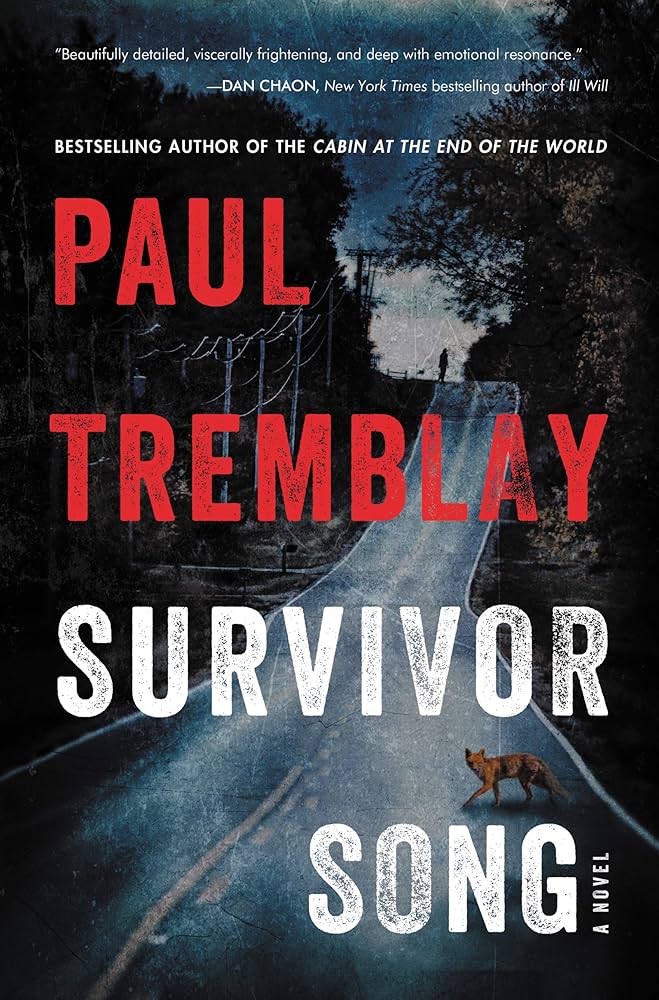
Paul Tremblay has managed to turn himself into one of my favorite authors currently writing horror; I can’t think of a single novel of his that hasn’t been utterly fantastic, or that I haven’t enjoyed. He manages to make his characters absolutely real–with flaws and hang-ups; so much that sometimes you want to shake some sense into them–and the situations they find themselves in, while certainly horrific, are realistic. That, of course, is what makes the so horrible and terrifying; it’s easy to see yourself in his characters and stories. I also love his writing style; there’s something lyrical and poetic about his sentence construction and word choices, creating rhythms that make the words kind of sing in your head.
I wasn’t sure if I should, in that case, listen to one of his novels as an audiobook–would that musical sense of language carry over?
I needn’t have worried.
This is not a fairy tale. Certainly it is not one that has been sanitized, homogenized, or Disneyfied. bloodless in every possible sense of the word, beasts and human monsters defanged and claws clipped, the children safe and the children saved, the hard truths harvested from hard lives if not lost than obscured, and purposefully so.
Last night there was confusion as to whether turning off the lights was a recommendation or if it was a requirement in accordance with the government mandated curfew. After her husband, Paul, was asleep, Natalie relied on her cell phone’s flashlight in the bathroom as a guide instead of lighting a candle. She has been getting clumsier by the day and didn’t trust herself to casually carry fir through the house.
It’s quarter past 11 a.m. and yes, she is in the bathroom again. Before Paul left three hours ago, she joked she should set up a cot and an office in here. It’s first-floor window overlooks the semi-private backyard and the sun-bleached, needs-a-cost-of-stain picket fence. The grass is dead, having months prior surrendered to the withering heat of yet another record-breaking summer.
The heat will be blamed for the outbreak. There will be scores of other villains, some heroes too. It will be years before the virus’ full phylogenetic tree is mapped, and even then, there will continue to be doubters, naysayers, and the most cynical political opportunists. The truth will go unheeded by some, as it invariably does.
To wit, Natalie can’t stop reading the fourteen-day-old Facebook post on her town’s “Stoughton Enthusiasts” page. There are currently 2,312 comments. Natalie has read them all.
This was a book I didn’t want to read at the time of its release; and I am kind of glad I waited to get into it for a few years; while I was certainly reading a lot of plague fiction in the summer of 2020, when this book was released, the thought of reading something new about a plague whilst in the midst of one seemed–I don’t know, too real for me? The older stuff I revisited, both fiction and non, were things I had already read at some point in my life and therefore couldn’t be applied to the quarantine situation we were experiencing at that time. Of course, four years later, my own time-line is kind of fuzzy and off; it was a disorienting time, and it clearly broke the brains of a lot of people. Reading (listening) to the book four years later–without access of any kind to the pub date of the book, which I couldn’t remember in the car–I thought, wow, he really captured the insanity of the quarantine AND how people would react to it, so you can imagine my surprise to see it actually was written and already moving through the publishing pipeline for release before the pandemic began, which is frightening how eerily prescient Tremblay’s book actually is/was. (Although, imagining the right launching into conspiracy theories and blowing off quarantines and safety precautions and arming themselves–is it that prescient?)
The pandemic/plague in Tremblay’s book is a highly infectious, rapid onset variant of the rabies virus–so animals get it and become dangerous, and the infections can spread to humans. Once bitten or exposed, the human doesn’t have long before the virus takes over and leads, after a mad frenzy of attacking anyone or anything, to a painful death. Natalie and her husband Paul are coping with the quarantines, the breakdown in supply chains, the shortage of necessary supplies; a trip to the grocery store, never more than an hour to and from, including the shopping, can now take up to or more than four hours, as she is finding out that morning as she waits for him to come home. She’s in her ninth month of pregnancy, and that’s what she primarily focuses on, like most normal people do. Unfortunately shortly after Paul comes home, an infected man breaks into their house, kills Paul, and manages to bite her in the arm before she can finally kill him and escape. Natalie calls her best friend and college roommate–a doctor named Ramola–for help.
Ramola comes to pick up her friend, and the rest of the novel is the two women desperately trying to get to a hospital to try to get her treatment as well as a c-section to deliver the baby in case the treatments don’t work. It’s a race against time, and the suspense ratchets up to a unbearable level, as the two women–and everyone they encounter–encounter difficulties and roadblocks, not sure who they can trust and who they can’t, as they try to save both mother and child. Tremblay also takes the opportunity, whenever it arises, to chastise the anti-science movement in this country (which was saw in force that summer of 2020) for it’s radical views and beliefs that endanger everyone because of their own selfishness; again, was that prescience or simply the obvious conclusion to make? Even Ramola and Natalie, in their desperation, sometimes act in an incredibly selfish manner to achieve their own ends that makes me want to shake them both–which is another terrific insight on human behavior; we will always put our own individual needs ahead of the abstract “group” needs.1
It’s a very good book, and like the best fiction, it make me think. A lot, not just about American privilege and selfishness, but about dystopian fiction and disaster-type novels like this–which will inevitably become a Substack essay at some point.
Definitely recommended.
This is something that often irritates me in these types of novels; leaders in these books will inevitably always put their own selfish needs ahead of those of the group (looking at you, Cell). ↩︎
Sunday morning, and all is well in the Lost Apartment.
I woke up early this morning and, remembering, thought it might have been a dream, but no, a quick glance at the Internet told me it really did happen–Alabama did lose to Vanderbilt yesterday, 40-35. Hell, Arkansas came back to upset Tennessee last night while we were were watching ‘salem’s Lot (more on that later). What in the world was going on in college football yesterday? Admittedly, insane days like yesterday (Washington even went to Michigan and won. What the holy hell is going on this year?) are what make college football so fun to watch and experience as a fan; and I think 2024 might just be one of those insane “reset” seasons where everything goes out the window. Vanderbilt beating Alabama1 just two weeks after losing to Georgia State–another Vandy embarrassment–and now the concept of hope has shown up for the hapless Commodores; if they can beat an Alabama team, on any given Saturday, the ‘dores could beat anyone. Absolutely wild. I was watching a different game–I don’t even remember which this morning–when I saw that the score was 13-7 in the second quarter, Vandy leading, and I thought, what the hell and switched over to that game, and both Paul and I watched in stunned bemusement, riveted until the clock ticked to zero and the Vandy fans rushed the field, tore down the goalposts, and carried them three miles to throw them into the Cumberland River. I can only imagine what it was like to be a Vandy fan watching all of this yesterday.2 I do pity the new Alabama coach; he’s got a hell of a week to get through before next weekend’s South Carolina game (LSU comes back from the bye week to play Mississippi next week at home; the Rebs trounced South Carolina yesterday), but still have to play Tennessee, LSU and Oklahoma. They can still make the play-offs if they run the table, but I am beginning to wonder about that. Missouri was also beaten badly by Texas A&M yesterday, so now Texas is the only unbeaten SEC team still standing and there’s no telling who might run the table, who is good and who isn’t, and so forth. It’s kind of exciting, actually. CHAOS.
I did sleep late yesterday, got up and ran all over town and even went out to Metairie for my eye appointment (which has to be rescheduled; it was an on-line booking error), but was thoroughly exhausted when I got home from everything. I immediately started cleaning while the A&M game was on–no need to watch that thrashing, so it was mostly background noise. I did manage to get all the dishes done, and launder the bed linens, and pick up around here. The Lost Apartment looks better this morning, but I also need to finish assembling my desk chair, do some more cleaning up around here (the floors, the floors!) and hopefully do some reading and writing today as well. The Saints play tomorrow night (Taylor Swift has been rumored to be attending; so I imagine all day tomorrow local networks will have someone stationed at the airport to see if her plane lands), and the weather has been lovely since that sopping wet mess of a Friday we had here. I am glad to be up early this morning–clearly I needed to sleep in yesterday, and I was still easily exhausted, so I know I am still not at 100% yet…patience, Gregalicious, patience. You’re older and it takes longer to bounce back than it used to, and you’ve never had a major surgery before; it hasn’t even been a full year yet since the surgery.
I do have one errand to run today, and I should get it done this morning.
So, we decided to watch ‘salem’s Lot instead of watching the Tennessee game (which we should have watched, apparently; I never tire of watching Tennessee lose), and going into it, I knew that most of the King fans amongst my horror writer/reader social media friends didn’t care for it. As I watched the movie–which is a fairly competent vampire horror movie–I immediately saw what the problem with this film adaptation was going to be, and even understood why even the cheesy two-part television version with David Soul failed. I have always thought of ‘salem’s Lot as “Peyton Place with vampires, and that strength of the novel–the townspeople themselves, their relationships with each other and all the long-simmering feuds and gossips and pettiness–was the primary strength of the novel, as is its pacing: it begins as a slow building burn, and the momentum just keeps building. Everyone knows the story is about vampires now; it’s even a bit of an homage, in its own way, to Dracula–there’s even a scene in the book where Matt Burke reminds Ben of Van Helsing–but when I first read the paperback from Signet back in the fall of 1976 in Kansas, I had no idea what it was about. I just knew it was scary, it was about evil in a small town, and the writer was the guy who wrote Carrie, which I had read in one sitting a year earlier. So, I was enjoying how the town is originally shown, a small town that’s like every other small town, that idyllic vision of America that the right keeps forcing on us all–small town America is the real America as this Norman Rockwell painting/Mayberry like life, and it’s anything but that. (Small town America is the real America, but not in the way they mean–small towns are composites of the society as a whole, with percentage wise just as much crime, adultery, incest and passive-aggression as the rest of the country, no matter how much better they believe they are than urban dwellers.) That slow build, as we settle into Jerusalem’s Lot as a town like any other, with likable people and unlikable people whose dirty secrets King allows us to see; in the first half of the book it’s almost like reading Peyton Place; Jerusalems Lot even has the Marsten House as Peyton Place had Samuel’s castle (which was also the name of Allison’s novel in the book). Something dark is going on in the town, and just getting started, which we get glimpses of from time to time–a dog killed and left on the cemetery fence spikes; the disappearance of Ralphie Glick and his brother’s strange sickness and death…but it isn’t until Danny Glick shows up at Mark Petrie’s window do we know that it’s actually vampires, and then the entire book flips and no longer lazily meanders along on its assigned path; it then becomes a thriller that moves with the speed of a locomotive.
This pacing is what most readers like me (and I suspect a lot of others) loved the most about the book; I always loved the town-stuff as much as the vampires, honestly, but that kind of pacing is impossible in a film or a two-part television movie–you can’t have the first half be meandering and slowly moving along the path of the story, folks who have no idea what’s happening in their town and still aren’t entirely sure as the depopulation moves faster and faster, because you risk losing your audience. This was the problem with the David Soul version–the pacing was the same throughout, which isn’t the way the story reads. In this film version they chose to abandon everything from the story that isn’t about vampires, and to just make a standard horror film about vampires. On that level, the movie works. It’s a standard vampire movie that moves very quickly, just as the second half of the book does, but by cutting out all the stuff that made us care about the characters, we aren’t as vested, and when they die, we don’t really feel it much or care–every death in the book was a fucking tragedy, and so the movie is actually kind of soulless. We aren’t given enough character development to care when characters die. I think the only true way to film ‘salem’s Lot successfully, it needs to be a six or eight episode series to be done truly properly. There was hardly anything about the Marsten House in the movie, and that’s a significant change from the book. It’s just there, and we have no idea what kind of research Ben is doing for his novel or why he even came back. The loss of all the supporting characters that really made the book so strong can be felt deeply in the film. It’s just a competent vampire movie, but it isn’t ‘salem’s Lot, but I did like the big scene at the drive-in movie theater.
And on that note, I am heading into the spice mines. I want to get a lot done today, and here’s hoping that shall come to pass.
No one ever worries about losing to Vanderbilt; it’s usually seen as a bye for most teams because Vanderbilt has always been terrible in football; they’ve never won the conference in all the years of belonging, haven’t beaten Alabama since 1984, and are always cellar-dwellers in the SEC (one of my favorite things to remind people is that Senator Tatertown the moron lost to Vanderbilt as a football coach; now Kalen DeBoer will also have that distinction. What a wake-up call for Tuscaloosa, and how wild that it happened one week after Alabama beat Georgia, handing them their first regular season loss in 42 games. I mean, good for Vanderbilt, but whoa, what the hell, Bama? ↩︎
Vanderbilt always has more visiting fans in their stadium than their own fans; at one point I was in the kitchen washing dishes and would hear the crowd cheer, so would come take a look–they were Alabama cheers, and they were louder than the smaller contingent of Vandy fans there. ↩︎
Ira Levin has always one of my favorite writers, but I often forget about him when I am talking about influences. I don’t know if Levin’s work influenced me; he was very sparing with his prose, and I am most definitely not that, but I know he has written some of my favorite novels of all time and his incredible popularity–based on very few novels written, most of them pretty short–was such that titles of his books became part of the popular culture; a “tl;dr” if you will to explain something: Rosemary’s Baby, The Stepford Wives, The Boys from Brazil. He wrote one of my favorite crime novels with a shocking twist (two thirds of the way in!), A Kiss Before Dying, which won an Edgar and should be considered one of the best crime novels of all time (the problem with it is a big part of the genius is in the twist, and it’s such a massive spoiler it can’t really be talked about except in criticism).
I knew about Rosemary’s Baby–everyone alive the year the movie came out knew what it was and what it referred to (I was wanting to do an entire post about Levin, but I couldn’t find my copy of Rosemary’s Baby) so settled for rereading The Stepford Wives over the weekend (it’s very short, very chilling, and downright terrifying in places. It was also the first Levin novel I read; I bought the Fawcett Crest edition pictured below, and I think I read the entire thing in a single afternoon. I’ve also seen both movies, both of which were okay, but again, the great thing about Levin is how he played his cards and which ones he withheld; the movie editions couldn’t get away with what he did in the book, which made the movies less compelling and less terrifying.
And it definitely holds up. In fact, it’s kind of compelling reading in this post-Dobbs time in which we find ourselves living these days.
This is the actual copy I had, and read. It looks very Gothic on the cover, but it’s not that at all.
The Welcome Wagon Lady, sixty if she was a day but working at youth and vivacity (ginger hair, red lips, a sunshine-yellow dress), twinkled her eyes and teeth at Joanna and said, “You’re really going to like it here! It’s a nice town with lots of nice people! You couldn’t have made a better choice!” Her brown leather shoulderbag was enormous, old and scuffed; from it she dealt Joanna packets of powdered breakfast drink and soup mix, a toy-size box of non-polluting detergent, a booklet of discount slips good at twenty-two local shops, two cakes of soap, a folder of deodorant pads–
“Enough, enough,” Joanna said, standing in the doorway with both hands full. “Hold. Halt. Thank you.”
The Welcome Wagon lady put a vial of cologne on top of the other things, and then searched in her bag–“No, really,” Joanna said–and brought out pink-framed glasses and a small embroidered notebook. “I do the ‘Notes on Newcomers,'” she said, smiling and putting on the glasses. “For the Chronicle.” She dug at the bag’s bottom and came up with a pen, clicking its top with a red-nailed thumb.
Are there still Welcome Wagon Ladies? And what a clever way to open a novel about a bedroom community town for New York–what else but the Welcome Wagon Lady welcoming a new family to Stepford. It puts the reader at ease, too–something very familiar to people in the 1970s was the Welcome Wagon Lady, so opening a novel with something ordinary and normal is an interesting choice, given what’s to come. (For the record, there will be spoilers here. I’m sorry, the book came out in the early 1970s, as did the original film version and even the dreadful remake is now at least twenty years old.) Joanna Eberhart is a stay-at-home mom who gave up a promising career as a photographer when she got married, but now that the kids are older, she and her husband have found a lovely home in an idyllic seeming town where he can commute into the city1, and they’re in the midst of the chaos of moving in. There’s an extra room that even had running water to function as a developing room2, so Joanna can get back to pursuing her photography career. Good schools, lots of space, all kinds of enticements to get a young family to move out there3…
It’s difficult for young people today to even imagine what a different world it was I grew up in, and the 1970’s might as well be the 1870’s to the younger generations…then again. didn’t 1945 and World War II seem a million years ago when I was a kid…but I was much closer in time to WW2 than teenagers today are to the 1970’s. (The actual equivalent would be fifty years ago, which would have been 1921 to me; when my grandparents were born there was still a German Empire, an Ottoman Empire, an Austria-Hungary, and the Romanovs were still on the throne in St. Petersburg.) But when this book was written the Women’s Movement was just really gaining a lot of traction (it was called Women’s Lib, and proponents of it were scathingly called “Libbers” by those who thought women were better off in the kitchen, unseen and unheard), and women were beginning to understand they didn’t have to subscribe to the old, tired gender roles that basically were invented after the Second World War. They could have a career. They didn’t have to get married. Among the things they were protesting was not being allowed to get bank loans, credit cards, or bank accounts without a husband–which was very difficult for widows and divorcees (and why a lot of women stayed with abusive jerks.) It wasn’t a crime to beat or rape your wife because you owned her. The Pill freed them–both married and unmarried–from the terror of getting pregnant and abortion was illegal. Sound familiar?
Levin, who was also an incredibly sly critic of social structures, the culture, and society in general, saw the beginnings of women starting to assert their independence, and asked the question so many bewildered men, unaccustomed to women’s freedom, didn’t know the answer to: if women were free and independent and could choose their own course in life, what was the new role in all of this for men? What was their place anymore? There was pushback against women’s liberation and not just from men; some of the most vocal opponents to women being made into whole people came from women.4 If it was, indeed, a “battle of the sexes” as the conservative gadflies kept insisting (or a “war on men”), what would men do?
The Stepford Wives was the chilling answer.
Once Joanna moves in, she begins noticing how the other wives in town are all beautiful, have great figures, and always have their hair done, a face of make-up, and are devoted to making their husbands happy. She meets another recent relocator, brash Bobbie Marlowe, whose house is just as messy as Joanna’s, and they begin to bond over the weirdness of the other women in town. They make another friend, Charmaine, and the three women kind of bemusedly wonder if there’s something in the water in Stepford that makes the women behave like such 1950’s June Cleaver housewives. There’s also the Men’s Association, a men’s club that all the men of Stepford belong–a secretive organization in a big house. Joanna and Bobbie are appalled at the sexism in the very idea of such a club, and their husbands promise to try to make including women an option–the old “change from inside” shtick we’ve all heard a million times. Joanna’s husband brings some of the club officers for her to meet and get a read on. One of them is a Frank Frazetta-style artist, who does a series of sketches of Joanna. Another used to work in the animatronic section of Disney. Another is doing a research project he asks Joanna to help with, having to do with accents and the way people speak, which requires her to record an insane amount of words into a tape recorder.
And then…Charmaine becomes one of the Stepford wives, and the two women are terrified.
Bobbie is convinced now there’s something from nearby chemical plants in their drinking water, and goes to extremes in her paranoia. Joanna forces Walter to agree to move, and then they start looking for other places in nearby towns. Heightening their paranoia is finding out there actually HAD been a Women’s Club in Stepford, and even had Betty Friedan come speak to them4! What happened to these women? Levin is exceptionally brilliant at writing paranoia, and the reader becomes wrapped in them, what is happening to them, and hoping that they’ll get away somehow. But the biggest betrayal of all is yet to come: their husbands, whom they loved and married and started families with, are also in on it.
The message of The Stepford Wives was that men don’t really want a full partner; they want a home manager who takes care of everything, including the kids, so they can focus on work.
Sound like tradwives or something Senator Katie Britt would love to impose (on other women, of course; tradwife for thee but not for me) on the country, doesn’t it? Women with no imaginations, animatronic creatures who feel like women, and cater to their every whim and desire?
Maybe The Stepford Wives should be required reading for all teenaged girls. And sadly, the book still holds up. It’s not a reach to believe that there’s a town like this somewhere, where the men have murdered their wives and replaced them with droids. I certainly see enough troglodyte men on-line who think that way.
This was a HUGE trope in 1970’s horror; moving away from the city to get fresh air and space…only to have that dream of a bigger house and a lawn and fresh air turn into a fucking nightmare, which I hope to write a longer essay about at some point. ↩︎
Yes, we used to take pictures with “cameras” on “film” that had to be processed and developed; Fotomats were popular, or you could get it done at Walgreens. There used a developer on Decatur Street just off Jackson Square; I had a lot of pictures developed there when I was in the Quarter more regularly. ↩︎
Interesting that Rosemary’s Baby also opens with a young married couple, hoping to have kids, moving into a new place. ↩︎
I hope Phyllis Schlafly is frying in hell, and is sharing a cast iron skillet with the Reagans and Jerry Falwell. ↩︎
If you don’t know who Betty Friedan is, shame on you and use google. ↩︎
So, are you ready for some MORE blatant self-promotion?
During the Bold Strokes Book-a-thon, the other panel I was on had to do with writing young adult fiction (the other panelists were amazing, I might add), and once again, I am answering the questions sent to us by the moderator to turn into an interview with JUST me (because it’s all about ME ME ME) but I do urge you to seek out the video of the panel. It was terrific, and I was definitely the most uninteresting person on the panel, seriously; this is NOT self-deprecation. (I bought everyone’s books during the panel, I might add; definitely check out Lauren Melissa Ellzey.)
What is the definition of Young Adult? How does it differ from other genres?
I think it’s primarily an age distinction, to be honest, which is something that always makes me uncomfortable. Growing up I read far above my age level; when I was in seventh grade I was reading at a college level, per the tests and so forth. I mean, I did read The Godfather when I was ten; my parents, despite their conservative religious beliefs and values, let me read whatever I wanted without having to ask permission–I think when I asked Mom if I could read something the last time she replied “Read whatever you want, I don’t care” and after that I never asked again. When I was a kid, there was no such thing as young adult; everything was either for adults or “juvenile.” The juvenile category contained multitudes, beginning with the Little Golden Books and picture books to kids’ mysteries to Judy Blume. I think sometime in the 1980’s the genre was separated into “juvenile” for kids 8-12 and “young adult” for 12-18.
But there are kids like me, who can read above their age/class level and others who can’t read at their age/class level, and I think in some ways that differential could be harmful for those who are below-average readers–reading is the most crucial aspect of education, because if you can’t read…and no matter how many ways they try to make the language around slower readers more accepting and less stigmatizing…it doesn’t really help kids to be told they’re below average or not as smart or quick as the other students. (One of my primary problems throughout my education is I would understand something the first time, while others inevitably didn’t, and as the teacher explained for a second or third or more time, my ADD would kick in and my mind would wander because I didn’t need to listen and then wouldn’t be listening when the teacher moved on.
Ah, well.
Oh, and all subgenres of fiction also have the middle grade/juvenile and young adult sub-sub-genres.
Why or how did YOU choose YA?
I don’t know that I chose y/a so much as it chose me.
I started writing when I was a child (all my childish scribblings are lost to moves and time passing), and I wrote about kids my age. My first attempts at writing were always some kind of kids’ mystery series, a la The Hardy Boys and The Three Investigators (I’d still like to do this, frankly), and when I became a teenager, I started writing about teenagers. I wrote a bunch of short stories while in high school about the same group of kids going to the same high school. Those stories slowly but surely grew into a sprawling, handwritten novel about the county with plots and subplots and main characters and minor characters and all of this history; a “Peyton Place in Kansas kind of thing”. I worked on it for like five years, and eventually had this enormous sprawling mess that needed to be revised and rewritten and typed…and since I didn’t know how to type, made that part of it a problem. So I shoved it into a drawer and started pulling from it rather than revising it; taking out plots and characters and using them in other books and other stories.
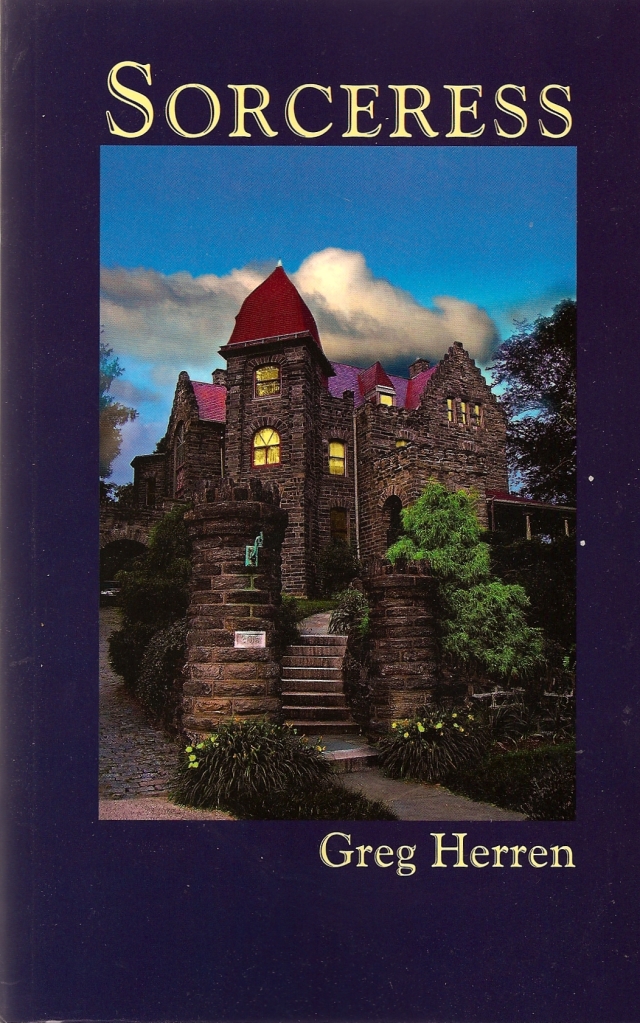
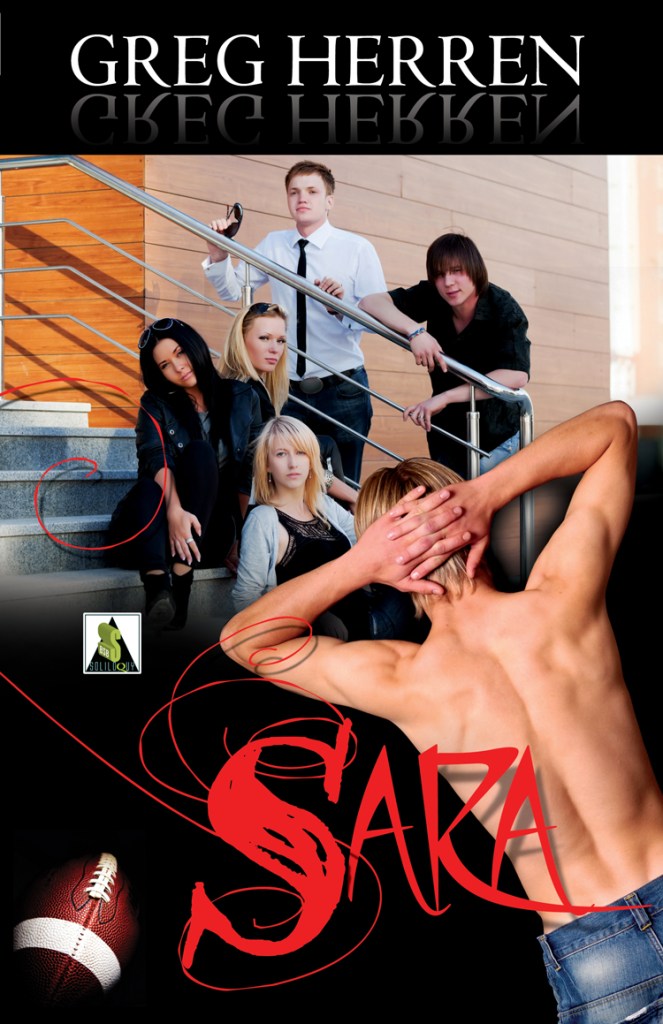
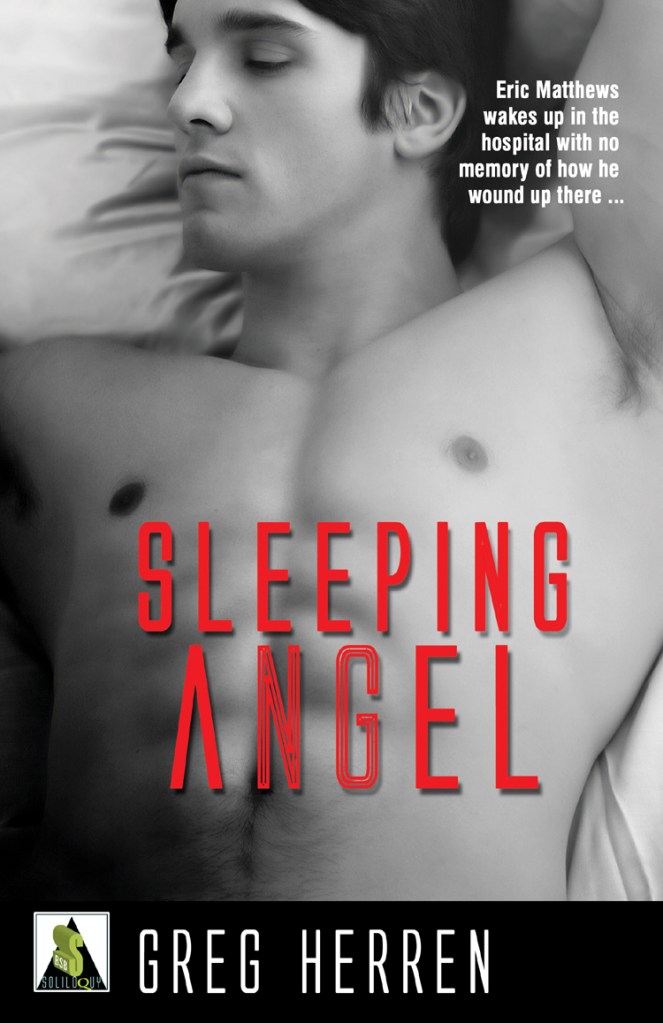
After I finished that, I spent the next five years mostly working on short stories. I started another book, more horror than anything else, but never got further than the third chapter. I finally decided to write a horror novel built from my old manuscript and those short stories from high school. I was about three chapters into it when I discovered two things: there was a big market in y/a horror at the time (Christopher Pike and R. L. Stine were HUGE during this period) and so I bought some of them. When I finished, I thought, “You know, I should turn Sara into a y/a novel” (because I thought somehow that would be easier? Foolish, foolish rookie) and so… I did. I was right in that thinking of it in those terms made it possible for me to finish a draft, but I wasn’t very happy with it so I put it aside and started writing another one, Sorceress, which was also horror but also had some strong Gothic moments in it. When I finished that one, again I wasn’t pleased with it so I started another–Sleeping Angel–which was the one I thought really had potential. I never finished that draft–by this time I’d discovered that gay fiction and nonfiction existed, so I started reading that and trying to write about gay characters instead.
Those manuscripts remained in my drawer for well over a decade, until a friend of mine took a job as a young adult acquisitions editor, and she wanted to work with me. I told her I’d written three (although it was technically two and a half), and gave her a brief synopsis of them. She liked Sorceress the best, so I started revising and editing it and turning it into something publishable. Once it was all done, she’d left that publisher, but started her own small press for y/a books for underrepresented teens, and she wanted to launch the press with Sorceress. I said “okay” and we were off. I eventually realized I needed to let Bold Strokes know, and when I did, I got an email back saying you know we do y/a, too? And so I sold the other two to them, and have never looked back since then.
Are there specific rules for writing YA (things you can’t do)? Does Bold Strokes add on or impose specific or additional rules?
I don’t pay too much attention to rules, frankly. There’s no graphic sex in my books, but it’s hinted at. I also try to swear less in young adult books than I do in adult fiction, which is probably not as big of a deal as I think it is? The society I grew up in was a lot more puritanical–believe it or not–that the one we live in today. So I always default to that setting, and then have to shake it off. Swearing isn’t as big of a deal as it used to be. No one thinks they’re marrying a virgin anymore, and on and on. And having been attacked for daring to accept an invitation to speak to queer high school students, I tend to tread softly. There have been a couple of times where I’ve had to change language, or how a scene went, because my editor thought it might be problematic; and frankly, I never want to be offensive, so I have no problem with it. I don’t see it as a free speech issue the way so many intentionally offensive writers claim it is. I shouldn’t take offense to someone calling me a faggot? Grow the fuck up. The so-called free speech “crusaders” are always defending hate speech as well as trying to shut up the people who find it objectionable. You do not have a constitutional freedom from consequences or getting a negative response to things you say and do, period. It’s really not hard to understand unless you want to be passive/aggressive and childish and a moron.
How do you remember back to these days, specifically how it felt or feels? (this is coming from your moderator who is much older than you are)
Well, for one thing, I’ve always kept a journal and I still have them all. (I was insufferable when I was younger, seriously.)
My sister has a theory that we forget a lot of the pleasant memories from our childhoods, but remember the traumas in great detail. I believe the truth of that, because school was a nightmare for me from the day we moved to the suburbs until I was done with it. I remember how it felt to read Greg Herren sucks cock on a desk at school. I remember how it felt to be mocked, laughed at, and bullied by assholes. I do remember the good things, though I tend to always focus on the bad.
The first thing I always do is abandon whatever “wisdom” about life I’ve theoretically learned since leaving high school, and put myself into the teenager mindset: they think they are the main characters in everyone they know’s story, and everything is the end of the world or their life is ruined and you are the most horrible parent ever! I’m not entirely sure I’ve escaped thinking that way, to be brutally honest: I am horribly selfish.
How do you come up with your characters? Your stories?
I am weird in that I inevitably always start with a title. I hear something or read something and think, that would make a good title. The next question is what story would fit that title? And it kind of goes from there. The title may change, the character names and story might change and evolve, but I can’t write anything that doesn’t have a title. Bizarre, I know. Usually with my young adult stuff it’s an idea I’ve had for a number of years and finally decide to explore whether it’s a novel or a short story, and go from there.
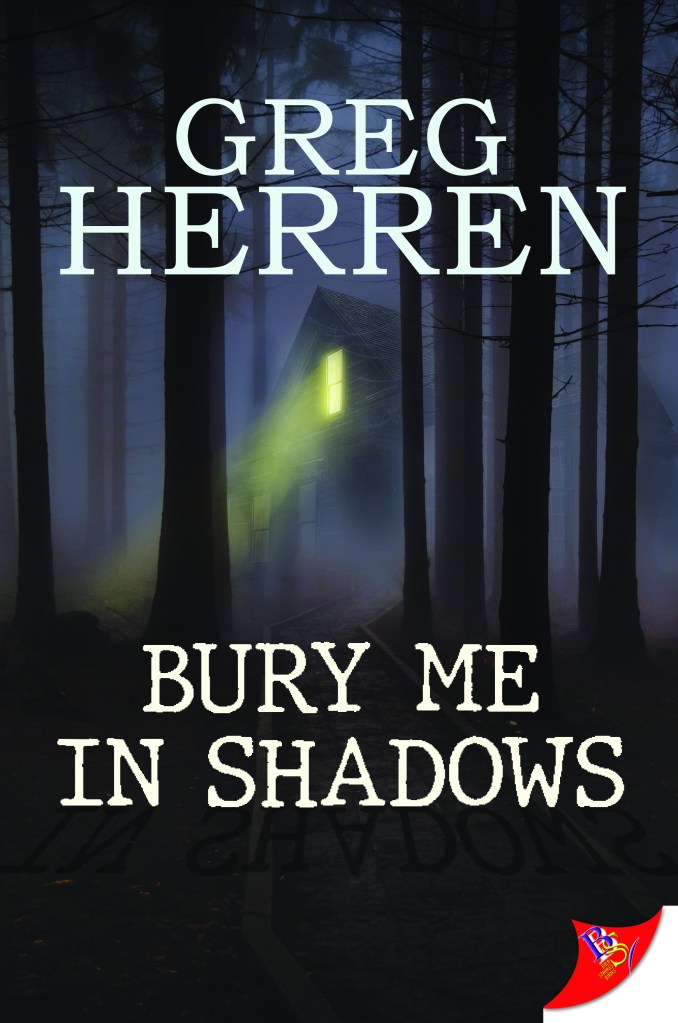
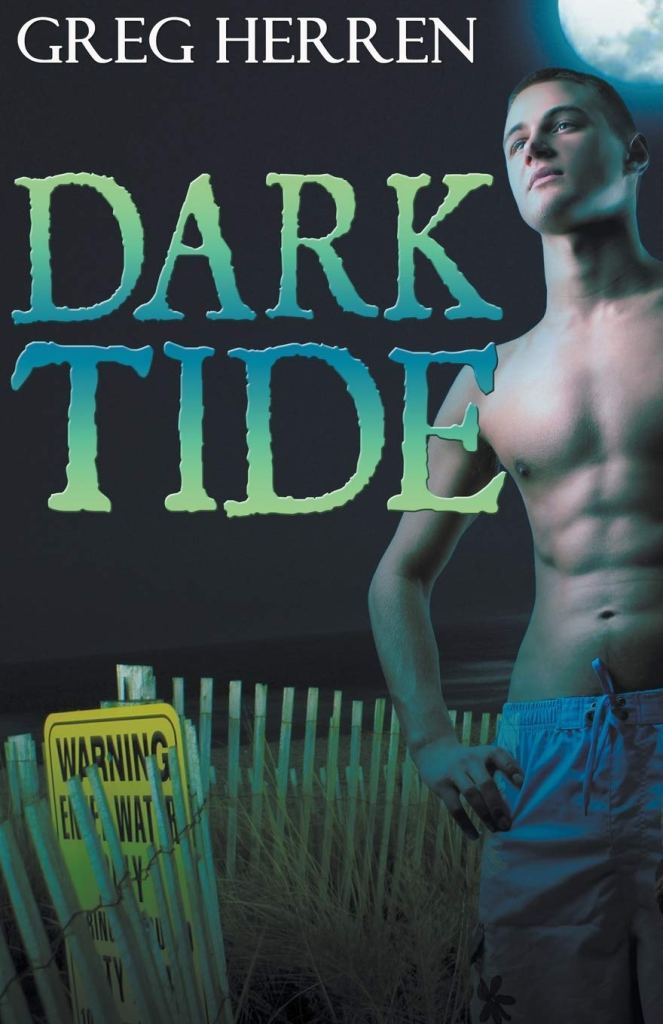
Dark Tide was originally called Mermaid Inn, Bury Me in Shadows was originally Ruins, but the others pretty much stayed the same from beginning to end.
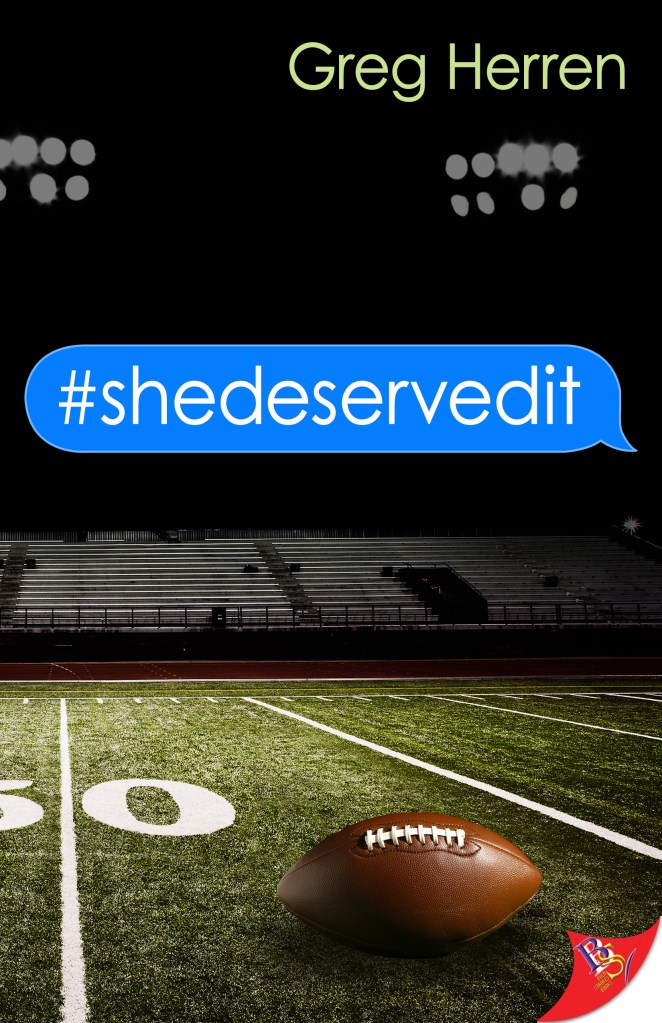
I wrote #shedeservedit because I was angry about the Steubenville/Maryville rape cases, and remembered stories and gossip from when I was in high school and college…and rethinking them through a more evolved brain about women and misogyny… well, it made me angrier. I had already planned on writing a story set in the same town with the same characters and opening with the same murder (I always referred to it as “the Kansas book” for years), but the motive was something I always had trouble grounding in reality. After those cases…it clicked in my head. You need to write this story about small town misogyny, protecting the star jocks from the girls at all cost, and make that the plot. It was easy to write because I was angry. Making it a compelling read was harder, because the subject matter was sickening to me.
I needed to write that book, and I don’t regret doing it, either…but it’s not exactly a feel good story people can escape into, either.
Why do you think YA is so popular?
It’s more accessible, I think. I mentioned reading ability before, and I do think that most readers aren’t into the Great Literary Tomes, hundreds of pages of beautiful writing with no real point or story. People kind of want to escape their cares and worries, and y/a books tend to be really entertaining. We’re competing with phones and tablets and streaming, so we need to write entertaining and engaging books.
Any specific must do-s or must-haves to get your writing each day?
I’m not nearly as anal about that as I used to be, before I returned to work full-time. I am very aware that I have little time to waste when I write, and thus must seize whatever opportunities to write show up. But if pressed, coffee. I can’t write unless I’ve had coffee when I got up.
I think this is all of them, but I could be wrong.
It’s the Monday after Mother’s Day and I managed to make it through somehow. I woke up this morning with a strong urge to remain comfortably in bed, but here I am swilling coffee and planning on how to make it through this week of work and everything else I have to get done. But yesterday wasn’t nearly as bad as I feared it might have been. I eventually became emotionally immune to Mother’s Day sales and the FTD reminders; my situation certainly didn’t require me to complain about others still celebrating with their mothers–why harsh everyone’s buzz? I can’t imagine anything more narcissistic than insisting everyone else calm down with the Mother’s Day stuff because it was hard for me. Next year I’ll know what to expect and will be one more year removed from the loss; time has a way of dulling the aches and pains and slings and arrows life hurls at us–all things become easier with the passage of time. A friend was in town yesterday and I joined him for a rather late lunch. I had a beer (!!!); a local IPA that was actually quite good–I’ve always only drank trash beer, and never really got into beer as an experience rather than as a method of alcohol delivery. (I also know nothing about wine.) That was a nice break from working, and last night we started watching The Consultant, with Christoph Waitz, on Amazon Prime. I don’t think we’ll continue. It’s well done but it’s very strange; it’s based on a Bentley Little novel, so it’s probably more on the horror end of the spectrum, but it didn’t really engage with us very much? I suspect we’ll be looking for something else to watch this evening after I finish working.
And because I never made a grocery run over the weekend I shall have to do it tonight after I get off work, which is hardly an appealing thought. I also have a ZOOM call tonight–I should be able to get home in time for it, I think–or maybe I don’t; it’s not on my calendar which is unusual, but there’s no meeting at all on my schedule for the month of May, which is very odd. I’ll have to dig through my emails to see, but I’m pretty certain it was tonight. I’m actually rather amazed that I remember that much, without it being on my calendar. I know i had some things I needed to do before that call, too–so that’s going on today’s list of things to do. MUST BE DONE.
But I feel like there’s a lot less on my shoulders this morning, which is also kind of weird. Was Mother’s Day that subconsciously brutal on my psyche that I was able to keep it out of the forefront of my mind while still carrying the load and only being slightly aware? My brain’s ability to protect itself (and me) from things I don’t want to think about or deal with at the moment is pretty uncanny; but I’m not sure if that’s entirely healthy. There’s a lot stored away in the dusty back corners of my mind that I’ve never processed or dealt with–watching It‘s a Sin on HBO MAX back whenever it was that first aired, for example, brought a lot of memories back that I’d not even considered, let alone dealt with and processed, since it all actually happened to me in my life. I said recently to a very young gay man lately (early twenties, so born in either the late 90’s/early aughts) “back then we just all figured we were all going to die before anything would be done about it” and he recoiled slightly from me, saying “But that’s terrible” , to which I shrugged and said, “that was our reality.” I’d never really thought about it much because it was the reality; and yes, it was indeed horrible. But I’ve blocked that all out so much for so long that it does sometimes seem like it was distant history, like it all happened to someone else, or that it was a book I wrote long, long ago and barely remember. The loss of memory from that time is no different, really, from the loss of memory of the times and years after Katrina or how all the pandemic/COVID years kind of jumble in my mind and I can’t remember timelines or when things happened or how they happened. Scrambled brains, I suppose, is the easiest way to say it; trauma and PTSD scramble our brains.
And even as I reread that last sentence, I am, as always, inwardly rolling my eyes at myself, So dramatic, my inner critic is sneering. You’re not the first person to lose a parent. It is funny, when you catch yourself being nasty to yourself and then start unpacking where that negativity and self-loathing came from. Childhood, of course, which is where so many of the scars were inflicted and lessons learned that have almost proven impossible to unlearn as an adult. There are no guidebooks for life; only experience and learning hard lessons. As someone who prefers a bit of structure to life, not knowing how I am supposed to handle things like grief and so forth inevitably results in me being harder on myself than I should be. How long are you supposed to grieve? How long before it stops hurting, before I can think about Mom without getting deeply emotional? Am I supposed to keep this to myself, or am I supposed to share it? Do people get tired of hearing about it and grow bored with me talking about it? I know I get bored with myself–and then wonder, is that self-abuse? Should I be kinder to myself? I never have been, really; so that would be a novelty in the first place. When does it cross the line from normal emotional response to wallowing in it?
I really hate that my parents lost my user manual so many years ago…
And on that note, I am heading into the spice mines. It’s a Monday, so take it as easy on yourself as you can–we can make it through yet another week of challenges and excitement, can’t we?
Friday and my dream has come true: I have switched my work-at-home day from Monday back to Friday,. effective today, and I am so pleased. I’ve never adjusted to not being in the office on Mondays (I’ve always, no matter what, come into the office for regular workdays the entire time I’ve worked here unless it’s a holiday or I was on vacation), and now I can finally get a handle on what goddamned day of the week it is from now on.
Jesus.
I slept really well last night, which was marvelous. We watched more of Your Honor last night (which is one of the longest limited series I’ve ever encountered, every time I think well, this episode must be the finale it will end and queue up yet another episode. It turns out (I just looked) that there are ten in total, so I think we have two more, and it’s apparently been renewed for a second season, and I’m not sure how I feel about that. I mean, it’s an interesting show–I also love that the local crime family’s name is Baxter, which for some reason just cracks me the hell up–but it doesn’t really hold my interest the way it should; I often find myself scrolling through social media apps on my iPad while the show is on, so I miss things that could probably help it make more sense than it does; but as Paul said last night, “they really make New Orleans look beautiful,” which the show does quite well.
Then again, New Orleans is beautiful, so they are starting from a very good place there. (One of the only reasons I could bear watching Southern Charm: New Orleans was because the city was shot so beautifully)
Today, as I already mentioned, I am back to working at home. I got my second monkeypox vaccine this week, and my body’s reaction to the second shot has been a lot more interesting than the first. The first just left me with a small pinkish red circle on my arm, maybe about a half-inch in diameter. The second left an enormous angry red circle on my other arm with a large bump in the middle so that it kind of looks like a massive spider-bite. This morning its size has receded a little bit, but I imagine I am going to end up with the same thing on this arm as I have on the other; a small slightly reddish circle around the injection spot. (When I show it to people, they can always pick out where it is but you have to actually look to see it, if that makes sense? It’s not noticeable unless you’re looking for it.) I am getting my next COVID booster on Monday, and I am really thinking that as cold/flu season is upon us again I may start masking everywhere again because it’s really been lovely not getting either a cold or the flu the last couple of years. Are masks a pain in the ass sometimes? Absolutely. But so is getting sick, and I don’t understand how putting yourself at risk of catching any illness is some kind of power statement. I don’t care if I am nauseous and feverish and can’t keep food down for a few days! FREEDOM!
I was exhausted when I got home again last night–I am kind of hoping the change in “work-at-home” days will help me with that–and so I pretty much just vegetated for the majority of the evening. Scooter demanded a lap to sleep in and I was only too happy to oblige. How did I pass the evening before Paul came home? Lost in thought about my book and mindlessly, effortlessly scrolling through social media feeds until Paul came home. The exhaustion is problematic, to be sure; when my brain is too tired to actually focus enough to read a book–which is and has always been one of the great pleasures of my life–to escape reality and allow my brain to relax, well, there’s something wrong and I don’t like it. Am I just getting older? I am sleeping better–more deeply and longer–than I have in a very long time, and yet…
But I did think about the book last night while I idled away my early evening, which isn’t a bad thing. The plot is a bit complicated, and as always, I worry about straying away and creating subplots and misdirections that I’ll forget to tie up and/or resolve by the end of the books, and since I’m not Raymond Chandler, my plots have to make sense. Sigh. It must have been nice being Chandler and getting away with having plots that didn’t make sense; I’ve not read all of Chandler’s work and right now I have The Long Goodbye sitting in my TBR pile–and as much as I want to get to it, I need to finish reading my current book and read some horror for the month of October. I want to find my copy of Interview with the Vampire for one thing–maybe during the LSU-Tennessee game I can do some work on the books, with the intent to find my copy of that as well as clear out some more for donations–so I can reread it and ‘salem’s Lot back to back, and maybe even revisit a Peter Straub before moving on to new writers and new books I’ve not read. I also recognize how ambitious that sounds, given how much trouble I’ve been having focusing on reading, but rereads aren’t the same as new reads–and it was rereads that got me back into reading again after the Shutdown in 2020.
Sighs happily. That was when I revisited Mary Stewart, and how delightful was that?
All right, I should head into the spice mines now. Have a lovely day, Constant Reader–and I’ll talk to you again tomorrow before the game.
As I typed it, I realized what a New Orleans-like thing it was to say; and it made me smile a little bit. The coroner in question wasn’t currently serving New Orleans; he had retired in 2014 after ten terms in office, and his name was Dr. Frank Minyard. He played the trumpet, and was actually a gynecologist rather than a pathologist. Was he good coroner or a bad one? A little of each, I would gather, based on the obituary by John Pope you can read by clicking here.
But he was, like so many New Orleanians used to be, quite a character. New Orleans has always been a city full of characters, which is why so many people write about New Orleans, and write about it well. Not only can you probably get away with writing anything crazy-seeming about New Orleans; chances are if you dig a little into our history here, you’ll inevitably find crazier shit than anything you could dream up on your own. I have to say I have really been enjoying reading up on our local history here.
Hurricane Sally came ashore earlier this morning, and it had continued turning enough to the east that we didn’t get much of anything here in New Orleans. The panhandles of Alabama and Florida (in particular Mobile and Pensacola) are an entirely different story; my heart sank down into my shoes (well, my slippers) on seeing footage and images from that section of the Gulf Coast. Hurricane season is so emotionally exhausting, really; all that stress and tension and worry, and then when it goes somewhere else the enormous guilt one feels about the relief that your area escaped unscathed while others are losing everything–including some lives–is horrible, just horrible. It’s oddly gray and hazy-seeming outside the windows this morning, with the crepe myrtles and the young live oaks in the yard on the other side of the fence doing their wavy dance thing they do when the wind blows; the sidewalk outside also looks wet so we must have gotten some rain as well overnight, but not enough for me to notice anything as I slept through it all. (That’s the other thing about hurricanes, particularly the ones that come ashore overnight; you go to bed wondering what you’ll wake up to find in the morning–or worse yet, disaster will rip you out of a deep sleep.)
So, yes, this morning I feel very emotionally drained; well rested, but exhausted emotionally.
And then, of course, once the danger has passed, you have to reset yourself and get back to normality–whatever the hell that is, or what passes for it, at any rate.
Yesterday’s entry in the Cynical 70’s Film Festival was The Omen, which was a huge hit back when it was released in 1976 and spawned two sequels, Omen II: Damien and The Final Conflict. I had never seen the sequels, and I think I originally rented the film–I don’t think it played at the Twin Theater in Emporia–but I did read the book (the book was written by David Seltzer, who apparently, according to the opening credits of the film, wrote the screenplay; which came first? I don’t care enough to look it up) and of course, was put in mind of it by paging through The Late Great Planet Earth, which laid the groundwork for the movie. Obviously, it’s about the anti-Christ, who is Damien Thorn; the movie opens with the Robert Thorn (played with an almost wooden-like quality by Gregory Peck) arriving at a hospital in Rome only to be told that the child his wife has given birth to has died; he worries about her mental stability and how she will handle the news–and so a priest offers a substitute baby whose mother died giving birth. (And this is the first place I called shenanigans on this rewatch; one, he is about to start a lifetime of lying to his wife and two–was there any need to tell Robert Thorn his child died? If the idea was to have the Thorns accept the anti-Christ into their home as their child, wouldn’t it simply make more sense to swap the babies, so neither of them knew? Because how could they have been so certain Thorn would accept this literal deal with the devil?) The movie is paced fairly well, and it moves right along–there’s not a lot of gore or blood and guts, but it does beggar credulity at more than one point–and perhaps I am looking at it with jaded eyes some forty years later, but both Peck and Lee Remick, who plays his wife, seem to just be phoning it in for the paycheck and there’s also the element of their age; they seem to be fairly old to just be trying to start having a child at the opening of the movie. (I think the book plays this up more, stating that Kathy Thorn has suffered innumerable miscarriages leading up to this birth and it has shaken her mental stability; kind of hard to do that on film but it certainly would have made his motivation in accepting this needless deception–again, they could have just as easily substituted the baby without having to go through this entire risky rigmarole.) After finishing, I looked for Omen II but it’s not streaming for free anywhere; I then watched The Final Conflict, which was simply terrible (outside of Sam Neill, who was terrific and charismatic as an adult Damien, saddled with an incredibly bad and far-fetched script).
The movie does fit, however, with the Cynical 70’s Film Festival, because here we have yet another conspiracy, one in which some members of the Catholic Church have turned to Satan to try to bring about the end times as well as the birth of the Antichrist–because whereas in the 1950’s and the early 1960’s, it would have been unimaginable for such a film to be made, but also to be believable; who would have ever believed such a thing was possible? Of course, both book and film of Rosemary’s Baby set the stage for The Omen, but both were later 1960’s, when things were starting to change, times were getting more cynical, and so were people. Rosemary’s Baby changed almost everything, both in the world of novels and film, in showing that horror was both bankable and mainstream. The early 1970’s saw the publications, and enormous success, of books like Ira Levin’s The Stepford Wives, William Peter Blatty’s The Exorcist, Thomas Tryon’s Gothic horror masterpiece The Other, and eventually, Stephen King’s out-of-nowhere bestseller Carrie. Soon Peter Straub would publish Ghost Story and Carrie would become a hit movie, triggering a horror revival that brought both the literature and the films into the mainstream. This revival didn’t lose steam until the 1990’s, and frankly, I think horror is on the verge of another revival.
I could be wrong, of course. I certainly have been before, but I am seeing some really terrific work as well as amazing new voices–over the past year alone I’ve read some astonishing work by new-to-me writers, and I only wish I had more time to read everything I really want to. Paul Tremblay is amazing, and so is Bracken MacLeod, Christopher Golden, and Silvia Moreno-Garcia, among others; I’m seeing a lot of new and interesting looking titles being announced or reviewed almost every time I turn around.
I guess today is Wednesday? I am really not sure, living in this weird world that comes with hurricane watches, where it is very easy to lose track of dates and times and what day of the week it actually is. But a quick glance at Weather.com assures me that all the other storms out in the Atlantic basin pose no threat to Louisiana, so I guess we can relax for a little while, at least.
I’ve always enjoyed a good mystery with a supernatural edge to it; the line between crime fiction and horror is often blurred. Take, for example, The Silence of the Lambs. It’s often lauded as the first horror film to win an Oscar–but there’s no supernatural beings involved, no ghosts or vampires, or anything like that; the protagonist is an FBI agent trying to catch a serial killer…so is it really horror? Are slasher films/books actually horror or crime? (I think it depends on whether or not the slasher is actually something not human–like Freddy Krueger and Michael Myers, or just crazed human killers, like the Scream movies or even the first Friday the 13th, which is the only one I’ve actually seen.)
But then it’s really hard to define and delineate what work falls into what genre; and oft-times, there’s crossover between the various ones–there’s western horror, for example, just like romantic suspense bridges the line between romance and mystery. So where precisely on the spectrum of genre does the work of Barbara Michaels lay? There are often supernatural elements to her fiction; sometimes there aren’t. Ammie Come Home is my favorite ghost story of the many I’ve read–and I enjoy it just as much every time I reread it–but it’s also a mystery, and there’s also some romance in the book. The romance itself is rarely the focus of her books, but it is there and cannot be ignored; likewise, most stories that have supernatural elements (ones that are actually supernatural in origin or man-made frauds) inevitably have some mystery to them; what do the supernatural forces want–or in the case of fraud, what are those who are committing the fraud after? What do they want?
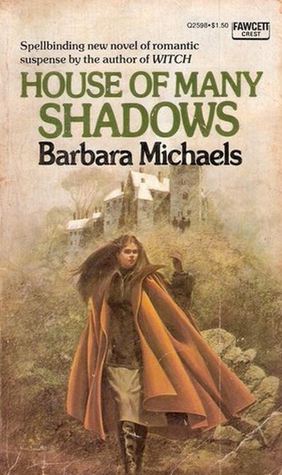
House of Many Shadows was the second Barbara Michaels novel I read, and remains one of my favorites to this day.
The sounds bothered Meg most. Calling them auditory hallucinations helped a little–a phenomenon is less alarming when it has a proper technical name. Meg had always thought of hallucinations as something one saw. She had those, too, but for some illogical reason it was easier for her to accept visual illusions as nonreal than to ignore the hallucinatory sounds. When you were concentrating on typing a letter, and a voice says something in your ear, it was impossible not to be distracted.
The problem was hard to explain, and Meg wasn’t doing a good job of explaining. But then it had always been difficult to explain anything to Sylvia. Sylvia knew all the answers.
“The dictaphone was absolutely impossible. I couldn’t hear what Mr. Phillips had said. Voices kept mumbling, drowning out his voice. Once the whole Mormon Tabernacle Choir cut out the second paragraph of a very important memo.”
She smiled as she spoke. It sounded funny now, but at the time it had not been at all amusing.
Sylvia didn’t smile. “The Mormon Tabernacle Choir? Why them?”
Meg shrugged helplessly. “No reason. That’s the point; they are meaningless hallucinations. The doctor says they’ll go away eventually, but in the meantime…Mr. Phillips was very nice about it, he said he’d try to find an opening for me when I’m ready to work again, but I couldn’t expect him to keep me on. I had to listen to some of those tapes three times before I got the message clear, and there was always the chance I’d miss something important. And I’d already used up all my sick leave. Three weeks in the hospital…”
“You should be thankful you weren’t killed,” said Sylvia. “To think they never caught the man who was driving the car! New York is an absolute jungle. I don’t know how you can stand living here. May I have another cup of tea?”
Meg poured, biting back an irritated retort. She couldn’t afford to offend Sylvia, especially now, when she was about to ask a favor, but the cliches that were Sylvia’s sole means of communications had never annoyed her more. Why should she be thankful she hadn’t been killed? She might as well be thankful she didn’t have leprosy, or seven-year itch; or thank God because she had not been born with two heads. It was just as reasonable, and a lot more human, to feel vexation instead of gratitude. Why me, God? The old question, to which there was never any answer…Why did it have to be me in the path of that fool driver; why did I have to land on my head instead of some less vulnerable part of my anatomy; and why, oh, why, God, did Ihave to have these exotic symptoms instead of a nice simple concussion? Why do I have to be the poor relation, with no savings to fall back on, while Sylvia…
Sylvia’s close-set gray eyes were intent on the teapot. “Such a nice piece of silver,” she murmured.
I love Barbara Michaels’ work, and one of the happiest days of my reading life was the day I discovered she also wrote as Elizabeth Peters, which meant even more reading joy for me (and eventually, I came to prefer the Peters books to the Michaels; but make no mistake, I love all the books). The set-up for House of Many Shadows is right there in the beginning; poor Meg’s life has been upended by being hit by a driver who didn’t stop, and because of the hallucinations she suffers from as a result–with no idea of how long she will suffer through them–she is unable to work, and her distant relative Sylvia–whom she doesn’t seem to care much for–is her only hope. Sylvia–we all know people like Sylvia; without a sense of humor and whose response to any crisis is to come up with a plan and make it work–has a house in the Pennsylvania Dutch country, she’s not sure what she wants to do with it, but Meg can stay there rent-free, and Sylvia even comes up with a “make-work” solution so Meg won’t feel like she’s freeloading (it isn’t until much later she realizes that is what Sylvia was doing; at the time she kind of resents it); doing an inventory of the contents of the house and its attic, as Sylvia is thinking of donating the house to the local historical association. Sylvia’s stepson from the previous marriage that wound up with her owning the house is living on the property as a caretaker, in a cottage behind the main house–Meg remembers him from their childhood as a horrible tease she couldn’t much stand–and soon she is off to the wilds of the Pennsylvania country side.
At the end of the second chapter-the first after she arrives at the house–Meg experiences a hallucination in front of Andy, the stepson, and their relationship hasn’t changed much, apparently–which rattles Andy terribly; when it happens again a chapter or so later is when Andy confesses that he, too, has seen the same hallucinations she did–so are they hallucinations? Or are they seeing ghosts?
This set-up, of course, is absolutely brilliant: what better heroine for a supernatural story than a woman who’s had a brain injury that causes her to see hallucinations? The chilling touch that Andy has also seen the same hallucinations in the house that she has is terrifying; and as she slowly gets to work in the attic, she and Andy start discovering things about the history of the house, including the fact that the original property owners, back before the American Revolution, were brutally murdered in the original house that stood on the property; the current one was built over it. So, what happened 250 years earlier? Both Meg and Andy become a bit obsessed with the ancient murders, and as they continue to see things in the house, they slowly but surely start putting together the truth of what happened to the original property owners–while falling in love, of course.
One of the great things about the Michaels books is that she brooks no foolishness with her supernatural elements; it’s clear Dr. Mertz (her real name) was well read on the subject of the occult and other belief systems–they pop up, again and again, throughout the Michaels novels, and in many instances, I first heard of certain occult books and cults from reading them. I know I first read of The Golden Bough in a Michaels novel; Dr, Mertz knew her folklore and occult religions, and made very good use of that knowledge, not just in this book but in others–Prince of Darkness comes to mind–and of course, she was an excellent, excellent writer.
House of Many Shadows also holds up; despite the dated quality of the book–no Internet or computers or cell phones–it’s still a great story.
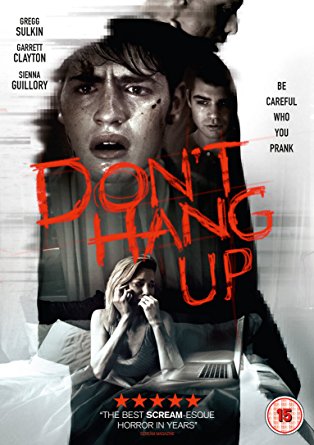
Also over the course of the weekend, as I was desperate to find an excuse to neither clean nor write, we watched a horror film on Prime called Don’t Hang Up.
To be honest, I doubt that we would ever have watched this film had I not been scrolling through the listings of horror films on Prime. I actually had started House on Sorority Row because Eileen Davidson and Harley Jane Kozack were in it, but lost interest really quickly. When I saw this listing, and saw that it starred Gregg Sulkin and Garrett Clayton, my first thought was I’ve never heard of this and my second was well, they’re cute boys at the very least.
(Sulkin was the romantic lead on an MTV series I watched called Fakin’ It, and of course, Clayton played underage gay porn star Brent Corrigan in King Cobra.)
It was actually kind of good, although the premise–a group of four male high school friends prank call people, filming the entire thing for Youtube–seemed a little shaky to me; I was all do people still prank call people? Is that still a thing? But things take a turn for the dark side when they prank call the wrong person; a psycho who wants to get revenge on them, and then the movie becomes classic horror movie, a la Scream and Halloween, etc. As far as the genre goes, it’s actually well done, and the two boys do a credible job of acting. There are also some surprise twists, and the end was absolutely perfect. Well done, folks!
We also started watching AMC’s The Terror.
The Terror is based on a novel by Dan Simmons and in the episodes we’ve seen so far, it’s very well done, well acted, well written with high production values. I do have some questions–the show begins with the two ships trying to get through the Arctic Ocean to map the northwest passage; a northern route around North America to the Orient. The ships get frozen into the ‘block’ when the sea freezes over…and then it jumps ahead eight months.
The Terror is based on the true story of the Franklin Expedition–which vanished; the wrecks of the ships were found recently. I have to say, as I often do, that I love fictional stories that are based in real history. Fiction can often, for me, provide a jumping off place to start reading history or about a region; Steve Hamilton’s Misery Bay got me fascinated in the history of the Great Lakes, and Lake Superior in particular; which led to me reading a lot about shipwrecks in that largest of the Great Lakes, and the Edmund Fitzgerald in particular. Watching The Terror will probably lead to me reading up about the search for the Northwest Passage more, and perhaps some Canadian history as well.
But I particularly want to compliment the cast of The Terror, which is quite excellent in their roles; Ciaran Hinds is always terrific, as is Jared Harris. There is also a quite extraordinary Inuk actress, Nive Nielsen, who is giving an Emmy worthy performance. Tobias Menzies is also delivering; and I have a bit of a crush on him, and have ever since he played Brutus in the long-lamented two-season only series Rome, which I loved. I’m not sure what it is about Mr. Menzies that I find so appealing; he’s not classically handsome, but there is just something about his unusual jawline that I think is interesting.
I am quite looking forward to watching a few more episodes. I am also looking forward to the BBC America series Killing Eve, which is also available on the AMC app.