Turn the Beat Around

Nottoway Plantation, one of the beautiful old homes along the River Road north of New Orleans, burned to the ground Thursday.1 But what that lovely old historic home actually was? Just a monument to enslavement and stolen wealth. I also can’t help but hope the backstory to the fire is some Gothic shenanigans, a la Rebecca and Manderly burning to the ground.


I’ve certainly come a long way from that kid who was raised to believe in white supremacy and the Lost Cause ideology, haven’t I? My relationship to the South has always been fraught, once I began to read more and understand more and deprogram myself from that horrific grooming as a child. I can remember, though, reading Gone with the Wind when I was ten or eleven for the first time and my hackles being raised by the happy, contented enslaved people and how they were described and how they talked. (I loved the story itself, but the racism was so unrelenting and unending and horrible; I need to do a deconstruction of that book sometime–as well as other “make white people feel better about racism” books.)

Nottoway was a beautiful home, but it was also one of the most monstrous sugar plantations in Louisiana with an excessively brutal history. I am not sorry in the least this horrific place–where they teach nothing about the true history of the place and rent out for weddings and parties for white people (“yes, you too can have a Scarlett O’Hara wedding on an old plantation! So what about the brutal treatment of generations of enslaved people?”). It really was nothing more than a monument to oppression, cruelty, and the evil that men can do.

I started dealing with the ghosts of my own Southern past in Bury Me in Shadows, and this new repurposed book from an old manuscript is also going to deal with race in Alabama, too. I just have to finish this damned Scotty book and get it out of my scalp. New Orleans also has its own dark, bloody and brutal history I have to deal with at some point, too. I was reading a piece about Madame LaLaurie and her abuse of her enslaved people, and wondering how to turn that into a short story–and likewise, my Sherlock story will also have to deal with race, because of the Voodoo Queen. I’m not afraid to address any of these issues, really; as long as I do it and am mindful of the potential for offense and/or getting it wrong (I have a great editor, thank God) and tread carefully. You really can’t write about the South authentically without talking about race.

After I finished working yesterday, Paul and I ran some errands (including Costco) and by the time we got back I was completely worn out and exhausted. I started reading a Dana Girls 2mystery (one of the kids’ series I collect) titled Mystery at the Crossroads, which was originally published in 1954–right around when the Hardy Boys/Nancy Drew books began being revised to remove problematic content–and ho boy, is there some problematic content in this book! It’s about “gypsies”–and every handy stereotype about the Romani people is crammed into this book. But it was easy to read, it engaged my brain, and now maybe today I can get back into reading something substantial.

I also rewatched two movies last night–the animated Beauty and the Beast (yes, I get that it’s problematic but I love it) and Jesus Christ Superstar before falling asleep in my chair. Paul woke me at one, and I managed to sleep through the night and this morning I feel rested and good. I have some errands to run today, but I am going to try to just clean and read and rest and relax as much as humanly possible. I am still not 100% recovered from the illness, but I am getting there.

And on that note, I am going to head into the spice mines. Have a lovely day, Constant Reader, and I’ll be back on the morrow, if not sooner.

  1. And yes, the Lost Cause traitors are weeping publicly of the loss. Since it was one of those destination wedding/party places that glossed over its hideous history…good riddance. ↩︎
  2. I will be writing about the Dana Girls for my newsletter at some point; I want to write about all the kids’ series I read growing up. ↩︎

Woman to Woman

I love history, and I especially love French history.

I’ve noted before that my favorite centuries (not in this order) are the 1400s, the 1500s, and the 1600s, with the 1700’s and the 1800’s pretty high on the list as well. It was the Renaissance and a time of enormous change. The Eastern Roman Empire finally fell in 1453, when the Ottomans took Constantinople, changing power politics in Europe forever and creating a significant degree of upheaval and fear across the continent. There was the splintering of Christianity and the wars of religion that raged for centuries, that started in the early 1500s when Martin Luther nailed his theses to the cathedral doors. Henry VIII tore England out of allegiance to Roman Catholicism after defending it vigorously for decades. Spain united and drove the Moors out–even though the Spanish nations remained independent, united only in the person of their monarch. Charles V presided over the largest world empire of all time until the British Empire rose after the final defeat of Napoleon. And the sixteenth century, which opened with Queen Isabella the Catholic of Castile proving that a woman could rule as wisely as a man–and could lead an army just as well, too. The sixteenth century saw the highest concentration of royal power being welded by women in history–and a lot of them were Hapsburg women, descendants of Isabella who always looked to her as a role model.

France was no exception in this century of powerful women–beginning with Henri II and his mistress, Diane de Poitiers, and after his death, his widow Catherine de Medici took power. Her youngest daughter, Marguerite de Valois, is one of the forgotten women of history. She too was a queen–Queen of Navarre, married off to the Huguenot leader in an attempt to make peace on the religious question, but her wedding also kicked off the ST. Bartholomew’s Day Massacre. She was also a power player in French politics from the time of her marriage on, but she isn’t really remembered much–and if she is, the calumnies about her sexuality were always used to demean and diminish her, and most of it was slander. She is perhaps best known because Alexandre Dumas wrote about her in Queen Margot. I had a Dumas period as a teen, and I loved Queen Margot.1 I had also read about her in Jean Plaidy’s bio of her husband, Evergreen Gallant, which also painted her as a horny slut controlled by her lusts and passions. I’ve never been a fan of slut-shaming–if men could be promiscuous, why not women–and so was always interested in her, just as I was interested in her mother.

Catherine had a rather shitty life until 1559, both her childhood in Italy and the first twenty-five years of her marriage. This colored the rest of her life, when she became ruthless when it came to protecting her family and the throne of her sons. (Afore-mentioned St. Bartholomew’s Day massacre, anyone?) She didn’t seem to much care for her two youngest children–Marguerite and Francois-Hercule–who wound up bonding because no one else cared about them. Catherine wasn’t royal, so the French court and people despised her as “the banker’s daughter,” and there was never any question that this marriage only came about because the French needed the money and her uncle was pope2. For ten years she was hated and ignored, constantly worried about being set aside for a princess–particularly when the Dauphin conveniently died and her husband became heir to the throne. But then she had a son, and then had ten more children over the next fifteen years. Henri II’s sudden and unexpected death caught the entire nation unprepared; Catherine smoothly maneuvered the hated mistress out of his life as he died and, once he was in the grave, seized her jewels and best estates and exiled her from court. Her motto was said to be “hate, and wait.” Jean Plaidy, tireless writer of fictionalized biographies of royalty, devoted a trilogy to Catherine: Madame Serpent, The Italian Woman, and Queen Jezebel, in which she tried to be apologetic about Catherine and her decades of misrule, murder, and conspiracies. Catherine could be weak, and always dissembled, cried and lied as she manipulated her nobles, her people and other heads of state–not always successfully. Catherine, niece of a pope, felt no problem allying herself with heretics if it was in her best interest. Her power and influence faded during the reign of her favorite son, Henri III3.

But perhaps the worst thing Catherine ever did was how she treated her youngest daughter.

The book carries the subtitle Catherine de Medici, Her Daughter Marguerite de Valois, and the Betrayal That Ignited a Kingdom.

The betrayal was an attempt, by Catherine, to put an end to the religious strife in France by marrying her youngest daughter to her cousin, currently third in the line of succession, King Henry of Navarre, who was a Huguenot. Neither Henry nor Margot wanted this marriage–despite her mother’s apparent lack of religious conviction, Margot was very much a devout Catholic–and Catherine tried to use the occasion of the wedding to murder Admiral Coligny, leader of the Huguenots and a trusted advisor to her son, Charles IX. She wanted to remove his influence over her son and take out the enemy leader at the same time. The assassination failed, and resulted in the St. Bartholomew’s Day Massacre, in which Margot herself hid and saved her husband and some of his friends from the mobs killing Huguenots. This threw Margot directly into power politics, and she never trusted her mother or her brothers again. Once she was involved, she proved herself to be not only smart but a very capable conspirator whose life was in danger from that moment on–until her own brother finally was killed in 1589 and her husband became king of France. They had their marriage annulled, and oddly enough, she became very close friends with her former husband, his second wife, and their children. She bore the honorific of queen for the rest of her life, and she was very wealthy and quite beloved; her mother was so hated her funeral was conducted secretly; all of Paris turned out for Margot’s.

It’s a very interesting period, but as I read this, I did take note that in many cases–all this political intriguing and diplomacy and duplicity? Wouldn’t really make for a great novel, because it takes years for things to happen; they spent most of their time sitting around, worrying, waiting for news. This is why shows like Reign and The Serpent Queen inevitably fail; they have to speed things up substantially to maintain suspense and viewer interest. I encountered this before when thinking through a couple of historical espionage thrillers (one having to do with Catherine’s Flying Squadron, beautiful women trained to be seductress spies for the Queen Mother; the other having to do with the Babington Plot in England); these things inevitably take months because of the great distances and medieval ways of traveling and sharing information. The great adventures of Margot’s life took seventeen years to pass. That’s a long fucking time for a suspense narrative, isn’t it?

The book is quite good. Nancy Goldstone is a good writer; the words all flow together and she arranges her researches in an excellent order for a brisk narrative. (She uses Margot’s memoirs, royal letters of her mother’s, and so forth to tell the tale.) The stakes are also very high–the future of France is at stake as the Valois dynasty slowly but surely dies out in the second half of the century.

One of the more interesting aspects of the 1300’s and 1400’s was that most nation’s problems during those years was too many members of the royal family, which led to strife; while the 1500s and 1600s were marred by royal sterility.

Highly recommended for fans of history and those who might be interesting in two women who don’t get nearly as much attention as they should.

  1. There was even a French language film version, starring Isabelle Adjani at her most beautiful. ↩︎
  2. Same pope who refused Henry VIII’s divorce, and thus lost England forever to Catholicism. ↩︎
  3. The gay one! ↩︎

Hell is for Children

Being Southern hasn’t been as difficult for me as it is for most Southern people, when it comes to forgetting the past and not taking pride in a heritage that includes racism and bigotry and enslavement. Some of the earliest lessons I learned about life in these United States was that I was one of the few people who started recognizing something that I wouldn’t know the name for until I was much older: cognitive dissonance. What I was being told at home was different from what I was being taught in school, and even that, while better balanced, was “patriotism good rah rah rah U!S!A! U!S!A!” all the time, nonstop. I began wondering about how much of an American “hero” Christopher Columbus really was, as all he brought to the New World was genocide, slavery, disease, centuries of oppression and looting the resources of the Americas. I started dealing with more cognitive dissonance as I got older and began seeing the flaws in white American supremacy, the contradictions and conflicts, and I had to think and reconcile all of these differing opinions. As I got older, resolving those cognitive dissonances required abandoning the education I got as a child about our country and its history because it was drenched in white supremacy and American exceptionalism and, well, lies to make white people feel better about themselves1. Reading and studying history made me look at modern Christianity askance–your religion has always been bloody, intolerant and cruel; but I’m supposed to believe the faith that slaughtered non-believers gleefully has changed and learned the errors of its ways?

Likewise, the Civil Rights Movement was in full swing when I was a child, and saw I watched the marches and the horror of the violence on the news. I didn’t understand nor believe the so-called religious justification for bigotry–my view of Christianity was markedly different from what I was learning in Sunday school for sure–but as someone blessed with white privilege I was also oblivious to a lot of what the Black community has dealt with throughout our bloody and horrific national history. My beliefs and values have never stagnated or been chiseled into stone; I appreciate gaining new perspective and examining my own internal biases and prejudices, and changing my mind predicated on the new perspective.

There are some things, however, I will never change my mind about: bigotry and prejudice are evil and have no basis in anything except vile ignorance and emotion.

The “we need diverse books” movement on-line was absolutely wonderful, because it gave me an easy opportunity to find books by diverse authors that either didn’t exist before or did and weren’t given much of a push. I loved the expansion of the crime and horror genres to include these characters and themes and stories; I love their fresh perspectives on society and culture and yes, the genres themselves. Books by S. A. Cosby, Kellye Garrett, Rachel Howzell Hall, Tracy Clark, Cheryl Head, and other racialized authors have not only been revelatory, but so strongly written and brilliant that it’s pushing other authors to better their own work to keep up. I’ve also been reading a lot of non-fiction about the civil rights movement and the history of prejudice and racism in this country, informing not only myself but with my own work, as well.

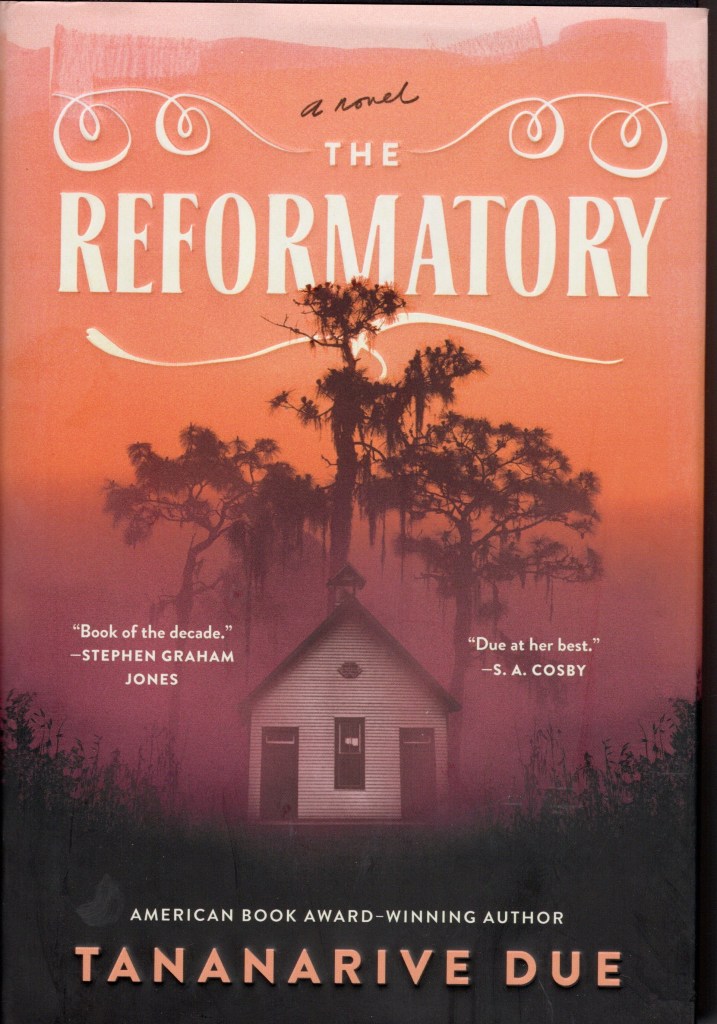
And in a class almost by itself is Tananarive Due’s The Reformatory.

Robert Stephens held his breath and counted to three, hoping to see Mama.

Some mornings his nose tickled with a trace of talcum powder or Madam C. J. Walker’s Glossine hair grease, and he felt…something hovering over him, watching him sleep. His groggy brain would think…Mama? If he gasped or sat up too quickly, or even wiped the sleep from his eyes, it was gone like a dream. But sometimes, when the June daylight charged early through the thin curtain and broke the darkness, movement glided across the red glow of his closed eyelids like someone walking past his bed. He felt no gentle kisses or fingertips brushing his forehead. No whispers of assurances and motherly love. Nothing like what people said ghosts were supposed to be, much less your dead mama. That morning he was patient, counting the way he’d practiced–one one thousand, two one thousand, three one thousand–and slitted his eyes open.

A woman’s shadow passed outside of the window above him, features appearing in the gaps between the sheets of tinfoil taped across the glass. In a white dress, maybe. Maybe. Moving fast, in a hurry.

“Mama?”

This book is a revelation. It is without question one of the most powerful books I’ve read in I don’t know how long.

I knew it was going to be a hard read, because I knew what the book was based on. I also don’t remember when I first became aware of the horrors of the notorious Dozier School for Boys in Florida, but it was a horror to be sure. I’ve read some novels based on that story (I loved Lori Roy’s The Disappearing) already, and so was familiar. Reading about enslavement and the Jim Crow South2 is inevitably a hard slog for me, and not just because of the white guilt it deservedly triggers; it just staggers me that in a country that supposedly is about equality and freedom such things could happen, be taken as normal, and changing the system is so violently opposed…a lot of racist Southerners see nothing wrong with that history and would like it to return, so these kinds of stories of American atrocities against its own citizens are incredibly important. The pen is indeed mightier than the sword, which is why repressive governments always go after journalists and writers; a well-told story that illustrates the injustice for the reader and humanizes it can change minds.

The Reformatory is about the Gracetown School for Boys and a young twelve year old Black boy who is sent there for absolutely nothing; an older white boy was sexualizing his older sister Gloria, and when young Robert stands up for her he gets a brutal shove, and he retaliates with a kick. Alas, the white boy’s father is wealthy and therefore powerful, and he wants this “uppity” behavior punished. In a joke trial that’s not even a trial, the corrupt racist judge sends Robert to the hell of the reformatory. Robert’s story doesn’t become about a search for his own justice, but the hell of surviving a place where boys die regularly but never of natural causes. Young Robbie has a gift, too–he can see ghosts–and there are a lot of ghosts there for him to navigate. Gloria’s story becomes about her desperate drive to get her brother out of there and correct the injustice. Their father was also a union organizer, and was falsely accused of raping and beating a white woman, so he fled north to Chicago. So, the boy in custody is also a pawn for the white power structure who really wants to get their hands on Robert Senior.

The warden, Haddock, is a sadistic predator who enjoys torturing and raping and murdering his charges. He also has a special need for young Robbie’s ghost seeing abilities, wanting to rid the campus of the ghosts of his victims. Due manages to make the horrors of that place absolutely real, with some of the most vivid and powerful images I’ve come across in a novel in years.

But the true horror of the book isn’t the ghosts at the school. The true horror is its horrific and realistic depiction of the Jim Crow south, and the lack of hope for change in the Black characters. It was about halfway through the book that I realized, as much as I was loving this book, that there was no happily ever after for Black people under Jim Crow, before civil rights. They might be able to escape a predicament, but there was no escape ever from the system.

Which is absolutely terrifying.

Definitely check this book out, and I am going to look for my next read from Due.

  1. Manifest destiny? I could write an entire book about that bullshit. ↩︎
  2. Someday I will dismantle To Kill a Mockingbird for the racist lie it is. ↩︎

I’m Henry the Eighth, I Am

Yeah, I’ve been big on the Tudors for most of my life–first the Virgin Queen, and then her father, Henry VIII and his many wives1, and eventually the entire family (Henry VIII’s sister Margaret was a pistol–and it is her descendants who sit on the throne today, not Henry’s). As I got older, I became more interested in the century as a whole, and eventually I moved on from the Tudors to the Stuarts, who I find much more interesting. I still love the Tudors, and will watch documentaries and films, but won’t read any more books about them, especially because I’ve not really scratched more than the surface with the Stuarts, and I want to read more about the Tudors’ French contemporaries, the House of Valois. (Yes, I loved The Tudors, because it was more of a Renaissance version of Dynasty; I don’t watch historical films and expect accuracy2, and if you are, wake the fuck up. Book adaptations are never the same as the book, either. It’s entertainment, not a fucking documentary.)

Speaking of entertainment, I finally gave up on Jon Stewart with his defense of the indefensible. His joining in on the media’s decision to badger and hound Joe Biden–one of the most successful presidents of all fucking time–out of the race? None of that, not one bit of that, was actual concern; they all were giving (and continued, until recently) Shady Marmalade a pass on his obvious mental decline…and Jon’s decision to defend the indefensible “because comedian”? Fuck off and die, you arrogant rich white cisgender piece of shit. I’ll never watch him again, so congrats on that year contract extension, Comedy Central. You thought calling Puerto Rico a floating pile of garbage was funny? You thought comparing Travis Kelce to OJ, implying he’ll murder Taylor Swift, was funny? And on and on and on. Straight white male comedians will always circle the wagons for another comedian with a penis, but when a woman comedian (see: Kathy Griffin) is being attacked, not a fucking word? So he’s a misogynist, too. I’m not telling you what to do, Constant Reader, but Jon Stewart is dead to me, now and forever. And don’t even get me started on the 49ers and Nick the Traitor Bosa. Talk about pussy. Someone got slapped down by management when he hit the locker room and before he talked to the press, and like a good little beta soyboy, he caved and sulked like the pathetic emotionally-and-intellectually stunted bitch he is. He’s not being punished because when asked he shut his fucking mouth, which is the other primary difference between him and a true hero, Colin Kaepernick (besides the obvious “white man gets away with shit a Black man never could” racism).

And really, 49ers managers and coaching staff? Your team represents San Francisco, the most tolerant city in the country. Trade him to Dallas, where he belongs.

Thank God I am on anxiety medications. If not, I probably wouldn’t have slept at all since June. But the medications and my personal ban on legacy media companies who are garbage and untrustworthy has helped a lot with my election anxiety, and refusing to engage with the trash on-line (block, block, block) I’ve managed to take good care of my own mental health this time around. I refuse to worry about what will happen if he wins, or if he loses and they try another violent coup; I do, every once in a while, think you always wondered what it was like to be a Berliner in 1933…and I didn’t really need to get an answer to that question, you know?

I feel good this morning yet again; I’ve been sleeping well every night this week and it’s been really nice. I did my errands last night, got home and got started on the dishes and did some other clean-up around here. Paul didn’t get home until late, so I mostly went down Youtube idle curiosity research holes. I also managed to get the Scotty Bible’s first draft finished; it’s just raw information for now that I have to reorganize and pull together. I am also realizing, as I mentioned yesterday, that I should do a concordance of everything I’ve written by place; Kansas, California, New Orleans, Louisiana, Florida, and Alabama. That’s the problem of having characters cross over from stand-alones to the series and back again, you know? I was realizing that the lawyer the boys hire in Royal Street Reveillon doesn’t have as much information in the Scotty series about him as I would have thought…only to remember that Loren McKeithen has a much larger role in the Chanse series than the Scotty. Oops!

I also realized last night, as I watched news clips and documentaries about the Civil War, that with my anxiety gone I no longer feel the need to belittle and dismiss things I’ve accomplished in this wild and crazy career of mine. I’ve written a shit ton of books, short stories, and blog posts–and when I think about all the queer papers and magazines that I’ve written for over the years, yes, my output has been a bit prodigious. It wasn’t false humility (though I am often horrified at how easy it is to slip into egomania, and always over-correct once I catch myself); I honestly still thought I wasn’t very good at what I do. I always compare myself to other writers and come up wanting; but it’s really not a competition of any kind; I appreciate great writers who produce great work, and my work is different from theirs. I always strive to be better, to get better, and not stagnate–the problem that creates is it extrapolates to I could have done that better and dismissing it. Those are the kind of brain landmines I need to watch for, and avoid whenever possible. I’m proud of all my work, for the record. Sure, going through the old Scotty books was always difficult (I always edit it another time as I’m reading it) but doing it for the Bible, where I’m just looking for information, was different. Sure, there were some clunky things I could have said better, but overall, I was actually a little surprised to see how good–and clever–the books actually are. It also reminded me of how I used to write the first ones, what I have always tried to do in my work–whether anyone notices or not. (Someone once emailed me after reading one of my books and said, “Did you deliberately do this?” and delighted, I wrote back “Absolutely!” That was a big thrill for me.)

And I am proud of my work. I overcame so many obstacles to build this career, and I am pleased with myself, too. My books are pretty good–yes, there will always be a few where I think, God I wish I could give that one more pass, but even those are pretty good. There are some I am more pleased with than others; yes, I have favorite children. But that doesn’t mean that I am not pleased with all of them. How many people told me along the way that this would never happen for me, that I didn’t have what it takes, or that I have no ability at all? Maybe, maybe not–but if that’s what you think, how many books have you published? How many awards have you been nominated for, or won?

I really wish I’d known it was anxiety much sooner.

And on that note, I am heading into the spice mines. Have a lovely Wednesday, Constant Reader, and I will check in with you again, perhaps later!

  1. I love that historians count all of the women he married as his wives; although technically the first two were actually annulled, so the marriages were never, at least legally, valid. ↩︎
  2. I totally understand why films and television shows based on history have to make changes; the actual stories don’t play out perfectly for different media and thus must be adapted. I do ↩︎

I Will Remember You

Yesterday was Veteran’s Day; which originally was called Armistice Day. The day began as a remembrance of what was then considered, and called, the Great War. There had never been any war prior that was so awful, so horrific, so bloody. It changed the face of the world…empires crumbled and new nations rose from the ashes of the old. But the peace treaty that ended it was short-sighted and vengeful.

World War I was a horrific experience. “The war to end all wars” was what it was called; in the United States it was sold to Americans as “making (sic) the world safe for democracy”–despite being allied with the despotic autocracy of the Romanov empire in Russia. It was a most hideous war, one that left both the winners and the losers heartily sick of the waste of war and its pointlessness…yet merely served as a prelude to the much more horrific second world war; its conclusion set the stage for the rise of the Fascists in Italy and Germany, and the utter collapse of the German empire around the world, as well as the utter exhaustion and weakness of the surviving empires of the French and the British, set the stage for the rise of Imperial Japan in the Pacific and Asia…this rise ultimately led Imperial Japan into conflict with the United States. So, the “peace” of the first world war planted and fertilized the seeds for the second.

The flower of Europe’s youth died in this war,  in the trenches, in the mud and the wet and the cold. PTSD was first recognized after this war in soldiers who came home; only it was called shell shock back then. The boys who went off to this war came home as men forever changed by what they’d seen and experienced and borne witness to. It was a new kind of war, one presaged by the American Civil War and the Franco-Prussian War. It would take yet another war for humanity to begin to rethink war.

And of course, the existence of nuclear weapons also had a lot to do with that critical rethinking.

I abhor war because I’ve studied it; for me, supporting the troops has always, for me, meant not putting them in unnecessary danger. Wars might sometimes be necessary, but they are, above and beyond all else, waste. Waste of lives, waste of money, waste of resources, all in the service of what is far-too-often an unclear, amorphous goal or purpose. I value the lives of our military, and not only the sacrifice of those serving but of their families, and I don’t think their lives and limbs should be placed in jeopardy without being absolutely certain there is no other alternative, and if they are to be place in such jeopardy, it should be for clearly defined, well understood objectives. I also believe they deserve everything we can, as a country, can do for them after their service. Our VA Hospitals should be the best in the world. No veteran should be homeless or unable to get the help they need to get back on their feet. No service family should be on food stamps, or go hungry, or worry about how to pay their bills or feed and clothe their children.

It’s the absolute least we can do for them.

Happy Veterans’ Day, and thank you for your sacrifice and service.

The Saints won big! Huzzah! GEAUX SAINTS! That was a lot of fun to watch, and I must say, the Saints are looking pretty amazing this year.

I also read “The Compendium of Srem” by F. Paul Wilson, from Bibliomysteries Volume 2, edited by Otto Penzler, for the Short Story Project.

Tomas de Torquemada opened his eyes in the dark.

Was that…?

Yes. Someone knocking on his door.

“Who is it?”

“Brother Adelard, good Prior. I must speak to you.” Even if he had not said his name, Tomas would have recognized the French accent. He glanced up at his open window. Stars filled the sky with no hint of dawn.

“It is late. Can it not wait until morning?”

“I fear not.”

“Come then.”

With great effort, Tomas struggled to bring his eighty-year-old body to a sitting position as Brother Adelard entered the tiny room. He carried a candle and a cloth-wrapped bundle. He set both next to the Vulgate Bible on the rickety desk in the corner.

I’ve not read F. Paul Wilson before; I know of him, of course, and have always meant to get around to reading him…but you know how it is, Constant Reader: too many books and authors, not enough time.

But “The Compendium of Srem” is a terrific story; about a mysterious book that comes to the attention of Torquemada and the Inquisition in Avila. Wilson provides just enough background for the story to place it firmly in its time period: Spain under Ferdinand and Isabella, during the time after the reconquest and after Columbus sailed; when they were purifying the country of heresy (Moors and Jews). This story shows how simple it can actually be to write historical fiction–just a dib and a dab lightly dropped into the story, to place it in a context of time and place, without over-embellishing or over-explaining (the dreaded info dump); which of course has put ideas into my head. I greatly enjoyed reading this story, and look forward to reading more of Wilson.

IMG_4343

Baby, Come to Me

Yesterday was had a rather intense storm here in New Orleans; there was flash flooding all over the city, cars ruined, water inside buildings; that sort of thing. I don’t know if my street flooded or not (guess I’ll find out if my car got ruined tomorrow morning when I am ready to go to work), but we certainly were lucky and didn’t get water inside of our house. The rain is going to continue some today; there’s an advisory for everyone to stay inside and off the roads, just in case. We get these kinds of storms and flash floods every once in a while–the price of living in a low lying city surrounding by water where parts of the city used to be swamp and are now floodplains, and our pumping system tends to get overwhelmed when we get a lot of water in a short period of time. I’ve been caught out in these storms before, having to wade through water up to my hips at times. My car was flooded when I was on my way home from work the first year we lived here and I got caught in one of these storms. There’s no point in railing against these storms and short-term floods; they happen periodically and you have to deal with them, unfortunately. Last night was also supposed to be White Linen Night, an annual event every August in the Arts District where all the galleries serve food and alcohol, booths are set up on Julia and Magazine streets to sell food and drink, and people wearing white go from gallery to gallery looking at (and hopefully buying) art. Satchmo Fest was also this weekend; clearly, both annual events were cancelled yesterday because of the deluge. I ran my errands early–thank God–and so intended to spend the rest of my day inside and working on the line edit, doing some writing, and reading as well. I did no line editing and no writing yesterday; instead, I was caught up in the last half of Lyndsay Faye’s staggeringly brilliant The Gods of Gotham, and could not put it down until it was finished.

Scan 1

When I set down the initial report, sitting at my desk at the Tombs, I wrote:

On the night of August 21, 1845, one of the children escaped.

Of all the sordid trials a New York City policeman faces every day, you wouldn’t expect the one I loathe most to be paperwork. But it is. I get snakes down my spine just thinking case files.

Seriously, is there anyone who enjoys paperwork?

The Gods of Gotham is the perfect historical crime novel. I’ve read a number of them, and there are some truly excellent ones (one of my favorite novels of all time is The Affair of the Blood-Stained Egg Cosy, set in the 1930’s), but I’ve also staggered my way through some seriously bad ones. But even with the bad ones, I always have tremendous respect for the writer for even trying; I can’t imagine trying, much as I love history, because there are so many gaps; so many things to research, from small to large, intricate intimate details that may be impossible to find out–or you might find them out when it’s too late. To be truly successful, a historical piece of fiction has to be completely immersive; the author has to bring that world to life but make the reader understand it and how it was to live in that period without giving in to the temptation to put everything you’ve researched into the book/story, aka hitting the reader over the head with a history lesson. Writing a convincing, involving story with characters the reader can identify with, appreciate, and root for, is hard enough without setting it in another time period.

Lyndsay Faye has managed this incredible juggling feat, and pulled it off with aplomb. The Gods of Gotham is set in New York City (obviously) in the late summer of 1845; when the city has newly created a police force, identified by the copper stars they wear (which, obviously, is where the slang term copper, and its derivative, cop, came from; this is clearly made obvious throughout the story without Faye stopping to explain; a lesser writer certainly would have made that egregious take-the-reader-out-of-the-story error). Our hero, Timothy Wilde, is a bartender when the story opens; his older brother, Valentine, is a good-time Charlie who likes to get wasted, frequents whorehouses, and also works as a fireman. The relationship between the brothers isn’t great; they lost their parents to a fire when they were children, and they butt heads alot. Valentine is also involved with the Democratic Party. After an enormous fire leaves Timothy jobless and homeless and broke, he rents a room from a widowed German baker, Mrs. Boehm, and is then pressured by his brother into becoming a copper star; a beat cop in the newly formed city police, which not everyone in the city wants or approves of. Soon, Timothy is wrapped up in a bizarre mystery involving a child prostitute he runs across one night; wandering the streets in a nightdress, covered in blood; and soon the investigation expands to involve a possible serial killer of child prostitutes. Politics, nativism, religious and ethnic and racial bigotry all play a part in this tale; as do sexism.

The truly great historical novels not only shine a bright light on the past, but thematically show how little has changed over time. The Gods of Gotham could easily be set in the present day, with Timothy Wilde as a modern police detective. The bigotry against the Irish and Catholics could easily be translated to Middle Eastern refugees and Muslims; it is truly sad to read and see how we as a society and a people fail to learn from the mistakes of the past, repeating the same errors over and over to our own disgrace. Faye has brought New York of 1845 vividly to life with careful brush strokes that never are too big or too broad or invasive to the story; her city streets are alive with noise and people and sights and sounds and smells. Her characters are all-too-real; even the worst of her villains (particularly the diabolical madam, Silkie Marsh) are believable three-dimensional and live and breathe on the page.

I hated seeing the book end, quite frankly; but there are two more Timothy Wilde novels to savor and look forward to, as well as her Edgar nominated Jane Steele (The Gods of Gotham was also an Best Novel Edgar finalist), and her Sherlock Holmes work. (And yes, my recent interest in Holmes was triggered by Lyndsay’s interest in Holmes…and there were times when this book itself reminded me of, in the best possible ways, of Nicholas Meyer’s Holmes pastiches from the 1970’s, The Seven-Per-Cent Solution and The West End Horror.)

The Gods of Gotham, if you haven’t read it yet, needs to be added to your TBR pile immediately.

Down Under

So, I started writing a new Scotty book yesterday.

It was, I have to confess, simply so I wouldn’t feel guilty about not working on the line edit, but it also felt good to be back in familiar waters again. There’s something comforting, at least to me as a writer, to going back to a series; I know this world intimately, the characters and the relationships and, of course, the city. And of course, this Scotty isn’t completely new; it’s a reboot of something I’d already written, published, and then withdrawn from sale: the second Paige novel, Dead Housewives of New Orleans. I never felt like that book did what I wanted it to do; I wrote it very quickly, and never believed afterwards that I’d had the time to say what I wanted to about reality television and the types of people that are drawn to appearing on it. I thought, at first, when I decided to reboot it as a Scotty novel that I’d be able to just switch the point of view and add some more things to it…but a reread of the original quickly made me realize the best thing to do was keep the original framework–the reality show itself, and the characters I’d created for it–and just completely start over from scratch. So, it’s not the same book.

I am pretty confident that it will be, actually, a much better one.

The good news is I woke up this morning without any back pain. It’s still a bit stiff–I’m aware something went wrong back there–but it’s clearly muscular, not spinal, which is an enormous relief. My hips–which also ached yesterday–also seem to be fine this morning. Of course, I am staring down a long day of office and then bar testing; twelve hours, woo-hoo! So I imagine tomorrow I will also be waking up sore and achy and tired. Yay! Can’t wait.

I also worked on the line edit yesterday; I guilted myself into it. I actually was enjoying writing the Scotty book, frankly, and I thought, see, writing is fun, remember? and then realized that I really need to stop procrastinating on the line edit. And this morning, waking up feeling rested and not in pain? I am going to tear through that bitch as much as I can today, and  see how much Scotty progress I can make at the same time. Huzzah! Maybe I can even get a first draft of Scotty finished in a month. Stranger things have happened.

I did not, unfortunately, have time for any reading of the brilliant Gods of Gotham. It is, without question, one of the best historical novels I’ve ever read. Clever and sly, witty, with some incredibly strong social commentary that certainly can be applied to today’s world, it is also strongly written and the main character, Timothy Wilde–well, it’s kind of hard not to love him; he’s such a good guy, and even his character flaws only serve to enhance his character. Lyndsay Faye is a towering talent–and she has at least another six books for me to read! HUZZAH!

And on that note, ’tis back to the spice mines with me. Here’s a Tuesday hunk for you:

10530766_1482285545372886_1026166097407250699_n