Evangeline

One of the great joys of my life has always been history. One of the many reasons I love New Orleans so much is because the city has never completely paved over and replaced its history; on a foggy night in the French Quarter, the sound of mules pulling tour carriage clopping on the streets can make you feel like you’ve somehow stepped through a window into the past, and I love that. I’ve never known much beyond some basics of New Orleans and Louisiana history; and I’ve been going down rabbit holes since right around the start of the pandemic, learning more and more about the history here. It’s humbling to realize how little I actually did know. I knew when the French arrived; I know how English Turn got its name and when Louisiana was turned over to Spain (1763, to be exact) and when it became American (1803). I also know Napoleon sold Louisiana to the Americans before he succeeded in forcing the Spanish to return it to France….so he could sell it to the Americans. I know New Orleans fell to the Union in 1862 during the Civil War; I know a little bit about Storyville and Huey Long; and I know that the landing boats used for the Normandy invasion in World War II in 1944 were built here. I know a smattering of things post-war about New Orleans–but the gaps in my knowledge are staggering, and I know even less about the rest of the state’s history.

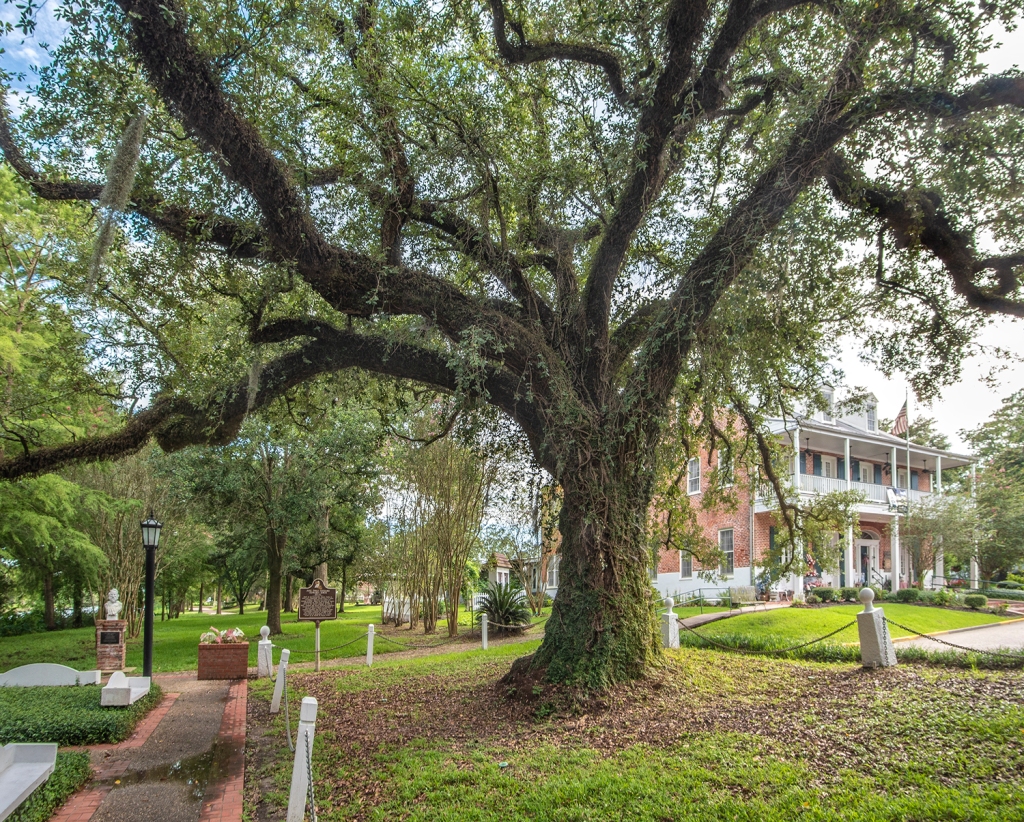
I know that the Cajuns are actually Acadians, from French Nova Scotia, kicked out after the French and Indian War and forced to resettle elsewhere–many of them, after a long and mostly horrific journey, arrived in the swampy wetlands of Louisiana and made their home here. I know that Longfellow’s epic poem “Evangeline”, about two lovers tragically separated during what is called le grande derangement–the Great Expulsion–who promise to find each other once they reach Louisiana. It’s a tragic poem, and of course the Evangeline Oak in St. Martinsville is supposedly the”place” that the fictional lovers finally found each other after so many years, but their pairing was simply not meant to be–the story is a tragedy, after all–but that was how the “Cajuns” came to be Louisianans, and even after they arrived it wasn’t easy for them here. The Creoles of New Orleans looked down their aristocratic noses at the lower class farmers, and so they settled in the part of Louisiana still known as Acadiana to this day.

I have a copy of Evangeline somewhere. I really should read it.

One of these years, I am going to explore my state more. I’ve lived in Louisiana now for almost twenty-seven years, and I’ve never done much in terms of exploration, sight-seeing, and research. The Atchafalaya Basin fascinates me, as does Acadiana. The more I read about the history of both New Orleans and Louisiana, the more I realize how little I know (I always laughed off being called a “New Orleans expert,” because there’s literally a library filled with information about the past of both the city and the state to completely humble me and make me realize I know actually very little about either, and definitely do not qualify to be called expert on anything Louisiana.

I’ve slowly started writing about the rest of Louisiana, but I often fictionalize the places I write about; they are loosely based on the reality but I get to play around with that sort of thing and that’s better for me than trying to write about the real places and making it all up. My first time outside of New Orleans writing about Louisiana was really Bourbon Street Blues, when Scotty is kidnapped by the bad guys and winds up deep in a swamp. “Rougarou” was when I came up with a fictional town and parish outside of New Orleans, which I’ve used since then again. Need had portions that were set in the rural parishes outside of the New Orleans metropolitan area. The Orion Mask and Murder in the Arts District also were heavily reliant on being set (at least partially) in a fictional parish between New Orleans and Baton Rouge. “Solace in a Dying Hour” is another one of these stories. Oh, and Baton Rouge Bingo also had a lot of action outside of New Orleans as well.

I probably should have majored in History for college, but what would I have done with that kind of degree other than teach? Ah, the paths not taken, since I never had any desire to be a teacher, probably my subconscious saying um, you cannot be a teacher because of who you really are which was probably smart. Besides, I wouldn’t have ever been able to pick a period to specialize in; I would have had to be like Barbara Tuchman, interested in everything and picking certain periods that intrigued me for study. How could I ever choose between the Wars of Religion and seventeenth century France, or the Hapsburgs in Spain and Austria? Although I suppose I could have specialize entirely in the sixteenth century, primarily because it was such a tumultuous transitional century. I wish I was a trained researcher, but I suppose I could still learn how to do research properly despite my great age; the problem is time. Fall Saturdays are given over to college football (and I am not giving up one of the great joys of my life) and of course Sunday I watch the Saints. But if I am going to write historical fiction set in New Orleans or Louisiana, why wouldn’t I avail myself of all of the magnificent research facilities here in the city? UNO, Tulane, Loyola and I’m sure Xavier all have archives in their libraries documenting the past here; there’s the Historic New Orleans Collection and the Williams Research Center and really, so so very much. I also need to explore the bayou parishes and the river parishes, and make my way further north to explore Acadiana…and if I ever want to write a book based on the Jeff Davis Eight, I would need to go visit that parish and look around, get a grasp for how it feels and looks there.

So much to do, so little time…and one of the great problems about Louisiana and New Orleans history is trying to decipher what is fact and what is fiction; as so many “historians” and “writers” (looking at you, Robert Tallant and Harnett Kane) often wrote legends and lore as historical fact. I’m not sure how much of Gumbo Ya-Ya is actually true or not, but for writing fiction…perhaps it doesn’t matter as much how right it is? I have this idea for a story, predicated on something I recently discovered again–I have a tendency to forget things–but there was a community just outside of New Orleans called St. Malo, which was settled by Filipinos who’d escaped bondage on Spanish sailing ships. Filipinos in Louisiana in the eighteenth century? But it’s true; and the community was mostly houses and buildings built over the water; the 1915 hurricane destroyed it completely and it was never resettled, with those who survived moving into the city proper. I have an idea for a story called “Prayers to St. Malo” that would be built around that, but the story is still taking shape. There is always more to learn about regional history here…and since I am doing such a deep dive into Alabama history, why not continue diving in regional here?

Louisiana is unique and special and different–which is why I think I felt at home here that fateful thirty-third birthday when I came to New Orleans to celebrate it. New Orleans was the first place I ever felt like I belonged, and I’ve never regretted moving here. I just wish I’d started diving into the local history sooner.

Waiting for the Sirens’ Call

Well, it’s now Thursday and let’s see how the rest of this week goes. I don’t have to go back to the office until Ash Wednesday–working at home today and tomorrow–and then over the weekend (all four days of it) I can leisurely clean and write and get things done, which is always a plus. Paul hasn’t been getting home from the office until almost ten every night this week–making me a Festival widow, as I always am every year at this time; the primary difference being Paul would come home for the parades and then work on things at his desk until all hours of the night while I went to bed. Last night’s Youtube wormholes included Kings and Generals videos about the Ottoman Wars; short documentaries about Henry VIII’s sisters, Margaret and Mary (who don’t get near as much attention as their famous brother– had Henry’s matrimonial efforts been a bit more in line with those of a normal king, Margaret and Mary would have most likely gone down in history for their own notoriety and scandalous lives…as it is, they are most forgotten footnotes to Tudor history. But all the British monarchy after Elizabeth I is actually descended from Margaret Tudor rather than Henry VIII); another couple about another favorite sixteenth century royal woman Marguerite de Valois (immortalized as Queen Margot in the Dumas novel); famous courtesans of history; and the decline and fall of the Byzantine Empire. (I really have always wanted to write about palace intrigue in Constantinople–there’s a reason why “byzantine” has come to mean interconnected elaborate conspiracies with twists and turns and surprises)

I was also very tired yesterday, after my third “get up at six and go to the office” day in a row. I am acutely becoming more and more aware of my age and the increasing fragility of my body; nothing terribly original or insightful, really. The decay of our bodies is something we can generally spend a good portion of our lives not thinking about, and of course, we consistently always push aside thinking about our own mortality because–well, because no good can come of it, really, other than paralyzing depression and panic about the shortening of the life string held by the Three Fates. I have become very used to the idea that I am not going to be able to write all the things that I want to write in the limited time I have left to me (see what I mean about paralyzing depression? Just typing those words made my entire body shudder), particularly with all the new ideas I get on an almost daily basis.

And the more research I do about New Orleans and Louisiana history, the more fascinated I become. I was actually thinking the other day, as I idly went down a research wormhole about Alice Heine (the first American born princess of Monaco was NOT Grace Kelly, but Alice Heine–born and raised in the 900 block of the French Quarter in New Orleans), I couldn’t help but think man, I should have started studying all this New Orleans/Louisiana history YEARS ago–at least when we first moved here. There is so much rich, vibrant material in New Orleans’ checkered history; and when you expand it out to Louisiana as a whole, it becomes even more interesting. I had, in fact, primarily always assumed the prevalence of Spanish names in the state and region came from when the Spanish owned Louisiana….which in a way it kind of did; but it was because to populate their new lands and territories as a protective measure against both the British and the Americans, the Spanish governors encouraged immigration from the Canary Islands–their descendants are called los isleños; I knew about the isleños, but I never really knew when they came here and to what part of Louisiana they came. (There was also a Filipino settlement at a place called St Málo; outside the levees, that settlement was completely destroyed by a hurricane in the early twentieth century…which just goes to show precisely how much of a cultural and ethnic melting pot New Orleans is and always has been.) It’s all so goddamned interesting…the main problem is the older books about the state and city’s history aren’t necessarily reliable–Lyle Saxon, Harnett Kane, and Robert Tallant, in particular; their works weren’t always based in fact but in rumor and legend, and all too often in upholding white supremacy–but the stories are highly entertaining, if inaccurate, biased, and with perhaps too high a degree of fictionality built into them. But the stories themselves are interesting and could make for good stories–in particular Tallant’s book Ready to Hang: Seven Famous New Orleans Murders, (one can never go wrong with historical true crime, even if Tallant’s sources were faulty and included rumor and speculation)…the title tale is, in and of itself, one I’ve been interested in fictionalizing since I first became aware of it–I can’t recall the murderer’s name, but a very good-looking young man, he used to lure men in to rob and kill; and while he always had a girlfriend–sometimes accomplices–and Tallant never comes right out and says so, my takeaway from the story is that the guy basically preyed on older men with either gay or bisexual tendencies, which puts it right into my wheelhouse, really.

And of course, so many of these stories would work in my Sherlockian world of New Orleans in the first decades of the twentieth century.

And this, you see, is why I will never be able to write everything I want to write. Heavy sigh.

And on that note, I am heading into the spice mines. May your day be as splendid as you are, Constant Reader, and I’ll catch you again tomorrow morning.

Nothing’s Going to Change My Love For You

It’s gloomy and gray outside my windows this morning. I slept late–we stayed up late watching Unbelievable, which is so fantastic, and the performances of Merritt Weaver and Toni Collette are amazing–and a little later on I must run out to pick up some prescriptions and the mail. I’m still a bit groggy this morning as I sip my first cup of coffee, so here’s hoping the next cup or two will clear the cobwebs inside my brain and get me going.

I was terribly lazy (again) yesterday; I did get the car serviced (if you’re going to buy a Honda in the New Orleans area, you cannot go wrong with Superior Honda on the West Bank), after which I made groceries, hit the Sonic, and drove back across the river. I did the laundry (still not finished) and started cleaning and organizing, but also got sucked into a really bizarre true crime documentary on Hulu, The Turpin 13: Family Secrets Revealed, which left more questions behind in its wake than it answered. The Turpins were a family of Pentecostal Christians who eventually had thirteen children, whom they isolated and controlled in their various homes over the years, including such traumas as chaining them to their beds; starving them; not allowing them to bathe; and not allowing them to go outside during the day, in fact turning them into nocturnal beings who went to bed at 5 am, slept all day, and got up when the sun went down. It’s an interesting, albeit fascinating, story, but as I said, the couple are still awaiting trial so there aren’t any real answers there. I also watched the start of another World War II documentary of colorized footage on Netflix–very similar to the one I just watched yet different; I mean, obviously World War II documentaries are going to be similar as it’s history and history doesn’t–rarely–change.

Although watching the other colorized one, produced by the British and therefore not quite so interested in maintaining and upholding American mythology was very interesting.

I am also moving along in The Nickel Boys, Colson Whitehead’s latest, and am truly enjoying it. I like the way Whitehead writes, and I am all in for his main character, Elwood, growing up in Tallahassee during the Civil Rights era. As I do like to occasionally remind people, the Civil Rights era was my childhood; it really wasn’t that long ago. (The Second World War was also during my parents’ lifetimes, although they were too young at the time to remember any of it.) One of the many reasons to read diverse, non-white American authors is to see the country, its history, culture and society, through the eyes of the outsider, which challenges the narrative so often put forth, of American exceptionalism…and as I said earlier, those narratives also prop up and perpetuate American mythology. (This is, I think, one of the many reasons I so greatly enjoyed Neil Gaiman’s American Gods when I read it all those years ago–the concept of an American mythology, along with the identities and creation of gods through an American lens of what precisely we do worship in this country makes one start to question our collective societal values, as well as the mythology we are taught as truth.)

I’m also still reading Richard Campanella’s Bourbon Street, which is quite fun and educational, as part of my continued study of New Orleans history. I still have quite a few volumes to get through, and then I plan to move on to general Louisiana history.

But as I said above, the question of what is real and what is American mythology often colors the history we read and study. Reading Robert Tallant’s work, for example, clearly shows that white supremacy colors any of his writings about New Orleans and Louisiana history, and the same goes for Harnett Kane, and probably many other historical writers of the past. And when you consider that most reference materials from our own history are often newspapers–which weren’t exactly beacons of journalistic morality and integrity in the past–one has to wonder what the actual truth of our shared American history actually is.

Which is more than a little disturbing, really.

There’s an essay or a non-fiction book on American mythology–probably not one I will ever write, but it’s something that strikes me as needing to be written; although I would imagine Howard Zinn’s works of “people’s histories” of the United States would certainly qualify. (I do highly recommend Howard Zinn; all Americans should read him, and his People’s History of the United States should be taught, if not at the lower levels than certainly in college.)

And now it is time for me to get on with my day. There are some interesting football games on today, but nothing really strikes my fancy until this evening’s LSU-Arkansas game (GEAUX TIGERS!) and so will most likely will have the television on in the background as I read, write, and clean the rest of the day.

Have a lovely Saturday,  Constant Reader.

55500774_10156774317873855_1975147814665060352_n