No More Tears (Enough is Enough)

Good morning, and welcome to another cold January morning here in the Lost Apartment. I have some errands to run later today–later this morning, to be exact–and then I am spending the rest of the day holed up inside reading, cleaning, and probably watching figure skating on the television. We did watch the ladies’s final last night, which was quite fun, and am looking forward to seeing the competitions today. The European championships have also been going on this past week, so it’s all saved on Hulu for us to watch at our leisure. The Australian Open is also still happening–so much sport!–and so there’s that as well. I do want to finish reading my book today, and I want to read a short story, and start reading my next book as well.

And tomorrow I am cleaning out my email inbox if it kills me, and it just might.

I slept really well again last night–that’s three consecutive nights of good sleep, which is amazingly lovely.

Yesterday was also kind of a crazy day in the world, although it’s pretty safe to say that everyday has been kind of a crazy day for a while now. As I said to Paul the other night, “it’s like world politics has turned into Game of Thrones, only much scarier because it’s real.” And I know, world politics has always been very Game of Thrones, it’s just never been so obvious and apparent.

It’s hard to believe it’s almost February already, but there you have it and there it is. Carnival hovers on the horizon, and the Williams Festival/Saints and Sinners is just behind it. I am moderating a panel this year with Alafair Burke, Samantha Downing (My Lovely Wife) and Kristien Hemmerechts (The Woman Who Fed The Dogs) so I have some homework for that as well.

So much good reading to look forward to! Art Taylor also very graciously, along with Ellery Queen’s Mystery Magazine, made a pdf of his Edgar nominated short story “English 398: Fiction Workshop” available on-line, which I downloaded and look forward to reading. Art’s a terrific writer and a master of the short story (when I was nominated for the Macavity for “Survivor’s Guilt”, Art was the winner, and his story was amazing), and it’s always terrific to read one of his stories. (Hint hint: Art, how about a short story collection? Hint hint.)

I’m also going to dissect some short stories I am in the process of editing–unless I get lazy again. I rarely do this when I am editing/revising short stories, which makes my short stories actually kind of hit or miss; if the story works, it’s because I simply got lucky with it. But I think if I actually break the story down into what it’s about, and who the characters are and why they are the people they are, more of my stories would probably work. It’s a theory, at any rate, and there’s nothing I love to do more than break down my work and put it back together again (I’m being sarcastic, if you couldn’t tell).

And on that note, I am heading out into the frigid cold to get my errands out of the way before coming home to mine spice.

Have a lovely day, everyone!

18193674_1340113092703418_9190892510622004853_n

Sleigh Ride

Today we’re going to see Aquaman. I am very excited for this, if you couldn’t tell by me pretty much mentioning it every day for the last week. I didn’t discover Jason Momoa until Game of Thrones (I know, I know, bad gay), but have been a huge fan ever since. And while my initial reaction to the news of his casting was problematic (but Aquaman is blond!) I got over it pretty quick. I’ve always been a fan of Aquaman–yes, I love Superman, Batman and Wonder Woman, but have always had a place in my heart for the ‘lesser’ heroes–Flash, Aquaman, Green Lantern, etc. So I am excited to see Aquaman get his own movie, and I do hope someday they give Green Lantern another shot.

I slept in this morning, later than usual–last night I even fell asleep in my easy chair, showing how tired I was (although that’s happened twice this week), and I feel very rested this morning. I have to run to the post office this morning, and I have some things to get at the grocery store (the Saturday before Christmas! Hurray!) before we head out for the movie. I did work a little on Bury Me in Satin a little bit last night, but I also had dinner with some friends in from out of town, which was lovely, and then we also watched the Schitt’s Creek Christmas special. I do want to talk some more about this show, but I am going to give it, I think, it’s own entry because it deserves it. Seriously, people, if you aren’t watching this show you need to. It’s hilarious, but incredibly warm and sweet at the same time.

It definitely deserves an entry of its own.

My kitchen is a mess; and I have loads of chores to do this morning. I’d like to, obviously, get as much done today as possible, so tomorrow I can focus on the Saints game and editing the Scotty book, maybe log some time in on Bury Me in Satin, do some reading, etc., and then have both Christmas Eve and Christmas to not only do some writing/editing in the morning, but spend the rest of each day relaxing, which will be lovely. I get a three day work week this week and next (huzzah!) and so here’s hoping that some of that free time will be spent productively.

Or not. We’ll see. Oh! I have to stop at the library today, too. They’re holding a book for me. Yay! I love having a library card, and being able to reserve books on-line. I do think one of these days I need to just go spend a day in the library, though; try to remember what it was like when I was a kid and used to spend whole afternoons in the Tomen Branch of the Chicago Public Library on Pulaski Boulevard. And the Latter Library on St. Charles Avenue here in New Orleans is so, so beautiful.

I am also, by the way, in total denial that Carnival is just around the corner.

And now, back to the spice mines.

IMG_0970

Show and Tell

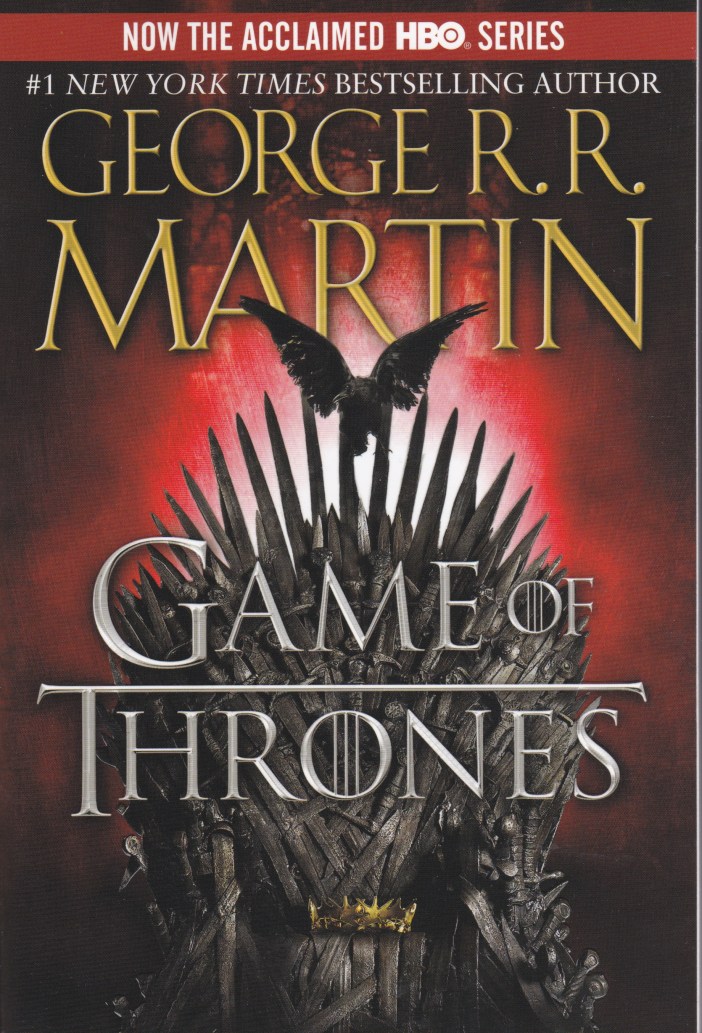
So, audiobooks and A Game of Thrones.

I am, of course, a huge fan of the HBO program Game of Thrones, based on George R. R. Martin’s epic fantasy series A Song of Fire and Ice. 

As I explained to Paul when we started watching, “It’s like medieval history, only with magic and zombies and dragons.” The first season was incredible–I had not read the books–and I remember thinking, in the season finale, as Dany walked out of the smoking ashes of Khal Drogo’s funeral pyre with baby dragons perched on her, my god, this entire season was simply set-up, before we get to the main story.

Little did I know what we were in for–although I liked, with the execution of Ned Stark, whom it seemed was the main character, the reality that anyone can die at any time–which of course increases the dramatic tension; if any character can die at any time, the stakes are much higher–and Paul and I have thrilled to the ups and downs and highs and lows. The show has done a wonderful job of weaving his story as well as forcing us, as viewers, to understand that, ultimately, life isn’t fair and good doesn’t always win over evil in the end.

I had been resistant to reading the books, primarily because they aren’t all written and published; I despise having to wait for the next book in a series, particularly when it’s very possible that by the time that book has come out you’ve lost the thread of the story and forgotten who is who with the characters (I’m looking at you, Stephen King and The Dark Tower); this epic series, though, is a bit different precisely because there’s a television show, which would make the remembering easier. But still…I hate waiting for another book. I did order a paperback set of the series books currently available, but when I saw how long they were and realized the time commitment that would be involved, I just didn’t think I could do it.

Flash forward to week before last, and my decision to give listening to Audiobooks a try on long car trips. As I may have mentioned before,  the concept of Audiobooks wasn’t something I was terribly keen on; I’ve always hated being read to, and I also had no idea how long audiobooks were and how long it would take to listen. But I did think, “I bet A Game of Thrones would be long enough to last the entire drive” and I set about looking for an audio book I could download. Nothing from the Public Library, and so finally, after trying out some other options, I finally went with the thirty-day free membership to Audible and downloaded A Game of Thrones…only to see that the recording lasted just over thirty-three hours. I also knew that if I really got into the story, I wouldn’t want to wait three days to finish listening, so I decided to go ahead and take my physical copy of the book with me, so I could finish reading it.

Which I did, in a lot less than the over twenty-one hours that was left on the Audiobook.

a game of thrones.jpeg

“We should start back,” Garen urged as the woods began to grow dark around them. “The wildlings are dead.”

“Do the dead frighteb you?” Ser Waymar Royce asked with just the hint of a smile.

Garen did not rise to the bait. He was an old man, past fifty, and he had seen the lordlings come and go. “Dead is dead,” he said. “We have no business with the dead.”

“Are they dead?” Royce asked softly. “What proof have we?”

“Will saw them,” Gared said. “If he says they are dead, that’s proof enough for me.”

Will had known they would drag him into the quarrel sooner or later. He wished it had been later rather than sooner. “My mother told me that dead men sing no songs,” he put in.

If you can remember back that far, the very first episode of the TV series opened with this exact scene; members of the Night’s Watch, in a frozen cold forest north of the wall, investigating…only to encounter the horror that is coming. The story then switches to the epic power struggle in the seven kingdoms of Westeros, primarily the set-up of the bad blood between two of the major houses: Stark and Lannister. The Starks are of course set up as the good guys; the Lannisters, with their deceit and money and incest, the bad. As I listened–and later, read–I found myself getting very caught up in the story, even though I knew most of it already; the book is more layered and obviously has more backstory and information than the television series. Also, as I read along, I was reminded of my original comment to Paul: its medieval history with magic and zombies and dragons.

I’ve always loved history; I’ve read a lot of historical fiction and I’ve read a lot of history. I mentioned before Maurice Druon’s The Accursed Kings series, recently reissued and marketed as the “inspiration for Game of Thrones!” , with introductions by Martin himself. (I took my new copy of The Iron King with me on the trip, and started reading it after I finished the Bibliomysteries Volume 2 and A Game of Thrones.) I’ve always wanted to write my own history, with countries and lords and ladies and so forth all invented in my fevered brain; primarily because I wanted to change the way some histories ended. (What if the Babington Plot succeeded and Elizabeth I was assassinated?, for one example) This is kind of what A Song of Fire and Ice is; and I am of course the perfect audience for this.

I’ve not read much fantasy fiction. I’ve read The Lord of the Rings, of course (who hasn’t, really?), and I read the first few books of the The Shannara Chronicles many years ago; I’ve also read a few volumes of David Eddings’ The Belgariad, and of course McCaffrey’s The Dragonriders of Pern (hello, Showtime? This series would be perfect for a television show). One of the common themes of all of these series, along with Martin’s, is a lesson we never heed: those who do not learn from history are doomed to repeat it. In each of these series, there was an enormous and great threat from the past that everyone has forgotten or dismisses as “legends”; but the threat is very real, the stories are true, and in the present day, the threat is reemerging and everyone has to remember how to fight it.

Another theme of A Song of Fire and Ice is also history, and politically, related: people will always put short term gain ahead of long term success; instant gratification, apparently, being far far more satisfying that careful and strategic planning; selfishness often leads to doom.

I am really looking forward to reading more of A Song of Fire and Ice.

I Can’t Make You Love Me

GEAUX SAINTS!

So, it’s another chilly Sunday here in the Lost Apartment. It’s sixty degrees now outside, but it dipped into the forties overnight, so it’s going to take awhile for the Lost Apartment to recover–if it ever does. Today I need to pack up for the trip tomorrow morning. I’m not taking the MacBook Air with me, so I am not entirely sure how I’ll be able to crosspost the blog–should I write any entries–to Facebook and other social media because cutting and pasting on the iPad confuses me.

Don’t judge me.

The LSU game last night was a romp; never in doubt from the first snap, and ending with a 42-10 score. It was 28-3 at half-time and was never in doubt. As such, there was very little-to-no tension on my part, so I was able to sit in my easy chair like a millennial, scrolling through apps on my phone while also taking some time to read. I stopped by the Latter Library yesterday to pick up another book I’d reserved (Chariots of the Gods? by Erich von Daniken–more about that later) and also renewed Bibliomysteries Volume 2 for another week. I am taking both books with me to Kentucky, and am also taking A Game of Thrones by George R. R. Martin; I think it’s time I got started writing A Song of Ice and Fire, now that the end of the television series is in sight with this past week’s announcement that the final season will begin airing in April.

I took yesterday as my day off for the weekend; I didn’t clean anything, nor did I organize or file or edit or write. I was basically just a lazy slug, sitting in my easy chair and flipping between football games while reading. I’m still rereading ‘salem’s Lot but have now reached the end game, the final section of the book called “The Empty Village,” and the tracking down of the vampires concluding with Ben and Mark running away to Mexico while Ben writes his book isn’t as interesting to me as the opening of the book; as I said when I discussed the reread initially, I am more interested in how King depicts the town more than anything else, which was the impetus for the reread. And how much do I love this sentence, which opens section 2, “The Emperor of Ice Cream”:

The town knew darkness.

It’s very Shirley Jackson-esque, and the passage that follows is perhaps my favorite part of the entire book.

I also think I am going to give The Shining  a reread; The Shining is, for most fans, critics and readers, King’s best work. I couldn’t get into it when I first bought the paperback, with the boy’s head with a blank face drawn on a shiny silver cover. I picked it up again a few years later and tore through it in one sitting; but as creepy and horrifying as it was, and how nasty the Overlook Hotel was…it was one of the few I never reread completely. I’ve picked it up and started it again, flipped through it and read sections, but I’ve never read it from beginning to end. I think the complexity of Jack Torrance as a character cut a little too close to home for me, but now that I have over fifty books out there with my name (or a pseudonym) on the spine…I don’t have to be too stressed about the failed author character being too close to home for me anymore.

At least one can hope so.

Tomorrow is the dreaded twelve hour car ride through Mississippi, Alabama, a bit of Georgia, and the Smoky Mountains of Tennessee. I need to go get the mail before I leave town and possibly stop by the bank, so I am going to be getting a later start than I would have perhaps wished, but a twelve-hour drive is a twelve-hour drive no matter when you get started, and I am most likely going to shower and go straight to bed when I arrive in Kentucky. I am still trying to figure out what digital book to download and listen to in the car–who says you can’t teach an old dog new tricks?–but none of A Song of Fire and Ice are available as audiobooks from the library, and the library’s app isn’t as intuitive as I would like (translated: I’m too old to figure out the easiest way to use it). I wanted to start Charles Todd’s brilliant series set during the end of the first world war, but the first book isn’t available from my library (BASTARDS!!!!) and so I have to choose something else. I’ll spend some time on there today–maybe on the library’s website, which is easier for a Luddite like me–and perhaps the second Louise Penny Inspector Gamache novel might do the trick.

Or maybe The Shining. Ooooooh.

Most of today is also going to be spent on odds and ends. I may get some writing work done, or I may not. I think after the Saints game we are going to watch either Love, Simon or Call Me By Your Name; both are available for free streaming on one or another services I pay for now. I also am assuming I’ll finish watching Knightfall while I am in Kentucky, as my parents both go to bed early every night.

And yesterday I also managed to read “The Gospel of Sheba” by Lyndsay Faye, from Bibliomysteries Volume Two, edited by Otto Penzler:

Letter sent from Mrs. Colette Lomax to Mr. A. Davenport Lomax, September 3rd, 1902.

My only darling,

You cannot comprehend the level of incompetence to which I was subjected today.

You know full well I never demand a private dressing room when stationary, as the very notion implies a callous disrespect for the sensitivities of other artists. However, it cannot pass my notice when I am engaged in a second class chamber en route from Reims to Strasbourg. The porter assured me that private cars were simply not available on so small a railway line as our company was forced to book–and yet, I feel justified in suspecting the managers have hoaxed their “rising star” once again. The reek of soup from the dining car’s proximity alone would depress my spirits, even were my ankles not confined one atop the other in a padlock-like fashion.

I do so loathe krautsuppe. Hell, I assure you, my love, simmers with the aroma of softening cabbage.

Lyndsay Faye has twice been nominated for the Edgar Award for Best Novel (for The Gods of Gotham, which I adored, and for Jane Steele, which is still in my ever-growing and enormous TBR pile), and she is also a delight to know in addition to her enormous gift for writing. Lyndsay is an enormous Sherlock Holmes fan (Sherlockian?), and even her first novel, Dust and Shadow, was a Holmes tale; she recently published an entire collection of Holmes short stories. “The Gospel of Sheba” is sort of a Holmes story; both he and Watson do appear in the story, but it’s primarily told from the point of view of a sub-librarian, Mr. Lomax; he is married to a professional singer who at the time of the story is currently on a tour–her presence in the story is either through her husband’s point of view or epistolary; we get to see occasional letters from her. Her husband’s point of view is seen through diary entries where he talks about the mystery of the Gospel of Sheba, a grimoire a member of a private men’s club with an interest in the supernatural has discovered and that makes anyone who reads it ill. One of the things I love the most about Faye is she writes in the formal style of the nineteenth century, but it always reads as organic and never forced. There’s never a sense from the reader of Oh I see what you’re doing here or from her as the author of see how clever I am? She’s somehow modernized that formal style, breathed fresh life into it, and uses it to help set the mood and the time and the setting. You can almost hear the hiss of gas in the lamps, and see the flickering gaslight. This is a terrific story, and reminds me of why I loved The Gods of Gotham so much, and also reminded me I need to dive back into her backlist.

And on that note, ’tis back to the spice mines with me.

IMG_4349

We Got a Love Thang

Vacation, all I ever wanted…vacation have to get away!

But in fairness, I dread being in the car for nearly twenty-four hours over the course of five days.

Shudder.

And there’s so much to do before I leave.

I fixed our front door last night. Paul’s key got stuck in the front door lock and wouldn’t come out. I just shrugged and said I’ll just take the deadbolt apart, fetched a screwdriver, and did precisely that. I not only got the key out of the lock but I also reassembled the deadbolt, fixing what had gone wrong with its mechanism. Once I was finished, I was a little amused; I certainly never would have dreamed I’d ever be that handy. I wish I were handier; I wish I knew how to change the oil in my car and how to rewire things. I am, in fact, very uneducated about how my current car works, and I’ve had it for almost two years. I really do need to read the manual.

I am thinking about working on Bury Me in Satin today, after I run my errands and before the LSU game this evening. I also think the last two chapters have been incredibly difficult because I am having to make it up as I go. I have this amorphous idea of a story, but am not entirely sure I know how I am going to tell it; hence the problems I’ve had with the last two chapters. What I need to do is some planning; some brainstorming on the characters and who they are and what they want, and perhaps even some plotting and outlining. I also wonder if I am simply, in reaction to having such a hard time writing the last two chapters, coming up with excuses for not actually doing any writing (“well, there’s really no point in even trying to write anything since I don’t know this and this and this”) which could in reality be some kind of self-sabotage crossed with Imposter Syndrome with perhaps just a pinch of my tendency to procrastination and shameless laziness.

And, just for fun, there’s the distinct possibility that all of it is true.

This is why writers drink.

I slept incredibly deeply and well. I stayed up later than I’d wanted to because I chose to wash the bed linens last night, rather than today, and the dryer struggled with the blankets–it does this sometimes, with no rhyme or reason to it–and finally rolled into bed just past twelve last night. I got up at nine this morning; it really makes a significant difference to wake up organically, rather than be untimely ripped from the arms of sleep by the brutality of an alarm.

I started watching a series on Netflix called Knightfall last night–well, I’d started it one night in the last week when Paul was late getting home, and it’s interesting. I don’t care about the historical inaccuracies; whenever I watch historical fiction I generally do unless it’s so glaring it cannot be ignored. It’s about the last of the Knights Templar, and borrows somewhat from The DaVinci Code, which of course borrowed heavily from Holy Grail Holy Blood, which was a rather lengthy non-fiction tome built around a conspiracy theory (the authors went on to write two more books, following the same theme; their primary source was later revealed to be a liar). I read Holy Grail Holy Blood back in the 1980’s, when it was newly in paperback; I read it again in the 1990’s, primarily because I was interested in the sections on the Cathar heresy in the south of France and the Albigensian Crusade that wiped them out. Thus, the ‘big reveal’ in The DaVinci Code  wasn’t really a big reveal to me; as soon as it became clear that the plot had to do with the Knights Templar and Priory of Sion, I knew what it was.

Anyway, I digress.

Knightfall is about the Knights Templar, and is set in France during the reign of Philip IV, the Fair (which meant handsome and had nothing to do with justice). Now, I know Philip IV, conniving with Pope Clement, eradicated and wiped out the Templars; but Clement’s predecessor Boniface is in this–and he is working with the Templars. The basic plot of the story (thus far) is that the Templars once had possession of the Holy Grail in the Levantine city of Acre; but as they escaped the city before the armies of the Arabs, the ship it was on sank. Fast forward a few years, and something is going on within and without the Templar order; we found out last night that the actual Grail isn’t at the bottom of the harbor at Acre but somehow made it to France.

This is actually a deeply fascinating period in French history; Philip IV, who is not particularly well known (we as Americans are not particularly knowledgeable about French history; which is to be expected as former colonies of the British, and French histories/biographies written in English by either British or American historians are few and far between–unless they are about Louis XIV, the French Revolution, or Napoleon), reigned over a particularly turbulent era in French history. The eradication of the Templars–to whom he owed an obscene amount of money–was part of a carefully laid plan he executed with the assistance of Pope Clement, who was basically a tool of the French throne. Philip had come into conflict with Pope Boniface, had taken him prisoner, and basically forced Clement down the throat of the cardinals. The Papal court was then moved from Rome to Avignon in the south of France (the Papal period known as the Babylonian Captivity), and Clement appointed enough French cardinals to outnumber the rest, ensuring the popes would continue to be French and would stay in Avignon. (This eventually led to the great schism, with two different popes–at times, there were more than two–competing for power and the obedience of kings and their subjects, excommunicating anyone who followed a different pope, and degrading the Catholic Church–which eventually led to the Protestant reformation….so yes, Philip the Fair was actually the father of the reformation), and the Templars were rounded up, convicted of heresy in trumped up trials, and burned at the stake. The last Grand Master, Jacques de Moray, was convicted of heresy and burned. The King, the Pope, and the King’s great minister were present when the Grand Master issued a curse from the flames, calling them all to account for their crimes before God within a year. (Whether this actually happened or not is up for debate.) But within a year, all three men were dead. Philip’s three sons all died without sons, following each other on the throne successively; when the last one died, his daugher’s son, Edward III of England, claimed the French throne through his mother as the closest male heir to Philip IV and his sons; the nobility gave the crown to a cousin who became Philip VI, and thus the Hundred Years War began.

The fourteenth century is fascinating. An excellent history of it is Barbara Tuchman’s A Distant Mirror. French novelist Maurice Druon wrote an entire series of fictional books about the dying out of the main line of the French royal house, the destruction of the Templars, and all the scandals that plagued the children of Philip IV, beginning with The Iron King; new editions have been published in English due to the popularity of Game of Thrones, and the books have introductions by George R. R. Martin–because he read them and they helped inspire Game of Thrones. I read this series of books–The Iron King, The Strangled Queen, The Poisoned Crown, The Royal SuccessionThe She-Wolf of France, The Lily and the Lion, and The King Without a Kingdom–collectively known as The Accursed Kings, when I was a teen. Druon opens the series with the breaking up of the Knights Templar and Moray’s curse…and then proceeds to show how the curse worked on France and its royalty for decades.

Anyway, I am enjoying Knightfall. It’s a truly fun romp, and the main character is played by the very handsomely bearded Tom Cullen. It’s apparently a History Channel show, and has been renewed for a second season.

I also found a French show, Maximilian and Marie de Bourgogne, which looks very promising; about the marriage between Maximilian of Austria and Mary of Burgundy in the late fifteen century; a marriage that was, frankly, the root cause of every major European war from 1476 to 1914. It is in French, which means subtitles, but I am slowly but surely getting over my aversion to subtitles as my hearing gets worse–I tend to turn on the subtitles on even English language movies and television shows because I can’t understand what they’re saying; particularly if it’s British made. It might be something interesting to watch and explore while I am in Kentucky next week.

And on that note, tis back to the spice mines. Have a lovely Saturday, everyone.

IMG_4347

Would I Lie To You

Wednesday.

I’ve not been sleeping well for the last two nights; I’ve woken up after sleeping for a couple of hours and then been kind of half-asleep the rest of the night. Relaxed, resting, but not fully asleep. I’m not sure why this sudden change, especially after getting an amazing night’s sleep Saturday night, but there you have it.

I started working on Bury Me in Satin last night again, in an attempt to get past the stress and tension of election night. I am very pleased this morning to see that Louisiana passed the initiative to require unanimous verdicts in criminal trials; finally, that hideous Jim Crow law is off our books. I wasn’t able to concentrate fully on the writing, though, and eventually took to watching reruns of Jeopardy on Netflix, which is a lot more binge-addicting than you might think. Before I knew it, Paul was home and I’d burned through about five episodes–but it’s nice to know I can have that on now in the background as I do chores or read or make writing notes.

Once Paul was home, we watched the final episode of Bodyguard, a BBC political/suspense thriller starring Richard Madden (aka Robb Stark from Game of Thrones). It’s quite good, very twisty, and incredibly nerve-wracking; I do highly recommend the show. Madden, who is also very pretty, has been mentioned lately as a contender for taking over James Bond. I’ve not really seen it, to be honest; he was good (if annoying) on Game of Thrones (not his fault; the character, really) and he was good in Medici Masters of Florence, but I just didn’t see him as Bond. After watching Bodyguard, I can actually see it; he would be a very good choice (if we can’t have Idris Elba).

Our office moved this week; today I am working out of the main office, and then it’s back to the new building tomorrow and possibly Friday. I am not sure; I may have to go to the main office to help them pack up on Friday, as the rest of our department is moving over to the new building next Monday. The new building, on Elysian Fields past Claiborne on the UNO side, is quite nice and lovely. Lots of unpacking and setting up remain to be done; we are going to be operational and seeing clients apparently next week. I do miss the client contact, quite frankly; it’ll be nice to start seeing clients and getting used to the new work space.

And I am hopeful work on the novel will continue to go smoothly. The second chapter is my bane, a transitional chapter, which means it will seem odious and take me forever to slog through writing it. But I am excited to be finally writing this book, having thought about it forever–it started as a short story called “Ruins” that I wrote in the 1980’s, and while I like Ruins as a title, there’s a rather famous Scott Smith novel called The Ruins, and so I am not quite certain calling this one that is a good idea. I do like Bury Me in Satin as a title, and I am going to be trying to figure out my complicated plot a bit this weekend after I get deeper into the manuscript.

It’s probably the most complicated plot of a young adult novel that I’ve written, but I like my main character, Jake Chapman, a lot. He’s smart smart smart, and I like the idea behind the concept of the book. It remains, however, to be seen whether I can actually pull it off. We shall see.

And now, back to the spice mines.

IMG_4341

Sledgehammer

We have rain forecast again for today, but right now it’s gorgeous and sunny and blue skies as far as the eye can see outside my windows. Alberto has sped up and shifted east; we are no longer in the Cone of Uncertainty, but Monday evening could be rather unpleasant; the whole day in fact could be rather unpleasant.

Yesterday I broke down and read the first fourteen chapters of the Scotty book. I’d been putting it off–avoidance  having always been one of my top methods of dealing with something I’d rather not–and am pleased to report that while the draft is, in fact and as I’d suspected–terribly rough. But while the writing itself needs to be improved on, and the scenes made better and the dialogue strengthened and the characters deepened; the bare bones of the story are there and they are working precisely the way I wanted them to. Chapter Fourteen is, indeed, terrible and off-track; which means I shall simply have to correct it before moving on to Chapter Fifteen. This was such an enormous relief to me, you have no idea, Constant Reader! I also finally figured out the plot as well, which was equally lovely. Now, I have eleven or so chapters more to do and the first draft is finished; and then it’s just clean-up work.

Huzz-fucking-ah!

I also continued making notes on both “Never Kiss a Stranger” and “A Holler Full of Kudzu,” as well as notes for the y/a I want to write later this year, Bury Me in Satin. I have to say, having this stay-cation has been absolutely necessary and needed; I should probably take these lengthy weekends every few months or so, just to get caught up and reconnect with my writing, rather than just trying to get it done.

I’ve also continued reading Roth’s When She Was Good. Roth is a spectacularly good writer, and he definitely understands character and what to do with it; which is, of course, another way of saying that I am really enjoying reading this book, which I didn’t expect. There is, of course, some casual homophobia in the book, but unfortunately it also fits into the time period and therefore kind of works with the characters…but still kind of jarring to read, while kind of important to remember it wasn’t that long ago that blatant homophobia was so deeply and systemically woven into the fabric of our society that it’s a wonder we’ve made it this far already.

I continue to watch The Shannara Chronicles, and was saddened to see a main character killed off in Episode 8 of Season 2 last night. Shannara is similar to Game of Thrones in that regard; everyone’s life is on the table. I only read the first novel in the series, but it might be interesting to go back and reread the first one and the next two in the series at some point (because I have so much free time).

I also watched the season finale of Krypton, which was terrific. Krypton, which started out kind of ‘meh,’ really hit its stride as the season got going. I rewatched the 1940’s version of And Then There Were None last night, which is terrific other than changing the end of the novel, and the 1974 version of Murder on the Orient Express, which was not as good as I remembered.

I am currently reading two non-fiction books: The Republic of Pirates and The Golden Age of Murder. As my watching of Black Sails no doubt tipped you off, Constant Reader, I am fascinated by pirates and one day hope to write about pirates; whether actually about pirates during their heyday, or about pirate treasure in the present (there’s a Scotty idea in my head somewhere about Jean Lafitte’s treasure I just can’t get my hands on, but someday!), so I am reading The Republic of Pirates as sort of research/for pleasure. Likewise, The Golden Age of Murder is about the Detection Club, and the rise of the British writers who made up the “golden age”: Christie, Sayers, Chesterton, etc. It’s interesting and informative; while I’ve read many of these writers–many of them when I was a teenager–it’s kind of fun finding out what they were like as people; what they thought of their own writing and each other; how they came up with their ideas, and what they did for marketing purposes (Sayers was apparently a tireless self-promoter).

I’ve decided that I have to do more promotion going forward; I am not exactly sure how to do that, but it’s something I need to be more pro-active about. Facebook and Twitter certainly can’t be the be-all end-all of my marketing efforts; however, the gay bookstores are gone as are the gay newspapers, and the mystery bookstores seem to be closing at an equally alarming rate as well. I’ve also come to the conclusion this year, as I’ve mentioned so many times before in past entries this year already, that I need to stop being so self-deprecating and take pride in my work. This is very against my nature; my default is to self-deprecate so I don’t have to worry about other people being deprecating. I’ve always feared that if I say something like I’m really proud of this story someone else will say, well, being proud of THIS isn’t difficult given what you’ve written before; you see how defeating this all can be? Reprogramming my mind isn’t easy, but it is definitely something I need to work on for this year. At the same time I detest arrogance…so it’s a tightrope I have to walk, proud but not arrogant. And I’m not sure I can navigate either properly.

But I am enjoying creating again; enjoying working with my characters and coming up with plots and dialogue and images. Hopefully I’ll do some actually writing–last night I was writing scenes in my journal in long-hand while the television blared in the background; fortunately with the Christie films I’d seen them before and read the novels, so I didn’t miss anything; I may not have been paying as close attention to The Shannara Chronicles as I may have needed to.

Today, I am going to reread the first four chapters of the revision of the WIP (which I have already started revising yet again). I may do some computer-writing today, but then again we’ll see where the day goes, shall we?

I also have been reading some short stories. I’d forgotten that The New Yorker was doing these decades books; showing the decade through collected pieces published in the magazine during that decade. I had purchased the volume for the 1940’s, and forgotten about it. I started paging through it the other day, and came across some great essays as well as some short stories…

The first inThe New Yorker’s The 40’s: The Story of a Decade is”The Second Tree from the Corner” by E. B. White.

\”Ever have any bizarre thoughts?” asked the doctor.

Mr. Trexler failed to catch the word. “What kind?” he asked.

“Bizarre,” repeated the doctor, his voice steady. He watched his patient for any slight change of expression, any wince. It seemed to Trexler that the doctor was not only watching him closely but creeping slowly toward him, like a lizard toward a bug. Trexler shoved his back an inch and gathered himself for a reply. He was about to say “Yes” when he realized that if he said yes the next question would be unanswerable. Bizarre thoughts, bizarre thoughts? Ever have any bizarre thoughts? What kind of thoughts except bizarre had he had since the age of two?

It’s interesting, for one thing, to switch from the crime/horror stories I usually read to read something that’s more along the literary fiction lines; I’ve heard of E. B. White before but never read him other than his collaboration with William Strunk, The Elements of Style, which has become a Bible of sorts, if not to writers then definitely to writing students. So, it was kind of nice to read some of his fiction.

The story itself is rather clever; it’s about the relationship between a psychiatrist and a patient, primarily drawn from the patient’s–Mr. Trexler’s–point of view, and how he sees his own neuroses and if his doctor is actually helping him or not. Mr. Trexler begins to slowly question his therapist during their sessions, which inevitably shifts the dynamic between the two, and Mr. Trexler also has some keen insights into his doctor’s personality. Ironically, this ‘reverse-therapy’ seems to have the most positive effect on Mr. Trexler, and after a session–which may or may not be his final session with this doctor–he’s kind of helped himself; on his walk home from the therapist he is quite buoyant and happy and seeing the world with almost new eyes, seeing everything in a new way.

So, the therapy worked…but just not how it’s intended to work, but does it matter when the final end is the desired outcome?

Interesting.

And now back to the spice mines.

IMG_4108

Mr. Roboto

I finished the line edit yesterday, thanks be to the baby Jesus. Now I have to input it into the document, but the worst part–the actual line by line edit–is done done done. Huzzah! Huzzah!

I lived in Houston for two years, and of course, my parents lived there over ten. So, I feel connected to that city as well–not to mention all the friends I have there, and my favorite specialty bookstore, Murder by the Book, so my heart breaks every time I see the flooding pictures, videos, and the posts. Keep Houston in your hearts, everyone, and know they are going to need help. Twelve years ago it was New Orleans, and Houston opened its heart to us. Never forget. Rebuilding Houston is going to be a long and incredibly challenging process. We need to be there for our fellow Americans.

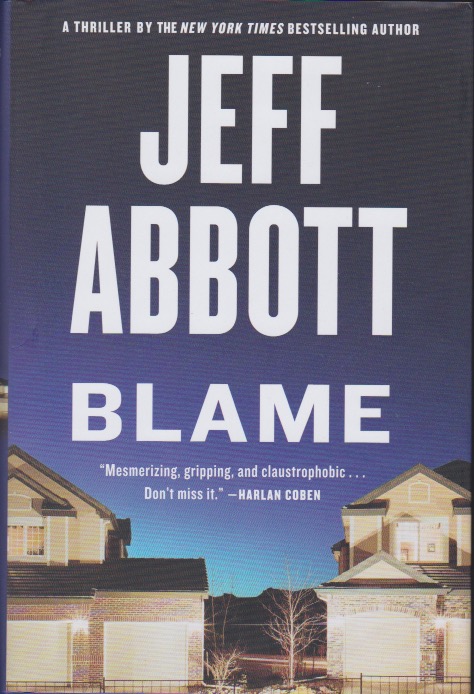
I spent the rest of Sunday–pre-Game of Thrones epic season finale, reading Jeff Abbott’s extraordinary Blame.

blame

What she would never remember: their broken screams starting with I love…and I hate…, the sudden wrenching pull, the oh-no-this-is happening-this-can’t be-happening feeling of falling as the SUV rocketed off the road, the horrifying downward slope of the hillside in the headlights, his hand tight over hers on the steering wheel, the smashing thunder of impact, the driver’s-side airbag exploding in her face, the rolling, the lights dying, the unforgiving rock, and then the blow to her head that undid her and wiped her clean and made her new.

The old Jane died; every version of David died. The new Jane, product of a dark night’s fury and tragedy, knew nothing more until she woke up four days later, remembering nothing, not her name, not her mother’s face, the crash, what had happened to her in that hospital bed, or any of her past seventeen years. Slowly the memories began to seep back: her birthdays when she was a child, cake sweet and soft on her lips; the smoky, rich aroma of her grandfather’s pipe matched with the woolly smell of his tweed jacket with leather elbow patches; her mother’s favorite lavender soap; the notebook she’d filled with short, dark adventure stories one summer and proudly read to her dad; the faces of her teachers; the smile of the librarian who’d give her stickers during the summer reading program; the feel of her hand in her father’s palm; the faces and the laughter of her friends when they were kids.

Sometimes the memories felt immediate; sometimes they felt like something she’d seen in a film, present but distant, nothing to do with the person she was now.

Except for the past three years.

Jane was seventeen, but as the memories surged back, she was stuck at fourteen. Those last three years were gone, all the joy and drama of her high school life, lost in the damage and the trauma. Including those mysterious, unexplained last few hours, when she was with a boy she wasn’t supposed to be with, when she was out doing God knows what. The girl lived and eventually limped back into the bright sunshine, and the boy died and went into the cold ground, a secret sleeping with him.

And so the world she knew turned against her.

Except someone watched, and waited, and wondered how much of that night Jane Norton really remembered.

Amnesia. While not nearly as common as soap operas make it seem, it’s an actual thing. I did a lot of research on amnesia when I was writing Sleeping Angel–most of which I’ve actually forgotten–but if done right, amnesia is an excellent foundation for a crime novel/thriller.

Jeff Abbott has done it right with Blame.

Two years have passed since the terrible accident that took Jane’s memory and killed her neighbor, David–one of the most popular boys in their high school in an affluent section of Houston. Jane’s early memories have come back, but she doesn’t remember high school before the accident, or the tragic accident that killed her father when she was a freshman. Hated and resented by many of her classmates, she’s now homeless, sometimes crashing in one of her few friend’s dorm rooms in a local college. Her mother is too much for her to handle–think Mildred Pierce on steroids–and of course, David’s parents also still live next door; his mother hates her and makes no bones about hating her. Her mother refuses to sell the house, and David’s parents are splitting up. On the anniversary of the accident Jane unfortunately encounters David’s mother Perri at David’s grave, which turns into an incredibly ugly altercation when Perri attacks her; Jane’s Uber driver records it all–and it goes viral.

At the same time, someone named “Liv Danger” is going after Perri on social media–Jane as well–and soon other people involved somehow, even peripherally, the night of the accident are under attack. Slowly but surely, Jane has to slowly start piecing together what happened that day as the Liv Danger’s behavior becomes more and more menacing and dangerous…and other dangerous characters are getting involved.

This book was, quite simply, an extraordinary read. The tension begins on Page One, and not only does it not let up, it builds. I literally took the book into the kitchen with me, reading while I was making dinner because I couldn’t stop, didn’t even want to take twenty minutes away from it because I had to know what happened that night! 

I cannot recommend this book highly enough, but along with that recommendation comes this warning: set aside a weekend to read it because you won’t want to put it down.

Easily one of my top reads of this year.


Jeopardy

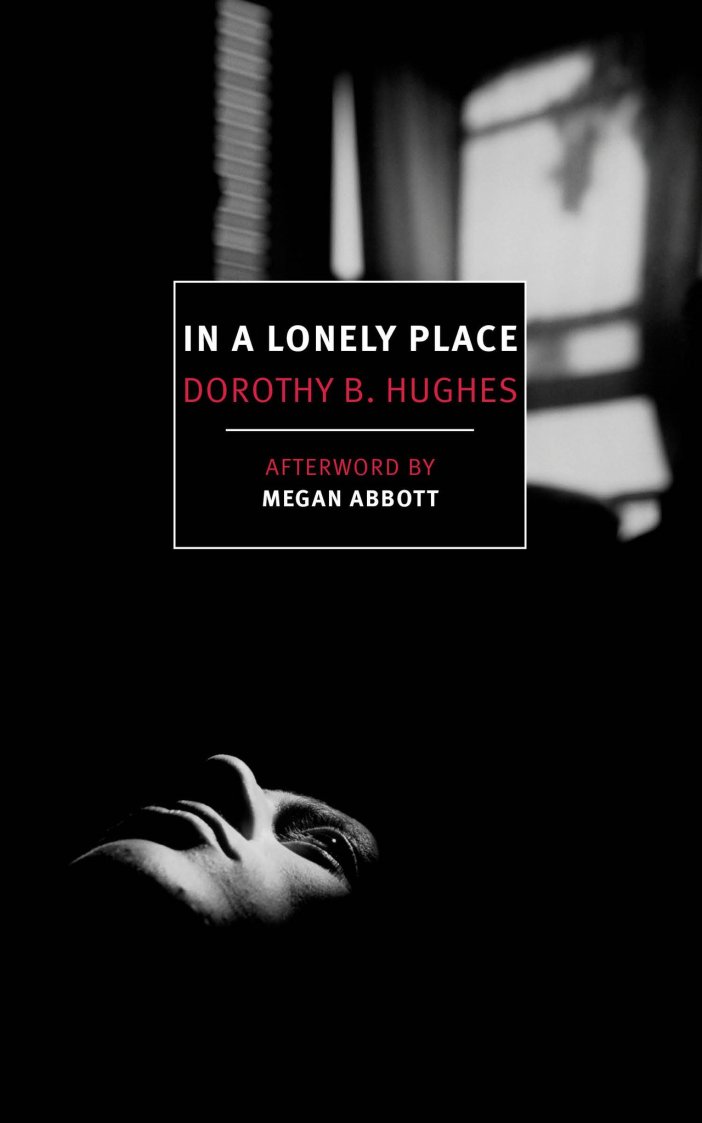
So, yesterday was my birthday. Fifty-six officially; although I always add a year to my age on New Year’s Day for the sake of simplicity. I had some trouble falling asleep on Saturday night; a combination of restlessness and heartburn. I wound up sleeping in till almost ten; which is late for me but since I didn’t really fall asleep until around three in the morning it wasn’t that much sleep. But I had a lovely day, really. I kind of just laid around and reread In a Lonely Place by Dorothy B. Hughes, rewatched The Philadelphia Story on TCM (Katharine Hepburn and Cary Grant were both robbed of Oscars), then watched The Nineties and The History of Comedy on CNN before finally watching last night’s Game of Thrones.  I also thought about the new Scotty some; I have today off from work as my birthday gift to myself, so I plan on doing some writing, line editing, and revising, and thinking about what I’m going to write next before actually sitting down at the computer is always a wise thing to do (although usually I never had the time to do that, thanks to deadlines). There’s a serious moral dilemma coming for Scotty in this book; one that really has been needing to be dealt with in the series for quite some time, but I’ve dodged it and avoided it; this is the book where I am finally going to have to have him face up to it, the way I am bringing it to the forefront so he can no longer avoid it is, if I do say so myself, rather clever.

Or it’s just going to be a steaming pile of shit. There’s no middle ground, really.

It was kind of fun to reread the Hughes novel; it is a masterpiece of noir that has been sadly overlooked for many years. Hughes was an exceptional writer, and I do admit that opinion is based on my having read only two of her novels, this and The Expendable Man (which, sadly, was her last and published in 1962). It’s not easy to find Hughes’ novels. I do feel safe in calling Hughes one of the best writers of her generation, and certainly one of the best noir writers of all time, based on those two books because they are just that good. I do have a copy of her The Blackbirder, which I want to read before the end of the year. In A Lonely Place was also filmed, directed by Nicholas Ray and starring Humphrey Bogart and Gloria Grahame; the film is significantly different from the novel, but it’s also outstanding. The new edition of the novel, from New York Review Books (who also have republished The Expendable Man and The Blackbirder), includes an afterward by the wonderful Megan Abbott, who is not only one of this generations greatest writers but also one of crime fiction’s most knowledgeable critics; her literary criticism is intelligent, thoughtful, incredibly well-written, and certainly puts me in my place whenever I am lucky enough to read some of it; I would love to read her study of literary and film noir, The Street Was Mine. (Whenever I read her criticism, any thoughts I might have about pursuing academic criticism–gay noir, gay representation in crime fiction, the heyday of romantic suspense from the 1950’s till its unfortunate death in the 1980’s–go out the window.)

Her all-too-short essay in the back of this edition alone makes the cover price worthwhile.

hughes.final_hi-res_2048x2048

It was good standing there on the promontory overlooking the evening sea, the fog lifting itself like gauzy veils to touch his face. There was something in it akin to flying; the sense of being lifted high above crawling earth, of being a part of the wildness of air. Something too of being closed within an unknown and strange world of mist and cloud and wind. He’d liked flying at night; he’d missed it after the war had crashed to a finish and dribbled to an end. It wasn’t the same flying a private little crate. He’d tried it; it was like returning to the stone ax after precision tools. He had found nothing yet to take the place of flying wild.

It wasn’t often he could capture any part of that feeling of power and exhilaration and freedom that came with loneness in the sky. There was a touch of it here, looking down at the ocean rolling endlessly in from the horizon; here  high above the beach road with its crawling traffic, its dotting of lights. The outline of beach houses zigzagged against the sky but did not obscure the pale waste of sand, the dark restless waters beyond.

He didn’t know why he hadn’t come out here before. It wasn’t far. He didn’t even know why he’d come tonight. When he got on the bus, he had no destination. Just the restlessness. And the bus brought him here.

Isn’t that an incredible opening?

Not being an expert in crime fiction–there’s so much of it to read, and there’s more new stuff all the time, so it’s hard to keep up with the new let alone trying to read everything already published–I am unable to place In A Lonely Place into any kind of context as far as the history of crime fiction is concerned, but Abbott does this beautifully in her afterward. But it’s very clear in this opening paragraphs that Hughes is addressing alienation in this book, and toxic masculinity, which may have seen its ultimate pinnacle in the second World War (the alienation of returning veterans, and the difficulty of readjusting from war to peace was also being addressed in films like The Best Years of Our Lives) and by having Dix, her main character, pretend to be writing a novel also took on the glut of post-war war novels that so many returning soldiers were writing; novels that continued to proliferate for several decades beyond the war.

The first time I read the book, having already seen the film, I was more focused on the story itself rather than an examination of how deftly Hughes creates her story, the language and imagery she chooses, and the nuanced way she creates her character. On this read, knowing how it’s going to end, I was able to pay more attention to these things, and was able to marvel at how brilliant the entire package is.

A recurring motif in the novel is fog; Hughes uses the fog as a metaphor for the fog in Dix’s brain; and we are never sure when Dix’s mind changed, making him lethal. He was raised by a puritanical uncle, Fergus, who is currently supporting him while he writes his novel–but there is a limit to the support, and while in our time $250 a month may not seem like much, at the time of the novel it was a fortune, just over $2500 in today’s dollars. Dix’s resentment of the uncle–we never learn what precisely happened to his parents–who is rough on him and has always made him work, even when he was in college at Princeton trying to fit in with the idle rich sons of privilege and then goes into detail how humiliating it all was, doing things for them for ‘tips’ until he could manipulate events to make it look as though he were the wealthy one and the sad unfortunate, unpopular boy he used for money were the dolt. In this way, Hughes also makes a sly commentary about class and privilege (which, in my opinion, she does far better than Fitzgerald did in an entire novel with The Great Gatsby, and she does it only in a few pages). So, there was always some kind of a chip on Dix’s shoulder; the war simply gave him a way to channel that anger and discontent and alienation. Now the way is over, and Dix is having to find a new way to channel those diabolical energies–and he does, in committing murder.

The entire tale is told through Dix’s perspective, which also makes him one of the first unreliable narrators in crime fiction. (It was done before, but never quite so lethally.) So, when we see the other characters–and there are only three: his old war buddy Brub, now a police detective; Brub’s wife Sylvia, whom Dix despises on first sightl and of course, the love interest, Laurel Gray–is she the femme fatale he thinks she is, or is that just a product of his own warped sense of right and wrong? Who is Laurel, of the reddish gold hair and the tempting figure? Is she the hard-as-nails user he thinks she is, or is she an entirely different character altogether?

In  A Lonely Place is a masterpiece of noir, and hopefully, this edition will elevate Hughes to the position both she and the book deserve in the annals of our genre.

And now back to the spice mines.

 

Sweet Dreams (Are Made of This)

Tuesday morning, and my windows are covered in condensation. Nothing new there, of course, but at least I can see blue sky and sunshine through the beads of water. Perhaps today will be our first day this summer without rain? Stranger things have, of course, happened.

I got quite a bit done on the line edit yesterday; at some point I am going to have to input all of this work into the e-document, and I will be very curious to see how much I wind up cutting. As I go through the manuscript, line by line, I am amazed at how often I repeat myself, or how often an entire paragraph is simply a series of sentences saying the same thing only in different words. A very strong push this week, and I might actually have the entire line edit finished by the end of the weekend. It’s not very likely to happen, but there’s always a possibility. My friend Lisa will be in town later this week, and I am going to try to see her for at least a drink and perhaps dinner. I don’t see her enough as it is.

I also got some work done on the Scotty book yesterday as well. The story is starting to take shape in my mind, and I need to get a strong first chapter together before I can get going on the rest. I am trying to take what I can from the several different versions of a first chapter I’ve already started; I think I can make the whole thing come together–at any rate, that’s my goal for today. I hope to get at least two more chapters finished this week, if not more. I also want to revise a short story. It will, I suppose, depend on how much energy and how much time I have.

I am still processing Sunday’s episode of Game of Thrones, “The Spoils of War,” and I also can’t stop thinking about Owen Matthews’ The Fixes. There’s an essay I’d like to write, about straight people writing gay characters that reading this book put into my mind, but it’s not really taking form and I am not really sure if it will–the curse of a creative imagination; too many ideas. But The Fixes is so incredibly well written and well done you’d never know that Owen Matthews himself isn’t gay; but really, if you have any experience whatsoever with alienation, you should be able to write believable gay characters; alienation is the key, now that I think about more deeply, and I wish I had thought of that before I taught my character building workshop at SinC Into Good Writing last September here in New Orleans.

Alienation, in fact, is a constant theme in Harlan Ellison’s oh-so-brilliant work.

Paul and I are thinking about going to see Dunkirk this weekend; whether we actually do or not remains to be seen. I have to work on Saturday, and as such my weekend shall be Sunday and Monday; having a Monday off will actually be rather lovely.

And on that note, I am heading back into the spice mines before I head into the office.

Here’s a Tuesday hunk for you, Constant Reader:

17523292_1312370308811030_8446342023757121711_n