Between Two Islands

One of the best parts of the Reread Project is reminding myself how much I truly love and appreciate certain writers.

Mary Stewart is certainly at the top of that list.

As I’ve mentioned before, I read most of Mary Stewart’s so-called “romantic suspense” novels when I was a teenager or in my early twenties, my favorites being The Ivy Tree and Airs Above the Ground.  Unfortunately, the mists of time and my faulty memory have robbed me of just how good the other books she wrote were; I recently reread The Moon-spinners and loved it more than I remembered loving it the first time; likewise, I started rereading This Rough Magic this week (finishing yesterday) and it, like The Moon-spinners, is fucking brilliant; far better than I remembered it being–and frankly, far better than it had any right being (says the incredibly jealous author).

Like most of Stewart’s novels, the book is set somewhere other than England–this one is Corfu, just off the coasts of Greece and Albania. (The Moon-spinners was set on Crete, and My Brother Michael was also set in Greece.) I’ve always wanted to visit Greece; it’s on my bucket list with Egypt, France, Germany and England. I loved Greek mythology and history when I was a kid, and of course I absolutely loved Mary Renault’s novels about ancient Greece. Lately I’ve become more and more interested in the history of the Eastern Roman Empire; aka the Byzantine empire, as well. Paul also would love to return to Greece–he spent a summer there as a teenager as an exchange student.

Stewart is often described, and counted amongst, romantic suspense novelists of the mid to late twentieth century, primarily because she was a female writing suspense novels about women in a time period where publishing didn’t know how to market women-driven suspense novels written by women. While there are slight elements of romance included in her novels, it’s often an afterthought, and rarely actually drives the plot–it’s more like a little lagniappe; something extra tossed in to appease editors and readers that she really had no interest in exploring. At first, you think, wow, her characters kind of fall in love awfully quickly with total strangers–and then you realize, oh, of course they did–women weren’t really allowed to be sexual beings in those days so it had to be masked as falling in love plus the “romance” elements were easily explained by the “trench warfare mentality”–in which soldiers become bonded to the guys they are serving with because they are responsible for each other’s lives; it’s not a stretch to see a romantic attachment grow between two people who are in a tough, difficult situation in which they could easily both wind up dead.

35bf4dd563c369f8ea00531721b47a74

“And if it’s a boy,” said Phyllida cheerfully, “we’ll call him Prospero.”

I laughed. “Poor little chap, why on earth? Oh, of course…Has someone been telling you that Corfu was Shakespeare’s magic island for The Tempest?

“As a matter of face, yes, the other day, but for goodness’ sake don’t ask me about it now. Whatever you may be used to, I draw the line at Shakespeare for breakfast.” My sister yawned, stretched out a foot into the sunshine at the edge of the terrace, and admired the expensive beach sandal on it. “I didn’t mean that, anyway, I only meant that we’ve already got a Miranda here, and a Spiro, which may not be short for Prospero, but sounds very much like it.”

“Oh? It sounds highly romantic. Who are they?”

“A local boy and girl: they’re twins.”

Lucy Waring, a twenty-five year old British aspiring actress, finds herself on the island of Corfu visiting her very pregnant sister who married very well–to a wealthy Italian banker whose family owns an enormous property on Corfu, which includes an enormous castle-style main structure and two guest villas some distance away, all gathered together on the shoreline of a small, private bay. Lucy’s big break has just come and went in a play that closed after only two months, so she has gratefully accepted her sister Phyllida’s invitation to come stay for a while with her on Corfu. There’s a photographer staying in the other villa; the main castle is being rented to a retired British actor, Sir Julian Gale, best known for his performances in Shakespeare (The Tempest in particular) and his son Max, a composer–and trespassers are forbidden and frowned upon. That very first day Lucy decides to go down to the beach and sunbathe, and while she is down there she makes the acquaintance of a friendly dolphin, much to her delight–and the suspense begins when someone starts shooting, with a silenced gun, at the dolphin. She assumes the shots are coming from the castle, so she goes storming up there, and soon becomes entangled in the affairs of Sir Julian and his son Max.

Stewart’s mastery as a story-teller is so complete that she doesn’t waste a word or a scene; her economy of writing is astonishingly complex and clever. For example, that opening sequence, quoted above, seems like simply a lovely back-and-forth introduction to Lucy and her sister while establishing their affectionate closeness; but Stewart uses that dialogue to tell the readers things that are going to be important to the novel: they are on Corfu, references to The Tempest are scattered throughout the book and are incredibly important, not just to the story but for the atmosphere (Stewart was an incredibly literate writer; references to classic literature are scattered throughout her works, be it Shakespeare or Greek mythology or Tennyson, etc.), and even the throwaway line about the twins, Spiro and Miranda, isn’t a throwaway–the two are very important to the story.

And Lucy Waring is no shrinking violet, either–none of Stewart’s heroines are. Lucy courageously thinks nothing of putting herself in danger in order to help catch a monstrous, sociopathic killer:

He must have felt me watching him, for he flicked me a glance, and smiled, and I found myself smiling back quite spontaneously, and quite without guile. In spite of myself, in spire of Max, and Spiro’s story, I could not believe it. The thing was, as I had said to Max, impossible in daylight.

Which was just as well. If I was to spend the next few hours with him, I would have to shut my mind to all that I had learned, to blot out the scene in the cellar, drop Spiro out of existence as if he were indeed dead. And, harder than all, drop Max. There was a curiously strong and secret pleasure, I had found, of speaking of him as “Mr. Gale” in the off-hand tones that Godfrey and Phyllida commonly used, as one might of a stranger to whom one is under an obligation, but whom one hardly considers enough to like or dislike.

There’s also a few amazing chapters in which Lucy, having found the definitive evidence to convict the killer, is trapped with nowhere to go on his sailboat when he returns–she hides, but is spotted, and then reveals herself and in an astonishing display of bravado tries to play the entire thing off, but winds up going overboard herself and trying to make it to shore–only to be helped by the very dolphin she herself had helped rescue earlier in the book.

As I said, nothing happens or is done in a Stewart book that doesn’t have significance or come into play later.

I cannot tell you how much I loved rereading this book, and while I’d love to dive into another Stewart reread, I’m probably going to do another Phyllis Whitney–oh, and I buried the lede! I read the entire thing as an ebook on my iPad–so I have finally broken through that final barrier to reading books electronically, and may never pack a book to take with me when I travel again as long as I live!

Who says you can’t teach an old queen new tricks?

Walking the Floor Over You

I have always loved to read, and have always encouraged other people to read. It’s one of the great pleasures of my life, for as long as I can remember. Once I learned how to read, I never stopped reading. I will probably never stop reading. There are fewer non-sexual pleasures in life as satisfying as reading a good book.

As I’ve mentioned before, my grandmother got me really started into watching old movies–both horror and crime–and also encouraged me to read. She was the one who got me started reading Mary Stewart, by giving me her copy of The Ivy Tree; my friend Felicia in high school reminded me of Stewart and so I started reading more of her work. (I still have not read all of Mary Stewart’s work–that “I don’t ever want to run out of something new to read by Mary Stewart” thing I do) And while I enjoyed all of them, I enjoyed some more than others. For example, i remember reading The Moon-spinners, but not really enjoying it very much, frankly. I never revisited the book…but now that I am doing the Reread Project, I decided to give it another read.

0449027953

It was the egret, flying out of the lemon grove, that started it. I won’t pretend I saw it straight away as the conventional herald of adventure, the white stag of the fairytale, which, bounding from the enchanted thicket, entices the prince away from his followers and loses him in the forest where danger threatens with the dusk. But, when the big white bird flew suddenly up among the glossy leaves and the lemon flowers, and wheeled into the mountain, I followed it. What else is there to do, when such a thing happens on a brilliant April noonday at the foot of the White Mountains of Crete; when the road is hot and dusty, but the gorge is green, and full of the sound of water, and the white wings, flying ahead, flicker in and out of the deep shadow, and the air is full of the scent of lemon blossom?

The car from Heraklion had set me down where the track for Agios Georgios leaves the road. I got out, adjusted on my shoulder the big bag of embroidered canvas that did duty as a haversack, then turned to thank the American couple for the lift.

“It was a pleasure, honey.” Mrs. Studebaker peered, rather anxiously, out of the car window. “But are you sure you’re all right? I don’t like putting you down on the hill like this, in the middle of nowhere. You’re sure you’re in the right place? What does that sign post say?”

The above pictured cover was the one I originally read; the reread was of a more recent edition. When I was younger, I was fascinated by ancient history: Egypt, Greece, and Rome, to be exact; Greek or Roman or Egyptian ruins on the cover of a book, especially if it was a suspense novel, drew me to the book like moth to flame. (That was what originally drew me to read Phyllis A. Whitney’s Mystery of the Hidden Hand, which I now believe–my memory lies, remember–was the first Whitney I read, because it was set in Greece) I had also remembered seeing a film version of The Moon-spinners, broken up over two weeks’ episodes of The Wonderful World of Disney, which starred Hayley Mills. I don’t remember much of the film now, but I do remember thinking it was vastly different from the book when I read it the first time. It’s not on Disney Plus (neither is Johnny Tremain or Now You See Him Now You Don’t, which has annoyed me regularly since I signed up for the service), and I’m not about to spend even three dollars on renting it on Amazon Prime–although I was tempted enough to look it up to see if it can actually be viewed anywhere.

Anyway.

I enjoyed the book much more greatly this time. I’m not certain why, precisely, I didn’t like it as much as Stewart’s other books at the time, but sometimes that’s just the way it is. The Moon-spinners focuses on Nicola Ferris, an adventurous young Englishwoman in her early twenties. She works at the British Embassy in Athens; her parents died when she was a teenager and she went to live with her aunt Frances, who is a leading botanist. Frances is also single and terribly independent, like most women in Stewart novels; Nicola admires and loves her aunt greatly and emulates her. Her aunt is taking a yacht voyage with friends around Greece and the islands; Nicola decides to take a vacation, meet up with Frances on Crete–a friend, a travel writer, has recommended a very remote village with a small hotel to them–and Nicola has the great good fortune, while on Crete, to meet an American couple (the above mentioned Studebakers) who are driving around Crete and offer her a lift to Agios Georgios, putting her there a day earlier than expected. (This sentence, describing the Studebakers,  They were both lavish with that warm, extroverted, and slightly overwhelming kindliness which seems a specifically American virtue–is a terrific example of Stewart’s exceptional skill as a writer; in that one sentence she tells you exactly who the Studebakers are.) The Studebakers aren’t terribly keen on letting her off in the middle of nowhere, to lug her suitcases and such over a dusty mountain trail to a village where she isn’t expected until tomorrow and where she will know no one; fortunately her work at the embassy has given her a passable knowledge of speaking Greek.  Nicola insists she’s fine and thanks them for their kindness, and starts trudging along the dusty path.

All of Stewart’s heroines are strong, capable, intelligent young woman who can take care of themselves; and courageous. It is while walking on the path that Nicola’s Greek adventure takes off–she stops at a pond to get a drink of water, and in the reflection of the water she sees a man’s face, watching her. Your average run-of-the-mill heroine would scream and run off or be terrified; Nicola is merely startled and curious. This is how she comes across Lambis, the Greek boatman, and young Mark Langley, who has been shot and needs medical attention. Nicola immediately makes Mark’s problems her own. Lambis, as it turns out, had put in his boat in a nearby bay so that Mark and his younger brother Colin could go exploring and look at the ruins of an old church, originally a shrine to a Greek god but converted during the days of the old Eastern Empire into a Byzantine church. As they are walking back to the boat they come across of small group of people arguing over a recently dead body. Mark is shot and left for dead; Colin is taken. And so, now of course, Nicola wants to help rescue Colin and help Mark–she isn’t, after all, expected for another day, and of course, the killers/kidnappers must be from the small town of Agios Georgios.

Stewart is, as always, an exceptionally talented writer. Her descriptions are simple yet poetic; she vividly brings the town, the mountains, the sea, everything to life so well you can easily imagine yourself there. And courageous Nicola, now possessed of dangerous knowledge that could get her killed, has to navigate the village while trying to help Mark find Colin, with no idea of who she can trust and where she can turn to help.

Nicola is a terrific heroine, and I can see why Stewart was so popular with women and teenaged girls; she wrote smart, no-nonsense, capable young women who were courageous and fearless and could pretty much handle anything. The suspense is, at times, unbearable.

There is an element of romance to the story as well; Nicola begins to have feelings for Mark, but it’s practically an afterthought, and it feels almost like it was inserted into the story. There’s absolutely no need for the two of them to develop feelings for each other; other than the psychological closeness that comes from a shared danger (one of the things I loved the most about the sequel to Romancing the Stone, The Jewel of the Nile, is that it showed that happy couples who bond over adventures don’t necessarily wind up living happily ever after; I’ve often wondered about the couples from these types of novels), and this is one of the reasons I no longer really consider Stewart a romantic suspense writer; the romances in her books often feel that way–something inserted into the story later to appease either her agent or editor–and they are completely unnecessary to the story; if anything, the romance develop organically because of what else is going on in the story; the suspense/mystery aspect is the most important part.

And Stewart consistently wrote some of the best openings in crime fiction.

Highly recommended; I will probably reread it again someday.

Loves Me Like a Rock

Saturday.

So, yeah, yesterday was something. I slept relatively well on Thursday night, woke up at eight, and while doing my usual morning blogging over my coffee as I woke up, I kind of casually mentioned an idea for a book I had several years ago–and now that I think about it, talking about James Ellroy, which then morphed into talking about Megan Abbott’s staggeringly brilliant period noir novels was what brought it back to the front of my mind–and some friends on Twitter fell in love with the idea for the book and began pressing me to go ahead and write it, which was really unexpected and lovely and overwhelming and nice. I posted the blog entry, went and did the dishes, and when I came back to the computer my Twitter mentions had blown up (I think that’s the way to say that, hopeless Luddite that I am).  Then I walked away again, started laundering the bed lines and then cleaned the staircase only to come back to even more mentions, and some lovely new followers.

But like I always say, I never ever will have enough time to write everything that I want to write. I had already kind of decided that next year’s plan was to write three gay noirs I’d been wanting to write for quite some time (Chlorine was one of these, the others being Muscles and Heatstroke), and then a couple of weeks ago I sat down and wrote the first chapter of yet another Chanse book, despite the fact I’d officially retired the series with Murder in the Arts District several years ago. The Chanse story is already burning in my mind, aching to be written, and I’d kind of figured I’d try to get it written by the end of the year…and all the while these thoughts and ideas and creativity are running through my fevered little brain, I am also not working on the WIP or the revision of the Kansas book, which I kind of need to get done at some point….and there’s yet another unfinished manuscript (it needs another two drafts, at least) languishing in my CURRENT PROJECTS folder.

This is why writers drink.

I also spent some more time with Angie Kim’s Miracle Creek, which is simply extraordinary. I’m not even a fifth of the way through and it’s a marvel I cannot recommend to you highly enough, Constant Reader; it makes me wish I was a judge reading for a Best First Novel award so I could pick it, it’s really that good.

But I did manage to get the proofing done, or at least a first pass at them (I’ll most likely do it again this weekend since I got a bit ahead on things with it). They aren’t due back until Monday, so I think I’ll probably give them another going over tomorrow, with fresher eyes again, just to make sure nothing gets missed. Huzzah!

I have to venture out into the heat today–we are in a heat warning, I think, and an air quality warning as well–to get the mail and make groceries. Usually going out into the heat drains me of all energy, but I think what I’m going to do when I get home is self-care–use the back roller/self massage thing, exfoliate my skin, shave my head and face, so a psoriasis treatment, take a long hot shower, and perhaps then recline for a moment or two in my easy chair with Angie Kim’s novel.

I’ve not written a word this entire vacation, but I am going to get my proofs finished, which is lovely, and I’ve gotten a lot of cleaning done, too. I’ve wasted more time than I’ve spent doing things, but I don’t care. I’m allowed to have some down time, and I feel very rested, which is cool. I also seem to have trained myself to go to bed every night around ten…and get up around eight. Ten hours of sleep per night has been lovely; no wonder I’m rested, right? Also, I’ve managed to stay off social media for most of the time, other than yesterday’s Chlorine-fueled blowing up of my Twitter mentions. I also have discovered these amazing, short videos on Youtube that look at some moment in history–the Wars of the Roses, the fall of the Byzantine Empire, the Hundred Years’ War, Charlemagne’s empire–with animation, humor and all in under ten minutes. They’re terribly clever, and are also informative in a very macro way; there was a lot, for example, that I didn’t know about the collapse of the Ottoman Empire that was filled in by the video explaining it in ten minutes, which also explained how the British came to be in charge of Palestine and Egypt, as well as how the French wound up with Algeria–which I’d never really known before. This also led me to researching the history of the Franco-Spanish kingdom of Navarre; I never really quite understood how Henri IV, King of France, managed to be the son of a regnant queen of Navarre–particularly since Navarre is barely ever mentioned throughout European history (Richard the Lion-Hearted’s wife was from Navarre); I now understand it.

I love how, despite knowing more history than most people, there are so many gaps in what I do actually know.

I also need to figure out what I have agreed to write. I think there are at least three anthologies I want to write for, or have been asked to write for, so I need to figure out the deadlines and what I want to write for them. I am going to try for the Mystery Writers of America anthology again–I have a story already written that fits; it just needs some serious tweaking and revising before submission–and I think there are three others I’ve been asked to contribute something to? I really have been scattered this spring/early summer, which is disconcerting. I also, because of all the Chlorine stuff on Twitter yesterday, sat down and wrote down all the manuscripts I have started and have some version of finished, as well as the others I want to do, and some others I’ve been asked to pitch, and I am sure it will come as no surprise that Greg, the underachieving overachiever, has ten books on said list; and I want to do them all.

And of course, that doesn’t mean I won’t have more ideas in the meantime, either.

This is also why writers drink.

Correction: I just remembered two more, so it’s a list of twelve.

Yup, I am certifiably insane, in case there was ever any doubt.

And on that note, the bathtub isn’t going to scrub itself, the bastard.

Off to the spice mines, have a lovely day, Constant Reader!

IMG_1682

Walk Like an Egyptian

Monday!

Hilariously, when I was writing my blog entry yesterday, I couldn’t remember what I’d watched on Saturday before moving on to Batman v. Superman, and I actually was thinking, I couldn’t have been streaming music videos all that time, could I? And then I remembered, last night while we were getting caught up on Animal Kingdom (which is awesome), that I’d discovered some of the old ABC Movies of the Week on Youtube, and watched two of them, back to back: The Cat Creature and Crowhaven Farm.

When I was a kid, I loved the ABC Movie of the Week. Some of them were good, some of them were awful, and it was interesting to see whether two of the ones I remembered so vividly held up; a while back, I’d discovered The House That Wouldn’t Die on Youtube; it starred Barbara Stanwyck and was based on my favorite ghost story of all time, Barbara Michaels’ Ammie Come Home. I saw the movie before I read the book–and I’ve reread the book any number of times over the years because I love it so much. I was very excited to watch the movie again..and it holds up pretty well (and BARBARA STANWYCK, for God’s sake), but it made significant changes from the book, obviously, and wasn’t quite as good. But it did hold up, and I am sure, were I not such a fan of the novel, I wouldn’t have had those issues with it.

the cat creature

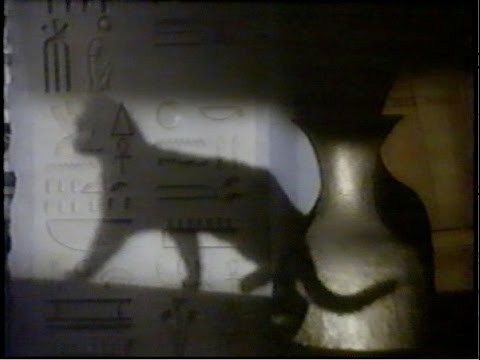
The Cat Creature holds up fairly well, for a television movie made in the 1970’s. For one thing, the story was developed by Robert Bloch (if you don’t know who Bloch was, shame on you–but he wrote the novel Psycho, which became the film, and was one of the great horror writers of the 50’s-80’s) and he also wrote the screenplay. I think part of the reason I loved this movie so much was because it was based in Egyptian mythology (I suspect the ‘history’ was invented for the purpose of the film; you’ll see why as I move along). The movie opens with an appraiser arriving at the estate of a now dead, wealthy collector, and he has been brought in to appraise the ‘secret collection’ of the collector–which includes a lot of Egyptian antiquities (which, obviously, must have been purchased on the black market). There’s a mummy case, which he opens, and the mummy is wearing a strange amulet around its neck, a cat’s head with heiroglyphs on the back. A burglar breaks in, takes the amulet, and then the appraiser is murdered off-camera–but you hear a lot of screaming and animalistic growling, and of course, the shadow of a cat on the wall. The long and short of it is, the cult of the Egyptian goddess Bast, based in the city of Bubastis in Egypt, was supposedly suppressed and all of its priests killed–the mummy is one of them–and there are legends and stories that Bast’s followers could turn themselves into cats that drank human blood for eternal life; kind of like shapeshifting cat vampires (I am certain this is all fiction without having to look it up). Eventually the ‘cat creature’ is captured, the amulet put back around its neck, and the strange murders all solved. Meredith Baxter (before she added, then subtracted, Birney from her professional name, and before she was a lesbian) starred; it also featured Gale Sondergaard, who won the very first Oscar for best supporting actress, as a shady magic shop owner. It was kind of cheesy on a rewatch as an adult, but it could be remade easily enough and could be quite chilling.

cat shadow

The sad thing about rewatching, though, was realizing that an idea I have for a book was liberally borrowed from this story. Heavy sigh; guess it’s a good thing I never wrote that book.

movie of the week

Crowhaven Farm also holds up for the most part. The movie terrified me when I was a kid, and I watched it whenever it re-aired. It’s also a supernatural story, about reincarnation, ghosts, and revenge from beyond the grave. It starred Hope Lange, who inherits Crowhaven Farm when a distant cousin dies, and the original inheritor is killed in a fiery car crash caused by a mysterious young girl. Lange and her husband, an artist, move to the farm, and on her very first day there she remembers things she couldn’t possible know; how to open secret doors to hidden rooms, where the old well is, etc. She continues getting flashes from a previous life, and begins to fear that not only is she the reincarnation of Margaret Carey, who lived there in the seventeenth century, but was someone who was accused of  witchcraft but turned in a coven of witches, who were either hanged or pressed to death. After she finally has the baby she had been longing for, the past and the present collide and she is confronted by the reincarnations of the coven she betrayed, who want her soul for Satan and vengeance. Instead, she turns over her husband to save herself–much as she betrayed the coven in a previous life–and runs away from Crowhaven Farm with her baby. In the final scene, she is in Central Park with her baby when a mounted cop stops to check on her and the baby, and then he reties a baby ribbon in the strange way her now dead husband used to tie bows. She remarks on it, and he just smiles at her and says, “Well, I’ll be keeping an eye on you now” and rides off…and terrified, Maggie quickly pushes her baby carriage down the path, looking back over her shoulder as the credits roll.

crowhaven farm

Not as scary as it was when I was a kid, but still, not bad; and it, too, could use a reboot.

I started rereading The Great Gatsby again yesterday, and am starting to remember why I didn’t care for it so much; none of the characters in it are particularly appealing. Tom Buchanan is kind of a dick, Daisy’s not much better, and Jordan is kind of a snob…and Nick himself isn’t particularly interesting. The writing is good enough, though–but I rolled my eyes when I got to the end of the first chapter, when Nick sees the green light on the dock on the other side of the bay and witnesses Gatsby standing in his yard, his arms outstretched in the direction of the light, and remembered how my American Lit teacher went on and on and on about the symbolism of the green light.

Christ.

It’s also kind  of weird to be reading a book about rich white people in the 1920’s so soon after reading about poor white people in the present day in Tomato Red.

And now, back to the spice mines.

If She Knew What She Wants

Paul got home last night, later than expected, as there were delays in Dallas due to inclement weather–which I kind of figured would happen. I went to bed shortly after he got home as I was falling asleep in my easy chair–I’d rewatched Batman v. Superman, and was watching a really bad documentary called Aliens in Egypt, which was one of those wonderfully tacky documentaries about how the Egyptians didn’t build the pyramids, the Sphinx is actually much older than anyone thinks it is, etc. etc. etc. A tell in these things is that no one is ever attributed to anything; “some archaeologists believe” or “according to a prominent Egyptologist”. Don’t get me wrong–the theory of ancient aliens influencing the rise of Egypt is fascinating to me; when I was a kid I read all of Erich von Daniken’s books, from Chariots of the Gods on, and there are always points made that seem consistent with the theory; but there are also other points where it is obvious some stretching was made to have facts fit the theory. I’ve also read some of Graham Hancock’s books–I have a copy of his book about the age of the Sphinx somewhere, but I read the one that theorizes that the Ark of the Covenant is actually in Ethiopia and has been for millennia, and greatly enjoyed it.

I also greatly enjoyed Holy Grail Holy Blood, the book that attempted to prove that Jesus married Mary Magdalen and their bloodline still exists in France–even though I saw many holes in their logic and many logical leaps to make the whole thing hang together. (This theory was the basis, of course, for Dan Brown’s The Da Vinci Code, so I wasn’t surprised the way so many of its readers were.)

I wound up not reading Tomato Red yesterday as I had originally planned, I did some light cleaning after I got home, and was, for some reason, really tired. I repaired to my easy chair and, feeling a little mentally fatigued, watched some television before deciding to look for something to watch, finally settling on a rewatch of Batman v. Superman. I enjoyed the movie the first time I saw it, in the theater, but I also liked Man of Steel, which seems to be a minority position. While I grew up a fan of comic books, and have gone back to them at various times in my adulthood, I am also not a fanatic, and I am always interested in seeing the characters I grew up with taken in new directions. I also love Henry Cavill; have since The Tudors, and enjoy seeing him. I also like Amy Adams’ take on Lois Lane, and found Ben Affleck to be less offensive as Batman as I feared he would be. The movie is grim, of course, a bit grim for a Superman movie; Superman the character was always about hope, and there was little to none of that in this film (Wonder Woman, on the other hand, is all about heroism and hope; which is why it resonated so much more than this one did–and I am hoping that DC Films take the hint and go more in this direction in the future).

So, what am I up to today? Well, in a moment I am going to take the recycling out, and then I am going to make another cup of coffee and repair to my easy chair so I can finish reading Tomato Red and a Faulkner short story I started reading yesterday (Faulkner wrote some mystery short stories; collected in a book called Knight’s Gambit, that I’ve always meant to read; Tomato Red has inspired me to dip back into the Southern Gothic well). Once I am finished with these, I am going to come back to my desk and finish writing the first draft of “For All Tomorrow’s Lies” and (maybe) another rewrite of “Death and the Handmaidens,” which I’ve actually renamed “This Thing of Darkness.” This, by the way, is a complete rewrite; I am retaining some of the characters, but changing everything about the story outside of the shell–a hotel bar, a gathering of people who don’t see each other frequently, and a murder victim that everyone would like to see dead. I think the reason the story never worked was the details I filled into that framework didn’t work, and I know I didn’t delve deeply enough into the main character and who she was. The revision idea I have is pretty good, I think, so I am going to try that. I also have another story I’d like to revise, called “Cold Beer No Flies”, that I think could be really good.

And so, Constant Reader, it is time for me to depart. Here is a lovely shot of one Henry Cavill, to get your day off to a nice start.


38d64010573e98eec8e4450ff6df7580

Take Time to Know Her

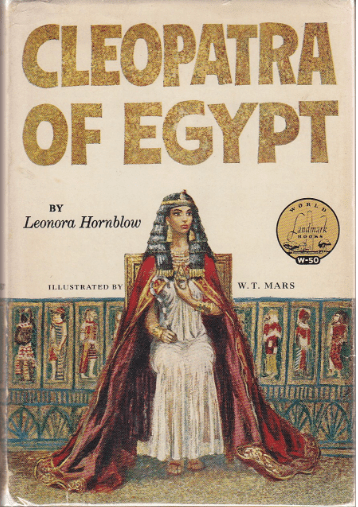
I finished reading  Cleopatra’s Shadows last night. Over all, I enjoyed it, but with all due respect to Emily Holleman, I didn’t love it. I already knew the story of Cleopatra’s sisters, Berenice and Arsinoe, so I wasn’t expecting to learn anything new from it, so that wasn’t the issue I had. I thought it was interesting that the book focused on the brief period of time when Berenice deposed her father and took the Egyptian throne. Usually, fiction about Cleopatra generally begins with Julius Caesar’s arrival in Alexandria and her being snuck into his presence rolled up inside of a rug; which, admittedly, is quite a romantic beginning and you can’t really go wrong starting there. The first book I ever read about Cleopatra–a bio for kids called Cleopatra of Egypt, written by Leonora Hornblow and illustrated by W. T. Mars–began with her fleeing from Alexandria out of fear her brother/husband Ptolemy XIII was going to kill her; and she rose an army and started a civil war. This war interrupted grain shipments to Rome–which was in the midst of its own civil war, between Pompey and Caesar. Caesar had just defeated Pompey, who fled to the court of the Ptolemies; Caesar pursued him there and also aimed to settle the Egyptian civil war. Ptolemy famously beheaded Pompey, thinking he would please Caesar by doing so; instead, he pissed him off, which made Caesar more inclined to be sympathetic to Cleopatra, who was actually Cleopatra VII. But one of the most interesting things to me about Hornblow’s book–which was for kids, mind you–was that she talked about Berenice’s rebellion and usurpation, as well as that of Cleopatra’s younger sister, Arsinoe–and how Cleopatra was present in Rome for the Roman Triumph in which Arsinoe was marched, in chains, behind a chariot…and that was the motivation behind her own suicide when she lost to Rome; she refused to be subjected to the same humiliations in front of the Roman mob that her sister endured.

cleopatra of egypt

I found a copy of it on ebay a few years back, and bought it again. I kind of always wanted to write about both sisters, honestly.

So, obviously, I was very excited to read Cleopatra’s Shadows.

It isn’t that the book wasn’t well-written; it was, and I am sure, as Holleman is a historical scholar, it was undoubtedly incredibly well-researched. What was disappointing to me was that Holleman didn’t give either sister agency. The Ptolemy dynasty,  Macedonian Greeks descended from Ptolemy, one of Alexander the Great’s generals who was rewarded with Egypt after Alexander’s death and the break-up of his empire, was known for it’s intelligent, highly educated and ruthless women. Like the Egyptian pharaohs of old, the Ptolemies married their sisters to keep the dynasty pure, and while there aren’t a lot of records–the burning of the Great Library at Alexandria to blame for this–there is enough evidence that the sister-wives were actually, in many instances, co-rulers and just as ruthless as the males. Each male pharaoh took the name Ptolemy; their sister/wives/queens were named either Cleopatra, Berenice, Arsinoe or Selene–or a combination of two of those names. Again, there is also evidence that Ptolemaic queens disappeared–probably murdered by their husbands, and the ‘pure bloodline’ wasn’t quite so pure, as the unions were sometimes sterile and other women, concubines, were brought in to bear children for the pharaoh. The plotting and machinations of the Ptolemaic court, the struggles for power, are endlessly fascinating to me; even in the children’s book which was my first introduction to the most famous (notorious) Cleopatra this was very clear.

So, the characters of Berenice and Arsinoe as Helleman chose to depict them were disappointing to me. Berenice was, per this novel, the only true child of a royal brother/sister pair; and her father, Ptolemy XII Auletes, the Piper, was not a popular ruler. The premise of this story is that Ptolemy tired of his sister/wife Tryphaena and her inability to bear him a healthy son, so he banished her from court and replaced her with a beautiful concubine, who bore him four children–Cleopatra, Arsinoe, and two young males both named Ptolemy. Berenice’s revolution and overthrow of her father was apparently more based in the bitterness of mother and daughter in being supplanted by the concubine (never named) and her children more than anything else. And while it is all too frequently true that kingdoms and history were shaped by family disputes, rivalries, and romances/loves/jealousies, but I always kind of admired Berenice. The strong woman I always imagined she must have been, strong enough to raise a rebellion against an unpopular king, and to be successful, was not the character Helleman wrote about, who was vacillating, weak, and insecure.

Likewise, the younger sister, whose point of view the story is also told from, Arsinoe, is completely obsessed with her older sister Cleopatra, and barely a page in her point of view passes without so mention of how much she misses her sister. She never thinks about either her father or her mother, and given she is a child, that’s a bit more understandable. But Arsinoe eventually leads her own rebellion against Cleopatra’s rule, so clearly she too is an ambitious young woman as well as intelligent one, one foolhardy enough to rise the Egyptian people up against the Roman legions who have come to Alexandria to back up her sister, and I get no sense of that strong woman in this child. Things just happen to Arsinoe, and while there are slight hints of the politician in her being trained and brought to the fore in the lessons she is learning at the court of a sister who despises both her and her mother, for the most part she is just someone things  happen to–and she never grasps the idea that she should stop being passive and maybe make things happen. The Ptolemies were notoriously ruthless in killing people and relatives who might pose a threat; a pragmatism that may seem horrific to our modern-day sensibilities of family ties but something that was absolutely necessary for them to keep their thrones and their power secure. In fact, Berenice’s advisors want her to kill Arsinoe, but she refuses, and never gives any reason for doing so, which weakens her character still further.

It’s a good read, and it’s well-written and interesting, but I was disappointed with the characters, frankly. I can recommend it to anyone who enjoys historical fiction, and is interested in the period.

And it did revive my interest in the Ptolemies.

And now, back to the spice mines.

Billy Don’t Be a Hero

When I talked about Crowhaven Farm the other day I also mentioned how the ABC Movie of the Week used to occasionally foray into horror, and that some of those made-for-TV horror movies were actually quite good; everyone remembers the scary Trilogy of Terror with Karen Black; primarily for the part with the Zuni fetish doll. I can’t remember the other two stories in that anthology movie, but that part absolutely terrified me from beginning to end, and I still remember it vividly. There was another called Don’t Be Afraid of the Dark, with Kim Darby of True Grit fame, which was about little murderous monsters that lived in a house but couldn’t come out into the light. As someone with a lifelong fear of the dark, that one still haunts my dreams.

Constant Reader knows I’m an Egyptophile; have been since I was a little boy. So, today, I am going to talk about one of those movies that had a basis in Egyptian mythology and history; I barely remember anything about it, to be honest, but it was quite terrifying.

It was called The Cat Creature.

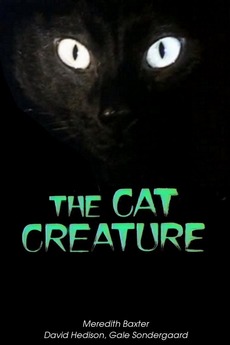
114789-the-cat-creature-0-230-0-345-crop

The premise of the movie is that a very wealthy, eccentric man who liked to collect things has died. Someone is sent out to his house to catalogue and valuate his things. Down in the basement in a room are a bunch of things that no one knew he had–Egyptian antiquities, including a mummy with a big solid gold amulet around its neck. A thief has also broken into the house, and when the other guy is distracted, steals the amulet from the mummy. Then something kills the first guy, while the thief runs away with the amulet. Lots more deaths follow, including eventually the original thief–and it appears that the amulet is a lot more important than anyone thinks. An archaeology professor is brought it to consult with the police, because of the Egyptian thing, and it also appears like all of the victims were killed by an animal–a cat, specifically, and all through the movie there are cats acting strangely all the time. Meredith Baxter Birney shows up as a new girl in town, gets a job at the pawnshop where the amulet wound up, and to serve as a love interest for the archaeology professor.

hqdefault

Turns out the mummy belonged to a priestess of the Egyptian goddess Bast, and the amulet has magic properties–keeping the priestess, who has eternal life, trapped in the mummy. When the thief took the amulet, the mummy came back to life–and of course, as a priestess of Bast has the ability to turn herself into a cat. She is trying to destroy the amulet, so of course she can never be trapped again.

Meredith Baxter Birney, of course, is the priestess, and when she tries to kill the archaeologist in the end, he quickly slips the amulet around the cat’s neck, turning her back into the priestess, then into the mummy again, and then her body turns to dust.

cat13

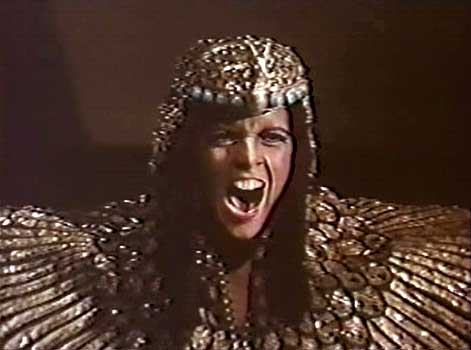
Oscar winner Gale Sondergaard–I think she may have won the first Oscar for Best Supporting Actress; if not the first, one of the first–had a great supporting role as the pawnshop owner.

cat-creature-gale

It’s on youtube; sometime when I have time (HA!) I will watch it again. I also looked up some info on the movie just now–the plot is pretty much as I remember it, and the original story and screenplay was written by Robert Bloch!

I’ve always wanted to write a story about Egypt, and I have a y/a in the files I’ve been wanting to write for a while–revolving around a cult of Bast; and now I know where the inspiration came for it!

And now, back to the spice mines.