Hell is for Children

Being Southern hasn’t been as difficult for me as it is for most Southern people, when it comes to forgetting the past and not taking pride in a heritage that includes racism and bigotry and enslavement. Some of the earliest lessons I learned about life in these United States was that I was one of the few people who started recognizing something that I wouldn’t know the name for until I was much older: cognitive dissonance. What I was being told at home was different from what I was being taught in school, and even that, while better balanced, was “patriotism good rah rah rah U!S!A! U!S!A!” all the time, nonstop. I began wondering about how much of an American “hero” Christopher Columbus really was, as all he brought to the New World was genocide, slavery, disease, centuries of oppression and looting the resources of the Americas. I started dealing with more cognitive dissonance as I got older and began seeing the flaws in white American supremacy, the contradictions and conflicts, and I had to think and reconcile all of these differing opinions. As I got older, resolving those cognitive dissonances required abandoning the education I got as a child about our country and its history because it was drenched in white supremacy and American exceptionalism and, well, lies to make white people feel better about themselves1. Reading and studying history made me look at modern Christianity askance–your religion has always been bloody, intolerant and cruel; but I’m supposed to believe the faith that slaughtered non-believers gleefully has changed and learned the errors of its ways?

Likewise, the Civil Rights Movement was in full swing when I was a child, and saw I watched the marches and the horror of the violence on the news. I didn’t understand nor believe the so-called religious justification for bigotry–my view of Christianity was markedly different from what I was learning in Sunday school for sure–but as someone blessed with white privilege I was also oblivious to a lot of what the Black community has dealt with throughout our bloody and horrific national history. My beliefs and values have never stagnated or been chiseled into stone; I appreciate gaining new perspective and examining my own internal biases and prejudices, and changing my mind predicated on the new perspective.

There are some things, however, I will never change my mind about: bigotry and prejudice are evil and have no basis in anything except vile ignorance and emotion.

The “we need diverse books” movement on-line was absolutely wonderful, because it gave me an easy opportunity to find books by diverse authors that either didn’t exist before or did and weren’t given much of a push. I loved the expansion of the crime and horror genres to include these characters and themes and stories; I love their fresh perspectives on society and culture and yes, the genres themselves. Books by S. A. Cosby, Kellye Garrett, Rachel Howzell Hall, Tracy Clark, Cheryl Head, and other racialized authors have not only been revelatory, but so strongly written and brilliant that it’s pushing other authors to better their own work to keep up. I’ve also been reading a lot of non-fiction about the civil rights movement and the history of prejudice and racism in this country, informing not only myself but with my own work, as well.

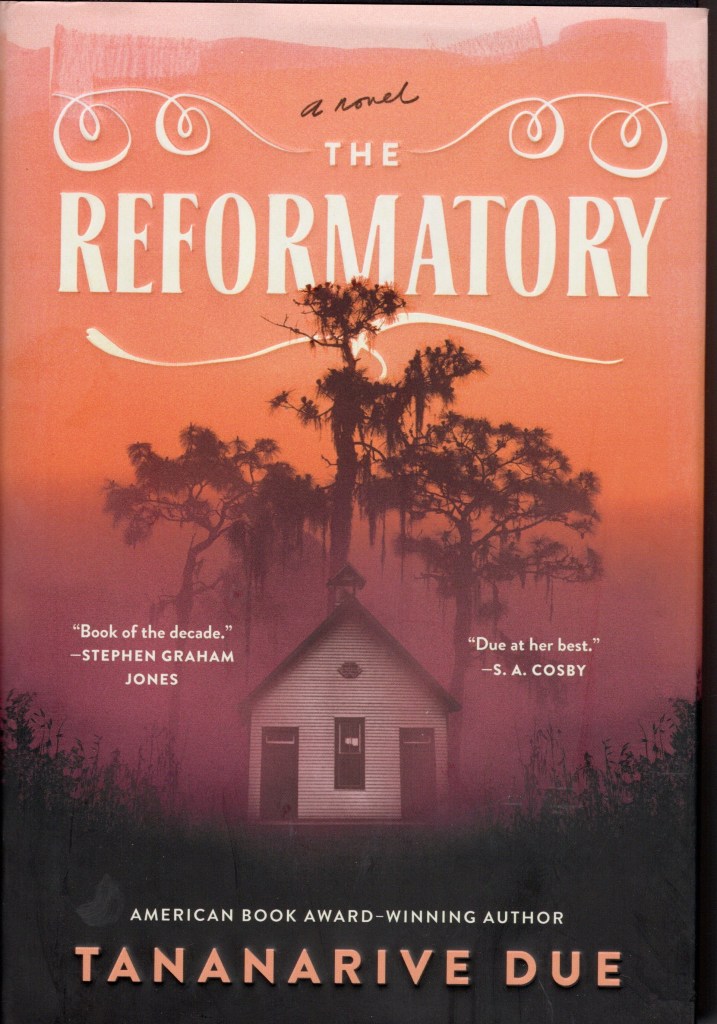
And in a class almost by itself is Tananarive Due’s The Reformatory.
Robert Stephens held his breath and counted to three, hoping to see Mama.

Some mornings his nose tickled with a trace of talcum powder or Madam C. J. Walker’s Glossine hair grease, and he felt…something hovering over him, watching him sleep. His groggy brain would think…Mama? If he gasped or sat up too quickly, or even wiped the sleep from his eyes, it was gone like a dream. But sometimes, when the June daylight charged early through the thin curtain and broke the darkness, movement glided across the red glow of his closed eyelids like someone walking past his bed. He felt no gentle kisses or fingertips brushing his forehead. No whispers of assurances and motherly love. Nothing like what people said ghosts were supposed to be, much less your dead mama. That morning he was patient, counting the way he’d practiced–one one thousand, two one thousand, three one thousand–and slitted his eyes open.

A woman’s shadow passed outside of the window above him, features appearing in the gaps between the sheets of tinfoil taped across the glass. In a white dress, maybe. Maybe. Moving fast, in a hurry.

“Mama?”

This book is a revelation. It is without question one of the most powerful books I’ve read in I don’t know how long.

I knew it was going to be a hard read, because I knew what the book was based on. I also don’t remember when I first became aware of the horrors of the notorious Dozier School for Boys in Florida, but it was a horror to be sure. I’ve read some novels based on that story (I loved Lori Roy’s The Disappearing) already, and so was familiar. Reading about enslavement and the Jim Crow South2 is inevitably a hard slog for me, and not just because of the white guilt it deservedly triggers; it just staggers me that in a country that supposedly is about equality and freedom such things could happen, be taken as normal, and changing the system is so violently opposed…a lot of racist Southerners see nothing wrong with that history and would like it to return, so these kinds of stories of American atrocities against its own citizens are incredibly important. The pen is indeed mightier than the sword, which is why repressive governments always go after journalists and writers; a well-told story that illustrates the injustice for the reader and humanizes it can change minds.

The Reformatory is about the Gracetown School for Boys and a young twelve year old Black boy who is sent there for absolutely nothing; an older white boy was sexualizing his older sister Gloria, and when young Robert stands up for her he gets a brutal shove, and he retaliates with a kick. Alas, the white boy’s father is wealthy and therefore powerful, and he wants this “uppity” behavior punished. In a joke trial that’s not even a trial, the corrupt racist judge sends Robert to the hell of the reformatory. Robert’s story doesn’t become about a search for his own justice, but the hell of surviving a place where boys die regularly but never of natural causes. Young Robbie has a gift, too–he can see ghosts–and there are a lot of ghosts there for him to navigate. Gloria’s story becomes about her desperate drive to get her brother out of there and correct the injustice. Their father was also a union organizer, and was falsely accused of raping and beating a white woman, so he fled north to Chicago. So, the boy in custody is also a pawn for the white power structure who really wants to get their hands on Robert Senior.

The warden, Haddock, is a sadistic predator who enjoys torturing and raping and murdering his charges. He also has a special need for young Robbie’s ghost seeing abilities, wanting to rid the campus of the ghosts of his victims. Due manages to make the horrors of that place absolutely real, with some of the most vivid and powerful images I’ve come across in a novel in years.

But the true horror of the book isn’t the ghosts at the school. The true horror is its horrific and realistic depiction of the Jim Crow south, and the lack of hope for change in the Black characters. It was about halfway through the book that I realized, as much as I was loving this book, that there was no happily ever after for Black people under Jim Crow, before civil rights. They might be able to escape a predicament, but there was no escape ever from the system.

Which is absolutely terrifying.

Definitely check this book out, and I am going to look for my next read from Due.

  1. Manifest destiny? I could write an entire book about that bullshit. ↩︎
  2. Someday I will dismantle To Kill a Mockingbird for the racist lie it is. ↩︎

Maneater

Thursday and my last day in the office for the week. I also decided to go in a half-hour later than usual and stay until five instead of four-thirty; alert the media! I know how hard it is to go on without knowing these minute details of my life. But it was cold this morning, and Tug woke me at the usual time–but curled up and went to sleep next to my head on my pillow once I hit snooze for the first time. Of course now that he’s awake and eaten and had some water, he’s all over the kitchen counters this morning knocking things off. He is particularly fond of pens and cigarette lighters–Paul is missing any number of them, and I’ve noticed he always make a beeline to any lighter lying around. Why the fascination with my pens and Paul’s cigarette lighters is a mystery for the ages.

I was tired when I got home yesterday. I had book mail yesterday (Tananarive Due’s The Reformatory, which is a horror writer’s version of the Dozier School for Boys in Florida, which I’ve already read two fictionalized versions already–Lori Roy’s and Colson Whitehead’s). I’ve not read Due before–my own fault, and no one else’s–but am really looking forward into digging into this one. I was also oddly tired by the time I got home; I felt fine when I left work, but after a couple of errands I was exhausted by the time I got home. The termite exterminator came by yesterday morning (the hole in the kitchen roof was partly rot and partly termite damage), and apparently Tug was fascinated by the Terminix man. I also watched another episode of Moonlighting last night–guest star was a very young, pre-China Beach Dana Delaney–(that’s another show I wouldn’t mind revisiting; does anyone else remember China Beach?) and I enjoyed it thoroughly. Paul and I then finished The Fall of the House of Usher, which was really quite good and very well done; I also had read a piece recently which stated that Mike Flanagan has placed Ryan Murphy and American Horror Story as everyone’s go-to horror television creator. I will even go further than this and say Flanagan’s surpassed him. There were, at best, three top-level seasons of AHS–“Murder House,” “Asylum” and the election one; but it would be hard for me to say than any Murphy season is superior to any of Flanagan’s work; Midnight Mass alone was so superior to any of Murphy’s seasons that it’s not even a fair comparison–and Murphy had Jessica Lange and all of those other amazing talents in his repertory company.

I also recognized yesterday that I’ve been in a bad place since somewhere around last Thursday. There have been moments this week where I’ve come out of it and gotten some things done, but it’s still there. When I came home yesterday I intended to finish laundry and the dishes, but Tug wanted a lap bed and I gave in, figuring I wouldn’t be there for very long. This was incorrect; he slept there for several hours and since I was tired AND comfortable, I didn’t disturb him and just stayed there, watching Youtube documentaries about the Holy Roman Empire and how it slowly but surely divested itself of its association with the Papacy; Charles V being the last emperor to be actually crowned by a pope. I’ve also been reading The Rival Queens, which is marvelous–it’s a history of Catherine de Medici, Queen of France and her daughter Marguerite, Queen of Navarre–known to history and literature as Queen Margot (which is also the name of the Dumas book about her). I’ve always wanted to write a suspense/intrigue novel set during that time period, and having to do with Catherine de Medici’s Flying Squadron–women who were trained spies and seductresses in her employ. Margot herself is fascinating–and both women would be in my history The Monstrous Regiment of Women about all the women who held power in the sixteenth century. Margot was as equally fascinating as her mother, and pretty much lived her life the way she wanted…which of course made her notorious. But the French, surprisingly enough, loved their princess with the loose morals–and the arrangement between her and her husband, Henri King of Navarre (eventually Henri IV of France) where they lived apart and took as many lovers as they could handle was also surprisingly modern for a royal couple.

I am hoping to spend some time with Lou Berney’s Dark Ride this weekend. Lou has become one of my favorite writers and favorite people in the crime fiction community over the years, ever since that fateful panel at Raleigh Bouchercon where I met and made some new friends who also are amazingly talented. (I think Lori Roy has a book coming out soon, too–huzzah!), and I also want to make a plan to stick to for getting things done this weekend. The LSU-Alabama game is Saturday night, so that will require me to do some strategic planning. I just hope for a good game. Obviously my preference would be for LSU to win–that’s always my default–but as long as we don’t get humiliated I am good with a close and/or exciting game–emotionally exhausting as that will be. I know my anxiety was involved in this funk I’ve been in for longer than I think I’ve been dealing with it–me thinking it started sometime late last week is laughable in its naivete–but I need to get some things done and underway before i get derailed with the surgery. Nineteen days from today I will go under the knife. YIKES.

Which reminds me, I need to review my medical file and see what they say about the recovery period, or if it’s mentioned at all. And sometime before then I am going to get my teeth! Huzzah!

And on that note on this cold Thursday morning in New Orleans, I am heading back into the spice mines. Have a lovely day, Constant Reader, and I’ll be back later, okay, for some more blatant self-promotion.

Bad to the Bone

The push for more diversity–amongst writers and subject matter–in publishing this last decade has not only been welcome, but is also long overdue. It hasn’t been smooth sailing by any means–there are those writers who feel threatened somehow by the push for diversity in publishing, and then try to push back, Publishing isn’t a zero sum game by any means; I seriously doubt the market for cisgender white narratives will ever go away. For many years, the heavy lifting for narratives outside that default has primarily been borne by small press, who did an excellent job despite the many obstacles presented by the realities of the book market. The larger, traditional New York publishers tend to suck all the oxygen out of the room, leaving precious little behind for the small presses–who nevertheless persisted.

And while I have never defaulted to the cisgender white male narrative with my reading, my default still remained lily-white for the most part. Sure, I was primarily reading books by and about women, but at the same time they were always white women. It was quite sobering to realize, upon a closer examination, how segregated my reading was. I have always believed there is no better educational tool than reading, even if you only read fiction. Fiction can be an excellent way of learning about attitudes and life, in general, for people that are different from you; and it was shocking how much I patted myself on the back for my “diverse” habits that was solely about reading primarily female authors. So I made a conscious choice for 2019 to focus my reading more on books by authors of color or queer authors; and it’s been an incredibly joyous and intellectually stimulating enterprise.

There was no reason for me not to have read Walter Mosley before other than subconscious racism, frankly. And I’ve read some truly extraordinary works by writers of color this year, including but not limited to Steph Cha’s Your House Will Pay, Angie Kim’s Miracle Creek, Rachel Howzell Hall’s They All Fall Down, S. A. Cosby’s My Darket Prayer, Kellye Garrett, and so on.

I also hope that this year-long focus has integrated my TBR list, and it will now come more naturally for me to read writers of color or queer ones, without having to make it into a project.

I read Colson Whitehead’s The Underground Railroad several years ago, and while I am not big on magical realism by any means, I absolutely loved the book. It was incredibly powerful, highly imaginative, and beautifully written. He went on to win not only the Pulitzer but the National Book Award; I went to see him interviewed at a special event/signing and was again, terribly impressed with him. I started reading his zombie novel, Zone One, but got distracted by something else I was required to read–I think I had to moderate a panel or something, so I had to read the work of the panelists–and somehow never got back to it. I shall, obviously, correct that oversight. I also have a copy of John Henry Days, which I shall get to eventually.

I was also really excited to get a copy of his new novel, The Nickel Boys.

the nickel boys

Even in death the boys were trouble.

The secret graveyard lay on the north side of the Nickel campus, in a patchy area of wild grass between the old work barn and the school dump. The field had been a grazing pasture when the school operated a dairy, selling milk to local customers–one of the state of Florida’s schemes to relieve the taxpayer burden of the boys’ upkeep. The developers of the office park had earmarked the field for a lunch plaza, with four water features and a concrete bandstand for the occasional event. The discovery of the bodies was an expensive complication for the real estate company awaiting the all clear from the environmental study, and for the state’s attorney, which had recently closed an investigation into the abuse stories. Now they had to start a new inquiry, establish the identities of the deceased and the manner of death, and there was no telling when the whole damned place could be razed, cleared and neatly erased from history, which everyone agreed was long overdue.

All the boys knew about that rotten spot. It took a student from the University of South Florida to bring it to the rest of the world, decades after the first boy was tied up in a potato sack and dumped there. When asked how she spitted the graves, Jody said, “The dirt looked wrong.” The sunken earth, the scrabbly weeds. Jody and the rest of the archaeological students from the university had been excavating the school’s official cemetery for months. The state couldn’t dispose of the property until the remains were properly resettled, and the archaeology students needed field credits. With stakes and wire they divided the area into search grids, dugs with hand shovels and heavy equipment. After sifting the soil, bones and belt buckles and soda bottles lay scattered on their trays in an inscrutable exhibit.

The Nickel Boys is built around a true story; the Dozier School for Boys in Marianna, Florida; the discovery of the secret graveyard by archaeology students and the long history of abuse in the school came to light through some amazing investigative journalism done by the Tampa Bay Times. I read the reporting when first published; I took extensive notes and thought there’s a really good novel in here, filed it away for future reference, and then didn’t think about it again until last year, when I read Lori Roy’s brilliant The Disappearing, which was also inspired by the reporting on the Dozier School; Roy went in a different direction with her story, though, and it was easily one of my favorite novels of last year (if you haven’t read Lori Roy yet, get thee forth to the bookstore or library and get started immediately). When I first read about Whitehead’s new novel, I immediately recognized its inspiration, and having greatly enjoyed his previous book, I made a note to get this one when it was released.

It is quite exceptional, from beginning to end.

It is the story of one of the Nickel boys, Elwood Curtis, beginning with how he came to wind up there–a gross, horrifying injustice that can’t be corrected or fixed, given our broken justice system–and so a promising, bright young boy of color, with plans for college and a future, basically is thrown away by society and wasted (which begs the question: how many more times does this happen, every fucking day?), and then his survival at this brutal, horrific school; how the whites and blacks are segregated, even there, and the aftermath; what happens after he and a friend make a break for it and try to escape so they won’t be killed there.

The best literature is that which shakes your worldview, makes you think, makes you reassess everything that you thought you knew; makes you reevaluate things you believed. This novel is stark and brutal and heartbreakingly real; you root for Elwood to survive, to get past this–gradually you begin to feel that way for all the boys, and your heart breaks for all the potential that was lost in places like Nickel; the endless potential we as a society still throw away daily, because of racism and classism and bigotry.

This is a very powerful novel–one I’ll be thinking about for a long time. Highly recommended.