Season of the Witch

Happy All Saints Day! And welcome to November, I suppose. This year is slipping away like sands through the hour glass (hat tip: Days of Our Lives), but the terrorist attack of New Year’s seems like it was a million years ago, too. When I think about where we are now as opposed to where we were ten months ago, though…it seems like a decade has passed since my New Year’s blog, doesn’t it? I slept deeply and well last night, and Sparky let me sleep later (although he got his razor blades trimmed yesterday, so him smacking me in the face in the morning doesn’t have the same impact) than I usually do, so that was nice too. We have to run some errands today we didn’t get to yesterday, but that’s fine. LSU isn’t playing today so I don’t have a vested interest in watching games today, so I don’t really care to be home for them all day, either. I probably won’t get any writing or much reading done, but…I also am not going to worry about it. Yes, time is slipping away, but I also need to allow myself to get rest and be lazy without beating myself up about it all the damned time, too. Progress?

Perhaps. We shall see.

I also have to pay some bills this morning before we do anything, and probably get some of the chores done, too. I made good progress on chores yesterday; the bed linens all got laundered, the dishes are done and put away, the counters are cleaned and cleared, and all I really need to do is vacuum the rugs and mop the floors, and potentially prune more of the books down. I need to be more ruthless, too.

The backlash to governor Janky Jeff’s massive interference with LSU apparently taught the moron some sort of lesson, because he backed the fuck down after Scott Woodward (best of luck to you, sir, you worked wonders at LSU and I am sorry Janky Jeff decided to show his ass) was fired. To paraphrase Mean Girls, “he didn’t even go there.” He also got some pushback when he tried to force Loyola (a Jesuit Catholic private university in New Orleans) to charter a chapter of Turning Point USA after the student senate flatly rejected their application, mainly because they don’t share the same values as the Society of Jesus. Bitch slap! I was glad to see a Catholic university stand their ground against political interference from TEMU Huey Long. Don’t stand with the evangelicals, Catholics–they will come for you eventually as idolators and papists and pagans. They don’t think you’re real Christians in the first place, so less than what they see as “white.” Janky Jeff is not popular in Louisiana; only 19% of registered voters even voted in that gubernatorial election because we had no options. All the candidates were different degrees of MAGA, anyway. I don’t even remember who I voted for, but I have never cast a ballot for Jeff Landry and I never will.

I can only hope to be seated in the jury for his inevitable trial for corruption and malfeasance. No, they wouldn’t seat me, because no one could ever convince me he isn’t guilty.

Then again, Jindal was never charged with anything. And he definitely should have been; his wife was just as corrupt as Casey DeSantis, and the corrupt always corrupt. (Note to everyone: their women are just as bad as, if not worse, than their husbands. See: Usha Vance, Melania Trump, Lara Trump…the list is lengthy.)

Sigh.

My mind is still deeply entrenched in horror, by the way, which is something I don’t remember Halloween Horror Month doing to me before; maybe because I was always trying to finish a book before the end of the year? This entire decade has been mentally draining and fatiguing, frankly, and I’ve had a lot of brain fog and increasing loss of memory. I do wonder occasionally about how different my career would be had I gone into horror rather than crime; rather than just being a fan. I did want to write horror when I was in my twenties, and even tried. I laugh now when I remember thinking my personalized rejections with suggestions and tips and encouragement to keep writing and submitting to them, from horror magazine editors, was just them being nice. Editors are never nice like that, ever, as I have since learned. I guess I was so down on myself and had such a lack of self-esteem (as well as knowledge; there was no one to tell me differently) that I focused on the rejection rather than accepting the encouragement. Each rejection was further confirmation that I was a loser, and I was in such a spiral of misery in the 1980s there wasn’t any way I could have seriously pursued being a writer. I don’t have regrets–I never do–but sometimes I do wonder. I played the cards I was dealt and everything eventually turned out, didn’t it? But I am going to try to work on some things tomorrow, since I don’t have to leave the house at all and Paul is, I think, going to his office.

And on that note, I am heading into the spice mines. Have a lovely Saturday, Constant Reader, and I’ll be back here in the morning.

Rocky Mountain High

I was really into soaps in the late 1970s and up until the mid 1990s or so. My fandom, how it came to be, and how much of an influence soaps were to me as a writer is a topic for another time, perhaps after Pride Month is over because it’s really not Pride related, except for how they related to me as a gay man. But by the late 70s, I was strictly an ABC guy: All My Children, One Life to Live, General Hospital and Edge of Night, with me having a special attachment to Edge, which will also be a subject for another time. But soaps were strictly a daytime medium for a very long time–at least until Dallas premiered. Originally, each episode was a stand-alone but the show very quickly moved to the serial format, and the ratings went through the roof–and of course, “Who Shot J.R.?” was a global phenomenon (I figured it out early on–when I saw that Mary Crosby was only contracted for four episodes in the following season and the reveal that the shooter’s identity would be revealed in episode 4…it wasn’t too big of a leap from there to “it must have been Kristin”. I was right.), and Dallas ruled the ratings from there on out..

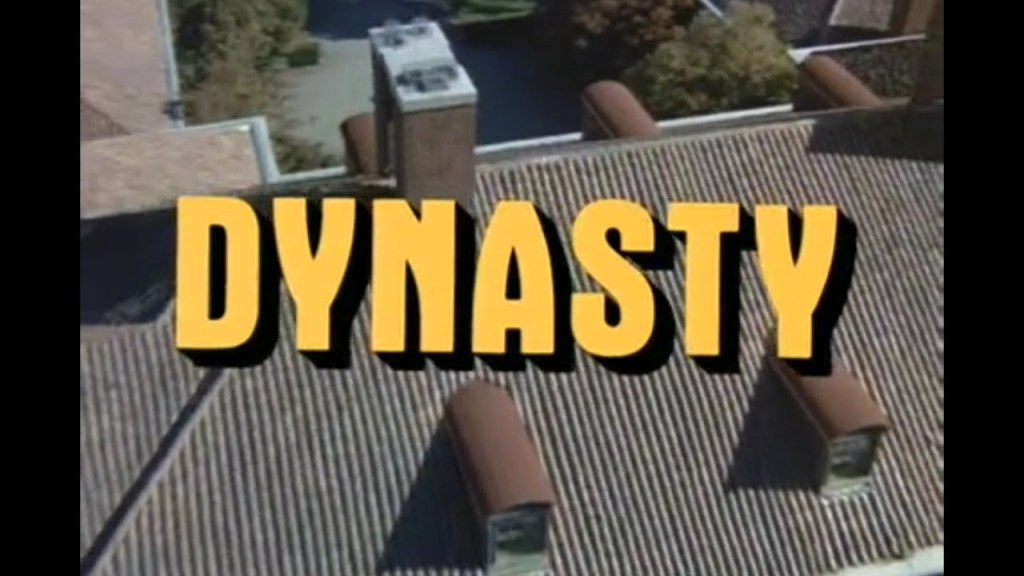
The success of Dallas, of course, lead to copycats from other networks trying to cash in on the new craze; television is nothing if not a place where imitating success is seen as a no-brainer; the irony was that so many of the other soaps that launched at night in the wake of the huge success of Dallas…failed for the most part. The only post-Dallas night time soaps that enjoyed long runs were Knots Landing, Falcon Crest, and Dynasty.

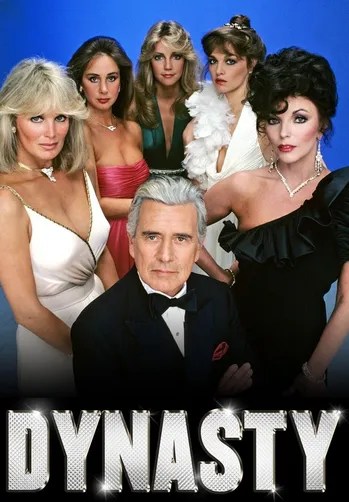
I first learned of Dynasty in a People magazine profile on Linda Evans, who at the time was best known as the woman John Derek left for Bo (who was a huge star at the time), and it mentioned she’d done a two hour pilot for a night time soap called Oil. By the time the fall previews started dropping, the show’s name had been changed to Dynasty, and there was going to be a gay character on the show. Once I read that, I knew I was going to watch. And then the premiere of the show was delayed months because of a strike. The show also had some other cast members I knew of and was interested to see–Wayne Northrop, who’d played Roman on Days of Our Lives; Pamela Sue Martin, of Nancy Drew and The Poseidon Adventure fame; and of course long-time television star John Forsythe as Blake Carrington, the patriarch of the family.

The first season was interesting enough, but the show didn’t really catch fire until the second season, when Joan Collins joined the cast as Blake’s first wife and mother of his children, Alexis. By the end of the season Dynasty had climbed from middling ratings to the Top Five, and it had become must-watch television.

But my primary interest was the character of Steven.

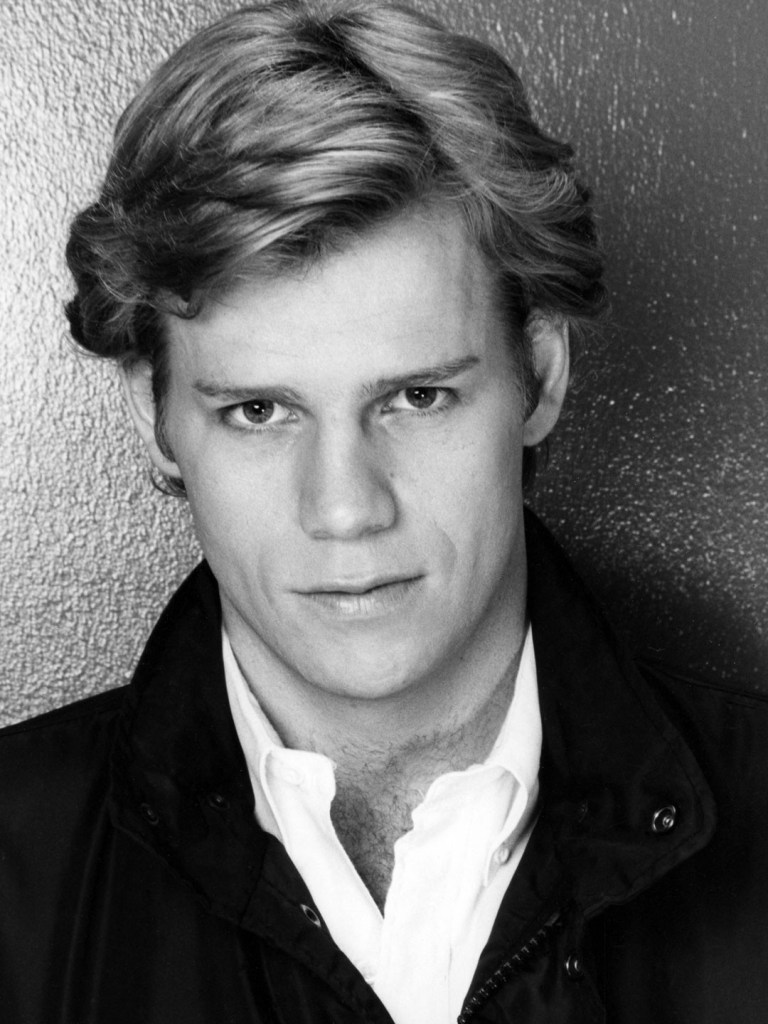
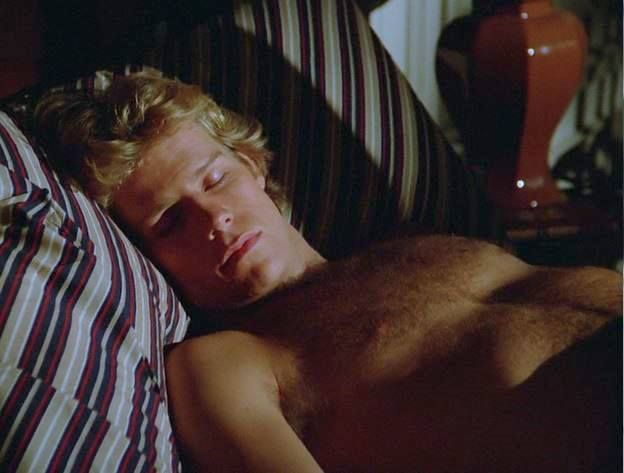
Originally played by Al Corley, Steven’s storylines were made clear in the pilot; Steven is coming to terms with his sexuality, coming back to Denver for his father’s wedding despite the fact that Blake is homophobic and he’s been living with a man (Ted Dinard) in New York for the past few years. Steven still isn’t entirely sure of his sexuality (it never occurred to anyone in production that he could be bisexual; he only had a binary choice during the entire run of the show), and decided to go to work on an oil rig to “become a man.” His co-workers pranked and hazed him for being gay at first, and then tried to “straighten” him out by buying him a hooker, which doesn’t go well. He then embarks on an affair with his boss’ wife Claudia (played by Pamela Bellwood, who was probably one of the best actresses in the cast), who was also mentally ill and her sanity wavered throughout the run of the show. Ted comes to Denver to get Steven to come home, but Steven’s decided to stay in Denver and try to get on with his life and ends things with Ted. Unfortunately, Ted comes to the Carrington estate (which was ‘played’ by Filoli, gorgeous place that was also the ‘setting’ for Laurie R. King’s superb Back to the Garden) to say goodbye, Blake comes home already angry, becomes angrier to learn Ted is in the house, rushes upstairs to see them hugging goodbye, and in a homophobic rage pulls Ted off Steven, punches him and knocks him down–only he is killed when he hits his head on a fireplace guardrail–and now Blake has to go on trial for murdering his son’s gay lover; and now the entire world nows.

Alexis returned for the trial, entering the courtroom wearing a veil, and Fallon gasps, “oh my god that’s my mother” setting the stage for season two, and night time television’s greatest villains, Alexis.

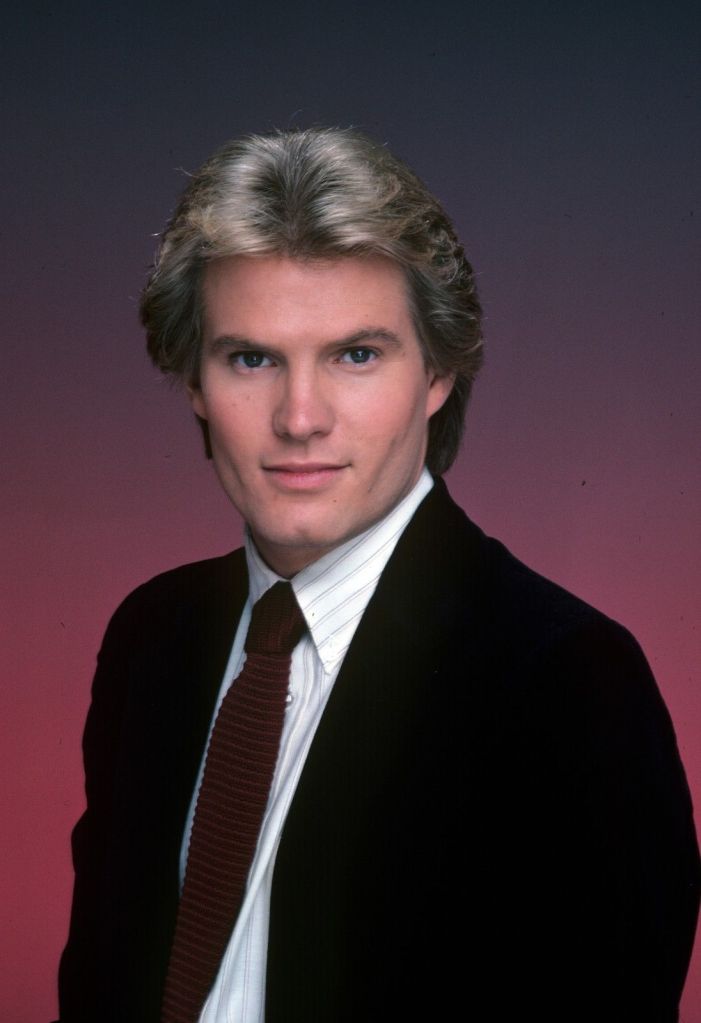
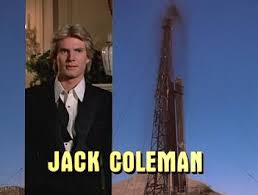
Season 2 was disappointing in terms of Steven as he spent season two trying to be straight, getting involved with and marrying Sammie Jo (Heather Locklear in the role that made her famous), but eventually telling his entire family that he’s gay, he’s tired of trying to be someone he’s not, and leaves Denver. He is reported killed in a oil rig explosion in the south China Sea in season three, which was their way of recasting–“plastic surgery so he doesn’t look the same”–and he was replaced by Jack Coleman (at the time best known for playing a serial killer on Days of Our Lives).

Coleman was fine, but he was different, and the character changed to match the actor. His entire storyline for the rest of the series involved him getting married, ruining that by getting involved with another man–before deciding what to do with him again for the sake of storyline; showing how hard it was to actually integrate someone with a same sex attraction into the cast of a soap. Every man he was involved with was a new character, and soaps–whose mainstay bottom line is thwarted romances, marriage and divorce–really didn’t know what to do with a non-straight character, other than throwing him into relationships with women (???) to have them end badly and so on.

When the reunion film was done in the 1990s, Al Corley returned as Steven (no explanation of why he looked the way he did before the surgery) and he’d made peace with his sexuality, again living in New York happily with another man and raising his son (oh yes, the gay character also impregnated one of his ‘women’)…while never once raising the possibility of bisexuality; I guess getting the 1980’s home audience vested in a gay character was risky enough without bringing in bisexuality–which tells you where we were as a country in the 1980’s…and we shouldn’t also overlook the fact that it was Dynasty that brought HIV/AIDS to the forefront of conversations in this country. Rock Hudson’s AIDS diagnosis became public shortly after he appeared on the show, and there was a lot of panic because he’d kissed the Linda Evans character–had he infected her? (We didn’t know as much then as we do now; now that fear is laughable but it was palpable back then because there was so much ignorance about it then, thanks to the Reagan Administration and the deeply embedded homophobia in post-war American culture.)

I started rewatching the original show once it was available for streaming, and that first season really is a slog; Blake was the primary villain in the first season (Alexis took his place, turning him into a more traditional soap hero–flawed but a good person at heart) and he just didn’t have the gravitas to relish being evil the way Joan Collins jumped in with both hands and feet), so while I was enjoying seeing the more honest and realistic to life way Steven and his dilemma was displayed in that first season–even the affair with Claudia made sense the way it was written–they really didn’t know what to do with him after the recast, and he descended from the fully developed realistic character Corley played to the two-dimensional soap hero he devolved into after the recast.

But…it was still pretty daring for the 1980s, and I did appreciate the attempt at representation. I know the reboot, which I didn’t watch, made Steven straight up gay; even gender swapping Sammie Jo by turning her into Sammy Joe. Progress is progress, and we cannot ever dismiss out of hand the brave attempts at using homosexuality and familial homophobia as a source for story; they were fighting the network censors, the right wing, and most of the country was homophobic, too.

They did the best they could and it was important at the time…even if it doesn’t hold up well under modern understanding.

Pretty Baby

Tuesday morning and the year continues to wind down in the inimitable way that every year does, with a whimper rather than a bang, like the last of the helium escaping from the leaky balloon.

My new book will be out in sixteen days; slightly more than two weeks. Those who preordered from my publisher (as well as those who requested ARC’s–advance review copies)will be getting them within a few days, actually, which is panic-inducing as well as more than a little bit terrifying. I am not so certain that I am more nervous about the release of this book than I have been around the release of any others in my past, or if this is the same nervous condition I always experience when a book is about to be released with my name (or whatever name I chose to use at the time I signed the contract) on the spine. I don’t remember; I am not certain if that is symptomatic of me aging or if it’s some kind of protective thing the brain does to spare my psyche; much as how one forgets how painful a teeth cleaning or a blood draw is between the last time it was done and the next time such things are scheduled; if we don’t forget how awful or painful or uncomfortable those experiences actually are, we would most likely never schedule another. (It is most fortunate that it will be years before I need another colonoscopy; that is an experience I would prefer to never live through another time, quite frankly.)

But I am nervous about the book. This one, as I have mentioned tirelessly (tiresomely?) takes on a societal and cultural problem for which I have no solution–well, that’s not entirely true, I always have a solution, but it’s never one people are willing to actually adopt–but it’s also kind of shameful that it has actually taken me so long to address this actual social problem; it’s also kind of shameful for me to admit that it took me so long to realize it was actually a problem. I mean, I knew intellectually it was, but I never realized how extant and/or extreme the problem actually was until the last decade or so. Now I am hyper-aware of sexual assault and it’s plainer, but just as ugly sibling, sexual harassment.

When I became aware that I was different from other boys–from other males–I also became aware of strange disparities that caused some cognitive dissonance in my young, unformed mind; why is sexual expertise, and experience, for men something to be lauded and applauded while the same thing is a source of shame for women?

This never made sense to me; how could men get experience and expertise without women? Why was one thing something to be admired in one gender but must be shamed in the other? In order for men to get the “conquests” and “experience” they needed to be admired and respected (the word that so often pops up in older books is “cocksman,” a word I loathed when I first read it and still do to this day), there had to be women to accommodate those needs and desires…which, I guess, was my first introduction to the “madonna/whore” concept. Societal expectations on women were, frankly, ridiculous; they were supposed to be pure and chaste while at the same time doing nothing to inspire passion or desire in a man; to not attract his attention this way; in other words, if a man became overcome with desire to the point that he stopped listening to a woman telling him to stop…it was her fault, not his; men were clearly slaves to their own passions, while women needed to always keep theirs in check, or else.

Boys, after all, will be boys.

I knew the word rape before I actually knew what it meant–from reading history; barbarian hordes and invading armies inevitably “raped and pillaged.” There was the very famous story, part of the founding myth of Rome involving the “rape of the Sabine women”; I think that was around the time where I began thinking rape meant abduction. The 1970’s, and the burgeoning women’s movement, brought with it a discussion of rape into the public sphere; how it actually affected women and how the judicial system essentially punished women for daring to accuse a man of forcing himself on her; this was the horror known as stranger rape, which belied the sad truth that most sexual assaults inevitably are ones where the assailant and the victim knew each other: aka date rape.

Usually, when the subject was brought up on a daytime soap, it was a date rape situation; star-crossed lovers being kept apart for one reason or another until the man at some point becomes carried away and forces himself on his “true love” against her wishes. This played out on Days of Our Lives–later, and more notoriously, on General Hospital and as late as the 1990’s on One Life to Live (ironically, the story as depicted on One Life to Live was brutal and honest and horrible; the storyline went off the rails later as the lead rapist became redeemed and an anti-hero star of the show).

Rape was often used as a plot device in romance novels (horrifying, isn’t it?); who can ever forget the night Rhett get drunk and in his jealous rage rapes Scarlett in Gone with the Wind–which is also the first time in her life she actually enjoys sexual relations with a man? What precisely is the message being sent here to the readers?

One of the things that struck me the most about the Marysville and Steubenville cases–besides the horrific similarities–was the reaction of the girls in the towns about what happened. Rather than feeling solidarity with the victims–and realizing there but for the grace of God go I–the general reaction was the opposite: the victims deserved what happened to them. There are few crimes where the automatic default is to blame the victim–in fact, outside of sexual assault/harassment I can’t think of any–and the level of blaming and shaming in both of these cases was appalling. Steubenville, the more famous of the two cases, resulted in convictions (and notoriously several reporters editorializing the “waste” of the lives of the convicted rapists; my sympathy is with the victims, frankly); no charges were ever filed in the Marysville case, and the victim, Daisy Coleman, eventually committed suicide (that was still years in the future when I first started writing my book).

I couldn’t get past it. I tried to think about it in terms of my own sister: what if this had happened to MY sister? My niece? My mom?

And the hashtag from Marysville haunted my mind: #shedeservedit.

I knew the hashtag was going to be my title, and that I was going to change the Kansas book one last time; my quarterback was still going to disappear at the beginning, but the story wasn’t going to solely be about that. My fictional town already had a decades-long successful high school football program and was already dying economically; with a growing addiction epidemic and declining population as employment possibilities also dried up. And with all that success, with the town’s identity entirely subsumed by its high school football team (ironically, the Trojans), it stood to reason that the town would rally behind its team and the players–and woe be to anyone who stood against any of the team’s abuses.

But…the question remained: could a man–even a gay one, or especially a gay one–write such a book? Was it my place to do so? Was writing this book an attempt to atone for not being aware of the problem for so fucking long? Could I approach it with the proper amount of sensitivity?

I guess there’s nothing left for me to do than wait and see, I suppose. I have my author copies, ARC’s are going out, and soon those who want to read it will be reading it.

And on that cheery note, I am heading into the spice mines. Have a happy Tuesday, Constant Reader.

Cornelia Street

I read a piece yesterday on Crime Reads about aging your characters over a series, and have to say it was interesting; certainly, it make one Gregalicious stop and think–muse, really.

I was–doubtless like any number of Agatha Christie readers–already aware that Poirot was already elderly and retired from the police force in his first case, The Mysterious Affair at Styles; by the 1960’s when he was still solving cases he would have had to have been, per the piece, about 130 years old. Likewise, Miss Marple was already an elderly woman when she debuted in the 1930’s in Murder at the Vicarage, and while later Marple stories talked about how old and frail she was, by the time her last case–Sleeping Murder–rolled out in the 1970’s she also would have been well past one hundred. (The piece also discussed how old Nero Wolfe would have been by the time his final case was published, if the fiction matched reality.)

This is something that has been preying on my mind for quite some time, because of course, Scotty was only twenty-nine in Bourbon Street Blues (published in 2003), which, if we follow linear time, would make him around forty-six now. That’s not terribly bad–he typed as he eyes his own sixtieth birthday coming the following year–but it’s not Scotty’s age that concerns me so much as the age of everyone else in the series. If Scotty is forty six and the youngest Bradley child, and Storm was old enough to be a senior in high school when Scotty was in eighth grade–that puts Storm firmly at around fifty-one, which would put Scotty’s parents into their seventies and his grandparents in their nineties–at the very least. Scotty is actually younger–I didn’t follow linear time in the series (Katrina forced me to start aging him; I had intended for him to be twenty-nine forever)–and so he actually was 29 in 2004 and turned thirty just before Katrina–but that only shaves about a year off his age. I’ve not wanted to deal with the deaths of his grandparents or his parents becoming frailer with age, so I just pretend when I write about them that they’ve not aged. Scotty has, but they haven’t–and also, Frank is pushing sixty himself now no matter how I arrange the ages and timing of the series, and still wrestling professionally. Again, I’ve not really wanted to deal with the age issues–he retired after twenty years of service with the FBI, as a matter of fact–retiring in the period between Jackson Square Jazz and Mardi Gras Mambo, but I have intellectually accepted the fact that Frank is probably going to have to step away from the ring and the bright lights; it’s just a matter of when. I’ve always wanted to do a Scotty case built around the professional wrestling promotion Frank works for and will need to be retiring from; this was always going to be the premise behind Redneck Riviera Rhumba…but a Scotty book not set in New Orleans?

Anyway, I’ve really not wanted to deal with the deaths of Scotty’s grandparents, but I also know I am eventually going to have to–I can’t keep having them be just an amorphous age known as “old” and live to be over a hundred (although people do live that long, but it’s patently absurd that all four of his grandparents are remarkably long-lived; perhaps I’ll start killing off the Bradley side of the family first. I never liked the Bradley side, but have always had a soft spot for the Diderots.)

I can probably get away without killing the grandparents off for another couple of books, but…the clock is ticking. Although a Bradley death being the springboard for another case would be interesting. Hmmmm. *makes notes*

I also discovered an interesting location in Louisiana yesterday, Fort St. Philip. And yes, while that may not be completely factually correct–I’d heard of it vaguely before as one of the Mississippi River forts below New Orleans that were built to help defend the city–I’d never really learned much about it, but yesterday I discovered this weird abandoned location was actually home to a religious cult from 1978-1989, when they all moved away. Interesting, no? I could easily do a Sherlock story back in the 1910’s set there, or even have it be a weird Scotty story, or even simply a stand alone; an abandoned fort once home to a religious cult is like the perfect setting for a horror novel as well, isn’t it? Hmmm. I could also do all three, frankly; a Sherlock story in 1916; a Scotty story in the present; and a horror novel at any time. SCORE.

I did watch The Conversation while I was making condom packs yesterday, and am really glad I did. The film was incredibly timely when it was released back in 1974; the Nixon administration was crumbling because of it’s illegal electronic surveillance of the McGovern campaign, and the ensuing cover-up–although Francis Ford Coppola knew none of that would be the case when he wrote and directed the film. It was also overshadowed by his other film release that year–The Godfather Part II–which is really a shame. The Conversation has a plot, of course–and a pretty decent one–but the film is really a character study of Harry Caul, a surveillance expert who works pretty much alone and is legendary in his field–which few people really know about. The entire film hinges on the performance of Gene Hackman in the lead, and it’s one of Hackman’s best performances, understated and nuanced and completely immersive; I don’t think he got an Oscar nomination for this but he definitely should have–and it should have been a very close race for him. The film opens with Harry and his team–mostly hirelings, as he prefers generally to work alone–following and recording a young couple (Frederic Forrest and Cindy Williams) as they walk around a crowded Union Square. Harry is also haunted by one of his greatest achievements–he managed to eavesdrop and record a conversation between a corrupt union boss and an accountant about their embezzling of union funds; the boss assumed the accountant had talked and had people kill not only him, but his wife and children in a particularly brutal way. Harry looks at every job as a challenge, and his particular genius is conquering jobs most experts reject as impossible. But after those murders, Harry is beginning to question his own morality and his own ability to distance himself from what results from him doing his job…and as the film progresses, he begins to distrust his own client, and suspects the client (played by Robert Duvall and only ever known as “the Director”) is going to murder the young couple–the woman happens to be his wife. (A beautiful, very young pre-Star Wars Harrison Ford plays the Director’s assistant, and Harry’s contact–and his motivations are also murky and peculiar.) Harry is already paranoid–he refuses to have a phone in his apartment, and early in the film gets a post office box so no one will have his address–and watching the paranoia and fear build in him throughout the film is very impressive. It really captures the cynicism and paranoia of the 1970’s; it could be considered a defining film of the decade, and is definitely an excellent addition to your own Cynical 70’s Film Festival.

I also watched an old horror movie from the 1980’s called Witchboard, which I had enjoyed at the time but now–well, calling it “terrible” is actually a complement. The script is bad, the dialogue is bad, the cast has no chemistry together, and none of the relationships make any sense. The cast, led by Todd Allen (who is supposedly hot and sexy–okay, 1980’s straight masculinity), Tawny Kitaen (perhaps best known for the Whitesnake music video for “Here I Go Again”, for dancing erotically on the hood of a car; this film definitely answers any questions anyone might have about Kitaen’s acting abilities–they are virtually non-existent) and Stephen Nichols, who would go on to great fame on soaps like Days of Our Lives (as Patch) and General Hospital (as a Cassadine in love with Genie Francis’ Laura Spencer), but is frankly terrible in this. It came in late for the Halloween Horror Film Festival, but dear Lord, it is terrible. I have yet to decide which films to watch during today’s condom packing adventures, but I did find some more interesting looking 70’s films–along with some really terrible-looking horror movies from the 1970’s on.

And of course, there is always a lot of writing for me to do; volunteer work, and so forth….but I intend to really enjoy this weekend as much as I can. Have a lovely Friday, Constant Reader, as I put on my helmet and once again head to the spice mines.

Violence

So I had a new and interesting experience yesterday: a mammogram.

Yes, that’s correct, I said a mammogram. I’ve had a lump in my right pectoral for years now, and two others just below. I had asked my doctor about them several times over the years during routine exams, but they always kind of blew it off, saying it was nothing to worry about, and so I never did…although, occasionally during Breast Cancer Awareness Month, I’d touch it thoughtfully, and wonder. As I said, this last time when I went to for my check-up, and she was so relentlessly thorough, she came across it while examining me and said, “How long has that been there?” and I replied, “well, a long time, frankly. I’ve always been told not to worry about it.” She frowned back at me. “Well, if it hasn’t grown or been painful, it’s probably just a fatty cyst, which is a genetic thing and nothing to worry about, but by the look on your face you’d prefer to know for sure, wouldn’t you?”

And so the mammogram was yesterday. And it was precisely that, a fatty cyst which is genetic (note to self: thank parents for that, along with tendency for high cholesterol and high blood pressure), and not only that–there were two more in my left pectoral I wasn’t even aware of. They aren’t harmful or dangerous in any way, and I was advised against having them removed–“it just leaves an ugly scar, and no one will ever notice them unless they fondle your chest”–and so made the decision not to bother with them. And yet–I felt an enormous relief when the radiologist told me all of this, so clearly on some levels it was stress and worry I was retaining.

As we tell our clients at Crescent Care, you really need to advocate for yourself. Going forward, I am not going to let my doctors with their silly medical degrees pooh-pooh a concern that is actually very real to me. There’s no reason I couldn’t have had this subconscious worry put to rest years ago. Lesson learned.

And now I can officially tell you, Constant Reader, that I have placed another short story! “The Snow Globe” will be this coming year in Chesapeake Crimes: Magic is Murder, edited by Barb Goffman, Donna Andrews, and Marcia Talley. I am quite thrilled by this–as I always am whenever I place a story somewhere–and have had to sit on the news for a few days before the official announcement. I still have two out on submission that are pending, but I’m having a fairly lovely year when it comes to placing short stories thus far. “The Snow Globe” has an interesting genesis; a thread on a friend’s wall about Hallmark Christmas Movies and an enchanted snow globe that featured in one, and I commented “I’d be more interested if it were CURSED”, and this was around the same time a publisher was doing a War on Christmas anthology, so I decided to write about a cursed snow globe for it. I messed up the story on that iteration; the notes I got with the rejection note showed me that I had, indeed, made the wrong decision with the story (which I had suspected) and so even though it wasn’t being included (that anthology would up not happening, either), I went ahead and revised it based on those notes and changed it to the way I had originally thought it should be before I second-guessed myself and changed it. And now it has found a home.

The funny part is the opening line was actually lifted from an idea I had for a Halloween story for an anthology the Horror Writers Association was doing (I never wrote this story). One night, years ago, I was standing on the balcony at the Pub/Parade during Halloween weekend (in my usual slutty whatever costume; my costume default always involved slutty in the title and involved lots of exposed skin) and someone came out of Oz across the street as Satan–horns and a wig and goat legs, but also a bare torso body painted red–and I thought, wow, Satan has a great six pack and laughed, thinking that’s a great opening line for a story. I was going to use it for my Halloween story, along with the Gates of Guinee; I never wrote the story, but when I was figuring out my cursed snow globe story, I thought, You know, “Santa has a great six-pack” is also a great opening line, and you can work Guinee into this, and thus “The Snow Globe” was born.

And yes, it’s a story about a gay man placed in a mainstream anthology, which pleases me even more. (I mean, an opening line like that would have to be the start of a story about a gay man, wouldn’t it?)

I watched two movies while making condom packs yesterday: 2001 A Space Odyssey and Altered States, which, while they may not seem similar at first glance, after watching them they kind of are. I’ve never really been a huge fan of Stanley Kubrick (I hated his version of The Shining; Barry Lyndon was probably the most boring film ever made; and while I enjoy A Clockwork Orange…it’s not something I’d care to watch again, frankly), and when I watched 2001 for the first time, years ago, when it debuted on television, all I could think was I don’t understand this movie at all. I went on to read the book, by Arthur C. Clarke (who co-wrote the screenplay with Kubrick), which sort of explained what was happening better, but it wasn’t until I saw and read the sequel, 2010, that it all began to make sense. Visually and sound-wise, it’s an exceptional film, particularly for when it was made; no science fiction space movie had looked so realistic before, and would Star Wars have been possible without 2001? But as with other Kubrick films I’ve seen, the acting wasn’t terrific (although Keir Dullea is stunningly gorgeous to look at; he came to the Tennessee Williams Festival a few years ago, and has aged spectacularly well), and there was a distinct coldness to the movie, a distance that I felt was deliberate–to show how vast and empty and cold space is. It was also kind of funny in that the flight out to the Moon in the beginning was a Pan American flight, and on the station there was a Howard Johnson’s restaurant; they had no way of knowing that either, at the time the movie was made, would be no longer in business by the actual year 2001. It was also interesting that women were still in subservient roles in this fantasy 2001, except in the case of the Soviets (also no way of knowing there would be no Soviet Union by the actual year 2001); which always makes futuristic films interesting time capsules once the future they depict has come and gone in actuality. The basic plot of the movie–sandwiched in between the strange appearances of the monolith at the dawn of mankind and encountered again at the end by Dave–is a horror/suspense tale, told unemotionally and rather coldly–about the malfunction of the computer, HAL 9000, who controls the spaceship and begins trying to kill the astronauts aboard, which undoubtedly also influenced Alien.

Altered States is a Ken Russell film, starring a very young William Hurt and Blair Brown. Hurt is still in the full flush of youthful male beauty, and like in his other early films I’ve watched lately (Eyewitness, Body Heat) his body and looks are highly sexualized; he’s naked a lot in this, and there’s even a brief view of his penis in one shot, which I am sure was quite shocking for the time. Like Kubrick, I’ve never been a particular fan of Ken Russell as an auteur; Altered States is a deeply flawed film that could have been so much more. Hurt and Brown play highly educated academics at the top of their field who eventually become professors at Harvard. Hurt is primarily interested in his field of research; he believes that in a heightened sense of consciousness, one can tap into the millions of years of human development that is locked into our brains and DNA. He is conducting experiments into altered consciousness in the beginning of the movie, by putting himself into a sensory deprivation tank (remember those?), which is part and parcel of the times in which the film was made. Eventually, he discovers there’s a remote native tribe in the mountains of Mexico that still performs, and lives in the same manner, as their Toltec ancestors; they also have visions and regress when taking a type of brew made from a certain kind of mushroom only grown where they live during a mystical ritual. (Interesting aside: Greek actor Thaao Penghlis, who gained fame playing Tony DiMera for decades on Days of Our Lives, plays the Mexican anthropologist who not only tells Hurt about this tribe, but takes him there–because he was dark-skinned with dark eyes and dark hair, of course he was convincingly “Mexican” to play the part) As expected, things go terribly wrong and he becomes more and more obsessed; by taking the drug concoction made by this tribe while using a sensory deprivation tank he is able to unlock primordial memory as well as regress physically as well, until his friends intervene and his love for Brown somehow manage a strangely weird happily ever after. It’s really just another film warning about the hubris of scientists and playing God, in the long line of tradition dating back to Shelley’s Frankenstein and Stevenson’s Dr. Jekyll and Mr. Hyde. Blair Brown is also naked a lot, for no apparent reason other than to show off her body, and it was, as I said, flawed. But the climactic scene where he changes again physically and has to fight off regressing to early man is also reminiscent of both the beginning and end of 2001–which shows the birth of mankind and intelligence, and how Dave (Keir Dullea) becomes, thanks to the strange monolith, also regresses and changes and evolves, into what was called the Starchild. (You really have to read or watch–or both–2010 for any of that to make sense.)

We also continue to watch Babylon Berlin with great enjoyment; we have but one more episode to go in Season 1.

And on that note, tis back to the spice mines.

Free Your Mind

Well, I slept deeply and well last night, only waking up twice–and both times I was able to go back into a lovely, lovely deep sleep. I also didn’t wake up until almost nine. I know, right? It’s so lovely to feel rested.

LSU’s game isn’t on until tonight, but there are some terrific games on throughout the day. I suspect I can finish the floors and cleaning the living room around and during some of these games; I can also get some writing done as well, methinks. I am leaning towards editing some short stories rather than working on the book–yes, I know that will put me two days behind where I want to be with it, but I am also stuck. (And no sooner did I type that, did I come up with a way to start Chapter Four in a way that will help advance the plot somewhat. Huzzah!)

Yesterday, as I mentioned, I stopped at the Latter Library on my way home from work to pick up a book I’d requested on-line, Volume 2 of Otto Penzler’s Bibliomysteries. If you aren’t familiar with the “Bibliomysteries,” these are slightly longer than your average short stories, written by today’s top crime writers, and have to focus or be centered around a book or a bookstore. I first became aware of them when I was a judge for the Edgar Award for Best Short Story a few years ago (maybe more than a few; time has become so fluid and untethered for me–particularly when I realize it’s fucking 2018 sometimes), and in fact we picked John Connelly’s Bibliomystery, “‘The Caxton Lending Library and Book Depository,” as that year’s Best Short Story winner. Since then, I’ve read others–Megan Abbott’s “The Little Men,” Laura Lippman’s “The Book Thing,” Denise Mina’s “Every Seven Years”–and been blown away by their absolute brilliance (which reminds me, I really need to get back to the Short Story Project, which has sadly fallen by the wayside); so I am very excited to read this second collection of these singles; the stories are, you see, originally published as singles–you can buy them as ebooks or you can get a print copy.

I love the library, and was extremely pleased with myself, as Constant Reader is probably already aware, for finally getting my library card. I haven’t had one since I left Kansas in 1981; and even in Kansas I hadn’t used mine for years when we moved. Libraries were very important to me, as a kid and as a teen; I don’t know why I stopped using them–other than the fact that I often lost library books, or forgot to return them on time, which meant fines, which meant lectures from my mother about irresponsibility and on and on and on it went–but I remember the Tomen Branch of the Chicago Public Library fondly; the library on 6th Street in Emporia, and the little library in Americus, as well as when the Bolingbrook Library opened. I often spent time in my school libraries as well as a kid. Stupidly, I suspect I stopped using libraries when I started working and had my own money to buy books with; I loved owning books, always coveted other people’s, and for years was also sentimentally attached to books and didn’t want to get rid of my copies of them. I still am, and I still hoard books, always buying more when I haven’t read all the ones on hand, and I was the same with the library; always checking out more than I could possibly read because I also wanted choices about what to read. I’m looking forward to reading–and reporting back–on the stories in this book I haven’t already read–the Abbott and Mina stories are also inside this collection of them. Writing a Bibliomystery is a bucket-list thing for me; but I will also need to become more important of a writer to be asked.

Last night, as I laundered the bed lines and blankets and coverlets, it took longer for the dryer to dry things then planned–it was damp yesterday, and damp always affects the dryer–so I had to stay up a little later than I wanted to, so I started streaming an 1980’s classic thru Prime: Night of the Comet, starring Robert Beltran, Catherine-Mary Stewart, and Kelli Maroney. I saw this movie in the theater when it was released; it’s not the greatest movie in the world, but it also recognized that it wasn’t a great movie and embraced its camp sensibility. The premise of the movie is this: a comet with an enormous orbit through space is going to pass close by Earth again for the first time in sixty-five million years (hello, dinosaur extinction event!), and of course, it turns into this thing, with comet-watching parties and so forth. Our two leading ladies manage to miss the comet by falling asleep inside of steel–Stewart in the cinema where she works in a steel-walled room for storing film; Maroney in a steel shed in the backyard–and the comet turns everyone into either dust or murderously insane zombies, and they have to survive somehow. Fortunately, the women–sisters–have a father in the military who taught them how to protect themselves. Beltran plays a truck driver (who passed the night inside his truck) they encounter, and eventually team up with for survival. I was just far enough into the movie to get to the part where they run into Beltran for the first time–having already realized most of the world is dead–when the blankets were finished. I also remembered some trivia–Stewart’s big break was being the original Kayla on Days of Our Lives (her replacement became one of the most-loved and popular stars of the show), and Maroney started out playing a manipulative spoiled bitch teenager on Ryan’s Hope. Stewart was also the female lead in a favorite scifi movie of mine from that same period, The Last Starfighter. Both kind of faded away which I always thought was kind of unfortunate–although watching the movie again last night and seeing their performances clearly, it’s really not that surprising.

And Beltran, of course, was part of the Paul Bartel stable, also appearing in Eating Raoul and Scenes from the Class Struggle in Beverly Hills. Interesting that Bartel’s films, which were kind of the same style as John Waters movies, aren’t remembered or talked about much anymore. (Bartel and his usual female muse, Mary Woronov, also were in another classic from the period, Rock ‘n’ Roll High School–but I don’t remember if Bartel directed that one.)

I may finish watching Night of the Comet at some point today; we shall see how the day goes.

And now, back to the spice mines.

IMG_4332