Glory of Love

Saturday morning and it’s chilly in the Lost Apartment; the sun is out and there’s condensation on the windows. Scooter is perched next to my keyboard, staring out the window, watching Kitty TV; I’m not sure what’s on, but he’s fascinated. It rained brutally yesterday with flash floods and so forth throughout the city. It had been a few weeks since it had rained, but there it was; a long overdue downpour. I managed to get home before it got too terribly bad, and spent the evening organizing and cleaning out files, rather than actually writing. I just didn’t feel like I was in a writing place, and so I decided to go with that but demanded of myself to complete this tedious chore that I hate doing so much.

Essentially, it meant cleaning out old files that no longer need accessibility–old book contracts, royalty statements, and even file folders of old short stories now published, etc.–out of the file cabinet and boxing them up to put in storage. This, naturally, has freed up space in the file cabinet for files to be moved into from the ACTIVE files. (Yes, I am aware how insane this all sounds; but I have two small file holders on the small bookcase next to  my desk, where I file new ideas, articles that might lead somewhere, and new stories that I have started or are not immediately working on; on my desk itself I have a metal file rack that contains the folders of what I am immediately working on. I know, I know, but it makes sense to me, and it works for me.) I also gathered all my non-fiction research on being queer in America, as well as my journal (materials for my memoirs, should I ever write them, or at least personal essays about being gay)  to collect in one place: a lovely box that is currently sitting on my kitchen counter, preparatory to going into the storage space. While doing all of this I ran across several of my old journals.

IMG_4354

These are some of my journals–I suspect some of them have been lost to time, through moves and so forth–but the oldest is from 1994; the most recent of these is from 2003. I started my blog in late 2004, and I suspect that’s approximately also when I stopped writing in these. It was an interesting experience, idly paging through these before placing them in the box; some of the earlier ones are from, of course, when I worked at the airport. That’s when I started carrying one with me at all times; I always had a pen, my journal, and whatever book I was reading at the time with me when I was at the airport, on an airplane traveling, etc. The ones from my time at the airport are all written in green ink; because we used green pens at the airport for everything. I wrote on my breaks, I wrote when I was in between flights at the gates, I wrote while I was waiting to board an airplane, I wrote while on airplanes. Later, I wrote between clients at the gym, or while waiting for it to be time for an aerobics class I was teaching; I wrote in coffee shops. There are scenes in these journals, that eventually made it into Murder in the Rue Dauphine or Bourbon Street Blues; there are the openings of short stories I’ve written, scrawled in long hand on these pages. I’ve even found things like when I first had the idea for the book that became Dark Tide many years later; places where I worked on developing characters or plots of themes for the book or story I was currently trying to work on and/or finish; there are also personal moments, moments of frustration or joy or happiness, all recorded in my neat, broadly looping handwriting. Starting to keep another one of these this year has been enormously helpful for me in many ways; it was lovely to reconnect with the bound journal format. (I actually need to buy a new one; I am hoping they have some at Tubby and Coo’s, where I am going this afternoon for Bryan Camp’s book-signing for his brilliant debut novel The City of Lost Fortunes)

This morning I need to finish packing up these boxes, and perhaps work on getting some of the other files moved; it is literally astonishing how much paper I have. One entire file cabinet drawer is filled with short stories and novels-in-progress that I stopped working on at some point, folders with ideas jotted down, characters and names and ideas for stories and books. All this effort, besides keeping me from actually writing anything, is an attempt to declutter my workspace as well as to make it more organized; I had an idea for a story for an anthology call I saw recently, and I knew I’d written a draft of an appropriate story (possibly) years ago–which meant it was probably in the file cabinet and I should probably drag it out to see if there was anything written in it that was usable. The need for this file made me see how desperately flawed and out of control my filing system had actually been allowed to become so as it thundered and lightning lit up the sky and the yard filled with rushing water I started working grimly on fixing this mess.

I did find the file, by the way.

I need to go to the grocery store at some point this morning as well; I could wait to do it tomorrow,  but between the cleaning and the filing and the going to the book signing I don’t see any window for actually writing, so rather than putting it off till the morrow I should probably do it today, since today is going to be shot on that score. Or maybe it won’t be; I may be able to get some things done today on the writing. My writing/editing goal for the weekend is to read “Burning Crosses” aloud and be finished with it; to finish revising Chapter Two of the WIP, and possibly read all fourteen chapters of the Scotty book and see where things sit with it, preparatory to getting back to work on it as well.

I also want to dive into Alex Segura’s Blackout, which is getting rave reviews everywhere.

We started watching the second season of Thirteen Reasons Why last night, and I have to say, I am not overly impressed with it. The first two episodes were terribly uneven–the third began to pick up steam again–but the device of having Hannah appearing as a sort of ghost to Clay isn’t working for me and is something that I hope is used either sparingly as the show moves on, or is eradicated completely. We don’t need Hannah appearing as Clay’s conscience, nor do we need her at all. It derails the show, frankly; them having conversations is, to quote youth culture of some time ago, kinda whack.

So far, we’re disappointed with it. but not so much so that we will stop watching.

That, however, could change.

And now, back to the spice mines.

Heart to Heart

Gah, it’s Wednesday and the week is half over and I’ve not scratched many items off my to-do list. Heavy heaving sigh. Although the weather seems to have turned here and it’s been lovely the last few days. I worked in the storage unit for about an hour yesterday; got a few more book donation boxes together and threw some things away, which was progress of a sort. The primary problem, however, is discovering that almost everything in there appears to be cases of copies of my own books, or my kids’ series–the Hardy Boys, Nancy Drew, etc.–that I will never get rid of; so I think my next move is to swap out boxes of books in the attic (or decoratively hidden around the apartment), books that I want to keep (copies of books written by friends, etc.) for the cases of my own books; it only makes sense to have easier access to them in order to donate for charity auctions or for book events where they don’t have copies of my books or aren’t able to get copies of my books. Or to sell myself. I do think from time to time I should resell my used books and make some money off them, but it also seems like an incredible pain in the ass and I barely have time to keep up with everything I need to get done, let alone adding another chore.

We’ll see.

I am one step closer to sending out the query letters. With the assistance of some amazing friends, I think I had a damned good query letter put together that just needs a tweak here and there, and has also helped me figure out what tweaking, oddly enough, needs to be done in the manuscript itself. So, the goal is to send out a wave of query emails by the end of the week, work on Scotty, finish the final revision of a short story to get sent out there, and make those manuscript tweaks.

I also put another book in the donation pile this week that didn’t pass the fifty page test, and am about to start reading R. L. Stine’s The Lost Girl. I read a lot of Stein and Christopher Pike novels in the early 1990’s–which helped inspire me to write the drafts that became Sorceress, Sara, and Sleeping Angel–so I am interested to see some of his newer work. I met him, not only at the Edgars one year, but at Stokercon in Vegas, and he is a lovely, very nice man. My original thought with those y/a’s was to link them all together at some point, the way he’d linked the Fear Street novels together, and in a way, all of my young adult novels are sort of linked together–Sara is set in a small town in Kansas; that town is where Laura, the main character in Sorceress is from; the town in California Laura moves to is where Sleeping Angel is set; and Scotty’s parents in Lake Thirteen are from the small town in Alabama where my main character in Dark Tide is from…and the town where Scotty lives now, in the suburbs of Chicago, was where Glenn in Sara moved to Kansas from. All connected. I sometimes forget that my young adult books all are in the same world and are all connected…

And on that note, I’m not going to finish my to-do list by sitting here thinking about getting things done.

Today’s Hump Day Hunk is actor Aaron-Taylor Johnson.

 IMG_1671


I Won’t Hold You Back

Being from, not only the South but also from Alabama, I am very particular about Southern fiction, and fiction set in Alabama (there is more of it than you might think; there is certainly much more of it than To Kill a Mockingbird). Robert McCammon has written some exceptional Southern horror fiction set in Alabama; I absolutely loved Boy’s Life, while I have yet to read Gone South (which is in the TBR pile). He actually  set a book in the part of Alabama I am from; it was a good book, but it bore no more actual resemblance to that county than anything other book set in the rural South; it was as though he simply put up a map of Alabama and stuck in a pin in it, said “okay this is where it will be set” and worked from there. But it was a good book that I enjoyed; it had some interesting things to say about religion–particularly the rural Southern version of it. I myself want to write about Alabama more; I feel–I don’t know–connected somehow when I write about Alabama in a greater way than I do when I am writing about New Orleans, and that’s saying something. Mostly I’ve written short stories, the majority of which have never been published; only two have seen print, “Smalltown Boy” and “Son of a Preacher Man.”

I remember Michael McDowell from the 1980’s, when the horror boom was at its highest crest; I never read his work but I was aware of it. I remember reading the back covers of his Blackwater books and not being particularly interested in them; there was just something about them, and their Alabama setting, that somehow didn’t ring right to me; I don’t remember what or why, but I do remember picking them up several times in the bookstore, looking them over, and putting them back.

In recent years, McDowell has enjoyed a renaissance of sorts; he was a gay man who died from AIDS-related complications in 1999. I wasn’t aware that he was part of the writing team who published a gay mystery series under the name Nathan Aldyne until sometime in the last few years, and I’d been meaning to get around to finally read one of his horror novels, the reissue of The Elementals (which included an introduction by my friend, the novelist Michael Rowe–whose novels Enter, Night and Wild Fell are quite extraordinary)–which again is set in Alabama, only this time Mobile and the lower panhandle of Alabama that sits on either side of Mobile Bay (the same area, in fact, where I set my novel Dark Tide, only my novel was set on the other side of the bay). My friend Katrina Niidas Holm recently asked me to read the book so we could discuss it drunkenly over cocktails at Bouchercon in Toronto later this month; this morning I sat down and read it through. (It’s not very long; 218 pages in total.)

the elementals

In the middle of a desolate Wednesday afternoon in the last sweltering days of May, a handful of mourners were gathered in the church dedicated to St. Jude Thaddeus in Mobile, Alabama. The air conditioning in the small sanctuary sometimes covered the noise of traffic at the intersection outside, but it occasionally did not, and the strident honking of an automobile horn ould sound above the organ music like a mutilated stop. The space was dim, damply cool, and stank of refrigerated flowers. Two dozen enormous and very expensive arrangements had been set in converging lines behind the altar. A massive blanket of silver roses lay draped across the light-blue casket, and there were petals scattered over the white satin interior. In the coffin was the body of a woman no more than fifty-five. Her features were squarish and set; the lines that ran from the corners of her mouth to her jaw were deep-plowed. Marian Savage had not been overtaken happily.

In the pew to the left of the coffin sat Dauphin Savage, the corpse’s surviving son. He wore a dark blue suit that fit tightly over last season’s frame, and a black silk band was fastened to his arm rather in imitation of a tourniquet. On his right, in a black dress and a black veil. was his wife Leigh. Leigh lifted her chin to catch sight of her dead mother-in-law’s profile in the blue coffin. Dauphin and Leigh would inherit almost everything.

Big Barbara McCray–Leigh’s mother and the corpse’s best friend–sat in the pew directly behind and wept audibly. Her black silk dress whined against the polished oaken pew as she twisted in her grief. Beside her, rolling his eyes in exasperation at his mother’s carrying-on, was Luker McCray. Luker’s opinion of the dead woman was that he had never seen her to better advantage than in her coffin. Next to Luker was his daughter, India, a girl of thirteen who had not known the dead woman in life. India interested herself in the church’s ornamental hangings, with an eye toward reproducing them in a needlepoint border.

On the other side of the central aisle sat the corpse’s only daughter, a nun. Sister Mary-Scot did not weep, but now and then the others heard the faint clack of her rosary beads against the wooden pew. Several pews behind the nun sat Odessa Red, a thin, grim black woman who had been three decades in the dead woman’s employ. Odessa wore a tiny blue velvet hat with a single feather dyed in India ink.

Before the funeral began, Big Barbara McCray had poked her daughter, and demanded of her why there was no printed order of service. Leigh shrugged. “Dauphin said do it that way. Less trouble for everybody so I didn’t say anything.”

This is an auspicious beginning to a novel that straddles the line between Southern Gothic and horror; but in using the word horror I am thinking of the quiet kind of horror, the kind Shirley Jackson wrote; this isn’t the kind where blood splatters and body parts go flying or you can hear the knife slicing through flesh and bone. This is the kind of horror that creeps up on you slowly, building in intensity and suspense until you are flipping the pages anxiously to find out what happens next.

McDowell introduces all of his characters in those few short sentences; Dauphin and his wife, Leigh; her mother Big Barbara; her brother Luker and her niece, India. Odessa also has a part to play in this story, and the only other character who doesn’t appear in this opening is Big Barbara’s estranged husband, Lawton. Lawton, like Mary-Scot, only plays a very small part in this tale, and so the reader doesn’t need to meet him until later.

(I do want to talk about character names here; the Savage family all have names that have something to do with Mary Queen of Scots; the deceased is Marian, her long dead husband Bothwell; Mary-Scot is as plain a reference as can be, whereas her two brothers were Mary Stuart’s husbands: Dauphin–her first husband was Dauphin Francois, later King Francois I of France–and the deceased elder brother, Darnley; the romantic Queen’s second husband was Lord Darnley. Marian’s –of Mary–deceased husband Bothwell bore the name of the Scottish Queen’s third husband, the Earl of Bothwell. These Savage men died in reverse order of the Queen’s husband’s though; Bothwell first followed by Darnley,  and of course, as the only one living, Dauphin will die last. Also, there’s never any explanation for why Big Barbara is called Big Barbara; usually in Southern families the reason you would call someone “Big” is because there is a “Little;” there is no Little Barbara in this story, and I’m not sure where Luker came from as a name, either. I wondered if it was a colloquial pronunciation; names and words that end in an uh sound turn into ‘er’ in Alabama; Beulah being pronounced Beuler, for example, so I wondered if his name was Luka…)

The McCrays and the Savages are families bound by decades of friendship and now marriage; they have three identical houses on a southern spit of land in the lower, western side of the Alabama panhandle in a place called Beldame; Beldame is very remote, bounded by the Gulf on one side and a lagoon on the other; during high tide the gulf flows through a channel into the lagoon and turns Beldame into an island. There are no phones there nor power lines; electricity is provided by a generator and there is no air conditioning. Oh, how I remember those Alabama summers without air conditioning! One of the three houses is being lost to a drifting sand dune and is abandoned…and as the days pass, the reader begins to realize there’s something not right about that dune…or about that house.

The book reminded me some of Douglas Clegg’s brilliant Neverland; that sense of those sticky hot summers in the South, visiting a place you’re not familiar with and is kind of foreign (the primary POV once the story moves to Beldame is India, who has never been there before); those afternoons where the heat and humidity make even breathing exhausting, the white sugary sand and the glare from it, lying in a shaded hammock just hoping for a breeze–the sudden rains and drops in temperature, where eighty degrees seems cold after days of it being over a hundred…the sense of place is very strong in this book, and Beldame is, like Hill House, what Stephen King called in his brilliant treatise on the genre Danse Macabre, ‘the bad place.”

I really enjoyed this book. A lot. And it has made me think about writing about Alabama again; this entire year I’ve been thinking that, and now feel like it’s a sign that maybe I should.

And now back to the spice mines.

1, 2, 3, Red Light

Friday morning in the midst of an unusual cold spell for New Orleans. It’s the second weekend of Jazz Fest, and the high today–and yesterday– was merely seventy one degrees. It’s in the frigid low sixties right now; but it’s going to be sunny and clear and lovely all day; no rain in the forecast for the weekend. I have some appointments tomorrow, but am going to stop for groceries on my way home from work tonight so I don’t have to deal with that tomorrow. I’d like to make some further progress on the WIP tomorrow, as well; hope to do so today, too.

As I have said lately, I’ve been thinking a lot about Alabama, primarily due to events I’ve done in that state this year (the first time I’ve ever done anything there). I have written short stories (full disclosure: only two have been published) set in Alabama, and only one book set there. Many years ago, I thought about doing a whole series of books set in Alabama, and all connected (what can I say? I was reading Faulkner) in one way or the other. I created a fictional town and county (thank you, Mr. Faulkner) and families and connections and the whole ball of wax, but never wrote any of them, of course. (I was always big on the ideas phase, not so much on the writing phase.) The town was Corinth, Alabama, and the county had the same name. Recently, as I’ve been doing research into Alabama history (when I’m between clients at work), those ideas have come back to me. Taylor, Frank’s nephew in the Scotty series, is from Corinth; Frank’s mother was from there and that’s the Sobieski connection to Alabama. My favorite short story of all the ones I’ve published, “Small Town Boy,” is also set there, and of course, when I started writing Dark Tide, my main character, Ricky Hackworth, was from Corinth–and somehow related to characters in the short story; we never know what the main character’s name is in the story, but the story focuses on his relationship with a Hackworth whose mother has just shot his father–“those trashy Hackworths.”

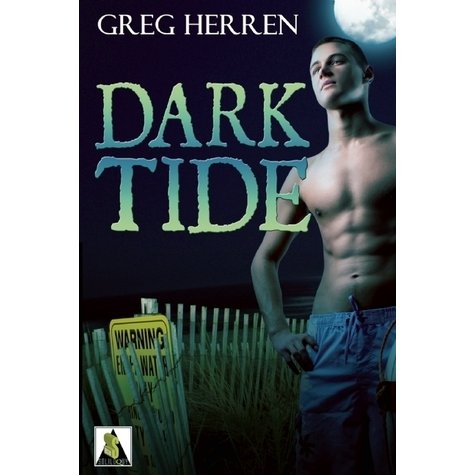
Dark Tide is one of my personal favorites of my books, and I think it’s partly because it was a return to Corinth. The book wasn’t set there–Ricky leaves Corinth for a summer job on the Gulf Coast of Alabama as a lifeguard–but Ricky was from there, and I was able to draw on the rich background I’d created for the town in my twenties as backstory for the book. I also tried to do something with the writing style that I’d never done before, which was mimic the pacing of swimming strokes with the pacing of the book. I don’t know if I succeeded, but I know some of the best work I’ve done is contained inside the pages of that book–there’s one particularly creepy scene where Ricky is swimming in the bay and he has this feeling that there are carnivorous mermen down in the depths of the bay beneath him as he swims, and then imagines it as he strokes through the calm morning waters. I also really liked the character of Ricky; he’s grown up relatively poor and motherless (the reader never knows what happened to his mother), and thinks back to how he is treated by the richer kids, how he is picked on for his suspected sexuality, how deeply closeted he is, and how he met, at a swimming camp his father could barely afford to send him to at the University of Alabama, he met and fell in love with someone who basically changed his life and helped him see that he wasn’t a freak. I loved the character of Ricky, and Dark Tide also is one of few novels I ever wrote that has a big twist that flips the story completely–there are hints, of course, I would never cheat–and I am very proud that I pulled it off.

The book was originally conceptualized and titled as Mermaid Inn. When I was a kid, I used to read comic books voraciously; I sometimes wonder how I found the money to buy as many comic books and kids’ series books as I did (I tend to suspect, now that I am in my fifties, that I was a great deal more spoiled as a child then I thought I was). DC Comics used to publish two comics that were more horror/mystery related than super hero oriented; House of Secrets and House of Mystery. EC Comics, which deeply influenced Stephen King, was no longer around by the time I was reading comics, so these two comics–with secret and mystery in their titles, which is what drew me in to them–were the first horror I read, and I loved how the stories always had a big twist at the end (and come to think of it, that’s the way I write horror, which is probably why I don’t sell any horror short stories). There was one issue that was completely devoted to a story called “Bloody Mermaids,” and I remember it to this day. It was an interesting tale; a scholar who was fascinated by the legend of the mermaid was determined to find one and thus prove they were real. He comes to an old inn along the seashore where mermaids have supposedly been sited over the years, only is horrified to discover that rather than beautiful and kind sea creatures, the ones who inhabit the sea at this place were monsters who feasted on human flesh and blood, and only come out at night; kind of like sea vampires. At the very end he finally finds one, he is horrified by the truth of what she is, and she knocks him out and is ready to drink his blood when the sun starts to rise and she has to flee back to the safety of the water. And the narrator–both comics had them–said something along the lines of ‘be careful what you wish for, the reality of what you seek may be something you don’t want to see.’ The story always fascinated me, and it inspired me to create a story of my own.

dark tide


The engine of my pickup truck made a weird coughing noise just as I came around a cruve in the highway on the Alabama Gulf Coast and I saw Mermaid Inn for the first time.

My heart sank.

That’s not good, I thought, gritting my teeth. I looked down at the control panel. None of the dummy lights had come on. I still had about a half tank of gas. I switched off the air conditioning and the stereo. I turned into the long sloping parking lot of the Inn, pulling into the first parking spot. I listened to the engine. Nothing odd. It was now running smooth like it had the entire drive down. I shut the car off and kept listening. There was nothing but the tick of the engine as it started cooling.

Maybe I just imagined it.

Hope springs eternal.

I took a deep breath while sitting there, listening closely to make sure.

The last thing I needed was to spend money on getting the stupid old truck fixed. Maybe it just needed a tune-up. I couldn’t remember the last time it had one.

Once Ricky arrives at the Inn and gets settled, he finds out the lifeguard from the summer before disappeared, and the longer he stays, the more he realizes that things in Mermaid Inn–and the nearby town of Latona–are not what they seem.

And now, back to the spice mines.