Well, last night was a bit intense there for a while.
Yes, we had really horrific weather events down here last evening. I was sitting in my easy chair, relaxing and watching episodes of Young Justice when my phone started blaring the emergency alert. I knew there was a chance of tornadoes because we were having high winds all day (another emergency alert) and thunderstorms would be moving in during the early night. Sure enough, the wind was howling and the rain was coming down in torrents and lightning was flashing–and then my phone emergency alert started going off. I immediately paused the show and switched over to Margaret Orr on WDSU (since Nash Roberts retired, Ms. Orr has been my go-to local weatherperson, and saw that the “tornadic” (a new word to me) storm was on the West Bank–and there was another, separate one entirely, on the North Shore. The location of this tornadic storm placed it pretty much directly across the river from my neighborhood–needless to say, a bit terrifying knowing it was literally that close–but the path the storm was following indicated it would probably jump the river just below the French Quarter, into either the Marigny, Bywater or lower 9th ward neighborhoods. (Even more scary–I know a lot of people in those neighborhoods, so of course I was scrolling through social media rapidly making sure my friends were all okay and worrying.) Then came the visual confirmation there was actually a tornado on the ground over there–and yes, know and love people over on the West Bank as well–and then it jumped the river into the lower 9th.
I grew up with tornadoes–they weren’t common but did happen in Chicago; but of course, five years in Kansas. My first thought was great there are no basements in southeastern Louisiana and second was fuck there’s really not even an interior place for me to huddle in this apartment if it comes here and third was acceptance: oh well, if it comes this way hope for the best.
Seriously, y’all. Major major yikes.
I know at least one person died in St. Bernard Parish (Chalmette/Arabi), and I’m not seeing any estimates on damage yet (haven’t done a deep dive) but I do remember I drove through the East on a trip out of town after the tornado there a few years ago and being horrified by what I was seeing (not on the level of the ‘disaster drives’ I took around the city when I returned after Katrina, but still pretty fucking horrible; Katrina’s a very high bar, after all). I know thousands are still without power this morning, and I’m not sure how this is going to affect my work day–I don’t know if there’s power at the building, for example, but I think I would have heard something by now–but I wouldn’t be surprised if my appointments have a rather high percentage of no-shows today.
The new book’s cover reveal was graciously hosted by none other than Dru Ann Love this morning; you can find it right here! I love this cover–the look on the cat’s face, based on Scooter, is absolutely perfect–and I am very excited about the new book. I am hopeful it will become a series–it was a one-book only deal, so hopefully it will continue. Huzzah!
I did manage to get quite a bit done yesterday, and was tired a bit when I got home last night so wasn’t able to get any reading or much else of anything done other than watching Live Justice and the second episode of Minx (I have some thoughts on this show, which I am enjoying but not sure if I should be, if that makes sense? But I will discuss that more at another time, and feel like I need to give the show a few more episodes before making up my mind one way or another; I will say that the thing I found problematic in the first episode was that the main character–whom I liked–was very much a 70’s feminist stereotype: humorless, strident, angry–not that they didn’t have every right to be, mind you, but I often find that this lazy stereotype inevitably leads to lazy character development: let’s watch as the uptight opinionated humorless feminist learns how to relax and shed the systemic misogyny training she received as a woman growing up when she did, and of course, being around a porn publisher and porn models…you see what I mean? I like the positive representation of porn and the people who work in it, but…maybe I am making more of this than I should. I don’t know) before of course the tornado alarm went off on my phone, which shifted everything for the rest of the evening.
Paul’s moving into the hotel today so I will also be home alone for until Sunday night or Monday morning. Sigh, Festival widowhood staring me in the face again.
And on that note, tis off to the spice mines. Have a lovely and safe day, Constant Reader!
I’ve always considered myself to be a child of the seventies.
Sure, I was a child for during the sixties, but I turned nine in 1970. While I am sure that turbulent decade provided some (a lot of) influences on me, my personality, my likes/dislikes, and my future, I am equally confident that my values and thoughts and beliefs probably weren’t as shaped from that turbulent decade as they were by the 1970’s. The seventies are really the first decade for which I have a lot of recall (recently, a friend was amazed that I remembered those horrible Rag City Blues jeans for women that were, for some reason beyond my thought processes, popular in the latter part of the decade; what can I say–I do remember the decade fairly well for the most part–or at least as far as my memory can be trusted). I’ve always wanted to write books either set in the seventies completely or even partly; Where the Boys Die, my 70’s suburban Chicago novel, keeps pushing its way to the forefront of my increasingly crowded (and clouded) mind. (NO I AM WRITING CHLORINE NEXT WAIT YOUR TURN)
I remember Watergate and how the scandal grew. I remember the 1972 landslide reelection of Nixon, and the country’s negative reaction to the Ford pardon of the man who brought him to power; I also remember Jimmy Carter running for president out of seemingly nowhere and getting elected. There was The Brady Bunch and The Partridge Family and Archie Bunker and Mary Richards; Sonny and Cher and Carol Burnett and Donny and Marie and the Jackson 5 and Grand Funk Railroad. Top Forty radio ruled the AM airwaves; not every car came equipped with FM capabilities, and the only way you could play your own music in your car was with an eight-track player. I started the decade reading the Hardy Boys and Nancy Drew and The Three Investigators; by the end of the decade I was reading John D. MacDonald and Sidney Sheldon and Harold Robbins. It was a very weird decade…of odd color and fashion choices; avocado greens and browns and American cheese orange were ridiculously popular, as was shag carpeting, velour, clingy polyester shirts, corduroys, bell bottoms and slogan T-shirts. Baseball shirts and rugby sweaters also became popular later in the decade. People had feathered hair parted in the center, and there was this weird sense of, I don’t know, missing out? Movies were grittier, harsher, more realistic; actors went from the polished shine of the old Hollywood system glamour to warts-and-all realism. Television was also beginning to change but was still heavily censored. Boogie and truckin’ and shake your booty became part of the vernacular; the decade began with the break-up of the Beatles and ended with disco’s last gasps while new wave and punk and rap started their rise.
It was the decade I went through puberty and realized that I was attracted to other boys instead of girls; I wasn’t quite sure what that meant but definitely found out in the seventh grade it meant I was a faggot, fairy, queer, cocksucker, and all those other lovely words that were burned into my brain that year. It was the decade where I read Harold Robbins’ Dreams Die First (a truly execrable novel) over and over again because the main character had sex with both men and women, and if I am not mistaken, contained the first male-on-male sex scene I’d ever read (oral); it was also the decade where we moved from Chicago to the suburbs to the cornfields of Kansas and I graduated from high school. (Ironically, it was in Kansas that I discovered gay books with explicit gay sex scenes in them–the News Depot on Commercial Street not only carried The Front Runner by Patricia Nell Warren and her other novels, but also Gordon Merrick; and their magazine racks also had gay porn magazines–which, now that I think about it, meant there were others there in Lyon County and environs; I didn’t realize it at the time, of course.) It was when Norah Lofts’ The Lute Player made me aware that Richard the Lion-Hearted was like me, too; and Susan Howatch’s Cashelmara and Penmarric also had gay characters and plots involving them…
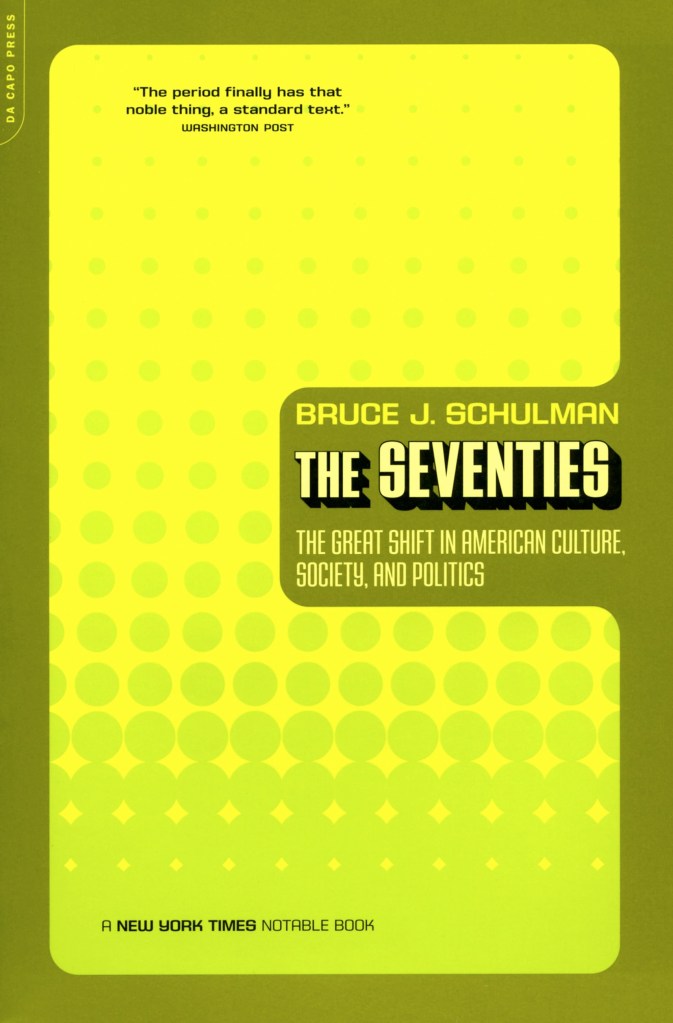
I’ve always thought the seventies was a much more important decade than ever given credit for; usually it is merely considered a connecting time from the 60’s to the 80’s…but almost everything that came after–socially, politically, culturally–got started in the seventies. So I was glad to see this book about that frequently dismissed time.
As I mentioned previously, the Seventies were turbulent; they were the decade that also saw the beginning of the end of the post-war economic/prosperity bubble. Gas shortages, skyrocketing inflation, and the insidious use of racism to break the Democratic coalition began–everything we find ourselves dealing with today had its roots in the Seventies–and it did seem, to those of us growing up in the shadow of the mushroom cloud, that the world had lost its mind and our country (or rather, its mythology) had lost its way. Schulman’s study of the decade, breaking down how the shifts in culture, politics, and our society began, were exploited for divisive purposes, and permanently changed attitudes moving forward was a fascinating, if chilling, read. I remember the terrorist attacks. I remember watching the Munich Olympics that ended in bloodshed on an airport runway and murdered Israeli athletes. The book brought back a lot of memories; I am not so sure I agree with all of Schulman’s assertions about the decade–there certainly wasn’t very much about the burgeoning gay rights movement, other than how it chased lesbians off into the Women’s Movement–but it was interesting to read the book and relive the decade a bit, as well as the memories it triggered.
I do highly recommend this book for people who weren’t around for the Seventies and might be wondering how the fuck did we end up in this current mess?
Wednesday morning and I am having no small bit of trouble shaking off the shackles of Morpheus this morning. First I didn’t want to get out of bed (even considered hitting snooze a third time) and now as I sit here with the dark pressing against my windows and my first cup of coffee not really doing it for me the way I would have hoped, I do worry about waking up and getting out of the house and on my way to the office this morning. Traffic has been light to non-existent this week (last week as well; the holidays thing, without a doubt), so my blood pressure hasn’t gone up at all on the drives into the office recently. I know I should probably do some Blatant Self-Promotion this morning but it’s going to have to wait until tomorrow, methinks; I am not sure if my mind is clear and unfogged enough to talk about rape and/or sexual assault this morning, let alone toxic masculinity–about which I have oh so many thoughts. Instead, I will freeform this morning’s entry while I keep swilling my coffee, hoping the cobwebs will clear and I can get a clear and present grasp of my reality this morning.
We’ll see how that goes, won’t we?
We are finally on the final season of Gossip Girl–I’ll have to go back and check to see when precisely we embarked on this binge journey, but it feels like it’s been most of the month of December, if not longer; probably longer, because we got started watching the sequel series and only turned on the original when it took a break and we had to wait for new episodes; and I think that was back in November, if I am not mistaken. (And yes, a quick search of my Facebook page shows that we were, indeed, already watching the OG Gossip Girl before Thanksgiving, so we’ve been watching for well over a month, which is wonderful. I miss the days when television shows had over twenty episodes per season.) The show is winding down–the final season is only ten episodes (!)–but I also think this final season’s entire purpose was to wrap everything up and end the show. I’ll miss it when it’s finished, but it’s also time to get back into watching everything else we were watching–we still need to finish The Sinner–and I suspect we will be done with Gossip Girl this weekend so we will need to find new things to watch, as well as remembering the things we’d started but not finished in the meantime.
Such an exciting post today, am I right?
It rained overnight–it actually started raining shortly after Paul left the house for the gym–and so this morning it’s cool and humid, which is weird and causes condensation and the fogging up of car windows. I’ve been working pretty consistently on the book every day–it’s a mess, but it’s getting done, which means the clean-up work before it’s turned in is going to be mind-numbing, stressful and exhausting, if exhilarating at the same time. I do enjoy writing every day–I don’t know why it, like going to the gym, is always viewed as an odious chore that I have to force myself to do every day; it really makes little to no sense. It does make one tend to wonder–I love going to the gym, I love writing; they are two of my favorite things to do (reading and sleeping being the other two) and yet I always have to make myself do it. I don’t know why I resist doing things that give me pleasure–lately, I’ve also been having to make myself read, which I never thought would happen.
Go figure.
But work on the book is proceeding apace–editing and revising is going to be an incredibly stressful nightmare, but I can worry about that later–and I am pleased, very pleased. I am being highly productive, which is nice to know that I can still do, and i just wish I could remember that if I was this productive every step of the way, I could get a lot more done. But then the lazies set in and all bets are off.
So, what can I say that would be blatant self-promotion? Not really sure, to be honest. This is probably one of the darkest books I’ve ever written, although I am sure there are parts in it that are funny that I didn’t plan (I rarely intend to be funny; it’s always unintentional, but at least I am laughed with for the most part rather than laughed at) that way.
Liberty Center is, as I have often mentioned, based geographically on Emporia, the county seat of Lyon County, Kansas, which is where we lived from 1976-1981. We didn’t actually live in Emporia; we lived seven miles northwest of Emporia–I don’t remember what the road was that led to our little town was officially called, but I know we called it the Americus Road and the road was where the old Katy Railroad line used to run; that may also be incorrect but that was what I was told. Americus was one of the larger towns in Lyon County (Emporia had over twenty-five thousand, I believe; Americus was 952), and I used to catch the school bus at the Americus Grade School (which had previously served as the high school until it was closed and folded into consolidated high school sixteen miles northeast, Northern Heights High School) and it seemed to always take forever to get to school every morning. This was a significant cultural shock for me, as we had lived in a rather populous suburb of Chicago the previous four years and before that, in the city itself on the south side, near Lawndale. We also went from having three networks and several locals on the television to only having CBS from the Kansas City affiliate (we were able to get cable within the first year we lived there; so we went back to having access to the networks and other cable channels–CNN, ESPN, etc. in their early days–while everyone else I went to school with still only had access to that CBS station….this was the period when my mom watched the CBS soaps; once the cable came on she switched to ABC in the mid-to-late 70’s heydays of General Hospital/All My Children (which were the soaps I watched when on break from school in Illinois). It was weird and uncomfortable switching high schools between my sophomore and junior years, but at the same time I saw it as getting a new start, where no one knew that I had been bullied, belittled, and mocked for the last four years for being (choose one) queer fairy faggot homo queen girly-boy femme etc. (This did eventually happen at my small high school but not really in any significant way until the second semester of my senior year.)
And it was actually a good experience for me, in all honesty. I did much better in school there, got started writing actual fiction, had my mind opened to a lot of new authors and genres in my English classes, and learned a lot–my suburban high school was simply not structured to work well for a student like me, with my attention deficit disorders and so forth. There’s really not been anywhere I lived that didn’t benefit me in some way–there was good and bad everywhere–but when the time and opportunity to move away came, it was past time. I needed to get out of Kansas, I needed to get away from there…and while the next chapter of my life was to become dramatically changed and reshaped into something other than what I was expecting when we moved, there was no way of knowing that was going to happen. In February 1981 when I boarded a night train to California, I had no access to the New York Times or anywhere I could get anything remotely considered news of interest for not straight people, and so I didn’t see the small pieces about the “strange cancer” that was only affecting gay men in New York…but it would be on my radar soon enough.
I got some very good work done yesterday on the book, as well as an invitation to write a story for a tribute anthology, which meant it was a very good day. Today I am working at home, and am also very excited because finally, at long last, I have found Johnny Tremain on a streaming service! And while it disturbs me to no end to actually have to pay to rent it, but I’ve been wanting to see it again for a very long time, and I think I can cough up the couple of bucks to pay for it.
I’ve long wondered where my interest in history came from, and when I saw Johnny Tremain available to stream at long last on Amazon Prime the other day, it hit me: when I was in the first grade, at Eli Whitney Elementary School in Chicago, one afternoon we all gathered in the auditorium and they screened the movie for us. It was my first time seeing anything to do with American history–at that point, I was aware of the Civil War (I was from the South and lived in Chicago; of course I did) and who Washington and Lincoln were, but it was watching this movie–about a teenager in Boston during the period leading up to the American Revolution, that triggered my interest. This was when I started looking for books on American history at the library instead of ones about dinosaurs, and I was in the fourth grade when I finally got a copy of the book (I didn’t know it was a book first) from the Scholastic Book Fair, and it remained a favorite of mine for the rest of my life. I’ve always, always, remembered watching that movie and wanted to see it again; but it wasn’t until recently that I realized that it was the trigger that led me to my interest in American history, and from there to history in general. I am sure, since it’s a Disney picture made in the 1950’s, that it’s very rah-rah patriotic–there’s a thirty minute clip from it on Disney Plus that I tried to watch out of context, but it was so…hit you over the head with AMERICANA and FREEDOM and LIBERTY that I couldn’t really watch all of it; I am hoping that the entire movie won’t be such blatant propaganda, but then again, it was during the height of the Red Scare and it probably was intended to indoctrinate (white) children with a pro-America mentality; patriotism to the nth degree.
So, we’ll see how that goes, won’t we?
I got some good work on the book done last night, after which I was very tired, so I climbed into the easy chair (with a sleeping purr-kitty in my lap) and finished reading A Caribbean Mystery. (More on that later.) I also started reading Nightwing: Leaping into the Light (based on a recommendation from my friend Alex, who always knows whereof he speaks) and it reminded me (again) of why Nightwing is and always has been my favorite super-hero ever since I was a teenager (since he evolved from Robin into Nightwing); and it also finally hit me last night precisely why that was the case; it should make for an interesting blog entry when I get to it. I have so much writing to do–and fortunately I am in a creative state of mind these days, which needs to be more laser-focused. I am pretty confident I will get the book finished in time now, as well as everything else I need to do. We need to make a Costco run at some point, and of course there’s always mail to pick up, dishes to do, floors to clean, and laundry. I also have condoms to pack, and so much reading to do. I inevitably always have more than enough books on hand so that I will never run out of things to read–and that’s not even taking into consideration the ebooks loaded into all the reading apps on my iPad. I slept really well last night–a lovely side effect to being exhausted yesterday–and my shoulder is starting to feel better–at least I can move my arm without feeling a stab of pain, but I do want to keep resting it for another few days before attempting the gym again. I think tonight I might also walk around the Garden District taking pictures of Christmas decorations, which is always a lovely thing to do; one of the many things I love about this city is how it dresses itself up for any and every holiday, which makes it always seem so festive here.
I also have all my Christmas shopping done, and I actually did my Christmas cards last night as well. Now if only my house weren’t such a mess, I could claim I was winning at life!
Paul and I have decided that 2022 is going to be a year dedicated to living our best lives, and we’re thinking about taking another jaunt to Europe (pandemic permitting); but Amsterdam and Berlin will be our destinations. I’ve always wanted to visit both–there’s really nowhere in Europe I don’t want to visit, really–and the appeal of the art museums in both, plus Amsterdam is primarily a walking city, is a hard pull to resist. I’m thinking we might even take the occasional weekend getaway to a panhandle beach, why not? I have to do some traveling for my career (pandemic willing), and I am sure Paul will want to come to Minneapolis with me for Bouchercon, since we both lived there (he lived there much longer than I did; I only lasted eight months, and only agreed to live there on the guarantee it would be eight months and then we would move to New Orleans–other than the weather I really liked it there) it makes sense for him to come with. He works so hard, and he really does deserve to have down time where he can just relax and have fun.
Yesterday at the office I was walking out of our cubicle area to a testing room because one of my clients had arrived. I had noticed that the Crescent Care shirt I was wearing fit rather nicely; I have three of them in purple (one for every clinic day) and one of them, for some reason, fits better than the others and looks more flattering when I wear it. I actually had just thought about it again when I stood up from my desk (“hey, my pecs looks HUGE in this shirt”) and as I walked out, our nurse (hired in July) was sitting at the front desk and she said, “You know Greg, I can see the potential that you were fine when you were younger.” Fifty year old me would have been offended (“what? I look old and tired now?”) but sixty year old me accepted it in the spirit it was intended–a compliment–so I just laughed and replied, “thank you, I was.” Like I said, ten years ago I would have let that hurt my feelings; now I saw it as a compliment–if worded a bit bluntly–and it amused me. Even thinking about it, I am smiling about it.
I do wish I hadn’t been so insecure and self-conscious when I was younger. I also wish I could transfer this very mentality to my writing. I don’t get Imposter Syndrome as much as I used to–more maturity of age, perhaps?–but I do worry about whether people will get what i am trying to do when I write. I worry about unintentionally offending people more than I ever used to before (trust me, if I am trying to offend you, it’s pretty fucking clear); and I am trying to be kinder, more aware, and to exercise empathy as my default rather than getting offended myself. I don’t know how well I am succeeding, but I certainly don’t have my Julia Sugarbaker tirades are regularly as I used to.
Interesting.
Maturity, or just tired?
And on that note, tis off to the spice mines with me.
Moving between your sophomore and junior years in high school isn’t easy on any teenager. I wasn’t quite as nervous about this move as I had been when we moved from Chicago out to the suburbs–which was a major shift in everything I was used to, moved me away from friends I’d been going to school with since first grade, and made me that thing no one wants to be: the new kid–primarily because I’d already experienced being the new kid once already, and had never really gotten over it. Suburban life wasn’t good for me, really–I got picked on and bullied alot, called gay slurs pretty regularly, kids didn’t want to be my friend because they’d open themselves up to the same bullying I was experiencing. So, while I was going to miss the people I did consider to be my friends–which was yet another eye-opening experience in and of itself, but more on that later–but I wasn’t going to miss the bullying, the being targeted, the snickers after I walked past people in the halls, and worrying about having a place to sit in the cafeteria every day (my sophomore year I joined Choir to get out of the lunch break–we were always dismissed fifteen minutes early so we could eat, so I would grab something quickly and eat it as fast as I could; I still eat fast to this day).
I even thought it could be a fresh start for me, and all of that could stay in the past.
While I sometimes will joke about how glad I was to get out of Kansas five years later, I appreciated my time there. My high school was actually–given its size–a much better school than the enormous one I attended in the suburbs; I actually learned there and participated in class. I was, of course, horribly lonely; it’s never been easy for me to talk to people I don’t know (painful shyness, to the point of anxiety), and as always, when nervous and uncomfortable I resort to humor and jokes and being a clown. I never felt like I fit in there, but it was so much better than my old school experience–and the slurs didn’t start there until the second semester of my senior year. That was fine; I just had to make it through a few more weeks by then and at that point I was ready to get out of there and move on with my life.
Kansas wasn’t a particularly welcoming place for a gay teenager in the mid-1970’s, but then most places weren’t at the time. I remember thinking I was the only gay kid in Kansas, the only one at either school I attended, and there was absolutely no one I could trust to talk to about it. I missed having real friends, ones like I read about in books or saw in movies and television shows; it wasn’t until much later in life that I realized I never had real friends because I never trusted anyone enough to actually be honest with them, tell them the truth about me–and the real basis of friendship is mutual trust. I obviously have always had serious trust issues–the whole no one can find out hell of my first few decades of life–but I never felt close to people because I didn’t trust them enough to not turn on me, walk out of my life, and/or mock me if I told them the truth.
So, for a long time I rather held it against Kansas and the area where we lived for not being more open and welcoming, and it was unfair. Would rural Alabama have been better? New Orleans? Nebraska or Texas or California? Even in the cities with a big queer population at the time–New York, Chicago, San Francisco–I wouldn’t say the life of queer kids going through the hell of being closeted in public school was better there. Maybe it was, maybe it wasn’t; I don’t know. But when you live in Kansas and are a queer kid in the 1970’s…I felt like I was marooned on a distant planet.
Oddly enough, the little book store in the county seat, the News Depot–they had a massive newspaper/magazine section, and also carried comic books; it was there I started reading them again–that I found the books that were my foundational queer reading: Gordon Merrick’s The Quirk, Patricia Nell Warren’s The Front Runner, and Marion Zimmer Bradley’s The Catch Trap (and yes, I am aware of the allegations against her as well as her husband–and his, I believe, actual crimes; but I cannot deny the book was foundational reading for me, either). The clerk didn’t even give me a second glance whenever I bought one of these books; I also had to bury them in my room in stacks of other books so my mom wouldn’t find them (my biggest fear was always one day my mom would get bored, wander into my room to find something to read, and wonder, ‘The Quirk? What’s that about?”). There were sex scenes in them, too–sex scenes I read over and over again, memorizing the page numbers so I wouldn’t have to use a bookmark or turn down a page, which was far too risky. I already had a vague idea of what gay sex was like, gathered from insults and comments in other books; but these were pretty graphic and left no doubt in my mind whatsoever about what was involved.
And boy, I wanted to find out how it actually felt.
(I never actually found a gay bookstore until I moved to Tampa in 1990. But I would spend hours in bookstores in the years prior looking for anything that might even be remotely gay or gay-friendly; and occasionally I would find something like Dancer from the Dance or The Swimming-Pool Library but what I really wanted was something fun to read with positive gay characters. characters who weren’t stereotypes or to be pitied or felt sorry for; gays who lived their lives openly and proudly, and maybe solved crimes, fell in and out of love, experienced life that wasn’t all solemn and dreary and sad. Don’t get me wrong–I am not dogging either of those books; they are wonderful novels and beautifully written, but…I am a genre guy, not a litfic guy, and I wanted to read some gay crime or horror or romance or something entertaining. Once I discovered the wealth of books and authors that actually existed in the genres? There was no turning back.)
I had always felt like I didn’t belong anywhere–my earliest childhood memories are of me being aware I wasn’t like the other kids, in many ways, and how odd and different I felt. That feeling never changed growing up–hell, there are still times when I feel like I am from another planet–and the moving around didn’t help, either…I do remember thinking, every time I moved to a new city and state as an adult, ah, here we go again–no friends, no life, and no idea how to find anyone who is like me–if there are any people like me.
It was often discouraging. I felt like I was going to always be alone.
By the time I was twenty it was time to go, to leave Kansas and never go back. I felt so stunted, and so unhappy, like my potential hadn’t been tapped and never would if I remained there. I knew if I stayed in Kansas I would wind up probably very unhappily married, with kids and a whole life I didn’t want, had never wanted, but was expected of me. I knew I would never be happy there, completely happy–and so when the chance presented itself to move to California (California! You can imagine how exciting that sounded to me), I took it and never looked back.
With the passing of time and more perspective, a lot of the bitterness I used to feel about my experience there has changed. I don’t know that the experience there now would be any different than it was in the 1970’s, but I suspect that even had we stayed in the suburbs of Chicago those last few years of high school and first years of college would have been equally scarring and stifling; that’s pretty much how it was for queer kids everywhere back then. Some of the kids I was friends with, or knew, from my old high school in Kansas have friended me on Facebook, and me being a big ole queer must not bother them too much; it’s not like I hide it anymore (those days are forever gone) and they don’t unfriend or block me (although my feed could be hidden from their walls; I’ve certainly done that). I’ve revisited Kansas some in my work already–some short stories, a novel here and there–but this latest visit there in the world I created for #shedeservedit might be a bit unfair; but in a town where toxic masculinity has been allowed to run unchecked, I can’t imagine it would be a comfortable place for a gay teen.
And that’s enough for today. Hope you have a lovely Monday, Constant Reader, and I will check in with you again tomorrow.
Wednesday, and somehow Pay the Bills Day kind of snuck up on me unawares. That’s probably not a bad thing; it certainly means I am not living paycheck-to-paycheck (at least for the moment), which means a lot less stress (there are few things more stressful than money problems) for the time being.
And yes, I am thoroughly enjoying being free of that stress for the time being. I am sure at some point it will return with a vengeance, hence my embrace of the current status.
I’ve recently been immersed in #shedeservedit this past week or so; the final round of edits came in from my editor, and no sooner had I gone over them, rereading the entire thing yet again, then the page proofs dropped into my inbox. I actually have more time than usual to get these done–which is quite lovely and marvelous–and this of course is only checking for typos and mistakes and missing words, etc. But it’s been weird spending so much time in Kansas again in my head lately.
Immersing myself into that world has also been an interesting experience; particularly when you take into consideration how much different the story is now than where it was at when I first wrote it. It was, sadly, inspired by the viral rape cases in Steubenville, Ohio and Marysville, Missouri; much as I hate to admit this, the sexual assault of teenaged girls by their classmates etc. wasn’t really on my radar until those stories went viral–and of course, the Stanford swimmer rapist. All three cases horrified me to the very core of my being; and given that the only recourse I had to effect change was to write about it, I decided to start writing what I obliquely referred to as “the Kansas book” for a very long time (despite the fact that I had always titled it #shedeservedit).
Ah, Kansas.
We moved to Kansas when I was fourteen (I turned fifteen later that summer between my sophomore and junior years of high school). To say it was a bit of a culture shock is putting it mildly. The entire state of Kansas is less populous than Chicago, and the biggest town (small city) in the county was smaller than the suburb where we had lived. I don’t know how many students my suburban high school had, but the building itself was enormous and we basically had a campus; the town library was on the property and we had a field house by the football field, with locker rooms for the home and away teams. My high school in Kansas had 180 students, and my class, the largest in school history, had 48 kids. The school was simply a lobby, a single hallway for the classrooms, and a gym, which had a stage for plays at one end of the basketball court. Our hall lockers didn’t even have locks–which was unimaginable at my former school. We actually lived in a very small town (population 942) about eight miles north of the county seat; that town was the second largest one in the county. My high school was consolidated; five small towns and all the farms in the community sent their kids there–it was sixteen miles from where we lived.
Kansas, and my high school there, had a profound influence on me in many ways. I had taken a creative writing class at my former school–got an A, and some praise from the teacher, but nothing overwhelming–but it was in Kansas where I really started writing. My English class required us to write papers my junior year; my teacher very generously allowed me to write fiction, and so I did. Everyone in my class loved the stories I wrote, and my teacher, the hallowed Mrs. Anderson, encouraged me to pursue writing as a vocation–which was the first time I ever had any kind of encouragement of any kind from anyone other than my grandmother to do so–and that was when I actually began to believe it was something that could happen for me; that I had the ability to tell stories and write and even possibly, at some point, get paid to do so and maybe even make a living doing it. (It only took more than twenty years after graduation, but I did eventually start getting paid to write; it was even my primary source of income for a very long time.)
The town in the book–Liberty Center (a nod to Philip Roth’s When She Was Good)–is obviously based very slightly on the county seat; mostly the geography more than anything else, as well as it also has a small college, a park on the way out of town just before a waterfall; and another park on the other side of town rumored to be a gay cruising spot. I’ve written about this town, and this county, a lot over the years, but the name of that town has changed numerous times–everything from Greenfield to Kahola to Carterville and finally, Liberty Center. (Sara, the first young adult novel I wrote chronologically, is also set in that same area; however the county seat in that book had a different name; Kahola, I think) I’ve not set foot in Kansas since we left for California in February 1981; so this is all from my memory, with an occasional glance at Google Earth or Google Maps. Obviously, everything there has changed dramatically in the forty years (!) since we got on Amtrak and headed west at two in the morning; I tended to stick to my actual memories than the reality of what has changed.
So, when these notorious sexual assault cases involving kids (sorry, I still, and will always, think of college students as kids too, YMMV) became so viral and so ever-present everywhere, I knew I finally had the story for the book I wanted to write in this fictional town–I’d made any number of false starts over the years; some of which may eventually became the seeds for other books–but I have always, always, wanted to write a book set there, and writing a toxic masculinity/rape culture book set there just seemed like the right way to go. I had everything in place that I wanted or needed to write the book; the only thing I didn’t know how to do was end it. So, as I mentioned the other day, I finished the last book I had under contract sometime in the spring of 2015, and took the month of July to write this first draft–96,000 words, nineteen chapters, and missing the concluding one. I didn’t get the story right in the first draft, but set it aside to do other things for awhile before coming back to it. I worked on it around other projects over the years since, and finally, last year, finally recognized the truth I’d been avoiding–it will never be finished unless you sign a contract for it with a deadline. And so I did, and now it will be released in January of this year.
And yes, the deadline was precisely the panicking terrified motivation I needed to make the changes to the story that made it gel and possible for me to write an ending.
And of course, as always, I have been plagued with doubts every step of the way while writing this: am I the right person to write this book? Is a white male the right person to do a book built around toxic masculinity and rape culture? Am I taking a spot in publishing away from someone who might be better qualified and better experienced to write such a novel?
But writing is about taking risks, and trying to push yourself. One of the reasons I started doing the stand-alone books all those years ago was because I worried about getting stale and bored writing my two series; originally, switching back and forth between them helped keep them fresh and new to me…but around 2009 I was starting to feel like those books were becoming repetitive (how many car accidents has Scotty been in?) and stale; that I didn’t have anything new or interesting to say about them. (I kind of am feeling that way with Scotty right now–Chanse has ended, although I may do some novellas with him; but am hopeful once I get everything done that I am working on currently that I can sit down and gather my thoughts on the next Scotty book into something interesting and cohesive and frankly, worthy of the character) I use the stand-alone books to push myself further as a writer, into exploring other things and voices and tenses, which I hope makes the series books better.
I guess we’ll have to see how that goes, won’t we?
And on that note, I am heading into the spice mines. Have a lovely Wednesday, everyone, and will check in with you again tomorrow.
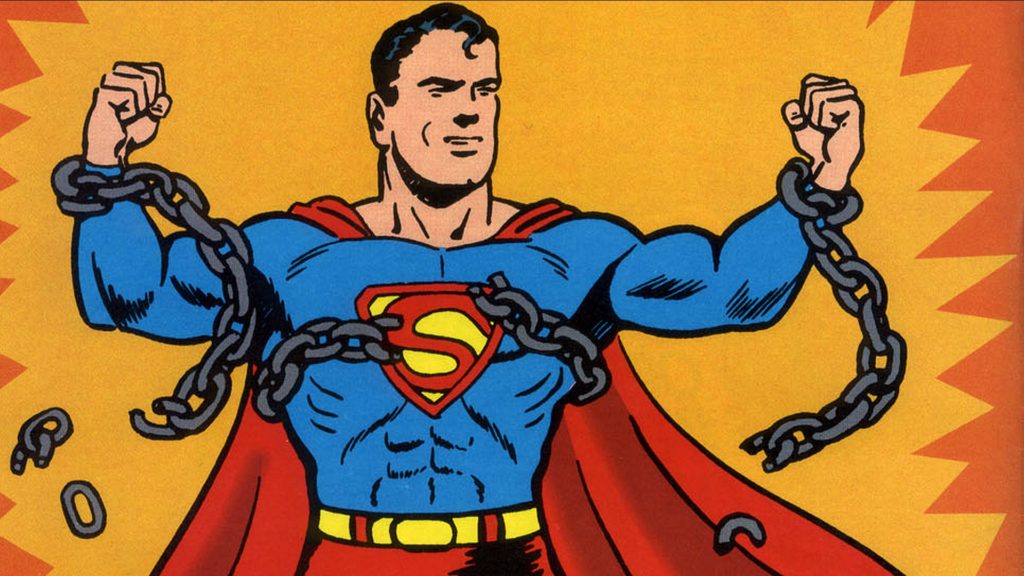
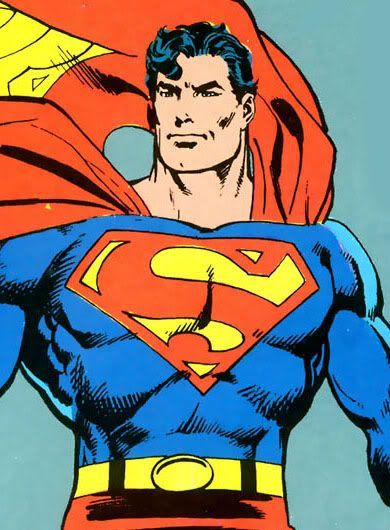
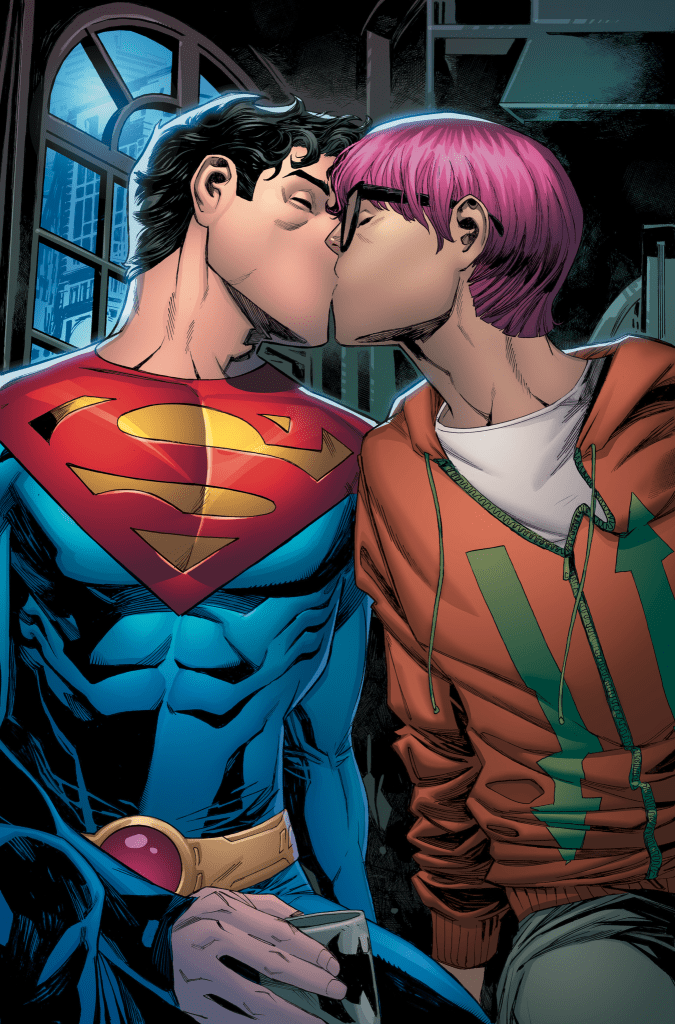
So, on National Coming Out Day this past week, October 11th, the current Superman—Jonathon Kent, son of Lois and Clark—came out as bisexual. When I saw the New York Times piece I literally gasped out loud. This wasn’t some minor character in a team comic; this wasn’t even a second-tier lead of a less-popular title. This was fucking SUPERMAN, the Big Blue Boy Scout, the tentpole character on whom all of DC Comics, and the DC television and film franchises, are built around.
I literally had tears come up in my eyes. This was So. Fucking. HUGE.
I cannot even begin to tell you how much that would have meant to me as a deeply closeted and terrified gay teenager in the Chicago suburbs and later, small town rural Kansas. I really don’t know how best to explain what this meant to me as a sixty-year-old gay man, but here goes.
Oh, Superman. You are the ubiquitous comic book character; since your debut back before the second world war you have become the default; the super-hero every other super-hero is judged against. It’s even right there in your generic name: you are the super man, hence you are Superman.
Superman is kind of the Bill Jones or Joe Smith of comic book heroes: basic, simply named, and the best of them all.
I was a kid when I first started reading comic books about super-heroes. Before I bought my first Action Comics (all I remember is that Lex Luthor was the issue’s villain), I read Archie in all of its iterations; I also read Millie the Model, Dot, Little Lotta, and some others that have faded from memory. The Jewel Osco where my mom used to buy groceries when we lived in Chicago had a comic book vending machine near the entrance, right next to a soda machine dispensing cans of Pepsi and its variants. You put in a dime and two pennies into the appropriate slots, and pushed the appropriate buttons for the comic you wanted; the metal spiral thing holding the comics would spin and drop your comic down, so you could reach in through the door and pick it up. That particular day I wanted a Betty and Veronica, which was A5 but I was in a hurry and accidentally pressed B5 instead; voila, I got an Action Comics instead, much to my bitter disappointment. One of the local independent stations, Channel 32 (which also showed repeats of The Munsters, among other black-and-white classics) aired reruns of the old Superman television show; which I thought, even for my unsophisticated childish palate, was cheesy and silly. I remember grousing about it to my mother—whose response, “Boys read super hero comics anyway” was the kind of thing that usually would guarantee that I would never read a super hero comic book, but I picked it up after we got home and I started reading, certain that I would hate it.
It probably should go without saying that I didn’t hate it.
And it opened an entirely new world for me. Sure, it got a little frustrating from time to time for me (Superman was such a goody two-shoes, but that was kind of his job) and Lois being so desperate (and jealous) to either marry and/or expose his secret identity was annoying; especially because Lois otherwise was such a kick ass woman. There were any number of Superman or Superman-adjacent titles, Lois Lane and Jimmy Olsen had their own titles; Superman often appeared in (and was definitely a charter member of) Justice League of America; there was also Superboy (“Superman as a teenager!”) and Supergirl…it was like the comics readers couldn’t get enough of Superman and his world. I eventually moved on to other DC Comics titles, too—everything Batman (Detective Comics was always my favorite, because there was a mystery to solve) and Flash and Green Arrow and Green Lantern and…yes, my dollar allowance every week for a long time went to comic books (Nancy Drew and the Hardy Boys were $1.50 and my allowance was $1 per week; and no, I couldn’t wait until I had two dollars to get one; I always needed to spend my money as soon I got it on Thursday—Mom’s payday—at either Jewel Osco or at Woolworth’s…because I could always talk Mom into buying me a book if there were Hardy Boys or Three Investigators to be had). When we moved to the suburbs the Zayre’s didn’t carry comics, nor did the grocery store in town; the 7/11 only carried Marvel (I tried with The Mighty Thor, but the continuing story aspect Marvel used irritated me because I would inevitably miss an issue), and when Zayre’s finally started carrying comics, things had… changed. Wonder Woman was no longer an Amazon, and was just an every day modern woman running a boutique (somehow she’d given up her powers). Supergirl had been poisoned, which meant her powers came and went without warning; one moment she’d be super, the next she wouldn’t. It was an attempt to modernize the books, of course, make them appeal to the newer, more sophisticated modern audience of the 1970’s; some of them started addressing social issues and became a lot more adult in theme. (Green Arrow actually became my favorite book during this time; he was drawn naturally—had curly chest hair AND nipples—and he had no powers other than being an expert archer and skill at hand-to-hand fighting). I eventually moved away from comics because I started spending my money on novels—Agatha Christie, Ellery Queen, etc.—and comics were, I thought, really for kids.
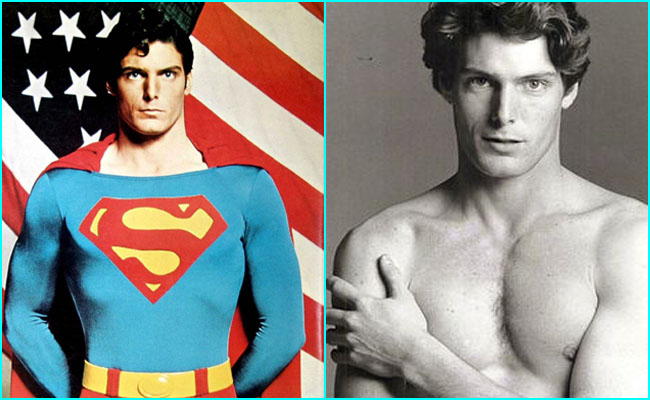
Later on, when we moved to Kansas, I got back into comics again, and things had changed yet again. Some of the Legion of Super-Heroes’ costumes made them look like strippers (male and female); the drawing of the characters had become more natural and realistic (Superman, for example, went from being barrel-shaped to having a narrow little waist and abs showing through his skintight costume), and Wonder Woman was an Amazon again. This was my Howard the Duck period, when I also started delving into Marvel a bit more. Comics always remained of interest to me throughout my life, with me going through periods of collecting and reading in large volumes at different times…before moving on from them again. I am not an expert on comics by any means; I know the names of some artists and some writers, but for the most part, I always paid more attention to story and character (go figure). But I’ve always maintained a love for the characters; and yes, the original Christopher Reeve Superman movie (which I rewatched recently for the Cynical 70’s Film Festival) indeed made me believe a man could fly.
I’ve always had, and always will have, a soft spot for Superman.
To me, Christopher Reeve was Superman–the prior versions of the character, including the popular television show (which I watched religiously) always seemed, to me, to be an actor playing the part; Reeve somehow just was the character. He was so insanely and ridiculously handsome; the body was just right, and he had the right mix of charm and charisma the part demanded. Reeve’s Superman could never be seen as a threat–and he also made it completely believable that no one could tell Clark was him, with different hair, glasses, and street clothes; he physically changed how he stood, his posture, everything about him that was Superman, when he was playing Clark.
Reeve never got enough credit as an actor, frankly.
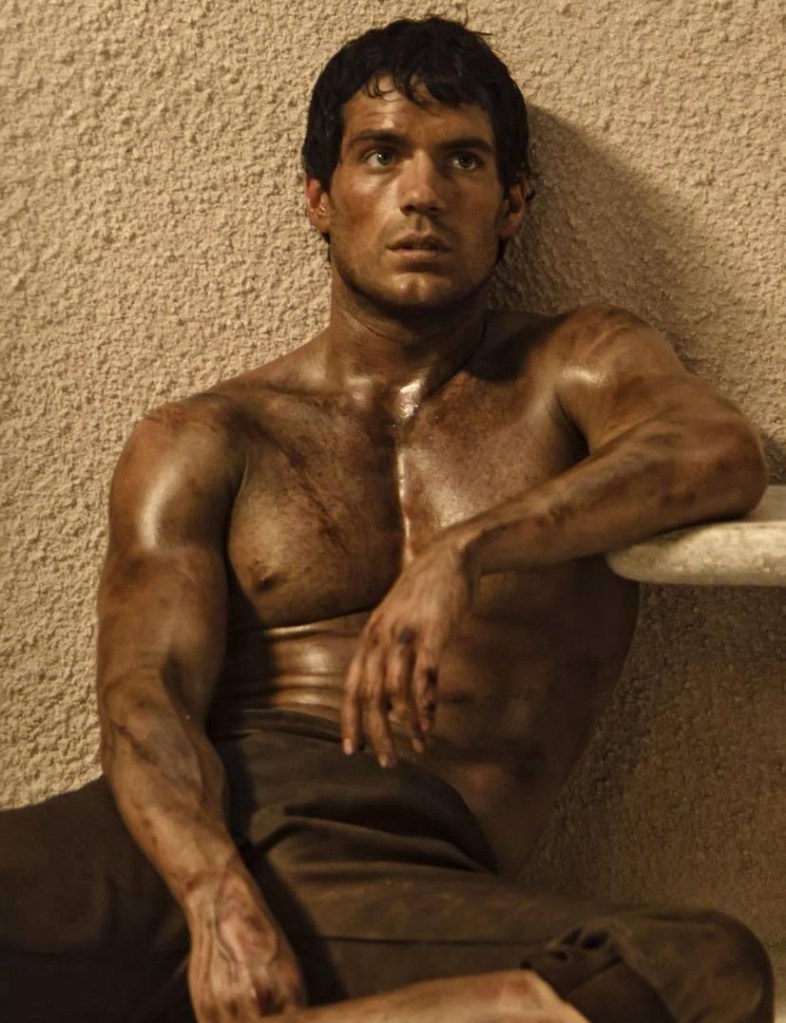
And while my memories of Margot Kidder as Lois Lane aren’t fond ones–I thought she was a fine actress, but miscast–overall, the first two Reeve films were good ones. They could have stopped there, but didn’t–and the last two weren’t good. I enjoyed Lois and Clark (despite what Dean Cain turned into) and Paul and I eventually succumbed to the simple pleasure that was Smallville…but I wanted to see Superman back up on the big screen, where he belonged. I was very excited when they cast Henry Cavill in the part (I’ve been crushing hard on Cavill since first noticing him on The Tudors)….and then came the movies. I enjoyed them for what they were, and I did think some of the changes made to update and modernize the story (how would Americans today react to the discovery of a super being from another planet?)–and you can never go wrong with Amy Adams, either.
But…they forgot the most important thing about Superman: his kindness and genuine concern for people. In the quest to make the DC Film Universe of all that is dark and angsty like the Batman movies–the direction Batman has gone in since the comic mini-series The Dark Knight Returns–was a bad one. Patty Jenkins got Wonder Woman so fucking right–and it was the same basic formula as Superman. Superman used to be derisively called “the world’s oldest Boy Scout”, but that can work with the character, and with the right actor. I think Cavill has the charisma and the charm–and the extraordinarily gorgeous smile–to pull that off; I just wish they would have let him have the chance.
The new show on CW, Superman and Lois, is also excellent; I absolutely love it, and I do think that Tyler Hoechlin is one of the best Supermans of all time, frankly. (The entire cast is stellar, frankly.)
So, as I said earlier, I was pretty fucking jazzed the other day to see the piece in the New York Timesearlier this week about Superman “coming out”–on National Coming Out Day, no less–and even if it turned out to not be Clark Kent, but Lois and Clark’s son Jonathan (in the comics they have the one son; on Superman and Lois they have twin sons, one of whom is named Jonathan), and while I, in my white gay male privilege assumed this meant that he was gay–he’s actually bisexual. But he is attracted to other men, and even has a boyfriend.
There was one particularly noxious piece posted on Medium, which the homophobic piece of trash who wrote it proudly posted on Facebook (I reported his post on Facebook as well as the piece on Medium as hate speech; the Medium piece came down, but the last time I looked, of course Facebook had done nothing about it). I read the whole thing–poorly worded, not grammatical, would have given a C- grade on the construction basics level alone–but the part that I couldn’t get past, the part I can’t forget, was him saying this: But why take one of the few heroes left for the “Straight World” and make him abnormally offensive to us?
Abnormally. Offensive.
I guess I missed the massive closet exodus for the DC and Marvel Universes? Let me see–right off the top of my head, at DC aren’t Batman, Green Lantern, Green Arrow, Nightwing, Cyborg, Aquaman, the Flash, the Martian Manhunter, the Question, Beast Boy, the Elongated Man, and Shazam, all straight? (And that is just off the top of my head., and only DC.) But you know those people who are so afraid of the queers–you know, like the piece of shit who wrote the Medium piece–they just can’t help themselves or keep their fucking mouths shut. Oh, no, Mr. I’ve Never Brought a Woman to Orgasm just can’t let us have anything without letting us know how much it offends their delicate, needle-dicked sensibilities. You know, the same kind of guy who undoubtedly always complains about “cancel culture” and “social justice warriors” and “wokeness” and I don’t have a problem with gay people but why do you have to exist? Those kinds–sad, bitter little men with so little joy in their lives they have to spend their precious time on this planet letting everyone else in the world know how much they object to our existence.
But he has a right to his opinion and we are oppressing him if we call it out for the hateful trash it is…and him for the piece of shit he is.
As my editor at Kensington wrote on a note he included with a copy of a bad review of one of my books, this just reeks with the stench of failed author.
This guy claims to be a crime writer, and claims to work for a publisher (I’ve never heard of it or him before this moment)…but after reading this piece and another one he published on Medium, the real crime is his actual writing.
Fuck off, dude. And know that bisexual Superman is going to have way better sex than you could ever pay for, no matter how long you live.
One final blast of Blatant Self-Promotion for Bury Me in Shadows. (Or is it?)
And I thank you, Constant Reader, for your patience while I do this. Soon we’ll be back to our normal daily programming only; and there will be no more of those navel-gazing posts about writing this book; just navel-gazing posts about whatever strikes my fancy at the moment, I guess.
(Warning: I will be having to do more Blatant Self-Promotion in and around January when #shedeservedit drops. You’ve been warned!)
The first line of the first draft of Bury Me in Shadows was “My mother ruined my life the summer before my senior year of high school.” I liked this opening line, as it seemed a good place to start; for me, it should have struck the interest of the reader: who is this speaking? Surely this is an exaggeration? What did she do?
The problem was—and I can be horribly stubborn when it comes to these sorts of things—that I loved that opening line and tried to keep it even after I realized it wouldn’t work, and didn’t on several levels; it implies, very strongly, that this story is being told in flashback—the entire sentence makes it sound like he’s looking back and remembering that summer from a vantage point in the future—and that wasn’t what I wanted with the story. It even set the wrong tone. In my original vision of the story, my Jake had gotten a summer job at a fast food place in his suburb of Chicago, mainly because he has a huge crush on a guy who works there. His mother sending him away for the summer ruins his plans to get close to Hunter (who still appears in the book, but very briefly), and then he meets a love interest in Alabama while he’s dealing with all the family secrets and what may or not be a haunting of some sort. Originally, Jake was very well-balanced and smart; his mother has always treated him like an adult so he’s more mature than most seventeen-year-old’s, but still has that strong narcissistic streak that so many teenagers share (I’ll never forget Nancy Garden—angel that she was—telling me, when asked for advice, “Just remember that for teenagers everything is the end of the world.”). But…would she send a seventeen-year-old down there? And once I realized that the moonshiners in the holler over the ridge would probably now also have a meth lab (or replaced the still with one), I thought, there’s no way this intelligent, capable, and successful woman would send a teenager down there on his own for the summer and I realized I needed to shift his age, make him older; it also eliminated the need for him to be picked up at the Birmingham airport or borrow a car from his uncle. I also realized if Jake were older, he could be in college in New Orleans—where he would, of course, have a car—and could just drive up there. And as the story continued to flesh out in my head as I conceptualized it and started writing, I began to understand how dangerous it was at the Donelson place; and given the reasons why Glynis has kept her son away from where she grew up, she would have to be completely reassured that she wasn’t putting her son in any danger.
Which led me into a deep dive into who Jake was a character—and he was not the confident, borderline-cocky openly gay high school senior whom I’d envisioned originally. I also needed a reason why Glynis would decide to send her son there for the summer, when she’s clearly kept him away for most of his life. That meant he would have to do something—I wasn’t sure what it was yet, but there had to be something—and I already had her working in Los Angeles for the summer so she couldn’t take him with her or keep an eye on him at their home in Chicago. I debated: a car accident, or an accident of some sort? And then it hit me right between the eyes: he’s the son of a very successful, kind of cold mother; he’s openly gay and went to a private Catholic school in Chicago; and his mother has been married multiple times. He doesn’t feel at home with his father’s second family in the suburbs, so he always feels out of place, with the inherent insecurities and self-doubt and self-loathing that comes with that. Shy and nervous and not sure of himself, he would be easy prey for a narcissistic gay, who would see in him a ‘project’: “let’s teach Jake how to be a gay man!’ And, of course Jake falls for the guy, who is completely the wrong person for him, and the more the guy pulls away the harder he clings, until the guy finally has enough and pulls away. This causes Jake to spiral, badly, mixing drugs and alcohol and who knows what else as he goes on a three day binge, most of which he doesn’t remember, and he ends up in the hospital after collapsing on the dance floor of a gay bar at four in the morning. The hospital contacts his mother, she tells them he tried to kill himself in high school, and he gets put on a 72 psychiatric hold. It is then she comes up with the great idea of what to do with him for the summer: her mother is dying, and the house is full of junk. Someone from the family should be there, and since he is there, he can start doing an inventory of everything in the house, getting it ready to be cleared out once the old woman does finally die. Jake doesn’t really like the idea but Glynis gives him no choice; and he is off to summer in glorious Corinth County, Alabama.
Of course, once he arrives there, he starts having strange memories, weird feelings, and seeing things he shouldn’t be seeing. Having just overdosed, naturally he isn’t certain he can completely trust his own brain; has he somehow fucked up his brain function? But the longer he stays there, the more certain he becomes that what he is experiencing is actually real; and that’s even more disturbing than thinking his brain has rewired. There are a LOT of family secrets and dysfunction to uncover, and of course, there’s that family of criminals with a meth lab just over the ridge, and those archaeologists digging out at the ruins of the old Blackwood Hall; and all those terrible family secrets start coming out…which puts his own life at risk.
If you do decide to take a chance and read Bury Me in Shadows, I hope you enjoy it. It was fun to write–once I figured out how to fix all the problems–and I hope it’s fun for you to read.
As the launch date for my book draws nearer and nearer, I find myself not experiencing the kind of stress and anxiety that I usually feel as the clock winds down. Maybe it’s because I am making the effort to promote the book this time around? Finding the time to do so? Paying more attention than I usually do when I have a book coming out? I don’t know why I am feeling so much more relaxed than I ordinarily do in the final days before this release, but it’s nice to have some awareness—other than the usual stopping in the middle of something to think, oh yes, I have a book coming out—is it today or tomorrow? I should probably do something about that, shouldn’t I?
It really is a wonder that I have any career of any kind, seriously.
And maybe it’s just the swing back from the twenty months or so of nightmarish existence, but I do feel like I am doing good work when I am writing these days. I don’t really remember much of the final push to get Bury Me in Shadows finished and out of the way, but I do remember doing the page proofs and thinking, you kind of did what you wanted to with this, well done! One of my big worries whenever I start writing something new is the fear I’ve already written the story, albeit in a different form; I was worried, almost constantly, that I was plagiarizing Lake Thirteen, my other ghost story, in this book. But the stories are very different, and the main character in each are quite different from each other. I think the mood in both books—the atmosphere I was creating—are very similar to each other, but I was trying to do something Gothic and almost dream-like with both.
As I mentioned the other day, I’ve always worried about writing about the South, and Alabama, in particular. How does one write about the South without dealing with the racism, present and past, of the region? How do you write honestly, with realistic Southern characters, without touching on that third rail of enslavement and war? Not all Southerners are racists, of course, just as not all Southerners are homophobes (I do make that point—about them not being all homophobes—in the second or third chapter of the book). But you cannot write about the South without mentioning that whole “Lost Cause/states’ rights” nonsense; that misplaced pride in something that was, at its core, evil. I was not educated in the South; I started school in the Chicago public education system; we moved out to the suburbs for junior high and my first two years of high school, finishing in Kansas. I was never taught in school that the root cause of the Civil War was anything other than slavery; and in all my extensive outside reading of American history, I never came across any of that. (I knew that the Southern politicians were all shouting “states’ rights!” in the lead-up to secession; but this was subterfuge. They couldn’t win the argument about slavery on moral grounds, so they fought against emancipation on Constitutional grounds. And, as I often note whenever someone trots out the tired states’ rights canard, the only right they cared about was the right to own slaves, and they sure as hell wanted the Fugitive Slave Act enforced against the will of the free states, didn’t they?)
I also like to point out that all those lovely, wonderful society ladies in Gone with the Wind—Melanie, Mrs. Meade, Mrs. Elsing, Mrs. Merriweather, etc.—would all be full-on Trump voters today. (I’ve not read the book in years, but while I do remember that in several places, Ashley talks about how he would have freed the enslaved people at Twelve Oaks had the war not come; but Melanie talks about the Lost Cause with all the fervor of a believer at a revival meeting in a tent…which makes Melanie, theoretically the moral center of the book, the biggest racist of the main characters in the story—and yes, I know, Margaret Mitchell did a great job of propagandizing the “Cause” as the Confederacy rather than slavery; but there’s an awful lot of racism and “they were better off enslaved” in that book, which, along with the movie, has done a great job of romanticizing something hideous and ugly )
I could write volumes about Gone with the Wind and how problematic both book and movie are (not the least of which is that Rhett rapes Scarlett but she enjoys it), but that’s an entirely different subject, deserving of its own entry (or two or three) or an essay—but I will say this one last thing on the Gone with the Wind subject: since the movie was released, for decades it imprinted on the minds of white Americans “this is what the antebellum South, and enslavement, was like”—when it was actually nothing of the sort and bore no resemblance to anything true or right.
One of the things I wanted to make clear with Bury Me in Shadows is that the shadow of white supremacy can be overcome and the continuing link, from generation to generation (parents teaching it to their children, who teach it to their children) can be broken by a person not blinded to realities or brainwashed by romantic fantasies; that character in this book for me is Jake’s mother, Glynis Chapman. Glynis rejected the white supremacy/racism she was raised with and did not pass that on to her son. I’ve always felt—and this was best exemplified with that Miss California who all those years ago blamed her homophobia on “It’s how I was raised”; it’s how I was raised is perhaps the laziest, most disgraceful, and embarrassing excuse ever given for perpetuating hatred and discrimination. It essentially states that you are incapable of thinking logically and rationally for yourself; you are incurious, and your parents are God-like, with beliefs and values that are above question. At least own your bigotry and don’t blame it on your parents because at some point, you must become your own person; you either continue to blindly believe everything your parents told you, or you actually become a functional human being capable of making up your own mind rather than simply blindly parroting what you were taught. I began questioning everything quite young, frankly; more so than most, but still to a far lesser degree than I should have. I didn’t question American mythology as young as I should have, but I did start questioning religion quite young–and I am also happy that I never fossilized my beliefs and values but rather kept them fluid and receptive to change based on new information, or more in depth thought.
Racism, and white supremacy, are evil. Period. Race theory has no validity or origin in actual science—the genetic differences between white people and non-white people are so infinitesimal as to be practically non-existent—and were created for no other reason than to justify western European colonialism, exploitation, and looting the resources of the rest of the world for power and money. Originally cloaked in religious fervor (if there was gold and riches for the crown, there were souls to be won for the cross), even American expansionism at the expense of the indigenous people of this continent was called manifest destiny, which gave mass genocide and the theft of land a cloak of holiness: it is the destiny of the white man to rule over others and expand his empire.
And it can’t get more white supremacist than that, can it?
I’ve never understood the notion of racial pride, frankly; likewise, I’ve never really grasped the mentality behind ancestor-worship, as evidenced by Confederate apologists. Regardless of reason, the truth is, and always has been, that the Southern states tried to destroy the union, period. They fired on the flag. The great irony that the Confederate apologists also consider themselves to be more patriotic Americans than those who think the Confederates were traitors–talk about cognitive dissonance–is something that always amuses me. How do you chant USA! USA! during the Olympics or other international sporting events of any kind when you have a Confederate flag decal on your car? Why are you do defensive about the crimes of your ancestors, when you have no more control over what they did during their lifetimes than they have over yours? No one can help who they are descended from and no one pays for the crimes of their ancestors. Confederate monuments never should have been erected (again, the groups that raised the money for them and put them up were run by women like Melanie Wilkes and Mrs. Meade and the other society women from Gone with the Wind) so there should have been no need for discussion, debate, or confrontation over their removal; as I always say, “Where are the statues of Benedict Arnold or the other Tories from the Revolutionary War? Weren’t they just standing behind their values and beliefs? They also saw themselves as patriots–just for the King.” I am incredibly happy not to see the statue of traitor Robert E. Lee every time I drive home from work–I hated having to try to explain the existence of the statue and the circle named for him to visitors…I used to say, “And here’s one of our monuments to treason, Lee Circle” every time I drove around it with a visitor in the car.
So, no, Bury Me in Shadows is definitely not a Lost Cause narrative that romanticizes the antebellum Southern states or the Civil War–and is definitely not the place to look for one.
I survived the tooth extraction! I am debating whether i want to take some of the painkillers this morning–they didn’t give me anything addicting; prescription strength Tylenol and ibuprofen only, but they made me sleepy and zone in and out all day after I got home, which made yesterday a productivity bust. But my word, how well I slept last night! I do feel pretty amazing this morning–even though I can’t go to the gym again until Monday at the earliest and no solid foods till then either; which means a steady diets of soups, yogurts and protein shakes, which are filling but not satisfying in the least–so I am hoping to get a lot done this morning. We’re going to go visit Pat and Michael this evening–we haven’t seen them since pre-pandemic–and I am very excited about that as well.
So, the plan for today is to write and read and clean and edit–the usual Saturday fare–and we’ll see how that goes. There are two blog entries I’ve begun and not finished; one talking about the first openly gay guy I ever met, and the other about Superman and Lois–so I am hoping to get those written this morning as well. The kitchen has totally slid since I cleaned it Thursday night after work, and so I am going to be doing dishes and organizing and vacuuming this morning around my cleaning (and answering of emails). I want to revisit “Festival of the Redeemer” this weekend, and try to get a first draft of “The Sound of Snow Falling” finished this weekend as well as trying to revise the first chapter of Chlorine. I also have some other in-progress story drafts open on the laptop–one called “Beauty Sleep,” which stalled because i had the opening idea and the title but don’t know where to take it from there, and I think I’m just going to try to write my way out of it. I also want to spend some time pulling what I have available for the next short story collection (This Town and Other Stories) together.
An ambitious plan, to be sure.
I tried watching Camelot yesterday on HBO MAX, and was soon bored of it. It’s simply not a good film–and Franco Nero’s almost unintelligible, heavily accented English would have been fine had the dubbing of his singing also been accented. I saw this movie in the theater when I was a kid–my grandmother took me and my sister to see it at the Colony in Chicago–and LOVED it, but have never seen it since. Maybe it would be better on the big screen–it was letterboxed, so it was meant to be seen that way–but on my big screen television, the magic was lost. It was from that period after movie musicals like West Side Story, My Fair Lady, and The Sound of Music–lavish, enormous spectacles–did huge box office and won lots of Oscars; unfortunately, it also led to expensive gambles–like Camelot, Paint Your Wagon, Dr. Dolittle, and Sweet Charity–that were massive failures (Mark Harris does a great job exploring this phenomenon in his marvelous Pictures at a Revolution; he writes wonderful books about the film industry and I hope there will be a new one soon) that bankrupted studios and eventually ended the movie musical genre (with a few notable exceptions, like Cabaret) for a good long while, which changed the movie industry as well. (hey, Mark–why don’t you write about how the summer spectacle film, beginning with Jaws, also changed the industry by moving it away from the gritty realism and cynicism of the 1970’s? Just a thought).
Okay, I took some painkillers. I don’t know if it was actually pain or discomfort I was feeling, but regardless–there was no need for either when I had pills on hand to take care of it.
I am all about better living through chemistry, and they gave me quite a supply, so I have to assume the mentality is for me to use them as needed–which is what both bottles say anyway.
We watched this week’s Line of Duty–there’s only one more episode, the series finale–and enjoyed it, before switching over to the US Gymnastics Olympic trials. I was drifting in and out of sleep through both, so when they were over, I went to bed–at shortly after nine! And had a great night’s sleep, I might add. We also have this week’s episodes of Physical–which is great, if you’re not watching–and Lisey’s Story–also great–to get caught up on this evening after we get home from Pat and Michael’s. We also want to watch a movie on Disney–Freaky, a riff on Freaky Friday in which a spree killer and a teenage cheerleader switch bodies, which could be either hilarious or awful–and I will probably go to bed early this evening as well. My body is starting to adapt to getting up at six three days a week, and I am not sure if I like it or not. I woke up at 6:30 yesterday morning–imagine my shock to discover, around eleven, that it was only eleven…but I used to always get a lot of work done before noon in the olden days, so maybe this is a return to my old productivity? Maybe NOT getting up early every day was the change that shifted everything?
The jury is still out, and you will, of course, be updated with regularity on this situation as it develops, Constant Reader.





 Queer and Loathing in America