Paul is sleeping and won’t be up before I go to work, so I won’t get to see him before he leaves. I’ll be coming home to a quiet apartment tonight with a needy cat, who will only get needier as the night goes along and his other daddy doesn’t come home. I imagine tonight will be one of those nights where I don’t really do much of anything other than cater to the cat and miss Paul. Heavy heaving sigh. I didn’t sleep well either; I got a stomach ache yesterday afternoon that finally went away around three this morning, thank the Lord, but I was waking up every hour it seemed, and not really going back into a deep sleep. I am definitely going to hit a wall this afternoon. That’s okay, I can come home to a needy cat tonight and read Lavender House in bed while watching news clips upstairs. I think I am going to move my laptop upstairs too; doesn’t it make more sense to write in bed than in my recliner, if I don’t feel like sitting at my desk? Tonight I am going to also watch some of season three of Heartstopper, whose first season I was all-in on, but whose second season, while enjoyable still, began to lose me a bit. I always say that Heartstopper wasn’t written or filmed for me; I am not their target audience, and with young people in mind, it’s quite marvelous. I don’t know, though. I have some critical thoughts about the whole thing–books and show–that probably aren’t going to be popular with other queers, but…when I have ever been popular with other queers that didn’t want to fuck me?1 Yeah, yeah, an overstatement; but I am kind of concerned about the kind of representation we get in popular forms of media (books, movies, TV shows, documentaries), and there’s nothing wrong with having an opinion on anything, right? I will certainly not claim to be speaking for everyone in my community.
And of course, the accompanying corollary to having a relatively fit body was that serious queer writers didn’t take me seriously, since I was a genre writer (the horror!) and in decent shape–ergo, not literary or educated or smart enough to be allowed to fit into those snooty cocktail parties. Of course, before I published my first book, New Orleans literary society pretty much assumed I was just Paul’s boy toy–flattering on one level but insulting on all the others, which was always funny to me because without question I am almost always the person in the room who has read the most books across genres and styles.
Oh, yes, I have many chips on my shoulder. Care to pick one?
Ugh, this stomach thing is really icky. I am going to have to take something OTC for it, methinks, because while it’s much more bearable now than it was, it’s still incredibly uncomfortable. Just wait till I’m tired later on today! I did make an executive decision to take tomorrow off–in case this doesn’t get better later on–for a five day weekend. Tomorrow might be the day that I rest and read and not worry about anything other than resting. At least Paul won’t be home if it’s something catching, but I think it’s a combination of something I must have ate Sunday or Monday–it feels like an aching muscle, but it can’t be that, can it? Sigh. I’ll try some Tums and see if that does anything, but I doubt they will.
Ugh. Hope I can make it through this day.
Catch you tomorrow, Constant Reader, and I hope that you’ll forgive me this briefness. I hope to feel better tomorrow.
Yes, I know how arrogant that sounds, but the truth is when I was in my thirties and forties I could get laid any time I wanted to, and since I am not being dishonest or self-deprecating about anything any more, I’m embracing it. I may not have thought I was anything special myself back then, but when I see pictures I’m like wow, you had some serious body dysmorphia.How could you have lost any more weight?↩︎
Ah, it’s Monday and I am up early, swilling coffee and getting ready to face down a very short, and most likely slow, week in the office. Paul is leaving tomorrow for a week, so tomorrow I’ll come home to a quiet, empty house. It’ll be weird, of course,1 but I am going to try to keep busy. I do have a lot of homework2 to get done this week, and hopefully Sparky won’t be near as needy as he always is when it’s just the two of us. Sparky has, at long last, starting sleeping in the bed with us, always in a kitty donut down by my feet, which is very relaxing. He’s been there the last several mornings when I wake up, which is nice. He’s also started cuddling and sleeping with Paul on the couch–like Scooter, Sparky takes turns with our laps when we’re watching television; unlike Scooter, Sparky starts with Paul for a while before curling up in mine for the rest of the evening. It only took just over a year, but we finally have the cuddle bug we wanted. He still only purrs when he’s riding my shoulders, draped around my neck–but he’s getting cuddlier, and there’s more head-butting by the day.
I had a very relaxing day yesterday, but didn’t get nearly as much done as I wanted to–like always. Still reeling from the power of The Reformatory3, I started reading Lavender House by Lev AC Rosen. I am absolutely loving it. I love the voice, I love the main character, I love the writing, and so I know I am going to really love this book–and once I get going, it will be unputdownable. Yay! And there’s two more in this series, too, which is very exciting–not to mention all his other works, in y/a and romance. Paul spent most of the day working upstairs, and leaving me on my own with Sparky for most of the day. I finished my entry on The Reformatory, and worked on some writing, mostly thinking and taking notes. I’m glad this is a short work week, and am looking forward to some lovely down time here by myself. I made progress on the apartment this past weekend, and will probably get some more progress made over this coming long weekend4.
I need to make a to-do list, and to get better organized, but I made progress. I have a manuscript to edit, some short stories to read and judge for Saints and Sinners, and my own writing to work on around here. Sparky will be needy the whole time, and I am going to watch the new season of Heartstopper, before diving into Sex and the City. I’ve also found some movies to watch over the weekend, too–or in the evenings when I get home from work tomorrow and Wednesday. I’ve also got my Housewives shows, and there’s always some cleaning to be done somewhere–not to mention more pruning of the books and the storage attic.
While I was driving around doing my errands Saturday I started listening to Orville Peck’s music on Spotify, and I love it! I have yet to hear a song of his that isn’t a bop, so I saved several of his albums to my library and am going to start listening to him more regularly in the car. I’ve always liked all kinds of genres of music; there just really hasn’t been any country outside of Dolly in a while that I’ve been interested in. I also kind of hate how country music has been taken over by the Right and MAGA–I’ve never forgiven country music for what it did to the Chicks, and they were RIGHT–so I try not to listen to much of the newer stuff. Country music used to be about outlaws and fighting the man holding down the working class, instead of being a bunch of appeasers and collaborators.
They’d shun and cancel Johnny Cash today for being woke. How fucking sad is that?
They must really hate Orville Peck for being openly gay–even though they really embraced Li’l Nas X when he was doing country music back in the day…until he came out and switched genres.
I don’t know what to think about what’s coming, but it’s pretty sad that the only thing standing between us and authoritarianism are the courts, Senate Republicans, and the administration’s utter incompetence. Paul and I have made up our minds to enjoy ourselves as much as possible between now and the transfer of power; who knows what’s coming after that? These are dark times indeed, and a lot of damage can be done by utter incompetence and a program of complete and utter unfettered cruelty. I think the biggest shock for me of the election is that self-absorption and unbridled hatred of anything not straight, white and cishet was actually embraced by the country.
Then again, this is a country that wasn’t able to legislate or vote slavery out of existence, and it took a war. The appeasement of slave-owning Americans from 1787 through 1865 will always be a stain on this nation’s history, and by not dealing with any of it, or systemic racial oppression, by not facing the truth in all its brutal ugliness, we’ve never been able to progress as a racially diverse nation or move on from it. (I always love when Americans take the moral high road when talking to or about other countries; like we have any room to talk about oppressing citizens and human rights violations? Bitch, please.)
Sigh. And on that note I am heading into the spice mines. Have a lovely day, Constant Reader, and I may be back later. One never knows!
I’ll never understand how someone can take up so much space, and how much bigger and emptier it seems when he isn’t there. ↩︎
Which might be one of my favorite novels of all time, period, regardless of genre. ↩︎
I am planning on simply cleaning the bathrooms on Thursday morning, and having a very lazy day doing little to nothing other than reading and binge-watching television series; I’ll push myself the other three days. I can also do things at night this week once Paul departs tomorrow morning. ↩︎
Being Southern hasn’t been as difficult for me as it is for most Southern people, when it comes to forgetting the past and not taking pride in a heritage that includes racism and bigotry and enslavement. Some of the earliest lessons I learned about life in these United States was that I was one of the few people who started recognizing something that I wouldn’t know the name for until I was much older: cognitive dissonance. What I was being told at home was different from what I was being taught in school, and even that, while better balanced, was “patriotism good rah rah rah U!S!A! U!S!A!” all the time, nonstop. I began wondering about how much of an American “hero” Christopher Columbus really was, as all he brought to the New World was genocide, slavery, disease, centuries of oppression and looting the resources of the Americas. I started dealing with more cognitive dissonance as I got older and began seeing the flaws in white American supremacy, the contradictions and conflicts, and I had to think and reconcile all of these differing opinions. As I got older, resolving those cognitive dissonances required abandoning the education I got as a child about our country and its history because it was drenched in white supremacy and American exceptionalism and, well, lies to make white people feel better about themselves1. Reading and studying history made me look at modern Christianity askance–your religion has always been bloody, intolerant and cruel; but I’m supposed to believe the faith that slaughtered non-believers gleefully has changed and learned the errors of its ways?
Likewise, the Civil Rights Movement was in full swing when I was a child, and saw I watched the marches and the horror of the violence on the news. I didn’t understand nor believe the so-called religious justification for bigotry–my view of Christianity was markedly different from what I was learning in Sunday school for sure–but as someone blessed with white privilege I was also oblivious to a lot of what the Black community has dealt with throughout our bloody and horrific national history. My beliefs and values have never stagnated or been chiseled into stone; I appreciate gaining new perspective and examining my own internal biases and prejudices, and changing my mind predicated on the new perspective.
There are some things, however, I will never change my mind about: bigotry and prejudice are evil and have no basis in anything except vile ignorance and emotion.
The “we need diverse books” movement on-line was absolutely wonderful, because it gave me an easy opportunity to find books by diverse authors that either didn’t exist before or did and weren’t given much of a push. I loved the expansion of the crime and horror genres to include these characters and themes and stories; I love their fresh perspectives on society and culture and yes, the genres themselves. Books by S. A. Cosby, Kellye Garrett, Rachel Howzell Hall, Tracy Clark, Cheryl Head, and other racialized authors have not only been revelatory, but so strongly written and brilliant that it’s pushing other authors to better their own work to keep up. I’ve also been reading a lot of non-fiction about the civil rights movement and the history of prejudice and racism in this country, informing not only myself but with my own work, as well.
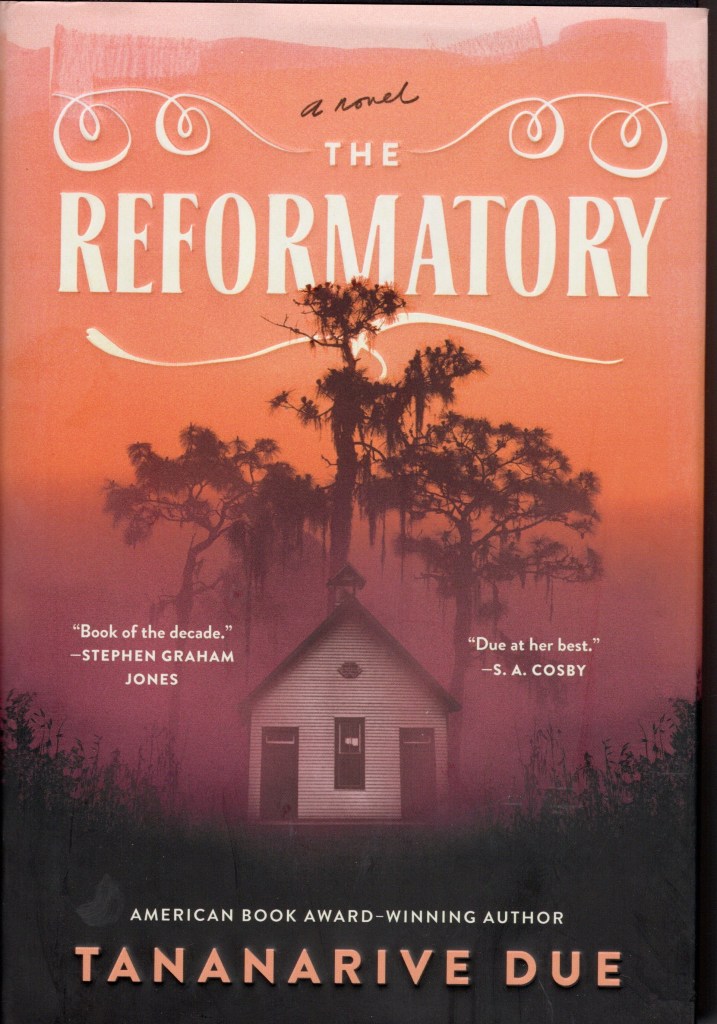
And in a class almost by itself is Tananarive Due’s The Reformatory.
Robert Stephens held his breath and counted to three, hoping to see Mama.
Some mornings his nose tickled with a trace of talcum powder or Madam C. J. Walker’s Glossine hair grease, and he felt…something hovering over him, watching him sleep. His groggy brain would think…Mama? If he gasped or sat up too quickly, or even wiped the sleep from his eyes, it was gone like a dream. But sometimes, when the June daylight charged early through the thin curtain and broke the darkness, movement glided across the red glow of his closed eyelids like someone walking past his bed. He felt no gentle kisses or fingertips brushing his forehead. No whispers of assurances and motherly love. Nothing like what people said ghosts were supposed to be, much less your dead mama. That morning he was patient, counting the way he’d practiced–one one thousand, two one thousand, three one thousand–and slitted his eyes open.
A woman’s shadow passed outside of the window above him, features appearing in the gaps between the sheets of tinfoil taped across the glass. In a white dress, maybe. Maybe. Moving fast, in a hurry.
“Mama?”
This book is a revelation. It is without question one of the most powerful books I’ve read in I don’t know how long.
I knew it was going to be a hard read, because I knew what the book was based on. I also don’t remember when I first became aware of the horrors of the notorious Dozier School for Boys in Florida, but it was a horror to be sure. I’ve read some novels based on that story (I loved Lori Roy’s The Disappearing) already, and so was familiar. Reading about enslavement and the Jim Crow South2 is inevitably a hard slog for me, and not just because of the white guilt it deservedly triggers; it just staggers me that in a country that supposedly is about equality and freedom such things could happen, be taken as normal, and changing the system is so violently opposed…a lot of racist Southerners see nothing wrong with that history and would like it to return, so these kinds of stories of American atrocities against its own citizens are incredibly important. The pen is indeed mightier than the sword, which is why repressive governments always go after journalists and writers; a well-told story that illustrates the injustice for the reader and humanizes it can change minds.
The Reformatory is about the Gracetown School for Boys and a young twelve year old Black boy who is sent there for absolutely nothing; an older white boy was sexualizing his older sister Gloria, and when young Robert stands up for her he gets a brutal shove, and he retaliates with a kick. Alas, the white boy’s father is wealthy and therefore powerful, and he wants this “uppity” behavior punished. In a joke trial that’s not even a trial, the corrupt racist judge sends Robert to the hell of the reformatory. Robert’s story doesn’t become about a search for his own justice, but the hell of surviving a place where boys die regularly but never of natural causes. Young Robbie has a gift, too–he can see ghosts–and there are a lot of ghosts there for him to navigate. Gloria’s story becomes about her desperate drive to get her brother out of there and correct the injustice. Their father was also a union organizer, and was falsely accused of raping and beating a white woman, so he fled north to Chicago. So, the boy in custody is also a pawn for the white power structure who really wants to get their hands on Robert Senior.
The warden, Haddock, is a sadistic predator who enjoys torturing and raping and murdering his charges. He also has a special need for young Robbie’s ghost seeing abilities, wanting to rid the campus of the ghosts of his victims. Due manages to make the horrors of that place absolutely real, with some of the most vivid and powerful images I’ve come across in a novel in years.
But the true horror of the book isn’t the ghosts at the school. The true horror is its horrific and realistic depiction of the Jim Crow south, and the lack of hope for change in the Black characters. It was about halfway through the book that I realized, as much as I was loving this book, that there was no happily ever after for Black people under Jim Crow, before civil rights. They might be able to escape a predicament, but there was no escape ever from the system.
Which is absolutely terrifying.
Definitely check this book out, and I am going to look for my next read from Due.
Manifest destiny? I could write an entire book about that bullshit. ↩︎
Someday I will dismantle To Kill a Mockingbird for the racist lie it is. ↩︎
Well, yesterday was a good day for one Gregalicious. I didn’t get as much done around the house as I would have preferred, but c’est la vie. I did have football games on all day, mostly as a break from monotonous silence, but I did get to see the Florida upset of Mississippi, and surprisingly enough, LSU beat Vanderbilt last night to stop their three game losing streak…but have to play Oklahoma next, who managed to not only upset Alabama last night but beat them pretty soundly. After the LSU game I caught the end of Auburn-Texas A&M, which Auburn finally won in quadruple overtime. What a crazy year this has been in the SEC, has it not? Now the winner of Texas-Texas A&M will play Georgia for the SEC title. #madness.
But one thing I remembered finally is that I usually read during games I don’t necessarily care about, and so I finished The Reformatory by Tananarive Due at last yesterday, and what a read it was. I’d say it’s one of the best books I’ve read in a very long time, and I read a lot of really good books, so that is really saying something. I’ve added Due to my list of “must-read” writers, and she has a substantial backlist I am looking forward to exploring. It took me a very long time to get through this book, because it was so powerful and the horror in it was so completely real, but more on that later. I am going to go out on a limb and call it a masterpiece for now, and encourage you to read it if you have not. Today I am going to start reading Lavender House by Lev AC Rosen, whom I’ve met and found delightful, and whose career I’ve been following avidly. I’ve yet to read one of his books, but I am very excited to read one of the most acclaimed queer mysteries of the last few years. I’m also kind of thrilled to be reading fiction again. Today I am also going to read a couple of short stories a friend sent me to read, and probably will do some writing, either short story, essay, or the book, today as well. I went to get the mail and made a grocery run yesterday, so I don’t have to do anything errand-like today, but I should probably make it to the gym later this morning. The weather has been wonderful, and one thing I am determined to do this year is drive around the city taking pictures of Christmas decorations. I definitely want to write a nice essay about Christmas this year, and the essay I worked on briefly yesterday, “Recovering Christian,” is one I started working on about twenty years ago. The lovely thing about Substack is I now have a place to post those essays, and share them with the world. I do have to make more of an effort to post content there at least once a week.
I do wonder if all the readers I picked up there during my ranting about homophobia post are expecting that kind of content all the time? I don’t know, but in some ways I am thinking that the Substack (also a place to publish short stories, too, if I so choose) is kind of a good place to write about my life, and explore issues of being a queer American writer, and my thoughts and opinions about systemic bigotry, and all the things I was miseducated about as a child. (American Mythology, hello?) That way it will live up to the name it shares with this blog, “Queer and Loathing in America.” I also want to write essays about my gay life, and the lessons I learned the hard way, as well as writing. I’ve been unpacking my past ever since Mom died–the first time I’ve ever allowed myself to look back–and while I am not sorry I never did this before, I am also learning a lot more about myself and why I do things and why I react the way I do and how much of my life was controlled/driven by anxiety. I was fine at the party the other night, but too many people in spaces still makes me uncomfortable and uneasy, but that’s okay. The claustrophobia might be anxiety related, or it may be entirely it’s own thing, but the primary difference was that there was no adrenaline spike or spiraling. I was able to relax, and kind of enjoy myself more.
And that is what I meant when I said I was pulling back from the crime community and centering myself. I want to focus on myself, on Paul, and our needs and what we need to do and handle and take care of, and I don’t want to do emotional labor for anyone else anymore. I’ve been watching a lot of Youtube and TikTok videos about cutting MAGA voters out of your life, or at the very least setting boundaries, and I saw one that really made a lot of sense to me: we don’t feel safe around them, but we don’t have to cut them out entirely, we just have to stop giving them emotional labor. Go get sympathy from another MAGA voter, since you’re all so empathetic and sympathetic to the concerns, fears and rights of other people. It’s why BlueSky has been flooded by Twitter trolls, now that the genius has killed that platform (but hey, let’s put him in charge of government!). They don’t enjoy talking to each other, so they have to “pwn the libs.” But they just get blocked, so they’re the ones who wind up in a echo chamber. Hell, I block people who annoy me. It’s my space, my experience, and if I don’t want the aggravation of annoying people or giving them time or energy, well…no one can make me engage with people who steal my peace.
I also don’t think people understand how casual homophobia, so easy for straight people to slip into with their excessive privilege, makes us feel when we hear it or hear about it or (in some cases) read about it in screen shots. Not only do we no longer feel safe around you, we can’t count on you to stand up for us when the chips are literally down. There’s been some slightly viral conversation about some Jewish lesbian who voted for Trump and has been cut off from her friends and kicked off a team. “I wouldn’t do this to someone who voted for Harris,” she cries her crocodile tears, as she sits down with right-wing podcasters and plays victim and martyr. She voted for Trump because of pro-Palestine lefties…or so she claims. So she aligned herself with someone who actually had dinner with a Nazi, and has been embraced by American Nazis. Who ally themselves with the Proud Boys and other ant-Semites (who precisely are the voters who chant “Jew will not replace us” again?), and now wants everyone to feel sorry for her and pretends ignorance. Sorry not sorry, bitch–your new buddies and the Karens posting on your instagram talking about how horrible it is that queers actually can see this quisling bitch for who she is? Those bitches will be the first ones to turn you into the SS, moron. It’s especially egregious because my education in feminism and social justice was at the hands of lesbians; I’ve always thought lesbians, of all people, would know better than this bullshit. And this bitch is talking about “how we all need to have these tough conversations”–no, we don’t, honey. The time for tough conversations was before the election, and trust me, there’s not a single tough conversation I could possibly have where I’d be willing to come to an agreement or compromise with people who cheered the HIV/AIDS epidemic in the 80s and 90s. You don’t compromise with the Klan. You don’t compromise with Nazis. You don’t compromise with people who’s starting position is “you don’t deserve any rights, and you really shouldn’t exist.”
Feel free to pound your head into that wall until it’s pulp, Benedictine Arnold. Enjoy the lonely life of celibacy you’ve set up for yourself.
The funniest thing about her is she is a butch lesbian–short hair, masculine clothes, the whole ball of wax–and you know she is going to get challenged going into the ladies’ bathroom or changing room.
Good. Enjoy what you voted for. I have no patience with queer remoras attaching themselves to the sharks circling the rest of us. I certainly have no forgiveness in my heart for the future informers and camp guards. She showed us who she is, and we believe her.
And on that note, I am going to head over to my chair to read for a bit before I get to work around here. I slept really well again last night, and feel pretty good this morning. I also want to work on my review of The Reformatory, and get some other things done. Have a great Sunday, Constant Reader, and I may be back later on.
Work at home Friday! I have to go have blood work done at noon, so I am going to do my errands then–get the mail, hit the grocery store, wash and clean out the car–before coming back home to finish my work-at-home duties for the day. It shouldn’t take long, methinks; Wednesday night I managed to do my errands and make groceries in under an hour after I got off work. I left the office that night just after five, and figured it would take me about two hours to do everything and get home. I walked into the apartment at six, which was pretty impressive efficiency. Well, I was impressed.
I was tired yesterday when I got off work, but had committed to the party so when I left the office, dragging and really just wanting to hang out in my chair with Sparky, I forced myself to get up and go get cleaned up and ready. I always dread these things, always, but inevitably always have a good time once I actually am there. I hate getting ready and getting there, in all honesty. I did some chores before I left the apartment, and Sparky got some sleepy time in my lap before I got ready. But sadly I was dragging a bit, and knew I wouldn’t last long once I got to the party. I haven’t left the house at night in the car to go anywhere in a very long time, and I did go to the Marigny the way I always used to (side note: while I often regret and miss our old office on Frenchmen Street, taking the way I always used to go to work made me very glad I no longer work on Frenchmen and have to deal with negotiating the CBD and the Quarter every evening to come home)–yeesh, what a horror it was driving–so much so that when I came home I went to Claiborne and got ont the highway. The party itself was really nice–the house, which used to be a Satanic temple, I think, was also very interesting. John Cameron Mitchell’s residence is the very top floor, and I am actually kind of curious about the house now, which is called the Temple1. (side note: I can’ believe how much the Marigny has changed in the years since we moved to the Elysian Fields office, but it’s been a very long time since I have driven to the other side of Elysian Fields and gone into the Marigny.) I saw some people I wanted to see, got to see the house, and of course didn’t take any pictures. I stayed for an hour, which is an accomplishment. The live music was amazing, and the food was terrific. I was driving so I didn’t have anything to drink, and came home to change into something comfortable and to relax (and watch The Real Housewives of Salt Lake City) before going to bed. I slept later this morning than I usually do, too, but feel pretty good and will be ready to dive into the work-at-home spice mines relatively soon. The apartment is also a terrible mess; the stacks of dirty dishes here in the kitchen, not to mention the general disarray of the entire apartment, needs to be worked on today.
I never did make a to-do list, either–which means I need to make one today, one for the weekend and one through Thanksgiving (Paul is leaving on Tuesday), and start crossing things off. I want to get more writing done this weekend–I want to finish that short story and start editing Scotty, maybe even finish another essay and perhaps even dive into some other writing, too. I also know it’s an ambitious plan for the weekend and I may just decide meh, let me vegetate in my easy chair with Sparky and blow off a day, as I so often do. That’s also fine, too.
More lighter fluid keeps getting squirted on the dumpster fire that is the country/world now, and I am veering between optimism and pessimism about the future–I often descend into gallows humor, as is my wont–as a method of dealing with the existential nightmare we are being unwillingly dragged into. I’m not sure what it says about me that I always deal with these sorts of things by laughing at them, even when they truly aren’t funny; but that’s what happens when you grow up gay in a homophobic society. Legacy media continues to swirl around the toilet bowl, capitulating in advance as their ratings and subscription rates continue to fall deservedly. Their corporate masters decided that it was better for their ratings to be Leaders of the Opposition to get those monster ratings they had during the first term again, so they betrayed their viewers by doing everything they could to throw the election to the Right, rubbing their monstrous little hands with glee while they watched their potential ratings and advertising revenue shoot up again. We’re the Resistance and we’re here for you! Alas, they severely overestimated their importance and the ignorance of their viewers/readers. We saw them betray us, again and again, playing a long game that wasn’t actually a game for many of their audience. When they shivved Biden this past summer, starting with that faux-liberal piece of shit George Clooney (who lives in fucking Italy) in his “I’m so much smarter than anyone else with progressive credentials” arrogance writing that disgusting editorial in the New Yuck Times and has been completely invisible since he accepted his thirty pieces of silver. (I laugh every time Apple TV tries to push his latest film on me. No thanks, never thought he was very talented or handsome, and still think he did his best work on The Facts of Life and Roseanne.) But Paul and I have our exit plan if it comes to that. I know, man plans and God laughs, but it makes me feel better.
I cannot believe the fall/winter holidays are upon us already. Madness! But it has been a year, hasn’t it? Heavy heaving sigh. I should go fold those clothes, so on that note, I am going to bring this to a close and get some more coffee, too. Have a lovely Friday, Constant Reader, and who knows if I’ll be back again before tomorrow morning? It’s a mystery!
There are so many cool and interesting places in New Orleans! I’ve lived her for almost thirty years now and still find new to me cool spots all the time. ↩︎
Thursday morning and I’ve almost made it completely through the week. Tonight I am going to that party, which is my first public event/party this is not part of some kind of conference weekend in I don’t know how long. It’s a lovely opportunity to dress up and meet some people that I should meet, or that I should probably already know.
And it’s at John Cameron Mitchell’s home, he bragged again.
Yesterday was a good day. I felt good and rested for most of the day, but after running my errands, I came home and kind of hit a wall. I worked on an essay a bit, and then went to give Sparky his cuddle time in my easy chair while I caught up on the news (and the new season of Real Housewives of Beverly Hills, more on that later), but I was daydreaming about writing–what else I was going to say in the essay, what else to write in my short story, what to do with the Scotty book–so my creativity and my drive to write and be productive is coming back. That’s kind of cool, and I am really happy about it. Going to the party tonight meets not having time to do any chores–I have a sink full of dirty dishes, for example–means tomorrow during work-at-home times I’ll have to do chores, as well as going to have lab work done at Quest over my lunch break. I cannot believe Thanksgiving is looming on the horizon, either. Paul is leaving on Tuesday for a week, and so I’ll have those four days at home alone to just either be a vegetable, or get a lot of shit done. I am hoping for “getting a lot of shit done”, but we’ll see how it rolls and all plays out.
I also have emails I need to answer, but I’ll most likely let that slide until Friday morning, unless I can get some of them done between clients at the office today. I don’t think we’re going to be terribly busy–we were yesterday–and we won’t be terribly busy the two days I am in the clinic next week, either. So I should be able to roll into the holiday weekend fairly well rested already, so we’ll see how that long weekend turns out. I’m hoping to not have to leave the house much, if at all, and hibernating in the Lost Apartment while trying to finish reading The Reformatory and get some writing done, too. This looming weekend I am going to try to write and get some editing done. I’m also going to have to read some short stories for the short story contest I am judging for S&S, too. I’m just glad I’m not traveling for the holiday; those alone days will be much more productive and nice for me. Sparky will be needy since I’ll be the only one home here with him, so he’ll turn into my shadow and won’t let me out of his sight. I was reading an article about where your cat sleeps explaining how he feels about you yesterday–so apparently Sparky thinks I am both his mom (sleeping in my lap) and someone he needs to protect (either under the bed or at the foot of it). Sweet, isn’t it?
He really is a sweetheart, even if he goes on damaging rampages periodically. When I got home from work yesterday the Brita pitcher was on the kitchen floor and the rug was soaked (it’s drying on the banister outside), and some other things were down on the floor, too. I really do need to keep up with the chores in the kitchen so the counters remain cleared, so he can’t make a mess when he gets the Zoomies and runs around the apartment at high speed knocking everything off every surface he leaps and bounds off.
Sigh.
It’s also cold this morning–58 degrees. It’s nice–probably partly why I slept so well last night, and hopefully will again tonight. The high for the day is a whopping 64 (dead of winter, really), which is nice. I like when it cools down like this, even if I do get weary of it relatively quickly. It should be a relatively easy day at the office, and I am not going to make myself crazy rushing to come home and get ready/change for the party. I am definitely not making the VIP pre-party cocktail hour at six, so will instead shoot for arriving around seven-ish. I can wear my saddle shoes! I always love an opportunity to wear my saddle shoes. I will probably not drink anything, maybe a glass of wine, and probably won’t stay all that long–even with my anxiety under control, I’m not sure how walking into a social situation like this will play out, but maybe the meds will help me relax and be social and make small talk without breaking into a cold sweat with my stomach clenching and unclenching.
And on that note, I am going to head into the spice mines and venture out into the chill. Have a lovely Thursday, Constant Reader, and I may be back later; one never can be entirely sure with a Gregalicious.
You think the garden hose is symbolizing something? I wonder if Facebook will think this is suggestive.
Wednesday Pay-the-Bills day (yay) but we’ve also made it halfway through the week, which is terrific. Paul worked late with meetings and things last night, so I was by myself at home last night. I was tired when I got home from work, so I did some things and then crashed in my chair with Sparky sleeping in my lap (which I always love). I got caught up on the shit-show that is the news–and even did some writing. Not much, but it was good writing. It wasn’t work on the book, either; I worked on a short story that I had thought through while I was in Kentucky, and I like how it’s developing. Slow going, but it was some work, and I was rather pleased to dip my toe back into the waters. I wound up going to bed an hour earlier than usual–why stay up when you’re dozing off?–and I am up even earlier than I usually am. I have some errands to do tonight after work, and then I’m coming home to hang with Sparky and finish some of these chores. It is rather endless, isn’t it? The treadmill of life we’re all on?
It felt good to be writing again and I am hoping that means I’ll get even more writing done today. Hope always does spring eternal, and all that. I need to get a to-do list made (I still haven’t done this, and so have been flying by the seat of my pants, which sounds more fun than it actually is), and I definitely need to make one for the time that Paul is gone. I am going to probably go so far as to even move furniture with my cleaning. Essentially, there are four rooms in the apartment; kitchen, bedroom, living room, and the two bathrooms. So, if over the holiday next week I pick a room a day to work on, I can get the apartment back under control again.
Writing has always been my solace, and I think not doing it always affects my mood and my outlook on life. I don’t know what the future holds for any of us, and I don’t know what’s going to happen with queer lit going forward (the pornography label threat is very real, and it’s happened to me before; and certainly independent booksellers don’t carry or hand-sell my books, so who knows how long I’ll even have an outlet for my work? I guess I could do what everyone’s always told me to do–write about straight people, which is probably something I should have started doing over twenty years ago. But is there a need for books about straight people by one Gregalicious? Aren’t there already tons of them out there? The short story I am working on is about a straight woman, which should increase its chances for being sold. I suppose I’ll try the usual suspects, like I always do, and then let it sit in my files, moldering as I wait for a place that might actually want it. Although…I can definitely do a collection myself. You see why I need a to-do list? I also want to finish my “Are You Man Enough?” essay about masculinity and its traps for my Substack. I’d like to do an essay there per week–and of course, I can always publish short stories on Substack, too. Interesting thought…hmmm. It might not be a bad idea.
I do think I am making strides in conquering my Imposter Syndrome. Probably not enough to make me strap on my big boy pants and go looking for an agent again, but you never know. The worst thing any of them could do is say no–although now it seems like they just ghost you and not reply if they aren’t interested; the last time I tried I got no responses from any of the agents I queried, which was fine. I also think it’s unprofessional–it’s not going to kill you to have a rejection template and spend an hour once a week sending them so people know, but then the entire world has changed significantly since I started in this business so long ago (I just realized that I am coming up on thirty years of being paid to write; I started writing for the queer paper in Minneapolis in 1996) and maybe I’m thinking back to how things were in another time, the way all old people do, and of course thinking those times might have been better. The dangers of nostalgia I always warn about, how things seemed better at some time in the distant past when really, it’s just because you were younger then and had a less complicated, easier life. Nostalgia for high school is really just nostalgia for a time when all the worries of adulthood were still in the future, and frankly, my public education experiences were all terrible so I’ve never had to worry about doing that. I do not miss high school, and never will.
And on that hopeful note, I am heading into the spice mines. Have a lovely Wednesday, and I may be back later. You never know.
Monday morning and back to the office today. I had a really nice lovely weekend, to be honest. The weather has changed here in New Orleans and has become what would pass for early fall everywhere else, but here? The lack of humidity and the bright sunshine, along with cool breezes, make all the difference. It’s nice being able to wear sleeves and pants outside of the house or work, you know? And I do sleep better. I just don’t like that it gets dark so early. That’s always felt kind of oppressive to me for some reason. but while I am certain it makes no sense in any logical or rational way, it does. I also can’t believe Thanksgiving is next week. Paul is going to visit his family this year, so I’ll be by myself–well I’ll have Sparky, and he will be needy. But it’s fine, don’t worry about me. Last Thanksgiving was the week of my biceps surgery, so this year will definitely be better than last. Thanksgiving was always Mom’s holiday, you know, which is why I scheduled the surgery when I did last year. This year will be the first time I really have to deal with that, but I’ll do fine. I can get things done around here that I usually can’t, and four lovely days off in a row? I have no excuse.
We watched Caddo Lake this weekend (we watched after LSU lost yet again), which was really well done and very interesting. Shot in location at actual Caddo Lake in western Louisiana, it’s staggeringly beautiful (Louisiana is so beautiful) and it was an interesting movie focusing on following two people while some strange things are going on around the lake. Dylan O’Brien (of TV’s Teen Wolf, aka the gayest show ever on television) is terrific as the male lead. It reminded me of the German television show Dark, which was one of the smartest shows I’ve ever streamed. To talk about anything else would be a spoiler, but I recommend it. It’s a slow burn, but it’s absolutely worth watching.
I also was able to spend some more time with The Reformatory, which brought a huge surprise twist over halfway through the book–always a pleasure when something unexpected happens–and the writing continues to enthrall. Tananarive Due is the real deal, y’all, and I need to read more of her work. I have no idea where this story is going, either, which is always fantastic. Yay! I should be able to finish the book this week, which is very cool. I’ve not picked out my next read, but I think it’s going to be potentially either Angie Kim, Amina Akhtar, Lori Roy, or Kellye Garrett. I also have the latest Celeste Ng and Ann Hood books on my shelves. I did do some more pruning this weekend, pulling out books for the library pile–hey, the authors have my money, even if I didn’t read the book–and I am also sending it out into the world to find a new reader, and a potential new fan for that author, so there is that. I need to get back to writing. I did do some yesterday, a very small bit, but I am taking that as I swing back into author mode. Continuing to put off writing is going to bite me in the ass one of these days, and so, reluctant as I am to get back on it, I am going to have to. This week I am going to edit what I have written on Scotty and work on some of the short stories on hand, and then I am going to dive into writing the book again. But I do feel like I’ve reset myself. I am continuing to limit social media and the news–which I am not getting from any legacy media company, may they all burn to the ground–for my own mental health. I feel pretty good this morning, but I also didn’t check the news except to see if the Saints won (they did), and I don’t think I am going to be doing that hardly at all anymore. The sad reality that we have to depend on Republicans (!!!) in the Senate to protect our democracy when they’ve spent the last thirty years trying to dismantle it is a bit much for me, and I’m no longer enjoying the vote-regrets as I used to–and even that was a grim smirk more than anything else. Sorry, folks, I know we’re all going to suffer, but my concerns are for the marginalized. The ability to imagine the worst possible outcomes isn’t a gift, it’s more of a curse…I always thought the most tragic figure in the Trojan War was Cassandra, driven mad by being able to see the future only to not be believed. I’ve always wanted to read that story from her perspective, as she was the most interesting character in the whole tragedy.
That’s me, always wanting the woman’s perspective–and willing to believe it, too1.
I also am not sure I completely believe the “vote regret” videos, either–although I think the lesson that should have been learned this time out is that voting matters and is too important to not be informed. I don’t think anyone really learned that lesson, and many will simply find a way to blame Democrats for their problems (it is their default) and keep voting (if we can vote) against their own interests. I don’t think I can trust any election results going forward, either–I’m not certain about this last one, and wasn’t that the entire point of 2020, to make us all not believe election results aren’t to be trusted. The entire plan behind all of this, I believe, came from Moscow; what better way to undermine a democracy than making the citizens not trust or believe our institutions? The legacy media is already tainted and cannot be trusted. I worry that people can’t see how dire things actually are right now in this country, and this is just the prelude; we’re not even to the opening credits of this horror show yet.
I’ve also not taken the time to talk about the grievous loss of Dorothy Allison after the election. It’s been lovely seeing everyone’s tributes to her, and how much she mattered to queer people. Paul and I knew Dorothy long before anyone knew who either one of us were; we met her the first spring we lived in New Orleans and volunteered for the Tennessee Williams Literary Festival, which was almost thirty years ago. Dorothy was many things to many people, but we just thought of her as a supportive friend who was always there for us whenever we needed her to be. She adored Paul, and the feeling was mutual. Dorothy called us the morning we evacuated for Katrina, told us to come stay with her for as long as we needed to, and was kind of bummed when we decided not to drive across the country. She checked in on Paul when he was hospitalized. We tried not to make any demands on her, because she was a bottomless well of kindness and consideration, and a lot of people leaned on her. I’ll miss her, terribly, and I know Paul will. I’m not going to write a lengthy tribute to her because I’ll leave that to the people who were closer and her family, but she will be missed. Part of her charm was her ability to flirt with anyone and everyone; I’ve not seen that mentioned yet. She even flirted with me and I’d flirt back, even though obviously it was just in good fun. I think her first words to me were “who is this tall, dark and handsome gay man? I might just have to take you home with me.”
I’ll miss you, Dorothy.
I also get to have some glamour this week. I’m going to the Tennessee Williams Festival gala this Thursday night, and it’s at the home of John Cameron Mitchell of Hedwig and the Angry Inch fame. (He was also terrific in The Sandman) I’ll have to go home and get cleaned up after work, and put on fancier clothes first, but how cool is that? I do sometimes have a glamorous life, don’t I? I never really think about that very much–it’s one of the many reasons I try not to complain about anything, ever; I kind of take that sort of thing for granted. This will also be my first experience going to an event of any sort since I started taking anxiety medication, so maybe I’ll be able to enjoy it more? I will report back on Friday morning, and perhaps I’ll even remember to take some pictures.
I also have decided to try harder to separate the blog from the Substack. The Substack posts are things I’ve spent more time on, thinking about and revising and editing; this stuff is always going to be what’s on my mind when I write it, unvarnished and unpolished; exactly as it comes to me, forgotten words and typos and incomplete sentences and all. Yesterday morning’s post actually gave me the opening to an essay I’ve been struggling to write since last summer, about masculinity and my outsider’s point of view from what society considers traditional–and the masculinity that I was raised to believe in was actually a perpetuation of toxic masculinity. I may mention something on here briefly, or a paragraph about it, but the crux of the conversation will eventually be posted on Substack. I’ve also been thinking about posting essays I’ve written for other places there, so people can access them if they so choose. I’d wanted to collect them into a book, but…I’m not a big enough name to sell copies of an essay collection when none of them were ever in places like the New York Times or The Atlantic or McSweeney’s–not good enough for those markets, alas. The “Words” entry on Substack, about some of the homophobia I’ve faced in the crime fiction community at conferences and within writers’ organizations, bled over into some entries here last week, as I burned some bridges (that were never there in the first place) and came back more into myself. Fasten your seatbelts, as someone else can be Mr. Nice Gay from now on.
And on that note, I am heading into the spice mines. I have some errands to run after work and a delivery is coming tonight; and I have some chores to complete once I am home. Have a lovely Monday, Constant Reader, and stay tuned for more spicy content.
I can’t be the only person who has noticed that all underwear/bikini style models now have enormous bulges–all of them looking relatively the same–in every photo?
Despite the fact that some homophobic white women, who have no other reason than my sexuality and politics to not like me, claimed “Greg doesn’t listen to women.” Yeah. that’s me, dismissive of, and always talking over, women. Then why do I have more woman friends than you do, bitch? ↩︎
Sunday morning in the Lost Apartment and I don’t have to leave the house today if I choose that option. I did take the car in for the oil change (only to discover the car needs about another $1500 in maintenance–it is almost eight years old. The battery needs replacing, I need new tires, etc. etc.etc. Woo-hoo for more debt! I’ll take it back when I figure out how to pay for the rest), and then made groceries on the way home, which I’d originally planned to do this morning. Instead, I am going to stay here, maybe run to the gym a little later, and get some work done. I am going to write today if it kills me–I’ve not written any fiction since before I went to Kentucky, and that needs to stop–and I want to spend a few hours reading this morning, too. I am behind on writing, I am behind on reading, and definitely behind on cleaning the house. It’s been a time since the election, hasn’t it?
This blog is approaching it’s twentieth birthday; yes, I’ve been doing this since December of 2004, only I started on Livejournal, where I stayed for the first twelve years or so before finally ditching the site because of many reasons. I stayed longer than most people; I even got teased originally for still being on the site, which had become déclassé; I still use my AOL email address, too, for that matter–which often is the subject of occasional mockery there, too. I hate gmail, and AOL works for me, so I still use it. Anyway, while I was in Kentucky I realized/remembered, on election night, how old this blog is and how long I’ve been doing it–and how and why it first started. I started reflecting on that, and thinking about it, and when I started censoring the content on it to make it more palatable and less offensive to the people I thought might be reading it. I started writing the blog in the wake of what happened to Paul in the spring of 2004, which derailed everything in my life and started what I call the Time of Troubles. Over the course of more than a year–spanning from Memorial Day through August of 2005–it was literally one blow after another. Paul spent two weeks in the hospital after that Memorial Day, and my primary focus in life became taking care of him, and making sure he was okay. I postponed finishing Mardi Gras Mambo for over a year, and was too damaged and laser-focused on dealing with the aftermath and being there for him that I stopped writing entirely.
People were very kind to me during that time, to us both, actually, and extended book deadlines and so forth were enormously helpful. Paul and I didn’t really venture out much from our cocoon, other than going to work and the gym (me) and running errands. Paul focused on his job, and I focused mostly on my editorial work as I couldn’t write fiction. I wasn’t really in a place to write a funny Scotty book, and by December of that year I was already getting to the point where I was worried if I could continue writing. I had dinner and drinks with a writer friend in early December who actually had a great blog that I read every morning, and he recommended that I try writing a blog, just writing the things that I was thinking about or experiencing, to get back into the habit of writing every day. I scoffed, “who would ever read such a thing?” and he replied, “You’re not doing it for other people, you’re doing it for yourself” and that kind of became the blog mantra: it’s really just for me, to talk about things that are going on, my perspective on things no one would ever pay me to write about or have an opinion on but did want to write about and have an opinion on. It was kind of a diary for me at first, and I wrote about things I was interested in–like figure skating and football and New Orleans life–and it was something I enjoyed. I was really getting into the swing of it when the next “trouble” came along–what I call the “Virginia thing.” And of course, later that year, we had Hurricane Katrina, and I blogged about my anger; how cruel people could be (Republicans, it’s always Republicans) and I was defiant. We’d just gone through an election earlier that year in which the Republicans’ entire campaign centered the evils of same-sex marriage, with all the expected homophobia and cruelty they’ve perfected. (This is who they’ve always been, and the cruelty is nothing new.)
I started dialing back on talking about politics and homophobia and the world a lot after I started working full-time for a non-profit, and started volunteering and serving on others having to do with writers’ groups. I didn’t want anything I said to affect negatively on either where I was working or any place I was volunteering; the rules on what we could do or say or talk about at work were very strict, and while we were always allowed to have personal lives and opinions, I thought why take the chance? It‘s an HIV/AIDS non-profit, and we’re in Louisiana, and it won’t take much to set off some evangelical idiot outside of New Orleans and make them target our funding or our non-profit status so I stopped. I’m a gay man; everyone should know what my politics and values are and what political party comes closest to working for the world I want to live in.
But when I was in Kentucky, I started thinking about these things again. I no longer do volunteer work for writers’ organizations and/or events. My day job is no longer a red flag to Louisiana conservatives–we’re no longer the NO/AID Task Force, and we have an even more innocuous name now that sets off no alarms. We also no longer merely focus on gay men; we are open to everyone up on the third floor (my department primarily still works with my community–people at risk for HIV infection) and so I don’t think I need to concern myself about doing or saying anything that might trigger the Louisiana Fascist Party. I’m free to be myself again on here, and I am very opinionated. I know my blog and Substack have picked up a lot of new readers since I ran out of fucks. I don’t know if I am actually making people think, or if people are coming here to watch what they think is me having a very public mental breakdown so they can point and laugh. I’m not, for the record. I’m not even angry or hurt. I’m just fed up, and tired of letting people get away with this shit. You’re either an ally or not, but I don’t think most people know what that actually means. And when you make it clear to me that you’re not, that you actually think people like me are gross or repulsive or whatever demeaning default your privilege allows you to fall back on–why on earth would you think I like you and want to be around you? Someone dares to call out the entire community, so he’s clearly having some sort of mental break? Yeah, that’s it. That puts it on me so y’all can sleep better at night, right? Whatever.
And yes, I know when I write about these things I write passionately and emotionally. The hurt has long ago passed–I dealt with those feelings when the things actually happened, you know1? Sure, my anger and hurt comes out when I do, because I am reliving the experience in order to write it about it properly. If I wrote about it when it happened, it would be even more raw and painful and expletive filled than what you’ve been reading this past week. This is me, after the fact, recounting horrible experiences far more calmly now than I might have at the time. Think about it–this is me being calm and rational about being demeaned and dehumanized.
I also do want to thank everyone for not gaslighting me this past week, either–for not pulling some “#notallstraightmen #notallstraightwhitewomen” shit on me. I spoke in generalities despite knowing that nothing is a monolith. There are some good straight people out there, and there are some amazing straight white women. I do have friends in this community, people I love and would take a bullet for. My friends, the people I actually really know and love and trust? I would do anything for, and they also knew I wasn’t talking about them. One of my most dogged, OCD-like tendencies is absolute devotion to the people I love. I will always come to their defense, I will not allow anyone to treat them badly, and I will fucking come for you if you make the mistake of coming for them. They also know who they are. That devotion over the years has worn out in some cases–but I always remember people who were kind to me, helped me in any way, or ever did something for me without being asked.
I’ve primarily written about all of this to begin with for two reasons: so people won’t ask me about going to conferences any more, and to let everyone know about my experience so you won’t allow people to pull this shit with the other queer crime writers. The fact this stuff still happens–look at how surprised people are at these revelations I’ve been making–in this day and age has me concerned for the queer crime writers. They are all feeling despondent, betrayed, and more than a little scared about what MAGA has up their sleeves for queer people and their art, and their futures. Christian Germany murdered twelve million people for being different, after all, and set the world on fire.
And you wonder why we are so concerned about people who hate us in the name of religion being in control here? We see good little Germans everywhere, the news media capitulated in advance, and it looks like the entire government is falling into lockstep. Nazis now feel empowered to go out in public with swastika flags in progressive cities. Nazis targeted Communists–what have Republicans been calling Democrats since the 1930’s? Communists. We also know straight people will abandon us to save themselves 999 times out of 1000. Sad, but true and even a little understandable. Who is willing to put themselves and their families in danger for strangers? Not many.
That’s why we ironically celebrate heroes who take stands against inhumanity. Because they are rare.
Paul walked to Walgreens for a prescription yesterday, and then had to go to the corner liquor store at Jackson Avenue for cigarettes. I’ve gone there myself for things like bread and milk when I didn’t feel like driving anywhere. It was a nice store, owned and operated by a Pakistani family. Always clean, neat, and organized; the family members who worked there always fell over themselves to be polite, friendly, and courteous. I generally don’t like to go into liquor stores in New Orleans for any number of reasons, so I don’t. You can literally buy liquor at gas stations here, and the grocery stores (which used to have bars in them here); pretty much anywhere that sells anything sells liquor so you don’t need to go to a liquor store here. When he got back, he said, “Have you noticed that since the election bro culture is back on the rise? Loud, obnoxious bros, everywhere. I guess the Pakistani family sold the liquor store, because there was a bro working there–and you know he’s not checking anyone’s IDs. I guess they sold the business and got out. I hope they got good money because that’s a prime location.”
GREG: I hope they sold the business. We don’t know that for sure, do we?
We just looked at each other grimly for a few moments.
Over dramatic? Maybe. I’d certainly like to think so, but as my mother used to say, “You can never go wrong imagining the worst.”
I don’t speak for my entire community; I certainly don’t speak for Paul. My experiences are my experiences, and no demographic is a monolith. There are MAGA queers, for example, and they are even worse than the inbred mouth-breathers we usually think of when we think MAGA–who clearly have a humiliation fetish. I always wonder if the Log Cabins shoot a load into their shorts every time they are barred from some Republican/conservative conclave, or if straight men start dripping when they make queer jokes. I will never cease laughing at the arrogance of straight men who think every gay man is out here trying to get into their pants.
Louder, for those in the back: just because straight women settle, doesn’t mean gay men will. There’s always a hotter gay man than any straight man I’ve ever seen. The reason you straight men go to the gym now and get in better shape than straight men ever have been before in history is entirely because of gay men. Calvin Klein did more for male body culture with his advertisements than Charles Atlas ever did with the cartoon ads in comic books–remember those? “Hey, you kicked sand in my face!”
Funny how Charles Atlas advertised getting big and strong as a way to stand up to bullies, isn’t it? Male insecurity and not being manly enough?
And there is the opening to my essay about being a man. Well done, blog!
I also want to give a shout out to the Crime Writers of Color, who have always been amazing and supportive of this tired old white queen. Kellye Garrett is a national treasure who should be protected at all costs. You fuck with her at your own peril, do you hear me?
And on that note, I am heading into the spice mines. I need to make a to-do list, and I need to write and read and do chores.
Screenshot
And it doesn’t even hurt that much anymore in the moment, either. Ultimately, I am rarely surprised when those who should know better don’t. I do get caught off guard sometimes, but after the initial shock it’s more of a world-weary are you really surprised? ↩︎
Wednesday morning and the middle of the week! We’ve made it this far, Constant Reader, even though this week hasn’t quite gone the way I would have liked.
The decision to limit social media consumption isn’t going as well this week as I would have liked; I hadn’t anticipated the pull of my phone while I am at work. And getting home from work every night this week, after I finish whatever I need to do (errands and so forth) I’ve repaired to my easy chair and watched some “MAGA voter regrets” videos on Youtube before my eyes started to glaze over and I kind of zoned out for the rest of the night. I don’t like the part of me that enjoys their pain; it is not my instinct to default for sympathy for people who want to harm everyone else. You can never go wrong not having any faith in the decency of the majority of Americans, because they have no decency or shame.1
But, I am not going to be hard on myself. I am trying, at long last, to break all the programming/grooming that I don’t deserve anything or even a writing career. I am going to keep writing–make no mistake about that–and i have to figure out ways to market them and get the word out there. Going to mystery conferences was clearly a mistake; why bother pitching readers on books that are not in the booksellers’ room2? I finally got resigned to them never having my books–or only one copy–and hoped people would possibly enjoy listening to me on panels and maybe take a chance; and now I am wondering if my presence also gaslit queer writers into feeling safe at conferences? I guess that will be on my conscience till the day I die. (Ironically, the substack posts about homophobia get way more than ten times the views that my other essays get, which means one of two things, or both. I was either wrong about scaring people off by being honest about how much it sucks to be queer in this modern time, or people enjoy reading about queer pain. I don’t think I want to know which one is right, to be honest, or even consider that the two are linked.)
But what I need to do is get back to writing my books and stories; I need to put all this shit aside and focus on my work. I was able to get through the first forty-two years of my life with my sexuality and my love life against the law in every one of the fifty states (and the territories! Can’t forget those bigots either!). I lived through the Reagan administration and the George W. Bush years, both of which callously didn’t care whether we lived or died (in fairness, Reagan and his people thought AIDS was an excellent way to get rid of us). My country was willing to let us all die. Remind me again why I should be a patriot, or a conservative? All our equality movement did was make people realize if they were openly homophobic, some people they cared about would think they were bad people.
And I’ll keep writing about the bad shit, of course. It won’t change any hearts or minds, of course, but I need to get that poison (and anger) out of my system before it festers and makes me as bad a person as everyone else is. I don’t want to be a bad person. I don’t want to give into the darkness; I don’t want to feel bitter about the crime fiction community. I know I have friends, actual friends, in this community, and I do cherish them because they love and support me. But I need to stop thinking well of people who I’ve met and have been nice to me because I always forget the vast majority of people default to polite when confronted with someone/something they are revolted by. I don’t think most straight people realize what it’s like to be viewed with revulsion, like you’re some disgusting thing, some abomination. But it’s also much easier to go through life assuming people aren’t bigots until proven otherwise. I can’t imagine what it must be like to be someone we’ve racialized as a society. I kind of get it, but am still white privileged so will never understand completely; even my imagination is too limited.
The good news is a federal judge struck down Louisiana’s Ten Commandments in Every Classroom law as unconstitutional, but an immune from prosecution or consequence executive order from the White House will overrule that. And this Supreme Court already is on its back with their legs up in the air and their ass lubed, ready for some serious Constitution fucking. The Federalist Society is about to get their wishlist for the country for Christmas, isn’t that great? I, for one, look forward to not paying income taxes to educate other people’s children anymore. Wonder how my MAGA nieces and nephews are going to educate their kids, but hey–they voted for it.
I’m so tired of being ignored like Cassandra on the walls of Troy.
And on that note, I am heading into the spice mines. Have a great day. Constant Reader, and we will soon be returning to our regular content. I’ll go back to ignoring the slings and arrows of “allies” and enemies, like a good little gay, back in his corner–and no worries, folks. I wouldn’t go to a conference even if they asked me to be a special guest–and that is never going to happen anyway. Not as long as a straight white man has written a first novel, anyway.
And even as this administration destroys their lives, the government-controlled media will help convince them it’s someone else’s fault, because it always is. Is anyone ever surprised about how horrible people after all the genocides? The gleeful bigotry and the embrace of hatred? ↩︎
This is something I left out of my Substack essay yesterday about homophobic booksellers: they are also never to be criticized, no matter how bigoted and horrible they are. “They work so hard on conferences,” is always the response, “you can’t even question their bigotry.” If you want to read it, this link should take you there.↩︎







 Queer and Loathing in America