The Second Time Around

…for Chanse, that is.

Oddly enough, the second Chanse was the fourth novel I published, and therein lies a tale.

Funny how with these earlier books there’s always a story, isn’t it?

So, I sold Murder in the Rue Dauphine to Alyson in September of 1999–but the pub date wasn’t until February 2002. I saw no point in writing a sequel to the book immediately; primarily because there was a nearly two and a half year wait between signing the contract and when they were able to schedule me in. So, I figured I had about a year and a half before I needed to get it finished (everyone told me it would be released a year after the first, and in all honesty, what was the point of writing two or three books while waiting for the first to come out so the others could be scheduled?), and so, with time to spare and a lengthy period of time to “waste”, I decided to start thinking about the “what ifs”–what if the book sells super-well and is popular? What if this isn’t just a one-off standalone and could be turned into a series? The more I thought about it, the more I liked the idea and I liked letting my mind roam.

So, what would I do if the series took off and I needed to write more?

Being creative and full of energy in my late thirties, and thrilled to death that now I wouldn’t die without having published a novel, I reread the manuscript and my analysis of who Chanse was and why he was who he was, and I started mapping out a personal journey for him, that lasted several books. He was a cynical loner, with a couple of friends, and he was still really not adjusted to being gay when the first book opens. He was estranged from his immediate family of younger sister and brother and his parents; he never returned to Cottonwood Wells after leaving for LSU. He’s ashamed of his family but he also knows they will never accept his sexuality, either, so it’s very easy for him to cut them off almost entirely. So, his journey was going to be like that of the main characters of the show Moonlighting; each case would teach himself something about life and himself, and he would grow from the lesson learned in each book. Each book going forward would have a life lesson for him (Rue Dauphine did as well; the lesson was ‘you can’t just trust someone automatically because they’re queer.’); and the one he’d learn in the second book would be about love and trust (the third would be about sacrifice, the fourth would deal with his family, the fifth would have him fall in love with someone else, the sixth would deal with him dealing with losing his best friend to her husband and realizing he does need other people, and the seventh, the swan song for the story, would find him ready to finally commit to someone and live with them, so the series would be seven books long).

Shortly after I sold the first book, I again learned that lesson myself–the case in the first book was inspired by a gay con artist who’d gotten involved with a non-profit here in the city and then blew out of town overnight, having stolen/embezzled a shit ton of money and leaving a pile of debts behind. I had written to a local color magazine for the gay community (I can’t remember the name!) about writing for them. I wrote something for them, and they hired me to be editor of the magazine, as the business was expanding and it would free up the founder to focus on the new directions while I ran the magazine. It was fun, I got to work with a lot of fun new friends, and…then it all blew up in our faces. It was very similar to the earlier situation–a gay con artist blows into town, makes a lot of promises, runs up a lot of debt and then it just blew up completely. Turns out the guy was a con artist with a record of credit card fraud, and he was on the FBI watchlist so yes, I did get interviewed several times by the local office of the FBI.

The second book, which had the working title Murder in the Rue Royal, was based on that story, but I had already been playing around with a stalker storyline, and then I realized how I could cross the two stories into one seamlessly and write the book. I managed to get another first draft finished when a two-book deal to write the Scotty series for Kensington and Alyson dropped the option for the second book, saying “two mystery series with a gay main character in the same city by the same author are too similar to each other”–which I took as a challenge to make Bourbon Street Blues and Scotty as different as I possibly could to prove them wrong. So, the manuscript went into a drawer and I started happily working on Scotty instead…and again, it was a stand-alone that morphed into a series.

I took a streetcar named St. Charles down to Canal, crossed the street and walked down to Royal.

It was eleven o’clock in the morning on one of those splendidly sunny September days that makes you glad to be alive. Taking the streetcar had been a good idea. The long heat of summer had broken, and the air was crisp and in the mid-seventies. The sky was that blue unique to New Orleans, with wispy white clouds scattered across its expanse. There was just a hint of cool moisture in the air. There were a lot of people milling around the sidewalks on Canal— a good sign for the tourist season. Canal used to be the main shopping drag of the city, with huge department stores like Maison Blanche and D. H. Holmes. Those were long gone. They had either gone out of business or fled to the suburbs— now it was mostly hotels, fast food, and Foot Lockers.

There were hopes that putting the Canal streetcar line back in place would stimulate a recovery for the street. So far, all the construction work had simply made the Quarter difficult to get to from uptown. Add to that the chore of trying to find a place to park that would get me a ticket in two hours or cost ten dollars, and I was kind of glad I was having car trouble—the streetcar down and a cab home was very simple.

Not that riding the streetcar didn’t bring its own set of aggravations.  If the cars ran on any fixed schedule, I’d never been able to figure it out. You could wait for one for half an hour and then three in a row, all packed to the gills, would show up. The streetcar ostensibly operated as public transportation, but was also a de rigeur tourist attraction. There was no way of telling when you’d be able to catch one with a place to sit. But when you did, it was nice to find  a window seat on a sunny day and enjoy the city clacking by.

So, when Alyson chose to drop the Chanse series after I signed with Kensington, Murder in the Rue Royal went back into a drawer, which was fine–it wasn’t a good book–and I moved on with my life. The advance for signing with Kensington paid for our move back to New Orleans from Washington, and moving back here was absolutely worth ending the Chanse series for, seriously. I still didn’t have an agent, but I’d been signed to book contracts by two publishers already, and I figured it might be easier now. We accomplished the move, get our new apartment set up on Sophie B. Wright Place, and started putting our lives back together. I don’t remember the timeline of how it came to be, but I was still working with Alyson on my first and second erotic anthologies (Full Body Contact and FRATSEX), so I was aware when my editor left and a new person, that I knew slightly, moved from assistant editor to senior editor. We were talking on the phone one day about Full Body Contact and she casually mentioned, “I don’t see your second Chanse book here on the schedule, what’s going on?” and I told her the story, “Oh for fuck’s sake, when can you get it done by?” and that became the second contract for Chanse.

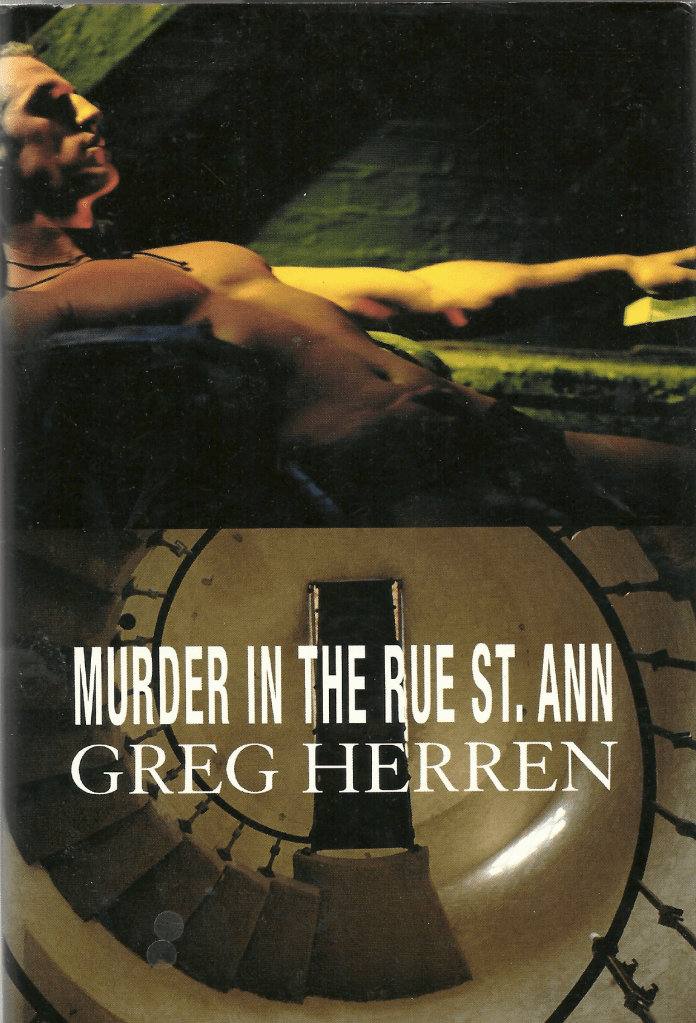
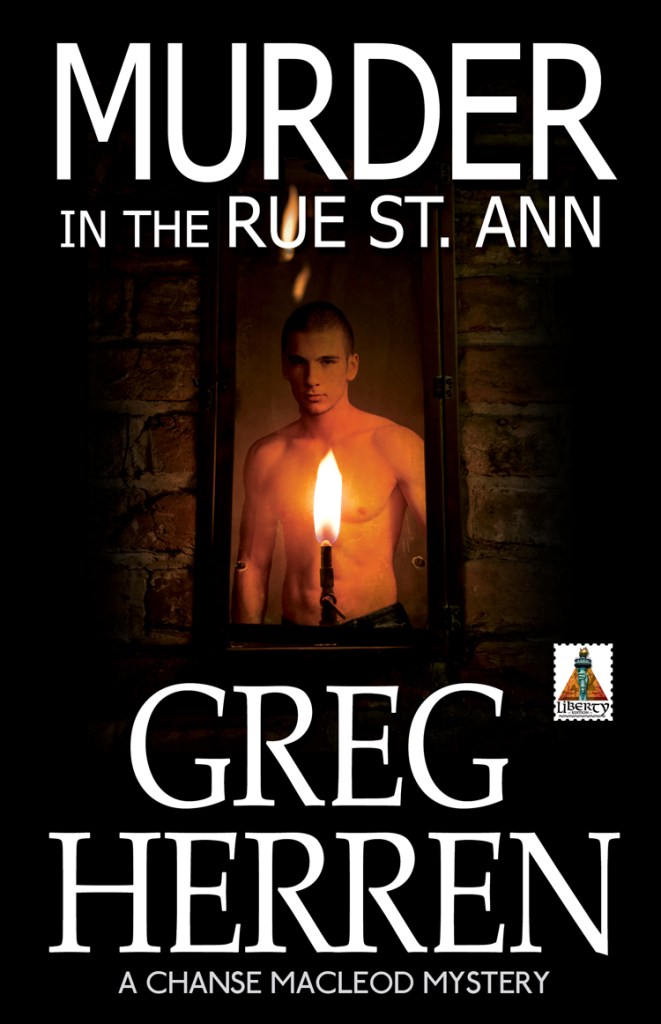
So, after finished Jackson Square Jazz and turning it in, I broke out Murder in the Rue Royal (the title had already been changed on the contract to Murder in the Rue St. Ann; my new editor didn’t like the alliteration) from the drawer, blew the dust off it, and reread the manuscript. I looked at my timeline for the series, and saw that this was the one where he was supposed to fuck up his relationship, but I didn’t see it in the manuscript. I reread the first book, thought long and hard about Chanse and who he was at this point in his life and after several long days of musing it hit me, between the eyes: jealousy. Jealousy would be what fucks up his relationship, and it only made more sense to me that Chanse would be the jealous one. Paul had a loving, accepting family and was more secure in and of himself as a gay man and what he wanted out of life. Paul was considering becoming ground-based at the New Orleans airport so he could settle down and have more of a life with Chanse, which also has Chanse very alarmed and makes the jealousy even more intense….so what would be the thing that would set Chanse’s jealousy off? Something from Paul’s past that Chanse didn’t know but finds out about in the worst possible way?

I had had some issues, believe it or not, with stalkers over the years. I had always wanted to write about a stalker, so what if Paul had a stalker? Why would Paul have a stalker? And then it occurred to me that Paul had a past he wasn’t ashamed of, but had never mentioned to Chanse. Not out of a fear that Chanse wouldn’t understand, but mainly because he had no need to tell him because it wasn’t anything dark. He had done some nude modeling when he was younger and he had also done some soft-core wrestling fetish porn, which is where the stalker came from. And what if I could work the con man he’s been hired by was someone Paul knew from the soft-core fetish porn? What if the guy contacted Paul because he’d been getting threatening notes on top of everything else going on in his life? And what if Chanse ran into Paul when he was leaving the con man’s offices, which brings all this out about Paul’s past? What if it shook a jealous, possessive, insecure Chanse enough for them to fight about it? And what if Paul disappears after the con man is murdered?

That was something I could work with, and so I did.

I’ve always called Murder in the Rue St. Ann my most under-appreciated work. By the time the book had come out, Paul had lost his eye to the muggers and we were in recovery mode. I didn’t do much of anything to promote the book (other than a signing at Outwrite in Atlanta, where I signed all of my books until they closed), and it kind of came and went quickly. I felt it was the most unappreciated of all my books. Jackson Square Jazz had come out earlier in the year before Paul was attacked, and it sucked all the oxygen up that year intended for me–it was the Lambda nominee, not Rue St. Ann–and I didn’t pay much attention to the book after it came out, either. The ‘christians” came for me a few months after the book’s release as well, and then Katrina…so yeah, Rue St. Ann got no press, got no attention, but somehow still managed to sell well.

I did have the next one planned, Murder in the Rue St. Claude, which there was a proposal in for, but Alyson was also going through other, deeply concerning changes that showed how little the higher-ups knew about anything, let alone publishing. But that’s a tale for another time, I think.

Every Day I Write the Book

Okay, that’s technically not true. I don’t write fiction every day, and I don’t work on a book every day. I generally don’t count the blog as actual writing, but it is writing, I suppose, so I do write that pretty much every day. But I’ve never included the blog in daily word counts or anything; just as I wouldn’t (and didn’t) consider emails, text messages, and social media posts as being part of the daily production output (although I suppose I should; I estimated how many words of blog I’ve done since starting this nineteen years ago–twenty in December–and it was a staggering amount, especially since it was probably dramatically under-counted), and never will.

I do think about writing fiction every day, even the days when I am so exhausted and brain dead I don’t think I’m capable of much of anything creative. I am always thinking, and it’s very rare that the brain turns off, unless I go to sleep (thank you, sleeping pills!); as long as part of my mind is awake and alert my mind will eventually wander into creative thinking. It’s just how my mind works.

During the Bold Strokes Book-a-thon last month, I was on a couple of panels, and as usual have decided to turn the questions sent by the moderators as the basis for self-promotional posts. It has been a hot minute–I’ve not done a hell of a lot of promotion since the surgery knocked me off my tracks for a few months–and while I know many other books have come out since and the Greg has a new book excitement amongst my readers has already died down long since, but what the hell, right? I’m nothing if not a narcissist (or have, at best, some narcissistic traits at any rate), and let’s face it, one of my favorite subjects is ME, so why not? No one has to read these self-promotional posts, either. Just scroll on by, if that’s how you feel; my feelings will not be hurt in the slightest, and I no longer have the anxiety of oh my god no one likes me how can I make everyone like me?

Thank GOD.

This is from the Prolific Authors panel1.

How do you ensure that your latest work is not similar to something you have written before? Can you even remember everything you have written before?

After the eighth (?) Scotty book, someone on social media commented on one of my posts asking how many car accidents has Scotty been in? I’d never really thought much about it, but in that moment I realized quite a fucking lot, and that doesn’t include my other, non-Scotty books, either. I realized that I had been in a car accident in 2008 (the first in decades, and I wasn’t at fault) and my car was totaled. It was so weird, and so different from anything I’d ever imagined being in a serious accident like that would be; it took me days to get the taste of chemicals from the airbag out of my throat and my voice was scratchy and husky for about a week or so after. So, of course, I wrote about it in my next book…and then I think I started having a car accident in a lot more of my books. There was also a car accident in one of the earlier Scotty books–Jackson Square Jazz–and so…I didn’t put one in Mississippi River Mischief.

I had never truly worried about repeating myself until that moment of oh my God do I have a car accident in every book? And so now, I try to be really careful. Am I just rewriting a scene I’ve written before? Scotty is on book nine now; I don’t think it’s feasible for me to sit down and reread the entire series every time I am about to write another one. I have always intended to make a Scotty Bible–what all the regular characters look like, their relationships to each other, where they live, little tidbits I’ve dropped over the years that are clues to their personalities–so that I could verify the information in the series and not have to go looking for it (because I am nothing if not lazy, so I’d put it off and forget it and then realize it’s too late to change that now! FUCK!). I also should go back and outline the books, too–just to have something easy to reference when writing another one.

Since I write more than one series and I also write stand-alone novels, I just realized I should probably do this with all of my books…but I am way too lazy to ever get that done. So I will go on trusting my brain and my memory…which is clearly a mistake!

When naming your characters, do you completely avoid names which you have used in the past or do you feel that the characterization alone is enough to differentiate?

I have names I always fall back on–I also tend to like names that start with L’s and J’s for some reason–so I have to be careful with that. I don’t keep track of all character names I’ve used, and I suppose it’s possible that I could “recreate” a character with a name I’ve used before, and even make them the same…but I also re-use characters; they cross over from series to series and back and then to the stand alones. When I was writing Death Drop, I was originally going to have Blaine and Venus be the cops; they were the cops in both of my previous series with a gay male protagonist, so why not keep expanding my New Orleans universe? I eventually changed my mind–I don’t know why, really, or remember, which is probably a more accurate statement–and changed the names; I think I wanted to differentiate the Killer Queen series and make it more distinct from Chanse and Scotty.

I’m worried more about creating characters that are similar to others I’ve written about more so than the name. I was thinking about starting another series–one with a true crime writer as the main character, and he’s already appeared in both the Scotty and Chanse series; I even had an idea for the story. But when I started creating him, I began to realize he was like a mash-up of Chanse and Scotty, so I abandoned the idea. Now that I am thinking about it again, so what if their backgrounds are similar? He’s nothing like either one of them, and it was a good story idea, so…you never know. I try not to ever conclusively rule anything out. I even think about bringing Chanse back every once in a while.

A question I’m sure most of you have received—do you ever worry that you will run out of ideas?

That’s the least of my concerns. I am more worried I won’t live long enough to write everything I want to.

After all these books, do you still enjoy the writing process?

The primary goal of my life has always been to try to surgically remove anything I don’t enjoy from my existence. I am very blessed in that not only do I get to write and tell my stories and people want to read them but I also have a day job that I enjoy and can feel good about the work I do there. So, the only way I would ever stop writing if I stopped enjoying it, and I can’t ever see that happening. Sure, I’ve had times where I had to step away because of burn out or exhaustion, but I always knew it was a break and I would come back to it again. It’s been difficult for me since my surgery in November to get back into it, but I am making progress. I love writing, and am so grateful this childhood dream came true.

  1. I used to bristle a bit when people called me prolific; I just love to write. But I finally stopped that nonsense and accepted the descriptor when I hit my tenth book…which was over thirty books ago. If that’s not prolific, I don’t know what is. ↩︎

Ladies Who Lunch

Americans have always been fascinated by rich people.

We all want to be rich, after all; as someone once said, “The United States is a nation of temporarily distressed millionaires.” So, in lieu of actually being rich, we obsess about them. The rich used to be celebrities for no other reason than being rich. It’s always been interesting to me that in our so-called “classless” society (which was part of the point; no class privilege, everyone is the same in the eyes of the law) we obsess about the rich, we want to know everything about them, and we lap up gossip about them like a kitten with a bowl of cream. I am constantly amazed whenever I watch something or read something set in Great Britain, because that whole “royalty and nobility” thing is just so stupid and ludicrous (and indefensible) on its face that I don’t understand why Americans get so into it; the fascination with the not-very-interesting House of Windsor, for one. We fought not just one but two wars to rid ourselves of royalty and nobility…yet we can’t get enough of the British royals, or the so-called American aristocracy. (Generic we there, I could give a rat’s ass about the horse-faced inbred Windsors and their insane wealth, quite frankly.)

I wanted to be rich when I was a kid; I spent a lot of time in my youth fantasizing about being rich and famous and escaping my humdrum, everyday existence and becoming a celebrity of sorts with no idea of how to do so. I was intrigued by the rich and celebrities; I used to read People and Us regularly, always looked at the headlines on the tabloids at the grocery store, and used to always prefer watching movies and television programs about the rich. (Dynasty, anyone?) I loved trashy novels about obscenely wealthy (and inevitably perverted) society types and celebrities–Valley of the Dolls has always been a favorite of mine, along with all the others from that time period–Judith Krantz, Harold Robbins, Jackie Collins, Sidney Sheldon and all the knock-offs. I was a strange child, with all kinds of things going on in my head and so many voices talking to me and my attention definitely had an extraordinary deficit; I always referred to it as the “buzzing.” The only time I could ever truly focus my brain was either reading a book or watching something on television–and even as a child, I often read while I was watching television. (Which is why I read so much, even though that buzzing isn’t there anymore and hasn’t been for decades.)

As I get older and start revisiting my past (its traumas along with its joys) I begin to remember things, little clues and observations that stuck in my head as a lesson and remained there long after the actual inciting incident was long forgotten. I’ve always had a mild loathing for Truman Capote, for example, which really needs to be unpacked. Capote was everywhere when I was a child; there was endless talk shows littering the television schedules those days–Dick Cavett, Merv Griffin, Mike Douglas, John Davidson, and on and on and on–and Capote was always a popular guest on these shows. I wasn’t really sure what he did or who he was, but he was someone famous and he was on television a lot. I saw him in the atrocious film Murder by Death, and I know I knew/had heard that he was a homosexual, a gay; and I also knew I was a gay. It terrified me that I was destined to end up as another Capote–affected high-pitched speech and mannerisms, foppish clothing that just screamed gay at anyone looking; Capote made no bones about who or what he was and refused to hide anything…yet he gained a kind of celebrity and fame and success in that incredibly homophobic time period, and no one had a problem with putting him front and center on television during the day time.

But this isn’t about my own self-loathing as evidenced by my decades of feeling repulsed by Truman Capote; that I will save for when I finish watching Capote v. the Swans.

“Carissimo!” she cried. “You’re just what I’m looking for. A lunch date. The duchess stood me up.”

“Black or white?” I said.

“White,” she said, reversing my direction on the sidewalk.

White is Wallis Windsor, whereas the Black Duchess is what her friends called Perla Apfeldorf, the Brazilian wife of a notoriously racist South African diamond industrialist. As for the lady who knew the distinction, she was indeed a lady–Lady Ina Coolbirth, an American married to a British chemicals tycoon and a lot of woman in every way. Tall, taller than most men, Ina was a big breezy peppy broad, born and raised on a ranch in Montana.

“This is the second time she’s canceled,” Ina Coolbirth continued. “She says she has hives. Or the duke has hives. One or the other. Anyway, I’ve still got a table at Côte Basque. So, shall we? Because I do so need someone to talk to, really. And, thank God, Jonesy, it can be you.”

I do want to be clear that once I started reading Capote, he quickly became a writer whom I admired very much; I don’t think I’ve ever read anything he’s written that didn’t take my breath away with its style and sentence construction and poetry. He truly was a master stylist, and perhaps with a greater output he might have become one of the established masters of American literature, required reading for aspiring writers and students of American literature. In Cold Blood is a masterpiece I go back to again and again; I prefer his novella Breakfast at Tiffany’s to the film without question; and I was blown away by his debut novel, Other Voices Other Rooms, which was one of those books that made me think my childhood, and my being from Alabama, might be worth mining for my work.

I read “La Côte Basque 1965” years ago, and didn’t really remember it very much other than remembering I didn’t care for it very much. I was aware of the scandal that followed its publication and that all of Capote’s carefully cultivated rich society women friends felt betrayed by it and turned on him, which sent him into a decline from which he never recovered, before dying himself. I’ve always seen Capote as an example of wasted talents. Anyway, I read the story but not being familiar with his social set, I didn’t recognize any of the people gossiped about in the story or who the woman he was lunching with represented (Slim Keith, for the record), and so it kind of bored me; it was a short story about someone having lunch and gossiping about people the reader had no way of knowing who they were or anything about. I assumed this was because the story was an excerpt from the novel, and the novel itself would establish who all these women were and their relationships with each other. But I did know it was all thinly veiled gossip about his friends, and they never forgave him for it. (I also didn’t recognize “Ann Hopkins” in the story as Ann Woodward; I hadn’t known until the television series that he was involved in her story. I primarily knew about her from reading The Two Mrs. Grenvilles and articles in Vanity Fair, and I actually thought, when reading that book, that it was based on the Reynolds tobacco heir murder that Robert Wilder based his book Written on the Wind on; it wasn’t until later that I learned about the Woodward incident) so I thought, well, it was an entertaining if confusing read.

It was kind of like listening to two strangers talk in a Starbucks and gossip about people you don’t know; entertaining but nothing serious, not really a story of any kind, and I didn’t at the time see how it would all fit into a novel as a chapter in the first place. What purpose to the overall story did this nasty gossip play? Why was it necessary for Ina to share these stories at this particular lunch (and don’t get me started on White Duchess and Black Duchess)? Were these people she was talking about important to the book as a whole? It was hard for me to tell, and I put it away, thinking at the time probably a good thing he never finished the book.

Watching the show about fallout from the story’s publication, I decided to read the story again.

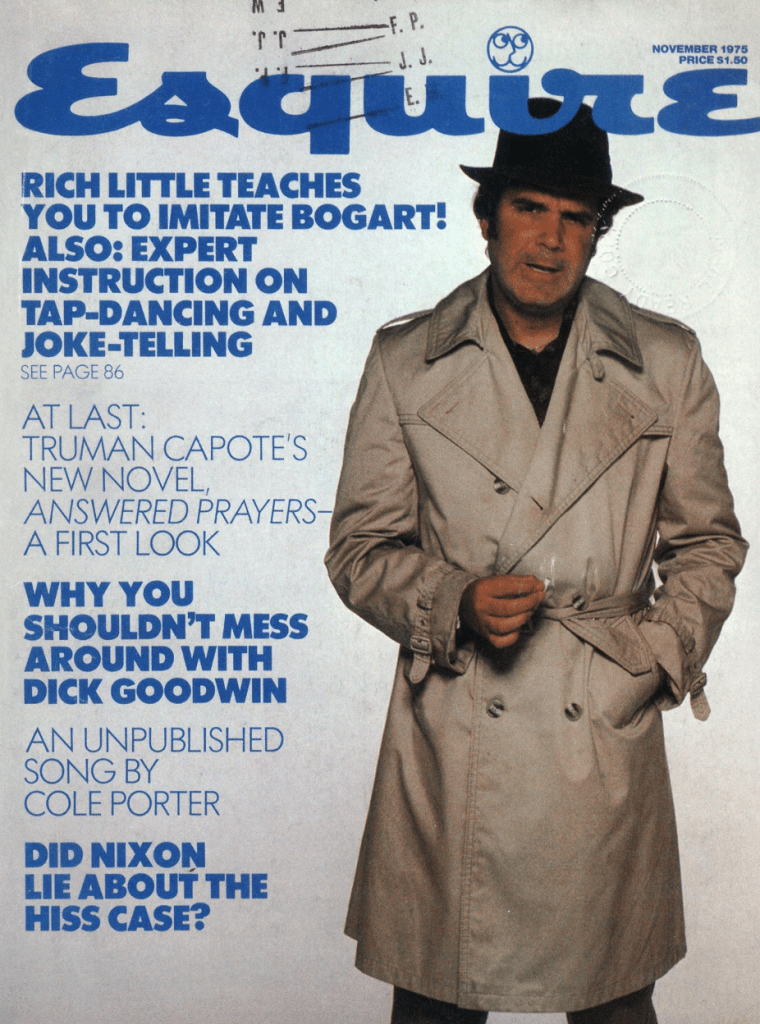
And I still question why Esquire chose to publish it, as well as why Capote thought this chapter was the one to send them. Capote was a genius, of course, and after In Cold Blood was one of the biggest names in American literature (he truly invented the true crime genre); of course they are going to publish whatever he sent them, no matter how bad it was. It wasn’t promoted as a story, after all, it was a novel excerpt.

What I’ve not been able to figure out from any of this is why he thought he could publish this without any fallout from his “swans.” I guess it went to the grave with Capote, who clearly didn’t–and I don’t think ever did–understand why they were so upset with him, which just astonishes me. (Someone once thought I based a character on her–I didn’t–and was very angry with me. I didn’t care, because I neither cared about the person nor her concerns, but I know how careful you have to be as a writer with these sorts of things.)

I wish I could say I liked it better on the reread. I did not. It’s still the same mess it was when I originally read over twenty years ago. It’s just a rich woman being bitchy to her gay friend she feels free to be bitchy about her friends with, and when you have no context (even knowing this time who the actual people were, and yes, he barely disguised them) about the women being discussed or anything about them…it’s just boring, gossip about people you don’t know and you don’t know enough to care about, so it’s just a bitchy little boring lunch. I don’t know what could come before that or after, as an author myself; had I been the fiction editor at Esquire I would have been pissed that was what he sent in, and I would have definitely taken a red pencil to it before I would have published it–and Esquire? Why did Esquire, a men’s lifestyle magazine, publish this when the right place would have been Vogue or Vanity Fair or even The New Yorker. None of it made sense then, none of it makes sense to me now; and if this is the best example we have of Answered Prayers, maybe it’s not such a bad thing that the manuscript–if it ever existed–disappeared.

Sorry, Truman, you were a great writer but this one was a swing-and-a-miss.

Close Enough to Perfect

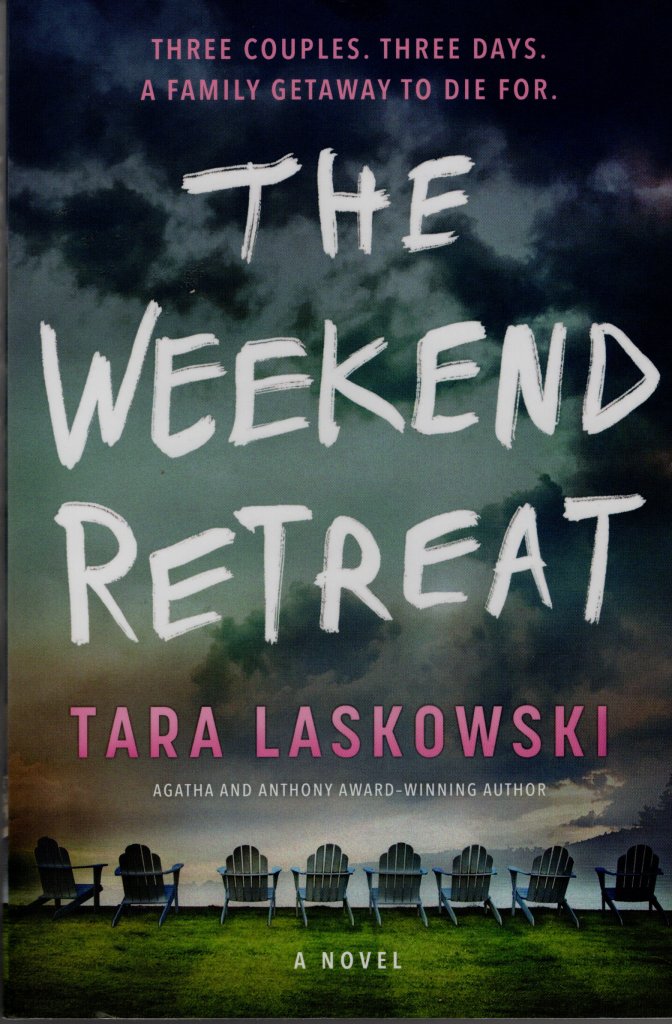
I don’t remember when and where I first met Tara Laskowski; my memory has become a sieve over the years and the bout of long COVID in the summer of 2022 didn’t help much, nor did any of the things that have gone on for the last three or four years. But I’ve liked her from the very first–I love that she loves Halloween and centered one of her books arounnd it–and when I read her debut novel, I became a big fan. She, along with Carol Goodman, are killing the Gothic suspense novel genre, which has always been one of my favorites ever since I was a kid and discovered Mary Stewart and Victoria Holt and that Phyllis A. Whitney also wrote books for adults. She followed up her sensational debut One Night Gone with the Halloween book, The Mother Next Door, and it was also magnificent.

So I really was looking forward to her third novel, and Constant Reader, it did not disappoint.

Ever since Zack told me about The Weekend, it’s all I’ve been able to focus on. Most people would naturally be at least a little nervous to meet their significant other’s family for the first time.

But most people aren’t dating a Van Ness.

“Earth to Lauren.” Zach snaps his fingers, grinning over at me. He left work early to get on the road sooner and didn’t have time to change, so he’s still wearing his suit, purple tie slightly askew but knotted even after hours of driving.

“Sorry,” I say, tugging the ends of my hair. “Zoning out.”

“You look like I’m driving you to your death,” he says, then grabs my hand and squeezes. “Don’t worry. I promises it’ll be fun. Even if my family’s there.”

This is a great opening, and it sets up the story perfectly. Our sympathies are immediately with Lauren. Laskoswki has put her into a situation we can all relate to: the terror of meeting your partner’s family and the discomfort that comes with it, the self-doubt, the need to be liked and accepted. Zach is a Van Ness, too, and while we aren’t really certain what that means yet, it’s important and stressful enough so that Lauren, in communicating her thoughts and feelings, thinks it bears mentioning and we should understand how she feels. It works, and that outsider feeling (and haven’t we all felt like an outsider at some time? See Saltburn) keeps the reader’s sympathies with Lauren completely.

But there are three more point of view characters–two other women, one a Van Ness by blood and the other by marriage–which is always a difficult feat for an author to pull off, but making those voices distinct and clearly different from each other is what makes the book work. Harper, Zack’s sister, is harsh, tough, cold and vindictive. She runs her own beauty company and blog, VNity, which is struggling. Elle is married to Harper’s twin brother Richard, who oversees the vast Van Ness holdings, and like Lauren, has some serious “pick me” energy too; she joined the Van Ness family and has wiggled her way into the family by asserting herself as well as trying to take over the role of family matriarch, as their mother is dead. Their mother, Katrina, was a tough woman who was hard on her children, but babied the youngest, Zack–which the twins have always resented. The retreat, this Weekend, is a celebration of the twins’ birthdays, with a huge party being thrown the Saturday night of that weekend, spent up at the Van Ness Winery, in the Finger Lakes section of New York.

So yes, that Gothic feeling is there almost from the start. The wide-eyed young innocent, coming to the big family estate in a remote part of the country (see also, Beware the Woman by Megan Abbott) into a situation where she’s not sure she can entirely trust her boyfriend. The house is filled with secrets, too–hidden rooms, secret staircases and passage ways–and a lot of sibling resentment, bitterness, and anger begins bubbling up to the surface almost immediately.

There’s also a fourth POV character, known only as the Weekend Guest, who hates the Van Ness siblings and is trying to bring the entire family down as a brutal winter storm bears down on Van Ness Winery…

What a terrific read! Get a copy–you can thank me later.

Feliz Navidad

I do love me a good cozy mystery.

Cozy mysteries often get little respect from the other subgenres of crime fiction, and their authors likewise generally only get respect from their cozy colleagues; but the disdain they get from a lot of other crime writers is actually kind of criminal. It’s no easier to write a cozy than any other form of mystery; if anything, I would think it would be harder to write about a murder without much blood, no violence, no profanity, and no sex on the page. Part of the reason I decided to write A Streetcar Named Murder was the challenge of writing one, and it was far harder writing that book than it was writing the ones in other subgenres of crime; I wish I had a dime for every time I backspaced over a profanity I’d automatically typed; I curse a lot and so do my characters.

So while I am writing a new cozy–the sequel to Death Drop–I thought I’d read some while I wrote to get a good feeling for the subgenre.

And I am finding one can never go wrong with Raquel V. Reyes.

Halloween was a week away, and we didn’t have s single decoration up. The living room was littered with shopping bags, extension chords, four-foot-tall plastic jack-o’-lanterns, and one handsome Frankenstein.

“Babe, we’re going to need a ladder and a staple gun,” Frankenstein said.

“Can you borrow one from a neighbor?” I asked as I squeezed my foot into a shoe that had fit perfectlya few weeks ago but was now tight. My costume, like my husband’s, was a modification of something I already had. I’d taken a white apron and smeared it with beet juice. In red marker, I’d written Chef Vampira on a paper toque, the tall hat fancy chefs wore. I was not a trained chef, but I had reached local stardom with my two cooking shows, Cocina Caribeña and Abuela Approved.

“Do I look undead enough? Do I need more white makeup?” I asked.

I got a copy of Raquel’s Lefty Award winning novel for Best First at Left Coast Crime in 2022. I read it later that year, and kind of fell in love with the series and its main cast. After years of living in New York and working as a food anthropologist, Miriam, her husband and son all move to his hometown, Coral Shores–a town within Miami’s borders. As she found her footing in this rich and posh neighborhood of McMansions and racist snobs (including her mother-in-law) she gets involved in a murder when someone–her husband’s ex and whom his mother wanted him to marry–died of poisoning right in front of her at a charity luncheon–and Miriam develops a nose for mystery.

This second book in the series is a welcome second offering. This time out, there are bodies everywhere. Did the chef at the country club accidentally fall to his death, or was he pushed?The mother of the victim in the first book is found unconscious and incoherent on the side of Miriam’s house. Her neighbor is found unconscious and frothing in the mouth on Halloween night, so she has to take in his dog until he’s recovered. AND her mother-in-law has coerced her into putting together the charity fundraiser at her snooty country club, so she is constantly picking at Miriam…even in front of her grandson. And then there’s another murder. Miriam can’t help sleuthing, everything keeps building until the night of the gala–when Miriam gets to the truth finally and puts her own life at jeopardy.

I love this series. I love Miriam, and I love that Reyes doesn’t italicize Spanish words (she says she writes in Spanglish) and that she authentically sprinkles Spanish organically through the books. I love that the books focus on Caribbean cooking, and how it developed culturally and anthropologically. I cringe at the racism Miriam experiences (while getting angry at it; I despise bigotry), and I really care about Miriam; which is the key to writing a good cozy mystery: a main character the reader can identify with and like.

Do read this series. I can’t wait to get my hands on the third!

Rockin’ Around the Christmas Tree

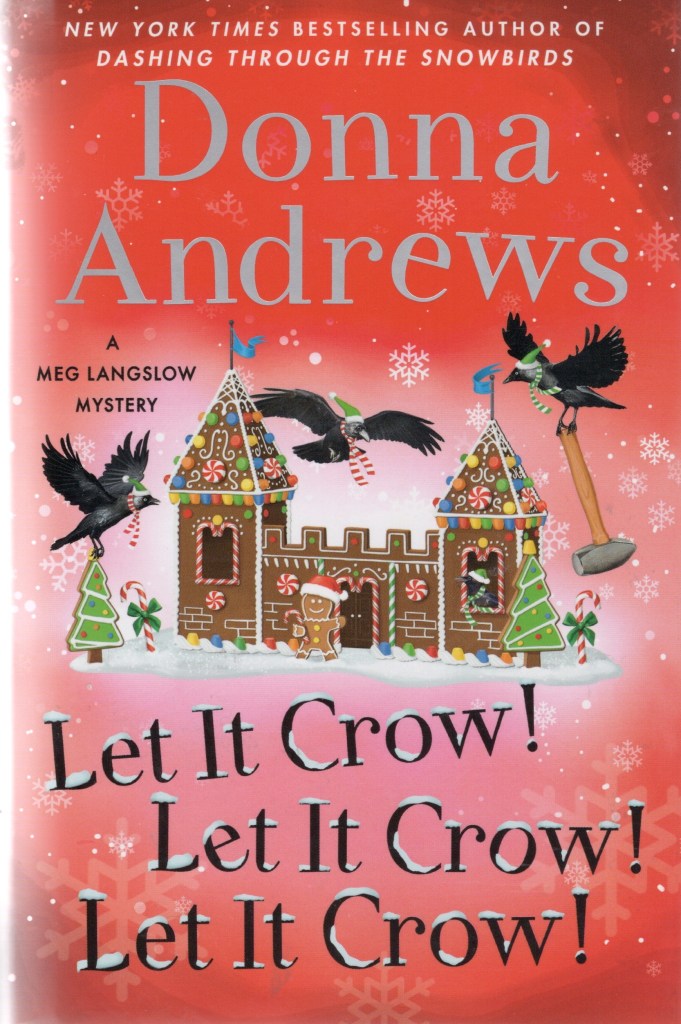
It just doesn’t feel like Christmas until I’ve read this year’s new Donna Andrews Christmas murder mystery, and spend a little time in my favorite small town in North America, Caerphilly, Virginia. It’s a marvelous place, where everyone (or most everyone) is kind, everyone goes out of their way to help people who need it without a second thought, where all the churches get along and collaborate, and there’s even a small college. I always, always, always love every chance I get to go back there and visit–and I even put aside my utter disdain and hatred for cold weather and snow when it comes to Caerphilly Christmases. I’m not sure (without actually counting) how many Meg Langslow Christmas mysteries there have been so far, but Andrews always manages to come up with something charming, fresh, and new every year, and I always get excited when I see the announcement of the pub date for the new Christmas book, and the preorder is an absolute no brainer.

“You can still change your mind, you know.”

I closed my eyes and counted to ten. Then I opened them again. I crawled out from under the rough-hewn medieval-style trestle table I’d been repairing and looked up. Alec Franzetti was staring down at me with a pleading expression on his broad, bearded face. both of his enormous, hairy hands were clutching a clipboard that held an untidy, inch-thick sheaf of paper. He gripped it tightly enough to turn his knuckles white. He looked so stressed that the temptation to snap at him vanished. I made sure my tone was gentle. Gentle, but firm.

“No, Alec,” I said. “I’m very happy doing what I’m doing.”

His face fell, and he sighed loudly.

“Is there anything I can help you with?” I stood up and gestured at the clipboard.

“Probably.” He flipped through a couple of the top papers. “Let me think.”

He glanced down at the clipboard, then wandered off, looking distracted and lost.

“Change your mind about what?” came a voice from behind me.

I jumped at the sound. Alec’s anxiety was rubbing off on me. I turned and smiled when I saw my old friend Caroline Willner.

As I said, others may think it’s not Christmas until it snows, or they’ve seen Frosty or It’s a Wonderful Life or Rudolph or A Charlie Brown Christmas, but for me it’s not Christmas until I’ve read the new Meg Langslow Christmas mystery. Caerphilly is one of my favorite fictional places, and Meg’s enormous network of friends and family never ceases to amaze me every time I dive into the pages of one of her books. What an absolutely marvelous place it is, where everyone is welcomed and everyone is treated fairly and even the little feuds that inevitably spring up between people are gently amusing. Caerphilly is a popular tourist destination, especially at Christmas; Meg’s husband does an annual one-man show reading A Christmas Carol, and even when something goes awry and someone gets murdered–every year–everything is usually handled in time for everyone to have a delightful, and love-filled holiday. The books always make me feel warm inside, and every time I close the book when I’ve finished, I smile, enormously pleased and satisfied. Somehow, Andrews has the magic touch of how to make people feel warm and happy about the holidays, without becoming treacly, melodramatic, or overly sentimental.

This year round, there’s a competition reality show filming in Caerphilly, out at the local retired heavy metal rock star’s (Ragnar Ragnarson) goth castle–Blades of Glory–and Meg is resisting being cast so they have a woman blacksmith in the competition. (Distinction, pointed out early: the show is actually about blade smithing, making weapons, which is an entirely different skillset from black smithing. A blacksmith can make blades, but can also make other things. A bladesmith specializes, obviously, in making weapons–knives, daggers, swords, etc.) Meg’s mentor and trainer, Faulk, is competing in the show–but when he is attacked from behind on the castle grounds with a baseball bat, his arm broken–Meg agrees to take his place, but only when she finds out Faulk has invested money in the show and the show falling apart could ruin him and his partner. Who could have attacked Faulk? Someone in the crew of the show, or one of the other competitors? Then there are shenanigans during the filming of the first competition being filmed; one of the contestants sabotages the others, but Meg has proof on film; she became suspicious when her forge was set at the wrong temperature, so had mini-cameras set up to record, and she has the culprit red-handed. Later on that same night, he is murdered–and the case is off and running.

This book was an absolute delight. I laughed aloud several times, and yes, sighed in satisfaction when I closed it after reading the last page.

But now I have to wait until August of next year for the next book to come out so I can visit again.

Seriously, folks, you need to read this series. I can’t rave enough about it.

I Know There’s Something Going On

I love cozy mysteries.

I do, and while they may not make up the majority of my reading pile, it’s always a joy to find a new cozy series I enjoy. One of my favorite mysteries of all time, James Anderson’s The Affair of the Blood-Stained Egg Cosy, is definitely a cozy mystery–a house party murder, with secret passages and international espionage and a jewel thief–and is LONG overdue for a prestige mini-series, preferably by either Acorn or Britbox. (I should reread that book; it’s been a hot minute) I don’t think cozies and their writers are given the respect they deserve, ever–rarely do you see a cozy on a Best of the Year list or making the short-list for awards (besides the Agathas), and I’ve heard crime writers slag off the sub-genre, way more times than I would prefer. Anyone who thinks a cozy is lesser or somehow “easier” to write than any other kind of crime novel is more than welcome to give writing one a try. It’s always amusing to me to see the hypocrisy of crime writers whining that literary writers don’t take them seriously…and then in their next breath go on to mock cozy writers. (I did have a wonderful “gotcha” moment with a straight white male mystery writer once; he was complaining about how crime fiction isn’t considered literature, and later on in the same conversation he made a snide remark about cozy writers…and boy did he stumble for words when I replied, “So when lit writers treat you like a cozy writer you don’t like it?” He won’t talk smack about cozies in MY presence again…)

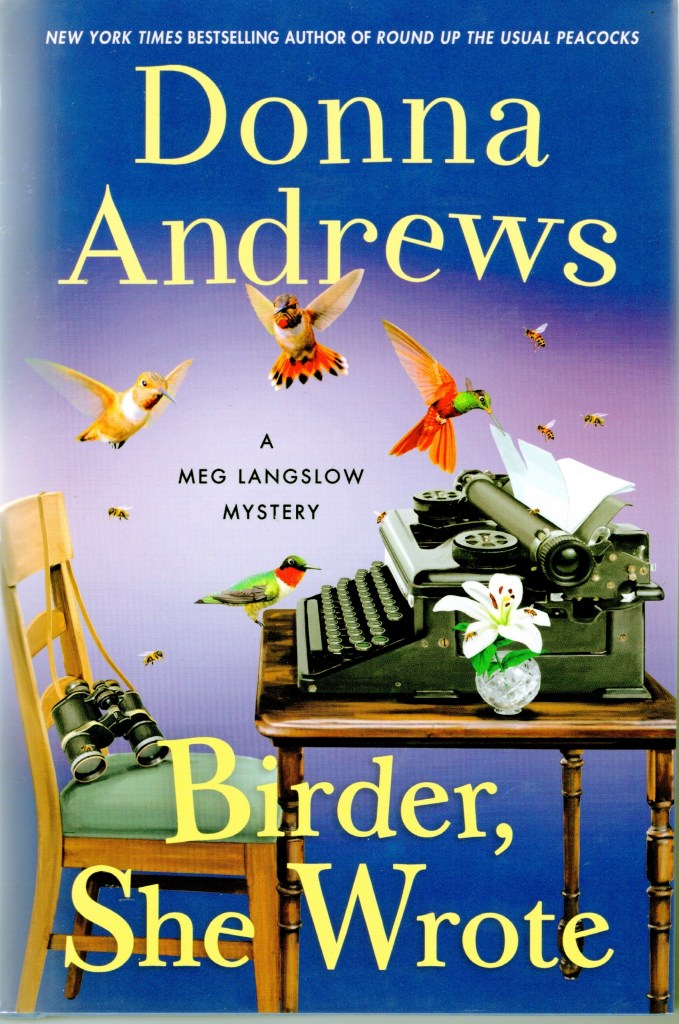
Anyway, I digress. One of my favorite series of all time is the Meg Langslow series by Donna Andrews, and we are on book thirty-three now, with thirty-four on my chair sidetable, halfway finished reading, and Book 35 available for preorder already.

That is a pretty impressive track record, and career. If I wrote a Scotty per year from now on, it would take me until I am eighty-eight to get to book 35. YIKES.

“This is the life,” I said, as I wriggled into an even more comfortable position in the hammock.

I wasn’t talking to anyone in particular. As far as I knew, there was no one within earshot. But just in case there was, I was going to do my best to look–and sound–like someone who was deeply contented and should not be disturbed for anything short of an actual emergency. Although the people most apt to – me were safely occupied elsewhere–Michael, my husband, was teaching his Friday classes at Caerphilly College, and my twin sons, Jamie and Josh, were at school until three.

My-notebook-that-tells-me-when-to-breathe, as I called my comprehensive to-do list and calendar, was nearby, but I’d already checked, and nothing in its pages had to be done right now. For the next hour I was on hammock time. I could read. I could put on my headphones and listen to some music. Or I could just lie here and enjoy the balmy May weather, the masses of blooms in our flower beds, and the fascinating aerial ballet of hummingbirds darting to and from the nearby feeder.

The hummingbirds. I sat up with a frown. The last time I’d found the time to watch them, there had been half a doxen of them, impossibly small, their iridescent jewel-toned bodies sparking in the sunshine as they paused, sipped, and darted away. Now there was onlyone, flitting around the feeder. And he didn’t seem to be feeding–just darting about.

And that title is a gem.

The entire series has bird-puns for titles, which is amazingly hard to do, and if you don’t think so–try coming up with thirty-three bird pun titles for crime novels without looking at Donna’s backlist. I suggested one to her many years ago that I keep hoping she’ll use–but she hasn’t yet, and I despair my bird pun title will ever make it into her canon.

I do feel that I also should, in the interest of full disclosure, let you know that Donna Andrews is not only one of my favorite writers but one of my favorite people in this business. We first met years ago when we were both on the MWA board (she was on The Good, the Bad, and the Emus back then), and I found her to be intelligent, kind, charming and funny. That was when I started reading her, and what a joy this series has been for me all these years. Donna’s books, to me, are the perfect example of why this sub-genre (amateur sleuth, no blood or sex or violence–at least not much, and little to no swearing) is called “cozy”–because that’s how reading one of her books makes me feel, cozy. Honestly, there’s nothing better than curling in my easy chair with a blanket, a purring kitty in my lap, as I revisit my friends in Caerphilly again.

Because she writes so well it seems like a real place, one that I am happy to escape my life into twice a year.

I could talk about this series all day, I love it and the characters so much. Caerphilly reminds me a lot of Schitt’s Creek and Ted Lasso–ensemble casts in places where everyone is kind and looks out for one another, but also doesn’t interfere and lets you make and learn from your own mistakes. This time out, Donna has added a new McMansion style neighborhood to the town, Westlake, with people retiring from major cities to the “rustic” charms of Caerphilly–only to complain incessantly about those very rustic charms to begin with–and beekeeper Edgar is square in their sites, his hives just across a small stream from their backyards. Meg calls them the NIMBYs (not in my backyard), and I think we’ve all encountered these types (which is why dumps and toxic waste always ends up around poorer communities). Someone has poisoned all of Edgar’s bees–and Meg agrees to look into who could have done something so heinous. But while looking for an old African American cemetery, Meg and her friends not only find the cemetery deep in the woods, but they also find the dead body of one of the worst of the NIMBYs, and the game is afoot.

The sadness at finishing the book was derailed by knowing this year’s Christmas Meg murder mystery was already in my TBR pile, which I immediately started reading when I finished Birder She Wrote. Don’t be daunted by the massive backlist, either–if you’ve not read any of these books, you can start anywhere and then work your way through the series; there are never any spoilers other than those from Meg’s personal life–and frankly, I don’t mind those kinds of spoilers, because its fun to go back and see how she met her husband, when they got married, the twins, etc.

Hey Apple TV–this series is a natural for y’all.

God Rest Ye Merry Gentlemen

Christmas and crime don’t get together often enough for my liking–although I always love to call It’s a Wonderful Life a Christmas noir, because it’s actually an incredibly dark film if you look below the effervescent sugary surface. (I’ve always wanted to write a book set in the world created had George Bailey never existed–Potterville.) Agatha Christie handled the holidays in a couple of books, most notably Murder for Christmas, and the occasional short story. (This is a good place to note that when I was talking about my own Christmas writings, I’d forgotten “The Snow Globe”, which is my most Christmas story of them all; the one I did remember to mention, “The Snow Queen,” was more a winter’s tale than a Christmas one.)

Lisa Unger is one of my favorite writers, and she’s also pretty prolific; I turned and looked away for a moment and suddenly I was way behind on reading her books. I had never caught up on the backlist, either; so I think focusing on that is a good plan for 2024. When i saw that she had written a Christmas novella, getting it was a no-brainer–and I read it in one day…and it reminded me again why I love her work so much.

I always loved Christmas. I still remember how magical it was to believe in Santa Claus, lying in bed at night, trying to stay up to hear the pitter-patter of reindeer hoofs on the roof. Then falling asleep and waking up to the tree glowing downstairs, the floor covered with gifts, my parents groggy and smiling.

I saw him, my sister would say. On the lawn, climbing out of his sleigh.

And I would be so jealous that she got to see Santa, while I couldn’t keep my eyes open long enough. She was always first. Always better. Still is.

I lean against the pole now, arching my back, all eyes on me. The music pulses and the stage lights beneath my high heels flash–purple, blue, orange, red. I am alive here, all of it moving through me. Tonight, I perform to various Katy Perry songs–a playlist I made. “Hummingbird Heartbeat.” “Peacock.” “Part of Me.” All songs that are sexy and upbeat but have a secret message. Like me. No one is listening to the music though. The smattering of men sitting on stools and in various booths, nursing drinks, are only thinking about one thing.

Ten years ago, Madeline Martin survived a brutal night in which her best friend was murdered, and two others disappeared. Maddie herself was stabbed multiple times and the side of her face slashed. Her boyfriend was convicted of the crimes and sent to prison–he was a rich bad boy exiled to their upstate New York town (but further south than the Hollows, the town Unger writes about a lot), and for whatever reason, he just kind of went nuts that night during a wild party at his home a few days before Christmas. The two sisters who vanished were never found, and the assumption has always been he killed them also and got rid of the bodies…which really doesn’t make a lot of sense. Maddie’s father was the sheriff, and he has recently had a stroke, requiring at home care, while she runs her own bookstore with some success. Maddie has also closed herself off from dating–who wouldn’t, when your high school boyfriend turned out to be a psycho killer–and at the very beginning of the book, true crime podcaster/writer Harley Granger has come to town, buying the home where the missing sisters once lived, to turn over the stones and interview people–he doesn’t believe for one moment that Evan Handy had the time and ability to not only do what witnesses saw (stabbing Maddie and killing her friend) AND kidnap and murder and hide the bodies of the missing sisters. Harley thinks Evan either had help, or there’s an unrelated serial killer operating in the area–and the disappearance of a stripper named Lolly from the area is proof–along with some other young women gone missing in the years since that nightmare of a night that Maddie can barely remember.

This is Lisa Unger at her best; she writes brilliantly, defining and developing realistic characters that the reader can identify with and relate to and root for; delving into the psychology of what it must be like to survive a night like the one Maddie did as a teenager allows for complexity and many layers and facets to her character, and despite the shortness of the story (compared to Unger’s novels), it’s fully realized, compelling, and hard to put down. Unger’s pacing is urgent, grabs you by the throat and refuses to let go until you’ve turned the final page.

Which is why she is one of my favorite writers.

Cherish

Saturday and the coast is clear, I think?

Today I am going to venture out to run some errands and then probably (possibly) brave the horrible heat to head over to the gym. I also want to get a lot of writing and cleaning and so forth done today–yes, yes, what else is new, I know–but I was able to get the car back yesterday and then we ventured to Costco before coming home to collapse like heavy woolen blankets that didn’t completely dry in the dryer.

Christ it is hot this June.

Paul did point out that last June probably was just as hot–which reminded me of working the screening desk in the garage at work and getting dehydration sickness (HYDRATE PEOPLE)–and then he also pointed out May was unusually mild and much rainier than usual, so the bitch slap of the return of your usual New Orleans summer weather felt even nastier than it generally does when it happens.

I am tired this morning, despite sleeping like a stone. I was tired yesterday–any amount of time spent out of doors in this type of New Orleans weather is exhausting and draining (and I am not, alas, in as good of physical condition as I should be; but despite the draining nature of this weather I draw the line at driving the short distance to the gym, which is simply insane and goes against the entire idea of going to the gym in the first place)–and while I need to, am trying to, exercise and be more conscious of self-care, I cannot allow the weather to keep me from doing things. (Yesterday when we picked up the car–shout out to Dawn, our amazing Lyft driver–it was 97 degrees and morbidly humid; after the Costco trip and unloading the car, all I really wanted to do was curl up in a corner in the air conditioning and hide for the rest of the evening. But there were other things that needed doing, so I wrote for a while (adding about another thousand words to “Festival of the Redeemer”), finished some laundry (I just heard the dryer click off from a fluff cycle, since I left the clothes in there over night), and then we finished watching an absolutely delightful HBO MAX show called Starstruck, which is incredibly charming, funny, and sweet–the premise is a young woman who has two horrible dead-end jobs, approaches life with a kind of grin and sense of humor but is really adrift, hooks up with someone one New Year’s who turns out to be a major film star–and follows their back-and-forth fumbling towards a relationship. The chemistry between them is absolutely fantastic, and we absolutely loved it. Rose Matafeo plays Jessie (she’s also the writer of the show) and she is just perfect; while Tom Kapoor, the movie star, is also perfectly played by Nikesh Patel–the cast is perfect down to the smallest role. The irony of the show is Jessie is positively NOT starstruck; she finds his celebrity appalling and a barrier to any possibility of a relationship between the two. Constant Reader, I think you would love it. It’s probably one of the most charming shows I’ve seen, up there with Schitt’s Creek, Ted Lasso, and Kim’s Convenience–which is high praise indeed.

Someone tweeted at me yesterday about having finished Mardi Gras Mambo and having tears in their eyes by the end; which was absolutely a lovely thing and an incredibly pleasant reminder that I kind of needed…we so often as writers live in a vacuum, and the negativity out there about our work is so intrusive and debilitating sometimes that it’s always lovely when someone who enjoyed your work reaches out to let you know. Thank you, person on Twitter that I don’t know; you made my evening…and it really takes so little.

I read a wonderful article in LA Review of Books written by Michael Nava yesterday (he really is a treasure; I am so delighted he has taken up the Henry Rios character again), which was the second part (I somehow missed the first and will be looking for it today) about the history of queer publishing. This was about the Golden Age, from the late 1970’s to the mid-1990’s; and reading it reminded me of so many names that I hadn’t forgotten but simply hadn’t thought about in a very long time. I came into queer publishing around this time, as a book reviewer for the New Orleans queer newspaper Impact; eventually branching out into national queer glossies and Lambda Book Report, where I actually wound up working; first as an assistant editor for about five months before taking over as editor for a year. I made many friends during that year and a half at LBR; it was while I was working there that Michael ended the Henry Rios series (I got Katherine Forrest to interview him and put him on the cover, using my very poor and picked-up-on-the-job Adobe Photoshop skills to pull together my most ambitious cover design to date; I have all the issues I worked on in a box up in the storage attic…and reading Michael’s piece made me think about bringing that box down and going through them, for the sake of the memories they would bring back for me–and then I thought, wow you sure have been experiencing a lot of nostalgia this year and decided to skip it for now), which was heartbreaking for me, a long-time fan. I left LBR–which in many ways was my dream job–just before the release of my first book, Murder in the Rue Dauphine, because I felt I couldn’t really run a review magazine focusing on queer lit while I was also publishing my own fiction; I felt it created too much of a conflict of interest. I still stand my that decision–a lot of people were disappointed that I stepped down from the job; I remember one legendary queer writer telling me I was “destroying my career” by doing so (I think things worked out rather well, though; always trust your own instincts). I continued reviewing books for a few more years, but really felt uncomfortable doing so; for me, as a writer of queer fiction, it seemed–and still does–like a conflict of interest and so eventually I stopped being a paid reviewer. Now, of course, I review the occasional book I loved here on the blog; but I am not being paid for my opinion and I won’t talk about a book I didn’t like on here…I also don’t write about every book I read on this blog, either; and sometimes I worry that people think I didn’t like their book if I don’t review it…but then I remind myself that reviewing books isn’t the point of this blog, and it never has been….the blog is something I primarily write for myself, and I’m not interested in having a book review blog. I love reading for pleasure, and really, when I do write about a book I loved on here it’s to emphasize how much I love to read more than anything else.

And I really do need to get back to reading more.

And on that note, I am heading back into the spice mines. There’s a lot on the agenda today, and randomly riffing on my musings here isn’t going to get any of it done. Have a lovely Saturday, Constant Reader, and see you on the morrow.