Blowin’ in the Wind

Wednesday morning and the middle of the week! We’ve made it this far, Constant Reader, even though this week hasn’t quite gone the way I would have liked.

The decision to limit social media consumption isn’t going as well this week as I would have liked; I hadn’t anticipated the pull of my phone while I am at work. And getting home from work every night this week, after I finish whatever I need to do (errands and so forth) I’ve repaired to my easy chair and watched some “MAGA voter regrets” videos on Youtube before my eyes started to glaze over and I kind of zoned out for the rest of the night. I don’t like the part of me that enjoys their pain; it is not my instinct to default for sympathy for people who want to harm everyone else. You can never go wrong not having any faith in the decency of the majority of Americans, because they have no decency or shame.1

But, I am not going to be hard on myself. I am trying, at long last, to break all the programming/grooming that I don’t deserve anything or even a writing career. I am going to keep writing–make no mistake about that–and i have to figure out ways to market them and get the word out there. Going to mystery conferences was clearly a mistake; why bother pitching readers on books that are not in the booksellers’ room2? I finally got resigned to them never having my books–or only one copy–and hoped people would possibly enjoy listening to me on panels and maybe take a chance; and now I am wondering if my presence also gaslit queer writers into feeling safe at conferences? I guess that will be on my conscience till the day I die. (Ironically, the substack posts about homophobia get way more than ten times the views that my other essays get, which means one of two things, or both. I was either wrong about scaring people off by being honest about how much it sucks to be queer in this modern time, or people enjoy reading about queer pain. I don’t think I want to know which one is right, to be honest, or even consider that the two are linked.)

But what I need to do is get back to writing my books and stories; I need to put all this shit aside and focus on my work. I was able to get through the first forty-two years of my life with my sexuality and my love life against the law in every one of the fifty states (and the territories! Can’t forget those bigots either!). I lived through the Reagan administration and the George W. Bush years, both of which callously didn’t care whether we lived or died (in fairness, Reagan and his people thought AIDS was an excellent way to get rid of us). My country was willing to let us all die. Remind me again why I should be a patriot, or a conservative? All our equality movement did was make people realize if they were openly homophobic, some people they cared about would think they were bad people.

And I’ll keep writing about the bad shit, of course. It won’t change any hearts or minds, of course, but I need to get that poison (and anger) out of my system before it festers and makes me as bad a person as everyone else is. I don’t want to be a bad person. I don’t want to give into the darkness; I don’t want to feel bitter about the crime fiction community. I know I have friends, actual friends, in this community, and I do cherish them because they love and support me. But I need to stop thinking well of people who I’ve met and have been nice to me because I always forget the vast majority of people default to polite when confronted with someone/something they are revolted by. I don’t think most straight people realize what it’s like to be viewed with revulsion, like you’re some disgusting thing, some abomination. But it’s also much easier to go through life assuming people aren’t bigots until proven otherwise. I can’t imagine what it must be like to be someone we’ve racialized as a society. I kind of get it, but am still white privileged so will never understand completely; even my imagination is too limited.

The good news is a federal judge struck down Louisiana’s Ten Commandments in Every Classroom law as unconstitutional, but an immune from prosecution or consequence executive order from the White House will overrule that. And this Supreme Court already is on its back with their legs up in the air and their ass lubed, ready for some serious Constitution fucking. The Federalist Society is about to get their wishlist for the country for Christmas, isn’t that great? I, for one, look forward to not paying income taxes to educate other people’s children anymore. Wonder how my MAGA nieces and nephews are going to educate their kids, but hey–they voted for it.

I’m so tired of being ignored like Cassandra on the walls of Troy.

And on that note, I am heading into the spice mines. Have a great day. Constant Reader, and we will soon be returning to our regular content. I’ll go back to ignoring the slings and arrows of “allies” and enemies, like a good little gay, back in his corner–and no worries, folks. I wouldn’t go to a conference even if they asked me to be a special guest–and that is never going to happen anyway. Not as long as a straight white man has written a first novel, anyway.

  1. And even as this administration destroys their lives, the government-controlled media will help convince them it’s someone else’s fault, because it always is. Is anyone ever surprised about how horrible people after all the genocides? The gleeful bigotry and the embrace of hatred? ↩︎
  2. This is something I left out of my Substack essay yesterday about homophobic booksellers: they are also never to be criticized, no matter how bigoted and horrible they are. “They work so hard on conferences,” is always the response, “you can’t even question their bigotry.” If you want to read it, this link should take you there. ↩︎

Cool Water

It was lovely getting back into reading last week, and it’s amazing to me how I will just wave off doing things I enjoy; it’s more apparent now than ever that one of the things I need to do is schedule reading time for every week. I am very behind on my reading (always have been) and have been relatively successful at limiting my book purchases this year until I’ve made some more significant progress is working down the TBR pile. I didn’t read as much horror in October as I would have liked, so I was determined to read some more this past week, at least the ones I had planned.

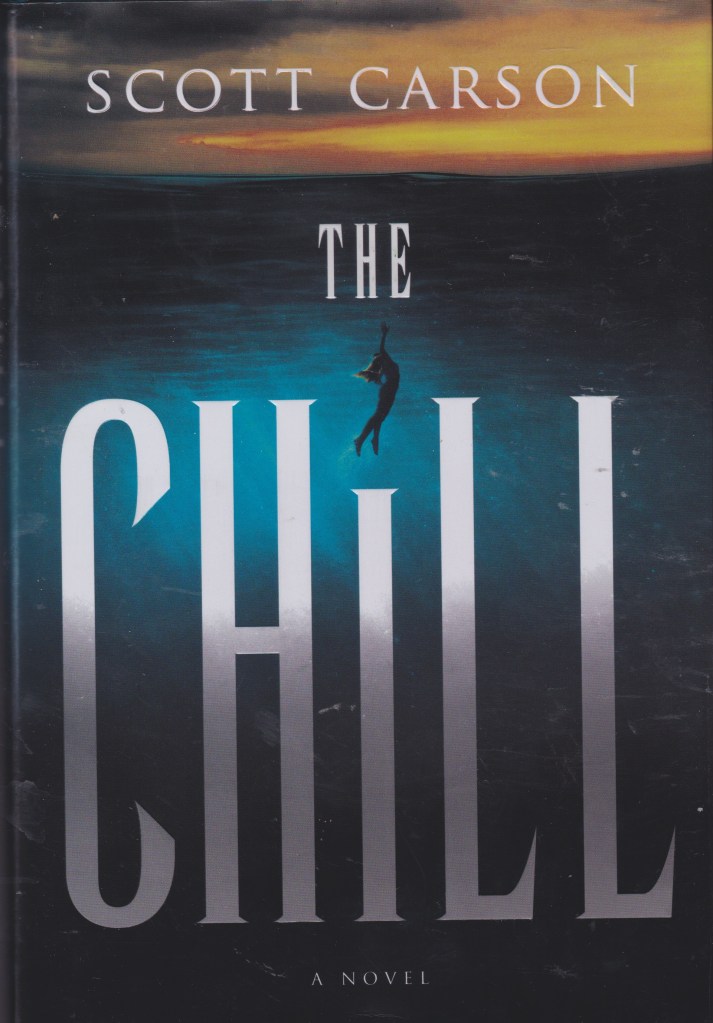
And I am really glad I took The Chill with me to read on the trip.

Molly packed a black silk bag that could be worn as a hood, because she did not want her eyes to open again until she was back in Galesburg.

The bag was soft and lovely but it was also thick and dark, a stronger shield than the burlap sack or simple white pillowcase that she’d considered. And a kinder shield than the black garbage bag.

She put the silk bag inside her purse beside the pools of heavy saltwater fishing line and the long stainless steel hooks. The iron chains and padlock were already hidden on the bluff above the lake.

I’ve always been fascinated by the concept of towns being flooded when dams are built to create reservoirs; Lake Lanier in Georgia is one of those places, and it seems like several times of year that lake claims victims, in vengeance for a black town that was destroyed because hey, who cares what Black people own when white people want the land, right? I’ve always had an amorphous idea about writing such a book, but was never really sure how to go about structuring such a novel. I digress.

Anyway, I was pretty excited when I realized that was what this book was about. I am big fan of his writing under both Carson and his actual name; I’ve loved everything he’s written that I’ve read and think he’s probably one of the greatest crime/horror writers that we have today. He is such a literate writer, and I love that he doesn’t mind writing about supernatural events in crime thrillers, really. God, he is so good.

Galesburg was such a town in upstate New York, flooded and abandoned when the Chilewaukee dam was built to create Lake Chilewaukee; known as The Chill to local residents. But the reservoir, intended to be part of the water system delivering water to new York City, was never connected to the rest of the system. The story was that the kind of rock in the mountain they’d have to tunnel through to make the connection wasn’t the right kind of rock for tunneling through and therefore that plan was abandoned (one of the things I really loved about this book was all the research Carson did on New York’s water system, and the engineering marvels created to do so).

The book centers on a few main characters; a reservoir police officer, the local sheriff, and the local sheriff’s ne’er-do-well son, whom he loves but is losing patience with. The book opens with him heading to the jail to bail out his son, arrested for his latest drug and alcohol binge. The son feels like a loser that his father doesn’t love or understand; he spent his entire life dreaming of being a Coast Guard rescue swimmer, but was dishonorably discharged and his been adrift ever since returning home. He doesn’t have a job, doesn’t cre about anyone or anything, and is on a downward spiral that easily could end with his own death–being older now, I can see the father’s side of it, even as a child who always felt he was never believed about anything and was always at fault; but I can also see that, as a man of his generation, he has no idea how to talk to his son and get him to open up about what young Aaron feels is the waste of his life; but worry and concern often interferes with getting your point across with love and compassion when you’re feeling frustrated.

The other two characters are a father and daughter; the daughter being the afore-mentioned reservoir cop. The father, Deshawn, actually works for the city of New York on digging a third water tunnel for New York, so that the others can be taken out of service and repaired for the first time in over a hundred years. His daughter, Gillian, was born out of a summer relationship he had up there in Torrance; he got spooked eventually, and while he supported her, he never visited or had her come visit. After her mother’s death, her grandmother raised her until she sacrifices herself in the opening chapter; why, we don’t know. Deshawn brought Gillian to New York and raised her; they love each other and are very close. Gillian took the job up there because of her own confusion about her past and this strange pull she has toward the lake that submerged Galesburg…which is where her mother’s family originally were from.

I also appreciated all the information about the water system and the engineering marvels that made it all possible; my dad was an engineer, and the work they do is amazing and often unsung; we take their achievements for granted and never think about them.

The book is also paced like a runaway train. I stayed up till two in the morning to finish it, and it was marvelous. Check it out; you won’t be sorry. And check out his other work as well.

Winds of Change

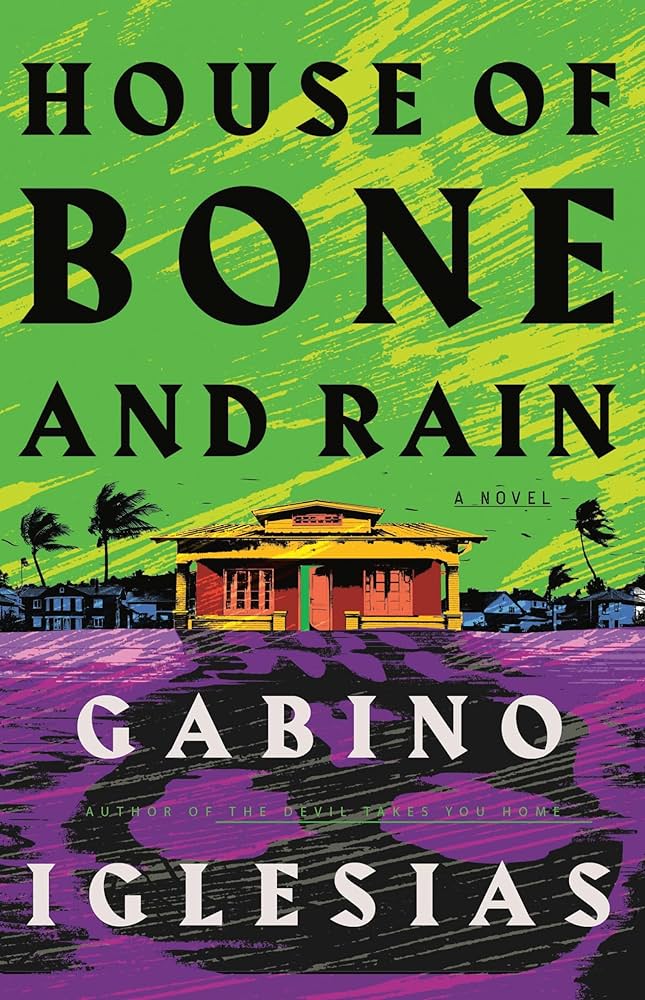
It was weird reading Gabino Iglesias’ latest, House of Bone and Rain, for any number of reasons that had nothing to do with the quality of the book. I was reading it when that “comedian” called Puerto Rico “a floating pile of garbage” (not that it mattered); while writing my own book, also set during a hurricane; and was thinking about writing another supernatural thriller about teenagers. This book is set in Puerto Rico before, during, and after a hurricane, and the main characters are teenagers. Serendipity? Synchronicity? An interesting series of events? I’m not sure if it’s anything other than a lovely coincidence, but there it is. I also really loved Gabino’s previous novel, the award-winning and critically acclaimed The Devil Takes You Home, which was exceptional, and had my appetite whetted for a follow up.

It says a lot about an author so good they make me overlook things I generally don’t like to read about–machismo, violence–because they are able to turn those things into art.

The last day of classes, our last day as high school students, marked a new era for us. We wanted it. we feared it. We had plans for it. Then Bimbo’s mom hit the sidewalk with two bullet holes in her face, and the blood drowned out all those plans.

Bimbo called to tell us the day after it happened. His real name was Andrés, but we mostly called him Bimbo because he was brown and chubby and looked like the mascot bear of a brand of cookies. It’s normal for people to report the death of a parent. Old age. Cancer. A heart attack. Whatever. Old people die and we expect it, accept it even. It’s normal. Murder is different. Murder is a monster that chews up whatever expectations you had regarding death and spits them in your face. Murder is an attack on someone’s life, yes, but also an attack on those left behind.

When Bimbo called to tell me about the death of his mother, María, I felt attacked. “They shot my mom, man.” Five words about the recent past that were heavy enough to crush out future.

It says a lot about an author so good they make me overlook things I generally don’t like to read about–machismo, violence–because they are able to turn those things into art. I generally don’t like to read about extreme violence, with bones crunching, blood spurting, and teeth flying. Because I do actually abhor the use of violence1, it’s very hard for me to relate to characters who turn to violence for whatever reason; it’s not easy to ever make me think yes, this is the right path. Violence and rage are very dark places to go, and while I completely understand embracing your rage, I will vent it a bit so it calms down before I go there. But Iglesias is the kind of writer who can pull a squeamish reader along the path of male rage and violence, which is emotion-driven rather than logical.

The book centers a group of five young friends who have just graduated from high school, and the brotherhood they develop by uniting as a group and fighting off everyone else; it’s very Three Musketeers-like; “anyone fucks with one of us, they fuck with all of us.” Iglesias also provides enough back story to make each character an individual–not easy to do with so many characters–as well as the group dynamic and why, despite any internal squabbling, they always try to present a united front on this dark odyssey of revenge and violence. Gabe, our narrator, is kind of at loose ends at the opening of the book and not knowing what he wants to do with his life. He has a girlfriend he genuinely cares about and wants to build a life with, who wants to move to the mainland and go to nursing school–and wants him to come with…but his own ties to Puerto Rico, including his mother, make it hard for him to make the choice. What if he does and it doesn’t work out? What will he do then? He is transitioning from callow youth into manhood at far too young an age, but…that’s what life is like for people living under colonization.2

Gabe is also the conscience of the story–if there can actually be one. He goes along with his brothers to get revenge for Bimbo’s mother’s murder, which puts them afoul of a drug cartel (seriously, who sets out to kill the head of a murderous criminal cartel?), but there’s also something else going on…there’s some supernatural elements involved with the cartel as well that either could just be gossipy stories to scare people into obedience, or might just be real.

The book barrels along at an excellent pace–the length of time it took for me to get through it had nothing to do with the quality; I was trying to savor it because I was enjoying the voice and the writing so much. It’s also very vivid and real; Iglesias writes in such a way that puts you right there in the room with the characters–and always, there’s this foreboding sense that time is running out for the boys, and not all of them may make it to the end.

An excellent mash-up of horror, crime, and noir stylings, I have to say this is terrific, so check it out.

  1. Ain’t going to lie, there’s a part of my brain that does think that those who commit violence should get it back, repeatedly and far worse, than they dealt. ↩︎
  2. After the Puerto Rico garbage insult, people thought Puerto Rico should become a state; which I found amusing. No, they should be granted their independence from their final colonizers and paid reparations. Who says statehood in a racist country is desirable for them? ↩︎

I’m Henry the Eighth, I Am

Yeah, I’ve been big on the Tudors for most of my life–first the Virgin Queen, and then her father, Henry VIII and his many wives1, and eventually the entire family (Henry VIII’s sister Margaret was a pistol–and it is her descendants who sit on the throne today, not Henry’s). As I got older, I became more interested in the century as a whole, and eventually I moved on from the Tudors to the Stuarts, who I find much more interesting. I still love the Tudors, and will watch documentaries and films, but won’t read any more books about them, especially because I’ve not really scratched more than the surface with the Stuarts, and I want to read more about the Tudors’ French contemporaries, the House of Valois. (Yes, I loved The Tudors, because it was more of a Renaissance version of Dynasty; I don’t watch historical films and expect accuracy2, and if you are, wake the fuck up. Book adaptations are never the same as the book, either. It’s entertainment, not a fucking documentary.)

Speaking of entertainment, I finally gave up on Jon Stewart with his defense of the indefensible. His joining in on the media’s decision to badger and hound Joe Biden–one of the most successful presidents of all fucking time–out of the race? None of that, not one bit of that, was actual concern; they all were giving (and continued, until recently) Shady Marmalade a pass on his obvious mental decline…and Jon’s decision to defend the indefensible “because comedian”? Fuck off and die, you arrogant rich white cisgender piece of shit. I’ll never watch him again, so congrats on that year contract extension, Comedy Central. You thought calling Puerto Rico a floating pile of garbage was funny? You thought comparing Travis Kelce to OJ, implying he’ll murder Taylor Swift, was funny? And on and on and on. Straight white male comedians will always circle the wagons for another comedian with a penis, but when a woman comedian (see: Kathy Griffin) is being attacked, not a fucking word? So he’s a misogynist, too. I’m not telling you what to do, Constant Reader, but Jon Stewart is dead to me, now and forever. And don’t even get me started on the 49ers and Nick the Traitor Bosa. Talk about pussy. Someone got slapped down by management when he hit the locker room and before he talked to the press, and like a good little beta soyboy, he caved and sulked like the pathetic emotionally-and-intellectually stunted bitch he is. He’s not being punished because when asked he shut his fucking mouth, which is the other primary difference between him and a true hero, Colin Kaepernick (besides the obvious “white man gets away with shit a Black man never could” racism).

And really, 49ers managers and coaching staff? Your team represents San Francisco, the most tolerant city in the country. Trade him to Dallas, where he belongs.

Thank God I am on anxiety medications. If not, I probably wouldn’t have slept at all since June. But the medications and my personal ban on legacy media companies who are garbage and untrustworthy has helped a lot with my election anxiety, and refusing to engage with the trash on-line (block, block, block) I’ve managed to take good care of my own mental health this time around. I refuse to worry about what will happen if he wins, or if he loses and they try another violent coup; I do, every once in a while, think you always wondered what it was like to be a Berliner in 1933…and I didn’t really need to get an answer to that question, you know?

I feel good this morning yet again; I’ve been sleeping well every night this week and it’s been really nice. I did my errands last night, got home and got started on the dishes and did some other clean-up around here. Paul didn’t get home until late, so I mostly went down Youtube idle curiosity research holes. I also managed to get the Scotty Bible’s first draft finished; it’s just raw information for now that I have to reorganize and pull together. I am also realizing, as I mentioned yesterday, that I should do a concordance of everything I’ve written by place; Kansas, California, New Orleans, Louisiana, Florida, and Alabama. That’s the problem of having characters cross over from stand-alones to the series and back again, you know? I was realizing that the lawyer the boys hire in Royal Street Reveillon doesn’t have as much information in the Scotty series about him as I would have thought…only to remember that Loren McKeithen has a much larger role in the Chanse series than the Scotty. Oops!

I also realized last night, as I watched news clips and documentaries about the Civil War, that with my anxiety gone I no longer feel the need to belittle and dismiss things I’ve accomplished in this wild and crazy career of mine. I’ve written a shit ton of books, short stories, and blog posts–and when I think about all the queer papers and magazines that I’ve written for over the years, yes, my output has been a bit prodigious. It wasn’t false humility (though I am often horrified at how easy it is to slip into egomania, and always over-correct once I catch myself); I honestly still thought I wasn’t very good at what I do. I always compare myself to other writers and come up wanting; but it’s really not a competition of any kind; I appreciate great writers who produce great work, and my work is different from theirs. I always strive to be better, to get better, and not stagnate–the problem that creates is it extrapolates to I could have done that better and dismissing it. Those are the kind of brain landmines I need to watch for, and avoid whenever possible. I’m proud of all my work, for the record. Sure, going through the old Scotty books was always difficult (I always edit it another time as I’m reading it) but doing it for the Bible, where I’m just looking for information, was different. Sure, there were some clunky things I could have said better, but overall, I was actually a little surprised to see how good–and clever–the books actually are. It also reminded me of how I used to write the first ones, what I have always tried to do in my work–whether anyone notices or not. (Someone once emailed me after reading one of my books and said, “Did you deliberately do this?” and delighted, I wrote back “Absolutely!” That was a big thrill for me.)

And I am proud of my work. I overcame so many obstacles to build this career, and I am pleased with myself, too. My books are pretty good–yes, there will always be a few where I think, God I wish I could give that one more pass, but even those are pretty good. There are some I am more pleased with than others; yes, I have favorite children. But that doesn’t mean that I am not pleased with all of them. How many people told me along the way that this would never happen for me, that I didn’t have what it takes, or that I have no ability at all? Maybe, maybe not–but if that’s what you think, how many books have you published? How many awards have you been nominated for, or won?

I really wish I’d known it was anxiety much sooner.

And on that note, I am heading into the spice mines. Have a lovely Wednesday, Constant Reader, and I will check in with you again, perhaps later!

  1. I love that historians count all of the women he married as his wives; although technically the first two were actually annulled, so the marriages were never, at least legally, valid. ↩︎
  2. I totally understand why films and television shows based on history have to make changes; the actual stories don’t play out perfectly for different media and thus must be adapted. I do ↩︎

I Know a Place

Saturday morning in the Lost Apartment and all is well. I slept incredibly last night. I woke up at seven and stayed in bed relaxing in a half-sleep for another hour or so, and finally got up when Sparky woke up and decided he was hungry. He was delayed this morning–and was very calm and cuddly and sleepy yesterday–because of the vaccines he got yesterday, as well as the shock to his system of leaving the apartment. He likes his carrier–he’ll go in there on his own, and Paul often tells him to go get in the crate when he’s having Big Kitten Energy, which he does–but he finally started meowing yesterday when we took him outside in the crate. He’s never meowed before, only chirped, which worried me a bit…but now he’s done it so I guess he only meows when he’s unhappy. His nails were trimmed (which he also didn’t like this time), but we brought him home to be a sleepy, cuddly sweet kitty for the rest of the night. We also went to Costco yesterday, which was nice and a little tiring. We watched Skate America last night (ladies and pairs short programs) and of course, today is a football all day kind of day. LSU plays at Arkansas tonight, and of course Alabama-Tennessee is this afternoon’s game. I am going to take books to the library sale this morning and go to the grocery store today before I come home to watch games for the rest of the day. There’s also some cleaning I can do around here this morning, too. Yippee!

I’m also going to read some more of Gabino’s book this morning; I read some while Sparky and Paul were with the vet yesterday and I just love the way he writes, in this interesting combination of Jim Thompson crossed with some John D. MacDonald but heavily flavored and filtered through his own remarkable talent in a unique voice that is entirely his own. It’s very rare to come across a writer with a voice and style so strikingly original, and the pacing is ethereal but also fast at the same time. I loved his last book, and I am absolutely loving this own. Next weekend I’ll be heading up to Kentucky to see Dad for about a week, so I can listen to another horror novel in the car (maybe Shadowland by Peter Straub, which I’ve not read before. I can take the paperback with me if the audio book is too long for a twelve hour drive; I actually just went to Audible and got Nick Cutter’s The Troop, and saw that I had a Riley Sager already downloaded, so that’s the trip up and back sorted. I also got the Straub), and I can take some horror with me to read. I’ll make shrimp tempura for dinner tonight, and am kind of torn about making chili or not tomorrow, but will probably go ahead and do so; I may even make it over night so tomorrow morning I can just get up and put it in the refrigerator. That’ll sort my lunches for the week, methinks.

I also managed to get the majority of the dishes done yesterday, no small feat I might add. That’ll teach me to be lazy when I get home from work every day, won’t it? It seemed endless, and I was also doing the bed linens at the same time as well as unpacking Costco and putting everything away; the living room is, even now, filled with empty boxes that need to go out this morning. I need to revise that short story and start working on another one for the Bouchercon anthology open call; I picked out the story just have to finish it now, which is also no easy chore. But today is an official day off from everything other than relaxation, reading and some cleaning around the house. I’ll try to reread the story I’ve selected; I just need to remember to channel my rage at developments in the neighborhood and on my street–this is one of the reasons I love being a writer, petty revenge on people who’ll never even know they inspired me to kill them in fiction–and retrieve that voice from deep inside my head. I think one of the problems I’ve had with some of the stories I’ve been writing lately is I’ve been too lazy to write about people the way they really are, instead of an idealized character who is logical and rational and then simply snaps. It’s that breakdown of going from law-abiding to murderous that I live to explore–it worked really well in “Neighborhood Alert”–but in some of the noirish stories I’ve been trying to write and sell since the pandemic they come across as too cheerful; bitterness and rage is what drives my stories, and the tone and voice need to reflect that.

Tone and voice are key to whether your story works or not.

And on that note, I am heading into the spice mines. Have a lovely day, Constant Reader, and I’ll check in with you again later. GEAUX TIGERS!

Screenshot

Game of Love

Thursday morning and I forgot to set my alarm last night; oh my! Bad Gregalicious; bad Gregalicious! I did run my errands last night after I got off work, but by the time I got home I was more tired than I expected. I intended to do the dishes at the very least, if nothing else, and sure enough, I sat down in my chair to catch up on the news and let Sparky treat me like prey (my entire body is covered in scabs), but relaxed so deeply that when Paul came downstairs–he was home and I didn’t know it–to watch some television, I was all fuck it and blew everything off. We watched this week’s English Teacher, which isn’t as funny as it initially was? Paul agreed with me, so it’s not just me being hypercritical of a show with a gay male lead–which is always my fear. The representation is great, but I am not sure if I’m missing something, or if it is the show itself. Something for me to think about, I guess, in greater length once the season is over and we can reflect on it as a whole, rather than just as individual episodes. It’s a very fine line–you don’t want to idealize a marginalized character, but at the same time the series lead has to be likable and relatable; which is a problem because you run the risk of castrating him–and this character has a MUCH healthier sex-life than Will Truman ever had in all those many seasons of Will and Grace. we also watched an episode of American Horror Stories, which was creepy and disturbing, but at least it was interesting. The show reminds me of the great old anthology shows, like Tales from the Crypt and Night Gallery1, and yes, some episodes are better than others.

So tonight, obviously, I need to write some and clean up the house before my work-at-home day tomorrow. I know we’re planning on a Costco run, so I am going to need to do some serious work on the apartment to get ready for that. I also need to finish the desk chair, which is sitting, unassembled, in front of the fireplace–and there are any number of things in the living room that need to be gotten rid of. I have to take the boxes of books to the library sale Saturday; and I also need to start boxing up the books in the kitchen cupboards and moving them up to the attic, which also needs to be cleaned out. I need to work on the book this weekend, and maybe do some serious decision-making; I also need to work on polishing that short story and revising/finishing another by the end of the month. I feel a bit out of it this morning–the oversleeping didn’t help matters much by throwing off my daily rhythm, but I was wide awake when I got up finally, and I managed to not forget anything on my way out of the house. This should be a relatively easy and uneventful day at the office, and my supervisor will be back on Monday, thank you Jesus and pass the ammunition.

Wish me luck on all of that, please. I also need to make a to-do list for this weekend. There are some great football games on Saturday; LSU at Arkansas, Alabama at Tennessee, for starters. I’ll definitely need to run my Saturday morning errands early! I also need to read Gabino’s book; I hope I’m not giving the wrong impression–it’s nothing to do with the book, but more along the lines of being too tired to focus to read once I’ve done everything I’ve needed to get done every day. I am feeling better, getting more restful sleep, and I think I’ve adjusted to getting up early, little as I like to do so, but I always have that little rundown in the afternoon when I get overwhelmed with being tired…but it’s usually low blood sugar or something, because a snack will rev me back up again.

And on that note, I am heading into the spice mines. Have a great Thursday, Constant Reader, and I may be back later. It’ll be a surprise!

  1. I remember watching Night Gallery as a child and loving it; I wasn’t able to catch reruns of The Twilight Zone until many years later; so to me, I always think Night Gallery when I think about Rod Serling, whose daughter I met and she was absolutely charming. ↩︎

zombie

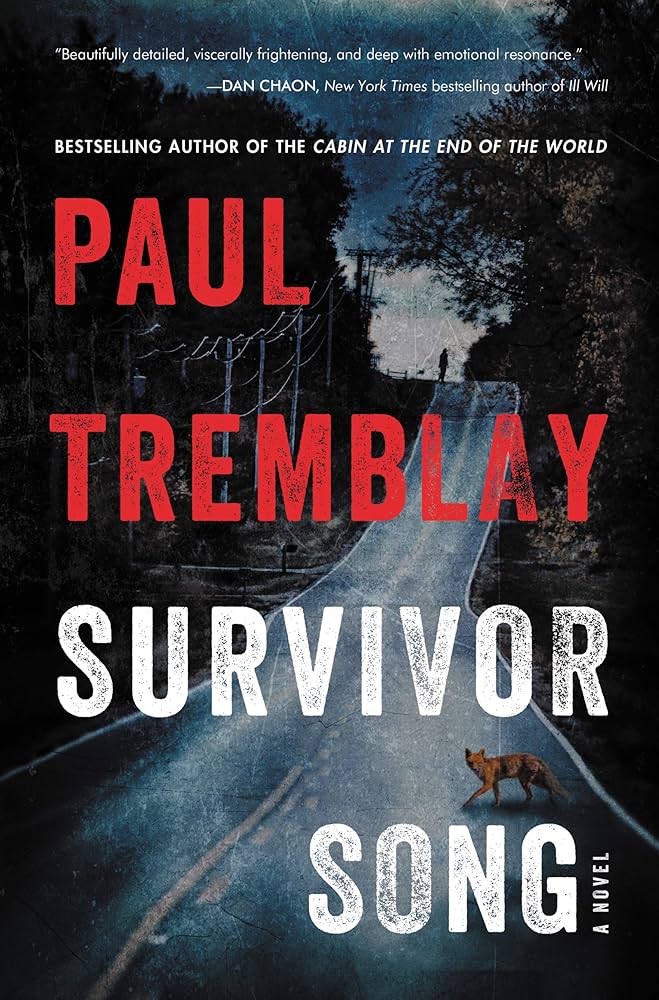
Paul Tremblay has managed to turn himself into one of my favorite authors currently writing horror; I can’t think of a single novel of his that hasn’t been utterly fantastic, or that I haven’t enjoyed. He manages to make his characters absolutely real–with flaws and hang-ups; so much that sometimes you want to shake some sense into them–and the situations they find themselves in, while certainly horrific, are realistic. That, of course, is what makes the so horrible and terrifying; it’s easy to see yourself in his characters and stories. I also love his writing style; there’s something lyrical and poetic about his sentence construction and word choices, creating rhythms that make the words kind of sing in your head.

I wasn’t sure if I should, in that case, listen to one of his novels as an audiobook–would that musical sense of language carry over?

I needn’t have worried.

This is not a fairy tale. Certainly it is not one that has been sanitized, homogenized, or Disneyfied. bloodless in every possible sense of the word, beasts and human monsters defanged and claws clipped, the children safe and the children saved, the hard truths harvested from hard lives if not lost than obscured, and purposefully so.

Last night there was confusion as to whether turning off the lights was a recommendation or if it was a requirement in accordance with the government mandated curfew. After her husband, Paul, was asleep, Natalie relied on her cell phone’s flashlight in the bathroom as a guide instead of lighting a candle. She has been getting clumsier by the day and didn’t trust herself to casually carry fir through the house.

It’s quarter past 11 a.m. and yes, she is in the bathroom again. Before Paul left three hours ago, she joked she should set up a cot and an office in here. It’s first-floor window overlooks the semi-private backyard and the sun-bleached, needs-a-cost-of-stain picket fence. The grass is dead, having months prior surrendered to the withering heat of yet another record-breaking summer.

The heat will be blamed for the outbreak. There will be scores of other villains, some heroes too. It will be years before the virus’ full phylogenetic tree is mapped, and even then, there will continue to be doubters, naysayers, and the most cynical political opportunists. The truth will go unheeded by some, as it invariably does.

To wit, Natalie can’t stop reading the fourteen-day-old Facebook post on her town’s “Stoughton Enthusiasts” page. There are currently 2,312 comments. Natalie has read them all.

This was a book I didn’t want to read at the time of its release; and I am kind of glad I waited to get into it for a few years; while I was certainly reading a lot of plague fiction in the summer of 2020, when this book was released, the thought of reading something new about a plague whilst in the midst of one seemed–I don’t know, too real for me? The older stuff I revisited, both fiction and non, were things I had already read at some point in my life and therefore couldn’t be applied to the quarantine situation we were experiencing at that time. Of course, four years later, my own time-line is kind of fuzzy and off; it was a disorienting time, and it clearly broke the brains of a lot of people. Reading (listening) to the book four years later–without access of any kind to the pub date of the book, which I couldn’t remember in the car–I thought, wow, he really captured the insanity of the quarantine AND how people would react to it, so you can imagine my surprise to see it actually was written and already moving through the publishing pipeline for release before the pandemic began, which is frightening how eerily prescient Tremblay’s book actually is/was. (Although, imagining the right launching into conspiracy theories and blowing off quarantines and safety precautions and arming themselves–is it that prescient?)

The pandemic/plague in Tremblay’s book is a highly infectious, rapid onset variant of the rabies virus–so animals get it and become dangerous, and the infections can spread to humans. Once bitten or exposed, the human doesn’t have long before the virus takes over and leads, after a mad frenzy of attacking anyone or anything, to a painful death. Natalie and her husband Paul are coping with the quarantines, the breakdown in supply chains, the shortage of necessary supplies; a trip to the grocery store, never more than an hour to and from, including the shopping, can now take up to or more than four hours, as she is finding out that morning as she waits for him to come home. She’s in her ninth month of pregnancy, and that’s what she primarily focuses on, like most normal people do. Unfortunately shortly after Paul comes home, an infected man breaks into their house, kills Paul, and manages to bite her in the arm before she can finally kill him and escape. Natalie calls her best friend and college roommate–a doctor named Ramola–for help.

Ramola comes to pick up her friend, and the rest of the novel is the two women desperately trying to get to a hospital to try to get her treatment as well as a c-section to deliver the baby in case the treatments don’t work. It’s a race against time, and the suspense ratchets up to a unbearable level, as the two women–and everyone they encounter–encounter difficulties and roadblocks, not sure who they can trust and who they can’t, as they try to save both mother and child. Tremblay also takes the opportunity, whenever it arises, to chastise the anti-science movement in this country (which was saw in force that summer of 2020) for it’s radical views and beliefs that endanger everyone because of their own selfishness; again, was that prescience or simply the obvious conclusion to make? Even Ramola and Natalie, in their desperation, sometimes act in an incredibly selfish manner to achieve their own ends that makes me want to shake them both–which is another terrific insight on human behavior; we will always put our own individual needs ahead of the abstract “group” needs.1

It’s a very good book, and like the best fiction, it make me think. A lot, not just about American privilege and selfishness, but about dystopian fiction and disaster-type novels like this–which will inevitably become a Substack essay at some point.

Definitely recommended.

  1. This is something that often irritates me in these types of novels; leaders in these books will inevitably always put their own selfish needs ahead of those of the group (looking at you, Cell). ↩︎

Somebody’s Watching Me

A month or so ago, Ira Levin’s A Kiss Before Dying was one of those “special deals for ebooks,” and I can never pass up a classic for a mere $1.99 (I generally replace my hard copy books with ebooks when they are on sale, so I can donate the real book; but Ira Levin novels will never be donated), which put me in mind of him again (the book is a crime fiction classic), and I started thinking about what is the best part of two of my favorites by him, Rosemary’s Baby and The Stepford Wives, which is the slow build of paranoia until the heroines are completely convinced that everyone is in on it and there’s no one she can trust. This is what I consider “women’s noir,” which is books that depict and explore women’s fears (which is why Gothics were so popular, I think; the wife can never trust the husband and always thinks he is trying to kill her–before the real culprit is exposed and they have their happily ever after. This, to me, mimics what it’s like for a woman when she gets married in real life; she wants to believe in her marriage and love, but how many times has that turned to ashes and dust in reality? Husbands kill wives or cheat on them or leave them; all these marriage fears were tentpoles of Gothics). I was going to revisit both novels–I had some other things I wanted to talk about with The Stepford Wives, and its similarities to Rosemary’s Baby, but I couldn’t find my copy of the latter so went with the former.

Since 2015, the term “gaslighting” has come back into vogue, with small wonder. Gaslighting can make you question your own judgment and your grasp on reality1; something many of us have experienced over the past nearly ten years and it isn’t an enjoyable experience.

Paranoia, combined with not being believed, makes for a fantastic novel that is very difficult to pull off; I can think of any number of films and books that use paranoia as a driving theme for their plots, and I always enjoy them. There really is nothing more frustrating than being being not believed about something that’s happened–or is happening–to you. It can make you crazy, make you question yourself and your own grasp of reality. It’s horrible and cruel in reality, and it’s something everyone can relate to because we have all not been believed at some point in our lives. It’s happened to me enough times (including losing jobs) that it certainly resonates with me. (I have an idea for a gaslighting/paranoia short story that I’ve been wanting to write for some time now.)

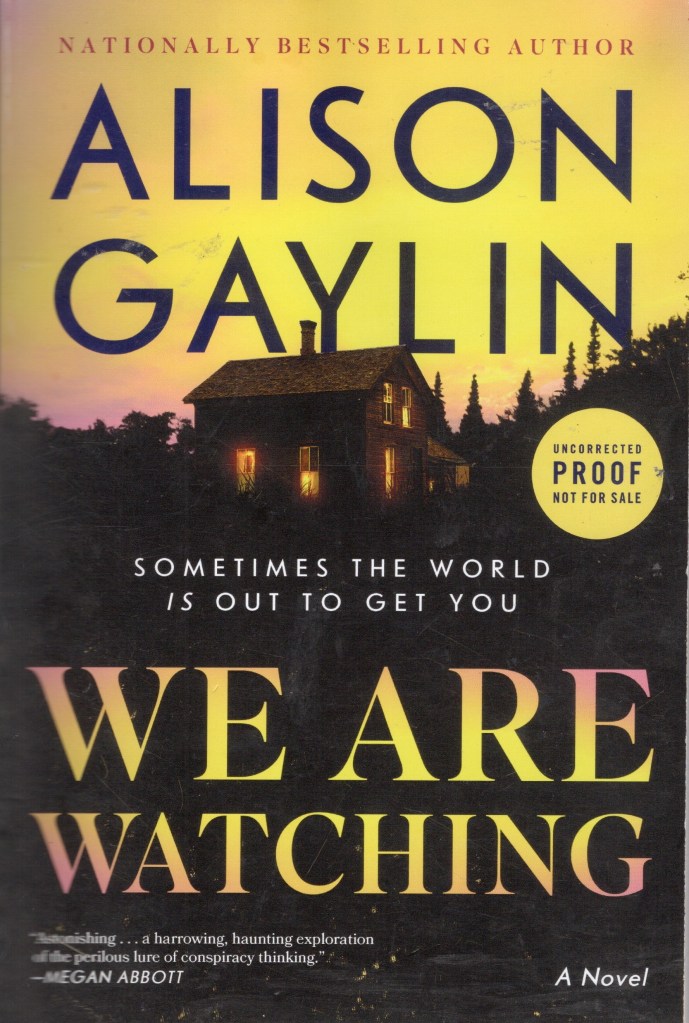
So, needless to say, I greatly enjoyed reading my advance copy of Alison Gaylin’s upcoming January release, We Are Watching.

It’s been the longest day of Meg Russo’s life, and it isn’t even half over. Her stomach gnaws at her, her hands heavy on the steering wheel. But when she glances at the clock on the dashboard, she sees that it’s a little shy of 11:30 a.m., which means that Meg, her husband, Justin, and their daugheter, Lily, have only been on the road for an hour. They’ve got at least three more hours on the thruway, and then they’ll have to contend with the series of veinlike country roads Meg and Justin haven’t traversed since their own college days. If they don’t hit too much traffic, they should be in Ithaca by five, which now feels like some point in a future so distant, Meg is incapable of envisioning it.

Time is strange that, the past eighteen years zooming by in an instant, all of it leading up to a single day that’s already lasted eons. Meg blames the stress of last night, wanting everything to be perfect for their daughter’s send-off, which led to thoughts of Lily’s first visit home for Thanksgiving break, which in turn made Meg think for the millionth time about how cold their house gets in the fall, and how Lily always complains about it. New windows, Meg had thought, lying in bed with her eyes open, envisioning insulated windows to replace those paper-thin sheets of glass, the same windows that were here when she and Justin bought the place twenty years ago–and it was a fixer-upper then. What if Lily came home to new windows? Meg mused, still awake in the wee hours of the morning. Will she have changed by then? Will she have grown too sophisticated to get excited over a warmer house? And so on, until the sky was pink and it was time to wake up and Meg had barely slept at all.

I’ve enjoyed Alison Gaylin’s work since I first read And She Was back in 2012, and have been a fan ever since, gobbling up each new book as she releases them. She has always been a terrific novelist, but what has been amazing to watch is how she pushes herself to do better with each book, tackling bigger themes and creating believable, relatable characters you can’t help but want to root for. We Are Watching may be her best yet, starting as a slow burn but building into an adrenaline boosting rollercoaster of a thriller.

The book opens with Meg and Justin taking their daughter Lily off to college, with all the emotions and fears and sense of loss that comes with a child leaving home and starting to move into their adulthood. Meg is likable, and so is her family. But as they drive a carload of skinheads pulls up alongside of them and start taking pictures. Meg reacts very strongly–so strongly that even I was like take a chill pill, girl!–which eventually leads to a crash that kills Justin, leaving the two women shattered shells of their previous selves. Lily decides to take time off from college and even Meg becomes housebound, despite needing to run her book store in the small Hudson Valley town they live in.

But things slowly begin closing in on both Meg and Lily; who were those skinheads in the other car? Why are truly strange, cult-like people showing up in the store or in town, chanting weird things at them? As Meg’s paranoia and fear grows, it soon becomes apparent that a religious cult is targeting her and her family, but why? But to find the truth, Meg has to not only survive the cult, which seems determined to kill her and her child, but when she has the time, to dig back into her own past to discover the truth–because the truth is the only thing that can set them free.

This book is fantastic, and I couldn’t put it down. It has all the hallmarks of a great Gaylin novel–a compelling and relatable main character doing the best she can in a terrible situation; a twisty plot full of surprises; and the kind of strong writing that makes her sentences and paragraphs sing.

Preorder it now and thank me in January when you finish reading it.

  1. The film this term comes from, Gaslight, is a great movie and Ingrid Bergman is terrific as the wife who isn’t sure if she is losing her mind; she deserved her Oscar and the film still holds up–and a very young Angela Lansbury makes her screen debut in it. ↩︎

She Called Me Baby

Saturday morning in the Lost Apartment, with a trip to Metairie looming for an eye appointment. Yesterday was a bit more hectic than I would have liked, beginning with having to go in to the office on what is usually my remote day (meetings, mostly, and some catch up on work I didn’t get to on Thursday), and then I had errands to run all afternoon. It was a gloomy, off and on raining kind of day, so when I got home I was very happy to be safely back into the Lost Apartment so I could do my chores and do some work. I was very tired last night when I was finished with everything, so just kind of zonked out in my chair. We spent the last few nights getting caught up on our shows (we’re now watching Agatha All Along, Bad Monkey, Only Murders in the Building, Grotesquerie, English Teacher, and American Sports Story), and I am hoping to get to watch the new ‘salem’s Lot movie aat some point this weekend, and I’d like to watch Fall Guy, too.

And I need to write this weekend, big time.

Thursday night, when I was working on the Scotty Bible and was marking pages in Mississippi River Mischief, I realized the murder victim in the book was a corrupt politician who goes by JD; prescience, perhaps? It also reminded me of something from a book I had read a very long time ago–Sarah Schulman’s Stagestruck. The thesis of the book was about the similarities between a very popular Broadway musical (Rent) and her nove, People in Trouble. Sarah had actually attended and reviewed Rent, and while it seemed familiar to her, she just dismissed it as being inspired by the struggling artist scene in lower Manhattan in the 1980s and thought it played very false, given her own experience; it wasn’t until later when a friend told her you must be so mad about Rent”–and she went back and reread her book. (In all honesty, I went on to read People in Trouble and also watched the film of Rent and I also saw the similarities; she wasn’t inventing anything.) But the point of this particular story is that at the time, as an unpublished aspiring novelist, I found it a bit of a reach that she didn’t remember her own book…but doing the Scotty Bible–and talking with other authors–I realized that not remembering your own book isn’t that much of a stretch, and it does get harder the more book you have; the exponential possibility that you won’t remember your own books grows with each new book you write. that the piece of art basically ripped off her piece of art–and she couldn’t remember much I have been routinely shocked about how much of the Scotty series had slipped from my memory banks as I enter the information from each book into the master document; the huge plot points that are the most memorable things about them…but gone completely. I’d forgotten my villainous politician JD, and I only wrote that book last year. I’d forgotten a lot of the stuff in most of the books. I thought the one I’d really be able to temember was Bourbon Street Blues, and nope. I’d forgotten about the entire sequence in the swamp, the fire, and who the first victim was…and I also was able to remember, while going through it, what I was trying to do with him as a character as more time passed and he gained more experience with criminality and human behavior.

And given all those experiences, it was very important to me to ensure he remained a positive person who prefers to expect the best of people, not the worst, and never become cynical. Cynicism was one of the most powerful traits I wrote into Chanse, and I didn’t want to do that over again.

It was also rainy and dreary all day yesterday, and much as I love rain, it can damper your spirits a little especially when you’re already a bit fatigued. But I am feeling good today (I slept really late this morning) and like I can get a lot accomplished. I am going to make groceries on the way home from my eye appointment. I am going to run an errand in my neighborhood on foot when I get back from that, and I am going to try to get the house cleaned up and do some writing this afternoon while football games play in the living room. I also want to read some more of Gabino’s book and get more into it. Tomorrow morning I will run another errand that I don’t want to do much today–Fresh Market is close so it’s an easy thing to do…maybe I can run it later today and get it over with, but I suspect after getting home from the errands today I won’t want to leave the house so much.

And on that note, I am going to get cleaned up so I can get moving on the errands and the other things to get done around the house. Have a lovely Saturday, best of luck to your favorite team, and I am heading into the spice mines. I might be back later; I am itching to finish my review of Monsters, and the Menendez Brothers in general.

Hell is for Children

Hollywood has always been interesting to me, ever since I was a kid. I am not as obsessed with Hollywood and celebrity culture as I used to be; I used to love awards shows but now find them kind of tedious and a lot of to-do about nothing very much. Paul and I used to watch any and every awards show, regardless of what they were for; now it’s just easier to follow live updates and skip the forced, awkward scripted banter and speeches where winners attempt to thank everyone they know before the band starts playing them off.1 That’s always cringey to me–not for the person the band is playing for, but for the event itself. I get that they want it to end on time, but at the same time it seems bad form to celebrate someone and then cut them off as they do celebrate? Your mileage, as they say, may vary.

One thing I did notice when my Hollywood fascination was at its peak was how cleaned up and sanitized Hollywood bios were, as opposed to the fiction written about Hollywood. You’d never know, for example, from reading a biography of Spencer Tracy that he wasn’t just “good friends” with Katharine Hepburn, or that Roddy McDowell never married for a reason, or that some stars may have been forced to have sex with casting directors, agents, and producers to get started. But those marvelous Hollywood novels (dismissed and disdained by critics as trash) were so much fun to read, and they always ended in tragedy. I also always wondered–affairs and divorces were also fairly common amongst Hollywood celebrities–how much truth there was in those stories; often I could identify characters as real people (for some books–cough Valley of the Dolls cough–trying to figure out who the characters were based on was part of the fun of reading them). And of course, the existence of “studio fixers”–yeah, there’s still a bunch of stories from Hollywood’s past we may never know the real story behind, let alone the stuff they buried so completely it’ll never be known–definitely speaks to the need for them, so yeah, Hollywood had a lot of secrets.

And now, knowing what I know about powerful Hollywood figures and how they behave? I’d be more surprised if they didn’t see the contract players as a harem of men and women for them to play games with.

I also have a tendency to avoid highly praised writers and books (and other forms of entertainment, of course), because I always end up disappointed, which is fault of neither author nor their work. Jordan Harper has been praised a lot, so I was hesitant to read him…but having now read Everybody Knows, I don’t regret waiting to read it because I saved a real treat for myself.

For want of a better word, wow.

Los Angeles burns.

Some sicko is torching homeless camps. Tonight they hit a tent city in Los Feliz near the 5. The fire spread to Griffin Park. The smoke makes the sunset unbelievable. The particles in the air slash the light, shift it red. They make the sky a neon wound.

Mae waits outside the secret entrance to the Chateau Marmont. She watches Saturday-night tourists wander Sunset Boulevard, their eyes bloodshot from the smoke. They cough and trade looks. They never thought the Sunset Strip would smell like a campfire.

Mae moves around the sidewalk like a boxer before the fight. Her face is sharp and bookish, framed in a Lulu bob. She wears a vintage floral jumpsuit. She’s got eyes like a wolf on the hunt–she hides them behind chunky oversized glasses. Nobody ever sees her coming.

Jordan Harper is an amazing writer. That’s where we need to start with this book. Yes, the story is compelling and fascinating and dirty and sleazy and makes you kind of want to take a Silkwood shower. The characters–all of them, from the two leads on–are defined and fully dimensional, with interior lives and motivations. Our two main characters, Mae and Chris, are modern-day fixers…but in modern times they’re called “flacks” and work for “p.r. firms”, even if their job is the same as the tough guys who worked for MGM and Warners and Fox back in the day. But the writing is what sold me on book and writer; those opening paragraphs are as fine a series of opening paragraphs I’ve ever read. The dialogue is real, the characters are awful but you understand why they are awful–and both Mae and Chris have seen their fair share of horrific cover-ups and helping their clients get off scot-free every time they get in over their heads. In the very first chapter, Mae is on the job helping a young former child actress transitioning into adult roles out of drug overdose situation in her rooms at the Marmont, and her quick thinking and moving gets the young woman out of there without being seen or caught.

Mae is very good at her job.

Her boss sets up a meeting with her–off the books, away from the office–but on his way to meet her, he is murdered. It’s supposedly a car-jacking go wrong, but Mae has to wonder, is it? He’d seemed like he was about to hit a financial bonanza, but needed her help. Mae decides to look into his murder–which Chris winds up working as well from another direction. Mae and Chris didn’t work out the first time–but they’ve never forgotten each other, and soon join forces. Both were coming to the conclusion that their jobs were sleazy and they were helping bad people get away with doing bad things, and when they realize what is at the root of all the trouble, they see it as an opportunity to make some cash and perhaps do a little good on their way out to retirement.

And what’s going on in Hollywood is something horrible, indeed.

I loved this book, and deeply resented not having the time to read it all the way through in one sitting, so am really glad I made the time to sit down and finish it–in one sitting. I was about forty or fifty pages in, and sat down and didn’t budge till it was done. That authorial voice! The influence of the hardboiled masters is clearly there, but Harper has his own distinctive style and authorial voice that makes him unique in the business–and that’s not an easy thing to do.

I can’t wait to read more of his work.

  1. I do think this aversion, or lack of interest, in awards shows has come from attending so many writing awards banquets, and yes, it’s a lovely problem to have. At some point I will go talk about my antipathy to awards…but must and always will confess to loving being nominated for things. My jones for that itch to be scratched has happened more than I could have ever dreamed. ↩︎