The Itchy Glowbo Blow

Wednesday and we’ve made it halfway through the week, Constant Reader. Didn’t think it was quite possible, did you, when Monday dawned so early and ugly? We expecting thunderstorms today in New Orleans–it feels cooler and damp this morning, but I don’t know when we are supposed to have said storms; probably this afternoon. I slept really well again last night–it’s been lovely getting good sleep lately. I felt a bit tired yesterday when I got home from work, and so took it a little easier on myself when I got home. I managed to get caught up on my emails (such a weird feeling) and did some writing last night. I think I’m still a bit in the post-book malaise phase of things, so writing anything isn’t easy (not that it ever is) but Paul got home late so was left to my own devices once I finished writing for the evening. I did watch some documentaries on Youtube about the Hapsburgs last night (I also discovered an English-language biography about her–Margaret of Austria–which I added to the my list of books to buy…which is almost as out of control as my TBR stack, which is now essentially the entire living room), and I read a short story in Hitchcock’s My Favorites in Suspense anthology; a dark little Charlotte Armstrong story called “The Enemy.” Armstrong was a writer I discovered as a tween, when Mom let me join the Mystery Guild Book Club; I got an omnibus by her (The Witch’s House, Mischief, The Dream Walker) which I greatly enjoyed. I rediscovered Armstrong thanks to the work of both Sarah Weinman and Jeffrey Marks, which enabled me to continue reading in her canon.

Armstrong won an Edgar for Best Novel for A Dram of Poison, a charming if dark little story of suspense; maybe the rare Edgar winner where there’s no dead body but the plot has to do with preventing an accidental death? It’s very clever, and incredibly charming, but beneath that clever charming surface it says something dark and awful about human nature and character–people who are unhappy spreading their misery to others. Armstrong was also made a Grand Master by Mystery Writers of America. Her work may seem a bit dated in the modern day–technology and society have moved on from the times she lived and wrote in–but I think it’s well worth the read. “The Enemy” is that same style of writing as Dram, a serious subject presented charmingly, and the death of a child’s dog the catalyst for an exposé of something darker and nastier…and yes, the plot also hinges on the darkness a human being is capable of creating. It’s a really clever, if slightly dated, story–and you can’t help but smile or laugh at the last line of the story. I am really enjoying these time capsules into the past, to tell you the truth. I bought a few more of these anthologies on eBay yesterday, too. It’s nice to have short story collections around for those times when my brain can’t really focus on reading an entire novel.

I have been listening to Carol Goodman’s The Drowning Tree on Audible, but I may have to break down and finish actually reading a physical copy because I can’t keep listening every day and with my memory a literal thing of the past these days, I’m not sure I remember enough of the story to pick it up again this weekend. I also picked up copies of her new novel, The Bones of the Story, along with Paul Tremblay’s new short story collection, The Beast You Are. I do like Tremblay’s writing–A Head Full of Ghosts was one of the best horror novels of the last decade, and I’ve liked everything else of his that I’ve read–and I think this may even be his second collection. I am also hoping to pull together another collection myself this year–This Town and Other Macabre Stories–but I am not sure if I will have the time. I also got the copy edits for a short story I contributed to an anthology in my inbox last night, so that has to go onto the to-do list, and I still have page proofs to get through. But for the most part, it seems as though I have a guilt-free free weekend, which one can never truly go wrong with, either. I’ll have some errands to run, of course–I always have errands to run–but there’s no stress or pressure on me either, which is kind of nice. I think maybe that’s the reason I’ve been sleeping so well this week? No pressure and my schedule has kind of normalized, gotten back to normal, settled back into the routine my body is used to, perhaps?

Yes, that makes total sense to me.

I also have ideas and thoughts pinging around in my head. I’m itching to get back to the works I have in progress; I want to get a strong first draft of two different novels finished before I leave for Bouchercon next (!!!) month. I actually, finally, made a to-do list yesterday; I am hoping that I can get my life back on track the way it was before the pandemic and the madness of the last few years. That doesn’t mean that my blood pressure won’t continue to go up predicated on the constant assaults on everyone who’s not a cisgender straight man from the demons on the right–which is part of the reason my interest in the Civil War and the 1850’s, that terrible lead-up to the split, has been heightened these last few months. I do see a lot of similarities in the split between conservative v. progressive today, which was predicated along the lines of abolitionist/pro-human trafficking back then. One of the books my father gave me to read was called Southerners in Blue, which was a novelization of the true story (albeit poorly written) of a Union sympathizer and others like him in Winston County, Alabama. (If you’re not familiar with Winston County, the easiest way to explain it is this county did not vote for secession and essentially stated that if Alabama had the right to secede from the Union, the county had the right to secede from Alabama. They did not secede from Alabama, just said they had the right to predicated on the secession arguments being presented, but have gone down in Alabama history and lore as having actually seceded even though they most certainly did not) Basically, in some of the northern counties of Alabama there was basically a second civil war, between the “secesh” and the “Unionist” supporters, and the mountains of north Alabama were filled with deserters from the Confederate Army, This was also novelized into a book called Tories of the Hills by Wesley Sylvester Thompson, which is incredibly rare (my uncle has a copy, which my aunt won’t let be removed from her house–wise, as I would totally steal it). I had read another book also while I was up there, about the Kansas-Missouri border war–which had a decided “secesh” slant to it, of course, while complaining that all previous histories were “unsympathetic to the Missouri slave-owner point of view”. I’m sure he had a point, but simply because there are two sides to every story doesn’t mean each side deserves to be heard, or that each side’s opinion has equal weight. It did spark my interest, though, and I really think there’s a book in this little-known history of north Alabama. Again, it would be difficult to write–lots of potential landmines there–but it’s also, as I said, not very well known and with today’s tribalism mentality–not to mention how loud the Lost Cause fanatics are–it’s hard to wrap one’s mind around the notion that the South wasn’t monolithic in its thinking.

Because no group of people are, really, which is why I don’t like being asked for a gay perspective on anything; I can only speak for myself.

But while I continue to research this aspect of history and try to figure out a way to get a novel out of it, I am going to map out two others. One is already in progress, and the other is a New Orleans ghost story I’ve been wanting to write for quite some time now. The trick is to make it different from every other ghost story I’ve already written. Good luck with that, Mr. Repetitive!

Heavy heaving sigh.

And on that note, I am heading into the spice mines. Have a great Wednesday, Constant Reader, and I will check in with you again later.

You Must Love Me

Many years ago, at a Bouchercon in the far distant past, I was lucky enough to be assigned to a panel with several strangers. It was Raleigh, and I don’t remember what the panel was about–other than none of us on the panel actually wrote what the topic was about–but it ably helmed by Katrina Niidas Holm. That was the weekend where I was lucky enough to meet both her and her husband, Chris. Also on the panel were Liz Milliron, Lou Berney, and Lori Roy. I always intend to read my co-panelist’s work before panels, so I can talk to them intelligently about their books–but it’s not near as pressing as it is when I moderate, and this was one of those years where I was busy and simply didn’t have the time. The panel was marvelous. I had the best time, and I loved everyone on the panel. I have since gone on to read their work and have become a besotted fan of all three of them, really.

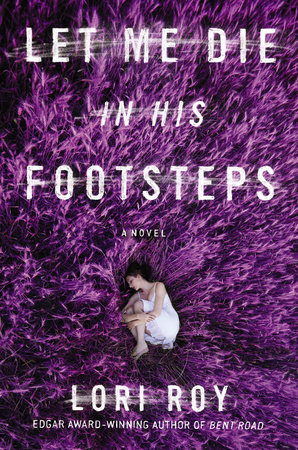
My first Lori Roy novel was Bent Road, which won her (deservedly) the Edgar for Best First Novel. I absolutely loved it, and made sure I got the next two as well. (At the Edgars following the Raleigh Bouchercon, both Lou and Lori won Edgars; her second, also making her one of the few authors to win Edgars for Best First and Best Novel.) I’ve read everything she’s published since then, but have never gotten to the second novel (an Edgar Best Novel finalist) or Let Me Die in His Footsteps, her second nomination for Best Novel and her second Edgar win. I don’t remember why I decided to finally read Let Me Die in His Footsteps, but I am very glad I did.

It’s really quite marvelous.

Annie Holleran hears him before she sees him. Even over the drone of the cicadas, she knows it’s Ryce Fulkerson, and he’s pedaling this way. That’s his bike, all right, creaking and whining. He’ll have turned off the main road and will be standing straight up as he uses all his weight, bobbing side to side, to pump those pedals and force that bike up and over the hill. In a few moments, he’ll reach the top where the ground levels out, and that front tire of his will be wobbling and groaning and drawing a crooked line in the soft, dry dirt.

Theyre singing in the trees again today, those cicadas. A week ago, they clawed their way out of the ground, seventeen years’ worth of them, and now their skins hang from the oaks, hardened husks with tiny claws and tiny, round heads. One critter calls out to another and then another until their pulsing songs made Annie press both hands over her ears, tuck her head between her knees, and cry out for them to stop. Stop it now. All these many days, there’s been something in the air, a spark, a crackle, something that’s felt a terrible lot like trouble coming, and it’s much like the weight of those cicadas, thousands upon thousands of them crying out to one another.

Annie has known all morning Ryce would be coming. It’s why she’s been sitting on this step and waiting on him for near an hour. She oftentimes knows a thing is coming before it has come. It’s part of the curse–or blessing, if Grandma is to be believed–of having the know-how.

Let Me Die in His Footsteps is set in rural Kentucky, with a dual timeline–the present in the book is 1952; the past is 1936. Both timelines feature two sisters, one normal and the other with the “know-how.” In the present, Annie is the sister with the know-how while her sister Caroline is normal and pretty and sweet and pretty much beloved. The 1936 section focuses on Caroline’s mother, Sarah, and her sister with the know-how, Juna. It is soon made clear in the present day that something terrible happened back in 1936, something whose repercussions are still being felt to this present day of 1952. Annie isn’t Caroline’s sister, but rather her cousin; Sarah is Caroline’s mother while Juna was Annie’s. Juna also had a bad reputation around the county, having played a pivotal role in the 1936 tragedy. The book opens with Annie reaching her ascension; the halfway mark between sixteen and seventeen, when she is supposed to look down into a well at midnight, where she will see the face of the man she is going to marry. Annie sneaks out of the house late at night to go next door and peer down into the Baine family well; there’s trouble and tension between the two neighboring families…dating back to 1936. All the Baine sons are long gone; the only one left is old Mrs. Baine, who sits out on her porch with a shotgun in case of her worthless sons try to come home. Caroline follows Annie and sees someone in the well; Annie sees no one. But after the look into the well, they discovered Mrs. Baine’s dead body in the yard…and all the secrets and lies from 1936 start to not only unravel but impact 1952.

We’re never really sure what the “know-how” is, or if it’s just an old wives’ tale, a superstition. The rural south in both 1936 and 1952 were dramatically different than modern times; the rural areas weren’t as exposed to television or films or the newspapers, really and the old ways still held sway. I can remember being told about someone with the sight that everyone was supposed to stay away from in rural Alabama when I was a kid; those kinds of superstitions and beliefs still exist in some of these more backward rural areas. But one thing I truly appreciate about Roy–who often writes about poor rural Southern people–is that her writing isn’t what I call “poverty porn”; her characters are very real and this just happens to be their situation. The Hollerans have a lavender farm, having eschewed tobacco in the recent past after Grandpa Holleran died from lung cancer. Lavender infuses the novel almost from the very first page. I love the smell of lavender, although I would imagine fields and drying houses filled with it might be a lot. The story plays out in a slow burn, terrific build to the end, and all kinds of secrets from the past must be dealt with in order for the present-day characters to get on with their lives.

Roy is such a good writer that it almost takes my breath away. She uses a distant third person point of view, one in which we don’t really get inside her character’s heads that much, so the reader has a kind of distant remove from the characters, but it really works. Her work reminds me of Faulkner without the racism, and of other great Southern writers. Her novels are very smart, with a lot of depth and emotional honesty that resonates with the reader, compelling us to keep reading.

Highly recommended; Let Me Die in His Footsteps clearly deserved to win the Edgar for Best Novel.

Hopefully there will be a new Lori Roy soon, because all I have left of her canon is her second novel, Until She Comes Home, which was also an Edgar finalist.

Erotica

Work at home Friday, woo-hoo! The excitement really never stops, does it? Ah, well.

Yesterday was a pleasant enough day, despite my complete exhaustion by the time the afternoon rolled around. I was fine in the morning, focused and getting things done, but once I went back to seeing clients after my lunch break, I was physically and mentally fatigued. I also had to pick up the mail on my way home–the traffic wasn’t nearly as terrible as it had been the day before; I do NOT know what that was all about, nor do I want to know, frankly. I came home, did some things, and then collapsed into my easy chair. We started watching that new HBO MAX show about the Watergate burglars starring Woody Harrelson and Justin Theroux (and if you would have told me in 1989 that Woody from Cheers would become one of our best character actors, I wouldn’t have stopped laughing until 1992), but while it’s exceptionally well done, E. Howard Hunt and G. Gordon Liddy aren’t the kind of people I want to know better or see anything about as the lead characters of anything. It was eerie how well they reproduced suburban life in that period (also having Cersei Lannister playing Mrs. Hunt was an interesting twist), but again…I couldn’t get a sense of whether this was parody or striving for accuracy (which shows how insane Hunt and Liddy both are/were), so after one episode we tapped out and switched over to The Diplomat, which is amazing. I fell asleep during the second episode (I’ll rewatch it to get caught up at some point) because I was, simply stated, completely exhausted from a week of working and not sleeping well and emotional upset, I suppose. Last night I slept like a rock–completely dead to the world all night, and even slept for nearly ten hours before rising this morning rested and refreshed. It is quite lovely, frankly, and I feel terrific for the first time all week. Of course tomorrow I have to drive to Alabama (and back again on Sunday) but I have already selected Carol Goodman’s The Ghost Orchid to listen to on the ride to and fro, and I am kind of excited at the chance to listen to yet another brilliant book by one of my current favorite authors.

I’ve not had a chance to pick up Lori Roy’s brilliant Let Me Die in His Footsteps, which I was reading on the way home from Malice last Sunday and loving every word. Despite the fact she has two Edgars and another nomination from her first three books (which is pretty amazing on every level), I think her more recent work is even better than her earlier work. This book is also pretty fantastic, and I can see why it did win the Best Novel Edgar. Roy has a very hypnotic writing style, and is a master of voice; this story is told by two very different and very distinct voices with an alternating dual time-line, which is also something I love, love, love. The pity is that when I finally do finish this book, there will only be one Lori Roy novel left that I’ve not read, When She Comes Home, and I’ll have to hold onto that one until she publishes another book unless I want to (sigh) finish her entire published canon thus far.

I dread the day when I run out of Carol Goodman novels to read, for example.

It’s been a tough week, and I think that its my subconscious dealing with the issues of what this weekend means, really. Over the course of my life I’ve become really good at compartmentalizing my life into different rooms in my brain and shutting and locking the door on things, thinking I can’t deal with that now, I’ll deal with it later but some things are too big to be locked away, and they seep out through the cracks around the door in its frame and drag like a heavy stone at my being and emotions. I hit a major wall when I got home from work on Wednesday; I just got overwhelmed out of nowhere with grief and collapsed into my easy chair for some purring cat therapy. I also find that my moods can easily be shifted with essentially a snap of the fingers this week. I am unused to this kind of grief, and periodically wonder–with a sense of dread and horror–how much worse this will be when I lose Dad, as he is the only parent I have left. I know I am lucky. I had my mom for nearly sixty-two years; most people don’t get that long with one parent, let alone two. How much harder would this have been to deal with when I was younger and more immature?

But that is the kind of thing I always dismiss when it comes to mind–the path of regret is one of futility, wasted time and energy and emotion. You cannot change anything, so what is the point of trying to figure out or thinking about how different things might have been had you chosen A instead of B at this point, or D instead of Y then? The ripple effect of every choice we make reaches people we don’t know in ways we’ll never know, so maybe different choices made by me could have resulted in horrible things happening to other people, and why on earth would I wish bad things for people I don’t even know? That sounds terrible, frankly, and nothing I would ever want.

In some ways, this morning I am kind of looking forward to the drive north. I mean, yes, the destination is grim and sad, but it’s a beautiful drive; I have a great novel to listen to, and I really am looking forward to seeing my father. I want to get a good look at him, you know, and listen to him and see how he is doing. It’s so hard to tell via email or text, you know? Nothing like having eyes on someone for a proper assessment. I’ve decided to go up there this summer for a while, keep him company and spend some more time with him. (And yes, hateful little voice inside my head, I am very aware that I should have been doing this when Mom was alive. No sense in regrets, but I don’t want to feel this way when I lose Dad, so…changes in mentality and thinking are necessary going forward. I do wish it were easier to get up there than it is, though. I don’t think anyone can fault me for thinking that, either.)

Ah well, I have work-at-home duties to take care of as well as chores, so I am going to bring this to a close and head into the spice mines. I’ll check in with you again tomorrow before I leave, Constant Reader, and have a lovely day.

I’ll Remember

Monday morning and I got home from Malice Domestic yesterday afternoon after a rather odd but interesting time at the airport–more on that later. I was very tired–exhausted would not be hyperbole–but also very glad I was home. I had a lovely, wonderful, splendid time; the only regrets I have are that there were times when I was tired and had to go rest in my room for a while and take a break rather than spend that time catching up with old friends while getting to know the new ones. I had trouble sleeping the entire trip, which was unfortunate; even going two days without having any Coke didn’t do the trick (and once it didn’t work, why continue depriving myself?). But what a marvelous, friendly event Malice Domestic turned out to be this year! I also got to thank some people in person for their kindnesses over the last year which was also lovely. I read Ellen Byron’s marvelous Wined and Died in New Orleans on the trip up, so didn’t mind the flight delay or the rush hour traffic my cab from the airport was unfortunately timed to cross paths with. But because of the delay I went for a long time without eating–nothing from my yogurt before I left for the airport until about eight o’clock that evening–so my blood sugar dropped and I never really caught up on it over the course of the weekend. That and the no sleep resulted in a very tired Gregalicious who arrived at the Lost Apartment much later than scheduled–which was yet another life lesson.

On my way to the airport in a Lyft (wonderful, friendly driver named Tyrone who got a 25% tip), just as he dropped me off Southwest texted me of a half hour delay on my flight. No worries–I got to the airport about two hours before the flight, so…an extra half hour, no big deal. Of course, it’s Washington National…small, cramped, overcrowded, and not many options for food once you’re past security. And then it seem like every half hour there was another text with another hour delay. Tired and uncomfortable, I started getting annoyed. But as the delays continued to pile up–along with gate changes, which meant moving and trying to find another place to sit–I moved from irritation to acceptance to amusement, along with a lot of empathy for the airline employees. While they never said what the problem was, I’d assumed it was weather–but now this morning, I am beginning to think it was a mechanical issue. The last text I got extending the delay to make it another two and a half hours after the airport was followed shortly thereafter by another text changing the gate and now moving the flight up from its previous 3:45 departure (originally scheduled for 12:45) to 2:00 pm, which clearly meant they’d exchanged an aircraft and crew for the original one I was supposed to be on. So, that was cool, and the flight was two-thirds empty, so I got an entire row to myself just as I did on the way up to DC. I also hadn’t eaten, and there was nowhere to eat during the delay other than a pizza place (and I wasn’t in the mood for pizza) so was starving by the time I retrieved my bag and car and headed for home. I stopped and got Paul and I dinner–I knew there wouldn’t be anything in the Lost Apartment to eat–and then came home, exhausted and happy to be back home. I love conferences; I love seeing my people and my friends and making new ones and discovering new books and writers to enjoy. My Agatha nominees panel was marvelous, and excellently moderated by Alan Orloff. I was fun being on a panel with Elizabeth Bunce again (and her Myrtle series is marvelous; check it out) and Frances Schoonmaker was an absolute delight. We also somehow all three wound up wearing red and black to the banquet, which was a delightful surprise. I got to sit next to Valona Jones (aka Maggie Toussaint) at the table–she’s lovely– as was everyone else at my table. Didn’t win–so, as per my post the other day, it now seems real to me, and I got my nominees’ certificate which I am going to proudly hang somewhere in the my office space. But there’s also no disgrace in losing to Nancy Springer and Enola Holmes, either. I got to talk about my book, which was nice-when you’re as prolific as I am, sometimes conferences fall in such a way that I’ve had two out since the last conference, so sometimes I don’t get to talk about a book that I’ve written anywhere publicly other than here and social media. I also loved the questions Alan asked us on the panel; I’m thinking I may answer them at length on here because they were that great kind of question that you could literally spend an hour talking about instead of just the limited time we had for the panel. (I was also thinking I should maybe talk more about the book again? I don’t know. It was lovely. I had a lot of people tell me they’d read it and even more telling me it was a great title…so maybe I should talk about it some more? I don’t know.) I got to sit next to Mariah Fredericks at the signing, so I got to meet and talk to her a bit and she’s delightful (her latest, The Lindbergh Nanny, sounds amazing). I am glad I got to spend some time with friends, too–there was lots of laughter, which was wonderful–and I never got over-served, which was also a first for me at a mystery conference! Maybe that was why I couldn’t sleep? Nah, definitely not that. I also got to talk about being banned for the first time in years; for one thing, it’s hard to believe it happened eighteen years ago and now everyone is dealing with the shit I dealt with back then, too….so it occurs to me that in light of the return of the banning, I should probably write about it again from the perspective of how things are now. I also was thinking I should write about how much I love Elizabeth Peters/Barbara Michaels after going to the appreciation panel; she helped found Malice, which always puts Malice into a special place in my heart already because I loved her work.

Anyway, I got home while it was still light out, unloaded my suitcase into the washing machine and got that started; put my dress clothes in a pile to take to the dry cleaner’s; and then spent the evening relaxing with Paul and Scooter while we watched Ghosted (the new Chris Evans/Ana de Armas action/adventure rom-com which was actually kind of cute and fun–the two stars are likable and charming and have good chemistry) and then more episodes of The Watchful Eye, which is quite strange and oddly entertaining. We’ll probably finish off the series tonight. I do have a lot to do today–I took the day off, and am very glad I did, as I was exhausted and OMG, I slept so good; there’s nothing like your own bed, seriously–and then we’ll need to find something new, although I think there are some shows we watch dropping new seasons this month. I have to get the mail, pick up a prescription, gas up the car, have a doctor’s appointment, need to get groceries, and have a ZOOM meeting tonight. I also have to dig back into the book; I am so horribly behind on this revision it’s not even funny. ANd it’s May already. Jesus. I also started reading Lori Roy’s marvelous Edgar winning Let Me Die in His Footsteps from 2015; Constant Reader, it is quite wonderful and I honestly can’t wait to finish reading it. Lori Roy is one of my favorite current authors, and doesn’t get nearly the attention she should. (She’s also one of those rare authors who hit the ultimate dual–Edgars for Best First Novel and later for Best Novel.) The kitchen is a mess, as always, but I’m glad I spent some time before the trip trying to get that shit caught up because it isn’t nearly as bad as it could be (and was).

And now I have a day to get caught up on life after being in my author bubble for a few days to ease my reentry into my regular life. I won’t get to be AUTHOR again until Bouchercon in San Diego. But that’s okay, you know. I like the balance of the two different parts of my life, and there’s nothing like working in an STI clinic to keep you not only humble but grounded in the real world.

And on that note, I am heading into the spice mines. Have a lovely day, Constant Reader, and thanks again to everyone at Malice Domestic for a simply marvelous weekend.

Won’t Get Fooled Again

I am classified as a baby boomer because of the year I was born (1961) but I kind of think I am an exception to that rule, or should be, at any rate. My parents just missed being boomers, being born in 1942, but they don’t remember the war, and I think the war is the real defining generational moment. But I grew up around older people (they seemed ancient!) who had served. Our neighborhood in Chicago was a melting pot of various eastern/middle European refugees who came after the war, and for me that made the war seem very real as opposed to a historical event. We saw all the films in elementary school about the war–along with some extraordinary pro-American anti-Communist patriotic propaganda–and as very young children we were exposed to the films of the camps. The Holocaust was real, it was recent, and it was still absolutely horrifying. (We were also taught why using atomic weapons on Japan was the right, moral decision and hey, they started it after all–but that’s a topic for another day.) I remember watching a documentary series on PBS called The World at War, and of course, old war films were being shown on television all the time. (And somehow, Hogan’s Heroes was also on the air when I was a child–and then rerun in syndication for quite a while.) I read a lot of war fiction growing up–From Here to Eternity to The Caine Mutiny to War and Remembrance to The Young Lions to Tales of the South Pacific. I read a lot of World War II books–and there were even more books where it was a major part of the plot but it did affect the story and the characters in some way. (You can even stretch and include The Godfather–both book and movie–because Michael Corleone was a war hero at the beginning.)

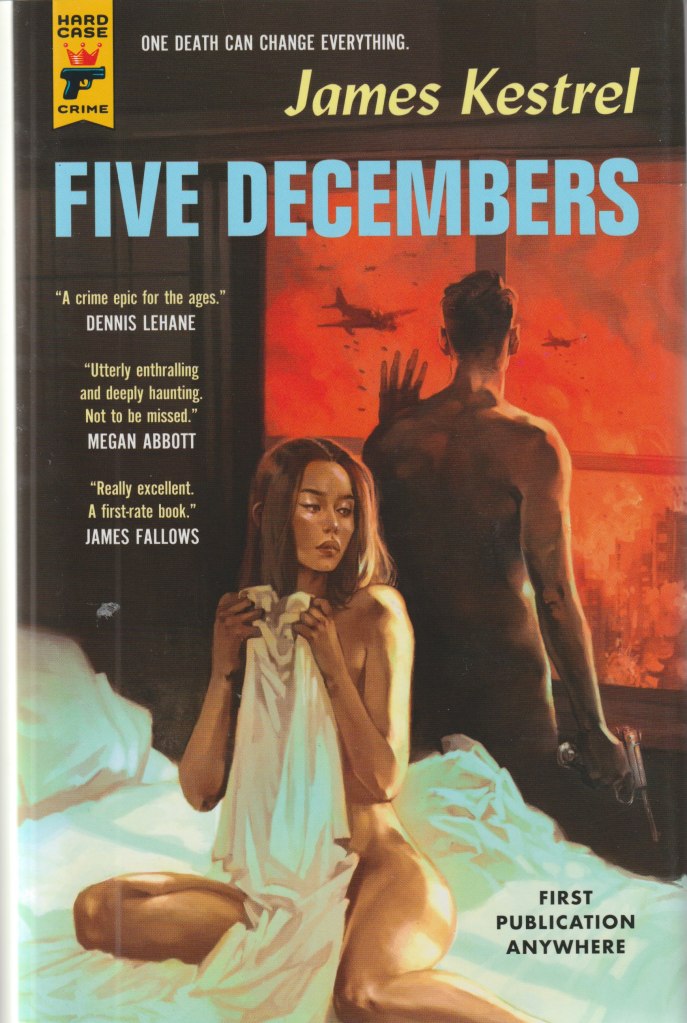
I also fell in love with Hawaii the first time I went in 1991; I went every year after that until 1995 (thank you, flight benefits!) and I miss it. I would love to go back again, and I would imagine it’s very different there now than it was the last time I was there. But on one of those trips to Hawaii–I don’t remember which one–I came up with a very basic idea for a book, that would open on December 8, 1941. The wrecks in Pearl Harbor were still smoking and the entire island chain was on high alert. My idea was to then have an Army brass’ wife call the local police station to report a murder: she found the young Japanese man who worked for her doing yard work and odd jobs with his throat cut in her rose bushes. That was as far as the idea ever progressed, and I never have had the time to sit and think it through. But I love that opening idea, and that set-up; even as I type these words now characters are taking shape in my head (KNOCK IT OFF, CREATIVITY)…anyway, so it was a no-brainer that I wanted to to read Five Decembers by James Kestrel the first time I learned of its existence.

Joe McGrady was looking at a whiskey. It was so new the ice hadn’t begun to melt, even in this heat. A cacophony surrounded him. Sailors were ordering beers ten at a go, reaching past each other to light the girls’ cigarettes. Someone dropped a nickel in the Wurlitzer, and then there was Jimmy Dorsey and his orchestra. The men compensated for the new noise. They raised their voices. They were shouting at the girls now, and they outnumbered them. The night was just getting started, and so far they weren’t drinking anything harder than beer. They wouldn’t get to fistfights for another few hours. By the time they did, it would be some other cop’s problem. So he picked up his drink, and sniffed it. Forty-five cents per liquid ounce. Worth every penny, even if a three-finger pour took more than an hour to earn.

Before he had a taste of it, the barman was back. Shaved head, swollen eyes. Straight razor scars on both his cheeks. A face that made you want to hurry up and drink. But McGrady set his glass down.

“Joe,Tip said.

“Yeah?”

“Telephone–Captain Beamer, I guess, You can take it upstairs.

He knew the way. So he grabbed the drink again, and knocked it back. The whole thing, one gulp. Smooth and smoky. He might as well have it. If Beamer was calling him now, then he was going to be pulling overtime. Which meant tomorrow–Thursday–was going to be a bust. Molly was going to be disappointed. On the other hand, he’d be drawing extra pay. So he could afford to make it up to her later. He put three half-dollars on the bar, wiped his mouth on his shirtsleeve, and went upstairs.

I had heard great things about this book–it literally won the Edgar for Best Novel last month–and of course, it’s time and setting (a murder mystery set in Honolulu just before, during and after December 7? Oh hell yeah) made it a must-get. I didn’t read it as soon as I got a copy of course; it went into the TBR stack and moved up quite a few places after it won the Edgar. On the one hand, I’d heard nothing but great things about the book (and it won the Edgar)…but on the other hand, I also was worried about how this Pearl Harbor noir might affect my potential write-sometime-in-the-future-but-before-I-die Pearl Harbor murder mystery; namely, would I simply think oh this is so fucking good I can’t bear to write something that would be compared (unfavorably) to it because mine would inevitably be the weaker of the two? (I know how unhinged this sounds, but I’ve never pretended that anything that goes on inside of my brain is anything other than that.)

Yes, the book is that good, and no, it didn’t leave me thinking that I could never write my own book idea. If anything, it made me think, oh, I should try mine at some point but I am going to have to do a shit ton of research–which was something I already was aware of, to be fair–but its a good idea and could be interesting and fun to work on.

So, yeah, there was clearly no need to wait to read this outside my own neuroses.

Joe McGrady is the hero of this tale, which does indeed open in late November/December 1941 and finally wraps up the case in December 1945–the “five Decembers” of the title. Joe is ex-military and wound up in Honolulu on the police force, where he is neither liked nor trusted because he didn’t come up through the ranks; the thin blue line in Honolulu considers him to be an outsider. The case he catches while having a drink in the bar involves two bodies found butchered in a hut on a pineapple plantation; a young white male and a young Japanese female, stripped nude and essentially gutted. The case has wider implications other than the apparent (“my god, someone butchered two people in an extremely violent and gory way!”) as the young man is the nephew of Admiral Kimmel, the commander-in-chief of the Pacific Naval Fleet. As tensions between the United States and Japan are heating up to the inevitability of war, the murder of someone related to a person so high up in the chain of command could be espionage, could be any number of things that could have an effect on the security of the country and the Pacific fleet–and we, as readers, are also very aware of what’s around the corner in just a few days. Joe does note that his boss seems a bit weird about the investigation, and he’s paired with a bruiser detective who likes to beat information out of people and confessions out of possibly innocent people. He’s dating a young woman who attends the University, and may even be falling in love with her. We don’t get a lot of backstory on Joe, but the strength of the authorial voice makes unemotional, mostly internal Joe a hero you can root for. The trail of the murders eventually leads to Hong Kong, and Joe sets off on the transoceanic flight, which includes stops at Guam and Wake Island, where he picks up more clues and the trail of the possible killer–and there’s a murder victim on Wake kind of similar to the ones in Hawaii. But once he arrives in Hong Kong he decides not to immediately go to the police department there and ask assistance; rather he decides to follow the trail himself at first…a mistake, as he winds up getting arrested and framed for a rape. He is in the Hong Kong jail hoping that the US Embassy will get him out when the bombs start falling. He is taken to Japan as a prisoner of war, and the case–and the book, take a completely surprising twist and turn once he is there.

Anything else would be a spoiler, so I can’t really talk about the story anymore–but it’s compelling, convincing, beautiful and tragic and sad all at the same time. We see a lot of things through Joe’s eyes–both inhumanity and humanity; the absolute horrors of war (there’s a horrifyingly grim account of the fire bombing of Tokyo), and finally, the war ends, he returns to Hawaii, and is able to at long last close the case in a way that is enormously satisfying.

I really really enjoyed this immersive book which used a hardboiled crime story to talk about the horrors of war and the inhumanity that xenophobic and racist values and beliefs can create. It was riveting and very hard to put down once I started.

Highly, highly recommended.

Silly Love Songs

Weekends are never really long enough, are they?

Here it is Monday morning and my first full normal week, and maybe–I think it’s possible I may have finally adjusted back. Of course, next weekend (not this coming one) is the Weekend o’ Festivals; which will of course throw me off-course yet again now that I am getting back to normal.

Hurray!

Heavy heaving sigh.

I’m not tired this morning; I went to bed early last night as I was sleepy (before ten!) and slept deeply and well and restfully; I woke up slightly before my alarm but I was so relaxed and comfortable I kept hitting snooze–there are many mornings when I don’t want to leave the warm nesting cocoon of blankets in my oh-so-comfortable bed, and today was one of those mornings.

But I did get up, I did drink a lot of coffee, and I’ll be departing for work relatively soon. In the dark. Where no one can you hear you if you call for help.

Sorry, had a Shirley Jackson moment.

But the big news of the weekend is I was able to finish reading what is surely going to be one of the top crime novels of the year, Alafair Burke’s The Better Sister.

Screen Shot 2019-03-17 at 2.27.20 PM

I betrayed my sister while standing on the main stairs of the Metropolitan Museum of Art in a beaded Versace gown (borrowed) and five-inch stiletto heels (never worn again).

At the time, I never could have scored an invitation–or been able to afford a ticket–to the Met Gala in my own right. I was the guest of my boss, Catherine Lancaster, the editor in chief of City Woman magazine. She wasn’t even my boss. She was my boss’s boss’s boss. And somehow she had personally invited me

Well, not personally. She had her assistant swing by my cubicle to deliver the message, which turned out to be a good thing, because my immediate RSVP was laughter. Not even a normal-person laugh. More like a snort. Even back then, the so-called Party of the Year was paparazzi porn, a celebrity-soaked, fashion-focused spectacle. The idea of me–the bookish new member of the writing staff–hobnobbing with rock stars, Oscar winners, and supermodels was ridiculous. So I snort-laughed.

So, Alafair Burke.

Alafair has been in my TBR pile forever; I’ve been wanting to read her Ellie Hatcher series and earlier works for quite some time. I don’t recall precisely why I decided to start working my way through her canon with The Ex, but I was SO GLAD I DID. The Ex was so amazing, made a lot of Best of the Year lists, and also was an Edgar finalist for Best Novel.

Last year came The Wife, which was also brilliant.

So, I’ve been chomping at the bit to get to her new one (dropping officially April 16), The Better Sister, and once I started reading it last week I really didn’t want to stop reading it. It’s part of my homework for the Weekend o’ Festivals; I am moderating a panel that weekend on which one of the speakers will be she.

It’s fantastic, y’all. Seriously.

The set-up for the novel is basically this: two sisters, several years apart in age. The older sister, Nicky, is a bit of a fuck-up; the younger sister, Chloe, is a Type-A who makes other Type-A’s look like slackers. She was worked her way up from being a staff writer at City Woman magazine to editor of another female-centric, but not as big, magazine. Chloe recently has done a series of articles called #themtoo about women who have been victimized but aren’t as high-profile as some of the cases we were seeing with #metoo. This has earned Chloe the scorn of Internet trolls. Her husband (Adam) is a lawyer at a major firm, but he used to be a prosecutor. He was kind of pressured by Chloe to move into the higher-paying world of private law; she also makes more money than he does. They have a teenaged son, Ethan.

The catch? Ethan is Nicky’s son; Nicky was Adam’s first wife.

As I said earlier, Nicky was a fuck-up and Chloe is the Type-A. Of course Chloe steps in when they divorce and Adam gets sole custody of Ethan. And while this might seem lifted from the script pages of Guiding Light (Reva married every male Lewis at some point), Burke not only makes this far-fetched notion work, but it totally makes sense.

But we’re seriously starting with a fucked-up family dynamic…so when Chloe comes home from a party to their home in the Hamptons to find Adam’s dead body, stabbed to death and the house trashed…secrets and lies start coming out, and I swear to God, this plot was like riding a rollercoaster–ups and downs and swings and switches and twists until by the time I reached the end I was completely riveted and not even remotely certain which way was up and which was down…and I had to know the answers.

This book is amazing, absolutely amazing. Every character rings true, the dialogue is stunning, and the plot is so intricately plotted that one almost needs a whiteboard to keep track of everything.

Alafair Burke is a national treasure, and this book is a GIFT to us all. Buy it. Read it. Tell your friends.

You Make Me Feel Brand New

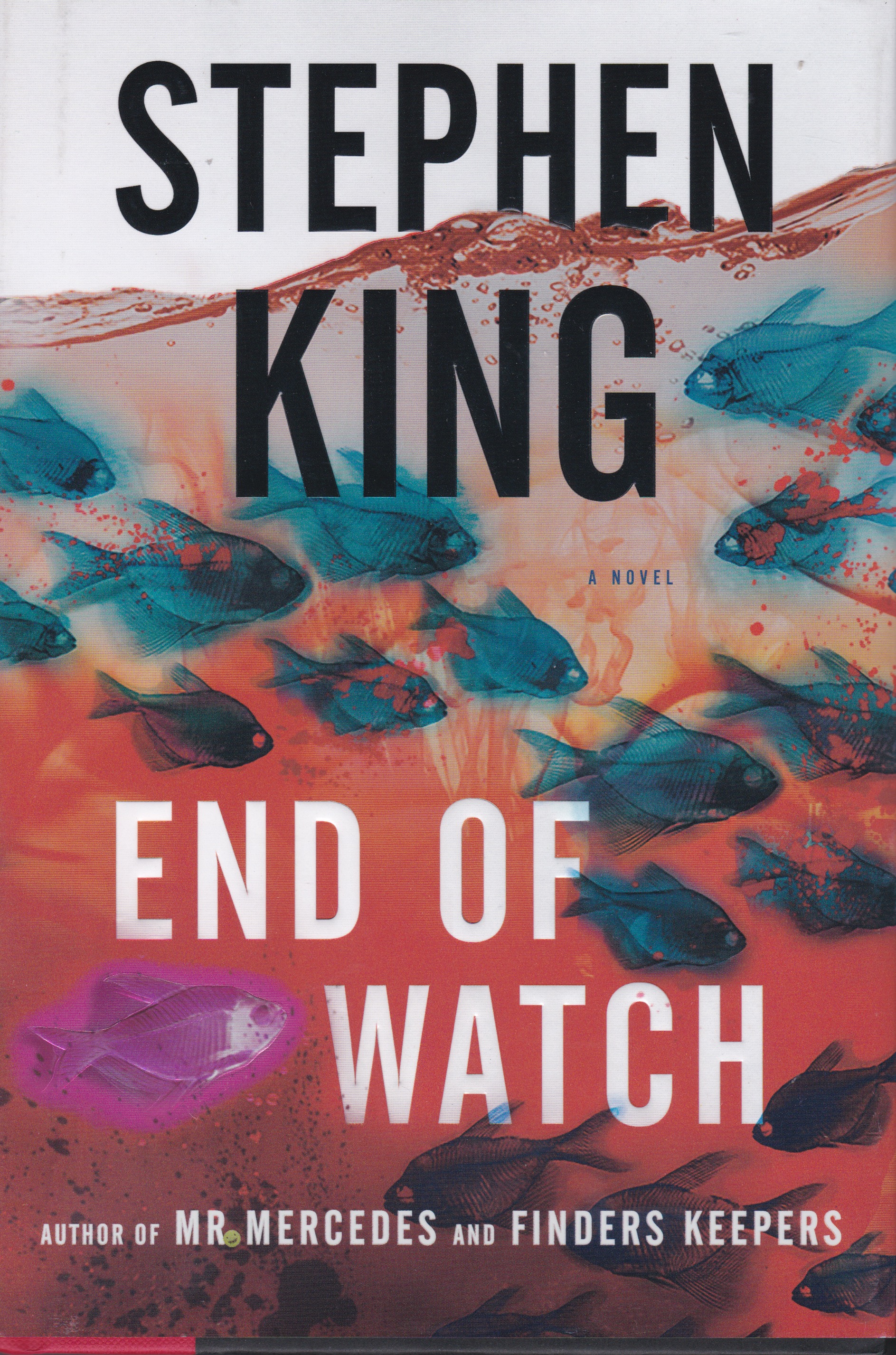
As you are well aware, Constant Reader, I am a huge Stephen King fan, and have been since I read Carrie I was fourteen all those years ago. I don’t have the same urgency I used to have with King, when I would buy the books on their release date in hardcover and then put everything aside so I could read it from beginning to end; there are numerous King novels on my shelves that I’ve yet to read–11/22/63 and Doctor Sleep, among others–and along with them, for a very long time, was End of Watch.

End of Watch is the third in what is called the Bill Hodges trilogy, following Mr. Mercedes and Finders Keepers, both of which I thoroughly enjoyed (Mr. Mercedes deservedly won the Edgar Award for Best Novel from the Mystery Writers of America). I would occasionally glance at the shelf of unread King novels from my easy chair and think, “I really need to read End of Watch” but never got around to it.

So, given my discovery that most audiobooks are too long for the twelve hour trip home, I decided that I would listen to End of Watch (thirteen hours) on my way home; then I could just get the book down from the shelf and finish reading it at home. So, I got in the car Friday morning, opened the app, and linked my phone to the stereo in my car. I pulled out of the driveway, and as I was pulling onto the highway I suddenly remembered, Oh no! The reason I haven’t read this is because it’s the last Bill Hodges book, and I love the characters so much I didn’t want to finish and say goodbye to Bill, Holly and Jerome for good!

But it was too late, so I soldiered on.

end of watch

It’s always darkest before the dawn.

This elderly chestnut occurred to Rob Martin as the ambulance he drove rolled slowly along Upper Marlborough Street toward home base, which was Firehouse 3. It seemed to him that whoever thought that one up really got hold of something, because it was darker than a woodchuck’s asshole this morning, and dawn wasn’t far away.

Not that this daybreak would be up to much even when it finally got rolling; call it dawn with a hangover. The fog was heavy and smelled of the nearby not-so-great Great Lake. A fine cold drizzle had begun to fall through it, just to add to the fun. Rob clicked the wiper control from intermittent to slow. Not far up ahead, two unmistakable yellow arches rose from the murk.

“The Golden Tits of America!” Jason Rapsis cried from the shotgun seat. Rob had worked with any number of paramedics over his fifteen years as an EMT, and Jace Rapsis was the best: easygoing when nothing was happening, unflappable and sharply focused when everything was happening at once. “We shall be fed! God bless capitalism! Pull in, pull in!”

The opening chapter of this book is a perfect example of King at his best. The two EMT’s in this opening aren’t characters pertinent to the story nor do they appear again (one of them actually does, but very briefly, much later); they are simply the framing device King uses to get the story rolling. They are the ones called to the scene of the murder/suicide the opens the book, and King exquisitely captures their personalities and lives, vividly making them real and alive in their brief pages; he does this throughout the book, introducing a cameo character and bringing that person vividly to life.

Retired cop and now private eye Bill Hodges and his business partner (and friend/family) Holly Gibney are brought into the case because one of the two victims was paralyzed from the chest down by the monstrous Mercedes Killer, Brady Hartsfield, whom Holly put into a coma before he could detonate a bomb at a boy-band concert filled with screaming tweens (the very thrilling conclusion to Mr. Mercedes). And before long, some very strange things keep happening, and all the evidence, the only connection, is that everyone involved has some connection to Brady Hartsfield…who is still in a coma.

Or is he?

End of Watch takes the series, in a brilliant finale, into King’s world, of experimental drugs that can develop telekinesis (back to Firestarter), and also the psychology of  ‘herd mentality’; Brady has been given experimental drugs that have somehow given him horrible abilities…and he uses those abilities to infiltrate the minds of others, using a hand-held gaming device, and pushing them to suicide. Again, King’s genius is seriously involved here, as we go into those teen minds and see how the descent into suicidal depression works…and how easy it is to trigger that spiral. It’s absolutely terrifying, and absolutely real. And once the story gets going, it’s the usual fast-moving train that King always writes, and when I got home from the trip Friday night I couldn’t wait to get my copy down from the shelf and read the stunning, brilliant, utterly satisfying conclusion.

And immediately became sad. I love the characters of Bill, Holly and Jerome, and was deeply sad to realize I had indeed, reached the end of the watch with them.

Highly recommended.

(one caveat: I did struggle with the depiction of one of the suicide victims–a gay teen–but finally decided that it was okay because he was depicted sympathetically, if stereotypically, and King is making an effort to diversify his work. So, I gave him a pass on the gay teen character.)