Goodbye Baby

Ah, Sunday. I slept in this morning–almost all the way to ten o’clock, it’s like I don’t even know me anymore–but it felt good and I am awake and enjoying my first cup of coffee this fine morn. I did some errands and chores yesterday, which was great, and watched a lot of nothing on the television while I was playing around doing research on-line. I did finish reading Carol Goodman’s marvelous The Bones of the Story (more on that at another time), and spent some more time with the Scott Carson I started reading in Kentucky. There’s still a lot that needs doing around here, but it’ll get done and I still am a little worn out from the drive home, so maybe today’s not the day to try to be super-productive. I also spent yesterday trying to catch up on the state of affairs in the country and world (glad to see people still dragging the puppy slaughterer), which was depressing but necessary. I am way behind on my emails, which is something I will have to address (tomorrow). Heavy sigh. But one can’t hide in their unreality longer than one can and still be functional, can one?

Ah, well.

I also got a signed copy of the new Lori Roy novel, Lake County, in the mail yesterday, which was marvelous. She’s one of my favorite writers, and has been ever since I met her on a panel at Bouchercon a million years ago and then read her Edgar Award winning debut, Bent Road, which was incredible, and I’ve been loving her (and her work) ever since. Once I finish the two novels I am reading, I am digging into the new Roy. Huzzah! I have so many good books on hand to read–I still have the latest Angie Kim, among many others, in that stack on the end table in reach of my chair–that it’s hard to decide what to read next, and then books like the Angie Kim (and the Celeste Ng, and the Angela Crook, and the Jess Lourey, and on and on and on it goes) end up not getting read in an expeditious manner. I have certainly been enjoying all the reading I’ve been doing lately, and need to stay on top of it as much as possible.

The more I look into the suspicious death of Noah Presgrove, the more intriguing the story becomes. It is, as Carol’s latest title proclaims, ‘the bones of the story’; obviously I am interested in what happened the last night the young man was alive and how he actually died, but the basis of the story, it’s fundamentals (small rural town; corrupt local justice system; three day long weekend party serving minors illegally; and of course the battered naked body in the fetal position on the side of the road) make for a fascinating and interesting foundation for a fiction novel, exploring the bitterness and old hurts and feuds and nastiness in a poor, small rural town in Oklahoma (which I will probably change to Kansas, naturally), and peeling back the layers of deceit and resentments and lies and relationships is kind of appealing to me.

It’s also Mother’s Day today, my second without one, and I am not actively avoiding it today, either, the way I did last year. Last year it was still too new and too fresh for me to even be on-line much on that day, but this year is easier. Seeing Dad around Mother’s Day (since it’s always the weekend after Decoration Day, or The First Sunday in May) also made it easier. We talked about her a lot, and Dad told me a lot about their teens and the early years of their marriage, when they were very poor (I didn’t realize how poor we actually were when I was a child and a teen until many years later; living in Kansas kind of twisted that as we were considered well-off there), which made me smile a lot. Obviously, I will always miss my mom, but it’s not as painful to think about her as it used to be. That’s progress, and now I can remember her without recriminations about being a bad son or taking advantage of her kindness or disappointing her. I think that’s normal when you lose a parent or a loved one; you regret time not spent together and think about all the times you were a shitty person. But…I was also horribly spoiled by my parents, and they never stopped trying to spoil me even after I was an adult, because to them I was always their baby and since I didn’t have kids…well, they never stopped seeing me that way. Then again, it may just be a parent/youngest child thing.

And on that note, I am heading into the spice mines. I’ll be back later–I have soooo many entries to catch up on; the books I’ve read alone need to be discussed–but I am also not putting any pressure on myself about getting things done today as I am still in recovery mode from the trip. So have a great Mother’s Day, everyone; hug your mom for me and if yours is also gone like mine, I am giving you a big virtual hug.

You Must Love Me

Many years ago, at a Bouchercon in the far distant past, I was lucky enough to be assigned to a panel with several strangers. It was Raleigh, and I don’t remember what the panel was about–other than none of us on the panel actually wrote what the topic was about–but it ably helmed by Katrina Niidas Holm. That was the weekend where I was lucky enough to meet both her and her husband, Chris. Also on the panel were Liz Milliron, Lou Berney, and Lori Roy. I always intend to read my co-panelist’s work before panels, so I can talk to them intelligently about their books–but it’s not near as pressing as it is when I moderate, and this was one of those years where I was busy and simply didn’t have the time. The panel was marvelous. I had the best time, and I loved everyone on the panel. I have since gone on to read their work and have become a besotted fan of all three of them, really.

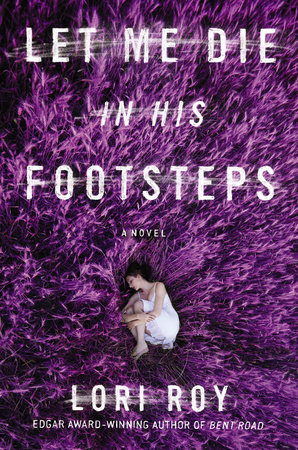
My first Lori Roy novel was Bent Road, which won her (deservedly) the Edgar for Best First Novel. I absolutely loved it, and made sure I got the next two as well. (At the Edgars following the Raleigh Bouchercon, both Lou and Lori won Edgars; her second, also making her one of the few authors to win Edgars for Best First and Best Novel.) I’ve read everything she’s published since then, but have never gotten to the second novel (an Edgar Best Novel finalist) or Let Me Die in His Footsteps, her second nomination for Best Novel and her second Edgar win. I don’t remember why I decided to finally read Let Me Die in His Footsteps, but I am very glad I did.

It’s really quite marvelous.

Annie Holleran hears him before she sees him. Even over the drone of the cicadas, she knows it’s Ryce Fulkerson, and he’s pedaling this way. That’s his bike, all right, creaking and whining. He’ll have turned off the main road and will be standing straight up as he uses all his weight, bobbing side to side, to pump those pedals and force that bike up and over the hill. In a few moments, he’ll reach the top where the ground levels out, and that front tire of his will be wobbling and groaning and drawing a crooked line in the soft, dry dirt.

Theyre singing in the trees again today, those cicadas. A week ago, they clawed their way out of the ground, seventeen years’ worth of them, and now their skins hang from the oaks, hardened husks with tiny claws and tiny, round heads. One critter calls out to another and then another until their pulsing songs made Annie press both hands over her ears, tuck her head between her knees, and cry out for them to stop. Stop it now. All these many days, there’s been something in the air, a spark, a crackle, something that’s felt a terrible lot like trouble coming, and it’s much like the weight of those cicadas, thousands upon thousands of them crying out to one another.

Annie has known all morning Ryce would be coming. It’s why she’s been sitting on this step and waiting on him for near an hour. She oftentimes knows a thing is coming before it has come. It’s part of the curse–or blessing, if Grandma is to be believed–of having the know-how.

Let Me Die in His Footsteps is set in rural Kentucky, with a dual timeline–the present in the book is 1952; the past is 1936. Both timelines feature two sisters, one normal and the other with the “know-how.” In the present, Annie is the sister with the know-how while her sister Caroline is normal and pretty and sweet and pretty much beloved. The 1936 section focuses on Caroline’s mother, Sarah, and her sister with the know-how, Juna. It is soon made clear in the present day that something terrible happened back in 1936, something whose repercussions are still being felt to this present day of 1952. Annie isn’t Caroline’s sister, but rather her cousin; Sarah is Caroline’s mother while Juna was Annie’s. Juna also had a bad reputation around the county, having played a pivotal role in the 1936 tragedy. The book opens with Annie reaching her ascension; the halfway mark between sixteen and seventeen, when she is supposed to look down into a well at midnight, where she will see the face of the man she is going to marry. Annie sneaks out of the house late at night to go next door and peer down into the Baine family well; there’s trouble and tension between the two neighboring families…dating back to 1936. All the Baine sons are long gone; the only one left is old Mrs. Baine, who sits out on her porch with a shotgun in case of her worthless sons try to come home. Caroline follows Annie and sees someone in the well; Annie sees no one. But after the look into the well, they discovered Mrs. Baine’s dead body in the yard…and all the secrets and lies from 1936 start to not only unravel but impact 1952.

We’re never really sure what the “know-how” is, or if it’s just an old wives’ tale, a superstition. The rural south in both 1936 and 1952 were dramatically different than modern times; the rural areas weren’t as exposed to television or films or the newspapers, really and the old ways still held sway. I can remember being told about someone with the sight that everyone was supposed to stay away from in rural Alabama when I was a kid; those kinds of superstitions and beliefs still exist in some of these more backward rural areas. But one thing I truly appreciate about Roy–who often writes about poor rural Southern people–is that her writing isn’t what I call “poverty porn”; her characters are very real and this just happens to be their situation. The Hollerans have a lavender farm, having eschewed tobacco in the recent past after Grandpa Holleran died from lung cancer. Lavender infuses the novel almost from the very first page. I love the smell of lavender, although I would imagine fields and drying houses filled with it might be a lot. The story plays out in a slow burn, terrific build to the end, and all kinds of secrets from the past must be dealt with in order for the present-day characters to get on with their lives.

Roy is such a good writer that it almost takes my breath away. She uses a distant third person point of view, one in which we don’t really get inside her character’s heads that much, so the reader has a kind of distant remove from the characters, but it really works. Her work reminds me of Faulkner without the racism, and of other great Southern writers. Her novels are very smart, with a lot of depth and emotional honesty that resonates with the reader, compelling us to keep reading.

Highly recommended; Let Me Die in His Footsteps clearly deserved to win the Edgar for Best Novel.

Hopefully there will be a new Lori Roy soon, because all I have left of her canon is her second novel, Until She Comes Home, which was also an Edgar finalist.

Always

Kansas.

We moved to Kansas the summer I turned fifteen. It was a bit of culture shock; we’d been living a middle-to-upper middle class suburb of Chicago for about four years then, after spending eight or nine years in a working-class, very blue-collar neighborhood in Chicago, populated primarily with eastern European immigrants, or second, maybe third, generation Americans from central to eastern Europe. All I really knew about Kansas, before moving there, was that it had been a part of the Dust Bowl during the depression; I’d read about “bleeding Kansas” in history books; and of course, tornadoes and The Wizard of Oz (which is a movie I’ve never cared for; I watched it once as a kid and never again). Neither Nancy Drew nor the Hardy Boys ever had an adventure there; nor had any of the other kids’ series or Scholastic Book Club mysteries I’d read. But it was in Kansas that I actually started writing seriously, and began to think about being a writer when I grew up. (It was also in Kansas that I had the bad creative writing professor, and other bad history professors; I actually cannot think of a single decent teacher I had at the university level in Kansas–but then again, I was incredibly miserable when I lived in Kansas and it’s entirely possible that misery bled over into every other aspect of my life.)

I also don’t want to make it seem as though the five or so years I spent there were completely miserable. I did have fun–I was always desperately trying to have fun to distract me from the terror that arose from my sexuality, which was a secret that must be guarded from everyone at all times; it’s laughable to think about it now, but that terror was very real to me then.

It was in Kansas I started writing about teenagers, and while none of that stuff I’d written was publishable–I still have the handwritten novel I started writing there somewhere; the thought of rereading it turns my stomach as I can only imagine how incredibly bad, trite, and cliched it all was–but those characters have lived on and appeared in my actual published work as an adult; primarily I kept the character names and the basis of who they were, fleshing them out and (hopefully) making them three dimensional. Sara is, to date, the only book I’ve published that is set in Kansas; Laura, the main character in Sorceress, is also from Kansas–but the book is set in California. And of course I’ve been playing with the Kansas book now for something like fifteen years–hopefully, that will be finished and done this year.

I love to read about Kansas, and two of my favorite crime writers–Lori Roy and Sara Paretsky–are also from Kansas; Lori’s first novel, Bent Road (it’s brilliant, as is everything she writes) is set in Kansas; Sara, of course, primarily writes about Chicago but wrote a stand alone several years ago called Bleeding Kansas I’ve always wanted to get around to. Nancy Pickard also wrote two stunningly brilliant novels set in Kansas–The Virgin of Small Plains and The Scent of Rain and Lightning; I cannot recommend them enough. One cannot talk about Kansas books, either, without mentioning Truman Capote’s “true crime novel” In Cold Blood, which I like to reread every now and then.

There’s just something noir about Kansas; I don’t know how to describe it, or why it feels that way to me; but there’s just something about the wide open spaces and the wind, that Peyton Place-like feel to the small cities…Emporia (the county seat; we lived about eight miles out of town in an even smaller town called Americus) even had its own full blown scandal where a minister and the church secretary had an affair and murdered their spouses; it was even made into a two-part mini-series filmed on location in Emporia starring Jobeth Williams as the femme fatale. Those small towns, scattered all over the northern part of Lyon County, once thriving and bustling but now barely hand on when I lived there…the abandoned schools, still standing (they’d all been consolidated into one high school in the 1950’s) in the emptying little towns…our consolidated high school, out in the middle of the country with the football field backing up to a pasture; and the explosive boredom for teenagers. I always turn back to Kansas somehow, whenever I am thinking creatively or wanting to write a new short story–so much material, really. Emporia even had a cult; the old Presbyterian College of Emporia had gone bankrupt sometime in the early 1970’s and The Way International had bought the campus, turning it into The Way College of Emporia and I have to tell you, those kids from The Way College were terrifying–and there were lots of stories and urban legends about what went on there on that campus; how much was true I’ll probably never know, but I do know they used to have armed security guards patrolling the edge of campus, and every teenager knew not to ever get cornered anywhere with no possible escape by two or more of those kids….they always traveled in groups, never less than two and rarely more than six, but always in multiples of two. They always looked very clean cut, but you knew them by the nametags they were required to wear, their empty glassy eyes, and the big smiles on their faces.

There’s also the story of the bloody Benders, serial killers who operated an inn and murdered their guests in the nineteenth century before disappearing; I’m sure every nook and cranny of Kansas has some kind of horrible tale of murder hidden away.

And about three or four miles from our high school–you had to turn right when you reached the state road from Americus to get there; if you turned left towards Council Grove you’d pass this place: an abandoned nuclear missile base, that is still there. We used to go there sometimes for kicks–opening the door and listening to the strange sounds from deep inside and water dripping. I had plenty of nightmares about that missile base.

But the only other gay novelist I know from Kansas is Scott Heim (or at least the only one I know of who sometimes writes about Kansas). I read his debut novel Mysterious Skin sometime in the mid to late 1990’s, and was blown away by it (the film is also quite good). Mysterious Skin is set in Kansas, of course, and while it is a literary novel, and a quite good one, for me there were some elements of noir to the story; I have moved it to the The Reread Project pile and hope to get to it again relatively soon, so i can discuss it with more credibility and authority. I’ve not had the opportunity to read his other two novels, In Awe and We Disappear, but I’m adding them to the “need to get a copy” list.

Over this past weekend I read a short story Scott wrote for Amazon; part of something called The Disorder Collection, along with stories from several other authors. You can buy “Loam” here; it’s well worth the ninety-nine cents.

We agreed to share the driving. The early-morning flights had left us feeling run-down, but my sisters said my eyes looked the least bleary, so I should drive first. The clouds had gone gray; it had started to rain. But we could take our time. The afternoon we’d been dreading lay before us in hot, wet highways flanked by sorghum and corn and glistening shocks of wheat. It was late summer, already harvest season, and the fields shuddered in the wind, the grains full and heavy as though fed with blood.

At the rental counter, a cheery, silver-haired clerk had offered us a white sedan, but Louise had disapproved. “A simple compact is fine,” she said, “and no extra options. Just make sure it’s as black as possible. Is ‘funeral black’ a color?” She’d glanced across the desk to Miriam and me, urging us to smile. No one had smiled since we’d met in the arrival lobby with hesitant hugs.

The clerk didn’t seem to grasp Louise’s reference, but when she collected our licenses, she was attentive enough to catch our dates of birth. She turned and yelled, “Girls, come look–triplets!”

It had been years since we’d been subjected to this kind of foolishness. We watched as her pair of coworkers stood from their desks and approached the counter. I could guess what was coming next: we didn’t look anything alike; we had varying shades of brown and blond hair; even our bodies and the ways we dressed, so different. Louise stopped their small talk before it could start, outstretching her hand to silence the room. “Look, our father just died, okay? Let’s sign what we need to sign and get this over with.”

One of the things I love about Heim’s work–and having only read one novel over twenty years ago and now this short story–is that he often writes about the aftereffects, and the aftermath, of traumas and how the victims deal and cope. This is something that interests me; I often think and wonder about how people who’ve dealt with something–my husband is a serial sex offender; my father murdered my mother, my grandfather was a serial killer–they had no control over cope and go on with their lives; I’m actually writing a story dealing with that sort of thing right now (one of the many stories I have in some sort of progress right now; it’s called “He Didn’t Kill Her”), and also those who were directly victimized–how do they deal? How do they cope? How do they go on with their lives after something so traumatic happens to them?

This is why this century’s reboots and sequels to Halloween interest me, because they show how Laurie Strode, years later, was psychologically damaged and who she became; one of the things I loved about the Scream films is they showed how everything that has happened to her has turned Sydney into a different person from who she imagined she’d be before the murders started.

Heim doesn’t write about the peripherally damaged; he writes about those who actually were damaged first-hand. In “Loam”, his triplets are clearly damaged by something that happened to them when they were children; they are returning to bury their father and clearly have not been back to Kansas in years. It isn’t clear what happened to them–it may have just been bad parenting in the beginning–and it isn’t until they stop at a second-hand store (what we used to call “junk shops” when I was a kid) and find some strange and mysterious pictures of their first grade classmates on a table that the memories of the past–and what they went through–begin to come to the fore.

I do wish Scott Heim would write more. This story, sad and dark and mysterious, is everything I love to read.

This: The afternoon we’d been dreading lay before us in hot, wet highways flanked by sorghum and corn and glistening shocks of wheat. It was late summer, already harvest season, and the fields shuddered in the wind, the grains full and heavy as though fed with blood–I wish I’d written that.

Buy it or borrow it if you have Amazon Prime. It’s very well worth the time.

IMG_0112

Burning Heart

Sunday morning, and yet another good night’s sleep. It truly is amazing what a difference that can make in one’s life; I miss the days when I could simply tumble into bed and close my eyes and, as Paul once put it, “sleep through a nuclear holocaust.” Yesterday was a good day; I got groceries and did some cleaning. I read both “This Town” and “Don’t Look Down” aloud, did the necessary clean-ups on them, and this morning I am going to read “Fireflies” aloud and see if it, indeed, does hold together. I wrote the first draft of “Fireflies” something like thirty years ago (!) and it’s still in the file folder, handwritten (because until computers, I almost always hand-wrote everything); I am still not entirely certain the story works; but we will find out today when I read it out loud.

I was very pleased with the two stories I read aloud yesterday, and if I do say so myself, I feel “This Town” is one of the better stories I’ve written. I’m going to read “Fireflies” aloud this morning, and then I’m going to work on “This Thing of Darkness” for a little bit, see how that goes, and then maybe dive into one of the two novels I am working on (focusing on, really; there’s a third I started writing a couple of weeks ago, which I am itching to get back to, but that’s just crazy talk). I also started reading Alex Segura’s Blackout yesterday, not getting very far, alas; but I am looking forward to getting further into it. I also started reading Martin Edwards’ Edgar Award winning The Golden Age of Murder, which is my new ‘read a chapter or two before bed’ book. We also started watching Harlan Coben’s new Netflix series, Safe, and are really enjoying it thus far.

My kitchen is also a disaster area; I made ravioli last night and yes, well, a mess is a bit of an understatement.

I also stopped at Office Depot yesterday to purchase pens. I’ve discovered a new brand of pen that I absolutely love: Tul, with a dash over the u. They sent us a couple of them at the office a month or so ago, and I absconded with them, as is my wont, and then bought a couple more. Yesterday I bought several more packs of them. I’ve always been a bit of a pen nerd, and I also noticed last night, as I made notes in my journal, that my blank book is almost full; time to get a new one soon. Yay! I really am glad I’ve gone back to keeping a journal to write notes and ideas down into; I’ve worked out issues with several of my short stories this year in it, as well as the books.

I also managed to finish Lori Roy’s upcoming new release, The Disappearing, last night.

the disappearing

Lane Wallace is alone inside Rowland’s Tavern when the front door flies open. A man stumbles inside, bringing with him a spray of rain that throws a shine on the hickory-brown floors. He scans the dark rooms, stomps his feet, and draws both hands over his wet, round face. If the man says anything, Lane doesn’t hear him for the rain pounding the tin roof and the palm fronds slapping the front windows. It’s supposed to rain through the night, and all around Waddell, people will be keeping a close eye on the river.

Lane smiles because maybe the man is a friend of a friend and not a stranger. She’s expecting a big crowd tonight, and one of her regulars might have invited him. But he doesn’t smile back. Slipping her phone from her back pocket. she lays it on the bar top where the man will be sure to see it. It’s a subtle warning, but if the man is looking for trouble, it’ll make him reconsider.

He’s a little on the heavy side; doughy, a person might say. From behind the bar, Lane asks the main if a beer’ll do him, and as he slides into a booth near the front door, he nods. Hr regulars, men who’ve known her all her life, or rather who have known her father, won’t show up for another hour or so but Rowland Jansen will be back any time now. He ran out to move his car and Lane’s to the higher and drier ground of the parking lot out front, so she won’t be alone with the man for long.

This is Lori Roy’s fourth novel, and it’s quite an achievement. His first three novels–Bent Road, Until She Comes Home, and Let Me Die in His Footsteps–were all shortlisted for Edgar Awards; she won Best First for Bent Road and Best Novel for Let Me Die in His Footsteps, raising her up into the exalted, rarified air of the Multiple Edgar Winner Circle. I’ve only read Bent Road–I do own the others, will every intent to read them at some point; too many books, not enough time–and it blew me away with its stunning depiction of rural Kansas, its juggling of two separate time-lines, and its thematic exploration of how the pains and evils of the past can influence the present.

That same theme runs through this stunning new novel, The Disappearing, as well, and is explored even more deeply and explicitly than in the first. Waddell is a small town in north Florida, amorphously near Tallahassee; Roy’s captured the feel of rural small town Florida deftly (there is, as not many know, a huge and significant difference between the coastal cities of Florida and the insular, small towns of the state’s interior). She plays with the memories of Ted Bundy’s journey through the area; a young woman, a student at Florida State doing some internship work at a local, fading plantation is missing, which has stirred up all those fearful memories of Bundy’s spree. The plantation also shares a boundary with a closed reform school for boys, whose own violent and possibly deadly past has also come back to haunt Waddell.

But it’s also an exploration of family, and how the damage from a past history of deep violence and emotional abuse, locked away and ignored, can reverberate through the years and have deep, horrific implications on the present. Susannah Bauer’s disappearance triggers a chain reaction of emotion and violence and horror, spread over the course of a few days after the night of the heavy rain, that will continue to cycle through the future unless honestly and painfully dealt with in this present.

There are four point of view characters in The Disappearing: three women from generations of the same family–Erma, the matriarch of the Fielding family, with her guilts and secrets festering inside her for decades; Lane, her daughter, whose own emotional damage and baggage perpetuates the cycle; and Lane’s younger daughter, Talley, whose wanderings due to her own loneliness and unhappiness makes her the holder of most of the secrets and truths of the present. The fourth point of view character is Daryl, a mentally disabled young man who is the groundskeeper at the church, and his story is told in the recent past rather than the present, as Lori Roy deftly spins all the secrets and lies and horrors of the town of Waddell into an astonishingly well-blended tale of flawed people and the damage they can leave in their wake.

Even more impressive than the characters and the story itself is the mood and the voice; the way she maintains this almost dreamy tone, creating the perfect mood for the story is masterful. The voices of her characters are compelling and real; only Daryl tells his story in the first person; the others are a very tight third person present tense. The shifts in voice, the tone, the tense and the word choices and the imagery, kept reminding me of Faulkner’s brilliant The Sound and the Fury, and in a very good way.

The Disappearing is an extraordinary achievement, and is destined to make awards short-lists and all the Top Ten lists for 2018.