Remote Friday! I slept decently last night, which was a lovely thing. Sparky cuddled with me this morning when he got hungry, which was very sweet–I’d rather wake up to a cuddling, purring kitty than to an alarm any day. I’ve always believed alarms were unnatural, forcing you to wake from sleep before you’re ready or you’ve had enough. But that’s all part and parcel of the tyranny of capitalism we’re all subjected to most of our lives, and we’re all about to be (or already been) sacrificed on the altar of Ayn Rand acolytes who only read The Fountainhead or Atlas Shrugged, and not her actual philosophy. (Whenever someone mentions her admiringly, I always ask if they’ve read her essay collection The Virtue of Selfishness and the answer is always no…so I stop listening to anything they say and see no point in arguing with them from a place of better knowledge;1 and the true believers are just another branch of the MAGA family tree of cruelty and bigotry.) Must get up, must make money to spend money to keep the economy going…and round and round it goes.
I was very tired when I got home from work last night and sadly, didn’t get much of anything done. I came home, fed and played with Sparky, and then collapsed into my easy chair with a tired body and worn out brain. Thursdays really are my least favorite day at the office. Paul got home later than I would have liked, but I have to say this year I’ve seen more of him than I usually do during my Festival widowhood, so in a way I’m kind of glad the building collapsed? He’s going to be gone most of today, too, once he gets up, and I am going to be doing my remote work and writing and doing chores and getting the house as in order as I can manage. That always makes me feel better; I always find a messy apartment to be kind of…unsettling and oppressive, which has everything to do with fears of being a hoarder. I’m letting go of my need to never get rid of a book under any circumstance, but that comes from the reality of limited space options. I’ve also cut back on my buying books all the time, and limiting myself to new books from friends, or their recommendations. That has definitely helped financially, too. (But I will never donate my kids’ series books, ever.)
I also want to get some reading done this weekend. I want to get further into my revisit of Moonraker, and I have already moved Christa Faust’s The Get Off to the on-deck position of the TBR list. I’ve been waiting for this book for fourteen years! I love Christa’s voice and her style of writing, as well as how fierce she is, and boy, does that ever come across in the Angel Dare trilogy. Angel is an unusual heroine, and I do think the series will become noir classics to shelve alongside James M. Cain, Patricia Highsmith, and Cornell Woolrich2. I’d love to see them filmed, to be honest, and what a great role she’d be for an ambitious actress.
I did try to write some last night to little or no avail. I really need to get back into that saddle again and get things going. Deadlines loom overhead, and the Festivals are next weekend, and I am going to be super busy during both–I have several things I have to do, and I have all kinds of friends coming into town to speak at one or both. It’s going to be so exhausting, I am already kind of dreading how tired I’ll be. Not to mention commuting to the Quarter and back so we don’t have to board Sparky…and all that walking. Yes, I am going to be completely exhausted…but at least nothing I am doing is in the morning, thank you God, so I can at least sleep in some.
And on that note, I am heading into the spice mines. Have a lovely Friday, Constant Reader, and I’ll check back in with you either later today or tomorrow morning. We shall see, shan’t we?
I read Ayn Rand in my twenties–I read her short novel Anthem in high school–and studied her philosophy, which required reading her non-fiction. I saw the fallacy in her “objectivism”, the flaw that unspools the entire thing, almost immediately, which gave me the knowledge to know she–and everything she believed, was patently predicated on a lack of understanding of human nature and behavior, and most of her acolytes embraced only the parts that confirmed their own biases while ignoring the rest. Check out her writings on religion sometime, and ask yourself how Paul Ryan and others–anyone, really–could be a “devout Christian” and an objectivist, when she wrote and believed that religion was ignorant superstition and unworthy of an intellectual. ↩︎
Note to self: revisit Cain, and read more in the Woolrich and Highsmith canons. ↩︎
Work-at-home, with meetings on the computer Friday, and woo-hoo, we made it almost all the way through another week. Christmas is nigh–Lord–but the end of the year always seems to come in a rush, doesn’t it? I mean, college football’s regular season is already over (although, given how LSU did this year, it seemed to last a really long time), and basketball started up again last month. It’s also almost collegiate gymnastics time, too. The SEC will be really interesting with perennial power Oklahoma added to the conference this year. The Grand Prix of Figure Skating final is this weekend, so we’ll probably spend some time with that, too. I think I want to watch whatever that new Alien1movie is, too. I’ve not seen all the movies, but Alien and Aliens remain favorites of mine, so I am always interested whenever they release a new one. The shoddy state of my memory, however, has made reading or watching series (movies, television, books) a tad more challenging.2 But I shall persevere.
It is cold this morning; right now it’s thirty-eight degrees outside. I slept really well last night, so it was most likely pretty cold last night, too. I was exhausted when I left work early yesterday, and so when I got home, my brain wasn’t functional enough to even read, let alone do anything more creative or enjoyable. I am probably not going to leave the house today other than run to get the mail and to get something to make for dinner tonight (no clues on that score, so will have to figure something out). Paul’s going to be gone for most of the day once he gets up. I’m going to try to get my chores done while working (I can go do laundry when taking breaks from data entry and on-line trainings) today, before I dash out to run those two errands and then come home to edit and write and read and clean. Sounds like a good plan. I am hopeful to get some things done while also getting some good rest.
So, the CEO of the absolute worst health insurance company in the country, United Healthcare, was assassinated on the street in New York the other day, which led to some interesting reactions. Some–the vast majority–people celebrated his death; his shitty insurance company successfully denied 32% of claims last year. I’ve never had the pleasure of being covered through that insurer, but working in a clinic and talking to clients about their health insurance–I get to see (and hear) firsthand how bad their coverage is. Some have astronomical deductibles; still others can’t get their (expensive) PrEP labs3 covered by it4, etc. When I saw the news break, I was only surprised that it’s taken this long for an health insurance “profit above people” company executive to be murdered. A few people on social media (you know the ones–the tireless morally superior assholes who love to try to shame everyone else for their very valid feelings) were very quick to excoriate people for celebrating the murder of an asshole who was definitely the last rung on the ladder of responsibility for a lot of people’s pain, financial ruin, and death, wagging a finger in everyone’s face and letting them know that they are the horrible people in this instance. I block tiresome scolds. You’re not my mom, you’re not my priest, you’re not my employer and you’re a total stranger. Maybe you’re lovely in your every day life, but pulling moral superiority in this case? Will you scold people for being happy when odious garbage like Kim Davis or Mitch McConnell die, too? Go fuck yourself, and get the fuck out of my world. As for their mourning loved ones, why is their pain more valid than that of United Healthcare’s victims? They certainly didn’t mourn or feel bad when United’s cruel profit policies killed, ruined, or bankrupted their clients, did they? No, they spent that money and lived high on that ten million dollars a year (plus bonuses) salary, so miss me with their pain, okay?
And in other, predictable news about the murder, apparently they have images of the killer’s face from security cameras, and people swooned and thought he was handsome and hot. Just like the Boston Marathon bomber and Ted Bundy and so many other “hot” criminals. It’s weird. He is handsome, at least the guy whose face was shared from those images–which also made me think he’s a professional assassin; I mean, who else could flirt with someone on their way to killing someone else? Although it does make for an interesting idea–the hot sexy hit man. Maybe a gay one? (See how my mind is?) Anyway, the assassin is kind of becoming a folk hero, which should give all insurance executives pause. In the wake of the murder, Blue Cross Blue Shield–which has just announced a horrific, draconian new policy about anesthesia, quickly reversed itself and removed all the executive and board of directors’ names on its website.
Read the fucking room. The people are not happy. It’s astonishing how these company monsters don’t realize how hated and despised they are…or at least, didn’t. They do now.
It also occurred to me last week–and not just me; someone posted on social media about it yesterday, which made me think about it again–that what we are actually lurching toward is Ayn Rand’s capitalist heaven of no government regulation, no taxes, and completely unfettered capitalism; the billionaires taking the place of her ridiculous notion of “the men of the mind” who, by virtue of their ambition, intelligence, creativity, and drive5, deserve to be in charge of everything because being good to their employees and their customers is “in their best interest.” Hmm, how has that been working out in the last few decades, Ayn? Atlas Shrugged was such complete and total bullshit, as was everything she wrote and the philosophy she embraced, the virtue of selfishness. I was interested in her because I read Anthem in high school, and it reminded me of another, similar type book (I can’t recall the name of it); that interested me enough to read the other novels and her essay collections. I was intrigued, as so many young white men are, by this interesting way of looking at the world–but at the same time, I also quickly saw right through it as utter and total bullshit; what she described as selfishness was actually self-interest, which are not the same things. I’ve long wanted to write about Ayn Rand and her damaging theories, and how the Right embraced her (except for her atheistic hatred of religion), which is part of the reason why we are where we are now as a country. in thrall to billionaires who don’t care a fig for the rest of us. I also wanted to do a compare/contrast essay about Atlas Shrugged and another conservative author’s railroad book, Taylor Caldwell’s Never Victorious, Never Defeated–which came from the completely opposite direction of Rand’s tome…but writing about Rand means rereading her, and shudder, who has time for that?6
Seriously, I don’t need to write about it that badly. Once was enough. Although what I really want to do is totally deconstruct and destroy her essay about literary arts (like anyone who’s ever read any of her work would think she had the right to theorize anything about art). She has a collection of essays about art called The Romantic Manifesto, which, like everything she wrote, is overwritten, pretentious, and more than a little condescending–not to mention completely wrong about everything. That actually might be fun–I do remember how in the essay about literature she raved about Mickey Spillane…if that tells you anything.
And on that note, I have to get ready for my first meeting. Have a lovely Friday, Constant Reader, and I’ll probably be back later.
Since the ACA requires insurance companies to cover PrEP, this is their way around the rule–the labs are incredibly expensive. So, they will cover the medication but not the labs required for the prescription to be written. Never forget, health insurance is the biggest legal scam in American history. Almost like flood/hurricane insurance: “oh, sorry, that damage was caused by a hurricane” which then becomes “Oh, sorry, that was caused by a flood, not a hurricane.” ↩︎
This is nothing more than anecdotal information; I’m just always surprised that my shitty insurance is actually one of the better ones, which is frightening. And inevitably, whenever I ask my clients who their shitty insurer is, it tends to be United–which was one of the options my day job considered for this year. ↩︎
Amongst all the insanities and idiocies in her pseudo-philosophy, her definition of “men of the mind” are people who built companies and wealth by creating a product that revolutionized whatever industry–people like Henry Ford (blech), Andrew Carnegie, etc. Since she worshipped money, I imagine she’d be on board the Musk/billionaire worship train–but they aren’t really “creators” and “men of the mind” as she saw it. Her brains had myopia, alas. ↩︎
A very dear friend of mine once said of Ayn Rand, “Her writing was the least of her crimes.” Succinct and to the point. ↩︎
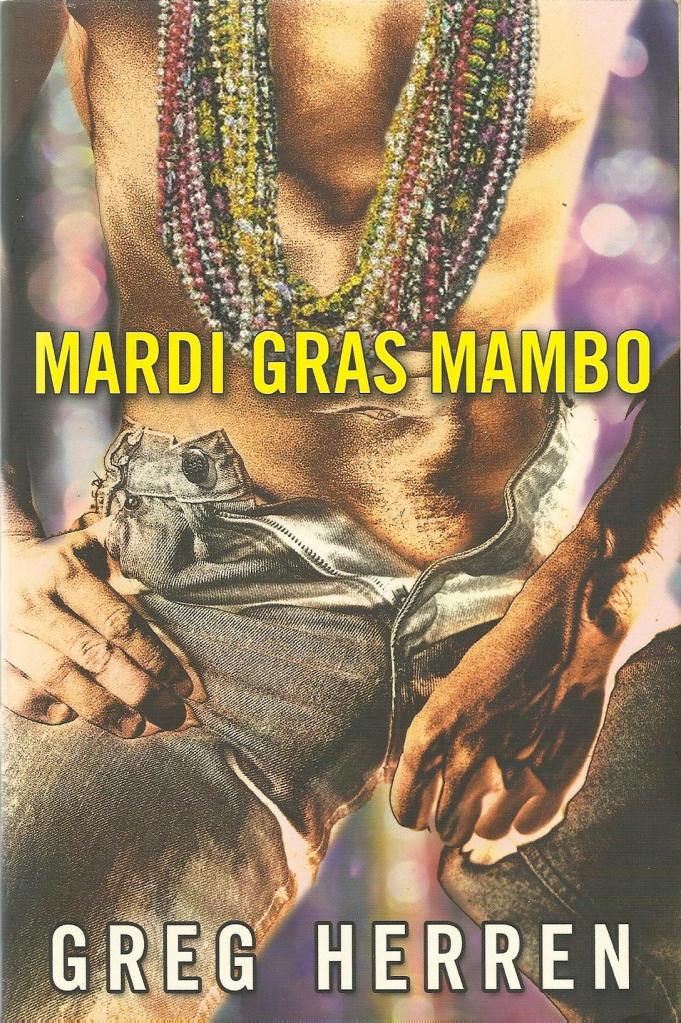
I’ve told this story any number of times; how the writing of the book was derailed by two awful things that happened in my life, and how I finally got back to writing again in the spring of 2005, managing to finish this and turn it into literally two or three weeks before Hurricane Katrina came barreling ashore and changed everything in my life, and the long recovery time from that paradigm shift, trying to adjust to the new reality I was facing every day. It felt weird going over the copy edits, weirder still doing the page proofs (I actually had the incredibly sharp-eyed Becky Cochrane and Timothy J. Lambert do it for me while I was visiting the Compound, thanks again, guys!), and even stranger having to tour and promote a book about New Orleans set before Katrina while still dealing with the recovery.
I’ve told those stories before, and that isn’t really what these entries are about; these entries are about the books themselves and how I came up with the stories and so forth, and the writing of the books. The primary problem, of course, is that I wrote this book between and around tragedies; the two year period I call the Time of Troubles that began on Memorial Day weekend in 2004 and ran through about 2008, really; because that’s about how long it took after all those issues for me to feel like my feet were beneath me again and I once again had a grasp on my life. I don’t remember what the original story was about, other than it centered on the Krewe of Iris, Scotty’s Diderot grandmother’s best friend who’d married a much younger muscle-stud Russian, and that’s really about it. The Russian would have something to do with a Colin case–and it would turn out actually be the case that brought him undercover to New Orleans in the first place during Southern Decadence; in Jackson Square Jazz we find out what Colin’s real job is, and that he was in town originally about the Napoleon death mask–but he was also in town to keep an eye on the young muscle-stud Russian who’d married Scotty’s grandmother’s best friend. It wasn’t really working, and I didn’t much care for the story, to be honest; I’d already asked for an extension before Memorial Day weekend in 2004 when all the shit started happening; after Paul was attacked they took it off the schedule and told me not to worry about it. (I appreciated the courtesy greatly at the time, but at the same time had this sinking feeling in the back of my head uh oh, they may not want another one after this–which turned out to be correct. But I dismissed the fear as part of my on-going struggle with Imposter Syndrome. It took me about six months, more or less, to get back to writing. I started my blog right after Christmas that year, and there I was writing every day again, and by January of 2005 I was ready to get going on this book again. I remember rereading everything I’d already done, not liking it, and deciding to scrap it and start over with the same essential premise: rich older society woman in New Orleans has married a much younger Russian boy-toy; Colin is investigating the boy-toy; and it’s Carnival season. Shortly after getting about halfway into a new first draft, the Virginia thing happened and I was derailed again. After that was over and I went back to the book…once again I didn’t like what was happening in the story and I threw it all out and started over again.
But this time, I hit my stride and four months later I turned the book in at long last, along with a proposal for a fourth, Hurricane Party Hustle, which was going to be set during an evacuation and would wrap up the loose ends left at the end of Mardi Gras Mambo.
And of course, three weeks later Katrina changed everything, and Hurricane Party Hustle went into the drawer.
Last night I dreamed it was Mardi Gras again. It seemed to me I was standing inside an iron gate, watching one of the night parades go by. The sidewalks in front of the gate were crowded with people, all shouting, with their grasping eager hands up in the air. Out beyond the edge of the curb, I could see people sitting in lawn chairs. Still others were up on ladders, with coolers and plastic bags of booty piled around them on the ground. Fathers and mothers were holding up babies, while black kids with the crotches of their pants down around their knees walked behind the crowd, weighted down by the ropes of beads around their necks. Beads were flying through the air, some getting caught and tangled in the branches of the towering gnarled oaks lining the avenue. The heavy upper branches of those oaks also blocked out the glow of the ancient street lamps so the night seemed even darker than it should. I could hear a marching band, playing a recent hip-hop hit, and the strange clicking sound of the baton girls’ tap shoes on the pavement. The air was heavy with the heavy fragrance of hot grease, corn dogs and the strange melted yellowish-orangey substance the vendors put on nachos that purports to be cheese—but no one is really sure what it is. A group of flambeaux carriers were passing by, dancing that odd little circular dance they do, their propane tanks popping and hissing, throwing long and twisted shadows that also danced inside the iron fence I was behind. Right behind them a huge float pulled by a tractor was coming and the crowd’s shouts became louder, more desperate, more pleading. On the float’s front was a huge white clown face, its bright red lips parted in what passed for a smile but seemed to me to be a frightening leer. The masks on the float riders glowed supernaturally at the hordes begging them for generosity in the strange light cast by the moon when it cleared the thick clouds in the cold night sky. I stood inside the black iron fence, my arms wrapped around me against the cold as an increased sense of menace and dread built inside me. Something bad was going to happen—
Oh, get real, Scotty!
If I do have bad dreams, I don’t remember them when I wake up. I’ve certainly never been troubled in my sleep, even though crazy things always seem to happen to me. I’m just one of those people, I guess. For whatever reason, the Goddess has decided to throw some wild stuff at me—she always has, even when I was a kid—and what can you do? I just don’t think I am one of those people who were destined to have a nice, normal, quiet life. Maybe it’s because I was named Milton Bradley at birth. Yes, that’s right. Milton Bradley. My older brother started calling me by my middle name, Scotty, before I started school and thank the Goddess, it stuck. Can you imagine how cruel the kids would have been to someone named Milton, let alone Milton Bradley? And then of course there’s the gay thing. I was lucky—my parents are pretty liberal and were delighted to have a gay son—like it somehow proved how truly cool they really are or something. They are pretty cool, actually.
By now, I’d taken to starting all of my New Orleans novels with a Tennessee Williams quote; for this one I chose a line from Vieux Carré: “You’ve got a lot to learn about life in the Quarter.”
I had opened Bourbon Street Blues with a parody of “The name’s Bond, James Bond” and I’d done something similar with Jackson Square Jazz–“Danger is my middle name”, riffing on Trouble is My Business. I decided to open this book with a parody of the opening line of Rebecca: “Last night I dreamed I went to Mardi Gras again.” But that entire opening paragraph of du Maurier’s is so fucking brilliant, I couldn’t help myself and made my entire first paragraph a parody of that opening. I then decided that from then forward, every Scotty book would have a Williams quote and each prologue–where Scotty introduces himself and his cast of characters and gives backstory so I don’t have to do it in the text of the story itself–would parody the opening paragraph of a famous novel, rather than just the first line (I am actually struggling to find the proper opening to parody to start the prologue for this one. I’ve used Rebecca, Peyton Place, The Haunting of Hill House, and Lolita, among others so far already; I’ve tried with this one to use An American Tragedy, Atlas Shrugged and The Great Gatsby thus far, with no luck. I’ve tried Valley of the Dolls several times for other books in the series already, but I can’t ever get it to work for me).
I do remember that the one thing that didn’t come across in those earlier drafts that I had abandoned was the sense of insanity that Carnival always brings with it; that feeling of “controlled anarchy” we experience those two weeks of parades, of knowing you have to schedule your entire life around a parade schedule–true even for those who do not live inside the box, as we say here; the box being the Uptown parade route–I always have to schedule my job, my trips to run errands uptown, everything, predicated around having to get home at least two hours before the parades start, and am incredibly lucky if I can get a parking spot within three blocks of the Lost Apartment. The thing I kept forgetting in those earlier versions was the books are meant to be fun. Granted, I was hardly in a mental space to write something fun…and of course the decision to really take it completely over the top the way I did was something I still think about to this day and wonder, where on earth did you get the idea for identical triplets?
Which, while crazy, made more sense than the cloning story I tried to write the second time.
Maybe those bad things happened for a reason? Because I couldn’t be more pleased with how the story and the book turned out. I also ran out of room to finish the personal story…but I also was operating on the assumption I’d get a contract for a fourth book. If not for Katrina, Kensington might have made another offer and Hurricane Party Hustle might have been the fourth Scotty than something just sitting in the files.
The book was released on Fat Tuesday, 2006. Paul and I had been out of town–the truncated Carnival/parade season seemed almost too sad to handle, so we’d accepted a gig to speak at the South Carolina Book Festival. We flew back to New Orleans the Sunday morning before Fat Tuesday. I’d checked my email that morning before boarding the flight to Atlanta (we changed planes) and then our cab driver couldn’t get closer to St. Charles than Baronne Street. A parade was going as we got out of the car, and we had to cross the parade (it was in the high seventies and sunny) with our luggage–I’ll never forget looking up as we got ready to cross and catching a bag of beads with my hand just before it connected with my face–and got home. I checked my emails and my word! SO MANY EMAILS.
You see, that day’s edition of the Times-Picayune carried Susan Larson’s review of the book, and it was a rave! Everyone emailed me as soon as they saw it–I still bask in the glory of that review–and I was about to embark on probably the most ambitious book tour of my career.
I just didn’t see, though, how I could write another funny, light book about a city still in ruins whose recovery was still questionable.
The series was, for the moment, over–with the personal story not resolved the way I would have wanted, but it could stand as it was, should there never be another Scotty story.
Rereading it, I couldn’t but laugh at some of the outrageous twists and turns the plot took.
All those years of inactivity, and of not going to the gym, and now of course I am becoming more acutely aware of how soft, saggy, and squishy my body has become. Heavy sigh. But, per my new mentality and outlook on life that I am trying to implement, I am not going to allow myself to regret said last time or anything of that nature, and simply will try to find time in each week to not only get a nice stretch done, but to do some crunches and possibly push-ups; based on the theory that some exercise is better than none. And I also know it helps make me feel better; I have one of those round ridged things that you can roll your back over to self-massage (I am describing this badly, well aware) and I used it yesterday, and felt exponentially better; I am going to try to use it as many days I can remember to do so. Self-care is always crucial, and during these difficult and strange times in which we find ourselves, even more so.
Yesterday morning I got up an hour earlier than I usually do on Mondays; something I was resisting doing because I am not now, nor have ever been, much of a morning person, and the thought of getting up at or around six in the morning was anathema to me. But I did it, and had coffee and breakfast and woke myself up a great deal more than usual, and I even managed to get to work early and have a jump on the day–and that was actually lovely. When I got home from work I was tired; very tired–partly from getting up so early and partly because there was some minor stress involved at work in the afternoon; I was required to do some problem-solving, and while (he typed modestly) it’s something I am actually quite good at, it’s still draining and stressful and tiring while I am in the midst of it, and particularly when the adrenaline from the stress finally drains away. I came home and tucked myself up in my easy chair with Little Fires Everywhere (I cannot emphasize enough how much I am enjoying this book) and then did some organizing and cleaning in my office while the LSU-Texas A&M game from last season played on Youtube as delightful background noise while I waited for Paul to come home.
After Paul got home–and I read some more–we settled in to watch this week’s episode of The Vow, during which I kept dozing off, which I thought meant I had a lovely night’s sleep ahead of me. Alas, my old friend insomnia came back for a visit last evening, and so while I was enormously relaxed and comfortable in the bed, my mind never completely shut down, so I was partially awake for the majority, if not all, of the night, I’m not tired per se this morning as I drink my coffee, nor am I groggy; but I don’t have high hopes for a productive day other than seeing my clients. It’s definitely fine; I suppose–what other choice do I have, really–but a good night’s sleep would obviously have been more preferable. Ah, well, perhaps tonight that will happen–Lord knows I should be tired and sleepy tonight.
I also started working on a new short story for some reason last night instead of working on the book; reading Little Fires Everywhere started making me think of a new story–as good writing always does inspire me–and I wanted to write the opening down before I forgot it; it didn’t quite go the way I’d planned, as these things never really do, and it is definitely veering off the track I’d originally intended for it to go, but it’s called “Noblesse Oblige”–the relationship between Mrs. Richardson and Mia in the book made me start thinking about a certain kind of wealthy, or upper middle class, woman; whom I generally tend to refer to as “limousine liberals”–the kind who are all about the right causes and doing what they can to help those who aren’t as privileged as they are, but don’t want to get too close to those underprivileged people and are inevitably surprised and shocked when their “generosity” isn’t met with the worshipful adoration and gratitude they feel it should be–and become resentful. You know, the ones who say things like “after everything I’ve done for you”–which, to me, has become an incredibly loaded statement.
While the show Friends hasn’t aged terribly well, every so often there was an episode that was absolutely (and probably accidentally) insightful about the human condition; this was one in which Joey and Phoebe had an argument about doing charity work or doing things for other people; Joey’s position (which, ironically, was the same as Ayn Rand’s) was that there was no such thing as a selfless act, because even the most noble person gets a sense of satisfaction after doing something charitable. Phoebe, who “didn’t want to live in a world where Joey was right, desperately spent the entire episode trying, and failing, to prove Joey wrong. It was so strange to me, and jarring, to see a philosophy of Ayn Rand’s being illustrated so perfectly on a situation comedy on my television screen that I never forgot the episode (yes, I’ve read Ayn Rand; but unlike many who profess to be her devotees and acolytes I have read beyond Atlas Shrugged and The Fountainhead; I also read her other novels–Anthem, We the Living–and most of her non-fiction as well–which is why I find the modern day political posturing of those who profess to be her followers revolting and a bastardization of her philosophy; because they clearly haven’t read anything beyond the two novels that she used to illustrate her beliefs and values. For the record, I believe her philosophy and theories were interesting, but ultimately would never truly work because they weren’t based in any sort of reality–however, the purpose of this entry is not to point out the fallacies in Randian philosophy and this is merely a sidebar); and I think about it every now and again whenever I am presented with someone’s “good works”. One is never supposed to question someone’s motives for doing something charitable; it is always to be assumed they are doing it because they are a good, generous, kind and giving person; and it is cynical to question the motives behind charity: that the reason and motives behind the act aren’t important and shouldn’t be questions because the act is, in and of itself, such a good thing that it should be above reproach.
And while there is some truth to that, I always question motives, and if that makes me a cynic, so be it. I do a lot of volunteer work, and I’ve donated writing to charity anthologies over the years, and have edited, for free, others. Inevitably, though, I do gain something from all of this: self-satisfaction in helping others because I enjoy it, my name on the spine of a book is promotional even if I did the editing for free, and the same with the donated short stories–if someone who has never read my work before reads one of the donated stories and likes it, there’s always the possibility they will buy my other work–so inevitably the donation works as promotional material for my career. And I do get some satisfaction from helping people–it makes me feel good about myself, makes me feel like I am a better person than I probably am, and there’s also a sense of paying a cosmic, karmic debt in advance–the idea that doing something to help other people either repays people who’ve helped me, or will be banked so that someone will help me out in the future.
Which probably isn’t how that works, is it?
And on that philosophical note, tis off to the spice mines with me.
Never mind why–it is simply too tedious for me to get into any detail and trust me, you’d be bored to tears–but the one nice thing about it was once it was finally over and donw with and I was safely inside the Lost Apartment and in my LSU sweats, with a purring kitty sleeping in my lap, I was able to rate rested and relaxed and now, hopefully I’ll be able to get my life back under some kind of control. That would be so lovely.I work a longer day now on Fridays–five hours instead of four–but shifting to coming in later in the day was an extremely smart move.
But the good news is that I was able to finally finish reading Rob Hart’s wonderful novel, The Warehouse.
Well, I’m dying!
A lot of men make it to the end of their life and they don’t know they’ve reached it. Just the lights go off one day. Here I am with a deadline.
I don’t have time to write a book about my life, like everyone has been telling me I should, so this’ll have to do. A blog seems pretty fitting, doesn’t it? I haven’t been sleeping much lately, so this gives me something to keep myself occupied at night.
Anyway, sleep is for people who lack ambition.
The rise in popularity in dystopian fiction since the turn of the century isn’t really that difficult to understand; the world is kind of on fire and each day we seem to be inching our way to the inevitable collapse of civilization as we now know it. I do recognize how pessimistic that thought is, but it’s one I’ve been finding myself having more and more as the years have passed since the century dawned with so much promise back in 1/1/00. Remember how exciting the new century seemed back then, when it was fresh and new and full of promises? Yeah, well. Who knew? I wonder if people felt the same way in 1919…but given they’d just gotten through the first world war and the Spanish flu pandemic that killed millions, probably.
Early in the 1990’s, as queer equality issues began to become more and more mainstream–with the inevitable holier-than-thou nasty religious pushback–I wrote down many pages of thoughts and ideas I had about a dystopian future world, one in which queer people finally obtained equality only for there to be a horrific and horrendous pushback, similar to the one depicted in Margaret Atwood’s The Handmaid’s Tale that pushed back against feminism and women’s equality. I saw an America where evangelical Christianity was encoded into our law; where people of color and other undesirables began to disappear as they were blamed from everything wrong with modern society and the economy; and where those unaffected by those prejudices and legalized bigotry turned a blind eye to the suffering of fellow Americans as long as they could pay their bills and buy nice things for their family. Since that original idea–which was easy to scoff at by friends I talked about it with, as they weren’t queer or marginalized–I’ve come back to that idea, time and again, as the idea sometimes seems to be taking root in reality. I tend to avoid dystopian fiction, as a general rule; I’ve read Brave New World, 1984, The Stand, Alas Babylon, The Handmaid’s Tale and many others; I’ve watched the Mad Max films. I generally try to avoid it, to be honest; I find our the dystopia evident in our reality far more frightening and oppressive than anything I might find in fiction.
But I couldn’t get into The Hunger Games or any of the others published in the twenty-first century to great sales and acclaim; just had zero to no interest. I got into the zombie apocalypse stuff for a while, with The Walking Dead, but even it eventually devolved into misery/torture porn and I lost interest.
But Rob Hart’s The Warehouse…I don’t know; for some reason as soon as I heard the concept behind it, months before its publication date, I knew I wanted to read it. Part of the exhausting frustration I’ve felt over the last few weeks as I slogged away at the volunteer project has partly been due to my inability to spend more than twenty minutes or so at a time with the book; the one good thing, as I said already, about today’s errands was the ability to sit in a waiting room for long stretches of time with nothing to do other than read–and occasionally delete emails from my phone.
What a wonderful, frightening, and all too realistic book Rob Hart has gifted the world with!
The Warehouse is set in a world in the not-too-distant future where almost everything has collapsed. This collapse of functionality of the general society isn’t explained; but it has to do with climate change and economic shifts and rising seas. One company, Cloud, which allows everyone to buy everything they need on-line and have it delivered quickly via drones, with MotherClouds scattered all over the United States, has pretty much monopolized means of production and delivery; their employees are given free housing and so forth and live in climate controlled dorms that are all connected with the warehouses and entertainment complexes; enclosed cities, where your every move and your every purchase is monitored. There’s health care and communal bathrooms and showers and you need your Cloud wristband to get anywhere or do anything.
Sound all too frighteningly familiar?
The story is told from three different points of view; the book opens with with a blog entry from Gibson, the man who thought up and founded Cloud and became worth billions as he essentially took over the United States; Paxton, a small business owner who invented a thing called Perfect Egg, so that you could make a perfect hardboiled egg in the microwave and peel it perfectly every time, a business that flourished until Cloud’s demands for deeper and deeper discounts eventually forced him out of business and has now landed a job there; and Zinnia, a young woman we don’t know much about who is also starting work there, but she has an ulterior motive. Zinnia and Paxton eventually cross paths, become friends, and as he works security, she begins manipulating him for information as she also starts to develop feelings for him.
It’s a terrific story, very well told, with very smart things to say about capitalism, consumerism, and how easy it is to compromise your principles in exchange for security. Bright and intelligent and well-written, you can’t help rooting for both Paxton and Zinnia to somehow make it through everything and somehow come out on top.
Most dystopian tales deal with the aftermath of nuclear war, or Big Government taking over, or some kind of religious fascism, but rarely, if ever, has the dystopia arisen out of capitalism and consumerism, and Rob Hart hits the bull’s eye squarely with this one. (Well, also Atlas Shrugged by Ayn Rand, but Ayn Rand deserves many posts all by herself, and she wishes she had one tenth of Rob Hart’s story-telling skill)
This is destined to be a classic, and I do hope Ron Howard does the story justice on film.
In closing this, I’d like to thank Rob–and other writers like him, like Ben Winters and Adam Sternbergh–for pushing the envelope of the crime genre, melding crime and speculative fiction in clever, innovative stories that broaden our genre and enable them to tell bigger stories than we customarily see in crime fiction. I loved this book from start to finish, and it’s so layered and clever–the development of Gibson, through his blog entries, his justifications for his egotism and so forth, was chillingly genius.




 Queer and Loathing in America