The Main Thing

Work at home Friday, as we head into this weekend. It started sprinkling here around lunch time, and the deluge came after one. It was pouring, but only lasted for about an hour or so–but a lot of water came down. The rest of the day was just gray, with an occasional light sprinkle. My sinuses behaved, surprisingly, and I wasn’t that tired when I left for home. There was no traffic on the highway; I only had to slow down on the ramp to I-10 rather than the usual stop-and-go fifteen minutes it is usually. I guess a lot of people stayed home yesterday…but all of our appointments also showed up, which was nice. Looking at the weather this morning–currently sunny with scattered clouds, potential of rain at any moment until tomorrow–it appears we missed most of the rain yesterday, which wound up west of the city. The Atchafalaya basin got 11 inches of rain (!!!) yesterday instead of us; 11 inches of rain would have shut New Orleans down for the day. I slept very deeply and restfully last night, so I have no idea if we got any rain overnight. I feel pretty good this morning, too. The coffee is going down well, my coffee cake was perfection, and I’ll have either toast or cereal or yogurt as a follow up later. We’re still planning on going to Costco after work today, but that will depend on the rain. I also have dinner plans with a friend, but again–that will depend on the weather.

I did some chores when I got home from work last night–dishes and laundry–but my mind was pretty much mush by the time I was done with that, and then Paul came home while I was catching up on the news (Epstein! Epstein! Epstein!), and we started watching season two of America’s Sweethearts: The Dallas Cowboys Cheerleaders–which we used to watch when it aired on TNN as Making the Team. It’s definitely lots of fun; Paul and I are always fascinated by the two women who run the program, Kelly and Judy, who’ve pretty much dedicated their entire lives to the Dallas cheerleader program. (They also belong on a Real Housewives franchise, but are probably too busy.) I’m always fascinated by how these young women are sexualized by that uniform, but the show is always very careful to focus the cameras on the ones who come across as very sweet and virginal–or can play the part for the cameras, at least. I will definitely be talking more about this show!

But we’re on the cusp of another weekend, and I don’t have nearly as many chores to get done as I usually do, so I have a bit of a head start on the weekend; I won’t have to spend tomorrow morning cleaning or doing much of anything around here, so I can focus on reading my current books (Megan Abbott, Elizabeth Peters, Jay Bennett) and write. I’m not sure if the plans for the weekend include seeing Superman, but it’s playing in convenient nearby theaters, so it’s not a huge stretch for us to be able to see it. I’ve been a Superman fan since I was a kid and discovered the comic books and all the other media featuring him; I’ve read books, comic books, watched television shows and movies with him over the years–but I am also not one of those “fans” who feels betrayed by differences in adaptations, either. (Did Archie purists whine about Riverdale?) I’ve always been interested in the concept of super-heroes/metahumans etc., and have wanted to explore it in fiction sometime. But how can you be original when so much has been already done? Sigh. I always feel derivative when I’m writing anything, but that, I suspect, is a part of my imposter syndrome.

I really wish I could analyze the imposter syndrome right out of my brain.

It looks like we aren’t getting much rain today, after all, which will make the day a lot easier to deal with for errands and so forth. Huzzah! (The sun is shining now.)

And on that note, I am going to head into the spice mines. Sorry to be so dull, but that’s just the way it goes some weeks, you know? I will be back tomorrow morning, if not sooner; one never can be sure when the mood will strike! But have a great Friday, Constant Reader!

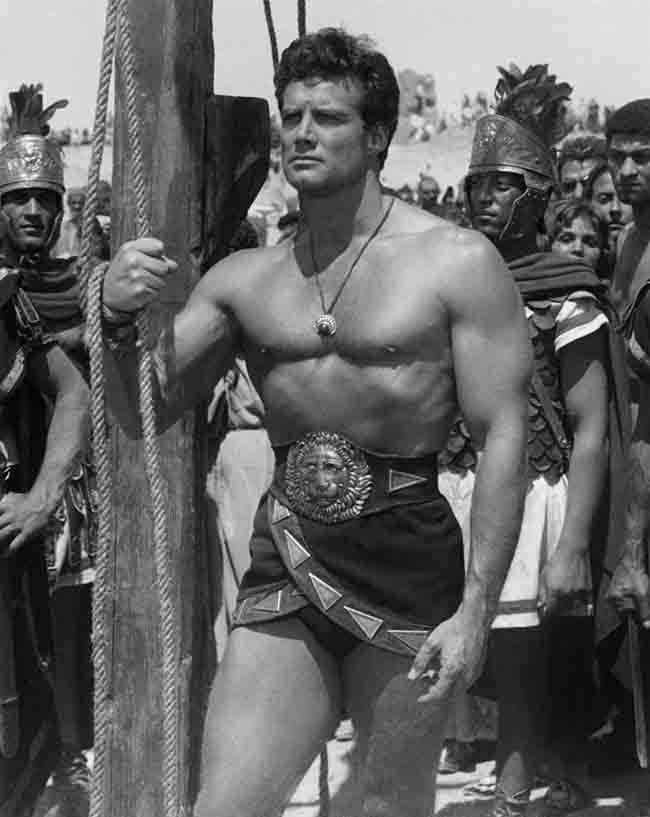
Steve Reeves in Trojan Horse

Evangeline

One of the great joys of my life has always been history. One of the many reasons I love New Orleans so much is because the city has never completely paved over and replaced its history; on a foggy night in the French Quarter, the sound of mules pulling tour carriage clopping on the streets can make you feel like you’ve somehow stepped through a window into the past, and I love that. I’ve never known much beyond some basics of New Orleans and Louisiana history; and I’ve been going down rabbit holes since right around the start of the pandemic, learning more and more about the history here. It’s humbling to realize how little I actually did know. I knew when the French arrived; I know how English Turn got its name and when Louisiana was turned over to Spain (1763, to be exact) and when it became American (1803). I also know Napoleon sold Louisiana to the Americans before he succeeded in forcing the Spanish to return it to France….so he could sell it to the Americans. I know New Orleans fell to the Union in 1862 during the Civil War; I know a little bit about Storyville and Huey Long; and I know that the landing boats used for the Normandy invasion in World War II in 1944 were built here. I know a smattering of things post-war about New Orleans–but the gaps in my knowledge are staggering, and I know even less about the rest of the state’s history.

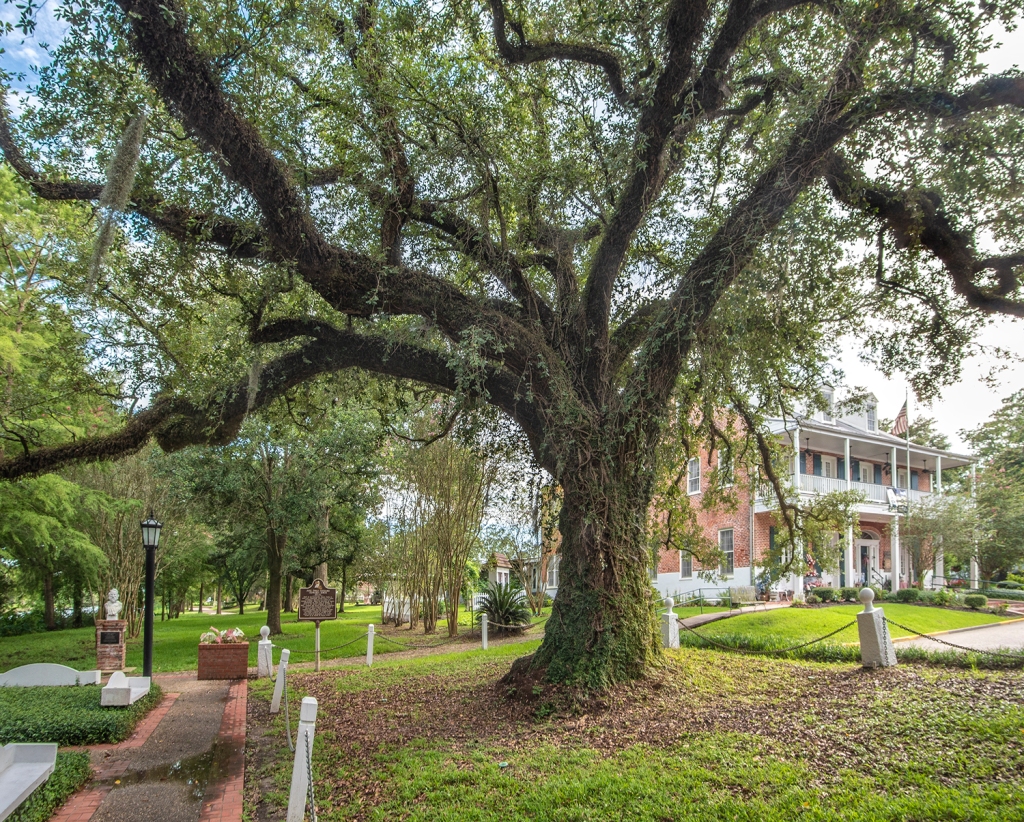
I know that the Cajuns are actually Acadians, from French Nova Scotia, kicked out after the French and Indian War and forced to resettle elsewhere–many of them, after a long and mostly horrific journey, arrived in the swampy wetlands of Louisiana and made their home here. I know that Longfellow’s epic poem “Evangeline”, about two lovers tragically separated during what is called le grande derangement–the Great Expulsion–who promise to find each other once they reach Louisiana. It’s a tragic poem, and of course the Evangeline Oak in St. Martinsville is supposedly the”place” that the fictional lovers finally found each other after so many years, but their pairing was simply not meant to be–the story is a tragedy, after all–but that was how the “Cajuns” came to be Louisianans, and even after they arrived it wasn’t easy for them here. The Creoles of New Orleans looked down their aristocratic noses at the lower class farmers, and so they settled in the part of Louisiana still known as Acadiana to this day.

I have a copy of Evangeline somewhere. I really should read it.

One of these years, I am going to explore my state more. I’ve lived in Louisiana now for almost twenty-seven years, and I’ve never done much in terms of exploration, sight-seeing, and research. The Atchafalaya Basin fascinates me, as does Acadiana. The more I read about the history of both New Orleans and Louisiana, the more I realize how little I know (I always laughed off being called a “New Orleans expert,” because there’s literally a library filled with information about the past of both the city and the state to completely humble me and make me realize I know actually very little about either, and definitely do not qualify to be called expert on anything Louisiana.

I’ve slowly started writing about the rest of Louisiana, but I often fictionalize the places I write about; they are loosely based on the reality but I get to play around with that sort of thing and that’s better for me than trying to write about the real places and making it all up. My first time outside of New Orleans writing about Louisiana was really Bourbon Street Blues, when Scotty is kidnapped by the bad guys and winds up deep in a swamp. “Rougarou” was when I came up with a fictional town and parish outside of New Orleans, which I’ve used since then again. Need had portions that were set in the rural parishes outside of the New Orleans metropolitan area. The Orion Mask and Murder in the Arts District also were heavily reliant on being set (at least partially) in a fictional parish between New Orleans and Baton Rouge. “Solace in a Dying Hour” is another one of these stories. Oh, and Baton Rouge Bingo also had a lot of action outside of New Orleans as well.

I probably should have majored in History for college, but what would I have done with that kind of degree other than teach? Ah, the paths not taken, since I never had any desire to be a teacher, probably my subconscious saying um, you cannot be a teacher because of who you really are which was probably smart. Besides, I wouldn’t have ever been able to pick a period to specialize in; I would have had to be like Barbara Tuchman, interested in everything and picking certain periods that intrigued me for study. How could I ever choose between the Wars of Religion and seventeenth century France, or the Hapsburgs in Spain and Austria? Although I suppose I could have specialize entirely in the sixteenth century, primarily because it was such a tumultuous transitional century. I wish I was a trained researcher, but I suppose I could still learn how to do research properly despite my great age; the problem is time. Fall Saturdays are given over to college football (and I am not giving up one of the great joys of my life) and of course Sunday I watch the Saints. But if I am going to write historical fiction set in New Orleans or Louisiana, why wouldn’t I avail myself of all of the magnificent research facilities here in the city? UNO, Tulane, Loyola and I’m sure Xavier all have archives in their libraries documenting the past here; there’s the Historic New Orleans Collection and the Williams Research Center and really, so so very much. I also need to explore the bayou parishes and the river parishes, and make my way further north to explore Acadiana…and if I ever want to write a book based on the Jeff Davis Eight, I would need to go visit that parish and look around, get a grasp for how it feels and looks there.

So much to do, so little time…and one of the great problems about Louisiana and New Orleans history is trying to decipher what is fact and what is fiction; as so many “historians” and “writers” (looking at you, Robert Tallant and Harnett Kane) often wrote legends and lore as historical fact. I’m not sure how much of Gumbo Ya-Ya is actually true or not, but for writing fiction…perhaps it doesn’t matter as much how right it is? I have this idea for a story, predicated on something I recently discovered again–I have a tendency to forget things–but there was a community just outside of New Orleans called St. Malo, which was settled by Filipinos who’d escaped bondage on Spanish sailing ships. Filipinos in Louisiana in the eighteenth century? But it’s true; and the community was mostly houses and buildings built over the water; the 1915 hurricane destroyed it completely and it was never resettled, with those who survived moving into the city proper. I have an idea for a story called “Prayers to St. Malo” that would be built around that, but the story is still taking shape. There is always more to learn about regional history here…and since I am doing such a deep dive into Alabama history, why not continue diving in regional here?

Louisiana is unique and special and different–which is why I think I felt at home here that fateful thirty-third birthday when I came to New Orleans to celebrate it. New Orleans was the first place I ever felt like I belonged, and I’ve never regretted moving here. I just wish I’d started diving into the local history sooner.

You Don’t Love Me Anymore

Sunday morning, and with no Saints game today I have no excuse not to get a lot done today. It’s chilly this morning and gray outside; we still have rain in the forecast but it’s calm and quiet out there right now; perhaps the calm before the storm? Ugh, such a tired cliche–but it’s fine with me.

Yesterday I got a lot of chores done–very little writing, but the chores were necessary and of course, being the Master Procrastinator that I am; I have to have a clean apartment–or at least one that’s been straightened up some–in order to have a clear conscience enough to get work done. I now have no excuses to not get everything done that I need to get done today–but we’ll see how that goes; there’s always something.

I read another Holmes story yesterday–“The Musgrave Ritual”–which I couldn’t remember the plot of, other than remembering that it was one of my favorite Holmes stories. Like “The Gloria Scott“, it’s a “let me tell you a story” story; I really don’t remember the Holmes stories being like this, of course, but it’s something to think about as I prepare to write my own pastiche. It’s a style of writing/story-telling I’m not so certain I want to try, but then again–the entire point of me writing a Holmes story is to push myself as a writer and get better overall, so perhaps…perhaps I should try it that way and see how it goes. Anyway, as I reread it, I remembered why I liked it so much; it’s a treasure hunt story, and I absolutely love treasure hunts. At least two Scotty books–Jackson Square Jazz and Vieux Carre Voodoo, are treasure hunts.

I also rewatched the original film version of Shirley Jackson’s The Haunting of Hill House, 1963’s The Haunting, directed by multiple Oscar winner Robert Wise, and starring Julie Harris as Nell. I saw this movie long before I even knew there was a book, let alone read it; my grandmother loved old black and white movies, and she especially loved crime and horror–probably where I get it from, and she also introduced me to the novels of Mary Stewart, Victoria Holt, Ellery Queen, and Erle Stanley Gardner. I was very young and the film absolutely terrified me–to this day, even remembering the scene with the door expanding and contracting unsettles me. I was, of course, quite delighted as a teenager to discover it was actually a novel (I had read Richard Matheson’s Hell House, with it’s similarities to The Haunting, year earlier and wondered if he’d gotten the idea for the book from the movie), and it quickly became one of my favorite novels of all time; in fact, I believe it was Stephen King who introduced me to the novel, because the opening paragraph was an epigram to ‘salem’s Lot. But I hadn’t watched the film in years; I’d watched the horrible 1999 remake, and of course the Netflix series loosely based on the book (I do recommend the series, it’s fantastic, once you get back the fact that it’s not a faithful adaptation but kind of fan-fiction; it didn’t even have to be Hill House for the story to work, but that’s a subject for a different blog. I do recommend it, though). Julie Harris is perfectly cast as Nell, and Claire Bloom does an excellent job as Theo. There are differences between the book and the film; why they changed Dr. Montague’s name to Dr. Markway is a mystery, and the later third of the film, after his wife arrives, is vastly different from the later third of the novel, and her character is completely changed; the young man who escorts her to Hill House is also excised from the movie. But the way the film is shot–the use of light and shadow, the up angles of the camera, and the ever-so creepy claustrophobia of the enclosed house–is absolutely terrifying, and you never see what is actually haunting the house. That was the singular brilliance of the book, and Wise kept that for his film (the execrable 1999 remake went completely over the top with CGI effects and so forth; ruining the necessary intimacy of the story). I still think of it as one of the scariest movies I’ve ever seen, and on a rewatch–the way you hear Nell’s thoughts, whispered, while Julie Harris’ eyes dart around–adds to the intimacy. I think that interior intimacy is a large factor in why the book is so fantastic, and why both book and original film work so well. The Netflix series does show the ghosts of Hill House, but it’s also done in a very subtle, unsettling way, which is why I think I liked it so much.

I also was thinking about rewatching Anthony Minghella’s film adaptation of The Talented Mr. Ripley, but decided to hold off until I finish the reread of the book–which I am still in the midst of–I want to finish it before my trip this week, because I want to take two different books with me to read.

I did finish my reread of Kirkland Revels by Victoria Holt, which was much better than I remembered, with it’s haunted monastery and ghostly monk haunting the big manor house. It’s also a terrific novel about paranoia and gaslighting; the ultimate evil scheme behind everything hinges on the heroine of the story being eventually committed to an insane asylum, and hopefully miscarrying her child, or it being born dead as a result of the confinement. Holt novels often hinged on the possibility of insanity being genetic–if the mother is insane, her child most likely will be as well–and this horror, which was probably very real in the nineteenth century, makes this book terribly unsettling. The main character, Catherine, is very strong-willed and intelligent, but she marries a man without meeting any of his family, moves into the family estate (Kirkland Revels), and then he dies in a fall from a balcony, and she returns to her father’s house; only to have to return to Kirkland Revels when she discovers she is pregnant. The combination of vulnerable and pregnant heroine being gaslit into believing she is insane was pretty unsettling to me when I originally read the novel; which is probably why it’s one of the few Holts I never took down from the shelf on a rainy afternoon and reread. Rereading it, thought, makes me appreciate the mastery apparent in Holt’s writing. She never again wrote another novel with a pregnant heroine–while some of her later novels did involve pregnancies and/or motherhood (On the Night of the Seventh Moon, The House of a Thousand Lanterns) the mystery, and the plot against the heroine, never occurred during the pregnancy. Romantic suspense, and its twin sister, domestic suspense, were a kind of “women’s noir,” in that the stories always focused on what were seen as the biggest fears for women–marrying the wrong man, danger to her child, not being able to trust your husband–were the recurring thread through all of them.

I also did manage to get some work done on the new project yesterday, which was lovely and my goal for the day. Not as much as I would like–I wouldn’t be me if I didn’t fail to achieve everything in a day that I wanted to–but enough to be satisfactory. I also came up with an idea for another Scotty, one that takes place down in the bayou–Cajun Country Cavaille–but whether I’ll write it or not remains to be seen. But I’d like to address the loss of the Louisiana wetlands at some point in print, and writing about a (probably fictional) version of Lafourche and Terrebonne parishes is probably the best way to do that; I just don’t have a murder mystery to hang the story on. My interest in the Scotty (and possible resurrection of the Chanse) series is expanding outward from New Orleans to the rest of Louisiana; I’ve come to realize that not only do I love New Orleans but I also love Louisiana, frustrating and irritating as that love can be sometimes. Louisiana is so beautiful…I also want to write about the Atchafalaya basin sometime, too, and of course let’s not forget the infamous Bayou Corne sinkhole no one talks about anymore…and of course there’s Cancer Alley along the river between Baton Rouge and New Orleans, which is also begging to be written about.

And on that note, perhaps it’s time for me to head back into the spice mines. Have a lovely Sunday, Constant Reader.
warrior-2-678x381