TRIGGER WARNING: Racism, homophobia, and archaic racist terms.
I learned long ago that the best way to deal with assholes was to develop a razor-sharp quick wit. I don’t know how I trained myself to be snarky and fast with my sense of humor, but at some point in my teens—in college, I think—I realized that not being filtered, and not being able to recognize most social cues, could actually prove to be a powerful defensive tool, if controlled. It has worked marvelously for me ever since. I also learned that a really good thing to do was say things to people I disliked that could be taken as either a compliment or shade, leaving it up to them to decide what I meant.
A few years ago, I had an experience at Left Coast Crime in Albuquerque where my usual biting sense of humor deserted me when I really needed it the most. I’ve grown used to dealing with homophobes and contemptuously cutting them off at the knees; I even relish doing it at times. But this? I’d never dealt with this kind of bigotry before, and my only excuse is that I was caught completely off-guard. I’ve also turned what happened over and over again in my mind in the time since, wondering how I should feel about it. It still hasn’t finished processing yet, and I’ll probably keep processing it for a few more years.
This was my first (and so far, only) time attending Left Coast Crime (unrelated; I want to go again but it just hasn’t worked out). I had always heard wonderful things about it, but the timing was always difficult for me to actually attend; all too frequently it is around the time of the Festivals here. I’d come home to the locks changed, methinks, were I to go away at that time.
At the time, I was still serving as Executive Vice-President of Mystery Writers of America. It was 2021, we hadn’t had any kind of crime publishing events since March 2020, and the events were just starting to slowly to come back. MWA had signed on to sponsor the Lefty banquet, and I felt someone should be there to rep the org at the event, and it wound up being me. I felt a bit uncomfortable about registering and agreeing to do panels; we were a sponsor, and I didn’t want Programming to feel pressured to give me anything because of that (I tried very hard not to use the position to promote myself; I may have been a bit over-zealous on that score, but better safe than sorry). I arrived in Albuquerque on Thursday, had a quiet dinner with a friend, and the next day I went to panels, ran into people, and had a lovely time. I also had dinner plans for Friday that I was excited about–I was having dinner with Marco Carocari, whom I had just met at Saints and Sinners; John Copenhaver, whom I was starting to get to know better; Oline Cogdill, a dear friend of well over a decade; Mia Manansala, whom I met at New Orleans Bouchercon before she was published and I’ve always felt a bit protective of her (my neuroses, not hers) and someone new to me–Wanda Morris, whom I had neither read nor met before.1
Constant Reader, that was such a fun dinner, the kind I always dreamed of being a part of when I was that lonely kid in Kansas wondering what his future would be. We talked about books, writing, gossip, and I believe everyone, other than Oline and I, was up for a Lefty. We toasted their nominations, and when we headed back to the hotel I felt marvelous; giddy almost. I was having a good time and was excited to be around writers again, and I wanted it to keep going. I didn’t want the evening to end…
Little did I know what I was in for as we walked back into the hotel lobby, and we three gays decided to go have a drink at the bar, while the women wisely all went up to bed.
It started with a chair.
So innocuous, so nothing, just a little thing that happens in hotel bars all the time; you join a table without enough chairs so you grab a free one from the next table…but this time? Very different.
Basically, we had decided to join friends at a high-top table with room for eight, with all the chairs already taken and some others pulled up. There was a tall bar chair standing at the next table–a low table, so it didn’t really belong there in the first place–and several people were sitting around that table. I smiled, said, “is anyone using this?” and one of the three people shook their head no, so I took the chair…which bothered the woman who was sitting closest to me and who decided, in her inebriation, that I shouldn’t have the chair.
DRUNK WHITE WOMAN (Henceforth, DWW): You can’t take that chair because you have to sit here and talk to me.
I’d never seen her before in my life, but I’ve also been drunk in public before, so I just smiled as I sat down at the other table, and said politely, with no idea of what I was letting myself in for: “Can’t you talk to me if I sit here?”
DWW: Great!
I nodded to her, hoping that was the end of the interaction. I’d had two drinks at dinner, but wasn’t even slightly buzzed. I had a glass of Pinot Grigio in my clutches, I’d had a marvelous evening already, and I was looking forward to catching up with the others at the table. I started to turn back to the table to talk to my friends, when…she leaned towards me, narrowing her eyes, and saying, in a very low tone, “Are you a mulatto?”2
Needless to say, I was taken aback–not by the assumption, but the language.
I literally thought, are we really still using that word in this year of our Lord 2022?
I didn’t know what to say, I was so stunned and shocked that my ability to lobby back an icy, conversation ending retort, something of which I was so so proud, had deserted me. I just smiled and said, “no,” which she countered with a scoff, “Well, you’re at least a quadroon.3“
And rubbed each side of her nose with an index finger, adding with a knowing smirk, “Especially with that nose.”
I said, rather sharply, “I know who all my grandparents were, so no.”
Again, it wasn’t the racial profiling that bothered me, but it was the entitlement and the language she was using.
First and foremost, my racial heritage–anyone’s, really–is no one’s business.
She was being racist to me, but even as I floundered, I couldn’t figure out why I was so flustered and having trouble figuring out what to say next. It didn’t bother me in the least that she thought I was part Black (more on that later), but she was using racist language to inquire, which I was offended by, and I was more than a little insulted by her condescending assumption that I’d lie about it? And again, what business was it of hers if I was or wasn’t? (I’m still not sure how to wrap my mind around this; two years later I am blogging about it in order to process it in my brain.)
AND WHAT IF I ACTUALLY WERE?
And then, finally:
DWW: Where are you from?
ME: New Orleans4.
DWW: (waving her hand, poo-pooing me) Oh, everyone’s mixed there.
Hoping this ordeal was over and still in shock, I turned back to my friends…only to hear her voice loudly asking me, “Are you gay?” I confirmed that yes, I was–and then she went on a long, incredibly tiresome (and repetitive) monologue about how she’s always been good with the “L and the G and the B and the T”, tried bonding with me over hot male asses (in horrific terms: think locker room talk), and just kept on until finally I was able to finally excuse myself. I got up and left my friends, never to return. Definitely made me uncomfortable, so yeah, it also counts as sexual harassment–what I do or don’t do in my bedroom, DWW, is none of your fucking business.
I still can’t believe that happened, that someone felt comfortable using that kind of language to, and about, me about my racial heritage (when I was a child in the 1960’s I knew you don’t use those words, and they usually only appeared in old racist books, like Gone with the Wind), not to mention trying to get into my bedroom and what I do there. It’s not okay for anyone to use those horrible, archaic old terms that were humiliating and degrading even when they were in common use…and I also felt like I’d failed. I should have stopped her, I should have called her out for using racist and homophobic language, not to mention the fact that she felt, in her drunken stupor, perfectly okay to treat me not as a person but as a thing.
That is the real shame I feel. Not that she used such language to me, but I allowed it. I have to do better than that. My silence was complicity.
And yes, I should have filed a complaint with the conference. I’m still ashamed that I didn’t correct her or say anything before I made my escape. But I sensed it also wouldn’t do any good. Alcohol brings your barriers down, after all.
It also wasn’t the first time this has happened–but at least the first time, it wasn’t so offensive.
This, for an illustration, was my second author photo.
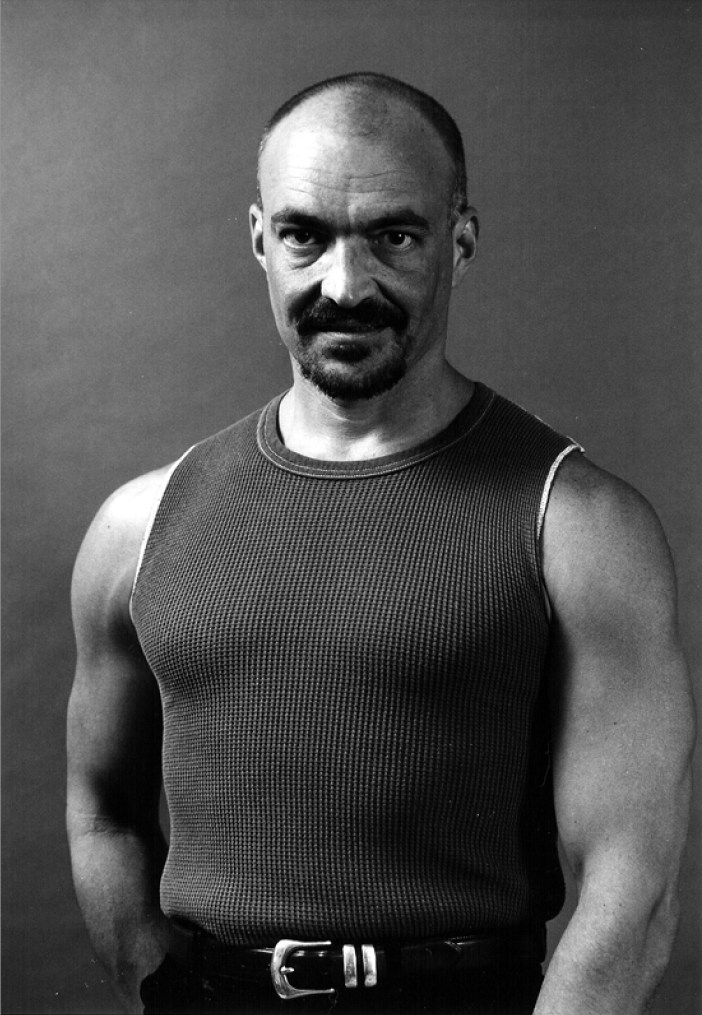
Taken by Sylvester Q, a photographer in New York, he also loaned me the shirt and some other clothes for the shoot. It was my first professional author photo shoot, and this was the best image, in my opinion, to come out of the session. I used it for Jackson Square Jazz (when I got the book down to reread it for the new edit for the 20-year anniversary edition, I noticed the picture) and for several other books. I don’t remember which image I used to replace this one–I think it’s the black and white one of me sitting and hugging my knees–but I am very well aware that I need new author photos. The one I just referenced was taken in either 2008 or 2009; the one of me with my stack of books is from around 2013 or 2014 (and yes, old age has hit me very hard since those last ones were taken). I did a shoot at Sleuthfest with Morgan Sophia in the summer of 2022; the pictures look like me but I don’t like the way I look in them, so I’ve not really used them.
Anyway, this was the image I provided to the Louisiana Book Festival when I was on a New Orleans Noir panel for their program in 2007 (I think). I don’t remember everyone else that was on it, other than editor/moderator Julie Smith and the person I am about to mention.
I was a little taken aback when said contributor sat down next to me, and exclaimed after we were officially introduced, “But I thought you were Black!”
She’d only seen my photograph in the program.
I was more amused than anything else, and perplexed. But when I looked at my image in the program later, it had printed even darker than the image above, which was already pretty dark. I think it had to do with how the shot was lit more than anything else. It was kind of funny, and it became a story that I told sometimes over drinks.
That wasn’t the first time my genetic heritage has been questioned by someone.
White people have this strange curiosity thing about people’s backgrounds, always trying to figure out where you’re from. “Are you German?” “Are you Italian?” That sort of thing. I will comment on a name–“oh, is that French/Spanish/German etc.”–but I would never ask anyone what are you?
I’d never really thought about it before the LCC incident, but people have very often wondered–and asked–what I am.
And in all honesty, I’ve never liked being asked, mainly because I wasn’t entirely sure.
I guess I am what is I’ve sometimes seen referred to as “ethnically ambiguous5“; in other words, had I been a movie star in Hollywood back in the golden age I probably would have been cast in roles that today would be considered offensive for me to play. People have often–again, this weird thing white people have about trying to figure out “what” I am–taken me for everything from Greek to Italian to indigenous to Syrian to Persian to Latino. I’ve never given it much thought, and I don’t really see it. My skin tone is what is called olive, and I’ve always tanned easily, a very dark brown with some red mixed into it (I’ve only been sunburned twice in my life). My facial features are a curious mix of my family; I look like both my parents, and my nose was broken in high school, with the cartilage never reattaching to the bone. I also shave my head, which apparently adds to the confusion.
Almost all of the ancestors (that I’m aware of, but I only know my father’s side, and there’s not anyone left on Mom’s side who’d know more) were British (Scots, Irish, English and possibly some Welsh) but white people have this weird need to classify people. I don’t know if it’s an American thing, or what, but it happens. Not so much anymore as it used to–maybe people are finally starting to realize that it’s offensive or that it doesn’t matter or some combination of the two.
But still. Basically, the woman in Albuquerque othered me. She looked at me and was confused, so she just had to find out what I was.
What I am. “What ARE you?”
And for the record, what happened to me at Left Coast is the kind of horrifically racist and offensive behavior that racialized people have to deal with multiple times every damned day. In some ways I’m glad it happened; that I got to experience racism targeted directly at me, but at the same time…it shouldn’t happen. To anyone, regardless of who they are or how they identify. It also made me very aware of my own privilege, which is something I do need a reminder about periodically; I get so wrapped up in being marginalized as a gay man that I forget how horrible it is to be a person of color in this racialized country and society and culture.
And ultimately, white people? It’s really none of your fucking business in the first place!
And would people have considered me white in the antebellum South? is a question we might have to revisit at another time.
Part of the struggle in writing this all down and sharing it with you, Constant Reader, comes from not wanting to make myself seem like either a martyr or center the conversation about racist bigotry on me. Unsettling as this all was–the privilege on display, the language used, the shame in not putting her in her place–it was momentary, something that didn’t impact or effect my life in any way; another anecdote for cocktail parties or dinner conversation. The sexual harassment aspect of it, had that been all there was (oh yes, during the ass conversation she also talked about mine), would have merely been something I would have laughed about with friends later, but the racial component was horrible. All I could think about was, really, how lucky she was that I wasn’t biracial.
Which makes me squirm more for not reporting it to the conference–what if she does this to authors or readers of color at one of these events? Was I coward for not only not stopping her but not reporting her? It’s been two years now, and I still am not entirely sure what I think or feel about this, which is very unusual for me; it’s very rare that I am unsettled this way.
But putting it all down has helped somewhat. I probably should have written this years ago.
- I did buy her book that weekend, and once I read it became a fan. ↩︎
- If you aren’t aware of this word, it’s an old, ugly, and pejorative term used for biracial people during the human trafficking era and the Jim Crow time that came after it. I’ve not heard anyone say the word aloud in at least fifty or so years. AT LEAST. If you want to understand just how offensive it is, it’s root word is mule–the product of interspecies breeding. Go fuck yourself, you horrible racist. ↩︎
- Again an archaic deeply problematic word that actually comes from antebellum New Orleans, indicating how much Black blood someone had. These were the days of the “one drop” rule, which meant any Black ancestry, no matter how remote, made you Black in the eyes of the state and the law. Quadroon means one quarter, so the person had a single Black grandparent, the “roon” comes from “maroon”, which is another old and archaic racist term for Black people. Despicable, really. ↩︎
- Credit where it’s due, she was using racist language that originated in New Orleans. ↩︎
- Which I also find kind of offensive, really. ↩︎





 Queer and Loathing in America