Mickey

Friday morning work-at-home blog, and the weather is supposed to get more back to normal for this time of year—highs during the day anywhere from the lower 70s to the mid 80s, dropping to the 60’s at night. It makes it even harder to get out of bed in the chill of the morning–and my blankets are incredibly warm and comfortable, as is the bed. But li’l Tug expects to get fed every morning around six (and is more than happy to let me know six is nigh by leaping over Paul and landing on me, before curling up next to my head while waiting patiently for me to get up and feed him and give him fresh water), which is going to make the time change this weekend a bit irritating. I also hate going to work and coming home in the dark, which is also soul-destroying because you feel like you’ve lost the entire day at the office.

But I slept well last night and let myself go back to sleep after the daily six a.m. feed-me Tug attack, which felt great. There’s a mail run to do and Tug’s first vet visit to fit into the day, and we’re going to Costco after I finish my work at home chores later. The constant, on-going kitten-proofing of the apartment can also prove challenging because you never know what’s going to catch his inquisitive must-play-with-that eye, and he is very curious and adventurous about anything. Cabinets can’t be left open. He’ll climb into the dishwasher as I am loading it–but no curiosity about the dryer yet. He’s also fascinated by water, like Skittle was–but the shower was uninteresting to him; not the case with Tug. He’ll tightrope around the rim of the tub while I’m showering and also walk between the shower curtain and the liner. He’s adorable and completely in charge around here, if you haven’t figured that out yet.

And I love having a purring kitty donut sleeping in my lap while I watch television or read.

Last night we watched this week’s The Morning Show, which absolutely felt like a season finale; I’m not sure if it was or not but it felt like it. I wasn’t super-tired when I got home, but Tug was especially needy so I repaired to my easy chair where I watched this week’s Real Housewives of Beverly Hills–which was kind of dull; but the fun of watching these shows is watching and reading the reactions of the fans and the recaps and so forth. I was thinking yesterday that these shows create community within their fans, as people want to talk about the cast and what’s going on with them, happily judging their lives, their behavior, their clothes, their make-up, their hair, their homes and their families. I was thinking this was unique to reality shows–remembering how everyone used to talk about Survivor and The Bachelor and American Idol back in the day, similar to how soaps would have group watches on campus where everyone talked about the storylines and the characters and their interactions. But we also did that with Glee and Lost and Desperate Housewives and various other shows. I do wonder what is it about film and television that drives people with the urge and need to talk about it with other people?

Then again, I always wanted to talk about books with other people–so I guess I can get it.

I was realizing the other day that this year in December will mark nineteen years of this blog–first on Livejournal and then moved here when I’d finally had enough of the Russian propaganda and spam over there–which is a longer commitment than most straight relationships and marriages, which is an interesting way to look at it. I started keeping it around Christmas of 2004, while we were still living in the carriage house–we wouldn’t move into the main house until June or July 2005; only to be moved back into the carriage house by Hurricane Katrina later that year. It’s also hard to believe sometimes that Katrina–and the Incident with Paul–was so long ago now; just like the Virginia Incident was a long time ago. Time inevitably passes, and just going through your every day routine living your life as best you can one morning you realize a lot of time has passed. The pandemic shutdown was almost four years ago, for fuck’s sake. We are now in year three going on year four of the COVID-19 pandemic, although no one really talks about it anymore. I am going to write about that whole experience at some point–there are at least three more Scotty books I want and/or need to write, which will take New Orleans through the cursed Carnival of 2020 (and the Hard Rock hotel collapse) and the shutdown and then afterwards. I think that’s been part of the creative malaise lately; knowing that the Scotty series, about to debut its ninth volume, is finally winding down. There are a lot of things I’ve wanted to avoid with these books but with the series continually going, I don’t have a choice. Scotty’s grandparents are all in their nineties by now–so death is going to have to come to the family. On the page or off the page? I do think it might be interesting to explore the Bradley side of the family a bit more; perhaps the death of the Bradley grandparents and a struggle over the will or something could be the basis for a book; perhaps COVID-19 might claim them, I don’t know. But I know I’ve not written about the shutdown or the pandemic, and it feels kind of cowardly to not address it in fiction yet.

Maybe I should finish that pandemic short story I started, “The Flagellants.”

I’m also thinking about getting blinds for the kitchen windows at long last; a do-it-yourself project I think I can handle.

And on that note, I’m getting another cup of coffee and heading into the spice mines. Y’all have a great Friday, and I’ll be back later with more blatant self-promotion.

Back to My Roots

Sick of my self-promotion yet? You can always scroll away, which is truly the loveliest thing about the Internet. You can always scroll past or close the window.

But buckle up, buttercup–I got another book coming out in ten days.

This is what happen when you blow deadlines, by the way. One of these was supposed to come out before Bouchercon–the Scotty–but a lot was going on in the second half of last year, okay? (The takeaway from this is don’t be like Greg–meet your deadlines.)

So, Greg, you decided to write a book that was an origin story for a drag queen amateur sleuth. Why start with the origin story?

Two reasons; one practical and the other artistic. The practical reason being that I’ve never done drag. I know some people who are drag performers, and as a gay man I’ve always been aware that drag is a part of our bar culture. Of course I’ve watched RuPaul’s Drag Race–not regularly anymore, but was a big fan in the original seasons. But watching a reality show isn’t enough research to write authentically about drag. I also didn’t have a lot of time to do a deep dive into drag culture and the world of drag; there wasn’t a big turnaround on the book from conception to contract to deadline to release. Artistically, I wanted to show his journey from the casual thought about possibly taking it up to actually becoming one and growing and developing as a performing queen. I also thought it would be more interesting to look at the world of drag and performance from the neophyte point of view; a wide-eyed outsider learning the ins and outs of what drag means.

Do you feel that writing such a book in our modern times is a political act? Drag queens have been under attack for quite some time now from the religious right, trotting out the tired old homophobic tropes of “grooming” and “recruiting.How much did that play a part in your thought process of writing?

Anything queer these days is a political act. It’s horrible, but it’s been this way most of my life.

To begin with, drag has been around forever. Thetis dressed Achilles as a woman and hid him away at the court of King Lycomedes of Skyros to escape serving in the Trojan War. Women used to be barred from performing on-stage, so women’s roles were played by men for centuries. The examples from before the twentieth century are endless.

Usually, men in women’s clothes was used as a sight-gag–what could be funnier than a man wearing women’s clothing, after all, ha ha ha ha–but I remember Bugs Bunny and other cartoon characters doing it. Milton Berle, television’s first star, used the gag repeatedly and effectively and became famous for it. I remember watching Geraldine as a child on The Flip Wilson Show, and of course Some Like It Hot is one of the greatest comedies ever filmed (Tony Curtis made a beautiful woman, actually). Harvey Kormann often wore drag on The Carol Burnett Show, and the list just goes on and on and on–Bosom Buddies, Mrs. Doubtfire, etc. Gay bars have hosted drag shows for decades. The current problem with drag has nothing to do with grooming or pedophilia or recruiting and everything to do with right-wing ignorance; the conflation that transwomen are a threat to public safety and are really just drag queens; therefore in their logic drag queens are also a threat to public safety. It’s ignorant, uneducated, and morally reprehensible.

None of this is even about actual, valid concerns from parents wanting more dialogue on the subject. No, it’s about grifting for cash from homophobes and transphobes, and trying to get political and societal power by selling bigotry, prejudice and ignorance. It’s despicable, craven and cowardly.

It had never occurred to me to write a series, or a book, or even a short story centering someone who does drag; the book wasn’t my idea. But once I was recruited for the project, there was no question in my mind as to whether I would do or not; of course I would. I had been getting very angry and frustrated with all the transphobia and homophobia I’ve been witnessing since the rise of hateful trash like that LibsofTikTok (all you need to do is retweet that heartless failure of a human being to be blocked by me everywhere and your existence winked out of my life and world, never to return), and wanting to do something to try to counteract all of the lies and hatred and discrimination. I didn’t even have to think twice to say yes to this. Transpeople are my queer siblings, and so are drag performers. Come for my community at your own peril. I was happy to write a book addressing some of these issues while also showing how much ignorance, outright lies, and hatred those “issues” are built upon.

This is your fourth mystery series set in New Orleans. Is it difficult to come up with a new concept for a series set there? Do you ever fear repeating yourself, or not being able to differentiate between the series?

You can never run out of ideas or things to write about when it comes to New Orleans. I’ve written nineteen or so books set here, and haven’t even scratched the surface of the material that is here–and when you extrapolate further to Louisiana, there’s even more. I go down research wormholes all the time. I wrote a story several years ago for an anthology called The Only One in the World, and the anthology premise was everyone had to write a Sherlock Holmes story; the only thing that was off-limits was the London of Holmes’ time. So I set my story in 1916 New Orleans, and had to do some research to make sure the foundation of the story was solid. This sent me down so many research wormholes–ones I am still following to this day, while finding new ones all the time. The Sherlock story led me to the 1915 hurricane, which wiped out several lake shore villages on both Lake Pontchartrain and Lake Borgne; turns out the first Filipino settlement/immigration in the United States was here, on Lake Borgne. Just today I found out Louisiana had one of the only, if not the only, leper hospitals in the US. In my novels I’ve touched briefly on the history of the city and the state–Scotty’s dealt with the Cabildo Fire and the legacy of Huey Long, for example–but it’s always a challenge to start a new series set in New Orleans.

Scotty lives in the French Quarter and Chanse lives in the Lower Garden District, and most of their cases take them mostly into the neighborhoods that are my New Orleans–Uptown, the Quarter, the Marigny and the Bywater. I’ve not even covered the entire city! Sometimes a case takes them over the bridge to the West Bank or over the causeway to the North Shore, but the stories aren’t set there. So, for A Streetcar Named Murder, I put Valerie in the Irish Channel close to Louisiana and Magazine streets. For Jem, his inherited home is on St. Roch Avenue in the neighborhood known as both the Seventh Ward or St. Roch (realtors are trying to rebrand it as the “new Marigny,” which is laughable) and while he and his friends do go to the bars in the Quarter, a fictional one on St. Claude Avenue I named Baby Jane Hudson’s (which will eventually devolve, as things are wont to in this city’s gay community, BJ’s) is their usual hangout. I want this series to focus more on that part of town more than anything else.

I do worry about how easy it is to repeat yourself as a writer. I’ve mentioned before I started writing a stand-alone (potential first book in a new series) with a different main character here in New Orleans but realized all I was doing was making him a hybrid of both Chanse and Scotty–and so I put that one away in a drawer. I may come back to it sometime. But I do think Jem is dissimilar from both Chanse and Scotty enough so readers of both series won’t think “retread!”

So this is the start of a new series?

I’m writing a sequel called You Gone, Girl, which is set at a national drag pageant in Florida. So it’ll be political too. I really like Jem and his community of friends, so I hope this turns into a long-running series. I know I enjoy writing him, and that’s always key for me.

Please order it here. Retirement from the day job ain’t looking good, folks, so please, buy as many copies as you can. They make especially great gifts for the tight-assed evangelical homophobes in your life.

Maneater

Thursday and my last day in the office for the week. I also decided to go in a half-hour later than usual and stay until five instead of four-thirty; alert the media! I know how hard it is to go on without knowing these minute details of my life. But it was cold this morning, and Tug woke me at the usual time–but curled up and went to sleep next to my head on my pillow once I hit snooze for the first time. Of course now that he’s awake and eaten and had some water, he’s all over the kitchen counters this morning knocking things off. He is particularly fond of pens and cigarette lighters–Paul is missing any number of them, and I’ve noticed he always make a beeline to any lighter lying around. Why the fascination with my pens and Paul’s cigarette lighters is a mystery for the ages.

I was tired when I got home yesterday. I had book mail yesterday (Tananarive Due’s The Reformatory, which is a horror writer’s version of the Dozier School for Boys in Florida, which I’ve already read two fictionalized versions already–Lori Roy’s and Colson Whitehead’s). I’ve not read Due before–my own fault, and no one else’s–but am really looking forward into digging into this one. I was also oddly tired by the time I got home; I felt fine when I left work, but after a couple of errands I was exhausted by the time I got home. The termite exterminator came by yesterday morning (the hole in the kitchen roof was partly rot and partly termite damage), and apparently Tug was fascinated by the Terminix man. I also watched another episode of Moonlighting last night–guest star was a very young, pre-China Beach Dana Delaney–(that’s another show I wouldn’t mind revisiting; does anyone else remember China Beach?) and I enjoyed it thoroughly. Paul and I then finished The Fall of the House of Usher, which was really quite good and very well done; I also had read a piece recently which stated that Mike Flanagan has placed Ryan Murphy and American Horror Story as everyone’s go-to horror television creator. I will even go further than this and say Flanagan’s surpassed him. There were, at best, three top-level seasons of AHS–“Murder House,” “Asylum” and the election one; but it would be hard for me to say than any Murphy season is superior to any of Flanagan’s work; Midnight Mass alone was so superior to any of Murphy’s seasons that it’s not even a fair comparison–and Murphy had Jessica Lange and all of those other amazing talents in his repertory company.

I also recognized yesterday that I’ve been in a bad place since somewhere around last Thursday. There have been moments this week where I’ve come out of it and gotten some things done, but it’s still there. When I came home yesterday I intended to finish laundry and the dishes, but Tug wanted a lap bed and I gave in, figuring I wouldn’t be there for very long. This was incorrect; he slept there for several hours and since I was tired AND comfortable, I didn’t disturb him and just stayed there, watching Youtube documentaries about the Holy Roman Empire and how it slowly but surely divested itself of its association with the Papacy; Charles V being the last emperor to be actually crowned by a pope. I’ve also been reading The Rival Queens, which is marvelous–it’s a history of Catherine de Medici, Queen of France and her daughter Marguerite, Queen of Navarre–known to history and literature as Queen Margot (which is also the name of the Dumas book about her). I’ve always wanted to write a suspense/intrigue novel set during that time period, and having to do with Catherine de Medici’s Flying Squadron–women who were trained spies and seductresses in her employ. Margot herself is fascinating–and both women would be in my history The Monstrous Regiment of Women about all the women who held power in the sixteenth century. Margot was as equally fascinating as her mother, and pretty much lived her life the way she wanted…which of course made her notorious. But the French, surprisingly enough, loved their princess with the loose morals–and the arrangement between her and her husband, Henri King of Navarre (eventually Henri IV of France) where they lived apart and took as many lovers as they could handle was also surprisingly modern for a royal couple.

I am hoping to spend some time with Lou Berney’s Dark Ride this weekend. Lou has become one of my favorite writers and favorite people in the crime fiction community over the years, ever since that fateful panel at Raleigh Bouchercon where I met and made some new friends who also are amazingly talented. (I think Lori Roy has a book coming out soon, too–huzzah!), and I also want to make a plan to stick to for getting things done this weekend. The LSU-Alabama game is Saturday night, so that will require me to do some strategic planning. I just hope for a good game. Obviously my preference would be for LSU to win–that’s always my default–but as long as we don’t get humiliated I am good with a close and/or exciting game–emotionally exhausting as that will be. I know my anxiety was involved in this funk I’ve been in for longer than I think I’ve been dealing with it–me thinking it started sometime late last week is laughable in its naivete–but I need to get some things done and underway before i get derailed with the surgery. Nineteen days from today I will go under the knife. YIKES.

Which reminds me, I need to review my medical file and see what they say about the recovery period, or if it’s mentioned at all. And sometime before then I am going to get my teeth! Huzzah!

And on that note on this cold Thursday morning in New Orleans, I am heading back into the spice mines. Have a lovely day, Constant Reader, and I’ll be back later, okay, for some more blatant self-promotion.

Steppin’ Out

Wednesday morning and it’s cold outside this morning. It’s currently in the forties, and I turned on the heat once I came downstairs. This isn’t going to last long–I believe it’ll be back in the eighties for the weekend–but this morning going outside is going to be more than just a little painful, methinks.

I got off work yesterday and swung uptown to pick up the mail–the pothole at the end of the street finally resurfaced, and so my street is being resurfaced at the St. Charles end and is closed to access from that way, which makes getting home a bit more challenging than usual. I have to go uptown on the way home again today–long story short, I ordered a new lunchbox because Tug broke the strap on the old one, and it was overdue anyway; I should have ordered a new one long ago, and the new one is being delivered today in theory. It’s also the first of November, which kind of feels weird. This year has lasted an eternity already and yet here it is almost the end of the year already. I kind of feel in some ways like I’ve frittered the year away–and let’s be brutally honest, most of this year was spent working on things that were supposed to have been finished last year, and somehow nothing since those were both completed. Blame it on what? The heat, a difficult year, the injury, and everything else that seemed to go off the rails for me this year. Paul was working last night so I didn’t get a chance to do much of anything last night. I was too tired to read, and I also had an operating system upgrade to finish on the computer. It’s working in a most lovely fashion this morning, which is super awesome; upgrades have always worried me since the Great Data Disaster of 2018.

Which reminds me, I need to back up the back-up, as it has been a moment.

I honestly don’t know why I was so off last night, or how I managed to waste most of the evening. I started reading the new Lou Berney (Dark Ride) yesterday morning at the dentist’s office (oh wait, that explains the entire day being off, doesn’t it? I hate being so immured in my ruts of routine) and it’s quite good, although I didn’t get very far into it before it was my turn to get in the chair for the dentist. It was the final fitting for my new dentures, which fit snugly and tightly and look marvelous in my mouth. The next time they call me, I will come out of their office with my new teeth, which is very exciting. I am quite delighted at the thought of eating solid foods again. I also had to go out to the UNO campus to record “My Reading Life” with Susan Larson, who is always a delight and is one of the few promotional things I actually enjoy doing. And duh, that is why I was tired and off all day long; the usual daily routine was disrupted. I had to drive out to Jefferson Highway almost to Harahan for the dentist appointment, drove back into the city for work, then had to go out to the lakefront to UNO and back. That’s a serious disruption to my routine, and as I am learning, that’s the sort of thing that drains my batteries now.

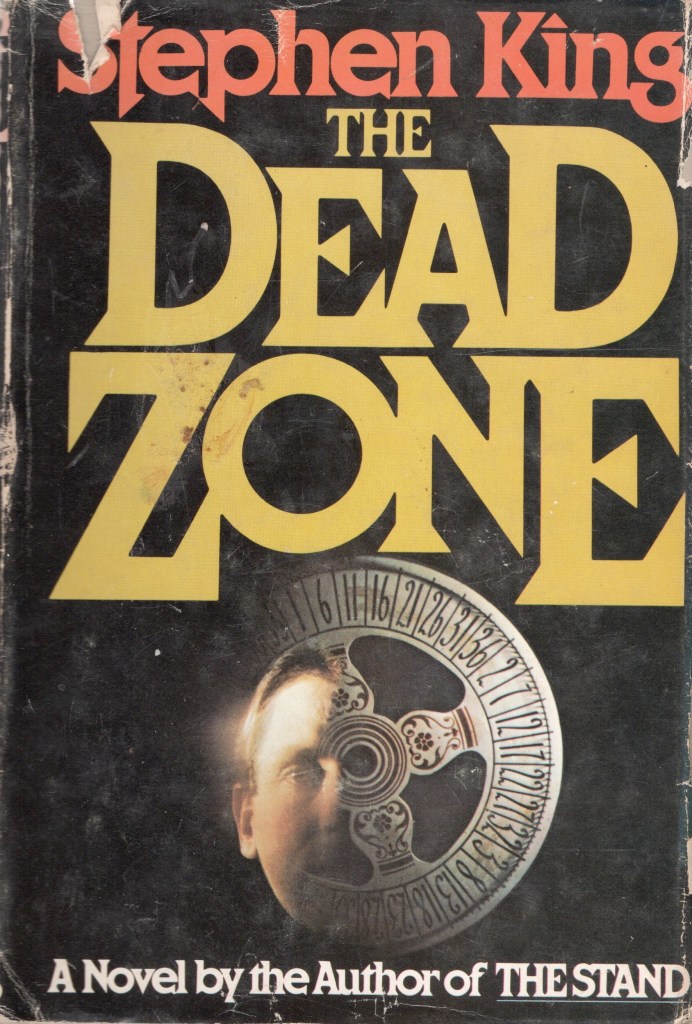
But I greatly enjoyed this year’s Halloween Horror Month, even if the bad quality of the videos of Friday the 13th the Series on Youtube caused me to abandon the rewatch of that show for the month. We’ve been watching The Fall of the House of Usher, which has been a lot of fun and very well done, too–hopefully we can get that finished tonight or by the weekend. It was fun revisiting The Dead Zone, and the other reading I did this month was pretty awesome too. I am going back to crime fiction reading again, because the horror reading has been making my brain go into the horror direction, and I’m not really a good horror writer.

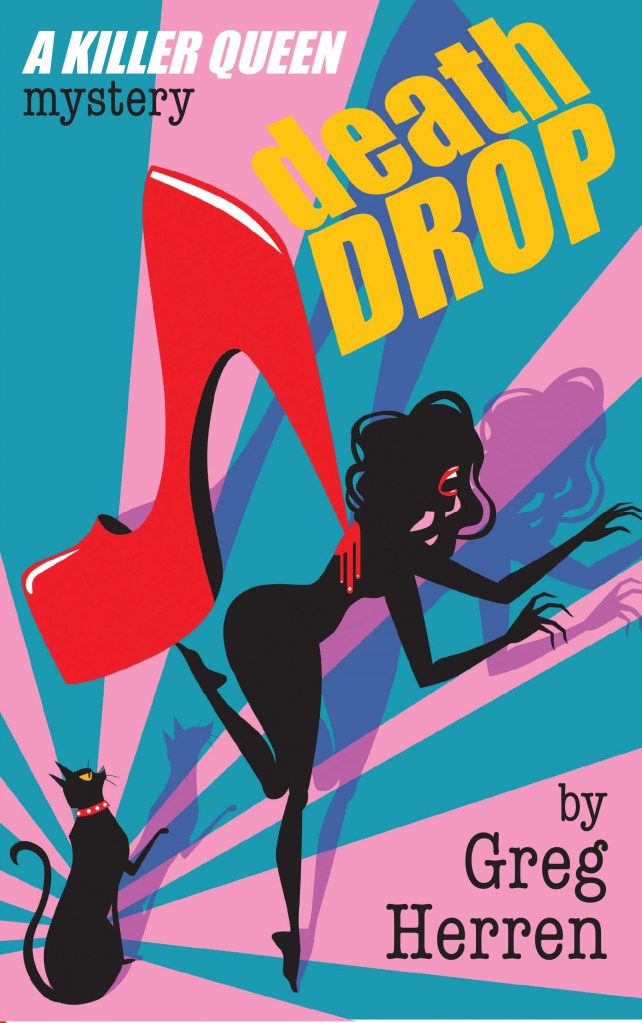
Yesterday Death Drop launched into the world–I’m going to do some more promotional posts about the book as well as some for Mississippi River Mischief, which is also dropping next week (this is what happens when you don’t make your deadlines, people–don’t be a Greg)–and it’s always nice when that happens. It sometimes feels a bit anticlimactic, and I am terrible about promotion anyway (doing it always makes me feel very self-conscious, which is something else i need to work on, because it’s also rooted in my anxiety). My anxiety has also been off the charts lately, and I don’t know why that is. The lack of an LSU game last weekend, perhaps, which served as another disruption to routine? I’ve also been studiously not answering my emails since last week sometime, as well, which is also not like me and another sign that the brain chemistry isn’t working properly again. But now that I know what the problem is with my brain chemistry (better late than never, right?) we are going to change my medications because I’ve been on the wrong ones, and come up with a different coping plan. I feel like I’m in the middle of yet another reboot of my life–new teeth, surgery on my arm, writing cozies, thinking about exercise and eating right again–which might be needed. It just feels like everything has been a slog for so long now; I do think it goes back to the Great Data Disaster of 2018, which started the whole mess. Or maybe it was the expense of buying a new car and having a car payment every month, which kind of did me in financially for a while (starting to see daylight again)–there’s no stress like financial stress, after all. Anyway, I’ve not really felt centered or in any semblance of control over my life for quite some time now, and I’m kind of tired of letting my life happen to me–which was where I was at when I was thirty-three and did the first hard reboot of my life.

I feel good this morning, rested and awake and alert and energetic and ambitious, and it’s been awhile since I felt that way. I may run out of steam at some point today–it does happen, after all–but I am starting to feel good again about a lot of things and when I can look at positives rather than be overwhelmed by the negatives…I’ll take that as a win gladly and keep going.

And on that note I am heading into the spice mines. Have a marvelous mid-week, and I will check in with you again later.

Sissy That Walk

Release day!!!! You can order it here, or get it from your local bookstore! Thanks!

And it’s Halloween, which makes it all the more perfect!

If you’d like to get to know the main character, Jem Richard, a little better, he wrote “A Day in the Life” post for Dru’sBook Musing that went live yesterday (thanks, Dru!!!). I like Jem, and had a lot of fun creating my accidental drag queen–because Death Drop is really the origin story of how Jem became a “killer queen”–a drag queen who solves mysteries.

I love origin stories, always have; which is kind of what Bourbon Street Blues was; the Scotty as a private eye origin story. The thing with writing amateur sleuths, which often can become a problem, is the unreality of it all; every day people rarely encounter murder mysteries, and real life murders usually aren’t terribly complicated (although there are some true crime stories and trials that beggar the creative mind), I used to call it the Jessica Fletcher syndrome–everywhere Fletcher went, someone died–and if she was visiting a relative that person would become a suspect. The show ran forever and the tie-in book series is also still going strong. (And yes, I am aware that private eyes mostly work on adultery and insurance fraud rather than solving murders…my mind isn’t always as logical as it could be.) I made a joke out of it in the Scotty books–he’s always stumbling over bodies–but I also didn’t want to do the same thing again in a different series.

That’s the problem with series–you want to be original with the new characters and everything. I had mentioned before how i wanted to write a new series only to realize the character I was creating was really just a mash-up of Scotty and Chanse. I was really worried about that with creating Jem, too–how to avoid making him a combination of my previous gay series set in New Orleans.

Like Valerie in A Streetcar Named Murder, I decided to make Jem of New Orleans but not of New Orleans. His father was born and raised there, but moved to Dallas after college and getting married, which is where Jem grew up. He spent the summers with his paternal grandmother in New Orleans; she had her own salon catering to upper class Uptown women and Jem loved hanging out in the Beauty Shoppe. I developed an entire back story for his childhood, but didn’t include most of it other than his parents are a bit uncomfortable with his sexuality and his older brothers were athletes…and he was not. His family was Mee Maw and her house on St. Roch in the 7th Ward…and when she died, she left him her house and he moved to New Orleans after a break-up and several years working in a high-end salon in Dallas.

Now, he doesn’t want to work in a salon again so he does glam for wealthy women, gets gigs working on touring theater companies, or films and television shows filming here. The income isn’t always steady, but when it’s there the money is good. I really became rather fond of Jem, and here is the scene where he becomes an accidental drag queen:

How tall are you?” I heard Ellis ask from behind me as Tamponia String left my chair.

“I’m five five,” I replied, wiping the table clean with a sanitary wipe. “Why?”

“Please tell me you wear a men’s eight shoe.”

I do,” I replied cautiously. “Why are you asking?

“Turn around.” I did, to see Ellis looking me up and down thoughtfully. “You are almost exactly the same size as Trailor Swift.”

Uh oh. “And?”

“Trailor just called,” Ellis gave me a rueful smile. “She broke her ankle, so can’t make it, so we’re a model short—”

“Oh, no, no.” I waved my hand. “Sorry, Ellis, but—”

“Three hundred dollars? And you get to save the show?” He winked at me. “Trailor was going to wear the wedding gown at the end. Haven’t you always wanted to be a bride?”

“I don’t think I ever want to get married,” I retorted. “Seriously, Ellis, can’t you get someone else? You have to know someone you can get at short notice?”

“They’d never get here on time and we’d have to start late—Marigny would lose her mind and no one needs to see that,” Ellis said grimly. “Look, you killed on Fat Tuesday, I know you can do this.”

“But I don’t have padding or boobs or a wig—”

Ellis clapped his hands. “Queens, may I have your attention please?” Silence descended. “Trailor broke her ankle and can’t make it, but the show must go on.” He gestured at me. ”Jem here is the right size to fit into her gowns, but we need to get her made up and her hair done and she doesn’t have any wigs—”

Every eye in the room turned to me.

There was dead silence. I was about to decline the opportunity again when Floretta snapped her fingers, “Come on girls, we’ve got to turn this boy into a Queen!”

And they fell upon me.

And you know, with all the oppression being directed (all lies, as always) by the trash on the right (looking at you, LibsofTikTok; sorry you’re trash and no one loves you or ever will), it just felt right to center a new series on a drag queen.

I really like Jem; hope you all do too!

Dirty Laundry

Tuesday and soon enough I’ll be heading out to the dentist for my final fitting of the dentures–which means the next time I go, I will actually get them and be off this hateful soft food diet once and for all. I’ve kind of gotten used to it, though–but as much as I will miss the pint of ice cream, I can still have yogurt and the super-hot-and-spicy ramen on top of everything else. I think I am going to give myself to the end of the year–since I missed out on so much unhealthy food since the surgery–before I change my eating habits in order to be healthier going forward. The New Year will also be about six weeks after the surgery, so hopefully I’ll be in better condition by then to actually go ahead and change the way both Paul and I eat–Paul already eats much healthier than I do; so I just need to adjust mine a bit. But I can cut the ice cream out, as well as some of the snacking. Popcorn is really healthier, and it’s not hard to make, either. And I like it, just as I like pretzels, which are also healthier than chips (I think). At any rate, I need to spend some more time in the kitchen figuring out how to cook things I’ll like that are good for me.

And every once in a while, I can make Swedish meatballs or shrimp-n-grits as a treat…

Yes, because looking at food as a potential reward/treat is completely the healthy mindset I should have.

I’ve always had issues with my body and with food, for that matter; a lot of it stupid, a lot of it a product of my malfunctioning brain, and part of it from being, well, shamed for not being in the best physical condition possible. I don’t know when it all started, but I know when I was in high school–when I really started paying attention to male bodies–that I wasn’t built like other boys, and certainly not the ones all the girls were madly crushing on (for the record, I have never, nor will I ever, understand straight women’s taste in men), so I began thinking there must be something wrong with my body. I did eventually stop doing sports and so forth once I was in college, and that was also right around the time my metabolism slowed down from what it had been previously, so I gained weight–and I’ve never really been right in the head about my body and weight management ever since, I’m over sixty now, of course, and a lot of that body image stuff is in the past–but I do sometimes see pictures of myself and cringe at how big I look, which is patently absurd on its face and a mentality I need to get rid of once and for all. This soft food diet has helped me drop some extra weight–about ten pounds or so at this point–and I bet I lose even more after the surgery. Note to self: you need to buy a wagon to carry groceries in from the car, since you won’t have the use of both arms for a while.

It’s below sixty this morning and we’re having a middle of the week cold snap, even getting colder than fifty theoretically tonight. It’s also supposed to rain throughout the day. I am off to the dentist in a little while, so it’s one of those wretched days when I have to run all over town throughout the day, which is fine. I woke up this morning at five–and of course, Tug did his usual morning leap over Paul onto me and curled up on my pillow at around five-forty-five, waiting for the alarm so I would get up and feed him. He really is adorable, and loves to play like all kittens do; I need to buy him some toys, is what I need to do, and several laser lights because he got hold of the original one I bought and it’s disappeared, probably either under the couch or behind something. Maybe I should either swing by Petco or order something from their website to be delivered. I think he’d love one of those birds on a stick things; he was playing fetch with one of Scooter’s mice last night. But he’s adapted completely now to being our indoor cat, and he definitely feels like he is King of the Castle. He’s also curious about everything and still fearless, climbing under the couch or the dishwasher or wherever he can get–and he loves getting into the cabinets. He also broke my lunchbox yesterday; he knocked it off the counter after I packed it, and the clip for the shoulder strap broke. Sigh. I had to order another one.

I also got some book mail yesterday: Adam Cesare’s Clown in a Cornfield 2: Frendo Lives and Lisa Unger’s Christmas Presents. Lisa Unger is one of my favorite writers, but is one of those I always forget to mention when people ask me about favorite authors in interviews and things. I read some more short stories from Alfred Hitchcock Presents Stories That Scared Even Me, and they were okay; more morbid and weird than anything else, but interesting. One was “It” by Theodore Sturgeon, which was very peculiar and strange but was kind of fun to read (even though a dog dies terribly in it) and “Casablanca” by Thomas M. Disch, which was interesting; about an American couple visiting Morocco when a nuclear war breaks out between the Soviet Union and the United States, and how things change for them during that period, as they slowly lose their ugly American haughtiness and privilege. It was difficult to feel sorry for them because they were so awful and so used to their being American being a magic ticket that they become nasty and unpleasant as they begin to realize that being American means nothing anymore. It was kind of haunting to remember that paranoia we were so used to living with when I was a child; that fear that at any moment bombs would be incoming that would change the world forever; the American cultural obsession with nuclear doomsday when I was growing up was really something and popped up in movies and books and stories all the time. The one I remember the most (literature wise) is Alas Babylon, and the movies–Testament and The Day After. When I was in high school PBS ran a documentary about the possibility of nuclear war and what it would like; which was when I learned nuclear missile bases dotted the Midwest and particularly Kansas–the abandoned missile base just outside of Bushong in north Lyon County was actually mentioned in the show as a target despite being abandoned in the early 1970’s (that missile base shows up in my story “This Thing of Darkness,” and sometimes I think it might be fun to set an entire book there–high school kids exploring an abandoned missile base only to find something horrible and deadly there), which was all we could talk about at school that week–the morbid fascination that out there in the middle of nowhere Kansas we were still Soviet targets.

Ah growing up in the second half of the twentieth century was such a joy.

And on that note, I am going to get showered and cleaned up and head for the dentist’s office. Have a lovely Tuesday, Constant Reader, and I’ll check in with you again later.

The Girl Is Mine

I have always loved to read. I always escaped from the world into the pages of books, and quite often thought and/or believed that the world as it appeared in books was a much better place than the world I lived in. Being different from other kids, on top of all the other chemical imbalances and so forth going on in my head (hello anxiety!) left me constantly on edge; never knowing when the next unkindness or disruption to my life was going to happen. My parents worried often that I read too much instead of playing and doing little boy things–which never held much interest for me–but never knew that it was my life, and those societal little boy expectations, that I was trying so hard to withdraw from. I don’t know how old I was when I began realizing that the world was nothing like the books I read; and that interpreting and viewing the world from a perspective primarily gained from the reading of books for children–which were very much about establishing norms and behavioral expectations of kids–was a mistake. Even books for adults–which I started reading when I was about ten years old–didn’t really help me in dealing with the world.

But books were my solace and my job as a child, as a teenager, as a young adult, and even all the way through my thirties. I also drew comfort from rereading favorites over and over again; if I didn’t have the time to start something new I’d just take down an old favorite and reread it again. I recently realized I don’t do that anymore and haven’t in a while; on the rare occasions when I do reread something it’s a choice–“it’s been a while since I reread Rebecca, I should give it another whirl”–and just assumed it was because I have little time to read so I don’t reread anymore. That’s not the actual case; I could reread things instead of going down Youtube wormholes, but I don’t…because my life isn’t so horrible that I need that escape from it anymore and I don’t need the comfort from revisiting the familiar. This is progress, after all, and I am very happy about that realization.

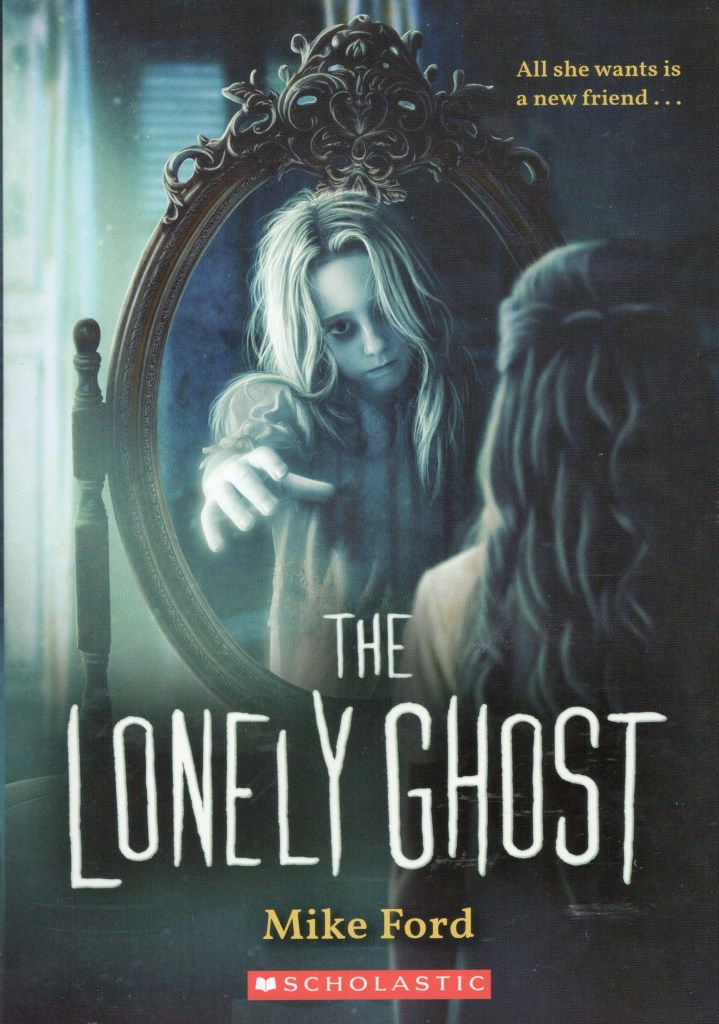
But I digress. I read a middle grade ghost story recently, and it was exactly the kind of book I used to look for at Scholastic Book Fairs and at the library.

“Ouch!”

Ava peered at her fingertip, where a bead of blood was forming. She stuck her finger in her mouth and glared at the rosebush she had been hacking away at with a pair of clippers. Her blood tasted coppery on her tongue and made her feel sick. She took her finger out and pressed her thumb against the spot where the thorn had pricked her. There was a little sliver of black visible beneath the pale pink skin.

“You need to get that out,” Cassie said. “You could get sporotrichosis.”

“Sporowhat?” Ava asked.

Her sister swept her long, dark hair out of her face and tucked it behind her ear. She, of course, was wearing gloves. “An infection caused by the Sporothrix schenskii,” she said. “It’s a fungus that grows on rose thorns. among other places,” she added when Ava stared at her with one eyebrow cocked. “Named after Benjamin Schenck, the medical student who first discovered it, in 1896.”

“Oh, right,” Ava said. “Benjamin Schenck.” She pointed at Cassie with the clippers. “Why do you know these things?”

“I was reading up about roses,” Cassie said. “Because of the garden and the Blackthorn roses. It just came up.”

“Most girls our age read about pop stars,” Ava teased.

I’ve debated about trying to write for middle-grade readers most of my life. While there were books I enjoyed when I was a kid, as I mentioned before, the stuff classified as “juvenile” in those days rarely depicted kids who were anything like kids I knew in real life; often-times the books always featured kids who never broke rules, never got annoyed or frustrated or angry; paragon children that the authors wished real world children would be more like. (The Hardy Boys and Nancy Drew are perfect examples in their revised versions) I enjoyed the mysteries (and the historicals), but never could really relate much to the characters.

The Lonely Ghost isn’t one of those books, and as I mentioned earlier, had Mike Ford been writing these types of books when I was the right age for them, he would have been one of my favorite writers. Look how great that opening scene is–we meet the two sisters, get a sense of who they are and what their relationship is like predicated on how they speak to each other (sisters who love each other and are fond of each other but also are very different). This book follows the classic horror trope of an unsuspecting family moving into a spooky old house–either inherited, or purchased very cheaply–where they hope to make a new life for themselves, only to find the house isn’t what they expected. What we don’t learn about Ava and Cassie in that opening scene is they are fraternal twins–which is also incredibly important to the story. Ava’s more worldly and outgoing, a soccer star; while her sister is quieter, more studious, and into Drama Club, where Ava also ends up because they didn’t get her application for soccer in on time. But there’s something going on in the house that has to do with the previous owner–who also had a fraternal twin–and strange things start happening; and Cassie also starts acting strangely. Ava and her new friends have to get to the bottom of the haunting of Blackthorn House before it actually harms Cassie.

The book flows really well, and the girls–and their friendships–seem absolutely real. It’s been a minute since I’ve read something middle-grade, and aside from language and situations, the primary difference between it and young adult seems to be lower stakes in every way–no murders or sexual assaults or anything that might be too much for younger readers. It’s easy to get lost in the story because of a strong and compelling authorial voice, and the girls are all distinct enough within who they are and what they look like–which isn’t always the case–and it reads very quickly.

Mike Ford is the middle-grade authorial name for my friend Michael Thomas Ford, by the way, and yes, we’ve been friends for a long time but I also believe he is one of the best gay writers of our time and doesn’t nearly get the recognition or rewards that he deserves. I’m looking forward to reading more of these stories!

You Don’t Want Me Anymore

Monday morning after a relatively relaxing and stable weekend. I did a lot, mostly chores that needed to be done and reading, but it was also very nice. The Saints won their game yesterday, which was a very pleasant surprise, and we finished watching this most recent season of Élite, which I realized yesterday I’ve always put the accent on the wrong e, but it’s pronounced ah-lee-tay, so it made sense to me for the accent to go there.

Or maybe I’ve been saying it wrong.

Anyway, this seventh season was disappointing, as the storylines and the crime focused on parents rather than the students–which was a major error, I felt. The season did end with a murder–I’d wondered how long that character, an abusive and controlling lover, would last without being killed or redeemed; I got my answer in the finale–but the primary issue with the season is I don’t really care very much about any of the characters anymore. One of the show’s greatest strengths in those early fantastic seasons was how well the characters were developed (and the talent of the actors playing them) was that they were multi-faceted; even when they were being bad or doing terrible things, you understood them and why they were doing it so they were sympathetic. Now they are all just kids who bad things happen to who have no control over anything that happens or what they do–which is the problem. Before, in the earlier seasons, the kids had agency, and while originally the show was the Gossip Girl we all deserved, it slowly turned itself into Gossip Girl, which was fun but had little depth. A pity. We’ll stick around for the eighth season, which is the last one, while mourning its former glory.

Tomorrow is Halloween, and I signed up to make a cheesecake. The mistake I made was forgetting that I have to go to the dentist tomorrow morning before work, and the other was I must have gotten rid of my cake carrier during one of my pandemic decluttering purges, so I have nothing to carry it to work with–and I don’t like the idea of it sitting in my car while I am at the dentist. Going back home to get it after the dentist isn’t an option, either, because I am trying to spare paid time off as much as possible with the surgery coming, as I also have to run off to UNO after lunch to record “My Reading Life with Susan Larson”. Big day indeed. I guess I can just put the cheesecake into a box and bring it while still in the springform pan? AH, well, all I know is when I get home from work tonight I have to make a cheesecake and figure out the rest tomorrow.

These difficult life decisions, seriously.

I did manage to read Mike Ford’s The Lonely Ghost yesterday which I quite enjoyed; middle-grade books tend to read a lot faster than those for older readers and there will definitely be more on that to come. I will say for now that had he been writing when I was a kid, Ford would be one of my go-to authors, like Phyllis A. Whitney.

We also watched a hilarious (to us, anyway) movie on Prime yesterday, Totally Killer, which starred Kiernan Shipka in the lead of a hilarious mash-up of Back to the Future with a slasher movie playing Jamie, whose mom was the final girl of a spree killer thirty-five years earlier, who comes back in the present day to kill her mom. Her mom is obviously very into self-protection and more than a little paranoid–which of course makes Jamie even more sullen and distant. Her best friend is trying to build a time machine as a science project out of an old photo book, and for some reason the science fair takes place at an old, abandoned amusement park. Anyway, the killer kills her mom and chases her into the amusement park, she ducks into the photo booth and accidentally turns it on, and then the killer stabs the console with his butcher knife–which activates the time machine and sends her back to 1987, with a new task and mission: catch the killer before he kills anyone and thus save her mother–and with the benefit of her knowledge of the history, she knows who is going to be killed and where. A great plan, of course–but her being there slowly starts changing the future. It’s very clever and funny, and the juxtaposition of a modern teenager into a teenager back in the highly problematic 80’s and the cultural/societal differences are absolutely hilarious–especially to those of us who lived through them the first time. It’s light and fluffy, fun and entertaining and not to be taken terribly seriously. Also, because it’s Halloween Horror Month, I’ve been reading a lot of books that would fall into the slasher versions of horror–Clown in a Cornfield, Final Girls–so I’ve been thinking about the trope a lot lately too.

Maybe my next y/a should be a slasher novel? It could be fun.

And on that note, off to the spice mines! Have a lovely All Hallows’ Eve Eve!

Dolce Venezia

I love Daphne du Maurier, and I love Venice, so it is no surprise that one of my favorite works of fiction is her long story, “Don’t Look Now.”

I know I’ve talked about this story endlessly already, numerous times, but you can also close the browser window now if you don’t want to read me talking about the story more. If you’ve not read it and would like to, this is a good time to navigate away–because I am going to give spoilers aplenty in this entry–because part of the great pleasure of reading “Don’t Look Now” for the first time is all the surprises and twists and shocks.

Du Maurier was a master of the plot twist.

“Don’t look now,” John said to his wife, “but there are a couple of old girls two tables away who are trying to hypnotize me.”

Laura, quick on cue, made an elaborate pretnse of yawning, then tilted her head as though searching the skies for a non-existent aeroplane.

“Right behind you,” he added. “That’s why you can’t turn round at once–it would be much too obvious.”

Laura played the oldest trick in the world and dropped her napkin, then bent to scrabble for it under her feet, sending a shooting glance over her left shoulder as she straightened once again. She sucked in her cheeks, the first tell-tale sign of suppressed hysteria, and lowered her head.

“They’re not old girls at all,” she said. “They’re male twins in drag.”

Her voice broke ominously, the prelude ton uncontrolled laughter, and John quickly poured some more chianti into her glass.

“Pretend to choke,” he said, “then they won’t notice. You know what it is–they’re criminals doing the sights of Europe, changing sex at every stop. Twin sisters here in Torcello. Twin brothers tomorrow in Venice, or even tonight, parading arm-in-arm across the Piazza San Marco. Just a matter of switching clothes and wigs.”

“Jewel thieves or murderers?” asked Laura.

“Oh, murderers, definitely. But why, I ask myself, have they picked on me?”

It had been a hot minute since I’d reread “Don’t Look Now,” and rereading it this time was an incredible pleasure, as it always is. I originally discovered this story in her collection Echoes from the Macabre: Selected Stories, and was completely enthralled when I read it as a teenager.

This is the copy I found at Zayre’s when I was about twelve, and discovering duMaurier for the very first time.

That opening sequence between John and Laura is a masterclass in opening a long story, frankly. (Now, by the way, is the time to navigate away from the entry if you’ve not read the story but want to–I can also highly recommend the Nicholas Roeg film adaptation starring Donald Sutherland and Julie Christie.)

What do we see in that opening sequence? A couple, probably married and in love, having dinner at a restaurant in Torcello–and playing a delightful couples game in which you pick random diners at a different table and make up stories about them. I myself do this all the time whenever I am in public and alone; I just start looking around and making up stories about people based on their appearance and where they are and so forth. (This is an excellent exercise for new writers trying to hone their art and craft, by the way; take a notebook with you, have a meal by yourself, and pick out a table to observe, then start creating character and story based on what you’ve observed. I love doing this, frankly.) I also love that the opening three words of the story itself are also the title–as though “don’t look now” is actually what they call the game, and this innocent game actually is the first domino to fall in a series that results in tragedy. But du Maurier has already hooked us into this couple and their story, and we eagerly read on. What is this story about? Who are John and Laura? Why are they in Torcello? (When I originally read the story I didn’t know that Torcello is one of the smaller islands in the Venetian lagoon; but that soon becomes obvious.) One of the twins-in-drag gets up and goes to the restroom, and Laura, all in on the game now, follows her into the bathroom to see if she really is a man in drag, and there is much hilarious conversation between them about what might happen if it truly was a man in drag (and with all the bathroom battles currently being waged in this country, this scene took an an entirely different resonance in this reading), and we are left alone with John.

And once we are alone with John, we find out a lot more about the couple. They’re British, for one–safe to assume in a duMaurier tale–and as he sits there waiting for her to come back, he remembers why they are there; they’re touring Europe as a getaway as well as an attempt to help Laura (and John) get over the loss of their daughter Christine, who died of leukemia (this was changed in the movie to great effect) and Laura hasn’t been able to shake her sorrow, so John thought this trip would help, and this entire conversation–the resurrection of this game they used to play in happier times–has given him glimpses of Laura before the loss, giving him hope that the wound is finally beginning to heal. They have a son, too, who is off at school, but Christine was Laura’s darling and her favorite (I love that du Maurier would have none of that sentimentality about parents loving their children equally; she dismisses that nonsense out of hand. Of course parents have favorites. They’re human.) and so the loss is even more felt.

But then he notices that Laura has been gone a while…far too long for a quick trip to the restroom. And when she returns…

He could tell at once there was something wrong. Almost as if she were in a state of shock. She blundered towards the table he had just vacated and sat down. He drew up a chair beside her, taking her hand.

“Darling, what is it? Tell me–are you ill?”

But Laura shakes off the shock, and is radiant with joy as she explains to John the incredible encounter she had with the old woman in the restaurant rest room. One of the old women–the one who was staring–is blind but also psychic. She saw their daughter, Christine, sitting with them at the table laughing happily. John, of course, is delighted that his wife is happy but at the same time he’s aggravated at the woman–how very dare she say such a thing to his wife! He doesn’t believe in any of this nonsense and he is deeply irritated and annoyed that his wife–not really fully recovered from her loss–is so quickly taken in and ready to believe the story.

The desperate urgency in her voice made his heart sicken. He had to play along with her, agree, soothe, do anything to bring back some sense of calm.

Before, when reading this story, I always kind of felt John was kind of a dick. His wife is deeply saddened and depressed over the loss of a child, and he doesn’t seem to much care that he, too, has lost a beloved child. But this time through, I felt a pang of recognition there in John’s behavior; he was actually sublimating his own grief in that time-honored way men historically have–by ignoring it and pushing it away and focusing on taking care of his (so-believed) much more delicate and emotionally fragile wife; he has to be the MAN and take care of things, which is du Maurier’s sly way of inserting a critique of societal mores and expectations of straight white men. So, rather then processing his own grief, he buries it beneath concern and worry for wife, which isn’t healthy for either of them.

As John listens, horrified and appalled and even a bit angry, his wife explains to him that their daughter also is worried about them, that they are in danger in Venice and must leave right away. (There’s also a throwaway line that the psychic twin also mentioned that John is also psychic “but doesn’t know it.”) Naturally, she wants to leave while John, confounded and horrified by this turn of events–completely dismissing her out of hand, without the slightest bit of even trying to understand–will have nothing to do with their holiday plans being changed. Laura’s improvement in mood and spirit fades away and as they walk to have dinner, they become separated briefly, and he hears a cry from across a canal in the dark, and sees a child fleeing in a red hooded jacket, jumping from boat to boat until she escapes the sound of running footsteps behind her by crossing the canal by crossing over the boats. He and Laura are reunited, and he thinks no more of it. They have dinner, return, and discover that their son has fallen ill with appendicitis, and perhaps they should return. Laura sees this as the vision of the “danger” and even as John thinks about it, she goes about making the arrangements for them to get back to England. She gets an open seat on a chartered flight, and he will collect their things and their car and drive back. She takes off, he checks out, makes the car arrangements, but as he is coming back to the hotel he sees Laura and the twins, passing him by on another vaporetto. Disturbed by this change in plans, he decides to go looking for the twins, find out what happened and how they convinced her to stay, etc. eventually going to the police to try to track down the twins.

While at the police station, another British couple–there to report a stolen purse–tells him about all the murders going on in Venice that have the police so worked up; he thinks nothing of it, and then of course they find the twins who’ve not seen Laura–who also calls him once she has arrived in England.

Confused and upset and uncertain of what is going on, he goes out for another late night walk and once again sees the child in the red jacket running away. He himself chases after her to try to help her–only to catch her, find out it’s actually a demented little person armed with a powerful knife, who slashes his throat–and as he sinks to the ground dying, puts it all together–he’s psychic; he saw Laura and the twins together in the future when Laura has returned after his death to claim the body; and all along it was all right there in front of his face, only he refused to see it, thinking, as he last thoughts, as he hears shouts and people running towards him, what a bloody stupid way to die and proceeds to do so.

Du Maurier’s prose is, as always, literate and smart and brilliant; her characters seem absolutely real, and Venice springs to magnificent life in her hands. The structure of the story and her remarkable job at misdirecting the reader into missing, along with John, what is really going on around him in this Venice holiday is fucking brilliant. She gives John, and the reader, all the hints they need to piece it all together, but she is so completely into John’s head, his inner monologue, that the reader sees only what John sees, until it’s too late, and you realize this story never was what you thought it was in the beginning, or along the way; or that it is just not the way you expected it to be.

I’m already excited to read it again, and watch the film–a masterpiece–as well.

Johnny Be Good

I love Stephen King, and have since I first read Carrie when I was thirteen.

I will also go out on a limb and say that while he has written some amazing fiction and novels in the last forty years, the run of novels between (and including) Carrie and Misery in the 1970s and 1980’s was probably one of the greatest runs of incomparable work ever accomplished by any writer in any sub-genre or genre of fiction, period. There wasn’t a single stinker in that run, and even the one I personally dislike ( Pet Sematary) isn’t bad–it’s actually a testament to King’s skill that I’ve refused to reread it since that first time; it made me incredibly uncomfortable in so many ways viscerally that I’ve really never wanted to read it again.

And isn’t that the real point behind horror?

I also saw something recently about how people who suffer from anxiety often rewatch movies/television shows and reread books when they are anxious because there’s comfort in knowing how something ends. It had never occurred to me that this was a thing, but I used to reread books all the time when I was younger, often picking one up and just opening it at random and diving into the story again. I reread most of the earlier Stephen King novels countless times, as I have also reread books like Gone with the Wind and kids’ series books and other particular favorites. I still reread some periodically, like Rebecca and The Haunting of Hill House. When I picked up The Dead Zone to reread it–I realized that I don’t really reread the way I used to when I was younger. On the rare occasions when I thought about it, I figured it was because I don’t have the time and there are so many unread books around the house that I shouldn’t revisit something when I have unread books collecting dust and moldering on the shelves. But reading that about people with anxiety made me recognize myself and I also realized that I don’t reread as much as I used to (or rewatch) because I don’t have as much anxiety as I did when I was younger. (Don’t get me wrong, I still have too much of it for me to be comfortable going forward without doing something for it, you know.)

I’d thought about rereading The Dead Zone in the wake of the 2016 election; I had posted on social media early on during that campaign season, “Is anyone else reminded of Greg Stillson?” But I couldn’t, just as I couldn’t go back and revisit Sinclair Lewis’ It Can’t Happen Here or The Handmaid’s Tale or any of the other great collapse of American democracy novels. But this reread…made me truly appreciate all over again what a literary genius Stephen King actually is–and an American treasure.

By the time he graduated from college, John Smith had forgotten all about the bad fall he took on the ice that January day in 1953. In fact, he would have been hard put to remember it by the time he graduated from grammar school. And his mother and father never knew about it at all.

They were skating on a cleared patch of Runaround Pond in Durham. The bigger boys were playing hockey with old taped sticks and using a couple of potato baskets for goals/ The little kids were just farting around the way little kids had done since time immemorial–their ankles bowing comically in and out, their breath puffing in the frosty twenty degree air. At one corner of the cleared ice two rubber tires burned sootily, and a few parents sat nearby, watching their children. The age of the snowmobile ws still distant and winter fun still consisted of exercising your body rather than a gasoline engine.

Johnny had walked down from his house, just over the Pownal line, with his skates hung over his shoulder. AT six, he was a pretty fair skater. Not good enough to join in the big kids’ hockey games yet, but able to skate rings around most of the other first-graders, who were always pinwheeling their arms for balance or sprawling on their butts.

Now he skated slowly aruond the outer edge of the clear patch, wishing he could go backward like Timmy Benedix, listening to the ice thud and crackle mysteriously under the snow cover farther out, also listening to the shouts of the hockey players, the rumble of a pulp truck crossing the bridges on its way to U. S. Gypsum in Lisbon Falls, the murmur of conversation from the adults. He was very glad to be alive on this fair, winter day. Nothing was wrong with him, nothing troubled his mind, he wanted nothing…except to be able to skate backward, like Timmy Benedix.

So begins the prologue to The Dead Zone, a King classic that doesn’t get nearly the respect it probably should–especially in wake of the 2016 election. Johnny does, in fact, learn how to skate backwards, but is so excited about it he doesn’t notice he is heading right into the hockey game, where he gets hit broadside by a teenager and sent sprawling, hitting his head on the ice and knocking himself out. As he slowly comes back to consciousness, he starts muttering things that make no sense to the worried kids and adults gathered around him, including saying to “stop charging it’ll blow up”. But then he wakes up, is fine, goes home and doesn’t even tell his parents what happened (imagine a child knocking himself out and the parents not even being told today–never happen). A few days later one of the men’s car battery is dead, he jumps it–and it blows up in his face; only no one remembers the things Johnny was muttering; everyone’s forgotten about it.

The second part of the prologue introduces us to the other main character of the book, or the person who is fated to have the biggest impact on John’s existence, which also begs the question of fate and destiny; these two men’s lives are going to intersect, and the rest of the book follows their lives–primarily focused on Johnny’s, with the occasional swing over to see what’s going on with Greg Stillson and his climb to power and success. That prologue introduction to the traveling Bible salesman in Oklahoma who kicks a dog to death lets us know who he is right from the very start–he’s the bad guy, the reason all these things are happening to Johnny so their lives will cross.

Johnny’s story has three acts: first, the car accident that leaves him in a coma for five years (and introduces us to him, his love interest Sarah, and his parents) and inevitably ends with him catching the Castle Rock Strangler, using the abilities that he woke up from the coma with; the second, which concludes with the vision about the graduation party ending in fire and mass death; and the third, where he realizes he is the only person who can stop Stillson’s political rise, the country’s descent into fascism and a final cataclysmic nuclear war (which was an every day reality for us all back when this book was written, by the way).

The most interesting character to me, always, from the story of The Trojan War (I loved mythology and ancient history as a child) was Cassandra, the princess who was given the gift of prophecy accidentally (her ears were licked by one of Apollo’s temple snakes; he cursed her by having no one believe her and this frustration drove her mad); I always wanted to write from her perspective. John Smith is a modern-day Cassandra, a young man who unwillingly was given the gift to see the future as well as have psychic visions, and his story plays out very similarly to Cassandra’s, and asks the big question: if you had the knowledge and foresight to stop Hitler in 1932, even if it meant killing him, would you do it? The personal good vs. the collective good?

I thoroughly enjoyed this reread, and it definitely holds up, even if it is a time capsule of the 1970s, which also made it a big more fun.

(Oh, and that fall he took as a child? While it is never really explained where his abilities come from, King implies that that first head injury awakened the talent in him; the later head injury and coma woke it up again and gave it more power.)