Puppy Love

Thursday and my last day in the office for the week. Huzzah! I am fatigued this morning. I went to the gym on my way home last night, and while these “workouts” seem hardly worthy of the name, the way my muscles feel this morning shows me that oh yes indeed, even as light as the weights are and as few sets I am doing, it definitely still is counting. This is why I have to be patient with the progress and not get ahead of myself. Last night, I was definitely tempted to add more weight and even had to talk myself out of it, feeling like I was wimping out–but how much more fatigue would I be feeling this morning? And yes, I slept like the dead last night, too–another sign. I may take an extra rest day and not go again until Saturday. I was also tired when I got home last night, so I didn’t do much of anything, including chores….so will definitely have to do those tonight when I get home. I picked up the mail yesterday, too, so I can come straight home tonight.

And of course, tomorrow is a work-at-home day. Huzzah!

I had another surprise at the post office yesterday, too–my Nancy Drew The Secret of the Old Clock action figure! It’s pretty cool, and I may save pictures of it for here until after Pride month, because I cannot think of a way to do a Pride post about–you know what? I just thought of a way to do it, so I guess I manifested itself into being. I also managed to get a Pride post done yesterday–Calvin Klein ads–and I have some more on deck, too; I’ll give you some hints about them–Dynasty, party culture, gym culture, etc.–and who knows when I’ll get them finished and posted, but they are definitely in progress.

I also got my copy of a book I read and reread over and over again as a kid: Stranger than Science by Frank Edwards. I am slowly remembering some other things about my childhood–my interests in the occult and the unexplained. There was a lot of this sort of thing when I was growing up in the suburbs of Chicago, and I am not sure why there was so much of this in the late 1960’s/early 1970s, but there was. The Bermuda Triangle was a big thing, and so were pseudo-sciences like Erich von Däniken’s Chariots of the Gods and so on; Thor Heyerdahl was having his adventures proving that Pacific Islanders traveled much further than most believed, and he also was proving Egyptians could have made it to America on papyrus boats, which was insane but interesting at the same time. I also loved things like Ripley’s Believe It or Not, which used to be a bigger deal than it is now; weird theories about space alien astronauts and forgotten history–I was really into this sort of thing–lost knowledge has always interested me, and books about recovering lost knowledge (or treasure) were catnip for Gregalicious. I don’t know if this was a natural progression of the 1960s movements, in which we became suspicious of government and less trusting, but the 1970s were a very strange decade, and immersing myself in my memories has been interesting. Anyway, Stranger Than Science is a book telling short tales of real events with no logical or rational explanation (this was where I first learned of spontaneous combustion, for one). Edwards used to have a long-running radio show with the same name and subject matter, and my interest in his book and other unexplained phenomenon (whether true, legend, or a combination of both) had more of an influence on me as a writer than I actually remembered. I’m looking forward to revisiting this book.

I also got Paul Tremblay’s Horror Movie yesterday, and I may be moving it up on the TBR pile. He’s become one of my favorite writers lately–since I read A Head Full of Ghosts a few years back, and I’ve not read anything of his that wasn’t compelling and unputdownable since. (I’m also enjoying Grady Hendrix and Riley Sager these days as well.)

And on that note, I am bringing this to a close so I can head into the spice mines. Have a marvelous Thursday, and look for a Pride post later!

Down Under

Remember him?

I’ll never forget him.

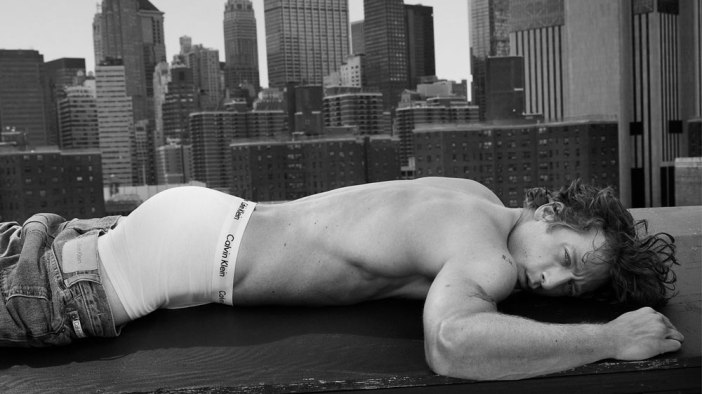
The marketing for Calvin Klein fashions and products has always been provocative, proving once again the old adage that sex sells. But on the men’s side, the company’s push to remove men’s underwear from the old, badly fitted, and horribly uncomfortable/unattractive underwear that always looked terrible after a few washes. If you see pictures of men in underwear in the 60s and 70s, it’s always high-waisted and baggy and not flattering in any way. Marooned in Kansas for the latter part of the 70s, I was very unaware of changing trends in men’s underwear, other than ads in magazines. Jim Palmer was one of the first celebrities to do an underwear ad; he was hairy and slim, pretty good shape but not exactly something to write home about. But it was a start, and when Calvin Klein decided to enter the market of men’s underwear, I’m sure people thought the company was crazy: why would anyone spend that much money for a single pair of underwear, when you could get several packs of three for that same price? But CK was onto something–sexy underwear that fit well, lasted a long time, and looked good was an untapped market, and of course the gays were all about fashion underwear.

And they used beautiful men with lean, ripped physiques to make their point for them. Surprise! It worked.

And Calvin kept selling us sex, and we couldn’t get enough of it. Obsession for Men became a must-have cologne, and they continued producing new scents that were popular and had enormously sexy ads. Other fashion companies began emulating the CK model (imitation is flattery and all that); designer underwear for men, colognes, after shaves, and on and on. And what was also happening were two things: the gay aesthetic for what is attractive in a man began to dominate the culture, and straight men began, oddly enough, to start dressing better, caring about their hair and shaving more, and their bodies…the rise of the ‘metrosexual.’ So say goodbye once and for all to those beefy, bulky, barrel-chested men with their high-waisted pants…

And then came the Marky Mark ad.

The great irony of homophobe and racial hate criminal Mark Wahlberg becoming a sex symbol for gay men will never stop making me laugh.

I mean, he was cute, the body was to die for, and the killer smile? And he’d already become known for dropping his pants and “performing” his music in his underwear. The Calvin Klein gig was probably a mistake for him, but he wound up with a successful film career and even was nominated for an Oscar. Goes to show, Hollywood doesn’t really care about a problematic history if you can sell tickets for them. I always had a soft spot for him, despite everything though–that first crush from seeing the video for “Good Vibrations” has never really gone away, despite knowing full well about the problematic past.

My first pair of Calvin Klein underwear changed my opinion about underwear forever. My mother always told me that the things you never skimp on–even if you have to save up money for it–are underwear, socks, and sheets. Everything else, you can buy discounted, on sale, or from bargain bins, but as long as you bought quality for those three things, they made up for everything else. Once I opened that gorgeous black and white box, and slipped them on…I was sold. I was never buying cheap underwear ever again, even if it meant having to save up money for a while to invest in the good pairs. To this day, I still wear Calvin Klein as my preference; I discovered Under Armor around 2004, but eventually went back to Calvins. I bought cheap underwear at Wal-mart after Katrina to get by until I got back to New Orleans…and regretted it. I hated the cheap socks and underwear, how they felt, how the elastic in the waistband loosened with every wear, how the material began to wear within a few weeks.

Calvin Klein introduced us to the term “underwear model” as a body type, too. Underwear model didn’t used to even be a thing; you’d only see underwear models in catalogues. Calvin Klein’s artistic spreads, with incredibly bodied models shot by the best photographers, certainly had a huge impact on culture–and certainly played a part in what I call the “gaying” of culture; in which men became sex objects in the way women always had been before.

And Mark Wahlberg’s natural progression from ‘rap’ musician who dropped his pants all the time to underwear model also changed the perception of celebrity models; if Calvin Klein wanted you for a photo spread, that meant you were fucking gorgeous–and they started including actors, dancers, and athletes to their rosters.

Number One tennis player in the world Carlos Alcaraz

I can think of several celebrities I’d like to see model for Calvin Klein–figure skater Guillaume Cizeron, several rugby players, Joe Burrow, Malik Nabers–but they also do a pretty good job of finding models.

My favorite cologne from Calvin Klein was Eternity, but it wasn’t my favorite–I liked Fahrenheit and Cool Water the best, but I stopped wearing cologne after we moved to New Orleans. In this climate, for most of the year there’s really no point in wearing it anyway.

Rockin’ Robin

We made it to Wednesday! Huzzah! Huzzah! Here I sit with my coffee on my middle of the week morning, and I feel pretty good, to be honest. I was very tired yesterday, but not in the “I can’t even think” way, but rather the “hmm, I feel fatigued” way, which is fine. Yesterday was Sparky’s birthday, and so I gave him extra treats and pretty much played with him for most of the evening until he went to sleep in my lap. He really is a dear, even when he has Big Kitten Energy.

It’s been a bit of a week thus far, hasn’t it? Who knew that Ginni Thomas wasn’t the most awful SCOTUS wife? AND THAT IS SAYING SOMETHING. I saw someone on social media suggesting we change it, as a society, from “Karens” to “Martha-Anns,” since that name isn’t as common and she is clearly the GALACTIC EMPRESS of “I need to speak to a manager.” Madame Torquemada wouldn’t think Isabella the Catholic wasn’t religious enough for her, and clearly she’d love to implement the Inquisition, too. Thanks again to the third party votes who gave us the president who would appoint him for your service–and again for your service in 2016. I mean, what a vicious, venomous little spider she is, sitting in her house brooding over people being mean to her, waiting for the day she can be spiteful–the irony is it doesn’t make her look like the wife of a Supreme Court justice, but the Alitos clearly have delusions of grandeur and think they’re superior to everyone else. Whatever, trash. Don’t call yourselves patriots when you’re preference is to wipe your ass on the Constitution, and I also love that Alito thinks he’s a superior legal mind to, I don’t know, say every previous justice, which is rather telling. He certainly should not be a judge. But again, me and everyone else not white-cishet were screaming from the rafters that 2016 was about the Supreme Court, and as usual, no one listened–and that was also the case with the 2000 election, too. Sigh. It’s the pits, sometimes feeling like Cassandra on the walls of Troy.

I do feel much more lively this morning than I have any morning this week, but that’s got to be the better night of sleep last night–best of the week, in fact. I have to go pick up the mail today, my copies of the new Paul Tremblay should be there as well as another book from my childhood, Stranger than Science, which I am justifying getting because I plan to use it in The Summer of Lost Boys, which makes it research. I started thinking more about the next book yesterday, too, and how to expand this novella out into a novel. I am of course still going back and forth on it; it could be a novel, or it could just be the novella I stick at the end of my short story collection, but I think it would be too long for that. I need to write the introduction for that and finish the final stories and get it turned in. I know that Never Kiss a Stranger is already about 23k words in length, and there are at least two other subplots I need to weave into it, which should make it all the more interesting. I’ve not done nearly as much writing this week as I would have preferred, but there’s still a few days left in the week, so I can hopefully make up for lost time. What I need to do is summarize what’s already done, figure out where to slot in the subplots, and then buckle up and do the work. Next week is also going to be a little odd; we have Wednesday off for Juneteenth, so I have to work two days, be off one, work two more, and then drive over to Florida to meet Dad for the weekend. Their anniversary is next week–the 20th, to be exact, so Dad wants to go visit Mom and then he’s going on down. It’ll be a nice, relaxing weekend, methinks.

I’m not even going to take my computer with me. I’ll be ignoring everything until I get back.

Today is also the anniversary of the massacre at Pulse nightclub in Orlando, God rest their souls. That resonated because of course it was a dance club, and I had images of it happening here at either Oz or the Parade, which is chilling–and I really hated that the reboot of Queer as Folk was set here and a club shooting was central to the story. Has there been a true crime book about that yet? I feel like someone should, but not me. I am not the right person to do true crime, because I write fiction, I’d probably be unable to resist the urge to twist facts and evidence to fit any theories I might have, and that’s a disservice to the victims. I have thought, numerous times, about the possibility about writing a true crime book based on this case I am following in Oklahoma–without actually talking to any of the people or visiting the area–because one of the more interesting aspects of it all is the reaction, and how it’s all playing out on just this one Facebook page I joined. It still doesn’t make sense that the investigation was so fouled up from day one. How did anyone ever accept the theory that he was hit and killed by the side mirror on an eighteen-wheeler, and besides, I don’t care how drunk you are–there are conflicting reports on how drunk he was, but the autopsy did say .14 blood alcohol content–you’re not going to be unaware of an eighteen-wheeler coming up behind you on a country highway. And there was no wreckage or debris of any kind where the body was found. Sounds intriguing, doesn’t it? At some point I’ll probably write a blog entry about this case, but I don’t think, as much as I believe I could base a compelling novel in it, that I’ll eventually do so unless I can come up with a artistic thesis (that sounds pretentious, doesn’t it?) for it.

It’s funny how writing is like just about everything else in my life, isn’t it? The more I do it the better I write, the more I enjoy the other parts of my life, and if I take a break from it, it takes a while to shake off the dust and scrape off the rust and reactivate my creativity and my writing muscles. I also forget how to write a book sometimes, and that becomes a bit scary until I start remembering things, like oh yes you always have a point to the book you’re writing and you know what theme you want to explore, or I’ll remember something about the process and wonder if I’ve always done it that way because I don’t really remember. I am also finding I am forgetting a lot of the scenes and characters and plots of some of the books I’ve written, which is even scarier–what if I repeat myself, like with Scotty’s predilection for getting into car accidents? Heavy heaving sigh. This is why being a writer is an exercise in madness, really.

And on that note, I am heading into the spice mines. Have a delightful Wednesday; there may be a pride post later on; one never knows.

See You in The Funny Papers

Do the few newspapers that still do print editions even have comics pages anymore? For many years, that was the only part of the newspaper I would read. I’d page through the rest of the paper and read things that were interesting, but I stopped taking a physical newspaper back when the Times-Picayune ceased publishing daily, and only had an on-line subscription, which I cancelled when they published an article by editorial staff that was vile, disgusting, unAmerican, and nothing I could support anymore. I cancelled the New York Times because of their Trump coverage and the legion of crimes they’ve committed against the queer community for decades. The Washington Post also was cancelled because of bad reportage on queer issues (there’s nothing like having your life “both-sidesed”; because yes, the homophobic trash who think I shouldn’t exist have a right to be heard). I would never go anywhere near the Wall Street Journal or Forbes; actually, the best reporting in the country on politics and queer life comes from Rolling Stone and Vanity Fair, of all places.

Go figure.

Obviously, the last place I ever expected to run into queer representation on the comics page (Doonesbury added a gay character in the 1970s, and addressed AIDS with his death in the 1980ssssssss) was in a family comic strip.

On March 26, 1993, Lynn Johnston’s For Better or Worse began a short running story (I think it ran for two weeks; I could be wrong) in which oldest son Mike’s best friend Lawrence comes out to him, which starts a bit of an upheaval in both families, and spread out over several days in the paper.

Johnson wrote about Lawrence’s story here.

Whenever someone talks about how representation matters, I think about two things: this comic strip, and Ryan Phillippe playing gay teen Billy Douglas on One Life to Live around this same time.

I had seen queer representation before, of course; Billy Crystal as Jody on Soap, the eternally confused Steven Carrington on Dynasty, a show where no one even considered the possibility of bisexuality (which could have been an even more compelling story), and films like Longtime Companion and La Cage aux Folles and Victor/Victoria. But unlike those previous characters, most of whom were already adults. Billy on One Life to Live and Lawrence on For Better or Worse were teenagers–which definitely awakened ire in the homophobes and christians. Some papers refused to run this strip, which was incredibly moving and touching, as Lawrence and Mike come to terms with their friendship (nothing changed between them, just as Joey and Billy on OLTL remained friends), but he also had to deal with his parents’ reaction, the reaction of Mike’s family, and so forth. It all eventually worked out for the best–also like OLTL–and as I tore open the paper every day for those days this story ran to see what happened next.

I also kept thinking how much of a difference this would have made in my life when I was a teenager–both the show and the comic strip–which is why these kinds of things are important. No one on the homophobic “side” ever thinks about what it feels like to be a queer kid, constantly getting told (bombarded, really) that they aren’t normal, they are different, and therefore suspect. That’s why queer kids commit suicide at higher rates than their straight counterparts.

I can only imagine how much hate–and how many death threats–Johnston got for writing this series of strips. I always liked the comic–I also liked that the characters aged, grew, and changed–and someday I’d love to sit down with a collection of the entire strip, to catch up with the characters and see how they are doing now.

I also don’t think this comic strip gets enough credit for doing this, either.

It’s Four in the Morning

Tuesday morning and my alarm went off this morning–as well as the cat alarm–and so I am up, swilling coffee, and looking forward to my day. I did stop on the way home yesterday to get the mail and went to the gym to do Rehab. It was remarkably smooth, too–I was able to drive there, park easily, get in and out relatively easily, and get home. I feel a bit tired this morning, which is no doubt due to the unexpected rigorous exercise I put my body through last evening, so there’s definitely some muscle fatigue going on. We watched The Hit Man on Netflix, which was interesting and clever enough, and it was filmed in New Orleans–and that was the way to film in New Orleans; AKA, they just filmed it here like it was anywhere else, and didn’t feel the need to “Nawlins” it up (by which I mean constantly saying New Orleans, sending the characters out for beignets all the time, occasional mention of the Saints, etc etc etc), and there was only one scene where I was like, “if you work at UNO and live in Gentilly, why would you drive home via Liberty Circle?” It was a pleasant way to spend the evening, and it was a cute film; actually based on a true story here locally about an undercover cop (really a side gig) who played hit men in sting operations to arrest the person hiring him, and he’s actually good at it. Check it out, it’s a pleasant way to spend two hours.

I did spend some time writing yesterday, which felt good; I am now going to let that sit for a few days before marking it up with the proverbial red pencil (when I first started, you did use a red pencil or ink to mark up your manuscripts) and I am now going to start pulling Never Kiss a Stranger apart in order to piece it back together as a novel. I mean, why not? I love the main character, I love the minor characters, and the story itself is one I really want to tell and share with the world.

I also picked up the mail, and now have my copy of Summer of ’42, which I am hoping to reread relatively soon.

Hilariously, Harrison Butker (aka Hairy Butt) was in the news again lately for “saving” a teammate’s life, who’d gone into cardiac arrest. Turns out all he did was run for help–which, as someone who has been certified in CPR since 1997, I can tell you is the wrong thing to do. You’re supposed to call for help while starting CPR and ordering someone else to go for help, or to keep calling until someone comes. You’re never supposed to leave the person alone; seconds are critical and the longer before compressions starts the more unlikely it is they will be successful, not to mention the cessation of oxygen flow to the brain. Even if he was the person who was sent for help, it was hardly “his” heroism at play here; it’s really not all that heroic to go look for help when someone is having a medical issue. The irony that he got a female trainer to come out and save the man’s life–while getting the headlines for himself about his “heroics”; in many of the pieces the actual trainer’s name wasn’t even mentioned as they masturbated Butker’s fragile ego, as though saying to all of us who found his graduation antics in incredibly poor taste “see what a great guy?”

Given the other option was to let the man die, he literally did the bare minimum, but we’re supposed to call him a hero? No, heroes are my co-workers who run outside to administer NARCAN to an overdose and save lives. It’s become so routine now that no one even thinks about it, but watching my department immediately slip into crisis mode and work together quickly and efficiently to save a life is very impressive, and way more than Hairy Butt ever would do; he’d probably think the OD was God’s will or something.

The bar really is set low for cishet white men, isn’t it? They need praise for everything.

Sigh. The poor, sad, oppressed straight cis white man, right?

And on that note, I am heading into the spice mines. Wish me luck, and I’ll do the same for you, Constant Reader, and there’s going to be a Pride post later, I’m sure.

Screenshot

Tomorrow Belongs to Me

Ah, Cabaret.

I first became aware of this movie from commercials on television, and it looked very weird to young Greg. I had no idea what the movie was about, other than it was a musical; starred Liza Minnelli; also had the gorgeous Michael York in the cast; and seemed to be set in old pre-Nazi Germany. It also came out in the same year as The Godfather, which sucked all the air out of the year when it comes to film. I had also read that book that year because of the movie…which also got me interested in Marlon Brando, which is a whole other entry. (Not to mention the sex scenes, which were really confusing in a lot of ways…especially Lucy Mancini’s over-large vagina.) But Liza was everywhere that year, too–every talk show, had her own special “Liza with a Z”, magazine covers and newspapers and periodicals like you wouldn’t believe.

I had no clue what the plot was, other than decadence and debauchery?

I remember asking a friend that year if she knew what Cabaret was about–her parents were European immigrants from after the war; her father was Czech and mother German–and she told me her parents had seen it and her mother said, “It’s all about homosexuals”, which naturally got me incredibly interested in the movie. I finally saw it several years later when it aired on television, but everything queer was sliced out of the movie and it was disjointed and didn’t make a lot of sense, so I thought well, that was shit, how did it win all those Oscars?

Because of course, all the queer stuff has been excised from the movie; the movie was basically castrated and to me, seemed like nothing more than a vehicle to move the movie along to the next musical number–many musicals are like this, so I really didn’t understand what the big deal was about this one.

A few years later, I caught the original uncut version on HBO…and have been a fan ever since.

Cabaret never should have been sold to television for airing because it had to be gutted to make it ready for prime time. I only hope no one involved with the film saw that version of it, but it really was a desecration.

By the time I saw the movie as Bob Fosse originally intended it to be seen, I had become aware of the source material: Goodbye to Berlin by Christopher Isherwood, an autobiographical novel about his experiences in Weimar Berlin and witnessing the rise of the Nazis–and how their malevolence was poisoning German society and culture. It had been adapted for the stage by John Van Druten as I Am a Camera (which is the opening sentence of the second paragraph of the book), and the play was also filmed, starring Julie Harris, who may have played Sally on stage, too. I Am a Camera was adapted into the musical Cabaret, but significant changes were made from the stage version of the musical in adapting it for the screen–and the screen adaptation also wound up causing the stage version to revised, remodeled, and reinvented as well. (And to make things even more confusing, Isherwood later wrote a memoir about that time period in Berlin called Christopher and His Kind, which was also filmed.)

I had not seen the earlier film, nor had I read the book when I saw the uncut version of Cabaret.

And you really couldn’t go wrong casting Michael York in the 1970s. Stunningly handsome, and that velvety voice that just dripped syrup.

I mean, really. I think this is from Something for Everyone, which is a great, little-known queer movie also starring Angela Lansbury! (There’s a watchable version uploaded to Youtube, but the sound and picture quality isn’t great.)

I rewatch the film every now and then. I went through an Isherwood phase in the late 90’s/early aughts, when I read everything he wrote, and I enjoyed them all. And when I see some political movements today (hello, MAGAts!), Cabaret is never far from my mind.

It’s astonishing that the film was even made, given that homosexuality was still considered a mental illness in 1972, and the film didn’t judge. It simply presented these alternative sexualities as normal, and while the times themselves weren’t normal, there was also a very strong sense that the Weimar period–which is endlessly fascinating, which is one of many reasons I love Babylon Berlin so much–that filled the German political vacuum between the wars wasn’t very different from the twenties everywhere else, either; a time when the society and culture rejected the old, more conservative times that led to the first war, and everyone just wanted to have a good time because so much was misery. (I often wonder how much the American Stock Market crash of 1929 had to do with the rise of fascism in Germany; it was the economy, after all, that really caused the problems, and wasn’t the global economy heavily impacted by the collapse of Wall Street? We never realize how what happens in our country affects the rest of the world, because the United States is just as narcissistic as the convicted felon the Republicans are running.)

But the underlying message of Cabaret is one that is hard to miss: that living in your own bubble and ignoring the world outside is precisely how garbage like the Nazis rise to power…the assumption that someone else will do something to take care of it, and we’ll just keep having fun. In the late 1980s and early 1990s I thought we as a country we’re headed down that path; the unholy marriage between the right wing and evangelical christianity (I will never capitalize that C because cults don’t deserve that respect) certainly made it very clear to me that there was a very large segment of the American population that would be more than happy to put all racialized people and queer people into death camps. (I even started toying with the idea for a novel about that very thing; I still think about that idea A LOT, and even more so since 2016–which is also when I started rewatching Cabaret again on a more regular basis. Cabaret, and Bob Fosse’s vision of what it should be, was very powerful; and it changed the face of what movie musicals looked like and could be, and has influenced stage and screen musicals ever since. It’s a stunningly shot film, and now I can say that I understand why Fosse won the Oscar instead of Francis Ford Coppola for The Godfather; both films are masterpieces, but Cabaret was more “showy,” and that always wins over diligent and detailed craft.

And no, the movie isn’t “all about homosexuals”–even though there’s a minor character who is a trans woman; the main character is gay and bi-curious, and Max, Sally’s other love interest, is also bi and sleeps with them both cheerily. That was VERY avant-garde attitude to have in a 1972 Hollywood movie made for American audiences.

I wonder how seeing it on the screen in 1972 might have impacted me? But I also can’t imagine my mother and sister sitting through it, either.

Cabaret is a must-see if you’re interested in queer film–or great American cinema, for that matter. And I will judge you for not seeing it. In fact, I’m doing that right now.

Nice To Be With You

Monday morning and back to the office with me today; huzzah? It was a nice, lovely weekend around the Lost Apartment, one in which I felt really good about my writing life and resettling into what is the new normal for my life these days. I’ve kind of gotten off the treadmill of endless deadlines and volunteering, and all this lovely extra free time has been spoiling me a bit, which is why I’ve not really been getting anywhere with my writing lately; I’m not used to the luxury of time, and now instead of scheduling my days to within an inch of their lives…I don’t have to do that anymore, and it’s nice. I need to adapt to reading every evening again, and doing some writing before calling it a day and repairing to my easy chair.

I actually overslept this morning. I set my alarm, but forgot completely that the power had been off, taking my alarm setting back to 12:00. Fortunately, Sparky was hungry, and he is relentless when he’s hungry (of course, he has no ability to feed himself, so ignoring him to sleep a little longer is actually kind of mean), and I looked at the clock and was like oh shit that was a close one. So he saved the day, kind of, which is always appreciated. As I sit here swilling coffee, I still have time to get to work on time this morning, despite having to assemble the carrot cheesecake and put the frosting on (I also need to make the frosting; I’m just doing homemade whipped cream–you can never go wrong with whipped cream, ever), and then load it into the cake carrier and hope I don’t have to suddenly slam on the brakes in the car. It’s generally not a great omen to start your work week by oversleeping, but I feel fine and I’ll get to work on time. The morning feels a bit off, but it’ll straighten itself out before long, I am sure. But I made the cake yesterday and pretty much have the mess already cleaned up, so there’s not too much to do once I get home from the gym today. I am thinking about making meatballs when I do, but I don’t know how much trouble I want to go to after the gym (yes, I am stopping at the gym on my way home from work; I even brought clothes to change into), and then it’s home to do some more writing.

I pretty much have decided that the next thing I am going to work on is Never Kiss a Stranger, and I am going to take it from novella to novel. It simply doesn’t work as a novella; one of those “way too much story to condense here” but we’ll see how it goes. I am not limiting myself on how long it’s going to be, and I am also not going to force it to be a novel, either. If there’s only enough story for forty thousand words, I’ll write another and combine them into one book. I also think the Chanse story I was going to write as a novella might actually be a novel, too. I also have another Chanse novel idea that I am going to explore, too. I am also not limiting myself to the Murder in the titles anymore, either.

The “christian” author who came for Dolly last week is really sorry she made everyone mad by claiming Dolly is not a good person because she doesn’t call out sin. Ericka Andersen isn’t sorry for any of her foul, unchristian values and beliefs; she’s just sorry she used Dolly as her example–which is hilarious; her entire piece is predicated on Dolly and her goodness; there’s really no one else she could have used. The backlash is everything she deserves and more; The Federalist also needs to apologize to everyone for running that disgusting hit piece, and whatever editor okayed it is too stupid to work as an editor at any time. Imagine signing off on a piece attacking Dolly Parton for not being Christian enough! Everybody loves Dolly; her icon status is only limited because we haven’t reached the stars yet with the good news of Dolly. Ericka Andersen–an admitted alcoholic who only got sober thanks to God (which begs the question, didn’t God make her an alcoholic? She clearly didn’t learn the lesson She intended Ms. Andersen to learn from her struggle with alcohol)–is the absolute worst kind of Christian, and I hope this follows her for the rest of her life.

Christ, not even Newsmax or OANN would have signed off on that piece. Jesus.

I did have a lovely weekend. It was extremely hot all weekend, so I spent most of the weekend indoors as much as I possibly could. Going to make groceries yesterday was absolutely miserable. I also need to get a window screen thing for my car; it gets so hot inside that it’s miserable getting inside after work, or any time during the summer. The car was so hot yesterday that when I closed the hatch after unloading the groceries I touched the metal and pulled my hand back, almost certain it had been scalded. It was not, but I used the handle after that–and even it was hot to the touch. Yay, and it’s not really summer yet!

We did watch more of The Acolyte last night, and followed that up with Easy A, the movie where I originally fell for Emma Stone, and the movie is very interesting, particularly from a “teen movie” perspective. It owes some to The Scarlet Letter, of course, and maybe what I should do at some point is a “teen movie” blog; how it evolved from the beach movies and Disney family comedies (think Kurt Russell as a teenager) to the teen sex comedies and John Hughes and so forth. But Easy A could have never been filmed back in the 60s and 70s, and probably not even in the 80s or 90s–because female-centered sex comedies are rare, and her character would have been seen as a “bad influence” on teen girls of the time. But the movie also parodies teen rom-coms, too, which elevates it over your average teen movie.

And on that note, I am heading into the spice mines. Have a lovely Monday, everyone, and I’ll probably be back later.

New Fire from an Old Flame

I grew up watching soap operas, and yes, soaps also influenced my development as a writer–which means I have to be careful not to slip into melodrama.

I know my grandmother watched them, and so did the lady down the street who babysat us in Chicago: One Life to Live, General Hospital, and Dark Shadows. I’ve always recognized Dark Shadows as a major influence on me as an artist and author; that and the old black-and-white crime movies my grandmother loved to watch with me. It’s why I’ve always had a taste for the dark and Gothic, and Dark Shadows merged horror with mystery in an expert blend that I can vividly recall to this day–and often go there in my work sometimes.

One Life to Live was always interesting, and they did stuff other shows weren’t doing. Viki’s Dissociative Identity Disorder storylines–including when it came back when she was under heavy emotional stress, usually involving memories of her father–was riveting; so was the Carla storyline, in which a beautiful young light-skinned black woman was passing for white, and involved with a white doctor. (I was terribly disappointed to find out, years later, that actress Ellen Holly, the first Black female star of a soap, received death threats and was also victimized by bigotry within the cast and crew and network.) It was never a favorite through the late 1970s and 1980s, but I watched; Erika Slezak was terrific as Viki and Robin Strasser was INCREDIBLE as her arch-enemy and stepmother, Dorian Lord. Andrea Evans returned in the 1980s as Tina, Viki’s ward…only to find out that Tina was actually her half-sister because her mother, Viki’s best friend, had an affair with Viki’s father…which led to yet another return of Viki’s DID.

Like all soaps, it was complicated.

But it was in the 1990s that One Life to Live became must-watch television.

Novelist Michael Malone was hired, out of nowhere, to be the headwriter, and he reshaped the show completely to his vision of what good storytelling should be, and the issues the show should be bringing forward. He introduced some new characters, slowed down the pacing of the show, and dove into the interior lives of the long-term characters, as well as their history. There were any number of explosive storylines during this period that made the show must-watch television; I recorded it every day so I would never miss anything. (All My Children and General Hospital were also having glorious runs at the same time; ABC was firing on all daytime cylinders.)

And then they brought in a new character, a friend of Viki’s son Joey, Billy Douglas–which was also Ryan Philippe’s big break.

Seriously, how adorable was young Ryan Philippe?

Daytime had dipped their toe in the water of queer characters before, before quickly ending the storyline and writing the character out. But in the early 1990s, Malone was willing to push the envelope and confront homophobia in all of its ugliness. It began with the arrival in town of Reverend Andrew Carpenter, who was shortly followed by his father, Sloan, from whom he was estranged. The reason of the estrangement was the father’s rejection of his gay son, who subsequently died from HIV/AIDS. Andrew can’t get past how his father rejected his brother due to homophobia, and they didn’t reconcile before the brother’s death. Already something was building here, and then Joey Buchanan’s (Viki’s younger son) friend Billy–a popular athlete, just elected class president–comes out to him. Joey is surprised, but accepting, and is there for Billy as he agonizes over what to do. Eventually, he goes to Andrew for counseling–and young villainess Marty Saybrooke, whose romantic interest in Andrew has been rebuffed, overhears the counseling session and tells everyone that not only is Andrew gay, but he’s been grooming (the term wasn’t used there) Billy into becoming gay too! The town is then torn asunder over the sudden outbreak of homophobia; Billy comes out to his parents and is rejected by his father, everything comes to a head, and the truth comes out–and Marty would get “punished” for her crimes later, in the most horrific way possible (again, must-watch television)–and Andrew and his father reconcile; the AIDS quilt is brought to Llanview; and people become more accepting of Billy. They introduced a love interest for him, but viewer reaction to this was harsh, and so they wrote Billy out by sending him off to Yale, never to be seen again.

Since then, almost every show gradually had gay or lesbian or bisexual characters, but I have stopped watching soaps, finally giving up on them in the late 1990s because I couldn’t really spare the time to watch anymore. But Billy, acted brilliantly by young Ryan Philippe, and beautifully written, was one of the first and best portrayals of a gay teenager on television, and I’ve been a fan of Philippe ever since.

It’s a shame One Life to Live no longer airs, going down in the bloodbath of soaps after the turn of the century. The show’s run in the first half of the 1990s was extraordinary–including the brilliantly conceived and written gang-rape of Marty that happened at a fraternity party, and the aftermath was explosive and brilliant. One Life to Live at the time also had a fantastic cast, wracking up Emmy wins left and right…and it was shortly after the Billy storyline concluded that they cast Nathan Fillion as Joey–and another fandom was born for me.

I’ve often wondered how much impact that story and character had on the public perception of queer people as well–during the Clinton administration things began to look up a bit from the horror of the 1980s, and I think television definitely had something to do with it, with positive representation.

Morning Good Morning

Sunday morning and I slept late, which is fine, really. I keep forgetting that sleeping in on my days off isn’t a criminal act of any kind. After so many years of keeping myself overly busy and so I was always behind on deadlines and so forth, I’ve kind of gotten into the insane mindset that sleeping late is a waste of time that could be better utilized, writing or cleaning or reading. I do have some things I need to get done today–mostly running to the store to get the things i need to make a carrot cheesecake for a co-worker’s birthday tomorrow–but if i manage my day properly, I should be able to get things done.

I spent yesterday running errands, and trying to get things cleaned up around the house while dipping into two books–The Berlin Stories by Christopher Isherwood and Ode to Billy Joe by Herman Raucher. I ordered the latter from ebay after I started doing my research into Robby Benson for the post I made about the crush I had on him as a teenager; realizing the movie script and novel were written by Herman Raucher made me interested in reading the book, as well as wondering about Summer of ’42, and so I ordered copies of each. Billy Joe arrived yesterday, and I was curious about it. Usually novelizations were work-for-hire arrangements and the author used a pseudonym; some are better than others, of course, but just reading the first chapter of Billy Joe I can tell it’s head-and-shoulders above most novelizations, and it’s probably more thorough in telling the story than the movie was, which has me interested. I’ve also been thinking about The Berlin Stories lately, after watching the film Christopher and His Kind, and may revisit it again, too, for Pride Month; Isherwood is one of the literary gods of the gay canon, and the opening sentences of Goodbye to Berlin are perfect for parodying in the prologue to the next Scotty. I still have to finish my reread of Michael Thomas Ford’s Suicide Notes, and I think I’m going to bump the new John Copenhaver up on my TBR list. It is Pride Month, and I should immerse myself in queer lit for the month, don’t you think, Constant Reader?

I also want to write about Summer of ’42 at some point. Like The Other, it was an early read that was very influential on me, and one I often don’t think about when I do think about influential works I’ve read or make a list. I really do need to sit down and identify the books that really impacted me and the way I write; The Other, Summer of ’42, and so many, many others. I also want to write today; I didn’t really yesterday, but I did spend some time yesterday doing research; i.e. watching Youtube videos on the Oklahoma true crime story that fascinates me still, as well as ones that review the 1970’s and pop culture and what was going on those early years of the decade, which is when the book will be set. I think I am moving in a more historical direction rather than writing about the current day; Never Kiss a Stranger is set in the 1990s (1994, to be exact) and of course The Summer of Lost Boys is going to be set in either 1972 or 1973; I can’t decide which, although I suspect 1973 is going to end up being the winner when I finally have to decide.

We finished Under the Bridge last night, and it’s most excellent; I highly recommend it. Based on a true crime novel about the Reena Virk murder in Victoria, British Columbia back in the 1990’s, Reena was beaten badly by a group of girls–some she thought were friends–and then after the others left her broken and injured and bleeding along the river bank, a boy and a girl came back and basically, finished her off. The show reminded me a lot of Megan Abbott’s work; Abbott always writes about the mysterious world of female relationships, female rage and jealousy, and that’s what Under the Bridge does so beautifully. The acting is extraordinary; a real standout is Javon Walton as Warren, the young boy who kills Reena. Walton is very handsome in that young way, and I looked him up because the performance was so extraordinary, and turns out he also played Ashtray on Euphoria, who was one of my favorite characters on that show. Do watch it when you get a chance. I’m going to get a copy of the book now, too. Yay, more things to read! Just what I need!

We also started The Acolyte, but I was sleepy by the time it started and kept dozing off. No judgment on the show, I was just tired.

And on that note, I think I’ll head into the spice mines. I’ll probably finish the dishes this morning while making a grocery list, and then I’ll dash to the store and get gas. I may even finish one of these other Pride blog drafts, so have a lovely Sunday, Constant Reader, and I may be back later.

Ode to Billy Joe

Robby Benson. Swoon. I mean, LOOK at him.

Eat your heart out, David Cassidy!

I don’t know when I first became aware of one Mr. Robby Benson, but I do know he was a major crush of mine when I was a teenager–he and Jan-Michael Vincent–and I also think he’s another one of those who definitely helped create a type for me; dark hair and bright blue eyes, and that smile! Jesus Mary and Joseph!

I wasn’t alone in my teen years crushing on Robby; I think most teenaged girls of my generation all had a bit of a crush on him. For one, he was ridiculously beautiful; it kind of should be against the law to look that good. He was also photogenic and telegenic, and I loved his speaking voice. I know my teen years are also when I developed my love of jeans cut Daisy Duke short; and as you can see from the pictures above, Robby’s were cut so short they were basically speedo-sized. Years later, Daisy Dukes were my favorite shorts to wear, because all modesty aside, I’ve always had muscular legs; assets best displayed in shorts cut immodestly short.

But in looking up information on Robby Benson for this post, I realized I had never seen the movie Ode to Billy Joe, which was one of his best-known films. I knew about the movie, of course, but never saw it. It was released the summer we moved to Kansas and it never played in Emporia, and I never saw it on television, either. So, yesterday, I remedied that by watching it on Youtube, which has the entire movie uploaded for free.

The movie itself is simple. Based on the story song by Bobbie Gentry that is probably one of the biggest and best-known hits of all time, it’s ethereal and mysterious and unclear; and the lyrics themselves create an indelible image of a rural Southern lunch and the casual, unknown to anyone speaking, cruelty of the conversation. The narrator had a strong connection to Billy Joe, and his suicide affects her deeply, but nobody really notices. It’s genius in exposing that Southern mentality of “the girls don’t matter”–no one’s noticed that she is connected to him in some way, no one notices that she’s upset, and the way Gentry sings the lyrics is so matter-of-fact yet horrible as she recounts an emotionally troubling experience for herself, and paints such a powerful image of the invisible daughter, left to grieve on her own for the boy she loved, and does she know the reason he jumped? I’ve always liked the song, even if it doesn’t work for me musically (the lyrics don’t match the melody), because it tells so many truths about rural Southern girls that what actually happened isn’t the point–the point is the isolation and loneliness she feels, and the alienation from her own family.

The movie, screenplay and novelization by Herman Raucher of Summer of ’42 fame, fleshed out all those mysteries. It was from the movie and book that turned Ode to Billy Joe into a queer story and a tragedy; it’s also interesting that it wasn’t more of a scandal when the movie was released in 1976; maybe him having had a sexual encounter with another man and committing suicide took the sting and shock of the gay twist; after all, misery and suicide were the only possible outcomes for most queers in movies at the time. Watching the movie, but taking away my own quibbles about its depiction of southern rural life to talk about it as it stands as a queer film, it was really quite revolutionary. First of all, Robby Benson was a full-fledged teen heart throb with photo shoots in every magazine like 16 and Tiger Beat, and having someone who didn’t telegraph gay (or the societal images of what gay looked like then) who was also a heart throb playing the part was putting an acceptable face on a (at the very least) bisexual character. What was also interesting to me about the film was that it was produced by Max Baer (aka Jethro from The Beverly Hillbillies), and the man Bobby Joe had the encounter with was played by James Best, who would go on to greater celebrity and fame as Sheriff Roscoe P. Coltrane on The Dukes of Hazzard later on in the decade. Glynis O’Connor is fine as Billie Lee (seriously, Bobby Joe and Billie Lee? I have an army of relatives from the rural south, and out of all of them there is exactly ONE who has that stereotyped Southern two first names thing), but Benson’s appeal is clearly on display here–and I understand why girls loved him so much: he always played sensitive and vulnerable young men, which girls love.

And he is just stunningly beautiful in this movie.

Benson’s most successful role of all time was, ironically, from voice work: he voiced the Beast in Disney’s Beauty and the Beast.

I also found it interesting the Bobby Joe committed suicide in the Tallahatchee River, which was also where the white supremacists dumped Emmett Till’s body…so that river is kind of hexed, wouldn’t you think?

He also aged incredibly well–Benson is still quite beautiful.