White Horse

Monday and another week has begun.

Christmas draws ever closer; but it doesn’t seem quite real. No holidays have actually seemed real this year, and this is going to continue, methinks, deep into 2021. No Carnival parades, no in-person literary events all spring (Saints and Sinners, Tennessee Williams Festival, Edgars, probably no Malice Domestic or Left Coast Crime) and even summer is questionable. Heavy heaving sigh.

Yesterday was lovely. The Saints hung on to beat the hated Falcons in Atlanta, which was nice, and I spent some time with The Spy Who Came In From The Cold. I’m not as in to it as I would have hoped, but I suspect once the story kicks into gear that will change. It’s exceptionally well written–I can see why it won so many awards, and LeCarre is held in such high esteem–and of course, there’s that whole disconnect with the Cold War. Can you believe there are people in their early thirties now who have no memory of the Cold War? The USSR officially collapsed and began breaking up, and the Berlin Wall came done, about thirty years ago. There are, for that matter, kids in high school who weren’t born yet when 9/11 happened; tweens are too young to remember Hurricane Katrina and the flooding of New Orleans directly after. That’s kind of staggering, in many ways, to imagine that seminal life-changing paradigm shifting events occurred so long ago that the young of today aren’t old enough to remember. I, of course, don’t remember the JFK assassination–I was only two when it happened–so I myself was too young for some seminal, life-changing, paradigm shifting moments myself.

We finished the new season of Big Mouth last night–it’s so funny and filthy and brutally honest about the awful age when you go through puberty (it’s a wonder more people aren’t horribly scarred)–and we also caught the finale of Murder on Middle Beach, which ended without a resolution. I looked at Paul–the episode pretty much closed with the documentarian winning his Freedom of Information lawsuit to gain access to the ten year old police files about his mother’s murder–and said, “Um, I think they finished the documentary too soon–what did they find out?” This was annoying in some ways–but I also didn’t expect the series to solve the murder, either. It was like an incredibly unsatisfying crime novel–a murder divides a family, the kids grow up and try to solve their mother’s murder which has aversely affected their lives, only to have the book close without resolution?

Not nearly as disappointing an end as The Undoing, frankly–we’ll go a long time before we see another series that ends so badly and disappointingly as that.

But now we have to find something new to watch, heavy sigh.

I didn’t write this weekend nearly as much as I should have, but I reread all my notes from the entire writing process, and reread the final fourteen chapters, so I have an idea where I need to go and what I need to do from now on, so that’s a win, methinks. I also went over the copy edits on an essay, and got that finished. I also went to the gym yesterday, which was lovely. My body seems to be adjusting to exercising again–and it’s starting to respond to it. My muscles are getting firm again, and starting to get bigger again. I suspect this is going to wind up being yet another repeat of every other time I’ve gotten into the swing of working out my entire life–I am never going to feel sufficiently lean, will always think I’m carrying too much fat weight, etc etc etc ad nauseum ad finitum, and I am preparing myself for that particular neuroses. Plus, I am sixty–time to let go of the extreme vanity and the need for reassurance from other people.

I’ve also had some second thoughts about Bury Me in Shadows, but they are quite literally the same ones I’ve had almost this entire time since I started writing the damned thing. I spent most of the weekend in the weeds on this book–rereading chapters, rereading notes, looking at things I’ve deleted, trying to figure out if I am doing a good job telling this story or if I’m being too lecturing in places…I don’t think I can remember the last time I’s second guessed and doubted myself as much on a book as I have with this one. But that’s, I hope, a good thing? We shall see. I can’t wait to see the final cover.

And on that note, it is back to the spice mines with me. Have a lovely Monday.

Mean

When I was a child and lived on the south side of Chicago, elementary school was dismissed every day at 3:15 pm. It took about ten minutes for my sister and I to walk the block home, meaning we usually could just catch the last minutes and closing credits of Dark Shadows every day. This was disappointing, of course, because we loved the show and tried to keep up with it; the older woman down the street with whom our mother left us every morning on her way to catch the bus for her shift spooling wire at an electronics factory in Cicero and fed us both breakfast and lunch also watched, and would tell us the following morning what was going on in Collinwood (she also got us to watch One Life to Live and General Hospital with her; but we weren’t as veste in Llanview and Port Charles as we were with the haunted Collins family).

But at three thirty every day one of the affiliate networks in Chicago showed reruns of old movies, and we generally watched the movie–we weren’t allowed outside unless our mother was home–and she usually got home around four. My grandmother had already given me a taste for old movies and mysteries, so watching the afternoon movie wasn’t a hardship for me, and it kept my sister and I quiet while Mom made dinner and did whatever housewifely and motherly chores she had to take care of before Dad came home.

It was watching those afternoon movies where I first encountered The Bad Seed.

Later that summer, when Mrs Penmark looked back and remembered, when she was caught up in despair so deep that she knew there was no way out, no solution whatever for the circumstances that encompassed her, it seemed to her that June seventh, the day of the Fern Grammar School picnic, was the day of her last happiness, for never since then had she known contentment or felt peace.

The picnic was an annual, traditional affair held on the beach, an among the oaks, of Benedict, the old Fern summer place at Pelican Bay. It was here that the impeccable Fern sisters had been born and had lived through their languid, eventless summers. They had refused to sell the old place, and had kept it up faithfully as a gesture of love even when necessity made them turn their town house into a school for the children of their friends. The picnic was always held on the first Saturday of June since the eldest of the three sisters, Miss Octavia, was convinced, despite the occasions on which it had rained that particular day, and the picnic had to be held inside, after all, that the first Saturday of June was invariably a fine one.

If The Bad Seed has lost its ability to shock and horrify, it’s because in the decades since it was published (and adapted into both a play and film) the notion of a child being a killer has gone from being shocking to the general public to one that is kind of accepted; children do kill, and despite all the societal push towards sentimentality toward children. Rhoda is a sociopath, if not a psychopath; her inability to feel remorse or empathy or any other kind of human emotion is chilling to read about–she’s a stone cold killer, and clearly, she thinks nothing of killing to get something she wants: whether it’s the penmanship medal from her school, or a nice trinket promised to her, and then to shut up the janitor who sees through her and threatens to expose her; there’s a progression there. First she kills on impulse to get something she wants, then she coldly and calculatedly kills to protect herself. Rhoda is maturing as a killer, which is very chilling for the reader. The book is told entirely from the point of view of Rhoda’s mother, Christine–who is very slowly coming to realize, time after time, that her child is a monster, despite the innocence of childhood and everything we are taught to think, sentimentally, about children.

Psychology was starting to come into its own in the United States during the 1950’s, and you can see how crime writers took to psychology in that decade: The Bad Seed asks the question of nature v. nurture (although its answer is that it’s nature, genetic, and cannot be helped–and there’s some truth to that. I’m not entirely sure that sociopathy or psychopathy is learned behavior; are these cold-blooded killers born that way or are they creations of their environment? The solution Mrs. Penmark comes up with and executes in the novel is dramatically different from the film–the film had to abide by the Production Code, whereas novels had no such restrictions on them–and I believe the book’s ending actually works better than the film’s.

One thing that the book does brilliantly is depict the emotional turmoil and distress of the mother, slowly beginning to suspect and find proof that her child, that she loves so dearly, is actually a monster.

I first read this book when I was a teenager; I’d already seen the movie when I discovered the book on the shelves at the library, and so I checked it out and read it. I enjoyed it tremendously at the time–and it also had me watching other teens and young children for signs of sociopathy for a few years–and so thought it might be worth a revisit. It was, most definitely; it’s a bit dated, and of course the notion of a killer child isn’t quite so shocking as it was back during the Eisenhower administration–we’ve seen too many real life examples of this, and of course the trope of the killer child has been used, over and over again, in crime fiction and in films, so it’s not the brace of cold water in the face that it once was (kind of like how Beast in View by Margaret Millar was groundbreaking in its time–its still a great read–but what Millar did in that novel has been copied and imitated so much that it’s almost a cliche; one has to read these books with those sort of things in mind). Agatha Christie also used the trope of the sociopathic child (although in a quick google search it turns out Christie’s sociopathic child killer predated The Bad Seed; honestly, Christie did everything first).

It was a very pleasant reread, and as always, it’s interesting to visit (or revisit) books that were considered shocking in their time, only to have them turn out to be fairly tame–I’m looking at you, both Peyton Place and Valley of the Dolls–as well as to see how far the crime fiction genre has progressed. (I still consider Peyton Place to have a place in crime fiction, even though most people don’t. And while the crimes in the book may not be the driving point of the story, those crimes do impact everyone in the town in some way….there’s another essay to be written, probably after I reread the book at some point. It’s been awhile since I’ve revisited both Peyton Place and Valley of the Dolls….perhaps that can be my Christmas present to myself.

Invisible

Sunday morning and a lot to get done today. I was horribly lazy yesterday; I wound up doing very little other than reading–I finished The Bad Seed and then moved on to The Spy Who Came In From the Cold (I’ve never read John LeCarre, and am trying to get better read in my. genre’s classics, both titles and authors) and got some chores done, but other than that–not a goddamned thing. So today I I have to play catch up as well as go to the gym and somehow pay some attention to the Saints game, which is at noon. (I’ll most likely do some things around here, go to the gym around elevenish, and then come home and do things while the game is on.) The LSU game went about the way I expected it to last night–55-17 final score–so congratulations to Alabama’s players and coaching staff; I can’t imagine there’s a better team in the country this season, so it’ll be fun watching y’all go all the way again. LSU has to play Florida next weekend, which will most likely be another horror show like yesterday’s, but at least at that point the season will be over.

This football season is yet another gift the year 2020 has given me. Thanks, 2020, thank you.

It feels cold again this morning in the Lost Apartment–I have my space heater on and a cap on my bald scalp–but it doesn’t look so bad outside, really. Lots of clouds hiding the sky and the sun, but this week is supposed to be warmer than last, so I think I’ll be able to hang this week after last week’s cold spell.

Once I finish this I am going to make a to-do list for this week–I really need to make a point of doing that every Sunday, so I have a roadmap for my week–and also so that things won’t slip through the cracks and be forgotten. This has been a really bad year for me to try to remember everything I have to get done–I keep forgetting things, which isn’t good–so I am trying to be ever so much better about this. The whole year I’ve felt like I’ve been in this weird state of limbo, just drifting and trying to get by, keep dog-paddling and keeping my head above water, and it’s not been easy. (It’s not really been an easy year for most people, I suspect.)

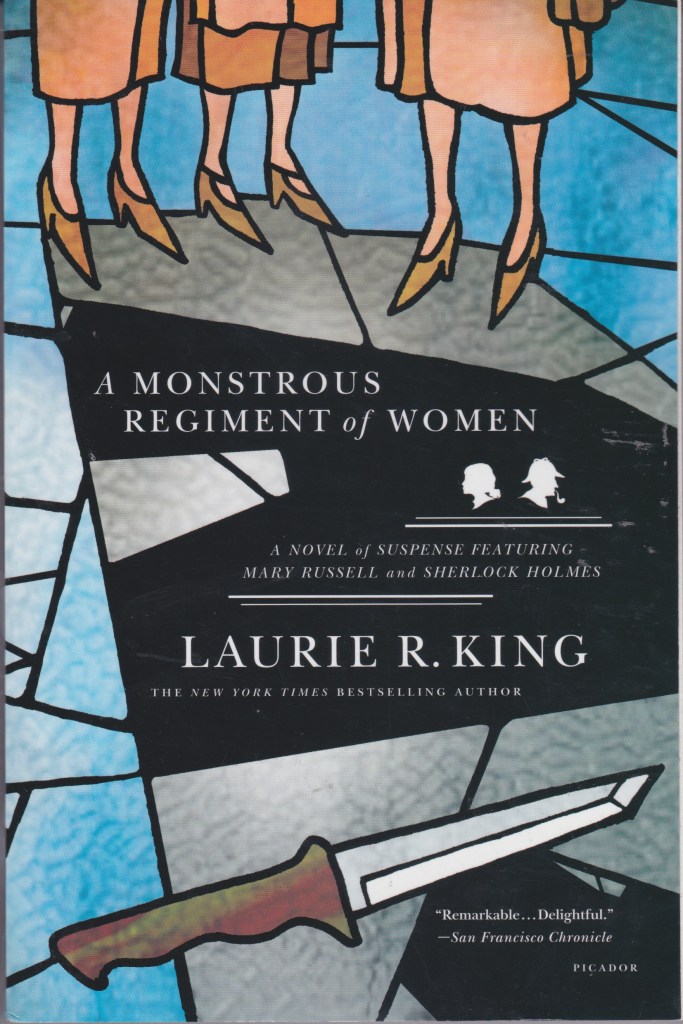
Last night as we binged Big Mouth after the LSU game, I was trying to remember the highlights of the year–the good things that happened that I am grateful for, and realized that, sadly, most of the things I was thinking of was television or movies I’d watched, or books I’d read and greatly enjoyed. I had a pretty good year at the beginning of the year in selling short stories–I sold quite a few this year, continuing a trend from last year, to the point where I keep forgetting story sales I made, which is so weird–but also means that in 2021 I am going to have some stories appear in anthologies or publications, which is terribly cool. I know I stretched myself as a writer–hell, I wrote a Sherlock Holmes story this year, and created a Sherlockian world in 1916 New Orleans–and while there were anthologies and things I tried (and failed) to submit to, I have some terrific stories now that are in some state of writing that could turn out to be something interesting. I am looking forward to spending some more time with both “The Sound of Snow Falling” and “The Rosary of Broken Promises”–and there are any number of others I’d love to dive back into. The problem being, of course, that I have limited writing time, and for the rest of this month I have to focus on finishing the one book and then the first two months of 2021 finishing the other. I’m not really sure what I want to spend the rest of 2021 doing; I know I am co-editing the Minneapolis Bouchercon anthology and that’s going to take a chunk of time to read all those submissions and make decisions and then edit them all, but let’s face it, it’s also not my first time at the anthology rodeo. I want to try to write another Scotty at some point in 2021, and I know I also have Chlorine to work on, but…I guess we’ll just have to see how the year pans out.

I know I want to pull another short story collection together, too, and of course there’s the novellas…

I also polished off a journal last night, so I get to start a new one this morning, which is kind of fun. I’ve been blasting through journals at a pretty good pace since I started using them again, and while I cannot say that they’ve been enormously helpful in keeping my act together and keeping me on track with any of the writing I’ve been doing, they’ve been wonderful for me to jot notes and ideas in, and I’ve been doing much better about going back into them and rereading them and getting the unpolished jewels out of them. I have a really nice one that has a magnetic clasp that I got at Garden District Books, and then got a pack of three the last time I went to Costco, so I am certainly set for journals for the year.

I’ve also got to get the copy edits on my essay finished.

I also spent some time yesterday slowly but surely pruning the books. I’ve done a great job of pruning them already, so much so that there’s slim pickings for getting rid of things I will most likely never read–I always stop myself and have to think, long and hard, about whether I should get rid of an unread book–but I also need to keep making room for more–because at some point I’ll start buying books again. Not sure when that will be financially feasible–right now, books are filed in the “luxury item” column, especially when I already have so many on hand that I’ve not read–but I have quite a list of books that I want to get when I can.

There are never enough books, frankly.

And on that note, I need some more coffee as well as fold some laundry. Have a great Sunday, Constant Reader!

Speak Now

I’ve always been fascinated by politics and history; the two go hand-in-hand, and you really cannot understand one without understanding the other. (Economics are also a lot more important than is ever given credit in most histories–wars and exploration and colonization was, inevitably, always about markets and trade and thus money) I’ve maintained for years that history should be taught as the advancement of individual rights–the ups and downs of individual freedoms, rather than dates and battles and Kings and Queens and Emperors–and that study of individual rights also needs to examine prejudices and bigotry and zealotry, and how those three factors have poisoned civilization and humanity throughout much of its history. I also feel that, while the study of wars are important for their impact, the fact that the impact these wars had on the citizens of the country (countries) being invaded was also important. Putting humanity in the study of human history would not only make it more interesting, but would also further the understanding that should come with the study.

I tend to avoid books about politics, or political thrillers–the news provides enough stranger than fiction moments every day–and as a general rule, fictional films about politics rarely interest me, either. Paul and I avoided The West Wing for years, thinking a fictional show about our government couldn’t be interesting enough for us to get vested in; we were clearly wrong (but I still refuse to watch The American President.) Fletcher Knebel, a long forgotten writer of the mid-twentieth century, wrote political thrillers, and while I was aware of him when I was young, I never read any of his books; why read about fictional politics when actual history is available to read and study? But a few years ago, I read an article about one of his books, recently brought back into print, and intrigued me enough to want to read it.

It’s premise: what if a sitting American President begins to slowly lose his mind and grip on reality?

And I am sure you can imagine why that premise was intriguing.

Jim MacVeagh’s burst of laughter came so unexpectedly, his hand jiggled the stem of the wineglass, and a splash of champagne spotted the linen tablecloth. Sidney Karper, the Secretary of Defense, sitting on his right, grinned in shared appreciation and shook his head.

“Unbeatable, isn’t he, Senator? He just won’t be topped.”

“Nobody can touch him when he’s determined,” agreed MacVeagh. He wiped at his eye with a corner of his napkin and turned back toward the center of the long head table, cluttered with late debris of ashes and crumpled menus amid the sparkle of glassware.

The speaker, President Mark Hollenbach, was mock-solemn again after flashing a responsive smile for the spray of laughter which greeted his first sally. His was the honor chore of the night–the brief reply to the toast to the President of the United States which signaled the closing of another annual Gridiron dinner. The news correspondents had lampooned the Hollenbach administration and its foes in a series of musical skits, some sharp as stilettos but one belabored in its buffoonery, while the Marine Band orchestra in shining scarlet coats. played for the 550 diners.

I finally read this book while I was on vacation over Thanksgiving week, and found myself enjoying it tremendously. It’s a thriller, of course, and the main character is junior Iowa senator Jim MacVeagh. Jim’s a good guy, without too much ambition, with a wife he loves and a tween daughter he adores; he also is having an affair with the chair of the DNC’s secretary–not really a smart thing to do, but we see this self-destructive behavior from politicians all the time (although the idea that adultery is disqualifying for higher office has long since been shown up as a lie). After the Gridiron Club dinner, Jim is invited by the president to join him for a talk at Camp David–and it is there the story kicks into gear. Enormously popular President Mark Hollenbach has decided to dump his vice-president for the upcoming campaign–he’s been tainted with a whiff of scandal regarding a building project a campaign donor was awarded–and the President is interested in having Jim join him on the campaign trail.

Naturally, this is very exciting for Jim, awakening ambitions he wasn’t aware he’d even had, and realizing that, if selected, this would make him the front runner for the top of the ticket in four years–which of course is very exciting for any politician, particularly a young one–but as the conversation continues, Jim begins to become concerned, as some of the things the President wants to do in his second term are not only unconstitutional but borderline insane–for one example, he wants to wire tap every American’s phone, so as better to track and prevent crime, espionage, and foreign agents–and he also displays paranoiac tendencies. As Jim gets closer to the President and one step closer to being on the ticket, more and more evidence of the president’s instability is revealed to him….and he has to. ask himself–party or country? Patriotism or partisanship?

This is a terrific read, and certainly one any American today could identify with and get caught up in the story.

I’m now curious to read other works of Knebel’s, and then of course, Allen Drury’s terrific series of novels about Washington, beginning with Advise and Consent.

I do remember reading an Arthur Hailey novel about politics–yes, government was one of the industries he turned his research and writing to–called In High Places. (I read this during my Arthur Hailey phase; I learned alot from his books. I read The Moneychangers when I worked at a bank; he was spot on about day to day operations on the floor. I reread Airport when I worked at an airport; again, pretty spot on, despite the decades of changes to the industry since he researched and wrote the book.) And The Coyotes of Carthage, which I read earlier this year, was one of the best books I’ve read about rural politics.

I think you might enjoy Night of Camp David. I certainly did.

Seven

Saturday morning and it’s rather chilly in the Lost Apartment . The sun is shining and there aren’t many clouds in the sky–I see plenty of blue up there at the moment–and I haven’t checked the weather yet. All right, I just looked and it’s currently forty-nine, with a high of fifty-three predicted for the day. Sounds like the kind of day when one just wants to stay indoors all day and under a blanket, does it not? I have a lot to get done this morning–the sink is full of dirty dishes; more than will fit in the dishwasher, so I am going to have to do two loads–and of course, there’s filing to do and organizing to be done; notes to be read on the work-in-progress as well as chapters to be revised; and I’d like to be able to read some more of The Bad Seed, if not finish reading it today. LSU is playing Alabama tonight, and it’s not going to be pretty, but at least it won’t be disappointing. It’s very weird, there’s always a minor hope, even in bad years, that we might beat them, but not this one. I love my Tigers and I’ll tune in–but I am under no illusions that they’ll pull off a major upset here. Our only hope is a sustained three and a half hour miracle, really; but this entire football season has been such a wash anyway–I really think it should have been skipped, which is what I’ve thought all along–yet here we are.

I do occasionally think that LSU having one of the greatest football teams and seasons of all time last year somehow broke the world, and if LSU having a shitty season is what it takes to reset everything, I can live with that sacrifice.

Yesterday was a good day. I had to swing by the office because I had run out of lube for the condom packs–I brought home flavored–so I had to swing by there to pick up regular lube tubes–and then after returning home, I made condom packs while watching Logan’s Run, yesterday’s entry into the Cynical 70’s Film Festival. I had never before seen it; I, of course, remember what it’s plot was–a world where everyone dies at thirty; the title character is about to turn thirty and he runs. Well, turns out that was a vast over-simplification; Logan, played by a stunningly beautiful young Michael York (I’ve waxed euphoric over his beauty before; I had a major crush on him throughout the 1970’s; have continued to appreciate his work as I got older; and he came to the Williams Festival one year, so I not only got to meet him but was delighted to find he was very charming), is a “sandman”–in the future, after over–population and depletion of resources and so forth, society collapsed and a utopian human city was built under a dome, and all humans devote themselves merely to pleasure, and when they turn thirty, they are renewed; in a ritual, everyone gathers to watch them sacrifice themselves, to be reborn–someone has to die in order for someone to be reborn. The “sandmen” are those who hunt down the ones who decide they want to live and run for their lives. When caught, they are killed and are dead forever–no chance of being reborn. Logan actually has about four years left before he turns thirty, but he is given the job to search for Sanctuary–a place all the runners try to get to safely–and the controlling computer also speeds up his life, turning the life clock in his hand all the way up to almost time for him to die. Jenny Agutter plays the love interest who can help him get to Sanctuary; they run, and it becomes very weird once they escape. The special effects are pretty bad–the movie was pre-Star Wars–and so are the sets and costume designs. It does, I decided, fit into the film festival because the film itself is kind of cynical; it basically took American youth obsession and created a world based entirely in youth; and it’s interesting they chose thirty as the end point of life–after all, the youth movement of the 1960’s always said “never trust anyone over thirty.” As I watched, I couldn’t help but think of all the possibilities they couldn’t explore in a two hour film–and thought, you know, this show could easily rebooted as a mini-series that could go into all of those explorations–the collapse of society, who built and created this new world, who actually is in power in this utopian paradise, how did they get the initial buy-in necessary–and so on and so forth. And with our country growing evermore obsessed with youth and beauty–yeah, this could be really good. Logan would be a good role for someone like Nick Jonas or Alexander Dreymon or any number of beautiful young actors in the business today.

The lovely thing about HBO MAX is they are continually adding more and more films to their TCM app–you can only imagine my delight to see the delightful Peter O’Toole film The Stunt Man was recently added; The Ruling Class is already there. I am a huge Peter O’Toole fan–the fact the man never won a competitive Oscar despite giving career-defining performance in those two films, along with My Favorite Year, The Lion in Winter, Becket, and Lawrence of Arabia never ceases to amaze me. Both The Stunt Man and The Ruling Class certainly fit into my Cynical 70’s Film Festival–they have also added the original The Omega Man and Soylent Green, both of which I intend to watch despite the fact both star Charlton Heston, the king of over-acting. But…both definitely belong in the Festival, and I really wish they would add Serpico.

I also would like to watch Cruising again–to see it from a present day perspective.

The Mandalorian continues to delight as well, and our favorite raunchy junior high puberty comedy, Big Mouth, also came back yesterday.

And on that note, I am heading into the spice mines. Have a lovely Saturday, Constant Reader.

Style

Friday morning, and I had an absolutely lovely night’s sleep, thank you for asking. It’s the final day of the work week, the weekend looms, and as always, I have a million and a half things to get done before Monday. I somehow managed to fall behind on the writing again–by the time I was finished with my work-at-home duties yesterday I was exhausted again–and as such, didn’t write another word. So I need to get my writing going again today, knowing I am at least two chapters behind that need to be caught up, and yes–NO PRESSURE THAT AT ALL, is there?

I have some copy edits for an essay that dropped into my inbox this morning, which shouldn’t be too terrible an issue to deal with over the course of the weekend–then again, I’ve not really looked at them, either, so it could be absolutely horrifying once I open the document–but again, I don’t see that I won’t be able to get caught up on everything that must be done this weekend. What I really need to do is make a to-do list; I’ve been meaning to all week and yet somehow have not managed to get around to it yet. Gah. But that’s the kind of week this has been; 2020, after dragging all fucking year, seems to have now speeded up time now that it’s coming to a close, continuing to prove itself to be a shit-bag of a year.

Given how much optimism we all had for 2020 and what we ended up receiving, I am a bit afraid of 2021, to be completely honest.

I did manage to get some things done yesterday, and I managed to watch Superman whilst making condom packs yesterday; the 1978 version with Christopher Reeve. I hadn’t seen the movie in years–I saw it originally in the theater and then watched again when it was on HBO in the early 1980’s–and wasn’t really prepared for the impact it would still have, many years later, on a rewatch. As I watched, my nimble hands breaking off condoms in groups of four and shoving them into little plastic bags, along with a packet of lube and instructions on how to properly use them, I found myself catapulted backwards in time and remembering the time period. The movie’s slogan was You will believe a man can fly and you also have to remember the late 1970’s was when films–and special effects–were changed forever after Star Wars and Close Encounters of the Third Kind. Superman was the acme of super-heroes; perhaps the most famous, the most loved, and possibly the very first comic-book hero with superpowers, and bringing him to the big screen with a huge budget and special effects to make it look like he actually had powers was a huge deal. It was a huge hit, set the stage for several sequels, and showed Hollywood that comic book heroes were big-ticket items–it can easily be argued that there would be no MCU, no Arrowverse on television, and no Batman movies had there never been Superman first. The first sequel was also a huge hit, but the franchise began to run out of steam with the third, and the fourth was misbegotten from the very beginning.

On this rewatch, Christopher Reeve was even more perfect than I remembered, and Margot Kidder, whom I always believed was miscast, actually fit the role much better than she had in my memories. But what made the movie work–just as how the Patty Jenkins Wonder Woman worked–was how Reeve, at that point a complete unknown whose biggest role had been on the soap Love of Life, fit the role like a hand in a glove. He looked the part, had the right body for the part, and he just was Clark and Superman–and the physical differences between the two different characters–entirely dependent on how Reeve held himself, stood, and his posture–I could see how you wouldn’t see one as the other. Obviously, there were some flaws–how on earth did Lois Lane afford a penthouse with that glorious view and patio deck on a reporter’s salary? How did reversing the Earth’s spinning turn back time so he could save Lois–and didn’t turning the clock back change a lot of other things as well? DC was still in its Golden Age–the Crisis on Infinite Earths reboot was still some years in the future–and so this film fits into that comic book era; they were trying to update the comics and giving their characters more of modern flare and new costumes for the most part at this time, before realizing their universe was so convoluted and confusing they needed to start over. This was the period when Wonder Woman had gotten rid of her powers; when Supergirl was poisoned, which led to her powers becoming unreliable and actually coming and going beyond her control; when two more Green Lanterns turned up on earth in addition to the original; and Green Arrow going more in a Batman-like grim direction.

But it was an uplfiting movie, putting a clear-cut hero on the screen, and it is to Reeve’s credit that he made Superman’s integrity, code of ethics, and kind concern for all humanity from a two-dimensionality to a fully fleshed out, completely believable character that you root for. The John Williams score was excellent, and it really was perfectly cast–I apologize to Margot Kidder for hating her performance for all these years. It was also interesting to see the New York of the 1970’s (passing off as Metropolis), and remembering the way the culture saw the city in that decade (the Cynical 70’s Film Festival has also done a really good job of this); in some ways the perception of New York hasn’t really changed much since then, but it isn’t the same city today that it was back then. It was, I think, in the latter half of the 1970’s that Hollywood began to turn away from the cynicism of the decade and began making movies with happy endings or that were more uplifting in general–Star Wars, Superman, Rocky–the melding of those polarities in film deeply influenced the films of the 1980’s.

And on that note, I am heading back into the spice mines. Have a lovely day, Constant Reader.

Love Story

Thursday morning, and I am working from home today. I have some errands that simply must be run this morning–fortunately I only have to work a half-day today–so once I get this posted and get my own act together, it’s off to the errands so I can come home and do data entry/make condom packs. I think I am going to rewatch the Christopher Reeve Superman–it’s a 1970’s movie, after all, and I don’t know yet if it will deserve a place in the Cynical 70’s Film Festival; I don’t think so, but I think it could be a fun reread while working with my hands.

I was very tired when I got home from work yesterday–so tired that I skipped the gym (!) and didn’t work on the book. Tonight when I finish my condom packing I am going to have to get back to the book, and figure if I can get two chapters done in one day I’ll be back on schedule. LSU’s lamb-to-the-slaughter game against Alabama isn’t until Saturday evening, so I should be able to get several chapters finished during the day that day, and maybe even more. Who knows? There’s a plethora of possibilities.

I slept late this morning–I did wake up at six, again at seven, and finally at eight. I feel much better: very rested, relaxed, my muscles feel good, and my back also doesn’t hurt at all. This is, needless to say, quite lovely, and while it is cold this morning, the cold is nowhere near as bitter as it was the last few mornings, so I can handle it. I haven’t even put on a cap to keep my head warm, which is a lovely thing. It’s very gray outside–the sky is covered with clouds, so it’s kind of grayish-gloomy; like winter mornings I remember from my childhood in the Midwest. I ordered electric blankets the other day–a friend on Facebook suggested it when I was complaining about the cold, and had one of those wow it never ever occurred to me to get electric blankets moments when I truly wonder about my intelligence and intellectual capacity. But in fairness to me, I don’t think I’ve ever owned an electric blanket, and we certainly didn’t have any when I was growing up….but thinking about it this morning, what a difference that could have made that bitterly cold winter I spent in Minneapolis twenty five years ago….

I am still reading both The Bad Seed by William March and Lincoln by Gore Vidal; obviously I was too tired last night to make any headway on either. Paul and I did watch an episode of something that might turn into a guilty pleasure for us….Cajun Justice, about the sheriff of Plaquemines Parish. Louisiana was an enormously popular location for reality television shows back in the day–remember Duck Dynasty?–and since one of my co-workers is moving to Plaquemines Parish (Houma, specifically) she was the one who found this single season reality show…when she mentioned it to me the other day–when we first talked about her move down there, and it’s been a couple of weeks; it was around the time I was looking up Cajun/Louisiana folklore for a potential Christmas horror story, which is when I was finding all those wonderful bayou supernatural legends, like le feu follet and the lutin…which I was able to look up in Gumbo Ya-Ya. The show is kind of, I don’t know, offensive in some ways, as it depicts Cajuns and their culture as an exotic thing; lots of talk about voodoo and black magic and so forth. (This is part of the problem I had with writing about Cajuns and the supernatural; I’m afraid I’ll give in to the stereotypes rather than depict the culture and the people authentically.) I mean, I do want to write short stories illustrating Cajun culture and their interesting folklore and legends (Monsters of Louisiana), but I also want to do it correctly. Gumbo Ya-Ya is an excellent source material, a great starting place, but I am also very aware that its authors were also steeped in the white supremacy and racism of the time in which they wrote and compiled the book, which also makes it harder to decipher what is real and what isn’t.

All right, I’ve got dishes to put away and laundry to fold before I hit the errand trail, so have a happy Thursday, Constant Reader, and I’ll check in with you later.

Hold On

Good morning, Wednesday, how are you?

It’s very cold again this morning; I am swathed in a blanket and I also dug out the space heater. According to the weather, it is a mere 48 degrees this morning–warmer than yesterday, certainly, but still not exactly balmy as the sky begins to lighten and I sip my cappuccino and blearily try to withdraw from the arms of Morpheus. I was exhausted last night, and even went to bed before ten. No insomnia, I am pleased to report, last night. I slept deeply and well and–once the cobwebs clear–I will feel pretty well rested, which is kind of lovely.

I got another chapter of the book finished as well, which was also nice. It’s beginning to come together, and hopefully I can get another chapter done today. I need to go to the gym when I get off work today, so here’s hoping the weather gets warmer. The high is supposed to be in the low 60’s today–which is cold for a long walk, but I can hopefully hang with it. It depends, I suppose, on how tired I feel tonight when I get off work.

But the blanket and the space heater are working very well together this morning, and I am starting to feel warm now, which is lovely. I really don’t like cold weather. But why don’t you turn on the heat? you may well be asking yourselves. Because it’s an old New Orleans house, for one, and for another all the heat winds up on the second floor–so the first floor remains cold while the upstairs turns into a sauna. And so, those lovely windows around my desk with the sweet view and the wonderful natural light? Yeah, when it’s cold they are like cold conduits. The surface of my desk is very cold, my keyboard colder and, as Ali Valli commented on a Facebook post of mine the other day about the cold, “there’s nothing like a bathroom in an old south Louisiana house on a cold day.”

I was too tired last night to read, so The Bad Seed remains on my end table, beseeching me to pick it up and keep reading, alas. We did watch another episode of A Teacher on Hulu last night, and I’m not really sure what I think about this show, to be honest, other than it’s not particularly good? We’re kind of hate-watching it at this point…if you’re not aware of it, it’s another one of those “high school teacher has an affair with one of her students” stories. I know it’s probably misogynist of me, but I hate stories where someone behaves self-destructively; the entire time you’re watching you’re saying to yourself, “I just can’t be sympathetic to someone who is really that stupid.” I’m not really sure why there is such a fascination with these stories–I also know they are a lot more common in real life than we might want to think or believe; it seems like every few months or so some young female teacher in one of the more rural parishes around New Orleans is busted for sleeping with a student–there was one case, I think, maybe in Destrehan?–where two female teachers were having sex with the same student, and maybe they were having three ways? I don’t remember. But there have been several rather famous cases–maybe Mary Kay LeTourneau being the most notorious, since she allegedly got her lover-student and some of his friends to kill her husband–which is the case the book and movie To Die For were based on. It has led to some interesting conversations between Paul and myself about teacher-student relationships–in particular, the incredible difference between when it’s a male teacher and when it’s a female, as well as how they are reported on and discussed–and how the women always seems to fall in love with/become obsessed with their young male student lovers, whereas the men are inevitably just predators. (The women are also predators, don’t get me wrong–but the men move from target to target whereas the women become, usually, fixated on one particular student.) The show’s not done particularly well, really; I really don’t understand why this particular teacher fixated on her student, and I’m not really certain I understand the male student (who is played by the same kid who played the gay male lead in the atrocious Love, Simon) either.

Yesterday saw the official end of a publishing tradition: BookExpo is dead, never to be revived or rescheduled or anything. The event was expiring already–digital books, publishing mergers, etc. kind of did it in completely; and the event was already starting to die off when I first started going, back in 2000. The last time I went–I think–was either 2006 or 2007, and I could already see a significant difference from previous years–not as many events, not as many authors, not as many publishers–and it was so expensive. For me, it was fun to go, if a bit overwhelming–and I always took every book that was offered to me, because I always felt bad for people offering–but it’s definitely the end of an era. It makes you stop and think, really; what else is never going to come back after the pandemic? Things aren’t going to ever go back to the way they were–too much has already changed, and some work-arounds are turning out to be, actually, better in the long run than the way things were done before.

And on that note, tis back to the spice mines with me. Hope you have a lovely and warm Wednesday!

Back to December

And suddenly, one morning you wake up and it’s December, and you think, for just a moment, wow, how did that happen? And you try to remember last December….which now seems as long ago and remote as the Middle Ages. I mean, doesn’t it? As I was saying to someone the other day, “remember when RWA burned to the ground? It hasn’t even been a year yet, but that seems as remote in the past now as the Knights of the Round Table and Camelot.

Yesterday was a nice day to ease back into working. I didn’t have any issue getting up, nor was I tired when I got home; good thing, as I needed to go to the gym. I’d skipped Sunday because when I walked there and back on Friday, somehow I managed to rub a blister onto the back of my left heel, and it was painful wearing shoes. It was also cold and rainy, and between the blister and cold rain…yeah, wasn’t feeling it too much, so I decided to wait till I got home from work on Monday and hope that I’d have the energy and the willpower to go. It was incredibly cold (for New Orleans, coming in after weeks of high 70’s/low 80’s weather), but I bundled up into my sweats and off I went.

But despite the cold, a lovely workout was had, and then I scurried home. It was the cold wind, really, that made it so bad.

It was also supposed to get down to 38 last night. It certainly feels like it this morning as I sip my cappuccino, my hands desperately trying to leech all the heat out of the cup. I did manage to work on the book last night as well (another chapter down; roughly eleven left to go, but if I get one per day done it’ll be finished in ten days and then can sit for a moment or two while I get ready for the final polish before turning it in), which was lovely. It’s taking shape and getting better; I really can’t wait to get it turned in. I need to finish a story, too, and I need to really get cracking on the Kansas book when this is all done and behind me.

The sun is rising, which means the gradual warming will begin, which is lovely. It’ll be cold though when I dash out to my car, and from my car into the office, but at least that means I can wear a sweater. I love sweaters, and don’t get many opportunities to wear them, so there’s that part, which I do like. I also like when the apartment is cold, which means wearing sweats and watching television or reading underneath blankets. (I’m under one right now, in fact, and it’s nice and toasty; one of those thin ones that somehow manages to keep me warm, like the ones they used to give you on airplanes.)

The other thing about it being cold is it makes it harder for me to wake completely up. My insomnia came back last night with a vengeance–it’s been awhile, and I figured the cold, plus the exhaustion from the gym, would have put me under in no time at all. Instead, despite how lovely and warm the bed and blankets were, I never really feel into a deep, restful sleep. I am going to be extremely tired tonight, and may even go to bed earlier than I usually do; we shall see once I get home from the office today.

I do worry the world is going to close down again sometime soon–although I am fairly certain that even if we do, I’ll be considered an ‘essential worker’–I kind of think I am, even if I am not a medical professional; I help keep people safe and healthy (at least that’s the goal) and the service I do provide, which is necessary for our PrEP clients to get their prescriptions renewed, is kind of essential–but we did close the program down during the original lockdown, so….I just hope not. As little as I like getting up at six three mornings a week, I love interacting with my clients and getting out of the house and feeling useful. But I do think another one is coming; it’s just a matter of time, and as the infections rise thanks to Thanksgiving…imagine how people are going to be about Christmas.

And on that note, it’s time to get in the shower and pack my lunch and get my day rolling. Have a happy first of December, Constant Reader.

The Outside

And the vacation is over and it’s back to work this morning. Huzzah?

As I mentioned, I didn’t get nearly as much done as I had hoped over the vacation, but that always happens. I got back into the writing of the book, and that’s really the most important thing to me; I was beginning to think I was just going to keep blowing it off and then wake one morning and realize fuck it’s due next week and I haven’t done a fucking thing.

You know, like I always do.

But I made some good progress on the book; I started a couple of new short stories (whether they will amount to anything is a completely different subject, of course); I got a lot of rest, and I also managed to get some cabinets cleaned out and organized. Looking back, of course, it feels like I didn’t get an awful lot done and I am not entirely certain where all the time actually went–but I am counting the week as a win and will not give it to my tendency to be negative about myself, which is far too often my default.

I did finish reading Night of Camp David yesterday, and it’s timeliness was a bit astonishing, really; the concept of a president having a mental breakdown and being extremely paranoid is something I’ve seen at least twice in my lifetime, and hope to never see again. I started rereading William March’s classic The Bad Seed yesterday as well–I read it originally a very long time ago–when I was a teenager, I think; I checked it out of the library, as I recall–and I don’t really remember as much of it as I would like. I suspect most of my memories of the story are from the film, frankly.

We finished watching The Undoing last night, and I wasn’t terribly pleased with how it ended; it was an interesting episode, but it didn’t feel earned…no spoilers, of course, but I felt the ending was a bit of a cheat for those who’d watched the entire time, and too much was left unanswered, I felt. Your mileage might vary, of course. Overall we enjoyed it–the performances were great–but we were disappointed with the final episode, is all. We also watched another episode of Murder on Middle Beach, which was interesting–some new added twists and suspects mixed into it last night, and there’s only one more episode. I suspect the mystery of who actual committed the murder isn’t going to be solved in the final episode, but I do hope the young man making the documentary (about his mother’s murder) gets some kind of closure here, otherwise I am not sure what the point of the documentary was, other than the true-crime craze we seem to be experiencing right now in popular culture.

It’s very cold in New Orleans this morning–right now it’s forty-nine degrees, and not getting warmer today. The forecast for the week is abysmal–forties at night, sixties during the day–which is going to make getting up early and going to work a pain in the butt, as I am not a big fan of the cold under any circumstances.

And on that note, I need to start getting ready to head into the office. Have a lovely Monday, Constant Reader.