During a gala banquet and celebration held on Saturday, June 4th, at the Sheraton Times Square in New York City, the International Thriller Writers announced the winners of the 2022 Thriller Awards.
BEST HARDCOVER NOVEL S. A. Cosby – RAZORBLADE TEARS (Flatiron Books)
BEST FIRST NOVEL Amanda Jayatissa – MY SWEET GIRL (Berkley)
BEST AUDIOBOOK S. A. Cosby – RAZORBLADE TEARS Narrated by Adam Lazarre-White (Macmillan)
BEST PAPERBACK ORIGINAL NOVEL Jess Lourey – BLOODLINE (Thomas & Mercer)
BEST SHORT STORY Scott Loring Sanders – THE LEMONADE STAND (Ellery Queen Mystery Magazine)
BEST E-BOOK ORIGINAL NOVEL E.J. Findorff – BLOOD PARISH (E.J. Findorff)
BEST YOUNG ADULT NOVEL Courtney Summers – THE PROJECT (Wednesday Books)
Congratulations to all the finalists!
Also receiving special recognition during the ThrillerFest XVII Awards Banquet:
2022 ThrillerMasters Frederick Forsyth and Diana Gabaldon 2022 Spotlight Guest Joseph Finder 2022 Spotlight Guest Veronica Roth. 2022 Thriller Legend, Writers House 2022 ThrillerFans Theresa Lee and Rosie Stroy.
And now it’s Sunday in the Lost Apartment, and I didn’t even go outside yesterday. Seriously, and it was lovely. I spent yesterday morning doing some organizing and planning and chores, and then dove into my edits. I emerged from the edits, bleary-eyed and more than a little bit tired, about five or six hours later and adjourned to my easy chair for some “be Scooter’s nap lap for a while” time and watched some videos on European royalty and some who were royalty-adjacent (Ivan VI of Russia, Diane de Poitiers, Elisabeth-Charlotte d’Orleans, duchess of Lorraine, and so forth) until Paul came home, and we streamed for the rest of the evening, which was nice and relaxing. Today I am going to finish the edits so it can be polished tomorrow before turning it in once and for all–huzzah!–and then the rest of the week I will undoubtedly have the “just finished a book for good” hangover and won’t get much else done. But I am already starting to feel that release of having a book finished; and my stress/anxiety levels have gone down significantly. I slept very well last night, which was also very nice and lovely, and I hope to do so again tonight–it’s been really nice getting all this sleep lately.
We watched Fire Island last night on Hulu, and I wasn’t horribly disappointed by it. I’ve seen few gay films–written, directed, produced and starring gay men– that weren’t disappointments; even the ones that come from traditional Hollywood inevitably I don’t care for very much. I never made it through Call Me by Your Name, for one example, and do not get me started on Philadelphia, In and Out, and To Wong Foo. But I enjoyed Fire Island, despite thinking I wouldn’t. I’ve actually never been to Fire Island–although I was invited to go for my birthday one year; their big Morning Party was actually on my birthday–but I was timid and shy and didn’t know how to get there from Tampa, because it involved trains and ferries and things, and I was also always broke in those days, and so I ended up not going. I’ve regretted it ever since…especially when I was writing Wicked Frat Boy Ways, which had a segment actually set on Fire Island. Anyway, I am digressing. I went into Fire Island kind of expecting it to be the same old gay story about Fire Island–I’ve read enough gay literary fiction either written or set in the 1970’s to have formed a strong impression about Fire Island–but the movie wasn’t what I was expecting. I was kind of expecting…I don’t know, another movie about beautiful and rich gay men with ripped bodies that didn’t go very deep, even if it was billed as a rom-com (I mean, a rom-com set on Fire Island?). But it was a lot more than what I was expecting; the characters the movie followed (a group of friends who all bonded and became kind of a family when they all worked at a horrible restaurant in Manhattan with “bottomless Mimosas”–that flashback scene might only be hilarious to former waiters, but it made both Paul and I laugh knowingly) were not rich for sure; the only reason they can afford to be there is they have a friend–a lesbian who won a lawsuit and got a shit ton of money and bought a house on the island, played by Margaret Cho–and there’s definitely some class issues played out in the movie, as well as issues of race. It was also nice to see some frankness about gay male sexuality. I won’t spoil the movie, but it wound up being deeply satisfying, had some really funny moments, and Bowen Yang is the emotional center of the movie–and he kills it. Fire Island may not be for everyone, but Paul and I really enjoyed it a lot more than we thought we would, and the island itself looks beautiful. I am far too old now to “do” Fire Island…but you can’t always do everything you want.
My, how philosophical I am after one cup of coffee this morning.
We also started watching a Spanish language show called Merli: Sapere Audi (Dare to Know), which is a sequel to a show called Merli about a philosophy teacher and ran for three seasons. This show focuses on one of the teacher’s best students, Pol, who is now studying at the University of Barcelona and is played by a really beautiful young actor named Carlos Cuervas, Pol is still in a relationship with Bruno, the son of his old teacher, and is still struggling to come to terms with his bisexuality (or homosexuality; I am not sure which it is), while developing a new relationship with his philosophy professor, who is played by Maria Pujalte, whom we have seen in numerous other shows; she is always great. It’s entertaining enough, and we’ll probably go ahead and finish it tonight. (I laughed because the opening shot of the show has Pol in the shower, with that shot being a close-up of his lovely ass. “Spain understands the gay market,” I laughed as we watched.) I’m not sure what we’ll watch when we finish this, but there are five more episodes so that will be a question for later this week, no doubt…I think the new, New Orleans based and filmed Queer as Folk will be dropping soon on HBO MAX, and we’ll probably watch that and Obi-wan Kenobi on Disney.
And we still haven’t watched all those Marvel shows, either.
I’ve been thinking–always a dangerous thing–lately about trying my hand at writing a gay romance. I’ve always avoided the genre because of it’s commitment to heteronormativity (which actually came up during Fire Island, which was kind of a knowing wink at the audience), but even before watching Heartstopper (I actually think Patrick/Ivan on Elité was when I first started thinking about it.). I even (of course) have a title for it, and was thinking it might be kind of fun to bring Jake from Bury Me in Shadows back and toss him a romance sequel. (I think my next Alabama may focus on his boyfriend Beau from Bury Me in Shadows….if I write another Alabama book. One never really knows.) But writing another book about Jake, or one about Beau would be kind of lazy since I already created them….but I also couldn’t write another book set in Corinth County and not acknowledge Beau…who was a cousin of the main character from Dark Tide, which did get mentioned. I don’t know. But as I put the finishing edits on my cozy mystery, I am thinking it might be fun and interesting to try something–a romance novel–that is completely outside of my wheelhouse. Sure I have to write Mississippi River Mischief, Chlorine and another project first; there’s all those novellas I have to finish as well as all those short stories; and of course, the essays.
Christ.
No wonder I am so tired all the time…
My goal has been to write a first draft of Chlorine in May, and then a first draft of another project (Muscles) in June, spend July writing the short stories and novellas, and then move on to Mississippi River Mischief in August. I’m now thinking–inspired by these edits–that what I really need to do is spend the rest of this month working on the short stories and novellas as well as getting MRM started; it would be great to have a first draft of MRM completed by August 1, and then spend the next two months writing first drafts of the other projects before returning to MRM to finish by December 1. I think that’s not only workable but doable, but I also have to stay focused on the goal and not allow myself to either get lazy or distracted. I really also want to get back down to 200 pounds before Bouchercon; that may not be entirely realistic, but I can at least change the way the weight is distributed on my body somewhat by then–although back in the day, I generally started working on my Decadence body (ah, the days when it mattered so much to me to be in shape for certain weekends of the year!) around June…but my body has aged and changed since those days, and the metabolism has completely slowed down. But my body also craves exercise and stretching–I may do some stretching when I finish writing this, and before I start putting stuff away and cleaning prior to diving into the edits–and it certainly cannot hurt for me to start trying to make it to the gym three times per week again.
And on that note, I am heading into the spice mines. Have a lovely day, Constant Reader, and I will check in with you again tomorrow morning.
Saturday morning in the Lost Apartment, and I have a rather lengthy weekend of work staring me down. Yesterday wasn’t a bad day, per se; I’ve certainly had much worse ones over the years. I didn’t have to be at the office at the usual time–Fridays I can go in later, which is so lovely–and I had slept really deeply and well the night before so the morning started off in a much better manner than usual. I ran some errands on the way home from the office, including making groceries (so I wouldn’t have to do it this weekend), and came home to a nice, lovely and sort of quiet-ish evening. The heat has been miserable here–and there’s already tropical systems forming in the Atlantic and in the Gulf, whee!–and I am already a bit concerned about the power bills to come this summer. It was ninety-five degrees yesterday when I left the office–which is high, even for June, if I recall correctly.
It’s usually the humidity that makes it so miserable here…it feels like August already, so i can only imagine how miserable August itself will actually be.
But I will worry about that when I have to. For now, I am just going to enjoy the cool loveliness of the climate controlled Lost Apartment and pretend I have money to (quite literally) burn.
I slept well last night. We finished watching The Little Drummer Girl and Beneath the Banner of Heaven–both of which I recommend–and I started reading Tara Laskowski’s Anthony nominated The Mother Next Door, and it’s excellent, y’all. I only read the first chapter, but I was immediately sucked in–which is a very good thing; that means I can use the book as a reward for working this weekend, aka if I get this far, I can spend two hours reading Tara’s book. I can see why it was so acclaimed and has gotten so much award recognition–it’s currently nominated for the Anthony for Best Paperbook/Ebook/Audiobook Original–and I am very excited that it’s finally worked its way up to the top of the TBR pile. I keep talking about the golden age of crime fiction we are currently living through–seriously, reading the first chapter of Tara’s book served as further confirmation of that theory.
Today is going to be spent mostly working on the edits, of course. Once I’ve swilled enough coffee for my mind to function–I am also getting the hang of Wordle, I’ve been getting it in two or three tries this past week–and some of this mess organized and cleaned up and put away–I will probably dive headlong into the edits. They went really well last night–I was very pleased with the progress I’ve made and how much better the book is becoming (an editor is really worth their weight in gold, and I am very privileged to be working with Terri Bischoff on this one) as I go. I hope to get really deep into it today, so I can finish it tomorrow and then have Monday to go over it one more time before turning it in, once and for all. I’ve also been seeing a lot of submission calls I find interesting and that I may have something for–there was one in particular that I’d like to submit for, since it was for novellas and those are indeed rare, rainbow and glitter unicorns, and since I have like four or five of them in progress…I should be able to get something together for it, don’t you think? And at the very least, it means I would have one of them finished.
My writing schedule has been so off and so fucked up this year. What a strange year this has been thus far: I am discovering that I am so unused to traveling now that whenever I do it, it takes a few days to recover, which I usually don’t have; the binge-writing thing hasn’t changed, but it’s getting harder and harder to do it now–and much more tiring; I’ve been off my gym/workout schedule for months now, and my body doesn’t like it even one little bit; and my goal to broaden my cooking skills has failed miserably. I have, in fact, traveled only three times thus far this year–Left Coast Crime, the Edgars, Kentucky–and I have only two more trips planned for this year, Fort Lauderdale in July for Sleuthfest and Minneapolis for Bouchercon. I’ll probably wind up going to Kentucky a few more times this year, but I will worry about that when the time comes. I will most likely take the rest of this coming week off from writing anything after I turn the edits in on Monday, and then try to dive back into the short stories and various other projects next weekend–although I do have to teach that workshop at the library on Saturday, which also means I will go to That’s Amore and order us a deep dish Chicago style pizza on my way home–as well as start working on cleaning out the attic preparatory to cleaning out my storage unit (I’d like to get that emptied out by the end of the month so I can close the account and stop spending that money every month; it’s ridiculous I’ve been paying that every month now for so many years), but if not, maybe by August 1 at least. I need to start pruning the books out of the apartment again, too. The only thing I really need to keep is research materials, if that–most of that can be found on-line or as ebooks–and it would really be nice to get rid of some of this stuff, you know?
Clean like you’re moving, Gregalicious.
And of course, I need to get started on Mississippi River Mischief at some point. The story is starting to coalesce in my head, as more and more ideas and things to include come along…I’m actually kind of excited about it, to be honest, and even more excited to have to make some field trips to some of the bayou parishes to get a look around and take some pictures and get some background color for the book. It’s going to be a little bit weird to write more about a fictional parish outside of New Orleans than about New Orleans itself; and yes, I am inventing a fictional parish to go along with the other fictional parish I use for some of my paranormal stuff–St. Jeanne d’Arc and Redemption parishes–just as I have invented some things for the current project in edits. I never used to do that, but if people want to ding me for making some shit up so be it. I find myself not quite as tied to “can’t invent something that isn’t there in the city because I want to” as I used to be–but I will never write about basements or subterranean caverns beneath the city (although I do suppose there are underground drainage tunnels down there).
And on that note, I am heading back into the spice mines. Have a happy Saturday wherever you are, Constant Reader, and I’ll let you know tomorrow how things are going with the edits. I know–the suspense, right?
Friday morning and a working weekend looms on my horizon. I slept rather well again last night–I hope this is actually turning into a habit for me–so I feel pretty good again this morning. My muscles are still a bit creaky; they need to be stretched and they need to be worked, so hopefully after I spend this entire weekend with my nose to the grindstone I can start making the trip back over to the gym next week. Fingers crossed. I wasn’t too terribly tired when I got home from work yesterday, so I did some laundry, got the dishes under control, and did some filing and organizing, which is always lovely–the workspace is much more work-friendly this morning than it has been all week. I’ve not started reading my next book yet–Tara Laskowski’s The Mother Next Door–and I am putting that on hold until I have my work caught up.
We’re almost finished with The Little Drummer Girl, which has only one episode left to go, and it’s very interesting, if dated. At first, with its focus on the Israeli secret police hunting down terrorists, I thought it was going to be a very dated look at the Middle Eastern issue, especially given the time when the book was written (at that point almost the entire world, excepting Muslim countries, were pro-Israel)–but I should have known John LeCarré would never write anything one-sided, or pro one faction or the other. It’s actually quite nuanced, definitely more so than I would have thought for the time it was written and published; it shows both sides and how the irrational blood-for-blood eye-for-an-eye mentality of both deepened and made the hate more deeply ingrained to the point where there really is no possible solution, which is where we are now. I kind of want to read the book now–because, of course, my TBR pile isn’t deep enough as it is.
There’s still work to be done around the house, of course; there always is, and it’s a nice way of waking up every morning over the weekend as I prepare to get ready for the day’s writing; I’ve tended to have it look like it’s under control on the surface while underneath it’s all just a huge mess. (The file cabinet drawers in particular are a mess; I need to spend a weekend cleaning out and emptying and reorganizing my file cabinet…although what I really need is a taller, four drawer cabinet, but I don’t have room for it where the current cabinet sits.) I also need to start preparing my class for next Saturday at the East Jefferson Parish Library; I have the notes for the Saints and Sinners workshop (that I forgot to take with me that morning) that I can build on, and one of the books I discussed in the class–The Rape of the A*P*E* (American Puritan Ethic) by Allan Sherman, happened to be one of the books my dad found while emptying out one of the areas in their basement and pressed on me while I was there last weekend. So I have that to consult and get notes and information from…or not, if I don’t need it. Inevitably I am always afraid I am going to run out of things to say in front of the class, and have to wing it and make myself look stupid, but more often than not I have too much material for the class.
And who knows? Maybe this time–unlike Saints and Sinners–no one will show up.
And on that cheery note, I am heading off to the spice mines. Have a lovely Friday, Constant Reader, and I will check in with you again tomorrow.
I didn’t start reading young adult fiction until I was an actual adult.
I didn’t read it when I was an actual young adult,, which I’ve tried to remedy in the years since I discovered that there is young adult fiction that is not “ABC Afterschool Special” style drama–these abounded to an extreme when I was a teen; everything was a cautionary tale. You want to have sex? Here, read Mr. and Mrs. Bo Jo Jones or My Darling My Hamburger. Drugs? You should read Go Ask Alice. And on and on it went…the 1970s were a very weird time to go through puberty and your teens, especially if you were beginning to realize your sexuality was all wrong and you needed to hide almost everything true and honest about yourself from everyone you know. There were actually good books for teens being written and published during that time, of course; I just never found them (some have been recommended to me by friends who are the same age and read them at the time; Trying Hard Not to Hear You by Sandra Scoppetone could have made a significant difference in my life had I read it back then).
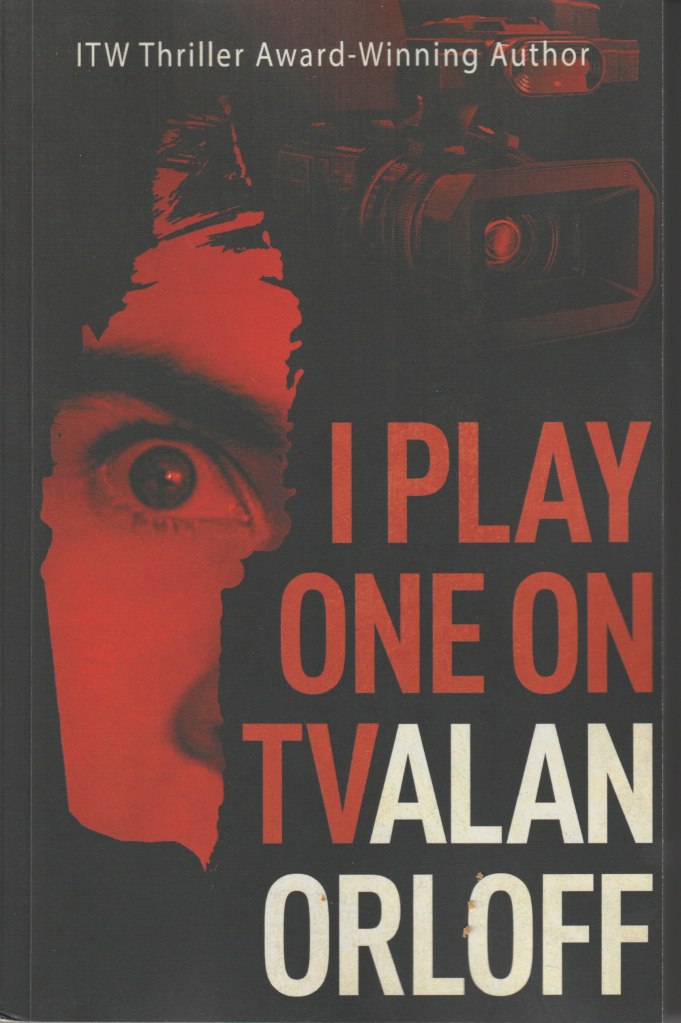
But in the early 1990’s, I started reading horror/mystery novels by teens by Christopher Pike, which led me to R. L. Stine’s Fear Street books and my favorite mystery writer for teens–the forgotten and vastly under-appreciated Jay Bennett. Those books got me to start writing my own y/a horror/mystery/suspense novels for teens–which eventually became my novels Sara, Sleeping Angel, and Sorceress–and I continue to write them from time to time; my last two releases were actually young adult fiction (or marketed as such). I try to keep my hand in the field by reading horror/mystery/suspense novels for young adults that are more current; it’s hard to keep up with everything I want to read as it is, but I was really happy one of the books I took with me on my trip was Alan Orloff’s Agatha Award winning (and Anthony Award finalist) I Play One on TV.
He watched as a teen in a dark hoodie emerged from a storage closet and crept into the high school locker room. In the dum light, the shadowy figure advanced, slowly, methodically.In his left hand, a knife blade glinted.
The man’s insides constricted as he observed. He could almost smell the stale sweat left behind by the athletes after football practice, soon to be replaced by the stench of fear and the coppery odor of fresh blood.
The feelings he experienced now–rage, fear, excitement–mirrored those he had felt then, five years ago. When he had been the teen in the hoodie in that locker room. When he had been wielding the knife.
When he had been stalking his unsuspecting victim.
The premise of I Play One on TV is very original and clever: the main character is a teenager with ambitions of becoming an actor–he has an agent, goes out on auditions for commercials and local theatre productions, and works with his high school’s summer theater camp–and thus far his biggest break was starring as a teenaged killer in a true crime reenactment series. The killer he is playing, Homer Lee Varney, was a bullied outsider who murdered a jock, and has recently been released from prison due to a legal technicality. Dalton’s two best friends are also aspiring actors, and shortly after his episode of the show airs, someone starts stalking him–and he fears he is being stalked by the actual killer.
But was Homer guilty, or was he railroaded? Dalton has found some discrepancies in the police reports which indicate that the investigation might not have been as thorough or efficient as one might think…so maybe Homer isn’t a killer after all?
Dalton, despite his faults (and it’s to Orloff’s credit as a writer that he doesn’t make Dalton perfect–especially since this is a first person narrative), is easy to connect with, identify with, and root for to succeed–not just as an amateur private eye but as an actor and as a person. He’s a bit selfish and self-absorbed (as creative artists have a tendency to be), and he also has some serious professional jealousy for a schoolmate who often winds up going up for the same parts–but gets them instead of Dalton (which is a stage name). Dalton’s relationships with his parents and with his sister are also realistic and well drawn, and the story/mystery progresses at an excellent pace, and comes to a very satisfying, enjoyable conclusion.
I Play One on TV recently won the Agatha Award for Best Childrens/Young Adult Novel, and also received an Anthony nomination in the same category.
Well, I kind of do every morning, really. It’s kind of hard sometimes to wrap my mind around the fact that next month is our twenty-seventh anniversary. Twenty-seven years. That’s a long time for someone like me, whose prior relationships never lasted much longer than a couple of weeks at best. I was thinking about my past last night, after I got home and collapsed into my easy chair, and thinking again how I could never write a memoir because I really don’t remember what actually happened, and over the years I’ve rewritten things to make me look better in my own mind and memory. We all have, I think, a tendency to see ourselves as always being in the right, and everyone else being wrong…and as more time passes we continue to color those memories and slant them in our minds until the truth, what really happened, what was actually said, have changed completely in our minds and these biased revisions become our truth; which is just one of many reasons I use my past–if and when I do write about my past–I only use it for fiction–because my past as I remember it now is probably mostly fiction.
I had another good night’s sleep last night, which was marvelous and feels great this morning. My muscles feel rested and relaxed as opposed to tight and tired, and my mind feels a bit refreshed. I am not in world-conquering mode quite yet; but I am getting there slowly but surely. I have a lot of work to get done this week and over this weekend; I am going to have to buckle down and force myself to actually get the work done this weekend no matter how badly I want to goof off and relax and do little to nothing–it’s really not an option for me this time around. I have too much to do, and the trip to Kentucky, necessary as it was, really threw me off schedule (which I was already behind, to be fair; the trip made things worse). So I am hoping–with feeling rested and everything today–that I’ll be able to make some serious progress on things, and get to a place where I can unplug for the entire weekend (other than the blog, of course) and avoid everyone and everything until I am completely caught up the way I should be on everything. I doubt that will happen–if anything was proven to me this past weekend on the trip, it’s that I get way too much junk email every day, so not looking at it and not deleting things is really not an option for an entire weekend.
I am also the featured author at Three Rooms Press this month, which is very cool; many thanks to Peter Carlaftes (and Kat Georges) for always being incredibly supportive of me and my career over the years, ever since they published the Florida Happens anthology I edited for St. Petersburg Bouchercon. I was rereading it last night in my chair while I was waiting for Paul to come home (so we could watch another episode of The Little Drummer Girl), and I winced quite a bit, as I always do. The other morning, when I taped the segment for Great Day Louisiana (which, it occurred to me last night, might not air) I was having to talk about writing and again, I think back to the questions asked (Malik, the interviewer, was great–friendly and nice and very high energy) and my responses and wince a little bit. I always feel so pompous and pretentious when I talk about writing, but I try to be as honest as I can. I’m never sure how I come across (and let’s be honest, I am a huge critic of myself), and I want to be practical–I always roll my eyes when I read interviews about writers talking about writing and they turn into this mystical, mysterious thing with muses and Gods of Inspiration and “opening a vein and bleeding on the page” and all of that stuff. Yes, you want emotional honesty in your work, and yes, you want your characters to be realistic and fully developed and well rounded and to have interior lives, but ultimately, at least for me, writing is work. I think about it, I go over it in my head, I sit down and write it and print it and edit it and revise and rewrite it and maybe that can, I suppose, be seen as “bleeding on the page”…but then I remind myself I am not a literary writer and so therefore I don’t go through all the angst and agony they do–I don’t spend hours trying to structure and craft a sentence until it’s perfect and poetry, either.
Then again, I’ve never really fit the mold of what most people think authors are like and I’ve never written the way other people do. And that’s fine; there’s no “one way” to be an author. I always tell people the entire point of writing manuals is to show beginners there are any number of ways to write and be a writer; what works for someone else might not work for you, and the point of the manuals with helpful hints and techniques and methodologies for getting words on the page is for you to try things to see what works best for you, and it may wind up being a combination of Sue Grafton said this and this other writers does this and let me try this thing Michael Connelly does and so on…you have to come up with whatever works for you, and there’s nothing wrong with borrowing bits and pieces of other author’s techniques and honing them into something that works for you.
Which is also why I will never write a How to Be a Writer manual. I could, on the other hand, do something like Stephen King’s On Writing, which is a combination writing memoir/manual, and is the book I recommend to any and every person who wants to write. And then I think, like anyone wants to read your memoir about writing….and didn’t you just say you aren’t sure of your own memories of the past, what’s true and what’s been revised over the years by your ego?
Yes, that would be a problem.
At any rate, it’s time for me to head into the office for another exciting day of STI testing. You have a great day, Constant Reader, and think of me down here in the spice mines.
The first “Gothic” novel I read was Victoria Holt’s The Secret Woman (technically, it was Mary Stewart’s The Ivy Tree, but I don’t really think of Stewart as a Gothic writer–which is a subject for another time), and I fell in love with them. These were the books, usually from Fawcett Crest in mass market paperback, that became famous for the “young woman running away from a spooky house with a light in the window while wearing a long nightgown and having really long hair” covers. Sometimes those covers didn’t belong on the books that had them (Charlotte Armstrong didn’t write Gothics, for one example), but inevitably, you really couldn’t go wrong picking up a book with that kind of cover. My favorites were of course Mary Stewart, Phyllis A. Whitney, and Victoria Holt; I devoured their books, and also enjoyed Susan Howatch, Dorothy Eden, and any number of others. I miss those books, even if sometimes the heroines were incredibly passive to the point where I wanted to shake some self-esteem into them…and have often bemoaned their disappearance from the paperback shelves.
But there are modern Gothics being published–Carol Goodman is a QUEEN of the modern Gothic–and I’ve turned my hand to them from time to time myself (Timothy, The Orion Mask, Bury Me in Shadows) and would like to do more.
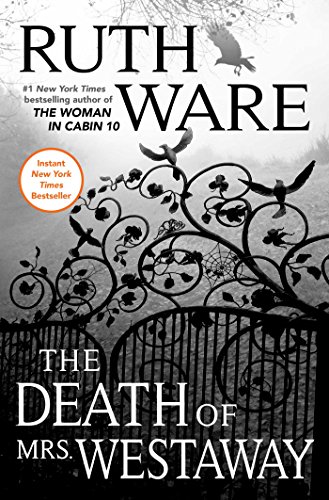
So, you can imagine how delighted I was to read (listen) to The Death of Mrs. Westaway.
The girl leaned, rather than walked, into the wind, clutching the damp package of fish and chips grimly under one arm even as the gale plucked at the paper, trying to unravel the parcel and send the contents skittering away down the seafront for the seagulls to claim.
As she crossed the road her hand closed over the crumpled note in her pocket, and she glanced over her shoulder, checking the long dark stretch of pavement behind her for a shadowy figure, but there was no one there. No one she could see, anyway.
It was rare for the seafront to be completely deserted. The bars and clubs were open long into the night, spilling drunk locals and tourists onto the pebbled beach right through until dawn. But tonight, even the most hardened partygoers had decided against venturing out, and now, at 9:55 p.m. on a wet Tuesday, Hal had the promenade to herself, the flashing lights of the pier the only sign of life, apart from the gulls wheeling and crying over the dark restless waters of the channel.
I had heard somewhere that this book had echoes of potentially being a Rebecca homage (hello, Timothy!) so of course I was interested. Ware first exploded on the mystery scene with her The Woman in Cabin 10, which I haven’t read (it’s buried in the TBR pile somewhere) and I had acquired some of her others titles in the years since her debut with In a Dark, Dark Wood (which I also have on hand) and I decided, when picking out audiobooks to listen to on the drive, thought, “Hey, isn’t it about time you checked out Ruth Ware? Overdue, in fact? So I downloaded The Death of Mrs. Westaway and started listening once I pulled away from the curb last Thursday.
Wow.
The main character is Harriet Westaway, who goes by Hal. Hal is poor–very poor. She makes a subsistence-level living by reading tarot cards in a booth on the pier in a seaside resort, and it’s the off-season, where her living is even lower. The book opens with her walking home from a night’s work, trying to figure out how she is going to pay her bills–and which ones can wait, which need immediate attention–and she also owes money to a loanshark, who is getting more threatening with every passing day. Out of the blue she receives a letter from an attorney letting her know she was named in her grandmother’s will, and an invitation to the funeral. Confused–Hal knows that wasn’t her grandmother’s name, and verifies the information by checking her mother’s birth certificate (her mother was killed in a hit-and-run accident when she was a senior in high school–the British equivalent, at any rate–and as such never finished school); it’s a mistake, but…maybe she can fake her way into a bit of an inheritance. She is desperate, after all, and what can it hurt to get away for a little while? And so Hal sets out for the Cornish estate Trepassen–the Westaway fortune has dwindled over the years, and the house is in ill repair, but Hal is very startled after the funeral to discover that her “grandmother” has left everything to her, which now has her on the horns of a dilemma. She knows a mistake has been made about her identity, but doesn’t know how to get out of the pickle she’s now in.
Trepassen reminded me in ways of Manderly, and the Rebecca parallels are there, but this is not a simple homage. Mrs. Warren, the housekeeper, was devoted to the late Mrs. Westaway (whose children despised her) and is perfectly awful to poor Hal. The Westaway family welcomes Hal as the long-last daughter of their long-lost sister Maud, which only adds to her guilt about the deception she is pulling on them. Hal is mousy, like the second Mrs. deWinter, and there were times I wanted to shake her into standing up for herself a bit more…but on the other hand, it kind of fits into the situation she’s in–how do you stand up for yourself when you are literally lying to everyone? There are a lot of family mysteries to explore and unravel. Hal’s arrival at Trepassen starts those threads unraveling, and like any true Gothic heroine, soon her life is in danger…
I enjoyed this book tremendously. It reminded me strongly of Victoria Holt and Phyllis Whitney, and I will certainly be reading more of Ruth Ware going forward.
I really wish I had discovered how marvelous audiobooks are for long drives years ago. My God, listening to audiobook rather than music makes the drive so much more enjoyable; sure, I do zone out every once in a while when I am driving and listening–I always go off on some kind of mental tangent at some point or another when I am highway driving for a long time, which means I sometimes have to rewind because I missed something–but my old fears of audiobooks in the car (I would get so involved in the story I’d stop paying attention to the driving, or the driving would require so much attention I wouldn’t be able to listen to the book anymore) also proved to be for naught. The drive is still the worst part of the trip (other than the not-being-able-to-sleep thing), but audiobooks have dramatically improved the entire experience so much that I almost don’t mind the drive anymore….almost.
I also wish I’d started reading Carol Goodman a lot earlier. I don’t recall how or why I first discovered her work, but I am a big fan and I was delighted, after reading (and enjoying the hell out of) The Lake of Dead Languages recently to go ahead and download The Night Villa for the trip.
It may just be my favorite Goodman to date.
When the first call came that morning I was with a student, so I didn’t answer it.
“Don’t worry,” I told Agnes Hancock, one of my most promising classics majors, “the machine will get it.”
But it stopped after the third ring.
“I guess whoever was calling changedhis mind,” Agnes said, relacing her fingers to conceal the ragged cuticle on her right thumb. She’d been gnawing on it when I found her waiting outside my door–ten minutes early for my eight o’clock office hours. Most of my students were sound asleep at this hour, which was why I held my office hours so early: to discourage all but the most zealous. Agneswas definitely a zealot. She was on a scholarship, for one thing, and had to maintain a high average, but Agnes was also one of those rare students who seemed to have a genuine passion for the material. She’d gone to a high school with a rigorous Latin program and gotten the highest score on the national Latin exam in the state. Not shabby for a state as big as Texas. She wasn’t just good at declensions, though she had the ability to translate a line of ancient poetry and turn it into poetry again, and the agility of mind to compare the myths from one culture to those of another. She could have a successful academic career in classics or comparative literature. The only problem was that her personal life was often chaotic–a result, I suspected, of her looks.
So far, the majority of the Goodman novels I’ve read all have to do with private schools and usually involve a Classics professor; just as in The Lake of Dead Languages, our main character in The Night Villa is a professor of Latin, who can actually sight-read (translate as she reads), but unlike the others, (set in Ne England) when The Night Villa opens we realize our main character is actually a professor at the University of Texas and lives in Austin. The others also were more Gothic in nature; brooding old buildings that used to be family mansions, now converted into schools and dormitories, slightly older heroines with dark secrets in their past that come back to haunt their present, the “woman in danger” trope replayed and revamped beautifully, with poetic writing and vivid settings you can see in your head (had Goodman published back in the 1970s and 80s, I guarantee all the books would have a young woman with long hair and long nightgown running away from a creepy mansion with a light on in one window). Our main character is Sophie Chase, a young woman teaching at UT with a sad backstory–orphaned young, raised by her grandparents and her aunt (M’Lou); she also had a long term relationship with a young man named Eli that ended up badly after she lost their baby in a tragic fall and he became involved with a mysterious, cult-like group. The opening of the book is a lot more violent and in-your-face than what I’ve become accustomed to with Goodman’s work; Sophie and some other professors are interviewing students for a possible internship with an archaeological dig going on in Herculaneum (a city which suffered the same fate as Pompeii and by the same volcanic eruption, but didn’t the press Pompeii did). During Agnes’ interview a troubled young man she used to date comes into the interview room with a gun and starts shooting–Sophie is shot in the chest and loses a part of her lung, but she ends up going on the trip to Italy as one of the other professors who was supposed to go was killed by the gunman. They are being hosted on the island of Capri in the bay of Naples by a billionaire software designer with an interest in archaeology. He has built his own villa on the island as a replica of the villa they are excavating in Herculaneum, the Villa della Norte, the Night Villa. A discovery of some papyrus scrolls in the ruins that reveal some information about an ancient slave girl from the time also has intrigued Sophie, which is part of the reason she has agreed to go–as well as wanting to get away from Austin for a while. (Sophie wrote her dissertation on the slave girl; this discovery offers to give her more insight and information about the girl for the book she is writing.)
The book is, if you’ll pardon my language, fucking amazing. Not only do we have Sophie dealing with the aftermath of a massive emotional and physical trauma (getting shot and losing part of your lung is a serious fucking trauma), but also the fallout from the end of her relationship many years earlier; a kind of feeling of responsibility for Agnes and how she is dealing with the guilt and trauma of the boyfriend going nuts and on a shooting spree (it ended with him shooting himself); and of course the mystery of the scrolls. The scrolls also give a beautiful insight into life in ancient Herculaneum and in the Roman Empire and also tell a story about the slave girl. It’s an exceptionally good novel, literate and smart and complex and multi-layered; and I haven’t even covered everything in the story here. Sophie is strong and likable and vulnerable; she makes for a great heroine, and she also has so much empathy for other people you can’t help rooting for her.
The book, set mostly on Capri, reminded me a lot–in a good way–of Mary Stewart’s This Rough Magic with its Corfu island setting; Goodman is also exceptional about setting and place. I could see the Bay of Naples and Mount Vesuvius; the ruins of the city buried by the eruption; and I also love how she weaved mythology and the ancient mysteries as an integral foundation of the story. I would even go so far as to say Goodman is the modern equivalent of Mary Stewart–which is high praise indeed.
June first, and the start of Pride Month. I should probably wax poetic about the long struggle for civil rights for queer people–one that I pretty much spent my entire life witnessing (I was eight at the time of Stonewall; I don’t remember seeing any news coverage of it, but it gradually seeped into my consciousness through osmosis or something) and a lot of years participating in at some level. I sometimes wonder if I could have done more, or fought harder, or been better about it in some ways; if I could have done something more that could have caused a greater impact or advanced the cause more quickly in some way. I imagine that’s probably my own issue more than anything else; I always feel like ai should do more.
I slept pretty well last night, and I think I am starting to get caught up on that. I felt better yesterday, but got tired relatively early in the day and of course, had errands to run after work (I cannot be the only person stunned at how much the cost of groceries has gone up, can I?), and then came home to make dinner (I was very hungry, which was unusual but cool as I am usually not hungry after work), and then Paul and I watched another episode of The Little Drummer Girl, a John LeCarré adaptation we’re enjoying, if not completely certain we are following the story completely. I’ve not read much LeCarré; only The Spy Who Came In from the Cold, which was amazing and yes, I am well aware I need to read more. (I also would like to read more Eric Ambler, for that matter, and there’s some Robert Ludlum I’d like to revisit as well.) I’ve not decided what to read next, to be honest; probably something older is most likely; I have a couple of old suspense novels from the 1960’s I’d like to read, and they are short, which makes them even more appealing. I also downloaded another book to listen to on my phone; I am hoping that I can listen to it while doing chores around the house and/or walking to the gym (which I hope to start doing again). I have an eye appointment on Saturday in Metairie (yay) but maybe after I am finished with that and after running a couple of errands, can walk over to the gym Saturday afternoon and start working out and stretching again. I can feel that my muscles need to be stretched (badly) because it’s been so long…
But I do feel better today, like I am finally over the trip.
I am behind on everything, but that undertone of being tired never helps in that regard; when I am tired (exhausted) I always look at everything I have to do from a perspective of oh I will never be able to get caught up and feel defeated. The trip of course was a disruption, and now I have to piece together the many things I was doing and working on before I drove north. But with some clarity–sleeping well helps–I should be able to get that taken care of this morning as well as starting the incredible chore of clearing out my inbox, which has been out of control for quite some time. (Hell, everything has been out of control for quite some time.)
I’ve been reflecting about my gay life a lot lately–primarily because one of my many many projects are set in the past, which requires me to remember things from my life from way back when (“Never Kiss a Stranger” is set in 1994 New Orleans; another project is set in the mid 1970’s in the Chicago suburbs) and while I certainly wouldn’t ever want to go back in time–no matter how awful things seem to be in the present day, they were definitely worse in the past–it’s kind of nice to think back to what many people consider to be “simpler” times. The fact is the times weren’t actually simpler, we were just simpler and certainly more naïve. Maybe that’s just me projecting–always a possibility–and the cynic in me, when people talk about “simpler times”, always wants to say, “what you really mean is you want to go back to a time when you didn’t have to think about social issues because they didn’t really intrude into your life.” It’s very easy to not care about, or notice, things that don’t affect you–which is where the term “woke” came from, if you were wonderingor have complained about it before–but (at the risk of making you think of campfires and “Kum-Ba-Ya”) we kind of are all in this together, and is it really so terrible to care about other people and how they are treated?
Apparently, a lot of people think the answer to that question is yes.
Anyway. I don’t think people will ever stop disappointing me. (For that matter, I don’t think I will ever stop disappointing myself.)
And on that note, I am heading into the spice mines. Have a lovely June 1st, Constant Reader.
I am classified as a baby boomer because of the year I was born (1961) but I kind of think I am an exception to that rule, or should be, at any rate. My parents just missed being boomers, being born in 1942, but they don’t remember the war, and I think the war is the real defining generational moment. But I grew up around older people (they seemed ancient!) who had served. Our neighborhood in Chicago was a melting pot of various eastern/middle European refugees who came after the war, and for me that made the war seem very real as opposed to a historical event. We saw all the films in elementary school about the war–along with some extraordinary pro-American anti-Communist patriotic propaganda–and as very young children we were exposed to the films of the camps. The Holocaust was real, it was recent, and it was still absolutely horrifying. (We were also taught why using atomic weapons on Japan was the right, moral decision and hey, they started it after all–but that’s a topic for another day.) I remember watching a documentary series on PBS called The World at War, and of course, old war films were being shown on television all the time. (And somehow, Hogan’s Heroes was also on the air when I was a child–and then rerun in syndication for quite a while.) I read a lot of war fiction growing up–From Here to Eternity to The Caine Mutiny to War and Remembrance to The Young Lions to Tales of the South Pacific. I read a lot of World War II books–and there were even more books where it was a major part of the plot but it did affect the story and the characters in some way. (You can even stretch and include The Godfather–both book and movie–because Michael Corleone was a war hero at the beginning.)
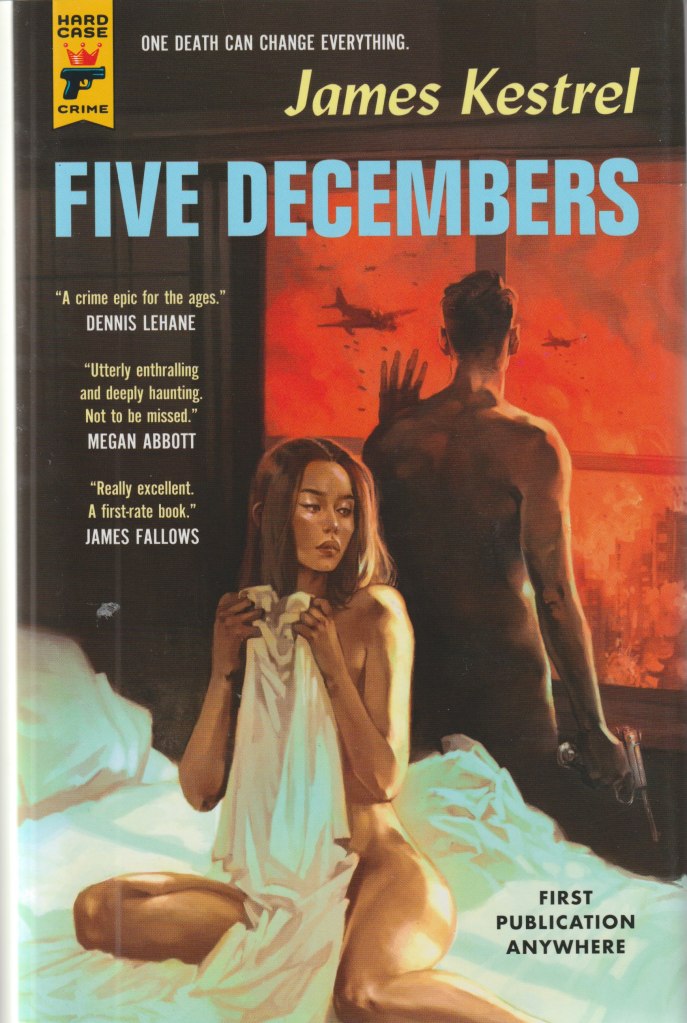
I also fell in love with Hawaii the first time I went in 1991; I went every year after that until 1995 (thank you, flight benefits!) and I miss it. I would love to go back again, and I would imagine it’s very different there now than it was the last time I was there. But on one of those trips to Hawaii–I don’t remember which one–I came up with a very basic idea for a book, that would open on December 8, 1941. The wrecks in Pearl Harbor were still smoking and the entire island chain was on high alert. My idea was to then have an Army brass’ wife call the local police station to report a murder: she found the young Japanese man who worked for her doing yard work and odd jobs with his throat cut in her rose bushes. That was as far as the idea ever progressed, and I never have had the time to sit and think it through. But I love that opening idea, and that set-up; even as I type these words now characters are taking shape in my head (KNOCK IT OFF, CREATIVITY)…anyway, so it was a no-brainer that I wanted to to read Five Decembers by James Kestrel the first time I learned of its existence.
Joe McGrady was looking at a whiskey. It was so new the ice hadn’t begun to melt, even in this heat. A cacophony surrounded him. Sailors were ordering beers ten at a go, reaching past each other to light the girls’ cigarettes. Someone dropped a nickel in the Wurlitzer, and then there was Jimmy Dorsey and his orchestra. The men compensated for the new noise. They raised their voices. They were shouting at the girls now, and they outnumbered them. The night was just getting started, and so far they weren’t drinking anything harder than beer. They wouldn’t get to fistfights for another few hours. By the time they did, it would be some other cop’s problem. So he picked up his drink, and sniffed it. Forty-five cents per liquid ounce. Worth every penny, even if a three-finger pour took more than an hour to earn.
Before he had a taste of it, the barman was back. Shaved head, swollen eyes. Straight razor scars on both his cheeks. A face that made you want to hurry up and drink. But McGrady set his glass down.
“Joe,” Tip said.
“Yeah?”
“Telephone–Captain Beamer, I guess, You can take it upstairs.
He knew the way. So he grabbed the drink again, and knocked it back. The whole thing, one gulp. Smooth and smoky. He might as well have it. If Beamer was calling him now, then he was going to be pulling overtime. Which meant tomorrow–Thursday–was going to be a bust. Molly was going to be disappointed. On the other hand, he’d be drawing extra pay. So he could afford to make it up to her later. He put three half-dollars on the bar, wiped his mouth on his shirtsleeve, and went upstairs.
I had heard great things about this book–it literally won the Edgar for Best Novel last month–and of course, it’s time and setting (a murder mystery set in Honolulu just before, during and after December 7? Oh hell yeah) made it a must-get. I didn’t read it as soon as I got a copy of course; it went into the TBR stack and moved up quite a few places after it won the Edgar. On the one hand, I’d heard nothing but great things about the book (and it won the Edgar)…but on the other hand, I also was worried about how this Pearl Harbor noir might affect my potential write-sometime-in-the-future-but-before-I-die Pearl Harbor murder mystery; namely, would I simply think oh this is so fucking good I can’t bear to write something that would be compared (unfavorably) to it because mine would inevitably be the weaker of the two? (I know how unhinged this sounds, but I’ve never pretended that anything that goes on inside of my brain is anything other than that.)
Yes, the book is that good, and no, it didn’t leave me thinking that I could never write my own book idea. If anything, it made me think, oh, I should try mine at some point but I am going to have to do a shit ton of research–which was something I already was aware of, to be fair–but its a good idea and could be interesting and fun to work on.
So, yeah, there was clearly no need to wait to read this outside my own neuroses.
Joe McGrady is the hero of this tale, which does indeed open in late November/December 1941 and finally wraps up the case in December 1945–the “five Decembers” of the title. Joe is ex-military and wound up in Honolulu on the police force, where he is neither liked nor trusted because he didn’t come up through the ranks; the thin blue line in Honolulu considers him to be an outsider. The case he catches while having a drink in the bar involves two bodies found butchered in a hut on a pineapple plantation; a young white male and a young Japanese female, stripped nude and essentially gutted. The case has wider implications other than the apparent (“my god, someone butchered two people in an extremely violent and gory way!”) as the young man is the nephew of Admiral Kimmel, the commander-in-chief of the Pacific Naval Fleet. As tensions between the United States and Japan are heating up to the inevitability of war, the murder of someone related to a person so high up in the chain of command could be espionage, could be any number of things that could have an effect on the security of the country and the Pacific fleet–and we, as readers, are also very aware of what’s around the corner in just a few days. Joe does note that his boss seems a bit weird about the investigation, and he’s paired with a bruiser detective who likes to beat information out of people and confessions out of possibly innocent people. He’s dating a young woman who attends the University, and may even be falling in love with her. We don’t get a lot of backstory on Joe, but the strength of the authorial voice makes unemotional, mostly internal Joe a hero you can root for. The trail of the murders eventually leads to Hong Kong, and Joe sets off on the transoceanic flight, which includes stops at Guam and Wake Island, where he picks up more clues and the trail of the possible killer–and there’s a murder victim on Wake kind of similar to the ones in Hawaii. But once he arrives in Hong Kong he decides not to immediately go to the police department there and ask assistance; rather he decides to follow the trail himself at first…a mistake, as he winds up getting arrested and framed for a rape. He is in the Hong Kong jail hoping that the US Embassy will get him out when the bombs start falling. He is taken to Japan as a prisoner of war, and the case–and the book, take a completely surprising twist and turn once he is there.
Anything else would be a spoiler, so I can’t really talk about the story anymore–but it’s compelling, convincing, beautiful and tragic and sad all at the same time. We see a lot of things through Joe’s eyes–both inhumanity and humanity; the absolute horrors of war (there’s a horrifyingly grim account of the fire bombing of Tokyo), and finally, the war ends, he returns to Hawaii, and is able to at long last close the case in a way that is enormously satisfying.
I really really enjoyed this immersive book which used a hardboiled crime story to talk about the horrors of war and the inhumanity that xenophobic and racist values and beliefs can create. It was riveting and very hard to put down once I started.
 BEST HARDCOVER NOVEL




 Queer and Loathing in America