I Think I Love You

The 1980’s were an interesting time. The decade is sort of a blur for me in some ways–there was a lot of pot smoking and alcohol abuse and of course, the cocaine issue–but I also had fun, or so it seemed at the time. I sometimes wonder, when I am given to reflect on the past (something I seem to be doing more and more as I age) how different my life would be had I not, in fact, been living a double life in my twenties. But of course, these are the sort of things that are immaterial ultimately; if any single one thing in my past had been different, my life as I know it now would be different, and I am enormously happy with my present life. And I do remember that period of my life fondly; I remember going, many times, into a marijuana induced coma with friends while we watched endless hours of MTV, back when it used to actually show music videos.

Another popular show that we watched through the smoke was a syndicated series called Friday the 13th–the Series.
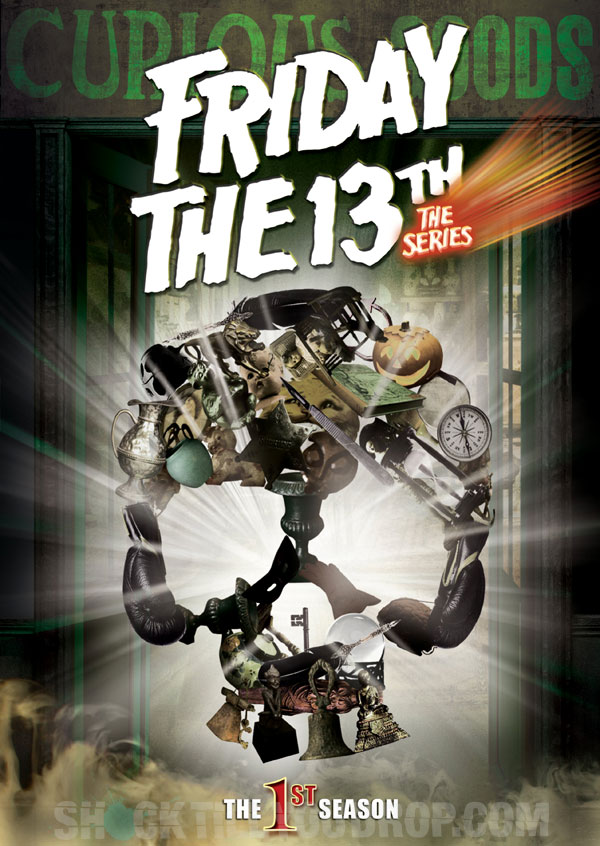
friday-the-13th-series

Every episode of the show began with a voice over:

“Lewis Vendredi made a deal with the devil to sell cursed antiques. But he broke the pact, and it cost him his soul. Now, his niece Micki, and her cousin Ryan have inherited the store… and with it, the curse. Now they must get everything back, and the real terror begins.” 

Part of the problem, you see, was originally Micki and Ryan decided not to keep the store and had a big sale to get rid of everything inside. Then Jack Marshak, an expert in the occult, showed up and told them about Uncle Lewis’ deal with the devil and that every item in the store was cursed. In the first episode, they didn’t believe him, of course, until they started tracking down one of the items. Each cursed item had some kind of power related to what it was; a Cupid had the ability to make anyone fall in love with the person who owned it, for example. The problem was the blood curse on every item–in exchange for the use of the item’s power, the person using it had to kill someone, or the item itself would kill someone. The show followed the three–Jack, Micki, and Ryan–as they tried to track down each item.
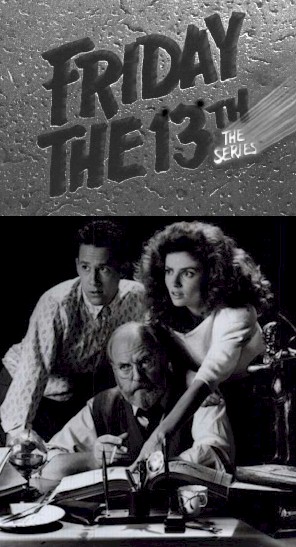
friday13th

The reason I even discovered the show in the first place was because one of my friends thought Robey, the actress who played Micki, was hot.

robey_louise_250

She almost always wore white cotton tank tops without a bra, in typical 80’s exploitation.
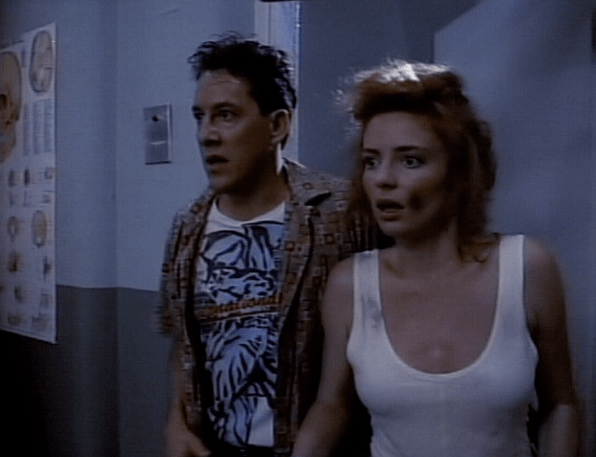
3-robey-and-ryan

She also had a bad case of serious 80’s hair.
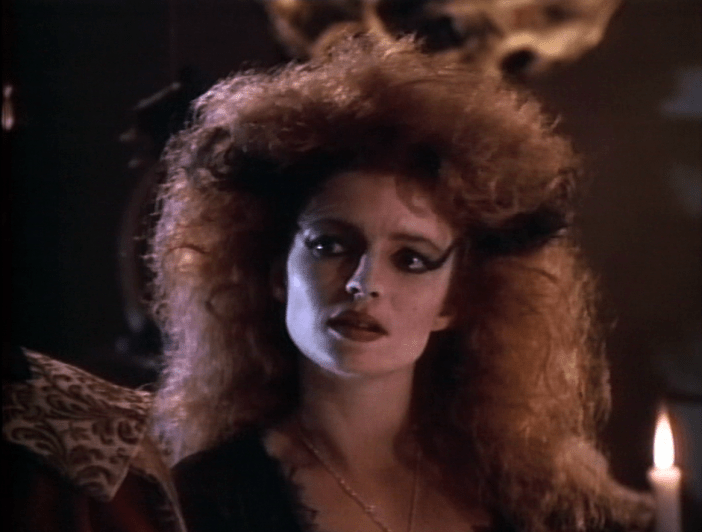
23

But it was a clever idea for an anthology/horror/supernatural style series, and it last three seasons. I kind of got sucked into it, and still remember it fondly. It was syndicated, so it was much lower budget than it would have been had it aired on a network. It was available for streaming on Amazon Prime recently, and the last time I was doing cardio I was rewatching….alas, for my month of horror, it’s no longer available. Rewatching made me realize just how low budget the show actually was; but it would be a great thing to reboot for the modern audience.

And now, back to the spice mines.

Muskrat Love

One of the more interesting things in Stephen King’s Danse Macabre was his dissection of the common core at the root of all horror stories; the conflict between between the Apollonian and the Dionysian worlds; in that all horror stories begin in an Apollonian (or seemingly Apollonian) world where everything makes sense, everyone is just going about their business, and into that world something Dionysian is introduced, and the conflict, the point of the story, is to vanquish the Dionysian and return everything to the Apollonian; he further used Dr. Jekyll and Mr. Hyde by Robert Louis Stevenson as an illustrative example of the two sides; in which Dr. Jekyll is a man of the intellect, of reason, while Mr. Hyde is all pure emotion, sensuality, and chaotic action.

I’m probably explaining it badly (I am no King, after all), but it really does work thematically as you look at most horror (it doesn’t fit all horror stories, of course; nothing can possibly and simply explain an entire genre). It also kind of explains why I am not such a good horror writer; I am not well enough versed in the genre–fiction and non-fiction–to write it credibly. I mean, isn’t that why I devote so much of my reading time to crime fiction? To make me a better crime fiction writer?

Sigh. Yes, I do have a rather strong grasp of the obvious.

Yet, my own Sara certainly fits that description. Everyone at the school is going along, living their lives, and then Sara shows up; bad things happen, and then the problem is solved and they can go back to living their lives, if a little shell shocked.

Rereading Danse Macabre, I also realized that many of my horror stories–most of them, if not all of them, actually–subscribe to the ethos of what King called “the EC Comics mindset.” EC Comics were long gone by the time I was a kid, but I did read the DC comic versions, House of Mystery and House of Secrets.

house_of_mystery_v-1_66

There were usually two or three stories in each issue, and like the old EC Comics–the Tales from the Crypt style–there was a narrator of sorts, a curator of the House of Secrets or the House of Mystery–who would introduce each tale. It was either a horror/supernatural story, or some kind of noirish story where the main character was going to do something criminal or bad, and got their just desserts in the end.

As King says, the “heh heh” ending.

house_of_secrets_v-1_106

King himself does this in a lot of his own short stories, but being a better writer and more creative, he can make it work.

The short story that I finally finished last night is sort of like that, only it’s noir, not horror. I need to revise it–i will do that today, and spend the weekend revising some other stories I want to submit–but it’s interesting that I always try to go for the twist ending in my short stories.

Hey, at least I don’t do the “oh, it was all a dream” thing….anymore.

And now, back to the spice mines.
Billy Don’t Be a Hero

When I talked about Crowhaven Farm the other day I also mentioned how the ABC Movie of the Week used to occasionally foray into horror, and that some of those made-for-TV horror movies were actually quite good; everyone remembers the scary Trilogy of Terror with Karen Black; primarily for the part with the Zuni fetish doll. I can’t remember the other two stories in that anthology movie, but that part absolutely terrified me from beginning to end, and I still remember it vividly. There was another called Don’t Be Afraid of the Dark, with Kim Darby of True Grit fame, which was about little murderous monsters that lived in a house but couldn’t come out into the light. As someone with a lifelong fear of the dark, that one still haunts my dreams.

Constant Reader knows I’m an Egyptophile; have been since I was a little boy. So, today, I am going to talk about one of those movies that had a basis in Egyptian mythology and history; I barely remember anything about it, to be honest, but it was quite terrifying.

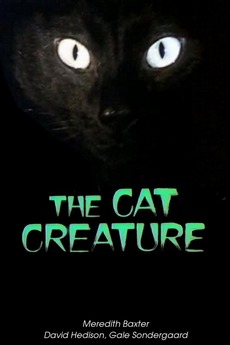
It was called The Cat Creature.

114789-the-cat-creature-0-230-0-345-crop

The premise of the movie is that a very wealthy, eccentric man who liked to collect things has died. Someone is sent out to his house to catalogue and valuate his things. Down in the basement in a room are a bunch of things that no one knew he had–Egyptian antiquities, including a mummy with a big solid gold amulet around its neck. A thief has also broken into the house, and when the other guy is distracted, steals the amulet from the mummy. Then something kills the first guy, while the thief runs away with the amulet. Lots more deaths follow, including eventually the original thief–and it appears that the amulet is a lot more important than anyone thinks. An archaeology professor is brought it to consult with the police, because of the Egyptian thing, and it also appears like all of the victims were killed by an animal–a cat, specifically, and all through the movie there are cats acting strangely all the time. Meredith Baxter Birney shows up as a new girl in town, gets a job at the pawnshop where the amulet wound up, and to serve as a love interest for the archaeology professor.

hqdefault

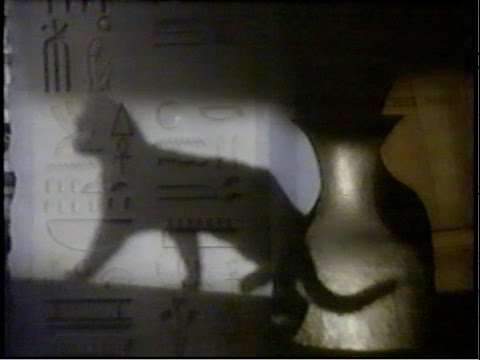
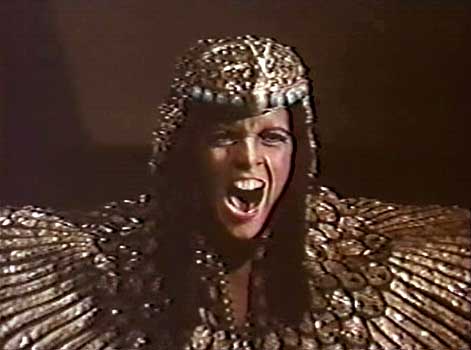
Turns out the mummy belonged to a priestess of the Egyptian goddess Bast, and the amulet has magic properties–keeping the priestess, who has eternal life, trapped in the mummy. When the thief took the amulet, the mummy came back to life–and of course, as a priestess of Bast has the ability to turn herself into a cat. She is trying to destroy the amulet, so of course she can never be trapped again.

Meredith Baxter Birney, of course, is the priestess, and when she tries to kill the archaeologist in the end, he quickly slips the amulet around the cat’s neck, turning her back into the priestess, then into the mummy again, and then her body turns to dust.

cat13

Oscar winner Gale Sondergaard–I think she may have won the first Oscar for Best Supporting Actress; if not the first, one of the first–had a great supporting role as the pawnshop owner.

cat-creature-gale

It’s on youtube; sometime when I have time (HA!) I will watch it again. I also looked up some info on the movie just now–the plot is pretty much as I remember it, and the original story and screenplay was written by Robert Bloch!

I’ve always wanted to write a story about Egypt, and I have a y/a in the files I’ve been wanting to write for a while–revolving around a cult of Bast; and now I know where the inspiration came for it!

And now, back to the spice mines.

Joy to the World

It is highly ironic that, on National Coming Out Day, I was reminded of the existence of someone whom I hadn’t thought about in years; someone who, back in the days before my first novel came out was editor of a gay fiction publication (whose name is, in fact, lost in the mists of time). I remembered emailing him, when I was working for Lambda Book Report, to see if we could do a piece on the magazine, what he was looking for in terms of submissions and so forth–my vision of Lambda Book Report, was to make the magazine not only about reviewing books but also to provide resources and support for aspiring LGBTQ writers and publications (the way I described my vision was “an LGBTQ hybrid of Publishers Weekly and The Writer“). He emailed me back, having totally misread my email and its intent with the simple sentence, I’ve had to reject much better writers than you.

I didn’t bother responding; I never had trouble finding material or pieces to fill the magazine to waste my time explaining myself to such a rude piece of shit. And yes, I admit it, I was small enough of a person to enjoy the moment when I heard his publication folded, and when his own first book disappeared without a trace. I’d forgotten he even existed until this morning.

I suppose it’s small of me to even mention this today; but it’s also nice to be reminded, every once in a while, that my voyage to becoming a published writer wasn’t always as smooth as I remember. But I digress; it’s still October, it’s still my month to write about horror, rather than the horrors of being a writer–and I have decided, in honor of National Coming Out Day, to write about two books that showed me that there was the possibility of such a thing as gay horror: Steam by Jay B. Laws, and Queer Fear, an anthology edited by Michael Rowe.

queer-fear

Queer Fear (and its sequel, aptly titled Queer Fear II) was a revelation to me. The stories (by authors like Douglas Clegg, Michael Thomas Ford, William J. Mann, Gemma Files, Caitlin R. Kiernan, and Nancy Kilpatrick, among many others) were extraordinary; great horror, terrific writing, and inspirational for me as a horror fan. I reviewed both editions for Lambda Book Report, and I still have my copies of both somewhere; I kind of want to dig them out and reread them again. Both were nominated for Lambda Literary Awards; the second won. It was when I found out there wouldn’t be a third (which I still think is criminal) that I decided to put together one of my own,Shadows of the Night.

steam

It’s been years since I read Steam, and I don’t know where my copy is; I know I still have it. Jay B. Laws only wrote two books before dying far too young from HIV/AIDS in the early 1990’s; he was an extraordinary writer. (I have a copy of the second, The Unfinished, but haven’t read it.) When I was senior editor at Harrington Park Press I wanted to reprint both books, but I was never able to uncover who owned the rights to them; Alyson had originally published them but they were long out of print, and of course, Laws was deceased.

jay-b-laws>

Steam was not only a great horror novel–terrifying, really–but it was also a powerful allegory about HIV/AIDS itself. In the story, there is a demonic presence in one of the bath houses in San Francisco, that is spreading and getting more powerful as it kills; and in order to save the men they love, some gay men have to go into the possessed bath house to kill the demon and close the portal to hell. It was an amazing, amazing read. I think I read it over the course of one day; I’ve always regretted the loss of Laws and the books he could have written.

In the LGBTQ ghetto of publishing; there have always been a lot of romance and mystery novels; but speculative fiction has never really been as represented as well as romance and mystery (the point can be made that romance and mystery are both much larger genres in the mainstream; and therefore the smaller percentage of queer speculative fiction novels corresponds to that as well), and I’ve always felt that there should be a lot more of them. Lethe Press is, as far as I know, the only press currently primarily focusing on LGBTQ speculative fiction; they are doing a great job, but I would love to see more.

And now, back to the spice mines.
Love Will Keep Us Together

Yesterday, since there wasn’t an LSU game to stress over, I simply did chores and idly watched (had the television on while I read or did chores) some games–Texas A&M vs. Tennessee; Alabama vs Arkansas, Florida State vs Miami–until we started watching some of our shows. I have to say, given what has been going on in the country over the last few years, and particularly since Friday; Friday night’s episode of  The Exorcist was especially powerful. What I really enjoyed about it was it showed how seductive evil can be…and the scene on the el, when Casey was basically being groped and assaulted by the drunk bro in front of everyone who watched and did nothing? Absolutely horrifying, and yes, while not wanting to provide spoilers, I had no sympathy for the dude bro.

Kind of how like in Carrie, I didn’t have much sympathy when the bullies started getting theirs.

But while I was watching football games yesterday, I was also rereading Danse Macabre by Stephen King. It’s really quite exceptional, even better than I remembered; it’s an examination of the horror genre from a personal perspective, but it’s incredibly smart. It could, quite seriously, be a text for a Genre Fiction class. It’s written in, as I mentioned, an incredibly accessible style, yet it also delves into serious scholarship and examination of the primary themes in the genre. It really, really is quite brilliant.

I overslept this morning, of course, as I am wont to do on Sundays, but the great thing about it is that I feel completely rested for the first time in days. I’ve already done the dishes, intend to clean up around here, and then I am going to write for a while. Then in the later afternoon, I am going to take my camera out into the neighborhood and take some pictures. There are some interesting changes going on down on Magazine Street.

Oh, yes, horror; I am supposed to be talking about horror, aren’t I?

When I was a kid, ABC used to made-for-TV movies and aired them on Tuesdays as the ABC Movie of the Week. Some of them were ‘important dramas’; like Go Ask Alice; some were bad comedies, some were mysteries, and some were horror. Many of them were quite terrible, but some of them were memorable; they often used film stars past their prime, and while I admit I’ve not seen any of them in years, the first one I remember–one that terrified the crap out of me–was Crowhaven Farm; which is on Youtube, and I have it on my watchlist, but haven’t gotten to it yet–partly because I fear it won’t hold up, and what scared a ten year old might seem silly to an adult.

url

I don’t remember the entire plot, but it had to do with a city couple either inheriting or buying Crowhaven Farm, and moving out to the country because their marriage was struggling; partly because they hadn’t been able to conceive a child. Once they reach the farm, though, the wife–Wikipedia tells me her name was Maggie–starts remembering things about the farm that she couldn’t possibly know; she walks over to a wall and touches a secret latch that opens a panel to a secret room, for example. She starts having flashes of a past in Colonial times; and there are ghosts walking around Crowhaven Farm–that apparently have it in for her. They take in a foster child but then Maggie learns she is pregnant…and some of the memories have to do with her being ‘pressed’–a punishment where suspected witches were placed beneath a wooden panel and stones piled on it until she is crushed to death (it always seemed like an unpleasant way to die to me). Back in Colonial times, the area had it’s own Salem-like witch issues, and it turns out that Maggie, back then, escaped death by pressing by ratting out some other witches who now want to get even with her in THIS life.

The ending was especially scary to me.

I used to watch the movie every time it aired, because I enjoyed it so much…and I’ve never forgotten about it, either. It popped back into my memory when I remembered that Barbara Michaels’ superb ghost story Ammie Come Home had been made into a Movie of the Week called The House That Would Not Die, starring Barbara Stanwyck, and went looking for it. I found it on Youtube…which suggested Crowhaven Farm to me.

Good stuff.

I also hope to start reading Bracken MacLeod’s Stranded tonight.

And now back to the spice mines.

Midnight at the Oasis

Stephen King. What is there left to say about Stephen King? From the first moment I read Carrie, I was a fan. I’d read a lot before I discovered him; and yet his writing was a revelation to me. What he was able to do with setting, with character, the way he made his stories–regardless of subject matter–relentlessly realistic opened my eyes to what one can accomplish with writing. Over the years, as I’ve continued to read King (I still am not completely caught up; I am several books behind–the days when I could buy the book on release day and devour it in one or two sittings are sadly, far in the past), I continue to marvel at his extraordinary expertise. And while some of his books seem to go off the rails a bit, I would be proud to claim any of what I consider his lesser books (and by that I mean ‘ones I am not as fond of as others’) as my own: The Tommyknockers, Rose Madder, Dreamcatcher. I used to reread his books, over and over again–I don’t even know how many times I’ve reread salem’s Lot and The Stand and The Dead Zone and Christine, for example; and I wish I had the time to sit down and reread them all, from Carrie on. His On Writing is the one text I would tell every beginning writer to read from beginning to end, commit to memory, go back to whenever needed.

But I decided I wanted to talk about a different Stephen King title today: Danse Macabre.

stephen-king-danse-macabre

As I often point out, I am more of a fan of horror than anything else; I’ve not read as widely in the genre as I would like, nor do I even know enough about the genre to write about subgenres and subcategories expertly. There are any number of horror writers whose oeuvres I’ve stuck my toe into, and found the water just fine, but haven’t had the time to fully commit to reading: Christopher Golden, Gemma Files, Douglas Clegg, Brian Keene, Nick Cutter, and John Boyne, just off the top of my head, and there are many more. There is just so much time, after all, and there are just so damned many books; and as someone who is primarily defined professionally as a crime writer, I have to read so much within my own genre, not to mention true crime–and of course, I love my nonfiction, which I can just walk away from without too much worry of having to go back to the beginning to start over.

But I do feel that King’s Danse Macabre, published originally in 1981, is an excellent overview of the horror genre up until that date. King’s non-fiction writing is very similar to his fiction; it’s smart but also accessible. And it’s excellent; it is serious scholarship about the genre of horror, written by the grandest master of the grand masters, talking in an accessible way about the best books, the best writers, the best films, and the best television programs within the genre…how they influenced his own work, and why. It’s truly exceptional.

I’ve always had a copy of Danse Macabre–well, I’ve always had a copy of every Stephen King book in my house–and it’s been a long time since I’ve revisited it. I may, once I tire of rereading Antonia Fraser’s Mary Queen of Scots, give it another whirl. Reading it the first time was what reminded me of Richard Matheson, introduced me to other writers like Robert Bloch and Harlan Ellison (my God, Harlan Ellison) and even, for the first time, made me truly aware of Shirley Jackson; reading this was what sent me to the used bookstores in search of books by these authors again, and I’ve never regretted those forays into their work–Ellison and Jackson are certainly up there on my list of absolute favorites, and many of the others I originally found through reading Danse Macabre are certainly favorites.

And that’s not even including the television shows and movies.

And now, back to the spice mines.

You and Me Against the World

I am very tired this morning. I did bar testing last night, and today feel like one of those extras on The Walking Dead about to get macheted by Michonne. I am so tired at this point getting macheted sounds almost preferable.

As my month of writing about horror continues, I had intended to talk about Stephen King today, but since I am so tired and incapable of much coherent thought, I decided to talk about the inspiration behind my novel Sara.

imgres

I’ve written about this book before, but while Lake Thirteen is a ghost story, and there are some serious paranormal elements to Sorceress, Sara is the only novel I’ve written that could be described as horror. It’s also my least successful novel; and by that, I mean the lowest selling. Trying to figure out why a book didn’t sell is literally just asking for it; the downward spiral into depression and full-on crazy. But Sara was different than anything else I’ve written; as I said before when talking about it, it was my “get even with everyone I went to high school who was mean to me” book; and when I first wrote it, that was really my mindset, sadly. Fortunately, I am more evolved now than I was when I wrote the first draft of Sara back in 1991, and when I was revising and rewriting for publication, I had to change/remove a lot of that; I was clearly in a very bitter place when I was originally writing Sara…

Stephen King’s Christine is one of my favorites of his; I know people make fun of it–the haunted car and all that–but I loved that book. It was high school as I remembered it; I knew kids like the kids in the book, and the book affected me deeply. I still think of Christine (as well as Carrie) as two of the best young adult horror novels ever written and published; I may talk about Christine more later in the month.

When I first decided to write Sara, it wasn’t intended to be written as a young adult novel any more than Christine was written as one. Sara was my first attempt to write a horror novel for adults; as I have said before, in the 1980’s I decided I wanted to write horror. I wrote a lot of short stories from about 1985 through the end of the decade (through 1992, most likely) that I never did anything with; but it was around 1991 that I decided to take the plunge and write the novel. Sara was originally inspired, not only by Christine, but by getting the invitation to my ten year high school reunion three years earlier. (That invitation also inspired my short story “Promises in Every Star.”) I thought an invitation to a high school reunion would be a great way to start a book, and when I started writing Sara, I decided to frame the story the same way King did with Christine; with the point-of-view character looking back at the things that went on during his senior year, then having them play out, and then end back in the present day with him remembering…and being afraid.

I was about five chapters into the book, and struggling (it really amazes me to remember how little I knew about writing a novel and so forth back then; particularly given what a spectacular mess I was making of my life. It’s a wonder I wrote anything at all, frankly.) when I discovered Christopher Pike and R. L. Stine. In my stupid, immature, addled “don’t know what I am talking about” way, I decided that it would be easier to write Sara.

I know, I was younger, much more foolish, and incredibly arrogant in my foolishness.

But on the other hand, I’m not sorry I did make that foolishly arrogant assumption; I wouldn’t be writing young adult fiction now had I not had that “epiphany.”

When I was rewriting Sara for publication, I dropped the framing device and re-set Sara in the present day; in the original, Glen wasn’t gay because that would have never worked in a book being set in 1978; which was, really, the major hole in the story. Had I indeed made him gay, bullied for being gay, in denial for being gay–AND had it set in 1978, it would have worked so much better, I think.

I do think Sara is a good book, though.

And now, back to the spice mines.

Feelings

Since October is, for me, the month of Halloween and therefore irrevocably tied to the horror genre, as Constant Reader already knows, I have decided to write only about horror in this month. I am casting my mind back, as it were, over the years and trying to remember what films and books drew me to the genre in the first place. As an author, I am often asked in interviews or on panels about influences, and while there are certain answers that I always give–Shirley Jackson, Stephen King, James M. Cain, Daphne du Maurier–there are often authors, books, films and television programs I forget at the time. (I once made a list of my favorite movies in response to a meme…and somehow forgot to name what could possibly be my favorite film of all time: The Princess Bride. In my defense, I often do these things very quickly and off the top of my head. )

So, in talking about the genre this month, I am also trying to dig deeper and not write about influences I have talked about before; or at least I am going to try not to–there is simply no way I can write about horror and not, for example, talk about Thomas Tryon’s terrific The Other, or Ira Levin. I do feel as though I’ve talked about Shirley Jackson and The Haunting of Hill House ad nauseum already; likewise with Daphne du Maurier’s sublime “Don’t Look Now.” (I may give in to the inevitable temptation and do so before the 31st; but I am going to honestly try to resist those temptations.)


omegamancover

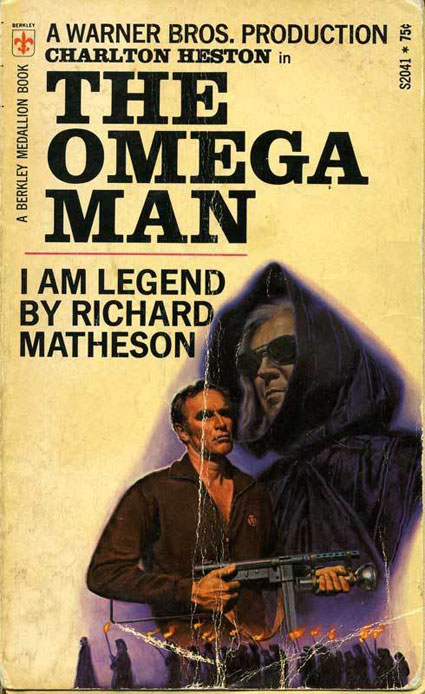
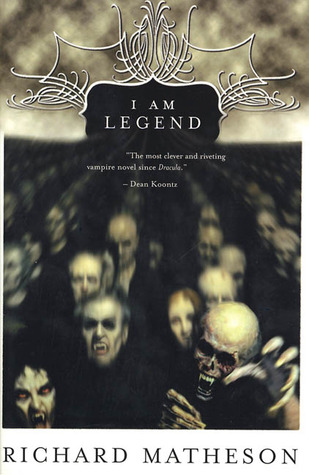
I think I was twelve when I first read something by Richard Matheson: I Am Legend. It had recently been made into a film starring Charlton Heston (I’ve seen the film, renamed The Omega Man. It’s okay, but not as good as the book.) I Am Legend, for those not familiar with the story (it was also filmed again sometime in the last decade or so, with Will Smith. I have not seen the remake), is one of those “last man on earth” stories; only in Matheson’s world, a terrible plague has turned everyone who has not died into vampire-like creatures. The last man on earth is Robert Neville, who somehow is immune to the plague. He barricades himself up into his home at night while the vampires try to find a way to either get inside or taunt him, hoping to lure him out–while during the day he scavenges for supplies and kills vampires by staking them through the heart (the matter-of-fact description of him doing this is chilling and has always stayed with me; there are several scenes in Stephen King’s ‘salem’s Lot where the gang of heroes also hunts and stakes vampires during the day–when I first read ‘salem’s Lot this reminded me of Matheson’s book. Likewise, when I read Stephen King’s apocalyptic novel The Stand, it again reminded me of Matheson’s book.) I Am Legend isn’t just a scary book about the aftermath of the end of the world though; there’s a lot of thought given to what it means, what this new society of people, this Brave New World of vampire-like people will be like, and what it’s like to be the last of your own kind. I didn’t catch a lot of this when I was a kid, and frankly, as it delved more into philosophy towards the end the unsophisticated reader I was found it a bit disappointing. When I revisited the book in the 1980’s–I went on a Matheson kick, and was delighted to discover that many episodes of television shows, or films, that I greatly enjoyed were actually based on Matheson’s work: Somewhere in Time, What Dreams May Come, Stir of Echoes–it’s quite an extensive list.

0ee08510ac0676ae995599ec51738eff

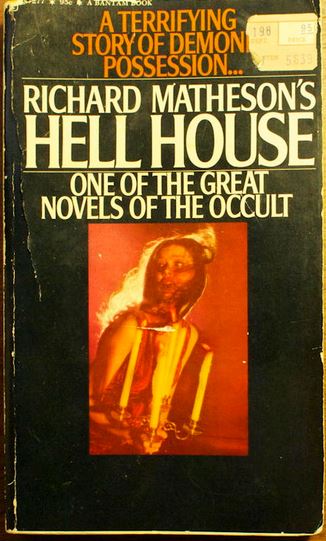
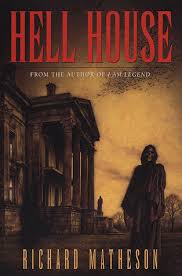
I also read Hell House when I was about thirteen, but didn’t connect that Matheson had written both books. Hell House, about “the Mount Everest of haunted houses”, was similar in structure to Shirley Jackson’s The Haunting of Hill House, but also very different. It was made into a terrifying film called The Legend of Hell House, which I recently rewatched, and actually holds up. (As a weary, cynical adult, I can see how cheaply the film was made now; but it’s just as spooky and scary as it was when I was a teenager and it terrified me.)

hellhousebookcover

That was the version I originally read; this is the one I reread:

imgres

Again, I would love to spend a week in a mountain cabin sometime revisiting Matheson’s work.

And now, back to the spice mines.

You Light Up My Life

Last night I took the streetcar down to the Quarter to have drinks with two friends in from out of town at the Carousel Bar. It was a lovely day in New Orleans, with no humidity (any day without humidity is a beautiful day, frankly) and then the ride home after dark was equally lovely.

I didn’t get as much writing done this weekend as I had hoped, and I really need to get over this procrastination thing. A friend pointed out to me that I do this to myself all the time; that rather than sitting down and making myself write every day, I’ll just on any excuse not to–which results in stress and panic as the deadline looms. I did get some writing done yesterday; just not as much as I would have liked. I think I solved the problem I was having with one short story, and as I rode the streetcar yesterday I think I may have solved the problem I was having with the other.

Both of these are, of course, good things.

So, my plan is to continue working on the revision of Bourbon Street Blues, finish those two short stories this week, edit the other two for submission, and get about five thousand words written on the next book, while mapping out my ideas for the next Scotty. It may seem daunting–and it is; that’s a lot of work–but as long as I stay focused, I can get it all done; there’s no doubt in my mind. It is amazing what you can do when you focus on one thing at a time. If I get stuck on one of the stories, I’ll work on something else. This has been the problem I’ve been having lately; if I get stuck on something I just stop working, and that isn’t how I’ve managed to remain productive for so long; if something stalls I move on to something else and come back to the original piece of work the next day. Working on something else keeps my creativity working, and shakes out the cobwebs. And there are always cobwebs. Don’t ask me how it happens, but it does.

And on that note, it’s back to the spice mines.

Here’s today’s hunk:

dd82ee59682857b15753a27de9ff02c5

Watching Scotty Grow

As I work to revise Bourbon Street Blues for its ebook debut, and plan out yet another Scotty book (tentatively titled Reality Show Rumba, but that may change to St. Charles Second Line or something else, I’m not completely sold on that as a title), yes, I’ve got Scotty on the brain, what can I say? I’m in that weird mode where ideas are bouncing around inside of my head, and can’t seem to focus enough to get any one thing worked on and finished.

It ain’t easy being a Gregalicious.

As I said when I rode the streetcar to and from the NO/AIDS Walk last weekend, the ride felt wonderful because I felt reconnected to New Orleans. I’ve felt some disconnect over the past few years; partly because I was so damned busy doing so damned much, and partly because the city has changed somewhat over the years as well that have followed Katrina. It was inevitable; the city was going to change even had Katrina not happened, and the question remains, were these good changes for the city? The so-called ‘sharing economy,’ with the coming of AirBNB and Uber and Lyft, are good things but can also be bad things; AirBNB had resulted in private homes being turned into rental properties–but is that what has driven up property costs and rentals in New Orleans, or was that a result of the rising property costs? I signed up for a realtor’s daily emails about properties for sale–mainly because I saw a sign on a house I’ve always loved and wanted to set a book in, so I wanted to be able to see the inside and the yard–and I am daily astounded at the costs of the properties she has listed. I have yet to see one for less than 1.2 million; when I was writing Murder in the Rue Dauphine, I mentioned in passing ‘the million dollar homes in the Garden District’ only to be corrected by my first reader: “There are no homes in New Orleans that cost a million dollars or more, not even in the Garden District.” As I said, every featured property in the daily emails I get from this realtor are a minimum of 1.2 million; then again, I am certain people from other cities would think them bargains, as they also are a minimum of 4000 square feet or more.

The only way Paul and I could ever own property here would be to hit the Powerball.

One of the things I know I am going to do with the next Scotty book–one of the many things I am going to do with the next Scotty book–is determine whether or not Scotty and the boys are going to stay in the Quarter. GASP, right? But one penultimate New Orleans thing that I’ve never written about–although I’ve endured it numerous times–is the joy of renovation. The house the boys all live in on Decatur Street was, of course, rebuilt after the fire in Bourbon Street Blues–I did write about Scotty having to live in the Marigny while the house was being rebuilt in Jackson Square Jazz–but about eleven years have passed since then; the house survived Katrina and everything that followed, but eleven years of heat and humidity, of wood swelling and shrinking, of termites…well, it’s about time the house on Decatur Street got renovated again–and of course, treated for termites and so forth to begin with. And so the boys have to go live elsewhere while the place is gutted and rebuilt yet again…and now, the question is whether or not they want to move back into the Quarter or not, or maybe buy a place. Scotty has come into his trust funds, after all, and so there is plenty of money…but it should also make for an interesting subplot. And the plot of this one…I think this could possibly be the best Scotty of them all.

At least, I certainly hope so.

I’m very excited about it. Now I just have to write two other books first.

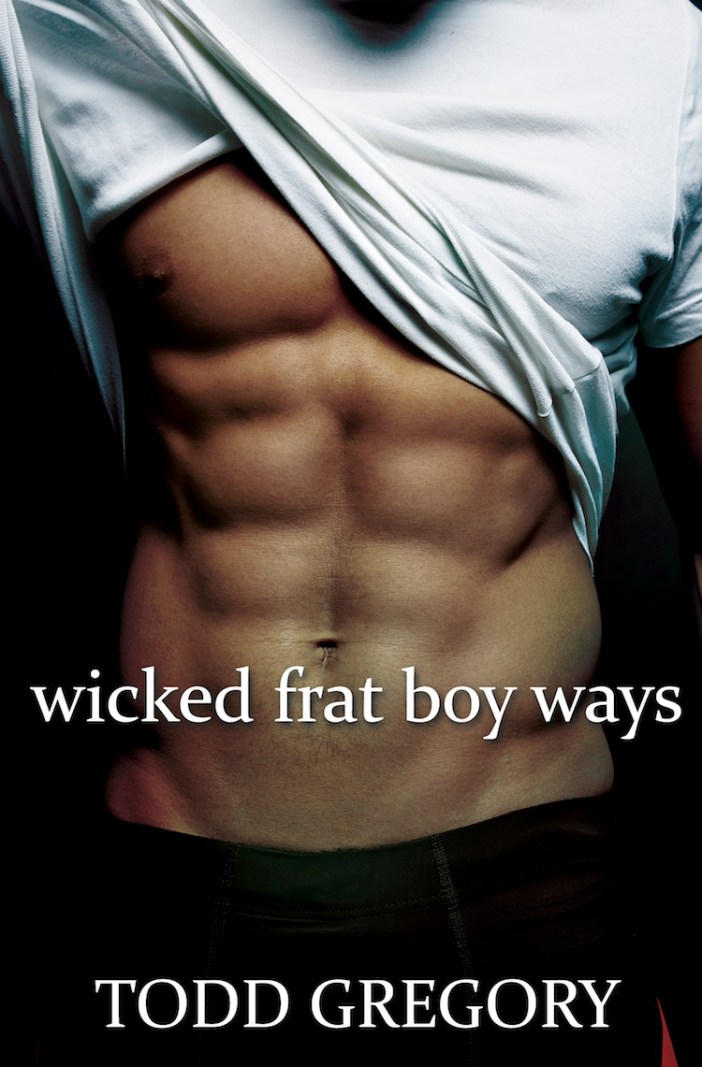
Here’s the cover for the work-in-progress I am primarily focusing on:

wicked-frat-boy-ways_final