I Still Can’t Get Over Loving You

Wednesday, and Day 4 of Facebook Jail. You know something? I wonder if they’ve heard of unintended consequences over at the Facebook Community Standards department. I usually spend far too much time scrolling through my Facebook feed and interacting with friends. So far this week, instead of doing that, I’ve revised a short story, worked on an outline, read a book (a wonderful history of The Mary Tyler Moore Show, Mary and Lou and Rhoda and Ted), read several short stories, and gotten some other things done. As this thirty day sentence continues, I will probably visit Facebook less and less–it’s kind of frustrating being able to see things and not respond to them–and by the end of the sentence, probably will be completely broken of the need to go there, and hopefully my attention span will have snapped back to what it was in the days before social media. I’m also liking Tumblr, INstagram and Twitter–you don’t wind up spending nearly as much time there, at least don’t, at any rate. Once I get used to not being on Facebook and having all this free time…look out.

I also read Lois Duncan’s young adult novel Ransom. Originally published in 1967 as Five Were Missing, it’s clear to see why Duncan was named a Grand Master by the Mystery Writers of America shortly before her death. I’ve not read all of Duncan’s work–I’m working my way through them all–but her novels were startlingly original and fresh, particularly when you consider when they were originally published. Ransom, inspired by a true crime in northern California where a school bus was hijacked and the students kidnapped, reads very quickly. The five students on the bus all are fully developed and fleshed out beautifully; and Duncan uses the kidnapping as a way of getting inside the heads of the characters and exposing them for what they are; the golden boy with dark secrets and feet of lead; the spoiled cheerleader who dislikes and resents her stepfather, only to learn that the father she idolizes is unworthy of her love; the military brat, deeply intelligent, who is the first to realize the truth of their situation and finds depths of bravery she never knew she had; the younger brother of the golden boy who realizes his own identity, and finds he has levels of potential strength his brother can only aspire to; and the orphan, being raised by his bachelor uncle with scars of his own to hide who finds out that self-pity only keeps him from enjoying his life. The dialogue is a little stilted and old-fashioned, but as I said, it reads very quickly.

Duncan was definitely a master.

Speaking of masters, I read a short story by Patricia Highsmith yesterday as well, “The Heroine,” which is the lead off story in Sarah Weinman’s Troubled Daughters, Twisted Wives; a brilliant anthology of stories written by women crime writers from the 1940’s thru the 1950’s, a time when women dominated the industry and many of these wonderful writers are sadly, overlooked and forgotten.

troubled daughters twisted wives

The girl was so sure she would get the job, she had unabashedly come out to Westchester with her suitcase. She sat in a comfortable chair in the living room of the Christiansens’ house, looking in her navy blue coat and beret even younger than 21, and replied earnestly to their questions.

“Have you worked as a governess before?” Mr. Christianen asked. He sat beside his wife on the sofa, his elbows on the knees of his gray flannel slacks and his hands clasped. “Any references, I mean?”

“I was a maid at Mrs. Dwight Howell’s home in New York for the last seven months.” Lucille looked at him with suddenly wide gray eyes. “I could get a reference from there if you like…But when I saw your advertisement this morning I didn’t want to wait. I’ve always wanted a place where there were children.”

I love Patricia Highsmith, and I have an enormous volume that contains all of her short stories. It’s really criminal that I, like so many other people, don’t read more short stories (hence my short story project, which I might make a year-long thing rather than just a few months), and it deeply shames me that I’ve had Troubled Daughters Twisted Wives sitting on my shelf collecting dust all this time without taking it down and reading it. This Highsmith story, “The Heroine,” is genius, absolute genius, in the cold, slightly detached way that Highsmith uses as her point of view, which makes her stories and novels so much more chilling. It’s very clear, almost from the start–ah, that foreshadowing–that the Christiansens are probably making a terrible mistake in not checking on Lucille’s references. And how the story develops is so much more chilling than you think it is when you get that uh oh feeling in your stomach when Mrs. Christiansen charmingly says she won’t check Lucille’s references. Highsmith’s authorial voice is so distant, so cold and matter-of-fact, and her word choice is always simple and spare…but she always gets that feeling of suspense, of oh my god what is going to happen that you feel amping up as you finish reading each sentence…and her denouements never disappoint.

Weinman has done an excellent job curating this collection; she also did a two-volume collection of novels by these writers called Women Crime Writers: Eight Suspense Novels of the 1940’s and 1950s: A Library of America Boxed Set. Some of the novels included in that gorgeous set I’ve already read–Charlotte Armstrong’s Mischief, Margaret Millar’s Beast in View, Vera Caspary’s Laura–but I am definitely going to have to get that set down from the shelf and read the others as well. Weinman is also pretty expert on the crime genre in general; very well read, fiercely intelligent and deeply perceptive, her newsletter The Crime Lady is amazing, and I read it every week for her thoughts on true crimes, the books she’s read and recommends…you can sign up for it here. You can thank for me for it later. She’s also writing a true crime of her own right now that I can’t wait to read.

And now, back to the spice mines.

I’m So Excited

Since earning a thirty day ban from Facebook yesterday because of the horror of posting pictures of sexy men in their underwear, I’ve decided to make lemons from this lemonade and start exploring other options of social media. Obviously, Facebook is one of the bigger ones; but I also am on Twitter, Instagram and Tumblr; so why NOT explore those options and expand my following on those sites? So, thank you, fascist homophobic sexist Nazis at Facebook; you’re making me do something I wouldn’t ordinarily do, and at the same time, you might even be rendering yourself obsolete in the world of one Gregalicious.

Well done there, Facebook. Seriously.

Although these other social media platforms are…a little confusing.

Anyway, you can find me on Tumblr here, follow me on Twitter @scottynola, and my Instagram is here. Find me, follow me, and I’ll promise to be better about posting in those places!

As I said, my great experience over the weekend doing panels at Comic Con has kind of invigorated me; I am getting back down to serious writing again, and my creativity is raging out of control. I think that  part of it has to do with keeping a physical journal again; I can’t believe how much of a difference it is making having it with me at all times, and I certainly can’t believe I stopped carrying one with me at all times. I don’t even remember when it was that I did stop carrying one, to be honest. I was talking to another writer this weekend–Bryan Camp, whose debut novel The City of Lost Fortunes will be out this April, and I read an early draft, which was fantastic; I can only imagine how good it is now–and was talking about how much the business had changed, and how quickly it happened. I sort of knew what I was doing the first few years, and then came the Time of Troubles, which derailed me for several years…and when I really got my head back in the game, everything about the business had changed. There were ebooks and bookstores and newspapers were disappearing; magazines that used to review were gone or on their way out the door, Insightoutbooks was phasing out…it seemed like every time I was trying to adapt to something new something else changed, or the new thing was no longer a thing, and social media had become to go-to for marketing; although now it was being called branding. I’m still not completely comfortable with that term; I don’t like thinking of my books as product or of myself as something akin to Tide and Coca-Cola and Folger’s. But I suppose it does make sense from a business perspective; publishing is a business, and the idea is to move units, just like liters of milk and loaves of bread and cans of creamed corn.

But that doesn’t mean I have to like it, does it? Sigh.

Yesterday I read a short story by Truman Capote, from Breakfast at Tiffany’s and Four Other Stories. It was called “A Diamond Guitar.”

coverbreakfast

The nearest town to the prison farm is twenty miles away. Many forests of pine trees stand between the farm and the town, and it is in these forests that the convicts work; they tap for turpentine. The prison itself is in a forest. You will find it there at the end of a red rutted road, barbed wire sprawling like a vine over its walls. Inside, there live one hundred and nine white men, ninety-seven Negroes, and one Chinese. There are two sleep houses–great green wooden buildings with tarpaper roofs. The white men occupy one, the Negroes and the Chinese the other. In each sleep house there is one large pot-bellied stove, but the winters are cold here, and at night with the pines waving frostily and a freezing light falling from the moon the men, stretched on their iron cots, lie awake with the fire colors of the stove playing in their eyes.

Truman Capote’s In Cold Blood is one of my favorite books, and it’s partly because he is so poetic, so charming, a writer in his word choices and the way he describes things. It always cracks me up when people tell me they love Breakfast At Tiffany’s because it’s clear they’re talking about the movie and not the Capote novella it was loosely based on; the novella is actually really dark and sad, as most of Capote’s work is; even if he didn’t always write about the south, he was very much of the Southern Gothic school of writers. In the novella Holly is basically an escort who’s looking for a sugar daddy–and so is her neighbor, the guy telling the story; he’s not George Peppard and he doesn’t fall in love with her because he’s gay, escorting and also looking for a sugar daddy; they bond in friendship over that similarity.

This story, “A Diamond Guitar,” is short and very poetically written; many Southern prisons are referred to as ‘farms’ and the prisoners work with the money from the sweat of their labor going to the prison (and usually siphoned off by someone). The story is about a convicted murderer, known in the story only as Mr. Schaeffer, and it tells the story of the only friend Mr. Schaeffer ever had in the prison, a beautiful young Cuban boy named Tico Feo. Tico brings the diamond studded guitar into the prison with him; the two men become friends–but not lovers; Capote is very clear that they are close as lovers but there is nothing physical between them; and finally Tico decides he wants to escape and he wants his friend to come with him. Tico does manage to escape, but Schaeffer does not; he trips and breaks his ankle and is left behind–it’s never clear whether this accident was actually deliberate or not, but it’s clear Schaeffer doesn’t really want to escape. But without hid only friend, Schaeffer closes himself off from everyone else in the prison, and under his cot he keeps the diamond guitar. The diamonds, of course, are just glass; just like Tico, everything about the guitar is phony.

It’s a really lovely little story.

And now, back to the spice mines.

Give It Up

It rained overnight, and is still damp and gloomy this morning. There really is nothing like sleeping during a downpour, is there, the constant strumming of the rain, the comfort and warmth of the mattress and under the blankets, is there?

Yesterday was a crazy busy day for one Gregalicious, who got up in the morning and did some work, cleaned, and then walked to Comic Con for a signing and a panel. The signing was fun, and the panel discussion about creativity and creativity triggers was also a lot of fun; as exhausting and draining as it is to do public appearances, I also always somehow forget, in the nervousness and terror of having to speak in front of a room full of people, how much I actually enjoy talking about writing and creativity. So, there’s that. I then came home, watched the ice dance final at US Nationals, and then the Saints play-off game, which was a nail-biter down to the very last play of the game (GEAUX SAINTS!). We stayed up and watched the Golden Globes before going to bed; I also managed to get some brainstorming done in my journal, and I also read a short story, to keep the Short Story Project going.

One of the truly fun things about the panel was that Tom Cook was on it. Tom was an animator/director for Hanna-Barbera in the late 1960’s/1970’s, and of course, one of the shows he worked on was Scooby Doo Where Are You, which tremendously influenced me in the direction of mysteries and crime when I was a kid. So meeting Tom, and thanking him for the influence, was kind of a thrill for the weekend for me. I am starting to feel energized about writing again, which is very cool.

The short story I read was “East Wind,” from Daphne du Maurier’s The Doll and Other Lost Stories.

the doll

Nearly a hundred miles west of the Scillies, far from the main track of ships, lies the small, rocky island of St. Hilda’s. Only a few miles square, it is a barren, rugged place, with great jagged cliffs that run deep into deep water. The harbour is hardly more than a creek, and the entrance like a black hole cut out of the rock. The island rises out of the sea a queer, misshapen crag, splendid inits desolation, with a grey face lifted to the four winds. It might have been thrown up from the depths of the Atlantic in a moment of great unrest, and set there, a small defiant piece of land, to withstand forever that anger of the sea Over a century ago few knew of its existence, and the many sailors who saw its black outline on the horizon imagined it to be little more than a solitary rock, standing like a sentinel in mid-ocean.

“East Wind” is an early du Maurier tale, from early in her career (which people seem to want to divide into ‘pre’ and ‘post’ Rebecca); and in some ways the inexperience shows. The story is, as so many of her later stories are, very matter-of-fact; simply told with a move this  to that to the other; unemotional and simple. However, what is actually missing from this story that shows up in her later stories are layers of detail and complexity; stories like “Don’t Look Now” and “The Birds” have so many layers to burrow through, so much detail, and so much creepy, quiet horror that they continue to haunt the reader once the story is told. “East Wind” is an equally unpleasant tale, but doesn’t have the impact of the later stories in its telling.

As I started reading it, it reminded me of one of my favorite Stephen King stories, “The Reach”, which was the final story I think in Skeleton Crew, and was originally called “Do the Dead Sing?”, which is, in my opinion, a far superior title. That story was from the point of view of an old woman, dying in her bed on a cold, blustery winter night, and remembering something that happened many years ago–while also hearing her beloved dead one’s calling to her to join them. The story was brilliant and beautiful and haunting, and as I said, remains one of my favorite King stories to this day.

The du Maurier tale is similar in that it is about a remote island, where the inhabitants have very little contact with the outside world and because of a limited pool, have become more than a little inbred. The east wind of the title is brutal, blasting away at the little island and making the seas rough, so a brig of foreign sailors is forced to take shelter in the harbor, foreigners who don’s speak the same language. These exotic to the islanders strangers have an odd impact on the islanders, who become intoxicated in the strangeness and newness of this experience, which eventually leads to seduction and murder, changing and scarring the island forever; and of course, once this has happened and the east wind stops blowing, they get back in their ship and sail away because, of course, it was nothing to them. This is, of course, a terrific theme that du Maurier returns to again and again in her work; the dionysian influence of an outside force that causes trouble and then moves on without a care, leaving damage in its wake. The story itself, which is short and unemotional, is important as an early work because the reader, the duMaurier afficionado, can see how she developed themes she used extensively in her later career; her fascination with the concept of the unfeeling outside force on ordinary people’s lives, and the disruption such an influence can cause.

And now, back to the spice mines.

Dance Hall Days

Sunday! I have a panel and a signing at Comic Con today; the Saints have a play-off game, and the Golden Globes are tonight…and sometime today the Olympic ice dancing finals are also airing. Madness! Usually my Sundays are a lot more mellow than this. I did manage to get a lot done yesterday; cleaning and organizing and laundry and filing and even some brainstorming. I am definitely going to be hitting the ground running this week; it’s so lovely to finally feel 100% me again, stupid flu or whatever it was I had.

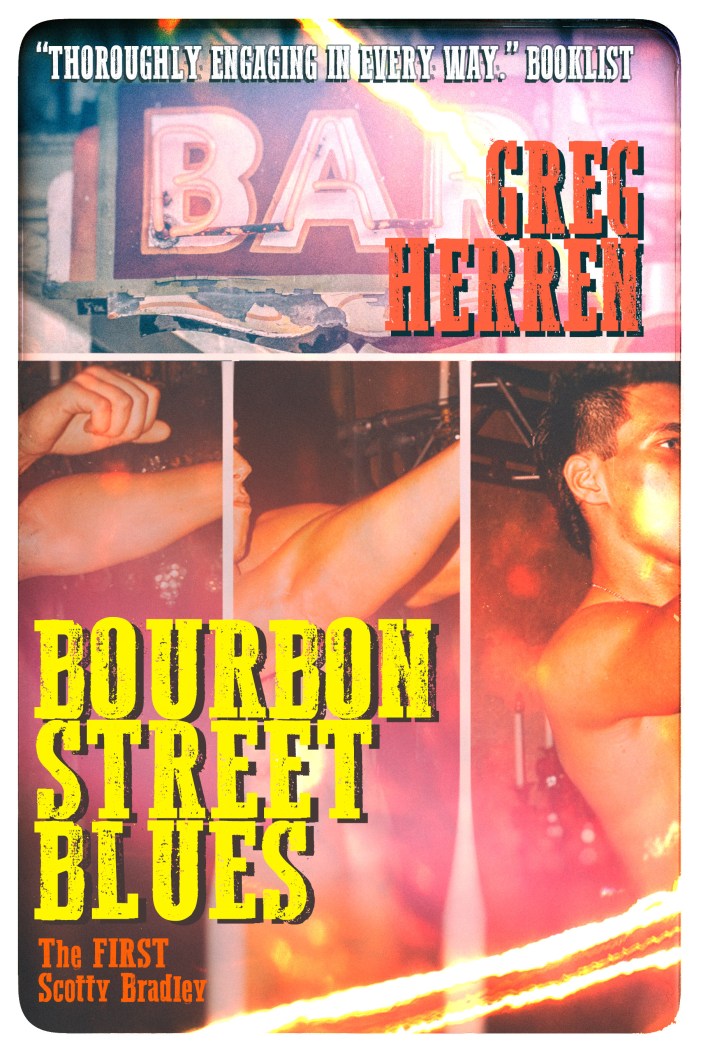
So, this morning I need to do some more cleaning, am going to do some more brainstorming and perhaps an edit on a story, work on the new Scotty outline, and do some other editing before it’s time to get ready to head down to the Convention Center. Damn it, I also have to copy edit that damn file of Bourbon Street Blues, too, don’t I? Sigh. My work is never done.

And the Scotty Bible. Heavy heaving sigh.

I also read another short story yesterday, Angel Luis Colon’s “My Heart Died on Blackrock Avenue.”

meat city on fire

I’ll never forget my first fight.

And I mean a real fight, not the random tussles with my brothers or cousins. I’m talking a knuckle-busting, lip-splitting, eye-swelling fight. The kind of fight where you go savage and the world’s pure fire, where there’s no concern about whether your punches connect or if they’re going to do permanent damage. A real street fight–drawn blood, scrapes and cuts you find later, and that taste at the back of your throat, as if you’d been chowing on pennies all day long. The kind of fight a person with more brains than heart knows to avoid.

Obviously, my first fight was over a girl–surprise, surprise.

I met Angel in Toronto at this year’s Bouchercon; as is usual with the business, we have a lot of mutual friends. And then he wrote this brilliant piece for Medium, and I thought to myself, I need to read this guy, so I ordered his collection Meat City on Fire and Other Assorted Debacles.

Wow.

I said when I posted about Sue Grafton that she was the writer who brought me back to the crime genre; the stuff that was getting published in the 1970’s and early 1980’s that I was reading held no interest for me; I hadn’t heard the term toxic masculinity yet, but that was primarily what turned me off to crime fiction at the time. To this day, I still have trouble reading some male authors for that very reason; I’m just not interested in reading any more books about the tough, tragic, closed-off man who drinks himself into oblivion because the love of his life is dead, or he’s obsessed with some dead, beautiful woman that makes him reflect on life and the harsh, cold, cruel world in which we live. No thank you. This trope also pops up in what’s called ‘literary fiction’ as well; it’s hard for me to identify with, or care about, these kinds of characters; the plight of the straight white man simply doesn’t interest me that much. Does that mean I’m prejudiced? Maybe.

It’s something I can live with.

So, as I started reading Angel’s first story in this collection, I winced a little bit inwardly. Great, I thought, here we go again with the tough-guy stuff. But the story–which isn’t a crime story at all, I might add–isn’t that; it’s actually fantastic, to be honest. There are so many truths, and so much honesty, in this story that it’s almost painful to read, to digest, to think about. I didn’t grow up in Brooklyn, as the main character in this story did, but I grew up in the working class neighborhoods on the south side of Chicago, where casual racism not only existed but simmered; where prejudice wasn’t just about the color of one’s skin but also about religion and your ethnicity; if you were a Pole or a Slav, etc. Violence was always just there under the surface, and this story took me back to that neighborhood, the innocence of childhood and learning about the cold, cruel world out there. It’s a truly terrific story, and I encourage everyone to read Angel’s collection, or one of his novels.

I’m really looking forward to reading more of his work myself.

Cruel Summer

I am having a rather productive day so far, really. I slept late–which I didn’t want to do, but maybe, you know, just maybe I needed the sleep–and since getting up feeling completely rested, I’ve been taking my own advice I gave out on the panel yesterday and am cleaning; and the cleaning is clearing my mind and that mind clearance is bearing fruit. I’ve already made some good notes on a short story I’m working on, and as the Lost Apartment slowly but surely gets more clean, I feel more on top of my game; I think I am finally getting back on track after being derailed by being sick for so long.

Huzzah!

I have also dived back into my Short Story project, and today I read Laura Lippman’s “What He Needed.”

51hHqkVEVOL._SY344_BO1,204,203,200_

My husband’s first wife almost spent him into bankruptcy. Twice. I am a little hazy about the details, as was he. I don’t think it was a real bankruptcy, with court filings and ominous codes on his credit history. Credit was almost too easy for us to get. The experience may have depleted his savings, for he didn’t have much in the bank when we married. But whatever happened, it scared him badly, and he was determined it would never happen again.

To that end, he was strict about the way we spent money in our household, second-guessing my purchases, making up rules about what we could buy. Books, for example. The rule was that I must read ten of the unread books in the house–and there were, I confess, many unread books in the house–before I could bring a new one home. We had similar rules about compact discs (“Sing a sing from the last one you bought,” he bellowed at me once) and shoes (“How many pairs of black shoes does one woman need?”). It was not, however,a two-way street. The things he wanted proved to be necessities–defensible, sensible purchases. A treadmill, a digital camera, a DVD player and, of course, the DVD’s to go with it. Lots of Westerns and wars.

But now I sound like him, sour and grudging. The irony was, we both made good money. More correctly, he made decent money, as a freelance technical writer, and I made great money, editing a loathsome city magazine, the kind that tells you where to get the best food/doctors/lawyers/private schools/flowers/chocolates/real estate. It wasn’t journalism, it was marketing. That’s why they had to pay so well.

How much truth is there in those three paragraphs? Haven’t we all been in that kind of relationship/marriage, where one partner tries to control the money and judges the other’s every cent spent? And how confined and trapped that can make one feel? In those casual, almost careless and unemotional paragraphs Lippman deftly paints the portrait of a marriage in trouble and a woman who is desperately unhappy, both at home and at work.

The story was originally published in Lauren Henderson and Stella Duffy’s wonderful anthology Tart Noir (from which I’ll undoubtedly be pulling more stories from during the course of my short story project) and was reprinted in Lippman’s wonderful short story collection Hardly Knew Her. 

Lippman is one of crime genre’s bright shining lights; her Tess Monaghan series is one of the best private eye series in print currently, and her stand-alone novels are incredible accomplishments, in which she stretches herself, the boundaries of crime fiction itself, and tells well-written, amazing stories about women and their realities, their choices, and how they respond to the bad things that happen to them. I’ve already read her yet-to-be released 2018 novel Sunburn, which is destined to make a lot of Best of 2018 lists and get shortlisted for every crime award out there (most of which she has already won, sometimes more than once). I will be discussing that one, as well, closer to its pub date.

And now, back to the spice mines.

An Innocent Man

EPIPHANY. King cake season has officially begun! HUZZAH! Although…Christ on the cross, it’s Carnival season already. In fact, a month from tonight there will be parades. As I sit here shivering in my kitchen (although the sun is out) this morning, that thought blows my mind.

Anyway, Comic Con was very fun yesterday.

DS0NZsWW0AAhYQ4

And this was lovely:

DSz8qtXWkAAKhrF

And instead of name plates, they had a MARQUEE:

IMG_3550

How lovely to have one’s name up in lights, as it were!

DS3p5WqX0AIKPpS

It was a great panel, lots of great questions from the audience, and some great discussion and tips and hints about writing.

Then I walked home, and watched the live stream of the US Figure Skating National Championships, which reminded me that I had an idea for a figure skating noir, and even started writing the first scene in the book, so here’s yet another fragment for you:

The move is called a charlotte.

The move is not considered masculine so his coach will not let him do it in a program. But he’s proud that he has the flexibility to do it, and he always gets to the rink early so he can practice the moves he will never be allowed to do until he lets his Olympic eligibility go and scoring no longer matters.

Men don’t do spirals.

He reaches the end of the ice and goes into a curved turn, going to the inside edge and letting centrifugal force pull him back around so that he’s facing the other end of the ice. He turns and glides backward. He brings his arms together, crossing them at the wrists in front of his chest and explodes them out in a straight line at his sides at ninety degree angles. With his chest puffed out he bends at the waist, raising the left leg up, perfectly straight, the toes pointed as he brings his chest down to his right knee, grabbing the right ankle with both hands as he continues to glide toward the other end of the rink, his left leg raised in a perfect split, feeling the stretch in his groin and his hamstring. The stretch feels good and he works to catch his breath, his heart still thudding in his chest and his ears, the cold emanating from the ice slapping his cheeks, a drop of mucus hanging from the end of his nose as the slide slows.

When he is almost to the other end of the rink he pushes with his hands off from the ankle, bringing the back leg down and tapping the toepick on the ice, digging it in and launching himself up into the air, pulling his arms back in and together as he spins neatly in the air, ankles crossed and counting.

One….two…three.

After the third revolution he releases the tight arms, exploding them out at ninety degree angles to the side as his right foot comes down and his left leg goes backward. The blade of his right skate lands off balance, on the inside edge and hits a groove in the ice. There’s no way to save the landing. His ankle gives under the pressure of the force and he falls.

This is going to hurt.

Is all he has time to think before he hits the wet, glistening ice. He lands hard, chest first followed by the rest of his torso and his legs tangle. The impact forces all of his air out of his lungs and the thud sends jolts of pain, dull agonizing pain, through his ribs and he gasps for air as he spins on the ice, out of control and unable to stop himself until his crashes into the boards with his right side and bounces back off out onto the ice, finally coming to a stop with stars dancing in front of his eyes and his lungs gasping to take in the icy cold air. He lies there for what seems an eternity, the wet ice soaking through the sweatshirt he is wearing, his ribs aching, his legs screaming in pain from the lactic acid burning through the muscle fibers. He lies there, knowing he needs to get up and start moving before the muscles seize and tighten, knowing he needs to get back up on the blades and build up speed and try the lutz again, it has been drilled into his head so many times to get back up and skate, when you fall you have to get up and try the jump again and keep trying until you land it, otherwise you’ll become afraid and will never be able to land it, you have to be fearless, get up, get up, get up….

But sometimes he wanted to never get up. Sometimes he wanted to just crawl over to the opening, take off his skates and grab his bag and put on his shoes and walk out of the rink never to come back.

He gets up, his breathing still labored, his legs still aching. He starts doing crossovers, even though his legs are shaking, and he picks up speed, going faster and faster and it feels like he is flying…flying…and nothing will ever bring him down.

A little rough, but not bad.

And here’s Guillaume Cizeron, the sexy French ice dancer, for your Saturday viewing pleasure:

13187978_486739044862306_934340098_n

They Don’t Know

Friday, and this afternoon I am paneling (well, I guess it’s more of an early evening panel, really) at Comic Con, and that should be a lot of fun.

My Short Story challenge has not gotten off to the best start; here it is the fifth day of January already and I have only just now managed to finish reading one story; it’s shameful, I know. But I got out my enormous volume The Best American Noir of the 20th Century, and dutifully read the first story, from 1923 (!). 1923! Who knew noir went back so far? Much as I love noir, and as often as I think about it–I really should do a lengthy study of noir, both print and film–I don’t know much about its history; seeing that stories defined as noir were being published as far back as 1923 was a bit of a surprise for me; I guess I just always assumed noir fiction was something that came about in the late 1930’s, and was primarily pioneered by the great James M. Cain.

Shows you how little I know.

But I love noir; I am more drawn to it than actual more traditional crime fiction, to be honest. Most of my short fiction would be classified more readily as noir rather than as crime; as I have said before, I like to write about damaged people, and the stories of damaged people are more prone to wind up categorized as noir. I am currently in the midst of writing two stories that are noir–more details on them both when they become available–but I am very excited about both of them.

But I read this amazing story, “Spurs” by Tod Robbins, which is the opening story in the Best American Noir omnibus.

Jacques Courbe was a romanticist. He measured only twenty-eight inches from the soles of his diminutive feet to the crown of his head; but there were times, as he rode into the arena on his gallant charger, St. Eustache. when he felt himself a doughty knight of old about to do battle for his lady.

What matter that St. Eustache was not a gallant charger except in his master’s imagination–not even a pony, indeed, but a large dog of a nondescript breed, with the long snout and upstanding aura of a wolf? What matter that M. Courbe’s entrance was invariably greeted with shouts of derisive laughter and bombardments of banana skins and orange peel? What matter that he had no lady, and that his daring deeds were severely curtailed to a mimicry of the bareback riders who preceded him? What mattered all these things  to the tiny man who lived in dreams, and who resolutely closed his shoe button eyes to the drab realities of life?

I’m not sure that I would call this story noir in the classic sense; but who am I to argue with James Ellroy or Otto Penzler? The story, which is centered around the performers in a French traveling circus, is reminiscent both of American Horror Story: Freakshow and of course, the classic film Freaks, and, as it turns out, the film was based on the short story. Courbe has inherited money and an estate; he has fallen in love with one of the bareback riders, a large strong woman who agreed to marry him for his money; despite being in love with another one of the bareback riders–she is marrying him for his money, of course, and assuming he won’t live long; if he does live longer than is convenient, she will poison him, and she and her true love with live happily ever after on the little man’s money. But despite the same set-up, the film deviated from the story from the wedding onward; the story isn’t quite as dark as the film (seriously, what could be?) but it’s plenty dark and plenty creepy; and an excellent way for me to kick off short story month.

And now tis back to the spice mines with me; here is a hunk to ease you into your weekend.

IMG_1967

Breakdance

Another cold morning in New Orleans, but it is helping me sleep. I went to bed early last night (before eleven) and woke up at nine thirty this morning. Of course, the cold isn’t nearly as awful here as it is in other places, but still. It ain’t supposed to be this cold south of I-10, yo.

But I am living through it, persevering as it were, and as I said the other day, the cold spell is supposed to snap this weekend. I am, of course, going to be at Comic Con this weekend at the New Orleans Convention Center:

PANEL: Science Fiction, Fantasy, Thriller and Suspense Storytelling
DAY: Friday
TIME: 6:00-6:45pm
ROOM: 288
SCIENCE FICTION, FANTASY, THRILLER AND SUSPENSE STORYTELLING
What does it take to create stories and worlds in the science fiction, fantasy, or thriller genres and what do we hope to see in the future for these genres as well? Join Genese Davis (The Holder’s Dominion), Lilian Oake (Nahtaia: A Jaydürian Adventure), Bill Loehfelm (The Devil’s Muse: A Maureen Coughlin Novel) and Greg Herren (Garden District Gothic) as they unlock their writing process and experiences as creatives. The stories and worlds behind sci-fi, fantasy and thrillers will be revealed in this panel and hopefully any hinderances standing between you and your sci-fi saga, epic fantasy, or that heart-pounding thriller will disappear!
PANEL: Start Your Creativity Engines
DAY: Sunday
TIME: 2:30-3:15pm
ROOM: 291
START YOUR CREATIVITY ENGINES
Having trouble revving up your creativity engine? Writer’s block and general creator’s block often succeeds in stalling every type of artist at one time or another, but thankfully, there are creative solutions that can bulldoze those standstill challenges! With the right tools and inspiration, the wonderful world of art, writing, and creativity becomes your oasis. Join Genese Davis (The Holder’s Dominion), Tom Cook (Saturday Morning Cartoons) and Greg Herren (Garden District Gothic) as they divulge their experience when creating worlds and storytelling. Discover the routine, environment, and even networking and collaborative solutions that can bolster creativity and help you complete your artistic endeavors during this fantastic discussion!

I am signing at the Tubby and Coo’s Bookshop booth on Sunday before (starting at 1) and after the above panel (ending at 4). If you’re there, stop by and say hello, buy a book, and check out the merchandise. Candice always has lots of cool stuff in the booth, and the store is pretty awesome too–it’s on Carrollton, just up the street from Five Guys. I mean, you can go buy some books, and then wander over and have a fantastic burger and Cajun-style fries. How awesome is that?

I went over some edits on a short story this morning; there will be more info on that particular anthology as it develops.

And now, back to the spice mines. Here’s a hunk for your Humpday viewing pleasure:

a-shirtless-friday-16

Come On Feel The Noise

Day two of the New Year, and it’s still miserably cold here in New Orleans. This cold spell is supposed to last through the weekend, but next week the range will be between the high forties and mid-sixties, which is more normal for New Orleans winter. The lovely thing about this cold snap is that I am sleeping magnificently; the problem is I don’t want to get out of the bed in the morning.

First world problems, right?

This weekend is Comic Con here in New Orleans; I am speaking on two panels and I am doing a signing; the panels are on Friday and Saturday and the signing is Sunday afternoon. While it’s kind of a drag having to have something to do every day of my weekend, it is Comic Con, which is always fun. My favorite thing to do is walk around and look at the costumes, to be honest. Every year I promise myself that next year I’ll wear a costume; and when it rolls around every year I am not physically costume ready. But one of my life-goals is to wear a costume to Comic Con one year; maybe if I stick to my gym goals this year I’ll be able to do so next year.

The journal is working out great so far; I did some more brainstorming in it yesterday, and the WIP is really starting to take shape–a better shape than it was. It’s strange, but thinking things through, hashing them out on paper and writing them down makes the process work better for me. I can’t believe I’ve not been doing the journal thing for so long. I’ve really come up with some good stuff over the last few days since buying it. I am quite excited about this new development, and am getting quite excited about writing again; which, to be honest, it’s been kind of a while since I’ve felt the creative joy of writing.

I also started reading several books over the weekend which didn’t pass the fifty-page test; so off into the donation pile they went. This isn’t to say the books were bad, they just didn’t grab me, and there are just too many books to keep trying to read something that hasn’t grabbed me by page fifty; that turns the reading into the category of pulling teeth and then I don’t read as quickly and then the books continue to stack up. One I put aside to try again at a later date; I really like the concept of it, but the writing just didn’t grab me and encourage me to keep going. I’m starting another one tonight; hopefully it will work out better.

I also didn’t read a short story yesterday; I started reading one, but Paul and I also started binge watching Broadchurch this weekend, and we are totally sucked into the show. The first season was truly wonderful; lots of twists and turns that i certainly didn’t see coming, which was lovely. We’re one or two episodes into Season 2 now; the addition of Charlotte Rampling and Jeanne Marie-Baptiste to the cast can only make it stronger. The acting in Season One was pretty spectacular, and I have to say, after The Night Manager and this, I’ve become rather a fan of Olivia Colman.

I have a lot of emails to get caught up on today, and I also want to get some writing done. The illness is mostly past; all the remains is a tubercular cough; deep and throaty and phlegmy, but at least it no longer hurts to cough. Baby steps.

And on that note, tis back to the spice mines with me. Here’s a hunk for you for today, Constant Reader. In honor of Comic Con, this is cosplay specialist Michael Hamm as Nightwing.

Cos_Shaun400

Lucky Star

New Year’s Eve, a time to look back on the past year and reflect on goals either achieved or missed; to look at what was accomplished and what wasn’t, to think about and make plans for the future year.

So, what kind of year was 2017? I didn’t achieve many, if any, of the goals I set for myself at the beginning of the year. I intended to write more short stories (which I sort of did) and publish more short stories (which I didn’t really do); I intended to start my search for an agent (which I did); but I didn’t seem to get much else done. I didn’t start working out more, but I did lose weight–so that one’s kind of a toss-up; I weigh 15 pounds less than I did a year ago. I did buy a new car, which was also a goal, and I’ve not regretted it once, despite the impact on my finances. I also didn’t write nearly as much this year as I had hoped/wanted to; there were no new novels published under my name this year; which is the first time I think that’s happened since 2005. That doesn’t bother me nearly as much as it did in 2005, to be honest; my self-worth and identity as an author apparently no longer requires me to write and publish at the insane pace that I used to keep.

I read a lot of good books in 2017, discovered a lot of great new-to-me writers, watched some amazing television shows and movies, but creatively I spent most of the year in stasis; just kind of getting through the day every day and then watching as those days turned into weeks and then months. I started a number of short stories that I either didn’t finish, or finished but didn’t know how to fix. The WIP, the manuscript I am shopping to agents, needs some more work. I had started sending it out in the fall, but I am going to hold back on it for a few more months as I revise and polish it some more. I always felt it was missing something, even though I thought it was a good manuscript, and I’ve recently figured out what that something is; and I’ve also realized part of the problem I had with the manuscript and fixing it has to do with my own stubbornness. It’s starting point needs to be before where I start the book; I flash back to the beginning of the story and that kind of is not only a cliche but also steps on the action. Also, where I start the book itself is kind of hackneyed and cliched. There’s another subplot or two that needs to be woven into the story, and I  need to develop my main character more; and there are things about him that know that are kind of crucial to the story that don’t actually appear in the story, and some of the relationships between the characters need to be developed and deepened, more layered. It’s a very basic story right now, and it needs to be more complex; and it needs to go deeper into its theme.

So, that’s something, at any rate.

I also had a good year in that I was nominated for a Macavity Award (Best Short Story, “Survivor’s Guilt”) and an Anthony Award (Best Anthology, Blood on the Bayou). Both were completely unexpected surprises, and enormously gratifying.  As Constant Reader knows, I struggle with short stories and have very little to no self-confidence when it comes to them. So, to get nominated for a Macavity Award for a short story I wrote? That was probably one of the most meaningful things to happen to me in my career thus far. And I was nominated against some amazing writers–I read all the stories–and wasn’t in the least surprised when Art Taylor won; any of the other nominated stories were award-worthy. It was such an honor.

I was so certain I wasn’t going to win the Anthony Award that Paul and I booked our plane tickets home from Toronto for Sunday morning; I was boarding my flight to New Orleans when I started getting texts and tweets and Facebook messages that I’d won. It, too, was an incredibly lovely surprise, and I was extremely happy for the contributors, and thankful to them for their amazing stories.

I also realized this year that something I used to do when I was writing–something that was highly effective, and I don’t know why I stopped doing it–was write about whatever I was working on in long-hand in notebooks. I started doing that again this year, in these last few months–and it proved incredibly helpful with a couple of things I was working on at the time. So, I am going to make that a goal for the new year; to return to buying a blank book to carry around with me at all times, to use for notes and questions I have for myself, for developing characters and things. I think I stopped using the blank books because I started keeping physical files, and it was easier to use a spiral notebook for notes that could be removed and put in the files. There’s no reason I can’t stop doing that, either; but the point is that I need to start doing things like that in long-hand again. It was an excellent way of brainstorming and free-associating that I’ve sadly gotten away from over the years.

Despite getting off to a rough start, LSU also had a great season, one with lots of highlights and excitement, and wound up 9-3 on the year, with a chance for a ten-win season with a bowl win. The future also looks fairly bright for the Tigers going forward; the Saints are also having a great season. Back in September this football season was looking really bleak; who could have foreseen that both of our teams would have such a remarkable turnaround?

I had a lot of fun this past year. Last January I did two library events in Alabama, which were way fun, and was invited back again this year; I also spoke at an event at the University of Mississippi as well as at the Alabama Book Festival (both events were in teh same week, so I was driving around the deep South quite a bit then), and of course, Bouchercon in Toronto was a lot of fun. I’m looking forward to this year’s event in St. Petersburg, and I am also looking forward to a trip to England this spring.

We’re having lunch later at Commander’s Palace; our annual New Year’s Eve meal with Jean and Gillian, which is always a lovely way to ring out the old year. I’ve started reading John Hart’s Redemption Road–I greatly enjoyed his The Last Child and Iron House, so am greatly looking forward to this one. Next weekend I am appearing at Comic Con at the Convention Center every day; that should also be a lot of fun.

And so, I should get some things done before it’s time to go to lunch. The spice mines are always calling me, so here’s one last hunk for 2017, Constant Reader, and have a lovely and safe and happy new year.

IMG_1911