Heaven

So, I survived my voyage out to Metairie. I like the new eye doctor–Dr. Moses at Target–and I am trying out progressive contact lenses. I never really got the sense from my previous eye doctor of how they worked–basically, it sounded like witchcraft–but Dr, Moses very patiently explained how they work in a way which was incredibly easy for me to understand–and it wasn’t that hard. Basically, the pupil expands to see far away and contracts to see up close; so the progressive contact lenses are for distance viewing with a small spot in the center for reading; the pupil will contract and see through that small spot for reading, etc. Was that really that hard to explain? But they are…odd. I have a tester pair, for me to try out and get used to; and they are definitely going to take some getting used to. I can see fine for working on the computer and pretty much everything else, but reading things on say, the television–I can read it but it’s blurry. I’m assuming this is part of the adjustment process; or if it’s not, I need to have the prescription altered. I also tried reading with them in–a couple of books–and I couldn’t. I doubt that is part of the adjustment process. Heavy sigh. But I’ll have to go back in  have my eyes looked at again, I suppose, if these issues aren’t part of the “getting used to them” process.

I was very tired yesterday; I didn’t sleep as well as I should have on Friday night, so I really knocked myself out last night and feel very rested this morning, which is great. I think part of the sleep issue I’ve been having has to do with both not working out in a couple of weeks in addition to drinking more caffeine–I’d cut back dramatically on both coffee and Coke–and so today I am off to the gym and I am going to try to not drink as much caffeine. I need to drink more water anyway.

I didn’t get as much writing done yesterday as I had wanted to; I hadn’t originally planned to even try–errands and so forth generally don’t put me in a very good hey let me write place; and I was right. Plus the contacts made it seem weird, if that makes any sense? I’m sure it doesn’t. So I tried to get chores done–I laundered the bed linens, cleaned the kitchen, etc. I also got caught up on Real Housewives of Beverly Hills and Riverdale; when Paul finally got home last night we got caught up on How to Get Away With Murder. I also did some serious thinking about the things I am working on–a recently rejected short story, for example, that I’ve been having trouble figuring out how to fix for years and it finally hit me last night; the Scotty book and where it’s going; the WIP and where it’s going; a couple of other short stories I am working on (Christ, I am working on a lot of shit, aren’t I).

So, this morning, after sleeping in for a bit, I am going to get some filing done, do some writing in my journal (to work around some thought about what I am writing now) and then I am going to go to the gym, come home and get cleaned up, and then I am going to write/edit for a few hours before it’s time for the ice dancing tonight on the Olympics (I already miss Adam Rippon).

And of course, I read some more stories for the Short Story Project.

First up was “Black-eyed Susan” by Laura Lippman, from Hardly Knew Her:

The Melville family had Preakness coming and going, as Dontay’s Granny M liked to say. From their rowhouse south of Pimlico, the loose assemblage of three generations–sometimes as many as twenty people in the three-bedroom house, never fewer than eight–squeezed every coin they could from the third Saturday in May, and they were always looking for new ways. Revenue streams, as Dontay had learned to call them in Pimlico Middle’s stock-picking club. Last year, for example, the Melvilles tried a barbecue stand, selling racegoers hamburgers and hot dogs, but the city health people had shut them down before noon. So they were going to try bottle water this year, maybe some sodas, although sly-like, because they could bust you for not paying sales tax, too. They had considered salted nuts, but that was more of a Camden Yards thing. People going to the track didn’t seem to want nuts as much, not even pistachios. Candy melted no matter how cool the day, and it was hard to be competitive on chips unless you went off-brand, and Baltimore was an Utz city.

Parking was the big moneymaker, anyway.

Every fall, Paul and I try to attend as many LSU games as we can at Tiger Stadium. It’s so much, frankly, to be in the stadium and being in a crowd of like-minded LSU fans, yelling and screaming and jumping up and down. The first two years we went to games we parked in an African-American church’s parking lot–they were so nice, and would give us cans of soda as well as letting us park there–because it was very easy to get out of there with post-game traffic. The church sold its property, alas–no idea why, but then we needed another place to park. About a block or two closer to the stadium we found a place–Miss Fay’s. Miss Fay is an older woman of color who owns a vacant corner lot next to her house and can fit about twenty cars in there for twenty dollars each; not a bad haul for a Saturday. She’s very friendly and nice, as are the rest of her family, and so we’ve been parking there for about seven years now–and they also keep watch over the cars. The walk is a little less than a mile to the stadium from there, and even on the hottest days (that Auburn game in 2015, Jesus!) it kind of gets you in the mood for the game to walk there, and after the game–we always stay to the end–the walk back allows the traffic to thin out a bit so it’s not so bad. I’ve always wondered about Miss Fay and her family; as well as the other families renting out parking spaces in the yards we walk past on our way to the stadium.

That’s what this Lippman story is about; it’s from the point of view of a teenager whose family rents out spots in their yard for parking during the Preakness, and the myriad other ways they try to think of to make bank from the race-goers. The young man works as basically what we called at the airport a skycap; helping people lug their full coolers and so forth to the track. On this particular day he helps a really pretty woman who looks like a black-eyed Susan; and the next day he also works to  help clean up the mess at the track. Her coolers are still there, and therein lies a tale. This story is filled with social commentary and it’s done in an incredibly easy way; it’s about the reality of being lower income and scrambling to find ways to make money; and of course, it takes a turn that has nothing to do with the young man who was only peripherally involved. I was worried he might get pulled into the investigation, but I was very pleased with how Lippman handled the story, and I haven’t been able to stop thinking about it since.

I also read Lippman’s “Ropa Vieja”, from the same collection.

The best Cuban restaurant in Baltimore is in Greektown. It has not occurred to the city’s natives to ponder this, and if an out-of-towner dares to inquire, a shrug is the politest possible reply he or she can expect.

On the fourth day of August, one such native, Tess Monaghan, was a block away from this particular restaurant when she felt that first bead of sweat, the one she thought of as the scout, snaking a path between her breasts and past her sternum. Soon, others would follow, until her T-shirt was speckled with perspiration and the hair at her nape started to frizz. She wasn’t looking forward to this interview, but she was hoping it would last long enough for her Toyota’s air conditioner to get its charge back.

Lippman created the character of Tess Monaghan, an accidental private eye who works the mean streets of Baltimore, in her first novel, Baltimore Blues, and continued writing about her for years before branching out into her brilliant stand alones. The Tess novels are amongst my favorites in private eye fiction, and Lippman began winning awards and making short lists left and right from the very beginning. “Ropa Vieja” is a Tess story; and a good one. It’s been several years since the last Tess novel, Hush Hush, and despite that I slipped easily right back into the rhythm of her voice and her world without issue; it was remarkably easy, like putting on a comfortable old baseball glove or a pair of slippers. This is an interestingly twisted little tale, about a pitcher for the Orioles who got sick on the mound in a late season game; and it had to do with the traditional pre-meal dish of ropa vieja he’d eaten from the afore-mentioned restaurant. The owner hires Tess to somehow prove that it wasn’t the restaurant’s fault–and boy, does this story take some serious turns on its way to its ultimate denouement.

As I’ve mentioned before, Lippman is an extraordinary writer–she’s one of my favorites–and her effortlessly brilliant short stories always are surprising, clever, and smart. I am starting to get a better idea of just how one writes a private eye short story from reading hers; there may actually be a Chanse MacLeod short story brewing in my head–or at least, one featuring his partner that has to do with the recent shutdowns/raids of strip clubs in the Quarter. It would certainly be an interesting experiment to try.

And now, back to the spice mines.

Have a great Sunday, Constant Reader!

tumblr_ololkyEQSm1u3ef6to1_500

Shout

It doesn’t seem like Thursday; this short post-Mardi Gras week has messed up my inner clock and pretty much everything else you can think of; Carnival messed up my sleep and workout schedules as well. I was going to go to the gym this morning, but I am worn out still and have little to no energy; so I am going to wait and get back on track this weekend.

I did manage to start writing a short story yesterday (2800 words of it) and finish a chapter of the new Scotty (1800 words) for a grand total of 4600 words written yesterday, which is pretty freaking awesome, and I am going to count that as a major win. The writing muscles were, frankly, rusty, but I’m hoping I was able to shake the rust out some. I’d say I managed to do just that; it was difficult at first, but then the words started coming so I took it and ran with it.

I was also commenting yesterday to a friend and fellow writer yesterday about how crazy this business is; we are so constantly beaten down by not only the industry but by readers and reviewers that even little things like an email I found yesterday–I am still digging out from under–rejecting a story I’d submitted but read You’re too good of a writer to get a standard form rejection letter; this story was too slow for us, but please send more of your work–can make your day.  Heavy sigh.

I also saw a lot of chatter on social media–before the mass shooting–about charity anthologies and writers needing to be paid for their work. I have some thoughts about that as well, but I’ve not had enough coffee yet this morning to coherently put them together; although I found it interesting that one of the people talking about not writing for free and needing to be paid said I hate writing, so…

Wow. That one caught me off guard. Maybe he/she was simply being flippant in the moment, but no matter how hard it is sometimes, how stressful, and how much I loathe doing it, I never really hate writing, and would never say that I do. I love writing. I have a love/hate relationship with the publishing industry, but the writing itself? I love doing it. I enjoy it. It gives me pleasure. I wouldn’t do it if I hated it because I don’t have to do it. I miss it when I’m not doing it; and not writing definitely affects my moods; not for the better. To each their own, I suppose.

Over the weekend, between parades, I read a shit ton of short stories for The Short Story Project. It really is amazing how many anthologies and single-author collections I have here on hand.

For example, I have Flannery O’Connor’s National Book Award winner The Complete Stories. I read the first story in the book, “The Geranium,” Monday afternoon, I think it was.

Old Dudley folded into the chair he was gradually molding to his own shape and looked out the window fifteen feet away into another window framed by blackened red brick. He was waiting for the geranium. They put it out every morning about ten and they took it in at five-thirty. Mrs. Carson back home had a geranium in her window. There were plenty of geraniums at home, better-looking geraniums. Ours are sho-nuff geraniums, Old Dudley thought, not any er this pale pink business with green, paper bows. The geranium they would put in the window reminded him of the Grisby boy at home who had polio and had to be wheeled out every morning and left in the sun to blink. Lutisha could have taken that geranium and stuck it in the ground and had something worth looking at in a few weeks. Those people across the alley had no business with one. They set it out and let the hot sun bake it all day and they put it so near the ledge the wind could almost knock it over. They had no business with it, no business with it. It shouldn’t have been there. Old Dudley felt his throat knotting up. Lutish could root anything. Rabie too. His throat was drawn taut. He laid his head back and tried to clear his mind. There wasn’t much he could think of to think about that didn’t do his throat that way.

Many authors whom I respect often speak reverently of Flannery O’Connor. Many years ago, I read A Good Man Is Hard to Find and wasn’t overly impressed with it, to be honest. I bought this collection after reading a list of great Southern Gothic classics. I honestly think back when I first tried to O’Connor I was not in the kind of place where I could appreciate her work–similar to reading Carson McCullers and not getting the big deal and recently reading Reflections in a Golden Eye and getting it–because “The Geranium” is a really great story; and a very Southern one, at that, about family responsibility. The story is basically about old Dudley, whose family has now judged him too old to live by himself or to take care of himself, even in a boarding house, so he has to move in with one of his children. The daughter who takes him in lives in New York, and she doesn’t take him in out of love and wanting to help out; it’s done out of responsibility and a desire to show her siblings that she’s a better daughter than they are. That responsibility clearly chafes at her (Southern child martyr syndrome; I’ve seen it in my own family), and he is very unhappy to be there as well. He focuses on two things–the geranium across the alley in the window, and the fact that a man of color has moved into the apartment next door. The daughter and her family think nothing of it; he, as a Southern man, is horrified by it (he doesn’t say ‘man of color,’ either, FYI) and the two obsessions juxtapose against each other. It’s more an in-depth character study than anything else; one that you can’t stop thinking about after it’s over, and it’s kind of awful and true and sad all at the same time.

I definitely wasn’t in a place to appreciate O’Connor when I tried before.

I then went back to Alive in Shape and Color, Lawrence Block’s second anthology of stories inspired by paintings, and read Michael Connelly’s “The Third Panel.”

Detective Nicholas Zelinsky was with the first body when the captain called for him to come outside the house. He stepped out and pulled the breathing mask down under his chin. Captain Dale Henry was under the canopy tent, trying to protect himself from the desert sun.  He gestured toward the horizon, and Zelinsky saw the black helicopter coming in low under the sun and over the open scrubland. It banked and he could see FBI in white letters on the side door. The craft circled the house as if looking for a place to land in tight circumstances. But the house stood alone in a grid-work of dirt streets where the planned housing development was never built after the big bust a decade earlier. They were in the middle of nowhere seven miles out of Lancaster, which in turn was seventy miles out of LA.

“I thought you said they were driving out,” Zelinsky called above the sound of the chopper.

Michael Connelly is one of the most successful and prolific crime writers of our time. I read his first Bosch novel several years ago and absolutely loved it; but as much as I loved it the thought of even trying to get caught up on his canon is overwhelming–so many books! It would almost be like a year-long project, a la the Short Story Project, to read the entire Connelly oeuvre. But this story–which is quite short, actually–is taut and suspenseful and well-written; a team of detectives and crime scene techs are investigating a meth-lab murder when the FBI agents show up, with a rolled up copy of a Heironymous Bosch painting, and reveals that there’s a group going around killing ‘sinners’ in ways based from images from the painting. Very clever, and the twist at the end is also really well done.

And now, back to the spice mines.

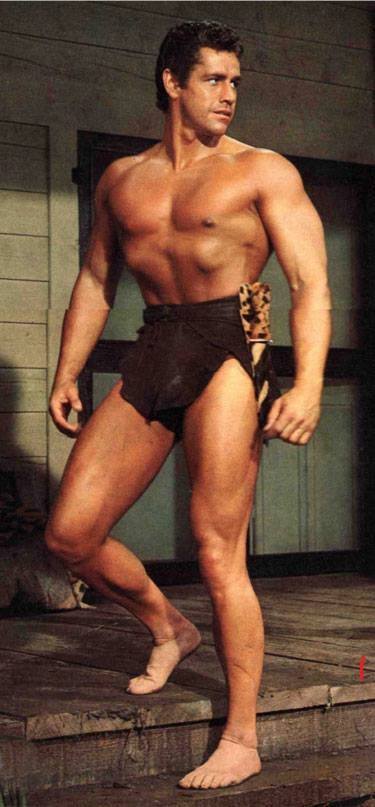
Here’s a Throwback Thursday hunk for you, actor and physique model Gordon Scott:

20728242_10212670337849946_4851579278645951324_n

St. Elmo’s Fire (Man in Motion)

Lundi Gras, and the downward slope of the marathon. Huzzah! I have a lot to do today; all trying to get it finished in the window before the streets close for tonight’s parades, Proteus and Orpheus. I need to run to the grocery store, get the mail, and am also hoping to get to the gym as well; I’ve not been since last Sunday, but the combination of all the cardio involved with the walking to and from the office, as well as shortened hours because of the parades, has conspired to keep me from my workouts. I cannot go Wednesday morning, either, because the gym is closed until noon; by then I will be at work. So, if I don’t work out today I can’t get to the gym again until Thursday morning, which would be most inopportune. But I am confident I will get back into the swing of my workouts again; despite the Mardi Gras interruption–that always happened in the past, after all, and I was always able to get back to it.

Exhaustion has also precluded me from writing and/or editing over the last week or so; I have plans to get some writing done today as well as some laundry. I have to decide on a story to write for two anthologies, and I desperately need to rewrite/revise/edit another that is due by the end of the month. I am also behind on revisions of the WIP, and I need to get moving on the Scotty book as well. This will, of course, be a short work week; Wednesday thru Friday, so I am hopeful that I can get a lot accomplished in this time period. I should probably get dressed and head out for the errands; the later I wait, the more likely there won’t be a place to park when I get back.

I started reading Killers of the Flower Moon before bed, but it just didn’t grab me right away; I’ll go back to it, I am sure. Instead I started reading The Black Prince of Florence by Catherine Fletcher (Florence! Medicis! History!), and am loving it so far. I doubt that I’ll ever tire of either Italian history, or the Medici family.

I did manage to get back to reading on The Short Story Project as well this weekend, between parades and physical exhaustion. The first was the title story of Joe Hill’s collection, 20th Century Ghost:

The best time to see her is when the place is almost full.

There is the well-known story of the man who wanders in for a late show and finds the vast six-hundred-seat theater almost deserted. Halfway through the movie, he glances around and discovers her sitting next to him, in a chair that had moments before been empty. Her witness stares at her. She turns her head and stares back. She has a nosebleed. Her eyes are wide, stricken. My heart hurts, she whispers. I have to step out for a moment. Will you tell me what I miss? It is in this instant that the person looking at her realizes she is as insubstantial as the shifting blue ray of light cast by the projector. It is possible to see the next seat over through her body. As she rises from her chair, she fades away.

Then there is the story about the group of friends who go into the Rosebud together on a Thursday night. One of the bunch sits down next to a woman by herself, a woman in blue. When the movie doesn’t start right away, the person who sat down beside her decides to make conversation. What’s playing tomorrow? he asks her. The theater is dark tomorrow, she whispers. This is the last show. Shortly after the movie begins she vanishes. On the drive home, the man who spoke to her is killed in a car accident.

This is a great short story; a ghost story about a haunted movie theater. It moves very quickly, and I love how Hill sucks you in almost immediately. I am greatly enjoying reading Hill’s short stories; and am looking forward to getting back into this collection. It also wraps up perfectly. I’ll be honest; I tried reading two of Hill’s novels and simply couldn’t get into them–which is probably more on me than on him–but as I said, I am loving the short stories, and will undoubtedly go back to the novels; I often find something that didn’t grab me the first time will wind up being something I love when I try it again later.

Then I moved back to Lawrence Block’s Alive in Shape and Color, and the next story up was “Girl with a Fan” by Nicholas Christopher.

On the fifth of June, 1944, a young man stepped off the 9:13 train from Lyon, squinting into the morning light. Tall and slender, he had an asymmetrical face: the right eye higher than the left, the left cheek planed more than the right. He was wearing a brown suit, black shirt, yellow tie, and brown fedora. His suit was rumpled, his boots scuffed. He was carrying a leather briefcase with a brass lock. His pants cuffs were faintly speckled with yellow paint.

He cast a long shadow as he walked down the platform. Halfway to the station, two men in leather coats came up from behind and gripped his arms. One of them pressed a pistol in his side, the other grabbed his briefcase. They veered away from the station, guiding him roughly down an alley to a waiting car. A man in dark glasses was behind the wheel. He was bald, with an eagle tattooed at the base of his skull.

At first, this story seemed a bit off to me; it didn’t really fit with the rest of the stories I’ve read in Block’s ‘inspired by a painting’ anthologies. For one thing, it jumped around in time and place, going from Nazi-occupied France to the south seas back to France in the late nineteenth century again; but linking these three different narratives was Gauguin’s painting, “Girl with a Fan”: where the fan came from, when the work was actually painted, and what happened–was happening–with the painting under the Nazi pillaging of the occupied country. Once I grasped what Christopher was doing with his story, I began enjoying it; it’s not easy to juggle three different stories, locations, and time-lines in the space of one short story. Well done, Mr. Christopher, well done indeed!

I also read some others, and will probably continue reading some more today; but I shall save those for a future entry.

And now, back to the spice mines. Here’s a hunk to get you through your own Lundi Gras.

26239311_1968685823379963_6551530354373772271_n

The Power of Love

The sun is shining. I haven’t checked the weather yet, but both Iris and Tucks were moved up an hour today due to thunderstorm forecasts. It may rain, despite the sunshine this morning; my windows are covered in condensation so it’s definitely humid out there.

A quick perusal of the weather forecast, however, shows a possibility of a thunderstorm this afternoon around 2–although the little image of the cloud with a lightning bolt on it also says, right above it, “0% chance of rain.” It’s also going to be in the 70’s today; beautiful weather for Iris and Tucks; though it might rain on Endymion tonight. I’m not concerned–Endymion doesn’t go down St. Charles so we never watch it. We used to go out dancing on Endymion Saturday, so we would walk down the parade route to get to the Quarter, and be buried in beads on the way (it does follow St. Charles in the CBD, and goes around Lee Circle before heading back up to the Superdome). But we don’t go dancing during Mardi Gras anymore–I don’t think  my old legs could handle it; they are very tired and sore this morning from all the walking and the outreach yesterday.

Yesterday was beautiful; I walked to work around one o’clock and took lots of pictures along the way. The Quarter was a madhouse; second lines and marching bands everywhere. We gave away 4500 condoms yesterday; we started at 3:15. I was supposed to work the second shift as well as the first, but at 6:00 when the others showed up we were down to less than 200 condoms, so I wished them well and walked home. Paul had been invited to a parade party at the New Orleans Advocate office on St. Charles; I couldn’t go because of outreach. But as I walked home, and walked past their office, I glanced in through the entry way and saw Paul; so I called his name and I got in. Their building, which used to house Michaud’s Cajun restaurant for years, are gorgeous; it’s where I saw Colson Whitehead speak last year. But I had never been up onto their balcony, which is way up there. We went up and watched the start of the Hermes parade, and the decided to walk home. I got some great pictures from up there as well.

This one is a particular favorite:

IMG_3865.JPG

Gorgeous, right?

We came home, fed the cats, and I took a shower while Paul watched the end of the LSU-Missouri gymnastics meet on-line, and then we headed out to the corner for Krewe d’Etat and Morpheus. We caught a shit ton of stuff out there–Morpheus is a great parade, but by the time it arrives the crowd has thinned out so much it’s easy to catch things, and they throw a lot. Then when it was all over, around 11:36 last night, we came inside and chilled. I finished reading Pictures at a Revolution last night, which I’ll blog about at some point after all the madness is over–just a few more days!

But now I have to pick another non-fiction book to read before bed, and I am leaning towards some true-crime-ish; perhaps the Edgar nominated Killers of the Flower Moon: The Osage Murders and the Birth of the FBI. I don’t read near enough true crime, and I also just realized I am not reading anything fictional, either; between the trip to Alabama, working on the anthology, and Carnival, I’ve not really sat down and picked something out to read. And I am also behind on the short story project. Heavy heaving sigh.

But I did take Monday off–tomorrow is going to be insane, four parades on the Avenue–so I am hoping to be able to use that day to get some rest, get back to the gym, and get caught up on things I am too tired to do over this weekend.

And now, back to the spice mines. Iris rolls in a little over half an hour!

Can’t Fight This Feeling

Parades tonight–three to be exact. I have to walk to the office today; and then I get to walk home tonight after work. Ah, Carnival, how you mess with my life. It’s also supposed to rain throughout the day; huzzah! Can’t wait.

There’s actually a lot of rain forecast over this final weekend of Carnival, and the police chief has already said they cannot accommodate rescheduled parades; so it’s roll or cancel. That’s actually kind of a relief, to be honest; I’ll never forget that year Endymion was rescheduled to follow Bacchus on Sunday night. It was absolutely insane in the ‘hood; I don’t think Endymion finished passing until three in the morning. There was another year when all the Thursday parades were moved to Friday; again, they were still going past in the wee hours of the morning. I mean, sure it sucks for the krewes and the riders to have to cancel; but rescheduling totally sucks when you live inside the parade route.

Needless to say, as I continue to work on Sunny Places Shady People the Short Story Project has kind of taken a few days off; I’ll probably get back to it at some point over the weekend. I also got back to work on the new Scotty this evening; Chapter Three is getting there. I only managed to write about six hundred words today, but I’ve not written since last Thursday so I am taking six hundred words as a win. Hopefully I’ll get more this week.

I didn’t want to get up this morning, and the weather is actually looking relatively pleasant out there–no sign of the rain yet–and I decided not to go to the gym this morning; more out of a sense of not being rushed and stressed. I don’t have to be at the office tomorrow until around one, which gives me the morning to work out, get some things done around here, and plenty of time to walk to the office and be on time. I also don’t have to be there until later on Friday as well–condom outreach–so I am going to commit the cardinal sin of lifting weights two days in a row. Oh, dear! But it’ll be fine, and I am glad I am getting into a regular routine, which means that even if I have to miss it’s not out of laziness but rather practicality, and I plan to replace that day’s workout. And we all know how much I love planning.

Yay!

All right, I’d best be getting back to the spice mines. Here’s a shirtless hunk to tempt the fascists at Facebook to ban me yet again.

IMG_1245


Take on Me

Well, that was a week. Here it is Friday morning and I haven’t posted in days. I started writing a post the other day about a short story I’d read, but there’s a lot to digest and think about in regard to that story, so it’s not an entry I can just dash off the top of my head while I am waking up over coffee, the way I usually do. (I have several of those posts in the draft file.) This week also signaled the deadline for submissions for this year’s Bouchercon anthology, Sunny Places Shady People, so I was downloading stories, sending acknowledgements of receipt, and then logging them all into the submissions spreadsheet. The deadline was yesterday, so I am pleased to report that’s all done and caught up. Now comes the tricky part, though, and I only have a month to corral the initial readers, assign stories, track their scores and then sent out rejections and acceptances, corral the contracts and bios, and pick the story order. At least Mardi Gras will be over week after next.

Anticipating having to work on the anthology so extensively this month, I was trying to get as much done on everything else as I could before this weekend–later this morning I am off to Alabama–and I am pleased to report that I am now partway through Chapter Three of the new Scotty, and also on Chapter Three of the WIP. The Scotty book actually feels like a Scotty book in this iteration, which was an enormous relief; I was worried I might have been done with him and not by choice.

I also revised two short stories this week of my own, which wasn’t as easy as I would have liked. One of them needs to go through another revision/rewrite, I think; the other is finally done. Huzzah! I have two more that I also need to revise/rewrite, but there’s no rush on those as there’s no particular anthology or deadline for them to be submitted; those are going out into slush piles. I also got a submissions call for another anthology I want to try for; I actually have multiple first drafts of short stories that would fit that anthology, so it’s a matter of picking one and going from there.

So, Gregalicious has turned back into a writing/editing machine, and it kind of feels good you know? It’s been a while since I’ve been motivated and working this hard. Is there a connection between that and also getting back into the gym regularly? Perhaps, but I’m not looking either gift horse in the mouth, you know?

And now, I need to clear out my email inbox before I go the gym and then hit the road.

Happy weekend, Constant Reader!

tumblr_o5h18dblnH1uzn77yo1_540

Everybody Wants to Rule the World

Monday morning. The weekends never really quite seem long enough, do they? Oh, it’s fine…I do like my job ((even if I don’t like waking up in the morning so much) but I’ve been going to bed earlier to make getting up easier. Sometimes it works, sometimes it doesn’t, but I do feel considerably more rested than I used to in the mornings. This weekend is the first weekend of parades, but I am off to a weekend of events in Alabama, which I am, oddly enough, looking forward to; lovely people will be there, which is always nice.

I do hate missing the first weekend of parades, though.

Although….it’s not like there won’t be plenty of them the next weekend, right? It’s so weird how greedy  we are when we it comes to parades. There’s probably an entire essay in that, as well.

I didn’t get as much writing done as I would have liked this weekend–I never do, of course, I always think I can get more done than I can–but I am rolling with it. I’m not sure how much–if anything–I can get done while I am in Alabama; as I recall last year, we all hung out together all evening and laughed and laughed, and one of the attendees this year is Carolyn Haines….and if you’ve never met her, she’s good energy and she is pretty damned fun and funny. I suppose I can read.

Speaking of which, I did read two short stories yesterday, and I also read a novel over the course of the weekend (I’ll save the novel for another entry).

The first story was Kristen Roupenian’s “Cat Person,” which was published on-line and in print by the New Yorker last month, and rather went viral; it seemed like everyone was reading it and everyone was talking about it, and Roupenian came out of it all with a healthy book contract (GOOD FOR HER! Seriously, I never understand why other writers get so snarky about the success of other writers. I always see it as a win for one is a win for all). I didn’t read the story at the time–discussions and arguments about it were everywhere, and I didn’t want to be influenced in my reading by the social media furor. But yesterday, after my workout (yes, made it to the gym again!) I curled up in my easy chair and read it.

Margot met Robert on a Wednesday night toward the end of h er fall semester. She was working behind the concession stand at the artsy movie theatre downtown when he came in and about a large popcorn and a box of Red Vines.

“That’s an…unusual choice,” she said. “I don’t think I’ve ever actually sold a box of Red Vines before.”

Flirting with her customers was a habit she’s picked up back when she worked as a barista, and it helped with tips. She didn’t earn tips at the movie theatre, but the job was boring otherwise, and she did  think that Robert was cute. Not so cute that she would have, say, gone up to him at a party, but cute enough that she could have drummed up an imaginary crush on him if he’d sat across from her during a dull class–though she was pretty sure that he was out of college, in his mid-twenties at least. He was tall, which she liked, and she could see the edge of a tattoo peeking out from beneath the rolled-up sleeve of his shirt. But he was on the heavy side, his beard was a bit too long, and his shoulders slumped forward slightly, as though he was protecting something.

I thought this story was very well done, myself–but I can certainly see why it upset men, and why women embraced it. I don’t think I’ve ever read before such an honest depiction of a bad date and bad sex in my life. God knows I’ve had bad sex before, but I’ve certainly never written about it; usually when I write about sex its erotica so it kind of has to be hot, you know what I mean? Whoever writes about bad sex? There were times, when reading it, when she encapsulates a conversation into a paragraph of prose (then he said this, and she thought well this but said that, and so forth) where I would have much rather read the actual conversation, but other than that complaint I kind of enjoyed it; although given all the discussion I’d seen on line made me know where it was going–but that ending was so incredibly perfect. Perfect.

Then I read Michael Bailey’s “I Will Be The Reflection Until the End”, from Tales from the Lake Volume 4:

My sister used to collect cherry plum pits in her napkin secretly, under the kitchen table. A strainer full of mixed yellow and red and deep-purple fruits would separate us each spring, with a small bowl next to it to collect the pits–although mine were typically the only ones in there–and a plate beneath the strainer to collect any drips from the rinsed fruit. My sister was coy like that. Her lie had become our lie, and every once in a while she’d throw a pit in the bowl to make it look like we were being honest. She knew I wouldn’t bring it up to Mom, because that meant I could have more if I kept my mouth shut. It was one of the few secrets we kept from Mom in our  youth. Call it a sibling bonding moment.

This story is on the longlist for the Bram Stoker Award for Outstanding Achievement in Short Fiction, and it is a beautifully written, moving short story. It reminded me a little of one of my favorite Stephen King short stories, “The Last Rung on the Ladder”–it’s a gorgeously written tale about a younger brother remembering his older sister, loving childhood memories of closeness that went away as she got older, and things went wrong with her. I absolutely loved it. I met Bailey and his wife several years ago at Stokercon in Las Vegas, and they charmed me completely; this is my first time reading his work, and it certainly won’t be the last. The only reason I can’t see this story not making the short list (or winning) is because I’m not entirely certain it’s horror; it may qualify, but not the in-your-face, jump scare or gross out horror–it’s a quiet horror of the Shirley Jackson kind; the horror of the heart from what life can do to someone we love.

12243211_778719875584463_322279597921766512_n

I Want to Know What Love Is

It’s been raining pretty much most of the weekend, which is fine. I went to get groceries, pick up a prescription, and get the mail before getting home and starting to work on the mess that is my home; I also finished writing a chapter of one manuscript and started writing another–which was my writing goal for yesterday. Today’s is to do second drafts of two short stories to prepare them for submission. I also have to go to the gym and finish the cleaning of the apartment and organizing my office. I started reading the big y/a best seller One of Us Is Lying by Karen McManus yesterday; I can see why it’s a bestseller and I can also see why it’s being developed into a television series a la Thirteen Reasons Why; it’s a deceptively simple yet surprisingly complex story, and likewise–well, I’ll talk some more about it once I’ve finished.

I’m enjoying writing again for the first time in years, which is a good thing, and I am actually putting a lot of thought and planning into what I’m writing, which is a really good thing. What I’ve written over the last six or seven years has been a lot more organic, coming to me as I wrote it from a basic premise and perhaps knowing what the end was; without putting near as much thought into theme and what I am trying to say, what I am trying to explore with the story, than I used to–I mean, it worked, but it also made the work a lot harder than it needed to be. I think this is particularly true of short stories; I think that’s primarily what I’ve been doing wrong in writing them–my entire approach to short stories has been wrong, and I’ve been, as I said, making it a lot harder on myself than it necessarily needs to be.

Which is, sadly, what I always tend to do for myself: make things harder than they need to be.

Heavy heaving sigh.

In addition to cleaning and everything else I did yesterday, I also managed to start watching Season 2 of Black Sails, which continues to enthrall. I am still liking the idea of finally writing my pirate novel (Cutlass), but not as much as before; it remains one of those dreams that I hold on to for when I am making a living as a writer again and able to not have a day job any longer. (There are several of those; they also require not only making a living but making enough money to travel and do research.)

Some day. I never give up on the dream.

The Short Story Project also continues; yesterday I read a story by Ross MacDonald from The Archer Files and one by Karl Edward Wagner from the gorgeous two volume collection The Best Horror Stories of Karl Edward Wagner, produced by Centipede Press maybe seven or eight years ago.

MacDonald’s story, “The Bearded Lady,” was quite good, as everything written by MacDonald is.

The unlatched door swung inward when I knocked. I walked into the studio, which was high and dim as a hayloft. The big north window in the opposite wall was hung with monkscloth draperies that shut out the morning light. I found the switch beside the door and snapped it on. Several fluorescent tubes suspended from the naked rafters flickered and burned blue-white.

A strange woman faced me under the cruel light. She was only a  charcoal sketch on an easel, but she gave me a chill. Her nude body, posed casually on a chair, was slim and round and pleasant to look at. Her face wasn’t pleasant at all. Bushy black eyebrows almost hid her eyes. A walrus mustache bracketed her mouth, and a thick beard fanned down over her torso.

The door creaked behind me. The girl who appeared in the doorway wore a starched white uniform. Her face had a little starch in it, too, though not enough to spoil her good looks entirely. Her black hair was drawn back severely from her forehead.

Lew Archer, on his way from Los Angeles to San Francisco, decided to stop in the small town of San Marcos and look up an old army buddy, inadvertently stumbling into a murder case. The story is interesting, the writing whipcrack smart, with MacDonald’s trademark, cynical short paragraphs immediately getting to the essence of a character. Don’t we, as readers, already have a strong impression of who that young woman is as a person after those three sentences? I’ve often wondered how one solves a murder in a short story–or writes a detective short story. I’ve tried and failed often enough. But the great thing about the Short Story Project is I am starting to understand how to write them, how they work, and how to make them work; which is a lovely thing. I have several ideas for Chanse short stories that I’ve never written because I didn’t know how; now I rather do, or at least have an idea, thanks to The Archer Files and Kinsey and Me (Sue Grafton). Both books are great learning tools for people who want to write detective stories, and MacDonald’s influence on Grafton is clear. (Although I’d still love to see someone do an essay, or book of criticism, comparing and contrasting MacDonald’s work with that of his wife: The Murderous Millars would be a great title.) MacDonald’s stories usually have to do with damaged and dysfunctional families; “The Bearded Lady” is another one of those, and is very well done. I highly recommend it.

The Wagner story I read was from the second volume of he Best Horror Stories of Karl Edward Wagner, which was titled Walk on the Wild Side, and was titled “The Last Wolf.”

The last writer sat alone in his study.

There was a knock at his door.

But it was only his agent. A tired, weathered old man like himself. It seemed not long ago that he had thought the man quite young.

“I phoned you I was coming,” explained his agent, as if to apologize for the writer’s surprised greeting.

Of course…he had forgotten. He concealed the vague annoyance he felt at being interrupted at his work.

Nervously the agent entered his study. He gripped his attache case firmly before him, thrusting it into the room as if it were a shield against the perilously stacked shelves and shelves of musty books. Clearing a drift of worn volumes from the cracked leather couch, he seated himself amidst a puff of dust from the ancient cushions.

I received both volumes of Wagner when I was judging the Bram Stoker Award for Best Single Author Collection, or whatever it is called; it was so long ago that I don’t even recall who the finalists were or who actually won. My memory is perforated like Swiss cheese nowadays, with holes and gaps; it also works like a sieve as new knowledge, and new books I’ve read, tend to pass through it without catching hold (I used to be able to name every book I’ve read, the plot, the main characters–and even some of the minor; over the years that ability has been sadly lost to time). I don’t, for example, remember the titles or the contents of the Wagner stories I read; but the books are beautiful volumes and I remember being impressed by his writing, so I kept them on my shelves. It was only a week or so ago that I realized, that I remembered, them; and that they might make a good addition to my year-long study of short fiction.

I’ve often said that writing about writers, about the business of writing and publishing, sometimes (often) feels masturbatory to me; only other writers would be interested in such a story. And yet writers pop up in my work all the time; Paige is a journalist and wannabe novelist in the Chanse series (and now that I’ve retired that series she’s migrated, apparently, over to the Scotty); another writer character I’ve created has appeared in several novels of mine–one Scotty, The Orion Mask, and one pseudonymous; he also appears to be the voice I used in several first-person short stories, including “An Arrow for Sebastian.” I have another such short story in process; I’ve not quite worked out how to make the story work, but there you have it. I was tempted to write an entire series about a writer, but as I started to develop my gay male writer character more I soon realized I had turned him into a hybrid of Scotty and Chanse; there was nothing new or original about him other than he was a writer and not a private eye. (I really do want to reread Azimov’s Murder at the ABA, though, and Elizabeth Peter’s brilliant Die for Love and Naked Once More.)

“The Last Wolf” is also about a writer, a writer who firmly believes in himself and his work, and that his work is art, and art should never be compromised for commerce. The world in which he lives is one where he is the last (apparently) person attempting to still write fiction; novels have fallen by the wayside and short stories are no longer published; the world has completely changed and his agent wants him to try to write for television shows–which, as described, sound horrifically awful. The writer refuses, the agent leaves, and he goes back to his typewriter. This story could easily be seen as angry, or even whiny; in the hands of a lesser author, the story would be precisely that. But Wagner paints a picture with his words, and maybe it resonated with me more because I am an author myself, but the sympathy rests entirely with the author. (Although I am one of those whose eyes roll so hard that  they almost unscrew when I hear another author speak of their ‘art’; but that’s a topic for another day.) I am looking forward to digging back into Wagner’s work again this year.

And now, I need to file and organize, perhaps vacuum, before I head to the gum. I want to get some things written today, and I need to revise those stories.

Hello, spice mines.

Sigh.

26196451_321860411641954_3040436925599999815_n

Like a Virgin

Well, it’s a chilly, gray Friday morning in New Orleans, Constant Reader, and we’ve managed to survive yet another week Again, this is a short work day for me at the office, so I’ll be able to make groceries this afternoon and go to the gym this evening before curling up in my easy chair with Karen M. McManus’ y/a bestseller, One of Us is Lying. (I will also continue with the Short Story Project, never fear! I just haven’t decided where I want to go next–whether it’s a single author collection or an anthology I want to dip into; or maybe go back to the Laura Lippman and Sue Grafton collections; mystery or horror.) I’m all caught up on posting about short stories after today’s post, too, so I need to decide, and soon.

Last night I worked some more on the WIP; moving on to Chapter Two. This chapter didn’t flow as easily as the first, and I only got about 1800 words done on it (which made the writing day a bit of a failure) but I also tweaked Chapter One a bit and got another 200 words or so added to it; a two-thousand word day is a win, for me, even if the goal is always to do at least three thousand–particularly considering how just last month I would have considered a hundred words a triumph. So, thus far this year I’ve written four short stories, one and a half chapters of the WIP, and one chapter of the Scotty–and I even know what the second chapter is going to be–which is how Scotty books usually work; no plan, but the next chapter reveals itself as I write the current. I also have tossed out the entire plot as it was; new victim, new everything. But I am hopeful I can get this all finished by the end of February; Mardi Gras notwithstanding. I also solved the problem with another manuscript I’ve been sitting on for a long time, and I know how to make it work as well now, but it’ll have to wait until I am finished with these two projects and another.

It feels so good to have my creativity kicking into gear again.

I also watched Riverdale last night, which has replaced Teen Wolf as the gayest show on television. Oh, sure, like Teen Wolf there’s only one gay character on the show; but all of the guys are fricking gorgeous with amazing bodies that are shown off pretty regularly–you haven’t lived until you’ve seen KJ Apa in a low cut singlet without a shirt underneath–and there was even a locker room scene where Archie was talking to gay Kevin, while in the background between them was some amazing hunk wearing only a towel standing at the sink–yay for gratuitous male bodies!

So, as this weekend looms I hope to get a lot done. We shall see how that works, but…hope springs eternal.

Today’s first short story is Sarah Weinman’s “The Big Town”, from Alive in Shape and Color, edited by Lawrence Block:

You don’t expect to see a portrait of your mother hanging on the wall of your gangster boyfriend’s living room. especially when the portrait shows your mother without a stitch of clothing on but for a pair of green heels.

“Where did you get that painting?” I asked, my voice more querulous than I wished. It was my first time in his house. I hesitated about a return visit even before seeing the portrait, but now I knew. I would not be back.

He turned to face the portrait. I looked at his back, the white collared shirt barely covering dark matted hair. I’d run my fingers through that broad, fleshy forest the few afternoons we’d fucked in a Ritz-Carlton hotel suite. Again I remembered what I found attractive about him: power, status, money. And what I found ugly: body, face, manners.

The story is really quite good and a poignant story about love and loss at the same time. The main character is a rural Canadian girl who ran away to the big city to avoid a prearranged marriage, her only future being a farmwife and having a passel of kids; she’s kind of become a good time girl, doing whatever necessary in order to survive on the fringes of society. But once she sees the portrait of her mother, who died when she was young, she becomes obsessed with getting the portrait away from the vile gangster and learning its history; how it came to exist in the first place.

I’ve read a lot of Weinman’s non-fiction before, and of course, just finished reading her stellar anthology Troubled Daughters Twisted Wives, which was exceptional. Nonfiction writing, however, doesn’t necessarily translate into good fiction writing; but Weinman hits the ball out of the park with this one. That yearning, sense of drifting is captured perfectly, and her main character is the kind of woman I like to read about; transitioning from a woman to whom things happen into a woman who makes things happen. The sense of learning more about her mother, that drive to know and understand her biological mother better, is something that resonates with every reader: how well do we really know our parents? Particularly if one parent died really young? This is a great story, absolutely great.

 The second story I read was the last one in Alive in Shape and Color, Lawrence Block’s “Looking for David.”

Elaine said, “You never stop working, do you?”

I looked at her. We were in Florence, sitting at a little tile-topped table in the Piazza di San Marco, sipping cappuccino every bit as good as the stuff they served at the Peacock on Greenwich Avenue. It was a bright day but the air was cool and crisp, the city bathed in October light. Elaine was wearing khakis and a tailored safari jacket, and looked like a glamorous foreign correspondent, or perhaps a spy. I was wearing khakis too, and a polo shirt, and the blue blazer she called my Old Reliable.

We’d had five days in Venice, This was the second of five days in Florence, and then we’d have six days in Rome before Alitalia took us back home again.

I said, “Nice work if you can get it.”

I’ve not read any of the Matthew Scudder novels Mr. Block has been writing for decades; as I have said before, my education in my own genre is often sorely lacking in many regards. But this story was irresistible to me for several reasons–it’s set in Florence, for one, and of course it is inspired by Michelangelo’s David, which also has inspired me for a novel that I hope to someday write. The story begins as above, with Matthew recognizing someone in the piazza that he had arrested, and soon remembers the gruesome butchery of the case. The man comes over, introduces himself, and then invites them to his villa for lunch the following day. Elaine bows out of the lunch, and over the course of the meal the man explains, at last, why he committed the brutal crime Scudder remembers and never knew the motivation behind (he’d pled guilty, served his time, got out and retired to Italy; would that I could do the same!). It’s a macabre story of a stunted gay life, and how once he fell in actual love with another man he abandoned his old life without a care and took up a new one, that ended in tragedy. It’s actually quite good, and bravo to Mr. Block for taking on such a topic without dealing in tropes, or stereotypes; it was also lovely to read a gay villain, as it were.

And now back to the spice mines.

DSCN6869

Careless Whisper

So, for those of you who are keeping score, I rewrote/revised/edited /redid whatever-the-hell-you-want-to-call-it-Chapter-One of the new Scotty last night and you know what? I found Scotty’s voice again. I don’t know, but when I opened the word document for this next attempt to write this book, I knew what the first sentence was going to be, and when I typed it: I love Christmas…somehow Scotty was there again; I could hear his voice, get into his head, everything I need to do in order to write a Scotty book. My God, I might actually get this thing finished.

Huzzah!

I also made it to the gym yesterday morning before work; without complaining, without once trying to think of a reason or rationale to not go. I just got up, had a couple of cups of coffee, did my morning toilette, and when it was time, I put on my sweats and went out the front door. It’s amazing how much better I feel; how much more energy I have,  I’ve not been sleeping as great as I would like this week–not sure what that’s all about–but maybe I just don’t need as much sleep as I used to? A possibility, no doubt. I’m seeing my doctor again next month; perhaps I can discuss it with her then. I know she’ll be pleased I’m working out more regularly.

I also did some things I’ve been procrastinating about–made an eye appointment, called AT&T because I am paying for cellular service on my iPad and not getting it, called my doctor for a prescription refill, cancelled a digital newspaper subscription–and so I am feeling rather proud of myself.  Yay, me!

I also read some Agatha Christie short stories, from her collection The Golden Ball and Other Stories. I originally read, and enjoyed, these stories when I was a teenager; and they were originally published in the 1920’s. To be honest, while I still enjoyed them, on some levels they bothered me. I’ve actually read criticism of Agatha Christie for being, among other things, classist in her writings; this can be problematic in a present-day reading (I didn’t notice when I originally read her). I also had some other issues with these stories that I didn’t originally; Christie, not only in her short stories but her novels, enjoyed romantic happy endings, which happens in a couple of these stories even though they aren’t a real pay-off and kind of clumsily tacked on.

Listen at me, criticizing Agatha Christie! Some nerve, huh?

The first story in the collection is “The Listerdale Mystery”:

Mrs. St. Vincent was adding up figures. Once or twice she sighed, and her hand stole to her aching forehead. She had always disliked arithmetic. It was unfortunate that nowadays her life seemed to be composed entirely of one particular kind of sum, the ceaseless adding together of small necessary items of expenditure making a total that never failed to surprise and alarm her.

Who hasn’t been there? The St. Vincents are what Christie calls “poor gentlefolk,” essentially, people who used to have money or are technically part of the upper classes but no longer have the funds to live the way they are used to, and are pretty much living hand-to-mouth. Her daughter has prospects–a young man with money–but they are living in shabby place they can’t even afford anymore which won’t “show her off properly.” Mrs. St. Vincent stumbles on a rental advertisement in the paper that seems too good to be true–servants the tenants won’t have to pay; a lovely home with rent so cheap there has to be a catch–but it’s only for the ‘right sort of tenant.’ The St. Vincents qualify; they move in, and everything is wonderful. The daughter, having a proper home that shows her off in the right way, gets engaged to her young man with money. But the son, Rupert, is certain something is wrong about the place and wrong with the deal. The owner, Lord Listerdale, has not been seen nor heard from in quite a while, and Rupert starts looking into things. The ending isn’t quite as sinister as one might think if this were a Stephen King short story, but it’s a pleasant little story. But you see what I mean about the classism; “the right sort of people”…and “poor gentlefolk who suffer in silence” as opposed to the working poor who aren’t the right sort of people and apparently suffer loudly?

“The Girl in the Train” is also quite fun; but again–our main character is a young man whose wealthy uncle has become irritated with him, fired him from his employ, and cut him off financially (shades of Wodehouse!). Our young hero takes this all in stride, and isn’t sure what to do with himself, so he gets on a train to a town that bears the family name: Rowland’s Castle. But before the train pulls out of the station a beautiful young woman leaps into his compartment, begs for help, and dives under the other seat. Thus begins a kind of fun adventure which inadvertently gets him involved not only with the possible kidnapping of an heiress, but with a Scotland Yard investigation into a gang of spies! It’s a fun tale, and all works out in the end….and it very much reminded me of Wodehouse, whom I love.

“The Manhood of Edward Robinson” is also quite fun–if dated. Edward has a good job, good prospects, and everything he could wish for–even if he is a little henpecked by his fiancee who wants to wait several years to get married, which is more sensible. He has won a contest with a prize of 500 pounds–and in a bit of rebelliousness against his fiancee, buys a sportscar, and then lies to her and goes driving out of London one night. He winds up on quite an adventure involving a stolen diamond necklace and a car switch (he winds up with someone else’s car–wouldn’t happen today, but could back then). He comes out of the whole adventure with a whole new outlook on life, and again, the end is quite satisfying.

The fourth, “Jane is Search of a Job,” is perhaps my favorite of the bunch. Jane is poor, needs a job, and finds an interesting advertisement, which she answers and soon finds herself body doubling for eastern European royalty. But all is not what it seems with Jane’s new high paying job, and soon she is off on an adventure all of her own. What makes this story work–along with other Christie novels of the time, like The Man in the Brown Suit–is the female character, who is quite realistic, doesn’t ever get hysterical or lose her head, and greets each new twist in the tale with determination, grit, and a very practical, level-headed  “okay, how do I get out of this” attitude. A very fun read, even if at the end she winds up riding off into the sunset with a man she’s just met and who has fallen madly in love with her. Farfetched as that may seem, though, it is a charming end to the story of Jane’s financial woes–although the message “have a wealthy man fall in love with you” isn’t the most practical of advice.

And now,  back to the spice mines.

IMG_3589