Come Dancing

Tuesday!

Being off yesterday was kind of nice. I started a project I’ve been meaning to start all year (it was one of my goals set on the first of the year) and went to my storage unit. The goal is to clean a lot out of it, as well as get some more copies of my books out to replenish the supply in the Lost Apartment. I was actually worried that the boxes of my books were in the absolute back, but they weren’t. I was able to assemble three boxes of books to donate, found the copies of my own books I needed (hello, Bourbon Street Blues and Jackson Square Jazz!) and now that I’ve actually done it–it’s not as intimidating as I thought it would be. I’ve also always kept my papers–manuscript drafts, notes, etc–in manuscript boxes or small boxes that approximate a manuscript box; those don’t end up stacking well and you can only imagine how many of those there are. I’ve decided that the smart thing to do is get rid of those small, collapsing, not-so-sturdy boxes and assemble file boxes, and move the papers in there, labelling the new boxes appropriately. That way they’ll stack better, and will most likely create more room. And when I am moving all that stuff around, I can drag out other boxes of stored books to donate. So, yes, I am feeling inordinately proud of myself.

I started reading Eric Ambler’s Background to Danger, which I believe may be his first novel. It’s really quite good; Mr. Ambler certainly knew how to turn a phrase: One sunny morning in July, Mr. Joseph Bhaltergren’s blue Rolls-Royce oozed silently away from the pavement in Berkeley Square, slid across Piccadilly into St. James’, and sped softly eastward towards the City of London.

I so wish I’d written that sentence. While it’s ostensibly about the car and the drive into London, it also tells you everything you need to know about the passenger. That’s pretty masterful.

After taking the weekend off (from writing) I managed to get back to work. I intend to get the reread of the WIP finished over this week, and then the adjustments to the manuscript that need to be made done this weekend, as well as writing the query letter. I also hope to get some of the new Scotty written this week; Chapter Six is sucking big time.

Ah, well. I don’t have to go into the office until later today, so I should be able to get some work on it finished. We are greatly enjoying Harlan Coben’s The Five on Netflix; we’re about four or five episodes in, so about halfway finished. I have an excessively long day tomorrow, but that’s cool.

All right, I’ve got things to do this morning.

Here’s a Tuesday morning hunk for you:

17156321_1286974531350608_1822764787196576938_n


Don’t Let It End

I rested well last night; I am not tired this morning. Yesterday was physical exhaustion, complete and total with mental exhaustion thrown in for good measure; but I rested well. I won’t say I slept well, because I can remember being aware a lot while I was in bed, but this morning my muscles aren’t fatigued and my mind is alert and sharp, which it wasn’t yesterday.

I started reading Linda Joffe Hull’s Eternally 21 yesterday, and got about halfway through. It’s quite charming; the voice of the main character–Maddie–is delightful, and Hull manages to pull off the how does a wife and mother get involved in a murder investigation with aplomb. I don’t know how to describe or categorize the book as far as the crime fiction category goes; whether this would be considered a cozy or a traditional mystery. Maddie is enormously likable; the set-up for the book/series is that she and her husband Frank have had an enormous financial setback; he’s a television financial broadcaster, and he was defrauded, and lost all their money, in a Ponzi scheme. Obviously, if that news got out he’d probably lose his job–who would listen to a financial advisor who lost all his own money–so they are trying to keep up appearances. She’s started a website/blog about how to save money shopping, couponing and so forth, under the name “Mrs. Frugalicious”, which is starting to take off–she also has to keep that a secret because, again, why did the financial advisor’s wife have to start saving money and being more frugal when she used to be extravagant? As the story continues, you start to realize that Maddie is the glue that really holds the family together; Frank would undoubtedly be much worse off without her as his wife; and the cool competence and efficiency she’s developed to run her household also translate to being a successful Coupon Queen; and the skills she’s sharpened saving money actually come in handy for solving a crime.  It’s very charming, and it’s also quite funny; Hull’s got a slightly twisted sense of humor that really works in the book.

I have to work today and tomorrow; tomorrow is the NO/AIDS Walk, which means getting up ridiculously early. But I have Monday off, which is lovely, and my house is an absolute disaster area. I simply haven’t had the energy this week to try to keep up with it; I am going to try to get it into some semblance of order this morning before I head down to the office. Sigh. I also want to get some writing done this weekend; I want to spend Monday rereading and making notes on the now line-edited WIP.

Okay, back to the spice mines. Here’s a Saturday hunk, Tom Hiddleston.

IMG_2773


Solitaire

Sleep has eluded me all week; I lie in bed all night half-awake and half-asleep, hoping that my mind will stop racing and I will somehow, as I toss and turn, find a position in my bed that will allow me to, at last, find sleep. I grow tired every evening before bed–and have stayed away from screens, since I’ve read in many places that sleeplessness can be caused by the light emitted by computer and device screens–but it is all for naught. I’m not sure what has caused this change, and I am afraid I will never sleep deeply again.

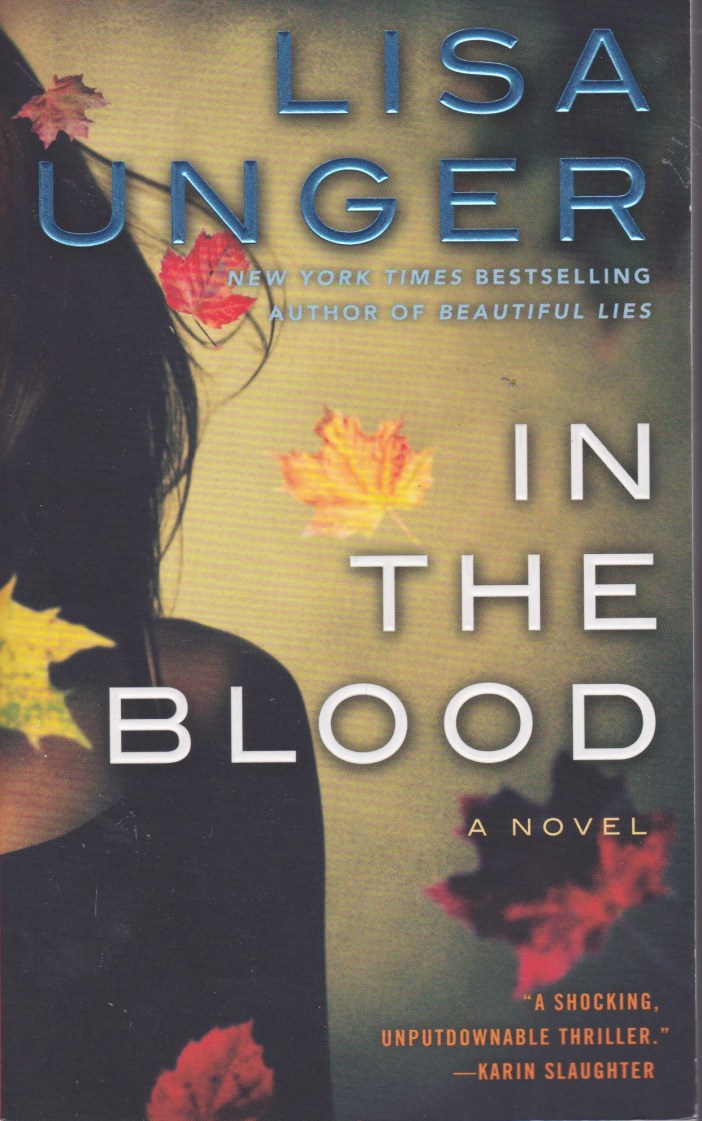
Last night I had to do bar testing, and when I got home I finished reading Lisa Unger’s In the Blood.

in the blood

There are twelve slats of wood under my bed. I know this because I count them over and over. Onetwothreefourfivesixseveneightnineteneleventwelve. I whisper the numbers to myself and the sound of it comforts me as I’m sure a prayer would comfort someone who believes in God. It’s amazing how loud a whisper can be. Surrounded down there by the white glow of my bed skirt, the sound of my own voice in my ears, I can almost block out the screaming, the horrible keening. And then there’s the silence, which is so much worse.

In the quiet, which falls like a sudden night, I can hear the beating of my own heart, feel it thudding in my chest. I lie very still, willing myself to sink into the pile of the carpet lower and lower until I don’t exist at all, There is movement downstairs. I hear the sound of something heavy scraping across the dining room floor. What is he doing?

I have come to this place before. Here, I have hidden from the frequent and terrible storms of my parents’ miserable marriage. And I have listened as their voices break through the thick walls and the heavy, closed doors. But usually I can only hear the ugly cadence of their voices, and very rarely their words, which I know to be hateful and spiked with old hurts and bitter resentments. It is a poison in the air, a toxic cloud. Onetwothreefourfivesixseveneightnineteneleventwelve. Sticks and stone can break your bones, but words can break your heart.

Over the last year, I’ve become an enormous fan of Lisa Unger. This is the third book of hers that I’ve read since the first of the year, and like the two before it, it’s absolutely stunning. The cadence of the words, the way the story is structured to build, and the words themselves, chosen with infinite care, create a thing of beauty about a terrifying darkness.

The book is set in The Hollows, a small town in upstate New York which Unger has visited before; the two previous works of hers that I’ve read were also set in this strange town where bizarre things happen; where it is not unusual for ghosts to appear, and madness is only a short step away. The Hollows is Unger’s Castle Rock, her Collinsport, her Bon Temps; a town where violent death and passionate love are possible; where the veil between the world of the living and the dead is as thin as the wall between sanity and madness.

In the Blood is the tale of Lana Granger, a damaged young college student who has come to The Hollows to attend Sacred Heart College and completely disappear from a horrific past that is slowly revealed to the reader; each revelation even more horrific than the last. Lana is heavily medicated, “flat”, as she calls it; Unger exploration of that state of mind, a drug-induced emotionless existence, seems not only realistic but tragic and sad at the same time. Lana is convinced by her faculty advisor to take a job as babysitter/nanny for a troubled twelve year old named Luke, who lives with his mother in a big Victorian house a short bike ride from the campus. Two years earlier, a young female student disappeared from the campus and was found dead a few days later; one of Lana’s roommates, Beck, with whom she has a challenging relationship, disappears after a public argument with Lana in the library.  Luke isn’t just troubled, he’s dangerous, and the two begin a dangerous dance, as he dangles bait in front of her to lure her into his games.

As Lana’s story unfolds, every other chapter is a diary excerpt; the diary of a woman trying to maintain her own sanity as she realizes, almost from birth, that there’s something wrong, something horrifically off, about her son. Is Luke’s mother’s diary, with Unger showing the reader the horror of what being a mother to a budding psychopath must be like? Or is it something else?

And there is history here as well; murder tangled up in the DNA Lana has gotten from both of her parents. And as the reader learns more and more of Lana’s secrets, the more terrifying the story becomes.

Much has been made lately of the use of the Unreliable Narrator; Unger’s main characters are always unreliable, but she manages to not make it a cliche, nor does she seem to do it in order to pull off unforeseen, out-of-the-blue plot twists on her readers; she manages to do this in a wholly organic way that completely makes sense. She is a master; her books are stunning works of art, as complexly constructed as a human personality, with all of its quirks and tics.

I was troubled by one particular plot twist; but I cannot write about that without undermining the pleasure of reading the book; pulling that thread will unravel the entire story and ruin the book for anyone who hasn’t read it, which is a pity; it’s something that I feel should be discussed, and I also see not only why it was a necessary turn for the story–it completely made sense and pulled everything together–but at the same time it made me a bit uncomfortable.

Read this book. Read Lisa Unger. And cherish the experience.

Our House

..in the middle of our street.

We will not be discussing the embarrassment that was last night’s LSU “game.”

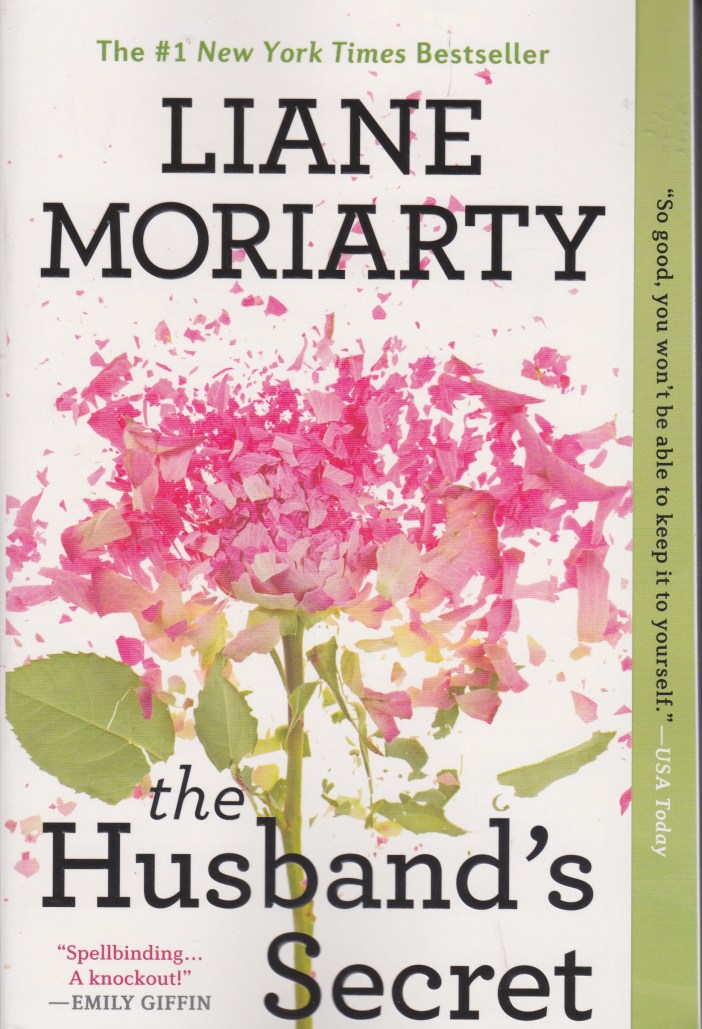
Friends are in town, and we had lunch with them at Commander’s Palace yesterday, which was lovely. I didn’t read the menu carefully and got something that had fried eggs on the top–which ran with yolk when you broke it; shudder–but I simply pushed them away with my fork and ate everything else. I was very tired after that, and came home, worked for a little while, and then curled up with Liane Moriarty’s The Husband’s Secret. I had read Big Little Lies concurrently with watching the HBO series, and enjoyed both the book and the show, so wanted to read another one of her novels. I wasn’t quite sure what I was expecting with this one–the jacket blurb mentioned that a wife finds a sealed envelope addressed to her from her husband, with the words To be opened only in the event of my death.

I would have opened it immediately, of course.
the husband's secret

It was all because of the Berlin Wall.

If it weren’t for the Berline Wall, Cecilia would never have found the letter, and then she wouldn’t be sitting here, at the kitchen table, willing herself not to rip it open.

The envelope was gray with a fine layer of dust. The words on the front were written in a scratchy blue ballpoint pen, the handwriting as familiar as her own. She turned it over. It was sealed with a yellowing piece of sticky tape. When was it written? It felt old, like it was written years ago, but there was no way  of knowing for sure.

She wasn’t going to open it. It was absolutely clear that she should not open it. She was the most decisive person she knew, and she’d already decided not to open the letter, so there was nothing more to think about.

Although, honestly, if she did open it, what would be the big deal? Any woman would open it like a shot. She listed all her friends and what their responses would be if she were to ring them up right now and ask what they thought.

Liane Moriarty is compulsively readable. And that’s not a quality in an author that should be dismissed lightly. As I mentioned the other day with Louise Penny, it’s hard to classify Moriarty’s work; there’s a crime involved, but is it really crime fiction? I’m not sure it’s marketed that way; this book has a jacket blurb from Anne Lamott, for example, rather than Sue Grafton or Sara Paretsky. She is an enormous bestseller; which is no small feat for an Australian writer to accomplish in the United States, particularly when she is writing about Australia (although Colleen McCullough was quite successful in the US with The Thorn Birds, before she turned to ancient Rome). She structures her books around three women as the main characters; and she writes about the issues that concern women–I suppose, in a way, her novels could be classified as modern domestic suspense. Like the previous masters of domestic suspense (a classification title I am still not entirely convinced I like), she writes about every day women thrust into extraordinary situations, and she also shoehorns in some brilliant social commentary along with social issues, like Margaret Millar and Charlotte Armstrong and Dorothy B. Hughes did. The books are, as I said, compulsively readable and hard to set aside until you’ve reached the end.

Women writers, no matter their success, are rarely taken as seriously as male writers. I’m not sure if it’s because women writers tend to focus on women and issues that affect them while men, in theory, tackle larger themes. Male characters written by men are off saving the world in genre fiction, bedding fabulous babes and getting into fistfights, surviving by their skills or because their masculinity is superior to that of the bad guys. Or the male characters are finding dissatisfaction and misery in their maleness (I’m looking at you, literary fiction), prisoners of societal expectations of manliness and resenting putting aside their fantasy of what their life should be and having to settle for something that is less than that fantasy. Rarely do you find male characters (I’m not saying they don’t exist, so don’t come after me; I am fully cognizant of the fact that these are all incredibly broad generalizations) who are struggling with the work/home balance, juggling having to have a career and an income with finding time to be participants in their children’s lives or even, for that matter, simply helping around the house.

Men do not drive the story in Liane Moriarty’s novels, but they do impact it. They serve as catalysts for her stories, but her books are about the women whose lives are impacted by the men in them.

The Husband’s Secret,  like Big Little Lies, tells the story of three women whose lives intersect due to a private grammar school, St. Agatha’s in Sydney. Rachel is the aging part-time school secretary, widowed and haunted by the unsolved murder of her teenaged daughter many years before. The loss of her daughter has embittered her, and the only thing she basically has to live for is her grandson. Her story is set into motion when the perfect daughter-in-law she doesn’t much like and her son tell her that Lauren, the daughter-in-law, is being sent by her company to New York for two years, taking the only thing in her life she cares about–the grandson–away from her; just as her daughter was taken from her some twenty-five years or so earlier.

Tess’ world has just been ripped apart by the announcement by her husband and her best friend/first cousin that they are in love and want to be together–but out of respect for her having consummated the relationship. Her cousin, Felicity, is like a sister to her; their mothers were twins and they were born within days of each other. Felicity also used to be overweight; over the past year she has lost weight and become beautiful. Tess, betrayed and hurt, uses her mother’s recent accident in which she broke her ankle as an excuse to grab her son Liam and leave Melbourne, returning to Sydney to sort out her life and her future–enrolling young Liam in St. Agatha’s.

Cecilia, the third woman, is like Madeline in Big Little Lies; married, highly competent and efficient, the organizer that winds up running everything and basically being Supermom. She married a handsome rich man, and they have three daughters together. She’s hardly as confident as she seems; it’s a veneer to protect her and hide her own insecurities as she ruthlessly organizes her life and tries to put the world in order–one of those people who are basically exhausting to talk to; who leave you tired and drained when you finish speaking with them and you aren’t sure why.

Their lives intersect primarily because of the letter Cecilia finds in her attic, although Tess is less involved with the other two women, only peripherally floating into their orbit through the school, but the book’s theme is grief and motherhood and how these three different and incredibly complex women deal with both. What sacrifices do mothers have to make for their children, and what do they owe themselves? What is too far, too much, and where do you draw the line? Rachel’s life was decimated by her daughter’s murder and the lack of a conclusion to the story; to the extent that she walled herself up away from the rest of her family, and her relationship with her son has suffered–it is only through the events of this book that she finally realizes that her son is suffering not only from the loss of his sister and the loss of his father but from the loss of his mother. What does Tess owe to her young son in the wake of the apparent end of her marriage, and the horrific betrayal by her husband and her cousin? Does she try to ride out this love affair, rise above her own hurt and anger and put her child first? Is it better for Liam if she ends the marriage or tries to get past everything and forgive him, if that’s the option? She also is forced to take a long hard look at her own life at who she is and who has become as a person, and who does she want to become?

Cecilia’s journey is, of course, the most shattering. Her husband’s secret, contained in the letter, turns her world upside down and inside out; nothing is what she thought it was, what she believed, and she too is faced with a horrible choice: any decision she makes is going to be incredibly difficult to live with–but what can she live with for the sake of her daughters?

There is some reader manipulation; it’s important for the narrative that Cecilia not read the letter until a certain point, and when she does, the chapter ends with her starting to read–which felt unfair, particularly as the book shifted to another viewpoint in the next chapter. It would have been just as effective, I thought, for the text of the letter to appear and not show Cecilia’s reaction before shifting to the other viewpoint; that’s the editorial and/or authorial I would have made. It just kind of felt manipulative.

The book is very clever, certainly smart–I enjoy the way Moriarty writes, and she has a great way of finding the word rhythm that works, slightly altering those patterns as she shifts from viewpoint to viewpoint to give the reader a stronger sense of the character and their voice; a nice hat trick which is not easy to pull off. The decisions the women make–all affected by the letter Cecilia finds–may not be happily ever afters, but are all things they can, they find, live with. They can go on, they can endure, they can survive.

And maybe that is a happily ever after, after all.

After finishing this, I started reading Lisa Unger’s In the Blood, which immediately grabbed my interest; it was hard to put it down in order to get sleep.

And now, back to the spice mines.

The Girl Is Mine

Home from the doctor and a good report; blood pressure is good, got a flu shot which didn’t hurt at all, heart rate normal, temperature normal, and I’ve lost thirteen pounds since my last visit six months ago, which is pretty awesome. I do seem to have stagnated at the thirteen pounds though; and I do know that cardio and/or more working out is probably the only way to get the scale needle to move further down. Heavy sigh. But I am feeling more ambitious about that lately–not ambitious enough to actually do it, but to where I am seriously thinking about it, and looking for a way to schedule it into one Gregalicious’ busy schedule.

I did decide to put aside the book I was reading, and took Louise Penny’s Still Life with me to the doctor, to read while waiting. I wasn’t able to get very far into it, but it’s quite charming thus far. In an interesting aside, when I got into the elevator at my doctor’s building, the other person in the elevator, a woman, gasped and said, “Oh, you’re reading Louise Penny!” She held up a copy of Ms. Penny’s latest, Glass Houses, and I replied, “Yes, I’m just getting started with the first.”

She gave me a big smile and said, “Oh,  you’re in for such a treat! It’s a wonderful series!”

It’s always so lovely to run into another reader in public. It’s almost like we belong to a secret club, isn’t it? And to run into someone reading the same author you are is like being in the Illuminati…er, I’ve heard. Allegedly.

And on that note, I am going to do some chores while I put in some more edits.

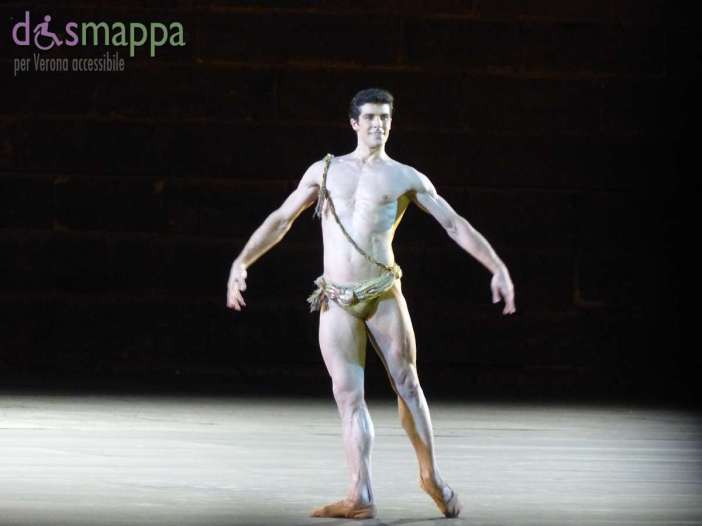
Here’s another shot of Roberto Bolle:

20150722-Roberto-Bolle-and-friends-Arena-Verona-dismappa-543

One on One

Thursday morning, and there’re storms out there putting lots of people and property in jeopardy. Best wishes, everyone–best to batten down those hatches and get the hell out of Dodge. A New Orleans evacuation would be troubling–usually there’s the options of either going west to Houston or north. This time, obviously, the only option is to go north. I will, of course, be making certain that the car is filled with gas at all times now; I filled it up yesterday morning just to be on the safe side; New Orleans still was in the Cone of Uncertainty for Irma, but as the day went on the model shifted completely and we appear to be in the clear–for this one, at least. Jose is out there, though, behind Irma, and Katia may be forming along the Mexican Coast near the Yucatan. Oy.

I did manage to get Chapter Four of the Scotty finished, and started Chapter Five.  I’ve also input another chapter or so of edits into the WIP as well. Pretty cool. I’ve also had some ideas for some new short stories over the last couple of days, but as always Labor Day weekend has sort of disrupted my life and I need to get my bearings back a bit. I did manage to get the bills paid today, and I have to head over to the West Bank to get my driver’s license renewed tomorrow–YAY–and then I have to work Saturday for a few hours, which is fine. I don’t mind working Saturdays that much, as long as I’m home in time to watch the LSU game. (yes, it’s Tennessee-Chattanooga, but what kind of fan would I be if I didn’t watch their games? Although going to see It in the theater is kind of sounding good…)

It’s also very exciting that four American women are all that are left in the draw for the US Open: four American women in the semi-finals. This hasn’t happened since 2002, I think they said–back when the US women were the juggernaut of Venus Williams, Serena Williams, Lindsay Davenport, Jennifer Capriati, and Monica Seles. Venus’ first trip to the semi-finals was twenty years ago. Seriously, the Williams Sisters are without question two of the greatest women tennis players of all time; if not for her sister, Venus would probably have the record for most majors won. So, we are assured an American woman will win the US Open this year, which is very coo. We watched Juan Martin del Potro knock Roger Federer out of the tournament last night; his semi-final with Rafa Nadal should be a final, really.

I do love tennis.

I had a major breakthrough about the WIP this week; long overdue, but better late than never. I realized that my underlying theme wasn’t what I originally thought it was, but rather, something else. It means some more tweaking–but I was going to do some more anyway once these line edits are put in, but knowing what the theme is will  make the query letter writing ever so much easier. I also realized that the crime that’s driving the narrative isn’t necessarily what the story is about; which will make it a trickier sale. But I am very very pleased, and very very excited.

And now, off to the spice mines.

Your Throwback Thursday hunk today–ME! LOL. From a photoshoot I did back in 2004, looking rough and tough. 😉

usafolded


The Safety Dance

Labor Day.

Paul and I went out for a while yesterday–the first time we’ve “done” Southern Decadence in years–because it was one of my co-worker’s birthdays and we ended up staying out WAY later than I’d thought we would. I was a little sick at first–I took a Claritin-D before leaving the house and then drank a beer on top of it and felt really nauseous and had to sit down for about an hour, but it was entertaining seeing the passing spectacle and then meeting my co-workers later. I’d never actually spent time at the 700 Club; a gay bar that opened in the twilight of the going out portion of my life. It’s a nice bar, if small, and of course they were playing some fun music–you can never go wrong with either classic Madonna or Gladys Knight & The Pips–and it was nice. I enjoyed myself tremendously, but also don’t feel the need to go out again anytime soon. It was…different, I suppose, in a way that I can’t truly explain. I guess the easiest way to say it is that I’m in a different place now, if that makes sense. There’s probably an essay in this; one that right now is amorphous and ethereal, dancing just outside my conscious self and perhaps will come to me so that I can write it down.

But for now, it just is, and I can leave it as I had a lovely time, and I am quite fond of my co-workers, and it was lovely to spend time with them outside the confines of the office and work.

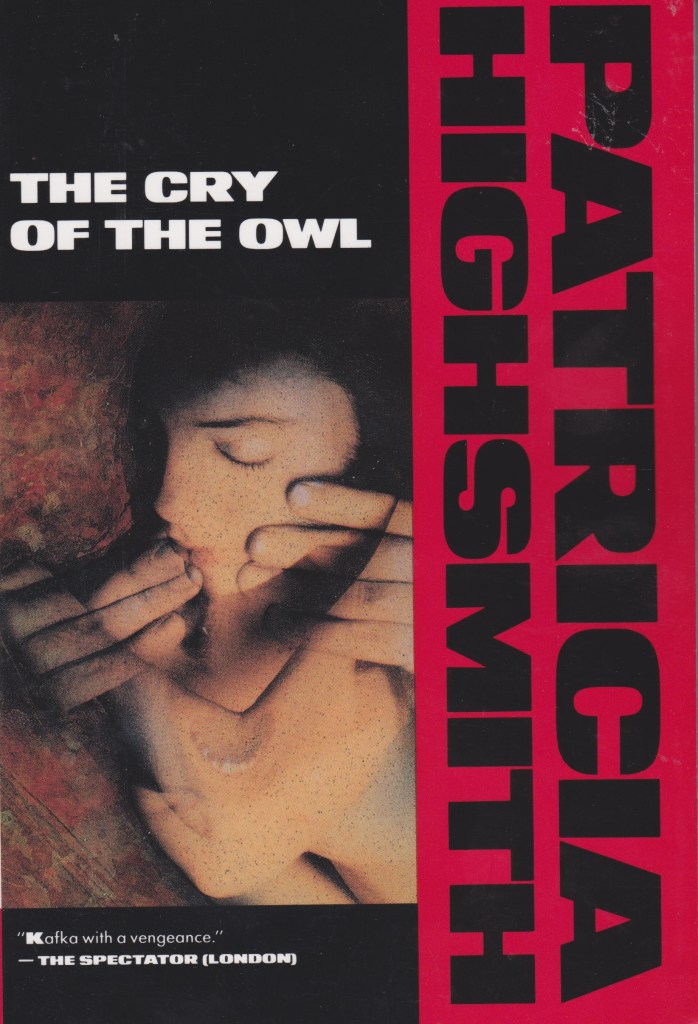
Before we went out yesterday, I spent the morning finishing reading Patricia Highsmith’s The Cry of the Owl.

the cry of the owl

Robert worked nearly an hour after quitting time at five. He had nothing to hurry home for and by staying on at his desk he avoided the chaos of employees’ cars that left the Langley Aeronautics parking lot between five and five-thirty. Jack Nielson was also working late, Robert noticed, and so was old Benson, who was usually the last. Robert turned off his fluorescent lamp.

“Wait for me,” Jack said. His voice sounded hollow across the empty drafting room.

Robert got his coat from his locker.

They said good night to Benson and walked toward the long, glass-enclosed reception hall, where the elevators were.

“So, you got your space shoes,” Robert said.

“Um-m.” Jack looked down at his big feet.

“You didn’t have them on at lunch, did you?”

“No, they were in my locker. You’re not supposed to wear them more than a couple of hours a day at first.”

They got into the automatic elevator.

“They look fine,” Robert said.

Jack laughed. “They look awful, but boy, they’re comfortable, I had something to ask you. Could you possibly loan me ten bucks till payday? Today happens to be–“

“Oh, sure.” Robert reached for his wallet.

“It’s Betty’s and my wedding anniversary and we’re going out to dinner, but could you come by for a drink with us? We’re going to open a bottle of champagne.”

Robert gave him the ten. “Wedding anniversaries–You and Betty out to be by yourselves.”

“Oh, come on. Just for a glass of champagne. I told Betty I’d try to get you to come over.”

“No, thanks, Jack. You’re sure that’s all you need if you’re going out to dinner?”

The book opens with this innocuous conversation between two co-workers who are friendly, but not close. Robert, as you can see, comes across as considerate and thoughtful, if a little bit unemotional. But Robert has another reason for not wanting to intrude on Jack and Betty’s wedding anniversary besides simple courtesy; he has become a bit obsessed with a young girl named Jenny, who lives in a small house out in the country. Robert is in the midst of a divorce, and has had problems with depression in the past; observing Jenny through her kitchen windows–doing dishes, making food, the little domestic chores every woman does in her kitchen–has a calming effect on him. He’s what used to be called, at least during the time the book was written, a ‘peeping Tom’; what would be called a stalker today. Jenny has a boyfriend named Greg; sometimes Robert watches the two of them interact in her kitchen. Robert knows what he’s doing is wrong, yet he is compelled to go there and risk exposure. Several times Jenny and Greg hear him make a slight noise, which concerns and worries them; but he never is caught until one night when Jenny, alone, catches him–and invites him in.

Before long, Robert is enmeshed in the troubled relationship between Jenny and Greg, as well as trying to get his own divorce from his wife settled–a wife who becomes more and more horrific as the novel continues. In fact, in a typical Highsmith switch, Robert–first seen as mentally troubled and damaged, might be the most sane person in the story. Jenny’s growing attachment to him, along with her obsession with death (a younger brother died as a child of meningitis), the equally troubled relationship with her violently dangerous fiance, Greg–continues to build in typical Highsmith fashion, using one of her favorite themes–the besieged innocent whom no one quite believes.

The book is also incredibly dark; Highsmith’s pessimism about her fellow human beings is evident on nearly every page. It’s quite wonderful, yet quite disturbing at the same time. It’s been filmed twice; one in the 1960’s, a French film (many of her works were made into French films) and an American version from 2010, with Julia Stiles.

I’ve enjoyed everything I’ve read of hers; I look forward to reading still more.

And on that note, I’d like to get some writing done today. Have a lovely Labor Day, Constant Reader!

(Keep Feeling) Fascination

Saturday! Tonight is the LSU-BYU game at the Superdome, and I am so excited I can hardly wait for the kick-off at eight thirty tonight!

I am exhausted this morning from four hours of condom distribution in the Quarter last night for Decadence. Our team gave away 2500 condom packs last night, and a good (if exhausting) time was had by all. This morning every muscle and joint in my body aches, and my lower back is sore. I need to go get groceries this morning, and tonight’s game isn’t until eight thirty, so I have all day to do some writing, input some line edits, watch some football games on television, and clean. The Lost Apartment is, as always, a pigsty. I have a lot of filing to do, and I want to do the floors. Paul and I have committed to celebrating a co-worker’s birthday tomorrow in the Quarter–oh dear–so there’s that. If I am not too tired at some point this weekend, I may even do the windows.

Yeah, living large, right?

I also found out yesterday that the reason my car insurance has been so expensive is because I was paying for two cars. Yes, they never took the Buick off the policy after I traded it in for the new Honda. Lovely. Somehow, I managed to not completely lose my shit on the agent I spoke to on the phone yesterday (it wasn’t her fault, after all; something to remember when you’re frustrated with the service from a company–there’s no point in taking your frustrations out on the person helping you solve the problem because they didn’t create it). I also realized, while talking to her, that hey, didn’t my driver’s license expire on my birthday this year? I fetched my wallet and yes, I was right about that. Great. So Tuesday, when I have a late night, I get to spend the morning at the DMV. Hurray. I scheduled myself late so I could write that morning. Heavy heaving sigh.

I really have been undisciplined. I need to stop that right now.

And on that note, I’m going to get back to the spice mines right now.

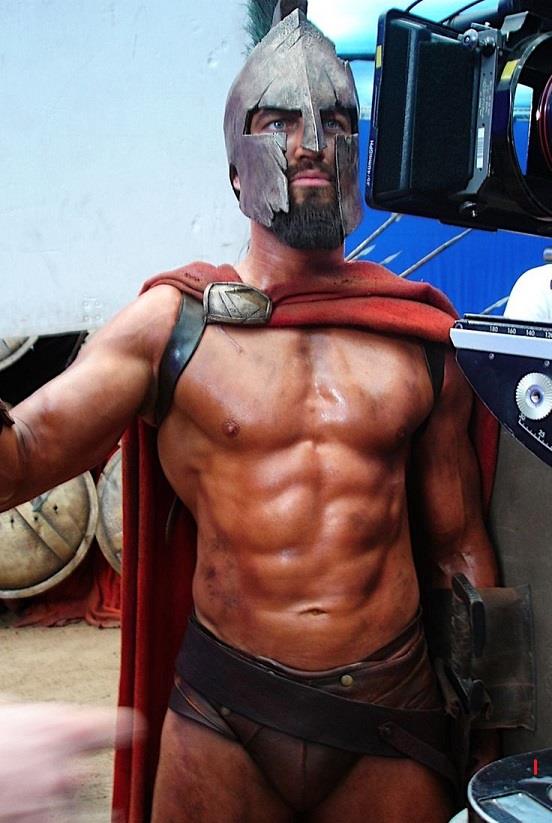
Here’s a Saturday hunk for you, Gerard Butler from 300:

21192834_10212849834577252_4515718645187682221_n (2)

Back on the Chain Gang

Saturday morning, with Fleetwood Mac blaring through the stereo, a load of laundry going in the washer, another in the dishwasher, and I’m about to do the floors. This week was so insane–both personally and at work–that I’m glad that it’s the weekend; last week just needed to end. I woke up with a lot of energy this morning; hopefully it will see me through the cleaning and the errand I need to do today. Last night I was glued to the Weather Channel until I couldn’t watch anymore; I alternated between that and reading Star Island by Carl Hiaasen before retiring to bed relatively early. Paul’s going to spend the day doing errands and running around with a friend; I hope to get the line edit finished as well as Chapter Four (I hate transitional chapters); tomorrow I intend to edit some short stories and possibly get started on Chapter Five. Crescent City Charade isn’t coming along as quickly as I might have hoped; I think I’ll brainstorm the next few chapters this evening, as that should help.

Next weekend is Southern Decadence. Wow, this summer has just flown by, hasn’t it? The humidity should break in the weeks after Labor Day and then it’s the fall. Football season also starts (for LSU) this Saturday; the Tigers are supposed to play BYU in Houston; not sure how that’s going to work given Harvey and what it’s doing to southeastern Texas. Best as I can tell, Houston is getting hammered this morning, but at least it’s down to a Category 1–which, while not ideal, with it’s heavy rains and so forth–is better than the Category 4 that came ashore last night. Hurricane season sucks, y’all. As a friend said last night, hurricane season makes you into a bad person, as you’re always hoping and praying it will go somewhere else, which means wishing it on other people.

So fucking true, and so fucking sad.

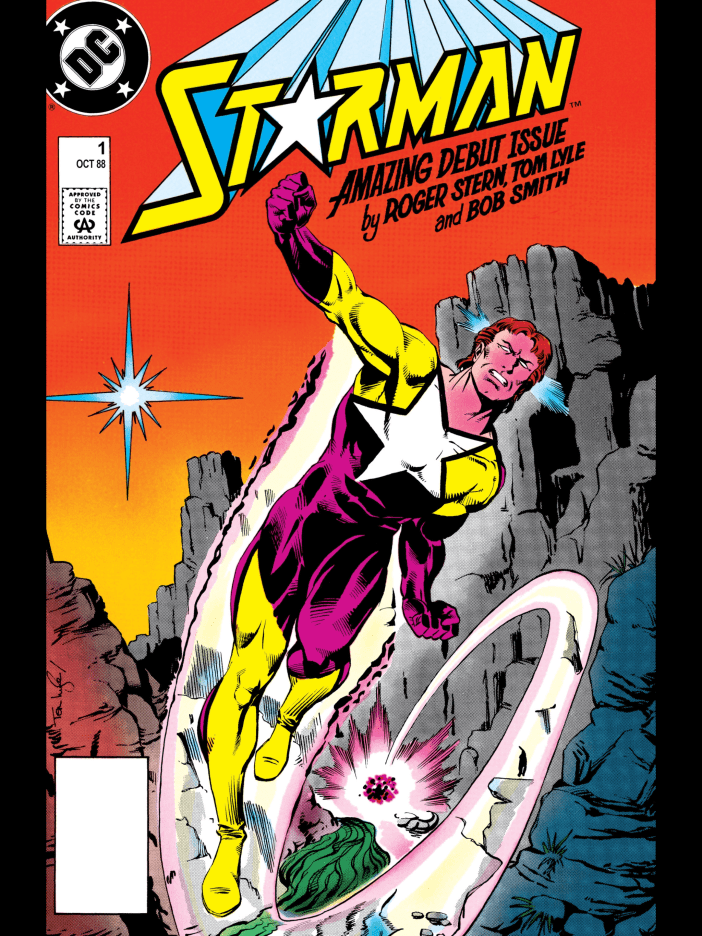
I read the first two digital issues of Starman this week; it’s not quite as good as I remembered, but on the other hand, I originally started reading it about seven or eight issues in. The first issues of a new superhero comic are always, like a television show, a bit wobbly as they try to find their legs and get on firm footing–notable exceptions being Ozark and Game of Thrones, but usually I’ll try to give a TV show a couple of episodes to find its way and gel. This iteration of Starman is about Will Payton, a recent college graduate, raised by a single mother with a younger sister. The mom sacrificed a lot to help put Will through college; he got a degree in Advertising and landed a great job with a major firm in Phoenix. But he hated the job, hated what he was doing, and much to his mother’s dismay and anger, he quit and tried to find something else. He went on a camping/hiking trip, and while on it, something happened that he doesn’t quite understand. He wakes up after thirty-two days in the morgue; he’s confused the authorities who found his dead body in the woods, and basically scares the crap out of them when he sits up and starts talking. He also has powers he doesn’t understand, and so he comes back home, confides in his sister…and has to face the wrath of his mother who demands that he find a job…all the while he’s trying to figure out what’s happened to him. He can fly, generate heat, withstand bullets…and can change his appearance by just thinking about it. His sister convinces him that he’s a superhero, and he needs to start fighting crime and helping people.

What Will doesn’t know is the proverbial mad scientist was conducting experiments in a lab, trying to create super-powered beings. But when he was ready to tap into power from a satellite, it was pushed off course by space debris—and rather than beaming back into his lab and into the bodies of his human volunteers–the energy was beamed into Will, where he was sleeping in the woods. The first two issues set this up, and set the stage for a coming conflict with the mad scientist and his creations.

That’s a lot to cram into two issues, so there’s that.

And now, back to the spice mines.

IMG_1786

Little Red Corvette

Finally, it’s Friday and this bizarre, crazy, insane week comes to an end. I am really looking forward to the weekend; although this hurricane heading for Texas has me concerned for friends there. We’ll get some heavy rain here at some point, most likely Monday, but since it’s pretty much rained here every day since May…nothing new there, right?

I finished the second quarter of the line edit yesterday; I have one quarter, the first, of the manuscript left to do. I really am pleased with the work I am doing with this line edit; I am very curious to see how much, when it’s finally all input, has been removed from the manuscript. Again, I am absolutely amazed at how repetitive I can be when I write; I am even further amazed that in various, previous edits I didn’t catch any of this stuff. This is precisely why one needs to–or at least, I need to–deconstruct my manuscripts and take it apart, editing it line by line, sentence by sentence, and not in order. Had I started this from Chapter One on, I’m betting I wouldn’t have caught all of this yet again.

Food for thought, at any rate.

Chapter Four still is stagnant, alas; I’ve said it before and I’ll say it again here: I hate transitional chapters. But I intend to plug my way forward through it, as it must be done before I can move on to the rest of the story. It is, alas, what it is. But this weekend–given the scary weather reports for Texas and the possibility of torrential downpours for us–I am planning on leaving the house as little as possible. I’ll have to get groceries, of course, at some point–always, it’s never ending–but other than that, I don’t think so. I intend to curl up inside my little nest, my oasis of Gregworld here in the Lost Apartment, and clean and edit and read, and maybe watch Guardians of the Galaxy Part 2.

 I love me some Groot.

And the Lost Apartment is definitely in need of some cleaning.

Bouchercon also released the schedule; I have two panels this year–the Anthony nominees for Best Anthology panel, and Reading the Rainbow; LGBTQ Crime Fiction. I will be sharing the stage with Jessie Chandler, Owen Laukkanen, Stephanie Gayle, John Copenhaver, and our moderator, Kristopher Zgorski, of BOLO Books blog. It should be an interesting discussion, methinks. I’ve never paneled with any of these folks before, so they might want to beware.  Mwa-ha-ha-ha!

Here’s the poster that was made for our panel:

21082806_1945639249038207_5574170399370633136_o

Pretty cool, eh?

And now I’d best get back to the spice mines.