Holding Back the Years

Yesterday was rather dreary, weather-wise, and I feel fairly confident we are still under a flash-flood warning; but this morning all I see is blue sky and sunshine. Things still look a little damp out there, but over all, much better than one could have hoped. And in checking the project path for Alberto, the cone of uncertainty has narrowed to New Orleans in the west to Panama City in the east; much, much smaller cone; but we are on the outside of the western edge. As storms also tend to turn to the east–even Katrina did before landfall–I’ve breathed a slight sigh of relief this morning.

It is, I suspect, going to be a long hurricane season–particularly since it doesn’t officially start until June 1.

I slept deeply and well last night, and my back–which was aching–no longer hurts, which is a good thing. I wish I could figure out what the hell I am doing to it to make it hurt in the first place, so I can be more careful, but I am more than happy to take the pain being gone as a win this morning. Huzzah!

Yesterday I was scribbling away in my journal as I continued to read Philip Roth’s When She Was Good. The writing is very good, and the characterizations are also quite good; all that remains is the plot/story, and I am intrigued enough with it to continue reading it. Maybe I should dial it back for a while on the crime fiction and read outside my genre for a little while; not just for a break but to come up with better ideas for my own writing, which can never hurt.

I wrote all kinds of notes in my journal yesterday; notes for the WIP, notes for the short stories “Never Kiss a Stranger” and “A Holler Full of Kudzu” and “The Brady Kid” (I’ve not even thought about the latter for months now), so I am feeling all kinds of productive here in the Lost Apartment this morning. I am going to actually write today for a while; I also intend to do some reading–not just the Roth, but I am going to read everything I’ve written on the Scotty thus far and make notes. I also don’t know my characters in the Scotty book as much as I should, and I need to get the plot figured out so I can get the goddamned draft done. I also have a few other things I need to get done as well.

And there’s always cleaning, of course. I am currently working on washing the bed linens, and the living room of course needs to be vacuumed. I also need to clean out my car a bit; and Armor-all the inside of my car now that summer is looming. I also need to put the recycling out. But I have to say, this well-rested thing is actually working out quite beautifully. I could easily get very used to it, I must say. I must also say that I’m greatly enjoying this creative phase I am currently experiencing. I am thinking about character, and why I write the things I write, and how to broaden my reading audience. I’ve been thinking about moving forward with the agent search, how best to approach an agent, how to put my best foot forward, not only with industry professionals but also with the readers of my genre.

I’ve also come to realize that, over the last few days, as I’ve put my finger precisely on why I wasn’t getting anywhere with “A Holler Full of Kudzu” is because I was trying to not be subversive; the write from the gay male point of view without rubbing people’s faces in the sexuality. But WHY? Why would I do that? The point of the story, the theme, if you will, has everything to do with the point of view character’s sexuality; of beginning to understand what your sexuality is and that is partly why you feel different from everyone else, and also, learning how people feel about people who are like you, and how dangerous those feelings are, can push you deeper into the closet. I think the theme may be larger than the story itself, to be completely honest with you; which is why I am tending to think this story may actually be a novel a-borning in my mind rather than the lengthy short story I was thinking it would be. As I plug in some of the story pieces today that I brainstormed in my journal last night, I will come to a better understanding of the story and how long it is going to be.

Likewise, “Never Kiss a Stranger” is becoming much longer than I originally thought it would turn out to be; it’s going to come in far longer than the six or seven thousand words I originally had planned. That will make it harder to place, of course–not that it’s not already hard to place stories with gay characters and themes; it’s almost impossible–but I’ve also decided that I simply have to stop writing things that are specifically intended for markets. I have to write the story the best I can and then try to find a market for it. And I can always, always, always, simply do another collection of stories.

I also like that “The Brady Kid” is starting to shape in my mind; mainly, who the point-o-view character is. Part of the issue with some of my stories is that maybe I don’t define the characters enough; it’s hard to write a good story when you don’t know who your characters are.

I’m also finding that experimenting with voice and style and tone and place is much easier to do in a short story rather than in a novel. I think writing these stories is making me a much better writer, to be honest, which is ultimately going to be more helpful to me in the long run than I’d possibly thought. During my brainstorming last night I also figured out some of the problems I am having with the Scotty novel; not solutions, per se, but actually diagnosing the problems, which is key to figuring out how to solve those problems.

Which is fun, actually, and I have to say, it’s so awesome that writing is fun again.

I also read some short stories. Here’s one: “Crazy Margaret” by Jack Fredrickson, from Ellery Queen’s Mystery Magazine, September/October 2017 issue.

The gravestone had room for only the first name, but it was the largest he could carry up the hill. He set in on ground covered now, as then, with curled brown leaves.

He’d meant to slip into town quietly, place the stone, and slip out again. There was no one from his old life he wanted to see. But a voice had called his name when he was gassing up the rental, a guy he’d known in high school. They’d chatted for a moment before Dave, acting casual, asked about her.

The old classmate had scratched his head, surprised. Crazy Margaret, he said; that’s what the kids sneaking out there called her after she dropped out of school. But new kids came along, kids who didn’t know her, and soon enough, nobody gave her any mind at all. “Hell, it’s been at least twenty years,” he said. “She could be dead.”

I enjoyed this story; which is told from the perspective of someone coming home to their small town and remembering something that happened years earlier, something criminal; this is something I often do in my own stories–in fact, “This Thing of Darkness” is sort of one of these stories. The Margaret of the title is a beautiful young woman who sunbathes out at the lake where she lives in skimpy bikinis; luring young boys out there to watch her and possibly, just possibly, killing some of them. It’s sort of a retelling of the siren myth, from the Greeks: the beautiful woman who lures men to their deaths. Although…really, should the boys be out there spying on her in the first place? Isn’t that a form of harassment?

Don’t get me wrong, I enjoyed the story; it’s very well done and how Margaret gets her own punishment for what she’s doing is very Tales from the Crypt or House of Mystery; crime is always punished in a macabre, ironic way and so it is for the Crazy Margaret of the title.

And now, back to the spice mines.

31646767_1839316516362583_230809837385023488_n

Kiss

Thursday morning, and the first full day of my mini-stay-cation. Hip hip hurray! Yesterday I got a new journal, which is always a lovely thing; I’d forgotten how much I loved getting new journals once I’d filled the last one. When I started using them again by buying one on New Year’s Eve this year, I was excited to be starting up again with them; I’d forgotten how getting a new one felt–how wonderful and full of possibilities and potential the new journal is; all those blank pages to be filled with thoughts and ideas and titles and characters and sentence fragments and snippets of dialogue. Do I get too excited about the new journals? Maybe; but they also, for my OCD/anal retentive self, symbolize new beginnings as well as completion; even if finishing a journal doesn’t mean completing an actual manuscript or short story, there’s something about filling those pages that is enormously satisfying. When I first started writing when I was in high school, I always wrote on notebook paper long hand; usually in black ink with a fine point (I’ve always been partial to fine point black ink pens; and this new brand I’ve recently discovered, Tul, is amazing. I love these pens), and I think that’s why I get that satisfaction from writing by hand in a journal. Opening a Word document and starting to type isn’t quite the same feeling, and I always have a sense that everything I write that way is somehow incomplete.

I don’t know why that is, but it’s true, and probably is at the root of my deep sense of dissatisfaction with almost everything I write.

Or I’m simply neurotic.

My back is incredibly sore this morning; it was sore yesterday, but the pain is so bad I fear that I am going to be on a heating pad pretty much for the entire day. This is, while enormously disappointing, not the end of the world; I had hoped to be really productive today. I still can be, of course; it simply means not doing what I’d planned to do–which was organize stuff and deal with storage, but that will also include lifting boxes and I am in no place to do that–so maybe today means some light cleaning, writing, and reading. As long as I am productive, that’s all that really matters. And there’s quite a bit of mess that needs tidying up. I am taking the car to the West Bank tomorrow to have the oil changed at the dealership; I am going to treat myself to lunch over there and possibly do a little shopping whilst over there as well. And then I still have the three day weekend, which is lovely, of course.

I’d hoped to go to the gym today, but that’s simply not an option at this point. There’s no way I’m risking weight-bearing exercise with my back like this.

Sigh. I’m turning into that Grumpy Old Man, aren’t I?

I did get some more work done on “Never Kiss a Stranger” yesterday, and I have to say, setting it in the past (1994) was a pretty smart thing for me to do. Thinking about the past, of course, isn’t something I tend to do very often and when I do, it’s rare that I dwell on anything. But trying to remember that time period for a gay man has been kind of interesting; ever since that Twitter kerfuffle about HIV/AIDS the other week and my post the other day about writing about the subject has got me thinking about that time more. Yesterday on Twitter there was a thing–based on I guess something Suze Orman said, about people needing to have twice their salary saved by age thirty-five–and all I could think was how, at age thirty-five, I was just so happy to be still alive that the future wasn’t something I didn’t really think that much about. A few years ago, at work I sat down with a retirement financial planner and as she went over my finances and so forth she very sweetly and gently scolded me for not planning better for my future. Without thinking I replied, I didn’t think I would live this long, to be honest, and watching the implications of what I’d said play on her face and her embarrassment was an interesting experience. She was a younger woman, of course, and as I quickly reassured her that I wasn’t offended by anything she’d said I also marveled that the mentality most of us gay men had back in the early to mid 1990’s is forgotten largely today, not thought about, that fatalistic resignation that infection and death was inevitable.

This heating pad feels fantastic, I must say.

I am also watching The Shannara Chronicles on Netflix, based on the series by Terry Brooks. I read the first, The Sword of Shannara, when I was a teenager and it was new; I never continued with the series despite enjoying that first book. The Shannara Chronicles is/was MTV’s attempt at a Game of Thrones style high-fantasy series. It’s very well done; visually it’s stunning, and apparently the show covers the series beginning with the second book, The Elfstones of Shannara. The primary difference between HBO’s series and MTV’s is that, of course, Game of Thrones is gritty and dark and unafraid to be ugly; the entire cast is an interesting mix from stunningly beautiful young people to older people–an entire range of bodies and faces on the spectrum of looks, just like real life. Shannara is glossy and everyone on the show is quite spectacularly beautiful; and mostly young. I was interested in the show because I remembered the first book fondly and thought I’d give it a chance; it also has Manu Bennett as Allanon the druid, and I’ve been “stanning” (isn’t that what the kids call it?) him since his days on Spartacus: Blood and Sand. 

Austin Butler, who plays lead hero Wil Ohmsford, is quite pretty:

e30a25427e5d658b4e2dd06391312238

As is the primary villain in season 2, Bandon, played by James Trevena.

Shannara08

And who doesn’t enjoy looking at pretty people on their television? One of the things I find interesting is that in Season 1, when Wil was finding himself as a hero he had long hair; which he has cut off in Season 2. Bandon, in season 1, finding himself he had short hair; now in Season 2 as the primary antagonist, he’s grown out his hair.  I’m sure there’s symbolism there; but the longer hair has made the character of Bandon look older and more mature, and likewise, the shorter hair for Wil makes him look more adult.

Strange.

And on that note, I’m heading back into the spice mines. The heat has made me back hurt a lot less, so I am going to take advantage of that until it starts hurting again.


Never

Wednesday. I am working only a half-day today, and then I am taking a short vacation. I don’t have to be back at the office until Tuesday of next week, so I am going to try to relax, get caught up on some things–without any pressure to do any of those things–and recalibrate my head, my heart and my soul.

And do something about how disgusting I’ve allowed my apartment to get in the meantime. I do think a thorough clean will help purge my soul; when my apartment isn’t clean and organized, it weighs on me.

I worked a little on the WIP and the Scotty yesterday, and primarily worked on another short story, “Never Kiss a Stranger.” One of the funny things about me, and my stubbornness, and my tendency to get caught up in tunnel vision, is my regular insistence that I am writing everything in the present day. Part of my struggle with “Never Kiss a Stranger” in the past was trying to make it work in the present; yesterday it occurred to me you can set this in the past, you know, and presto! By moving the story from 2018 to 1994, it clicked into place and started working. My main character is a gay man with twenty years in the military; at age thirty-eight, in those days before “Don’t Ask Don’t Tell” being gay was grounds for a dishonorable discharge; after the Gulf War he finds out he is on a ‘to-be-investigated’ list and so puts in his retirement papers. His parents dead and not having a relationship with anyone else in his family, he comes out into the general world and decides to move to New Orleans to start his life anew; it’s also his first opportunity as an adult to live openly as a gay man. As I revised what had already been written, the character’s voice clicked in my head and I was able to remember New Orleans in that time period; when I was visiting and falling in love with the city, as well as remembering what a different time period it was, even though it was only slightly more than twenty years ago. No cell phones or Internet, HIV/AIDS was still pretty much a death sentence (or rather, just a matter of time once infected), and New Orleans was riddled with crime everywhere and inexpensive to live; a beautiful old city decaying in her splendid, rotting beauty in the sun.

And it’s kind of fun writing about the past sometimes, being able to  use my own memories (and my journals) to remember things. And at the same time, incredibly freeing to finally realize something so obvious; that everything needn’t be in the present.

We finished watching both The Terror and Thirteen Reasons Why last night; The Terror, while unsettling, ended inevitably in the only way that it could; I am sorry to be finished with it, and will, when it’s free for streaming, probably watch it again to understand it better. It should be a leading contender for all the Emmys; the question only being which stellar member of the cast should take the trophy home. Thirteen Reasons Why’s second season was…interesting, yet incredibly disappointing in its third season. The resolution of some story lines, which had long since been played out, ended in unsatisfying ways that were, while bitter, realistic and honest and true to life. Rapists get away with slaps on the wrists far too often and our judiciary often lets female victims know that their lives really have no value and there is no justice for them. The final episode, with its bittersweet closure, worked in that respect while at the same time set the stage for a third season with horrifyingly depicted brutality, showing that the damage that was caused by the incidents that triggered the first two seasons have deeper and far more lasting consequences; when damage isn’t repaired and the systems that allowed that damage to occur aren’t corrected, far worse damage can occur. The close of the episode, I felt, was a bit of a cop-out; but I understand why they didn’t see that story through, and it did leave me curious to see where it can go next. There hasn’t been an announcement, as far as I know, that there will be a third season; I’d like to see it, if for no other reason than curiosity to see how these newly planted seeds will grow.

And now, back to the spice mines.

IMG_4381

Alive and Kicking

Tuesday and a short work week! I am working half-a-day tomorrow, and taking off Thursday and Friday; which, coupled with Memorial Day, gives me a lovely mini-vacation which will enable to get some things done that I want to get done and rest and relax and write and…well, we’ll see how it goes, but I am heading into my mini-vac with seriously high hopes to get a lot accomplished.

And if I don’t? Well, at least I’ll be well-rested.

Watch this space for updates.

Seriously, though, we are continuing through Thirteen Reasons Why, with only two episodes left to go in this season, and while it continues to get better with every episode, I think there may have been a little too much conflict in the writer’s room when story-boarding this season. The show has yet to be picked up for a third season, but there are rumblings on line that Season 2 definitely left the door open for a third; possibly with major cliff-hanger endings to the various story-lines running through the show. It just gets frustrating when things are contrived for the plot, you know what I mean? But then, the original season was also contrived, since it was based on the notion that 1) she had access to cassette tapes 2) she was assuming everyone she wanted to listen to the tapes would have access to a cassette player and 3) she also assumed any one of the people wouldn’t just throw the tapes away. There was a bit of a blackmail threat, of course, but at the same time….I still think at least one of the kids would have destroyed the tapes, or at least not passed them on; especially one of the kids who didn’t really have as much to lose as the others.

But…the young cast is very appealing and compelling in their roles.

Also: we can watch the finale of The Terror tonight. Seriously, if you aren’t watching, it’s some of the best television I’ve seen in years.

And now, for a return to The Short Story Project, we have “The Good Cat” by Vicki Hendricks,  from Retreats from Oblivion: The Journal of Noircon:

I had no name till Dad took me home. Now I answer to Lickrish, Buddy, and Son–when I feel like it. I gave up chasing lizards, squirrels, and birds, and climbing trees, for Dad. None of it was as good as his fingers behind my ears, his soft belly-lap, and the tang of his silky armpit slung across out bedsheets where I curl. I am a good boy till I start trouble.

Dad is on the couch and I am in his lap, as we are supposed to be at night. He turns my head toward his snout. “Son,” he says, his fingers massaging the tingly spot above my tail, “You’re the only one Dad needs.” I stretch forward, head down, butt up. I hunker into a cuddly lump and purr, keeping my eyes cracked on a swaying palm frond outside the window. I’m lulled by the movement—happy—as Dad calls it. He rests his hand on my back and watches the picture-screen.

After a while he says, “Buddy, let’s take a drive to my Ami. Wanna?” It is a place with windows in the sky, a world of sand, and salty waves that try to drown you if you stop to dig a hole. I leap to his shoulder and tuck my forepaws into the dark stubble on his neck, scouring the side of his face with my tongue till he pulls me off. He does not understand what I am telling him, that we are happy on the couch. I do not want to go to his Ami, or anywhere, but I do not want to stay home all by myself.

Read the whole story here.

Vicki Hendricks should be one of the biggest names in crime fiction today, without question. I myself am just as guilty as all the rest of you; this is only my second experience reading some of her work, and I really need to remedy that failing. Her debut novel, Miami Purity, is one of the best noir novels of all time, period, no questions, no doubt. The entire time I read it–and if I recall correctly, I indulged in the entire thing one rainy afternoon in my easy chair, riveted from beginning to end, and it is still an accomplishment in noir writing that I can only try to emulate; I doubt, in all sincerity and honesty, that I could write its equal. After reading this short story, I immediately added all the rest of Hendricks’ novels to my list; I strongly urge you to do so as well.

“The Good Cat” reminded me of Patricia Highsmith’s short story “Ming’s Biggest Prey”; both are dark, noir tales from the point of view of a cat–which is not entirely an easy thing to pull off, but once you read the stories they totally make sense: what could be more noir than a cat? Both stories are about a cat’s love for their owner; Highsmith’s is darker because the character of the cat is more dark; Hendricks rather views a dark thing from the cat’s point of view; a cat who loves its owner, which makes the ending all the more heartbreaking and yes, noir. (Highsmith’s story ends with no small feeling of satisfaction in the reader.)

Read Vicki Hendricks. Do it. Now. 

IMG_1239

West End Girls

Sunday morning and yet again, I have overslept. I wasn’t feeling particularly well yesterday, and managed to get nothing–outside of some errands in the hideous heat and humidity–accomplished yesterday. The end result was I parked my not-feeling-great ass in my easy chair and watched Netflix for most of the day; beginning with an original Netflix show, The Kissing Booth–a teen rom/com, which was actually kind of cute–and then it was back to the misery/drama porn of Season Two of Thirteen Reasons Why.  Season Two is nowhere near the quality level of Season One; without the connecting hook of the cassette tapes telling the stories of the individual kids, it loses a lot. The connective tissue being used for the second season is the trial, where Hannah’s parents are suing the school for not doing more to help their daughter before she killed herself. Therefore, each episode focuses on each kid and is kind of told from their perspective, based on who is testifying that day: because, of course, only one person per day can testify. There are a lot of really good moments in this season, which shows glimmers of how good the season could have been; yet the need to weave the now-dead Hannah into this season without a reason for her to be there is a weakness. I do feel that it would have been smarter to simply have shown her from the point-of-view of the kids in this season–last season was seeing the others through hers–without the ghost/voice of reason/conscience/whatever-the-fuck-she-is that keeps appearing to Clay; which also, unfortunately, weakens Clay. It makes him unreliable as a narrative voice, and we are also not entirely sure he’s not simply lost his mind in his drive and desire to avenge Hannah. This undermines the character and the performance being given by Dylan Minnette, who was so terrific in the first season; which is unfortunate.

But…I continue to watch to see how this is all going to play out.

It’s difficult for a series based on a single novel to be adapted into a regular television series; Thirteen Reasons Why’s first season was a great example of how it can be done, and beautifully so. I greatly enjoyed that first season. But when the show is successful–and let’s face it, in the entertainment industry success  means continue to build on that success, or at the very least, keep milking that cash cow until you’ve squeezed every penny out of it. There wasn’t a need for a second season of this show, nor a third; where I thought they might go in a second season isn’t where they’ve gone. But the series does get stronger after the first weak episodes; maybe it will continue to get stronger. But the standout of this season is the character of Alex, and the young actor playing him, Miles Heizer. The first season ended with someone being shot, and we weren’t sure who it was. Turns out it was Alex, and he survived. This season, the bullet, which entered and exited through his skull, didn’t kill him but partially paralyzed him and messed up his memories. So, watching him struggle with physical therapy, and trying to figure out what went on the month before he tried to take his own life is incredibly powerful and he is knocking it out of the park. It’s really a shame; the first season was about finding out why Hannah killed herself, and the second season should focus more on the kid who tried to kill himself and now not only has to live with the consequences of that decision but try to figure out why he did it, and deal with the pity and cruelty of his classmates.

Now, there’s a story for a young adult novel. Hmmmm. *makes notes*

I am hoping to get some cleaning out of the way today as well as some writing. I’ve been seriously slacking lately, and I need to stop doing that. Granted, yesterday I didn’t feel good, but I need to get motivated and get back to writing. There’s also a lengthy blog entry I  need to finish writing.

But I’ve been thinking about young adult fiction a lot lately; the WIP is young adult, and there’s another one I want to write, or at least get started on, before the end of the year, Bury Me in Satin. It’s going to require some research, which isn’t a bad thing, and perhaps a drive up to Tuscaloosa. I really have been wanting to write this book for a very long time, and I think it’s time. It’s a dangerous topic, but I kind of want to do it. I also want to finish “Burning Crosses” today; it’s ready to be read aloud so I need to go ahead and do that. I also want to finish the first draft of “This Thing of Darkness”, and I have some reading I need to get done. I seriously need to get off my lazy ass and get a move on you know? There’s also that filing shit I started and need to finish. So, yes, indeed, I need to get motivated. But next weekend is a glorious three day weekend, and I am also planning on requesting Friday off and taking a short day on Thursday, not only to maximize the weekend but enable myself to have more time to work, as well as to have a day or two where I have literally nothing to do except read and relax; we’ll see how that turns out.

And I am not missing the cable. Not in the least little bit. This is wonderful.

And now, back to the spice mines.

For your viewing pleasure, here is Jacob Elordi, who plays the romantic lead in The Kissing Booth:

Jacob-Elordi-in-The-Kissing-Booth-20180515-02

Glory of Love

Saturday morning and it’s chilly in the Lost Apartment; the sun is out and there’s condensation on the windows. Scooter is perched next to my keyboard, staring out the window, watching Kitty TV; I’m not sure what’s on, but he’s fascinated. It rained brutally yesterday with flash floods and so forth throughout the city. It had been a few weeks since it had rained, but there it was; a long overdue downpour. I managed to get home before it got too terribly bad, and spent the evening organizing and cleaning out files, rather than actually writing. I just didn’t feel like I was in a writing place, and so I decided to go with that but demanded of myself to complete this tedious chore that I hate doing so much.

Essentially, it meant cleaning out old files that no longer need accessibility–old book contracts, royalty statements, and even file folders of old short stories now published, etc.–out of the file cabinet and boxing them up to put in storage. This, naturally, has freed up space in the file cabinet for files to be moved into from the ACTIVE files. (Yes, I am aware how insane this all sounds; but I have two small file holders on the small bookcase next to  my desk, where I file new ideas, articles that might lead somewhere, and new stories that I have started or are not immediately working on; on my desk itself I have a metal file rack that contains the folders of what I am immediately working on. I know, I know, but it makes sense to me, and it works for me.) I also gathered all my non-fiction research on being queer in America, as well as my journal (materials for my memoirs, should I ever write them, or at least personal essays about being gay)  to collect in one place: a lovely box that is currently sitting on my kitchen counter, preparatory to going into the storage space. While doing all of this I ran across several of my old journals.

IMG_4354

These are some of my journals–I suspect some of them have been lost to time, through moves and so forth–but the oldest is from 1994; the most recent of these is from 2003. I started my blog in late 2004, and I suspect that’s approximately also when I stopped writing in these. It was an interesting experience, idly paging through these before placing them in the box; some of the earlier ones are from, of course, when I worked at the airport. That’s when I started carrying one with me at all times; I always had a pen, my journal, and whatever book I was reading at the time with me when I was at the airport, on an airplane traveling, etc. The ones from my time at the airport are all written in green ink; because we used green pens at the airport for everything. I wrote on my breaks, I wrote when I was in between flights at the gates, I wrote while I was waiting to board an airplane, I wrote while on airplanes. Later, I wrote between clients at the gym, or while waiting for it to be time for an aerobics class I was teaching; I wrote in coffee shops. There are scenes in these journals, that eventually made it into Murder in the Rue Dauphine or Bourbon Street Blues; there are the openings of short stories I’ve written, scrawled in long hand on these pages. I’ve even found things like when I first had the idea for the book that became Dark Tide many years later; places where I worked on developing characters or plots of themes for the book or story I was currently trying to work on and/or finish; there are also personal moments, moments of frustration or joy or happiness, all recorded in my neat, broadly looping handwriting. Starting to keep another one of these this year has been enormously helpful for me in many ways; it was lovely to reconnect with the bound journal format. (I actually need to buy a new one; I am hoping they have some at Tubby and Coo’s, where I am going this afternoon for Bryan Camp’s book-signing for his brilliant debut novel The City of Lost Fortunes)

This morning I need to finish packing up these boxes, and perhaps work on getting some of the other files moved; it is literally astonishing how much paper I have. One entire file cabinet drawer is filled with short stories and novels-in-progress that I stopped working on at some point, folders with ideas jotted down, characters and names and ideas for stories and books. All this effort, besides keeping me from actually writing anything, is an attempt to declutter my workspace as well as to make it more organized; I had an idea for a story for an anthology call I saw recently, and I knew I’d written a draft of an appropriate story (possibly) years ago–which meant it was probably in the file cabinet and I should probably drag it out to see if there was anything written in it that was usable. The need for this file made me see how desperately flawed and out of control my filing system had actually been allowed to become so as it thundered and lightning lit up the sky and the yard filled with rushing water I started working grimly on fixing this mess.

I did find the file, by the way.

I need to go to the grocery store at some point this morning as well; I could wait to do it tomorrow,  but between the cleaning and the filing and the going to the book signing I don’t see any window for actually writing, so rather than putting it off till the morrow I should probably do it today, since today is going to be shot on that score. Or maybe it won’t be; I may be able to get some things done today on the writing. My writing/editing goal for the weekend is to read “Burning Crosses” aloud and be finished with it; to finish revising Chapter Two of the WIP, and possibly read all fourteen chapters of the Scotty book and see where things sit with it, preparatory to getting back to work on it as well.

I also want to dive into Alex Segura’s Blackout, which is getting rave reviews everywhere.

We started watching the second season of Thirteen Reasons Why last night, and I have to say, I am not overly impressed with it. The first two episodes were terribly uneven–the third began to pick up steam again–but the device of having Hannah appearing as a sort of ghost to Clay isn’t working for me and is something that I hope is used either sparingly as the show moves on, or is eradicated completely. We don’t need Hannah appearing as Clay’s conscience, nor do we need her at all. It derails the show, frankly; them having conversations is, to quote youth culture of some time ago, kinda whack.

So far, we’re disappointed with it. but not so much so that we will stop watching.

That, however, could change.

And now, back to the spice mines.

Friends and Lovers

Well, I wrote practically nothing yesterday; maybe a couple of hundred words on “This Thing of Darkness.” I did reread Chapter 2 of the WIP, and realized it needs a complete overhauling, but that’s fine. There’s an endgame in sight, and now I kind of know how to get there, so I don’t mind the massive work that will be required to get me there. Huzzah! And I know that, when it is completed, I will be enormously happy with it.

It’s weird because this story; these characters, have been brewing inside my brain for a very long time; I’ve used this fictional town in Kansas for aborted novels and short stories before. I’ve always wanted to write about this town–I cannot deny that it is based on/inspired by Emporia, Kansas, the seat of the county where I spent five years of my life. When you said you were going to town you meant Emporia, even if you lived in a one of the small hamlets scattered throughout the county. My particular hamlet, Americus, was one of the larger ones; I believe with a population of approximately 932. I do know it was more than nine hundred and less than a thousand. I know that the main crossroads of the town had a flashing red light suspended on wires over it’s center, the town park was right on one corner and the bank was on another. I’ve gone back to the well with Kansas and that area several times in my writing career, but it never really ever seems to get anywhere. Sara was set in Kansas, in a county based on the real one,  in a high school based on the one I attended, but very loosely.

I’ve always wondered if it’s because I’ve not been back there since leaving in 1981 that the stories are so hard, so difficult, to write; the place so hard to envision. And then again, of course it’s ridiculous because any inconsistencies, or changes in my fictional town, might not matter simply because I am writing about a fictional place.

But this manuscript, which I’ve really been working on, in one shape or another, since about 1982 (!), is hard for me because I’ve been trying to write this book for over thirty years. The story and plot has changed dramatically over those years, the names of the characters have been changed, and I’ve blatantly stolen or adapted plots that were originally thought up for this book for others (Murder in the Garden District being one of them; the murder in the back was originally set in my fictional city in Kansas in its original version; for a Chanse novel I had to pare back the literal dozens of suspects and adapt it into New Orleans). For years in the aughts I called this “the Kansas book” as it went through different iterations and ideas and how the story worked; it was originally intended to be a two different time line novel, with a crime that was committed back in the 1970’s with the wrong person convicted and going to prison and dying there; a chance encounter between two people who knew each other back there and then in New York City–one now a successful realtor, the other a successful journalist–and a casual conversation in which the realtor reveals to the journalist that the wrong person was convicted and the murder was a lot more complicated than anyone knew, gets her to thinking. Then she finds out the realtor went back there and also turns up dead; this brings her back as well, as she investigates the current murder and the old one at the same time. I thought it was a very clever idea, but I could never get the story to work for me properly; and I still like the idea; I may write it someday. But I’ve taken the characters and the town from that idea and used it for this one. I also then tried another version, where it was the same town and the same characters and the same set up from the past, only with a dramatically different storyline for the present.

And now, I am using the town and the characters for something completely different.

As I have said numerous times, I am nothing if not stubborn, and apparently I am determined to someday publish a novel about this fucking town and these fucking characters.

“This Thing of Darkness”, the short story I am currently working on, while set in New Orleans, also harkens back to Kansas in some ways. I like this short story, I like the idea behind it, and now it’s really just a matter of seeing whether or not I can pull it off the way I want to. I’ve also realized that my own satisfaction with my short stories is the most important thing, not whether they get published by a magazine or not. I also need to expand my scope of where I submit short stories to; not everything works for the major crime magazines, and who knows? Maybe some of these stories are more  correct for other markets. I’d love to have something in some of the Southern magazines, for example.

Anyway. I am looking forward to this weekend, and hope you all have a lovely, pleasant one as well.

And now, back to the spice mines.

32831365_1845850449042523_4356301928657846272_n

Greatest Love of All

So, today I am very pleased to announce that my short story, “This Town”–which I’ve shared the opening to with you already, Constant Reader, will be published in the Murder-a-Go-Go’s anthology, edited by Holly West! Watch this space for more news about the anthology as publication date approaches!

getPart

Pretty cool, huh? I’ve loved the Go-Go’s for going on nearly forty years now, and so it’s kind of cool to be in anthology of crime stories inspired by their music. And editors–if you ever do such a volume based on the music of Fleetwood Mac and don’t include me, I can’t be held legally responsible for what happens. Just sayin’.

And so many awesome people to share the pages of the anthology with!

Jane Wiedlin is writing the introduction! Eeeeeeeeeeeee!

So, yesterday I continued to work on revising the WIP and shifting the POV/tense, which isn’t as easy as it may appear on its face; it’s very easy to miss instances where past tense is used and needs to be switched to present. It’s also an excellent exercise for me, anyway, because I almost always use the past tense in my writing. (I think I’ve maybe used the present tense once, in a short story.) I also realized another short story I’m working on–“Burning Crosses”–would work better in the present tense, so I revised it into the present tense and revised it as well. I think it’s ready to be read aloud this weekend, which is pretty flippin’ cool.

And one more tweak, and my short story collection is ready to be turned in to my  publisher. Huzzah!

Last night, I reread Agatha Christie’s short story, “Philomel Cottage,” from her collection Witness for the Prosecution:

“Good-bye, darling.”

“Good-bye, sweetheart.”

Alix Martin stood leaning over the small rustic gate, watching the retreating figure of her husband, as he walked down the road in the direction of the village.

Presently he turned around a bend and was lost to sight, but Alix still stayed in the same position, absent-mindedly smoothing a lock of the rich brown hair which had blown across her face, her eyes far-away and dreamy.  Alix Martin was not beautiful, nor even, strictly speaking, pretty. But her face, the face of a woman no longer in her first youth, was irradiated and softened until her former colleagues of the old office days would hardly have recognized her. Miss Alix King has been a trim business-like young woman, efficient, slightly brusque in manner, obviously capable and matter-of-fact.

I loved this story when I first read it, when I was either eleven or twelve; it’s a classic domestic suspense tale: young married couple lives in a remote location, they married very quickly after meeting–after the woman inherited some money–and, in fact, she’d been rather in love with someone else but her husband just swept her off her feet. This day, after her husband goes off, she has a chat with her gardener…who mentions that he’d come early (on a Wednesday rather than his usual Friday) because he wanted to ask her about the garden trim “and since they were going off to London the next day” (sic) he wanted to check with her before she left. She laughs, and responds that they aren’t going to London; but he is insistent that her husband had told her that. He then also mentions that the former owner of the cottage, which they bought for three thousand pounds, had only wanted two. As she put up two to her husband’s one…she’s certain he must be mistaken. But in a masterpiece of paranoia and psychological suspense, Alix then begins to wonder, and starts putting together the errant pieces of strange behavior from her husband–each individual instance nothing, but when put together make it very much seem like he married her for her money and is planning to kill her…and she keeps finding more and more evidence to convince her she is right.

And the ending is stunningly perfect.

Christie, such a master of suspense and crime!

And now, back to the spice mines.

Burning Heart

Sunday morning, and yet another good night’s sleep. It truly is amazing what a difference that can make in one’s life; I miss the days when I could simply tumble into bed and close my eyes and, as Paul once put it, “sleep through a nuclear holocaust.” Yesterday was a good day; I got groceries and did some cleaning. I read both “This Town” and “Don’t Look Down” aloud, did the necessary clean-ups on them, and this morning I am going to read “Fireflies” aloud and see if it, indeed, does hold together. I wrote the first draft of “Fireflies” something like thirty years ago (!) and it’s still in the file folder, handwritten (because until computers, I almost always hand-wrote everything); I am still not entirely certain the story works; but we will find out today when I read it out loud.

I was very pleased with the two stories I read aloud yesterday, and if I do say so myself, I feel “This Town” is one of the better stories I’ve written. I’m going to read “Fireflies” aloud this morning, and then I’m going to work on “This Thing of Darkness” for a little bit, see how that goes, and then maybe dive into one of the two novels I am working on (focusing on, really; there’s a third I started writing a couple of weeks ago, which I am itching to get back to, but that’s just crazy talk). I also started reading Alex Segura’s Blackout yesterday, not getting very far, alas; but I am looking forward to getting further into it. I also started reading Martin Edwards’ Edgar Award winning The Golden Age of Murder, which is my new ‘read a chapter or two before bed’ book. We also started watching Harlan Coben’s new Netflix series, Safe, and are really enjoying it thus far.

My kitchen is also a disaster area; I made ravioli last night and yes, well, a mess is a bit of an understatement.

I also stopped at Office Depot yesterday to purchase pens. I’ve discovered a new brand of pen that I absolutely love: Tul, with a dash over the u. They sent us a couple of them at the office a month or so ago, and I absconded with them, as is my wont, and then bought a couple more. Yesterday I bought several more packs of them. I’ve always been a bit of a pen nerd, and I also noticed last night, as I made notes in my journal, that my blank book is almost full; time to get a new one soon. Yay! I really am glad I’ve gone back to keeping a journal to write notes and ideas down into; I’ve worked out issues with several of my short stories this year in it, as well as the books.

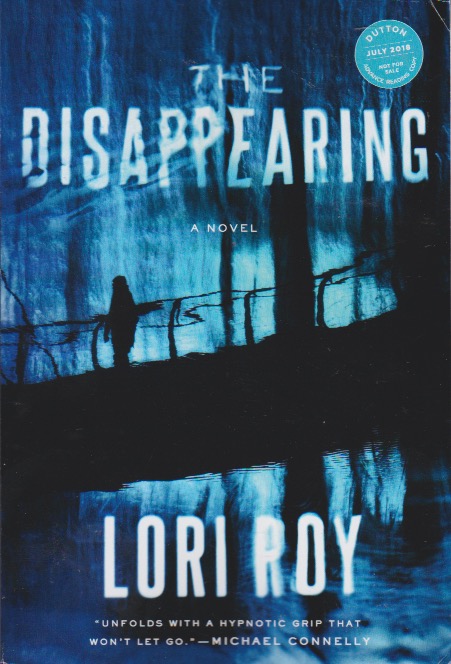
I also managed to finish Lori Roy’s upcoming new release, The Disappearing, last night.

the disappearing

Lane Wallace is alone inside Rowland’s Tavern when the front door flies open. A man stumbles inside, bringing with him a spray of rain that throws a shine on the hickory-brown floors. He scans the dark rooms, stomps his feet, and draws both hands over his wet, round face. If the man says anything, Lane doesn’t hear him for the rain pounding the tin roof and the palm fronds slapping the front windows. It’s supposed to rain through the night, and all around Waddell, people will be keeping a close eye on the river.

Lane smiles because maybe the man is a friend of a friend and not a stranger. She’s expecting a big crowd tonight, and one of her regulars might have invited him. But he doesn’t smile back. Slipping her phone from her back pocket. she lays it on the bar top where the man will be sure to see it. It’s a subtle warning, but if the man is looking for trouble, it’ll make him reconsider.

He’s a little on the heavy side; doughy, a person might say. From behind the bar, Lane asks the main if a beer’ll do him, and as he slides into a booth near the front door, he nods. Hr regulars, men who’ve known her all her life, or rather who have known her father, won’t show up for another hour or so but Rowland Jansen will be back any time now. He ran out to move his car and Lane’s to the higher and drier ground of the parking lot out front, so she won’t be alone with the man for long.

This is Lori Roy’s fourth novel, and it’s quite an achievement. His first three novels–Bent Road, Until She Comes Home, and Let Me Die in His Footsteps–were all shortlisted for Edgar Awards; she won Best First for Bent Road and Best Novel for Let Me Die in His Footsteps, raising her up into the exalted, rarified air of the Multiple Edgar Winner Circle. I’ve only read Bent Road–I do own the others, will every intent to read them at some point; too many books, not enough time–and it blew me away with its stunning depiction of rural Kansas, its juggling of two separate time-lines, and its thematic exploration of how the pains and evils of the past can influence the present.

That same theme runs through this stunning new novel, The Disappearing, as well, and is explored even more deeply and explicitly than in the first. Waddell is a small town in north Florida, amorphously near Tallahassee; Roy’s captured the feel of rural small town Florida deftly (there is, as not many know, a huge and significant difference between the coastal cities of Florida and the insular, small towns of the state’s interior). She plays with the memories of Ted Bundy’s journey through the area; a young woman, a student at Florida State doing some internship work at a local, fading plantation is missing, which has stirred up all those fearful memories of Bundy’s spree. The plantation also shares a boundary with a closed reform school for boys, whose own violent and possibly deadly past has also come back to haunt Waddell.

But it’s also an exploration of family, and how the damage from a past history of deep violence and emotional abuse, locked away and ignored, can reverberate through the years and have deep, horrific implications on the present. Susannah Bauer’s disappearance triggers a chain reaction of emotion and violence and horror, spread over the course of a few days after the night of the heavy rain, that will continue to cycle through the future unless honestly and painfully dealt with in this present.

There are four point of view characters in The Disappearing: three women from generations of the same family–Erma, the matriarch of the Fielding family, with her guilts and secrets festering inside her for decades; Lane, her daughter, whose own emotional damage and baggage perpetuates the cycle; and Lane’s younger daughter, Talley, whose wanderings due to her own loneliness and unhappiness makes her the holder of most of the secrets and truths of the present. The fourth point of view character is Daryl, a mentally disabled young man who is the groundskeeper at the church, and his story is told in the recent past rather than the present, as Lori Roy deftly spins all the secrets and lies and horrors of the town of Waddell into an astonishingly well-blended tale of flawed people and the damage they can leave in their wake.

Even more impressive than the characters and the story itself is the mood and the voice; the way she maintains this almost dreamy tone, creating the perfect mood for the story is masterful. The voices of her characters are compelling and real; only Daryl tells his story in the first person; the others are a very tight third person present tense. The shifts in voice, the tone, the tense and the word choices and the imagery, kept reminding me of Faulkner’s brilliant The Sound and the Fury, and in a very good way.

The Disappearing is an extraordinary achievement, and is destined to make awards short-lists and all the Top Ten lists for 2018.

How Will I Know

Well, somehow I managed to make it to Friday. This wasn’t a great week; sleep issues, mostly, but last night I finally slept well despite some truly strange dreams…which are fading away from me now. That’s fine, but they were seriously weird; I did wake up a few times during the night thinking okay, that was just weird. But as usual, now that I am awake and drinking my coffee, I don’t really remember any of them. I would have loved to stay in bed longer, but I have a meeting this morning at the office. It’s my short day, which is also incredibly lovely, and I am hoping to  have a nice relaxing weekend of catching up on things, including rest.

I managed to get “Fireflies” revised and ready for a read-aloud this weekend; that’s several stories I get to read aloud this weekend, including “Don’t Look Down” and “This Town”. Three stories to read aloud, even if “This Town” is just to check for extraneous words and trim it down a bit, if possible. I also started writing “This Thing of Darkness” yesterday, and it’s coming along swimmingly. I got about 1400 words or so done. I need to get back to the Scotty book this weekend as well; I am going to reread the entire thing before I get back to it, though. I also have to go to the post office as well as do that grocery store thing.

And of course, the apartment is a disaster area.

Heavy heaving sigh.

But I’m pretty jazzed about getting through this day and getting home to start the cleaning, and get to reading Lori Roy’s The Disappearing. She really is quite an extraordinary writer. If you aren’t reading her, you need to be. Seriously.

I am also going to discuss a short story today, which means we are back to the Short Story Project, and might even be able to get another one knocked out tomorrow.

Today’s is “e-Golem” by S. J. Rozan, from the September/October 2017 issue of Ellery Queen’s Mystery Magazine:

Bookstore dust was not the same as other dust. Loew had noticed this before, sweeping out the cluttered aisles of his used-book shop. It settled more gently, but at the same time seemed more weighty, each mote carrying both wisdom and whimsy, erudition and imagination. He shook his head. Loew, he told himself, this is why you’re doomed. WHy you’re barely eking out a living, selling forgotten things no one wants in a store you soon won’t be able to afford.

For most of his life, first working after school in his father’s shop in what was then the Jewish, later the Chinese, and lately the gentry’s Lower East Side, and on through the almost imperceptible transition when the shop became his, Loew had found pleasant this sense of gentle churning. Books no longer needed in one place lodged in the shop until they found a home in another, and customers came periodically to discover what treasures had rolled to the surface. This churning and discovering still went on, he understood, but less tenderly and on the Internet that soul-destroying virtual world where all was about price and little about love. People who bought rare books online did so speculatively, hoping their value would increase. How different from Loew’s customers, who held a book, fingered its pages, inspected its cover, to decide whether this book, this copy, was meant to be theirs. A customer who turned a book down was never a disappointment to Loew. It meant the two didn’t belong together. The customer would find his book, and the book would find its owner. Until it did it had a home here on Loew’s shelves.

S. J. Rozan is one of my favorite crime writers, bar none. This story, which is both clever and slightly sly at the same time, is an example of her work at its best. Loew discovers an old book of mysticism in his store, and half-heartedly tries to create a golem to go after his biggest enemy–Amazon. What happens next is why Rozan is one of the greats of our time in crime fiction; clever twists and turns that one never sees coming. But what really struck me the most about this story is how good she is at voice. Never once does she hit a false note in this story; every word is perfect and fits with the character’s voice. Were I ever to teach a class in crime writing, I’d use this story as an example of how to do voice perfectly.

And now back to the spice mines.

32247206_1671285199636859_5541500018004852736_n