All 4 Love

So, yes, it’s my birthday. I took the day off from work and am staying home for the most part. But I do have to go to Costco AND the grocery store today; living large, right? This might be my wildest birthday ever! (Sarcasm.)

I mean, do I know how to celebrate a birthday or what?

But this is the fifty-seventh, and I wasn’t really raised to be overly sentimental about birthdays; I’ve never really made a big deal out of mine, and now all it really is, is simply an excuse to take a day off from the office. I didn’t get nearly as much done this weekend as I would have liked; yesterday was lovely–I don’t think I went outside even once, which to me is of course a lovely lovely day.

I really  do want to become a recluse. I remember someone asked me on a panel once to describe what my dream success would be, and I replied, to make enough money to  not only not have to have a day job but to be able to pay someone to run my errands for me so I’d only have to leave the house to go to the gym.

Is that really so much to ask? Apparently. Ah, well.

I hope to do some writing today as well. We shall see how that goes.

Next up in Florida Happens is Neil Plakcy’s “Southernmost Point.”

Neil S. Plakcy is a U.S. writer whose works range from mystery to romance to anthologies and collections of gay erotica. He has twice been a finalist for the Lambda Literary Award for Best Gay Men’s Mystery Novel.

Plakcy began his professional publishing career with the first of his Hawaiian mysteries, Mahu, acquired and edited for Haworth Press by mystery author Greg Herren. With the second book in the series, Mahu Surfer, Plakcy moved to Alyson Books, which continued the series with Mahu Fire and Mahu Vice, and published their own edition of Mahu in 2009. After the close of Alyson, MLR Books picked up the series, publishing new editions of the first three and then continuing the series.

Plakcy and long-time friend Sharon Sakson co-edited a collection of stories by gay men about their experiences with their dogs, entitled Paws and Reflect: A Special Bond Between Man and Dog. A frequent contributor to gay anthologies, Plakcy has also edited numerous collections of gay erotica.

With the publication of GayLife.com in 2009, Plakcy entered the M/M romance genre, basing the book on his own experiences in software and web development and his familiarity with Miami Beach.

Plakcy has been a finalist for the Lambda Literary Award three times: twice in gay mystery, and once in gay romance. He won the “Hawaii Five-O” award given by attendees at the Left Coast Crime fan conference and his work has been enthusiastically reviewed by mainstream and specialty publications as well as by many fans.
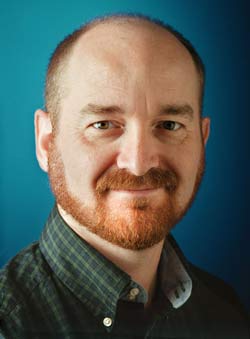
neil

It started with a selfie, and the drag queen who photo-bombed my boyfriend Lester and me.

Lester represents single-batch whiskeys, based out of Fort Lauderdale, where we both live. His region extends all the way to Key West, and one weekend in January he had a couple of promotions set up at bars on Duval Street, in the center of the entertainment district. I had a couple of days’ vacation coming to me from the FBI, where I work as a Special Agent attached to the Violent Crimes Task Force, so I took them and went along for the ride.

And a beautiful ride it was, once we ran out of highway, then cleared the urban congestion of Key Largo. All of a sudden there was water on both sides of the road, the dark blue-green of the Atlantic to our left, the lighter green of the Gulf of Mexico to the right. The long emptiness of the Seven Mile Bridge was liberating, even with the skeleton of the old railroad bridge beside us.

We made it to Key West late on Sunday afternoon, and after we checked into a bed-and-breakfast on Duval Street, we rented bikes and cycled over to the Southernmost Point, a big marker striped in yellow, orange and black that indicated we’d reached as far as you can go on the US mainland.

“Imagine living down here,” Lester said. “Only ninety miles to Cuba, and nearly twice that back to Miami.”

“I think there’s a kind of person who likes to live at the edge,” I said. “So far from everything else. Like you can leave all the troubles you had wherever behind you and kick back with a margarita and a pair of flip-flops.”

“Thank you, Jimmy Buffett,” Lester said. “Come on, let’s get a picture of us with the marker in the background.”

This is a fun, suspenseful tale about, interestingly enough, what happens when you get photobombed by a stranger and post the picture on social media; a sly commentary, really, about how social media has reduced the size of the world and shows us, sometimes daily, how many degrees of separation we really are all from each other–which isn’t as separated as one might think. Neil does a deft job of keeping the action moving, as well as developing his vacationing gay male couple with just a few quick lines here and there, and their relationship as well through the couple-dialogue speak they share. It’s a fun story, with lots of Key West color, and I’m very glad to have it in the book.

And now, off to the spice mines.

My Loving (No You’re Never Gonna Get It)

Saturday morning, and I am feeling rested and relaxed as I sit here by my windows with my second cup of coffee. It looks very still outside, and there’s no condensation on the glass, so I tend to think (wishfully) that it may not be that humid outside. Of course it’s wishful thinking; when I run to the post office and the grocery store later this morning I will no doubt be slapped in the face by the hot damp.

Hurray?

I didn’t get as much cleaning done yesterday as I would have liked, so I am going to try to focus on getting that done today as well as some short story work. I may even continue my voyage through Royal Street Reveillon, making notes and figuring out how to straighten up and tighten that whole mess.

And I’d love to spend some quality time with James Ziskin’s Cast the First Stone today. Bouchercon is looming on the horizon, and I have to finish it and one more before I am finished with my Bouchercon homework.

So, once I am finished here, it’s time to make a to-do list for the day and get a move on.

I may even make it to the gym today–I know, right? Madness.

Next up in Florida Happens is “The Unidentifieds”, by J. D. Allen.

14202596_1047853868643773_8296512636233446912_n

J.D. Allen’s Sin City Investigations series launched with 19 Souls earlier this year. She is a Mystery Writers of America Freddie Award-winner. She has short stories in the Anthony Award-winning anthology, Murder under the Oaks as well as Carolina Crimes: 20 Tales of Need, Greed, and Dirty Deeds. She’s the chair of the Bouchercon National Board, a member of MWA, PI Writer’s of America, and president of her local Sisters in Crime chapter. She’s an Ohio State Univ. Alum with a degree in forensic anthropology and a creative writing minor.

J. D. says: I attended The Ohio State University and earned a degree in forensic anthropology and a creative writing minor.

Writing Mysteries was not my first career or my second.

Life’s journey meanders.

I feel it’s never too late to reach for the brass ring. With the publication of the Sin City Investigation Series, my dreams of publishing gritty mysteries have been realized.

I believe in giving back to the writing community that has supported me through the years. I’m a member of the Bouchercon World Mystery Convention National board and president of the Triangle Chapter of Sisters in Crime. I speak on the basics of crime scene investigation, voice, and public speaking.

And here’s the opening to her story:

~Saturday 2 p.m. – The Funeral

For Jim, a funeral was about as appealing as removing his own appendix.  Two funerals in as many weeks had him planning a stop at the liquor store on the way home and a look at his choice of occupation. Jim Bean squinted as the Vegas sun reflected off his cousin’s silver casket. Jim had picked it out the coffin and planned the service. With the recent experiences, he’d learned obituaries should be 75 words, and lives could shatter in a moment.

He now stood over the proceedings. He fought Vegas sweat and tears as Alexis’s casket thumped to the bottom of the rectangular gave. She was the only person left from his old life he still called family. The girl in that box had been shot in the chest and burned to cover the identity of her remains.

Jim glared across the casket as the words meant to soothe and heal drifted over to the deceased. He hoped they helped her.

Andrew Zant stood opposite that death divide. His dark glasses and darker suit complemented the smirk on his pale, pointy face. Jim read victory in that smug look. Maybe it didn’t show his eyes, but it was displayed in his presence. Jim wasn’t surprised to see someone from his organization here to confirm the death. The shock was Zant showed up in person. He even let himself be photographed on the way to the graveside service.

A hum of rage and hostility was ready to bust from Jim’s chest as he openly stared at the Vegas tycoon. The man thought himself superior. Thought he’d gotten away with it.

He thought wrong.

Excellent opening, no?

The main character, Jim Bean, is a private eye in Las Vegas, whose cousin Alexis has become involved with a very dangerous and powerful man–and needs to get away from him, with Jim’s help. So they devise an elaborate ruse. Will they get away with it? Allen carefully builds the suspense to the inevitable yet still surprising ending. Great fun, and terrific suspense. I do look forward to reading more of her work.

And, since my errands flatly refuse to run themselves, I am off to the spice mines.

Tears in Heaven

Friday, and this slightly odd, off-kilter week is finally coming to an end.

 I slept deeply and well last night, but am looking forward to sleeping in tomorrow. Because of the flea situation, I spent most of yesterday laundering things and cleaning and vacuuming, so the weekend’s chores are already finished before the weekend rolls around, which is absolutely lovely; and also means that, if I am feeling ambitious, I can do more advanced cleaning; i.e. the cleaning I never get to because I only have time for a surface clean–so baseboards, cabinets, ceiling fans, etc–can be gotten to this weekend.

I am still revising “A Whisper from the Graveyard,” which I hope to read aloud this weekend and thus be finally finished with the story. I am pleased with how the revision is going; how the story and the character are taking shape on my computer screen; we shall see how it turns out. I also want to finish a strong revision/read-aloud of “This Thing of Darkness,” and I also want to work on “Please Die Soon” and maybe even get back to “Never Kiss a Stranger” this weekend. “Never Kiss a Stranger” is longer; it’s going to end up as a Kindle single, which is the entire point of writing it, and it’s terribly freeing to not have that word limit that limit short stories. I am also working my way through the manuscript of Royal Street Reveillon, and may even get to work on inputting edits and revisions and changes this weekend.

We shall see.

Next up in Florida Happens is a lovely story called “Muscle Memory,” by Angel Luis Colon.

Angel Luis Colón is a Derringer and Anthony Award shortlisted author. His published works include the titles: Pull & Pray,  No Happy Endings, the BLACKY JAGUAR series of novellas, the short story anthology; Meat City on Fire (And Other Assorted Debacles), and the upcoming Hell Chose Me(2019).

His short fiction has appeared in multiple web and print publications including Thuglit, Literary Orphans, and Great Jones Street. He also hosts the podcast, the bastard title.

Keep up with him on Twitter via @GoshDarnMyLife

Angel-Luis-Colon-640x512

“You don’t like it.” Katie gives me this look I’d swear her mother used to give me whenever I lied but it’s been so many years that a passing glance could evoke the same memory.

Got a laundry list of reasons why I don’t like it here but I keep my mouth shut. I’m sitting on a bed that reeks of old piss and medicine—room’s about the size of a nice bathroom, so it makes sense. Better than a jail cell but not much better. I don’t feel this old. I don’t like Florida.

Single window behind me with faded curtains. Laminate floor. Don’t think there’s a word for the color but if depression had a color, this floor would suffice. Wood panel walls. Framed photographs of people I love without me in them. I shift on the bed. Back hurts. Knees hurt. Head hurts. All the pills I take and not a one seems to dull things enough for me to focus.

I raise a hand and find myself wondering if I always so slow or if my perception’s fucked from the new pills. “It’s fine,” I slur, “Besides, this is where I sleep. They got a bunch of tables and shit out there where I can occupy myself.”

Katie frowns. “I tried to find a spot at the nicer place a few miles up the highway, you know, by the girls’ school. They—”

“Muscle Memory” is, as I said, a lovely story that deals with several issues, but never in a preachy way. The main character is Sean Clarke, a former criminal who did some time for manslaughter, whose wife is dead and is now reaching the end of his life. His daughter Katie has found a senior facility for him to live in, where he befriends an old gay man named Manny and he spends times missing his daughter and granddaughters and wishing life had turned out better for him–but there’s a weary acceptance there. Something is going on with Manny, and Sean is the only one who can do anything about it–or thinks he is. Poignant and sad without crossing into sappy sentimentalism, Colon captures Sean’s voice perfectly. I’d actually like to read more about him, to be honest.

And now back to the spice mines.

Save the Best for Last

Thursday!

My Bouchercon homework continues, with me now reading James Ziskin’s Cast the First Stone. I am very excited to read this; I’ve heard nothing but great things about his books, plus he’s a pretty good guy. I had bought the first in his series–still in the TBR pile, alas–so am kind of glad that this book became a homework assignment. I am really enjoying it thus far, and if it’s going where I think it may be going–well, that would be awesome, but I am sure I am going to love it even if it doesn’t.

I started watching the BBC series The Musketeers on Hulu this evening. I did a half-day today; one of my co-workers and I tested at a conference at the Riverside Hilton for four hours, after which I walked home on an afternoon in August. Heavy sigh. Any way, ’tis a good thing I did work only half-a-day, because alas we are having to clean everything in the house because Scooter had a couple of fleas. His medication is working–the fleas we’ve found were dying or dead–but it’s August and we live in a swamp, and so while there have been no signs of infestation thus far, we aren’t going to take the risk. So I’ve been cleaning all day ever since I got home; taking breaks now and then to watch something on the television, and having it on as I launder things and vacuum things and well, it needed to be done, didn’t it?

That’s a rather tired and round about way of getting to the point, isn’t it? Long story short: I’ve always been a big fan of The Three Musketeers, ever since I was a kid, and I’ve been meaning to watch this BBC series for years…but kept forgetting about it. Someone posted somewhere on Facebook last night asking people to name their favorite d’Artagnan, and as I always do, whenever I get the chance, I replied Always Michael York. Always. But someone else posted a picture of the young actor who plays him in the television series and I thought, yes, I’d been meaning to watch that, hadn’t I? So I watched a couple of episodes as I cleaned–and am intrigued. More watching is most definitely called for.

Next up in Florida Happens is “A Postcard for the Dead”, by Susanna Calkins.

Born and raised in Philadelphia, Susanna Calkins lives outside Chicago with her husband and two sons. Holding a PhD in history, Susanna writes the award-winning Lucy Campion historical mysteries as well as the forthcoming Speakeasy Murders, both from St. Martin’s Minotaur. Murder Knocks Twice, set in Prohibition-Era Chicago, will be out Spring 2019. Her first short story, “The Trial of Madame Pelletier,” featuring a 19th century poisoning case, is up for an Anthony Award (and can be read on her website at www.susannacalkins.com).

Susanna says: “A POSTCARD FOR THE DEAD” is my second published short story. When I saw the call for the Bouchercon anthology, on a whim I began to read through 1920s Florida newspapers, since I was already researching the Roaring Twenties for my Prohibition-Era novels. There, I stumbled across the rather odd story of Lena Clarke, a postmistress who had embezzled huge amounts of money from the Post Office and then framed a local playboy for the crime. What struck me most about this story was how Lena gave her testimony in court using a crystal ball, having been part of a wild West Palm Beach Bohemian set, before being declared insane. Although I altered the case substantially in my version, I retained the embezzlement aspect and of course the crystal ball. After a little more digging, l discovered that Lena’s brother had died of a snakebite, which just seemed too Florida of a detail not too include. I thought about setting the story in a courtroom, but given that my FIRST short story, “The Trial of Madame Pelletier” featured, well, a trial, I thought I’d better frame it a little differently.

Calkins author photo outside

West Palm Beach, Florida

July 1921

Lily Baker peered inside her mailbox before reaching in to retrieve her mail. Back when her half-brother had been West Palm Beach’s postmaster, he had delighted in leaving snakes in mailboxes as pranks. Of course, the last laugh had been on him, when he had died of a snake bite last Christmas.

There was only one piece of mail today, though—a postcard featuring a swanky hotel in Orlando, a city she’d never been. She turned it over to read the message but was surprised to find it blank. Only her name and address had been printed on the postcard, in careful block letters.

Curiously, she studied the card. The stamp had been cancelled in Orlando two days before. July 27, 1921. Flipping the card back over, she looked at the picture more closely. The hotel was the San Juan, which the postcard informed her had been built in 1885 by C.E. Pierce. Built for the filthy rich, from the looks of it.

#

Lily was still by her mailbox when she saw Officer Danny Jamison coming down the street on his bicycle.  She had known Officer Jamison since they were kids—he’d been just one year ahead of her in school. After high school they’d gone in different directions, although on occasion their paths crossed. She was about to wave as he passed by, when instead he stopped in front of her and dismounted his bike in one easy move.

“Hey Lily,” he said, leaning his bike against her palm tree. “Your sister around?”

Lily shifted from one foot to the other. Why was Danny asking after Junie? Though she and her older half-sister had lived together since their parents had passed away a few years before, Junie tended to be tight-lipped about her goings-on. But Lily would catch whispers about illicit gin, late night séances, Ouija parties, and other secret doings connected with West Palm Beach’s furtive Bohemian scene. A far cry from her day job heading the town’s Post Office, which Junie had taken over from their brother some eight months before.  “She must have left for work early,” Lily said.  “I didn’t see her this morning.”

“I see. But you saw her last night?”

Great beginning, right? It’s a terrific story, but what I think I enjoyed the most about it was the narrator’s voice; I really liked the character of Lily, how Calkins gradually let us into Lily’s life, and through character, built a very clever crime story.

Jump

Wednesday!

The week is at its halfway point. I am also taking a three day weekend to honor my fifty-seventh birthday (it’s on Monday; there’s still plenty of time to shop for a gift–although cold hard cash is always welcome), and who knows what else I’ll get up to this weekend? We shall see, but if anything I am looking forward to just having three days off from work.

I’ll probably end up cleaning a lot, which is what I always tend to do.

Last night I broke down and took a sleeping pill, so today I feel amazing and rested. I’ll try to sleep tonight again without one.

Next up in the Florida Happens short stories would be Craig Pittman’s “How to Handle a Shovel.”

Per  his website: Craig Pittman is a native Floridian. Born in Pensacola, he graduated from Troy State University in Alabama, where his muckraking work for the student paper prompted an agitated dean to label him “the most destructive force on campus.” Since then he has covered a variety of newspaper beats and quite a few natural disasters, including hurricanes, wildfires and the Florida Legislature. Since 1998, he has covered environmental issues for Florida’s largest newspaper, the Tampa Bay Times. He has won the Waldo Proffitt Award for Distinguished Environmental Journalism in Florida four times, and twice won the top investigative reporting award from the Society of Environmental Journalists. Stories he has written for Sarasota magazine have won three first-place awards from the Florida Magazine Association.He’s the co-author, with Matthew Waite, of Paving Paradise: Florida’s Vanishing Wetlands and the Failure of No Net Loss, (2009), which won the Stetson Kennedy Award from the Florida Historical Society. His second book was Manatee Insanity: Inside the War Over Florida’s Most Famous Endangered Species (2010), which the Florida Humanities Council named one of 21 “essential” books for Floridians. His latest book The Scent of Scandal: Greed, Betrayal, and the World’s Most Beautiful Orchid, was just published. His latest book, Oh, Florida! How America’s Weirdest State Influences the Rest of the Country, hit stores in July 2016.

53dbc192e8e2a01ad7a24aeb91c92d1c

The green Ford pickup truck jounced along the washboard road, a cloud of dust swirling in its wake. The radio was on. Carrie Underwood faded in and out of the static like she was about to disappear.

Billy, the skinny kid sitting in the passenger seat, peered over his shoulder into the bed of the truck to check on their load. As the truck rumbled on, the twelve gopher tortoises were all of bouncing around in their shells and probably wondering what the hell happened to them.

The driver, a heavyset man everybody called J.T., noticed what Billy was doing and smiled to himself.

“It ain’t fair,” Billy said, turning back around.

A sunburn blossomed on Billy’s cheeks. The wind from the open truck window plucked at his straw-colored hair. Sweat had bled through his  T-shirt, and globs of dirt stuck to his ragged sneakers and the sweaty parts of his shirt and faded jeans. It even adhered in spots to the sweat that had run down his face, creating splotches of salty mud.

“What ain’t fair?” asked J.T. He wore a sweat-stained camo cap pulled down low his bald head. His short-sleeve shirt strained at its buttons. It had once been dark blue but it had faded until it matched the sky. J.T. kept the shirt tail untucked to accommodate his bulk, and now it lay across his lap like a table cloth, parted in the middle for the spit cup he held between his meaty thighs. J.T.’s graying beard started around his earlobes and hung down to his belly like a pennant, and around one side of his mouth were a few stray flecks of tobacco. He kept his sun-baked elbow leaning on the truck window, steering with two fingers on his left hand. With his right, he grabbed the cup and held it up so he could spit a stream of brown juice into it, still keeping his eyes on the road. Then he shoved the cup back where it had been.

“What ain’t fair is how I’m doin’ all the work and takin’ all the risk, and you keep about all the money, that’s what,” Billy said. He knew he sounded like a whiner. He didn’t care. He was just trying one more time to persuade J.T. to hand over his money before he was forced to off the fat man.

This is a fun dark little story about two small-time crooks–redneck Floridians, which are a breed apart from other rednecks–poaching gopher turtles and the rise of conflict between them; a charming if grim little tale. Craig gets both characters pitch-perfect, and the voice is also terrific. I read his Oh, Florida book and loved it; full of insights about Florida and how the crazy state came to be the way it is, it also brought back a lot of my own memories about summers in Florida when I was a kid–back in the 1970s, before it turned into the beachfront condo hell it is now.

And now, back to the spice mines.

Go Home

Sunday morning, with lots to do and a long, relaxing day ahead in which to do it all. I woke up relatively early this morning, which was a wonderful and pleasant surprise, and feel rested. I have a short story to work on, a reread of Royal Street Reveillon to get through, and I’d also like to make some progress on my reading of Eryk Pruitt’s What We Reckon. I cleaned and did errands and read yesterday; along with some note taking on various projects as well as filing. This coming week should be interesting, to say the least; I am doing some testing on Monday and Thursday at the Blacks in Government conference at the Riverside Hilton, which will be a lovely change from my ordinary routine, and I have a three day weekend next weekend in honor of my birthday.

Yes, the old man officially turns fifty-seven next weekend; although I always change my age on New Year’s. After this next New Year’s, I’ll be telling people I’m fifty-eight. Age has never mattered  much to me; for the early portion of my life I was always younger than everyone else around me; later on I was always older than everyone else I hung around with. I learned early on that age is a relative concept.

Yesterday was kind of a lovely day for me. It rained off and on most of the day, and there really is nothing lovelier than being inside and dry while it rains outside, and our rain is do torrential and tropical–so lovely to deal with when you’re inside rather than when you’re actually outside dealing with it. As the bed linens agitated in the washing machine and the wool blankets tumbled dry in the laundry room, I was filing and getting my desk area organized, listening to the rain and looking out my windows to see all the leaves outside glistening and wet, and water cascading out of the rain spout on the house next door when a phrase formed in my head, and I scribbled into my journal, standing up at the kitchen counter: It was one of those lovely summer Saturdays New Orleans gets sometimes in August–where thunderstorms roll through the city all day, the dark clouds creating an artificial twilight at three in the afternoon. Perfect for staying inside and cleaning, the washing and drying and folding of clothes. The cat sleeps lazily in the desk chair, waking up every now and then to groom before curling up again into a tight ball of differentiated ginger stripes.

I may never use that in something I write, be it a short story or a novel, but it’s a nice piece of writing nonetheless. My notebooks and journals are filled with such scraps of writing, of ideas and thoughts and fragments and character descriptions or settings.

And next up in Florida Happens, for the Short Story Project is “The Fakahatchee Goonch” by Jack Bates.

jack bates

Goonch is just another name for a catfish. A really big catfish.  Sometimes it’s called the Devil Fish or Black Demon because it lurks deep down there in the murkiest part of the Fakahatchee Preserve. Bottom feeders mostly. They eat gator leftovers or anything else that might get tossed into the swamps. Back in the mauve and neonMiami Vice days, legend had it the Everglades was a good place to dispose of a problem quick.  People think that’s how the goonch developed a taste for meat.

Of course, the guys who trawl for catfish say those fish are just as apt to eat water weeds and such if the pickings are slim.  Sometimes they feed on their own.  Had some guys drag in twenty to thirty pounders, about three feet long. That ain’t no fish tale.

Neither is this one. The catfish I’m talking about is an eight-man goonch. Know what that is? That’s when eight grown men stand in a line, shoulder to shoulder, and that goonch lays across all of their extended hands from tip to tail. That’s how big the Fakahatchee goonch was said to be. Had a mouth like the gaping orifice of hell, or so I’m told. I ain’t never seen it, but I know it’s there.

There have been nights when I’m frog hunting where the frog croaking will go quiet and the swamp gets real still. Something big enough to rock my aluminum skiff passes through the water. Up ahead in the dark there’ll be a splash and a few ticks off a clock later my skiff will rock a second time except maybe a little more treacherously on the creature’s return pass. and I’ll have to sit down, clutch the sides so I don’t tip out. Only way I know it’s safe to leave is when the frogs start croaking again.

Sometimes though, a frog will puff its chest and blowout its braggadocio regardless of the danger it’s in.

Jack’s bio reads “Jack Bates writes some pretty good crime fiction from the comfort of his loft office. His stories have appeared all around the web, in various anthologies, and in a few magazines. Three have been finalists for the Derringer Award from the Short Mystery Fiction Society. He’s also written award-winning scripts for stage and screen including a short-lived web series. An incomplete list of his works can be found on his blog http://flashjab.blogspot.com/.   When not writing, he plots or travels or runs errands or chats it up with other old movie buffs on twitter. He pens the Harry Landers, PI, series for Mind Wings Audio Books. He’s also released several ebooks with Untreed Reads which launched the Hack Ward PI series with Monkey See, Monkey Murder. In 2012, his YA Steampunk novel, Colt Buchanan and the Weather Walkers, was released by Red Willow Press.”

This short story is quite fun, and in the classic mold of slightly off, wacky Florida noir. Set in a dive bar on the west coast of Florida in a nothing town on the edge of a swamp, a stranger walks in with a wad of cash and an air of mystery about him; two tough rednecks are playing pool with their girlfriends when the two men decide to win some of the stranger’s money off him–and things continue to spiral downward from there. It reminded me of John D. Macdonald with maybe a dash of Hiassen thrown in for good measure, and is a very fun and satisfying read; one that I’m glad is in the book.

And now, I have spice to mine.

King for a Day

Ah, Monday. Blue, blue Monday, and yet the beginning of still another work week.

I worked quite a bit yesterday, and even made it to the gym. I was one of six people in the gym, and if you guessed that at one point in my workout four of the other five people had taken up all the options for my next exercise, you’d have guessed correctly. And no one apparently notices the signs posted everywhere that read Please rerack your weights when finished.

No. One.

Back when I used to work in fitness environments, I was always amazed at how people just leave their weights on the machines or dumbbells wherever they used them rather than putting them back–as though they assumed that the staff people working were there to clean up after them. It used to happen in aerobics classes I taught, too–the attendees would finish, then leave their steps, dumbbells, and sometimes their sweaty towels there for me to put away.

It would be so lovely to one day be wealthy enough to have my own workout room in my home. All I want, really–a room that’s a dedicated office space and a workout room. Is that really so much to ask for?

Lately, so many things have been getting on my nerves that I’ve wondered if I am on edge, or if something’s going on in my subconscious that’s bubbling up by making me highly annoyed and irritated with people, or something, I don’t know what; but the more I think about it, the more I tend to think, no, you’re just sick of assholes.

Seriously. And then I remembered the most important thing of why I am a crime writer: I can kill off assholes fictionally.

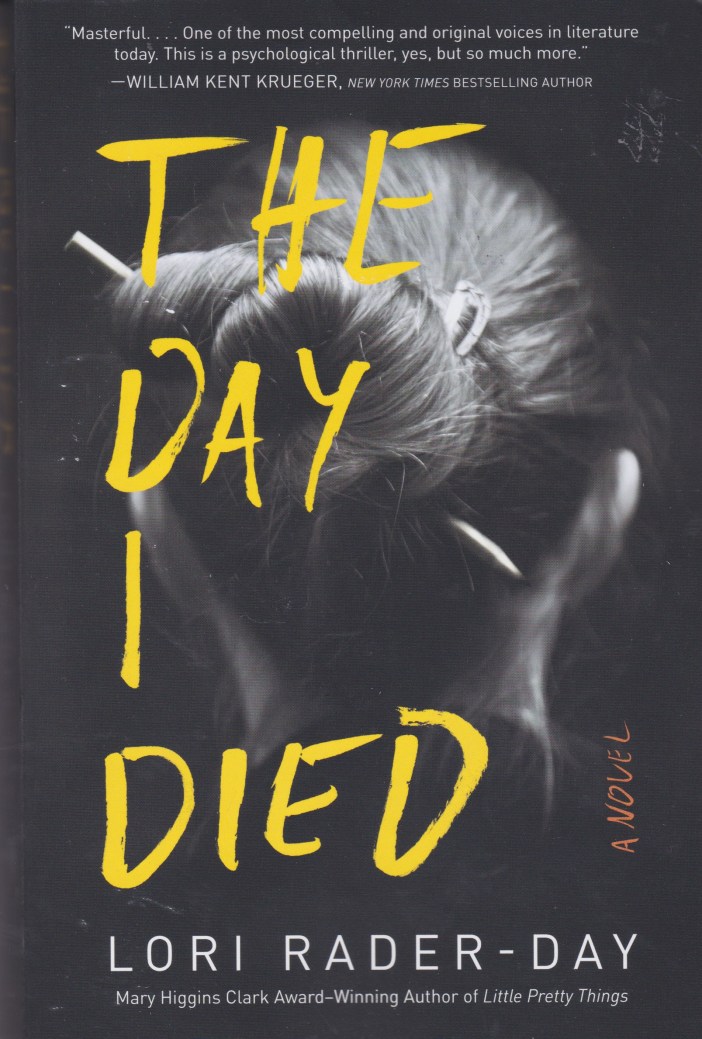
I also finished Lori Rader-Day’s The Day I Died, and started reading Nadine Nettman’s Uncorking a Lie.

the day i died

On the day I died, I took the new oars down to the lake. They were heavy, but I was saving myself the second trip. The blades rode flat along the ground, flattening two tracks through the wet grass.

It was morning. The air was cool, but down on the dock, the slats were already hot. I noted a lone fishing boat out on the water. Inside, two men hunched silently over their tackle, their faces turned out across the lake. Beyond them, mist rose off the water, nearly hiding the far shore.

This moment. This is what I return to.

Later, I will note the long crack on the new oar, just before my head goes under, just before the flume of blood rises off my skin under the water like smoke. I will come back to othis moment and think, if I had just gone back up the steps to the house immediately. If I had just stayed up at the house in the first place.

If I had just.

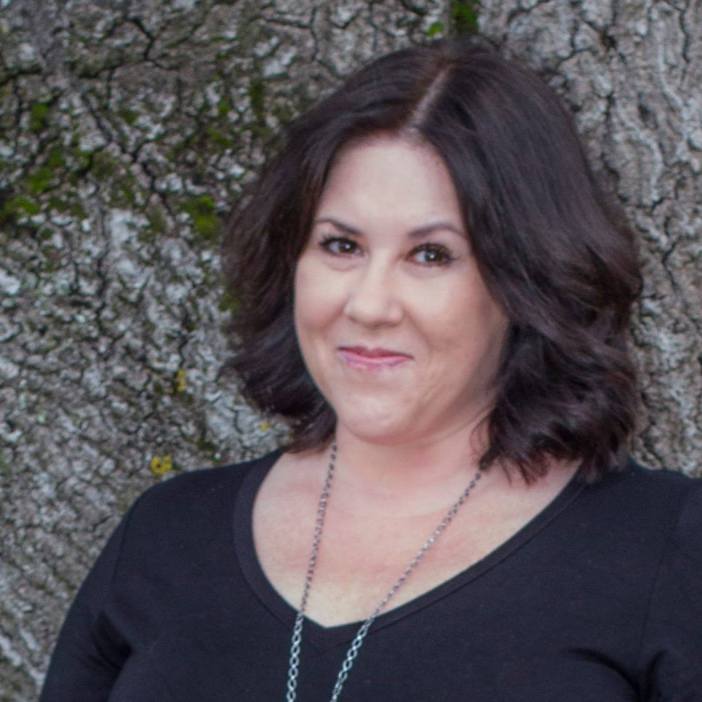
Lori Rader-Day’s Anthony Award shortlisted 2017 novel is quite excellent. Thematically, it’s about desperation–what people do when they have no other options. In the case of Anna Winger, Rader-Day’s main character, her childhood was desolate and bleak; the child of an alcoholic abuser, she moved from there to an abusive relationship with a boyfriend before fleeing for her life and that of her unborn child. Now, she lives in a wretched little town in Indiana, working as a freelance handwriting analyst. A child has gone missing in Parks, Indiana, and the local police bring her in for her expertise, bringing her into the case sideways. The case also stirs up dark memories of her own past for Anna, and her child–now thirteen and entering that rebellious stage–is becoming more and more closed off from her, difficult to know; and she has to wonder, as a mother, if this life they’ve led of constantly moving and never establishing roots anywhere, is messing up her own child. The parallels between the missing child case of the present and her own disappearance from her own life brings her to her own breaking point–and to where she can no longer ignore or deny her past, but most confront it.

Rader-Day’s strengths–her depiction of how claustrophobic yet lonely small towns can be; her ability to create sympathetic, damaged characters–are all here, and the book is structured beautifully; each incident and scene flowing into the next until the reader has to keep compulsively turning the page.

And now, back to the spice mines.

Object of My Desire

It is Sunday, and I have again slept later than I intended. I meant to set an alarm, as I have things that must be done today but I also stayed up later than I intended and as such, forgot to set said alarm when I tumbled into bed last evening. It’s fine; I should be able to get everything done today that I want to get done. I just have to be a bit better about planning and wasting time. Clearly, I needed the sleep, don’t you think?

I am reading The Day I Died by Lori Rader-Day, as part of my Bouchercon homework, and enjoying it a quite a lot. This is the second of Rader-Day’s novels that I’ve read (the other being Pretty Little Things; I’ve not read her first, The Black Hour, and she’s just released a new one, Under a Dark Sky), and I am enjoying this even more than I did the first I read. Rader-Day writes about damaged women, makes them the center of her stories, and they work through a lot of their damage over the course of the novels. I will, rest assured, have plenty of other things to say about this novel once I’ve finished reading it.

I cleaned my kitchen floors yesterday; not as thoroughly as they need, of course, but more of a surface thing that will pass muster at a glance, but this surface cleansing would not pass muster with my mother. Her nose would wrinkle, her eyes would narrow, and she wouldn’t say anything to me–but that facial expression would tell me everything I need to know about what she was thinking. She would get on her hands and knees and would scrub the floor, probably more than once, with a hard brush and an abrasive cleanser.

I worked briefly on my story “Please Die Soon” as well yesterday; it is shaping up nicely, but I need to concern myself a bit more thoroughly with the pacing, methinks.

Today, for the Short Story Project, we move on to the second story in Florida Happens, “The Best Laid Plans” by Holly West:

June 1948

Bev Marshall waits anxiously behind the wheel of the Buick, watching for the rest of the crew to emerge from the house. It seems they’ve been gone at least an hour, but her watch shows it’s only 10:45 p.m. Less than ten minutes since they went in. The boys work fast, but not that fast.

There are four of them in the crew. Joe Scullion is their boss and Bev’s boyfriend. Alex McGovern is the brawn, and Sean Cregan is a master lock picker. Bev’s their driver. They earn their living burgling wealthy neighborhoods all over the Eastern Seaboard, coming home to Philly with thousands in cash and valuables. Five years working together and not a single arrest, not that the coppers haven’t tried.

It’s been a good run, but after tonight, Bev will be done with all of them.

She thinks she sees movement out of the corner of her eye and snaps her head toward it. Is it them? She squints into the darkness, her hand resting lightly on the key in the ignition. Everything is still and she concedes it must’ve been her imagination. Wrecked by nerves, she quashes the urge to chew a fingernail and slips her hand into her purse in search of cigarettes. Her fingers brush the thick envelope containing every cent she has—nearly five thousand dollars. Along with whatever money she’s able to get for tonight’s haul, it’s enough to keep her going for a year, maybe more if she lives modestly.

She lights a cigarette and pulls the smoke deeply into her lungs, thinking about Richie O’Neill. She’ll miss him when this is done. He runs a hockshop on Vine Street and fences most of the loot they steal. Over the years, he’s become her trusted friend, so when he let it slip recently that Joe had his eye out for a new driver, she believed him. Turns out Joe had fallen hard for some dame he’d met in Atlantic City and he wants to marry her, maybe have some kids.

Holly West is the author of two novels, historical crime novels set at the court of King Charles II of England; the period popularly known as the Restoration. Those novels, Mistress of Fortune and Mistress of Lies, sound terrific. I also love that period, and look forward to reading these novels; you can find out more information about Holly and her novels here, at her website.  She is also on Facebook, Twitter, and Instagram. You can also sign up for her newsletter at her website. She is also editing an anthology called Murder-a-Go-Go’s, crime stories inspired by the music of the Go-Go’s, with an introduction by Jane Weidlin; it also contains my story “This Town,” and I personally cannot wait to read the entire thing.

36281289_10156275148680993_5425430004299202560_o

Holly’s story, “The Best Laid Plans,” is entirely self-contained but also feels like it could be the opening of a great noir novel. The main character, Bev Marshall (I also have a very dear author friend by that name; such lovely serendipity) drives the getaway car for a gang of thieves, and is a bit in love with the leader of the gang–who, however, has recently punched her in the face, changing everything. Bev is now planning on getting away from him, and the gang, and starting a new life…and Florida is a way station on her getaway plan. But things, of course, don’t go quite according to plan. A very very well-written and fun story, with a main character I personally would like to spend with.

Well done, Holly! And now, back to the spice mines.

Spies Like Us

SATURDAY! Sorry, I was too tired to post yesterday.

And yes, Constant Reader, we somehow managed to make it through yet another week. I think we deserve a round of applause.

Thank you, thank you.

Thursday I had a late day at the office, so I managed to do three loads of laundry, a load of dishes, and made it to the gym before going to work. I know, right? Who am I, and what have I done with Gregalicious? 

I am looking forward to the weekend, to be honest. I want to clean the hell out of my apartment, have some errands to run, would like to get to the gym, and get some writing done. I think I unlocked the key to “Please Die Soon” last night, but I also realized I need to talk to a friend of mine for research purposes. (I actually need to talk to two friends for separate research purposes, so I should probably get going on that as well. Heavy sigh.) MAKE A GODDAMNED LIST ALREADY.

And now we move on to Florida Happens, and our first story, “The Burglar Who Strove to Go Straight”, by Lawrence Block.

(‘Excerpted from The Burglar Who Liked to Quote Kipling by Lawrence Block, originally published in 1979, when St. Petersburg was decidedly less scenic than it is now.)

Browsers came and went. I made a few sales from the bargain table, then moved a Heritage Club edition of Virgil’s Eclogues (boxed, the box water-damaged, slight rubbing on spine, price $8.50). The woman who bought the Virgil was a little shopworn herself, with a blocky figure and a lot of curly orange hair. I’d seen her before but this was the first time she’d bought anything, so things were looking up.

I watched her carry Virgil home, then settled in behind the counter with a Grosset & Dunlap reprint of Soldiers Three. I’d been working my way through my limited stock of Kipling lately. Some of the books were ones I’d read years ago, but I was reading Soldiers Three for the first time and really enjoying my acquaintance with Ortheris and Learoyd and Mulvaney when the little bells above my door tinkled to announce a visitor.

I looked up to see a man in a blue uniform lumbering across the floor toward me. He had a broad, open, honest face, but in my new trade one learned quickly not to judge a book by its cover. My visitor was Ray Kirschmann, the best cop money could buy, and money could buy him seven days a week.

“Hey, Bern,” he said, and propped an elbow on the counter. “Read any good books lately?”

This is a charming story, and as you can imagine, I was thrilled to death to have something by Lawrence Block to kick the book off. I’m a big fan–although I’ve not read the entire backlist, I certainly have loved everything of his I’ve read–and of course, his anthologies of crime stories inspired by paintings (Alive in Shape and Color, In Sunlight or in Shadow) were also fantastic. I never thought I’d see the day when I edited an anthology that would have a story by Lawrence Block as the lead-off–so you can imagine the thrill; and it’s a story about books and a bookstore. How could I not love that?

Have I mentioned lately how much I love my life?

And now back to the spice mines.

IMG_2383

Walk This Way

Yesterday was a good day.

I slept really well Friday night (again last night, but not as well as Friday) and I ran my errands and went to the grocery store. I even went to the gym and lifted weights. I had every intention of doing some writing when I got finished with all of that, but got sidetracked into cleaning and decided to just kind of relax for the day and spend today doing the writing and so forth that I need to get done. (This is the trap, you see–now I have to write today. I don’t have a choice, but trust me, after I run my one errand today watch and see how I rationalize not writing today!) I started reading Lori Rader-Day’s The Day I Died yesterday, and I watched some interesting things on the television–including a short documentary on Studlebrities, hot guys who have big followings on social media and have managed to parlay their looks and followings into cash. It’s an idea, after all, for a story or a book; not sure which. But I do find the whole gay-for-pay/social media famous for their looks thing to be an interesting and fascinating subculture, and something that would probably make for a terrific noir or crime novel.

Yesterday also saw the release of the rave Publisher’s Weekly review of Florida Happens. It’s a great review, with shout-outs to some of the contributors, and I couldn’t be more pleased.

Yesterday I started watching the film version of Phantoms, a novel by Dean Koontz which I remember fondly. It had an interesting cast–Rose MacGowan, Liev Schrieber, Joanna Going, Peter O’Toole and a very young Ben Affleck–and it got off to a really good start…but I gradually grew bored with it and stopped watching. I decided to finally watch it because I’d watched another adaptation of a Koontz novel, one I hadn’t read, on Friday night, called Odd Thomas, which I really enjoyed.

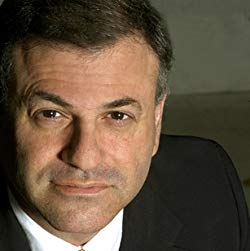
7b9eb7f66ad81e7c754c2033b60642f5

I became a Koontz fan with the first novel of his I read, Lightning. I bought the paperback at a Sam’s Club in Houston; I went there with my mother on a visit. I’d heard of Koontz and seen his books everywhere, and I was in my I want to be a horror writer phase. Lightning was both clever and brilliant and smart, I thought, and I tore through it in no time flat–particularly enjoying the big twist that came in the middle. Basically, it’s the story of a woman who becomes a very successful writer, who has an ‘angel’ who shows up to save her in pivotal moments in her life–when her life is in danger. But it’s a lot more complicated than that…and it really is a great read. From Lightning, I went on to read the others than I consider his best: Phantoms, Watchers, Strangers, Midnight, and the ones that are probably lesser. I started reading his books when they came out in hardcover, but ironically, when he started writing the Odd Thomas series was when I stopped reading him. The novels had become more hit-and-miss for me; and the switch to writing a detective series–despite my interest in crime fiction–didn’t interest me very much at the time. I hadn’t enjoyed Peter Straub’s switch to crime fiction–Mystery, Koko, and The Throat, collectively known as the Blue Rose trilogy–which, while well-written, just didn’t gel for me. (I have occasionally thought about going back and rereading them; I might appreciate them all the more now.) Anyway, this Odd Thomas series didn’t interest me very much, and so I never read it.

Watching the film changed my mind.

Don’t get me wrong–the film is flawed–but it really is enjoyable to watch, and the mystery element of the plot is quite interesting and surprising and unpredictable. But the strongest part of the film, what holds it all together, is the late actor Anton Yelchin, in the lead.

kinopoisk.ru

Yelchin is best known for playing Chekhov in the reboot of the original Star Trek movies; he was tragically killed when his car rolled down the driveway, pinning him against the gates to his home and he suffocated–his lungs were crushed. (What a horrible way to die, really.) He was good in the Star Trek movies, and kind of cute, but he really shone in Odd Thomas, where he basically carried the film, and his charm and charisma absolutely worked. The role didn’t really require a great deal of heavy lifting from him as an actor–basically, he simply had to be likable, but he really pulled it off. He had that indefinable thing we simply refer to as charisma or star quality; and again, what a shame he died so young.

I think he probably would have wound up being a really big star.

And maybe I’ll go back and read the books.

And now back to the spice mines.