Mickey

My wonderful book about the classic horror novels of the 1970’s thru the 1990s, Paperbacks from Hell, attributed the boom in horror fiction to three bestselling novels that set the stage: Thomas Tryon’s The Other, Ira Levin’s Rosemary’s Baby, and William Peter Blatty’s The Exorcist. I read all three of these books when I was in junior high school; the Tryon and the Levin remain two of my favorite novels, and I reread them periodically. But after reading The Exorcist one time, I’ve never felt the need to have a copy on hand, nor have I ever felt the desire to go back and reread it. It did occur to me sometime within the past few years that I should give it another go; my primary memory of the book is, of course, the crucifix masturbation scene which everyone in the seventh grade discussed in breathless whispers whenever someone new had read the book. I may not have ever owned a copy; I may have borrowed it from someone. There were any number of paperback copies floating around my junior high school, the binding bent and broken and covers battered as they were passed around from kid to kid. It also occurred to me that many of my memories of The Exorcist were not from the book, but from the incredibly disturbing film; it was a huge hit and was nominated for ten or eleven Oscars (winning maybe one or two). Mike Oldfield’s “Tubular Bells,” used extensively in the score, was also hugely popular. (All three of the books were made into films; The Other the only whose film version wasn’t a success–but it’s hard to see how it could have been filmed successfully; although it would be really cool if someone tried it again.) So, Labor Day morning, I took down the copy of The Exorcist that I bought recently and read it again.

the exorcist

The Exorcist is undoubtedly an important work in the horror genre; it helped create a boom and directly resulted in a lot of really talented writers getting some great books published over the next thirty years or so. I had noticed, though, that not many people who write horror ever include it on those “Best Horror” lists, or list it as an influence. I read a book in the last year or so that was undoubtedly influenced by The Exorcist; Paul Tremblay’s A Head Full of Ghosts, which I really enjoyed and also put me in mind of a reread of Blatty’s blockbuster. The fact that Blatty is a homophobe made me a bit uncomfortable going back to the book–okay, he may not be a homophobe, but he certainly felt welcoming and admitting LGBT students at Georgetown University meant the school had betrayed its Jesuit heritage and should be stripped of its standing as a Jesuit university (you can read about that here: http://www.nytimes.com/2013/08/04/education/edlife/how-georgetown-became-a-gay-friendly-campus.html?mcubz=1).

So making millions of dollars about a child masturbating with a crucifix is kosher–I guess because, literally, the devil made her do it–but treating LGBT college students as human beings is a crime against Catholicism. Got it.

And to be fair to Mr. Blatty, I only vaguely remembered the above incident; and wasn’t 100% sure I was correct, so that didn’t play into my reread of the book (I didn’t go looking into it until this morning, while actually writing this entry).

Part of the issue with The Exorcist is that once you are aware of it, it’s really not that shocking anymore. This book was a shocker when it was first released; it was denounced far and wide as demonic–including by the Catholic Church (which is even more perplexing on the reread, because the book is very very Catholic), and the scares involved how shocking it was. I seem to recall Blatty based the book on an actual case of an exorcism from the early 1960’s, or perhaps the 1950’s–I don’t recall exactly. So, after forty-odd years the shocks and scares are no longer shocking or scary; my memory of the first read of the book is vague so I cannot remember if it was more pruriently shocking or if it was, indeed, scary to the twelve year old who read it all those years ago. But knowing the story, and what is coming, and knowing that the shock value has completely worn off in the intervening years, I was able to read it and evaluate it simply as a novel.

And it doesn’t, sadly, hold up very well.

I was torn about blogging about The Exorcist, because I generally don’t like to criticize other writers and other books publicly; but it’s an old book, and the author has made a fortune off it. There’s also the suspicion that knowing how homophobic the author is might have played into my disappointment in the reread, but let me give you some sentences:

Looking down at the pain in those sensitive eyes, Chris surrendered; couldn’t tell her what she really believed. Which was nothing.

In fact, Chris had smelled nothing, but had made up her mind she would temporize, at least until the appointment with the doctor. She was also preoccupied with a number of other concerns.

She seemed to be thinking, and still in this posture, she stepped outside and joined her son, who was waiting on the stoop.

Her eyes still on her notes, Sharon probed at the silence in a strained, low voice.

Chris looked at him appraisingly, with gratitude and even with hope.

There are lots more examples; weird analogies, and strange character behavior. It’s also really hard to tell who is the main character. Chris MacNeil, the mother, is a divorced atheist actress; her marriage failed, according to the book, because her husband couldn’t bear being Mr. Chris MacNeil; his wife’s success and fame was too much for his ego to handle, and Chris not only understands but doesn’t blame him. He is a neglectful father to Regan, which also doesn’t bother her too much. She is renting the house in Georgetown because she’s appearing in a movie being filmed there, a musical remake of Mr. Smith Goes to Washington which has an added subplot about campus unrest and protests (which sounds absolutely terrible) shoe-horned in; her main home is in LA. Yet once her role in the movie is finished, she stays in Georgetown inexplicably; Regan is being home-schooled by Chris’ secretary, who does double duty as Regan’s teacher–so there’s no reason for them to stay other than the fact that it’s necessary to the plot for her to remain in close proximity to Georgetown University’s campus. The filming is over before the possession truly gets going; so…

There are also some bizarre behaviors exhibited by Chris as well–she will have an encounter with her strangely acting daughter, be terribly upset, and then go downstairs and have a pleasant conversation with her housekeepers about the film they went to see. It becomes very difficult to have sympathy for her, because she isn’t really fleshed out as a character. The book is also told from an omniscient point of view, so the reader has a very hard time engaging with the characters or feeling deep sympathy for them; certainly it’s hard to identify with any of them. Sharon, the secretary, is a complete cipher; as are the Swiss couple who work as housekeepers. Burke Demmings, the director of the film and a friend of Chris’, is a vicious and cruel drunk who openly mocks her servants; which she just dismisses as “oh, that’s just Burke.”

Because her housekeepers aren’t people who should at least be treated with a modicum of respect as human beings?

The police detective who becomes involved in the case–Burke ends up dead at the foot of the steep staircase down to M Street behind the house–is incredibly annoying; he never gets to the point and dances around the subject and is one of the most unbelievable cops I’ve ever encountered in fiction; he seems a bit like Columbo, but at least the viewer knew that Columbo was actually incredibly smart and that was his method. You never get that sense with Detective Wilderman; he’s just annoying.

Father Karras is by far the most likable and interesting character in the book; and I suppose the reason it’s called The Exorcist. Damien Karras (it’s funny; at the time the book was published the name was unusual but interesting; of course The Omen has forever altered the perception of that name) is having a crisis of faith; his own homosexuality is hinted at but subtextually; his ‘friendship’ with Father Dyer is hinted at, they have a lightly teasing homoerotic kind of friendship but it’s never really gotten into; although one of the insults the demon throws at Karras is an accusation of homosexuality, which rattles him. There’s also a scene where Father Dyer mentions that ‘the gays are leaving the priesthood in droves.’

But the underlying premise, and theme that drives the book, is that Catholicism is real, the one true Faith; even though the demon is apparently an old Babylonian god named Puzuzu–who predates Catholicism and Jesus–the power and faith can defeat him. The ultimate sacrifice of Father Karras in taking in the demon and then killing himself–what happened to the demon? What happened to his soul? Does he redeem himself with this act?

Father Karras was interesting to me (he is constantly described, not just in the text but by characters, as ‘looking like a boxer’–whatever that means: “they told me you looked like a boxer”.) as a character, and I would have loved to have seen the entire story through his eyes; the loss of faith, his struggle with choosing the church over his mother; the relationship with Father Dyer; his doubt that Regan is actually possessed and the slow dawning that demons, and therefore, his faith, are real; and why he would make that ultimate, final sacrifice.

I’m glad I reread the book, even though it was kind of disappointing. I greatly enjoyed the television series, which was recently renewed for a second season (yay!), and it is an important book in the genre; no matter what quibbles I have with it, its importance cannot be denied, and I think horror aficionados should read it.

Der Kommissar

Yesterday was, for want of a better word, odd.

Driving to work the city was a ghost town. Driving home from work, the same. This morning the sun is shining (we did have thunderstorms during the night) and while everything outside is wet and dripping, according to the forecast we have about a three hour window of heavy thunderstorms this afternoon. We might flood during that time, but when I drove home last night there wasn’t much standing water anywhere, other than around Coliseum Square, the lowest part of the neighborhood and where all our water seems to drain.

I woke up after a good night’s sleep to see that wretched Harvey has come ashore again, battering and flooding yet more of Texas–Beaumont and Port Arthur; I’ve not researched enough yet to see how things are around the Texas-Louisiana state line. It’s almost too much; I’m not having Katrina PTSD, thank God, as so many others here seem to be suffering; but I just keep donating what I can and sharing links to places where donations can be made.

Human suffering on such a large scale in our country is horrific; it’s occurring on an even larger scale in Bangladesh right now as well.

I haven’t written on the new book, or worked on inputting the line edit, as much as I should have these past few days; I know I need to focus and get on with it, but it’s difficult to not watch the Weather Channel or the news.

I did start reading Patricia Highsmith’s The Cry of the Owl last night, it’s quite good and melancholic, which kind of suits the mood I am currently in. I also reread some history last night (Leckie’s The Wars of America, one of my favorite comfort rereads) while watching the news.

Tickets for this Saturday’s LSU game go on sale to the general public today at 4; I am going to try to score some tickets for us.

And on that note, it’s back to the spice mines. Here’s a hunk for you, John Cena:

IMG_1781


Mr. Roboto

I finished the line edit yesterday, thanks be to the baby Jesus. Now I have to input it into the document, but the worst part–the actual line by line edit–is done done done. Huzzah! Huzzah!

I lived in Houston for two years, and of course, my parents lived there over ten. So, I feel connected to that city as well–not to mention all the friends I have there, and my favorite specialty bookstore, Murder by the Book, so my heart breaks every time I see the flooding pictures, videos, and the posts. Keep Houston in your hearts, everyone, and know they are going to need help. Twelve years ago it was New Orleans, and Houston opened its heart to us. Never forget. Rebuilding Houston is going to be a long and incredibly challenging process. We need to be there for our fellow Americans.

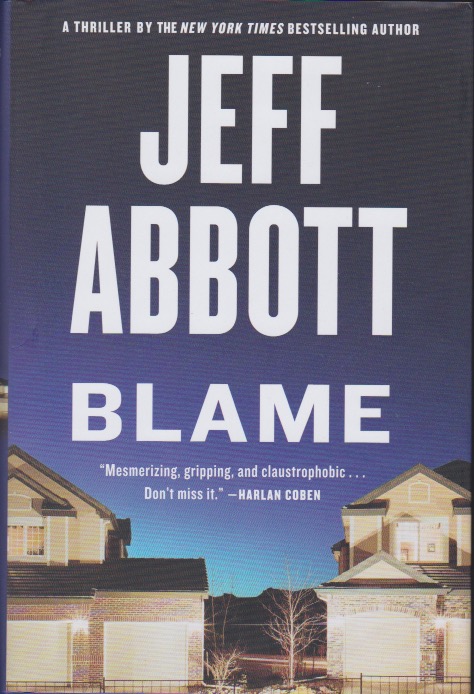
I spent the rest of Sunday–pre-Game of Thrones epic season finale, reading Jeff Abbott’s extraordinary Blame.

blame

What she would never remember: their broken screams starting with I love…and I hate…, the sudden wrenching pull, the oh-no-this-is happening-this-can’t be-happening feeling of falling as the SUV rocketed off the road, the horrifying downward slope of the hillside in the headlights, his hand tight over hers on the steering wheel, the smashing thunder of impact, the driver’s-side airbag exploding in her face, the rolling, the lights dying, the unforgiving rock, and then the blow to her head that undid her and wiped her clean and made her new.

The old Jane died; every version of David died. The new Jane, product of a dark night’s fury and tragedy, knew nothing more until she woke up four days later, remembering nothing, not her name, not her mother’s face, the crash, what had happened to her in that hospital bed, or any of her past seventeen years. Slowly the memories began to seep back: her birthdays when she was a child, cake sweet and soft on her lips; the smoky, rich aroma of her grandfather’s pipe matched with the woolly smell of his tweed jacket with leather elbow patches; her mother’s favorite lavender soap; the notebook she’d filled with short, dark adventure stories one summer and proudly read to her dad; the faces of her teachers; the smile of the librarian who’d give her stickers during the summer reading program; the feel of her hand in her father’s palm; the faces and the laughter of her friends when they were kids.

Sometimes the memories felt immediate; sometimes they felt like something she’d seen in a film, present but distant, nothing to do with the person she was now.

Except for the past three years.

Jane was seventeen, but as the memories surged back, she was stuck at fourteen. Those last three years were gone, all the joy and drama of her high school life, lost in the damage and the trauma. Including those mysterious, unexplained last few hours, when she was with a boy she wasn’t supposed to be with, when she was out doing God knows what. The girl lived and eventually limped back into the bright sunshine, and the boy died and went into the cold ground, a secret sleeping with him.

And so the world she knew turned against her.

Except someone watched, and waited, and wondered how much of that night Jane Norton really remembered.

Amnesia. While not nearly as common as soap operas make it seem, it’s an actual thing. I did a lot of research on amnesia when I was writing Sleeping Angel–most of which I’ve actually forgotten–but if done right, amnesia is an excellent foundation for a crime novel/thriller.

Jeff Abbott has done it right with Blame.

Two years have passed since the terrible accident that took Jane’s memory and killed her neighbor, David–one of the most popular boys in their high school in an affluent section of Houston. Jane’s early memories have come back, but she doesn’t remember high school before the accident, or the tragic accident that killed her father when she was a freshman. Hated and resented by many of her classmates, she’s now homeless, sometimes crashing in one of her few friend’s dorm rooms in a local college. Her mother is too much for her to handle–think Mildred Pierce on steroids–and of course, David’s parents also still live next door; his mother hates her and makes no bones about hating her. Her mother refuses to sell the house, and David’s parents are splitting up. On the anniversary of the accident Jane unfortunately encounters David’s mother Perri at David’s grave, which turns into an incredibly ugly altercation when Perri attacks her; Jane’s Uber driver records it all–and it goes viral.

At the same time, someone named “Liv Danger” is going after Perri on social media–Jane as well–and soon other people involved somehow, even peripherally, the night of the accident are under attack. Slowly but surely, Jane has to slowly start piecing together what happened that day as the Liv Danger’s behavior becomes more and more menacing and dangerous…and other dangerous characters are getting involved.

This book was, quite simply, an extraordinary read. The tension begins on Page One, and not only does it not let up, it builds. I literally took the book into the kitchen with me, reading while I was making dinner because I couldn’t stop, didn’t even want to take twenty minutes away from it because I had to know what happened that night! 

I cannot recommend this book highly enough, but along with that recommendation comes this warning: set aside a weekend to read it because you won’t want to put it down.

Easily one of my top reads of this year.


Jeopardy

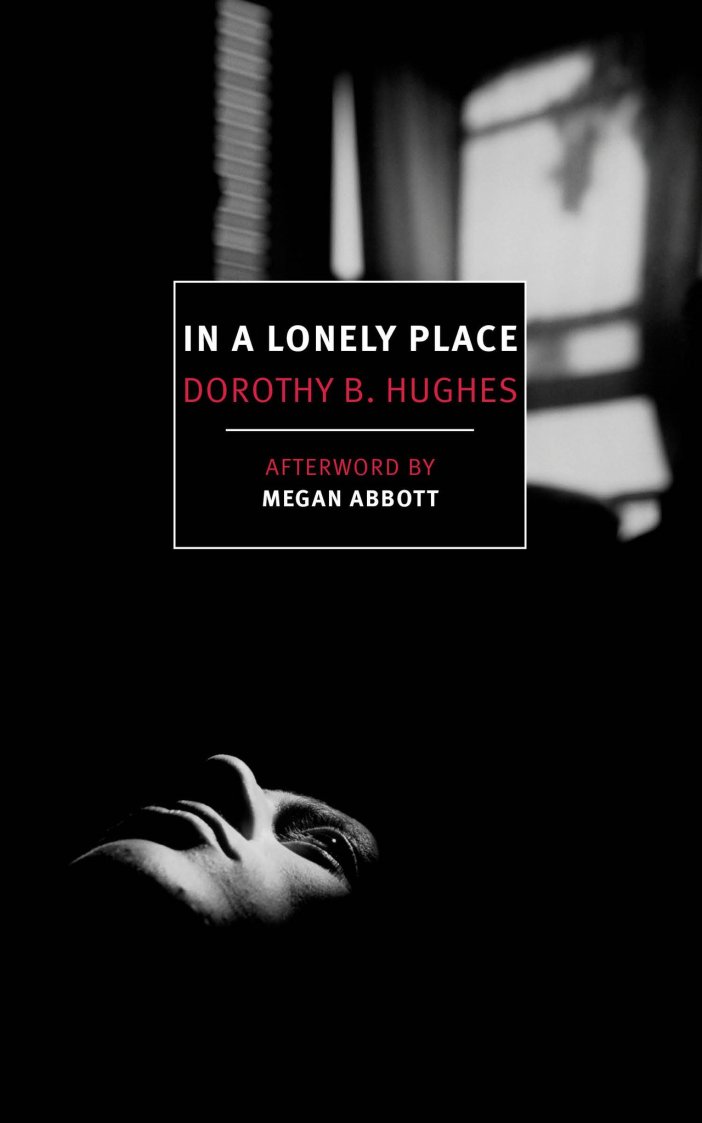
So, yesterday was my birthday. Fifty-six officially; although I always add a year to my age on New Year’s Day for the sake of simplicity. I had some trouble falling asleep on Saturday night; a combination of restlessness and heartburn. I wound up sleeping in till almost ten; which is late for me but since I didn’t really fall asleep until around three in the morning it wasn’t that much sleep. But I had a lovely day, really. I kind of just laid around and reread In a Lonely Place by Dorothy B. Hughes, rewatched The Philadelphia Story on TCM (Katharine Hepburn and Cary Grant were both robbed of Oscars), then watched The Nineties and The History of Comedy on CNN before finally watching last night’s Game of Thrones.  I also thought about the new Scotty some; I have today off from work as my birthday gift to myself, so I plan on doing some writing, line editing, and revising, and thinking about what I’m going to write next before actually sitting down at the computer is always a wise thing to do (although usually I never had the time to do that, thanks to deadlines). There’s a serious moral dilemma coming for Scotty in this book; one that really has been needing to be dealt with in the series for quite some time, but I’ve dodged it and avoided it; this is the book where I am finally going to have to have him face up to it, the way I am bringing it to the forefront so he can no longer avoid it is, if I do say so myself, rather clever.

Or it’s just going to be a steaming pile of shit. There’s no middle ground, really.

It was kind of fun to reread the Hughes novel; it is a masterpiece of noir that has been sadly overlooked for many years. Hughes was an exceptional writer, and I do admit that opinion is based on my having read only two of her novels, this and The Expendable Man (which, sadly, was her last and published in 1962). It’s not easy to find Hughes’ novels. I do feel safe in calling Hughes one of the best writers of her generation, and certainly one of the best noir writers of all time, based on those two books because they are just that good. I do have a copy of her The Blackbirder, which I want to read before the end of the year. In A Lonely Place was also filmed, directed by Nicholas Ray and starring Humphrey Bogart and Gloria Grahame; the film is significantly different from the novel, but it’s also outstanding. The new edition of the novel, from New York Review Books (who also have republished The Expendable Man and The Blackbirder), includes an afterward by the wonderful Megan Abbott, who is not only one of this generations greatest writers but also one of crime fiction’s most knowledgeable critics; her literary criticism is intelligent, thoughtful, incredibly well-written, and certainly puts me in my place whenever I am lucky enough to read some of it; I would love to read her study of literary and film noir, The Street Was Mine. (Whenever I read her criticism, any thoughts I might have about pursuing academic criticism–gay noir, gay representation in crime fiction, the heyday of romantic suspense from the 1950’s till its unfortunate death in the 1980’s–go out the window.)

Her all-too-short essay in the back of this edition alone makes the cover price worthwhile.

hughes.final_hi-res_2048x2048

It was good standing there on the promontory overlooking the evening sea, the fog lifting itself like gauzy veils to touch his face. There was something in it akin to flying; the sense of being lifted high above crawling earth, of being a part of the wildness of air. Something too of being closed within an unknown and strange world of mist and cloud and wind. He’d liked flying at night; he’d missed it after the war had crashed to a finish and dribbled to an end. It wasn’t the same flying a private little crate. He’d tried it; it was like returning to the stone ax after precision tools. He had found nothing yet to take the place of flying wild.

It wasn’t often he could capture any part of that feeling of power and exhilaration and freedom that came with loneness in the sky. There was a touch of it here, looking down at the ocean rolling endlessly in from the horizon; here  high above the beach road with its crawling traffic, its dotting of lights. The outline of beach houses zigzagged against the sky but did not obscure the pale waste of sand, the dark restless waters beyond.

He didn’t know why he hadn’t come out here before. It wasn’t far. He didn’t even know why he’d come tonight. When he got on the bus, he had no destination. Just the restlessness. And the bus brought him here.

Isn’t that an incredible opening?

Not being an expert in crime fiction–there’s so much of it to read, and there’s more new stuff all the time, so it’s hard to keep up with the new let alone trying to read everything already published–I am unable to place In A Lonely Place into any kind of context as far as the history of crime fiction is concerned, but Abbott does this beautifully in her afterward. But it’s very clear in this opening paragraphs that Hughes is addressing alienation in this book, and toxic masculinity, which may have seen its ultimate pinnacle in the second World War (the alienation of returning veterans, and the difficulty of readjusting from war to peace was also being addressed in films like The Best Years of Our Lives) and by having Dix, her main character, pretend to be writing a novel also took on the glut of post-war war novels that so many returning soldiers were writing; novels that continued to proliferate for several decades beyond the war.

The first time I read the book, having already seen the film, I was more focused on the story itself rather than an examination of how deftly Hughes creates her story, the language and imagery she chooses, and the nuanced way she creates her character. On this read, knowing how it’s going to end, I was able to pay more attention to these things, and was able to marvel at how brilliant the entire package is.

A recurring motif in the novel is fog; Hughes uses the fog as a metaphor for the fog in Dix’s brain; and we are never sure when Dix’s mind changed, making him lethal. He was raised by a puritanical uncle, Fergus, who is currently supporting him while he writes his novel–but there is a limit to the support, and while in our time $250 a month may not seem like much, at the time of the novel it was a fortune, just over $2500 in today’s dollars. Dix’s resentment of the uncle–we never learn what precisely happened to his parents–who is rough on him and has always made him work, even when he was in college at Princeton trying to fit in with the idle rich sons of privilege and then goes into detail how humiliating it all was, doing things for them for ‘tips’ until he could manipulate events to make it look as though he were the wealthy one and the sad unfortunate, unpopular boy he used for money were the dolt. In this way, Hughes also makes a sly commentary about class and privilege (which, in my opinion, she does far better than Fitzgerald did in an entire novel with The Great Gatsby, and she does it only in a few pages). So, there was always some kind of a chip on Dix’s shoulder; the war simply gave him a way to channel that anger and discontent and alienation. Now the way is over, and Dix is having to find a new way to channel those diabolical energies–and he does, in committing murder.

The entire tale is told through Dix’s perspective, which also makes him one of the first unreliable narrators in crime fiction. (It was done before, but never quite so lethally.) So, when we see the other characters–and there are only three: his old war buddy Brub, now a police detective; Brub’s wife Sylvia, whom Dix despises on first sightl and of course, the love interest, Laurel Gray–is she the femme fatale he thinks she is, or is that just a product of his own warped sense of right and wrong? Who is Laurel, of the reddish gold hair and the tempting figure? Is she the hard-as-nails user he thinks she is, or is she an entirely different character altogether?

In  A Lonely Place is a masterpiece of noir, and hopefully, this edition will elevate Hughes to the position both she and the book deserve in the annals of our genre.

And now back to the spice mines.


She Works Hard for the Money

Tuesday.

I had yesterday off, which was most lovely, and I spent the day relaxing, making lists, writing, editing, reading, and cleaning. I made shrimp creole for dinner, which was fabulous, and then we watched the series finale for Orphan Black. I am going to miss the sestras; it was quite a thrill ride for five seasons, and Tatiana Maslany’s talent is truly amazing.

I didn’t get as much writing done as I would have liked, but sometimes just being able to reflect and think is just as effective as actually writing. Plus, I kind of needed a rest. I am going to get some more writing done today, and I am going to finish the second half of the WIP line edit, and then tomorrow (a twelve hour day) I am going to hopefully get started on the first half of the manuscript’s line edit. I can’t believe how long it’s taken me to get this done; and then I am going to have to story edit one more time just to make sure. I want to be able to start sending it to agents after Labor Day. I want to get the first draft of this Scotty finished by mid-September as well, then let it sit for a month or so while I write this noir I’ve been wanting to write for a while. I think the working on something different between drafts is working for me. It doesn’t make sense in any sort of writing universe to write this way, but it’s working for me and as I always tell beginning writers–find whatever system works for you, even if it doesn’t make the slightest bit of sense to anyone else.

I am also way behind–and off the rails–for short stories. I need to get back to “For All Tomorrow’s Lies” soon; it’s due for an edit/revision, and I never did finish that draft of “Quiet Desperation.” Heavy heaving sigh. I think there’s another one I was working on–oh, yes, “This Thing of Darkness,” and some others, too, that never quite got finished. This creative ADD needs to stop.

I need to make a list, is what I need to do.

Heavy heaving sigh.

I’m really enjoying Journey Into Fear. The action has now moved from Istanbul to on board a ship, sailing to Genoa with Our Hero, whose life is in danger. I love these kinds of stories; and miss them. The change from trains and ships as means of transportation has kind of eliminated them as settings for crime novels and thrillers; there will be no more books like this or Murder on the Orient Express, which is really unfortunate. The whole air of being away from everyone else in the world, isolated on a journey with only your fellow passengers, any one of which might be the murderer/spy/assassin,  that whole claustrophobic feeling–an author has to really push themselves and their creativity to come up with a way to isolate the characters and seal them off from the rest of the world these days. Rebecca Chance did this beautifully in her novel Mile High, set on a luxury airliner on a flight from London to Los Angeles; Nick Cutter’s The Deep set his novel on a sealab at the bottom of the Marianas Trench (and that sense of claustrophobia was so beautifully portrayed in that novel that just remembering it makes me shudder). It is still possible, of course, to do something along the lines of And Then There Were None, where the characters are stranded on an island and cut off from the rest of the world; the single season suspense show Harper’s Island did this nicely…I’ve always wanted to do one of those types of novels, and Scotty would be the perfect character for such a book, I think, but I can’t for the life of me figure out how to make it work. I guess I’ll just let it sit in the back of my head until I get one of those a-ha moments that I am always afraid I’ll stop having.

And now, back to the spice mines. Here’s today’s hunk for you:

17799041_1312232648824796_1105402056845445771_n

Come on Eileen

Saturday! I managed to finish Chapter One last night and started Chapter Two; huzzah! They are crap, of course, but I’ll worry about that later. I finally got a good night’s sleep today; I have Wacky Russian this morning, have to go to the office to work for a bit, and am going to make a Costco run on the way home. (Just a minor one.) It’s so nice to feel rested; I am hoping that tonight I’ll be so worn out I won’t have any choice but to sleep deeply and well.

I can dream, at any rate.

My weekend this weekend is actually, therefore, Sunday and Monday; it’s going to be strange to have Monday off–next weekend is my birthday, so I am taking a three day weekend to celebrate–so I am, of course, hoping to get some more Scotty written, some more of the line edit finished, and maybe revise a short story or two. Ambitious plans, to be sure, but I am nothing if not overly ambitious. We’re also trying to find a new show to watch; Orphan Black ends this weekend, Game of Thrones only has a few more episodes to run, and  I suspect Animal Kingdom is also approaching its season finale. We never did finish the final season of Bates Motel, though, and there have to be some other shows out there that we just haven’t discovered yet, or forgot we watched.

I want to finish reading Journey Into Fear this weekend so I can get started on my annual reread of The Haunting of Hill House. I think I might read something more noirish after that; not sure what, but there are plenty of things for me to read around the house, believe you me. Maybe I’ll do something I’ve really grown to love over the last year or so–a short story challenge, where I read a short story every day and then blog about it. I do love short stories, and I really would like to write more of them. I’d love to do a collection of my crime and horror short stories…perhaps by the end of the year I would have enough of them on hand to actually put a collection together. (I may already have enough; I’m not sure, but I’d love to have some new, unpublished material.) Maybe I’ll wait and do short-story September, which would be way fun.

And on that note, I think I shall head off to the spice mines. Here’s a Saturday hunk for you viewing pleasure, Constant Reader:

12080430_533297293519037_1631020858_n

Sweet Dreams (Are Made of This)

Tuesday morning, and my windows are covered in condensation. Nothing new there, of course, but at least I can see blue sky and sunshine through the beads of water. Perhaps today will be our first day this summer without rain? Stranger things have, of course, happened.

I got quite a bit done on the line edit yesterday; at some point I am going to have to input all of this work into the e-document, and I will be very curious to see how much I wind up cutting. As I go through the manuscript, line by line, I am amazed at how often I repeat myself, or how often an entire paragraph is simply a series of sentences saying the same thing only in different words. A very strong push this week, and I might actually have the entire line edit finished by the end of the weekend. It’s not very likely to happen, but there’s always a possibility. My friend Lisa will be in town later this week, and I am going to try to see her for at least a drink and perhaps dinner. I don’t see her enough as it is.

I also got some work done on the Scotty book yesterday as well. The story is starting to take shape in my mind, and I need to get a strong first chapter together before I can get going on the rest. I am trying to take what I can from the several different versions of a first chapter I’ve already started; I think I can make the whole thing come together–at any rate, that’s my goal for today. I hope to get at least two more chapters finished this week, if not more. I also want to revise a short story. It will, I suppose, depend on how much energy and how much time I have.

I am still processing Sunday’s episode of Game of Thrones, “The Spoils of War,” and I also can’t stop thinking about Owen Matthews’ The Fixes. There’s an essay I’d like to write, about straight people writing gay characters that reading this book put into my mind, but it’s not really taking form and I am not really sure if it will–the curse of a creative imagination; too many ideas. But The Fixes is so incredibly well written and well done you’d never know that Owen Matthews himself isn’t gay; but really, if you have any experience whatsoever with alienation, you should be able to write believable gay characters; alienation is the key, now that I think about more deeply, and I wish I had thought of that before I taught my character building workshop at SinC Into Good Writing last September here in New Orleans.

Alienation, in fact, is a constant theme in Harlan Ellison’s oh-so-brilliant work.

Paul and I are thinking about going to see Dunkirk this weekend; whether we actually do or not remains to be seen. I have to work on Saturday, and as such my weekend shall be Sunday and Monday; having a Monday off will actually be rather lovely.

And on that note, I am heading back into the spice mines before I head into the office.

Here’s a Tuesday hunk for you, Constant Reader:

17523292_1312370308811030_8446342023757121711_n

Maniac

Monday morning in New Orleans, after a crazy kind of weekend that included insane street flooding and torrential rains. My neighborhood doesn’t flood quite as bad as others–we’ve had high water on our street, but it rarely lasts for long–because two blocks from the house is Coliseum Square, which is much lower (as is Camp Street on the far side of it) and serves as a kind of flood basin for the neighborhood (which was WAY fun when we lived on Camp Street; my car flooded once and we got water all the way up to the top step–of six–outside out front door). I didn’t work much on the line edit (read: not at all) because I was too busy reading, first Lyndsay Faye’s brilliant The Gods of Gotham, then Owen Matthew’s epic The Fixes, and then I started reading Eric Ambler’s Journey Into Fear. (I’ve not read Ambler before) We also got caught up on Orphan Black, and continue to muddle along with The Last Tycoon, which is quite visually stunning but more than a little dull. (And just HOW do you make 1930’s Hollywood dull? Nicely done, F. Scott Fitzgerald.)

Game of Thrones was just EPIC last night. Oh my God, was it ever epic. I won’t post spoilers for those who may not have seen it yet, but all I will say is finally. I’ve been waiting for that episode ALL SEASON. Huz-fucking-ZAH.

So, I read Owen Matthews’ The Fixes yesterday. Owen Matthews is the name Owen Laukkanen uses to write young adult fiction (his first was How to Win at High School, which I have but is still in the TBR pile), and as Owen Laukkanen he wrote one of my favorite books of last year, The Watcher in the Wall (I may have read it this year; my memory has truly become a sieve). Owen and I are on a panel at Toronto Bouchercon this year–while the schedule hasn’t been posted yet, I was curious as to why Owen was on a panel called “Reading the Rainbow”; but I haven’t read all of his work as of yet. The panel moderator and I were talking the other day and I brought that up, at which point I was told he does write gay characters, and in fact, one of the main characters in The Fixes is gay. I moved the book to the top of the TBR pile, and tore through it yesterday afternoon: it is a quick read, and moves really fast.

the fixes

This is a story about a boy’s first crush, and how it blew up in his face.

And all of its explosive consequences.

(You know what? Forget it.)

Let’s start over.

Let me tell you why E set off that bomb.

Eric, or E, as he comes to be called by his friends over the course of the novel, is the son of a state senator, the grandson of yet another politician, and has been raised to understand that he isn’t just anyone; he is a CONNELLY MAN and he has to live up to the family name–maybe even so far as eventually running for president. Eric has given up a lot to live up to his father’s expectations, and is more than a little resentful. As a sophomore, Eric had dated Paige but soon realized he was more attracted to guys than girls…which as a CONNELLY MAN could prove problematic. His future is laid out for him completely, and he is giving up the summer before he starts college to intern at a legal firm his father used to work for. And then, a chance encounter in the office at his high school with Jordan Grant, the gorgeous son of a wealthy filmmaker, derails his entire summer….and possibly his future as well.

Soon, Eric (E, as Jordan likes to call him) has a full blown crush on Jordan, even though he seems to be involved loosely with Haley. All four of these kids–they live in a Malibu-like, affluent wealthy town called Capilano–have some damage: Paige’s father is going to be tried for embezzling and misleading investment clients (a la Madoff); Haley’s mother is a model who idealizes her eldest daughter, a successful model, and is always putting Haley down and making her feel bad about herself, which led to an eating disorder and a stay in a hospital; E himself is struggled against the life path his father has chosen for him; and Jordan is…well, what exactly is Jordan’s damage?

I don’t want to spoil anything, but suffice it to say that the group becomes involved in ‘fixing’ things around Capilano; injustices they step up to correct. And as E becomes more deeply involved in the fixes, as his own life path begins to spin out of control and he falls deeper and deeper under Jordan’s spell..the book continues racing along at a frenetic, insane pace that makes it impossible to put down until it’s finished.

It was also lovely to see a novel, published by a mainstream press and written by a non-gay author, that so carefully, conscientiously, and sympathetically explored the struggle and complexity of coming to terms with a sexuality that does not jibe with family expectations, as well as the emotional grappling with how can I not be my true self for the rest of my life?; not to mention the emotional complexity of falling in love for the first time.

The story is intricate as well; this is a fine example of young adult noir, the kind the amazing Jay Bennett used to write.

Highly recommended, and really looking forward to reading How to Win at High School.


Billie Jean

So, I didn’t get any writing done yesterday because I sat down with Lyndsay Faye’s The Gods of Gotham at long last, intending to read only one chapter–and then the next thing I knew it was time to make dinner and I was on page 100. Reluctantly I put the book down and made dinner; after which we watched Orphan Black, Game of Thrones, and the first episode of Amazon Prime’s The Last Tycoon before repairing to bed for the evening. Lyndsay’s book is extraordinary and exceptional; I’m both sorry and glad that I waited so long to read it–glad because I am clearly going to love every word of it; sorry that I could have savored it so much sooner. Heavy sigh.

So many books, so little time.

I am greatly enjoying this season of Game of Thrones, and am very curious as to how it is all going to shape up. Last night’s episode was terrific; when the credits started rolling I was like, “it’s over already?” That’s always a good sign, frankly; and Dame Diana Rigg’s final line as Lady Tyrell was just absolutely perfect.

We then switched over to Amazon Prime to try out The Last Tycoon. I’ve never read the Fitzgerald novel because, frankly, it was unfinished, and God knows I’d never want anyone to read anything of mine after I die that was unfinished. But I was curious to see this, as a sucker for old Hollywood. The show is set during the era of the big studios and their star system; where the studios crafted very careful images of their stars and turned out movie after movie after movie. My fascination with this time began when I was a kid and read Bob Thomas’ biography Selznick; I went on to read Tracy and Hepburn, biographies of stars like Spencer Tracy, Bette Davis, Joan Crawford, and Clark Gable, amongst many others; histories of Hollywood, and so forth. I’ve always wanted to write about that period; it’s really a great time for noir and crime, but again–research. Anyway, I was curious to see how the show was, and I was more than a little impressed. Fitzgerald had first-hand experience with Hollywood and the old studio system, and clearly the character played by Matt Bomer (who is just breathtakingly beautiful, and would be stunning in black and white) is based on Irving Thalberg; the genius producer with a heart problem who is aching to make the perfect film before he dies. Kelsey Grammer is also good, as always, as the studio boss, and the rest of the cast, none of whom I really recognized, are all good in their parts. There was also a big plot twist at the end of the first episode that I didn’t see coming, so kudos to that! It’s also filmed beautifully; the sets and costumes are spot on and everyone looks like they just stepped off the set of a 30’s movie. I am really looking forward to seeing more. I hope it’s not disappointing!

All right, back to the spice mines. Here’s a Monday hunk to get your week off to a great start!

IMG_1701


You Can’t Walk in Your Sleep (If You Can’t Sleep)

So, Ozark.

It was really the perfect thing to watch at this time, given my revived interest in Southern Gothic (Harry Crews’ A Feast of Snakes notwithstanding; I just need to find better examples of Southern Gothic to read, and every once in a while I’m going to come across something I don’t like; it’s just the odds, really).

But Ozark hit all the right notes, and combining great writing and storytelling with stunning cinematography, terrific acting in complex, multi-layered characters, and complicated relationships between those characters, and you get an amazing show. Ozark is just that; and I do hope it will be renewed.

download

Ozark is the latest in a series of television programs focusing on people who could be your friends or neighbors and are actually criminals. There were times when it reminded me of Weeds; I’ve heard other comparisons, like Breaking Bad and The Sopranos  as well. Marty Byrde, our main character, played perfectly by Jason Bateman (and back in the 80’s, who thought Jason Bateman would be the biggest star in that family?), is a numbers guy; he’s a partner in a very successful Chicago financial investment firm; he’s more of a look at the numbers and do the math kind of guy, while his partner is more of a dude bro salesguy; he makes the sales, but Marty is the one who takes care of the clients’ money and investments. In the very first episode, a Mexican drug lord, Dell, shows up with guns and goons, takes everyone in the firm hostage, and starts threatening them for stealing; everyone is killed–but Marty thinks quickly, promises to replace the money that was stolen, and launder it all; he decides to leave Chicago and set up shop at Lake of the Ozarks. His wife, played by the SUPERB Laura Linney (who makes everything better by just showing up), is having an affair and isn’t sure she wants to escape with Marty. Of course, Dell is having her watched as well–and alerts Marty to the fact she’s emptied their accounts and headed over to her lover’s apartment…the end result is her lover is thrown off the high balcony, literally landing at Marty’s feet when he arrives, and the Byrdes flee to Missouri to set up a money laundering business for the drug cartel in Lake of the Ozarks.

The writing is so crisp, the dialogue so real, and the characters are beautifully rendered and portrayed by the cast. Once they are at the lake, the Byrdes run afoul of some locals–the morally challenged Langmores, headed by teenaged Ruth; a star-making role for her portrayer, Julia Garner. Ruth is smart, battered by life, and mean–she wants to get her and her family out of the trailers they live in and into a better life; the developing relationship between her, her cousins, and the Byrdes is one of the strongest prongs of the show. There’s also a gay FBI agent, whose partner was also his partner in their private life but they are no longer together, which makes working together for them a challenge; Agent Roy Petty is one of the more unlikable characters on the show, and it’s very interesting to see such a developed, unlikable gay character on television. He’s also part of one of the most clever and original gay subplots I’ve ever seen; but saying any more than that would give away spoilers.

The plot is so intricate, there are so many twists and turns, ups and downs, changes in direction that you cannot stop watching, nor can you let your mind wander–something small and seemingly insignificant in one episode can turn out to be really important later.

And the cinematography! Lake of the Ozarks, the surrounding forests and topography, are lovingly shot; and it’s also shot through a slightly darker lens, to make it all more beautiful and brooding.

I loved this show, was sorry to see the end of the first season, and can’t wait for it to come back.