Missing You

Sunday morning, and after a glorious night’s sleep I am wide awake this morning and pretty ready to give the day my best shot. The Lost Apartment needs to be cleaned, as always, and I am wanting to do some writing/editing today as well. I am going to go to the gym later today–it is my experience that going earlier wears me out, despite the endorphin high, with the end result I often don’t get any writing done. I want to work on revising and polishing a story to get it out of my hair–early submission, since the deadline is a long way’s off–and the same with another. I also want to get that Chanse story–the first one–revised and sent off somewhere as well; and in addition to all that revising I want to work on the Italy story.

My work, as it were, is cut out for me today, is it not? I’ll also probably finish watching season 2 of Versailles as well this evening.

Yesterday I got my contacts ordered and did some shopping at Target, which was lovely. I also went car shopping with a friend; he needed a ride and I took him out there. I merely sat there and read short stories from Sue Grafton’s Kinsey and Me; I finished all the Kinsey short stories yesterday, and read some others as well. I was, frankly, worn out by the time I got home but managed to finish the laundry somehow, despite being so tired; I also watched several episodes of Versailles before finally retiring for the evening once the laundry was finished. Paul moves into the hotel this Wednesday; tomorrow morning I am touring the FBI offices in New Orleans with the local Sisters in Crime chapter, and then Tuesday is my usual long day. Then of course the festivals kick into gear, and the rest of the week/weekend is utter and complete madness.

There’s also some filing needing to be done, as always. I’ve also renamed both the Italy story and the Chanse story–the Chanse title, “Glory Days”, only worked if it were his high school reunion, which I dropped from the story–and I think the new title of the Italy story is better.

Here are two of the short stories I read yesterday”

First up is “Trapped! A Mystery in One Act” by Ben H. Winters, from Manhattan Mayhem, edited by Mary Higgins Clark.

Setting

Studio L, an unremarkable rehearsal studio in a warren of unremarkable rehearsal studios, collectively known as the Meyers-Pittman Studio Complex, located on the sixteenth floor of a tall nondescript building in Chelsea, a couple blocks south and one long avenue over from Port Authority. The walls are mirrored; the floor is marked with tape; tables and chairs are clustered to represent the location of furniture on the real set.

Downstage right is a props table, laden with all manner of weaponry. The play in rehearsal is the Broadway thriller “Deathtrap” by Ira Levin, and the table displays the full range of weaponry called for in that show, viz., “a collection of guns, handcuffs, maces, broadswords, and battle-axes.”

This is an incredibly interesting twist on the short story; it’s actually a short story written in play form, and it’s also an homage to the classic thrilled play Deathtrap by Ira Levin. The play was an enormous hit on Broadway, and featured the wonderful Marian Seldes in a supporting role; she set a record for most consecutive performances by one actor in this play. Ira Levin is also one of my favorite writers. Deathtrap was made into a film; not as successfully as the play, alas; the film starred Michael Caine, a young post-Superman Christopher Reeve, and Dyan Cannon. What makes this story/play so clever is it’s a play on Deathtrap; which is a play about a play which basically tells the same story of the play–and this is a play about a murder during a production of a play about a play; complete with the requisite twists and so forth. Winters is an Edgar-winning author (for The Last Policeman), and one of my favorite novels of the last few years, Underground Airlines. if you’re not familiar with Winters, you should make yourself so. I loved this; clever clever clever.

It also reminded me of a crime short story I wanted to write about the production of a play. *makes note*

Next up is  “Fat” by Raymond Carver, from the collection Will You Please Be Quiet Please?

I am sitting over coffee and cigarets at my friend Rita’s and I am telling her about it.

Here is what I tell her.

It is late of a slow Wednesday when Herb seats the fat man at my station.

This fat man is the fattest person I have ever seen, though he is neat-appearing and well dressed enough. Everything about him is big. But it is the fingers I remember best. When I stop at the table near his to see the old couple, I first notice the fingers. They look three times the size of a normal person’s fingers–long, thick, creamy fingers.

When I talked about Barry Hannah several weeks ago, I mentioned that the other writer my professor in my second attempt at taking Creative Writing wanted us to read, whose glory we should bask in, was Raymond Carver. The only texts for the course were Airships by Barry Hannah and Will You Please Be Quiet Please? by Carver. We read two stories before starting on our short stories; I was unimpressed with both writers. Several years ago I decided to repurchase the collections and try them again (I’ll talk about Hannah another time) thinking that perhaps now, as a more mature adult and reader, I might appreciate them more. It wasn’t the case with Hannah, and it certainly isn’t the case with Carver, either.

I am not sure what the point of this story is; waitress waits on a large gentleman, everyone else on staff is mean and cruel about him whereas she is fascinated in him in some way; it’s rather oblique in its meaning, and in its ending; when she says she feels like her life has changed in some way, why? Why did this man have such an effect on her? It isn’t clear and maybe that’s the intent; is it the recognition of the casual cruelty of her co-workers and her boyfriend? Why is she so fascinated by this customer and how much he eats?

It’s a very small story, and rather intimate; I like the way Carver does his writing and tells his story, yet I fail to see the genius here in the actual story itself. I learn nothing about the waitress, not do we learn anything, really, about her customer other than he is polite, well put together, and enormous. Is it about the waitress seeing, and disliking, the casual cruelty of her co-workers and her lover, seeing them in a different way in their inability to see her customer as anything other than enormously fat, that his size somehow strips him of his humanity? Is that what Carver’s intent is, to be so vague and uninvolved with the story that it’s left to our interpretation? I honestly don’t know, and what’s more, I don’t care. I don’t care about this waitress. I don’t care about her friends. The authorial distance just doesn’t work for me. I’ll keep reading his stories, though–I read “Neighbors” for the class, and I remember it fondly–although it didn’t drive me to read more of Carver’s work.

I suppose this is why I am not a literary writer, and could never be one; my purpose is writing a story is to not only to tell the story but to make the reader understand the characters, get to know them, and hopefully empathize with them; to make, in the case of anything I write, to make the inexplicable explicable. I don’t get that from either Carver or Hannah, to be honest. Ah, well.

And now, back to spice-mining.

IMG_1980


You Give Good Love

It’s a gorgeous morning here in New Orleans; glorious because I had a deep and restful sleep overnight; relaxing because I am going to run some errands and do a favor for a friend a little later on. I was exhausted yesterday when I got home; I did some laundry, the dishes and some light cleaning, then settled down into the easy chair to watch this week’s Riverdale, and then ran a few episodes of Versailles on Netflix; as the Affair of the Poisons kicks into higher gear the show is becoming more interesting. We have also been introduced to the Duc d’Orleans’ second wife, Elisabeth Charlotte (Liselotte), the Princess Palatine; whose gossipy letters and diaries about life at Versailles are a treasure trove. Madame Scarron has also shown up as governess to the bastard children of Louis XIV and Madame de Montespan; those familiar with Louis’ story will know precisely who she is, and how important she is going to be.

I also watched Peggy Scott Laborde’s WYES show, Steppin’ Out, last night, because Paul made his debut on it talking about Saints and Sinners, alongside Susan Larson, who talked about the Tennessee Williams Festival. It’s hard to believe the events begin in just a few days; I’ve been so wrapped up in my short story writing that the time has simply flown and I was unaware that they were looming so near until some time this past week.

I also read some short stories last night.

Speaking of short stories, I’m trying to develop a plan and a working schedule for myself over the next few months. I was talking to a friend yesterday over lunch–the same friend I am doing a favor for this afternoon–which was more thinking out loud than anything else. The market for short stories has really dried up so much; there are very few paying markets for short stories out there any more–at least ones that pay decently–so that writing them has to be primarily for the love of the form; and of course, crime stories, being genre, have an even more limited marketability; crime stories about gay men even less so. When I started writing these stories back in January I purposely wasn’t writing about gay characters, themes or tropes for precisely this very reason. But the Chanse stories…well, Chanse is gay, even if the stories I am writing aren’t about gay themed; I will be curious to see how that plays out, as I intend to , once they are finished and polished, submit them to mainstream markets. Two of the other stories also have a gay male main character; so we shall see how that plays out. My story in the Bouchercon anthology is also about a gay character and the sexuality plays a factor in the story. Will it be as well received as “Survivor’s Guilt” was two years ago? We shall see; but that is what makes the writer so crazy, you know; maybe the story simply isn’t as good. There’s no way of ever knowing for sure, which, of course, is the path to madness.

So, anyway, the plan is to wrap up all of these stories by the end of this month, which will require focus and work; April I am devoting to the two novels, before diving back into something else for May. I’d love to start writing this noir novel that’s brewing in my head for years; perhaps with focus and hard work I can get it done in May. This does sound terribly ambitious, and I am very much aware of that. And see–if my under-caffeinated fog this morning I forgot all about the y/a manuscript I need to get revised; that was my original plan for May. Heavy sigh.

I also have read two more of the Lew Archer stories by Ross Macdonald collected in The Archer Files. First up was “The Sinister Habit.”

A man in a conservative dark gray suit entered my doorway sideways, carrying a dark gray Homburg in his hand. His face was long and pale. He has black eyes and eyebrows and black nostrils. Across the summit of his high forehead, long black ribbons of hair were brushed demurely. Only his tie had color: it lay on his narrow chest like a slumbering purple passion.

The sharp black glance darted around my office, then back into the corridor. The hairy nostrils sniffed the air as if he suspected escaping gas.

“Is somebody following you?” I said.

“I have no reason to think so.”

“The Sinister Habit” is the more than slightly sordid tale of the Harlans, brother and sister, who have some money and run a private school in Chicago. It is the brother who engages the services of one Lew Archer. His sister has eloped with a man he feels is going to rob her blind and steal all of their money; the sense is given that the brother–who is fussy and prim– is probably gay but it’s never addressed or talked about; it’s that casual homophobia thing I’ve mentioned before. Their mother ran out on them when they were children with another man as well; the mother lives in Los Angeles. The story becomes twisty and turny after that; the man the sister has run off with is one Leonard Lister, who may or not be a four-flusher, as they used to say. People switch sides, Archer keeps digging, there’s a murder and then a gunfight at the conclusion when the true murderer is finally revealed.

This not the strongest story, not one of Macdonald’s best,  but still a pleasant read; while the characters may not always work and the plot itself gets resolved far too neatly at the end, it is a fun read due to Macdonald’s writing style; there are excellent word choices and incredibly clever phrases.

Next came “The Suicide.”

I picked her up on the Daylight. Or maybe she picked me up. With some of the nicest girls, you never seem to know.

She seemed to be very nice, and very young. She had a flippant nose and wide blue eyes, the kind that most men liked to call innocent. Her hair bubbled like boiling gold around her small blue hat. When she turned from the window to hear my deathless comments on the weather, she wafted spring odors towards me.

She laughed in the right places, a little hectically. But in between, when the conversation lagged, I could see a certain somberness in her eyes, a pinched look around her mouth like the effects of an early frost. When I asked her into the buffet car for a drink, she said: 

“Oh, no. Thank you. I couldn’t possibly.”

The vast majority of the Archer short stories begin with someone walking into his office and engaging his services. “The Suicide” is one of those rare cases when a chance encounter somewhere draws Archer into a complicated investigation; in this case, it’s on a train from San Francisco back to Los Angeles where Archer meets a very beautiful young woman who appears to be in some distress. She doesn’t accept the drink offer because she’s not old enough to drink; but when he offers her food, she is more easily persuaded. She winds up eating two sandwiches and pouring out her tale of woe to Archer; she’s worried about her older sister. She is a student at Berkeley, and her weekly check from her sister hasn’t arrived; she has also called and called to no avail. No one seems to know where her sister is, or what has happened to her. Archer decides to help out this damsel-in-distress, and thus begins a wickedly twisting tale that includes a brutal ass of an ex-husband; Las Vegas mobsters; a fortune in missing money; and a horrific, disfiguring beating of a woman. It’s a clever tale; it works better than “The Sinister Habit,” and all of Macdonald’s writing strengths are here; great brief staccato sentences, whip-like descriptions, the world-weary cynicism. Perfection,

And now, back to the spice mines.

IMG_1995

Freeway of Love

Tuesday morning. My body is still adjusting to the stupid time change, which I’ve come to loathe with every fiber of my being as I get older. I mean, seriously, does it serve any purpose any more? Can’t it just be done away with once and for all? I was so tired the last two days I could barely function–and functionality is not something I can afford to do without for a couple of days. Sure, I managed to work on some short stories yesterday; but maybe I wrote a thousand words total if I was lucky. I did, however, have a breakthrough on one that I’ve been struggling with, and now I know how to revise it to make it (hopefully) publishable; although it is still incredibly dark–if not darker now.

But I kind of like that.

I finished reading The Black Prince of Florence the other night, and have started reading The Republic of Pirates. I am very excited about reading my pirate book (thank you, Black Sails) and think that my next non-fiction will also be pirate-related; Jewish Pirates of the Caribbean is just sitting there giving me side-eye from my TBR pile.

I also got some good news which I will share when I get the go-ahead.

The goal for this week is to get several Scotty chapters finished, get back to the WIP by editing what I’ve done in this current draft so far, and finish two stories I’ve started and try to edit/revise a couple more to get out there. Heavy sigh. I also have a doctor’s appointment tomorrow morning, and so hopefully I can get to the gym on Thursday morning. I am averaging only twice a week, which isn’t optimal; I need to get to three, but twice is better than once and certainly better than no visits. This next trip is going to involve an increase in weight, which is well overdue. I also tried the elliptical rather than the treadmill on Saturday; it did not go well. I only managed eight minutes rather than the twenty I usually get on the treadmill; but the good news is that I managed to burn the same amount of calories. I am going to try to get ten minutes on the elliptical on the next visit, and then move to the treadmill for ten more. Cardio is clearly the bane of my existence.

I also managed to read two short stories. First up was “Non Sung Smoke” by Sue Grafton, from her collection Kinsey and Me.

The day was an odd one, brooding and chill, sunlight alternating with an erratic wind that was being pushed toward California in advance of a tropical storm called Bo. It was late September in Santa Teresa. Instead of the usual Indian summer, we were caught up in vague presentiments of the long, gray winter to come. I found myself pulling sweaters out of my bottom drawer and I went to the office smelling of mothballs and last year’s cologne.

I spent the morning caught up in routine paperwork, which usually leaves me feeling productive, but this was the end of a dull week and I was so bored I would have taken on just about anything. The young woman showed up just before lunch, announcing herself with a tentative tap on my office door. She couldn’t have been more than twenty, with a sultry, pornographic face and a tumble of long dark hair. She was wearing an outfit that suggested she hadn’t gone home the night before unless, of course, she simply favored lo-cut sequined cocktail dresses at noon. Her spike heels were a dyed-to-match green and her legs were bare. She moved over to my desk with an air of uncertainty, like someone just learning to roller-skate.

I really like how Grafton starts her short stories; they are very similar to the way she starts the novels, and so that Kinsey’s voice is always consistent; slightly snarky, blunt, and definitely cynical. This story, in which a young girl hires Kinsey to find the guy she hooked up with last night, isn’t one of Grafton’s stronger stories, but there’s something about it that hooks the reader and keeps you reading. And like the other stories, nothing is the way it appears at the beginning, and the end…well, it’s more sad than anything else.

Next, I took down my copy of The  Collected Stories of Katherine Anne Porter, and reread her “The Jilting of Granny Weatherall”.

She flicked her wrist neatly out of Doctor Harry’s pudgy careful fingers and pulled the sheet up to her chin. The brat ought to be in knee breeches. Doctoring around the country with spectacles on his nose! “Get along now, take your schoolbooks and go. There’s nothing wrong with me.”

Doctor Harry spread a warm paw like a cushion on her forehead where the spiked green vein danced and made her eyelids twitch. “Now, now, be a good girl, and we’ll have you up in no time.”

“That’s no way to speak to a woman nearly eighty years old just because she’s down. I’ll have you respect your elders, young man.”

This is another story I was required to read in college that I didn’t get when I was nineteen; I thought it was kind of boring, and listening to a professor go on and on about it was even more tiresome than reading it. This collection won both the Pulitzer Prize and the National Book Award; I bought it about ten years ago because I was trying to find a story I loved, and the only thing about I knew for sure was the author’s first name was Katherine (that story turned out to be by Katherine Mansfield, and the story was “Miss Brill”). I plowed through this entire collection, and it was literally like pulling teeth; I skipped this story because I’d already read and disliked it.

But on this reread, this tale of a woman on her deathbed, and how her mind jumps around about the past as she’s dying, resonated a bit more with me. She is reflecting on how happy her life is, and how she wouldn’t have changed anything about it; her happy marriage, the children she bore, the life she created for herself–yet she can’t stop remembering the humiliation of being jilted, of having been left at the altar on her wedding day, by her first love. I could understand it better now–I still remember every humiliation of my life, and never was I so horribly, publicly humiliated in such a way as Granny Weatherall–and can appreciate the poignant sadness of the tale. I also think that a decent professor could have made college students, particularly me, appreciate this story all the more than we actually did.

And now, back to the spice mines.

Here’s a hunk.

IMG_1094

All I Need

Sunday, Sunday. Can’t trust that day, especially when an hour was stolen from me during my sleep. Sunday is my sleep-in day, and while it’s not entirely unusual, I absolutely detest that I woke up at just before what-is-now-ten-thirty. Since I can’t drink coffee after noon for fear of its impact on my sleep–but I like my coffee in the morning–I will be able to have only, at most, two cups. This is also infuriating.

It’s not sunny out there this late morning, but more grayish again, as though it might rain. It may just be a cloud cover, but the sun is always bright in New Orleans; the lack of brightness is bizarre and also feels off–in addition sleeping  in until not-really-ten-thirty. But looking on the positive side, I worked out yesterday and the rest seems to have helped my muscles recover; they don’t feel either sore or tired or both this morning. I should be grateful for small victories, I suppose, and stop complaining.

I watched two more episodes of Seven Seconds last night, and it is absolutely riveting. It reminds me a lot of the lamented American Crime, where you saw everyone as three-dimensional characters; I like seeing it from every perspective, and while it’s easy to feel some sympathy for the guy who committed the actual crime and why he covered it up; the pain of the family of the victim is almost unbearable to watch–but Regina King is such an amazing and brilliant actress you can’t help but watch. I’ve always been a fan of hers; she was exceptional in American Crime, but this? Give her all the awards right now, and please cast her in everything; she is so good that as I watched I thought if I ever write a television show or movie I want to write a great part for her to play. As good as the show is, as it progresses it is starting to drift away from the nonjudgmental view that it had in the first episodes, which is fine–I think part of the reason American Crime failed to find an audience was because you didn’t know who to root for, or if you should root for anyone, which makes viewers uncomfortable, as they, for the most part, want to have good guys and bad guys–but I kind of wish they hadn’t gone so far with making the guy who committed the crime a villain. I felt sorry for him before; I am losing sympathy, and that’s why they are doing it; but when he was sympathetic it made the show more layered, complex, and nuanced.

Heavy sigh.

I got all my errands done yesterday, but forgot to get something I need for dinner today–but it’s just a twenty ounce bottle of root beer and I can walk to Walgreens and get that when I’m ready to put everything into the crock pot. The St. Patrick’s/St. Joseph’s Day Irish Channel parade is today, so I’m not moving my car. I decided to wait to go to Costco until next weekend; I am going to take one of my co-workers car shopping that day, and as punishment he’ll have to go to Costco with me when we’re finished.

I started writing yet another Chanse short story yesterday; “Once a Tiger.” It’s an idea for a Chanse novel that I had a long time ago and always wanted to write, sort of like how the Chanse short story I wrote last week was a book idea I never wrote. I had intended to get some other things done, but after the errands and the gym I was tired, so I sat down to watch Seven Seconds (Paul was at the office) and got sucked into it. I also watched two episodes of Versailles–this season is about the Affair of the Poisons–and read short stories. I need to clean today–I’m hoping it won’t rain so I can finally do the damned windows–but I also want to write today. So I should probably wrap this up and get back to work, so I can get the root beer from Walgreens and be done with it all, you know?

Sigh. Heavy lies the head, and all that, you know.

The first story I read was a reread; Nathaniel Hawthorne’s “The Minister’s Black Veil”:

THE SEXTON stood in the porch of Milford meeting-house, pulling busily at the bell-rope. The old people of the village came stooping along the street. Children, with bright faces, tripped merrily beside their parents, or mimicked a graver gait, in the conscious dignity of their Sunday clothes. Spruce bachelors looked sidelong at the pretty maidens, and fancied that the Sabbath sunshine made them prettier than on week days. When the throng had mostly streamed into the porch, the sexton began to toll the bell, keeping his eye on the Reverend Mr. Hooper’s door. The first glimpse of the clergyman’s figure was the signal for the bell to cease its summons.

“But what has good Parson Hooper got upon his face?” cried the sexton in astonishment.

All within hearing immediately turned about, and beheld the semblance of Mr. Hooper, pacing slowly his meditative way towards the meeting-house. With one accord they started, expressing more wonder than if some strange minister were coming to dust the cushions of Mr. Hooper’s pulpit.

“Are you sure it is our parson?” inquired Goodman Gray of the sexton.

“Of a certainty it is good Mr. Hooper,” replied the sexton. “He was to have exchanged pulpits with Parson Shute, of Westbury; but Parson Shute sent to excuse himself yesterday, being to preach a funeral sermon.”

I read this story either in high school or in college originally; whenever it was that I originally read it, my young mind was bored with it and thought it rather silly. I hated The Scarlet Letter, still do so much that even thinking of rereading it gives me dyspepsia; but I greatly enjoyed The House of the Seven Gables, although I remember nothing much about it except that the old woman’s name was Hepzibah, which I always thought was a great Gothic name for a creepy old lady. Rereading this story, it made a little bit more sense to me; it’s really a parable. Parson Hooper, for a reason unbeknownst to his parishioners and to the reader, has chosen to hide his face for the rest of his life behind a black veil; I remember reading this and being deeply annoyed about never finding out the reason. But rereading it now, I got a stronger sense of it; the parson has done this and the reasons why really aren’t important; what’s important is how uncomfortable it has made everyone else, and why; it’s about human nature and psychology, and is a lot more clever than I thought as a teenager. It still, however, reads in that stilted, archaic early nineteenth century formal style that is grating and annoying to the modern reader, however.

I then moved on to “The Last Temptation of Frankie Lymon” by Peter Blauner, from the anthology Crime Plus Music, edited by Jim Fusilli. I originally bought this anthology because it had a story by Alison Gaylin inspired by a song recorded by the band X, whom I used to love in the 1980’s–the story is quite brilliant, I might add–but had never gone back and read any of the others. So, I picked it up and this is the lead-off story for the collection.

He walked into the bar wearing the jacket that Sam bought for the Ebony photo shoot last year. A mostly wool blazer with two rows of brass buttons, that must have cost–what?–like forty to fifty dollars at Blumstein’s. He felt bad because Sam was living on about two hundred a week as a food inspector in the Bronx, while trying to manage the comeback for him, But what could you do? All the star clothes he used to have in his grandmother’s closet were either child-sized and long ago outgrown or had holes in them because he’d nodded off with a cigarette in his mouth.

So now the jacket felt heavy as a burden on his shoulders as he eyed his surroundings and tried to get comfortable. The bar was around the corner from his grandmother’s and he half recognized some of the people from the neighborhood, where he hadn’t lived since back in the day. There were mailmen and bus drivers wearing turtlenecks or open-collared shirts with jeans. Doormen and janitors in T-shirts and growing out their hair into bushy naturals as they rapped effortlessly to short-skirted former double Dutch girls from the block with sleepy eyes and soft mouths, who kept going “uh-huh, uh-huh, right on” as that Gladys Knight “Grapevine” song played on the jukebox.

Frankie Lymon was a real person; the lead singer for Frankie Lymon and the Teenagers, known for their hit “Why Do Fools Fall in Love”. Lymon’s story is one of those cautionary tales about the music industry, fame, and hitting it big when you’re young; he was only twenty-four when he died of an overdose–a has-been at 24. This story, which is basically a fictionalized imagining of his last day, is heartbreaking. He has fallen on hard times but has cleaned up and gotten to a point of recovery from his addiction; he’s trying to make a comeback but makes the sad, fateful decision to go into the local neighborhood bar near where he is staying with his grandmother–and runs into someone from his past, with her own broken dreams and broken life. It’s powerfully written and the characters realized strongly; you can’t stop reading even though you know it’s all a train wreck unfolding in front of you. Kudos to Blauner for such a powerful story.

I then went back to Sue Grafton’s Kinsey and Me collection, where the next offering was the story “The Parker Shotgun.”

The Christmas holidays had come and gone, and the new year was under way. January, in California, is as good as it gets–cool, clear, and green, with a sky the color of wisteria and a surf that thunders like a volley of gunfire in a distant field. My name is Kinsey Millhone. I’m a private investigator, licensed, bonded, insured; white, female, age thirty-two, unmarried, and physically fit. That Monday morning, I was sitting in my office with my feet up, wondering what life would bring, when a woman walked in and tossed a photograph on my desk. My introduction to the Parker shotgun began with a graphic view of its apparent effect when fired at a formerly nice-looking man at close range. His face was still largely intact, but he had no use now for a pocket comb. WIth effort, I kept my expression neutral as I glanced up at her.

“Somebody killed my husband.”

Grafton never disappoints, and as I have mentioned before when talking about these Chanse short stories (it pleases me to no end that I can now talk about them in the plural), reading Grafton’s Kinsey Millhone short stories, along with the Lew Archer short stories by Ross Macdonald and the Tess Monaghan ones by Laura Lippman, have been an education in writing the private eye short story; something I never felt confident about doing before. This story is excellent in that is has a great opening–how can you not keep reading after that–and Kinsey’s detecting skills are put to a great test here. I also learned a lot about shotguns in reading this story. I guess the thing that’s so terrific about reading these private eye short stories is seeing, while reading them, how they could have easily been expanded into novels while also seeing how the author pared down what could have been a novel into a pleasing, satisfying short story.

I also picked up the MWA anthology Vengeance and started reading some more of the stories in there; I believe I may have blogged about one of them already. But when reading Alafair Burke’s “The Mother”, the story began to sound familiar; and sure enough, I was right: I’d read it before. I started paging through the stories and yes, I’d read them all; I read them flying back from a trip to New York on a plane. The book includes Karin Slaughter’s chilling, and Edgar winning, short story “The Unremarkable Heart,” which is one of my favorite short stories of all time. But I had to put Vengeance back up on the shelf because I’d already read those stories, alas; I will only allow myself to reread, and write about, short stories I originally read before I started blogging back in 2004 (!), so as to avoid repetition.

And now, I am going to get my second and final cup of coffee before walking to Walgreens. Have a lovely Sunday, Constant Reader!

IMG_3519

We Belong

Wednesday morning, and I have go have blood work done. No worries–it’s just for the semi-annual check-up, but I hate this whole process of fasting/not having anything to drink after midnight, plus the abject misery of having blood drawn–my veins roll, so they always have to DIG for them, generally leaving me with an enormous bruise–blah blah blah. Yay.

Plus, I can’t have coffee until I get back home.

AIEEEEEE!

Heavy heaving sigh.

Well, it wasn’t as bad as feared. She managed to get the blood vials filled on the first try, without having to dig! For once, I don’t mind getting one of those damnable “how was your visit?” emails, as now I get to recognize my technician for a job very well done. I don’t even have a bruise!

It’s been an interesting week. I’m watching the Netflix series Seven Seconds, which I am enjoying the hell out of, and Paul and I are watching also a BBC series called Retribution, which is one of the best concepts for a crime series I’ve seen in quite a while: a young married couple, who grew up as neighbors in rural Scotland, are murdered a few weeks after the wedding by a junkie robbing their apartment; the wife is about seven months pregnant. As the families get the news and grieve, the very next night after the bodies are found the killer for some reason is coming to see them and buys guys at a station twenty miles from where they live. There is a terrible storm that night and he wrecks his car, and the families find him and bring him inside. After they do, they see a news report which identifies him as the killer…and he is at their mercy. They drag him out to the barn, and sometime during the night someone cuts his throat…and now they have to cover up the crime. Juicy, right?

I also started writing two new short stories this week; don’t ask me why, I don’t know why I am on such a short story roll lately. One of them is my Italian short story, the one I’ve been wanting to write since we visited Panzano; I wanted to set a story there ever since I first saw that gorgeous village in Tuscany. The other is one I started a long time ago, but only wrote the opening paragraph; for some reason the rest of the story revealed itself to me this week so I started working on that as well. Who knew?

I also read some short stories this week.

First was “Where Are You Going, Where Have You Been” by Joyce Carol Oates; which was originally published in 1966 and is now available for free pdf download on-line;

Her name was Connie. She was fifteen, and she had a quick, nervous giggling habit of craning her neck to look into mirrors or checking other people’s faces to make sure her own was all right. Her mother, who noticed everything and knew everything and who hadn’t much reason any longer to look at her own face, always scolded Connie about it. “Stop gawking at yourself. Who are you? You think you’re so pretty?” she would say. Connie was raise her eyebrows at these familiar old complaints and look right through her mother, into a shadowy vision of herself as she was right at that moment: she knew she was pretty and that was everything. Her mother had been pretty once, too, if you could believe those old snapshots in the album, but now her looks were gone and that was why she was always after Connie.

I’m not sure how I came across this story, but wow, is it ever disturbing. I’ve really enjoyed my discovery of Oates’ talents through reading the occasional short story, and each one makes me want to read more. Connie, so confident in her looks and the power they give her, unfortunately attracts the attention of the wrong guy who turns up at her house one day with a friend when she is there by herself. As Connie tries to handle the situation…the sense of dread Oates evokes in her prose is palpable. I couldn’t stop reading, while at the same time was afraid to keep reading.

The next story I read was “A Jury of Her Peers” by Susan Glaspell.

When Martha Hale opened the storm-door and got a cut of the north wind, she ran back for her big woolen scarf. As she hurriedly wound that round her head her eye made a scandalized sweep of her kitchen. It was no ordinary thing that called her away–it was probably further from ordinary than anything that had ever happened in Dickson County. But what her eye took in was that her kitchen was in no shape for leaving: her bread all ready for mixing, half the flour sifted and half unsifted.

She hated to see things half done; but she had been at that when the team from town stopped to get Mr. Hale, and then the sheriff came running in to say his wife wished Mrs. Hale would come too–adding, with a grin, that he guessed she was getting scary and wanted another woman along. So she had dropped everything right where it was.

“Martha!” now came her husband’s impatient voice. “Don’t keep folks waiting out here in the cold.”

She again opened the storm-door, and this time joined the three men and the one woman waiting for her in the big two-seated buggy.

When I was in high school, I was in a contest play; one of the many disciplines for what was called Speech Competition in the state of Illinois was one-act plays. I auditioned for the contest one-act at my high school and was cast in Susan Glaspell’s one-act play Trifles, which was based on this short story. As a teenager, I thought the play was kind of silly and dumb, to be honest. We did well, but didn’t make it out of regional competition; we placed third, with every judge placing us third; if any judge had given us a first we would have moved on. But hey, it was my high school’s first time doing a contest play, we had practically no budget or set, and the two schools that beat us did the first act of Antigone, complete with sets and costumes, and the other did the first act of The Importance of Being Earnest, again, with an apparently bottomless budget for sets and costumes; both schools were also known for their drama departments.

Reading the original short story, all these years later, as both a fan and writer of crime fiction, made me appreciate the tale all the more. It’s about psychology; what drove the woman to kill her husband, after years and years of a miserable existence, why now? And the two other wives, the ones who find the motive, and understand it and sympathize with her, have to decide whether to share that with the condescending men/husbands, who basically spend the whole story mocking them and women in general, when they are the ones who actually solve the case…it’s actually genius and actually quite brilliant.

And now, back to the spice mines.

12795475_1033437423383944_9161554592569797704_n

You’re the Inspiration

Ah, another week.

I finished watching Black Sails this weekend, and wow. Wow. WOW. That was, without a doubt, one of the best series finales I have ever seen. I cried. Yup, I did. There was a twist there at the end that I did not see coming, and it was so incredibly moving and emotionally satisfying…I mean, wow.

I cannot recommend this show highly enough.

kinopoisk.ru

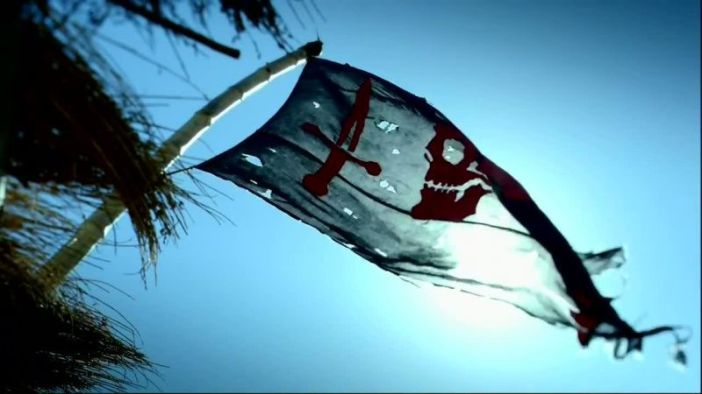
I love pirates, which was part of the reason why the Pirates of the Caribbean movies were so innately disappointing; sure, I enjoyed Johnny Depp’s performance in the first one, but after that they just seemed like parodies of the first, and the plots, such as they were, were ridiculous. I think I was very young when I saw Treasure Island in two parts on The Wonderful World of Disney, and around that same time A High Wind in Jamaica also aired. I became all about the pirates–there were even Nancy Drew (The Haunted Showboat) and Hardy Boys (The Secret of Pirates’ Hill) and Three Investigators (The Secret of Skeleton Island) adventures revolving around pirate treasure; and any number of Scholastic Book Club mysteries about searching for treasure left behind by pirates. I read Robert Louis Stevenson’s Treasure Island when I was around ten; it was an illustrated version, and I remember the pictures as if I just saw them yesterday.

So, yeah, I’ve always loved pirates.

387

I started watching Black Sails a year or so again, and it just didn’t catch on with me. I don’t know why, nor do I remember why. I gave it two episodes and stopped, and I do remember thinking, meh, it’s visually stunning, but I don’t care. But earlier this year, needing something to keep me entertained whilst on the treadmill, I decided to give it another whirl, and got sucked right in.

1200x630bb

Visually, it is an absolutely stunning show. Set in the Bahamas in the early eighteenth century, Nassau in particular, the scenery is spectacular. The visuals are breathtakingly beautiful; the ships at sail, the water, the island, the beach, the town, the costumes. Visually, it’s a sumptuous feast.

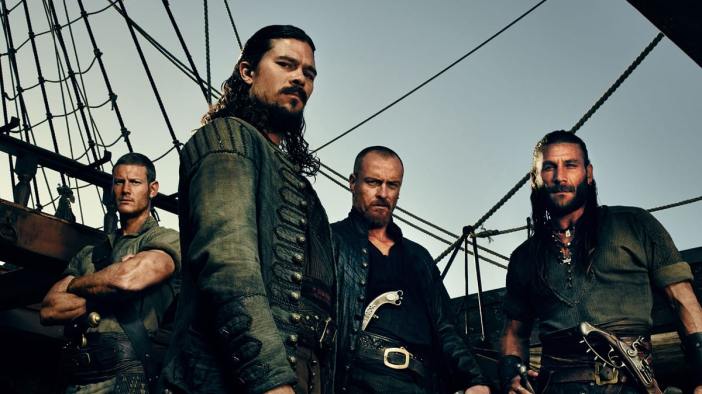
In the first episode we meet Captain Flint, John Silver, and Billy Bones; as soon as I heard the names (I only knew it was a pirate show) I knew what it was: a prequel to Treasure Island. This time around, that really got my interest going. But what was strange was that there were also characters who actually existed in history: Charles Vane, Jack Rackham, Anne Bonny, Edward Teach. The lines between the real characters and the fictional soon became so blurred that I forgot I was watching a prequel to Treasure Island most of the time, and was watching a fictionalized version of history; Nassau and the Bahamas were  a failed British colony basically taken over by pirates; the British Empire was too busy dealing with the War of the Spanish Succession to be bothered with doing anything about Nassau; and Captain Flint’s plan to set up a republic of pirates and escaped slaves was actually based in history; I have a book about it called The Republic of Pirates that I haven’t gotten to read yet (but I’ve moved it up the TBR pile).

And of course, the cast is stunningly beautiful.

I mean, Tom Hopper as Billy Bones:

black-sails-tom-hopper-content_1

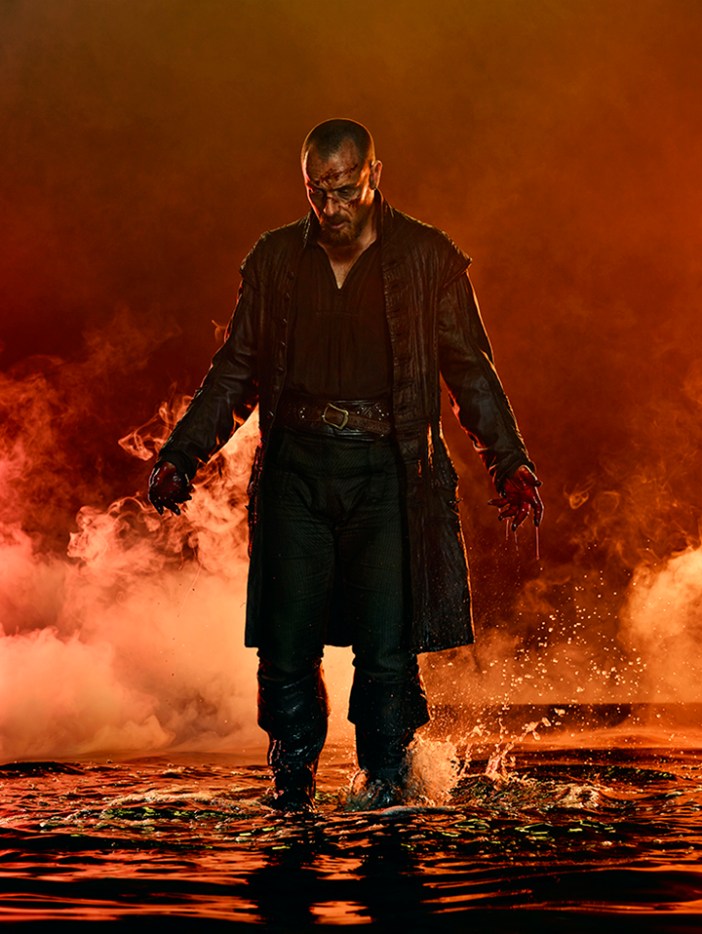
Toby Stephens as Captain Flint:

2016 Winter TCA Portraits

Luke Arnold as John Silver:

2OLPGFFd_400x400

Zach MacGowan as Charles Vane:

Zach-McGowan2

And my favorite character turned out to be Jack Rackham, played by Toby Schmitz.

Black Sails Season 4 2017

What was also enjoyable to me was that the cast was also diverse; and the women weren’t there simply to look pretty, be ogled, or be used as sexual pawns. They were integral parts of the cast, and drove a lot of the action on the show, and were incredibly strong. Eleanor Guthrie ran Nassau; Max moved from being a mere worker in the brothel to major position of power; Madi was Queen of the Maroons and spoke for/led her people, and of course, Anne Bonney was just a badass.

black sails women

I also loved that the show included the Maroons; escaped slaves who made their own community and resisted being recaptured.

ships-in-black-sails-season-4-produced-by-micheal-bay

All of the characters were fully realized; and the plot was so intricate as each character formed friendships/romances/alliances, and betrayed others, as they tried to gain the ascendancy, not only in Nassau but also over the treasure of the Spanish galleon Urca de Lima. It was interesting watching the characters change and evolve based on their experiences, what they went through, and what they suffered. The relationships, the friendships, completely made sense–even when it came to the betrayals. I was so caught up in the story that it wasn’t until the fourth season that I started remembering, “oh, no, this is the prequel to Treasure Island, and the pirate republic eventually collapsed,” which meant, to my fear and horror, that most of the cast wasn’t going to get out alive.

v1

Also, serious props to the characterization of Woodes Rogers, the British man who comes to the Bahamas determined to solve the piracy problem with a good heart and good intentions; watching him slowly evolve into one of the best villains on the show as his ideals are slowly stripped from him by circumstance and reality was mesmerizing.

160120-sponsored-starz-article-tease_rb5zob

All of the characters evolved and changed, which is a rarity in any television series, but the acting and writing in Black Sails was so superb it never hit a false note.

Black Sails Key Art Shoot 2015

And it was interesting in that not only were women shown nude, but there was full frontal male nudity as well.

In the first season there was a lesbian relationship–which I figured, of course there is, gotta give the fanboys some hot girl-on-girl action–but again; while there were sex scenes, the relationship wasn’t prurient and was depicted as honestly and as importantly as any of the heterosexual romances.

I don’t want to give spoilers, and I won’t–because some of the most powerful surprises in the show have to come as a surprise, or will lose their impact–but in Season 2 as we get the back story on one of the principle male leads….he’s gay, and that changes, not only the character, but everything that came before. And his story is absolutely heartbreaking, and played brilliantly.

And the ending! Again, no spoilers, but I cried. And I don’t think I’ve ever seen a series finale that felt so right, so perfect, as an end for a story. Where Black Sails succeeded was in making you care about the characters and understanding their relationships, rather than just focusing on story and the size and scope of the show–which, don’t get me wrong, is also pretty amazing.

Bravo, Starz. This is the second series of yours I’ve watched all the way through–the first being Flesh and Bone, which was also brilliant–and I have to say, Starz is kicking ass on the series front. Wow. Loved it.

19bbpt1nmp93zjpg

Rhythm of the Night

Wednesday!

I decided to postpone this morning’s workout until tomorrow, as I was ridiculously tired both last night and this morning. It’s so lovely, though, to be back into a regular routine; because I know that skipping this morning doesn’t mean it’s a loss. I can switch days without worrying or stressing that I am sliding down that slippery slope to not going to the gym again. Huzzah! Definitely making progress.

I checked off another BIG item off the to-do list yesterday; HUZZAH! This morning I have some loose odds and ends to tie up in addition to that, and then I am very excitedly going to get it all together. Yay!

I also reread the short story I wrote Sunday last night, and as opposed to my usual reaction (which is to recoil in horror from something I’ve written) I actually was rather pleased with it. It’s rough, of course, and it needs some things to be added to it, some language needs to be cleaned up, etc, but over all I am rather pleased with it. I have a couple of other short stories in progress that also need to be cleaned up; I am hoping to get all of that finished this week so I can dive headfirst into my March project. While March actually begins tomorrow, I am going to spend the rest of the week tying up odds and ends–but I am actually going to slowly start putting my feet into the water of the March project tomorrow, then hit the ground running once all this other stuff is finished.

Must. Stay. Focused.

If I stay focused, I can get everything done, and done well.

I also submitted a short story to an anthology call; the deadline is this coming Monday, but hey–look at me turning in something early. Madness, right? I don’t know if they’ll use my story or not, but I am pretty pleased with it. It may not be up their alley, but I certainly am not going to be offended if it doesn’t get accepted, you know? (Right? I don’t even recognize myself anymore.) But it feels good. I want to get so much stuff out of the way before this weekend so I can totally immerse myself in the new project.

Altered Carbon continues to enthall, and so does The Black Prince of Florence. I am way behind on the Short Story Project, but am hoping to get my act together on that score soon as well.

And on that note, I should get back to the spice mines.

IMG_1924

Oh, Sheila

Tuesday!

As February winds to a close, and March lingers there on the horizon, I can’t believe that we are nearly three months into 2018 already. I’ve done quite a bit of writing so far this year; so much so, that in fact, I’ve already written more than I did all of last year. How scary is that? The next few months are going to be a bit on the insane side for me, as I have much to write, the Williams Festival/Saints and Sinners is also coming up quickly, and many many deadlines are looming as well. Which is cool, but stressful. I’m getting a lot done, though, and I am making progress on the goals I set for the  year. I’m not as consistent with the gym and working out as I would like, but I am already on pace to have been to the gym more times this year than last already, and that watershed is coming up soon.

We started watching Altered Carbon on Netflix this week. I’ve seen a lot of people trashing the show on social media; so I didn’t have high hopes going into it, but we’re enjoying it so far. Visually it’s stunning; it sort of reminds me of Blade Runner (which I haven’t seen in over thirty years; should probably rewatch that soon). It’s kind of a cross between sci/fi and a hardboiled detective story; which is part of why I find it intriguing. I also like the lead actor, Joel Kinnaman; I enjoyed him in the American version of The Killing, and you can’t go wrong with James Purefoy. And while there is a lot of nudity, for a change it seems pretty equally distributed between males and females, and they actually show full frontal male, which is extremely unusual. The show has also intrigued me enough to go back and read the books on which the show is based; and I am relatively certain the books are most likely better than the show.

I’m a little behind on the Short Story Project, as I try to wind down the Bouchercon anthology, but I did read “Three Little Words” by Nancy Pickard, from the MWA Anthology Manhattan Mayhem.

Priscilla laughed hysterically when her doctor told her she had only a few weeks to live.

When she saw the shocked dismay on his handsome face, she waved away his worry and kept guffawing like a four-year-old who had just heard the funniest knock-knock joke on earth. And, being a preschool teacher, she knew knock-knock jokes and four-year-olds.

Nancy Pickard is one of my favorite crime writers: her stand-alones, The Virgin of Small Plains and The Scent of Rain and Lightning are two of my favorite crime novels of all time (both are sorely in need of a reread). I also loved her Marie Lightfoot series; Marie being a true-crime writer, so her adventures were always interspersed with excerpts from the book she was writing about the case she was looking into in the book; a book within a book, and it was terribly clever. This short story is evidence of why I enjoy Pickard’s work so much. Poor Priscilla is a wealthy young girl who’s estranged from her family; she creates a bucket list when she finds out she had little time left to live: it consists of three little words, tell the truth. And that’s what she does; she goes around telling everyone the truth, whether they want to hear it or not. Then she is murdered, but why? The story is told from the point of view of her doctor, who is also her friend, and as the story moves on, each sentence makes the plot and mystery of who murdered Priscilla and why even more complicated and layered; this story is definitely a classic.

And now, back to the spice mines.

27658062_1803481379946097_4518429655433083893_n

Lovergirl

I wrote a short story yesterday, which was kind of fun; I can’t remember the last time I sat down and wrote 4500 words in three hours, and a short story from beginning to end, to boot. I am very pleased with myself, as I am wont to be. It needs work, of course; but I am very happy that I was able to write it from beginning to end. I can now put it aside for awhile to get back to work on other things; but as its deadline approaches I won’t be pushing to get it written–and then giving up as happens so often.

Today I need to get some things accomplished; I am going to the gym this morning before heading into the office. I am doing happy hour bar testing this evening; so I don’t have to go in until later; which now provides me with a Monday, Wednesday, and Saturday weight lifting schedule, with room for replacement days if that becomes necessary. (I can always, for example, go on Friday evening after work if I don’t want to do Saturday; I can go on Sunday to replace Monday, ,etc.) Flexibility in one’s workout schedule is important, and makes success more likely than rigidity.

I need to get my taxes together this week as well; that’s one of the major things on my schedule this week. Ideally, I would love to have everything to my accountant by Friday, so I can get everything filed next week. I also have to get some work done on the Bouchercon anthology; and I need to finish a grant application by Wednesday. There’s a contest I am considering entering as well; we shall see if I decide to pay the entry fee for that (it’s only thirty dollars, but….thirty dollars is thirty dollars. Before I bought the car I would have thought nothing of spending the money; but now I am watching every cent I spend). So, I definitely have my work cut out for me this week; we’ll see how it all works out. This morning I feel energetic, and I know after I work out I’ll have that lovely endorphin rush going. Huzzah! Everyone wins.

I am on the final season of Black Sails, and it continues to enthrall, although I am very well aware that it won’t end happily; but I also have some idea of who will survive the season and who will not.

All right, I need to get my act together and get to the gym. Till later, Constant Reader.

IMG_2279

Loverboy

The ballet last night was exquisite.

I’ve seen ballets–or parts of them–on television or Youtube; and I remember, as a child, being taken to see The Nutcracker (isn’t everyone dragged to that as a child?), which I hated (interestingly enough, many things that most children love are things that I didn’t; The Nutcracker is one; The Wizard of Oz another). But as lovely and awe-inspiring as seeing ballets on Youtube or on television can be, there is nothing like being in an auditorium and watching one being performed live on the stage in front of you. I liken it to the difference between watching figure skating on television and then watching it in person; it’s very different, and you never watch it on television in quite the same way again. Romeo and Juliet is, of course, an ubiquitous story; everyone knows it, to the point that it has become almost trite and hackneyed; it’s been adapted for everything imaginable–opera, ballet, film, and of course West Side Story–but, at its heart, it is still a beautiful and sad story.

The opening sequence of the ballet reminded me so much of the opening of West Side Story that I couldn’t help wonder how much the ballet influenced the musical’s choreography, or vice versa.

sw-romeo-george-oliveira-alexis-oliveira-alvaro-prieto-taunt_1000

I read Romeo and Juliet when I was a sophomore in high school. I’d taken a class called Dramatic Literature; a class in which we read plays. Romeo and Juliet was paired with West Side Story (it’s also the class where I first read Tennessee Williams; A Streetcar Named Desire and Cat on a Hot Tin Roof, to be exact); we even watched the films (the version of Romeo and Juliet was the 1968 Franco Zeffirelli production, with Leonard Whiting and Olivia Hussey with the gorgeous score by Michel Legrand). Shakespeare’s language was, to me at fourteen, a mysterious puzzle I couldn’t unlock; archaic references I didn’t understand written in verse, yet somehow beautiful in how the words were put together. At the time, I didn’t understand how two families could feud so bitterly and violently in an Italian city during the Renaissance; of course, now that I’ve read so many Italian histories (I am still greatly enjoying The Black Prince of Florence), I am more than a little surprised that the feud between Capulet and Montague was so bloodless (see the Pazzi-Medici feud, circa fifteen century).

Yet, despite the overwhelming familiarity with the story, it was impossible not to be drawn into last night’s version of it; despite there being no dialogue, no words. The entire story was, as is typical with the ballet, acted out without words and through dance. The choreographer’s choices in telling the story were quite interesting; the stage setting was incredibly minimalist, with emotions and passions being evoked through the movement of the two curved walls that served as set pieces; the long rising ramp that served as not a way to exit the stage but as Juliet’s fabled balcony; and the use of costume and lighting.

sw-romeo-noelani-pantastico-lucien-postlewaite-balcony_1000

The friar was used as a connective device throughout each scene; he was, if anything, the true star of the show, and its emotional heart. The dancer who played the role was magnificent. The ballet was a thing of beauty; I couldn’t stop marveling at how fantastic the dancers were, the exceptional shapes and lines they could form with their bodies, the almost super-human stretches and leaps and twirls and spins, the intimacy of their lifts and how they could mold their bodies around one another’s.

Les-Ballets-De-Monte-Carlo-London-Coliseum-dance-review-Jeffery-Taylor-574512

It was also my first time inside the Mahalia Jackson Theater for the Performing Arts since Katrina; ironically, it was also the first time the Ballet des Monte-Carlo performed there since 2005. Both the outgoing and incoming mayor were there; the Honorary Consul for Monaco, and the ambassador from Monaco were all introduced and thanked from the stage.

_dsc3014cab_0

And yet, as a crime writer, and someone with a vested interest in group dynamics and politics, who has viewed documentaries about ballet companies, with a knowledge of human nature and interaction,I couldn’t help wondering, as the company took its well-deserved bows to a long standing ovation last night,  what turmoils and temperaments boiled beneath the surface of the linked hands and bowing bodies; what slights and grudges boiled behind the smiling faces; which members of the company were friends and which were enemies; who were lovers and friends and who were enemies and rivals, who was gay and who was straight.

I definitely want to write a ballet noir.

And here are two short stories, for the continuation of the Short Story Project.

First up is “Split Second” by Daphne du Maurier,  from the New York Review of Books collection of Don’t Look Now and Other Stories:

Mrs. Ellis was methodical and tidy. Unanswered letters, unpaid bills, the litter and rummage of a slovenly writing-desk were things she abhorred. Today, more than usual, she was in what her late husband used to call her “clearing” mood. She had wakened to this mood; it remained with her throughout the morning. Besides, it was the first of the month, and as she ripped off the page of her daily calendar and saw the bright clean 1 staring at her, it seemed to symbolize a new start tom her day.

The hours ahead of her must somehow seem untarnished like the date; she must let nothing slide.

“Split Second” is an exceptional exercise in character. Du Maurier thoroughly examines and exposes Mrs. Ellis’ character from beginning to end, and while she doesn’t go into a great amount of detail, it isn’t hard to figure out exactly whom she is from what we are told as readers. She’s a widow and her entire world revolves around her daughter, who is off at school; she decides, after a thorough cleaning of her home to go for a walk and is almost run down by the laundry truck as she walks back home. But when she gets back to her house, things are different. It is her house, but it’s no longer the house she left behind; other people are living there, her neighbors are gone–the entire world has changed and shifted as she walked home. It’s a horrifying story, even as the reader begins to glean what has actually happened long before Mrs. Ellis does; not that she ever does, even by the end of the story, and that is part of what makes it so sad, so effective, so powerful; no one has ever quite captured that elegant, melancholy sadness the way du Maurier does.

I then moved on to “The Picture of the Lonely Diner” by Lee Child,  from the Mystery Writers of America anthology, Manhattan Mayhem:

Jack Reacher got out of the R train at Twenty-Third Street and found the nearest stairwell blocked off with plastic police tape. It was striped blue and white, tied between one handrail and the other, and it was moving in the subway wind. It said: POLICE DO NOT ENTER. Which, technically, Reacher didn’t want to do anyway. He wanted to exit. Although to exit, he would need to enter the stairwell. Which was a linguistic complexity. In which context, he sympathized with the cops. They didn’t have different kinds of tape for different situations. POLICE DO NOT ENTER IN ORDER TO EXIT was not in their inventory.

Lee Child is one of the most successful writers in our genre today; everything he publishes is a New York Times best seller, and his character, Jack Reacher, is one of those ubiquitous characters that will go down in the history of the genre, like Poirot, James Bond, and Kinsey Millhone. I am years behind on Lee’s novels; but if you’ve not read Lee Child, you simply must read The Killing Floor, the first Reacher novel. It is quite superb. This story isn’t Child at his best, but Reacher the character is at his best at novel-length, with the labyrinthian plots Child somehow concocts and manages to keep track of (one of my favorite fanboy moments was having lunch with him and Alafair Burke at the Green Goddess here in New Orleans several years ago; while I just sat there wide-eyed and listened to the two of them talk about writing and publishing, praying that I didn’t have sauce running down my chin), but this story does evoke the melancholy that Child evokes in his novels; the inevitability of fate and the powerlessness of humans to counteract it once the gears are moving. I do recommend the story; there is some amazing imagery in it as well.

And on that note, I am back to the spice mines. There are bed linens to launder, and short stories to edit, and a chapter to write; it is rainy and gloomy outside my windows this morning but I am well-rested and ready to work.

Or maybe it’s just the caffeine kicking in. Who knows?