There’ll Be Sad Songs To Make You Cry

Another Monday morning here at my desk in the Lost Apartment. I submitted a short story to a market yesterday, and today I am submitting my short story collection.

PROGRESS.

Last night, as I watched Thirteen Reasons Why (only three episodes left; it definitely has picked up since those slow initial episodes), I thought about and made notes on not only the WIP but some other short stories I am working on. It would be lovely to make notes on the Scotty book, but you know what? I am trying not to force creativity–which is why I’ve no contracts and no deadlines–and making notes on what pops into my head at the time. The changes I’ve decided to make to the WIP aren’t as simple as one might think–a lesson I am definitely learning; no changes to a manuscript, no matter how small they may seem, are ever simple–but it’s going to make the book/manuscript much stronger, and that’s always a good thing. I am also trying to strip the book of as much cliche as I can; which is not that easy when you’re writing about a high school. As I said before, the second chapter needs some serious restructuring as well as revision, but I am feeling a lot more confident about that now.

The Scotty book? Yes, I need to get back to that and the sooner the better. I have already decided that in order to move forward, I need to go back and revise the last chapter I wrote, which not only isn’t any good but is fucking terrible, even more terrible than my usual first draft of a chapter. It totally derails, and characters behave in ways they ordinarily wouldn’t; plus having them behave that way was completely lazy on my part because I didn’t want to deal with it. Which is beyond lazy on my part; it’s borderline shameful laziness. But at least I know it already–I knew it when I was writing it, and it shouldn’t be hard to go back and fix before I move forward onto Chapter 15. I still want to get this done before July 1; I think I can manage it.

I am also trying to take a long weekend this weekend; a couple of vacation days in addition to the Memorial Day holiday, with big plans to get a lot accomplished. I always have big plans, but even if I only manage some of it, that will be a huge step in the right direction. And huzzah for huge steps in the right direction!

I also took notes on some short stories that are in process, and I think one of them is particularly going to turn out to be really amazing.

And on that note, tis back to the spice mines.


32941433_1846528592308042_4877245929398206464_n

Broken Wings


I have written, from time to time, about the issues I face  as a “gay author.”  I try not to get into it often; I always fear there’s a stench of sour grapes when I talk about the challenges of being a gay author of fiction that place gay men in the center of their own stories. Revolutionary, right?

When I first started publishing, back when dinosaurs roamed the earth, ironically there was a movement by gay authors to not be called or considered “gay” authors. More than one disdainfully told me when refusing to be interviewed for either Lambda Book Report when I was editor or for one of the queer newspapers I wrote for, or said on panel discussions at conferences, “I’m not a gay writer; I’m a writer who happens to be gay. You don’t call them straight writers, after all.” This statement, which I heard on more than one occasion, always took me aback, because the truth was it didn’t matter what you called yourself; booksellers and reviewers and readers would still see you that way. There was an arrogance, a smugness, to it; kind of saying yes, technically I am but I am not one of those writers, don’t lump me in with THEM.

Basically, you can call yourself whatever you want, but the market and the industry won’t give a rat’s ass what you call yourself.

Case in point: without fail, when you’re a gay author (or a queer author, or whatever kind of minority writer you might be) and you attend a mainstream writer’s/reader’s conference for whatever genre you may write in, you will inevitably find yourself assigned to what’s called a diversity panel. Make no mistake about it: these panels are important and do need to be held. My primary objection to them is their ghettoization aspect; i.e., the only thing of value these authors have to add to the conference conversation is whatever it is that marginalizes them. I have always argued that any minority writer assigned to a diversity panel should also be assigned to another panel. Reducing a minority writer’s value to simply being able to speak to diversity issues doesn’t help the author; and if we are really concerned about increasing diversity in publishing/whatever genre we are discussing, then audiences besides those who show up for diversity panels should also be exposed to those minority writers. People who come to diversity panels already are hungry for diversity in their reading and writing, which makes it a little bit of preaching to the choir.

Case in point: I was at a mainstream genre conference a few years ago, and of course was assigned to the diversity panel. (I was assigned to another, so I was fine with it.) It was an interesting mix of people, but as we talked about how to find and help new minority writers, a noted editor on the panel, cut me off and passionately said, But it has to be about the WRITING. The WRITING has to be good.

In other words, the reason we don’t have more diversity in publishing in general is because the writing isn’t good.

My jaw literally dropped, and I was stunned into silence by the implications of this noted, and relatively powerful, editor’s statement.

And it takes, as you can imagine, a lot to stun me into silence.

During the years 2004-2008 I kind of withdrew into myself and wasn’t really paying attention to the world of LGBTQ publishing as I had from 1997-2004; a lot of things were going on in my personal life, Katrina happened, and I basically just kept my head down and did my work. It seems, to me, looking back, that the world of LGBTQ publishing changed dramatically during that four years I wasn’t paying attention, when I wasn’t deeply immersed in it; perhaps these things were around before and I simply hadn’t been aware, or noticed; but when I started looking around again at queer publishing I became very aware of something that I hadn’t been aware of before: a new-subgenre of fiction called “m/m”; which was fiction about gay men written by straight women for other straight women (a generalization, of course; some of it is written by gay men and some of the authors are queer-identified women, and likewise, the readership is not all, but primarily, straight women). I found it to be a rather interesting phenomenon; I had always argued that gay male writers should market our work to heterosexual women, so it didn’t bother me that straight women were writing about gay characters and gay themes. I’ve always believed writers should write about subjects and characters they are passionate about, and if straight women were passionate about writing about gay men, more power to them, and welcome to our little niche of the publishing world. I certainly don’t want anyone telling me what I can and cannot write, or who I can write about, any more than any other writer would. There was a bit of a kerfuffle over the Lambda Literary Awards back then making a rule stating the awards were only for actual LGBTQ writers, and there was some outrage about that. I completely concurred with the outrage; the awards were for books and writing rather than the actual author. In my opinion, if a straight woman wrote a great and deserving book about a gay man, why not allow her to enter the Lambdas? The book and its writing is what, ostensibly, was being judged; let it be judged on those merits.

Yet I also noticed, in the wake of this decision by the Lambdas (which was later reversed), some horrific commentary and borderline, if not outright, homophobic statements being made by some of these ostensible so-called allies; homophobic statements always seem to rear their ugly heads whenever any gay man dares question the validity and/or authenticity of these works:

If authors only wrote from their experience, we wouldn’t have science fiction or vampires or werewolves.

Funny how a community that wants to be accepted and treated equally will discriminate.

The first is so fucking offensive on its face I don’t think I really need to explain precisely why it is; but imagine if a white writer said that in defense of writing about a black main character. Yes, Virginia, queers ARE like mythological creatures or beings from another planet, so you just go right ahead! Frankly, if this is your line of thinking, you definitely shouldn’t be writing stories about characters with experiences different than your own. Imagine if I said well, of course I can write about a straight woman because it’s really no different than writing about werewolves or vampires or Martians.

If that’s not clear enough for you, try this: WE ARE HUMAN BEINGS.

The second is an implied threat; you need our support to get your equal rights as citizens so how dare you question us? You’d better shut your mouth and toe the line or else, you know, I might vote for homophobic candidates!

Ah, yes, the blackmail argument, which begs the question: Are you really an ally? A real ally doesn’t support a community so long as it toes the line of cisgender straight white people’s way of thinking.

Has there been a more flagrant and obvious expression of clueless straight privilege?

Another favorite was well, the best novels about gay men have always been written by straight women! Mary Renault and Patricia Nell Warren, to name two!

Ah, nothing like a nice straight white lady turning actual lesbians into straight ladies in order to prove their point. Um…yeah.

Or, my personal favorite, gay fiction largely began on the Internet, which erases decades of powerful writing by successful LGBTQ fiction writers, and their careers–not to mention all those Lambda Literary Awards given out, apparently, to “Internet writing” in the late 1980’s thru the mid 1990’s….

Needless to say, when I denounced the exclusion of their books but called out the homophobia…if you guessed they ignored the fact that I was on their side in general but instead focused on me calling out their comments as homophobic, you guessed correctly.

Seriously?

In 1998, Sarah Schulman published Stagestruck: Theater, AIDS, and the Marketing of Gay America. As a gay man of a certain age, reading (and reviewing) this book was an eye-opening experience. In that year, we were in approximately the seventeenth year or so of the HIV/AIDS crisis in the United States, but things were starting to change and look different. Medications were being developed and prescribed that lengthened life and reduced the impact of the HIV virus on immune systems; there was light at the end of the proverbial tunnel, and it looked like an HIV/AIDS diagnosis might not be the death sentence it had been since its first discovery.

Schulman’s book opened with her being made aware of similarities between her novel People in Trouble and the hit Broadway musical Rent.

Here’s what happened: I was twenty-eight years old in 1987, the year I joined ACT UP (the just-born AIDS Coalition To Unleash Power) and full throttle into a love affair with a married woman. An artist, she was very conflicted about sexuality with women and had contempt for the gay community in general. She practiced an art ideology that equated formal invention with radical content, something I contest passionately. My fantasy was that by exposing her to the realities of the AIDS crisis, she would drop her blinders about the functions of homophobia and simultaneously develop an understanding of the value of artwork based in experience. Needless to say, older now, I understand that my project was doomed from the start.

That year I completed my fourth novel, People in Trouble, about a love triangle composed of a married artist couple and the woman’s younger lesbian lover. The novel was set against the backdrop of the AIDS crisis and featured many scenes and feelings that came out of my actual experience. People in Trouble is about an East Village performance artist who is at the end of a relationship with a male artist and who, despite her own homophobia, falls in love with a lesbian. She creates a performance piece that targets a greedy landlord who is evicting people with AIDS. There is a subplot about an interracial gay male couple–one a queen, one an activist–in which ones dies of AIDS. A second subplot involves an activist group called Justice, who devise a credit card scam to feed homeless people. It was, as David Leavitt wrote in 1990, “the first work of fiction that portrays the enormous activist response the epidemic has generated.” And the book clearly showed how this response was firmly rooted in the gay and lesbian community, despite the neglect and inaction of dominant society.

Does the plot of her novel sound familiar?

The first part of Stagestruck, about Schulman trying to get someone, anyone, to acknowledge the great similarities between her book and Rent, was interesting to me, but what was even more interesting to me was the sudden realization she had, which led to the rest of her book, and her thesis: her book, which was well-received and sold well, basically told the same story as one of the behemoth Broadway musical successes of all time; the primary difference being her book centered the point of view of the lesbian in the love triangle while the musical centered the straight male POV. She then took this thesis; that gay and lesbian works can only be presented to a mass audience if told from a heterosexual point of view, and ran with it. She examined marketing of products, the how things are sold to gays and lesbians (and how those marketing techniques differed); film and television, using Philadelphia (the great HIV/AIDS movie, told from the point of view of the homophobic lawyer, whose experience with the dying gay man was used as an opportunity to grow as a person) as a prime example; the entire book absolutely fascinated me, and it changed forever my perceptions of what is now known as “own voices” in terms of film, books, plays, and television programs.

The other day, on a social media thread, initiated by a female writer about how tired she was of trying to convince straight white male crime writers that representation of other voices and characters wasn’t oppression, I blithely commented, I love to ask them to name a crime novel by a gay man with a gay main character. A very well-meaning straight woman posted a link to a review of one such book as comment in response to mine, adding, here’s a great one to recommend when you run out of the handful.

When. You. Run. Out. Of. The. Handful.

In all honesty, I wasn’t sure whether I should be offended or not. She didn’t mean to be offensive, and props to her for actually knowing such a book to recommend. She clearly had no idea who I was or the kinds of books I write (and have been writing for nearly twenty years), nor how extensive my knowledge of the literature of my community actually is.

And yet…yeah.

The other day, there was some interesting threads going on Twitter because of a book announcement: a nice straight lady, with no doubt good intentions, announced the sale of her latest young adult manuscript, which is about teenagers in 1983 dealing with the HIV/AIDS crisis.

There was some pushback.

First of all, there’s absolutely no reason why a straight woman cannot write a novel about the HIV/AIDS crisis in 1984. I want to be absolutely clear about that. But yes, like Philadelphia, a book about HIV/AIDS that centers the heterosexual point of view on the subject rather than the gay male one is kind of intrinsically offensive. Is that invalid to write about? No, it’s not. But, as Schulman said about Philadelphia, “making straight people the heroes of the HIV/AIDS crisis is a lie.” It wasn’t straight people who created ACT UP or the Gay Men’s Health Crisis or any of the HIV/AIDS organizations that sprang up in response to the epidemic, and the recent historical revisions like the mini-series The Reagans that try to paint Ronald and Nancy Reagan somehow as heroes of the AIDS crisis is a slap in the face to everyone who died during the 1980’s and the people who loved them. Don’t get me wrong: there have always been, and always will be, straight allies in the fight against HIV/AIDS; but the truth is the crisis became an epidemic because of deliberate societal and institutional neglect; or to quote the bigot on the powerful episode of Designing Women, one of the first prime time television series to address the crisis, “At least it’s killing all the right people.”

Because this is what people actually believed at the time.

The beleaguered author also went on to tweet: First off, I was actually in high school in ’83 and the fear affected everyone in different ways which is what this addresses. Second, I worked for a state government’s outreach office in the early ‘90’s bringing money in for prevention and support of AIDS programming 1/2 Third, I worked closely on this with a knowledgeable and generous AIDS activist. Also, there are currently NO YA books about this time in this context. I’m not taking space from a gay male author. Feel free to write one. Seriously. Teens today need to know what it was like.

Those responses, by the way, were written to a gay man who questioned her about her profiting on the experiences and suffering of gay men.

Now, let’s dissect this woman’s tweets, shall we?

  1. “I was actually in high school in 1983 and the fear affected everyone”: ‘I am going to write about the AIDS epidemic in 1983 and center straight people and their fears because that was the most important thing about HIV/AIDS in 1983.
  2. “I worked for a state’s outreach office in the early 90’s bringing money in for prevention and support of AIDS programming”: how very dare you question me, you ungrateful gay man after everything I’ve done for your community!
  3. “I worked closely on this with a knowledgeable and generous AIDS activist”: I have a gay friend. Please note she didn’t actually go so far as to name the activist; so yeah, this is the ever-popular dodge. Nor does she say this activist is a gay man.
  4. “There are currently NO YA books about this time in this context. I’m not taking space from a gay male author. Feel free to write one. Seriously. Teens today need to know what it was like.” Dripping with contempt and privilege here; so this is the one I really want to break down.

First of all, there are very few y/a books from mainstream presses written by gay men about gay teenagers.

I suppose it’s never occurred to Nice White Lady that maybe there are reasons why there aren’t any of these books; namely, for one, we lost almost two entire generations of writers to societal neglect and homophobia which led to the prolonging of this epidemic in the first place.

There is actually plenty of what is called “witness fiction” out there about HIV/AIDS and the 1980’s; in addition to Schulman’s People in Trouble, there are also Christopher Bram’s In Memory of Angel Clare; Felice Picano’s Like People in History; William J. Mann’s The Men from the Boys, simply to name a few—and that’s just in fiction. Paul Monette’s memoir  Borrowed Time is pretty brilliant, as well. It actually won the National Book Award.

And yes, she is right on that score: none of the witness fiction is young adult. Imagine, just imagine, a gay male author trying to sell a young adult novel to a major publisher about HIV/AIDS and gay teens in the 1980s, the 1990’s, or even in the aughts.*

But let’s not forget: I was personally banned from speaking at a GSA in Virginia in 2005. Nancy Garden’s Annie on My Mind was tried for obscenity in Kansas in the early 1990’s.

So…yeah, I can’t imagine a y/a about HIV/AIDS from a period when the majority of people writing about it were gays and lesbians going out to auction in New York.

When I started writing fiction and getting published, of course HIV/AIDS was something I had to think about. Did I want to talk about it in my fictions? In my stories and my novels? I decided not to; fully knowing that some people might see, or consider, this to be an abdication of responsibility. But writing from my own experience, my own witness fiction, drawing from that emotional well, isn’t a place I ever wanted to go to in fiction. I decided not to because there was already plenty of fiction and non-fiction, beautifully rendered and written, that told the HIV/AIDS story. There was also a very strong sense in publishing that I recall in the early aughts that it was time for gay writers to move away from the HIV/AIDS narrative, that we had other stories to tell.

This woman’s book sold at auction, which kind of denies her statement that she “isn’t taking space from a gay male author.” Yes, dear, you actually are, because there aren’t many out gay men either writing books about HIV/AIDS or just telling gay stories that are going out to auction to every publisher in New York.

I don’t wish her ill. I hope her book is well-researched and well-written, and I hope she has written a great novel exploring the issues of HIV/AIDS in 1983 amongst teenagers. I don’t know whether I will read it or not—it’s very title seems a bit, well, distasteful to me—but I might; I cannot speak about something I’ve not read. I think it’s terrific she wants to bring this story, and that year, to life for modern teen audiences.

But if this book centers straight white people as the heroic center of the HIV/AIDS crisis in 1983; if the focus is the fears and worries of straight teenagers about HIV/AIDS; if this book doesn’t show realistically the overwhelmingly homophobic heterosexual response to not only the epidemic but to gay men in general; then it is not only an ahistoric and offensive lie, but a slap in the face to everyone currently living with the disease, to everyone who died, and to those of us who are still mourning the overwhelming losses we suffered.

*I am merely taking this woman at her word that there are no such books. I am not as widely read in queer fiction as I once was, and I certainly am not well versed in what’s out there for young adult fiction.


West End Girls

Sunday morning and yet again, I have overslept. I wasn’t feeling particularly well yesterday, and managed to get nothing–outside of some errands in the hideous heat and humidity–accomplished yesterday. The end result was I parked my not-feeling-great ass in my easy chair and watched Netflix for most of the day; beginning with an original Netflix show, The Kissing Booth–a teen rom/com, which was actually kind of cute–and then it was back to the misery/drama porn of Season Two of Thirteen Reasons Why.  Season Two is nowhere near the quality level of Season One; without the connecting hook of the cassette tapes telling the stories of the individual kids, it loses a lot. The connective tissue being used for the second season is the trial, where Hannah’s parents are suing the school for not doing more to help their daughter before she killed herself. Therefore, each episode focuses on each kid and is kind of told from their perspective, based on who is testifying that day: because, of course, only one person per day can testify. There are a lot of really good moments in this season, which shows glimmers of how good the season could have been; yet the need to weave the now-dead Hannah into this season without a reason for her to be there is a weakness. I do feel that it would have been smarter to simply have shown her from the point-of-view of the kids in this season–last season was seeing the others through hers–without the ghost/voice of reason/conscience/whatever-the-fuck-she-is that keeps appearing to Clay; which also, unfortunately, weakens Clay. It makes him unreliable as a narrative voice, and we are also not entirely sure he’s not simply lost his mind in his drive and desire to avenge Hannah. This undermines the character and the performance being given by Dylan Minnette, who was so terrific in the first season; which is unfortunate.

But…I continue to watch to see how this is all going to play out.

It’s difficult for a series based on a single novel to be adapted into a regular television series; Thirteen Reasons Why’s first season was a great example of how it can be done, and beautifully so. I greatly enjoyed that first season. But when the show is successful–and let’s face it, in the entertainment industry success  means continue to build on that success, or at the very least, keep milking that cash cow until you’ve squeezed every penny out of it. There wasn’t a need for a second season of this show, nor a third; where I thought they might go in a second season isn’t where they’ve gone. But the series does get stronger after the first weak episodes; maybe it will continue to get stronger. But the standout of this season is the character of Alex, and the young actor playing him, Miles Heizer. The first season ended with someone being shot, and we weren’t sure who it was. Turns out it was Alex, and he survived. This season, the bullet, which entered and exited through his skull, didn’t kill him but partially paralyzed him and messed up his memories. So, watching him struggle with physical therapy, and trying to figure out what went on the month before he tried to take his own life is incredibly powerful and he is knocking it out of the park. It’s really a shame; the first season was about finding out why Hannah killed herself, and the second season should focus more on the kid who tried to kill himself and now not only has to live with the consequences of that decision but try to figure out why he did it, and deal with the pity and cruelty of his classmates.

Now, there’s a story for a young adult novel. Hmmmm. *makes notes*

I am hoping to get some cleaning out of the way today as well as some writing. I’ve been seriously slacking lately, and I need to stop doing that. Granted, yesterday I didn’t feel good, but I need to get motivated and get back to writing. There’s also a lengthy blog entry I  need to finish writing.

But I’ve been thinking about young adult fiction a lot lately; the WIP is young adult, and there’s another one I want to write, or at least get started on, before the end of the year, Bury Me in Satin. It’s going to require some research, which isn’t a bad thing, and perhaps a drive up to Tuscaloosa. I really have been wanting to write this book for a very long time, and I think it’s time. It’s a dangerous topic, but I kind of want to do it. I also want to finish “Burning Crosses” today; it’s ready to be read aloud so I need to go ahead and do that. I also want to finish the first draft of “This Thing of Darkness”, and I have some reading I need to get done. I seriously need to get off my lazy ass and get a move on you know? There’s also that filing shit I started and need to finish. So, yes, indeed, I need to get motivated. But next weekend is a glorious three day weekend, and I am also planning on requesting Friday off and taking a short day on Thursday, not only to maximize the weekend but enable myself to have more time to work, as well as to have a day or two where I have literally nothing to do except read and relax; we’ll see how that turns out.

And I am not missing the cable. Not in the least little bit. This is wonderful.

And now, back to the spice mines.

For your viewing pleasure, here is Jacob Elordi, who plays the romantic lead in The Kissing Booth:

Jacob-Elordi-in-The-Kissing-Booth-20180515-02

Glory of Love

Saturday morning and it’s chilly in the Lost Apartment; the sun is out and there’s condensation on the windows. Scooter is perched next to my keyboard, staring out the window, watching Kitty TV; I’m not sure what’s on, but he’s fascinated. It rained brutally yesterday with flash floods and so forth throughout the city. It had been a few weeks since it had rained, but there it was; a long overdue downpour. I managed to get home before it got too terribly bad, and spent the evening organizing and cleaning out files, rather than actually writing. I just didn’t feel like I was in a writing place, and so I decided to go with that but demanded of myself to complete this tedious chore that I hate doing so much.

Essentially, it meant cleaning out old files that no longer need accessibility–old book contracts, royalty statements, and even file folders of old short stories now published, etc.–out of the file cabinet and boxing them up to put in storage. This, naturally, has freed up space in the file cabinet for files to be moved into from the ACTIVE files. (Yes, I am aware how insane this all sounds; but I have two small file holders on the small bookcase next to  my desk, where I file new ideas, articles that might lead somewhere, and new stories that I have started or are not immediately working on; on my desk itself I have a metal file rack that contains the folders of what I am immediately working on. I know, I know, but it makes sense to me, and it works for me.) I also gathered all my non-fiction research on being queer in America, as well as my journal (materials for my memoirs, should I ever write them, or at least personal essays about being gay)  to collect in one place: a lovely box that is currently sitting on my kitchen counter, preparatory to going into the storage space. While doing all of this I ran across several of my old journals.

IMG_4354

These are some of my journals–I suspect some of them have been lost to time, through moves and so forth–but the oldest is from 1994; the most recent of these is from 2003. I started my blog in late 2004, and I suspect that’s approximately also when I stopped writing in these. It was an interesting experience, idly paging through these before placing them in the box; some of the earlier ones are from, of course, when I worked at the airport. That’s when I started carrying one with me at all times; I always had a pen, my journal, and whatever book I was reading at the time with me when I was at the airport, on an airplane traveling, etc. The ones from my time at the airport are all written in green ink; because we used green pens at the airport for everything. I wrote on my breaks, I wrote when I was in between flights at the gates, I wrote while I was waiting to board an airplane, I wrote while on airplanes. Later, I wrote between clients at the gym, or while waiting for it to be time for an aerobics class I was teaching; I wrote in coffee shops. There are scenes in these journals, that eventually made it into Murder in the Rue Dauphine or Bourbon Street Blues; there are the openings of short stories I’ve written, scrawled in long hand on these pages. I’ve even found things like when I first had the idea for the book that became Dark Tide many years later; places where I worked on developing characters or plots of themes for the book or story I was currently trying to work on and/or finish; there are also personal moments, moments of frustration or joy or happiness, all recorded in my neat, broadly looping handwriting. Starting to keep another one of these this year has been enormously helpful for me in many ways; it was lovely to reconnect with the bound journal format. (I actually need to buy a new one; I am hoping they have some at Tubby and Coo’s, where I am going this afternoon for Bryan Camp’s book-signing for his brilliant debut novel The City of Lost Fortunes)

This morning I need to finish packing up these boxes, and perhaps work on getting some of the other files moved; it is literally astonishing how much paper I have. One entire file cabinet drawer is filled with short stories and novels-in-progress that I stopped working on at some point, folders with ideas jotted down, characters and names and ideas for stories and books. All this effort, besides keeping me from actually writing anything, is an attempt to declutter my workspace as well as to make it more organized; I had an idea for a story for an anthology call I saw recently, and I knew I’d written a draft of an appropriate story (possibly) years ago–which meant it was probably in the file cabinet and I should probably drag it out to see if there was anything written in it that was usable. The need for this file made me see how desperately flawed and out of control my filing system had actually been allowed to become so as it thundered and lightning lit up the sky and the yard filled with rushing water I started working grimly on fixing this mess.

I did find the file, by the way.

I need to go to the grocery store at some point this morning as well; I could wait to do it tomorrow,  but between the cleaning and the filing and the going to the book signing I don’t see any window for actually writing, so rather than putting it off till the morrow I should probably do it today, since today is going to be shot on that score. Or maybe it won’t be; I may be able to get some things done today on the writing. My writing/editing goal for the weekend is to read “Burning Crosses” aloud and be finished with it; to finish revising Chapter Two of the WIP, and possibly read all fourteen chapters of the Scotty book and see where things sit with it, preparatory to getting back to work on it as well.

I also want to dive into Alex Segura’s Blackout, which is getting rave reviews everywhere.

We started watching the second season of Thirteen Reasons Why last night, and I have to say, I am not overly impressed with it. The first two episodes were terribly uneven–the third began to pick up steam again–but the device of having Hannah appearing as a sort of ghost to Clay isn’t working for me and is something that I hope is used either sparingly as the show moves on, or is eradicated completely. We don’t need Hannah appearing as Clay’s conscience, nor do we need her at all. It derails the show, frankly; them having conversations is, to quote youth culture of some time ago, kinda whack.

So far, we’re disappointed with it. but not so much so that we will stop watching.

That, however, could change.

And now, back to the spice mines.

Secret Lovers

I slept so well last night that I didn’t want to get up this morning, which is perhaps the greatest feeling of all. Huzzah! It also means I am not heading into the weekend feeling tired, which will be yet another great feeling. Hurray! Huzzah! Of course, the kitchen’s a disaster area, but I may have the time to correct that this morning before I head into the office. One can always hope, at any rate.

I do think “Burning Crosses” is ready for a read aloud; there’s one more paragraph I need to add, and maybe a sentence here and there, but other than that, it’s close to done. I have also made progress on “This Thing of Darkness,” and I think, as far as short stories go, I am ready to get back to finish/polish/read out loud “Once a Tiger” and “The Problem with Autofill.” I also want to get back to the WIP and the Scotty; I need to read Scotty from the beginning and make notes; and likewise, Chapter Two of the WIP needs to be rewritten, may even need to be a completely newly written chapter because I need to add a scene. But I am hopeful I am setting myself up for an incredibly productive weekend. I am going to a book signing on Saturday afternoon for Bryan Camp’s The City of Lost Fortunes at Tubby and Coo’s (hello, Five Guys!) and I am also supposed to go to a party on Saturday evening, but we’ll see how that all plays out. I may just make Saturday an errand day and try to spend Sunday focusing on writing.

We shall see.

The Terror continues to enthrall, as it moves along to its inevitable end. The ninth episode, which we watched last night, was just non-stop misery and powerful acting from everyone involved. After we finished watching, Paul and I talked about how much we’re enjoying it and The Handmaid’s Tale, and I made the curious realization that the two shows we’re enjoying the most right now are horrific stories of human beings caught up in the most terrifyingly horrible of circumstance, and how interesting is it that we are so enthralled by what basically are, thematically, stories of survival and how much can you take, how much can you handle without giving up entirely?

The writing, and the acting, always stellar, is Master Class worthy in this heartbreaking episode. I fear The Terror will be overlooked for awards, when that season is upon us; which is absolutely wrong. It should win all the awards; I would be hard-pressed, though, to decide on which actor to vote for; there are all that good.

I have to say, yesterday was a lovely day for me professionally. The table of contents for the Murder-a-Go-Go’s anthology I am in was released, and it’s quite stellar. It was lovely to see the social media response; all the likes and retweets and excitement. I am very pleased to be in this book, and I am equally pleased with the story I wrote for it. The book won’t be available until 2019, alas; but it’s going to be a truly good one.

And on that note, it’s back to the spice mines.

32293383_1843901179237450_7087727290112540672_o


Kyrie

Well, I finished “Fireflies” yesterday and got it sent in to the market; we’ll see how it goes. It’s kind of a stretch for that particular market, I suppose, but we’ll see how it goes. If they don’t want it, at least it’s finished. Who knows, there may be some editorial notes that will make it even better.

Two stories I sent out into the world–“Lightning Bugs in a Jar” and “Neighborhood Alert”–were turned down; no surprise, really; I am starting to realize my stories, while crime oriented for the most part, aren’t really mysteries, which kind of precludes their acceptance into mystery magazines. But that doesn’t mean I’m going to stop writing them, of course. I’ve thoroughly been enjoying myself this year writing short stories, so why stop doing something that gives me pleasure? They are also wonderful exercises in voice, tone, character; even in plotting, to a certain degree; I also feel that working on them is improving my writing (although, from looking at the Scotty book and the WIP, I am not so certain that’s true! Ha ha ha–just kidding; no more self-deprecation here). The problem, of course, is how does one monetize that work, so that it’s not just a writing exercise but something that can provide an income stream? The truth is, of course, that there are markets out there for crime fiction that may not be recognized necessarily as markets for crime fiction. But at the same time, getting published in places outside the recognized crime genre could be a way of getting my name out there and recognized, building the brand, as it were.

God damn, how I hate the term brand when it comes to writing! It just seems wrong, but I get it, and why it’s used. But that doesn’t have to mean I like it.

I have to confess, I had a slight crisis of confidence on the WIP yesterday.  I’ve been working on it for so long–off and on for at least two years–that I was starting to think, meh, maybe I should table it for good and be done with it. But as I was watching Harlan Coben’s Safe on Netflix last night (we enjoyed it), it suddenly occurred to me that there was a glaring hole in the middle of the entire thing; I’ve never really understood why some of the things that happen in the book actually do happen. Without that knowledge, is it any wonder I can’t get inside the characters? And without being able to really understand the characters and why they do the things they do, how can I possibly write about them honestly, realistically, and have the story I’ve devised for them actually work? So, the problems with the WIP that I’ve had all along basically stem from two things: a lack of understanding of who the characters are and their motivations, and not really knowing how to end it properly. So, my goal for this week is to do exactly that; go back to the beginning and figure out who my characters are and what the plot of the book really is. I still like the idea of having the entire book play out over the course of a weekend, from Friday night to Monday morning, and I think I can make that work, but I need to know who the characters are, what drives them, what drove them, and why they do the things they do. Which is what is missing from the book, the emotion and the understanding. “Oh, I need this kid to be a bastard, so he is a bastard.” No, that doesn’t work.

So, it’s kind of back to the drawing board for me. I am going to work on those characters and the plot of this book while I work on the Scotty; and if ideas some to me about Muscle, so be it; I will also work on it. But the primary focus has to be the Scotty book, which I need to get finished by July 1. And that’s very do-able. The first draft is nearly half-way finished; so the goal this week is to read what’s already done and take notes, while preparing for the next four or five chapters.

And, as I have always said, it’s never a bad thing to go back to the drawing board sometimes. You shouldn’t ever force a book or a story.

For your enjoyment, here’s the opening for “Don’t Look Down”:

Jase shifted the Fiat’s engine into a lower gear as he started up the steep hill. He hadn’t driven a standard transmission since college, but he did remember hills required downshifting. As the Fiat started climbing he passed two handsome, tanned men on mountain bikes, sturdy thighs straining against their brightly colored Lycra casing. According to the directions, he would be in Panzano when he reached the top of the hill.  There was a parking lot off to the left and just beyond that he could see a stone wall. The hill—or mountain, he wasn’t sure which—dropped off into a valley to the right, vineyards and olive trees spreading out to the next sloping hill.  A low stone wall hugged the right side of the road nearer the crest of the hill, with barely enough space for pedestrians or mountain bikes. All the roads had been incredibly narrow since he’d left the highway, with many sharp blind curves as the road weaved in and out and around and along mountains.  At one point an enormous bus coming the other way had almost forced him onto the shoulder, missing the black rental car by inches. He glanced up at the directions tucked into the sun visor. At the crest of the hill there would be another sharp, almost ninety-degree turn to the left, and to his right would be the triangular town center of Panzano-in-Chianti. To get to the hotel, because of the narrow one-way streets, he’d have to circle around the  triangular town square to get to the little hotel.  

The sunlight breaking through the clouds in the valley was beautiful.

Philip would have loved this, Jase thought. He always wanted us to see Italy.

All he felt was a twinge of sadness, which was better than breaking down into tears. He was healing, needed to get away from the apartment, the neighborhood, seeing Philip everywhere he turned, everywhere he looked.

And what better way to do that than two weeks in Italy?

28684878_1224228877721777_1611553184461666820_n


Burning Heart

Sunday morning, and yet another good night’s sleep. It truly is amazing what a difference that can make in one’s life; I miss the days when I could simply tumble into bed and close my eyes and, as Paul once put it, “sleep through a nuclear holocaust.” Yesterday was a good day; I got groceries and did some cleaning. I read both “This Town” and “Don’t Look Down” aloud, did the necessary clean-ups on them, and this morning I am going to read “Fireflies” aloud and see if it, indeed, does hold together. I wrote the first draft of “Fireflies” something like thirty years ago (!) and it’s still in the file folder, handwritten (because until computers, I almost always hand-wrote everything); I am still not entirely certain the story works; but we will find out today when I read it out loud.

I was very pleased with the two stories I read aloud yesterday, and if I do say so myself, I feel “This Town” is one of the better stories I’ve written. I’m going to read “Fireflies” aloud this morning, and then I’m going to work on “This Thing of Darkness” for a little bit, see how that goes, and then maybe dive into one of the two novels I am working on (focusing on, really; there’s a third I started writing a couple of weeks ago, which I am itching to get back to, but that’s just crazy talk). I also started reading Alex Segura’s Blackout yesterday, not getting very far, alas; but I am looking forward to getting further into it. I also started reading Martin Edwards’ Edgar Award winning The Golden Age of Murder, which is my new ‘read a chapter or two before bed’ book. We also started watching Harlan Coben’s new Netflix series, Safe, and are really enjoying it thus far.

My kitchen is also a disaster area; I made ravioli last night and yes, well, a mess is a bit of an understatement.

I also stopped at Office Depot yesterday to purchase pens. I’ve discovered a new brand of pen that I absolutely love: Tul, with a dash over the u. They sent us a couple of them at the office a month or so ago, and I absconded with them, as is my wont, and then bought a couple more. Yesterday I bought several more packs of them. I’ve always been a bit of a pen nerd, and I also noticed last night, as I made notes in my journal, that my blank book is almost full; time to get a new one soon. Yay! I really am glad I’ve gone back to keeping a journal to write notes and ideas down into; I’ve worked out issues with several of my short stories this year in it, as well as the books.

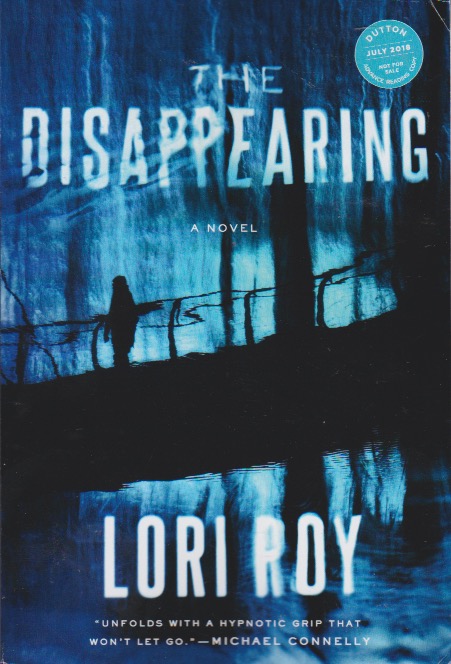
I also managed to finish Lori Roy’s upcoming new release, The Disappearing, last night.

the disappearing

Lane Wallace is alone inside Rowland’s Tavern when the front door flies open. A man stumbles inside, bringing with him a spray of rain that throws a shine on the hickory-brown floors. He scans the dark rooms, stomps his feet, and draws both hands over his wet, round face. If the man says anything, Lane doesn’t hear him for the rain pounding the tin roof and the palm fronds slapping the front windows. It’s supposed to rain through the night, and all around Waddell, people will be keeping a close eye on the river.

Lane smiles because maybe the man is a friend of a friend and not a stranger. She’s expecting a big crowd tonight, and one of her regulars might have invited him. But he doesn’t smile back. Slipping her phone from her back pocket. she lays it on the bar top where the man will be sure to see it. It’s a subtle warning, but if the man is looking for trouble, it’ll make him reconsider.

He’s a little on the heavy side; doughy, a person might say. From behind the bar, Lane asks the main if a beer’ll do him, and as he slides into a booth near the front door, he nods. Hr regulars, men who’ve known her all her life, or rather who have known her father, won’t show up for another hour or so but Rowland Jansen will be back any time now. He ran out to move his car and Lane’s to the higher and drier ground of the parking lot out front, so she won’t be alone with the man for long.

This is Lori Roy’s fourth novel, and it’s quite an achievement. His first three novels–Bent Road, Until She Comes Home, and Let Me Die in His Footsteps–were all shortlisted for Edgar Awards; she won Best First for Bent Road and Best Novel for Let Me Die in His Footsteps, raising her up into the exalted, rarified air of the Multiple Edgar Winner Circle. I’ve only read Bent Road–I do own the others, will every intent to read them at some point; too many books, not enough time–and it blew me away with its stunning depiction of rural Kansas, its juggling of two separate time-lines, and its thematic exploration of how the pains and evils of the past can influence the present.

That same theme runs through this stunning new novel, The Disappearing, as well, and is explored even more deeply and explicitly than in the first. Waddell is a small town in north Florida, amorphously near Tallahassee; Roy’s captured the feel of rural small town Florida deftly (there is, as not many know, a huge and significant difference between the coastal cities of Florida and the insular, small towns of the state’s interior). She plays with the memories of Ted Bundy’s journey through the area; a young woman, a student at Florida State doing some internship work at a local, fading plantation is missing, which has stirred up all those fearful memories of Bundy’s spree. The plantation also shares a boundary with a closed reform school for boys, whose own violent and possibly deadly past has also come back to haunt Waddell.

But it’s also an exploration of family, and how the damage from a past history of deep violence and emotional abuse, locked away and ignored, can reverberate through the years and have deep, horrific implications on the present. Susannah Bauer’s disappearance triggers a chain reaction of emotion and violence and horror, spread over the course of a few days after the night of the heavy rain, that will continue to cycle through the future unless honestly and painfully dealt with in this present.

There are four point of view characters in The Disappearing: three women from generations of the same family–Erma, the matriarch of the Fielding family, with her guilts and secrets festering inside her for decades; Lane, her daughter, whose own emotional damage and baggage perpetuates the cycle; and Lane’s younger daughter, Talley, whose wanderings due to her own loneliness and unhappiness makes her the holder of most of the secrets and truths of the present. The fourth point of view character is Daryl, a mentally disabled young man who is the groundskeeper at the church, and his story is told in the recent past rather than the present, as Lori Roy deftly spins all the secrets and lies and horrors of the town of Waddell into an astonishingly well-blended tale of flawed people and the damage they can leave in their wake.

Even more impressive than the characters and the story itself is the mood and the voice; the way she maintains this almost dreamy tone, creating the perfect mood for the story is masterful. The voices of her characters are compelling and real; only Daryl tells his story in the first person; the others are a very tight third person present tense. The shifts in voice, the tone, the tense and the word choices and the imagery, kept reminding me of Faulkner’s brilliant The Sound and the Fury, and in a very good way.

The Disappearing is an extraordinary achievement, and is destined to make awards short-lists and all the Top Ten lists for 2018.

On My Own

The Terror continues to enthrall us; it’s such an amazing achievement for a television production; the mood, the eeriness, the sense of dread. The acting and the production values are also amazing. Well done, AMC. The Walking Dead  may have gone off the rails, and we may have lost interest in Fear the Walking Dead early on, but there’s no question that you have become one of the leaders in producing quality television series. I am surprised The Terror isn’t getting more attention than it is; it’s indicative of just how little attention it’s getting that when I started watching I thought the entire series had finished airing. Come on, people; it’s well written, incredibly suspenseful, the acting is top-notch, and the production values are amazing.

I am almost finished with the revision of “Fireflies,” and so it, too, should be ready for a read-aloud this weekend. Once those are finished, I can send off the short story collection and submit “Fireflies” to the appropriate anthology; and then it’s back to the WIP and Scotty. (I also have a thought about a second collection of stories, but that’s a whole other ball game, and I may skip out on it for this year and try for the contest–there’s a contest for a short story collection I’m eyeing, but making the submission for this year might be a push, really; I could always wait and do it next year; when the collection would have matured and I could take my time with the stories. But then again, we’ll have to see how writing goes this summer. One never knows, does one?)

In other exciting news, today I cut the cable cord once and for all. It’s amazing what an exorbitant price we were paying–and have been paying–for years. I simply upgraded my Hulu subscription to include live television, and wound up getting almost all the channels we were getting anyway, losing a few but also gaining a few and said goodbye to the cable bill. We pretty much stream everything anyway these days, so why keep paying? Hulu is $39.99 for live television as well as on demand, and we have all those other apps. And really, if there’s any show we want to see or watch that we don’t get thru Hulu or through one of the apps…I can pay for it. It’s way cheaper than paying almost (gulp) fifteen hundred dollars a year for a lot of shit we don’t watch. Hulu TV isn’t as easy to flip through from channel to channel–which is going to make college football days more difficult….but on the other hand, I also don’t need to spend my entire Saturdays in the fall sitting in my easy chair watching every college game that airs.

And the more we use it, the easier the Hulu TV is going to be to use. It’s about getting used to it.

And I have to say, it’s going to feel good to only pay that much lower bill for simply high speed internet.

Of course, the cable company is already offering me deals to come back. Um, maybe you should offer the deals to have kept me in the first place?

I will keep you posted, Constant Reader, on how the Hulu TV option works for us. But other than an occasional glitch last night, it seemed to work just fine.

And now, back to the spice mines.

a-shirtless-friday-16

Fresh

Well, I managed to get that slog of Chapter Fourteen finished yesterday; only managed about twenty-seven hundred words, but as I mentioned in the morning, I was tired and slightly out of sorts all day. I also worked on “My Brother’s Keeper” a little bit; not enough to get it finished and ready for what I call the “read aloud polish”, in which I read the story out loud to make sure the language and sentences flow properly. It also helps me catch repetitions. But its getting closer to that stage, and I am most happy about that; perhaps I’ll be able to do the read-aloud this weekend. I’d also like to do a read aloud of another story–not “Don’t Look Down,” there’s a lot more work necessary on that story, pruning and tweezing and adding things; since it’s a longer story I need to know my main character a lot more, and I am still not sure I have the opening right.

I have also decided that I am going to try to write a story for the Malice Domestic anthology for 2019; it has a gastronomy theme. I love testing myself with themed anthologies; to see if I can write to the theme, stretch the theme, and stretch myself as a writer. I rarely, if ever, get into these anthologies, of course; but I enjoy the challenge of trying.

(Oh, sure, I get a little bitter when I don’t get accepted, but then I move on and get over it. Life’s too short, you know. Well, is IS.)

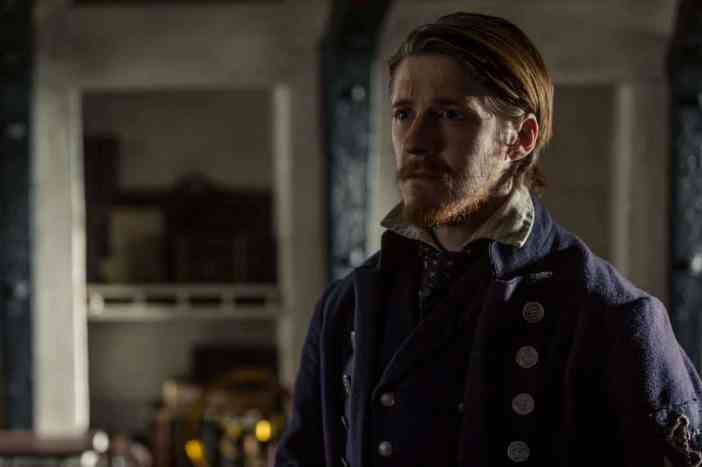
We were also terribly distressed to realize last night that we were caught up on The Terror; I hadn’t realized the show was still airing. Sigh. Now we have to find something else to watch, as another episode won’t be available until next week. Incredibly annoying, but there you have it. I do have some thoughts about it–some especially about the gay character of Cornelius Hickey, adroitly played by Adam Nagaitis, who may be stealing the entire series out from under the rest of the cast–but I am going to reserve those opinions until I finish watching the series. It does, however, speak to how compelling and good the show is that Paul and I were both enormously disappointed to realize we had to wait until next Wednesday for another episode; we were really looking forward to seeing it through until it’s inevitable end this week.

Adam Nagaitis:

The-Terror-Episode-2-Season-1-Gore-08

And here’s hoping Chapter Fifteen will not be the slog Chapter Fourteen was.

And now back to the spice mines.


All She Wants to Do is Dance

Hello, Wednesday, how are you this morning? I’m a little out of sorts this fine spring morning in New Orleans; my sleep has been restless this week and thus I am not as rested as I would prefer. The book has turned once again into a slog, but the best thing about the slog is–as I was slogging through Chapter Fourteen yesterday–I had one of those “only when I am writing a Scotty book” moments: when I get bored with what I’m writing so I toss in a plot twist out of nowhere. And it’s a good one too; I can’t believe it never crossed my mind to do this. It also makes sense with what else is going on. I do think this book is going to eventually turn out to be something pretty decent; it’s just getting this slog of a first draft finished. It’s going to be a lot more sloppy than the first drafts usually are; because I am not going back and polishing whenever I get stuck, I am simply forcing myself to keep going.

It also occurred to me yesterday that since it was May 1, I am officially further behind than I’d wanted to be. I wanted to have the first draft finished by now, and obviously, I am still slogging through the middle, with at least another eleven chapters to go. Zounds! Zoinks! Heavy sigh! I also need to finish revising/rewriting some short stories, and need to remember to buy and send a mother’s day card to my mother.

Must. Make. List. Must. CONSULT. List. Regularly.

There’s no point in having a list if you don’t look at it, after all, and avoiding consulting the list for fear its length, and the things still to be crossed off, is not an excuse. It’s simply enabling the procrastination.

So, despite being tired, I am determined to get Chapter Fourteen finished today, and I am going to go back and polish/revise “My Brother’s Keeper.” That is the goal for the day (well, that and paying bills since its payday; avoiding thinking about it because it’s depressing isn’t going to make it go away).

Sad, harsh truths.

What was really funny was yesterday I was looking through real estate listings for a part of New Orleans where one of my characters in the book lived; I’d found a house the day before whilst working on Chapter Thirteen and described it. But the website was still up yesterday, and I looked at it again, and the perfect house for this character was sitting right there, a couple of rows below the one I’d used; one of those ‘faux Tara’ type houses that pretentious nouveau riche southern people like to build and live in; with the wide veranda and, of course, the ever-present, stereotypical COLUMNS. But I wasn’t feeling particularly witty at the time, nor did I want to take the time to revise the entire section, so I simply put in a note in bold, revise this and make it a plantation style house and make lots of snarky Gone with the Wind jokes.

I do love when that happens.

We are also still watching The Terror, which is quite well done. I am always amazed when the credits roll because the episodes go by rather quickly, despite the fact that the story actually moves rather slowly. I did comment last night, after we had watched two episodes, that I couldn’t believe we were only five episodes in, because the show is so complex and layered yet seems so simple on the surface, that it seems we’ve been watching for a long time and should be closer to the end than we actually are. That’s some pretty masterful storytelling, I think. I think I’ll be terribly sorry when this is finished.

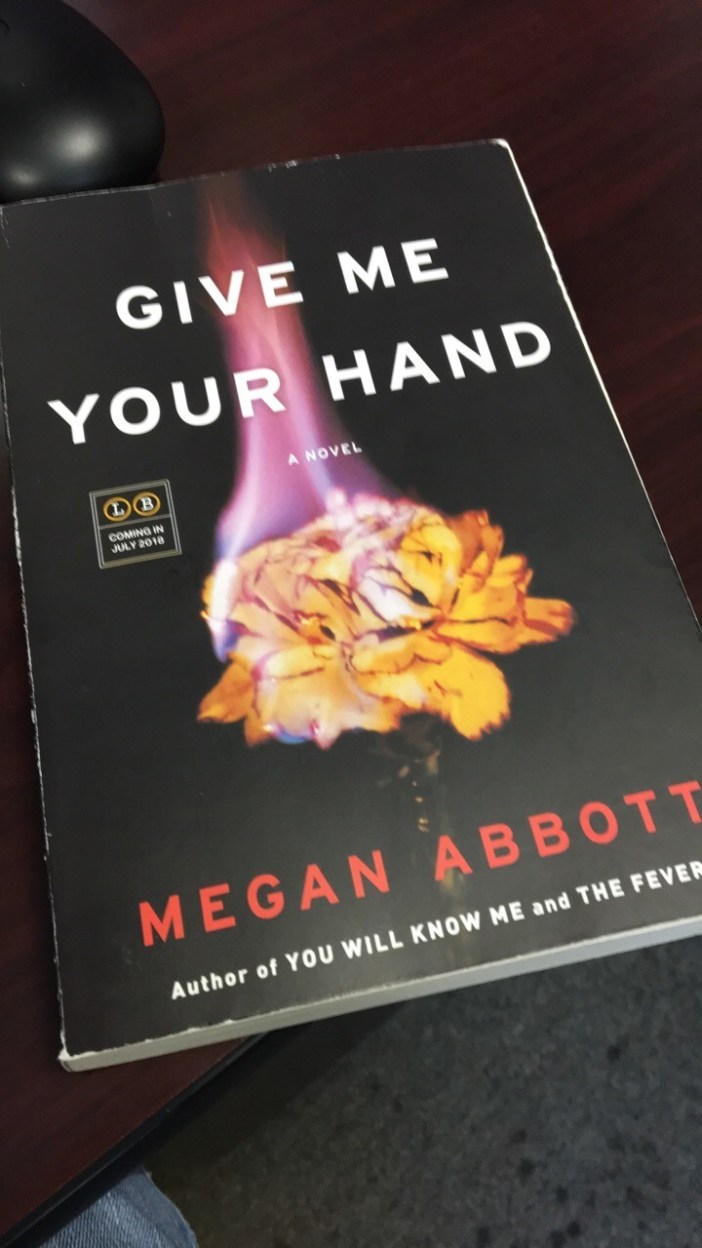
In other exciting news, I got an ARC of Megan Abbott’s forthcoming Give Me Your Hand in today’s mail, which has me thrilled to no end. I love her work; and she somehow manages to surpass herself with each successive novel, which is no easy trick. Now, to find the time to read it. I also have ARCs of Lori Roy’s new novel as well as Alex Segura’s, and I simply have got to find the time to read these books.

give me your hand

I know I’ve not been keeping up with the Short Story Project, but I have read a shit ton of stories already this year! I’ll get back to it, I promise, but I also think I’m going to proceed a little differently than I have been. I’ve been talking about every story I’ve read here, and I don’t think I am going to do that from now on; instead, I am only going to talk about ones that hit it out of the park for me. That may also mean I don’t post about newly read stories every day, but I think I would rather do this than try to find something to say about stories I didn’t care for as much as others; this ends up diluting the Short Story Project, and not allowing me the time nor the opportunity to delve as deeply into the stories I really enjoy.

And now, back to the spice mines. I only managed two thousand words yesterday; and as I said, I am behind. So, must make daily word counts!