Talk to Me

I slept well last night, yet am still tired this morning; it’s the summer malaise, no doubt. It’s weird for me to drive around the city and still see hordes of tourists gamboling around; at this time of year New Orleans used to become a ghost town, locals fleeing the heat and humidity to beach houses (if they had them) and those who could not leave staying inside in the air conditioning as much as possible. It still concerns me, more than a little bit, that just going out into the heat on two separate occasions this weekend and then going to a dinner party on Monday had done such a thorough job of draining and depleting my energy, not to mention made it so difficult for the batteries to recharge. But I only have two days in the office next week before my 4th  of July based vacation; here’s hoping that somehow I’ll be able to get rested and manage to get things done in the meantime.

I spent nine hours yesterday testing in the CareVan; it was National HIV Testing Day and as usual, the day job partnered with Walgreens stores all over New Orleans for us to reach out and test people who might not otherwise get tested. I wasn’t, frankly, too thrilled about doing anything Walgreens-related, after the scandalous behavior of the Walgreens pharmacist in Arizona this past week, but as always in this life, one has to compromise one’s principles, and choose the battles one wants to fight. Identifying new HIV positives is my job and my calling; to help them get treatment and medical care so they don’t infect other people as well as so they remain healthy. I’ve seen too much death from HIV in my lifetime to choose moral principles over assisting those who may be in need.

It’s been, frankly, an incredibly tiresome week. First the Walgreens pharmacy nonsense, where a pharmacist was somehow allowed, by the company and the law, to put a person’s life at risk because of his “sincerely held religious beliefs”, to the Kennedy announcement and the other horrific Supreme Court decisions of this past week. I think the combination of spending so much time out in the heat did the physical damage while the other things did the emotional and intellectual draining. I slept well but still feel drained and tired, tired of having to fight, tired of having to stand up and be counted. It sometimes feels like I’ve been fighting–for my right to exist, to be who I am, to be heard–for most of my life.

It’s exhausting.

This blog began during the Bush administration after a truly terrible year that I didn’t know was simply the beginning of a run of a terrible few years; it was a way to get me to start writing again over on Livejournal and was never meant to be anything other than me being able to have a place to record my feelings, my thoughts, my observations. It was therapeutic, and it also helped to vent out a lot of anger about the injustice in the world that I saw every day; whether those injustices directly affected me or whether they did not. As I’ve gotten older I’ve stayed away from politics and policy; either from mellowing with time or just not wanting to waste the energy on arguing about things with, frankly, human garbage. I stay off Twitter most of the time because I already have to take medicine for high blood pressure; the horrible things I see on there often make my blood boil.

But while I continue to refuse to engage with the sewage, that neither makes it go away nor does it put a stop to it, and what I see going on in this country, as filtered through my marginalized gay eyes, is terrifying.

So, going forward, I will still talk about writing and books I love; about New Orleans and writers I admire. I will continue, I will go on. But I am also going to have what used to be called “Julia Sugarbaker moments”–and if that is going to offend your delicate little sensibilities, stop reading my blog and feel free to abandon me on social media.

My next story in Promises in Every Star and Other Stories was called “Son of a Preacher Man”:

The air was sticky, damp and hot as I carefully slid the screen out of my window. The only sounds in the night was the electrical humming from the street light out in front of my house and the every-present chirping of crickets. Before I climbed through the window, I stuck my head out to see if the light in my parents’ window was still out. They’d gone to bed about an hour before, but better safe than sorry. I’d been sneaking out all summer and they hadn’t caught me once. 

I jumped down into the damp grass and ran as quietly as I could down to the line of trees at the back of our property. I ducked into the trees and walked along the dry creek bed to the little dilapidated wood bridge behind the Burleson house, and sat down with my legs dangling over the side. It wasn’t midnight yet, and Andy was always late. My parents were strict, but his made mine look like—well, I didn’t know what, but something. His daddy was the preacher, and he thought his kids had to set an example for the rest of the Youth for Christ. Andy always had to help serve the Lord’s Supper at least once a week, and instead of playing summer baseball like the rest of us, he spent his summer days working on his grandpa’s farm out in the county. Preacher Burleson was a hard man whose eyes blazed with the power of the Lord who didn’t let his wife or daughters wear make-up or curl their hair.

Andy hated his daddy.

Nobody knew, except me. In front of everyone else, Andy was a good son, never contradicting his daddy, doing what he was told, minding. He studied and got good grades, knew his Bible inside and out, and had never been any trouble. But I was the only one who knew he cribbed cigarettes whenever he had the chance,  could swear like a sailor,  and hated every last adult in Corinth—probably in the whole state of Alabama, for that matter. All he ever talked about was running away, getting the hell out of Corinth, Alabama, the south. He never said where he wanted to go, but I was pretty sure anywhere else would do.

I sat there on the bridge, swatting at mosquitoes and listening to the sounds of the night. August in Alabama was like living in hell, I heard my mama say once, and she was right. The air was like a big hot wet towel pressing down on my moist skin. My armpits were already damp. I dangled my legs over the edge, swinging them like a little kid. My whole summer had revolved around sneaking out at night and meeting Andy. School was going to start in another month, football practice in two more weeks, and then these nights were going to end. I didn’t like to think about that. I wanted to believe that the summer would go on forever, and every night I’d be sneaking out to meet Andy again—

As you can tell, this was also written during that period of time when I was at war with the evangelical right. And what better way to tell them to fuck off than to write a gay erotica story about having sex with the preacher’s son? IN THE FUCKING CHURCH (literally)?

It’s another one of my Corinth stories, like “Smalltown Boy” and so many others I’ve written; even my main character in Dark Tide was from Corinth. But I love the voice of this character; the same voice I’ve used whenever I’ve written a first person short story about teens in that town, and I really think I should write an entire book using that voice.

And now back to the spice mines.

IMG_2369

I Can’t Wait

So, yesterday I signed the contract to publish my short story collection, Survivor’s Guilt and Other Stories: Tales of Mystery and Suspense, with Bold Strokes Books for an April 2019 release date–which means it should be available at Saints & Sinners/ Tennessee Williams Literary Festival in late March.

I am inordinately excited about this, you have no idea, Constant Reader! It’s the first book contract I’ve signed since 2015, for one thing–everything came out in 2016 or early 2017, so yeah, it’s been a hot minute–but I am also excited because it’s a short story collection and it isn’t erotica.

In 2004 Starbooks collected my wrestling stories into a short-lived collection called Wanna Wrestle?, that went out of print very quickly for various reasons, none of which had to do with actual sales; it’s a rarity and few copies exist out there in the wild. Bold Strokes also did a collection of my Todd Gregory erotic stories, Promises in Every Star and Other Stories, a few years back as well. But I’ve always wanted to do a collection of non-erotic short stories, but never thought I would ever have enough stories, enough material, to actually do so.

But I also had no way of knowing I would also lapse into a short story writing mania the way I have  this year. I mean, I can’t believe how much short story writing I’ve been doing this year.

But, also in fairness, only four of the stories in this collection are new.

Here’s the table of contents:

Survivor’s Guilt (originally published in Blood on the Bayou, which won the Anthony Award for Best Anthony and the story was nominated for a Macavity Award)

The Email Always Pings Twice (originally published in Ellery Queen’s Mystery Magazine)

Keeper of the Flame (originally published in Mystery Week magazine)

A Streetcar Named Death (originally published in the anthology I Never Thought I’d See You Again, edited by Lou Aronica)

An Arrow for Sebastian (originally published in the anthology Cast of Characters, edited by Lou Aronica)

Housecleaning (originally published in Sunshine Noir, edited by Annamaria Alfieri and Michael Stanley)

Acts of Contrition (originally published in Ellery Queen’s Mystery Magazine)

Lightning Bugs in a Jar

Spin Cycle (originally published in Men of the Mean Streets, co-edited by me and J. M. Redmann)

Cold Beer No Flies (originally published in Florida Happens, coming in September)

Annunciation Shotgun (originally published in New Orleans Noir)

Quiet Desperation (originally published as a Kindle single)

The Weight of a Feather

My Brother’s Keeper

Don’t Look Down

Smalltown Boy (originally published in Rebel Yell 2, edited by Jay Quinn)

So, only four of the stories, (five, if you count “Quiet Desperation,” which was a Kindle single) are original. And technically, “Cold Beer No Flies” is a new story; but by the time the collection comes out next year Florida Happens will also be out, rendering it no longer a new story.

But even more exciting? “My Brother’s Keeper” is the first Chanse MacLeod short story ever, and now that I’ve written one, it doesn’t scare me anymore. I’ve already started another, “Once a Tiger,” and who knows? Maybe I will write more. I don’t think I’ll ever write another Chanse novel, but short stories? Why not? Writing private eye short stories is challenging; more of a challenge than just the usual crime story I write, and so I see writing more private eye stories as an opportunity to grow further as a writer, and get better at what I actually do.

The great irony is that my short story writing mania of this year actually has provided me with almost enough stories for a second collection, all unpublished stories, and I have about another dozen or so in some form or stage of being written. Freaking crazy.

Oh, and you know that messy Chapter Fourteen of the Scotty book? Was so fucking easy to fix it’s not even fucking funny. It literally required the deletion of about 200 words and the addition of 120 or so back, and it’s fucking fixed. Blam. Problem solved; the same problem I might add, I’ve been avoiding for like  three weeks.

Because, you know, avoidance. My go-to.

Heavy heaving sigh.

Here’s the opening paragraph of “Don’t Look Down,” aka the Italy story:

Jase shifted the Fiat’s engine into a lower gear as he started up the steep hill. He hadn’t driven a standard transmission since college, but he did remember hills required downshifting. As the Fiat started climbing he passed two handsome, tanned men on mountain bikes, sturdy thighs straining against their brightly colored Lycra casing. According to the directions, he would be in Panzano when he reached the top of the hill.  There was a parking lot off to the left and just beyond that he could see a stone wall. The hill—or mountain, he wasn’t sure which—dropped off into a valley to the right, vineyards and olive trees spreading out to the next sloping hill.  A low stone wall hugged the right side of the road nearer the crest of the hill, with barely enough space for pedestrians or mountain bikes. All the roads had been incredibly narrow since he’d left the highway, with many sharp blind curves as the road weaved in and out and around and along mountains.  At one point an enormous bus coming the other way had almost forced him onto the shoulder, missing the black rental car by inches. He glanced up at the directions tucked into the sun visor. At the crest of the hill there would be another sharp, almost ninety-degree turn to the left, and to his right would be the triangular town center of Panzano-in-Chianti. To get to the hotel, because of the narrow one-way streets, he’d have to circle around the  triangular town square to get to the little hotel. 

33865992_1851225275171707_8088228887944757248_n

Human

And it’s back to work.

What a lovely time the last five days were; probably the best stay-cation (I do really hate how we are making up words these days) I’ve ever had, and I think I am probably going to need to do this periodically; perhaps every couple of months or so. Don’t get me wrong, I do love traveling and visiting places, but having time to relax, catch up on rest, and focus on not only cleaning the house but getting some important writing work done cannot be over-estimated in importance. I also managed to get a lot of other loose ends tidied up, which was also equally lovely. This morning I need to send a bunch of emails, and then it’s back to normal; or what passes for normal around here.

I finished watching The Shannara Chronicles yesterday, and kudos to them for an excellent ending to Season 2 and a terrific cliff-hanger. Should the show be renewed, it’s essentially rebooted; if it isn’t, well, it had a lovely run for two seasons. It was originally on MTV, where it was almost as highly rated as Teen Wolf, but moved to Spike for its second season (MTV moving away from higher-cost scripted series), where it lost a significant chunk of audience. If it is popular in streaming, though, it’s entirely possible either Netflix or Hulu could continue it. It’s very well done; a glossier, prettier Game of Thrones, and it’s not like there aren’t over twenty Shannara novels by Terry Brooks to use as source material.

As I said, it would be an enormous shame should the series not continue.

I also did some writing yesterday; again, not so much actual writing as making notes for the stuff I am working on; my creativity has been raging out of control lately, which is fantastic, of course. I made notes for an old story called “The Trophy Boy,” which I think could be redone as a crime story, and came up with some ideas for another short story that’s been floating around in the outer reaches of my creativity, “Head Shot.” I also made notes for a noir novel idea I had, centered around a French Quarter strip club, Girls Girls Girls, and of course, more notes on both the Scotty AND the WIP, which is very exciting. I think the thing I am enjoying the most about not being on deadline is the freedom to not stress about free-associating something else without being slavishly devoted to, or stressed about, whatever the contracted piece might be.

It’s kind of a lovely feeling to embrace the creative ADHD for a change, rather than trying to fight it.

Then again, if giving into the ADHD makes the work I am focusing on (supposedly) better (which I think it is), this is good.

And now back to the spice mines.

33221542_1848752302085671_5741669550110277632_n

Sara

Memorial Day Monday, and I haven’t gotten near as much done as I intended, according to the “long weekend stay-cation to-do list”, but I got so much more else done that I cannot feel defeated or disappointed in myself.

Which, of course, is a step in the right direction. I’ve also gotten used to waking up in the morning between nine-thirty and ten; tomorrow’s alarm is going to be a very rude awakening, I fear. But it is what it is, I suppose, and at least this is only a four day work week, so that’s something, right?

Always find the upside, you know?

I took a lot more notes in the journal yesterday, figuring out how some other stories are going to play out, and even started brainstorming on Muscles. I know this doesn’t seem like I’m getting very much done as far as actual writing is concerned, and that may be true; but what I’ve done this entire weekend is make the actual writing possible. Today I am going to try to get some of that actual writing done–I know, right? SCARED OF THAT. And I also have some reading to do; I’m participating in a panel of readers to choose some short stories for an anthology. I also have some other busy-work to take care of today as well; so I am going to try to get that done before I start writing.

I am still reading that Roth novel; it’s not very quick going, despite being so well-written and the characters aren’t really quite as awful as the ones I recall from Letting Go, but it’s kind of slow going; there’s not really a reason to keep turning the page, which is always the problem, at least for me, with literary fiction. On my shelves, TBR, are two big literary fiction books that are massively long, Hanya Yanaghara’s A Little Life and Garth Risk Hallberg’s City on Fire, and while there are  gay characters and themes in both…they’re so long. Since they have gay characters, I kind of feel, as a gay author, some responsibility to the community to read them, dissect the gay characters, etc. It is representation, after all, and that representation should be critiqued by someone within the community.

I am sure that was handled by Gay and Lesbian Review Worldwide, which is a lovely magazine, and yet…I feel like it’s sort of my job somehow; a need or feeling which I definitely need to get past and over as quickly as possible. I am sure I will finish reading the Roth this week and I can get back to reading crime novels. (Yay!)

So, yesterday’s journal entries included work on my short stories “The White Knuckler” and “Never Kiss a Stranger” and “Hold on to the Night” and “This Thing of Darkness” and “And the Walls Came Down”; and the novels Muscles and Bury Me in Satin. I am writing a lot in my journal, which is convenient and easy, of course; I love having my journal, and I love having it handy, so whenever something occurs to me I can write it down and riff on it for a little while. This has been working tremendously; I solved the problems with the Scotty novel this way, made progress on the WIP; and at the rate I am going when it’s time to work on Bury Me in Satin the entire thing will have already been written or planned out in my journal.

Which will certainly make the process easier.

I’m all about it being easier, in case you’d never noticed.

As I page through my journal I also see notes I made for two essays; one about the evolution of teen movies from the 1950’s to the present (triggered by watching the original Friday the 13th last night, with a very young, dewy and beautiful Kevin Bacon), and another about Robert Downey Jr.’s career trajectory, and yet another about whether Carrie White from Carrie was a villain or a victim (this popped up on Facebook this week, and the question was very strange; I always considered Carrie a victim and certainly never as a victim; I also made the connecting thought that varied interpretations of what role she played in the novel/film has everything to do with the reader/viewer’s life experience as well as how they see themselves; which is an interesting direction to take, essay-wise; I was also thinking it might not be a bad idea to include Christine’s Arnie in the discussion. I consider both novels to be excellent depictions of teenage life and high school; no one really does childhood or high school quite the way King does).

So, that’s it for today, the end of my stay-cation. I got a lot of brainstorming and problem-solving finished for my writing; the Lost Apartment is in some sort of order at long last, and I am of course making myself all kinds of promises I won’t keep; about staying on top of the household chores and staying on top of the writing and the reading and using my journal to get myself out of sticky situations with both. I am very glad I took the stay-cation, even if I didn’t get close to getting all the things finished that I needed to get finished. My visit to the storage facility had to be postponed because of the recurring back pain; hopefully I can get that handled one day this week; either Thursday or Friday.

Always keep moving forward.

Next up in the Short Story Project is “The Jockey” by Carson McCullers, also from The New Yorker’s The 40’s: The Story of a Decade:

The jockey came to the doorway of the dining room, then after a moment stepped to one side and stood motionless, with his back to the wall. The room was crowded, as this was the third day of the season and all the hotels in the town were full. In the dining room bouquets of August roses scattered their petals on the white table linen and from the adjoining bar came a warm, drunken wash of voices. The jockey waited with his back to the wall and scrutinized the room with pinched, crepy eyes. He examined the room until at last his eyes reached a table in the corner diagonally across him him, at which three men were sitting. As he watched, the jockey raised his chin and tilted his head back to one side, his dwarfed body grew rigid, and his hands stiffened so that the fingers curled inward like gray claws. Tense against the wall of the dining room, he watched and waited in this way.

I’ve never been ashamed to admit that often I don’t get McCullers’ work; but I like the way she writes and the insights into her characters that she shares. This short story, about a damaged jockey who enters a crowded dining room during the season at Saratoga and confronts three people, dining together, who’ve had some impact/will have some impact on his life, and their complete disinterest in him as anything other than an object to be pitied, eventually to be scorned, is well drawn and depicted; and very telling about human nature; how we are with people who are of use to us and who we, as a society, generally are to those who cease to be of use to us. I have to confess, my revisitation of McCullers, between this and Reflections in a Golden Eye, has made me a lot more interested in her and her work; just as reading some of Flannery O’Connor’s stories recently has raised my interest in her work as well.

As I have said before, I often find my failure to get certain writers, seen as masters or geniuses, or in other ways celebrated by the so-called Academy, as a failure not only as a reader or a writer but as an intellectual and even, possibly a moral failure; but my recent reread of The Great Gatsby went a long way towards curing me of that mentality; likewise, the recent re-approaches to the works of McCullers and O’Connor have also made me realize that in some cases, I may not have been intellectually and morally ready to read these works. I am going to give Hemingway another chance at some point  as well, and I do want to read more of Faulkner. I’ve certainly enjoyed reading Sinclair Lewis and Theodore Dreiser a great deal more as an adult than I did in college courses. I didn’t enjoy reading Jonathan Franzen, and I’ve come to believe that David Foster Wallace is a cruel joke played on unsuspecting readers and students of literature by bitter professors. I also found Styron’s Set This House On Fire more readable, more enjoyable, and more of an achievement than Sophie’s Choice or The Confessions of Nat Turner; but I also read the latter when I was in my early twenties, so it may be possible for me to appreciate them more greatly now; I do consider myself to be a more sophisticated reader now than I was in my callow youth.

And now, back to the spice mines.

IMG_4109

Burning Heart

Sunday morning, and yet another good night’s sleep. It truly is amazing what a difference that can make in one’s life; I miss the days when I could simply tumble into bed and close my eyes and, as Paul once put it, “sleep through a nuclear holocaust.” Yesterday was a good day; I got groceries and did some cleaning. I read both “This Town” and “Don’t Look Down” aloud, did the necessary clean-ups on them, and this morning I am going to read “Fireflies” aloud and see if it, indeed, does hold together. I wrote the first draft of “Fireflies” something like thirty years ago (!) and it’s still in the file folder, handwritten (because until computers, I almost always hand-wrote everything); I am still not entirely certain the story works; but we will find out today when I read it out loud.

I was very pleased with the two stories I read aloud yesterday, and if I do say so myself, I feel “This Town” is one of the better stories I’ve written. I’m going to read “Fireflies” aloud this morning, and then I’m going to work on “This Thing of Darkness” for a little bit, see how that goes, and then maybe dive into one of the two novels I am working on (focusing on, really; there’s a third I started writing a couple of weeks ago, which I am itching to get back to, but that’s just crazy talk). I also started reading Alex Segura’s Blackout yesterday, not getting very far, alas; but I am looking forward to getting further into it. I also started reading Martin Edwards’ Edgar Award winning The Golden Age of Murder, which is my new ‘read a chapter or two before bed’ book. We also started watching Harlan Coben’s new Netflix series, Safe, and are really enjoying it thus far.

My kitchen is also a disaster area; I made ravioli last night and yes, well, a mess is a bit of an understatement.

I also stopped at Office Depot yesterday to purchase pens. I’ve discovered a new brand of pen that I absolutely love: Tul, with a dash over the u. They sent us a couple of them at the office a month or so ago, and I absconded with them, as is my wont, and then bought a couple more. Yesterday I bought several more packs of them. I’ve always been a bit of a pen nerd, and I also noticed last night, as I made notes in my journal, that my blank book is almost full; time to get a new one soon. Yay! I really am glad I’ve gone back to keeping a journal to write notes and ideas down into; I’ve worked out issues with several of my short stories this year in it, as well as the books.

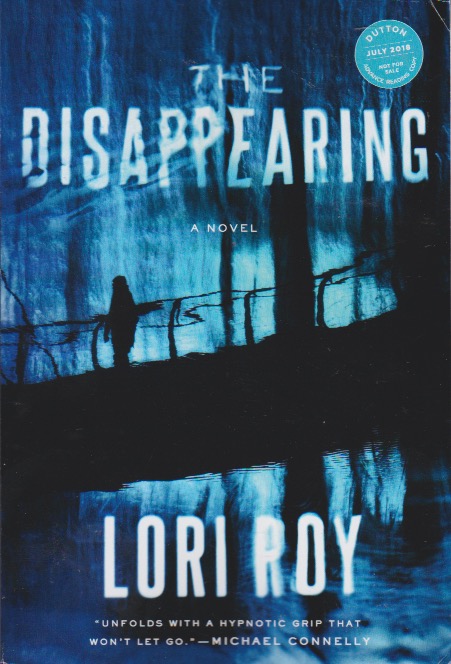
I also managed to finish Lori Roy’s upcoming new release, The Disappearing, last night.

the disappearing

Lane Wallace is alone inside Rowland’s Tavern when the front door flies open. A man stumbles inside, bringing with him a spray of rain that throws a shine on the hickory-brown floors. He scans the dark rooms, stomps his feet, and draws both hands over his wet, round face. If the man says anything, Lane doesn’t hear him for the rain pounding the tin roof and the palm fronds slapping the front windows. It’s supposed to rain through the night, and all around Waddell, people will be keeping a close eye on the river.

Lane smiles because maybe the man is a friend of a friend and not a stranger. She’s expecting a big crowd tonight, and one of her regulars might have invited him. But he doesn’t smile back. Slipping her phone from her back pocket. she lays it on the bar top where the man will be sure to see it. It’s a subtle warning, but if the man is looking for trouble, it’ll make him reconsider.

He’s a little on the heavy side; doughy, a person might say. From behind the bar, Lane asks the main if a beer’ll do him, and as he slides into a booth near the front door, he nods. Hr regulars, men who’ve known her all her life, or rather who have known her father, won’t show up for another hour or so but Rowland Jansen will be back any time now. He ran out to move his car and Lane’s to the higher and drier ground of the parking lot out front, so she won’t be alone with the man for long.

This is Lori Roy’s fourth novel, and it’s quite an achievement. His first three novels–Bent Road, Until She Comes Home, and Let Me Die in His Footsteps–were all shortlisted for Edgar Awards; she won Best First for Bent Road and Best Novel for Let Me Die in His Footsteps, raising her up into the exalted, rarified air of the Multiple Edgar Winner Circle. I’ve only read Bent Road–I do own the others, will every intent to read them at some point; too many books, not enough time–and it blew me away with its stunning depiction of rural Kansas, its juggling of two separate time-lines, and its thematic exploration of how the pains and evils of the past can influence the present.

That same theme runs through this stunning new novel, The Disappearing, as well, and is explored even more deeply and explicitly than in the first. Waddell is a small town in north Florida, amorphously near Tallahassee; Roy’s captured the feel of rural small town Florida deftly (there is, as not many know, a huge and significant difference between the coastal cities of Florida and the insular, small towns of the state’s interior). She plays with the memories of Ted Bundy’s journey through the area; a young woman, a student at Florida State doing some internship work at a local, fading plantation is missing, which has stirred up all those fearful memories of Bundy’s spree. The plantation also shares a boundary with a closed reform school for boys, whose own violent and possibly deadly past has also come back to haunt Waddell.

But it’s also an exploration of family, and how the damage from a past history of deep violence and emotional abuse, locked away and ignored, can reverberate through the years and have deep, horrific implications on the present. Susannah Bauer’s disappearance triggers a chain reaction of emotion and violence and horror, spread over the course of a few days after the night of the heavy rain, that will continue to cycle through the future unless honestly and painfully dealt with in this present.

There are four point of view characters in The Disappearing: three women from generations of the same family–Erma, the matriarch of the Fielding family, with her guilts and secrets festering inside her for decades; Lane, her daughter, whose own emotional damage and baggage perpetuates the cycle; and Lane’s younger daughter, Talley, whose wanderings due to her own loneliness and unhappiness makes her the holder of most of the secrets and truths of the present. The fourth point of view character is Daryl, a mentally disabled young man who is the groundskeeper at the church, and his story is told in the recent past rather than the present, as Lori Roy deftly spins all the secrets and lies and horrors of the town of Waddell into an astonishingly well-blended tale of flawed people and the damage they can leave in their wake.

Even more impressive than the characters and the story itself is the mood and the voice; the way she maintains this almost dreamy tone, creating the perfect mood for the story is masterful. The voices of her characters are compelling and real; only Daryl tells his story in the first person; the others are a very tight third person present tense. The shifts in voice, the tone, the tense and the word choices and the imagery, kept reminding me of Faulkner’s brilliant The Sound and the Fury, and in a very good way.

The Disappearing is an extraordinary achievement, and is destined to make awards short-lists and all the Top Ten lists for 2018.

Sentimental Street

It’s Saturday morning! Lots to do today; Chapter Fifteen, read “My Brother’s Keeper” aloud, work on “Don’t Look Down,” revise “Burning Crosses,”–the list goes on and on. It’s supposed to rain today as well; not sure if that’s going to actually be a thing today, but it does look sort of gloomy-esque outside my windows this morning.

And the Apartment is, of course, a complete and total mess.

I was thinking last night, as I started reading Megan Abbott’s extraordinary Give Me Your Hand, about my own writing (reading amazing writers always makes me contemplative) and putting into some perspective. Megan is one of our best writers, and the crime genre is very lucky to have her writing within our boundaries. Reading her work is always very humbling for me, whether it’s a novel or one of her jewels of a short story (hello, publishers! A Megan Abbott short story collection is way overdue! Get! On! It!), as I find myself wondering how does she think of putting these words together? Her sentences are never overly complicated and yet she manages to put them together in such a way as to create a very vivid and complex image, not to mention how she uses her sentence structure to create these characters that are so nuanced and real and complicated…she really is a master of the written word. I will dive back into her novel today, when I am finished with all of the things I must, I have to, do today; it’s always lovely when there’s a wonderful reward waiting for you at the end of tedious writing and editing and cleaning. (I also have ARC’s of Lori Roy’s The Disappearing and Alex Segura’s Blackout; I cannot wait to dive into those as well.)

And while I should be thinking, of course, about where the Scotty novel needs to go in Chapter Fifteen and going forward from there, I was thinking last night about short stories. I always abhorred writing short stories before, thought them incredibly difficult to write, and a discipline of writing that I was not particularly good at (I am also horrible at writing horror fiction, for example). I always believed that whenever I was actually successful at writing a short story, it was purely by accident; not anything conscious that I managed because I wasn’t good at the form. But in writing these reams of short stories this year, I am finding that not to be true; I am having to revise my thinking about so many things I once believed true about me as a writer. Yes, a short story might fail; everyone makes false starts. The Archer Files, with its final section of short story fragments that Ross Macdonald had started yet never finished, taught me that. My own files are filled with fragments of short stories that I began yet never finished; first drafts of stories I never finished because I wasn’t sure, I wasn’t convinced, that I knew how to fix and repair, how to edit and revise to make right. But that doesn’t mean I am a failure at writing short stories. It simply means those stories are ready to be finished; that Ifor whatever reason, am simply not ready to finish them. And there’s nothing wrong with that, of course.

This is, and has always been, just another way my lack of self-confidence in my ability to write manifests itself.

I started writing another story last night, currently untitled; I’m not sure what its title will be but I do have a vague idea of what it’s about. There’s a great little place to eat in my neighborhood, in the same block as my gym, called simply Tacos and Beer; I am meeting someone in town for an early dinner there on Sunday. That, of course, got me thinking about that great simple name for the place, and what a wonderful opening that would make for a story; someone going there to meet someone for dinner and choosing that place because it’s simple, straightforward name pleases them so much. The story is still amorphous, of course. But perhaps I’ll be able to work on it today. I’m also thinking I might even get to work on Muscles  a little bit today.

Who knows? The day is fraught with possibilities still. I may wind up being lazy and not doing a fucking thing.

Here’s the raw opening of “Burning Crosses”:

“Population four thousand four hundred and thirty two,” Leon said as they passed the Welcome to Corinth sign. There were a couple of bullet holes in it, as there had been in every official green sign they’d passed since crossing into Corinth County. “I guess it’s not hard to imagine lynching here.”

“I can come back with someone else,” Chelsea Thorne replied. Her head ached. She needed coffee. Her Starbucks to go cup was long empty. “Can you check on your phone and see if there’s a Starbucks in town?”

Leon laughed. “I don’t have to look to know the answer is no,” he shook his head. “There’s not even five thousand people in this town, girl. There ain’t no Starbucks. I’ll bet there’s a McDonalds, though.”

“It’ll have to do.” The throbbing behind her temple was getting worse. It didn’t help they’d gotten lost trying to find this little town, the county seat of a county she’d never heard of, let alone knew where to find. It wasn’t even near a highway. They’d had to take a state highway out of Tuscaloosa and drive about an hour or so, depending on the roads and depending on traffic. It took longer to get out of Tuscaloosa than they’d planned, thanks to some road work and then another delay because of Alabama Power cutting down some tree limbs, but they’d finally gotten out of town when she was halfway through her latte. Leon had dozed off, snoring slightly with his head against the window as they got out of town on the state road, passing through fields of cotton and corn and orange-red dirt. The state road was stained orange on the edges, the white lines looking like her fingertips after eating a bag of Cheese Puffs. It was supposed to be an easy drive; she didn’t need to make any turns, just keep following the state road that would take them straight to Corinth. But a bridge over a stream was being worked on and there was a detour, taking them down an unpaved road with cotton fields on either side, barely room for her Cooper Mini, and God help them if they met a truck or something coming the other way. Ten minutes down that dirt road and her latte was gone, finished, nothing left. Then she’d turned the wrong way when she’d reached the other state road—but it wasn’t her fault. She’d thought the sign was wrong—how could a right turn take her back to Tuscaloosa? But then she’d figured there must have been more twists and turns on the back road than she’d thought, and turned left. She’d gone almost seven miles before she say the TUSCALOOSA 7 miles sign, and had to make a U-turn in someone’s driveway.

She knew it was wrong, she knew it was stereotyping, but she hated driving on country roads in rural parts of the South.

You can see how rough the story is in its initial stage; it definitely needs work. There are also things missing from it in this draft; things I need to add in to make it stronger, to add nuance, to make the sense of dread and discomfort the characters feel more clear; I want the reader to feel that same sense of unease.

And I do think writing all these short stories this year has been enormously helpful to me, not only as a short story writer but as a writer in general; short stories give you the opportunity to stretch and try things you can’t try in a novel; different themes and voices and styles.

And now back to the spice mines.

IMG_4241

Lay Your Hands on Me

I managed to get all the errands done yesterday, and didn’t feel exhausted until I was in the process of putting away all the groceries and things. I went to both the grocery store and Costco yesterday; I was rather impressed that I wasn’t worn out much sooner. I did get the bedding laundered as well. But I didn’t get any writing done; I am going to need to do that today.

There are a lot of things I am going to need to do today. Sigh.

I’ve been invited to contribute to an anthology; and I am not certain I have anything ready to send along. I do have this one incredibly disturbing story that I would like to make even more disturbing–that’s just how I roll–and I need to get back to work on the Scotty draft. I’d like to revise Chapter 11 a bit today, get it cleaned up more so it isn’t nearly as sloppy as it currently is, and I want to get these other two stories cleaned up as well. I need to spend some more time with “Don’t Look Down” than I have been; I need to get inside the characters more, understand who they are better, and then I think the story will wind up being a lot more strong. The same goes with the Chanse story; the story is really about his relationship with his brother and that’s not strong enough in the story as it sounds right now. That is also, I think, the problem with the Scotty book. I need to spend some time today with it as well, figuring out motivations and so forth.

Ah, being a writer. Always such a challenge.

We finished watching Collateral last night, and I was rather pleased with it; it was written by David Hare, the playwright, and you could tell it was written by someone good. Carey Mulligan was terrific, and I highly recommend it for anyone who enjoys complex, multi-layered crime dramas. I think tonight we may watch Justice League, to just to see if it really is as terrible as everyone seemed to think; I didn’t hate either Man of Steel or Batman vs. Superman, so I am not going into it as a hater.

I’m also still reading Tinseltown, which I am greatly enjoying. I don’t know a lot about the early days of Hollywood; the early 1920’s and late 19-teens, other than what I know from reading biographies of David O. Selznick, whose father was a producer and tried to build up a studio at the same time Adolph Zukor was building Paramount, and before the big merger that created Metro-Goldwyn-Mayer (MGM). So all this is new information to me, and William J. Mann is a terrific historian and researcher. (I am more familiar with later periods of Hollywood, but hardly an expert.) I’ve always wanted to write about Hollywood’s past; I have an idea for a noir novel to be set in the late 1940’s, but my lack of familiarity with the nuts and bolts of Hollywood in that period makes it difficult–or rather, makes my already vast insecurity about writing about another period even stronger. Although I’ve already written one short story about that time–an ambiguous setting of the early 1950’s–I don’t know. Maybe I should try it as a short story first, see if I can get the sense of the period?

I don’t know.

I’m also saddened to say that I’ve now finished reading both of Lawrence Block’s art-inspired anthologies, In Sunlight or in Shadow and Alive in Shape and Color, but I’ve heard through the grapevine that he is putting together another, which is great. So, for today’s edition of the Short Story Project, I am sad to say this is the last story from a Block anthology: “A Woman in the Sun,” by Justin Scott, from In Sunlight or In Shadow.

Could she change his mind? Four steps to the open window, lean out and call, “Don’t.”

Or walk to the window and call, “Go ahead, do it.Good luck.”

Or stand here and do nothing.

He had left her his last cigarette. She had talked him into leaving the gun and he had kept his word. It was still on the night table, wrapped in one of her stockings. She had the time of the cigarette to make up her mind. More time, if she didn’t smoke it. Let it smoulder.

This is an interesting story; in that it leaves more questions unanswered than it actually answers. We never know the characters’ names, nor do we really know what has brough them to this point. All we do learn, as the story progresses, is that both are at the end of their ropes and done, basically; they are both ready to die. The only question is whether she will stop him or will she join him, and this rather uninvolved, distant approach makes the story even more poignant and sad; there’s a very strong sense of melancholy that runs throughout this story, and the reader soon realizes you don’t have to know the whys and hows and whats of their pasts–all you need to know and feel is their now.

Powerful.

I then started reading through Jim Fusilli’s Crime Plus Music, and the next story up was”Me Untamed” by David Liss.

She covered the black eye with makeup, but I could still see it was there, something alien and unaccountable. Like a vandal’s scrawl across a museum painting, the dull outline of her bruise was an outrage. Carla smiled and greeted everyone good morning, defying us to say a word, to let our eyes linger too long. It was, I supposed, how she protected herself.

Jim Baron, the senior partner in the practice, met my gaze and flicked his head toward Carla as she walked past with a stack of case folders under her arm. Carla was getting ready, as we did every Tuesday and Thursday, for surgeries–no office visits on those days, just procedures. The practice felt a bit like a gastrointestinal assembly line, and sometimes I hated how we moved patients in and out, hardly taking the time to look at them, but Jim cracked the whip. It was volume, volume, volume as far as he was concerned. We were there to heal, not to socialize, and the more healing, the better.

The point of view is that of a divorced, shy, quiet Milquetoasty doctor,  who is kind of in love with Carla, or maybe he is not. She’s married to a thug of a guy, a man’s man, who works out and so forth, the kind of man a Milquetoast would hate. And he decides to do something about Carla’s abuse…decides to make himself into the kind of man he’s always wanted to be, the kind of man that he thinks Carla would like and love. This is a terrific story, with a terrific twist at the end that lifts it up even higher in terms of craft. Well done, sir!

And now, back to the spice mines.

KONICA MINOLTA DIGITAL CAMERA

Solid

It still feels chilly this morning, after a weekend of lowered temperatures. But the sun is shining, and all feels well with the world. I wrote yesterday; a lot, in fact, well over three thousand words; which is a lot for me to do on a weekend day. I even did it all by two pm, so I had the rest of the day to putz around. I finished a very weak first draft of “Burning Crosses,” worked on “Don’t Look Down” some more, and finished a very weak Scotty Chapter 11. But i know how to fix “Burning Crosses,” so that’s not a problem, and I know what I need to do with “Don’t Look Down,” which I just can’t seem to focus on. I also recognize that my feelings about the Scotty manuscript are the usual loss of faith I always have somewhere mid-manuscript; and I just need to ignore it and soldier on, with the mantra I can always fix this later! I can always fix this later!

Which I seem to be using a lot lately. I’m not quite sure what that says about the quality of what I’ve been writing.

I’m in this weird place right now with my writing; trying to feel more confident in it and my ability, while at the same time my insecurity is undermining me while I am actually writing. I need to ignore the things that pop up in my head as I work on the Scotty book, the slings and arrows hurled at me over the years that I can’t seem to get out of my mind and try to remember all the positive things that have been said about me and my work; which I don’t tend to take as seriously as the negative.

Honestly.

We started watching Lost in Space and Troy: The Fall of a City; we stopped because Paul didn’t like them–I was, so it gives me something to watch when I’m on the treadmill at the gym. We also gave Siren on Freeform a try; neither one of us was terribly sold on it, although I’d be willing to give it another episode or two before giving up on it entirely. Then we moved on to The Alienist, and yes, we are both committed to it. I never read the novel when it came out, but I do remember it made quite a stir when it did, and that the queer publishing community stood up and took note of it as well. I never could grasp why, but now that I am watching the show, I see why; there is a serial killer praying on boy prostitutes in 1890’s New York, and the ‘alienist’, Dr. Kreuzler, is rare in that time that he doesn’t see homosexuality or trans issues as either sinful or mental illness; it’s very queer positive, if you can get past the slaughter of the boy-prostitutes, which are particularly gruesome. But it’s very well done and interesting; we’ll keep going.

I also read some short stories. First up is  “Les Beaux Jours” by Joyce Carol Oates, from Lawrence Block’s Alive in Shape and Color:

Daddy please come bring me home. Daddy I am so sorry.

Daddy it is your fault. Daddy I hate you.

Daddy, no! I love you Daddy whatever you have done.

Daddy I am under a spell here. I am not myself  here.

The place in which I am a captive–it is in the Alps, I think. It is a great, old house like a castle made of ancient rock. Through high windows you can see moors stretching to the mountainous horizon. All is scrubby gray-green as if undersea. The light is perpetual twilight.

Dusk is when the Master comes. I am in love with the Master.

Daddy no! I do not love the Master at all, I am terrified of the Master.

I’d not read Joyce Carol Oates before a few years ago; I read her short story that was a Macavity finalist the same year I was, and was blown away by it. I always thought Oates was more of a literary writer, but she writes crime and horror and dark stories, and she does it incredibly well. This story is Oates at her best; disturbing and creepy and horrifying. She manages to get the voice of the trapped girl perfectly; that strange mix of Stockholm syndrome and desperation to get away; the fear that she might die there. Very disturbing.

“Truth Comes out of Her Well to Shame Mankind,” by Thomas Pluck,  also from Alive in Shape and Color:

The cracking of the skulls was performed by a practiced hand. The bowl separated from the eye sockets and teeth. These were no virgin cannibals like the lost colonists of Roanoke, with their hesitation marks. Whatever people had done this had been done before, and had perhaps been doing it for a very long time.

Devin cupped the skull in his palm, reminded of how Danes toasted before a drink.

Thomas Pluck is one of the better writers we have in the crime fiction world right now, and I hope this appearance in the Block anthology is a sign that he’s beginning to get his due. He wrote a story for Blood on the Bayou that was superb; I have his novel Bad Boy Boogie, in my TBR pile. This story, about an arrogant ass of a man who visits an archaeological site, being led by a woman he didn’t get along with in college, is not only chilling but timely; men all so frequently are unaware of the damage they leave in their wake, aren’t they, and this story is about that very thing; carelessness, just as The Great Gatsby was about the carelessness of the Buchanans. Very well done.

And now, back to the spice mines.

30595147_10156310071713256_742405299911118398_n

Some Like It Hot

Our weather forecast for today is grim; thunderstorms and downpours and flash flooding. Happy Saturday! Right now, even at this early hour, it’s already grim and gray outside; yesterday my sinuses were bothering me–another sign, not only of impending heavy weather but that I’m getting old because I am predicting the weather with my body–and I was incredibly tired when I got home. I repaired to my easy chair and read some more of Bryan Camp’s The City of Lost Fortunes (it’s wonderful, preorder it now), and then watched the first episode of two Netflix series, the Lost in Space reboot and Troy: The Fall of a City. I enjoyed both–although of course with Troy, I know how it ends–and there was a moment when Helen was telling Paris the myth of Actaeon and mentioned the goddess Diana and I was all “wrong! Helen would have called her Artemis!” which then sent me into another spiral because Wonder Woman is also from Greek mythology yet her name is Diana…and did the Greeks have the name Diana, or was it Roman? Yeesh, my mind.

It’s getting darker and the wind is picking up.

The plan for today is to do some writing, do some cleaning, and finish reading Bryan’s book. I also need to catch up on Riverdale and Krypton. Heavy sigh. I am really happy with some of the work I’ve been doing this week, and need to stay focused. I want to get “Don’t Look Down” finished, and I need to write an introduction to the short story collection, and there’s another story that needs to be done, and I still haven’t work on that revision based on editorial notes on another story. As you can see, it never ends for one Gregalicious. But as I said, I’m enjoying the work–which I couldn’t say last year–and that’s always a plus. I think the direction in which I am taking the Scotty novel in Chapter Eleven is quite fun and different; whether I am right in that assumption or whether it’s more a symptom of my creative ADHD, I suppose we’ll see once we have the first draft completed. But I have to have a completed first draft in order to see, don’t I?

Heavy heaving sigh.

Anyway I’ve got two more stories read for The Short Story Project. First up is “Office at Night” by Warren Moore,  from Lawrence Block’s anthology In Sunlight and In Shadow:

Margaret heard the train rumble by as Walter looked at the papers on the desk. The cord on the window shade swung, whether from the trains’s vibrations or from the breeze through the window, she didn’t know. She couldn’t feel either, nor did she feel the blue dress–her favorite–clinging to her curves. All she saw was Walter, and all he saw were the files in the pool of light from the desk lamp.

She had put the papers in the file cabinet and rested her arm atop the folders for seemed like–could have been–a lifetime ago. The phrase brought a slight smile to Margaret’s face. Any time could be a lifetime, depending on how long you lived. And she had thought from time to time that she and Walter might have had a lifetime together. Before she had died.

I really enjoyed this story; which is about lost opportunities and melancholy. Margaret was a large woman while alive; tall and big boned, tauntingly called Large Marge by the cruel children in the small town where she grew up. This made her withdrawn and shy. As soon as she was able she moved to New York, moved into a rooming house, and got a job, slowly starting to build a life for herself and leave “Large Marge” behind. Then she accidentally is killed–not in a crime or anything, just an accident–and her ghost visits the office where she worked, and loved her boss–but that past history made her unable to speak up, unable to say anything, unable to make a try for happiness. Like I said, it’s more about that sense of sadness and melancholy than a story with beginning, middle and end; but it’s incredibly well written and that melancholy…wow.

The next story was “Still Life 1931” by Kris Nelscott, also in Lawrence Block’s  In Sunlight and in Shadow.

She first noticed outside Memphis: they didn’t ride segregated in the box cars. At the time, she was standing outside yet abotehr closed bank. The line of aggrieved customers wrapped around the block–men in their dusty pants, stained workshirts, caps on their heads; women wearing low heels, day dresses, and battered hats.

Lurleen looked just different enough to attract attention. Her green cloche hat was a bit too new, her coat a little too heavy. Her shoes were scuffed like everyone else’s. but hers were scuffed from too much travel, not age and wear.

This story is absolutely amazing, and one of the most powerful in this collection, which is saying a lot. Set in the early 1930’s, Nelscott captures the era perfectly; the failing banks and the desperation of people losing their savings; the racial issues in the deep South; and Lurleen’s own sense of who she is, of right and wrong. When the story opens, Lurleen, recently widowed, is taking the train to small towns and cities all over the South, closing bank accounts she’d opened years earlier and withdrawing all the cash. The story opens with her in line at one bank where a run has happened; the bank has closed “temporarily”, but the sign on the door doesn’t indicate any time when the bank might reopen. As the story progress, we learn that Lurleen, before her marriage, worked for the NAACP, going around the South and interviewing witnesses and survivors, documenting lynchings and racial violence in the South. The story is powerful; Lurleen is well developed, and I was sorry when the story ended because I wanted to know more about Lurleen and the work she had done, the work she was going to begin doing again. According to the author bio, Nelscott is planning to write more about Lurleen, which is kind of exciting; I certainly hope she does.

And now back to the spice mines.

IMG_4188

Too Late for Goodbyes

Well, we made it to Friday, didn’t we? I do feel sometimes as though wishing for the weekend, or counting the days until payday, is kind of wishing my life away. (My mother used to tell me that when I was younger, and it’s one of those things I’ve never forgotten. Whether or not that’s a good thing, I’m not sure. Most of my mother’s sayings are like that; my favorite being always expect the worst and you’ll never be disappointed. I’m never sure if that means lower your expectations to avoid disappointment, or if it means the opposite–if you always think the worst is going to happen you’ll make it happen? So confusing. But most of these came from her incredibly pragmatic mother, so I tend to think the former rather than the latter in this case.)

I wrote close to three thousand words yesterday; and yet felt disappointed with my output. Two thirds of them were my short story “Burning Crosses,” which I am enjoying but again am struggling to write and the rest were on the next chapter of the Scotty book, which I actually enjoyed writing. I am hoping to get both this story and maybe two chapters of the Scotty finished this weekend; I want to do some cleaning as well (quelle surprise) and I want to finish reading my Bryan Camp novel so I can blog about it before the release next week. It’s really good, and you NEED to preorder it. Seriously.

I’ve gone back to streaming The Shannara Chronicles, and have seriously gotten sucked into the show. I’ve now watched the first episode of Season Two, and am liking the direction it’s taking. I don’t remember the books; I only read the first two–The Sword of Shannara and The Elfstones of Shannara–and I think the show was culled from the second book on. Paul’s back home now, so it’s going to be tricky watching shows he’s not watching; the Festivals are over and he won’t be home late anymore or working on the weekends.

For the Short Story Project, I offer the following two stories:

First up is “Orange is for Anguish, Blue for Insanity” by David Morrell,  from Lawrence Block’s Alive in Shape and Color.

Van Dorn’s work was controversial, of course. The scandal his paintings caused among Parisian artists in the late 1800s provided the stuff of legend. Disdaining conventions, thrusting beyond accepted theories, Van Dorn seized upon the essentials of his craft to which he’d devoted his soul. Color, design, and texture. With those principles in mind, he created portraits and landscapes so different, so innovative, that their subjects seemed merely an excuse for Van Dorn to put paint upon canvas. His brilliant colors, applied in passionate splotches and swirls, often so thick that they projected an eighth of an inch from the canvas in the manner of a bas-relief, so dominated the viewer’s perception that the person or scene depicted seemed secondary to technique.

Impressionism, the prevailing avant-garde theory of the late 1800s, imitated the eye’s tendency to perceive the edges of peripheral objects as blurs. Van Dorn went one step further and so emphasized the lack of distinction among objects that they seemed to melt together, to merge into an interconnected, pantheistic universe of color. The branches of a Van Dorn tree became ectoplasmic tentacles, thrusting toward the sky and the grass, just as tentacles from the sky and the grass thrust toward the tree, all melding together in a radiant swirl. He seemed to address himself not to the illusions of light but to  reality itself, or at least his theory of it. The tree is the sky, his technique asserted. The grass is the tree, and the sky is grass. All is one.

David Morrell is a long time best selling author, and I’ve met him several times; he’s an incredibly nice man. He’ll always be known as the author of First Blood–he calls himself “Rambo’s Father,” but he’s enjoyed a lot of success throughout his career. This story is one of my favorites from this collection, and perhaps one of the top five new stories I’ve read for the Short Story Project. It’s fan-fucking-tastic; a story about art and obsession and madness and genius; I could devote an entire entry to simply unpacking and deconstructing the themes and symbols and metaphors in this fucking brilliant story. Alive in Shape and Color is a fantastic collection, frankly, that if you like short stories you should definitely read; but this story is so good I would tell you this book is worth the cover price in order to read this story alone. I fricking loved it. LOVED it.

Next up was “The Preacher Collects,” By Gail Levin, from Lawrence Block’s In Sunlight and In Shadow:

They call me “Reverend Sanborn.” I was born Arthayet R. Sanborn, Jr., in Manchester, New Hampshire, sone of Arthayer and Annie Quimby Sanborn. I graduated from Gordon College, a good Christian school in Wenham, Massachusetts, and in Woonsocket, Rhode Island, before I went to Nyack, New York, where I led the First Baptist Church, located on North Broadway. My job came with the security of a home, just next to the church, where I lived with my wife, Ruth, and our four children.

Before long I met at church our neighbor and long-time parishioner, Marion Louise Hopper. An aging spinster, she lived alone in her family’s old house next door to the church. She liked to boast that her younger brother, and only sibling, was a famous artist, named Edward. Edward Hopper, however, appeared to want as little as possible to do with Nyack and his sister.

I didn’t care for this story as much as some others, but it’s well written. It’s about a minister who basically robs Edward Hopper’s work from his sister, who still lives in the family home, but we never really get a sense of why he does this, his justifications for it, and it just moves from this to that to there to this to that to there; it was kind of emotionally flat for me. Of course, I also read this right after the Morrell story in the other collection, and it may very well be that affected my perception of this story. I’ll give it another go at some point, which would be only fair.

And now, back to the spice mines.

1e3769b75af0e60ee6016d9974644998