I did read some short stories this weekend from the Alfred Hitchcock Presents anthologies I’ve gotten from eBay over the last month or so, and they’ve been wonderfully delightful and deliciously wicked. They also remind me of where I got the idea that short stories should always have a wry, slightly ironic but gasp-inducing twist at the end. I remember vaguely watching Alfred Hitchcock Presents (we were always a family who were fans of Hitchcock) and, while I was too young to remember The Twilight Zone, I do remember Night Gallery. I am also loving reading stories by masters of crime fiction that I’ve not read before; in one of the anthologies the next story up is by the delightful Charlotte Armstrong. I just read one by Anthony Boucher (for whom Bouchercon was named) called “They Bite” that was incredibly creepy; in another one of the anthologies the next story is by Roald Dahl. I would love for us to go back to the wonderful world that existed back in those days, when the short story was a much more valued art form than it is today and there were all kinds of markets for them. Heavy heaving sigh.
So, I did pull out that story the copy-editor said was “powerful,” and as I read it my horror grew, until by the time I finished it I had noted so many errors and transition problems that I thought that cannot be the version I turned in and was in thorough panic mode when I remembered to check the laptop and sure enough, there it was. I did reread the story, did spot some mistakes, but the revision I did before turning it in was clearly the right thing to do, as the story was significantly better and made more sense and was actually, pretty good. It touched on themes I seem to keep returning to, over and over again, but what can you do? I cannot control my creativity that strongly, you know; I write the stories as they come to me. I do worry that I am repeating myself though–how many hangover scenes have I written over the years (which is hilarious, because I never really had hangovers the way other people have always talked about them)?
We started watching a new crime show that seemed to have a lot of potential, but there were a couple of annoying characters in the forefront of the show that undermined it for me, so we gave up after a couple of episodes. We did watch the final episode of The Ashley Madison Affair, which was pretty interesting to me. First of all, if anything, it emphasized the fact that not everyone is content with monogamy–and since we idealize monogamy and the nuclear family in this present day society (unrealistically, I might add), the concept of open and honest conversations about sexuality and monogamy and so forth are made very difficult to have. Women are trained from childhood to see cheating as the worst possible sin of all time, as well as to try to inhibit and control their sexuality as much as possible, denying themselves the same freedom to explore what they like and enjoy while also determining what they don’t like and don’t enjoy the way single man are often allowed. Dorothy Allison wrote very strongly about how societal views and beliefs and mores about female sexuality prohibited women from becoming their full selves; there’s always someone just raring to slut-shame a woman, isn’t there? A former friend of mine who claimed herself to be an ardent feminist (she became a TERF, of course) and that women had every right to be as sexually liberated as men would then turn around and slut-shame every female celebrity that ever came up for discussion. All models were really “escorts,” and every successful woman in entertainment slept her way to the top.
That’s an interesting feminist take, isn’t it?
We also started watching a gay teen movie, and turned it off within five minutes. It was terrible. We watched something else after that, but i honestly don’t remember what it was, to tell you the horrible truth. I hate this memory nonsense, seriously.
And on that note, I am heading into the spice mines. Have a lovely Monday, Constant Reader, and I’ll check in with you again tomorrow (or later, whatever the case may be).
Sunday morning in the Lost Apartment and how the hell are you, Constant Reader? I slept super well last night–much better than Friday night, which felt really great–and am a-rarin’ to go this morning. Yesterday was a good day, frankly and surprisingly. I woke feeling rested and well, managed to get some things going in the morning, and kept getting things done for most of the day. I also took it a little easier than I usually do, resting and relaxing for a bit before getting up again to do something else. Thus I managed to get some things accomplished.
After doing some kitchen organizing yesterday (and filing), I started going through that box of clippings and magazine copies, to better organize them in another box, and found all kinds of things that are marvelous. I’ll do some scanning today, so that there’s an electronic version of everything preserved for all time. The Queer Crime Writers group has expressed some interest in archiving some of the articles and reviews of crime authors and their books…it was funny, but it’s been a long time since I looked at those old issues of Lambda Book Report, and while I am still proud of them, it’s been long enough that I can look at them critically and see the mistakes and flaws and so forth. It was also kind of interesting because I forgot, for one thing, that I interviewed Margaret Cho for Lambda Book Report, or that Paul used to do author interviews, and so forth. It was kind of cool experiencing the nostalgia of seeing them, or the old Saints & Sinners programs from the first years, when I had to do the layout and design for them (which is why they all look so amateur hour) but I also used to do that for Lambda Book Report too. There were also clippings from other gay papers, including the local IMPACT News which then became Southern Voice-New Orleans before folding completely, the Times-Picayune, Gambit, and St. Charles magazine. It’s hard to believe, really, that I’ve been in and around the publishing business for as long as I have. It’s also kind of eerie. I’m trying not to be a cliché, but seriously, where did the time go?
I also walked to the Office Depot during the afternoon rainstorm yesterday to get ink for the printer and some notepads. I live for the 5 x 7 legal pads, and I’ve been down to my last one for quite some time, which inevitably throws me a bit off-balance, as I use them for everything, from grocery lists to “what to do today” lists” and making notes to myself to remind myself of things. I just feel better knowing there are eleven notepads in the cabinet, next to two blank journals, for me to use if and when I need one again. It’s odd how comforting that knowledge is, so it’s clearly one of my (many) neuroses.
I also started watching a true crime series on Hulu–Paul was meeting a friend for dinner and drinks last night, so I was left to my own devices–about Billy Milligan, a serial rapist who had dissociative identity disorder at a time when not much was known a bout it; many people to this day don’t believe Milligan actually had the disorder, but was simply a very good actor (The Crowded Room series on Apple Plus is based on his story), but I stopped watching by the fourth episode. Do I believe DID is a thing? Sure, why not? Even if the Sybil case turned out to be a fraud, I do think the mind is capable of splintering like that when faced with a horrific trauma; ironically, this illness was depicted beautifully over the years for Victoria Lord on One Life to Live (winning her portrayer, Erika Slezak, a ridiculous amount of daytime Emmys over the years); it began when first shown as part of the melodrama with some research done into it; as more information about it became available and more studies were done, that was also explored over the years as it reoccurred, finally culminating with the truth that she was molested by her father–that was the initial trauma that shattered her mind. I’d like to write about this sometime myself, because it’s interesting to me, but it would take a lot of research because I’d want to do it right, you know?
I got a lovely compliment on a story I contributed to an anthology yesterday, which was unexpected and lovely–especially since I hadn’t felt confident about the story when I sent it in. It’s another Alabama story, which makes me happy, and I pulled up the electronic last version I had with me here at the house and…it’s full of mistakes. I just hope that wasn’t the version I sent in. But it’s a story I wrote a long time ago, based in some sort of reality. When we used to visit Alabama in the summer time, my aunt and uncle lived in the county seat in a nice brick one-story three bedroom house whose back yard gently sloped, gradually ending in what my cousins (and everyone) just called “the ditch.” I never really knew how it was created or where it came from–in the story I referred to it as a branch of the river that was dammed up and so it dried up–but it was about twenty feet wide and fifteen foot deep; and the bottom was just as I described it–littered with rusting cans and broken glass and other debris. But it was also cool down there as it was completely shaded by all the trees lining the sides (that’s what gave me the idea that it may have been a branch of the river; it does kind of look the shores of a river); there was also a path from the back of the house to an ancient wooden footbridge to cross to the other side. I wrote the story “The Ditch” originally years ago, I think possibly for a Horror Writers Association anthology, and it was rejected. I liked the story but knew it needed more work, and when I dragged it out to use for this anthology I did a strong revision. It is a much better story now than it was, but please God, tell me I didn’t turn in this error-riddled version. More on that anthology as it develops.
I also made a list of things I need to get done today (yay for little legal pads!) and am feeling pretty good about everything this morning. It really is amazing what a difference sleep makes, isn’t it? I woke up early this morning, am enjoying my morning coffee, and I finally feel like I am part of my own reality again (it always takes a while for me to readjust to my normal daily routine). I also have some writing and reading to do today, and I hope to get to work on the page proofs either today or sometime this week.
And on that note, I am heading back into the spice mines. Have a lovely day, Constant Reader, and I’ll check in again at some point, no doubt.
When I was writing about rereading “The Birds” the other day, it brought Alfred Hitchcock to mind again. I have been revisiting the old Alfred Hitchcock Presents anthologies lately, and slowly (finally) realizing what an enormous influence on my writing Mr. Hitchcock was. Obviously, there’s the films, and the television series, of course, but even more so in books–books he had little to do with other than licensing his name–because hands down, no questions asked, my favorite juvenile series was The Three Investigators. I loved those books, and still do. The Hardy Boys, Nancy Drew, the other series–they don’t really hold up well for me now, but I can still enjoy the The Three Investigators as much today as when I first read them. The books are incredibly well written, and the three boys themselves are very distinct from each other yet not one-dimensional, and that holds true for all the members of their supporting cast–Uncle Titus, Aunt Mathilda, Hans and Konrad, Hitchcock himself, Worthington the chauffeur–as well as the primary settings, the Jones Salvage Yard and Headquarters, a wrecked mobile home hidden in plain sight, beneath and behind piles of junk, with secret tunnels leading to it.
What I liked the most, though, was that the plots of the mysteries themselves were very intricately plotted, and the criminals were actually pretty smart, so it took a lot of good detective work, thinking, and intelligence to outwit them. Many of the books were treasure hunts, which of course I love love love, and often required the solving of a puzzle, which I also loved. The three boys who formed the investigation were Jupiter Jones, Pete Crenshaw, and Bob Andrews. Jupiter (First Investigator)had been a child star on a Little Rascals type television show as “Baby Fatso”, which he doesn’t like being reminded of, or being called fat (this was actually one of the few kids’ series that dealt with fatphobia and flat out said making fun of people for being overweight was cruel; think about how much Chet Morton gets teased for being fat in The Hardy Boys and the same with Bess Marvin in Nancy Drew); he is also the brains of the outfit. He has a quick deductive mind, pays attention to details, and has read a lot so he’s got a lot of arcane knowledge in his mind that comes in handy quite often. Pete (Second Investigator) is strong and athletic and not nearly as bright as Jupiter. Pete also gets scared easily, but an ongoing theme in the books is how Pete always overcomes his fears to come to the aid of his friends. Bob Andrews is Records and Research; he works at the local library so can do research for them, and he also is the one who writes up all their cases to present to Mr. Hitchcock, to see if it’s worthy of his introduction. When the series begins, he has a brace on one leg from a bad fall down a nearby mountain–so he doesn’t get to get involved in any legwork or in-person investigations for several volumes until the brace comes off.
And of course I loved learning from Jupiter’s vast stores of knowledge.
“Help!” The voice that called out was strangely shrill and muffled. “Help! Help!”
Each time a cry from within the mouldering old house pierced the silence, a new chill crawled down Pete Crenshaw’s spine. Then the cries for help ended in a strange, dying gurgle and that was even worse.
The tall, brown-haired boy knelt behind the thick trunk of a barrel palm and peered up the winding gravel path at the house. He and his partner, Jupiter Jones, had been approaching it when the first cry had sent them diving into the shrubbery for cover.
Across the path, Jupiter, stocky and sturdily built, crouched behind a bush, also peering toward the house. They waited for further sounds. But now the old Spanish-style house, set back in the neglected garden that had grown up like a small jungle, was silent.
“Jupe!” Pete whispered. “Was that a man or a woman?”
Jupiter shook his head. “I don’t know,” he whispered back. “Maybe it was neither.“
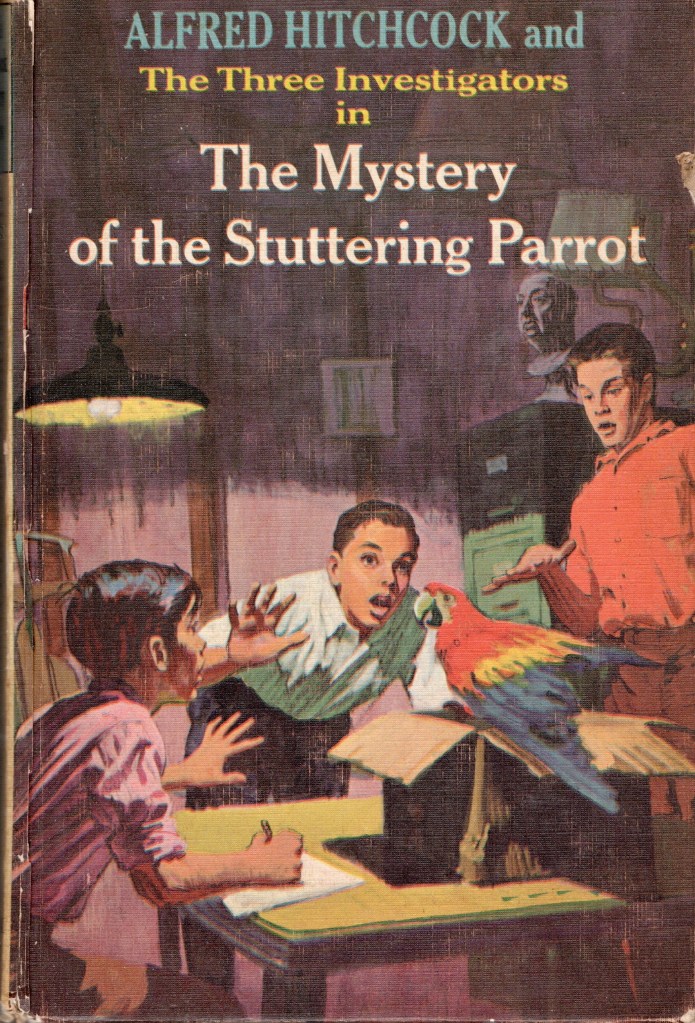
Jupe and Pete are on their way to call on a prospective new client, referred to them by none other than Alfred Hitchcock himself. Professor Fentriss had bought a parrot from a peddler, primarily because he stuttered and was named Billy Shakespeare (Fentriss is an English professor). The parrot says “to-to-to be or not to-to-to be, that is the question.” But this is in and of itself mysterious, as Jupe points out, because parrots don’t stutter; they have to be taught to stutter. Why would anyone teach a parrot to stutter? But the stuttering parrot is just the start of a bizarre and unusual case, with twists and turns and surprises everywhere the boys turn. Their detecting soon leads them to the revelation that there were six parrots and a mynah bird the peddler was selling, and they were all taught specifically to say one phrase. The phrases are clues to a treasure trail, and the prize is a magnificent and incredibly valuable painting by a master.
This book is an excellent example of precisely why I loved this series so much. The pacing is always excellent, the characterizations are three-dimensional, the mystery is intricate and puzzling and hard to figure out, and the conclusion of the book, where the boys have to beat several bad guys to actually find the painting, which takes place in a spooky abandoned cemetery on a foggy night, is some of the best atmospheric writing I’ve ever encountered. You really feel like you’re lost in the fog with bad guys you can’t see out there somewhere.
I’ve never understood why these books never achieved the popularity of the Hardy Boys and other series like them. They were better written, better stories, and just over all vastly superior to the Hardy Boys in every way. The first book in the series, The Secret of Terror Castle, remains one of my favorite kids’ books to this day (several books from this series make that same list). The problem with the series was time, really. Alfred Hitchcock eventually died, and they had to get someone else to fill in for him. Eventually, recognizing that Hitchcock’s name alone dated the books, they removed the references. The books themselves were never updated, which is also a shame because it dates the books but at the same time gives them a kind of nostalgic charm, as well. The Secret of Terror Castle was about the home of a silent film star whose career was ended by talkies, who turns out to be still alive. That was a stretch for me even when I first read it in the early 1970’s, let alone today. Whenever I think about writing my own kids’ series, I always think of it in terms of being Hardy Boys-like, but really what I would want to do is emulate the Three Investigators, whose books were well-written and a lot of fun to read.
Be sure I will talk about them again another time.
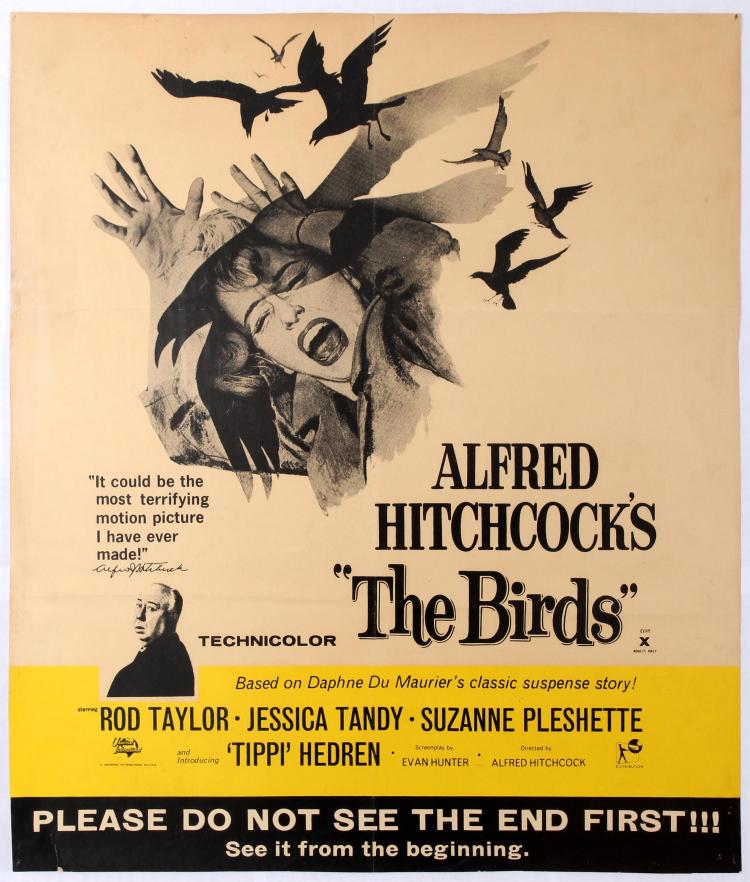
One of the first Alfred Hitchcock movies I ever saw was The Birds. We watched it on our big black-and-white television, and it was absolutely terrifying. What made it even more terrifying was that we as viewers–along with the characters in the film–had no idea what had turned the birds into vicious flocks of attacking predators. The movie was absolutely terrifying to a very young Gregalicious, who ever after always gave whatever birds he saw a wary look. That innocuous scene where the birds start gathering on the jungle gym? First a few that you notice, then you look again and there’s more… you look back another time and there are even more….more and more with every look until you have a sick feeling and think maybe I better get out of here–yes, I related absolutely to that scene in the movie and whenever I see a flock of birds gathered anywhere I have a bit of an uneasy feeling. You never really think about how vicious and terrifying birds–descended from the dinosaurs, after all–can be. Sure, we all know about the birds of prey, with their sharp claws and razor-like beaks; but sparrows? Blackbirds? Crows? How do you defend yourself if a flock comes for you? God, even now, just thinking about it gives me goosebumps.
I recently rewatched the movie (during the Rewatch Project during the pandemic) and it’s not as good a film as I remembered, but it’s still terrifying. I was curious to see how I would react to the movie, because in the intervening years I had read the short story it was based on, and the story is much, much better than the movie.
The fact it was written by Daphne du Maurier didn’t hurt.
On December the third the wind changed overnight and it was winter. Until then the autumn had been mellow, soft. The earth was rich where the plough turned it.
Nat Hocken, because of a wartime disability, had a pension and did not work full time at the farm. He worked three days a week, and they gave him the lighter jobs. Although he was married, with children, his was a solitary disposition; he liked best to work alone, too.
It pleased him when he was given a bank to build up, or a gate to mend, at the far end of the peninsular, where the sea surrounded the farmland on either side. Then, at midday, he would pause and eat the meat pie his wife had baked for him and, sitting on the cliff’s edge, watch the birds.
In autumn great flocks of them came to the peninsula, restless, uneasy, spending afternoons in motion; now wheeling, circling in the sky; now settling to feed on the rich, just turned soil; but even when they fed, it was as though they did so without hunger, without desire.
Restlessness drove them to the skies again. Crying, whistling, caslling, they skimmed the placid sea and left the shore.
Make haste, make speed, hurry and begone; yet where, and to what purpose? The restless urge of autumn, unsatisfying, sad, had put a spell on them, and they must spill themselves of motion before winter came.
I love Daphne du Maurier.
The story was originally published in her collection The Apple Tree and Other Stories; when the film was released in 1963 it was rereleased as The Birds and Other Stories. (One of the problems with trying to read all of du Maurier’s short stories is because her collections inevitably have at least half the stories that have appeared in other collections; so you can wind up buying a collection for the two or three stories in it you’ve not read; for example, my first du Maurier collection was Echoes from the Macabre, which included “The Apple Tree” (title story of another collection) AND “Don’t Look Now” (also the title story of another collection) AND “Not After Midnight” (which, as you probably already guessed, is the title story of another collection). I have yet to find a definitive list of du Maurier’s short stories anywhere, and it certainly is long past time that all of her stories are collected into a single collection (are you listening to me, du Maurier estate?).
The reason I love the story so much is because it really is a master class in tension and suspense. It’s also a much more intimate, small story than the film. Nat is a simple worker, loves his wife and kids, and wakes up one morning to winter and bizarre behavior from the birds. The way du Maurier describes the sight of the seagulls all gathered out on the sea, rising the waves in silence, is creepier than any shot of Suzanne Pleshette sprawled out on the walk with her eyes pecked out. The radio–there only method of communication and getting news from the rest of the world–is reporting on the strange behavior of the birds, and that they are attacking people. Most of the action–the truly terrifying action–takes place inside Nat’s cottage while they are under siege; the attacks have something to do with the tides. During the lulls he boards up the windows and tries to lay in supplies, as he slowly begins to realize that the birds are winning. They wait out the attack one night and in the morning turn on the radio…only to get static. It soon begins to feel like they are, or may be, the only humans left alive. And Nat also realized that it’s just the smaller birds–sparrows, wrens, seagulls–and worries about what will happen when the birds of prey join in….and of course, they do…the story closes with the hawks attacking the front door while Nat resignedly waits for them to get through.
If I were teaching a suspense writing class, I would definitely teach this story. It’s simply brilliant.
Well, yesterday felt normal–as opposed to all the energy and the fabulous mood I was in on Monday, yesterday I felt more like the way I usually do on a midweek morning coming into the office. It was busy and we did have some odd and unusual issues, like we did on Monday, but it all worked out and I managed to get everything done and get out on time. I wasn’ tired when I got home, but there were men working on the house on our side of the building until about eight o’clock, playing (bizarre) music (choices) really loudly and of course, hammering and drilling and all those other power tool-esque things construction workers use. I’d intended to get some things done, but this successfully irritated me enough to make me lethargic. Then Scooter climbed into my lap and started purring and head-butting me and that was all it took; I was down for the evening. I did manage, however, to do a load of dishes so the evening wasn’t a complete waste. I feel more awake and alert and energetic this morning than I did yesterday, so that’s a step in the right direction, I think. Tomorrow I’ll be working from home, and trying to get caught up on the data entry and quality assurance stuff, as well as doing some yearly, on-line trainings about safety that are due (biohazard, fire prevention, HIPAA, etc.) so I’ll have a pretty full plate tomorrow, which is cool. I hope to spend some time with Megan Abbott’s Beware the Woman this weekend, and I also would like to get some more entries finished–I have a review of Carol Goodman’s marvelous The Seduction of Water to post, and I have more entries about my own books to write. and on and on and on.
We watched more of Red Rose on Netflix last night, and we’re really enjoying it. It’s a horror series about a deadly app teens have on their phones; it’s an interesting modern take on the horror trope of the haunted device, and a very clever use of cell phone technology to base a horror series on. We’ll probably finish it over the course of the weekend, we’re about halfway through with four more episodes to go.
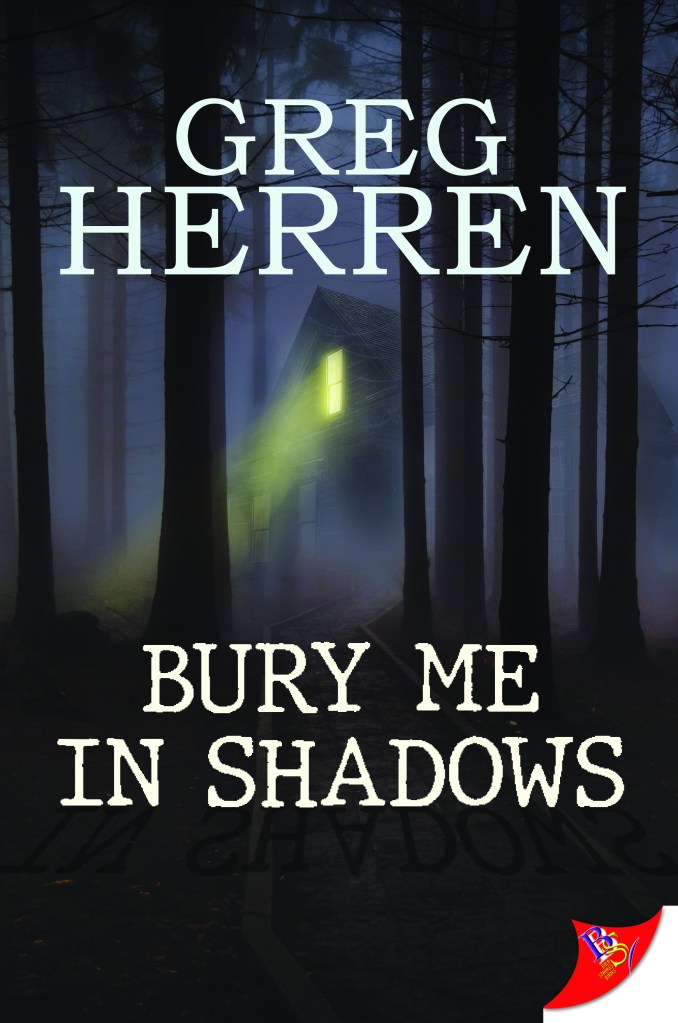
I’m also getting better at figuring out where I am at in my life and getting a grasp on everything I am doing and what needs to be done going forward. I want to spend the rest of this month trying to get one of my in-progress manuscripts finished, or at the very least, a first draft finished. I also am going to start trying to pull together another short story collection, and I want to get these novellas finished and out of the way, too. I am also aware that is a far too ambitious plan for me; there’s no way I’d be able to get all that writing done in twenty-five days. I also have another Alabama book swirling around inside of my head; I keep thinking Beau Hackworth, Jake’s boyfriend in Bury Me in Shadows, deserves his own story and would be the best place for me to continue on with Corinth County tales; I have others in progress (two novellas, in fact, “Fireflies” and “A Holler Full of Kudzu”) and numerous short stories. I have one actually coming out in an anthology this fall, predicated around breaking the Father Brown rules for a mystery story–mine was “include a supernatural element,” natch–called “The Ditch” that I’m rather pleased with. I want to revise my old story “Whim of the Wind” again, too, because I think I’ve finally unlocked the key to solving the problem in the story (with a grateful not to Art Taylor, whose story “The Boy Detective and the Summer of 74”) but have never gotten around to actually, you know, making the changes to the story.
That story, “Whim of the Wind,” is uniquely special to me. After being told by my first creative writing professor that I would never be a published author and to “find another dream” sent me into a tailspin that resulted in my flunking out of college and putting off seriously pursuing writing as a vocation for over a decade (there were flashes of time when I’d put some effort into it, writing stories and so forth before giving it all up as pointless and impossible for me) I took creative writing again when I went to a junior college in California in an attempt to get my GPA up enough to allow me to re-enroll in the California State University system. We were allowed to take that class twice, so I took it in both fall and spring semesters. The first semester my stories were derivative and trying too hard, but the teacher was very encouraging, which I wasn’t used to, so I decided to take it again in the spring–he urged me to do so. One day in class we were talking about stories and structures and writing, and I just had this idea pop into my head and I started writing in my notebook. All throughout the rest of the class I kept writing, and I finished it when I got home that night. That story was “Whim of the Wind,” and not only did the teacher love it (he wrote on the first page, excellent, you should send this out which was a huge thrill for me. The class also loved it and didn’t critique it very much–there wasn’t anything negative anyone had to say about it. But the story was flawed; there was a strong flaw in its premise which inevitably always got the story kicked back from anywhere I may have submitted it; editors would even admit they loved the story but it was missing something–but no one has ever been able to tell me what the story needed…and please remember, what I turned in was a first draft, I’ve never rewritten the story because I didn’t know how–and it’s really one of those “kill your darlings” examples; I can’t change the opening paragraph because it’s poetic and beautifully written and…I can’t bring myself to make any changes to that, and I suspect that’s really what it needs. Maybe I’ll take another look at it this weekend.
I’ve also been going through my journals looking for things–ideas, story fragments, etc.–that I’ve forgotten about, and I must say there’s quite a lot of that. I’ve even started writing short stories in my journal that I never finished and they are just sitting there, minding their own business and waiting for me to remember them so I can finish them. It’s also interesting seeing what I write in those things, too–sometimes I just free-write, which is open it, take a pen and just start scribbling whatever pops into my head, which makes for a kind of interesting (to me) look at how my brain operates when free associating…I am sure some future psychoanalyst (or even current, for that matter) would look and see a need for medication if not multiple psychoses. I also free associate write when I am playing with ideas for stories or novels in progress, so that’s always interesting to see again later.
And on that note, I am heading into the spice mines. Have a lovely Thursday, Constant Reader, and I will be back with you later.
Well, it’s the fifth and it’s back to the office with me this morning. It’s also Pay-the-Bills Day, woo-hoo! An oddly weird work week, the aftermath of a trip, and that weird stage of being beyond writing, if that makes any sense. I do have proofs to correct and other edits to come on something else, but I am not writing anything at the moment. I have some ideas I am toying with–a New Orleans ghost story, an Alabama book, among others–but for the moment I am just re-acclimated to myself and my world. I took yesterday off for the most part, and it was nice. I slept well again and felt good all day. I made holiday waffles for Paul, and I ate the Subway sandwich he’d purchased for me on Monday, I did some chores this morning while listening to the end of Carol Goodman’s marvelous The Seduction of Water (more on that later), and then Paul was up. I had thought about doing some work, getting started on the proofs or something, but once he was up I thought, we haven’t both had an entire day to ourselves in a long time so therefore, everything else could wait for another day.
We binged through a Paramount Plus show called School Spirits, which essentially is about a high school girl who is murdered, and her soul is trapped at the school with the spirits of other students throughout the school’s history who died there and cannot move on. She doesn’t remember how she was murdered or who had done it; there were gaps, and the other ghosts estimate that perhaps once she remembers everything she can then move on. It was cute enough, and entertaining enough, with some interesting twists here and there that it held our interest, and we watched all the way through until the season finale. We then moved on to the first two episodes of a horror series on Netflix, Red Rose, which was interesting and intriguing enough for us to continue, and decide to continue until we finish it. It was, all in all, a lovely relaxing day, and I am glad of it.
I also reread Daphne du Maurier’s “The Birds” yesterday. It’s really quite a wonderful and creepily intimate little story. I think it’s creepier and scarier than the film Hitchcock made of it–although the film is terrifying in an entirely different way. The story is very intimate and small–it focuses on a farmer trying to protect his family from the sudden turning of the birds, and how they have to fortify themselves in their house during the attacks, which in the story have to do with high tide. It’s really quite something, but du Maurier was such a master. I may write more about it later; the jury is still out on that.
I slept deeply and well last night, but didn’t wake up earlier than the alarm this morning nor am I awake and alive and ready to spring into action at work the way I was Monday morning. I don’t feel tired, I just don’t feel like I am fully awake just yet, which of course is fine. I do not regret taking yesterday off for myself; I am trying to not make myself crazy with that sort of thing anymore. No one can work at full capacity every day, after all, and there’s nothing wrong with me taking some time for myself and time off from everything every once in a while, to stop from going completely insane or at least wearing myself out. It’s much easier to take care of yourself, and I am trying to pay attention to my health on all fronts, including getting rest and not allowing my brain to get burned out. I think protecting my mental health, particularly since having the long COVID last year, is much more important now than it has ever been before in my life. I may not do a lot of thinking or writing this week, but there’s only two in-office days this week and a work-at-home Friday in my future, so maybe waiting until this weekend to do any of that sort of thing is perhaps for the best. I do want to start reading my new Megan Abbott novel; perhaps when I get home from work today I can use my writing time for reading.
Plus I need to figure out what I want to do next and come up with a plan of some sort for the next few years.
And on that note, I am heading into the spice mines. Have a lovely Wednesday, Constant Reader, and I will check in with you tomorrow, if not later.
I was born in Alabama but didn’t grow up there. I was two years old when my parents migrated north in search of work, good jobs, and a better life for our family. My parents, however, were very Southern, so I was raised with their values and beliefs (which were very Southern and of their time) but being confronted with very different values and beliefs at school every day opened up my mind in ways that it may not have been had I grown up in Alabama. Our neighborhood in Chicago, near Lawndale Park (our nearest major cross street was 31st and Pulaski), was the perfect representation of America’s vaunted ‘melting pot’; our neighborhood was filled with first or second generation European immigrants; many from eastern Europe, who fled either before or after the war. There were Czechs, Poles, Austrians, Hungarians, and Serbs; in the fourth grade we even had a Muslim girl from Yugoslavia. She had the most delightful first name which I’ve never forgotten–Zlatiça–even as her last name is lost in the clouds of memory. It was also very confusing trying to figure out where the immigrant kids (either they were born in another country or their parents/grandparents were) came from, given that the maps of Europe had been redrawn barely twenty years earlier. The Czech children I knew didn’t identify as Czech but rather as Bohemian; they also called their language that. It took years of study and reading up on history to realizing Bohemia became Czech after the first world war; for many years I believed Bohemia still existed under that name but had somehow been folded into another country or something; I don’t remember. I do remember being confused. Until I finally wrapped my mind around the post WWI renaming of the region, I always just assumed Bohemia was a German region. Reading history didn’t help much in that regard, as Bohemia was part of the Holy Roman Empire for centuries (in fact, the Thirty Years’ War kicked off in Bohemia).
But there was a lot of racism in our neighborhood too; the white European immigrants detested the brown immigrants from Mexico and Central America; I vividly remember the way our babysitter would sneer the word Mexican when referencing anyone brown. There was also a lot of strife in Central America at that time; I think both Guatemala and Nicaragua were enduring civil wars of some sort, hence the influx of Central American refugees and immigrants. I remember Martha, a girl in the sixth grade, telling me about how soldiers came and shot up her village, killing dozens of people she knew and members of her family. She was very calm and unemotional as she told me about it, which is pretty remarkable for a child who couldn’t have been more than ten or eleven, talking about a trauma she witnessed when she was six or seven. (Now I know she was dissociating; and I do remember her telling me calmly that she felt like she wasn’t even there as it happened; like she was watching it all happen from a distance.) Ironically, we became friends because we exchanged Nancy Drew or Hardy Boys mysteries; this conversation came about because we were reading a Hardy Boys book set in Central America; I want to say Footprints Under the Window, but it may have been something else….but she wanted me to know that the depiction of Central America in the book was nothing like the reality.
My grandmother used to tell me wonderful stories when I was a kid about my family history and the history of the county we’re from in Alabama. As a wide-eyed innocent and naïve child, I believed everything she told me, and always wanted to fictionalize those stories. I was in my early twenties when I wrote a short story based on one of those tales; about the Lost Boys and the evil renegade Yankee soldier who burned the house down and presumably murdered the two boys of the house. The story was called “Ruins,” and while I was pleased with the story I felt the story was too short; there was more to the story than I could fit given the length restrictions. I always thought of the story as a kind of an abstract or lengthy synopsis of the novel I would write someday. But it was also a Civil War story, and I wasn’t sure how I could write a Civil War ghost story without being, frankly, offensive. I tucked it away in a drawer and would think about it from time to time–usually when driving through Alabama on my way north–but still couldn’t wrap my mind around it. I worried and fretted and feared and doubted myself constantly. I told the story once to another writer friend of mine, and she urged me to write it…in fact, she hounded me about it for about twelve or thirteen years before I decided to take a deep breath, put on my big boy pants, and take that risk.
“Was this an accident, or did you do it on purpose?”
I opened my eyes to see my mother standing at the foot of my hospital bed, her heart-shaped face unreadable as always. The strap of her Louis Vuitton limited edition purse was hooked into the crook of her left arm. Her right hand was fidgeting, meaning she was craving one of the rare cigarettes she allowed herself from time to time. Her dove gray skirt suit, complete with matching jacket over a coral silk blouse, looked more rumpled than usual. Her shoulder length bob, recently touched up as there were no discernible gray roots in her rigid part, was also a bit disheveled. She wasn’t tall, just a few inches over five feet, and always wore low heels, because she preferred being underestimated. Regular yoga and Pilates classes kept her figure slim. She never wore a lot of make-up, just highlights here and there to make her cheekbones seem more prominent or to make her eyes pop. Looking at her, one who didn’t know better would never guess she was one of the top criminal attorneys in the country or that her criminal law classes at the University of Chicago were in high demand.
I could tell she was unnerved because she’d allowed her Alabama accent to creep slightly back into her speech. She’d worked long and hard to rid herself of that accent when she was in law school, because she said no one took her seriously when she spoke or else thought she was stupid once they’d heard it. The only times she used it now was when she wanted someone to feel superior to her, or she’d been drinking, or she was upset.
It worked like a charm getting her out of speeding tickets.
I hadn’t been asleep, nor had I been awake either, hovering in that weird in-between state where it seemed like I’d been living for the last three or four days.
“It wasn’t on purpose.” I managed to croak the words out. My throat was still raw and sore from having my stomach pumped. My lips were dry and chapped, and my eyes still burned from the aftermath of the insane drug-and-alcohol binge I’d gone on in the aftermath of the break-up with fucking Tradd Chisholm. “It was an accident.” I shifted in the hospital bed, trying to sit up more, the IV swinging wildly. The memory of that last and final fight with Tradd flashed through my head.
The main character in the original short story was only twelve, and the cousin he shares the adventure with was supposed to be fourteen. I was writing a lot of short stories at the time set in Alabama, with the idea to tie them all together in some ways–and was also reading a lot of Faulkner at the time, so yeah, a fictional county in Alabama where all the stories were set and were interconnected was kind of derivative; I kind of smirk to myself now when I think about the hubris of aspiring to be Faulkner-esque, especially at that time, when everything I wrote was pretty much garbage. Ah, the hubris of youth. But I did write a lot of “Corinth County” short stories back in the day, and while the writing may have been atrocious, the idea behind them and the core themes were good and had potential.
When I started thinking about turning the short story into a novel, I soon realized that the characters were too young, so I aged them. I originally aged them to teenagers, and in the first attempt at a rough first draft, I got about two chapters in with my main character, Jake, being banished the summer before his senior year to help take care of his dying grandmother back in rural Corinth County. The original first line was something like The summer before my senior year my mother ruined my life. Properly self-absorbed, narcissistic, everything’s about me teenager, right? My original thought was he was a student at a Catholic all boys’ school, was openly gay, and had a crush on a classmate…and having just found out said classmate had gotten a summer job lifeguarding, managed to get himself and his female best friend jobs at the concession stand at the pool, so he could be around his crush and see him all the time. His banishment for the summer had to do with his lawyer mother accepting a co-counsel role in a major trial in California and being gone; she has also kicked out her fourth husband (a much younger tennis pro) and so she can’t leave him alone in Chicago for the summer. The other option was staying with his father and his second family in the suburbs, which was equally unappealing, so he choses Alabama…and is picked up at the airport in Birmingham by another teenager who’d been taken in by Jake’s grandmother when his own mother died. This character, Kelly Donovan, was originally meant to become close with Jake and participate in all the mysteries Jake encounters at his grandmother’s. I also wanted to play with Jake’s being strongly attracted to Kelly, who is some kind of distant cousin, and straight.
But I scrapped that beginning, too. Would a young senior in high school in rural Alabama, a star athlete, be so accepting and open to Jake’s sexuality? Probably not…and he would also be worried and nervous about his patron’s grandson coming to stay there. As I delved more deeply into Jake’s character and who he was, I started thinking it made more sense for him to be older. Why not have him be a student at Tulane, and living in New Orleans? But if he was living in New Orleans, what would make his mother exile him to rural Alabama for the summer? And the more I thought about Jake…the more I realized there was underlying trauma in his life. I didn’t want his mother to be homophobic, but her mother, the dying family matriarch? Yes, yes, that worked better. I made him a loner, but someone who didn’t want to be a loner. He didn’t ever feel like he had friends at his Catholic school; and coming to Tulane he met his first, real boyfriend…which ended up being a disaster. And then realized, what if he goes on a binge–easy enough to do in New Orleans–after a bad break-up and winds up in the hospital? And if he had tried once before to kill himself…yes, yes, this is a MUCH better backstory and pulls the actual plot of the book together much better.
I also knew I wanted to touch on themes of homophobia in the rural South, as well as the horrors of modern-day Southern racism and the South’s racist past.
When I started doing research for the book, I soon learned that many of the old family/county stories my grandmother used to enthrall me with were all apocryphal; almost every region of the South has some version of the stories she told me; the story of the Lost Boys, a local legend which was the foundation of the book, pops up all over the old South–almost every state and every region of the old Confederacy has a version of the story, complete with renegade Union soldier (think Gone with the Wind), and so I decided to address that trope in the book while also using it. But I also added another layer to the story–the Lost Boys may not be the only ghosts at the old Blackwood place, which has a tragic and bloody and horrifying history, as does the entire county. I also started lessening Kelly’s importance to the story–he’s still there, he’s still a character who also gets a big reveal later in the book–but Kelly’s behavior to Jake is abominable and homophobic, establishing some conflict between the two of them as well. Part of this was because of the change in the story, but then I needed to partner-in-crime as well as potential love interest, so I came up with Beau Hackworth (the Hackworths are a large and poor family in the county; I’ve used that family before in stories; my main character in Dark Tide was a Hackworth from Corinth County).
And of course, when you’re writing about a Southern rural county and the Civil War, you cannot avoid the issues of race, prejudice, Jim Crow, and enslavement. I wanted to make it very clear that this wasn’t some “Lost Cause” romantic fantasy that perpetuates the lies and mythologies that sprang up in the South decades after the actual war ended. Jake’s mother raised him not to be racist or prejudiced, as she tells him several times, “We do not take pride in the fact our ancestors enslaved people. The heritage is hate, and don’t ever forget that.” I did wonder if I was being too generous to white people with this, but on the other hand I wasn’t interested in writing from the perspective of someone racist. I will be the first to admit that I worried about being offensive in this book; the last thing I would ever want to do is be insensitive on the subject of race. But I also knew and trusted my editor enough to know she wouldn’t let me get away with anything, and I also had to trust myself to handle it all sensitively. There were a couple of things she saw in the manuscript that could potentially be considered problematic–but they were also easily fixed.
I was very pleased with the end result, and I do think it is one of my best books. I was absolutely thrilled when it was nominated for two Anthony Awards last year at Bouchercon.
And it also goes to show that you cannot play it safe, and things that scare you are precisely the things you should write about .
(For the record, I will add Cheryl A. Head’s Time’s Undoing is one of the best crime novels ever written about racism in Alabama. Beautifully written and brilliantly told, it should really be required reading.)
Monday, and the 3rd of July. It is back to the office with me today, but of course tomorrow is a day off with pay so this week is going to be weird and off-kilter too. Yay? But this week I have page proofs to go over, errands to run, and a life to get back on track. I feel rather disoriented from being gone for an entire week for a change, which was weird. I did wind up feeling much better yesterday as the day progressed; we made a Costco run in the midst of that dreadful heat advisory (felt like 114) and I also did a lot of laundry. I emptied the dishwasher and reloaded; it isn’t full yet. I am going to try to stay efficient this week, and hope that efficiency–doing the dishes when I get home from work every night, keeping up with the laundry, putting things away rather than let them pile up–is maintained as we move sluggishly through the rest of this blazing hot summer.
We started watching a true crime documentary series last night called The Suspect, and got two episodes in (out of four total). The show is from CBC, and is about a murder and trial in St. John, Nova Scotia. It’s always interesting to watch these shows and see how the police and prosecution actually operate as opposed to the way they do in fiction. It’s actually kind of terrifying, really, and of course, it gave me an idea for a book to go with this great title I came up with in the car the other day.
I’ve also been thinking about my writing and what I want to do with it and where I want to go. I really am not in a place where I should be coming up with new concepts and structures and characters for a new novel when there are already so many in progress around here that I need to finish at some point, not to mention the short stories, too. Heavy heaving sigh.
But I slept so deeply and well last night. I woke up a few times, always afraid that’s the end of the sleep for the night, but I was literally out like the power after a hurricane. And I had no resistance to getting up to the alarm, either. I feel rested, which is wonderful. I wish I could figure out a way to get sleep like that while I am traveling, but I also think I over-caffeinate when I travel, too. I don’t nearly follow my necessary daily routines when I am traveling; I don’t drink nearly as much water and, like I previously said, over-caffeinate. This inevitably results in me becoming dehydrated, and when I am dehydrated I generally don’t get hungry, either, and I often wind up skipping meals and so forth, which means my blood sugar drops precipitously as well. In other words, I need to retrain what I do when I am traveling and/or on the road and take care of myself better than I usually do while away.
I feel terrific this morning and my mood has also significantly improved. I don’t think I’ve completely rehydrated yet, either; but I feel so much better today than I did yesterday that it’s almost like I’m an entirely new person. This is always lovely, frankly. There’s nothing like a good night’s sleep; I just wish I could unlock the secret to getting good rest every night, but no such luck.
We also watched Rock Hudson: All That Heaven Allowed, which was okay. If you’ve never read a biography of Hudson, or seen any previous documentaries about his life, there’s nothing much new here. I’ve learned a lot about Rock Hudson doing research for Chlorine–if you’re writing a novel about a closeted gay actor in the 1950’s, who better to read about than Rock?–so this documentary was nothing new for me. It was well done, and I liked that they interviewed his surviving gay exes or gay friends (for the record, I’ve also researched Tab Hunter–whom I met a few times–and Montgomery Clift, Anthony Perkins, and several others. I find that I really like doing research, to be honest. The whole time I was gone at Dad’s I was reading and learning more about Alabama history, which I think will make my future Alabama novels much better than they would have been, and also inspired more ideas for Alabama books.
And on that note, I am heading into the spice mines for the rest of the day. It’s been so long since I’ve been at work…anyway, have a great pre-holiday Monday, Constant Reader, and I’ll check in with you again later.
Monday morning and in Jasper, Alabama. Today is my parents’ anniversary, and the first since we lost Mom earlier this year. Dad and I are going to the grave to put flowers on it, and then we’re going to convoy up to Kentucky. There’s no plan, really, other than having breakfast here and then checking out and so forth. The firsts are always the hardest; both of their birthdays, which are only a day apart, will be rough come October; him being alone on his and then her not being here for hers. Their birthdays are weekdays, so I don’t know if I can make it up here for that–unless he decides to do it on a weekend, but he’s also retired, so his time is his own. I do worry about him, though. It’s very easy to put myself into his place by imagining the horror of losing Paul. I mean, I’ve already had to confront that hideous possibility several times already, but even so it’s not going to be easy. The selfish part of me kind of hopes I go first, to be honest…but I would prefer not to; because I don’t want Paul to go through what my dad is going through right now. I’d rather shoulder that grief and burden then put him through it, if that makes sense? My life would be empty and bleak and there wouldn’t be anymore joy in it, but I’d rather I deal with that than him.
I hate even thinking in terms of “who goes first,” really. Kind of hard not to have thoughts about our mortality when having to go through this sort of thing.
The drive was lovely, but there was a lot more traffic than I am accustomed to; but then I never drive north on a Sunday, either; it’s usually mid-week or not on the weekend. We’ll probably get to Nashville just in time for rush hour (hurray!), and then the rest of the drive up, but at least the drive was broken up a bit. I was able to get Whataburger in Tuscaloosa (seriously, the simple pleasures mean everything to me), and then drove on up through the countryside. Alabama is so beautiful; everything is in bloom and everything is green. I had wondered about kudzu the last time I came up here; I’ve seen a lot of it on this trip so maybe May was too early for it to get leafy and green? The mystery of kudzu is just another one of those things I’ll probably always be interested in and never completely understand.
I’m also thinking about writing about Alabama again.
On the drive, I kept thinking about stories that are in progress–particularly one, which I wrote first in 1983 and have been sitting on ever since–and I was even thinking about my next book to start writing (yes, I have others that have to be finished but…) and I want to write another Gothic. I was listening to Carol Goodman’s marvelous The Widow’s House (and yes, absolutely loving it) which got me to thinking about Gothics again, and a New Orleans ghost story I’ve been wanting to tell, set on Camp Place in my neighborhood and roughly titled Voices in an Empty Room. I’ve had the idea forever, and I love that title–does it get more Gothic than that title?–and I was also thinking about another short story I’ve rewritten and revised and haven’t been able to sell anywhere; I may do another draft and try again, but it will probably just end up in my next short story collection. One of the things I love about being an avid reader as well as a writer is that great craftsmanship in novels is something that always inspires me to be better myself. Carol Goodman does that whenever I read/listen to one of her books; many authors do, frankly. I often am amazed that they consider me a colleague, let alone speak to me. I always feel like a rank amateur when I am reading a master like Carol.
As for the grieving, it’s still hard for me to talk about Mom without getting upset or getting teary-eyed and my voice cracking. I try very hard to hold it together in front of Dad–not in a toxic masculinity sense of “men don’t cry” but more in the sense that he’ll lose it completely if I do; he’s never going to get over this. It’s funny, but I never have ever felt completely comfortable crying in front of my parents. Maybe it’s a holdover from childhood? I cry easily, actually; television shows and movies and books make me cry all the time. I don’t like crying in front of anyone, really; maybe that is a toxic masculinity thing after all? I’ve always wept privately, away from people and by myself. Maybe it’s a vulnerability thing? I don’t like showing my vulnerability–primarily because whenever I have, those I thought were safe enough to let in, eventually went on to exploit it and I have always regretted it.
I’ve always been a magnet for shitty people, seriously. (That isn’t to say I don’t have marvelous, wonderful friends now; the kind I used to dream about having when I was younger.) Maybe, for whatever reason, there’s something about me that makes people be shitty to me? This is a distinct possibility; I am terrible with verbal and physical cues and often misread situations and say or do something inappropriate or unintentionally offensive; if I had a dollar for every person I’ve accidentally offended, I could retire now. I never want to offend anyone–even people I don’t much care about or like (racists and misogynists and homophobes, on the other hand, oh, yes, make no mistake–I am definitely determinedly trying to offend the fuck out of all of you trash). I don’t ever want to make anyone feel bad, for any reason. Even when someone deserves it, I always feel terrible and guilty about making them feel bad later when I’ve calmed down. I know I have a temper, and a bad one at that, so I am constantly trying to not lose it. Knowing that I have a terrible time grasping what is obvious to everyone else and being bad at reading social cues, I am often asking myself do I have a right to be angry about this or am I being unreasonable? Because I also know that when I AM angry, I am completely unreasonable, and I don’t like that because it’s not fair, for one thing, and for another, I prefer to be rational and logical.
Sunday morning and I am driving to Alabama later on. Woo-hoo!
I finished the revisions of the manuscript yesterday, and sent it off to the editor and breathed an enormous sigh of relief. I do think it’s a good book, and should there be a second one, I think it will be even better than this one, to be honest with you. I feel like I’ve been operating for a very long time under some sort of dark cloud, which makes things that should be incredibly obvious and apparent mysterious and unknowable instead. It was also an enormous relief to get it finished. I think I caught everything I needed to catch, and added what needed to be added. There might still be some tweaks and/or additions that need to be made, but I think it’s pretty solid right now and that’s a load off my mind, especially with a trip on the horizon tomorrow and not knowing how available I will be over the next week to make changes and/or get things done. I am actually departing on this trip with an actual clear conscience; there’s nothing really hanging over my head. Sure, I’ll have the edits for the Scotty at some point and the proofs/copy edits for this one, but I feel like I have finally gotten out from under everything and can breathe at long last.
Whew.
Then after that I went into my easy chair and collapsed, ready to watch the finals of the College World Series. LSU defeated Florida in eleven innings, thanks to another home run in the eleventh, and what an exciting and thrilling and nerve-wracking game it was. Props to Florida, they played some amazing defense, stranding a lot of LSU runners on base. After the pitchers’ duel with Wake Forest the other night, all the hits and men on base seemed almost weird, like I was watching a different type of game altogether. But then Cade Beloso blasted one out of the park in that eleventh inning (Tommy White, aka Tommy Tanks, heroically knocked one out to pull the Tigers back to 3-3, causing the game to go extra innings) and Paul and I were cheering and screaming. LSU fans also blasted through the Rocco’s College World Series Jello Shot Challenge, going over thirty thousand before they drank Rocco’s out of jello shots. LSU fans, notorious for traveling and drinking bars dry, has done it again! We did it in Atlanta for the college football playoffs in 2019; we may have done it in Dallas for the women’s final four in basketball this year; I know there’s another place it happened.
Never start a land war in Asia, or challenge LSU fans to a drinking contest. Period.
I am going to be listening to Carol Goodman in the car; the book is The Drowning Tree, which I am looking forward to, and I packed Megan Abbott’s Beware the Woman, Eli Cranor’s Ozark Dogs, and Alfred Hitchcock Presents My Favorites in Suspense to read to take with me; I doubt that I’ll have much time to read, but you never know. Dad and I are going to a minor league baseball game on Wednesday night in Lexington, and he’s made noises in the past about taking me sight-seeing when I come up sometime–so I imagine we’ll go visit the Kentucky Derby museum and the Cassius Clay home (we tried doing this once before when I was there for Thanksgiving, but everything was closed for the holidays or for COVID). I also have to pack and I need to run by the grocery store to lay in supplies; after I finished with the edits yesterday I wasn’t really in the mood to go out into the heat. I also need to clean out the refrigerator before I go; Paul won’t make salads, and even if he did make one, he wouldn’t slice up an onion or cut up a cucumber or use cherry tomatoes, so I may as well toss all of that. When I get back, that Sunday we’re going to have to make a Costco run as well as me making a grocery run. At least that week I only have to go in on Monday before the holiday for the 4th on Tuesday, and then three more days to finish off the week before the next weekend. It felt weird yesterday to be actually caught up on everything at long last; I’ve felt like I was drowning for the last three or four years, and finally now I can come up for air. The books still need work–I am waiting for the edits on Mississippi River Mischief, and of course will have to proof the new one as well–but I am caught up and that albatross (or albatrosses) have been removed from around my neck at long last.
I finished reading that Hilda Lawrence novella yesterday too, and it was really quite good. The premise of the story is a classic from that era (Cornell Woolrich also wrote a brilliant story with a similar premise, whose name I am blanking on right now), and it was interesting how it was constructed; I’m not sure you could publish a story structured the way this one was (“Composition for Four Hands” is the name of the story), because the point of view was constantly changing, but those POV changes made the story seem even more interesting that it already was. The premise of the story is wealthy Mrs. Manson has been invalided–we never are really told what precisely is wrong with her–but she cannot speak and she cannot move….and she’s certain someone in the house is trying to kill her, and she can’t communicate with anyone. While she is certain, she also cannot entirely remember what happened to her–but she knows it wasn’t an accident, which is what everyone else believes, and while she is lying there helpless, trying to figure out who she can trust while trying to figure out a way to communicate–yes, it’s very suspenseful and terrifying and so well-written you can absolutely empathize and put yourself into Mrs. Manson’s dreadful position. It’s fun to read old crime stories of suspense and mystery, to get a feel for the old styles of writing and story construction, plus it gives me a better feel for writing. I try not to “edit” when I read–it’s not as easy to turn off editor mode as one might think–because ultimately I read for pleasure first and foremost; any other edification that comes from reading is merely lagniappe for me.
And on that note, I’d best be signing off here and heading into the spice mines and start getting ready for the trip. I need to pack still, and of course I have to do some cleaning and make groceries. I don’t know how much I am going to be able to post once I get on the road and on this trip; I’ll probably never finish the pride posts I started, but hey, one also never knows. Stranger things have happened, after all. So maybe I’ll be around, maybe I won’t. If not, have a lovely week, Constant Reader, and I’ll talk more with you later.