Come on Eileen

Saturday! I managed to finish Chapter One last night and started Chapter Two; huzzah! They are crap, of course, but I’ll worry about that later. I finally got a good night’s sleep today; I have Wacky Russian this morning, have to go to the office to work for a bit, and am going to make a Costco run on the way home. (Just a minor one.) It’s so nice to feel rested; I am hoping that tonight I’ll be so worn out I won’t have any choice but to sleep deeply and well.

I can dream, at any rate.

My weekend this weekend is actually, therefore, Sunday and Monday; it’s going to be strange to have Monday off–next weekend is my birthday, so I am taking a three day weekend to celebrate–so I am, of course, hoping to get some more Scotty written, some more of the line edit finished, and maybe revise a short story or two. Ambitious plans, to be sure, but I am nothing if not overly ambitious. We’re also trying to find a new show to watch; Orphan Black ends this weekend, Game of Thrones only has a few more episodes to run, and  I suspect Animal Kingdom is also approaching its season finale. We never did finish the final season of Bates Motel, though, and there have to be some other shows out there that we just haven’t discovered yet, or forgot we watched.

I want to finish reading Journey Into Fear this weekend so I can get started on my annual reread of The Haunting of Hill House. I think I might read something more noirish after that; not sure what, but there are plenty of things for me to read around the house, believe you me. Maybe I’ll do something I’ve really grown to love over the last year or so–a short story challenge, where I read a short story every day and then blog about it. I do love short stories, and I really would like to write more of them. I’d love to do a collection of my crime and horror short stories…perhaps by the end of the year I would have enough of them on hand to actually put a collection together. (I may already have enough; I’m not sure, but I’d love to have some new, unpublished material.) Maybe I’ll wait and do short-story September, which would be way fun.

And on that note, I think I shall head off to the spice mines. Here’s a Saturday hunk for you viewing pleasure, Constant Reader:

12080430_533297293519037_1631020858_n

Sweet Dreams (Are Made of This)

Tuesday morning, and my windows are covered in condensation. Nothing new there, of course, but at least I can see blue sky and sunshine through the beads of water. Perhaps today will be our first day this summer without rain? Stranger things have, of course, happened.

I got quite a bit done on the line edit yesterday; at some point I am going to have to input all of this work into the e-document, and I will be very curious to see how much I wind up cutting. As I go through the manuscript, line by line, I am amazed at how often I repeat myself, or how often an entire paragraph is simply a series of sentences saying the same thing only in different words. A very strong push this week, and I might actually have the entire line edit finished by the end of the weekend. It’s not very likely to happen, but there’s always a possibility. My friend Lisa will be in town later this week, and I am going to try to see her for at least a drink and perhaps dinner. I don’t see her enough as it is.

I also got some work done on the Scotty book yesterday as well. The story is starting to take shape in my mind, and I need to get a strong first chapter together before I can get going on the rest. I am trying to take what I can from the several different versions of a first chapter I’ve already started; I think I can make the whole thing come together–at any rate, that’s my goal for today. I hope to get at least two more chapters finished this week, if not more. I also want to revise a short story. It will, I suppose, depend on how much energy and how much time I have.

I am still processing Sunday’s episode of Game of Thrones, “The Spoils of War,” and I also can’t stop thinking about Owen Matthews’ The Fixes. There’s an essay I’d like to write, about straight people writing gay characters that reading this book put into my mind, but it’s not really taking form and I am not really sure if it will–the curse of a creative imagination; too many ideas. But The Fixes is so incredibly well written and well done you’d never know that Owen Matthews himself isn’t gay; but really, if you have any experience whatsoever with alienation, you should be able to write believable gay characters; alienation is the key, now that I think about more deeply, and I wish I had thought of that before I taught my character building workshop at SinC Into Good Writing last September here in New Orleans.

Alienation, in fact, is a constant theme in Harlan Ellison’s oh-so-brilliant work.

Paul and I are thinking about going to see Dunkirk this weekend; whether we actually do or not remains to be seen. I have to work on Saturday, and as such my weekend shall be Sunday and Monday; having a Monday off will actually be rather lovely.

And on that note, I am heading back into the spice mines before I head into the office.

Here’s a Tuesday hunk for you, Constant Reader:

17523292_1312370308811030_8446342023757121711_n

Total Eclipse of the Heart

I love to read.

I am so enormously grateful to my sister for teaching me how to read before I started school. I’ve always enjoyed reading (maybe not textbooks; I’ve never enjoyed being forced to read, which is also why I have so much antipathy for classics I was forced to read for classes); reading, for me, has always been pleasurable. I like reading books and being surprised by the author; the creative part of my mind is always trying to figure out the plot, predict twists to come, etc. I love language, and how writers can piece words together into sentences and paragraphs that paint pictures in my head, create characters that are like people I know and care about and root for (or against, for that matter), that create stories and tales that explain incomprehensible behavior and make me understand it, even sympathize with them.

As I always say when I teach character workshops, “villains don’t think they’re villains.”

It’s been killing me not being able to carve out time for Lyndsay Faye’s The Gods Of Gotham, but Paul is going to a play this evening so I will be able to curl up in my easy chair with it tonight and go to town. I am loving this gloriously written story; and I intend to finish reading it this weekend if it kills me. I am also hoping to get to go see Dunkirk this weekend at some point; it’s playing at the Prytania Theater, which is incredibly easy for us to get to, or we could head out to the parish to see it in Harahan. I’ve not decided which is the better option. My back and hips are still sore this morning, sadly, and I’ve begrudgingly cancelled Wacky Russian for tomorrow morning. But I think letting everything rest is probably the best thing for me, even though I hate missing a workout.

Wasn’t this the year I’d intended to lose weight and get in better shape? Why, yes, as a matter of fact, it was. Heavy heaving sigh.

I started working on my short story “The Brady Kid” the other night; it’s not going well, less than a thousand words, all of which were like pulling teeth, so I’ve decided to put that aside. I also line edited some more of the WIP, which is taking forever, but I think I am doing an incredibly good job with it thus far. I intend to work on it some more this weekend, as well; also intend to get some work on the new Scotty done this weekend. We shall see, shan’t we?

I also need to get our plane tickets for Bouchercon in Toronto.

Sigh. It never ends.

Okay, here’s a Friday hunk to slide you into the weekend.

1e3769b75af0e60ee6016d9974644998

Fading Fast

Good morning, Saturday! I have Wacky Russian this morning, and we are meeting friends for dinner later on, so I’ll probably spend the day reading, cleaning and doing laundry before that. I’m probably going to try to finish the revision of “For All Tomorrow’s Lies”, and maybe make some progress on the line edit as well. I am putting off making a grocery run until tomorrow; not sure if that’s wise or if I should just get it over with today, so I don’t have to leave the house tomorrow at all…decisions, decisions.

It seems a bit gray out there this morning; Paul is leaving shortly to go play tennis, which might (and most likely will be) rained out at some point. I don’t think it rained yesterday, which might be the first day since May it hasn’t rained here. I just hope it doesn’t rain on me on the way to the gym; that always sucks.

I could also spend some time organizing computer files, which always seems to get out of hand very quickly. I hate that. It comes from being lazy and stashing things quickly, always thinking I’ll straighten this up later. So, in the meantime, it drives me crazy and it builds up and builds up until it takes hours for me to reorganize everything.

Then again, it also helps me procrastinate and not write, so there’s that explained.

And as I glance around the kitchen this morning, it’s such  a mess. Heavy heaving sigh. Stacks of paper, stacks of books, the floor needs cleaning…ad my knives need sharpening, too. It never ends.

As I said yesterday, one of the things I find myself most interested in exploring in my writing now is damage, how people became damaged and how they cope with it, while contrasting their damage with mundanities of life. We all have our own damage; carry the signs of it with us internally all the time. My story “Housecleaning” was inspired by the smell of bleach, which reminded me one day of my mother–and that became the opening line: The scent of bleach always reminded him of his mother. Part of the genius of shows like Weeds and Ozark was the impact of their parents’ criminal behavior on their children; how do kids have a normal life when their parents are criminals and have thus lost their moral compass, as well as the morality of being a parent? “Housecleaning” was about such a kid, who grew up under the thumb of a con artist mother, who as he got older was required to assist in the cons. And when you’re assisting your mother in conning marks as a child, what kind of adult do you become?

I am also very far behind on my schedule for the summer. I’d hoped to have the noir novel’s first draft finished by the first of September, so I could spend the fall writing the next Scotty book while the noir rested. I’ve not even started the noir yet, still am not sure what the true plot is–it’s amorphous and keeps shifting in my head–but if I can get this line edit finished, and start sending that manuscript out to agents, I can buckle down and get the noir written, and still maybe get the Scotty finished by the end of the year.  Depending on how the scheduling works, I may end up having to put the noir aside until the Scotty is finished. And I am fairly certain of what I want to write after the Scotty and the noir are done. I just need to get them done.

Heavy heaving sigh.

All right, I am going to clean the kitchen before the gym.

Here’s a Saturday stud for you, Constant Reader.

20294016_10212559668603284_1726899913693936580_n

This Town

It’s Friday morning in New Orleans, and I slept fitfully; but when I did sleep, it was terrific. I only have to work a half-day today, which is lovely, and tonight I am hoping to not only get a chance to read some more of Rebecca Chance’s lovely Killer Affair, but to get further in the line edit as well. This weekend my plan is to work on the line edit and clean, alternating between the two, which hopefully will do the trick. I’ve not gotten as far along this week on anything that I’d hoped; the weekly to-do list is a complete and utter disaster. The good news this week was that our renewed passports arrived (hurray!), I got some great books–everything from the new Michael Connelly to Eric Ambler to Chester Himes–to add to the TBR pile, and the latest short story is really taking a good shape, one with which I am really and truly pleased.

My short stories are much darker than my novels. The WIP, currently being line edited, has little to no humor in it; at least none that I’m aware of–but then again I am not the best judge of that. I love to tell the story of my New Orleans Noir story, “Annunciation Shotgun,” which I thought  was this dark, unsettling tale, and continued thinking so until at a reading for the anthology, Chris Wiltz, one of the other contributors (her story, “Night Taxi,” is quite chilling) said to me, “Oh, I loved your story! It’s so funny!”

I was a little taken aback, as I’d thought it was a dark story…and then when it was my turn to read to the gathered audience, there were times when I got laughs.

Okay, I remember thinking, I guess I can be funny even when I’m not trying to be.

This story I’m working on now is also grim and dark; but I think the primary reason I’m drawn to the genre I work in primarily is my interest in damaged people. The Great Gatsby  was about damaged people, and the damage people can leave in their wake; it didn’t try, however, to explain or get into how the people got damaged and why,  and that was its greatest disappointment to me. This current story was inspired by watching a documentary while Paul was at his mother’s; I always have to find things to watch when he’s gone that we wouldn’t want to watch together (in other words, things want to watch that he doesn’t. He tired of the TV series Scream; so I finished watching it while he was gone. Likewise, you can never go wrong with documentaries). I watched one on either Netflix, Hulu, or Amazon–I don’t remember which–about a young man and his brothers, who’d escaped a religious cult. As I watched these damaged young men trying to make sense of their childhood and fit into a world and society they were woefully underprepared for, while the main point-of-view character was also trying to reestablish a relationship with his mother, still in the cult and distant to him–I couldn’t help but wonder about the young women refugees from the cult he interviewed, and the stories they shared about their sexual abuse and, basically, being brainwashed into thinking that was normal. (The boys were also apparently sexually abused as well as physically abused, but their sexual abuse was skipped over; mentioned but not gotten into in depth.) I had my notebook in my lap, and I scribbled down notes…and eventually started writing the story I thought up while watching the documentary. The story is dark–I am revising it now, making it even darker than the first draft–which also limits its saleability quotient, but hey, I am definitely going to put it out there.

Christ, I have so many works in progress. Nothing like creative ADD without a deadline to anchor you down.

I’ve also not decided what book to write next once this WIP is finished. I am thinking about getting back to Scotty with Crescent City Charade, but there’s another noir I’d love to tackle, and my “A Holler Full of Kudzu” could easily be explored as a novel.  Heavy heaving sigh.

And on that note, it’s back to the spice mines with me! Here’s a Friday hunk for you, to get your weekend started properly.

Nyle_Feature

Beatnik Beach

Monday morning! Another glorious week here in New Orleans, late July, and it didn’t really feel that obnoxious this morning when I went out to feed the herd. We shall see, shan’t we? Last night was lovely; we finished watching Ozark, which is sooooooo good, and so twisted; I do hope it’s going to be picked up for a second season. It doesn’t seem to be generating the same kind of buzz as other Netflix shows, like Stranger Things, and so I am not as confident it will be back. But I cannot urge you enough to watch it; it’s absolutely brilliant as a crime-driven narrative, the acting and writing are topnotch, and the cinematography is breathtaking. There’s also a particularly brilliant and heartbreaking gay subplot you don’t see coming, that is unlike anything I’ve ever seen depicted on television (or on film, for that matter) before. I will blog more about Ozark, once I’ve let it digest a bit. I also reread Agatha Christie’s brilliant Endless Night yesterday; something else I am going to blog more deeply about, after letting it sit in my head for a bit. So, I have at least three blog entries brewing for the future: Ozark, The Great Gatsby, Endless Night.

I also spent time yesterday reading a bunch of my own short stories for editorial purposes (I think I may have solved some of the problems! Huzzah!) and I also read the other stories nominated for the Macavity Award, which was rather humbling.

As you, Constant Reader, are probably aware (and tired of hearing about), I was nominated for a Macavity Award for my short story, “Survivor’s Guilt” (from the Blood on the Bayou anthology, which I also edited, and the anthology itself was nominated for an Anthony Award). I am still reeling from the shock and surprise; one of the things I did after the Anthony nominations were announced was buy copies of the other nominated anthologies, and slowly started reading them, story by story. This weekend, I discovered that one of the other Macavity nominees, Paul D. Marks, had posted links to the Macavity nominated stories:

Paul D. Marks, “Ghosts of Bunker Hill” http://pauldmarks.com/stories/

Craig Faustus Buck, “Blank Shot”: http://tinyurl.com/BlankShot-Buck

Joyce Carol Oates, “The Crawl Space”: https://www.amazon.com/gp/product/B01N6INC6I

Lawrence Block, “Autumn at the Automat”: http://amzn.to/2vsnyBP

Art Taylor, “Parallel Play”: http://www.arttaylorwriter.com/books/6715-2/

Greg Herren, “Survivor’s Guilt”: https://gregwritesblog.com/2017/07/21/cant-stop-the-world/

I am not being self-deprecating when I say that I am in awe that I am somehow on the same list as these amazing writers and their amazing work. Not to mention this pedigree: Lawrence Block’s story won the Edgar; Joyce Carol Oates’ story won the Stoker, and Art Taylor’s won the Agatha. So, three of the finalists are already award winners; and both Art and Lawrence are also nominated for Anthonys this year, along with Megan Abbott’s stellar “Oxford Girl” from Mississippi Noir (which I read and loved);  Holly West’s “Queen of the Dogs” from 44 Caliber Funk: Tales of Crime, Soul and Payback; and probably my favorite title of all time, Johnny Shaw’s “Gary’s Got a Boner”, from Waiting to be Forgotten. 

So, it’s not being self-deprecating when I say I don’t think I am going to win. (Obviously, I would love to, but seriously, being in this company is literally a dream come true for me.)

Naturally, I decided to go ahead and read the stories. (The Block/Oates links are to the books that contain their stories; I don’t believe you can read them for free anywhere. However, I already own the book with Block’s story in it, as it is an Anthony nominee for Best Anthology; I went ahead and bought the ebook for the Oates story–from her collection Dis Mem Ber.)

And so, yesterday I read them all. Wow. Seriously. Wow.

I thought Paul’s story, “Ghosts of Bunker Hill,” would be set in Boston and have something to do with Revolutionary War history; I was wrong. The story is about the Bunker Hill neighborhood in Los Angeles, and is about the shooting of the point of view character, with nods to LA’s hardboiled, noir past pretty much everywhere you turn around. The story is well written and very compelling; but the nods to the history of crime fiction and the greats who wrote about LA (there are also several nods to the exquisite film Chinatown as well). Check out this opening paragraph:

I stood at the bottom of the hill, staring up at Angels Flight, the famous little funicular railway in the Bunker Hill section of Los Angeles, that brought people from Hill Street up to Olive. I desperately wanted to ride those rails up to the top. But now the two twin orange and black cars were permanently moored in the middle, suspended in midair, ghosts from another time.

Perfect. Paul is an accomplished author; his novel White Heat won the Shamus Award, and he has been nominated for a slew of others. I’ve ordered a copy of White Heat; can’t wait to read more of his work.

december 2016

Craig Faustus Buck’s story, “Blank Shot”, is set during the Cold War in East Berlin; a haunting, hard-boiled remembrance of a time when the world was gripped in a struggle between ideologies; communism vs. capitalism, and both sides had access to nuclear weapons. It was a time where espionage ruled; which spawned amazing novels and writers like Alistair MacLean, Helen MacInnes, Robert Ludlum, and John LeCarre. Buck’s story reminded me of those legendary giants.

Check out this opening paragraph:

His face hit the pavement hard. He tried to recall what just happened, but his thoughts wouldn’t sync. His head felt like he’d been whacked by the claw end of a hammer. Blood flowed into his field of vision, expanding on the ground before him. Must be his. Bad sign. He closed his eyes against a stab of afternoon sun reflecting off the crimson pool.

Saying anything more would be to give away too much; the problem with talking about short stories. Craig has also been honored extensively throughout his career; he has already been nominated for two Anthony Awards, a Derringer, and won the Macavity for Best Short Story. His debut novel, Go Down Hard,  was first runner-up for a Claymore Award–and he has been nominated for an OSCAR. Sheesh.

black coffee

Art Taylor is kind of indirectly responsible for both my nomination for the Macavity and my Anthony nomination for Blood on the Bayou. Art edited the Raleigh Bouchercon anthology, and he was the one who brought it up to me in Raleigh about who was editing the New Orleans one. I asked co-chairs Heather Graham and Connie Perry, who in turn asked me to edit it. So, thanks, Art! Art is an amazing writer, and an incredibly nice guy. He has won more short story awards, and been nominated more times, than just about anyone, really. Case in point: here is his short bio, from his website:

“Art Taylor is the author of On the Road with Del & Louise: A Novel in Stories, winner of the Agatha Award for Best First Novel. He has won three additional Agatha Awards, an Anthony Award, a Macavity Award, and three consecutive Derringer Awards for his short fiction, and his work has appeared in Best American Mystery Stories. He also edited Murder Under the Oaks: Bouchercon Anthology 2015, winner of the Anthony Award for Best Anthology or Collection. He is an associate professor of English at George Mason University, and he contributes frequently to the Washington Post, the Washington Independent Review of Books, and Mystery Scene Magazine.”

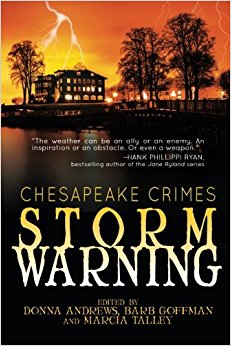
And check out the opening to his “Parallel Play,” from the anthology Chesapeake Crimes: Storm Warning (which is also nominated for the Anthony for best anthology):

The Teeter Toddlers class was finally drawing to a close–and none too soon, Maggie thought, keeping an eye on the windows and the dark clouds crowding the sky.

Ms. Amy, the instructor, had spread the parachute across the foam mats and gathered everyone on top of it. The children had jumped to catch and pop the soap bubbles she’d blown into the air. They’d sat cross-legged on the parachute and sung umpteen verses of “Wheels on the Bus” and two rounds of “Itsy Bitsy Spider.” The routine never varied, the children’s delight never waned–at least until the time came to raise the parachute with its spirals of color into the air.

Now, how’s that for an opening? Can’t everyone relate to that scene, those images? Immediately we are taken into a normal, every day, everyone can recognize and relate to it scene at a child care center, with an impatient mom waiting for it to be over so she can race an oncoming storm home. Into that normal, every day scene–things are about to take a turn, obviously, a chilling turn that could have been imagined and written by domestic noir goddesses from Charlotte Armstrong to Margaret Millar to Dorothy L. Hughes. And what can be more frightening, more suspenseful, that a mother and child in danger? Genius, really. Art keeps the reader squirming with suspense and unable to stop reading from first word to last.

chesapeake crimes

I am a bit embarrassed to admit I’ve never read Joyce Carol Oates before. I met her briefly at a BEA sometime between 2001-2005, and thought she was very nice and very charming. She is also incredibly prolific; her output puts me to shame and also puts her up there with Stephen King. I know she’s been nominated for genre awards before, but I’ve never really thought of her as a genre writer. But her Macavity nominated story “The Crawl Space” won the Stoker Award for best short story this year, and the title of the collection it is from (Dis Mem Ber) sounds kind of genre. I bought the book yesterday, and started reading her nominated story.

Please. You make us uncomfortable.

You are always watching us. Like a ghost haunting us…

Though her husband had died seven years before the widow still drove past the house in which they’d lived for more than two decades.

Why?–no reason.

(To lacerate a scar, that it might become a raw-throbbing wound again? To lacerate her conscience? Why?)

The story, about a woman whose husband died and couldn’t then afford to keep their house, is creepy and macabre and incredibly sad all at the same time; it reminded me of some of Daphne du Maurier’s and Patricia Highsmith’s short stories–about a woman trying to deal with a tragedy in her life, unable to let go of her past, and possibly, just possibly, reaching the breaking point. It is exquisitely rendered, beautifully written; I am so going to read more of her work! I can also see why it won the Stoker.

oates eqmm

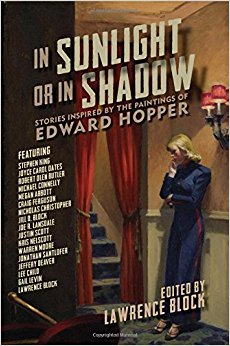
The last story was Lawrence Block’s “Autumn at the Automat,” which recently won the Edgar as Best Short Story of 2016. It’s from Block’s anthology, In Sunlight or In Shadow: Stories Inspired by the Paintings of Edward Hopper, and the contributors are a who’s who of the best in modern crime fiction, from Megan Abbott to Lee Child to Michael Connelly; Stephen King and Joyce Carol Oates and Robert Olen Butler–I mean, it’s like an anthology editor’s dream of authors to include. The book is also nominated for the Anthony for Best Anthology; I’ve not finished reading all the stories yet, only having read the exquisite Megan Abbott story and now, Block’s.

The hat made a difference.

If you chose your clothes carefully, if you dressed a little more stylishly than the venue demanded, you could feel good about yourself. When you walked into the Forty-second Street cafeteria, the hat and coat announced you were a lady. Perhaps you preferred their coffee to what they served at Longchamps. Or maybe it was the bean soup, as good as you could get at Delmonico’s.

And with that, you are sucked into Block’s story, about a woman fallen on hard times eating at the Automat in New York City; a story that reminded me very much of one of my favorite short stories of all time, Katherine Mansfield’s “Miss Brill,” and like it, this one is more of a character study than a crime story–although there is a quite brilliant crime in the story; one you don’t see coming that suddenly slaps you across the face–and has a neat little resolution that is eminently satisfying to the reader. Block is a master; I’m not as familiar with his work as I should be–that backlist! Just thinking about trying to get caught up on his work makes my head swim–but this story is an absolute gem.

hopper

So, there you have it. Five exceptional, exquisitely honed short stories, all nominated for the Macavity; all of them already recognized as exceptional; all of them written by masters of the art form.

And me. Somehow I managed to slip in there, too.

Thereby proving the adage that anything is possible.


Yes or No

Good morning, Sunday people! I slept deeply and well last night, so this morning I feel rested. My muscles don’t feel tight, either–but I am still going to stretch this morning. I gave up on two things yesterday–reading A Feast of Snakes and writing “A Holler Full of Kudzu.” The first because it’s, quite frankly, stupid; I didn’t believe the characters, nor did I believe the story, nor did I care about any of it. Harry Crews did, however, write some terrific paragraphs and create some amazing sentences, but about halfway through–and mind you, the entire novel is less than 200 pages, and it’s taken me over a week to get halfway through it–I just wasn’t buying into it or believing it. The second I gave up on because, while I do think there’s a short story in there, there’s also more than enough story to become a novel; and I am not sure at this point what exactly the short story should be. It was also taking me a really long time to write it; I think in slightly more than a week I’d only managed slightly more than two thousand words. So, I decided to put it to the side, let it percolate for a while, and then I can come back to it. This morning, this day, I am going to try to finish “Quiet Desperation” (which I’d forgotten I was in the process of writing, because I got so caught up in the my recent interest in Southern Gothic), revise “For All Tomorrow’s Lies”, and then start the revision of my WIP. I am going to do something dramatically different with that, as well; I am going to revise the last five chapters first, and then work my way backward through the book. It’s odd, but I always am worried that working in a linear way, which is what I usually do, the first half gets more attention than the second, and the second half of the book always is like a neglected stepchild, when it is really the most important part of the book.

I also started a reread last night of one of my favorite Agatha Christie novels, and one of her lesser-known ones: Endless Night. Some of my favorite Agatha Christie novels are her less-known ones (A Murder is Announced, Death Comes as the End, The Body in the Library, The Mirror Crack’d, N or M, The Man in the Brown Suit, They Came to Baghdad, Cat Among the Pigeons,  and The Secret of Chimneys, among many others), which isn’t to say the more famous ones–The Murder of Roger Ackroyd, The Mysterious Affair at Styles, Murder on the Orient Express, And Then There Were None, and Death on the Nile–weren’t enjoyable. I am actually curious to see the new film version of Murder on the Orient Express, but seriously; is there anyone who doesn’t know the ending of that famous novel at this point?

Endless Night is one of my favorite Christies because it is vastly different than any of her other novels; one of the things that is the most amazing about Christie is she basically did everything first. Endless Night is more Gothic in style and tone; bordering on the noir side. I didn’t get very far into reading it yesterday before it was time to go get our weekend treat (a deep dish pizza from That’s Amore) and then we watched an Andy Samberg mock-documentary, Never Stop Never Stopping, which was really funny, and then it was time for a few episodes of Ozark, which continues to amaze and enthrall us. The way it’s shot is superb, the cinematography Oscar level, and both Jason Bateman and Laura Linney are killing it in their performances; they should be frontrunners for next year’s Emmys. And the Lake of the Ozarks is almost as much a character as the actors themselves, as well as the stunning beauty of the area. And, of course, tonight is Game of Thrones.

I didn’t get as much cleaning done as I would have liked yesterday, but I did reread some stories that need revision, and I think I may have figured out how to revise them and make them stronger; we shall see when I start working on them again, no? I’ve also still be digesting my reread of The Great Gatsby, and that’s a whole other entry in and of itself.

And on that note, I should get back to the spice mines. Here’s a Sunday hunk for you.

17457810_1306427206072007_4945909802005088083_n

Cool Jerk

Our twenty-second anniversary was Thursday this week–where DID the time go? It was a lovely evening, spent getting caught up on Animal Kingdom and Orphan Black. We’ll probably get a pizza from That’s Amore tonight, and there you have it; living large in the lower Garden District. Woo-hoo!

I came to the painful decision to set aside “A Holler Full of Kudzu” last night while streaming Ozark (which is truly amazing; can’t wait to watch more) because there’s too much story there for it to be a short story; it might be a novella or a even a novel. I worried about that when I started writing it; and part of the reason I am having so much trouble with it is because I can’t figure out how to condense all the story there into a short story. If there’s a way to do it, putting the story aside and letting it percolate in the back of my mind is the right answer; today I am going to try to finish reading A Feast of Snakes before rereading the WIP and making the final polish before being officially finished with it and (gulp) starting to target agents for it. This is rather worrying for me, obviously; it’s not like I am obsessive or something. Ah, well.

Paul is heading into the office today, so after I get home from Wacky Russian I should have the house to myself to read and clean. I may work on revising one of the stories I’ve written recently; I reread one of them the other day and made voluminous notes on how to fix the story; still not sure I’d be able to sell it anywhere, but those are the risks when you write short stories. I think I have a handle on the story I want to submit to the MWA anthology this year, and I think I have figured out how to fix an old story that’s been collecting dust in the archives as well. So, my ambitious plan for this weekend is to finish reading a book; start revising the WIP, and rewrite two short stories. It’s very ambitious, I know, and I probably won’t even come remotely close to getting all of that done, but you know there’s always hope. And I let setting a high bar for myself, you know?

Christ, the house is a mess.

And on that note, it’s back to the spice mines.

Here’s a hunk to get your Saturday off to a nice start.

17362839_10155911491912678_7418470337111801239_n

Can’t Stop the World

So, here is my Macavity nominated short story, if anyone would like to read it.

Survivor’s Guilt

By Greg Herren           

I’m going to die on this stupid roof.

It wasn’t the first time the thought had run through his mind in the –how long had it been, anyway? Days? Weeks?—however long it had been since he’d climbed up there. It didn’t matter how long it really had been, all that mattered was it felt like it had been an eternity. He’d run out of bottled water—when? Yesterday? Two days ago?  It didn’t matter. All that mattered was he was thirsty and hot and he now knew how a lobster felt when dropped in boiling water, how it felt to be boiled or scalded or burned to death.

He was out of water.

Not that the last bottles of water had been much help anyway.

In the hot oven that used to be the attic of the single shotgun house he’d called home for almost twenty years, the water inside the bottles had gotten so damned hot he could have made coffee with it and it tasted like melted plastic, was probably toxic, poisonous in some way. Wasn’t plastic bad for you? He seemed to remember reading that somewhere or hearing it on the television a million years ago when his house wasn’t underwater and there was still air conditioning and cold beer in the fridge instead of this…this purgatory of hot sun and stagnant water and sweat-soaked clothes.

But drinking hot water that tasted like plastic and was probably, maybe, poisonous—that was better than dying of thirst on the hot tiles of this stupid stinking roof. He’d tried to conserve it, space it out, save it, trying to make it last as long as possible because he had no idea when rescue was coming.

If it ever came at all.

He’d been on the roof so long already—how long had it been?

Days? Weeks? Months?

Should have left, should have listened to her, should have put everything we could in the truck and headed west.

But they’d never gone before, never fled before an oncoming storm, laughed at those who panicked and packed up and ran away, paying hotels and motels way too much money for days on end.

Hadn’t the storms had always turned to the east at the last minute, coming ashore somewhere to the east, and New Orleans breathed another sigh of relief at dodging another bullet while saying a prayer at the same time for those getting hammered by high winds and storm surges and power outages and downed trees?

Hell, that last time the storm had gone up into Mississippi and the highways south had been damaged and blocked, keeping people who’d gone that way marooned for well over a week.

So, no, there wasn’t no need to go this time, either, because Katrina would surely turn east like so many before her had.

Stupid, so damned stupid.

He could be in a hotel room in Houston at this very moment, basking in the air conditioning, drinking lots of ice cold water, waiting for the water to recede and come home, see what survived, see what could be saved and what couldn’t.

Ice.

He’d sell his soul for an ice cube.

But when rescue came, he’d have to explain…

No, no need to think about that now.

If—no, when— rescue came, he’d deal with it then.

The sun, oh God, the sun.

He’d never been this hot in his life before, at least not that he could remember.

The closest was t the beach in summertime, but there was always something cold to drink, the warm gulf waters to plunge into for some relief.

He felt like he was broiling inside his own skin.

Sometimes when it became too much he’d slip back down inside the attic. The oven. The air down there so thick and humid and hot and dusty in there he could barely breathe, but at least he was out of the sun. The air was barely breathable, clinging to his skin, so thick and wet he felt sometimes like he was drowning,

Every so often the wind would come, blowing through the vents at either end of the attic, and it felt so good he felt like crying.

But he couldn’t stay down there for long. He had to stay out on the roof, in case rescuers came. He couldn’t take a chance on missing them.

If someone came for him.

Don’t think that. Someone had to come, rescuers will come. If I don’t believe that I’ll lose my damned mind.

Maybe it’s divine punishment for—

Yet another helicopter flew past overhead, the latest of many. He’d stopped waving and yelling and jumping up and down when they passed overhead, like he wasn’t even there. His throat was so sore from yelling he could barely make a sound anyway. They never stopped, but he knew—he knew they were rescuing people. They had to be. What else was the point to the big basket hanging from the underside of the helicopter, if not for lowering down to people stranded up on roofs like he was?

He just had to be patient. It would be his turn eventually.

He just had to stay alive until it was his turn.

The whole city was probably underwater for all he knew.

At least it was for as far as he could see, shimmering filthy water everywhere.

Should have left, should have listened.

One of them would –had to—stop for him, before he died.

Meantime, roasting, baking, frying, dying in the late August sun, or was it September now?

Every once in a while he heard a boat motor passing close by. He didn’t bother making noise anymore when he heard those, either. There wasn’t any point. They hadn’t heard him when he could still yell. Back when he could still yell, whenever that was. However long it had been.

They never heard him. They never came.

His throat hurt so badly from all the yelling he’d done when his throat could still make a sound other than a hoarse rasp he might have damaged his vocal chords. He might never be able to talk again.

Which wouldn’t matter, anyway.

If I never get off this roof.

He picked up the wine bottle again, poured the last swallow of hot red wine into his mouth. Alcohol dehydrated the body, he knew that, remembered that from somewhere. But some liquid was better than no liquid.

The sour hot wine hit his empty stomach. He hadn’t eaten, hadn’t had anything to eat in—it felt like an eternity. He’d passed the point of being hungry.

But he worried that since all that was left was hot wine, he might make himself sick.

If he started throwing up he might just throw himself off the roof and drown himself.

It was tempting to think about. The thought came now and then, when he was so hot he could barely stand it, when his skin hurt so bad, blistered from sunburn that he climbed down into the stiflingly hot attic and wept, but was too dehydrated for tears to form. That was when he thought about drowning himself, diving through the trap door into the water and drowning himself.

Joining her down there.

Then he would get back to his right mind and open another bottle of wine and sip it slowly.

He looked at the empty bottle in his hands, and tossed it off the end of the roof.

It splashed when it hit the water.

It was the last of the wine. All that was left now was hard liquor—a bottle of hot gin and a bottle of hot cheap tequila.

He hadn’t wanted to touch the liquor, so he saved it for when there was nothing else left. Every time he took a swig of the wine he got light-headed, so there was no telling what the liquor would do, on his empty stomach and dehydrated body.

He wasn’t even hydrated enough to sweat anymore. He hadn’t had to relieve himself since—weeks ago? It didn’t matter. Nothing mattered.  Time didn’t matter anymore, it was all one endless nightmare of heat and humidity and the sun, oh God, the sun.

Water, water, everywhere— but not a drop to drink.

No one was ever going to come.

I can’t believe I’m going to die on this stupid roof. I should just kill myself and get it over with.

No, someone will come.

Someone had to come.

Should have left, should have listened.

The sun was setting in the west in an explosion of oranges and reds reflecting off the stagnant, dark, oily water. The roof of his truck was still slightly visible when he looked down over the side of the roof, its white roof almost glowing through the filthy water. Paid for, finally, years of paying off that damned loan finally come to an end just a month ago, the pink slip arriving in the mail last week. And now it was drowned, just like the city and God knows how many people. Ruined, gone, the money he put into it wasted. He’d babied it, too—oil change every three months without fail, servicing it before it was needed, the fucking thing so well taken care of it would have lasted easily another five to ten years if he kept babying it.

It doesn’t matter anyway. Everything’s ruined. The city’s dead. We’ll never come back from this.

Thank God the old house had an attic—yes, thank God for that—the kind with a trap door with a long dangling chord that hung down in a corner of the bedroom. You pulled the chord, the door came down, and a wooden ladder unfolded. He’d left the door open when he came up, when the water came, as the house filled up, left it open thinking it might help when rescue came.

If rescue ever came.

Even though she was down there.

Someone will come, he told himself again, someone will come for me.

Someone has to.

If he didn’t believe rescue would come, he would lose his mind.

If he didn’t believe someone would come, there wasn’t any point in going on, to this suffering, to this agony of broiled skin and dehydration and starvation and air so thick he could barely breathe it, the stink of the wet wood rotting down below.

And despite the delirium, despite the agony, somehow–somehow he wasn’t ready to give up.

If he gave up now, the suffering of the days? Weeks? Months? Was for nothing.

Nothing.

But it would be so much easier to give up. Then I wouldn’t be thirsty anymore. Then I wouldn’t be hungry anymore.

If he stopped believing one of the helicopters would lower a basket for him, or a boat might come by to take him to safety, through the end of the world to whatever might still be out there, away from the water, he might as well kill himself now.

There was a rope coiled in a corner of the attic. He could tie a noose and find something, somewhere, on the roof or in the attic, to loop it around and just let his weight fall, his neck snapping, death coming quickly and easily.

That would be so much better than this slow, horrible death from heat exhaustion and dehydation on the roof.

But the sun was going down at last, and night was coming.

He’d survived another day.

It would still be hot, and humid, and the smell of the water wouldn’t go away, but the night was better.

Now he had to just survive another night.

He could still see the skyline of the business district in the distance in the darkening sky. There were no lights anywhere. Thick black plumes of smoke billowed in several places he could see, but there hadn’t been an explosion in a while.

Or gunfire. He hadn’t heard gunfire in a while.

Night wouldn’t relieve the relentless humidity, but at least being out of direct sunlight would be better, give his blistering and salt-crusted skin some relief.

There might even be a breeze.

And he could stay out on the roof, not have to climb down inside to get away from the vicious rays of the sun.

No air moved in the attic, the heavy wet air almost suffocating in its thickness.

He could smell his own stink, and sometimes imagined he could even smell his flesh frying in the hot sun. His skin was burned, red, raw, but he couldn’t breathe the fetid stale dead air in the hot attic all day. A cold shower to bring his skin temperature down was all he could think about, or packing himself in a tub of ice. That wasn’t going to happen any time soon.

Ice. The thought of it made him want to weep.

Should have left. Should have listened.

She’d been right.

“We need to go,” she’d said on Saturday, whenever that had been, however long ago that had been. She’d never been afraid of storms before, never wanted to leave. This unease, this nervousness, was something new, something he’d never seen before in her. There had been storms before when he’d wanted to go, and she’d laughed in his face, mocked him, and they hadn’t gone. She’d been right those times.

He liked that she was afraid of this one, that it made her nervous. She seemed off-balance, for once, not sure of herself.

“It won’t come this way, you know they always turn east before land fall,” he’d replied, dismissing and laughing at her, shutting her down every time she watched another emergency news conference, or when the Weather Channel ran another worst-case scenario for the city, as everyone began packing up and heading west for Houston, north for Jackson, and the city began to empty out. He mocked her panic, her nervousness, enjoying this new side of her he’d never seen before, and was determined to take advantage of it as long as it lasted. He sent her to the store for supplies. Batteries and bread and bottled water and peanut butter and protein bars and hell, might as well get some liquor, too.

Liquor never went to waste, after all, and it didn’t spoil.

She came home hours later, complaining about how crazy the Wal-Mart had been, everyone talking about evacuating and the city being destroyed, whining the way she always did when she didn’t get her way.

“You know they say that every time,” he’d replied, sure of himself, smug he’d held firm and not given in, cracking open a beer and flipping away from the Weather Channel with it’s constant predictions of doom and aerial views of the traffic snarl on the highways out of town. He found a baseball game and relaxed in his easy chair.

Probably no work on Monday, he’d thought as she clattered around in the kitchen angrily, muttering to herself, so might as well kick back and have a nice little mini-vacation.

Some mini-vacation this had turned out to be.

The sun usually set around nine in the late summer, didn’t it?

His watch was down on the first floor, under the water. The power had been off before the nasty filthy dirty murdering water had started filling up the house, drowning everything as far as the eye could see. Days, time, had all lost all meaning for him. The only thing that mattered was night or day. He didn’t sleep well—could anyone under the heavy hot wet blanket of humidity?

He didn’t really care anymore. Nothing really mattered other than the sun was going down and his skin would have some blessed relief.

And he would hear her again, whispering.

We need to go, Mike. We can’t stay here.

Every time the sun went down. Every time it got dark.

It’s a big storm. At least the power will go out and do you want to be here without the a/c?

Sometimes he thought he might just be going insane.

If he wasn’t already, that was.

He wasn’t sure of anything anymore.

We can stay with my sister in Houston, we don’t even have to pay for a motel, Mike, can’t we go, please?

The water lapped against the side of the house.

Water, water, everywhere.

Through the attic door into the downstairs, he could see things floating when he looked. Furniture, books, cushions, once even the dresser was there.

He hadn’t seen her down there in a while.

He was always afraid he’d look down and see her face, floating just below the surface, her eyes staring at him.

Should have closed her eyes.

He wasn’t sure where she was and he didn’t care.

Sometimes he would see her, walking on the surface of the oily water, pointing her finger at him, complaining, whispering, we should have left, I wanted to go, this is all your fault, you know, like everything is always your fault you can never do anything right this is why I never listened to you…

And he would wake from his fevered sleep, shivering even though it was so hot, even though the air was so damp and heavy and warm it just pressed down on him until he thought his bones might break.

His lips were so damned chapped. His skin was red and hurt, blisters here and there on the peeling baked skin. He wanted water to drink, something to eat besides chips and crackers and peanut butter and bread. He wanted off the roof. He wanted a bed. He wanted to be away from New Orleans, it didn’t matter where as long as it was far away from the drowned city. Sometimes he wondered if the entire world was under water, that it wasn’t just New Orleans that drowned.

Someone would come, he knew it. He just had to hold on, stay alive no matter how horrible it got. He wouldn’t die on the damned roof of the house he’d never liked in the first fucking place.

She’d wanted the house. Once she saw it when they were driving around looking, this was the house she wanted, even though it was on the wrong side of the Industrial Canal, even though it was in the 9th Ward. “It spoke to me,” she’d insisted, “and it’s cheap! We can fix it up ourselves. It’ll be perfect!”

He’d given into her, even though he didn’t want to live down here. She was right about the price—it was less than they’d been thinking they’d spend, and the monthly mortgage payments were a lot more affordable than any of the other houses they’d looked at. It wasn’t until later, when they’d moved in, that it even occurred to him that it was the only place they’d looked at in the 9th Ward. When he brought it up to her, she’d admitted she’d found it on her own and fell in love with it, colluded with the realtor to get him to see it.

They’d worked on him until he’d given in.

It wasn’t the last time she’d gotten her way.

We need to go, Mike. It won’t be safe here. I’m scared.

She always got her way, didn’t she?

Not this last time.

Which was why he was up on the roof. Because just once he didn’t want her to get her way, wanted to stand up for himself and not give in for once, put his foot down for good and MEAN it.

So, really, in a way, it was her fault.

And if someone did finally come, if someone ever did come to rescue him, he was never coming back to this godforsaken place.

Because she would be here, waiting for him. She would never leave him alone, not as long as he was here, even if the house was bulldozed and he built a new one.

Mike we have to go, it’s scary, it’s a big storm, we’ve got to go.

He lowered himself back down through the hole in the roof, carefully avoiding the jagged edges of the beams he’d hacked through with the ax to make the hole in the roof, so he could get out there, out of that suffocating attic, away from the rising water. He switched on the flashlight, looking for the liquor, and saw there was actually another bottle of the red wine after all—it had rolled off to the side, and he hadn’t noticed before. There was no need to switch to tequila just yet. He fought with the corkscrew, chewing the cork up, little flakes floating down into the wine but he didn’t care, he could always spit them out, and took a slug out from it. The sourness made him wince but it was wet, and that was all that mattered.

He heard a splash.

That wasn’t from outside.

The trapdoor to the lower level was open, a large rectangle of dark with the long shadows creeping across the floor.

He took a deep breath and backed away, not losing his sweaty grip on the green bottle. He’d closed it before he went back out on the roof, hadn’t he?

He couldn’t remember.

Hadn’t he decided to close it, in case he saw her down there in the water again?

He could hear his heart beating.

He focused on keeping his breathing even, taking deep breaths, ignoring the rising fear creeping up his spine.

I just forgot to close it, is all, I meant to close it but maybe it didn’t latch, that’s all there is to it, just close it now. She couldn’t have gotten up here. I’d have heard her.

She’s dead, you idiot.

But that wouldn’t stop her, would it?

Just close the damned door. All that’s down there is water. You’re making yourself crazy. She’s dead, dead, dead. Just close the door and you won’t have to worry about her.

But he couldn’t move, wouldn’t move, he kept standing there and staring and trying to remember if he’d closed it or not. He would swear that he did, but he wasn’t sure of anything anymore. The heat, the humidity, the damned bugs and the sun and the monotony, the way everything kept changing in his mind, the way he couldn’t remember how long he’d been up on the damned roof, how long it had been since the water rose, since he’d climbed up the damned ladder to the attic, since he’d taken the hatchet and chopped his way out to the roof.

The shadows were getting longer. Soon it would be completely dark.

Mike we have to go really, it’s a big storm and what will happen to us if the levees fail?

“Shut up shut up SHUT UP!” he yelled, or tried to, but all that came out of his sore and parched throat was a croak.

He took a step forward, swallowed, and took another.

One after another until he was standing next to the dark opening, looking down into the flooded house.

She wasn’t there.

Shaking now, he reached for the flashlight and flicked it on, pointing it with trembling hands into the darkness.

The oily dark water reflected the light back up at him, the filthy water swirling around in what used to be his bedroom.

Their bedroom.

He closed his eyes and said a prayer before opening his eyes again.

No, she still wasn’t there.

The last time he’d looked down and seen her—when was that? It didn’t matter, it was after the water came and he’d gone up to the roof– she was still there, face up floating in the water, her dark hair fanned out in the filthy water, eyes wide open and staring up at him accusingly.

You killed me. We should have left, but we stayed and you killed me.

He knew he couldn’t really hear her, she was just in his head, but still—he kept the light shining down there, swinging back and forth. He heard another splash somewhere down there—maybe it was a gator? There wasn’t any telling what was down in that water.

During the day, he could see the river levee in the distance—maybe it had held, but there was no telling where the water had come from. That didn’t matter anyway. All that mattered was that it was there.

So maybe…if the bayous and canals or even the swamps had filled with water, it wasn’t out of the question there could be gators in the water-filled city.

But wouldn’t he have heard something if a gator had gotten her? Some loud splashing or something?

She’s dead so she couldn’t fight it but still a gator wouldn’t have been able to get her underwater without making some noise?

He’d seen snakes a couple of times, making s curves to move forward in the water outside, but not inside the house.

The house.

What was left of the house.

The plasterboard was probably dissolving from the wet, and there was no mistaking the smell of wet, rotting wood. Hell, black mold was an issue even when the house wasn’t underwater—how many times had he had to climb a ladder to wipe down the ceiling around the air conditioning vents with bleach to kill it?

Yeah, this house had been a good investment.

Even if the water somehow got pumped out—and it didn’t look like that was going to happen any time soon—the house was ruined. It would take a lot of money to make it habitable again.

Maybe this time New Orleans would be left to drown.

He turned off the flashlight and backed away from the hole. He took another slug of the hot, cloyingly sweet wine.

She’d wanted to evacuate Sunday morning when the Weather Channel and all the weather broadcasters had gone into full-scale panic mode. “The mother of all storms,” the mayor had called it. He just shook his head at her fears, her complaints, his mind was made up and that was that. “They say this every time,” he’d scoffed at her, “remember Ivan? Jorges? I can’t even remember how many times they said it was the end. If you’re so damned scared, you go. I’m staying put.”

She wouldn’t go by herself. He knew that.

And why get in the damned truck and be stuck in stop and go traffic, eight hours to go the seventy stinking miles to Baton Rouge just to hole up in a hotel somewhere that jacked up their room rates to gouge the evacuees only to have the stupid storm turn east like they always did at the last minute and New Orleans would be fine.

Yeah, no way.

They weren’t going anywhere.

They’d lost power sometime in the early morning before the full fury of the storm came, and when it did come, it wasn’t that bad. Howling winds and crashes outside, sometimes the house itself shook, but then, after what seemed like an eternity, it was over.

It was over and they’d survived.

He’d gone outside. Some tree branches were down, debris everywhere he looked, a big live oak down the street had been uprooted and smashed through a house. Everyone else was gone, evacuated, holed up in a hotel or shelter somewhere west on I-10.

They had a few hours before the house started filling up with water.

He’d lost his temper when she started panicking. He just meant to slap her but he hadn’t meant to slap her so hard, it was an accident, she slipped in the water and hit her head on the table and went limp, and before he knew it the house was filling up with water and she was dead and he had to get up into the attic, had to make sure food and liquid was up there—

He reached over and looked down into the darkness. He shone the light down, his heart pumping, as he waved the beam of light around.

Nothing but floating furniture.

No sign of her.

He heard something.

Was that an outboard motor?

Bottle of hot wine still in one hand, he tucked the flashlight into the waistband of his shorts and climbed back out onto the roof.

It was definitely an outboard motor, and getting closer from the sound of it.

The flashlight dimmed in his hand and went out.

Swearing, he shook it as he tried to yell, but his vocal chords were too fried, his throat too raw.

Miracle of miracles, the flashlight came back on, and he started waving it in the direction the motor sound was coming from.

Oh please god oh please God oh please God

He was almost blinded as a strong spotlight shone in his eyes.

“Hey there,” a voice called as the motor idled, close by, near enough for him to see if not for the damned spots in front of his eyes. But as the bright red shapes began to fade, he could see someone swinging up onto the roof, and heard footsteps, and something cold and icy and wet was put in his hands. He almost wept, it felt so good, the cold against his hot skin. “Have some water, man. My name is Pete LaPierre, me and some buddies came down from Breaux Bridge to rescue some people—they told us we couldn’t and we thought, damned if we don’t have our own boat all we need is some water to put it in  and here we are.”

He twisted the cap off the water and poured some of it down, the coldness stinging his throat. He dropped the wine bottle he’d forgotten, heard it hit the roof and roll down the side and splash when it hit the water. He didn’t care, this cold water was like he’d died and gone to heaven, he just wanted to cry—

“Are you the only one here? No one else around here, down in the attic? You must have been pretty lonesome.”

He took another drink of the water, slow and steady, and felt a cramp forming in his stomach—too much cold too fast—­and he breathed in and out for a moment, waiting for the cramp to pass, pressing the cold plastic bottle against the hot skin of his forehead.

He shook his head no.

“Come on, then, let’s get you out of here.” Pete LaPierre clapped him on the back, and he followed him down the side of the roof, and dropped down over the side into the boat. It wasn’t much, just a fishing boat with an outboard motor and a large cooler filled with ice and water and beer and—

“You need you a hot shower,” Pete said, and he revved the motor, steering the boat away from the little house and away through the dark night, using the spotlight to make sure there was nothing beneath the surface.

He looked back at the house.

He might never ever see it again.

He slumped down in the boat and took another drink of water.

Someone was pressing a sandwich on him, one of Pete’s buddies, but he just waved it away.

They might not ever find her.

He exhaled, and watched the stars pass by overhead.

13996289_10155239203144012_2573106616350631675_o

Turn to You

Very tired this morning; a late night of bar testing concluded my twelve hour day yesterday and there is nothing like walking ten blocks on a sultry, steamy New Orleans night to stand in the upstairs of a bar whose a/c is set to “Econo”, and then walking ten blocks back.

I changed my socks three times yesterday.

But I have a short day today; only four hours to put in today, and I don’t have to be at the office until four. Huzzah! I also get to go in a little later tomorrow, and don’t have to work a full eight hour shift then, either. So, I get to sort of ease my way in to the weekend, which is lovely. I am making a Costco run this morning, making a grocery run tomorrow, and then I get to only leave the house to go see Wacky Russian Saturday morning. I do rather have to get motivated, though, which isn’t easy when you’re already tired. But if I have another cup of coffee, do my morning stretching, and then hop in the shower, I will be good.

One can hope, anyway.

My short story continues to putter along, and man, is it all over the place. I am trying very hard not to stop myself and correct the narrative–I’m just trying to get the story down, do the polishing and reorganizing on the next go round, but it’s kind of slow going. I kind of have a vague idea of what the story is and how it’s going to end, and I am writing a lot of chaff that will have to be separated out later, and the voice is all over the place as well. Ah, well, the great joys of being a writer; this constant internal struggle between confidence, over-confidence, and NO confidence. The Three Faces of Greg, as it were.

I’m still reading A Feast of Snakes; it’s very short, and I should be able to finish it soon. But I am going to absolutely reward myself with the latest Rebecca Chance, Killer Affair, when I am finished with this one. (I need a break from the Southern Gothic, frankly, but I’ll be jumping back in right after.) My copies of Barry Hannah’s Airships and Raymond Carver’s Will You Please Be Quiet Please arrived, so I also have more short stories to read, and of course, there are more stories in Faulkner’s Knight’s Gambit to read as well.

I think it’s very important for a writer to read as widely as possible. I read scifi, fantasy, horror, romance, ‘literary’, ‘popular’, and historicals, in addition to social history and commentary, literary criticism, and biographies, as well as history. I also love comic books. But I’ve been reading almost exclusively crime novels for a very long time, and as such, there’s been such a narrow focus in my reading that I need to expand out a bit; I am enjoying the Southern Gothic reading I’ve been doing–some of which could be defined as crime fiction, which makes it all the more fun–and it also makes me realize that reading all these different types and styles of fiction should be helping make me into a better writer.

I am hoping to get back to the serious chore of the final edit of the WIP this weekend; one of the reasons I want to get all this errand running finished over today and tomorrow is so that I won’t be too tired on the weekend to get this accomplished.

And on that note, I need to get the day going.

Here’s a Throwback Thursday hunk for you, Constant Reader:

3005e6390cf20ad64273209c1c0b9308--days-of-our-lives-hot-hunks

Robert Kelker-Kelly, from Another World and Days of Our Lives