Miami Vice

This wasn’t one of my better weeks, to be frank. I had issues with sleep and motivation; being tired had something to do with that. I didn’t get up Wednesday morning and go to the gym like I should have; I am hoping to go tonight, Sunday, and Monday, so as to get back on track. I did get a horrific transitional chapter on the Scotty book finished, though–and I also did some major brainstorming about the plot and how to make it work. It’s probably going to be longer than Scotty books usually are; it may come in somewhere between 90 and 100k. I am also being rather ambitious with this plot, too. It’s going to be complicated, and I am also going to take on some issues, which I generally do not do in the Scotty books. Here’s hoping it plays out the way I want it to.

I also have some deadlines coming up this coming week, which has me petrified with fear. I have several short stories in process…no, I’m not going to think about it. That will just paralyze me some more. Instead, I am going to think good thoughts about how wonderful the stuff I am working on is, rather than freaking the fuck out about everything I have to get done. Tomorrow night we are going to the ballet; I am very excited about this as I’ve never seen one live before. This was one of my Christmas presents from Paul, and I can’t wait…although it is probably going to make me want to write about the ballet and push everything else to the side.

Because the stuff I need to work on is never the stuff I want to work on.

I did read a lot of short stories yesterday, after several fallow days of not reading any. I had to do testing at Nicholls State University yesterday afternoon, which is about an hour and a half drive from the office. I didn’t drive; I rode in the backseat and read stories on my way to and from there, and then last night as I watched the Olympics I read some more. That’s the beauty of short stories; you can read a lot of them in a very short period of time. I think I may have read six or seven yesterday, so I’ve got them stockpiled for the Short Story Project. Huzzah!

And sorry to be so brief this morning; but I’ve got to get to the office.

Here’s a hunk for you as I head back into the spice mines.

s-l1000


Cool It Now

I still have that horrible throaty cough periodically, but my voice is more normal and I don’t feel off, which I am counting as a win. I also think that my body has changed on me again; my eating habits are bad–I often forget to eat and rarely, if ever, get hungry–but now my blood sugar will drop, leaving me feeling tired and ill. I need to start making sure that I fuel my body properly; gallons of coffee in the morning aren’t the way to go, and that is also inhibiting my sleep at night.

Heavy sigh.

But once the Olympics are over, I can go back to getting in bed at ten and reading for a half an hour or so before going to sleep; I am greatly enjoying The Black Prince of Florence, as well as my other current non-fiction read, Joan Didion’s essay collection After Henry. Didion is amazing; the way she crafts sentences and paragraphs is both lyrical and beautiful. I wish I had one tenth of her skill. I also made some progress with the Short Story Project, and am thinking I may write a Chanse short story. Reading all these Tess Monaghan (Laura Lippman) and Kinsey Millhone (Sue Grafton) and Lew Archer (Ross Macdonald) short stories are showing me how it’s possible to write and craft a private eye short story; and I have an idea in my head about one where Chanse goes back to LSU for a fraternity reunion that might turn deadly. It’s just a thought; I’ve always wanted to do that in a novel, but it might just be a short story, you know? One of my problems has always been that I think in terms of novels as opposed to short stories; I’ve certainly turned short stories into novels (Sorceress and Sleeping Angel come to mind), and am even thinking of turning another one into a novel. Reading all these short stories has been inspiring me to write short stories, which is incredibly cool. I have several in progress right now; I’ve been asked to write for two anthologies where the story is inspired by a song; which is something I have certainly done before, and I’m having a lot of fun with those. I also want to write something for the MWA anthology, and I have another I am writing to submit to another anthology as well. I am still working on the WIP and the Scotty, never fear–the Scotty is taking a timely and dark turn, which is kind of cool–but I have all these short stories dancing around in my head!

Bitchin’.

I also read two short stories over the weekend. The first was Sue Grafton’s “Long Gone,” from her Kinsey and Me collection.

September in Santa Teresa. I’ve never known anyone yet who doesn’t suffer a certain restlessness when autumn rolls around. it’s the season of new school clothes, fresh notebooks, and finely sharpened pencils without any teeth marks in the wood. We’re all eight years old again and anything is possible. The new year should never begin on January 1. It begins in the gall and continues as long as our saddle oxfords remain unscuffed and our lunch boxes have no dents.

My name is Kinsey Millhone. I’m female, thirty-two, twice divorced, “doing business as” Kinsey Millhone Investigations in a little town ninety-nine miles north of Los Angeles. Mine isn’t a walk-in trade like a beauty salon. Most of my clients find themselves in a bind and then seek my services, hoping I can offer a solution for a mere thirty bucks an hour, plus expenses. Robert Ackerman’s message was waiting on my answering machine that Monday morning at nine when I got in.

One of the things that rarely gets mentioned in discussion about Sue Grafton’s work is how funny she can; and this particular story, with Kinsey having to interview a husband who wants to hire her to find his wife, and having to deal with his three children, all under five, is actually, despite its dark tone and subject matter, kind of breezy and funny. Kinsey’s droll sense of humor, and her sympathy for the missing wife–which comes from her own dour outlook at marriage and family–made me laugh out loud several times during the course of reading the story. It’s a pity that Grafton didn’t write more short stories, because these are gems.

I then moved on to “The Barber” by Flannery O’Connor, from The Complete Stories.

It is trying on liberals in Dilton.

After the Democratic White Primary, Rayber changed his barber. Three weeks before it, while he was shaving him, the barber said, “Who you gonna vote for?”

“Darmon,” Rayber said.

“You a n*****r-lover?”

Rayber started in the chair. He had not expected to be approached so brutally. “No,” he said. If he had not been off-balance, he would have said, “I am neither a Negro- nor a white-lover.” He had said that before to Jacobs, the philosophy man, and–to show you how trying it is for liberals in Dilton–Jacobs–a man of his education, had muttered, “That’s a poor way to be.”

A writer friend of mine–probably one of my closest friends who is also a writer–is a huge Flannery O’Connor fan. As I mentioned when I talked about reading her story “The Geranium,” I had read her A Good Man Is Hard To Find and wasn’t overly impressed with it. Also, as I said when I read “The Geranium,” the racism and use of the n-word is kind of hard for me to see. And yet…in this story, it fits and has to be used, even though it fills me with distaste to see it on the page and to read it. “The Barber,” you see, is the perfect personification of what it’s like to live in the South and be confronted by in-your-face racism all the time. This doesn’t excuse it by any means, or say it’s okay; but wow, how honest and true this story is.

Rayber is a liberal, who clearly believes in racial equality; he is a teacher at the local college and when he is confronted with the racism from his barber and some of the other men in his shop, he is startled, shocked; doesn’t know what to do. Part of his white privilege comes from being surrounded, he believes, by people who believe the same way he does; that racism and bigotry and segregation is wrong and a moral evil. He doesn’t know what to do when he is confronted by it in the face of his barber, someone whose chair he has sat in for years, presumably, and allowed to apply a straight razor to his face and neck. Now, this pleasant person whom he has never really paid a whole lot of attention to and has never really given much of a thought to, other than he provides a service well that Rayber needs, is confronting him with a hideousness that is quite horrifying while holding a sharp razor at his throat. What makes this all the more brilliant is how O’Connor doesn’t even make that connection for the reader; she just puts it out there and lets the reader come to his own realization. And afterwards, after being mocked by the barber and his friends in the shop for how he chooses to cast his vote, he spends the next week angry and bitter about the experience, and preparing to explain his vote logically and rationally the next time he gets shaved; to reason with the barber and tell him how wrong racism is…and inevitably, when that times comes, as the barber jovially mocks him for his vote, he eventually becomes frustrated and physically lashes out.

This story resonated strongly with me. Whenever I am confronted with something I find morally abhorrent, to my face, it catches me so off-guard that I can’t really respond logically and rationally–sometimes even at all– because it is hard for me to understand that there are people out there who actually can hold positions I hold morally abhorrent; I’ve never been able to wrap my mind around, for example, homophobia. I don’t get it. I do not understand how anyone can simply devalue and deny another human being their humanity. It’s hard for me to write homophobic characters because I cannot fully flesh those characters out and make them anything other than one-dimensional; I cannot grasp hatred like that. But, as one editor told me early in my career, even Hitler loved his dogs. I could relate to O’Connor’s character, and his inability to understand, to realize, what he was dealing with; that behind the friendly face and jovial attitude is someone whose core values and beliefs are so repugnant to him that they didn’t seem POSSIBLE.

And that is the mark of a truly gifted writer.

I haven’t been able to stop thinking about that story since I read it, and again, the mark of a great writer. Ms. O’Connor made me think, made me reflect, got under my skin and made me question my own self, not only as a person but as a writer.

Wow.

And now back to the spice mines.

RyanPaevey14

Heaven

So, I survived my voyage out to Metairie. I like the new eye doctor–Dr. Moses at Target–and I am trying out progressive contact lenses. I never really got the sense from my previous eye doctor of how they worked–basically, it sounded like witchcraft–but Dr, Moses very patiently explained how they work in a way which was incredibly easy for me to understand–and it wasn’t that hard. Basically, the pupil expands to see far away and contracts to see up close; so the progressive contact lenses are for distance viewing with a small spot in the center for reading; the pupil will contract and see through that small spot for reading, etc. Was that really that hard to explain? But they are…odd. I have a tester pair, for me to try out and get used to; and they are definitely going to take some getting used to. I can see fine for working on the computer and pretty much everything else, but reading things on say, the television–I can read it but it’s blurry. I’m assuming this is part of the adjustment process; or if it’s not, I need to have the prescription altered. I also tried reading with them in–a couple of books–and I couldn’t. I doubt that is part of the adjustment process. Heavy sigh. But I’ll have to go back in  have my eyes looked at again, I suppose, if these issues aren’t part of the “getting used to them” process.

I was very tired yesterday; I didn’t sleep as well as I should have on Friday night, so I really knocked myself out last night and feel very rested this morning, which is great. I think part of the sleep issue I’ve been having has to do with both not working out in a couple of weeks in addition to drinking more caffeine–I’d cut back dramatically on both coffee and Coke–and so today I am off to the gym and I am going to try to not drink as much caffeine. I need to drink more water anyway.

I didn’t get as much writing done yesterday as I had wanted to; I hadn’t originally planned to even try–errands and so forth generally don’t put me in a very good hey let me write place; and I was right. Plus the contacts made it seem weird, if that makes any sense? I’m sure it doesn’t. So I tried to get chores done–I laundered the bed linens, cleaned the kitchen, etc. I also got caught up on Real Housewives of Beverly Hills and Riverdale; when Paul finally got home last night we got caught up on How to Get Away With Murder. I also did some serious thinking about the things I am working on–a recently rejected short story, for example, that I’ve been having trouble figuring out how to fix for years and it finally hit me last night; the Scotty book and where it’s going; the WIP and where it’s going; a couple of other short stories I am working on (Christ, I am working on a lot of shit, aren’t I).

So, this morning, after sleeping in for a bit, I am going to get some filing done, do some writing in my journal (to work around some thought about what I am writing now) and then I am going to go to the gym, come home and get cleaned up, and then I am going to write/edit for a few hours before it’s time for the ice dancing tonight on the Olympics (I already miss Adam Rippon).

And of course, I read some more stories for the Short Story Project.

First up was “Black-eyed Susan” by Laura Lippman, from Hardly Knew Her:

The Melville family had Preakness coming and going, as Dontay’s Granny M liked to say. From their rowhouse south of Pimlico, the loose assemblage of three generations–sometimes as many as twenty people in the three-bedroom house, never fewer than eight–squeezed every coin they could from the third Saturday in May, and they were always looking for new ways. Revenue streams, as Dontay had learned to call them in Pimlico Middle’s stock-picking club. Last year, for example, the Melvilles tried a barbecue stand, selling racegoers hamburgers and hot dogs, but the city health people had shut them down before noon. So they were going to try bottle water this year, maybe some sodas, although sly-like, because they could bust you for not paying sales tax, too. They had considered salted nuts, but that was more of a Camden Yards thing. People going to the track didn’t seem to want nuts as much, not even pistachios. Candy melted no matter how cool the day, and it was hard to be competitive on chips unless you went off-brand, and Baltimore was an Utz city.

Parking was the big moneymaker, anyway.

Every fall, Paul and I try to attend as many LSU games as we can at Tiger Stadium. It’s so much, frankly, to be in the stadium and being in a crowd of like-minded LSU fans, yelling and screaming and jumping up and down. The first two years we went to games we parked in an African-American church’s parking lot–they were so nice, and would give us cans of soda as well as letting us park there–because it was very easy to get out of there with post-game traffic. The church sold its property, alas–no idea why, but then we needed another place to park. About a block or two closer to the stadium we found a place–Miss Fay’s. Miss Fay is an older woman of color who owns a vacant corner lot next to her house and can fit about twenty cars in there for twenty dollars each; not a bad haul for a Saturday. She’s very friendly and nice, as are the rest of her family, and so we’ve been parking there for about seven years now–and they also keep watch over the cars. The walk is a little less than a mile to the stadium from there, and even on the hottest days (that Auburn game in 2015, Jesus!) it kind of gets you in the mood for the game to walk there, and after the game–we always stay to the end–the walk back allows the traffic to thin out a bit so it’s not so bad. I’ve always wondered about Miss Fay and her family; as well as the other families renting out parking spaces in the yards we walk past on our way to the stadium.

That’s what this Lippman story is about; it’s from the point of view of a teenager whose family rents out spots in their yard for parking during the Preakness, and the myriad other ways they try to think of to make bank from the race-goers. The young man works as basically what we called at the airport a skycap; helping people lug their full coolers and so forth to the track. On this particular day he helps a really pretty woman who looks like a black-eyed Susan; and the next day he also works to  help clean up the mess at the track. Her coolers are still there, and therein lies a tale. This story is filled with social commentary and it’s done in an incredibly easy way; it’s about the reality of being lower income and scrambling to find ways to make money; and of course, it takes a turn that has nothing to do with the young man who was only peripherally involved. I was worried he might get pulled into the investigation, but I was very pleased with how Lippman handled the story, and I haven’t been able to stop thinking about it since.

I also read Lippman’s “Ropa Vieja”, from the same collection.

The best Cuban restaurant in Baltimore is in Greektown. It has not occurred to the city’s natives to ponder this, and if an out-of-towner dares to inquire, a shrug is the politest possible reply he or she can expect.

On the fourth day of August, one such native, Tess Monaghan, was a block away from this particular restaurant when she felt that first bead of sweat, the one she thought of as the scout, snaking a path between her breasts and past her sternum. Soon, others would follow, until her T-shirt was speckled with perspiration and the hair at her nape started to frizz. She wasn’t looking forward to this interview, but she was hoping it would last long enough for her Toyota’s air conditioner to get its charge back.

Lippman created the character of Tess Monaghan, an accidental private eye who works the mean streets of Baltimore, in her first novel, Baltimore Blues, and continued writing about her for years before branching out into her brilliant stand alones. The Tess novels are amongst my favorites in private eye fiction, and Lippman began winning awards and making short lists left and right from the very beginning. “Ropa Vieja” is a Tess story; and a good one. It’s been several years since the last Tess novel, Hush Hush, and despite that I slipped easily right back into the rhythm of her voice and her world without issue; it was remarkably easy, like putting on a comfortable old baseball glove or a pair of slippers. This is an interestingly twisted little tale, about a pitcher for the Orioles who got sick on the mound in a late season game; and it had to do with the traditional pre-meal dish of ropa vieja he’d eaten from the afore-mentioned restaurant. The owner hires Tess to somehow prove that it wasn’t the restaurant’s fault–and boy, does this story take some serious turns on its way to its ultimate denouement.

As I’ve mentioned before, Lippman is an extraordinary writer–she’s one of my favorites–and her effortlessly brilliant short stories always are surprising, clever, and smart. I am starting to get a better idea of just how one writes a private eye short story from reading hers; there may actually be a Chanse MacLeod short story brewing in my head–or at least, one featuring his partner that has to do with the recent shutdowns/raids of strip clubs in the Quarter. It would certainly be an interesting experiment to try.

And now, back to the spice mines.

Have a great Sunday, Constant Reader!

tumblr_ololkyEQSm1u3ef6to1_500

Saving All My Love For You

Saturday morning. I have an eye appointment in Metairie this afternoon, but I definitely need new glasses. I also have to get groceries this morning (ugh), and I should probably figure out some time to go get the mail as well. Heavy sigh; the house is also a mess and this kitchen needs a-cleanin’. Paul’s going into the office today, so I’ll be alone; I am hoping, after I get home, to spend some time writing. I was very tired and didn’t feel good yesterday; my throat’s kind of sore this morning as well; I woke up a lot last night, but I did sleep. Tomorrow I am going back to the gym to get my workouts going again, so hopefully that will help in the sleep department. I’ve noticed that I’m not sleeping as well since Carnival started and I stopped having time for working out.

I can’t not sleep. I have too much to do and I can’t be tired. Yesterday was my short day at the office and after I got home, I didn’t feel well and was too tired to do anything besides sit in my easy chair and watch Adam Rippon videos on Youtube. (I told you I was stanning.) Then it was time to watch the Olympic figure skating, which was terrific. Very proud of our US skaters! Nathan Chen had six quads in his program, and made Olympic history, and young Vincent Zhou skated magnificently as well. All three of our skaters wound up in the Top Ten, which was terrific, and Nathan came close to medaling. If only he’d turned that second quad in his short program into a combination jump and gotten points for it, he would have. He had the highest score in the long program. Had they both skated clean short programs, they both would have medaled. So, there’s a lot of hope there for the future. Part of the fun of the Olympics is also seeing the future of the sport out on the ice as well–the silver medalist, Shoma Uno, is very young as well, and there was a young Russian who is very artistic. Worlds this year will be very fun to watch.

Oh, Adam. What would it have meant to fifteen year old me, deeply closeted and terrified someone might find out who I really was, to see you skate at the Innsbruck Olympics in 1976? Watching you this past week brought tears to my eyes every time; my heart was in my throat every time you went into a jump. You made me laugh in your interviews, you made me cry with your oh-so-beautiful skating. I can’t remember the last time I was so emotionally invested in seeing a skater do well? Michelle Kwan, whom I loved and still miss? Rudy Galindo in 1996? And how happy and proud to see all the love for you, to the point where even the trash tweeting shit about you could just make me smile and think he has a bronze medal, and you have your phone and bitterness. I feel SORRY for you that you can’t find joy in this, what a sad, bitter, pathetic life you must lead. Especially the gay Republicans, so desperate for the love and acceptance they’ll never get from their abusive relationship with a party that hates them. Adam is a star; will be a star, and he’ll always, always, have these Olympics, three gorgeous performances, and a bronze medal. No one can ever take that away from him with petty nastiness.

Watching Adam and his great joy in his sport and doing his best also made me realize something; it’s about doing something you love, and doing your best. I had already realized that I had lost my joy in writing sometime ago; I’m not sure when it went from being something I loved doing to an odious chore. But this year I’ve rediscovered how much I love it, how much I’ve missed it; how I love creating characters and telling stories and expressing myself on the page. I was already getting there on my own, but watching Adam, seeing him, took me to that final place. It’s not about medals, it’s not about awards, it’s not even about money; it’s about joy in doing something you love.

Thanks, Adam, for that–and for making me realize how I’ve been neglecting my eyebrows.

DVzJ3fZVoAADMDi

I also read some more short stories.

To be fair, I had already read Daphne du Maurier’s “The Birds”; her Echoes from the Macabre: Selected Stories is one of my favorite single-author collections of all time. But it had been awhile since I’d read this story; I knew it was vastly different from the Hitchcock film based on it, so I read it again.

On December the third the wind changed overnight and it was winter. Until then the autumn had been mellow, soft. The leaves had lingered on the trees, golden red, and the hedgerows were still green. The earth was rich where the plough had turned it.

Nat Hocken, because of a wartime disability, had a pension and did not work full-time at the farm. He worked three days a week, and they gave him the lighter jobs: hedging, thatching, repairs to the farm buildings.

Although he was married, with children, his was a solitary disposition; he liked best to work alone. It pleased him when he was given a bank to build up, or a gate to mend at the far end of the peninsula, where the sea surrounded the farm land on either side. Then, at midday, he would pause and eat the pasty that his wife had baked for him, and sitting on the cliff’s edge would watch the birds. Autumn was the best for this, better than spring. In spring the birds flew inland, purposeful, intent; they knew where they were bound, the rhythm and ritual of their life brooked no delay. In autumn those who had not migrated overseas but remained to pass the winter were caught up in the same driving urge, but because migration was denied to them followed a pattern of their own. Great flocks of them came to the peninsula, restless, uneasy, spending themselves in motion; now wheeling, circling in the sky, now settling to feed on the rich, new-turned soil, but even when they fed it was as though they did so without hunger, without desire. Restlessness drove them to the skies again.

One of the best parts of the film is that there’s no explanation why the birds have turned on humans; they just have, and there’s no way of knowing if they’ll ever go back to normal. The end of the movie is kind of left hanging; when I saw it the first time when I was a kid I was deeply dissatisfied with how the film ended. But there wasn’t really any way to end the film, and du Maurier herself gave no clues to what was going to happen at the end of her story. The story ends much the same as the movie; no end to the menace in sight, and even more chilling–I don’t remember if this was in the movie–but the BBC had stopped broadcasting; the horrifying part of this story is the incredible sense of isolation the family feels–are they the only people left alive in the world? On that level, the story is even more disturbing than the film; in the movie there are other people all around in the town. The story is set out in the country…and du Maurier never lets the reader know. The way the horror builds is almost unbearable; her mastery is truly amazing.

I also went back to the Laura Lippman well for “Easy As A-B-C’, from her collection Hardly Knew Her.

Another house collapsed today. It happens more and more, especially with all the wetback crews out there. Don’t get me wrong. I  used guys from Mexico and Central America, too, and they’re great workers, especially when it comes to landscaping. But some contractors aren’t as particular as I am. They hire the cheapest labor they can get and the cheapest comes pretty high, especially when you’re excavating a basement, which has become one of the hot fixes around here. It’s not enough, I guess, to get the three-story rowhouse with four bedrooms, gut it from top to bottom, creating open, airy kitchens where grandmothers once smoked the wallpaper with bacon grease and sour beef, or carve master bath suites in the tiny middle rooms that the youngest kids always got stuck with. No, these people have to have the full family room, too, which means digging down into the old dirt basements, putting in new floors and walls. But if you miscalculate–boom. Nothing to do but bring that fucker down and start carting away the bricks.

The premise of this story; a guy who owns a construction company is hired to renovate his grandparents’ old house for a young woman he finds attractive, despite his many years of marriage–is pretty clever. It also has a lot to say, in a very sly way, about gentrification and how old neighborhoods and their character are ruined by it; this is something going on to a very large extent in New Orleans, and has been for quite some time, and there’s a strong sense for us locals that with these changes, some of what made New Orleans so special, unique and different, is also being lost. Lippman inhabits the voice of this middle-age blue-collar man perfectly; she never once slips and makes an error that jars the reader out of the voice. And as the story builds to its own inevitable dark climax, you really can’t stop reading because you really aren’t sure how she is going to finish playing her cards. That’s the great joy of Lippman, and what makes her special and unique as a writer; you’re never really sure how this is all going to play out, but she never deliberately misleads you, ever–she doesn’t cheat, and once you get there, you think, yes, that’s the only way this could end.

Seriously, her new novel dropping this week, Sunburn, is definitely one of her best; check it out, if you haven’t already.

And now, I’ve got a jam to get Scotty and the boys out of.

Shout

It doesn’t seem like Thursday; this short post-Mardi Gras week has messed up my inner clock and pretty much everything else you can think of; Carnival messed up my sleep and workout schedules as well. I was going to go to the gym this morning, but I am worn out still and have little to no energy; so I am going to wait and get back on track this weekend.

I did manage to start writing a short story yesterday (2800 words of it) and finish a chapter of the new Scotty (1800 words) for a grand total of 4600 words written yesterday, which is pretty freaking awesome, and I am going to count that as a major win. The writing muscles were, frankly, rusty, but I’m hoping I was able to shake the rust out some. I’d say I managed to do just that; it was difficult at first, but then the words started coming so I took it and ran with it.

I was also commenting yesterday to a friend and fellow writer yesterday about how crazy this business is; we are so constantly beaten down by not only the industry but by readers and reviewers that even little things like an email I found yesterday–I am still digging out from under–rejecting a story I’d submitted but read You’re too good of a writer to get a standard form rejection letter; this story was too slow for us, but please send more of your work–can make your day.  Heavy sigh.

I also saw a lot of chatter on social media–before the mass shooting–about charity anthologies and writers needing to be paid for their work. I have some thoughts about that as well, but I’ve not had enough coffee yet this morning to coherently put them together; although I found it interesting that one of the people talking about not writing for free and needing to be paid said I hate writing, so…

Wow. That one caught me off guard. Maybe he/she was simply being flippant in the moment, but no matter how hard it is sometimes, how stressful, and how much I loathe doing it, I never really hate writing, and would never say that I do. I love writing. I have a love/hate relationship with the publishing industry, but the writing itself? I love doing it. I enjoy it. It gives me pleasure. I wouldn’t do it if I hated it because I don’t have to do it. I miss it when I’m not doing it; and not writing definitely affects my moods; not for the better. To each their own, I suppose.

Over the weekend, between parades, I read a shit ton of short stories for The Short Story Project. It really is amazing how many anthologies and single-author collections I have here on hand.

For example, I have Flannery O’Connor’s National Book Award winner The Complete Stories. I read the first story in the book, “The Geranium,” Monday afternoon, I think it was.

Old Dudley folded into the chair he was gradually molding to his own shape and looked out the window fifteen feet away into another window framed by blackened red brick. He was waiting for the geranium. They put it out every morning about ten and they took it in at five-thirty. Mrs. Carson back home had a geranium in her window. There were plenty of geraniums at home, better-looking geraniums. Ours are sho-nuff geraniums, Old Dudley thought, not any er this pale pink business with green, paper bows. The geranium they would put in the window reminded him of the Grisby boy at home who had polio and had to be wheeled out every morning and left in the sun to blink. Lutisha could have taken that geranium and stuck it in the ground and had something worth looking at in a few weeks. Those people across the alley had no business with one. They set it out and let the hot sun bake it all day and they put it so near the ledge the wind could almost knock it over. They had no business with it, no business with it. It shouldn’t have been there. Old Dudley felt his throat knotting up. Lutish could root anything. Rabie too. His throat was drawn taut. He laid his head back and tried to clear his mind. There wasn’t much he could think of to think about that didn’t do his throat that way.

Many authors whom I respect often speak reverently of Flannery O’Connor. Many years ago, I read A Good Man Is Hard to Find and wasn’t overly impressed with it, to be honest. I bought this collection after reading a list of great Southern Gothic classics. I honestly think back when I first tried to O’Connor I was not in the kind of place where I could appreciate her work–similar to reading Carson McCullers and not getting the big deal and recently reading Reflections in a Golden Eye and getting it–because “The Geranium” is a really great story; and a very Southern one, at that, about family responsibility. The story is basically about old Dudley, whose family has now judged him too old to live by himself or to take care of himself, even in a boarding house, so he has to move in with one of his children. The daughter who takes him in lives in New York, and she doesn’t take him in out of love and wanting to help out; it’s done out of responsibility and a desire to show her siblings that she’s a better daughter than they are. That responsibility clearly chafes at her (Southern child martyr syndrome; I’ve seen it in my own family), and he is very unhappy to be there as well. He focuses on two things–the geranium across the alley in the window, and the fact that a man of color has moved into the apartment next door. The daughter and her family think nothing of it; he, as a Southern man, is horrified by it (he doesn’t say ‘man of color,’ either, FYI) and the two obsessions juxtapose against each other. It’s more an in-depth character study than anything else; one that you can’t stop thinking about after it’s over, and it’s kind of awful and true and sad all at the same time.

I definitely wasn’t in a place to appreciate O’Connor when I tried before.

I then went back to Alive in Shape and Color, Lawrence Block’s second anthology of stories inspired by paintings, and read Michael Connelly’s “The Third Panel.”

Detective Nicholas Zelinsky was with the first body when the captain called for him to come outside the house. He stepped out and pulled the breathing mask down under his chin. Captain Dale Henry was under the canopy tent, trying to protect himself from the desert sun.  He gestured toward the horizon, and Zelinsky saw the black helicopter coming in low under the sun and over the open scrubland. It banked and he could see FBI in white letters on the side door. The craft circled the house as if looking for a place to land in tight circumstances. But the house stood alone in a grid-work of dirt streets where the planned housing development was never built after the big bust a decade earlier. They were in the middle of nowhere seven miles out of Lancaster, which in turn was seventy miles out of LA.

“I thought you said they were driving out,” Zelinsky called above the sound of the chopper.

Michael Connelly is one of the most successful and prolific crime writers of our time. I read his first Bosch novel several years ago and absolutely loved it; but as much as I loved it the thought of even trying to get caught up on his canon is overwhelming–so many books! It would almost be like a year-long project, a la the Short Story Project, to read the entire Connelly oeuvre. But this story–which is quite short, actually–is taut and suspenseful and well-written; a team of detectives and crime scene techs are investigating a meth-lab murder when the FBI agents show up, with a rolled up copy of a Heironymous Bosch painting, and reveals that there’s a group going around killing ‘sinners’ in ways based from images from the painting. Very clever, and the twist at the end is also really well done.

And now, back to the spice mines.

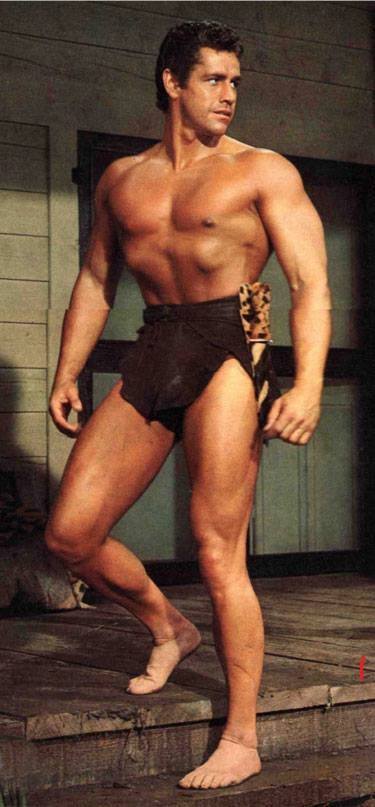
Here’s a Throwback Thursday hunk for you, actor and physique model Gordon Scott:

20728242_10212670337849946_4851579278645951324_n

The Heat Is On

Ash Wednesday, and Valentine’s Day, to boot.

Another Carnival is in the books, and a good time was had by all. We didn’t do as much parading as we usually do; me being in Alabama for the first weekend had a lot to do with that, and I was a lot more tired, physically, than I usually am during parade season. I suspect I am getting to that sad place in life where I am too old to handle the walk to and from the office all of those days in a row. I am, however, going to continue with my new workout routine and hopefully that will make a difference the next time Carnival rolls around.

Fingers crossed, at any rate.

Today an anthology I contributed a story to drops; The Trouble with Cupid. I was very happy and thrilled to be asked to contribute a story–I always am thrilled and happy when I’m asked to contribute to anything, frankly–but therein lay a conundrum for me: what would I write about? I still struggle to write crime short stories, and this call was for romantic suspense, or some combination of romance and crime, possibly; and I was frankly absolutely clueless what to write or how to go about writing something.

So, I decided instead to write a sequel to my story “Everyone Says I’ll Forget In Time,” which I wrote a long time for the Fool for Love anthology, edited by R. D. Cochrane and Timothy J. Lambert. In that story, Terry, my main character, was still coming to terms with the death of his partner; his best friends have decided it’s time for him to move on and set him up with a sort-of-blind-date thing; and the blind date turns out to be a guy he had a crush on before; that he met when he and his partner had briefly separated during a rough patch. I’d always wanted to do a sequel to the story, and even had the title picked out: “Passin’ Time,” which is a phrase we here in New Orleans use to describe waiting when you have no other choice; it’s most frequently used to talk about waiting for a parade during Carnival; what we do on the street while waiting for a parade to show up is passin’ time.

the trouble with cupid -%0D%0A final2.jpg

I OPENED THE front door and Trouble wasn’t there.

The food bowl I’d set out for him was empty. The water bowl was upside down next to the cement step. He had a habit of doing that, I’d noticed. I wasn’t sure why, but it was just one of his quirks. I picked it up and walked it over to the sink and refilled it. I set it down and sat down on the step, looking around. This was the first morning since he’d shown up that he wasn’t out there, waiting for me with his eager eyes and twitching black tail.

And it made me sad.

You need a pet of your own, I said to myself, looking up at the blue sky. It was a gorgeous morning, not even ten yet, and already warm. The ladies of Iris and the gentlemen of Tucks had lucked out this fine Saturday before Fat Tuesday. Fat Tuesday was early this year, so I’d worried my favorite parade day might be cold—or worse, rainy. There had been a downpour on Iris Saturday a few years earlier, but the parades still rolled—the floats speeding past at breakneck speed, the marching bands and dance groups sitting out the parades—and I’d stood out there, soaked through and having the best time, even if my glasses were covered with beads of water and it was also cold out there. It had taken me a while to warm up again after that, curled up on my loveseat under woolen blankets and drinking hot chocolate spiked with peppermint Schnapps while I watched Endymion roll through mid-city on television.

Endymion.

I hadn’t been to Endymion since Paul died.

Trouble is a crime-solving black cat, I should probably add; Carolyn Haines has gathered an extraordinary group of writers together to write a series of books about Trouble; I hung out with the Mad Catters in Alabama at Murder in the Magic City and Murder on the Menu, and even agreed to try my hand at writing a Trouble book, when I have the time. Every story in the anthology had to include Trouble (hence the title The Trouble with Cupid), and all proceeds from the book are going to the Best Friends Animal Sanctuary; if you know Carolyn, you also know she’s all about helping the animals, and I can certainly get behind that–given that we have somehow wound up with five outdoor cats and one indoor rescue.

I hope you’ll check out the anthology, Constant Reader, and I also hope you like my story.


Think of Laura

Zulu is passing now; I can hear the drums of the marching bands. It’s a gorgeous morning, the sun is shining and I am betting the crowds up at the Avenue are deep; they certainly were last night for Orpheus. Paul and I both have to work tomorrow, so we’re ending our Carnival early; taking today to rest and recover so we can hit the ground running on Ash Wednesday. I also have a lot of things to do today; emails to answer, things to write, things to edit, things to read, a kitchen to clean. Even though it was abbreviated this year (I was in Alabama for the first weekend of parades), I enjoyed every bit of Carnival this year; and am already melancholy to see it end as always.

I’ve also been enjoying the hell out of the Winter Olympics, and like millions of people worldwide I am–what’s the word kids use now? Oh yes–stanning Adam Rippon. As a long time figure skating fan, I’ve known of Adam long before these games; I remember when he had a mop of floppy curls; when gossip websites were pairing him and Ashley Wagner as a couple (I rolled my eyes every time I saw the photos), and I remember when he came out. I blogged about homophobia in figure skating a while back; when Adam came out while still on the Olympic eligible circuit I thought to myself you’re never going to win anything now; so I was pleasantly surprised to see him win US Nationals and make the world team in 2016; he missed last season with a broken foot, and this season he is full-on out: his short program is to gay club music, and his long program, as everyone saw the other night, is breathtaking. I’m so happy for both him and Mirai Nagasu, who became the first American woman to land a triple axel at the Olympics that same night; they earned bronze medals as part of the team competition, and I couldn’t be happier for both of them–all of the Americans on the team, to be honest. Adam is so funny and refreshingly himself; a big personality and a natural wit he doesn’t try to hold back, and that honesty…I just can’t get enough. I had tears in my eyes when he finished his long program the other night; Paul and I both screamed when Mirai landed the triple axel. Seeing the trashy homophobes on Twitter trashing him or going after him makes my blood boil; I’ve resisted the urge to reply to them He’s got an Olympic medal and you’re a fifth-rate Twitter troll. Congratulations.

So. There’s that.

And in other news of the fabulous, the lucky world of readers can look forward to the upcoming release of a new Laura Lippman novel, Sunburn. I got an ARC at Bouchercon and read it in one sitting on a rainy Saturday back in October.

sunburn

It’s the sunburned shoulders that get him. Pink, peeling. The burn is two days old, he gauges. Earned on Friday, painful to the touch yesterday, today an itchy soreness that’s hard not to keep fingering, probing, as she’s doing right now in an absentminded way. The skin has started sloughing off, soon those narrow shoulders won’t be so tender. Why would a redhead well into her thirties make such a rookie mistake?

And why is she here, sitting on a barstool, forty-five miles inland, in a town where strangers seldom stop on a Sunday evening? Belleville is the kind of place where people are supposed to pass through and soon they won’t even do that. They’re building a big by-ass so the beach traffic won’t have to slow for the speed trap on the old Main Street. He saw the construction vehicles, idle on Sunday, on his way in. Places like this bar-slash-restaurant, the High-Ho, are probably going to lose what little business they have.

High-Ho. A misprint? Was it supposed to be Heigh-Ho? And if so, was it for the seven dwarfs, heading home from the mines at day’s end, or for the Lone Ranger, riding off into the sunset?  Neither one makes much sense for this place.

Nothing about this makes sense.

Laura Lippman has been one of my favorite writers since I read Baltimore Blues years and years ago. I tore through her Tess Monaghan series, and she very quickly became one of my buy in hardcover authors. I’ve never regretted making that switch, and as she has expanded her skills and pushed herself with her exceptionally brilliant stand alone novels, I’ve never once quibbled but I want another Tess novel! (I do, always, but the stand alones are so fucking fantastic that it doesn’t matter–I really just want a new Lippman, and wish she was on a yearly schedule rather than an eighteen month one.)

Laura’s career trajectory has been most impressive from a writing perspective; because as a writer of stand alones, she has gone from being a literary crime writer to a literary writer about crime, if that makes sense. Each of her stand alones are unique and different from the others; about as far removed from her series as any novels can be and still be by the same author. Each one of these novels are rare pearls, individual and vastly different from the others; different themes, different explorations, different everything. The one common thread that runs through these novels is that they are, for the most part, about women, and what women face in their lives; how they deal with crimes and tragedies that take them out of the ordinary and into the extraordinary. Laura also regularly experiments with form and voice and tense; enormous, dangerous risks as a writer that she somehow always manages to pull off, make engaging and enjoyable, and always manages to tell a story that makes a very compelling point.

Sunburn,  her latest, is as different from anything she has done before as it could be unless she decided to write about vampires or a zombie apocalypse; but she also brings her incredibly powerful sense of empathy to this tale of murder, vengeance, and oh-so-careful planning. The book opens with the main character, Polly Costello, walking away from her husband and child on a beach vacation and winding up in the hard-knock town of Belleville; she is being observed by Adam, who is being paid to keep an eye on her, follow her–but not to become obsessed by her, which is what happens. Their story is told in a very limited third person point of view, alternating between them, and as we slowly get to know them, watch their physical attraction expand and develop into something more, the questions remain: why did Polly walk away from her family and child? How could she do such a thing? Who is this enigmatic redheaded bar waitress?

And just how fucking good does Adam’s grilled cheese sandwich taste?

The prose in this book is lean; not an extra word to be found anywhere, and it is an homage of sorts to the kind of lean, tight, dark noir that the great James M. Cain wrote. (Cain is a hero of mine, and I have always wanted to write something that dark and lean and tight…ironically, one of the ideas I had for such a noir–gay, of course–was also titled Sunburn) I’ve seen, in some of the early reviews, comparisons to Cain’s Double Indemnity and The Postman Always Rings Twice, which seem obvious; there’s an insurance scam buried deep in the plot, it’s set in a bar/diner, it’s about an unexpected, explosive attraction between a man and a woman; there are side plots that end in mysterious deaths… but if anything, I’d say Sunburn is more reminiscent of Cain’s The Cocktail Waitress than anything else.

The book is extraordinary, and probably Laura Lippman’s best work to date; that wisecracking, tight prose; a complicated and complex plot that grows even more complicated as you read another page; fully developed characters you can help but root for, even if their motivations aren’t exactly pure; and ultimately, the book is about a woman with everything stacked against her all of her life, who  never gives up, and makes plans…risky plans; where she gambles everything, including her own happiness and desire, for her future, yet is flexible and smart enough to always adapt.

Polly Costello is a heroine Cain would have been proud to call his own.

St. Elmo’s Fire (Man in Motion)

Lundi Gras, and the downward slope of the marathon. Huzzah! I have a lot to do today; all trying to get it finished in the window before the streets close for tonight’s parades, Proteus and Orpheus. I need to run to the grocery store, get the mail, and am also hoping to get to the gym as well; I’ve not been since last Sunday, but the combination of all the cardio involved with the walking to and from the office, as well as shortened hours because of the parades, has conspired to keep me from my workouts. I cannot go Wednesday morning, either, because the gym is closed until noon; by then I will be at work. So, if I don’t work out today I can’t get to the gym again until Thursday morning, which would be most inopportune. But I am confident I will get back into the swing of my workouts again; despite the Mardi Gras interruption–that always happened in the past, after all, and I was always able to get back to it.

Exhaustion has also precluded me from writing and/or editing over the last week or so; I have plans to get some writing done today as well as some laundry. I have to decide on a story to write for two anthologies, and I desperately need to rewrite/revise/edit another that is due by the end of the month. I am also behind on revisions of the WIP, and I need to get moving on the Scotty book as well. This will, of course, be a short work week; Wednesday thru Friday, so I am hopeful that I can get a lot accomplished in this time period. I should probably get dressed and head out for the errands; the later I wait, the more likely there won’t be a place to park when I get back.

I started reading Killers of the Flower Moon before bed, but it just didn’t grab me right away; I’ll go back to it, I am sure. Instead I started reading The Black Prince of Florence by Catherine Fletcher (Florence! Medicis! History!), and am loving it so far. I doubt that I’ll ever tire of either Italian history, or the Medici family.

I did manage to get back to reading on The Short Story Project as well this weekend, between parades and physical exhaustion. The first was the title story of Joe Hill’s collection, 20th Century Ghost:

The best time to see her is when the place is almost full.

There is the well-known story of the man who wanders in for a late show and finds the vast six-hundred-seat theater almost deserted. Halfway through the movie, he glances around and discovers her sitting next to him, in a chair that had moments before been empty. Her witness stares at her. She turns her head and stares back. She has a nosebleed. Her eyes are wide, stricken. My heart hurts, she whispers. I have to step out for a moment. Will you tell me what I miss? It is in this instant that the person looking at her realizes she is as insubstantial as the shifting blue ray of light cast by the projector. It is possible to see the next seat over through her body. As she rises from her chair, she fades away.

Then there is the story about the group of friends who go into the Rosebud together on a Thursday night. One of the bunch sits down next to a woman by herself, a woman in blue. When the movie doesn’t start right away, the person who sat down beside her decides to make conversation. What’s playing tomorrow? he asks her. The theater is dark tomorrow, she whispers. This is the last show. Shortly after the movie begins she vanishes. On the drive home, the man who spoke to her is killed in a car accident.

This is a great short story; a ghost story about a haunted movie theater. It moves very quickly, and I love how Hill sucks you in almost immediately. I am greatly enjoying reading Hill’s short stories; and am looking forward to getting back into this collection. It also wraps up perfectly. I’ll be honest; I tried reading two of Hill’s novels and simply couldn’t get into them–which is probably more on me than on him–but as I said, I am loving the short stories, and will undoubtedly go back to the novels; I often find something that didn’t grab me the first time will wind up being something I love when I try it again later.

Then I moved back to Lawrence Block’s Alive in Shape and Color, and the next story up was “Girl with a Fan” by Nicholas Christopher.

On the fifth of June, 1944, a young man stepped off the 9:13 train from Lyon, squinting into the morning light. Tall and slender, he had an asymmetrical face: the right eye higher than the left, the left cheek planed more than the right. He was wearing a brown suit, black shirt, yellow tie, and brown fedora. His suit was rumpled, his boots scuffed. He was carrying a leather briefcase with a brass lock. His pants cuffs were faintly speckled with yellow paint.

He cast a long shadow as he walked down the platform. Halfway to the station, two men in leather coats came up from behind and gripped his arms. One of them pressed a pistol in his side, the other grabbed his briefcase. They veered away from the station, guiding him roughly down an alley to a waiting car. A man in dark glasses was behind the wheel. He was bald, with an eagle tattooed at the base of his skull.

At first, this story seemed a bit off to me; it didn’t really fit with the rest of the stories I’ve read in Block’s ‘inspired by a painting’ anthologies. For one thing, it jumped around in time and place, going from Nazi-occupied France to the south seas back to France in the late nineteenth century again; but linking these three different narratives was Gauguin’s painting, “Girl with a Fan”: where the fan came from, when the work was actually painted, and what happened–was happening–with the painting under the Nazi pillaging of the occupied country. Once I grasped what Christopher was doing with his story, I began enjoying it; it’s not easy to juggle three different stories, locations, and time-lines in the space of one short story. Well done, Mr. Christopher, well done indeed!

I also read some others, and will probably continue reading some more today; but I shall save those for a future entry.

And now, back to the spice mines. Here’s a hunk to get you through your own Lundi Gras.

26239311_1968685823379963_6551530354373772271_n

Don’t You (Forget About Me)

I hit the wall yesterday during Iris. I came back home to rest for a bit before Tucks arrived, and was so exhausted from everything that I decided that it was wiser to just stay in the house and rest, otherwise there was no way I’d make it to any of today’s parades. There are four today; Okeanos, Mid-City, Thoth, and Bacchus. I usually make Okeanos and Mid-city; but am too tired for Thoth and Bacchus. I’ve never seen Thoth; we used to go to the Quarter in the afternoon on Sundays, and then I worked outreach during Thoth. The last few years I’ve not done outreach on Sundays I’ve been too tired; and I don’t think I’ve seen Bacchus since Drew Brees reigned. I’m going to give it my best shot today.

The rain held off yesterday until Endymion; I was ensconced in my easy chair streaming Spiderman Homecoming when the thunderstorm arrived and it was a beaut. The thunder was so loud and long the house shook; and the downpours so intense that there was some street flooding (nothing major, like in August; but still it sucked for both the Endymion riders and the folks out there watching).

I also watched, in my ongoing quest to rewatch as many of the disaster movies of the 1970’s as possible, Earthquake, which was, without a doubt, one of the worst movies ever made. The whole point of the disaster formula was to see how people–character archetypes, really–placed in extraordinary circumstances having to experience physical difficulties and hardships and emotional distress, to see if they can overcome this and survive; and at the end, some do: the damaged plane lands safely, the fire is put out, they get off the sinking ship. But by it’s very nature, making a film about an earthquake doesn’t end with the characters getting to safety; therefore there is no way to end the film on a satisfying note for the viewers. So, Earthquake merely ends with the camera pulling away from the characters who’ve just escaped the flooding tunnel, showing a ever expanding view of the ruins of Los Angeles, where many fires are still burning; a most unsatisfying end to the film. But it’s not like we cared about any of the characters in the first place, particularly the main character, played woodenly by Charlton Heston. Heston was never the best of actors to begin with; his idea of acting was over-acting under the best of circumstances and at worst, woodenly reading his lines with absolutely no emotion whatsoever. The casting choices made for the movie were also curious; Lorne Greene was playing Ava Gardner’s father and Heston’s father-in-law, despite being only seven years older than the former and eight years older than the latter; his current love interest was played by Genevieve Bujold, who was only thirty. I’m a fan of Gardner, to be honest, but she’s terrible in this film. Everyone is terrible in this film, from the afore-mentioned stars to the rest of the cast, which includes Richard Roundtree, George Kennedy, Victoria Principal, and Marjoe Gortner. Even by 70’s standards, the special effects are particularly bad; and there really isn’t a cohesive story for any of the characters, so the actors have no center for their performances. It was just an attempt to cash in on the success of the Airport movies and the disaster movie craze of the time; with the end result that it’s a terrible, terrible film.

Spiderman Homecoming, however, is just as charming on a second viewing as it was on the first; and Tom Holland is so appealing, as are all of the diverse young actors who play his friends, or frenemies, at his high school. Michael Keaton makes a great bad guy, and the guest appearances by the other Marvel heroes–Iron Man and Captain America–successfully weave the character of Spiderman into the Marvel/Avengers universe. Also, by not  making it an origin story–we already see Peter with his powers, his uncle is already dead–and instead making it about him trying to adapt to his powers while juggling his life as a high school teenager, made it a much stronger film. Well done, Marvel.

After that, we watched the Olympics. I also did some reading, getting back to the Short Story Project, and then I slept deeply and well; I even allowed myself to sleep in, and this morning other than some slight aches in my lower back I feel terrific. Okeanos starts in fifteen minutes; I am not sure which parades I’ll be watching today. There’s rain again in the forecast, and this morning the windows are covered with condensation, just like yesterday. It does seem bright out there, but there’s an awful lot of cloud cover as well. Paul is still sleeping, so there’s that as well. 😉 I don’t like waking him up on the weekends, and besides, Okeanos won’t be here for another hour at least. Iris kept stalling yesterday; despite moving up an hour it still wasn’t finished passing here until almost one thirty.

I don’t have to work tomorrow; Paul’s going into the office for a bit, so I will most likely make a grocery run in the morning and try to get some work done around here as well. I need to get back to work on everything; just because everything in New Orleans comes to a screeching halt for Carnival, we sometimes forget that the rest of the world does not.

Ah, well. And I need to clean the kitchen again; I’m hoping to cook out today, should the weather hold.

Here’s a hunk for your Sunday:

IMG_3587

The Power of Love

The sun is shining. I haven’t checked the weather yet, but both Iris and Tucks were moved up an hour today due to thunderstorm forecasts. It may rain, despite the sunshine this morning; my windows are covered in condensation so it’s definitely humid out there.

A quick perusal of the weather forecast, however, shows a possibility of a thunderstorm this afternoon around 2–although the little image of the cloud with a lightning bolt on it also says, right above it, “0% chance of rain.” It’s also going to be in the 70’s today; beautiful weather for Iris and Tucks; though it might rain on Endymion tonight. I’m not concerned–Endymion doesn’t go down St. Charles so we never watch it. We used to go out dancing on Endymion Saturday, so we would walk down the parade route to get to the Quarter, and be buried in beads on the way (it does follow St. Charles in the CBD, and goes around Lee Circle before heading back up to the Superdome). But we don’t go dancing during Mardi Gras anymore–I don’t think  my old legs could handle it; they are very tired and sore this morning from all the walking and the outreach yesterday.

Yesterday was beautiful; I walked to work around one o’clock and took lots of pictures along the way. The Quarter was a madhouse; second lines and marching bands everywhere. We gave away 4500 condoms yesterday; we started at 3:15. I was supposed to work the second shift as well as the first, but at 6:00 when the others showed up we were down to less than 200 condoms, so I wished them well and walked home. Paul had been invited to a parade party at the New Orleans Advocate office on St. Charles; I couldn’t go because of outreach. But as I walked home, and walked past their office, I glanced in through the entry way and saw Paul; so I called his name and I got in. Their building, which used to house Michaud’s Cajun restaurant for years, are gorgeous; it’s where I saw Colson Whitehead speak last year. But I had never been up onto their balcony, which is way up there. We went up and watched the start of the Hermes parade, and the decided to walk home. I got some great pictures from up there as well.

This one is a particular favorite:

IMG_3865.JPG

Gorgeous, right?

We came home, fed the cats, and I took a shower while Paul watched the end of the LSU-Missouri gymnastics meet on-line, and then we headed out to the corner for Krewe d’Etat and Morpheus. We caught a shit ton of stuff out there–Morpheus is a great parade, but by the time it arrives the crowd has thinned out so much it’s easy to catch things, and they throw a lot. Then when it was all over, around 11:36 last night, we came inside and chilled. I finished reading Pictures at a Revolution last night, which I’ll blog about at some point after all the madness is over–just a few more days!

But now I have to pick another non-fiction book to read before bed, and I am leaning towards some true-crime-ish; perhaps the Edgar nominated Killers of the Flower Moon: The Osage Murders and the Birth of the FBI. I don’t read near enough true crime, and I also just realized I am not reading anything fictional, either; between the trip to Alabama, working on the anthology, and Carnival, I’ve not really sat down and picked something out to read. And I am also behind on the short story project. Heavy heaving sigh.

But I did take Monday off–tomorrow is going to be insane, four parades on the Avenue–so I am hoping to be able to use that day to get some rest, get back to the gym, and get caught up on things I am too tired to do over this weekend.

And now, back to the spice mines. Iris rolls in a little over half an hour!