This Is Why We Can’t Have Nice Things

It’s Sunday, which means it’s June, so HAPPY PRIDE MONTH, everyone! Woo-hoo! (Cue the bigots and homophobes: why do they get a whole month when the military doesn’t? Sorry you don’t care enough about the actual military, self-styled “patriots,” to know when Military Appreciation Month is–read a fucking book sometime, okay?)

And by the way, assholes, if y’all didn’t come at us with shame all the fucking time, we wouldn’t need Pride in the first place–and remember, the first one was a riot.

My alarm Sparky let me sleep until just after six this morning, which is actually fine. My new sleep patterns had me awake before he started purring and poking at me; I was actually wondering where he was when I woke up, but I wait until he comes to get me up. Yesterday was a lovely, relaxing day for the most part. I finished reading all three of my books (!), which was delightful (enjoyed them all, too) but created a dilemma for me: I wanted to write newsletters about each book, but does anyone really want to get three newsletters from me in one day, especially when it’s Pride Month and I had intended to spend the month writing about being gay in America, and my sordid gay past? That would be four newsletters in one day, were I to do that, so I am on the horns of a dilemma1 this morning. I think I’ll write them all up and save the extras as drafts for later. I do highly recommend Murder Takes a Vacation by Laura Lippman, and I really enjoyed revisiting Moonraker.

And I plan on writing about all the kids’ series I enjoyed as a kid, so the Vicki Barr entry can be saved for later.

I did some chores yesterday, and was actually writing my newsletter about the new Lippman when our power went out yesterday afternoon. Only for an hour, unlike those poor people who went without for over twenty-four hours the weekend before, and I don’t know what caused it–it was a beautiful sunny yet cool day yesterday here in New Orleans–but I used that time to finish the Vicki Barr and barbecue dinner. Ironically, when I brought the hamburgers in when they were finished, the power came back. I watched some of the French Open, we watched this week’s Murderbot, the season finale of Hacks, and then binged some more of The Better Sister, which is superb. We’ll most likely finish that tonight.

I had already decided to bump queer writers and books up the TBR pile for Pride Month2, so my next new-to-me read is going to be Summerhouse, which Kristopher Zgorski recommended on his blog. My next reread will be The Dark on the Other Side by Barbara Michaels, and my next kid’s mystery reread will by The Mystery of the Haunted Mine, which has remained one of my favorite books from when I was a kid, and I got my copy from the Scholastic Book Fair; amazing that I still have it despite all the moves since then, right?

I feel very rested and relaxed this morning. I am still getting stronger (and more mentally back together) every day, which is terrific; My legs still tire easily, but that just means I need to exercise and walk more. I did doze off in my easy chair for about an hour yesterday–getting up early every day does that to me sometimes–but I also got some chores done, and have more to do today if I don’t get lazy. I have to run make some groceries later this morning–better to do it today than on the way home from work tomorrow, right? It’s so much easier to take I-10 home from work, even if the ramp to 90 and the west bank backs up; it’s still easier than navigating through Tremé and the CBD.

I also watched LSU’s baseball game last night against Dallas Baptist before going to bed, certain they would win, and they did; they are in the regional championship today. GEAUX TIGERS!

I’m still feeling good about things overall, too, which is definitely a good thing. I’ve got my to-do list (some things are ready to be scratched off) to work through, as well as these chores to finish up, so I am going to head into the spice mines. Have a great Sunday, Constant Reader, and I’ll be back tomorrow morning–keep an eye out for the newsletter, too!

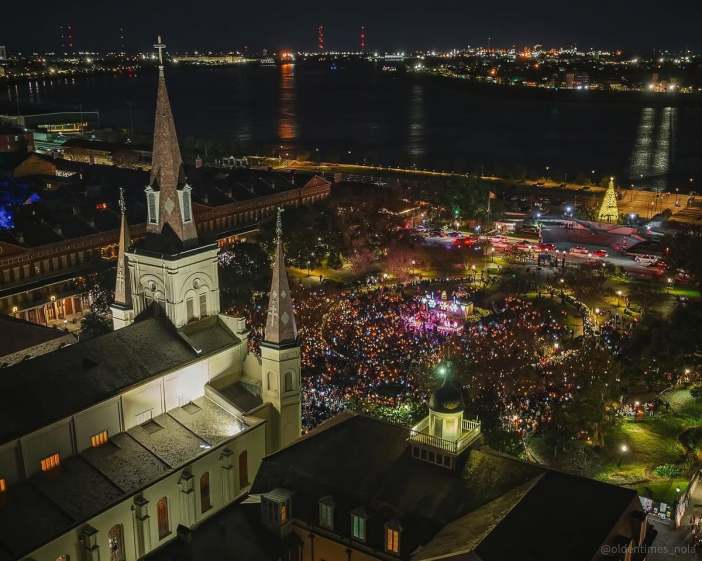
The courtyard of Madame John’s Legacy in the French Quarter
  1. Which also begs the question of what should I make my newsletter thematically in the first place? Do I even need a theme? This is what happens when I stop to think about things, you know, which is why I try not to ever stop to think about things. ↩︎
  2. Making me just as bad as cishet readers, right? “I only read queer books during Pride.” Ah, well, something else for me to deconstruct, right? ↩︎

American Pie

…drove my Chevy to the levee but the levee was dry.

Which also doesn’t make sense; levees are neither wet nor dry, simply an earthen man-made wall to keep water in or out. I do wish I had a twenty, though, for every class where we had to dissect the meaning of “American Pie.”

I feel good today, and alert, and like I can get things done today. I wasn’t tired physically yesterday, but there was some mental fatigue so I didn’t get much writing done. It was literally like banging my head into a brick wall, but I did get almost a thousand words done. We also finished watching The White Lotus, which was good and interesting and all, but was it great? I don’t know, but the acting was on fire, which was terrific. We then spent the rest of the evening watching news clips of the world burning to the ground (my favorite are the tears of the MAGA grifters losing money now; sucks to be you, live by the MAGA die by the MAGA), and ironically, I started thinking about the book and the closed door in my brain that had been constraining and holding back everything I was trying to do with this book suddenly burst open in my head and I know exactly what to do with this book going forward. Huzzah! Now to get the words down…

As you may well also remember, I am researching the 1970s (mostly the early to mid) for my next book, and yesterday I went down the wormhole of short-shorts for men. The 1970s wasn’t maybe the best time for men’s fashions, but for the first time in a long time men’s clothes became more showy, and everything was super-tight, to show off the bodies. (Sadly, most men still neither worked out much–and those who did, often skipped leg day so they really didn’t have much of an ass to show off in their tight jeans.) Shorts were short–sometimes barely covering the full butt cheeks, and those ragged strings everyone had in their cut-offs that were barely more than a square cut today. It was a tragic decade for fashion–for most styles of everything, really. Cars were big and ugly, so was furniture, and the middle class’s tract homes all looked the same with the dark shag carpeting, the wood paneling (even on some cars!), and linoleum. And the memories these forays into research wormholes bring back! And the nice thing is those memories aren’t painful anymore? So what if I didn’t have any real friends because most everyone was afraid of fag cooties? I read a lot of books, made up a lot of stories, and was always able to entertain myself so I was never lonely. Sometimes I would just pick out a kids’ mystery to reread. I didn’t leave the house much, really, other than for school or the occasional shopping foray with my mom until we started going back to church (a tale for another time). But I didn’t get into trouble, I kept to myself, and it didn’t bother me that I was solitary because…my natural default is solitary. Whether solitude was meant to be my default, or not minding being alone developed it that way or not, is a mystery for the ages.

And now that I’ve grown up into a published author, I find that I really do prefer solitude. It’s lovely to get together with people I care about, but…much as I enjoy that (and I do), I wouldn’t miss it terribly if it went away tomorrow and I spent the rest of my life as a hermit in my apartment. Oh, probably enforced solitude would probably not be my thing either, but it’s something one can dream about, at any rate.

And on that note, I am going to head into the spice mines. Have yourself a lovely little Tuesday, and I’ll be back to check in with you again tomorrow for Pay the Bills Wednesday!

Don’t Just Stand There

Let’s get to it, strike a pose there’s nothing to it VOGUE vogue vogue…

Sorry, couldn’t help myself there! Hard to believe how old that song is now, isn’t it? Still a bop, too.

It’s forty degrees outside this morning and it’s a biting cold today. I overslept this morning, not stirring out from underneath my comfortably warm pile of blankets; I also laundered the linens yesterday so they were clean so it was that marvelous snug, clean feeling beneath the blankets, and maybe, just maybe, it’s the weight that makes me sleep better, like how a weighted jacket will help keep a dog calm. Who knows? I have some things to do today, but this morning I am just going to drink my coffee and read for a bit before I get to work on chores and writing and some other things I need to get done. The kitchen/office isn’t nearly as messy as it can be, so won’t need much effort to get it together. There’s also LSU Gymnastics to watch today–some kind of quad meet with some of the top teams in the country–so that could be fun to watch, and I can also read during it, too. I read more into my new read, Herman Raucher’s Ode to Billy Joe, which reads well but sometimes seems inauthentic, but more on that later. We also started watching Disclaimer, which is exceptionally good, and what incredible performances from the cast! I am really curious to see how this all turns out, to be honest–and I may even want to read the book on which the show is based–because yes, I need more books on hand to read, but I’ve been good about buying books for the last two years and so splurging on another isn’t a terrible idea. (I’ve been trying to only buy non-fiction, if I buy anything. Caveat: I am still buying the books by writers I love to read when they release a new one–or an impressive debut or something. But I also don’t bulk buy anymore, either. My book budget has dramatically declined over the last two years while I try to get my spending and my overall finances back in order.)

I’m still doing my German lessons on Duolingo, and I am kind of pleased with not only how much is coming back to me (and it’s been decades), and how much I am retaining that’s new. I am hoping that doing a German lesson or two every day will also help me with my short term memory loss.

I had a lovely time dancing on Anita Bryant’s grave yesterday, how about you? I also blocked some people who dared to tell me I was a terrible person for celebrating her death; I don’t need your permission to feel, nor do I need your sanctimonious self-righteous judgment,1 nor do I need to either explain myself to you, nor do I give two fucks about what you think–so, yeah, bye bye bitch, it’ll be my great pleasure to never under any circumstances ever deal with or talk to you again. I’m too old for your nonsense, nor am I going to waste any of my time educating your stupid ass. Some gay on Threads posted about not understanding the vitriol toward Anita Bryant–who made “life difficult for a few people in the 1970’s.”2 How can anyone be so fucking stupid as to not draw the connecting line from Anita Bryant and her principle backer, Jerry Falwell, to his involvement with Ronald Reagan to the callous Republican response to HIV/AIDS. So, she is indirectly responsible for the deaths of everyone in this country from AIDS, not to mention all the kids who committed suicide because of her “christian love.” Yes, I am officially embracing my ‘grumpy old gay” persona, so watch yourselves. I am reclaiming my time, and if you ever say something stupid or ignorant or bigoted–whoooooosh, that’s the sound of you exiting through an airlock. Have fun trying to breathe in airless space, okay? (Just kidding, enjoy suffocating.)

Get back to me when you’ve acquired a soul.

And on that note, I am heading into the spice mines. Have a lovely Saturday doing whatever you so choose, okay, Constant Reader? I may be back later, one never knows.

Tom Holland in Men’s Fitness.
  1. I laughed really hard at one older gay writer who pulled out the old “I’ve forgiven Anita Bryant, and how you react to her death tells me more about you than it does about her.’ How he can breathe up there on his high horse of moral superiority, but then again I didn’t become famous for writing the stupidest episode of a popular television series, so CLEARLY he’s a better person than the rest of us! However will I go on, being judged by such an enormous talent? For the record, I turned on Stephen King after aftr decades of fandom, beginning with Carrie, for lauding The Chatelaine of Castle TERF and asking about her next book under a man’s name about a man when her most recent work was a transphobic hate crime. Donated all my copies of his books–including unread ones, stopped following him everywhere, and haven’t bought anything new of his in several years. I stopped reading STEPHEN KING; you think you mattered more to me than my favorite writer for forty fucking years? ↩︎
  2. I am still shaking my head at the stupid ass (whose profile picture was of him flexing his muscles shirtless). Maybe fucking crack a book before opening your stupid mouth and making an ass of yourself publicly? ↩︎

Dancin’ Shoes

Christmas Eve Eve, only day in the office for the week. It’s in the forties here in New Orleans this morning, and it feels every degree of it here in my office nook this morning. I think we’re going to be fairly slow today–although I’ve been wrong about these things before. Cold makes me ache a bit and not want to get up from the bed, but here I am. I can sleep late in my warm bed the next two mornings, after all. Yesterday was nice. I got up and ran my errand, thus remaining ensconced inside for the rest of the day. I worked some, got some chores accomplished, and we watched Alien Romulus (which I enjoyed, but felt derivative) and then went back to The Day of the Jackal, which we’d started the night before. It’s a fun watch, with a little too much extraneous filler (I really do not care about the Jackal’s private life, or that of the MI6 operative trying to catch him), but Eddie Redmayne is pretty good as the Jackal.

Of course, The Day of the Jackal takes me back to the 1970’s, and the search for Carlos, both terrorist and assassin. He got a lot of press back then. Frederick Forsyth wrote the novel The Day of the Jackal, and it was originally made into a film back then. When “Carlos” first emerged, people started calling the assassin/terrorist “the Jackal” because he was similar to the character in the Forsyth novel–already a bestseller, the branding of a real life person as the fictional character drove even more sales of the book. Everyone in the 1970s, it seemed, knew about Carlos; we even did a week on him in my Current Events class in high school. I know I read the book but didn’t see the film; and I’ve essentially forgotten most of it since then. Terrorism was seen as a major issue for the world at the time; and Americans were very smug because there had been no terror attacks inside the United States at the time, so we saw terrorism primarily as a “foreign” problem (until 9/11). Carlos was so known and prevalent that Robert Ludlum created Jason Bourne in The Bourne Identity to fight and either catch/kill Carlos. The 1970s were such a different time, or at least it was for me. I was old enough to be aware of the news and the world, but I wasn’t educated enough to understand what it all meant, what the root causes of international problems actually were, and I was in the midst of my indoctrination into the mythology of American exceptionalism and its equally awful twin, White Supremacy. It wasn’t until the Reagan administration that I began to unlearn everything I was raised to believe and began seeing the reality beneath the propaganda.

Alien Romulus, on the other hand, was quite fun but seemed to me, at least, to be a bit derivative; with scenes that were direct callbacks to the first two movies, with lots of dramatic tension and suspense and more than a few excellent jump scares (although at one point I said aloud, “There’s always at least one more, people”–only to have one appear within seconds. The idea of a soulless corporation looking to use and exploit the incredibly dangerous creature(s) at the cost of any number of human lives certainly resonated, since that’s where we’re at in this country at the moment. I recommend it–I think in the chronology of the movies this one comes after the original–but you don’t really need to have seen any of the earlier films to enjoy this one. They are all linked, of course, but each movie (at least the ones I’ve seen) can stand alone on their own individuality.

I also blame George Lucas for the entire concept of prequels and filming series out of order.

I’m looking forward to the holidays this week primarily because of two days off from work, more than the holiday itself. I don’t feel very Christmas-sy this year, frankly, and I certainly didn’t last year with my arm in a brace and all the irritation that entailed. I’m going to get us a deep dish Chicago-style pizza pie from That’s Amore tomorrow, and on Christmas day we’re planning on seeing Babygirl, which will be our first trip to a movie theater since before the pandemic. I think I have to come into the office on Friday this week–not a big deal, since I have two extra days off this week–to cover for someone for the holidays. I work one day, then am off for two, come in for two more, am out for another two, in for another two and then out for another. Yes, these next two weeks are going to be completely disruptive.

SIgh.

I did start getting back into the Scotty book yesterday, rereading and editing as I go on what is already done on the book and plan out the rest of it. I also have some short stories due that I need to write, too. Yikes, indeed. I have a lot to do, don’t I, and I really need to stop blowing off my free time and getting back to serious work on my writing. This Scotty book is going to be a lot of fun; wild and crazy and endlessly silly and full of “really, Greg?” moments. I love when my mind finally snaps back into Scotty mode; it seems like every time I write one I go into it with an overly serious mindset that needs to be snapped out of somehow. I also worked on one of my essays yesterday, about racism in the original texts of a Hardy Boys mystery (The Mark on the Door) that I am hoping to finish and post this week, as well as a meandering essay about Christmas and the holidays and how easy it is to offend the very weak faith of most Christians. (Or I could finish my lengthy diatribe about being groomed as a Christian–and fuck you in advance if you @ me about this; I don’t want to hear your dismissal of my very real experiences, thank you very much.) Although I do suppose setting a goal of writing a Substack essay every week might be a bit much. I write one of these posts every day, not to mention emails and so forth…so yes, I do already write quite a bit, at least 500-1000 words per day on here (closer to the 500 count, and averaging probably less than that, more like). It is a conceit of mine that I do not consider writing this post every morning as words written for the day; I never have. Perhaps I should start?

And on that note, I am getting cleaned up and putting on some warm clothes to face the day. Have a lovely pre-Christmas Eve, Constant Reader, and I’ll be back at some point, I am sure.

Mystery to Me

The other day after work I was too tired to write and so I settled into the easy chair with one Sparky for cuddle time, but needed something to watch. I finished burning through the news to get caught up as I do every day, and then started searching for something else to watch when I saw Scooby Doo, Where Are You? in my “Up Next” list as I scrolled through it. It’s always tricky when I need something to watch on my own without Paul–it has to be something he’s not interested in watching–and at some point over the last four years I started revisiting this show from my childhood but never finished the rewatch–mainly because I am now in my sixties; far too old for the audience they were going for.

While I wouldn’t say Scooby Doo Where Are You? was necessarily a huge influence on me and my life, I did love it and watched it every Saturday. It started sometime after Jonny Quest and The Hardy Boys cartoon was cancelled, and a kid who was devouring kids’ series books by the stacks and checking out every book in the school and public library that had the words mystery, secret, clue, haunted, ghost, riddle, or phantom in the title, the adventures of the Scooby gang was usually the highlight of my Saturday morning cartoon experience. I have not been a fan of anything that came in the wake of the original half-hour show (we will never discuss the abomination/hate crime that was Scrappy Doo), and for the purpose of this entry (and really, in my heart and mind) we will pretend that the show was cancelled after the original series run and nothing was rebooted, restarted, revamped, or overhauled in the years since the original Scooby Doo money train was derailed.

But saying Scooby Doo didn’t cement my interest in mysteries wouldn’t be true. The show did, silly as it was (watching as an adult I couldn’t help but wonder, “why would the bad guys go to such extremes to scare people off?”–which also is a contrivance often used in the Nancy Drew/Hardy Boys type books, too), but I watched it every Saturday morning. I kept watching through the next iteration, the hour long show with guest stars, but after that I was too old and had better things to do on Saturday morning than watch cartoons. I’ve always had a soft spot for Scooby, just as I did for the animated Hardy Boys show and Jonny Quest, and unlike many others, I never see reboots or remakes or re-imaginings as “destroying my childhood” because I am not a moron. I can see how the show appealed to kids–you can never go wrong with a sentient Great Dane with limited speaking abilities–and I remember writing Scooby fan-fic when I was young. I started out “novelizing” episodes, and started writing my own. I’d forgotten about that when I was originally rewatching, but in my head the kids’ series I eventually came up with was linked very much, not only to other kids’ series, but Scooby Doo as well.

I don’t want to adapt Scooby or write Scooby books anymore, but I do occasionally want to go back to my kids’ series and think, why don’t you give this a try? Often times, the reason I don’t write things I think might be fun challenges is mostly cowardice and Imposter Syndrome. Can I really write kids’ fiction? Can I really write historicals? However, writing Jonny Quest might be interesting, especially with a reading of the Quests as a queer family.

One of the things about Scooby Doo that always interested me as a kid, and continues to interest me as an adult: Velma. Velma was clearly the smartest of the gang1, which was fun and unusual, and Daphne (‘danger prone Daphne’) wasn’t dumb despite being the pretty one, even though she often needed rescuing. Over the years the character of Velma was really interesting to me–being a brain, of course, meant she had to wear glasses and was hopelessly far-sighted–because she wasn’t easily scared and she was often the one who figured everything out. It was also interesting to me over the years to see many people read Velma as a coded lesbian, which begs the question why? She never has any interest in the opposite sex, but none of them do, really–it’s not that kind of show. We have no background on the gang, either–how are they able to just drive around the country at their age without having to check in with parents, and where does their money come from?

Of course, this is asking a lot out of a children’s cartoon series, which is also why I find it odd to revisit these shows looking for queer coding, and you can usually find it. The all-male environment of Jonny Quest, which is also a kind of “found family” show or Velma not being a late 1960’s/early 1970’s stereotyped girl are good examples of this.

I’ve always wanted to do a reread of all the kids’ series (I still have the books) to reread them for queer coding. I’ve already mentioned before that there was homoeroticism in both the Ken Holt and Rick Brant series–deliberate or not, it’s hard to say–but does this exist in the more popular Nancy Drew and Hardy Boys books. Is tomboy Trixie Belden a budding butch lesbian, with Honey her future femme wife? What about cousins Bess and George in the Nancy Drew series, who are also almost a parody of butch/femme dynamics?

This is the kind of stuff I would love to write–critical queer theory about kids’ mystery series, books, and television programs.

Maybe when I retire.

  1. Calling themselves that also always amused me, since gangs usually are criminals of some sort or another; gang is usually mean that way, even though it’s just a descriptor for a group of people with a similar interest. ↩︎

Mean

Weird.

I’ve always been weird, even when I was a little boy. I was different from other kids. I didn’t want to play outside, I wanted to read or play with my toys and make up stories. My parents were always urging me to go outside to play, so I’d just take a book and go sit on the back stairs of that little apartment on Komensky in Chicago. When I started school, I remember it being a bit of a shock to me. There were other kids in our neighborhood, but I didn’t really play with them much; they were mostly girls and friends of my sister’s, and while she let me tag along a lot (a running theme of her unfortunate childhood–always being saddled with her weird younger brother), I preferred my solitude and a book. School was strange for me; thrust into a world where I was surrounded by kids I didn’t know, and I didn’t understand how they all seemed to know each other and be friends already. I stayed by myself for the most part until someone asked me to join a game or something, and entertained myself for the most part. No one picked on me, no one said anything hateful to me or called me names, and for the most part I got on with my classmates. I got up in the morning, went to school, went to Mrs. Harris our babysitter’s house for lunch, back to school and then finally home. We only lived a block away from my elementary school, which made life ever so much easier for my parents; they didn’t have to worry about us coming and going to school safely. We only had to cross two streets to get there–down one block and across to the other side–and there were crossing guards. I knew instinctively that somehow I was different from the other kids; no one liked to read as much as me1, and only as an adult did I find other people who read as much, if not more so, than I do.

But reading–and watching television and movies–began defining “normal” to me; and I couldn’t understand in my childish brain (so advanced in so many ways but lacking in just as many) why the real world was so different from the fictional realities I lost myself in while consuming media. Riverdale in Archie comics seemed like such a nice place, but that was definitely not my high school experience. Whenever I took a chance on reading something age-appropriate (ah, those Scholastic book fairs!) I generally didn’t like it unless it was a mystery. I read so many of the kids’ series books for many different reasons; ironically liking the two most popular (Nancy Drew and the Hardy Boys) the least (Ken Holt, Judy Bolton, and the Three Investigators were much better).

It was when we moved to the suburbs that I began to realize that I was not only different but I was weird. I was a boy who didn’t care that much about sports, didn’t want to play them, and there was all kinds of stuff messing with my brain. Sixth grade wasn’t too bad, but that was also the first time that other kids began to wonder about my masculinity, but the worst it got was being taunted by other boys as a “sissy,” and then the next day the group of boys in the neighborhood I met through school acted like nothing had happened the day before–which was when I first learned that you couldn’t really trust other people; they would be your friend one day and cruel the next; and then back to being your friend again. (That group did turn on me completely in junior high school one day; it was weirdly coordinated with other kids at school who weren’t in our neighborhood.)

I hated being shamed more than anything else, for something I couldn’t control. It was in junior high also that I began to understand my sexuality at the same time so many kids began understanding mine and laughing and mocking me for it. I was always in fear of violence, and the kids in my middle-class mostly white desegregation-refugee suburb weren’t above ganging up on one person and beating them. (The suburbs, where we moved for “more stability” and “to have our own house” was far more dangerous for me than living in the city.) I ignored it all, but inside I burned with shame and embarrassment because I also knew the other kids were right about me; I did like boys, and how on earth did I ever learn, in a world that in which homosexuality was erased from public view, what men did together sexually? How did I know? I don’t remember reading about it anywhere, and whenever a gay person appeared in any media it was very negative. But there we were.

The irony lies in the fact that I never really cared that much about having friends or being popular–but media convinced me otherwise; that it was important to be liked and popular and have lots of friends. So I would always allow myself to try to imagine what that would be like. So, I kind of made myself miserable as a teenager, more so than I should have been, because it had been made very clear to me that no one could ever find out. I felt like a pariah, and I also felt like the few actual friends I had weren’t really my friends, because if they knew I was gay they wouldn’t like me anymore. It wasn’t even that I really wanted to be popular, but I thought if I was, the cruelty would go away and no one would question my sexuality.

In other words, I wanted a better closet2.

High school and college was more of the same, really. Lonely and wishing I had friends, forgetting that I didn’t need any. I even joined a fraternity, but even that wasn’t enough; some of the brothers were homophobic trash who loved making fun of me and laughing at me behind my back–which is where I also learned the valuable lesson that men are bigger gossips and much crueler about it than women. Such fraternal love, right? But it was in the fraternity that the seeds of not giving a fuck were beginning to be sown. It was a very bad decade, and it was the last decade of darkness controlling my life.

I was tired of being afraid all the time, you know?

I decided, when I was thirty, to leave that closet behind and get on with my life. It took another three years before I started the long reboot of my life, and when I found Paul I realized I don’t need anyone else, do I? I had long thought, for any variety of reasons, I would always be alone for the rest of my life, and once I’d accepted that (also, part of the shame PTSD went along with believing that I wasn’t deserving of someone’s love) I decided to embrace being weird and different from everyone else. The one piece that was still missing was being a writer…and once that really got started, I didn’t need anyone else. I had Paul, and I had my characters, and devoting myself to a writing career made things a lot easier. I mean, I still prefer being liked–who doesn’t–but if people don’t like me, it’s not my problem.

I’m weird that way. I think everyone who is a creative is weird. You have to be disconnected from the main fabric of society in some way to create; I don’t believe you have to suffer in order to create, either; but I’ve done my fair share of suffering over the years. I am always startled to hear how other people view me and my work; I prefer being liked, as I said, but it’s really not essential for me. It makes writing conferences a lot more fun to have friends to hang out with, but I always have my guard rails up.

Being weird, to me, is a good thing. It’s who I am and I don’t want to fight it anymore. I’m not going to worry if people like me or not; and I don’t owe any apologies to anyone. As Bette Davis once said, “other’s people’s opinions of me are none of my business.” I don’t mind being disliked; no one is liked by everyone and there certainly are a lot of people I wouldn’t cross the street for if they were on fire unless I’m carrying a can of gasoline (you know who you are, but you wouldn’t be reading this anyway because you’re sewage).

And people who dismiss me because I’m gay–or whatever surface reasons they may have–aren’t people I want to know in the first place because homophobes are never good people. Homophobia is usually the first step on the ladder to a soul full of bigotry and prejudice, and rarely if ever do homophobes stop with hating queer people.

Who wants to be normal? I saw that as a horrific existence when I was young, and part of my own misery for the first thirty years of my life was from being gaslit so constantly into what I knew would be a hellish adulthood that would most likely end in suicide.

One of the reasons that the MAGAts hate being called weird so much is because their entire identity is vested in being “normal”–it’s everyone else who is weird, strange, and different. But it’s not normal to want to check everyone’s genitals. It’s not normal to interfere in other people’s lives and tell them how they should live. It’s not normal to think you and your fellow believers are the only ones who have it right and everyone else is going to hell. It’s not normal to think skin tone makes a difference to intelligence, ability, and work ethic. It’s not normal to fetishize Israel because of your apocalyptic religious fantasies. It’s not normal to worship guns over other people’s lives. It’s not normal to see attacks on your faith when no one is even thinking about you. It’s not normal to want to regulate and track women’s menstrual cycles and fertility. It’s not normal to prioritize the unborn over the living. It’s not normal to hate your country unless your golden calf is elected. It’s not normal to claim to be religious but not follow the teachings of your holy book.

They’ve never been normal. Never. But they think they are, and it’s really all PTSD from NOT being popular in high school. They weren’t homecoming queens or cheerleaders or football players; and if they were, they peaked then and are still bitter that their personal glory days are far behind them. (Also: not normal.) Being called “weird” in a dismissive, you don’t matter way gets under their skin because they are not used to be questioned. They claimed to be the normal ones, the correct ones, the true American patriots–and we just let them without challenge. They aren’t used to being challenged, and when they are, it just causes them to melt down completely. They wore their hates and prejudices proudly–embracing being racists and homophobes and TERFs and misogynists3—but challenging their normality hits them hard because they know they aren’t really normal deep down inside.

The best way to deal with bullies? Withering scorn and contempt and outright mockery, as well as constant reminders that they aren’t normal and actually have sociopathic tendencies.

And it’s working. They have no response other than “no, you’re weird!” That doesn’t work on me because I am weird and I’ve embraced my individuality rather than being bullied into being like everyone else. I have no desire to go back to some fantasy halcyon past for straight cisgender white men, where everyone else is merely here to be used for their convenience. I’ve lived in that world and I have no desire to go back to it, in any way.

And wanting to? Is very fucking weird.

  1. I also recently realized that the reason I loved to read and watch movies/television is because that was the only time I could get my brain to calm down and focus. So…my bad mental health as a child set me on the path to being a writer, which is also why getting the anxiety under control–which also has helped dramatically with mood swings–has me worried about being able to write again. But again–anxiety. ↩︎
  2. Ugh, the agony of anxiety. ↩︎
  3. While claiming the be Christians, which is antithetical to their actual behavior, because Jesus never ever said “Thou shalt hate…” ↩︎

Forget That Girl

And another Wednesday Pay the Bills Day has dawned anew. It rained over night, and I suspect we’re going to be getting a lot more rain over the next few days; the weather forecast certainly believes it to be so. I do love rain, and outside of the constant fear of flooding out the car, I don’t even mind driving in it. There’s something about being warm and cozy and comfortable while everything outside is getting wet that just makes my entire body relax. I remember thinking about this when I was a kid once–I was in the car, we were heading for Alabama from up north, it was raining outside and I had a blanket wrapped around me while I was reading The Mystery of Cobbett’s Island, which opens with Trixie and her Bob-White friends in a station wagon in the rain heading for the ferry to the island. Ever since then, whenever it rains all I want to do is curl up with a book under a blanket. I it rains a lot this weekend, I should get a lot of reading handled.

I was a bit tired and drained when I got home from work last night. I did a load of laundry and hung out with Sparky for most of the evening while I scribbled in my journal while doing 1970’s research on Youtube for my next book. I also worked on the book some last night, and feel a lot better about what I am doing. The Imposter Syndrome has been finally chased away by the need to tell this story and develop these characters, and that’s always a good sign. I also thought about that Sherlock story a lot more, too, and may even start writing it this weekend, one never knows. I also figured out how to solve the problem of another short story that’s been bedeviling me for over ten years, and I want to include it in my collection. I still haven’t made a to-do list, so I seem to be floundering around looking for something to do every day but can’t remember what I need to do, and that’s always a problem. I also need to make sure I update the bills list before Monday, too–but that will have to wait until I pay the bills and wait for everything to update. I know Entergy is due today, which absolutely must be paid; the summer is the only time I really don’t care about my carbon footprint.

And football season is drawing closer with every passing day.

Sigh.

Politics and the news continue to be dumpster fires and I really need to avoid social media. I don’t know why I let people infuriate me on social media, but I do, and it’s dumb. What do I care about a total stranger’s beliefs and values? Sure, I hate racism and the phobias and misogyny and fascism as much as any sentient human being, but you’re never going to change someone’s mind on social media when most people are there to provoke anger and arguments and I keep falling for the bait. Social media hasn’t been fun in nearly a decade, and it continues to get worse with every passing day; but we’ve all become addicted to it and I need to step away from it. Publishing and publishers have been insisting for quite some time that we authors need to be there and build a following and so forth to market our books and sell copies, but is that really effective? I think maybe the next time I have a book coming out, I may invest in some ads on social media and see if that makes the needle move at all…it may also bring trolls and assholes in its wake, as well.

And I checked the weather and we are not only in a heat advisory but also rain through next week with thunderstorms every day through the weekend. Woo-hoo! Definitely a good stay inside and read forecast. I really need to get going on my reading…but it’s hard to read when you’re writing something new, at least for me, at least now. I don’t know if I stopped reading when I was writing before, but I don’t think that is the case. I think my abilities to do everything that I was able to do before has slowed down and I don’t have the brain function anymore to juggle many different projects the way that I used to, and it’s also nice to finally be in a place where I can primarily focus my brainpower entirely on the writing without it being diluted by other responsibilities. I like that idea an awful lot, quite frankly.

And on that note I am going to get cleaned up and head into the spice mines. I may be back later as there are some drafts I need to finish–they’re building up again, and I don’t like that one bit–but you never know. But have a lovely middle of the week, Constant Reader, and I always do appreciate it when you check in on me, so thank you again.

Screenshot

Are You Lonesome Tonight?

Lonesome is a great word that doesn’t get as much use as it used to; it was a very popular emotion/feeling for songwriters (especially those in the genre then known as “country and western”) to write about back in the 50’s and 60’s. It’s a very evocative word, and I am not sure why I don’t hear it as often as I used to. I love the word, and one of my ideas is to write a book called Kansas Lonesome at some point. The premise would be that there’s a podcast called that, which covers Kansas true crime stories throughout the state’s history; I am not sure how that podcast will play into the story I want to write, but that’s the foundation of that book, whatever it turns out to be. I am currently in the process of writing a short story (one of many, by the way) with a college student investigating a crime site out in the countryside to sus out background information for a podcast episode for the producer/star of the podcast. I do think the book may be inspired (Kansas Lonesome) on a homophobic incident that occurred in my old school district in Kansas; a young lesbian was put off the bus and banned from riding for saying she was a lesbian. The school district tried to cover up everything, but it turned out the girl was the only one telling the truth, the bus driver was fired, and the superintendent lost out on a big career move…and a few months later, she disappeared. Her name was Izzy Dieker, and as best as I can tell, she’s not turned up yet and it’s been over two years since she went missing. There are just some articles noting her disappearance, and then….nothing.

That is a great premise for a crime novel, isn’t it? Kansas Lonesome is becoming what I will soon probably be referring to now as “the Kansas book,” now that the other one was finally finished and published. But I think I will probably write The Crooked Y first; there is so much material in Kansas for prairie noir, isn’t there?

It really is amazing how much crime–specifically brutal murders–have happened in such a sparsely populated, deeply Christian red state. (“But crime only happens in those scary big cities!” Fuck off, trash. And by the way, immigrants aren’t coming for your women or your jobs.) The Benders are another grisly story from Kansas’ blood-drenched past, and I’ve always wanted to write about them, too; and hope to do so before I run out of time on this mortal coil.

And last week I stumbled across another fascinating tale of corruption and illegality involving a district attorney, a judge, and a police chief…a truly horrifying tale about how justice can be (and is all too frequently) twisted to fit the agendas of people who are evil but so convinced of their own righteousness that bending rules and not turning over evidence to defense attorneys, suborning perjury and coercing confessions from people?

Sidebar: Yes, Sarah Palin, that’s the real America, you charlatan snake-oil salesperson. Hope you’re enjoying being completely forgotten, grifter and Grandmother of Bastards.

Anyway, that’s a lot of words to talk about how Kansas is actually a horrific true crime state, with lots of examples of horrible murders and desperate people. I sometimes wonder if has anything to do with how flat the state is, and how sparsely populated. I know sometimes those winter winds off the prairies are brutal, whistling around the house and rattling the windows, trying to find a way into the warm cozy inside. Sometimes that wind can whistle, too–and I can imagine in a time without electricity or much entertainment, listening to that wind and being so lonesome out on the prairie could easily drive you mad1. I could write a book of short stories and simply call it Kansas Lonesome, with the premise that the podcast host and researchers are doing the background research into these old crimes or something. That could be an interesting way of bringing those stories together…but I also think Kansas Lonesome is too good of a book title to not use it for the novel I was thinking about earlier in this entry–the one about Izzy Dieker.

Loneliness, though, while sad and depressing, is a writer’s friend. When you’re lonely, you have to entertain yourself, and I always drag out the journal at those times, or warm up my computer and start writing away. I think a lot of my creativity came from being lonely as a child, the recognition I clocked early that I wasn’t like other kids in many ways so I stayed away from them because I didn’t know if they were going to make fun of me or bully me. and so I retreated very often into my own mind. I read a lot, obviously, and watched a lot of television and movies (while reading), and I just kind of lived in my imagination for lengthy periods of time. I preferred my own world, frankly, and still do; I hate leaving my own world for the real one.

I do wonder sometimes if I would have still wanted to be a writer if I had felt like I belonged, if I was like every other little boy. But even when I was a kid, I looked at the future that was expected of me and found it wanting. A Lot. I hated the very idea of fitting into one of the ticky-tacky houses in the suburbs and the day job that was all-consuming and the wife and the kids and the lawn work and upkeep on the house and…yeah, that sounded always terrible to me, and the older I got the more I resisted that future. Had I followed the path laid out for me by society and family I would have been absolutely miserable by now. Would I have been so attached to books if I had friends, kids in the neighborhood and the comfort of knowing people did actually like me? It was the love of books and wanting to give other people the feeling I got when I read one I enjoyed that made me want to be a writer in the first place, and the more I read the more I wanted to write. I used to write all the time when I was a kid–things I didn’t take seriously at the time, and would completely dismiss…but I was always writing. I made up a world once, with its own countries and lineages and so forth, kind of a fantasy alternate kind of history. I wrote my own versions of the Hardy Boys and Nancy Drew. I wrote short stories in high school. I started writing a novel when I was seventeen, and while I might have gone months without writing at times, I always was writing, always coming up with titles and ideas, and I was always happiest when I was creating.

And now, here I am hurtling toward my sixty-third birthday with a lot of publishing credits to my name and boxes and boxes of ideas…that I want to digitize and throw away the paper files in an attempt to cut back on clutter. I have my next two years’ writing schedule pretty much figured out already. I’m happy. That’s the bottom line of everything, isn’t it? Being happy? I love my life. I love writing. I love connecting with readers and other writers. And I think I am continuing to grow and develop as a writer. I don’t ever want my best work to be behind me, and I don’t think it is. I’m feeling good and optimistic again, and that’s always a good thing.

  1. There was a really great chapter in James Michener’s Centennial that talked about this very thing; how on the prairies in the winter the wind could drive one mad. After I read that book I could never listen to the wind again without remembering that. ↩︎

Weird Science

I loved kids’ series when I was, well, a kid. I still have fond memories of reading and collecting as many of the books as I could–I still have all my copies–and while of course times have changed, I feel bad for kids today who don’t have the plethora of series to choose from that I did when I was a kid.

Of course, I chose all of them, pretty much.

And while the most popular kids’ series were Nancy Drew and the Hardy Boys, my favorites were the ones that weren’t as well known, didn’t last as long, and vanished from print during the late 1960’s and through the 1970’s. I always preferred Judy Bolton, Trixie Belden, and Vicki Barr to Nancy Drew; I enjoyed The Three Investigators, Ken Holt, and Rick Brant far more than I liked the Hardy Boys, but you could get Nancy Drew or Hardy Boys books almost anywhere, whereas the others were incredibly hard to find. Our babysitter used to take us to the Goldblatt’s Department Store on 26th Street in Chicago when she went, pulling her buggy behind her (Dad says Mom used to pull me and my sister in hers to the grocery store, but I don’t remember that). Mom would always give my sister and I two dollars each to spend, and I loved going there because in the basement was the kids’ section, and while my sister was looking at dolls or single records (remember 45’s?) I discovered the remainder table, where Goldblatt’s marked down some of the lesser known Grosset & Dunlap/Stratemeyer Syndicate books on a big table, for like thirty-nine cents, which was a big deal because I could get a lot of books at that price. They were all series books I’d never heard of, but they sounded interesting. It was off that table that I got my first Ken Holt. Rick Brant, and Biff Brewster mysteries. The Biff Brewster books weren’t as good as the other two series, but today I want to talk about Rick Brant, and why I loved the series so much.

Rick Brant, being tall for his age, had no trouble making the final connections on his latest invention. He screwed the bell on solidly, then stepped back to view his handiwork.

The doorbell was now in an unusual position. Instead of being at waist level, it had been moved to the inside of the doorframe and placed up high.

It looked fine. A stranger might have to hunt a little before he saw the push button, but he’d find it all right. Rick went inside and threw the switch that would send electricity into the gadget and went to collect the family.

Mrs. Brant was in the kitchen, supervising the supper preparations for the family and the scientists who made their home on Spindrift Island.

Rick sampled the cake frosting in a nearby bowl and invited, “Can you come out on the porch for a minute, Mom? There’s something I want to show you.”

Mrs. Brant looked up from the roast she was seasoning, a twinkle in her eyes. “What is it now, Rick? Another invention?

“Wait and see,” he said mysteriously. “I’ll go get Dad and Barby.”

And so opens the first Rick Brant Science Adventure. I bought four Rick Brant books that day (The Rocket’s Shadow, The Egyptian Cat Mystery, The Flying Stingaree, and The Flaming Mountain), all of which had some appeal to me. I wasn’t really that much into science or rocket ships, but I did buy the first because it was, well, the first in the series, and OCD Child Greg had to read the first book. I didn’t have to read the series in order–I did try that with the Hardy Boys, but gave up when it was time for Book 4 and the title, The Missing Chums, didn’t excite me so I got one of the later volumes, The Mystery of the Aztec Warrior instead. There was a pyramid on the cover. I’ve always been a sucker for pyramids–but I always felt obligated to eventually get to the first volume of every series. It wasn’t always necessary, but in some cases–The Three Investigators, Trixie Belden, Judy Bolton–they really did set the stage for the rest of the series and it helped to have read the first one.

I’ll be completely honest here, too: I was never good at science. I don’t know why that was, but I just was never good at any of it–biology, chemistry, physics; math and science were my two Achilles heels. I only read a couple of the Tom Swift books, and even those were because one was reissued in paperback and renamed In the Jungle of the Mayas (the Mayans built pyramids!) but I got the impression the Swift books were more about science than a case or a mystery or anything. The Rick Brant series, on the other hand, while having some insane titles (The Electronic Mind Reader, The Wailing Octopus) like all series did, there were also some that were called “mysteries.” So, yes, science, but also mystery.

I also had no idea it was going to become one of my favorite series.

When I first read The Rocket’s Shadow in the late 1960s/early 1970s, it was already significantly dated. Originally published in either 1946 or 1947, the background to the story was that the scientists on Spindrift Island, off the coast of New Jersey, were trying to build a rocket to send to the moon. Several different groups were trying to accomplish this, and whoever succeeds first was going to get a very lucrative government contract…and their efforts are being sabotaged. Rick’s father, Dr. Hartson Brant, is world-renowned, and of course Rick is very interested in science and is always inventing things to either save time or effort, and they aren’t usually very practical, even though they do work. Rick and his younger sister Barby go to school on the mainland–Spindrift is separated from the coast by tidal flats that are underwater during high tide–but everyone on the island is determined that their rocket will succeed and they’ll catch the saboteurs.

Rick soon figures out a clue and gives chase to some of the saboteurs, who turn on him and attack him–only he is rescued by a blond hitchhiker carrying a military duffle. He and Rick run the attackers off, and then Rick brings his new friend, Don Scott–“Scotty”–home with him because he has no place to go. He’s out of the military and has no family, was just wandering the roads to see where he wound up. The close bond between Rick and Scotty1 resonated with me, especially their sense of camaraderie and affection for each other. They had no girlfriends or even any girls who might be potential dates at first (some were introduced in the series later, Barby growing up for Scotty and a new scientist comes to the island and has a teenaged daughter Jan who is sort of an interest for Rick–but the girls are never more important to them than they are to each other.2

Obviously, by the time I got and read the book we were already into the Apollo space programs from NASA, and we landed on the moon in 1969–so all the science in The Rocket’s Shadow was off and wrong–also the rocket got there in like twenty minutes, not possible even now–and as such, the series could never really be updated and revised like the Hardys and Nancy Drew. The Rocket’s Shadow would have had to have been completely rewritten, and I’m not sure how you could introduce Scotty as a hitchhiker/war vet (he lied about his age) today.

I enjoyed all the books in the series. I did eventually get them all over the years and read them, and many of them are dated. High tech walkie-talkies don’t seem so impressive in a cell phone world, and of course, there are some trips to foreign lands (Asia and Pacific Islands) that are probably more than a little racist and dated now. But I loved The Lost City, where they are off to Tibet to set up a radio receiver on the opposite side of the world from Spindrift to triangulate with the rocket on the moon, and they discover a lost city of Mongols and the tomb of Genghis Khan. They also meet, in that book, an Indian youth named Chahda who helps them out and becomes basically a member of the family, and they take him off the streets of Delhi and pay for him to go to school. Chahda was incredible smart and adventurous too–but not sure how he’d hold up under modern scrutiny in these more evolved times.

And maybe when I’m retired I’ll reread the series critically. The books can be found on ebay and second-hand sites; some are available as ebooks, either on Amazon or Project Gutenberg.

  1. I am even now wondering if this character is why I’ve always liked the name Scotty, and have used it repeatedly for characters of my own creation. ↩︎
  2. I do find in also amusing that my parents–so worried about me reading books about girls instead of boys; did they not understand just how homoerotic the relationships between boys in these books were. This amuses me greatly now. ↩︎

Drop Me Off In New Orleans

Ah, some more blatant self-promotion! I’ve done some on-line panels so far this year, which has been terrific. Here are the questions from one I did, turned into an interview so I can promote myself! I believe these questions were for a queer crime panel, and the credit for the questions goes to the one and only J. M. (Jean) Redmann; you can order her books here.

Why did you choose your characters and their professions? What drew you to them?

Hmmm. This is tough, because I have so many books and so many different main characters…I think I’ll stick to my two primary series to answer the question. I wanted to write about a gay private detective in New Orleans, and I wanted him to be a big man, a former college football player who may have been able to be a journeyman NFL player had he not been injured in his final college game. I wanted him to be uncomfortable in his gay skin, and the point of his journey throughout the series was to grow and learn until he was finally comfortable in that skin, and able to be loved and give it.

Scotty, on the other hand, was created as a stand-alone character and I wanted him to basically be the antithesis of Chanse; in which he had few if not hang-ups, was completely comfortable being a sexually active gay man with a snarky sense of humor covering an incredibly big and kind heart. He didn’t really need to grow much–he usually is the catalyst for other characters’ growth–but as he’s aged, I’ve really enjoyed his journey.

What attracted you to writing mysteries?

I always liked them. As long as I can remember, my two biggest reading passions were history and mystery, with horror/Gothics close behind. I would check anything out of the library with mystery, haunted, ghost, phantom, secret, or clue in the title. Then I discovered the series books–The Three Investigators, Trixie Belden, et al–and after that there was no turning back.

What does being queer/gay/lesbian bring to your story?

I think queer people have the outsider point of view down to an art form because that’s how we see the world–from the margins. The easiest way to critique society, the culture, and how people interact with each other is from a remove–and queer people see all of those things from a remove through no fault of their own. I didn’t have role models when I was growing up, at least to teach me how to be a decent adult gay human being, so I had to learn it all on my own for the most part. I’ve also been confused and mystified by American culture, philosophy, and society, because it wasn’t designed for people like me. When I came out, I was just at sea in the queer world as I always had been in the straight one, and I’ve never forgotten those experiences, either, and they also inform my work.

How do we deal with how the wider world deals with queer characters? Especially in these times?

It can be depressing, which is emotionally and psychologically dangerous. It’s bad enough experiencing homophobia, but then to immerse yourself in it in order to write about it? Even more horrific. Watching Pray Away this weekend made me furious with the ex-gay movement all over again; listening to queer people hating themselves and their desires in order to be at peace with God in some twisted way? But if God is infallible…this is the doctrine Christianity gets hung up on. They think we’re mistakes, but if their God is infallible, He had to have made us perfect and its willful sin or the devil whispering in our ears. This is their incredibly harmful and dangerous rhetoric. If God tests humans, perhaps he made queer people to test the faithful–and they are failing.

But they can never admit to that.

How do you deal with diversity? No author can be everything their characters need to be, how do you handle reflecting the wider world?

I write mostly about New Orleans, and beyond that, mostly the south with occasional forays into other areas of the country–upstate New York, Kansas, California–and you cannot write about a city like New Orleans realistically without having Black characters, period. New Orleans is a majority Black city. You also can’t write about the South without touching on the issues of race and a problematic history. I’ve always included diverse characters in my books. I don’t like to describe skin color, frankly, and most white writers do it in the form of food, which I find unsettling–do you want to eat them? Cinnamon skin, cocoa, cafe au lait, eggplant, dark chocolate, etc.–I’ve seen all of those used to describe skin color and it always makes me recoil because it’s so damned lazy. I don’t think I would ever write from the perspective of a Black character–there are plenty of Black authors who can do that more authentically, and given how most diversity pledges by major publishers also inevitably end up in quotas, I don’t want to take a spot from a Black creator. I do love reading work by racialized authors, but I would never try to write from that perspective.

How do you use setting? What does it bring to the story?

Setting is one of my strengths, I think, so I always use it to enhance my story. I am also very lucky in that I live in New Orleans, where anything can happen on any given day and you can never go too far over the top about anything–if anything, you have to tone things down to be believable. I think setting is important because it tells you so much about the characters–why do they live there, how has it shaped them, did they live somewhere else, how do they deal with the challenges, what annoys them, what do they love–and is an important foundation for your story.

How do your books start—not the book beginning, but the start of the process of writing the book. Where do the ideas come from and how does that coalesce into a book?

It usually is something I find interesting and I think I should write about that. Sometimes the ideas take years to coalesce and come together, sometimes they are immediate. The Scotty books inevitably begin with three disparate things I want to address in one book, and then I have to figure out how to combine them all into a story. The next Scotty’s prompts are evacuation, statute of limitations, and obsession. It’s coming together in my head enough that I think I’ll be able to write it this fall.

Once you’re writing, what’s your process? Outline? Write from start to finish?

I used to outline, but now I kind of have it in my head and then will only go back and outline when I am stuck, so I can see where I went wrong in the manuscript. I always write from beginning to end. I don’t know how people can write backwards! I’ve thought about trying it sometime, though.

What are the hard parts of writing for you? The parts you enjoy?

Definitely the middle. The middle is soul-destroying, and always triggers Imposter Syndrome. I also hate copy edits, but recognize them as a necessary evil.

I love the actual writing and revising and all of that. There’s nothing like putting down a good word count for the day, regardless of how bad those words might be. I think revising is magic: you take garbage and turn it into something terrific.

Which writers influenced you?

All of them, in one way or another. I especially love Shirley Jackson, Patricia Highsmith, Daphne du Maurier, and John D. MacDonald. Currently? Alison Gaylin, Megan Abbott, Laura Lippman, Michael Koryta, Alex Segura, Michael Thomas Ford, S. A. Cosby, Kellye Garrett, and Alafair Burke–there really are so many. I always take something away from everything I read, whether good or bad.

What are you working on now?

Right now I am writing a sequel to Death Drop, in the Killer Queen series. I also have a ton of short stories and novellas in progress, and I already have ideas for the next three or four (or more) books.

Any advice for newer writers?

Keep writing and keep believing in yourself, and keep reading.

Last words of wisdom?

If you want to be a writer, read Benjamin Dreyer’s Dreyer’s English and Stephen King’s On Writing.