I Want to Know What Love Is

It’s been raining pretty much most of the weekend, which is fine. I went to get groceries, pick up a prescription, and get the mail before getting home and starting to work on the mess that is my home; I also finished writing a chapter of one manuscript and started writing another–which was my writing goal for yesterday. Today’s is to do second drafts of two short stories to prepare them for submission. I also have to go to the gym and finish the cleaning of the apartment and organizing my office. I started reading the big y/a best seller One of Us Is Lying by Karen McManus yesterday; I can see why it’s a bestseller and I can also see why it’s being developed into a television series a la Thirteen Reasons Why; it’s a deceptively simple yet surprisingly complex story, and likewise–well, I’ll talk some more about it once I’ve finished.

I’m enjoying writing again for the first time in years, which is a good thing, and I am actually putting a lot of thought and planning into what I’m writing, which is a really good thing. What I’ve written over the last six or seven years has been a lot more organic, coming to me as I wrote it from a basic premise and perhaps knowing what the end was; without putting near as much thought into theme and what I am trying to say, what I am trying to explore with the story, than I used to–I mean, it worked, but it also made the work a lot harder than it needed to be. I think this is particularly true of short stories; I think that’s primarily what I’ve been doing wrong in writing them–my entire approach to short stories has been wrong, and I’ve been, as I said, making it a lot harder on myself than it necessarily needs to be.

Which is, sadly, what I always tend to do for myself: make things harder than they need to be.

Heavy heaving sigh.

In addition to cleaning and everything else I did yesterday, I also managed to start watching Season 2 of Black Sails, which continues to enthrall. I am still liking the idea of finally writing my pirate novel (Cutlass), but not as much as before; it remains one of those dreams that I hold on to for when I am making a living as a writer again and able to not have a day job any longer. (There are several of those; they also require not only making a living but making enough money to travel and do research.)

Some day. I never give up on the dream.

The Short Story Project also continues; yesterday I read a story by Ross MacDonald from The Archer Files and one by Karl Edward Wagner from the gorgeous two volume collection The Best Horror Stories of Karl Edward Wagner, produced by Centipede Press maybe seven or eight years ago.

MacDonald’s story, “The Bearded Lady,” was quite good, as everything written by MacDonald is.

The unlatched door swung inward when I knocked. I walked into the studio, which was high and dim as a hayloft. The big north window in the opposite wall was hung with monkscloth draperies that shut out the morning light. I found the switch beside the door and snapped it on. Several fluorescent tubes suspended from the naked rafters flickered and burned blue-white.

A strange woman faced me under the cruel light. She was only a  charcoal sketch on an easel, but she gave me a chill. Her nude body, posed casually on a chair, was slim and round and pleasant to look at. Her face wasn’t pleasant at all. Bushy black eyebrows almost hid her eyes. A walrus mustache bracketed her mouth, and a thick beard fanned down over her torso.

The door creaked behind me. The girl who appeared in the doorway wore a starched white uniform. Her face had a little starch in it, too, though not enough to spoil her good looks entirely. Her black hair was drawn back severely from her forehead.

Lew Archer, on his way from Los Angeles to San Francisco, decided to stop in the small town of San Marcos and look up an old army buddy, inadvertently stumbling into a murder case. The story is interesting, the writing whipcrack smart, with MacDonald’s trademark, cynical short paragraphs immediately getting to the essence of a character. Don’t we, as readers, already have a strong impression of who that young woman is as a person after those three sentences? I’ve often wondered how one solves a murder in a short story–or writes a detective short story. I’ve tried and failed often enough. But the great thing about the Short Story Project is I am starting to understand how to write them, how they work, and how to make them work; which is a lovely thing. I have several ideas for Chanse short stories that I’ve never written because I didn’t know how; now I rather do, or at least have an idea, thanks to The Archer Files and Kinsey and Me (Sue Grafton). Both books are great learning tools for people who want to write detective stories, and MacDonald’s influence on Grafton is clear. (Although I’d still love to see someone do an essay, or book of criticism, comparing and contrasting MacDonald’s work with that of his wife: The Murderous Millars would be a great title.) MacDonald’s stories usually have to do with damaged and dysfunctional families; “The Bearded Lady” is another one of those, and is very well done. I highly recommend it.

The Wagner story I read was from the second volume of he Best Horror Stories of Karl Edward Wagner, which was titled Walk on the Wild Side, and was titled “The Last Wolf.”

The last writer sat alone in his study.

There was a knock at his door.

But it was only his agent. A tired, weathered old man like himself. It seemed not long ago that he had thought the man quite young.

“I phoned you I was coming,” explained his agent, as if to apologize for the writer’s surprised greeting.

Of course…he had forgotten. He concealed the vague annoyance he felt at being interrupted at his work.

Nervously the agent entered his study. He gripped his attache case firmly before him, thrusting it into the room as if it were a shield against the perilously stacked shelves and shelves of musty books. Clearing a drift of worn volumes from the cracked leather couch, he seated himself amidst a puff of dust from the ancient cushions.

I received both volumes of Wagner when I was judging the Bram Stoker Award for Best Single Author Collection, or whatever it is called; it was so long ago that I don’t even recall who the finalists were or who actually won. My memory is perforated like Swiss cheese nowadays, with holes and gaps; it also works like a sieve as new knowledge, and new books I’ve read, tend to pass through it without catching hold (I used to be able to name every book I’ve read, the plot, the main characters–and even some of the minor; over the years that ability has been sadly lost to time). I don’t, for example, remember the titles or the contents of the Wagner stories I read; but the books are beautiful volumes and I remember being impressed by his writing, so I kept them on my shelves. It was only a week or so ago that I realized, that I remembered, them; and that they might make a good addition to my year-long study of short fiction.

I’ve often said that writing about writers, about the business of writing and publishing, sometimes (often) feels masturbatory to me; only other writers would be interested in such a story. And yet writers pop up in my work all the time; Paige is a journalist and wannabe novelist in the Chanse series (and now that I’ve retired that series she’s migrated, apparently, over to the Scotty); another writer character I’ve created has appeared in several novels of mine–one Scotty, The Orion Mask, and one pseudonymous; he also appears to be the voice I used in several first-person short stories, including “An Arrow for Sebastian.” I have another such short story in process; I’ve not quite worked out how to make the story work, but there you have it. I was tempted to write an entire series about a writer, but as I started to develop my gay male writer character more I soon realized I had turned him into a hybrid of Scotty and Chanse; there was nothing new or original about him other than he was a writer and not a private eye. (I really do want to reread Azimov’s Murder at the ABA, though, and Elizabeth Peter’s brilliant Die for Love and Naked Once More.)

“The Last Wolf” is also about a writer, a writer who firmly believes in himself and his work, and that his work is art, and art should never be compromised for commerce. The world in which he lives is one where he is the last (apparently) person attempting to still write fiction; novels have fallen by the wayside and short stories are no longer published; the world has completely changed and his agent wants him to try to write for television shows–which, as described, sound horrifically awful. The writer refuses, the agent leaves, and he goes back to his typewriter. This story could easily be seen as angry, or even whiny; in the hands of a lesser author, the story would be precisely that. But Wagner paints a picture with his words, and maybe it resonated with me more because I am an author myself, but the sympathy rests entirely with the author. (Although I am one of those whose eyes roll so hard that  they almost unscrew when I hear another author speak of their ‘art’; but that’s a topic for another day.) I am looking forward to digging back into Wagner’s work again this year.

And now, I need to file and organize, perhaps vacuum, before I head to the gum. I want to get some things written today, and I need to revise those stories.

Hello, spice mines.

Sigh.

26196451_321860411641954_3040436925599999815_n

Wake Me Up Before You Go-Go

I overslept this morning, which is really fine; I feel very rested, which means I needed the sleep and my muscles, which have felt tired all week, don’t this morning; so there you have it. I have some errands to run in the early afternoon, and I also have some writing to do today; I need to finish a chapter in the WIP and finish one in the Scotty. I should probably do so organizing and of course, the Lost Apartment is a mess. I also need to revise two short stories, whose due dates are rapidly approaching. Next weekend I will be in Alabama for the Murder in the Magic City/Murder on the Menu events, and the next weekend is the final parade weekend of Carnival (yes I am missing the first weekend for the first time in years). I do hate missing the King Arthur parade; I have lots of friends and acquaintances in that one, so I generally get buried in beads. I can’t believe I agreed to miss that weekend, but I also was so busy making sure it wasn’t the final weekend of Carnival that I didn’t notice.

Stupid, stupid, stupid Gregalicious.

Heavy sigh. I finished watching the first season of Black Sails last night, both at the gym and then when I got home after; I am, as I have said, really enjoying the show. I can’t quite figure out why I didn’t like this show when I tried to watch it several years ago, but I am really enjoying it now and glad I gave it another chance. I suspect I didn’t pay enough attention to it as I watched, and you kind of need to pay attention. There’s a lot going on, there are a lot of cross-plots, and lots of scheming. I don’t think I much cared for the way the women were treated in the first episode or two, either; it appeared that the women were all whores or mistreated terribly by men. But that’s not the case; the women are stronger and smarter than the men, and Eleanor Guthrie, who runs Nassau, is developing into quite the cold-blooded manipulative she-devil, which I am also rather loving. And of course, you can never go wrong with a hot, sweaty men in tight leather pants. My favorite, of course, is Tom Hopper, but Zach MacGowan, who plays Captain Charles Vane (and also played Roan on The 100; I thought he looked familiar) isn’t a slouch either.

Zach-Mcgowan-main

I also read two short stories last night, both horror, to keep the Short Story Project going.

The first, “Minuke,” by Nigel Keale, is from a very thick book edited by Marvin Kaye called Ghosts:

The estate agent kept an uncomfortable silence until we reached his car. “Frankly, I wish you hadn’t gotten wind of that,” he said. “Don’t know how you did: I thought I had the whole thing carefully disposed of. Oh, please get in.”

He pulled his car forward and frowned. “It puts me in a rather awkward spot. I suppose I;d better tell you all I know about the case, or you’d be suspecting me of heaven-knows-what kinds of chicanery in your own.”

As we set off to see the property I was interested in, he shifted the cigarette to the side of his mouth,

“It’s quite a distance, so I can tell you on the way there,” he said. “We’ll pass the very spot, as a matter of fact, and you can see it for yourself. Such as there is to see.”

This is a ghost story, or more properly, the story of a haunting;  it was originally written and published in 1950–which makes the story sixty-eight! It’s also told in a classic horror trope that is hardly used anymore, because it’s become cliche–someone is telling the story of what happened to someone else, a disinterested party. Stephen King has used this method a time or two; most notably in his novella “The Breathing Method” from Different Seasons, and sometimes in short stories. It’s a very classic trope–Dracula is an epistolary novel, after all, told in diary entries and letters. But at the time “Minuke” was originally published, horror wasn’t considered a form of literature and as such tropes hadn’t evolved into cliches quite yet, and it’s a well-told tale. The house of the title is merely a bungalow, built in the housing boom of the post-war era, and therefore its tenants are the first to live there; it is too young of a house to have a haunting, and yet it does. It turns out, you see, when the foundations were being dug, they came across some ancient Norse grave markers…(of course, at the time the story was written Poltergeist was many years away in the future, and the ‘never build on an Indian burial ground’ theme hadn’t become deeply engrained in the culture).

(Aside: the collection Ghosts is a gorgeous, leather bound edition with gold inlay and a ribbon page marker that I purchased for a few bucks off a sale table at Borders many years ago; I don’t know why I’ve never dipped into it before, but it’s going to definitely play a role in this year’s Short Story Project.)

The second story I read was “Fallen Boys” by Mark Morris, from Best Horror of the Year Volume Three, compiled and selected by Ellen Datlow, and originally published in Jonathon Oliver anthology The End of the Line:

When the child screamed, Tess Morton felt guilty for having to repress the urge to snap at it. She was aware that it wasn’t Matthew Bellings who should be punished, but his tormentors, and yet the boy’s cry of pain or distress was so whiny that it grated on her nerves.

The reason she felt little compassion for the child was because she knew it took almost nothing to provoke a wail of complaint from him. Matthew would cry out whenever someone barged into him in the school corridor; whenever a football was kicked towards him in the playground; whenever a classmate flicked a paper pellet at him, or snatched a text book out of his hand, or pushed in front of him in the lunch queue. Indeed, the merest slight would cause Matthew’s red-cheeked, strangely wizened face to crumple, his mouth to twist open and that familiar, toe-curling bleat to emerge.

This story, about a class field trip to an abandoned tin mine (now open as a tourist attraction and advertised as an education experience for children), is predicated on a horrific truth about bullying that we don’t like to acknowledge or understand; one that Stephen King exposed and explored powerfully in his own debut novel, Carrie. 

When we read accounts about bullying, and how teachers and other adults look the other way, we are horrified by it; when we read short stories and novels about bullying  our hearts naturally go out to the victims and we loathe the bullies and their enablers; long for their comeuppance, and are infinitely satisfied when it does come. But that bears no resemblance to the reality. That comes from the emotional distance, and the pleasant lies we so often tell ourselves, the lies about who we are as people, and how we would behave in certain circumstances–we identify with heroes and see ourselves as heroes; part of the brilliance of Stephen King’s work is he so often lays bare that horrific truth that we aren’t all heroes.

Take Tess Morton, the teacher taking her kids on this field trip. The story is completely told from her point of view. She knows that kids are bullying Matthew, and she also knows that as the voice of authority she has to try to put a stop to it. She does try, but it’s not taking because Matthew himself irritates her and sometimes she herself wants nothing more than to give him a good slap. This is the same way Miss Desjardin, the gym teacher who stops the shower assault on Carrie White in the opening scene of Carrie, feels about the victim; she has to punish the girls who did it, but Carrie irritates her, she wants to smack her a good one, and she understands why Carrie is bullied.

This is also why school–the hallways, the playground, the cafeteria, the gym–is so scarring for so many people, because they are so evocative of Lord of the Flies or The Hunger Games.

This is a great story; Morris builds his suspense beautifully, and the denouement is rather sudden when it happens–more than a little reminiscent of EC Comics, but it’s also rather satisfying.

And now. back to the spice mines.

Careless Whisper

So, for those of you who are keeping score, I rewrote/revised/edited /redid whatever-the-hell-you-want-to-call-it-Chapter-One of the new Scotty last night and you know what? I found Scotty’s voice again. I don’t know, but when I opened the word document for this next attempt to write this book, I knew what the first sentence was going to be, and when I typed it: I love Christmas…somehow Scotty was there again; I could hear his voice, get into his head, everything I need to do in order to write a Scotty book. My God, I might actually get this thing finished.

Huzzah!

I also made it to the gym yesterday morning before work; without complaining, without once trying to think of a reason or rationale to not go. I just got up, had a couple of cups of coffee, did my morning toilette, and when it was time, I put on my sweats and went out the front door. It’s amazing how much better I feel; how much more energy I have,  I’ve not been sleeping as great as I would like this week–not sure what that’s all about–but maybe I just don’t need as much sleep as I used to? A possibility, no doubt. I’m seeing my doctor again next month; perhaps I can discuss it with her then. I know she’ll be pleased I’m working out more regularly.

I also did some things I’ve been procrastinating about–made an eye appointment, called AT&T because I am paying for cellular service on my iPad and not getting it, called my doctor for a prescription refill, cancelled a digital newspaper subscription–and so I am feeling rather proud of myself.  Yay, me!

I also read some Agatha Christie short stories, from her collection The Golden Ball and Other Stories. I originally read, and enjoyed, these stories when I was a teenager; and they were originally published in the 1920’s. To be honest, while I still enjoyed them, on some levels they bothered me. I’ve actually read criticism of Agatha Christie for being, among other things, classist in her writings; this can be problematic in a present-day reading (I didn’t notice when I originally read her). I also had some other issues with these stories that I didn’t originally; Christie, not only in her short stories but her novels, enjoyed romantic happy endings, which happens in a couple of these stories even though they aren’t a real pay-off and kind of clumsily tacked on.

Listen at me, criticizing Agatha Christie! Some nerve, huh?

The first story in the collection is “The Listerdale Mystery”:

Mrs. St. Vincent was adding up figures. Once or twice she sighed, and her hand stole to her aching forehead. She had always disliked arithmetic. It was unfortunate that nowadays her life seemed to be composed entirely of one particular kind of sum, the ceaseless adding together of small necessary items of expenditure making a total that never failed to surprise and alarm her.

Who hasn’t been there? The St. Vincents are what Christie calls “poor gentlefolk,” essentially, people who used to have money or are technically part of the upper classes but no longer have the funds to live the way they are used to, and are pretty much living hand-to-mouth. Her daughter has prospects–a young man with money–but they are living in shabby place they can’t even afford anymore which won’t “show her off properly.” Mrs. St. Vincent stumbles on a rental advertisement in the paper that seems too good to be true–servants the tenants won’t have to pay; a lovely home with rent so cheap there has to be a catch–but it’s only for the ‘right sort of tenant.’ The St. Vincents qualify; they move in, and everything is wonderful. The daughter, having a proper home that shows her off in the right way, gets engaged to her young man with money. But the son, Rupert, is certain something is wrong about the place and wrong with the deal. The owner, Lord Listerdale, has not been seen nor heard from in quite a while, and Rupert starts looking into things. The ending isn’t quite as sinister as one might think if this were a Stephen King short story, but it’s a pleasant little story. But you see what I mean about the classism; “the right sort of people”…and “poor gentlefolk who suffer in silence” as opposed to the working poor who aren’t the right sort of people and apparently suffer loudly?

“The Girl in the Train” is also quite fun; but again–our main character is a young man whose wealthy uncle has become irritated with him, fired him from his employ, and cut him off financially (shades of Wodehouse!). Our young hero takes this all in stride, and isn’t sure what to do with himself, so he gets on a train to a town that bears the family name: Rowland’s Castle. But before the train pulls out of the station a beautiful young woman leaps into his compartment, begs for help, and dives under the other seat. Thus begins a kind of fun adventure which inadvertently gets him involved not only with the possible kidnapping of an heiress, but with a Scotland Yard investigation into a gang of spies! It’s a fun tale, and all works out in the end….and it very much reminded me of Wodehouse, whom I love.

“The Manhood of Edward Robinson” is also quite fun–if dated. Edward has a good job, good prospects, and everything he could wish for–even if he is a little henpecked by his fiancee who wants to wait several years to get married, which is more sensible. He has won a contest with a prize of 500 pounds–and in a bit of rebelliousness against his fiancee, buys a sportscar, and then lies to her and goes driving out of London one night. He winds up on quite an adventure involving a stolen diamond necklace and a car switch (he winds up with someone else’s car–wouldn’t happen today, but could back then). He comes out of the whole adventure with a whole new outlook on life, and again, the end is quite satisfying.

The fourth, “Jane is Search of a Job,” is perhaps my favorite of the bunch. Jane is poor, needs a job, and finds an interesting advertisement, which she answers and soon finds herself body doubling for eastern European royalty. But all is not what it seems with Jane’s new high paying job, and soon she is off on an adventure all of her own. What makes this story work–along with other Christie novels of the time, like The Man in the Brown Suit–is the female character, who is quite realistic, doesn’t ever get hysterical or lose her head, and greets each new twist in the tale with determination, grit, and a very practical, level-headed  “okay, how do I get out of this” attitude. A very fun read, even if at the end she winds up riding off into the sunset with a man she’s just met and who has fallen madly in love with her. Farfetched as that may seem, though, it is a charming end to the story of Jane’s financial woes–although the message “have a wealthy man fall in love with you” isn’t the most practical of advice.

And now,  back to the spice mines.

IMG_3589


On the Dark Side

Sunday morning. I didn’t get as much done as I would have liked yesterday, but I did get some things checked off my to-do list, so i call that a win. I finished a first draft of my short story “The Trouble with Autofill,” which will need some serious revision and work–not a problem–but while I am displeased with the result, I am pleased that I got the first draft done. As I always say, you can always fix what you wrote–but you have to have something to fix. 

We finished watching Broadchurch last night, and my, was that series finale, wrapping up not only the story of the Latimers–whose son was murdered in Season One–but also the rape case that opened Season 3. I have to say, the show was really terrific; I greatly enjoyed it, and I thought it did a great job of putting real human faces on terrible tragedies. As I processed what I’d seen once it was finished, I realized that probably the reason I enjoy crime fiction so much is precisely that; it’s exploration of humanity through dealing with the unimaginable; and that’d also kind of what I’m doing with my short stories. I’m also really glad that I made the Short Story Project a year-long thing; I’m learning so much about short stories by reading so many different ones by so many different writers.

I also have to correct myself; I  do have a hard copy of Lawrence Block’s anthology In Sunlight or in Shadow. I was moving books around in the bookcases yesterday–and uncovering more anthologies and single-author collections as I went–and even though I’d spent a lot of time trying to find it over the past week to no avail, yesterday there it was, right next to Cary Elwes’ memoir of filming The Princess Bride, As You Wish. Why I hadn’t seen it or noticed it prior to this moment in time is one of the unsolved mysteries of my life and brain.

We also watched the first episode of American Crime Story: The Assassination of Gianni Versace, and I wasn’t overly impressed with it beyond the surprisingly strong performance of Darren Criss as Andrew Cunanan. Visually, it’s splendid, but…I’ll give it another episode or two before consigning it to the scrapheap. The beauty of our streaming society is I can always give it another shot later; maybe I’ll like it better at another time. Black Sails, for example, continues to be something I really am enjoying; I watched half of Episode 3, Season 1, on the treadmill Friday and yes, I can’t help but keep asking myself why on earth did you not like this the first time?

The only problem I’m really having with the Short Story Project is that I am not reading any novels; so my TBR pile is not being reduced in any way. I want to read John Morgan Wilson’s Moth and Flame, and it’s been sitting on my side table next to the easy chair for over a week now; but I’m in such a short story groove…anyway.

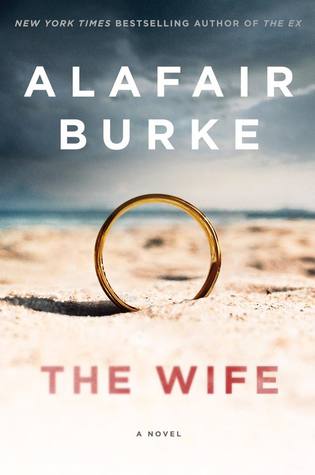
Tomorrow is the release day for a book I read in ARC (advanced reader copy) form months ago, The Wife by Alafair Burke.

34971475

In an instant, I became the woman the assumed I’d been along: the wife who lied to protect her husband.

I almost didn’t hear the knock on the front door. I had removed the brass knocker twelve days earlier, as if that would stop another reporter from showing up unannounced. Once I realized the source of the sound, I sat up straight in bed, hitting mute on the TV remote. Fighting the instinct to freeze, I forced myself to take a look. I parted the drawn bedroom curtains, squinting against the afternoon sun.

I saw the top of a head of short black hair on my stoop. The Impala in front of the fire hydrant across the street practically screamed “unmarked police car.” It was that same detective, back again. I still had her business card tucked away in my purse, where Jason wouldn’t see it. She kept knocking, and I kept watching her knock, until she sat on the front steps and started reading my paper.

Alafair Burke’s The Ex made my Top Ten list of 2016; it was the first of Alafair’s books I’d read (I have a bunch more in the TBR pile) and it absolutely blew me away. I wasn’t sure what to expect, and having met and liked Alafair, there was an element of worry; what if I don’t like her book? But it wasn’t an issue; from page one on, I was hooked and it was a book I deeply resented having to put down to do other things. Obviously, I was really looking forward to The Wife–maybe I’ll focus this year on reading the rest of her canon–and was thrilled when I got an ARC at Bouchercon this year.

The Wife does not disappoint, either, and boy is it ever timely! Angela Powell, the wife of the title, has a pretty terrific life; married to a very successful man who is getting even more successful every day, a beautiful home in Manhattan, good friends she can rely on, and a son she dotes on. Angela’s almost too-perfect, too-good-to-be-true life slowly but surely begins to unravel when one of her husband’s interns goes to the police and files a criminal complaint for sexual harassment against him. But Angela is not only rocked by the charges against her husband–she’s also worried about any investigation into their lives, particularly by the press…because she has some dark secrets in her own past that she doesn’t want seeing the light of day. No one, other than her husband and her mother, knows anything more about her past other than she was a catering service waitress who eventually started her own business and is a great chef–she met Jason at a party she was working at–but there is a lot more there. And as the truth about Angela’s past slowly is revealed to the reader, each revelation is even more shocking than the last.

The book has a powerful enough story, with just Angela dealing with this assault on their life and having to wonder if her husband has done what he’s being accused of, and if so, how did she not see it–or whether she should believe in his protestations of innocence and stand by his side? The exploration of what does a woman do in this instance might have been enough for a lesser novelist, but it’s not for Alafair Burke; there’s a reason why she has moved onto my ‘must-read’ list.

The Wife is going to be one of the best books of the year, and will be surely nominated for every crime writing award in 2019. I urge you to read it. You won’t be sorry.

Undercover of the Night

I didn’t get as much done this afternoon as I would have liked, alas. I am getting laundry done, and have pretty much cleaned out my email inbox, and I did finish the first draft of “The Trouble with Autofill”–it’s not good, but it will be, and I am going to work on another short story for a bit while vacuuming and preparing dinner and finishing the laundry. Tomorrow I want to get a lot more done, and tomorrow is also a go to the gym day; and since it’s the fourth workout, that means moving up to two sets of everything rather than one. Next week will be three, and then after that it remains at three, with weight increases every week. I haven’t had any issues with going to the gym–I even went when it was so cold on Wednesday morning–so I think I’m getting back into the swing of things. Let’s hope I stay motivated; I think I will.

I am also learning a lot from the Short Story Project! Once I get this second short story finished, and revise the other, I am going back to the WIP and some other manuscripts that need my attention. It’s great because I am reading all these different styles and types of short stories and writers, and I am learning a lot about how to construct a short story, and suspense building, and so forth.

An excellent example of building suspense is the first one up today, “The Stranger in the Car” by Elizabeth Sanxay Holding, from Troubled Daughters Twisted Wives, the fabulous anthology of post-war stories by the terrific women writing suspense back then.

Carrol Charleroy leaned back in his chair and closed his eyes; a big, stout, handsome man, olive-skinned, with a black mustache; a flamboyant look about him, in spite of his correct and conservative clothes. Miss Ewing was playing the piano for him, and he tried to relax, to enjoy this music, but a peculiar restlessness filled him. He frowned, opened his eyes, and took out his cigar case.

He and his wife Helen never sat here in the drawing-room unless they had guests; then the room would be pleasantly lighted, there would be people moving about, the sound of voices. Now the only light came from the gold-shaded lamp beside the piano at the other side of the long room, and, in spite of Miss Ewing’s music, he was aware, as never before, of the sounds from the New York street outside, the rush of wind, a car streaking past, the frantic piping of a doorman’s whistle, a man’s voice, hoarse and furious. This made him feel vulnerable, not comfortably shut away from the world in his own home.

“I don’t like this sending Helen off to the hospital,” he thought. “The flu is a treacherous disease, I grant you that. But Helen and I, and the children, and the servants, too, have all had it, at one time or the other, right here in the house, and we did very well. Can’t say I care much for Dr. Marcher. Too quizzical…”

The Holding story is one of the longest I’ve tackled during the Short Story Project thus far; and it’s a slow burn, and it’s so worth it. The story opens with our point of view character, a successful businessman, being entertained by the piano playing of a family friend; concerned about his wife’s hospitalization for the flu; and later that evening, his daughter arrives home under mysterious circumstances; with a black eye and several strange stories being told to him from other people who saw her out that evening, and were concerned. Before long Mr. Charleroy is convinced something terrible has happened to his daughter…and that she may have taken the law into her own hands. The best part of this slow burn of a story is that Mr. Charleroy literally has no idea what’s going on around him, but only sees and hears enough to make him worried and suspicious; but all of the women in the story are taking care of everything around him, and finally, at the end, very kindly let him know what the truth was once it’s all wrapped up rather neatly, in a slightly macabre fashion, but wrapped up nonetheless. Holding is best known for her novel The Blank Wall, which Weinman included in the Library of America omnibus of post-war female suspense writers, and now I am positively looking forward to reading it.

The second story for this entry is an Edgar nominee for this year’s Best Short Story statue, from Montana Noir, capably edited by Keir Graff and James Brady, is Eric Heidle’s “Ace in the Hole.”

Civic-pride billboards and the drab county jail swept past the chilly Greyhound’s windows as it dropped down the hill into the night of Great Falls. Through frosted glass, Chance watched the town pull him in as the Missouri passed below, the bus thrumming over dark water and skiffs of ice. Beyond the bridge he saw the OK Tire sign was gone; it’s cinder-block building was now something new.

The bus pulled a lazy turn toward downtown, rolling through blocks of low brick warehouses before banking hard into the alley behind the depot. It settled with a hiss in the garage as the passengers roused and began filing off.

The snap of deep cold hit him at the door. The driver’s breath huffed with each suitcase he tossed from the coach’s gut. Chance had only his green duffel. He split off from the line shuffling into the warmly lit lobby. Ducking under the half-open bay door at the front of the garage, he stepped onto the street and walked toward Central Avenue.

This is a terrific story, and it’s easy to see why it’s an Edgar finalist. Chance went to jail for possession with intent to sell, managing to get rid of most of the bales of marijuana before the cops caught up to him–but one bale didn’t land in the river but rather on a bridge support; bad luck for Chance. Even worse luck for Chance is that the supplier he got the marijuana from is still around and still wants his money for the lost shipment of weed. There doesn’t seem to be any way out for Chance–but it turns out that he does, indeed, have one ace up his sleeve, after all, and decides to play it in one last stand.

This is a great example of a dark, noir story; although whether it fits the actual definition of noir as I personally have come to understand it is questionable. But the thing about noir is that it defies labels and definitions, and this story is the best example of I can’t say what it is but I know it when I see it. This story is totally noir; I can even see it as a film, with its bleak but beautiful Montana landscapes, the cold, the mermaids swimming behind glass in the bar, the brutality of the violence; this would be a great role for a mid-to-late twenties actor–maybe even a career-making role. All kinds of awesome, really.

montana noir

Dancing in the Sheets

The sun is shining, and the temperature has climbed to 49 degrees. The boil-water advisory ended finally last evening–it’s just not a crisis in New Orleans unless we have a boil-water advisory!–and here I sit this morning, ensconced at my desk with a cup of coffee, a load of laundry tumbling in the dryer, with great expectations of the day. I went to the gym last evening after work, and my muscles, while a bit tired, still feel stretched and worked and supple, if that makes sense. Probably the best thing about rededicating myself to physical exercise again is how much better I feel; I don’t ache or feel tired the way I did just last week, and the stretching and the treadmill are also making me feel ever so much better. Today, I am going to clean (if it’s Saturday I must be cleaning) but I am also going to write, edit and read today. Paul is going into the office to work (it’s that time of year again) and so I have the day to myself. I want to finish the first draft of “The Trouble with Autofill” and I want to edit “Cold Beer No Flies.”

Among many other things; my to-do list is ridiculous, quite frankly. But the only way to make progress is not to get overwhelmed by the enormity of the list but rather to keep plugging away at it.

I finished reading Miami by Joan Didion earlier this week, and it was quite good. Didion’s writing style is quite amazing, actually, and while the story of the book might seem, at first glance, to be rather dated; the truth is it is still very much appropriate to our modern times. Miami is a look at the Cuban exiles in the city, how they relate to each other, and how they impact south Florida politically; and to a lesser extent, the relationship between the US government with them as well as with Castro’s Cuba. During the Cold War Cuba was a much more terrifying apparition, close as it was to Florida, and it’s amazing how people do not realize the political clout, as a result of their sheer numbers, that the Cuban immigrants weld in that part of the state, and in the entire state as well. The importance of Florida as a swing state cannot be discounted; and therefore the Cuban-American community’s influence on national politics is something that has to always be considered. (A present day comparison would be the Puerto Ricans moving to Florida today in great numbers as a result of the hurricane destruction of their island; the difference being those Puerto Ricans are already American citizens who can register to vote and can impact 2018 already.) Didion’s look at Miami in the 1980’s, as a Caribbean city on the mainland, is also reminiscent of descriptions of New Orleans as the northernmost Caribbean city; the thing I love the most about Didion’s work is how she makes you think. Reading Miami made me want to write about Miami; I’ve been wanting to write about Florida for a long time, as Constant Reader already knows. Something to ponder.

miami

I also started reading Mark Harris’ Pictures at a Revolution, which is a look at the film industry through the lens of the five films nominated for the Academy Award for Best Picture in 1967, and how they were made. Harris’ thesis is that was the year that bridged the gap between old and new Hollywood; and the five Best Picture nominees illustrated that perfectly: an expensive musical flop (Doctor Dolittle); two old style Hollywood pictures about race (Guess Who’s Coming to Dinner and In the Heat of the Night), and two films that illustrated new Hollywood and its influence by European filmmakers like Truffaut and Fellini and Antonioni (Bonnie and Clyde and The Graduate). I, of course, have always been fascinated by Hollywood history and have been ever since I read Garson Kanin’s Tracy and Hepburn and Bob Thomas’ Selznick as a kid; this book is right up my alley, and since it’s been awhile since I’ve read any Hollywood history, I am looking forward to reading this (and his Five Came Back–I’ve already watched the documentary based on it).

The Short Story Project also moves apace; I am frequently surprised as I look through my shelves for something to read how many single author collections and anthologies dot them. My Ipad also has quite a few loaded onto the Kindle app; I often buy them when they are either free or reduced in price, and so my Kindle app is filled with books I’ve not yet read, primarily because I don’t like to read on it (which I realize is nothing more than stubbornness; if I can watch movies or television programs on it, why resist reading books there?) Yesterday I found my battered old Dell paperback of Agatha Christie’s The Golden Ball and Other Stories, which I remember loving as a child. I was looking for my copy of Lawrence Block’s first anthology inspired by paintings–those of Edward Hopper– In Sunlight or in Shadow, which I would have sworn I’d purchased in hardcover; yet it wasn’t anywhere on the shelves or in any of the TBR piles, before remembering I’d bought it as an ebook when the Macavity nominations come out; Block’s story “Autumn at the Automat” was a finalist, along with mine (I still can’t believe it) and I wanted to read all the other nominated stories for an entry, so the immediacy of the need required buying the ebook. It is a handsome volume, though, so I’ll need to buy a hard copy to pair with the new one. (New bucket list item: write a story for one of these anthologies by Lawrence Block)

Once I’d located it on the iPad, I scoured the table of contents and landed on a Joyce Carol Oates story, “The Woman in the Window.” I have to confess I’ve not read much of Ms. Oates; I am not even remotely familiar with what she writes. But she, too, was a Macavity finalist last year, for her story “The Crawl Space” (which also won the Stoker Award), and that story creeped me the fuck out. I know she’s been a Stoker finalist before, but I also think she tends to write across genre a lot and therefore isn’t pigeon-holed in one way or the other.

Beneath the cushion of the plush blue chair she has hidden it.

Almost shyly her fingers grope for it, then recoil as if it were burning-hot.

No! None of this will happen, don’t be ridiculous!

It is eleven A.M. He has promised to meet her in this room in which it is always eleven A.M.

This story, frankly, isn’t as strong as “The Crawl Space,” but it’s an interesting exercise in how thin the line between lust and loathing is; the woman of the title is a secretary having an affair with a much wealthier man, and as she gets older and older she is feeling more and more trapped in the relationship; he is married and he often has to break plans with her for his wife. There is also a shift occasionally to his point of view, and he’s not so fond of her anymore, either. Passion has cooled but habit has set in; and the way those lines can get crossed is chilling–and how destructive such a relationship can be to both parties, emotionally and mentally, is explored in great detail yet sparse language by Ms. Oates. The story’s not as creepy, as I said, as the other; but the end–which she leaves kind of hanging–you do feel that something awful is going to happen; maybe not today, maybe not tomorrow, but eventually.

I’ve not read Joe Hill before, and there are several reasons for that; none of which would make any sense to anyone who is not me; I am nothing if not aware of my own eccentricities, which is why I generally don’t share them with people; I don’t need someone else to point out that something doesn’t make sense. But I do have a copy of his short story collection 20th Century Ghosts, which I spied on the shelves as I looked for my copy of the Block anthology. Aha, I thought, perfect. I can read a Joe Hill story for the Short Story Project. So, I curled up under a blanket in my easy chair, waited for Scooter to get settled in my lap, and started reading “Best New Horror.”

A month before his deadline, Eddie Carroll ripped open a manila envelope, and a magazine called The True North Literary Review slipped out into his hands. Carroll was used to getting magazines in the mail, although most of them had titles like Cemetery Dance and specialized in horror fiction. People sent him their books, too. Piles of them cluttered his Brookline townhouse, a heap on the couch in his office, a stack by the coffee maker. Books of horror stories, all of them.

No one had time to read them all, although once–when he was in his early thirties and just starting out as the editor of America’s Best New Horror–he had made a conscientious effort to try. Carroll had guided sixteen volumes of Best New Horror to press, had been working on the series for over a third of his life now. It added up to thousands of hours of reading and proofing and letter-writing, thousands of hours he could never have back.

He had come to hate the magazines especially. So many of them used the cheapest ink, and he had learned to loathe the way it came off on his fingers, the harsh stink of it.

I did not mention the elephant in the room; said elephant, of course, being that Joe Hill is Stephen King’s son. (The Kings are a very literary family; Mr. King’s wife Tabitha is a poet and a novelist; their other son Owen also writes, as does Owen’s wife, Kelly Braffet; I read a novel by Ms. Braffet sometime in the last couple of years–not aware of the King connection–and greatly enjoyed it.)

But simply based on a reading of “Best New Horror,” I have to say Joe Hill is also a terrific writer. And while it, like some of his father’s work, bears a strong resemblance to something I would have read in an Tales from the Crypt or House of Mystery comic book–that is not a criticism. I loved those comics, and the stories I read in them; they had a deep influence on me not only as a writer but as a reader. “Best New Horror”, as you can tell by the opening, tells the tale of Eddie Carroll, a writing teacher and a long-time editor of the Best New Horror series, a chore he has learned to loathe and, basically, phone in every year for the money. This resonated with me; as an anthology editor myself, one of the reasons I stepped away from editing them–or took a break from doing it–was because it was becoming rote; a chore rather than something I found joy in doing. Eddie is an example of why I stopped–I didn’t want to become like him; embittered by the experience and tired of not finding anything fresh or new (unlike Eddie, I was able to keep the experience fresh because each anthology I did was a new topic; if I had done twenty anthologies with the same theme I would have gone on a killing spree). But in the mail comes a story from a new writer that is simply brilliant; original and fresh and resonant and horrifying in its reality; the story reinvigorates Eddie and makes the editing job no longer a chore; he has to have this story, and will do whatever he has to in order to track the writer down…but as with any horror  tale of obsession, it’s not going to end well. But Hill brilliantly keeps stringing the reader along, and the ending is just absolutely brilliant and clever. I am really looking forward to reading more of these stories.

And now, I must get back to the spice mines. There are clothes to fold, dishes to wash, floors to clean, stories to write and edit; I am probably coming back here for another entry later as I am trying to get caught up on posting the stories I’ve read–but I make no promises. I have another story to write as a call for submissions crossed my computer screen on Thursday; I have an unfinished story that I can repurpose, but I also need to get a first draft done so I can work the story out.

Until later, Constant Reader.

Got a Hold on Me

Friday morning, and a short day at the office. I am very pleased to report that looking out my windows this morning I see no snow and ice, so I think perhaps this cold snap has finally come to its bitter end. We’re now having water pressure problems in the city, a boil water advisory, etc. etc. etc. Heavy heaving sigh. But other than that, things are going well. Like I said, I have a short day today; I am going to go to the gym this afternoon when I get home from the office, and I am going to spend the weekend writing and editing and reading. I started writing another short story yesterday, “The Trouble with Autofill,” which I think is kind of clever, and have lots of other editing and writing to do. Woo-hoo! Exciting weekend, no? I also want to get some reading and cleaning done. But I think as long as I keep going–sticking to my goal of positivity and focus, things will go well.

Maybe today’s blog should be titled When You Believe.

So, my agenda this morning is to get my kitchen cleaned up, get better organized, clean out my email, and do some writing. I’m going to get the mail before heading to the office, and I also need to pack my gym clothes so I can just ran in, grab the bag, and head back out the door. I also have lost three more pounds this week, finally breaking through that pesky 214 pound plateau I was at–I haven’t weighed 211 in years, so huzzah for working out! Now to keep going.

I started watching Black Sails again this week. I tried it several years ago, and just couldn’t get into it, even going so far as to think it kind of boring. I don’t know why; it has everything I love–pirates, beautiful locations, great period costumes, hot sweaty men in buccaneer outfits–but for whatever reason I just didn’t get into it. Maybe I wasn’t paying close enough attention? Something. Anyway, I am enjoying it a lot more this time around, so I am in for all four seasons. I love pirates–always have–despite having given up on the Pirates of the Caribbean franchise after the second movie–and while I am not sure why that is the case, I just have. I’ve always wanted to write a pirate novel; and I still have a Scotty adventure having to do with Jean Lafitte’s treasure still floating around in the back of my  head. I’m making all kinds of notes as I watch this show–reread Treasure Island, do some research on pirates, reread The Deep–so who knows? My creativity is certainly flowering these days; and I do think this go back to your roots thing is really working for me. I am doing that with my workout program–all the way back to how I got started, in 1994/1995; and carrying my little blank book around has certainly kick-started my creativity. How cool is that?

I’ve also added a lot of fun Alfred Hitchcock movies to my watchlist on Amazon Prime, some I haven’t seen and others I already have: Saboteur, The Birds, Shadow of a Doubt, Topaz, Frenzy, Psycho, Family Plot, and Vertigo.

The Short Story Project is also continuing; I read a shitload of short stories on my Snow Day Wednesday, but am still doling them out two at a time here. 😉 First up today: “Lord of Madison County by Jimmy Cajoleas, from Mississippi Noir, edited by Tom Franklin:

“Are yall ready to worship?” says Pastor Jerry. He’s got his eyes shut, one arm raised high to Jesus in some weird half-Nazi salute. Frosted hair slicked back, bald spots barely showing. Graphic T-shirt that says, Lord’s Gym, and has Christ bench-pressing a cross on it. Cargo shorts that he still thinks are cool.

I’m a little ways back in the youth room, chewing on a pen cap. The worship band kicks in; it’s all reverbed guitar and concert lights and the bullshit praise lyrics projected onto a screem behind them. You know, the songs that are the kind of crap you say to your girlfriend but it’s supposed to be about God? You are beautiful. You alone are my rock. You alone are my one and only. Oh, Jesus, baby!

Out in the crowd of youth-groupers are my customers. The girl with her hands up in the air giggling, singing louder than anyone? That’s Theresa. Everyone thinks she’s weird, that maybe she’s one of God’s holy fools, but they all agree that she’s on fire with Jesus.

Nah, she just popped a molly.

This is a great opening; I had wondered if anyone was going to address the Southern relationship with religion, and Christianity, in particular. My own psyche has been deeply scarred by a love-hate relationship with the Southern brand of Christianity; the entire nation was recently stunned by the Alabama evangelical embrace of pedophile Roy Moore–which was something that neither surprised nor shocked me. I need to write about religion; I do wish someone with a book called Religion in America: A History of the Turbulent American Relationship with God. Writing is very therapeutic, and I do have such a story that I’ve been working on for going on thirty years; I seriously doubt anyone would publish it. Anyway, I digress. This story, about a young drug dealer who has a fraught relationship with his mother, his father, and his mother’s boyfriend, is very clever and tightly written, with surprise twists and turns that take it in directions I didn’t see coming. Doug, kicked out of his wealthy private school where he was making money dealing to the rich kids, realized the best new market for his merchandise was the youth group at a local church. His dealing increased the youth group’s membership, and he has his own fraught relationship with Pastor Jerry, whom he rather despises, while dating Jerry’s daughter Kayla. Kayla is the big surprise here, a femme fatale right out of the James M. Cain classics, and a true delight. I’d love to read more about Kayla.

After Mississippi Noir, I took down The Best Horror of the Year Volume Four, edited by Ellen Datlow, and the first story there was Stephen King’s The Little Green God of Agony.”

“I was in an accident,” Newsome said.

Katherine MacDonald, sitting beside the bed and attaching one of the four TENS units to his scrawny thigh just below the basketball shorts he now always wore, did not look up. Her face was carefully blank. She was a piece of human furniture in this big house–in this big bedroom where she now spent most of her working life–and that was the way she liked it. Attracting Mr. Newsome’s attention was usually a bad idea, as any of his employees knew. But her thoughts ran on, just the same. Now you tell them that you actually caused the accident. Because you think taking responsibility makes you look like a hero.

“Actually,” Newsome said, “I caused the accident. Not so tight, Kat, please.”

There’s a reason why Stephen King is one of my favorite writers. One of the reasons is his uncanny ability to get into the heads of his characters, turning them into three dimensional beings that sound like someone you know. Kat, the physical therapist for an incredibly wealthy man–“the sixth wealthiest man in the world’–is tired of her job and tired of her patient. He won’t do the work required to get better and she is tired of watching him waste money and time on quick-fix quack cures that don’t do anything. This time, he’s brought in a small-time preacher from Arkansas who is going to exorcise the demon of pain from Newsome; it’s all she can do to keep a straight face and not say anything. Finally, she can’t resist and the preacher, Rideout, calls her out on a lot of things, seeing deep into her soul and telling her truths she doesn’t want to face herself, let alone share with anyone. And then the exorcism begins…in Danse Macabre, his later 1970’s/early 1980’s study of the genre, King talks about how horror comics of the 1950’s influenced his writing; as I was reading this story I could easily see it illustrated in Tales from the Crypt or House of Secrets. It’s terrific, absolutely terrific, and I was reminded again of why I love nothing more than curling up with Stephen King’s writing. It also vaguely reminded me of his novel Revival; I think this story may have triggered his creativity in that direction.

And now, I have spice to mine. Have a great Friday, Constant Reader!

IMG_3588

Tonight

SNOW DAY!

Yes, we had freezing temperatures in New Orleans the last two nights, and when I woke yesterday morning it was only 20 degrees; it’s 21 today. There was snow and ice outside both yesterday and today–not much, it’s New Orleans, seriously–but the exciting news yesterday morning was work was canceled because the roads were closed! The text went out around nine in the morning, but I, good boy who is determined to stick to his goals that I am, was at the gym. Yes, I got up yesterday morning, bundled up against the cold, and went to the gym. There were tumbleweeds blowing through there, of course, but I did my stretches, my workout, and twenty minutes  of cardio(okay, it was 17:58, but it was nine and I thought I needed to get home and get ready for work). I came home, did the dishes, packed Paul’s lunch, got cleaned up, packed my own lunch and headed out to the car, which had ice all over its windows. I got inside, started the car and turned the defrosters on, and was about to plug my phone into the stereo when I saw that I had 15 text messages….the initial messages about the office being closed and responses from co-workers. I immediately shut off the car and came inside and put my sweats back on.

Here is the horror that was New Orleans yesterday morning:

Really not much of anything, seriously. But as I told my boss last night, I know how to drive in snow and ice, but these people down here? Not so much.

The problem, apparently, was that the bridges into New Orleans–we’re kind of an island, surrounded by water and swamp and you have to cross a bridge to get into the city no matter from what direction–were icy, and of course, that makes them dangerous because people here don’t know how to drive on ice and the bridges are all pretty high. So the bridges were closed and so commuters couldn’t get into the city; the highways are also raised in many places and therefore dangerous when icy. So basically, the entire city shut down. I could have made it to work, but hey, you know, the office was closed. Today so far I’ve not heard about anything–I doubt very seriously we would close two days in a row, and I have no problem with going in.

But it was nice having a free day to stay home with the cat, you know? I did laundry, and since it was so cold at my desk in the kitchen even with the space heater on, decided to make it a real Snow Day and simply retire to my easy chair with the cat in my lap and work on the Short Story Project. I read a Lee Child story from one of the Lawrence Block painting anthologies, and a Laura Lippman from her collection Hardly Knew Her.

Lee Child’s story was “Pierre, Lucien, and Me”, from Alive in Shape and Color:

I survived my first heart attack. But as soon as I well enough to sit up in bed, the doctor came back and told me I was sure to have a second. Only a matter of time, he said. The first episode had been indicative of a serious underlying weakness. Which it had just made worse. Could be days. Or weeks. Months at most. He said from now on I should consider myself an invalid.

I said, “This is 1928, for fuck’s sake, They got people talking on the radio from far away. Don’t you have a pill for it?”

No pill, he said. Nothing to be done. Maybe see a show. And maybe write some letters. He told me what people regretted most were the things they didn’t say. Then he left. Then I left. Now I have been home four days. Doing nothing. Waiting for the second episode. Days away, or weeks, or months. I have no way of knowing.

I’m a fan of Lee Child, and one of my favorite memories was walking to Green Goddess with Alafair Burke when Romantic Times was here one year, and we ran into Lee on the street. I was a big fan, of course, but had never met him. Alafair, of course, knew him, and she invited him to join us. So I not only got to have lunch with Alafair Burke but also Lee Child. (How awesome are my namedropping skills?)

Anyway, he was as charming and self-deprecating as I’d heard–ridiculously tall and slender as well.

I love his Reacher series, but am many years behind on it, alas–so many books, so little time–but this story was short and quite lovely. The main character, as you can tell from the opening, is dying, and reflecting on his life; thinking back on whom he might need to apologize to or make amends with, and cannot really think of anyone. Then a name pops into his head; a millionaire he rather swindled, and the tale of the swindle makes up the rest of the story. The voice is charming and the swindle itself isn’t really that terrible, as far as these things go; he didn’t cause any harm, really, even if what he did was a crime.

I then moved on to Laura Lippman’s “Hardly Knew Her”, from her amazing collection Hardly Knew Her:

Sofia was a lean, hipless girl, the type that older men still called a tomboy in 1975, although her only hoydenish quality was a love of football. In the vacant lot behind the neighborhood tavern, the boys welcomed her into their games. This was in part because she was quick, with sure hands. But even touch football sometimes ended in pile-ups, where it was possible to steal a touch or two and claim it was accidental. She tolerated this feeble groping most of the time, punching the occasional boy who pressed too hard too long, which put the others on notice for a while. Then they forgot, or it happened again–they touched, she punched. It was a price she was more than willing to pay for the exhilaration she felt when she passed the few yew berry bushes that marked the end zone, a gaggle of boys breathless in her wake.

But for all the afternoons she spent at the vacant lot, she never made peace with the tricky plays–the faked handoffs, the double pumps, the gimmicky laterals. It seemed cowardly to her, a way for less gifted players to punish those with natural talent. It was one thing to spin and feint down the field, eluding grasping hands with a swivel of her nonhips. But to pretend the ball was somewhere it wasn’t struck her as cheating, and no one could ever persuade her otherwise.

Sofia, called Fee by her family and by no one else–she won’t allow it–has a father with a gambling problem; he plays in a game in the neighborhood tavern every Friday night. When he does well, there are gifts for the family on Saturday; when he doesn’t, he takes those gifts in the middle of the night and pawns or sells them, or turns them over as payment for a debt. He’s not a good bluffer, like his daughter, depending on the luck of the draw for his success or failure. But Fee is given a lovely amethyst necklace for her birthday–an heirloom–and when her father takes it to pay a debt, Fee is finished with her father, finished with this existence, and decides she is getting her necklace back. How this all plays out for Fee is a coming-of-age tale like no other I’ve read; one that only a talent like Laura Lippman could write. This collection of short stories is really quite extraordinary; as is the Block anthology; y’all really need to read these two books if you are a fan of short stories.

I also started watching, of all things, original episodes of Scooby Doo Where Are You? through Amazon Prime; I’ve been thinking a lot about Scooby Doo and its predecessor, Jonny Quest, since getting to meet one of the directors/animators for Hanna-Barbera at Comic-Con a couple of weeks ago. Jonny Quest is actually the first memory I have of watching something mystery/adventure related, and my love for Jonny Quest never really abated; I think, therefore, that the show was what triggered my lifelong love of mysteries and the crime genre; Scooby Doo came along around the time I was discovered the Hardy Boys and Nancy Drew and Trixie Belden. I’ll keep watching and musing about this some more, before making a post. I also still owe a post about I Tonya. I also finished reading Joan Didion’s Miami last night; so I’ll have to post about that as well.

So, that was how I spent my Snow Day; resting and relaxing and reading. It was actually quite lovely; we watched two episodes of Broadchurch last night and only have three to go before finishing the show. This third season is also quite good, and it’s cool how they’ve woven characters from the initial story into the present investigation; this entire season is an exploration about sexual assault, sex in genre, and porn. I am looking forward to seeing how it all plays out.

And now, back to the spice mines. As I said, I don’t think we’ll get another Snow Day today, so I have to get back to work. But how lovely to have a day where I didn’t really have to do anything; it’s been a long time. (Okay, I did the dishes and a load of laundry, but overall, it was a light responsibility day.)


Round and Round

So, I did it. I went to the gym yesterday for the first time in months, and God knows when the last time I went without a trainer appointment. I am very proud of myself for taking this first step, and I have to remember to stay motivated. It felt fantastic. I’d forgotten how great endorphins feel. I went in, and did some stretches before heading to the weight machines. I went all the back to my origins (something I seem to be doing a lot this year), and started doing my work outs the way I did when I first got back in shape way back in 1995: a full body workout (chest, back, shoulders, biceps, triceps, leg press, and calf raises, then abs and cardio) and did low weights, tried to not overdo it, and only did one set of 15 on everything. I will go up to two sets of everything on the fourth workout; three sets on the seventh, and up the weights on the tenth, and then on every fourth thereafter. I am not concerned about gaining size; this is more of a cardiovascular than strength workout. Maybe by the summer I might change to something more muscle building, but any workout with weights is going to gain some size. I’d like to hit my goal weight of 200 by July; we shall see. I also am not certain what that is going to do to my build, to be honest. But I can adapt…and posting publicly about this is also going to shame me into being more consistent.

And this morning I still feel good; I can tell I exercised, but am not sore. Yay! SO lovely to know I am doing it right. It’s hard to believe that it’s been so long since I learned about the body and how to exercise properly. I wonder–yes, I just googled my old gym in Tampa; it closed in 2003 and was still owned by the same person when it closed as when it opened. Good ole Metroflex and Alan. When I wrote Murder in the Rue Dauphine I based the gym Chanse worked out at on Metroflex; I even named the manager Alan. I’d completely forgotten about that until just now….

We watched I, Tonya last night and really enjoyed it. I have a lot of thoughts about it, but I’m going to let them digest for a few days before I post about it. The cast is excellent, and I think the movie is, too.

I have lots I want to get done on this holiday Monday; I am making an excursion to Metairie, and have lots of writing to do, and lots of editing, and tons of emails to anwer and get caught up on.

The Short Story Project continues. Yesterday I read the first story in Sue Grafton’s Kinsey and Me, “Between the Sheets”:

I squinted at the woman sitting across the desk from me. I could have sworn she’d just told me there was a dead man in her daughter’s bed, which seemed like a strange thing to say, accompanied, as it was, by a pleasant smile and carefully modulated tone. Maybe I’d misunderstood.

It was nine o’clock in the morning, some ordinary day of the week. I was, I confess, hungover–a rare occurrence in my life. I do not drink often or much, but the night before I’d been at a birthday party for my landlord, Henry Pitts, who’d just turned eighty-two. Apparently the celebration had gotten out of hand because here I was, feeling fuzzy-headed and faintly nauseated, trying to look like an especially smart and capable private investigator, which is what I am when I’m in good form.

My name is Kinsey Millhone. I’m thirty-two years olds, divorced, a licensed P.I., running my own agency in a town ninety-five miles north of Los Angeles. The woman had told me her name was Emily Culpepper and that much made sense. She was very small, one of those women who at any age will be thought “cute,” God forbid. She had short dark hair and a sweet face and she looked like a perfect suburban housewife. She was wearing a pale blue blouse with a Peter Pan collar, a heather-colored Shetland sweater with grosgrain ribbon down the front, a heather tweed skirt, hose, and Capezios with a dainty heel, I guessed her to be roughly my age.

“Between the Sheets’ is a delight, if for no other reason than the fact that it’s actually a traditional mystery story; one that is solved by viewing the crime scene, interviewing people, and observing the clues left behind by the killer and making deductions. This is particularly fun because the Kinsey novels are hardboiled style private eye novels, tough with sparse prose and told from Kinsey’s slightly cynical, world-weary point of view. This short story, still in that voice, though, has several moments os humor, and could easily have been an Erle Stanley Gardner Perry Mason story, or an Agatha Christie–although Christie’s short stories always seemed to me to border on the noir side.

The other story I read was “Barn Burning” from The Collected Stories of William Faulkner, an enormous volume I’ve only occasionally dipped into:

The store in which the Justice of the Peace’s court was sitting smelled of  cheese. The boy, crouched on his nail keg at the back of the crowded room, knew he smelled cheese, and more: from where he sat he could see the ranked shelves close-packed with the solid, squat, dynamic shapes of tin cans whose labels his stomach read, not from the lettering which meant nothing to his mind but from the scarlet devils and the silver curve of fish–this, the cheese which he knew he smelled and the hermetic meat which his intestines believed he smelled coming in intermittent gusts momentary and brief between the other constant one, the smell and sense just a little but of fear because mostly of despair and grief, the old fierce pull of blood. He could not see the table where the Justice sat and before which his father and his father’s enemy (our enemy, he thought in that despair; ourn! mine and him both! He;s my father!) stood, but he could hear them, the two of them that is, because his father had said no word yet:

“But what proof have you, Mr. Harris?”

Faulkner is one of my all-time favorite writers; his “A Rose for Emily” is one of the greatest short stories ever written–if not the greatest–and both Sanctuary and The Sound and the Fury are works of art most writers can only aspire to. There’s no sentimentality in Faulkner, at least not to me; he doesn’t romanticize poverty, he doesn’t romanticize the rural Southern experience, nor does he write about heroic figures. He writes about damaged and flawed human beings, and while his work is called “Southern Gothic,” I’m not sure if gothic is the right word. For me at least the descriptor gothic conjures up an entirely different image and style of story and writing. Reading Faulkner reminds me of home, reminds me of relatives and summers spent in rural Alabama, of orange-meat watermelons and fireflies and  four o’clocks and screen doors and ticks on dogs and red dirt and big red Coca-Cola coolers with a bottle opener on the side. “Barn Burning” is told from the perspective of a young boy, Colonel Sartoris Snopes, and opens with his father being found not guilty, for lack of evidence, of burning the Harris barn after a dispute about a loose hog; but despite the lack of evidence the Snopes family is banished from the county and sent on their way to the next sharecropping farm, where things go bad yet again, but this time Sarty can’t let it happen. It’s about learning the difference between right and wrong, and learning that sometimes loyalty to blood simply because of blood isn’t enough. It’s a terrific story, with great imagery and beautiful language use, and yes, reminded me of my long love affair with Faulkner’s work. He’s not easy to read by any means; but so worth the effort.

And now,  back to the spice mines.

tumblr_o5h18dblnH1uzn77yo1_540

Pink Houses

Another cold morning in New Orleans. The Saints are up in Minneapolis playing the Vikings today, with the winner going to the NFC championship game to play Philadelphia in Philadelphia, so I shouldn’t complain about how cold it is here! I am hoping to finish cleaning the kitchen this morning so I have to time to go lift weights for the first time since AUGUST before the game. And stretch, and do some cardio. I am taking this get back in shape goal for this year seriously, Constant Reader.

I also didn’t read a short story yesterday, but I started reading one of the Kinsey Millhone stories in Kinsey and Me, and it’s quite good; I look forward to finishing it today during the game, and reading another to get back on track. But I am doing much better this year on the Short Story Project than I ever have in past years, and I have so many short story collections and anthologies to choose from; which is part of the reason I decided to make 2018 the year of the short story. I was also inspired yesterday to start writing two short stories–“Sorry Wrong Email” (which is going to take a lot of work to get right) and “Neighborhood Warning”, which I think can be really really good. I also want to work on finishing the final draft of another short story today, and this week I need to start reading the submissions for Sunny Places Shady People. With no offense to my Blood on the Bayou contributors, I think this one might be even better, I also need to finish an interview for my Sisters newsletter column (basically, writing the introduction and putting the questions in the proper order for flow) and I also need to work on my two manuscripts, and of course the Scotty Bible languishes. Heavy heaving sigh, the work of a Gregalicious is never done. I also want to read a novel; another goal for the year is getting the TBR pile down to a workable size. Tomorrow I am going to Target, and probably going to make it Leg Day at the gym in the afternoon (I have a long work day on Tuesday, so I can’t do an every other day; the nice thing about Leg Day is no cardio; just stretch, do legs, and some abs).

I watched the 1970 film Airport yesterday, based on the Arthur Hailey novel, it was one of the year’s biggest hits and was nominated for lots of Academy Awards, and even got great reviews. It was also the movie that kicked off the ‘disaster movie’ trend of the 1970’s, and spawned several sequels. The opening sequence of the movie was pretty interesting, as they showed all the ticket counters for the various airlines at “Lincoln International” in Chicago; obviously a stand-in for O’Hare. What made it interesting was how none of the airlines whose counters were shown, or were mentioned in the PA announcements over the opening credits (Continental Airlines Flight 220 is now boarding) exist anymore: Northwest, Eastern, TWA, Continental, Braniff, Pan Am. It’s hard to imagine today, with our limited choices, but just twenty years ago they were a lot of options.

The movie had, as all these types of films usually did, what was called an ‘all-star cast’; Oscar winners Burt Lancaster, George Kennedy, Van Heflin, and Helen Hayes (who would win a second Oscar for her role); as well as other bankable stars as Dean Martin and Jean Seberg; newcomer Jacqueline Bisset, stunningly beautiful who would hit major stardom later in the decade in The Deep; stage actress Maureen Stapleton in one of her first roles and who would later win an Oscar of her own; and assorted others (Gary Collins, for example) in small parts early in their career. The premise of the film is simple: a major airport is in the throes of a several day long snowstorm; it was inspired by the blizzard of the winter of 1966 (which I remember), and how the airport operates in such a crisis, and the personal stories of the airport employees intercrossed with those of several people who pass through the airport. Burt Lancaster plays Mel Bakersfeld, general manager of the airport, who is married to his job and ignores his wife and family as a result. His marriage to Cindy (Dana Wynter) is in shambles, and he’s strongly attracted to the widowed Tanya Livingston (Jean Seberg) who is some sort of manager for Trans Global Airlines (her job is never really defined in the movie; it certainly was in the book–Hailey was nothing if not thorough). They of course don’t act on their attraction, but it’s there–and she is considering a transfer to San Francisco and  ‘fresh start’ since they have no future. He fights with his wife several times on the phone, mostly to show how unreasonable she is–obviously his job should come before his wife and family! Dean Martin plays asshole pilot Vernon Demerest, who also happens to be Mel’s brother-in-law, married to Mel’s sister (played by Barbara Hale, best known for playing Della Street on the original Perry Mason series). He’s a great pilot, but a dick–and he and Mel disagree frequently about airport operations, etc. He’s also having an affair–the latest of many–with co-worker Gwen Meighan (Jacqueline Bisset), who tells him before they work their flight to Rome that she’s pregnant–including the icy line “You can stop twisting your wedding ring, I know you’re married”–which in turn doesn’t really either of them sympathetic. The head of Customs and Immigration’s niece is also going to be on the Rome flight…as it soon becomes apparent that this particular flight is going to be the film’s focus and everyone’s paths are going to cross in some way regarding Trans Global Flight 22, The Golden Argosy. Helen Hayes plays Ada Quonsett, an older woman who stows away on flights to try to visit her daughter and grandchildren in New York, caught and being sent back to Los Angeles, but she manages to evade her watcher and sneak aboard Flight 22. Also on the flight is D. O. Guerrero, a bankrupt failure with mental problems and lots of debts who also happens to be a demolitions expert, and his briefcase, which contains a bomb. He wants to blow up the plane so his wife (coffee shop waitress Inez, played by Maureen Stapleton) will collect on his flight insurance. (He’s played by Van Heflin.) This is before security, metal detectors, etc., and the rash of hijackings in the late 1960’s and early 1970’s started the change to tighter airport security (so many New York to Florida flights were hijacked and redirected to Havana that it became a joke in the zeitgeist; “my flight was hijacked to Cuba.'” Of course, after the flight takes off it becomes apparent to those on the ground that he must have a bomb; the flight crew tries to get it from him with the end result he sets it off in the bathroom, blowing a hole in the side of the plane and causing explosive decompression. Gwen was trying to get into the bathroom to him when the bomb goes off and experiences severe injuries. The damaged plane has to return to Chicago as all other airports are closed; and of course, the issue of the big runway being blocked by a plane stuck in the snow that opens the movie now becomes crucial; the plane must be moved because the damaged aircraft needs as much room as possible to land, since its rudder, and steering are damaged which means the brakes might be as well.

Complicated, right? Of course the plane gets moved, and the flight lands safely. Mel’s wife admits she is having an affair and wants a divorce, and it looks like asshole Vern might do the right thing with Gwen after all. At least if Mel and Tanya get involved, they’ll be together at the airport all the time, although as they prepare to drive off together at the end, there’s another crisis…but this time Mel says “let him handle it” which means…what, exactly? He’s not going to be a workaholic anymore?

The acting in the movie isn’t good, but then again they aren’t really given a lot to work with. Hailey’s books probably don’t hold up, but they were huge bestsellers in their day–I read them all. He always focused on an industry or business–medicine, hotels, airports, hospitals, banks, power companies–did a lot of research, and then wrote enormous, sprawling books that not only showed how the businesses worked but told melodramatic stories about the people who worked there or were involved somehow. His novel Hotel was also filmed, and then turned into a Love Boat like weekly television series in the 1980’s; in the book and movie the St. Gregory Hotel was in New Orleans (based on the Monteleone, actually), in the TV show it was moved to San Francisco. The book, written in the 1960’s, also dealt with racial issues; I should really reread both it and Airport. The Moneychangers, which was about banking, I read when I worked for Bank of America, and I was amazed at how spot-on he got working in a bank. I should reread Airport to see how different airports were in the 1960’s than they were in the 1990’s, when I worked for Continental. But his male leads, who usually ran the business, were Ayn Rand-ian style supermen: married to their jobs, good at them, and devoted to the point there was no room in their lives for a personal life, which also kind of made them unlikable.

But back to the film–as corny and badly acted as it was, despite the terrible dialogue, they did a really great job of building up the suspense about the bomb as well as would the plane be able to land safely; and since that was the most important part of the film, it worked on that level. It was also hard to not laugh a bit from time to time, having seen the spoof Airplane! so many times I can speak the dialogue along with the movie when watching; it’s weird seeing this stuff not being played for laughs  (although Airplane! was primarily based on Zero Hour! with elements from Airplane 1975. In an interesting aside, Arthur Hailey did the novelization of Zero Hour!, which was called Runway Zero-Eight). It was also interesting seeing how much things have changed since this film was made: divorce isn’t the societal horror it was back then; people don’t stay in bad marriages “for the sake of the children” anymore; abortion wasn’t legal in the US when the film was made so Gwen’s abortion would have to be in Sweden, if she chose to have one; and of course, all the changes in airport security. The plane itself was a Boeing 707; which aren’t used anymore. Stowaways can’t really get onto planes anymore, either.

Plus, back in the day the concept that airline crews were boozing and sexing it up all the time, and that flight attendants (then stewardesses) were good time girls fucking every pilot they could lure into their clutches was such a stereotype–one the airlines actually bought into because they had age, size and looks standards for the women, and ran print and television ads playing up the sexiness of their stewardesses–that it took years for that to be changed…and it still exists to a certain extent.

It was certainly not something I learned from the Vicki Barr Stewardess mystery series for kids! I’ve always wanted to write a crime series about a flight attendant–kind of an update of Vicki Barr but not for kids–but can never really figure out how to make it work. Maybe someday.

Back to the spice mines! The kitchen ain’t going to clean itself!

26167850_2049469171964082_7159993896036773975_n