Here I Am (Come and Take Me)

Tuesday morning and all is quiet in the lower Garden District. I’m awake and well-rested; I had a very good night’s sleep last night, which is of course quite lovely. I have a lot to get done today–yesterday I was feeling very scattered, but did manage to get some things pulled together and finished. I started the next chapter of Bury Me in Shadows, which is off to a very rocky start, and worked some more on the massive project, which–God willing and the creek don’t rise–might actually be finished by tomorrow? Fingers crossed, at any rate.

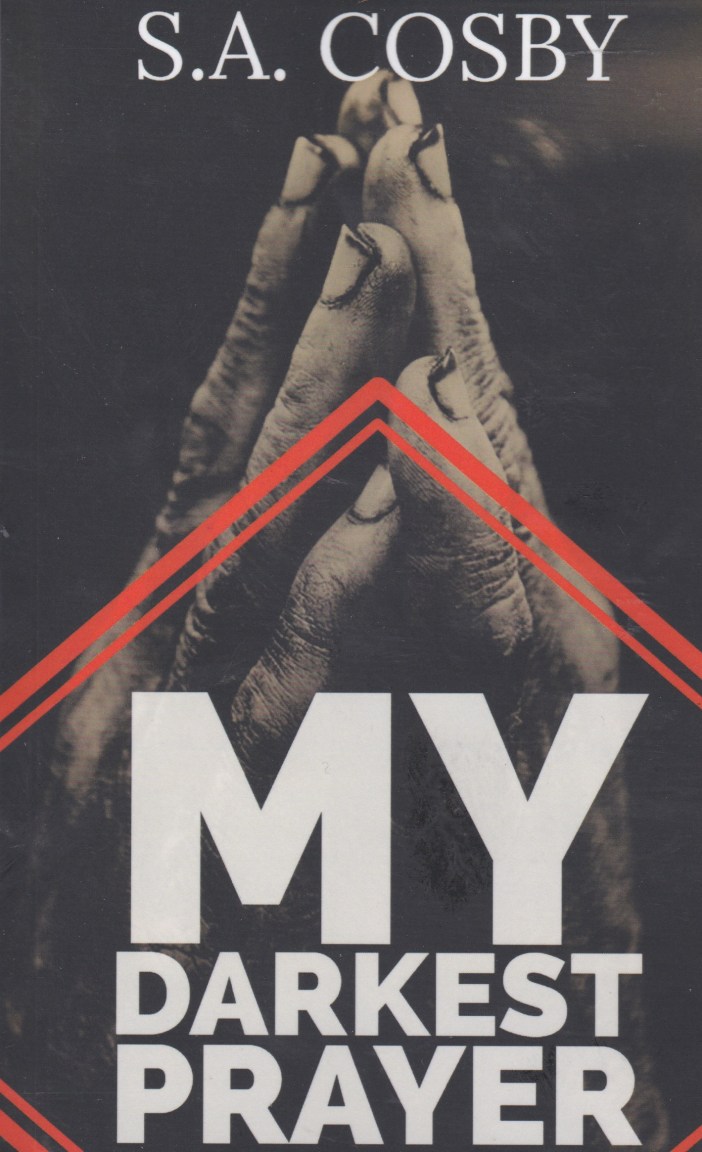
I also started reading S. A. Cosby’s My Darkest Prayer. Laura Lippman is signing at Garden District Books tonight–I’ve preordered my copy of Lady in the Lake because I have to work and can’t be there–and I’ll be picking it up tomorrow morning before work as I run my errands. I was trying not to buy any more books for awhile, but I always make an exception for Lippman.

I also, of course (because I have nothing else to do) wrote the openings of some new stories yesterday; “Dead Man’s Shoes,” “The Dreadful Scott Decision,” “Flood Stage,” and “Festival of the Redeemer.”  Because I don’t have enough to write already, apparently. Heavy heaving sigh. But that’s just how my mind works, and just how things go around here. I do need to stay laser-focused on some things–the big project, for one–but my mind always scatters and strays; that’s part of the process and always has been, and some things will never change, I suppose.

I also suppose I will never finish writing all these partial stories, or turning the fragments into finished stories.

Heavy sigh.

Anyway, I was talking about the story I wrote for that Pink Triangle Rhapsody the other day, “A Whisper from the Graveyard,” so here’s a taste for you:

I was hired to find a zombie the same day I found out I was dying.

The new client was waiting for me on my front porch when I got home from getting the news. I was still in shock. Even though I’d only had to walk a few blocks from the office on Decatur Street where a very nice blonde lady with reddish, watery eyes and a slight quiver in her voice delivered the bad news to me, I was drenched. It was a hot sticky July afternoon in the summer of 1995 and sweat had adhered my black T-shirt to my chest and back. As I trudged through the heat and humidity and vicious sunshine, I kept trying to convince myself it wasn’t true, there had been a mistake. Mistakes happen whenever there’s a human element involved. Yes, the number they’d given me matched the number on the printout from the lab, but numbers could get mixed up, couldn’t they?

But I’d been expecting this for years. And while a surprise, the real shock was that it had taken this long, really. I thought I’d been preparing myself for this for years, but I was wrong.

You’re never prepared to hear someone tell you that you’re dying.

Not bad, if I do say so myself. And now back to the spice mines.

73b86a632b2d67fd27519903b4a3784f

Ain’t No Woman (Like the One I’ve Got)

Sunday morning. I slept late again–it took me a while to fall asleep last night, but I finally did and slept like the dead, which was lovely.

I finished reading Steph Cha’s exceptional Your House Will Pay yesterday; I reviewed it in a different entry, but will re-emphasize that you should preorder it right now again. I really loved it; I love the way Cha writes, and I also look forward to getting back to her Juniper Song series. There are some extraordinary novels being published in the crime fiction community this year; I myself have read some pretty amazing books this year, and can’t wait to dive into my next one, S. A. Cosby’s My Darkest Prayer.

I also woke to the news this morning that the anthology I was talking about yesterday, the one to which I’d contributed my original story “A Whisper from the Graveyard” to, will be released this October, which is kind of exciting. The cover was designed by Joe Phillips, one of my favorite gay artists (check out right here on his website; the art on my walls in my old office on Frenchmen Street were his calendar illustrations; gorgeous works of art). The title of the anthology is Pink Triangle Rhapsody, and it’s all genre work by gay writers. I’m kind of looking forward to reading the whole thing, to be honest.

I managed to get some things done yesterday, around reading the Cha novel. I cleaned, I ran errands, and I organized; I also made some notes for things I am writing, and then last evening–Paul went out with a friend–I fell into an Amazon Prime docu-series about The Romanovs, actually Russian produced with English subtitles. It was interesting, but now that we’ve reached Catherine the Great I no longer need to continue watching. I’ve read enough about Catherine that I don’t need to watch a documentary about her; and the Romanovs who came after her aren’t particularly interesting other than Alexander I, and he’s only interesting because of 1) Napoleon and 2) he never seemed to have any real interest in women. As this is a Russian production, I imagine the chapter on Alexander I will focus on Napoleon rather than his private life. So, no need for me to continue. The nineteenth century Romanovs aren’t that interesting, and I’ve read and watched enough about Nicholas and Alexandra to last me a lifetime; although I would be curious to see how they handle the last of the Romanovs, to get an idea of how Russians see them now. But again, their sad tale of hemophiliac son, deep abiding love and passion, and Rasputin that ends in a massacre in a basement in Ekaterinburg I know well enough already.

Today I plan on writing, believe it or not; I am going to dive into Chapter 21 headfirst and see what shakes out. I also am going to try to reread the first twenty chapters as well to update the detailed outline I am doing as I go, which will help me restructure the novel when it’s time to go over it a second time and revise the hell out of it. I also want to work on “Never Kiss a Stranger” a little bit, perhaps even as a warm-up; deciding that it’s going to be a novella rather than a short story was a good first start on getting it finished. (I am, in fact, still reeling from yesterday’s realization of just how many books, stories, and essays I am currently in the midst of writing) I also need to work on a project today, and there’s definitely some organizing (isn’t there always?) that needs doing. I also need to clean out my email inbox. Heavy heaving sigh, isn’t that always the way?

I’m also still thinking about Steph Cha’s novel, and how good it actually is. One of the things I meant to talk about in my entry about her novel is how it’s about every day people, rather than exceptional ones. Her characters aren’t cops, aren’t professional investigators; just people like you and me and your friends and neighbors, who sadly get wrapped up into a horrible crime and trauma, and how they deal with it. Such a good book, really.

And on that note, I am heading back into the spice mines for the day, Constant Reader. Hope your Sunday is a lovely and peaceful and relaxing one; I hope mine will be as well as a productive one as well. We shall see, shall we not?

IMG_1998

Higher Ground

I surprised a younger co-worker a few years ago.

I don’t exactly remember what precisely we were talking about–it had to be a famous court case of some kind involving a teenager or someone in their early twenties, it may have been Brock Turner, the Stanford rapist–and I remarked that one of the things that always surprised me, and caught me off guard, about these kinds of cases was how the parents “will spend every cent they have defending that child, and will never consider, under any circumstance, that their child might actually be guilty.”

She looked at me in horror. “Why is that a surprise? My parents would.”

“Mine,” I replied, “wouldn’t. They also wouldn’t, under any circumstance, believe that I was innocent of any crime of which I might be falsely accused of committing. They would always, always, believe the police before they would believe me. They’d get me a lawyer but they would expect me to plead guilty.”

“Even if you were innocent?” The horrified look on her face was something I’ll probably never forget.

“They’d never believe I was innocent unless someone else confessed.”

I wrote about that in my journal at the time; I came across my documentation of the conversation recently when I was looking through my journals for something else (they really do come in handy; I am so fucking glad I started carrying them around and using them again, you really have no idea, Constant Reader!) and it made me smile. My parents have always believed in law and order, you see–despite almost regular evidence to the contrary, my parents believe all police officers are honest, upright, and do their jobs properly–and should always be believed. Certainly, they believed this when I was a child and it was something I was taught; it’s so ingrained into my psyche that the police are always in the right that evidence they aren’t quite so honest, to this day, is jarring; belief that the police protect and serve the public interest, and their commitment to justice is pure, is the foundational bedrock our entire civilization and country was built upon.

The truth is that reality is a lot more complicated than that.

your house will pay

“Well, this is it,” said Ava. “I don’t know how we’re supposed to find these fools.

Shawn gaped at the crowd gathered across the street. The movie wasn’t supposed to start for another hour and a half, but there had to be hundreds of people waiting outside the theater. It was dark already, too, hard to make out faces even with the neat row of lamps lining the sidewalk. Ava said Westwood was white people territory, but almost everyone here was black, a lot of them high school kids. They’d have to get closer to pick out Ray and his friends.

Ava grabbed Shawn’s hand as they crossed the street. He pulled back, thinking of all those older kids seeing him get dragged along by his sister. “Aw, Ave, I’m not a baby,” he said.

“Who said you were a baby? I just don’t want to lose you.”

They walked slowly down the sidewalk, starting from the box office, where the marquee overhead announced the showtimes for New Jack City. Shawn smiled. He’d been looking forward to this night all week. Everyone at school was talking about this movie, and he was going on opening night. It didn’t matter that Aunt Sheila had made Ray and Ava take him when they said they’d be watching White Fang. He was here now, sneaking into an R-rated movie, just like them.

Steph Cha’s latest novel, Your House Will Pay, drops this October, and if you’re smart, Constant Reader, you will preorder this book from your nearest retailer or wherever you get your books from immediately.

It is, simply put, quite extraordinary.

There are two central characters to the book, Grace Park, the daughter of Korean immigrants who works as a pharmacist in the family pharmacy, and Shawn Matthews, a middle-aged man of color who works as a mover, is married, and has a young daughter he adores. The two have no idea that they are connected in any way, but as the book progresses we find out that not only are they connected, they are connected in the most terrible of ways; connected through a horrific crime of violence from decades ago, in the early 1990’s, and the fallout from that terrible tragedy nearly thirty years ago is continuing to wreak havoc in the present day for these two characters, and their families.

The beauty of the book lies in how it’s told. Both point of view characters seem absolutely real and are completely distinct from each other; it’s not just a story about racial conflict and racial divides, but a melancholic examination of grief and trauma. By not choosing sides, Cha exposes both sides to her audience, and leaves the complicated nuances to her readers to sort. There are no easy answers in reality, and there are no easy answers in Cha’s novel, which makes it all the more heartbreakingly real, honest, and raw.

It’s also a searing picture of Los Angeles, a city riven by racial divides and strife, that has never worked out any of its own problems or made any effort to bring communities together. It’s also about grief, about dealing with your parents and your family as flawed adults–as well as loss; lost lives, lost potential, and the damage violence can do to its survivors, and how denial can also lead to not healing.

This is one of the best books I’ve read this year, and I’ve read some extraordinary work this year. I urge you to preorder it, Constant Reader–you won’t regret spending time with it.

I Believe in You (You Believe in Me)

I really need to focus and stop being distracted by shiny objects.

Stupid fucking shiny objects, anyway.

But there are so many, and they’re all so glittery and pretty and interesting.

It’s a wonder I get anything done.

Every once in a while, like now, I allow myself to get completely scattered and my inability to say no to people gets me into trouble; I then get overwhelmed and paralyzed with fear that I’ll never get everything done…thereby ensuring I won’t get everything done–or if I do, I’ll basically have to kill myself to get it all done on time. Heavy heaving sigh.

But at least now I’m aware I’m doing it again, which should count for something.

I took stock yesterday of everything I am doing, everything I’ve promised, and everything I’m in the middle of–and it was quite staggering. I have, as I said before, promised three short stories, only one of which has a completed draft (the others are still just ideas, waiting to be born on the page); I am working on a massive short-term project; a massive long term all year one; I am five chapters shy of finishing a first draft of a novel; have another novel manuscript that will need at least another two drafts; have written the first drafts of two first chapters of new novels; have a lengthy novella whose publication fell through that can be revised and rewritten and turned into a novel; and have about thirty or forty short stories and essays in some form of being written….and I keep having ideas, new ones for stories or novels, every day. Just this week I came up with another book idea called Another Random Shooting, which I quite like, and three short stories–“Festival of the Redeemer,” “Hot, Humid, Chance of Rain,” and “Flood Stage.” Yikes. I also have to run errands today–mail, bank, groceries–and am hopeful I will get some things done today and tomorrow. I slept really well last night–am still a bit groggy this morning, while i wait for the coffee to kick in. I think, probably, when I finish this I am going to go sit in my easy chair and read the Steph Cha novel. It’s really quite good, and I like the idea of spending my Saturday mornings reading a good book.

Yesterday when I got home from the office, I finished doing the laundry (bed linens every Friday), cleaned the kitchen and did the dishes, cleaned the Lost Apartment (still need to do the floors), and did some filing. My office space is always, it seems, a mess; something I’m never sure how to resolve. The truth is my office space is too small, always has been; but the primary problem that goes along with that is there isn’t any other place for my office to be located here in the Lost Apartment. Our apartment is, especially by New York/DC standards enormous, especially given what we pay for it–we’ll never be able to move because we will never find anything comparable at the same price; I’m not even certain one can get a studio for what we pay in rent. And, if I’m being completely honest, having a room dedicated to being my office would eventually not be big enough, either, as I tend to expand to fill space. But I still dream of the day when I’ll have an entire room for my office space. Anyway, when Paul got home I made Swedish meatballs (I do love cooking, I just rarely get the chance to do it anymore), and we got caught up on Animal Kingdom, and then finished The Boys, which is fucking fantastic. It occurred to me last night as I watched those final two episodes, that a world with super-heroes would probably be more akin to Greek mythology than the comic book worlds we see in most super-hero stories; capricious, mercurial beings with amazing, seemingly limitless powers, and all humankind would be at their mercy. I also liked that the human male lead, Hughie, is played by Dennis Quaid and Meg Ryan’s son Jack–and he’s quite good, and looks nothing like either of his parents–although sometimes you get a glimpse of one or the other. I have to say I liked this show a lot more than I thought I would, and we’re both looking forward to Season 2.

I think tonight we might dip into Years and Years on HBO. One can never go wrong with Emma Thompson.

Yesterday I reread my short story “Fireflies” in order to make some notes on it. I originally wrote “Fireflies” in long hand in a notebook back in the 1980’s–it’s another one of those “from the vault” stories–and I’ve worked on it, off and on, since the original draft was written. It was always slightly off, and the original ending was terrible. Fast forward, and last year I was looking at it again, and thinking about revising it, when I was invited to submit a short story to a horror anthology. I decided to use “Fireflies,” and I revised it and rewrote it a bit, smoothed over the rough transitions, made it flow better, and changed the ending along with some additions to the narrative to make it not only tighter but stronger. After submitting the story, I was contacted by the publisher and officially commissioned to write a story for the book. The anthology had a broad submissions call, anything from noir to pulp to outright horror, but every story had to have a paranormal element to it. They commissioned a pulpy noir story, and when I mentioned I’d submitted something already, they were very nice about specifically wanting the new story and would still consider the other; I wound up writing “A Whisper from the Graveyard” for it, and a few months ago they finally decided not to use “Fireflies”–but were interested in it as a novella; the true problem with “Fireflies” was its length. I immediately saw the value of the critique; I never think of writing in terms of novellas or novelettes (primarily because there really isn’t a market for these longer stories that are too short to be novels), and so made a note to reread the story and see what possibilities there were for it. So, I did that yesterday, and I was correct–the story would work better as a longer novella. I’ve written novellas before–“The Nightwatchers” and “Blood on the Moon” for those Kensington omnibus books, and I self-published “Quiet Desperation”” myself on Amazon. One of the projects I am in the midst of, “Never Kiss a Stranger,” is also going to be a longer, possibly novella length, story; I’d always thought of it from the beginning that way, and will probably self-publish it at some point on Amazon once I finish it.

“Fireflies” is another Alabama story, which means another “Corinth County” story. It was inspired by the Fleetwood Mac song, “Fireflies”, even though they have nothing to do with each other as far as content. The only connection other than the title is mood; I wanted to get the mood of the song into the story, and I think I succeeded. The song is one of my favorite Fleetwood Mac recordings, and only appears on the Fleetwood Mac Live double album. Ironically, it’s a studio recording they mixed crowd noises into, so it wouldn’t seem out of place on the live album; the original version is on Youtube without the crowd noises. I’d say the story is also strongly influenced by Thomas Tryon’s The Other, which is one of my favorite novels of all time (and overdue for a reread, as are The Haunting of Hill House and Rebecca), and I still think someone should do a biography of Tryon. I’d do it, but my research skills are subpar and non-fiction is also not my strength. But Tryon is fascinating to me–a relatively successful actor who was closeted and never quite attained stardom; then gave up on acting and turned to writing. He was also the longtime lover of the first gay porn star, Casey Donovan, of Boys in the Sand fame. Anyway, I digress (damned shiny objects, anyway). The point is there are so many Alabama stories in my files that have never been published; I think the only Alabama/Corinth County stories that have been published are “Small-town Boy” and “Son of a Preacher Man,” as well as the novel Dark Tide, which may not be actually set there but the main character is from there. Bury Me in Shadows is the first full-length thing set in Alabama for me to get this far with, and it–and “Fireflies”–are reconnecting me to everything.

I also keep thinking I need to go back there, just to drive through and take pictures, get a feel for the place again, refresh my memories.

This is how the story opens:

Jem slapped at a horsefly buzzing around his ear. He hated horseflies. They bit and left welts that hurt.

“God commands us to HONOR THY FATHER AND THY MOTHER!” Brother Killingsworth thundered from his pulpit to a chorus of scattered amens inside the little chapel. Jem could hear the sermon clearly because the screened windows were open to catch whatever cooling breeze there might be on this hot July Sunday. He could hear the fluttering of paper fans, the creak from the turning of the blades of the ceiling fans.

The Church of Christ Our Lord and Savior didn’t believe in air conditioning because the faithful suffered in the heat to listen to the Lord preach back in the Holy Land, wiping the sweat from their brows and letting the cloth stick to their wet bodies. And if that was good enough for the ones who gathered to hear the word of Jesus, it was the least the flock of the Church of Christ Our Lord and Savior could do, am I right and can I get an amen, brothers and sisters?

“Little better than snake handlers,” Jem’s mama would sniff with that mean look on her face, shaking her finger in his face, even though it wasn’t polite to point, “and you’d better stay away from there. You hear me, boy?”

Not bad at all.

And now back to the spice mines.

IMG_1995

Dueling Banjos

Writing about the rural Deep South is difficult.

I’m from the deep south, yes, but I didn’t grow up there. I spent a lot of time there, my parents were Southern, and so a lot of my values and mind-view for a number of years were patterned in the Southern mindset. I draw from my memories of summers in the rural backwoods of the mid-central-western part of the state, about seventy miles from the Mississippi state line or so, but there are also so many attitudes and mentalities and stereotypes and tropes about the rural Deep South that it is easy to become lazy and fall into those. I am trying very hard not to do that, but as I said, it’s hard. Stereotypes and tropes exist for a reason, after all–they weren’t created from nothing; there’s always a core kernel of truth in them, whatever they’ve become once the seeds were planted–but the key is to burrow into them to dig out the core kernel of truth to build upon, so you’re telling the truth. But I worry, as I continue to excavate into this book, that I am relying on negative tropes and stereotypes.

I think I was thirteen when Deliverance was released; we saw it at the drive-in, which was something my parents loved to do with us when we were kids. I didn’t understand a lot of what was going on in the movie–it was the kind of macho bullshit I loathed as a child, a loathing that has only somewhat lessened as an adult, so I stopped paying attention to it and I think I may have even dozed off. But I did see the scene early in the movie which has forever cemented into people’s minds a link between the backwoods South and redneck morons–“Dueling Banjos.” The open notes of the song are all that is needed to reference a joke about passing from civilization into the land of the uneducated, probably inbred, backwoods hillbillies; it has come to symbolize moonshine-makin’, overalls-wearin’, cousin-marryin’, dangerous rural Southern people. I’ve made the joke myself from time to time–driving through the Southern countryside at night, “You can almost hear the banjo notes, can’t you?”

Deliverance and “Dueling Banjos” are such a part of our zeitgeist and popular culture that the book and film have become kind of shorthand Southern references–even for people who don’t know the origins of the references. I’ve never read the book, but I bought a copy a few years ago because I heard one of the references in something–a talk show, a book, a film, a television show; I don’t remember which–but I thought it was time for me to read the book and possibly watch the film in its entirety; that there was a possibly an essay in both about masculinity, rape culture, and the American male. (For those of you who don’t know, many male-on-male rape jokes were born directly of Deliverance.) I never did get around to reading the book or watching the movie; to be honest, I’d completely forgotten about them and the essay idea until recently. I also never got around to reading the book because I’d heard bad things about James Dickey, who wrote the novel. Dickey was primarily a poet, and considered one of the better American ones of the second half of the twentieth century by the Academy, and Deliverance was his only novel. I knew people who knew Dickey, and the reports back on him were terribly unpleasant, if not surprisingly so. (American letters has produced some horrific examples of toxic masculinity with its iconic, deified authors.)

Southern people are masters at grievance; they’ve been aggrieved for quite some time now–probably as far back as when the rumblings in the northern states began against slavery.  Everything is always someone else’s fault; even that language from the 1960’s came back to haunt Alabama during the special election to replace Jeff Sessions in the Senate: “outside agitators.” That was always a favorite fallback of Southern white supremacy; people of color in the South were perfectly happy with the way things were set up, with not voting or having opportunities, and being segregated away from white people, until “outside agitators” stirred them up against their kind, genial white overlords. Outside agitation goes all the way back to slavery; Southern politicians and leaders railed against “Yankee agitation on the slavery issue.” It’s all there, in black and white, in the history books–if you know what to look for.

The politics of race in the South have always been problematic, but nothing is more irritating to me than white apologia fiction set in the South; in which the white people aren’t racists; those nasty lower class white trash people are the real racists, not the educated whites. I’ve seen this in any number of books and it never ceases to irritate me when I come across it; this historical revision that relieves the guilt of Southern white people is kind of like, as my friend Victoria says, how after the Second World War  no Germans had really been Nazis and everyone in France was a resistance fighter.

Bitch, please.

I guess all those southern white civil rights activists were working undercover, because they sure weren’t public in their opposition. (And yes, I know–not all Southern white people; but I sure don’t see any white faces in any of the footage from the civil rights marches and school integrations that weren’t in military uniform…or certainly not as many as novels and fictions would have us believe.) To Kill a Mockingbird is problematic to me in that I don’t believe for a minute that the sheriff and the cops in Maycomb, Alabama, were worried about the rednecks from the county lynching Tom Robinson and gathering up some of the good white people from town to defend the jail; history shows that the police were often Klansmen, or at least more sympathetic to the cause of white supremacy than they were to civil rights. That scene, while powerful, doesn’t ring true to me–it again divides Southern whites into the educated professionals and the uneducated racist rednecks, and I am not certain of the accuracy. The publication of Go Set a Watchman upset a lot of fans of the original work with its depiction of Atticus as a segregationist; they felt betrayed that the heroic white champion of racial tolerance and justice from Mockingbird was turned into a segregationist…but it was honest and real and rang true to me.

And seriously, I highly recommend anyone interested in looking at how Southern white people viewed civil rights during the 1960’s dig up The Klansman by William Bradford Huie.

This is, of course, part of the problem I am having with writing this first draft of a book set in the rural South that deals, in part, with issues of race in the modern rural South. I don’t want to be heavy-handed, nor do I want this to be another oh look another white person discovers how terrible racism is book, nor do I want it to be another “white savior” book; there are plenty of those already. But I also want to be honest; and how does one do that? There are always going to be those who criticize such a book for failing, or trying too hard, or some such. Southern racism, xenophobia, homophobia, and misogyny do exist, and having an openly gay teenager with roots in Alabama spend the summer there helping take care of his dying grandmother, while dealing with some other issues that arise during his visit, seems like a good lens to view all of these things through.

Or at least, seems to be one, at any rate.

I think this is one of the reasons I am having so much trouble writing this book and getting this draft done; I am so worried about being offensive or crossing some line as well as wanting to do it well and do it right that I am overthinking everything, and it’s like I have this incredible overwhelming sense of confidence about my abilities as a writer. But I am going to press on, all the while worrying…but I must needs remember: I can always fix everything in future drafts.

Part of my goals for the weekend are to finish writing a promised essay, to get three chapters of the book written, and to finish reading Steph Cha’s amazing Your House Will Pay. I also need to reread everything I’ve written for Bury Me in Shadows, and make notes as I go.

Heavy thoughts for a Friday morning, Constant Reader.

And now back to the spice mines.

IMG_2015

The Cover of the Rolling Stone

Wednesday! Huzzah!

Another lovely night of sleep last night; I was really tired. The two back-to-back twelve hours days have been wearing me out lately; combination of stress with all I  need to get done no doubt, and of course the heat of a New Orleans summer. The kitchen this morning is a bit of a mess, and I hope I have time this morning to get it straightened up a bit. The two short days begin tomorrow–huzzah!–and I need to get so much done it’s not even funny.

I finished Chapter Twenty last night; another 1400 words or so. I am hopeful to get back to my old 3000 per day total soon, but even if they are coming slower than I would like, I am getting them done–slowly but surely. I started to say that the words are terrible but I’ll take them; and then I remembered–Gregalicious, that is self-deprecation and haven’t we decided we aren’t doing that anymore? So, while Chapter Twenty is certainly not ready for the printers, it does what it’s supposed to do–move the story along, show us more about our main character and his burgeoning relationship with his love interest–and therefore, it needs some work but I am quite pleased with how it’s all turned out thus far. The next chapter is going to be trickier still than twenty was; there’s still a lot I need to have happen and revelations to come. But the end zone is in sight; if this were a college football game I’d be in the red zone, which is joyous.

Seriously, there were times when I thought I was never going to finish this draft.

As always, I am behind on everything; I am beginning to think that this is something I do to myself subconsciously to create the pressure which some part of my being thinks is necessary to get things done. I used to think I had a tendency to be self-defeating; that I was so afraid of succeeding that I deliberately set up road blocks to keep myself in a constant state of failure. I no longer think that I am self-defeating, although I do think I have a fear of success somewhat; why else do I keep doing things that apparently, according to all conventional wisdom, are the exact opposite of the things I am traditionally supposed to do in order to succeed?

We watched another episode of The Boys last night, and I have to say we are really enjoying this show. It’s getting progressively darker, and there’s also some scathing political commentary on the modern world as well. The parallels between the show’s United States and our current country’s recent history that are undeniably there, and frankly, we don’t come out of it looking too good–nor should we.

I’m hoping to read more of Steph Cha’s book today, and maybe even later when I get home tonight, if I don’t write for a while when I get off work this evening. There’s a new episode of Animal Kingdom available as well.

And football season is drawing ever closer. Tomorrow is August 1!

Where has this year gone already?

My toothache has almost completely gone away now; the tooth is still a little tender so I am aware of it, but as far soul-destroying pain, that’s no longer an issue. Huzzah indeed! I do need to go see the dentist though. Heavy sigh. I really loathe going to the dentist, but I suppose that’s fairly obvious given my teeth situation.

I am excited for football season; for the cooler weather and for both LSU and the Saints this year. LSU recently unveiled their new football training center, which is absolutely insane, and not without controversy; the battle between athletics and education is never-ending. Frankly, I’m deeply sympathetic to those on the side of education; LSU’s academic budget has been cut to the bone, majors have been decimated, and the campus library is in terrible condition. A brand new, $28 million state-of-the-art training facility for the football team at this time is kind of slap in the face to those worried about the state of higher education in this state. But the money wasn’t taken away from academics; the $28 million raised for this wasn’t taken away from academics but raised from donors who probably wouldn’t have given the money–or as much money–for a new library or to save a major that was being cut. LSU football, whether people like it or not, is big business now; and in fact some of the profits from the football team have been fed back into the University general funds since about 2012. Now, arguing about whether college football has become too big, too big time, and too much like professional sports–yep, college football has seen some enormous changes since I was a kid; it’s certainly not the same sport in 2019 that is was back in 1979, and those questions are valid and perhaps a debate we should be having.

But college football in 1979 was also vastly different from college football in 1959, or even 1969–when it was populated by mostly white players. I also agree that LSU desperately needs more money than the legislature is providing for it; maybe less tax cuts for the rich and for oil companies in Louisiana? Investments, not just in LSU but also in the University of Louisiana system, will pay off in the future for the state, and I’ve never understood why education has never been a priority for any politicians in Louisiana since Huey Long.

Of course, the argument could also be made that the political class isn’t interested in an educated populace; the more critically a person can think, the less likely they are to be swayed by emotional appeals based in nothing when they vote. One could also make this argument a national issue instead of just a state one; the decline of funding for education across the board on a national level over the last few decades is frankly scandalous.

But college sports didn’t create the education crisis, but it’s an incredibly easy target.

Or maybe as a lifelong college football fan (I only care about the Saints in the NFL) I am too hopelessly biased to opine on the matter.

But I will, nevertheless, continue to look forward to football season.

I also watched the third part of The Real Housewives of Beverly Hills reunion, which wasn’t particularly interesting. The reunions aren’t my favorites, although if you don’t want to waste your time watching an entire season, you can pretty much catch up on everything by watching the reunions (I used to do this with the ones I didn’t watch much, like New Jersey and Orange County.) But once you’ve watched an entire season, the reunions aren’t as “explosive” as the promos promise.

And now back to the spice mines.

IMG_1967

Your Mama Don’t Dance

Well, Monday has rolled around again after a lovely, restful weekend, and I am hopeful that this week–the tail end of July and the beginning of August–will be lovely and productive.

Yesterday I managed to have the hole in the page open and finished off Chapter Nineteen–which, once I started, was much easier than I’d thought it would be, and I was also able to get Chapter Twenty set up at the end of that chapter. I’m also, as I go into the final act, aware of things that I need to set up earlier in the manuscript; which is lovely, even though this is wrong way around; I should have known all this when I was writing it, which is my usual way of doing things. (Although, if I am being completely honest, the Kansas book wasn’t written this way, and I only figured out how to end Royal Street Reveillon while I was writing it; this is a trend I don’t like and needs to end now. Perhaps when I start writing Chlorine, things will follow the more traditional Greg writing path.)

Speaking of Chlorine, I did manage to find my copy of Tab Hunter’s memoir, Tab Hunter Confidential: The Making of a Movie Star. I met Tab Hunter years ago, at a Publishing Triangle party in New York (he was with Joyce Dewitt–yes, the one from Three’s Company, and she was absolutely charming), and he was still incredibly handsome and a very nice man. He eventually came to the Tennessee Williams Festival (yes, I played Good Husband and asked him if he would do it, got his manager’s card, and passed that along to Paul), and was again, just as handsome and charming as ever. We have a signed copy of the book, but I’ve never read it–it’s been in the TBR pile for over a decade–and I am delighted now to have a work-related excuse to read it, along with any number of other Hollywood histories and books about show business and celebrities from the 1950’s. (Must find biographies of Rock Hudson, Montgomery Clift, and Anthony Perkins…and George Cukor, for that matter.) It’s going to be ever so much fun to submerge myself in post-war Hollywood and Los Angeles.

Steph Cha’s novel Your House Will Pay also continues to fascinate, entertain, and enthrall. It’s quite excellent, and I am savoring the pages, the chapters, the development of the parallel stories of the two families tied together by a trauma in the past. It’s also incredibly immersive; the characters are so very terribly real, as is the world they inhabit. It’s turning out to be so much more than I thought it was going to be–and I was excited for what I thought it would be–so it’s even more of a gift than I originally thought it was going to be.

We are also getting drawn in more to the Prime series The Boys, which is also, like the Cha novel, turning out to be so much more than I’d anticipated. It’s darker, for one thing, and kind of exceptional in showing how powerful a single, average human being actually can be, without the assistance of extra-special powers of some kind. It’s also a much more complex examination of how extraordinarily gifted humans would be monetized, branded, and image controlled–very similar to the Hollywood period I am going to be immersing myself in shortly. Yay! It’s a fascinating period, and definitely one I want to know a lot more about.

And on that note, tis time to get back to the spice mines.

IMG_1984

Long Train Runnin’

Ah, it’s the weekend. I went to bed relatively early last night, after watching the final episode of The Last Czars (which, of course, included the horrific massacre scene in the basement in Ekaterinburg; which is probably why everyone sees the monstrous, people-abusing, careless Romanovs as tragic figures–the way they died, as opposed to the way they lived; it’s impossible to hear the children screaming and the sound of the guns without feeling badly for them) and before that, I watched Spider-Man Into the Spider-verse, which was, without question, the absolute best superhero movie, bar none, that I’ve ever seen. Well-written, well-voiced, and extraordinarily animated, it was quite an achievement in film making, and definitely a high spot when it comes to superhero films The entire time I was watching I kept thinking imagine how incredible this must have looked on the big screen. It took me a moment to get used to the style of animation, but it was absolutely amazing, and should be used as a blueprint for origin stories for superheroes. I do hope they do another; I really loved the character of Miles Morales and his family.

This morning I woke up well rested with a shit ton of work to get done today. Yesterday I was lazy; I got home from work around one and just cleaned the house. I never manage to seem to finish getting my office in order, because there simply isn’t enough space for me to put things, and I am always afraid to put thing into my inbox because they tend to get buried once they are there. I try to put things into it in ways that they can still be seen; but I don’t always have the best luck with that, and out of sight, out of mind if I don’t have it on the to-write list (speaking of which, I don’t see it anywhere, damn it to hell), which is also ridiculous when you consider how much I have to get written, or hoped to have written, by the end of this month.

One thing at a time, cross them off the list, and be done with it.

I’m also looking forward to spending some time with Steph Cha’s Your House Will Pay over the course of the weekend; after which I am going to read S. A Cosby’s My Darkest Prayer. I’d also like to get started reading the other Anthony nominees for Best Short Story (Cosby is one of my fellow nominees, along with Holly West, Barb Goffman, and Art Taylor–three of my favorite colleagues)–I still can’t believe I’m an Anthony finalist. I am very proud of my story, and its genesis; I originally wrote the first draft when I was in my early twenties or late teens, while I was still living in Kansas–close to forty years ago, and here it is, nominated for an Anthony Award.

How fucking cool is that? I had no idea when I wrote that story in long hand on notebook paper that forty years into the future it would be nominated for an award I’d not yet heard of, to be presented at a fan conference I knew nothing about, and that my life would be something I didn’t even dare dream of at that age.

I was thinking about my self-appreciation project last night, the one in which I work on stopping belittling my achievements, learn how to accept compliments, and take some pride in myself and my writing and everything I’ve done thus far in my life. Because I should be proud of myself. I’ve managed to sustain an almost twenty year career in a niche sub-genre of a genre, and not only that, I’ve accomplished quite a bit not even counting the writing itself. I was also thinking last night back to the days when I was editor of Lambda Book Report, which kind of set the stage for my publishing career. I reinvented myself, you know; I went from being a highly knowledgeable industry insider, basically running a magazine that was sort of a cross between a queer Publisher’s Weekly and a queer The Writer; for nearly two years I read a lot of queer fiction, and if I didn’t actually read a queer book, I knew a lot about it. I had already sold Murder in the Rue Dauphine to Alyson Books when I took the assistant editor job at Lambda Book Report, and that was actually the first job I ever had where I kind of flourished. It was the first job that allowed me to be creative in what I did, and where all the lessons I’d learned at various dead-end jobs along the way could be applied in a very positive way. I’d also learned how to treat writers, from being treated myself in very shitty ways by magazines and editors and papers I’d written for by this point–something I continue to do today as an editor (one of my proudest moments of my career thus far was being told by one of the contributors to Florida Happens–Hilary Davidson, a very talented writer whose works you should check out–that working with me was one of the best editorial experiences she’d had in her career thus far). Lambda Book Report seems like it was a million years ago; I actually officially resigned from the job in November 2001, three months before Rue Dauphine was published finally. I resigned because of the conflict of interest involved in running a review magazine while publishing my own novels; there was a strong sense, at least for me, that I couldn’t allow my own books to be reviewed in my own magazine, and as it was the only real game in town nationally (the odds of being reviewed in any of the national gay magazines–Out, The Advocate, Genre–were slim to none; on the rare occasions when those magazines chose to review books, it was either a straight celebrity ally’s (so they could do a feature and put straight celebrity ally’s picture on the cover), or if it was an actual queer book by a queer writer, it was never a genre work. They sniffed disdainfully at queer genre writers; kind of how Lambda Book Report did before I came along, and, all due respect, kind of how the Lambda Literary Foundation (which was always the parent apparatus of the magazine, and now runs a review website) still does. I’ve rarely been reviewed there–either in the magazine I left behind, when it was still being done as a print magazine–or on their website.

But I did a great job running that magazine, if I do say so myself, and I am very proud of everything i accomplished while working there. I met a lot of people, a lot of writers, and made some lifelong friends out of the experience.

I have also been nominated for the Lambda Literary Award, in various categories and under various names, quite frequently. I don’t know how many times I’ve been nominated, to be honest; it’s something like thirteen or fourteen times. I think the only people nominated more times than me are Ellen Hart, Michael Thomas Ford, and Lawrence Schimel. I won twice, once for Anthology for Love Bourbon Street, and once for Men’s Mystery for Murder in the Rue Chartres. The statues are somewhere around here; my Moonbeam Award medals hang from a nail right next to my desk, and my Anthony Award for Blood on the Bayou sits on one of the shelves in the bookcase where I keep copies of my books, but I’m not quite sure where my Lambda Awards are. My Shirley Jackson Award nominee’s rock is in my desk drawer, and even though it just represents a nomination (I didn’t win the award), it’s my favorite out of all the awards I’ve won. I don’t get nominated for Lambda Literary Awards anymore–I think the last time I was nominated was for Night Shadows, which should tell you how long it’s been–and I don’t really care about that anymore, to be honest. After thirteen or fourteen times…yeah, it’s just not quite the thrill it was back when I was nominated the first time. Getting nominated for things like the Shirley Jackson, or the Anthonys, or the Macavitys–those are thrilling because they come from out of nowhere, and are completely unexpected.

And let’s face it, being nominated for Best Short Story awards, for the kid who was told by his first writing instructor that he would never be published, would never have a career as a writer, and had no writing ability whatsoever–opinions all formed by reading a short story written by a kid who’d just turned eighteen–are very thrilling and satisfying. My lack of confidence in my short story writing abilities is pretty extreme, and so whenever one gets published or one gets nominated for an award or I get some great feedback from readers for one, it’s quite reassuring and quite lovely.

All right then–Steph Cha’s novel is calling my name, and I want to get some things written as well before I run my errands later this morning.

Have a lovely day, Constant Reader.

IMG_1829

Daddy’s Home

Hello, Thursday morning, how are you?

Another lovely night’ sleep last night, and it’s quite marvelous to feel so rested and be energetic as I have been this entire week (which undoubtedly means I’ve now jinxed it and will not sleep well tonight). Have I gotten as much finished as I wanted to this week? Of course not. I was very tired when I got home from work last night, which means I wrote maybe 100 words on Chapter Nineteen; but it’s a hundred more words than I had yesterday morning, so I am calling that not only a win but a major win; I always count anything on a day when I was tired and didn’t want to do anything a major victory.

Yesterday was a very strange day for New Orleans in July; it was actually cool-and it was about twenty-thirty degrees cooler here than it was in places like, you know, PARIS. Anytime we have a relatively lovely day in New Orleans in the summertime is highly unusual; but it also kinds of messes with the city’s mentality and energy levels in many odd and different ways. I didn’t work very much on the large project that landed in my lap recently, but I think today I’ll be able to get some work done on it. Today is the first of my two short days this week, which is lovely; I can make groceries on my way home from the office tonight, finish the laundry and the dishes, and maybe even (gasp!) make dinner tonight. Depending on what time Paul gets home–he’s buried under with grants, as always, in July, which means getting home rather late every night (last night he got home after nine). This should give me some time to get some work done around the house as well as some work done on Bury Me in Shadows.

That’s the plan, at any rate. I also have an essay to write, some short stories to get going on, and of course, the Lost Apartment is a disaster area. Keeping the apartment neat and tidy is really a full time job, it seems, and of course on my two long days I simply don’t have the energy to do anything about it–or if I do, I won’t have the energy to write. This creates a war within myself; I cannot stand having a messy home and it both bothers and distracts me from writing, but if I do something about it I won’t have the time or the energy to get the writing done. The endless struggle…

But we shall see how today turns out. I may even go make the major grocery run tomorrow after I get off work; tomorrow is an early day and I get off work around run, which is plenty of time for me to run uptown and get the mail, while circling back around to make the grocery run before heading home to both clean and write. That’s really the question, isn’t it, how do I–or any other writer–find enough time to write the things we need to get written?  It really always comes down to finding the energy, really–one of the things I was thinking about the other day when I was talking about the need for self-absorption as a writer has everything to do with not wasting energy you need for your writing on people who ultimately won’t pay off in the long run.

Also, the Macavity Award nominations came out today:

The Macavity Awards are nominated by members of Mystery Readers International, subscribers to Mystery Readers Journal and friends of MRI. The winners will be announced at opening ceremonies at Bouchercon, the World Mystery Convention, in Dallas, TX, October 31, 2019. Congratulations to all.

If you’re a member of MRI, a subscriber to MRJ, or a friend of MRI, you will receive a ballot by August 15, so get reading.

Best Novel 

November Road by Lou Berney (William Morrow)

If I Die Tonight by Alison Gaylin (William Morrow)

The Lost Man by Jane Harper (Flat Iron Books)

Jar of Hearts by Jennifer Hillier (Minotaur Books)

Hiroshima Boy by Naomi Hirahara (Prospect Park Books)

Under My Skin by Lisa Unger (Harlequin – Park Row Books)

Best First Novel 

My Sister, the Serial Killer by Oyinkan Braithwaite (Doubleday)

Dodging and Burning by John Copenhaver (Pegasus Books)

Where the Crawdads Sing by Delia Owens (G.P. Putnam’s Sons)

Something in the Water by Catherine Steadman (Ballantine)

The Chalk Man by C.J. Tudor (Crown)

Best Nonfiction 

The Metaphysical Mysteries of G.K. Chesterton: A Critical Study of the Father Brown Stories and Other Detective Fiction by Laird R. Blackwell (McFarland)

Conan Doyle for the Defense: The True Story of a Sensational British Murder, a Quest for Justice, and the World’s Most Famous Detective Writer by Margalit Fox (Random House)

Classic American Crime Fiction of the 1920s by Leslie S. Klinger (Pegasus Books)

I’ll Be Gone in the Dark: One Woman’s Obsessive Search for the Golden State Killer by Michelle McNamara (HarperCollins)

Agatha Christie: A Mysterious Life by Laura Thompson (Pegasus Books)

The Real Lolita: The Kidnapping of Sally Horner and the Novel That Scandalized the World by Sarah Weinman (HarperCollins)

Best Short Story 

 “Race to Judgment” by Craig Faustus Buck (Ellery Queen’s Mystery Magazine, Nov/Dec 2018)

“All God’s Sparrows” by Leslie Budewitz (Alfred Hitchcock’s Mystery Magazine, May/Jun 2018)

“Bug Appétit” by Barb Goffman (Ellery Queen’s Mystery Magazine, Nov/Dec 2018)

“Three-Star Sushi” by Barry Lancet (Down & Out: The Magazine, Vol.1, No. 3)

“The Cambodian Curse” by Gigi Pandian (The Cambodian Curse and Other Stories)

 “English 398: Fiction Workshop” by Art Taylor (Ellery Queen’s Mystery Magazine, Jul/Aug 2018)

Sue Feder Memorial Award for Best Historical Mystery 

A Lady’s Guide to Etiquette and Murder by Dianne Freeman (Kensington)

City of Ink by Elsa Hart (Minotaur)

Island of the Mad by Laurie R. King (Bantam)

The Widows of Malabar Hill by Sujata Massey (Soho Crime)

A Dying Note by Ann Parker (Poisoned Pen)

A Forgotten Place by Charles Todd (William Morrow)

Lots of friends on that list! Congrats all!

And now back to the spice mines.

IMG_1852

I’m Doin’ Fine Now

Tuesday! We survived Monday, did we not? That is, ultimately, a reason for celebration.

And–believe it or not, I finished Chapter Eighteen last night, which was incredibly cool. I haven’t worked on Bury Me in Shadows in so long I was beginning to think I was never going back to it.

Huzzah! Go, Greg, go!

They are slowly starting to close the Bonnet Carre Spillway, meaning that the river is beginning to go down, and might soon no longer be in flood stage. As we are ever aware in New Orleans, water is the eternal problem for our sinking city, and we will all sleep a little better knowing the flood is, at long last, receding.

We also finished watching Big Little Lies last night, and I have to say, I enjoyed it and thought it wrapped everything up nicely in a way the first season’s finale did not; which, of course, made the second season necessary. There shouldn’t be a third season; this is all tied up in a nice bow, and there’s no need for a third. It was, in a way, kind of nice seeing the fall-out from the lie they all agreed to tell after the ending of the first season; how the repercussions and fall out from the lie undermined and destroyed their lives in the third season–although blaming the lie for Renata’s troubles, which were solely the fault of her man-boy husband, is a bit much.

I slept deeply and well last night, but unfortunately am still wishing I was still in bed. I’m sleepy and tired, but not from not sleeping well, but rather from getting up too early this morning. It’s of course day 2 of my marathon opening the week each week, and I managed to make it through my entire day yesterday without either getting tired or being tired. This morning I woke up tired. I am hopeful the process of going through my morning ablutions will finish waking me up, and of course, tomorrow I can sleep a little later since I don’t have to be in until later. It’s also pay day, which means pay-the-bills day, which is never particularly pleasant, either.

Of course, when I get home from work tonight I’ll be watching part two of the Real Housewives of Beverly Hills reunion. I’m not entirely sure why; I have lost most of my interest in this show–it certainly doesn’t compare to either the New York or Atlanta (and, from what I’m seeing, Potomac) franchises, and I’m not entirely sure why. This past season’s emphasis on a boring storyline, having to do with a failed adoption of a dog and the fallout from the failed adoption, wasn’t particularly interesting, especially when production kept dancing around the reality of the actual situation and tried to force more drama out of it peripherally. Apparently, the show had new producers this season, and it showed; usually the women are at the mercy of production, but this season made it seem that the production was at the mercy of the women. One thing these shows are terribly good at it, though, is switching gears and manipulating the audience; a woman who is incredibly unlikable in one season can come out of another smelling like the proverbial rose, and vice versa. I try very hard not to get too involved in the outer trappings of these shows I watch–the energy expounded in watching the shows and deciding who to like and who not to like, and forming opinions on what I’ve seen, is more than enough time spent on them. I do occasionally like to read the recaps (some of which are absolutely hilarious) and will spend some time reading the comments on the recaps, simply to see how far off base my own opinions are, and to see how differently other people can process the very same thing I’ve watched. That, to me, is the most fascinating part of watching the shows–and it is very similar, as Camille Paglia pointed out (and it galls me to no end to agree with her about anything) the audience involvement with the reality television programs, and the Real Housewives franchises in particular, is very similar with how audiences used to get heavily involved in soap operas. An entire industry built up over soap fandom; the same is happening with the Real Housewives. 

The rise of reality television is also an interesting basis for a study on changes in American popular culture in the twenty-first century, which would make for either a brilliant long-form essay, or even a master’s thesis. (Someone, you are very welcome for this idea.)

Hopefully, tonight I will be able to tear through Chapter Nineteen after spending an hour rolling my eyes at the housewives. Gotta keep scratching things off that list, y’all.

And now back to the spice mines.

IMG_1907