Wednesday and midweek, with only two days (inclusive) left in the office, can we say hallelujah? I am still struggling to adjust back to getting up early and going into the office, and this morning was a bit better than the others this morning in terms of getting up–my alarm went off, for one–but I am still struggling yet to adjust. I was low energy most of the day yesterday (I got all my work done, though) and then came home to do literally next to nothing the rest of the evening. I pretty much wasted most of the night, really, because I was physically and mentally fatigued. I fell asleep almost the moment I got into the bed, and I slept well for the night. But this too shall pass, and hopefully next week will be a return to my normality as far as sleep and work are concerned.
I continue to follow this Oklahoma suspicious death–the autopsy was recently released, and it’s horrific what happened to this kid–and also realized last night that I not only didn’t want to use All Their Guilty Stains as the title of the book that might grow out of this case; but didn’t know what to use instead, and I always have to have a title before I can do much of anything with the research etc. It hit me right in the face this morning; Justice for Abel, which is a stopgap name for the victim that I’ll probably change later. There are also several ways to write such a book–from the perspective of several people from the area impacted by the death; from a journalistic POV, of either a reporter or true crime writer interested in the case; or as a straight up cop story, like a deputy sheriff or something who becomes very aware there’s corruption in the area’s justice system (or a Kansas Bureau of Investigation agent). But I’m nowhere near ready to write this one, and so I need to just vomit out all the ideas and thoughts about it so I don’t forget them, and dig into the unfinished stuff I need to get done. I know what I am going to be working on next, of course, but I also need to get some of these damned short stories finished, too. Focus, Gregalicious, focus.
I also need to get back to my Scott Carson book, so I can move on to my next read, which will most likely either be the latest Kellye Garrett, Angie Kim, or something else out from the stack of books.
I’ve been up and down lately about my career; which is, of course stupid to think about right now. Of course your career feels a bit off this year–last year was horrific emotionally, spiritually, and physically–so it was kind of a lost year, and this year has been pretty much a wash. I seem to be coming out from under all of that at the moment (at least for the time being) and so I need to make a summer to-do list as well as one for this weekend and next week. It’s been a hot minute since I set any kind of goals for myself, and I don’t think it’s wrong for me to take it easy this week and put no pressure on myself to acclimate faster to my reality. So it takes a while to get back in the saddle and feel like I belong in my own life when I was able to bounce back from trips and breaks in routine faster. But I am in my sixties now and that does impact everything…even if I forget to account for it regularly. I do worry that I am simply justifying being lazy–something I’ve been accused of for so long now that I’ve simply accepted the fact that I am and don’t defend myself when someone says it anymore. But that’s a touch of anxiety, isn’t it? No one cares how hard I work when I am not at my day job, and as I often remind myself when I start to head down the path of self-recrimination, everyone else gets time off, so why shouldn’t I? And not taking down time to rest my creativity and my intellect and my body would just lead to burn out faster, and when I’m burned out there’s nothing I can do at all, so what is better?
So, here’s hoping I can make a to-do list today, get some chores done when I get home from the office, and read for a bit before Paul gets home. I am going to take my leave of you now, Constant Reader, before I head into the spice mines. Have a lovely Wednesday!
Our power went out last night, around 5:45 a.m. per the email from Entergy (if our power is out, how do they expect me to read an email? I guess my cell phone, but still), but for whatever reason, somehow Paul got up to wake me up at the time I usually rise (my Cat Alarm, aka Sparky, also failed this morning but once Paul got up, he started), but I slept so well last night that it took me awhile this morning to get up and going. Not sure what that’s about (thunderstorm, no doubt), but my coffee tastes good and it looks like the kitchen roof didn’t leak last night, so that’s a good thing. We’re supposed to have heavy weather this morning with off and on showers all day (at least that was the forecast yesterday). A quick glance at my phone, however, has let me know that later this morning it will get sunny and it will stay that way the rest of the day. That’s nice. In fact, the sun is out already so I think that forecast may be off. I know there were tornado warnings west and north of the city last night, and most of the truly bad weather missed us.
I’m not going to lie, I felt very off-balance at work yesterday. It started raining in the early afternoon, which certainly didn’t help (damp air and rain always makes me sleepy), and there were some other things that went on in the early morning after I arrived at the office that had me wondering why the hell didn’t you call in sick this morning, dumb ass? But it all worked out in the end, and the rest of the day went swimmingly. I ran my errands once I was out of the office, and then came home. I was a little tired by then, so didn’t get much of anything done last night other than bonding with Sparky (i.e. being a cat bed). We started watching a new British show called After the Flood, which looked really interesting, but I also noted that only the first two episodes (of six) were up on Britbox, which is…odd. We really liked the show, so I am going to have to figure out how to watch the other four episodes. But that’s peculiar, isn’t it? I think I may have let my subscription go, which is probably why we can only access the first two episodes. Heavy sigh. I really need to get a handle on the streaming services I pay for, don’t I?
I am trying to get a handle on easing back into my normality again–a week off is so disorienting, but nice at the same time–so I figured this wasn’t going to wind up being highly productive, either. I need to at least stay on top of things, though, so I am not buried this weekend trying to get caught up. I need to get the dishes done tonight when I get home, and there’s some laundry and other straightening up to do, and I need to get back to reading my book, too. I managed to get all the book posts done yesterday, but still need to get the one for Dead Boy Detectives, which I loved, finished as well. If you’ve not watched, you really should get cracking on it; it’s definitely one of my favorite new shows of the year. It’s been so long since I finished watching that it may be difficult to write about it now (I finished before I left on the trip), but it pleased me enormously, and I loved all the queerness, especially the Cat King (Lukas Gage, who is fantastic in the part). Of course, you can never go wrong with Neil Gaiman’s The Sandman, or anything that comes out of it.
I didn’t read last night when I got home, either, being tired. But I am looking forward to spending some more time with Where They Wait, which I was really enjoying reading last week in Kentucky. I also kind of feel a bit off with the writing stuff, too–it’s been a hot minute since I’ve written anything other than the blog, so the muscles, already rusted, have kind of tightened up on me again, but I also need to deal with things I’ve been putting off because I didn’t want to deal with them and that’s really not a good way to deal with anything. I need to make a to-do list, too.
And on that note, I am heading back into the spice mines. Have a lovely day, Constant Reader, and I hope to be back here at some point later on.
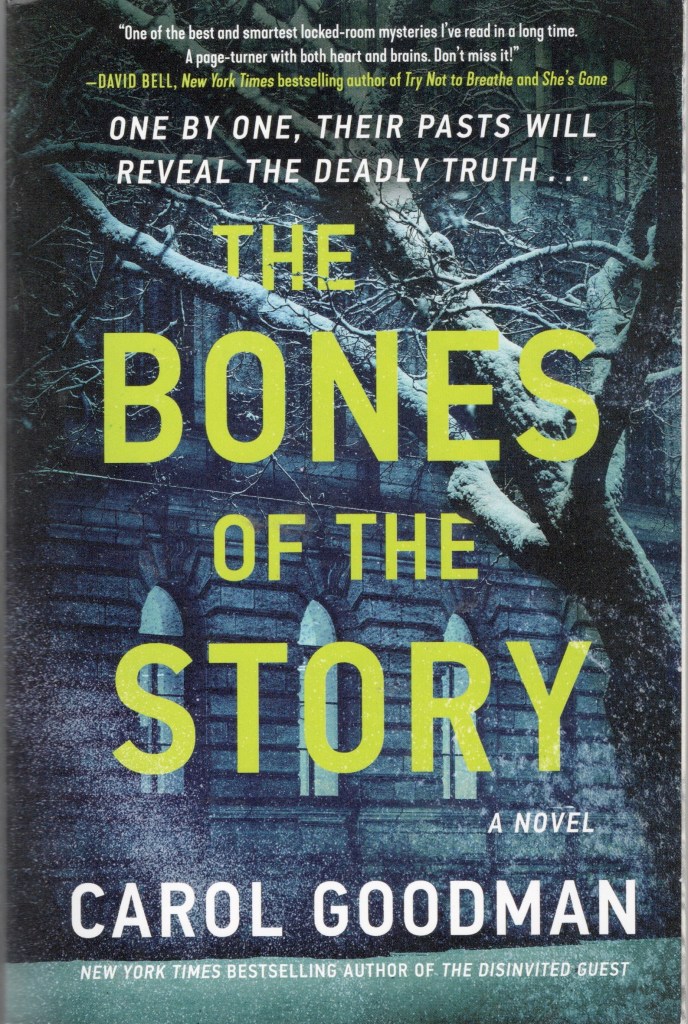
I have sung the praises of Carol Goodman and her fantastic novels numerous times here on this blog; literally to the point that I have begun to wonder at times whether or not I have said certain things about her work before. I know I always bring up Dark Shadows and the great Gothic writers of my youth that I loved; give me a dark brooding mansion and a sinister legend of murders and ghosts and I am in my favorite place. But it does get repetitive, and that will hardly convince you, Constant Reader, to pick up one of her books (you won’t regret it), will it?
So, this time around, rather than talking about her Gothic sensibility, this might be a good time to look at this most recent read of hers in a different way.
“I’m just having trouble getting back on track.”
Nina Lawson isn’t the first student this semester–or even the first today–to attribute their academic woes to a deviation from some metaphorical track. As Dean of Liberal Arts, I’ve heard every excuse, sob story, and tragedy over the course of the last two years. But the image, coming as it does at the end of a long day at the end of a very long year, jolts me as if we’re both on a train that has suddenly jumped off the rails into an abyss.
To give myself time to craft a response I look down at Nina’s folder. I see that she comes from Newburgh–a small city about an hour south of campus–that she did well in her public high school even after her classes went remote in March of her senior year, and she’s earned the Raven Society writing scholarship to Briarwood on the basis of a short story she wrote in high school. There’s a note in my assistant’s meticulous handwriting that Nina had to defer admission for a year to help her single, out-of-work mother with the bills. She has a work-study job in the financial office and an off-campus job at a local restaurant. No wonder she looks tired, I think, gazing up at her. Her light brown skin is mottled with acne. She’s slouched in a zippered sweatshirt, hood up, eyes swollen and bloodshot, lips raw and chapped. “I wish you had come to see me sooner,” I say in my firm-but-gentle voice. “The withdrawal deadline passed six weeks ago.”
“Someone told me it had been extended,” she says, not looking up.
This opening scene establishes several things: the book is going to be set at a prestigious small private college; the school has an excellent creative writing program; and our main character is getting a little jaundiced and world-weary in her position. The “I’ve heard it all before” is a problem for people in these kinds of jobs, and often occurs in education–the weariness and suspicion that students are lazy and just don’t want to work eventually becomes so engrained that they have a closed mind before the student even starts talking. I’ve experienced this myself any number of times–this past week I related two experiences I had in school where I was basically called a liar by an educational authority figure only to get an apology later when I was proved to be telling the truth to my dad, which ended with an airy “teachers never believed me, ever”–which probably explains why I never really got into school the way other smart kids did. But fortunately, Nell gives Nina the withdrawal permission, because she thinks something else is going on with Nina and she wants to help her (which was lovely to read), but Nina won’t open up to her. Briarwood is getting ready to open it’s new Writer’s Center, and there’s a big celebratory party coming up–as well as a bad winter storm–and that night, at a traditional ceremony where the students carry candles up the side of a mountain, there’s an accident and Nina falls into one of the ice caves…and when she is rescued, the skeleton of a young woman is found–which triggers Nell’s memories of being a writing student twenty-five years ago, the friends she made in the program, and the secrets they’ve kept ever since.
Which means the book is also a dual-timeline novel, which is one of my favorite tropes in crime novels (any novels, really); the book is also a master class in how to do a dual-timeline novel. Part of Goodman’s skill is taking those young, wet-behind-the-ears college students and evolving them as they make their way through their college years, as well as who they’ve turned into in the intervening years. There’s not a single false step in any of the character development, which isn’t easy when you’re juggling any number of characters.
And in the present day timeline, Goodman pays homage to several classic crime novels–particularly Christie’s And Then There Were None, which was delightful. She also made several references, throughout the book, to MARY STEWART, who I often think of as Goodman’s literary godmother…and with the past story, there’s some real The Secret History stuff going on, too. The Stewart references aren’t for the terrific suspense novels she wrote, but the equally terrific Arthurian saga she created (The Crystal Cave, The Hollow Hills, The Last Enchantment, This Wicked Day), which I should revisit sometime.
The suspense and tension continues to build, and with everyone trapped on campus by a winter storm–and characters start dying, one by one…the suspense almost becomes unbearable as the secrets and lies from the past finally come home to roost in the present.
(I will say that when I started listening to the book, I thought to myself if this were a Gothic novel this is who the killer would be–only to be correct! But the motive wasn’t what I thought it was…)
The Bones of the Story is well-written, with great language, terrific tone and style, and very literate and smart…so another feather in the cap of the divine Carol Goodman.
Despite everything that is wrong with Alabama culturally, societally, spiritually, and politically, I’m not ashamed of being from there (and never will be). I do shake my head with every new law passage or court ruling there that flies in the face of decency and the Constitution, because it is sad that the majority of people there are not only so lost spiritually and intellectually, but also defiantly cling to their backwardness. My part of the state, where my people are from, used to be very remote and rural; many native Alabamians, when I tell them where I’m from, are often confused, having never heard of it before. It isn’t on any interstate, rooming options are limited, and you really have to drive for about an hour from the nearest interstate to get there. It’s not quite as remote as it used to be; many of the roads that were dirt and/or gravel when I was a kid are paved now…but there are still plenty of unpaved roads up there in the hills and along the countryside. It’s very different there now, too–the country stores are all gone, and there’s definitely a lot more McMansions than there ever was when I was a kid. (Dad and I often marvel at the palatial homes we come across driving around the county, as Dad shows me places from his childhood and when he and Mom were first married.)
And it’s not cheap to buy property there, either, which was also a bit of a surprise.
Dark Tide was my first attempt to deal with my history and where I am from, but was cowardly in the end and wound up editing most of the backstory of my main character out. It didn’t really fit and made the book something different from what I was trying to do with the book, but as I edited it all out I also felt that I was being a bit cowardly. I knew I was going to have to deal with the troubled history (and present) of the county and state, so I wrote Bury Me in Shadows to not only try to get a better understanding of the area, but to deal with that troubled past. It wasn’t easy–I often found myself cutting things to a bare minimum in a stupid attempt to not give offense, and there were many times while writing it when I’d wince or skip a scene because I wasn’t sure how to word it properly without being preachy. I wanted to show through the story how refusing to face the past with a realistic and jaundiced eye can cause generational trauma and how that, in turn, perpetuates societal racism and homophobia in an endless cycle that strangles growth.
But writing that book also took me down a research wormhole that I’ve never really climbed back out of, and being there last weekend also reawakened some memories as well as creativity and potential future stories. (Dad and I found a really sad set of graves in the same cemetery as my maternal grandparents and uncle; parents and two small children –one was only four months–who’d died on the same day. We speculated as to how that happened, tornado or car accident or house fire, but a distant relative my father also knew explained that the father killed them all and then himself…which naturally started churning things in my brain again.)
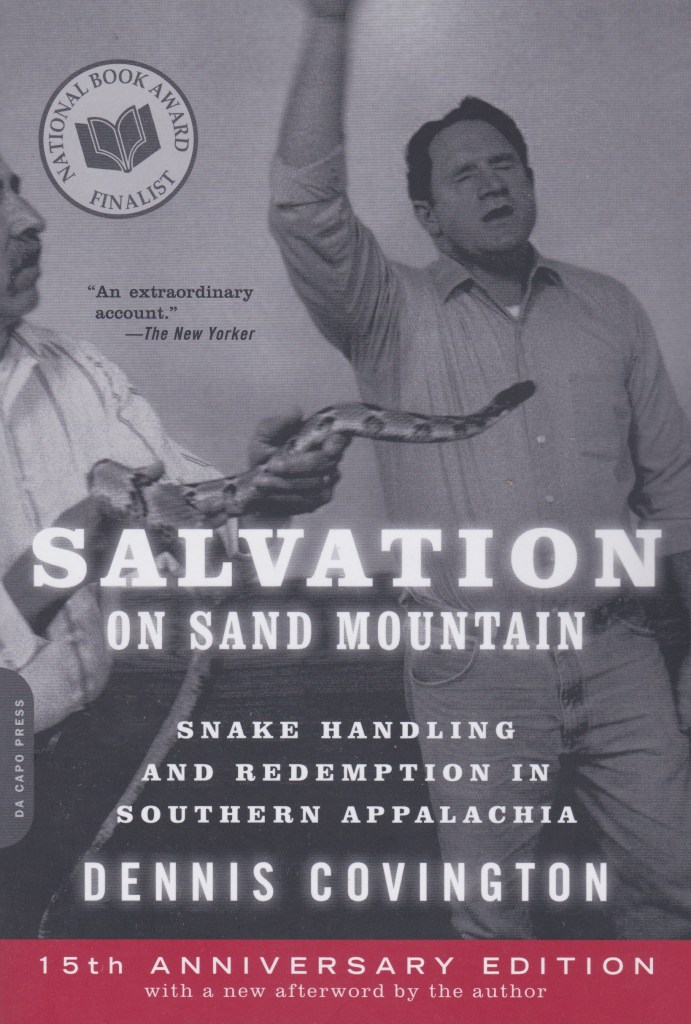
I also discovered, during the pandemic, a horrifying documentary called Alabama Snake, which focused on the snake handling churches of northeast Alabama and a minister who tried to kill his wife with snakes…and then discovered there was also a book about the culture from a reporter who’d covered the trial, and continued investigating and looking into the snake handling churches.
I finally read it last week.
The first time I went to a snake-handling service, nobody even took a snake out. This was in Scottsboro, Alabama, in March of 1992, at The Church of Jesus with Signs Following. I’d come to the church at the invitation of one of the members I’d met while covering the trial of their preacher, Rev. Glenn Summerford, who had been convicted and sentenced to ninety-nine years in prison for attempting to murder his wife with rattlesnakes.
The church was on a narrow blacktop called Woods Cove Road, not far from the Jackson County Hospital. I remember it was a cool evening. The sky was the color of apricots, and the moon had just risen, a thin, silver crescent. There weren’t any stars out yet.
After I crossed a set of railroad tracks past the hospital, I could see the lights of the church in the distance, but as I drew nearer I started to wonder if this was really a church at all. It was, in fact, a converted gas station and country store, with a fiberboard facade and a miniature steeple. The hand-painted sign spelled the preacher’s first name in three different ways: Glenn, Glen, and Glyn. A half dozen cars were parked out front, and even with the windows of my own car rolled up, I could feel the beat of the music.
It’s very difficult to think about Alabama without religion being involved in some way. Alabama is a very religious state, with churches everywhere–one of the things I always comment on whenever I am up there driving around with Dad is “there sure are a LOT of Churches of Christ up here”–you really can’t go anywhere without driving past at least two. Both of my grandmothers were devout (paternal family was Church of Christ; maternal Southern Baptist, although both my mom and uncle married into CoC and joined), but only the CoC was a fanatic with a Bible verse for everything and the uniquely American/Christian methodology of interpreting everything to justify her own behavior and conduct–which wasn’t actually very Christian (memorization doesn’t mean comprehension). I can remember driving around down there once with my grandmother–either in Alabama or the panhandle of Florida, where she wound up after retiring–and driving past a church (I won’t name it because she was wrong) and I said something and she sniffed in disgust. “They speak in tongues and take up serpents,” she replied. “Which is apostasy.”
Apostasy. What a marvelous word, and one that has always snaked its way through my brain, and comes up often whenever I talk about religion. But I digress; I will someday finish the essay in which I talk about my relationship with Jesus and my rejection of dogma.
I also liked the phrase “taking up serpents,” and always wondered why she said that instead of snake-handling.
I had originally thought, when I bought this book, that it was about the attempted murder by rattlesnake and subsequent trial, like the documentary I mentioned; rather it’s an exploration of this sect of Christianity by a curious reporter, and how being exposed to this style of worship made him rethink his own past, his relationship with his own faith, and about Alabama people in general. One of the reasons I enjoyed the book so damned much–even as I was repelled by its subject matter (snakes are the source of some of my worst nightmares; even harmless little garden snakes turn my stomach and engage my flight mechanism)–was because Covington has a very easy, natural and authentic authorial voice, and he really can put you into his mind as he witnesses and experiences this uniquely American brand of Christianity. It was also interesting as he got caught up in the entire experience, as he talked to the members of the various sects (there’s no national structure to the snake-handling churches, as there is with say the Southern Baptists or the Methodists), and watched them actually take up their serpents in the name of the Lord.
There’s also interesting information in the book about how these sects were created–or how they were descended from, surprisingly enough, the Methodists and how that evolved into these Appalachian sects, as well as where the people of the Appalachian regions came from, and that entire Southern mentality of fighting for their traditions and their “way of life” (it was also interesting that it’s a white phenomenon, at least as best I could tell in the book); of how they secluded themselves up in their mountains and hollows and were self-sufficient…but modern technology has forced them into a world that has left them behind.
I’ve always wanted to write about snake handlers…but as I mentioned before, snakes are the stuff of my worst nightmares, so yeah going to witness in person their rites is a big “no” from me, but I feel like I can maybe do that now, or at least make an attempt. I don’t know how much more research I’d need to do to fictionalize snake handlers, but some day it will happen.
Here we are on Monday morning and I am awake much earlier than I have been in well over a week; part of the problem of finishing a vacation, alas. I feel a bit sleepy still this morning, which is probably very much a result of the alarm going off this morning and waking me up (along with Sparky’s need to be fed), but that’s okay. I am going back to the office in a little while and I am feeling a bit more trepidation than I usually do on Monday mornings. Yesterday was okay; I got some things done around here and the kitchen doesn’t look like an utter disaster this morning, which is always a nice way to start the week. I have to pick up prescriptions on my way home from work tonight, but other than that can come straight home and collapse into my chair.
But a normal routine again might be nice to slip back into, you know? I am thinking I might take a week off later this summer (around my birthday, most likely) just to have some down time at home when I can relax and work on things around here that inevitably get pushed back from week to week due to lack of time and exhaustion. I know I want to read some more of my book tonight, and of course as always there’s some filing work that needs to be done at some point. I did manage to get two entries managed yesterday about the books I read over the last week, and I have two more (Salvation on Sand Mountain, The Bones of the Story) to get done, and I had started one about Dead Boy Detectives before I left on the trip that I absolutely should get finished at some point. I don’t know what’s waiting for me at the office this week, but I am not terribly worried about it, either. Worrying, as Mom used to say, is just borrowing trouble–which is an interesting quote from someone who suffered from generalized anxiety disorder.
But Mother’s Day without Mom is becoming easier. Last year’s was horribly sad, when the loss was still incredibly fresh. This year wasn’t so bad. (I can’t speak for Dad, though.) Everything becomes easier with the passage of time, which is another one of those incredibly sad realities. This year? I felt sad only a couple of times throughout the day. The Mother’s Day newsletters and sales didn’t feel like a gut punch every time I saw one. I already knew the only way to get past the grief was to let time pass, a lesson I’ve learned far too many times in my life already, but because I’d been through a lot before I knew how this would run its course. It feels a bit cold not to get emotional about it anymore, but the sadness is slowly giving way to fondness, where the memories make me smile rather than make me seize up with grief–which is a dramatic improvement, quite frankly, even if there’s a slight element of guilt involved, too.
Well, I thought this would probably be brief this morning, and I was correct. I’ll probably be back later at some point, Constant Reader, so go ahead and have a great Monday, and I’ll chat at you after spending my day in the spice mines. Bonjour!
My appreciation of all things Gothic is at least partly due to the old soap opera Dark Shadows, which I watched as a child and has crept its way into my work, my reading, and the majority of my entertainment consumption ever since. I have always loved anything with a touch of the Gothic in it, and spent my teen years (and a lot of my twenties and thirties) loving and consuming Gothic fiction. The post-war style of Gothic literature, marketed primarily towards women, was being done by authors whom I loved like Phyllis A. Whitney and Victoria Holt and others (while Mary Stewart’s work was also considered Gothic and featured many of the tropes of Gothic fiction, I consider her books to be Gothic-adjacent, and I will probably explain that better and in more depth at another time) and I couldn’t get enough of them. Holt and Whitney, to me, were the two best at this subgenre, and when Gothics stopped being published in such great numbers, I was disappointed and mournful.
Which is why I love Carol Goodman’s books so much. Her books have that Gothic feel to them, are beautifully literate in their prose and structure, and they are also incredibly smart. The books also cover art, education, and the classics; every book is filled with classical references that inevitably make me feel smarter for reading them.
The Drowning Tree is no exception.
The river feels wider from the shallow boat, the humpbacked hills of the Hudson Highlands looming like the giants Dutch sailors believed dwelled there.
“Just put the water behind you,” he says.
I can’t see the man in the boat behind me, and I don’t want to risk my precarious balance turning to see him.
“You’re been through the drill,” he goes on.
And I have. Six weeks practicing in the indoor pool under the watchful eye of the kayaking instructior, tipping myself into blue chlorinated water and rolling up again, gasping, into the humid air, all in one long in-drawn breath. I’ve practiced it until it’s become second nature, but it’s one thing to turn over in the clear, warm pool water and another to imagine myself hanging upside down in the cold gray water of the Hudson, trapped in the currents…
“This is where the current is most dangerous,” the voice says. “The Dutch called it World’s End.”
Like many of Goodman’s novels, this book is set in the Hudson Valley and there’s also an institute of higher learning–Penrose College–involved. Our main character here, Juno McKay, runs a stained glass restoration business in the same town where she went to college and grew up; she also lives in the building that houses her glass works. Her best friend from college, Christine, is coming back to the college to give a lecture into her research into a stained glass window at the college that Juno’s company is in the process of being restored. But before the lecture, Juno sees Christine arguing with the school president, the most recent Penrose, and afterwards when they have drinks together before Christine catches her train back into the city, Juno gets the impression that somethings’s going on with Christine–and then she is found, drowned in a creek along the shoreline of the original Penrose estate, near a sunken sculpture garden, in a scene very reminiscent of the scene in the stained glass window Juno is restoring. IS there a connection? Was it an accident, or was it murder or suicide?
Like any intrepid heroine in a Gothic novel, Juno is soon drawn into the mystery Christine was looking into–what happened years ago, between the first Penrose, his wife and her half-sister? How many secrets does the abandoned estate (very Nancy Drew, too–it reminded me of The Clue in the Crumbling Wall a bit) conceal? What secrets did the original Mr. Penrose, an artist and painter, conceal in his paintings and art and stained glass windows? Briarwood, a local mental institution, also comes into play as well; years ago, Juno’s ex-husband tried to kill her and their infant daughter by drowning them in the river. They survived, but his mental health did not and he’s been in Briarwood ever since. The pattern of three from the past with Penroses and the half-sister also seemed to play itself out with Juno, Christine, and Juno’s ex-husband, pulling the reader into all these complicated skeins and twists and turns, until the book comes to an extremely satisfying end with all secrets revealed and life back to normal at the end.
What a great read, and a great example of why I love Goodman’s work so much.
I had never read Jim Thompson before this past week.
I knew of him, of course; it’s very difficult to be a crime writer/reader and not to have. He probably isn’t as revered as authors like James M. Cain or Patricia Highsmith, but he also wrote dark stories about outsiders from society living on the fringes who tend to do whatever they need to in order to go on surviving, and that’s the kind of fiction I’ve always enjoyed reading for the most part. I kind of avoided him because…well, because straight white male writers of his era tend to be misogynistic, racist, and homophobic; those things tend to make me recoil as well as take me out of the story. I bought my copy of The Killer Inside Me a number of years ago, primarily out of curiosity and feeling like I should at least give him a go, and for some reason it jumped out of me when I was selecting books to take on the trip this past week…although thinking about it more, I think I bought it (and took it on this trip) because I was thinking about Chlorine, and wanted to read some noir. This was the one everyone seemed to think I should read, and so…into my backpack it went. I read it at night in the motel in Alabama last weekend, and it did not disappoint.
I’d finished my pie and was having a second cup of coffee when I saw him. The midnight freight had come in a few minutes before; and he was peering in one end of the restaurant window, the end nearest the depot, shading his eyes with his hand and blinking against the light. He saw me watching him, and his face faded back into the shadows. But I knew he was still there. I knew he was waiting. The bums always size me up for an easy mark.
I lit a cigar and slid off my stool. The waitress, a new girl from Dallas, watched as I buttoned my coat. “Why, you don’t even carry a gun!” she said, as though she was giving me a piece of news.
“No,” I smiled. “No gun, no blackjack, nothing like that. Why should I?”
“But you’re a cop–a deputy sheriff, I mean. What if some crook should try to shoot you?”
“We don’t have many crooks here in Central City, ma’am,” I said. “Anyway, people are people, even when they’re a little misguided. You don’t hurt them, they won’t hurt you. They’ll listen to reason.”
As simply written as this book is in terms of language–you’re not going to find complicated sentences in Thompson’s work–it’s actually a very smart and clever novel that kind of sneaks up on you, and also pulls the trick Patricia Highsmith/Daphne du Maurier were so good at: making you root for a horrible person to get away with committing crimes. Thompson has captured Lou Ford’s point-of-view and voice so brilliantly that you can’t help admiring him as he goes on his spree of torture, illegality and murder, fooling almost everyone in “Central City” (I loved the comic-book simplicity of the city name) into thinking he’s not only a good guy, but a decent one and a friend to everyone who is just going around doing his job. He also is very quick on his feet, often confounding people asking him questions about the strange crimes on his periphery by the intelligence and honest-to-God-seeming confusion by the questions in the first place. It’s a great act, and he pulls it off time and again over the course of the book, and Thompson/Lou do such a great job with said act that you start to root for him to get away with things. All the interior happenings and crimes also tend to distract the reader from what is actually going on in the book–which is that all of Lou’s crimes circle a local businessman/power broker whom he blames for murdering his half-brother…who took the blame for a crime involving a little girl when they were young that Lou committed. Lou also is a very unreliable narrator, who doesn’t give us anything beyond his own point of view and train of thought, which disguises from the reader brilliantly his own pathology.
I can imagine this book alarmed and disturbed people with its stark and realistic view of what can go wrong when a sociopath is given a gun and a badge, and how an exceptionally smart killer, which Lou is, can use the system to cover up his own crimes and pin blame on others. And it does seem, all the through the book, like Lou is going to be able to explain it all away and get away with all of his crimes…
I really enjoyed this book, and it made me realize I’ve been a little unfair to the straight white male writers of the past by avoiding their work. I’m definitely going to read more Thompson; this was exceptional and I do recommend you read it.
Ah, Sunday. I slept in this morning–almost all the way to ten o’clock, it’s like I don’t even know me anymore–but it felt good and I am awake and enjoying my first cup of coffee this fine morn. I did some errands and chores yesterday, which was great, and watched a lot of nothing on the television while I was playing around doing research on-line. I did finish reading Carol Goodman’s marvelous The Bones of the Story (more on that at another time), and spent some more time with the Scott Carson I started reading in Kentucky. There’s still a lot that needs doing around here, but it’ll get done and I still am a little worn out from the drive home, so maybe today’s not the day to try to be super-productive. I also spent yesterday trying to catch up on the state of affairs in the country and world (glad to see people still dragging the puppy slaughterer), which was depressing but necessary. I am way behind on my emails, which is something I will have to address (tomorrow). Heavy sigh. But one can’t hide in their unreality longer than one can and still be functional, can one?
Ah, well.
I also got a signed copy of the new Lori Roy novel, Lake County, in the mail yesterday, which was marvelous. She’s one of my favorite writers, and has been ever since I met her on a panel at Bouchercon a million years ago and then read her Edgar Award winning debut, Bent Road, which was incredible, and I’ve been loving her (and her work) ever since. Once I finish the two novels I am reading, I am digging into the new Roy. Huzzah! I have so many good books on hand to read–I still have the latest Angie Kim, among many others, in that stack on the end table in reach of my chair–that it’s hard to decide what to read next, and then books like the Angie Kim (and the Celeste Ng, and the Angela Crook, and the Jess Lourey, and on and on and on it goes) end up not getting read in an expeditious manner. I have certainly been enjoying all the reading I’ve been doing lately, and need to stay on top of it as much as possible.
The more I look into the suspicious death of Noah Presgrove, the more intriguing the story becomes. It is, as Carol’s latest title proclaims, ‘the bones of the story’; obviously I am interested in what happened the last night the young man was alive and how he actually died, but the basis of the story, it’s fundamentals (small rural town; corrupt local justice system; three day long weekend party serving minors illegally; and of course the battered naked body in the fetal position on the side of the road) make for a fascinating and interesting foundation for a fiction novel, exploring the bitterness and old hurts and feuds and nastiness in a poor, small rural town in Oklahoma (which I will probably change to Kansas, naturally), and peeling back the layers of deceit and resentments and lies and relationships is kind of appealing to me.
It’s also Mother’s Day today, my second without one, and I am not actively avoiding it today, either, the way I did last year. Last year it was still too new and too fresh for me to even be on-line much on that day, but this year is easier. Seeing Dad around Mother’s Day (since it’s always the weekend after Decoration Day, or The First Sunday in May) also made it easier. We talked about her a lot, and Dad told me a lot about their teens and the early years of their marriage, when they were very poor (I didn’t realize how poor we actually were when I was a child and a teen until many years later; living in Kansas kind of twisted that as we were considered well-off there), which made me smile a lot. Obviously, I will always miss my mom, but it’s not as painful to think about her as it used to be. That’s progress, and now I can remember her without recriminations about being a bad son or taking advantage of her kindness or disappointing her. I think that’s normal when you lose a parent or a loved one; you regret time not spent together and think about all the times you were a shitty person. But…I was also horribly spoiled by my parents, and they never stopped trying to spoil me even after I was an adult, because to them I was always their baby and since I didn’t have kids…well, they never stopped seeing me that way. Then again, it may just be a parent/youngest child thing.
And on that note, I am heading into the spice mines. I’ll be back later–I have soooo many entries to catch up on; the books I’ve read alone need to be discussed–but I am also not putting any pressure on myself about getting things done today as I am still in recovery mode from the trip. So have a great Mother’s Day, everyone; hug your mom for me and if yours is also gone like mine, I am giving you a big virtual hug.
I got home last night around seven, after eleven hours on the road from Kentucky on what was actually a rather beautiful day for a drive. I finished listening to The Drowning Tree by Carol Goodman, and timed it perfectly so I could queue up her most recent, The Bones of the Story, to listen to for the rest of the way. I was tired, and as always, when I got hungry I was on a lengthy stretch in northwest Alabama where there is hardly anywhere to stop. By the time I got into an area with places, I wasn’t hungry and debated in my mind at every exit whether or not to stop. Again, though, it was a beautiful drive and a beautiful day. There wasn’t even traffic when I got to New Orleans other than the usual backup before the bridge across the river. It was nice to get home, relax in my chair, be stalked by Sparky, and just be home. I did keep thinking all day that it was Sunday, and had to remind myself regularly that it was, in actuality, Friday. I slept well last night after getting home–I missed my bed, my cat, and my partner, as always–and of course, Demon Kitty got me up at six this morning for his feeding. But…he also got back into bed with me for mostly cuddling and purring with the occasional apex predator cat attacks. It’s good to be home. I spent the evening last night watching our shows and getting caught up (Mary and George, Hacks, Abbott Elementary) and I can now stream The Iron Claw on Max, so we’ll probably watch that later. I have to definitely run errands this morning–mail, groceries, prescriptions, library sale–and am kind of looking forward to a nice weekend of re-entry into my regular life and settling in.
I also have lost track of the world because I really wasn’t doing much on-line other than the occasional deletion of unnecessary emails and the very rare moments when I would look at social media on my phone while I was waiting for something. But on the other hand, I am not so sure that’s a bad thing. It was nice to be away from the world and social media and everything else and just relax, you know? I also managed to read two books on the trip (Salvation on Sand Mountain and The Killer Inside Me; more on those later) and started a third (Where They Wait by Scott Carson), which was fun, and also thought about writing and my future, in a more macro and overarching way. But whereas before the trip that would have overwhelmed me and I would have to walk away from the computer, this morning I feel more inspired and clear-headed about everything than I was before I left…which points out how important it is for us writers who work full-time jobs to actually take a break from ALL work, not just the day job.
The trip itself was nice. I got to spend time with my dad, and another baby picture of me appeared, and one that actually showed my face! It’s kind of a family joke, but we have boxes of pictures of my sister in the first two years of her life–and two in total of me (and she’s in one of them). It doesn’t mean anything–there aren’t many pictures of either of us taken between 1963 and 1967 or so, for example (when Dad bought his first camera). They were living with my grandfather after my sister was born and they were still in high school; so everyone around them was taking pictures of the baby (and my sister was a beautiful baby); I was born right before they moved to Auburn for my dad to go to college and we were very poor for a long time; they had no camera and they didn’t know a lot of people there, either, but it’s always been a family joke about having no baby pictures of me as opposed to the intensely documented first two years of my sister’s life. I did scan said picture with my phone, so I may share it someday. I also got to learn some more family history–Dad reminisced about the early years with Mom and the two kids; and it really is staggering how hard they worked and sacrificed for us both. Dad of course thinks he never made things easy enough for her, but he also never takes into consideration how much Mom loved him. He’s doing better, but he’ll never be the way he was before, either.
And on my drive back yesterday when I stopped for gas in Toomsuba (I always stop there on the way home, it’s only about another three or so hours from there and the anticipation of being home starts there) when I noticed I had a text message from a friend that was rather cryptic, and I was puzzled, but it mentioned “Donna Andrews” and Bouchercon so when I got back in the car I texted back, and then checked my emails. So yes, once again I am nominated for an Anthony–that’s three years in a row, which is very cool–for the anthology School of Hard Knox, which I “co-edited” (I really didn’t do much) with Donna Andrews and Art Taylor. It IS an excellent anthology, and if you like crime short stories, you really can’t go wrong with it. But it was nice to be nominated again; I didn’t think I really had any chance this year for a nod, so that was a very pleasant surprise…and you know, I’ve never really basked in the glow of sharing credit with two people whose work I respect and who I also respect and love as people.
And on that note, I think I am going to head into the spice mines. I feel a bit hungry this morning, so I need to eat something and start my day. It’s so good to be home, and I’ve missed you, Constant Reader, and I’ll probably be in and out all weekend here, trying to get caught up on talking about books I’ve read and other things. So have a lovely Saturday, and I’ll chat with you again later.
Saturday morning and I am off to Alabama later this morning. I still have to make a packing list, finish some chores around here, and get gas on my way out of town, but there’s no rush and no need to stress about getting there. I’ll probably stop somewhere to eat lunch after I cross the Mississippi state line, and then will have dinner with Dad up there. I’m excited to see Dad again, but I am a little worried about the drive and my stamina. I am planning to drive back to New Orleans on Friday so I can have two days to recover from the lengthy drive, which will be exhausting. I am going to listen to Carol Goodman’s The Drowning Tree–which I started listening to on the drive back from Panama City Beach last October, but never finished; I need to start over but that’s perfectly fine; I love Carol’s work, and I am probably going to listen to Lisa Unger on the way home. I really wish I had started listening to audiobooks in the car years ago, you know?
Yesterday was nice and relaxing. I like working at home on paperwork and stuff because outside of an attention-needing kitten with BIG energy, I don’t have any distractions. I can focus in a way that I can’t when I’m in the office. But once my work was done I went out and ran my errands–picking up things for Paul while I’m gone, mail, prescriptions, etc.–and then came home and relaxed. We finished Dead Boy Detectives, which we both absolutely loved, and then caught up on Abbott Elementary before moving on to the new season of Hacks, which has not declined in quality at all. I did some cleaning around here yesterday, too–got the laundry finally caught up, and almost caught up with the dishes, too (last load needs to go in this morning before I leave), so I can leave with a clear conscience knowing I am only going to come home to Paul’s mess, and he really doesn’t make much of one in the kitchen anymore. He generally just uses the microwave or makes scrambled eggs for the most part while I’m gone.
I also signed and uploaded my tax returns yesterday–another refund, thank you, baby Jesus–and so that’s out of my hair. It’s always nice to not have to worry about things and go on a trip with a fairly clear conscience. I’ll probably take some stuff with me to read and work on, knowing I may not have time to do much of anything while I am there. Dad will have been gone for almost two weeks by the time we get up there on Monday, so he is going to have lots of chores to do–and he never allows me to help, which drove Mom crazy. This time it’s a stamina issue for me, which is truly sad given I’m sixty-two and he’ll be eighty-two later this year, but I also had two major surgeries since Labor Day and damn it, I am old. Twenty years ago I’d probably already be back to normal and going to the gym three times a week trying to burn off the fat I would think I had gained during my long inactivity. I put on a shirt the other day for work and wondered for the first time in years “does this make me look good or do I look fat?”–so maybe the vanity is coming back, which may not be an entirely bad thing.
I just checked the weather for both Alabama and Kentucky and looks like a lot of rain, warm during the day and cold at night. Well, we won’t be going anywhere at night but I’ll need to take a jacket of some sort with me just in case; a zip hoodie should do the trick.
And on that note, I am going to head into the spice mines. Have a lovely weekend, and I am not sure when I will be back. Possibly tomorrow, or who knows?