Every Breath You Take

I got absolutely nothing done, other than some laundry and a load of dishes, yesterday because I was too engrossed in reading Rebecca Chance’s Killer Affair to put it down. So, today, after I make my grocery run, I simply have to buckle down and clean as well as write and line edit. I’ve decided on my next book to read–Lyndsay Faye’s Gods of Gotham, which was nominated for the Edgar for Best Novel–and I am really looking forward to reading it. Lyndsay has written five novels, and been nominated for the Best Edgar novel twice–no small feat, I might add (her other nomination came this year for Jane Steele, which I am also looking forward to reading).

So, I survived the grocery store, made brunch for Paul and have done the dishes. I’m not feeling particularly motivated at the moment; I also had to walk to Office Depot to get ink for the printer and the six block to-and-from walk (twelve blocks in total) in the heat and humidity has sucked the life and energy right out of me. Just sitting at my desk and letting the air conditioning wash over me feels so lovely that I am tempted to simply blow everything off and read Gods of Gotham, which would be a huge mistake. I simply cannot keep blowing everything off; the kitchen floor is disgusting and so is the living room; perhaps a shower will pick my attitude right up out of the gutter where it has fallen. I’m so very close to being finished with the second draft of “For All Tomorrow’s Lies” that it’s really egregious to keep putting off working on it; and it certainly isn’t going to kill me to drag the hard copy of the WIP out and start marking it up again, either.

This laziness is why I am always playing catch-up on everything.

Heavy heaving sigh.

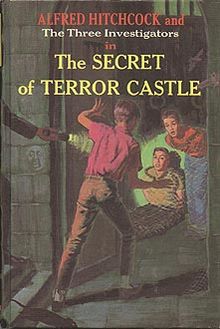
I did manage to also finish my reread of The Secret of Terror Castle last night; the very first Alfred Hitchcock and The Three Investigators mystery, and despite being dated, the story still holds up. The three young detectives (Jupiter, Bob, and Pete) are much better developed that the main characters in so many other children’s mystery series, with very distinct personalities, and the world in which they inhabit (Rocky Beach, California, close to LA–my assumption is it’s based on Long Beach) is interesting and also pretty well fleshed out: the Jones Salvage Yard, which is run by Jupiter’s aunt and uncle, always was interested and many of their cases came from things that Uncle Titus bought at an estate or yard sale; their headquarters, a battered old mobile home hidden from view by artfully arranged piles of junk and had secret entrances; their ability to use a gold-plated Rolls Royce (Jupiter won the use of the car in a contest), complete with British chauffeur, Worthington; and their relationship with Alfred Hitchcock, originally a bit fractious but came to be one of friendship and mutual respect as the boys proved themselves to be excellent detectives in case after case–all of these things made this a favorite series of mine. Not to mention, that in almost every book the boys had to actually solve a mystery, based on clues they found and observations they made–so the books were a bit smarter than the other series.

I’d love to update this series.

And now, here’s a hunk for your Sunday Funday, as I head back into the spice mines.

IMG_0976 2


Lust to Love

Thursday! This week has slipped right through my fingers, hasn’t it? I looked at my weekly to-do list and was very disappointed to see many things not crossed off, that will have to carry over until next week. I am going through the WIP painstakingly; I am doing a line edit, which is something I’ve not done in a long time on one of my own manuscripts (which is really shameful to confess; in my own defense the copy editors haven’t had to do too much to my manuscripts to clean them up because I generally write very clean copy to begin with), but I am also trying to make this manuscript leaner than it came in on the last several drafts; it’s still sitting at over a hundred thousand words and at most, it should be ninety. At MOST. But it’s taking me longer to do than an usual edit, and I am having to pay more attention because I don’t have long stretches of time to dedicate to it, grabbing an hour here or there whenever I can. I will probably wind up working on it a lot this weekend because I really want to get it finished, once and for all.

I’ve also been revising a short story at the same time, and that’s coming along really well, too. I am very happy with the writing I’ve been doing, which is a lovely thing.

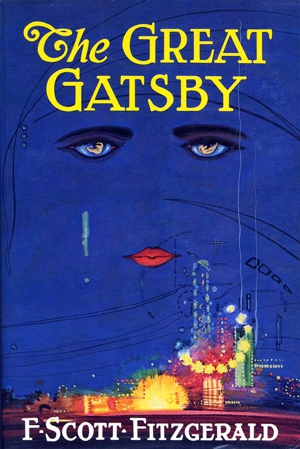
So, The Great Gatsby. I’ve been thinking about it a lot since I finished reading it the weekend before last, and while I am still not convinced it is either the great American novel or a masterpiece, I did enjoy it much more than I did when I was a teenager and had to read it for American Lit at Bolingbrook High.
TheGreatGatsby_1925jacket

In my younger and more vulnerable years my father gave me some advice that I’ve been turning over in my mind ever since.

“Whenever you feel like criticizing anyone,” he told me, “just remember that all the people in this world haven’t had the advantages that you’ve had.

He didn’t say any more but we’ve always been unusually communicative in a reserved way and I understood that he meant a great deal more than that. In consequence I’m inclined to reserve all judgements, a habit that has opened up many curious natures to me and also made me the victim of not a few veteran bores. The abnormal mind is quick to detect and attach itself to this quality when it appears in a normal person, and so it came about in college I was unjustly accused of being a politician, because I was privy to the secret griefs of wild, unknown men.

When I read this book in high school, all I could think was how boring. As my teacher went on and on about the symbolism of the green light on the dock, the eyes on the billboard in the valley of ashes on the road from the Long Island twin villages of East and West Egg (where the Wilsons’ garage was), the valley of ashes itself, and on and on, I just rolled my eyes in the back of the room, unable to wait to get back to reading whichever Ellery Queen or Agatha Christie or P. G. Wodehouse or Victoria Holt or Phyllis A. Whitney novel was next up in the stack from the library. My primary takeaway from the book? Every character in it was awful, even Nick Carraway, the narrator who knew everything, said nothing, and allowed the tragedy to unfold.

Several years ago, I was talking about books with a writer friend and I just kind of casually tossed out the notion, without putting a lot of thought into it, that “I mean, The Great Gatsby is a murder mystery told in reverse. A crime writer would have started with the body in the pool, unpeeling the layers that led Wilson to shoot Gatsby, with the big reveal at the end that Daisy was actually driving the car.”

Laura Lippman, one of our most talented voices and one of the smartest people I know, has said that she doesn’t like when people take books that are considered ‘literature’  and use them as examples of crime novels, to give the genre more cred (and is there anything more annoying than the phrase elevates the genre? Whenever I see that it makes me homicidal, because it implies that everything else in the genre is garbage), like those who say, “well, Crime and Punishment is a crime novel.” The definition of mystery that Mystery Writers of America uses, though, (paraphrasing) is “any fiction about a crime; the commission of, the solving of,  the events leading to,and/or the after-effects of,  a crime.” Dostoyevsky’s book certainly fits that description, as does To Kill a Mockingbird, Les Miserables, Sanctuary, and so many other books. Laura’s point, though, is that there are plenty of crime novels that are literature and can be seen as such without having to pull in books that aren’t traditionally seen as crime novels to give the genre credibility.

But in all honesty, I would rather read The Great Gatsby written as a crime novel rather than the way it is written and structured. It’s fine–don’t come for me, Gatsby fans, seriously–as it is, but I think the themes could be explored more deeply in a crime novel. On this read, I didn’t find I cared or liked the characters any more than I did the first time; I’m certain that was Fitzgerald’s intent. Nick, our narrator and our introduction to the glittering world of the rich in the 1920’s, may not be the most reliable narrator. Tom and Daisy are, frankly, awful people. Tom is an aggressive bully who thinks nothing of cheating on his wife or hitting a woman; the scene where he breaks Myrtle Wilson’s nose is horrific. Daisy is a self-absorbed narcissist needing constant entertainment; the two of them are a perfect match, and one can only wonder about how awful of a person their daughter will be when she grows up. (Hmmm, now there’s a book idea: Daisy’s Daughter.)

We don’t really learn much about Gatsby at first, other than he seems to have a lot of money, lives in an enormous house in less fashionable West Egg, and throws a lot of parties. There are lots of rumors about him, which Nick dutifully records, but the reader does eventually discover that he grew up very poor, but during World War I he was briefly stationed in Louisville before deploying, where he met and fell in love with Daisy before she married Tom. Whether he actually loved her or simply became obsessed with her we never know, as readers; but not being good enough for Daisy is what drove him to get money–because he believed that his poverty was the thing that kept Daisy from his side, and also convinced himself that she loved him. They do reunite during the course of the book, but again, Daisy isn’t really in love with him. She’s just bored and knows Tom is cheating on her, but in the big confrontation scene in the apartment in New York where Tom usually meets Myrtle, Daisy just sits there and won’t commit to either man. She is the one who accidentally runs Myrtle over in the road–which leads her cuckolded husband to shoot Jay Gatsby while he floats on an inflatable raft in his pool. The funeral of the man who threw such lavish parties, filled with people, is sparsely attended; Tom and Daisy simply go away, wash their hands of the mess, and go on with their lives. Gatsby–and Myrtle–were just blips in their lives; speed bumps they had to slow for and forgot about once they moved past. Nick’s disgust with them–which they would no doubt laugh about as bourgeois middle class moralizing, also leads him to end his budding relationship with the athletic Jordan Baker, who is basically cut from the same cloth. She cares so little for Nick, it turns out–who she has been seeing for the entire summer–that when he didn’t call her for a few days she just shrugged and moved on. An embittered Nick says of them all, They were careless people, unconcerned with the people whose lives they’ve smashed.

The book sadly still holds up in its theme; the rich continue to be careless and unconcerned with other people; almost more so today than in Fitzgerald’s time. Gatsby, so desperate to be one of them, was never accepted and forgotten once he was gone.

I enjoyed the book much more this time out; as an adult, its look at classism in what was supposed to be a classless society made more sense, and resonated more, and the characters seemed more real; the thirteen year old sophomore who originally read the book didn’t know enough of the world for the book to resonate. It would be terrific if someone would do an homage-like update of the story; although the case could be made that this is a storyline that runs through almost every iteration of the Real Housewives shows.

And now, back to the spice mines.

Yes or No

Good morning, Sunday people! I slept deeply and well last night, so this morning I feel rested. My muscles don’t feel tight, either–but I am still going to stretch this morning. I gave up on two things yesterday–reading A Feast of Snakes and writing “A Holler Full of Kudzu.” The first because it’s, quite frankly, stupid; I didn’t believe the characters, nor did I believe the story, nor did I care about any of it. Harry Crews did, however, write some terrific paragraphs and create some amazing sentences, but about halfway through–and mind you, the entire novel is less than 200 pages, and it’s taken me over a week to get halfway through it–I just wasn’t buying into it or believing it. The second I gave up on because, while I do think there’s a short story in there, there’s also more than enough story to become a novel; and I am not sure at this point what exactly the short story should be. It was also taking me a really long time to write it; I think in slightly more than a week I’d only managed slightly more than two thousand words. So, I decided to put it to the side, let it percolate for a while, and then I can come back to it. This morning, this day, I am going to try to finish “Quiet Desperation” (which I’d forgotten I was in the process of writing, because I got so caught up in the my recent interest in Southern Gothic), revise “For All Tomorrow’s Lies”, and then start the revision of my WIP. I am going to do something dramatically different with that, as well; I am going to revise the last five chapters first, and then work my way backward through the book. It’s odd, but I always am worried that working in a linear way, which is what I usually do, the first half gets more attention than the second, and the second half of the book always is like a neglected stepchild, when it is really the most important part of the book.

I also started a reread last night of one of my favorite Agatha Christie novels, and one of her lesser-known ones: Endless Night. Some of my favorite Agatha Christie novels are her less-known ones (A Murder is Announced, Death Comes as the End, The Body in the Library, The Mirror Crack’d, N or M, The Man in the Brown Suit, They Came to Baghdad, Cat Among the Pigeons,  and The Secret of Chimneys, among many others), which isn’t to say the more famous ones–The Murder of Roger Ackroyd, The Mysterious Affair at Styles, Murder on the Orient Express, And Then There Were None, and Death on the Nile–weren’t enjoyable. I am actually curious to see the new film version of Murder on the Orient Express, but seriously; is there anyone who doesn’t know the ending of that famous novel at this point?

Endless Night is one of my favorite Christies because it is vastly different than any of her other novels; one of the things that is the most amazing about Christie is she basically did everything first. Endless Night is more Gothic in style and tone; bordering on the noir side. I didn’t get very far into reading it yesterday before it was time to go get our weekend treat (a deep dish pizza from That’s Amore) and then we watched an Andy Samberg mock-documentary, Never Stop Never Stopping, which was really funny, and then it was time for a few episodes of Ozark, which continues to amaze and enthrall us. The way it’s shot is superb, the cinematography Oscar level, and both Jason Bateman and Laura Linney are killing it in their performances; they should be frontrunners for next year’s Emmys. And the Lake of the Ozarks is almost as much a character as the actors themselves, as well as the stunning beauty of the area. And, of course, tonight is Game of Thrones.

I didn’t get as much cleaning done as I would have liked yesterday, but I did reread some stories that need revision, and I think I may have figured out how to revise them and make them stronger; we shall see when I start working on them again, no? I’ve also still be digesting my reread of The Great Gatsby, and that’s a whole other entry in and of itself.

And on that note, I should get back to the spice mines. Here’s a Sunday hunk for you.

17457810_1306427206072007_4945909802005088083_n

Our Lips Are Sealed

Tuesday morning, and a good night’s sleep was had by all, and really, what a difference that makes! We got caught up on CNN’s The Nineties and The History of Comedy last night; retired earlier than usual, and I woke up on my own before the alarm this morning and I feel rested. I stretched yesterday as well; so my muscles are feeling better. I have some tightness in my back that was causing some pain–it has decreased since I started stretching. Paul gave me a massage for Christmas; I really need to find that gift certificate and make an appointment. I know that will also make a significant difference.

I started reading Harry Crews’ A Feast of Snakes yesterday; it was on a list of “Southern Gothics you must read” and I am…intrigued by it. It’s interesting…in some ways; borderline offensive in others. I’m going to wait until I finish reading it, of course, to make any definitive statements; the problems I am having with it have nothing to do with the actual writing. Crews is a very good writer, and has an excellent grasp of language, which keeps me reading…but he also has fallen into the trap so many people fall into when writing about rural Southern people–sumbitch. I fucking hate that colloquialism, in no small part because I’ve never heard anyone in real life actually say ‘son of a bitch’ that way. But it pops up in novels/fiction about the rural South all the time; even as writers don’t try to match the rhythm of the Southern accent, or how Southern people say certain words; you can always be sure they will say sumbitch.

It annoys the crap out of me.

I managed to get some work done on “A Holler Full of Kudzu” yesterday. It’s not coming along as easily as one might have hoped; I’ve worked on it a couple of days now, here and there, and have only about 1037 words. It’s also a mess; I realized yesterday that it’ll have to be reworked extensively on the next draft–but acknowledging that the story is kind of all over the place and messy was enormously helpful; for some reason, when I write short stories I am always trying to get it right the first time, taking more time than is probably necessary so I won’t have to revise extensively. Again, look at it as a messy house you need to clean and organize. So, today I am going to work on it some more without listening to that annoying voice in the back of my head trying to get it right the first time. I think it’s actually kind of a good story, buried in there amongst the dreck, and the key is to trim it down to the polished diamond from the rough.

I also reread “For All Tomorrow’s Lies” yesterday, and I know how to fix it for the second draft. It’s a much better story than I might have thought (I am really not the best judge of my own work, seriously); the difference between this draft and “Kudzu” is that “Lies” is more of an outline than overwritten and too long; I need to further explore the emotions and the character’s past and why she is so panicked in the grocery store in much greater depth (and with greater sympathy) than what I did already; the tension that will keep the story moving for the reader isn’t quite there yet. So strange that the same writer can approach writing two stories in such completely different ways, isn’t it? I’d like to get the draft of “Kudzu” finished this morning; there’s a couple of other stories I’d like to get initial drafts of done this week. I am going to most likely go through the WIP for the final coat of polish this weekend–there’s still some things that need to be added into it, I think, to make the conclusion work better, and then next week I can start working on a list of agents to send it to…heavy sigh.

I also read another one of Faulkner’s crime stories yesterday–“Monk”, which was so much more Faulkner-like than “Smoke” was; that macabre, grim Southern sense of humor and the gothic was running through this story; it sort of reminded me of Sanctuary, which I really need to read again (I say that a lot, don’t I? I can’t even keep up with my TBR pile, let alone all the re-reading I have to do. Heavy sigh.)

Okay, I need to get back to the story and straighten up this messy kitchen before I go to the office.

Here’s a Tuesday morning hunk for you, Constant Reader:

IMG_2243

Head over Heels

So, apparently a lot of people lost their minds yesterday because the BBC announced that the next Dr. Who is going to be a woman. I’ve never watched the show, but I know that people who do are very devoted; some of my friends are very devoted fans of the show (none of those friends, incidentally, lost their minds over this) so I have a passing knowledge of it. Paul and I were also big fans of it’s spin-off series, Torchwood. (And seriously, the mini-series “Children of Earth” is so fucking amazing that you should watch it immediately if you haven’t seen it. You don’t need to watch Torchwood from the beginning, either, to enjoy it.)

Personally, I think it’s amazing that a show that’s been around fifty years–and as such has had plenty of time to do this–has done so. One of the best things about Spiderman Homecoming, for me, was the diversity of its cast and the whole nonchalant way Marvel Studios went about making the cast diverse; it was no big deal, and I didn’t even notice. It was until after the film was over that I realized that not everyone in the movie was white. (They also showed a preview of Black Panther before the movie, and it looks amazing. Two big thumbs-up to Marvel Studios for diversity! Now, if you could work on the ‘woman-as-lead-in-the-movie’ issue….)

Maybe it’s because I belong to a minority group, but I’ve never really understood the resistance to diversity and change.

Nothing ever stays the same, you know? Isn’t that the biggest lesson we learn in life? The only constant is change?

I finished reading The Great Gatsby again yesterday; and I will admit to enjoying it more this time than I did the first time. I still don’t know that I would call it a ‘masterpiece,’ or ‘The Great American Novel,’–both hyperbolic claims I have seen made over the  course of my life–but I did enjoy it more as an adult than I did as a teen. I will talk some more about The Great Gatsby here, but I am going to let the book, and my thoughts about it, marinate a little more. The reread did, however, confirm something I’ve said for years; that Andrew Holleran’s great gay classic, Dancer from the Dance, owes an enormous debt to Gatsby; I’ve been known to refer to Holleran’s book as The Gay Gatsby. I feel relatively certain some scholar somewhere has written a paper conflating the two; I may even give Dancer  a long overdue reread so that I can do something similar here.

Game of Thrones was quite fun last night, and a nice beginning for the end.

This week, I plan on getting a lot done. We shall see if that comes to fruition; but I hope to finish writing “A Holler Full of Kudzu” this week, and maybe rewriting another story before jumping back into the WIP this weekend.

And on that note, it’s back to the spice mines with me.

Here’s a hunk to kick off your week right, Constant Reader:

hot-firefighters-with-puppies-calendar-charity-australia-4

Mood: Cheerful

Music: You Belong to Me by Taylor Swift

Walk Like an Egyptian

Monday!

Hilariously, when I was writing my blog entry yesterday, I couldn’t remember what I’d watched on Saturday before moving on to Batman v. Superman, and I actually was thinking, I couldn’t have been streaming music videos all that time, could I? And then I remembered, last night while we were getting caught up on Animal Kingdom (which is awesome), that I’d discovered some of the old ABC Movies of the Week on Youtube, and watched two of them, back to back: The Cat Creature and Crowhaven Farm.

When I was a kid, I loved the ABC Movie of the Week. Some of them were good, some of them were awful, and it was interesting to see whether two of the ones I remembered so vividly held up; a while back, I’d discovered The House That Wouldn’t Die on Youtube; it starred Barbara Stanwyck and was based on my favorite ghost story of all time, Barbara Michaels’ Ammie Come Home. I saw the movie before I read the book–and I’ve reread the book any number of times over the years because I love it so much. I was very excited to watch the movie again..and it holds up pretty well (and BARBARA STANWYCK, for God’s sake), but it made significant changes from the book, obviously, and wasn’t quite as good. But it did hold up, and I am sure, were I not such a fan of the novel, I wouldn’t have had those issues with it.

the cat creature

The Cat Creature holds up fairly well, for a television movie made in the 1970’s. For one thing, the story was developed by Robert Bloch (if you don’t know who Bloch was, shame on you–but he wrote the novel Psycho, which became the film, and was one of the great horror writers of the 50’s-80’s) and he also wrote the screenplay. I think part of the reason I loved this movie so much was because it was based in Egyptian mythology (I suspect the ‘history’ was invented for the purpose of the film; you’ll see why as I move along). The movie opens with an appraiser arriving at the estate of a now dead, wealthy collector, and he has been brought in to appraise the ‘secret collection’ of the collector–which includes a lot of Egyptian antiquities (which, obviously, must have been purchased on the black market). There’s a mummy case, which he opens, and the mummy is wearing a strange amulet around its neck, a cat’s head with heiroglyphs on the back. A burglar breaks in, takes the amulet, and then the appraiser is murdered off-camera–but you hear a lot of screaming and animalistic growling, and of course, the shadow of a cat on the wall. The long and short of it is, the cult of the Egyptian goddess Bast, based in the city of Bubastis in Egypt, was supposedly suppressed and all of its priests killed–the mummy is one of them–and there are legends and stories that Bast’s followers could turn themselves into cats that drank human blood for eternal life; kind of like shapeshifting cat vampires (I am certain this is all fiction without having to look it up). Eventually the ‘cat creature’ is captured, the amulet put back around its neck, and the strange murders all solved. Meredith Baxter (before she added, then subtracted, Birney from her professional name, and before she was a lesbian) starred; it also featured Gale Sondergaard, who won the very first Oscar for best supporting actress, as a shady magic shop owner. It was kind of cheesy on a rewatch as an adult, but it could be remade easily enough and could be quite chilling.

cat shadow

The sad thing about rewatching, though, was realizing that an idea I have for a book was liberally borrowed from this story. Heavy sigh; guess it’s a good thing I never wrote that book.

movie of the week

Crowhaven Farm also holds up for the most part. The movie terrified me when I was a kid, and I watched it whenever it re-aired. It’s also a supernatural story, about reincarnation, ghosts, and revenge from beyond the grave. It starred Hope Lange, who inherits Crowhaven Farm when a distant cousin dies, and the original inheritor is killed in a fiery car crash caused by a mysterious young girl. Lange and her husband, an artist, move to the farm, and on her very first day there she remembers things she couldn’t possible know; how to open secret doors to hidden rooms, where the old well is, etc. She continues getting flashes from a previous life, and begins to fear that not only is she the reincarnation of Margaret Carey, who lived there in the seventeenth century, but was someone who was accused of  witchcraft but turned in a coven of witches, who were either hanged or pressed to death. After she finally has the baby she had been longing for, the past and the present collide and she is confronted by the reincarnations of the coven she betrayed, who want her soul for Satan and vengeance. Instead, she turns over her husband to save herself–much as she betrayed the coven in a previous life–and runs away from Crowhaven Farm with her baby. In the final scene, she is in Central Park with her baby when a mounted cop stops to check on her and the baby, and then he reties a baby ribbon in the strange way her now dead husband used to tie bows. She remarks on it, and he just smiles at her and says, “Well, I’ll be keeping an eye on you now” and rides off…and terrified, Maggie quickly pushes her baby carriage down the path, looking back over her shoulder as the credits roll.

crowhaven farm

Not as scary as it was when I was a kid, but still, not bad; and it, too, could use a reboot.

I started rereading The Great Gatsby again yesterday, and am starting to remember why I didn’t care for it so much; none of the characters in it are particularly appealing. Tom Buchanan is kind of a dick, Daisy’s not much better, and Jordan is kind of a snob…and Nick himself isn’t particularly interesting. The writing is good enough, though–but I rolled my eyes when I got to the end of the first chapter, when Nick sees the green light on the dock on the other side of the bay and witnesses Gatsby standing in his yard, his arms outstretched in the direction of the light, and remembered how my American Lit teacher went on and on and on about the symbolism of the green light.

Christ.

It’s also kind  of weird to be reading a book about rich white people in the 1920’s so soon after reading about poor white people in the present day in Tomato Red.

And now, back to the spice mines.

Hero Takes a Fall

Well, there’s a thunderstorm brewing outside and it’s dark as night out there. I am drinking a protein shake (trying to get back on the fat-loss regimen again; I kind of fell off somehow, and now have less than eight weeks to get down to 200 pounds before Labor Day) and listening to the thunder rumbling out there and watching the trees and crepe myrtles dancing in the wind. I am fluffing a load of laundry in the dryer, need to unload the dishwasher, and straighten up some odds and ends here in the kitchen. I’d like to get to work on my short stories in a moment, but I also just finished reading Daniel Woodrell’s Tomato Red and it was pretty amazing, I have to say.

It’s quite extraordinary, actually.

tomato red

I knew it would be; many writers I admire and like love Daniel Woodrell’s work, so I knew I would like it, even if I was a bit hesitant about reading it. You see, being from the South–and the rural South, at that–I am always a bit reluctant to read books about the rural South. I know there are people who absolutely adore Eudora Welty, but I tried to read her Losing Battles and found the entire thing distasteful and condescending. My parents are from deeply rural Alabama, a part of the state that is so backward and remote that my grandmother didn’t get indoor plumbing until 1968 and I don’t think she had electricity when I was born; she was unable to get a phone until 1983. I spent every summer of my childhood in that part of the state; so I have lots of memories.

And the deeply rural South I knew? Nothing like that abysmal book. Nothing.

Faulkner, on the other hand–his rural South I could relate to, recognize and believe. Ace Atkins’ Quinn Colson series is also spot on, to name another. As I said, I know this world, I know its mindset, I know its people, and I know how they think–so the recent surge in think-pieces in major city newspapers about ‘how to reach blue collar voters’ and so forth–always miss key components; these are pieces by people who don’t know the people they are writing about. I am hesitant to read books like Hillbilly Elegy or Deerhunting for Jesus. 

But that–and how the left needs to think about rural voters–is a topic for another time.

Back to Tomato Red.

You’re no angel, you know how this stuff comes to happen: Friday is payday and it’s been a gray day sogged by a slow ugly rain and you seek company in your gloom, and since you’re fresh to West Table, Mo., and a new hand at the dog-food factory, your choices for company are narrow but you find some finally in a trailer court on East Main, and the coed circle of bums gathered there spot you a beer, then a jug of tequila starts to rotate and the rain keeps comin’ down with a miserable bluesy beat and there’s two girls millin’ about that can probably be had but they seem to like certain things and crank is one of those certain things, a fistful of party straws tumble from a woven handbag somebody brung, the crank gets cut into lines, and the next time you notice the time it’s three or four Sunday mornin’ and you ain’t slept since Thursday night and one of the girl voices, the one you want most and ain’t had yet though her teeth are the size of shoe-peg corn and look like maybe they’d taste sort of sour, suggests something to do, ’cause with crank you want something, anything, to odo, and this cajoling voice suggests we all rob this certain house on this certain street in that rich area where folks can afford to wallow in their vices and likely have a bunch of recreational dope stashed around the mansion and goin’ to waste since an article in The Stroll said the rich people whisked off to France or some such on a noteworthy vacation.

Wow, how’s that for an opening paragraph?

The rest of the book keeps up that insane pace; that mesmerizing voice; and eventually introduces Sammy Barlach (and the reader) to a white trash family called Merridew: Bev, the mom who lives in a shack in the holler where she entertains her paying male visitors, and her two teenaged kids, Jamalee (she whose hair is that shade of tomato red the book takes it title from) and her brother, Jason: He’s the kind of fella that if he was to make it to the top based only on his looks you’d still have to say he deserved it. Hoodoo sculptors and horny witches knitted that boy, put his bone and sinew in the most fabulous order. Dark-haired, green-eyed, with face bones delicate and dramatic both. If your ex had his lips you’d still be married. His size was somewhat smallish, but he was otherwise for certain the most beautiful boy I ever had seen. I’m afraid “beautiful” is the only word I can make work here, and I’m not bent or nothin’, but beautiful is the truth.

Sammy is drawn into their tangled world, of beer and cigarettes and stray cats and mutt dogs; of whiskey and wine and violence, a world where the system doesn’t work because the system is for rich people only, to make them richer and make them feel safe about keeping what they have. Jason is gay; a hairdresser with big dreams of getting out of the holler; of helping Tamalee make her dreams come true in Palm Beach. But the world is ugly for the poor, and about to get a whole lot uglier–and there’s also no justice for the poor, either.

Brilliantly conceived and executed, I can’t wait to read more Daniel Woodrell.

If She Knew What She Wants

Paul got home last night, later than expected, as there were delays in Dallas due to inclement weather–which I kind of figured would happen. I went to bed shortly after he got home as I was falling asleep in my easy chair–I’d rewatched Batman v. Superman, and was watching a really bad documentary called Aliens in Egypt, which was one of those wonderfully tacky documentaries about how the Egyptians didn’t build the pyramids, the Sphinx is actually much older than anyone thinks it is, etc. etc. etc. A tell in these things is that no one is ever attributed to anything; “some archaeologists believe” or “according to a prominent Egyptologist”. Don’t get me wrong–the theory of ancient aliens influencing the rise of Egypt is fascinating to me; when I was a kid I read all of Erich von Daniken’s books, from Chariots of the Gods on, and there are always points made that seem consistent with the theory; but there are also other points where it is obvious some stretching was made to have facts fit the theory. I’ve also read some of Graham Hancock’s books–I have a copy of his book about the age of the Sphinx somewhere, but I read the one that theorizes that the Ark of the Covenant is actually in Ethiopia and has been for millennia, and greatly enjoyed it.

I also greatly enjoyed Holy Grail Holy Blood, the book that attempted to prove that Jesus married Mary Magdalen and their bloodline still exists in France–even though I saw many holes in their logic and many logical leaps to make the whole thing hang together. (This theory was the basis, of course, for Dan Brown’s The Da Vinci Code, so I wasn’t surprised the way so many of its readers were.)

I wound up not reading Tomato Red yesterday as I had originally planned, I did some light cleaning after I got home, and was, for some reason, really tired. I repaired to my easy chair and, feeling a little mentally fatigued, watched some television before deciding to look for something to watch, finally settling on a rewatch of Batman v. Superman. I enjoyed the movie the first time I saw it, in the theater, but I also liked Man of Steel, which seems to be a minority position. While I grew up a fan of comic books, and have gone back to them at various times in my adulthood, I am also not a fanatic, and I am always interested in seeing the characters I grew up with taken in new directions. I also love Henry Cavill; have since The Tudors, and enjoy seeing him. I also like Amy Adams’ take on Lois Lane, and found Ben Affleck to be less offensive as Batman as I feared he would be. The movie is grim, of course, a bit grim for a Superman movie; Superman the character was always about hope, and there was little to none of that in this film (Wonder Woman, on the other hand, is all about heroism and hope; which is why it resonated so much more than this one did–and I am hoping that DC Films take the hint and go more in this direction in the future).

So, what am I up to today? Well, in a moment I am going to take the recycling out, and then I am going to make another cup of coffee and repair to my easy chair so I can finish reading Tomato Red and a Faulkner short story I started reading yesterday (Faulkner wrote some mystery short stories; collected in a book called Knight’s Gambit, that I’ve always meant to read; Tomato Red has inspired me to dip back into the Southern Gothic well). Once I am finished with these, I am going to come back to my desk and finish writing the first draft of “For All Tomorrow’s Lies” and (maybe) another rewrite of “Death and the Handmaidens,” which I’ve actually renamed “This Thing of Darkness.” This, by the way, is a complete rewrite; I am retaining some of the characters, but changing everything about the story outside of the shell–a hotel bar, a gathering of people who don’t see each other frequently, and a murder victim that everyone would like to see dead. I think the reason the story never worked was the details I filled into that framework didn’t work, and I know I didn’t delve deeply enough into the main character and who she was. The revision idea I have is pretty good, I think, so I am going to try that. I also have another story I’d like to revise, called “Cold Beer No Flies”, that I think could be really good.

And so, Constant Reader, it is time for me to depart. Here is a lovely shot of one Henry Cavill, to get your day off to a nice start.


38d64010573e98eec8e4450ff6df7580

Hazy Shade of Winter

Saturday!

I drove over to the West Bank this morning to get the car serviced (its very first oil change!) and then made groceries on the way home.  Paul gets home this evening, and there’s some light cleaning that needs to be done. Once that’s finished I intend to spend the day finishing Daniel Woodrell’s Tomato Red; I got further into it at the Honda dealership while I waited for the car, and it really is something. I mentioned the other day that I thought of it as Southern Gothic more than anything else; but truth be told, I’m not sure I’ve ever read anything quite like it before. It makes me think of Megan Abbott (not just because she wrote the intro to this edition), and Faulkner, and James M. Cain’s The Butterfly, and even a little bit of Harper Lee. It’s truly extraordinary.

 I think I’ll reread The Great Gatsby next; then I am going to take a stab at some Hemingway, just to see. I’m also going to read some short fiction–I’ve got Bracken MacLeod’s collection Thirteen Views from the Suicide Woods, and Laura Lippman’s Hardly Knew Her, and some anthologies lying around that I really should read more of; short stories are always a pleasant respite, I find, and since I am planning on working on short stories for the next week or so while the WIP rests, reading some great short stories seems to be in order, doesn’t it? I had a great idea for another story last night while watching clips of old LSU games on Youtube last night; kind of inspired by Tomato Red, if I am going to be completely honest. I really do think I should start writing about Alabama some more…and my old ghost story y/a that’s been brewing in my mind since I wrote the short story in 1989 might just be the ticket.

I also got some new books: Nick Cutter’s Little Heaven, Mary Stewart’s Rose Cottage (one of hers I’ve not read), Phyllis A. Whitney’s Amethyst Dreams (one of her later novels; I stopped reading her around The Singing Stones),  James Ziskin’s Styx and Stones, and Tim Blanning’s Frederick the Great King of Prussia. I’ve been wanting to read a bio of the most successful gay European monarch in history for quite some time; this biography is rather acclaimed and also openly explores the Great King’s homosexuality in great depth, apparently–previous biographies glossed over his relationships with men, and other ‘interesting’ bits like banning women from his court, making his Queen live elsewhere, never having children, etc etc etc. I first read of Frederick when I was a kid, in Genevieve Foster’s George Washington and His World, and deeply empathized with the young Prussian prince who just wanted to read and study music and art and philosophy, but was forced by his father to be ‘more manly’, and was miserable as a result.

I could relate, even at eight years old.

But I am really looking forward to reading this; I may make it my non-fiction read once I finish The Affair of the Poisons. Frederick was fascinating in many ways; he was considered one of the three ‘enlightened despots’ of the late eighteenth century (the others being Joseph II of Austria and Catherine II of Russia), and he made Prussia into the preeminent military power of Europe–yet was still cultured, loved music and reading and poetry and philosophy and art.

And now, I suppose I should get that cleaning done.

Here’s a hunk for you for Saturday:


15085514_1188115214569874_690066482900622393_n

I Just Fall in Love Again

Monday, and I have the day off. This is day three of my four-day weekend, and it feels lovely. I feel incredibly rested, and I even woke up early this morning–earlier than I have the last two days, at any rate–and so clearly, the chamomile tea last night was enormously helpful in getting me to sleep.

I finished cleaning the downstairs yesterday, and today I will be tackling the upstairs. There’s only so much I can do upstairs without rearranging or moving things, and I am not sure how well that will go over once Paul returns, so instead I am going to just clean and organize and perhaps empty out drawers and so forth before tackling the floors. I’ve done absolutely nothing as far as working on the revisions are concerned, but I am going to do that today. Yesterday I repaired to my easy chair and finished watching season one of MTV’s Scream. I’m not really sure why Paul and I stopped watching; I do know at the time the MTV app on Apple TV was kind of wonky, and for some reason we didn’t care very much for the characters. But picking up on it last night, I found myself really enjoying going for the ride. Maybe it’s because we were watching them as they aired originally? Maybe Scream works better as a binge? I’m not sure one way or the other, but I do know that I’ll have it on while I am cleaning the upstairs. And I still have yet another day off! How wonderful is that?

I did make some notes on some ideas I have for short stories in progress yesterday while I was watching Scream; I also watched a documentary on HBO about the Children of God religious cult; apparently there’s a completely different documentary on Netflix about this cult, focusing on different victims. Who knew? But watching gave me the idea for a story (of course) so I scribbled down some notes on it as well. I have yet to get back to Tomato Red, but I will probably do that today; taking an hour to revise than an hour to read, giving up on both around five, at which point I will repair upstairs and start cleaning while watching Season 2 of Scream. 

I’d hoped to get more reading done this weekend, but hey, there’s only so much time, right?

Before going to bed every night I’ve been rereading an old favorite, The Secret of Terror Castle. One of my favorite kids’ series was always The Three Investigators; although back when I was a child Alfred Hitchcock got star billing in the series, despite rarely appearing in the books themselves. The books were ‘introduced’ by Hitchcock, and there was always a final chapter where the boys met with Hitchcock, discussed the finer points of the case with him, and he asked some questions that weren’t necessarily explained in the narrative. This quite naturally caused problems when Hitchcock died; they replaced him with a fictional author, and by the time several books with this author character were published, I had aged out of the series and moved on to other reading material. I think they even replaced the writer with someone else even later, and I would imagine they had to redo the first books that had Hitchcock, since they were now dated. But The Secret of Terror Castle is even more dated than one would think; it was predicated on the idea that a silent film star’s manager and business partner would still not only be alive, but young enough to be physically active and not seem ancient to three thirteen-year-old boys. Since the silent film era was phased out in the early 1930’s–even being generous and saying it lasted until 1932 would mean that it was eighty-five years ago, and anyone old enough to be a business manager in 1932 would be well over one hundred now! The books are out of print now, and hard to find–again, my childhood collecting days has a nest-egg of sorts in my kids’ series books, which I could always sell on eBay should I ever need cash.

But as I’ve been rereading The Secret of Terror Castle these last few nights–a chapter or two per night, as I am falling asleep–I am again struck by how well-written and well-plotted the books are. The Three Investigators–originally the Alfred Hitchcock Mystery Series, then Alfred Hitchcock and The Three Investigators, finally just The Three Investigators–were each individuals, developed and well-rounded, never acting out of character–and there was also a strong sense of continuity throughout the entire series (I’ve never finished reading the series; when it stopped being hardcover and went to paperback originals, I stopped; the writing in the later books wasn’t as tight and the plots not as well thought out, or I was older–but rereading the books as an older man who also happens to be a mystery writer, The Secret of Terror Castle is certainly holding up); there weren’t the continuity mistakes that riddled, say, Nancy Drew, The Hardy Boys, and the Dana Girls–which had everything to do with transitions from original text to revisions. The Three Investigators always had to solve a mystery; following clues that often took them from a basic case–a search for a missing parrot, for example, that led them to an entire series of parrots, all trained to speak a single clue. All the clues had to be put together, and then their meaning figured out; so a lost treasure could be found (this was The Mystery of the Stuttering Parrot), and I’ve always loved treasure hunts. Often times, the keys to solving the mystery lie in the boys’ abilities to observe things that they didn’t think about at the time, but later didn’t make sense–a little boy’s gold tooth led to the solution of The Mystery of the Vanishing Treasure, for example–but again, the problem with the series later was getting past the death of Hitchcock, and the books becoming a little dated with changes in technology and so forth. Even when I first read The Secret of Terror Castle, when I was about twelve, it couldn’t really be current because, as mentioned before, the manager would have been borderline too old–at least older than he appeared to be in the text.

TheSecretOfTerrorCastle

I picked the book up again, really, because I watched Truffaut Hitchcock, a short documentary on HBO the other night about the famous week-long interview Francois Truffaut conducted with Hitchcock about every film in his long career, his direction of them, and his vision for each film. These interviews became a book, and a very influential one, according to some of the directors in the documentary who talked about reading it and being influenced by it when they were young–including Scorsese, Bogdonavich, and Fincher. I’ve also been thinking about how, when I was a kid, there were all these anthologies with Hitchcock’s name on them–Alfred Hitchcock Presents Tales to Terrify You, that sort of thing. Hitchcock of course simply had licensed his name for these books–like he had with The Three Investigators–and of course, Alfred Hitchcock’s Mystery Magazine, which still exists today. (I imagine those anthologies were stories collected from the magazine.) Getting a story into AHMM is on my bucket list…and of course, I’ve never submitted anything to them. As this year is ‘cross things off my bucket list’ year, I’m going to submit something to them–one of these stories I am working on hopefully; if not, maybe something new I haven’t started working on yet. The documentary is quite good, by the way–I highly recommend it. Listening to Truffaut and Hitchcock discuss movie-making–story telling–can also be useful to writers.

Man, would I love to reboot The Three Investigators! When I was a kid, I wanted to write one, or a Hardy Boys, or a Nancy Drew. I also wanted to write my own kids’ mystery series. Maybe I should put those on the bucket list?

And now, it’s back to to the spice mines.