Saturday morning in the Lost Apartment, and I am kind of excited about the weekend if I am being honest. It’s nice, for one thing, to be able to sleep in a bit this morning and tomorrow; I do have some things to do today (one is doing something personal for myself; along the lines of important self-care) and of course, I am doing an on-line interview with Spirit of Ink’s Jaden Terrell as well (she’s actually quite lovely, too; I can’t believe how many years I’ve known her now). Tomorrow I have to probably go run some errands–I am hoping after my interview today I will make it to the gym, after which I will come home to curl up with Carol Goodman’s The Lake of Lost Languages with an eye to finishing it. It really is good, y’all; I hate that it’s taking me so damned long to get it done, really. I also have some other blog posts I need to finish and post–I’ve got to stop starting blog entries and then not finishing and saving them as drafts and then never going back and finishing and/or posting them; every time I go to the draft page here those unfinished entries reproach me, and they’re getting MEANER the more time goes by. Like I really need to be shamed and mocked by unfinished blog posts?
Bastards, really.
So, as I mentioned, we finished watching Minx earlier this week. I had started this during my festival widowhood, had some initial issues with it (still kind of have those original issues, to be fair) but somewhere around the third or fourth episode the show hit its stride and I started to really enjoy it. (It’s also a stark reminder that women had little to no rights less than fifty years ago, and thanks to the fuckhead judicial activists on the “supreme Court”–which should now always be put in quotes as the fucking joke it actually is, as well as supreme should henceforth be in all lower-case–those rights are about to be taken away in the service of an incredibly anti-American authoritarian agenda by the party of “small government”…yeah) The premise behind the show is simple: an ardent feminist and journalist wants to launch a new magazine for feminists called The Matriarchy Awakens (yes, that is actually what she is calling it) while working the subscription line at a magazine for teen girls. She believes that women–once they are aware of what feminism is really about–want and need such a magazine, to enlighten them about their own oppression and to learn more about their own power and equality. The show opens with her going to a weird fair where magazine companies take pitches for new magazines (is this something that really used to happen?) and of course, none of the old white men take her seriously or see anything of potential in her magazine. While she is waiting to go inside, she meets a pig of a man who actually produces porn magazines…long story short he offers to publish her magazine with the catch that she needs photo spreads of nude male models inside–“why shouldn’t a woman get to look at a dong if they want to?” Naturally, she is horrified…and then the Burt Reynolds issue of Cosmopolitan comes out and she realizes that it could, indeed, be empowering for women to look at naked men–but the editorial content will have a very strong feminist bent, and that empowering female sexuality should also be a part of feminism. As I mentioned in my earliest commentary on the show, I disliked the trope of the uptight feminist woman who needs to loosen up and enjoy herself–and her own sexuality–more; but it was handled a lot better than I thought it would be; it wasn’t the tired old “she just needs to get laid” thing. There are also a lot of male dongs shown in this; I wasn’t expecting the parade of penises as they look for their first centerfold–but there was nothing salacious or even erotic about the dongs on this show; they were just…dicks. But the show continued to improve with each episode, and it–along with Physical, which we didn’t finish–is a stark reminder of just how shitty it was to be a woman in this country back then (somewhat better now, but not even remotely close to where it needs to be, frankly).
It also made me think it would be interesting to see a documentary about how Playgirl got started and its journey over the years until it finally ceased publication. (I have an idea about a noirish type thriller set in the 1970’s about the struggle against prohibitions on porn called Obscenity, which is part of what I call The Chlorine Quartet.)
We also started watching The Offer last night, which is about the making of The Godfather, from the point of view of producer Albert Ruddy. I knew a lot of this material already–Mario Puzo had already documented the writing and selling of the book, and then the making of the movie, in a long-forgotten book called The Godfather Papers back after the movie was released and hailed as an instant classic; which included his memories, diary entries, and correspondence. I read the book(I mean The Godfather) when I was about eleven or twelve years old; I don’t really remember. My father had the paperback edition with the black cover and the white print, with the image of the hand holding the puppeteer’s strings, and I also recall one summer while visiting relatives in the South one of my cousins had a copy that had all the “dirty parts” dog-eared–so I had read about Lucy Mancini’s bizarre vagina problems before I actually sat down and read the book. I’ve been meaning to go back and reread it; it’s been called a turgid potboiler melodrama, trash, you name it–but if nothing else, it was a really good read. Obviously this is one of the cases where the film was better than the book, and I’ve been meaning to watch the movies again at some point, but it’s such a time commitment…
We also got caught up on this week’s Under the Banner of Heaven, which is twisted and bizarre. I’ve never read the book, despite being a fan of Jon Krakauer, so I don’t know where this is going, and I am very tempted to go back and read the book now.
I slept well last night (as I am sure some of you are wondering about; like anyone really cares whether I can sleep or not) and so feel pretty good this morning. I have a lot of things to get done around here before my appointment at 11:15–the sink is full of dishes; the dishwasher is also full with clean dishes to put away; I am doing laundry; and at some point the trash needs to be taken out–and of course I need to make lists so I know what all I have to get done over the course of this weekend.
Heavy sigh.
And on that note, I’d best head into the spice mines and make another cup of coffee. Have a great Saturday, Constant Reader.
I’ve been making an effort over the past few years to get outside of my reading comfort zone and delve into books and writers and subgenres of crime fiction that I’ve sadly been neglecting over the course of sixty years of living on this weird planet. I’ve always been grateful that I developed a love of reading when I was very young; I was set on this path very young and one of the great pleasures of life, I have found, is curling up with a good book. I’m never bored, because there’s always something to read, and I never go anywhere without a book to read if I have to wait and pass time–whether it’s traveling or getting my car worked on or the doctor’s office or anything. (I have regrettably developed a social media/on-line default in those instances; I’m working on breaking that hideous habit…there’s nothing ever on social media that ever needs an immediate exposure or response by any means, and I hate that we’ve all become so addicted to our phones that we prefer to stare at a small screen rather than interact with the world…or get lost in a world created by a truly gifted writer.) I have very limited reading time (if I had my way I would spend at least half of every day reading a book–and even if I did that I don’t think I would ever really clear my TBR pile), and so I should be certain to utilize every bit of down time that I have inside the pages of a book.
Hmmm…kind of veered away from my original point, didn’t I?
Anyway, several years ago I decided to embark on reading sub-genres I usually don’t default to within the umbrella of crime writing, and two of the biggest gaps in my reading were traditional mysteries and writers of color, so I made it a point to stop defaulting to books by straight white people. It actually makes me a bit ashamed that I had to make a point of doing so; my own internal subconscious biases needed to be dragged out of my head by the roots, and while I am ashamed it took me so long to do this, I am so glad that I did. I’ve discovered so much rich and wonderful writing by amazing writers from communities that we as a society and culture have failed for so long…I feel like I’m becoming a better person and a more nuanced reader than I’ve ever been, and as someone who’s always prided himself on being a discerning reader, correcting my failings in my reading choices was certainly long overdue.
And what a marvelous time I had in Coral Beach, getting to know Miriam Quiñones-Smith in Raquel V. Reyes’ wonderful Mango, Mambo, and Murder.
“¡Basta, Alma! I told you I’m not doing the show.” I accentuated each word with the knife I held in my hand before I stabbed the packing tape and sliced open box number five of forty-eight.
“You are perfect for it. And come on, Miriam, what else are you doing?”
I narrowed my eyes and glared at my best friend, Alma. “¿Qué es esto?” I waved my hand like a hostess showing someone to their table. “Is this house going to unpack itself?”
“Porfa, this is not going to take all week. The cooking spot is next Friday. Today is Tuesday. You have a week and a half. It’s a short cooking demo on a morning show.” Alma shook her pinched hand like a stereotypical Italian grandmother. Except, of course, she wasn’t Italian, and neither was I. We’re Cuban American. Both cultures talked with their hands. Or, in my case, with whatever was in my hands at the moment.
I crumpled the New York Post page that wrapped a chipped green dinner plate. Before placing it on the stack that was building in the cupboard of my new Florida home, I shook the plate like a tambourine, “But I don’t cook!”
Representation matters, Raquel said as part of her poignant and moving and impassioned acceptance speech when she won the Lefty Award at Left Coast Crime in Albuquerque a few weeks ago, and while I’ve always known the truth of that two-word sentence, it’s been resonating with me a lot since the Left banquet. The fifth season of Elité and Netflix’s wonderful Heartstopper reminded me, very deeply and emotionally, how much carefully crafted stories about young gay men would have impacted my much younger gay self; it cannot be said enough how many unfortunate queer kids are isolated and feel very much alone in the world.
From page one, Raquel throws her readers headlong into the life of her heroine, a Cuban-American woman named Miriam who fell in love and married a white man; they have a young son Manny who is, along with Roberto, her husband (his name is Robert Smith, but she calls him Roberto affectionately, which I absolutely loved), the center of her life. Her parents have retired to the Dominican Republic, and despite being raised in Miami, she went north for college and fell in love, ironically, with an Anglo from a suburb of Miami–or at the very least a very elite (and very white) bedroom community for greater Miami, Coral Shores. Miriam is an interrupted-academic: her field of study is food anthropology, with a particular emphasis on how colonialism and the Caribbean diaspora affected the development of foods, cooking, and how from one Latinx culture to another, the basics veered into different directions (it actually sounds fascinating) based on the region and cultural adjustments. Her best friend, Alma, is a top realtor in the area and helped Miriam find a house for her family; they’ve moved back because Roberto has gotten a job down there. Alma is very well connected and also gets Miriam a gig on a local Spanish-language talk show doing cooking demonstrations.
Alma drags Miriam along to a women’s club meeting (in which Miriam has no interest in attending, let alone joining) during which an attendee at Miriam’s table face-plants into her plate of chicken salad (flavorless); she is pronounced dead–and little does Miriam know how this sudden death is going to help change the direction of her life.
While this is a fine mystery–I enjoyed following Miriam along her route as she becomes a reluctant amateur assistant to the investigation officer, Detective Pullman to try to clear Alma, who has been accused of not just this death but another that follows shortly thereafter–the real strength of this book is Miriam herself. Reyes had created a lovable character, fiercely proud of her own heritage and determined that her child be appreciative and a part of that heritage (I love that she only speaks Spanish to Manny while Roberto speaks to him in English so he will grow up bilingual), and she is absolutely real; fully developed with a strong history, an inquisitive and intelligent mind, and trying very hard to adapt to being a fish out of water in her own home region–Christ, the microaggressions she has to put up with on a daily basis (I wanted to slap her bitch mother-in-law any number of times)–and despite being off-balance, she is very centered even as life keeps throwing things at her.
I also loved that Miriam brings to an end a long-time family rift as well.
I loved this book, and i am really looking forward to getting to know Miriam more in the future.
NOTE: This is the second book I’ve read where a foreign language–in this case Spanish–was used and never demarcated by italicization. It caught me off-guard at first, but as I got more used to it I began wondering why that was ever done in the first place? Did publishers think readers would be confused and think the foreign words were typos unless delineated as “different”? Oy.
And today we fly back home from the glamour of New York and the Edgar Awards; to reality and what I would usually describe as the drudgery of my day to day existence. I do love New York; I love walking the streets and looking in shop windows and looking at the menus posted in the windows of little restaurants (and the bigger ones) and the crowds of people. I don’t know if I could handle living here–I’m far too old to try to find out now, at any rate–but there’s a part of me that kind of wishes I had run away to the big city from the provincial and pedestrian life I lived up until I was thirty; but that would make my life different than it is now and I am pretty damned happy with my life now. Could be better, but could also but a shit ton worse than it is, too.
I could also be dead had I been here during the plague years, so there’s also that.
Yesterday was a lovely and relaxing recovery day from the Edgar banquet. I slept really well that night (and last night; I don’t get it but for whatever reason I’ve been able to sleep here at the hotel and it’s been quite marvelous), and spent the day exploring and meeting friends here and there for coffee or drinks. I actually met a friend at the Campbell Apartment in the mid-afternoon for drinks; I had never been before but it was quite marvelous! It was like being back in old New York, with the gorgeous old decor, the magnificent window behind the bar, and sipping on a martini (dirty vodka, of course; aka the Gaylin) while talking about books and publishing and writing with a writer friend; one of the things I love about coming to New York–particularly when it’s on Mystery Writers of America business–is that it reminds me of what I used to dream being a writer was like: coming to New York, walking the busy streets from meeting to meeting, talking to other people in the business about the business and about writing and books. I always feel like An Author when I am in Manhattan in ways that I don’t when I am anywhere else–even if it’s a writer’s conference. There’s just something about Manhattan that gets into my system somehow and makes me feel like I’m really a writer. I guess it’s because when I was a kid everything I ever saw, in movies and television or even read in books, about being a writer always involved either living in New York or coming to New York to meet with editors, agents, etc.
I love New York because I love feeling like An Author, and I never feel that as intensely as I do when I am here.
I also spent some more time with Raquel V. Reyes’ marvelous Mango, Mambo and Murder, which she described on stage while accepting her Lefty Award for Best Humorous Mystery a few weeks ago, as her “Spanglish mystery,” and while I wasn’t sure what she meant by that when she said (as I hadn’t read the book yet) now that I am about two-thirds of the way through, I totally get it. Miriam, her main character, is a Cuban-American who is absolutely (as she should be) proud of that heritage and wants to keep it alive with her son, who has a white father. She speaks Spanish to her son (his father speaks English to him) so he will grow up bilingual and understanding and appreciating his maternal heritage; she speaks Spanish with other Spanish speakers; and her mother-in-law is…well, let’s just call her horrible and passive-aggressively racist in that way that certain white women can be. There have been any number of times in the book where I’ve wanted to slap the snot out of Mother-in-Law; and while intellectually I’ve always known how awful that kind of behavior (and equally awful those snide little remarks) are, experiencing it through the eyes of a character you’ve grown to like and admire and respect and identify with–all the while knowing I can just put the book down and escape from it, which people of Hispanic/Latinx heritage cannot in every day life–is always a little eye-opening and makes me understand just how much privilege my skin gives me (there was a weird incident at Left Coast Crime I’ve not blogged about that kind of put me in the shoes of a non-white person for a little while; I’ve not written about it because I am not really sure how to, and I’ve not managed to fully process the experience, to be honest, and there’s also the reality that this momentary sort-of-racist experience I had isn’t common, isn’t likely to happen again, and as a general rule I enjoy a lot of privilege due to my lack of melanin.)…which is precisely why books like Raquel’s (and Kellye Garrett’s, and Rachel Howzell Hall’s, and Mia Manansala’s, and so many others) are important. So many of us don’t understand how privileged we are as a category (it’s always infuriating when people are tone-deaf and make it about them–“I’ve struggled”–rather than stepping back and recognizing that it’s about the group and not individuality), and these books can help us see things from a different perspective as well as exposing us to other cultures within our over-arching society that we should actually embrace and celebrate and learn about in order to be more fully rounded and developed as people. I’ll probably finish reading the book either at the airport or on the flight; I have some more on deck in my backpack so I won’t be without a book to read (We also have to change planes in Nashville, and we have about an hour or two there as well).
I’d best wrap this up and get ready. Checkout time is 11, and our car is coming for us at 11:45 to take us to LaGuardia. I need to pack the last few odds and ends into the suitcases, take a shower, and get Paul up. So farewell to you, my beloved New York and Manhattan, and I promise to be back again at some point.
And I’ll check in with you again tomorrow as always, Constant Reader.
I actually slept last night here at my hotel, and slept late this morning, both of which are so unusual it does bear remarking on. I also walked a lot yesterday here in Manhattan; it’s about fourteen blocks from the hotel to the MWA office; a straight shot up Broadway. That’s a lot more walking than my tired old fat-ass is used to, so perhaps that had something to do with the deep sleep. I also met a friend for drinks with Paul last evening (here in the hotel bar), and then we came back up to the room and I read for a bit before I got cross-eyed with sleep (I am really enjoying this Raquel V. Reyes novel tremendously; although I probably won’t get much chance to finish it before the flight home Saturday, which should give me plenty of time to not only finish reading Mango Mambo and Murder but to read (or make good headway on reading) one of the other books I brought along for the ride. (There will also be giveaway books at the banquet tonight…)
It really is remarkable how much I dislike working on a laptop, thought. Mostly it’s because the screen is too small for my aging eyes (note to self: make an eye appointment stat, maybe new glasses will take care of this for me) but I have my wireless keyboard (I hate typing on a laptop most of all) and my wireless mouse with me, which makes it a bit easier for me to deal with.
I was also surprised that I slept so well last night mainly because, well, the banquet is tonight and I have to be up on stage to begin with to welcome everyone and do some thank you’s and introductions, which I have to be stone cold sober to do–which, given there’s an hour of cocktail reception before hand, isn’t going to be easy for one Gregalicious, who never likes passing up free wine or champagne–and of course being stone cold sober is going to make it a bit more stressful, although the days when I used to drink heavily to deal with the stage fright anxiety are long in the past and let’s face it, was never a particularly smart thing to do (ah, the wisdom that comes with age). The awards are going to be broadcast live on our Youtube channel (if I were better at my job as EVP I’d share a link, but I am not better at the job so oh well) which means it will also be recorded and always be up there for all eternity (the Internet is forever, after all) so the possibilities of me doing something stupid and going viral, therefore burning MWA to the ground, are much higher than say, my speaking for a few moments at the Lefty Banquet. But I am trying very hard to manage my anxiety and stress–I handled the travel here very well, after all–and so this new calm centering thing I am doing seems to be working. I feel remarkably relaxed and rested this morning, in fact, which is highly unusual.
After I finish this and do some more emails, I will probably work on my short story a bit more.
Oh! I also did a ZOOM thing yesterday for the Jefferson Performing Arts Society (JPAS) for their upcoming production of Deathtrap; which of course was a huge Broadway hit comedy/thriller written by one of my literary heroes, Ira Levin (who also wrote A Kiss Before Dying, This Perfect Day, Rosemary’s Baby, The Stepford Wives, and The Boys from Brazil, for a few highlights). It was actually quite fun–I love the opportunity to talk about other writers; talking myself up is an entirely different subject–and I am not sure when or where it will be available to view on-line, but I don’t think I made a fool of myself.
I’ve been wrong before.
And on that note, I am going to head into the spice mines and get to work on that story some more. You have a lovely day, Constant Reader, and I will recap the banquet for you tomorrow.
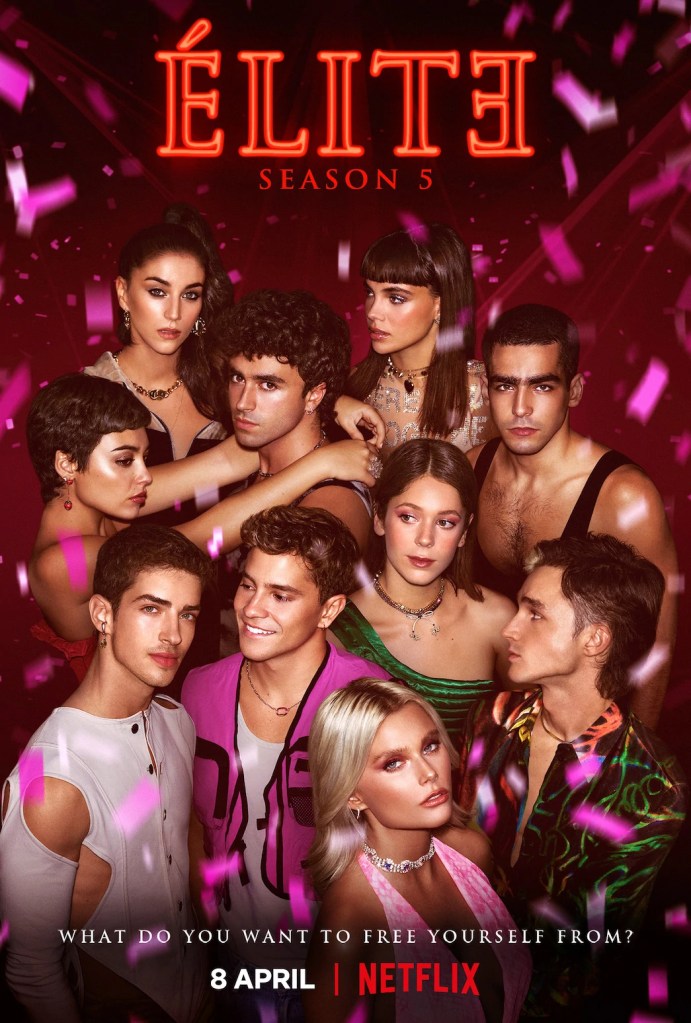
WARNING: POTENTIAL SPOILERS AHEAD FOR EVERY SEASON OF ELITE.
One of the most moving moments during Left Coast Crime came during Raquel V. Reyes’ acceptance speech for Best Humorous Mystery for Mango, Mambo, and Murder. Raquel spoke very eloquently about her love for the crime fiction genre, and why it was so important for her to write a Latina sleuth heroine in her series: “Representation matters,” she emphasized, her voice breaking a little bit. This naturally got me to thinking about representation and its importance. It reminded me of the weird little boy in Chicago (and later, in the suburbs and on the plains of Kansas) who believed he was so weird, unnatural, and anything but normal; and how those rare appearances of gay men in fiction–scattered here and there in paperbacks–meant so much to me and made me feel, even if just for a moment, that I wasn’t strange and weird and an outsider. There were people like me out there somewhere, and maybe, just maybe, someday I’d find them and my community and feel like, finally, I belonged somewhere.
I was thinking about this very thing as Paul and I binged our way through Season 5 of our favorite show, Elité, on Netflix recently (the new season dropped while I was in Albuquerque).
I don’t remember how, when, or why Paul and I started watching Elité, but I am so glad we did. I know it was pre-pandemic, because I do remember both of us being concerned about when the fourth season would drop and whether it would be delayed because of the pandemic. But regardless of when we started watching, this Spanish-language Gossip Girl type show (far, far superior to Gossip Girl, sorry, stans, don’t @ me) really captured our imaginations and we became full fledged addicts. (The best way to describe the show is as a terrific hybrid of Gossip Girl and How to Get Away with Murder, yet better than both). I think part of it was the great cast–everyone was not only gorgeous, but they were remarkably talented as well, and the writing/plotting/story construction was superb; take note, American television series. I also greatly enjoyed the Ander/Omar romance, which began with both deeply closeted and meeting guys on hook-up apps, which is how they met. They began building a relationship, coming out to friends and family–it didn’t go well with Omar’s Palestinian parents–and their romance was given equal weight to that of their straight cast members; I don’t recall many shows where that happens. It was handled very well, and they literally became one of the show’s “super couples”, to borrow a daytime soap term. Fans loved them, and their romance was handled so beautifully that I was impressed, all the way from the terrors of the closet to fears about acceptance to actually coming out and developing a romance, with all the drama and upheavals young straight couples usually have to deal with. Omar and Ander were no different from any other romantic couple on the show; their story was just as important as the others, and there was never any sense of “oh they’re just pandering because we’ll always watch something with gay representation on it.”
And it wasn’t just Omar and Ander, either. Polo and Carla were in a long-term relationship since they were children; deeply in love and yet somehow bored with each other, both found themselves attracted to sexy new student Cristian; and that progressed from Polo watching Cristian and Carla together to joining them! Polo’s sexuality became a bit more murky than it was at the beginning. Is he bisexual, pan, or are they all three polyamorous? Carla and Polo end up breaking up and Cristian left the show after a tragic accident; but the intricacies and intrigues from their long-term relationship continued to play out and affect their storylines as well as others along the way. A lesbian romance was introduced into season 4, as well as a new villainous gay character, whose entire purpose was simply to be rebellious against his father and try to come between Omar and Ander. Played by the strikingly beautiful Manu Rios, I liked the idea of a manipulative gay villain (think Erica Kane as a gay man), but hoped they would flesh him out more. I felt Manu Rios was more talented than the material they were giving him, and hoped that in Season 5 we’d get to know him better.
(There are many other reasons I love the show–the other characters are also incredibly well developed, and their behavior fits their characters as they’ve developed along the way; no one ever acts in a way that doesn’t feel realistic simply to suit a story-line, something else American show runners should pay attention to.)
Season 5 literally dropped the Friday night I was in Albuquerque, and as soon as I got back to New Orleans, Paul and I started watching, and binged the entire season in like two nights. Season 4 wasn’t as good as the first three seasons (the bar was set high, to be fair), but it was also a transitional season; at least half of the cast graduated at the end of season three and thus left the show–which I thought was probably a good thing, despite losing some absolute favorite characters from those earlier seasons. Season 4 transitioned the story as the show added new cast members to replace those who’d left; so we didn’t enjoy it as much as we could have (more original cast members departed at the end of season 4) and so I was worried that Season 5 wouldn’t be as good, either…but I am delighted to report I was totally wrong on that score. -With Season 5, the show is back at the incredibly high level/standard it set for itself in those first three seasons, and while it is very hard to compare the one season with the interconnected stories of those first three, I don’t know. Season 5 might just be my favorite.
And of course, now that we’ve seen Season 5, the stage has been set for a very strong new, sixth season, and I literally cannot wait.
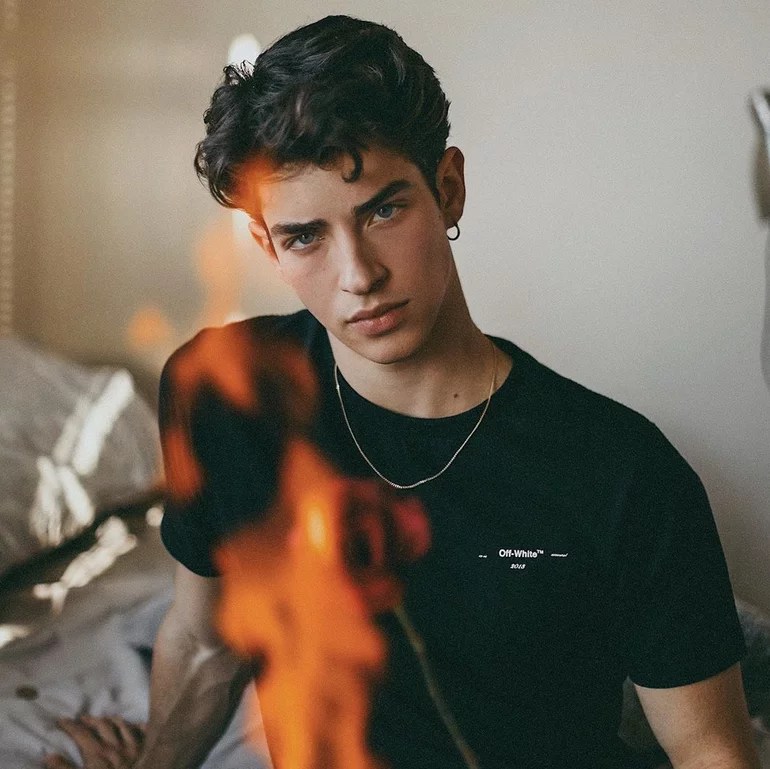
But the primary strength of this most-recent season comes from the further development of the character of Patrick, played by the stunningly beautiful young actor Manu Rios, through a truly terrific storyline that let us see sides of Patrick we’ve not seen before.
I mean, look at that stunning face.
The body isn’t too shabby, either.
Patrick joined the cast of characters, as I mentioned, in season 4. The openly gay character was primarily brought in as an agent of chaos: self-absorbed, narcissistic and rebelling against his strict father (the new principal), his role in season 4 was primarily to cause drama and disruption between the long-running gay romance storyline between Omar and Ander (again, and it can’t be said enough, how lovely was the Omar/Ander storyline, where a gay couple in a soapy show got the kind of story usually reserved for opposite sex teen couples?), so he was kind of a villain character–striking out angrily whenever he was hurt but inevitably causing more trouble for himself than for others, but the role was played with such sensitivity and style by Manu Rios that we as viewers couldn’t hate him the way we should have, the way we wanted to; since he was really “the other guy” and causing trouble between the already fraught Ander/Omar relationship we were all rooting for. Patrick was really nothing more than the latest obstacle to their happily ever after; but when Ander also left the show after season four, I wondered if Patrick and Omar would pick back up–it didn’t seem likely, but they were the gay characters, so…
And even I didn’t fully appreciate how talented Manu Rios was during season four–but that changed in a matter of moments in Season 5. I mean, I could see he was beautiful–anyone with eyes can see that–but could he turn what was essentially a one-note character into someone who seemed perfectly real to the viewers?
The answer was yes yes a thousand times yes.
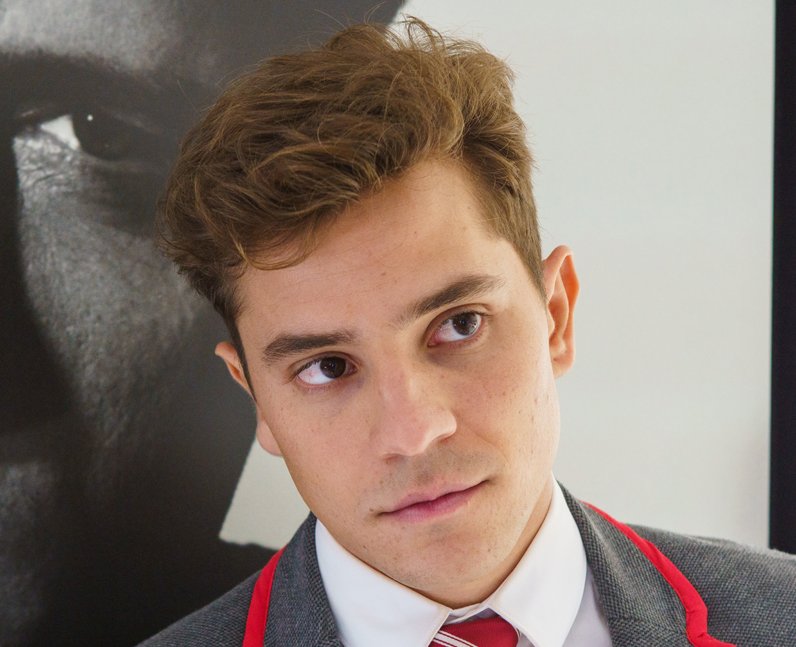
You see, there’s a new student at Las Encinas in season 5, who catches Patrick’s eye on his first day: Ivan Carvalho, played by André Lamoglia.
This picture doesn’t do him justice in the least, either. He’s beautiful. And the way his face lights up when he smiles–utterly irresistible. (Lamoglia is also a remarkably good actor.) His father is a world-famous soccer player, Cruz Catalho, and there’s no sign or mention of Ivan’s mother. But Cruz lives the good life of the hard-partying rich superstar, often telling his uptight son–who’s moved around the world following his father’s career, unable to make lasting friends or set down roots anywhere as a result–to loosen up. Ivan just wants a normal life–with Cruz always telling him to relax and enjoy the great life Cruz is able to provide for him.
And the character is so kind and loving and understanding…it’s easy to see why Patrick would not only be attracted to him for his looks but drawn to him as a person. He sees Patrick in a way no one else ever has before. It’s impossible not to root for them to fall in love with each other.
Ivan first comes to Patrick’s attention when he is looking for directions to the high school locker room–which, at the time, didn’t strike me as odd but now looking back, it kind of does; he was in his gym clothes and in need of a shower, but I SUPPOSE that it’s entirely possible he could have gotten turned around–new school and all, I guess. Immediately interested and attracted to this handsome stranger, Patrick not only gives him directions but offers to take him there “since I was on my way there anyway.” They talk as they shower–but Ivan is onto Patrick; after the shower he points out with a smile, “you just wanted to shower with me to see me naked” he teases, pointing out Patrick’s arousal. As I mentioned, Ivan is breathtakingly gorgeous. When he smiles, you can’t do anything but melt. And yet, the two boys have undeniable chemistry.
But Ivan is straight. He keeps telling Patrick this, over and over again, but…
We actually first meet Ivan as he is getting ready for school, climbing over the passed out bodies in the living room to see if his father will drive him to school. Instead, Cruz winds up hugging the toilet and telling Ivan to take the car. During his first initial meeting with Patrick, Ivan definitely points out that he isn’t gay, but he’s not put off by Patrick’s sexuality, either. They can be friends–but that’s all it’s going to be. He knows Patrick is attracted to him, and he’s a bit of a tease; sending mixed signals that confuse and anger Patrick.
This, too, is an old trope of a story, and I was really not overly thrilled with it; it’s clichéd and one of the tired old reasons the homophobes trot out whenever they want to deny us our rightful place in society and culture: we want to convert everyone.
Because it’s just that easy.
But at the same time, Patrick’s desperate crush on his new straight best friend isn’t played as exploitative. There’s more there than just him being a cocktease, really; Ivan clearly cares very deeply for Patrick, and their friendship means a lot to him. He cares, and this is a new experience for Patrick; he isn’t used to anyone genuinely caring for him. He’s a disappointment to his father, he loves his sisters but those relationships are very tense, and he really just wants to be loved. So the fact that he has found someone who genuinely loves him is confusing; he loves being loved, but he is also strongly attracted to Ivan, in love with him (at one point Ivan teases him, “you’ve fallen for me”) and isn’t sure how to react or behave or what. Ivan is attracted also to Patrick’s sister Ari–and the heartbreak when Patrick sees them together is completely believable; and it’s all done in his incredibly expressive face. After seeing Ivan and Ari having sex on a boat on the lake…heartbroken Patrick goes back to the dock and sits there, hating himself and hating his life. While he’s sitting there, Ivan’s father Cruz comes out there–they’ve already had a couple of run ins already, and Patrick is on to the fact that Cruz isn’t as straight as he acts–and as Cruz comforts Patrick–they begin to kiss!
Did. Not. See. That. Coming.
At the time, I was rather impressed with the writing, frankly. What better set-up for drama than having Patrick, in love with Ivan, wind up in a relationship with Ivan’s dad? (Yes, aware of the creepiness of an adult man sleeping with a high school student; yet I still thought it make an interesting story.) But the writers are even more clever than that.
Patrick winds up comforting Ivan after his brief little fling on the water with Ari–who no longer wants to even speak to him–and the two boys go back to the Carvalho household. Cruz isn’t happy with this–he has his own developing feelings for Patrick, so he acts homophobic, but privately he invites Patrick to join him later after Ivan falls asleep. Later, when Patrick cleans up before bed and walks into Ivan’s room, he sees Ivan watching porn and they come oh-so-close again to something physical happening…but Ivan pulls aways again. Frustrated and hurt AGAIN, Patrick goes to the guest room. While watching porn on his phone and masturbating, he gets a text from Cruz asking is Ivan asleep yet? Hating himself but hurt AND horny, Patrick gets up to go join Cruz–but when he walks out of the guest room Ivan is there in the hallway.
IVAN: I can’t sleep.
PATRICK: Count sheep.
IVAN: No, no, I want you to come back to my room with me.
PATRICK: You need to stop. I am going to get really angry with you.
IVAN: I can’t stop thinking that…what if…because of prejudice or fear or something…what if I am missing out on something amazing…with someone amazing…who makes me feel amazing.
PATRICK: Stop.
Ivan then tries to kiss Patrick, but awkwardly. Patrick pushes him away, and Ivan apologizes. “I’m sorry, I’m just really nervous but I want this.”
The look on Patrick’s face literally made me tear up as he said, “No, let me.” And then they kiss. When Patrick pulls away he says, “Are you okay?”
Ivan smiles and just nods, and the two boys go back to Ivan’s room.
What followed was the most amazing slightly longer than five minutes gay sex scene I’ve ever seen outside of gay porn. But it wasn’t raunchy (it’s definitely not gay porn); it was sensual and beautiful and erotic; an expression of love between two young men who’ve never been really in love before. It wasn’t all candlelight and roses; it was Ivan’s first time (at one point, he’s doing oral on Patrick for the first time, and Patrick stops him–“watch the teeth!” I defy anyone to find a gay man who has never said that or had that said to him once in his life. ) and while i know rimming scenes have become more commonplace on cable shows, I’ve never seen two males do it as realistically as it was done here. Patrick allows Ivan to top him, and even that was realistic, honest, authentic. The entire thing was beautifully shot and scored (EDIT: the song playing in the background is Brian Eno’s “By the River,” which is beautiful and perfect for this scene), and the acting was fucking fantastic (the pun was deliberate). I literally got tears in my eyes.
There were three more episodes in the season after this–with ups and downs and more pain and heartache for the two–but it all comes together in the incredible season finale, which again left me in tears.
This entire season could have simply focused on Patrick and Ivan’s story, and I would have been happy. But the other storylines of the season–which didn’t seem all that great in the first half–coalesced in the second half of the season, with twists and surprises and suspense; this show is fantastic at surprise twists that make you gasp.
But this story…wow. How much of a difference would it have made in my life to have seen something like this play out on a television series when I was a teenager? Even in my early twenties? Both young actors are fantastic. The acting is stellar, and I have to admit it’s one of the few times I’ve seen a gay storyline play out like this where I was absolutely 100% convinced they were in love with each other, was rooting for them, wanted them to end up together against all the odds.
Manu Rios and André Lamoglia steal the fifth season right out from under the rest of the cast–which is no small feat, as Elité’s biggest strength has always been its incredibly talented cast.
I loved this show already, but I love it all the more now. I have no idea what they are going to do with Ivan and Patrick for the next season; but whatever it is, I am here for it…and so are the rest of the fans of the show around the world. (Yes, I did a deep dive the other day on-line; Patrick and Ivan and their story are the breakout stars of season 5…as they should be.)
This has been a not-good, no good week and here’s hoping it was an aberration and everything is going to reset right now and become something more resembling what passes for normality around here lately. Everything has been out of sync and/or messed up all week, and frankly it’s also kept me from getting anything done or making progress on any number of things I need to be making progress on, which as you can imagine is incredibly fucking annoying.
Jesus.
Today I am going to make a run to the mailbox and to drop off some books for the library sale, as well as do some other clean-up around here. I’ve decided the next book I am going to read is Bayou Book Thief by Ellen Byron (I am interviewing her next month for the book release at Blue Cypress Books in Riverbend) and I may as well get a jump on that, maybe come up with some questions for her ahead of time so I am not just winging it the night of–she definitely deserves to have a prepared interviewer, not the usual “I’ll make it up as I go” bullshit I always, inevitably fall back on whenever I have to do something of this sort. (Yes, that’s me: a thorough publishing professional.)
I slept deeply and well last night–I allowed myself to stay in bed until nearly eight o’clock–and as such I feel pretty rested and good this morning. I actually feel like I may even be able to get things accomplished this morning, which is a lovely change. I have to admit I’ve been concerned and worried about the depths and extent of my exhaustion lately, but this morning I feel good for the first time in a long while. Good thing, since the house is a disaster area; I am going to definitely be spending time on the Lost Apartment and the office area today cleaning and organizing and getting everything back under control around here. I am going to try to get that story written today, and some other odds and ends. With luck, I’ll be able to get it all out of the way and handled today before I run out of gas or the lazies set in; which is of course inevitable. But really, this mess is untenable, and I am more than a little annoyed I’ve allowed things to get to this point YET AGAIN. Yet I cannot deny that I was tired and worn out all week; it felt like I was sleeping well but obviously I must not have been, given how little I was able to get done all week.
C’est la vie, I suppose.
We finished watching Captive Audience on Hulu last night, about the tragedies of the Staynor family–perhaps best known as the I Know My First Name is Stephen story. We moved to the San Joaquin Valley (Fresno, to be exact) when I was only nineteen; the story was still news even then, and I became fascinated by the story–a fascination that never went away and was only made more intense by Stephen’s tragic death at a very young age and even more intense by the fact his older brother became a serial killer, responsible for the Yosemite Murders. I had already moved away from the valley by then, but I’ve never stopped being fascinated by the story of the Stayner family and have always wanted to write about it–that horrific family dynamic of having one of your children stolen for seven years, and then having him return as an older, complete stranger. How does that affect the family dynamic? (Obviously, in this case, it turned one of them into a serial killer somehow.) How does the victim deal with returning to the family that isn’t what he remembers anymore, either? What’s it like to be the mom, the dad, the sisters, the neighbors? I recommend the docu-series–it’s in three parts–and it’s even more fascinating than I could have imagined; they also interviewed Stephen’s children. His daughter remembers him vaguely, his son not at all…and that’s an even greater tragedy. What is it like to lose your father when you are so young–traumatizing in and of itself–and then find out what he had been through? To find out an uncle you barely knew was responsible for the monstrous Yosemite Murders? There’s so much material there for fiction…I think about what Megan Abbott or Carol Goodman or Laura Lippman or any of our modern day great women writers could do with any bit of that story and can’t help but wonder about what might be. Maybe I’ll use it as the foundation for a book someday…but it’s one of those stories I always end up circling back to periodically, which makes me think it’s more likely to happen than any one of the great ideas that holds my attention for a day or two, write down or make a folder for, and then completely forget about.
Ah, being a creative. Always challenging.
I also want to, at some point this weekend, finish my blog post I’ve been writing about season 5 of Elité, and I also have another book review to write for here. Always, forever, so much to do at all times. Heavy heaving sigh.
And on that note, tis off to the spice mines with me. Have a lovely Saturday however you choose to spend it, Constant Reader.
And what a fucking glorious night THAT must have been, seriously. I’ve always found it interesting that Joan Baez of all people recorded that song and made it a hit. Maybe I should take a look at the lyrics to see how they look from a modern perspective? That’s a thought. There’s so many things we didn’t even notice were problematic back in the day in our comfortable privilege. (I don’t think I can ever watch Sixteen Candles again, honestly, and it was one of my favorite movies. I’m not so sure what that says about me, either.)
Today is another day in the office; I am not sure but I think I have to help out with testing during the needle exchange program today–like I said, I don’t know, but I will be there if they need me. I have other things to do at the office–most of which feels a bit like ‘make-work,’ if I am going to be completely honest, but it’s also tedious little chores that need to be done, and so I might as well do it to fill my day otherwise it may not get done after all. This has been a very weird week for me; I’ve been tired most of the week when I get off work so I’ve not really been getting as much done as I need to be getting done, which means I really need to get motivated for this weekend. I can do that, of course…it’s not always easy, but I can do it. I just have to work on not getting distracted.
Which isn’t as easy as it may sound on paper. (SQUIRREL!!!)
We watched The Batman last night on HBO MAX and I have to say, I really thought it was outstanding. It was nice seeing Gotham City looking like, you know, an actual city as opposed to the dystopic nightmare it has been in almost every Batman film since Tim Burton first brought the Dark Knight to the silver screen back in the 80’s. I also am very impressed with Robert Pattinson, who might be the most interesting iteration of the character yet–and seriously, how did the sparkly vampire from Twilight turn into one of the most interesting and talented young actors of our time? Zoe Kravitz can also be added to the list of well-cast Catwomen from over the years, and there was actually a plot to follow that involved Batman using his investigative skills to solve the mystery and find the Riddler–another excellent take I’d given up on seeing on the big screen–and overall, I didn’t really notice that the movie was nearly three hours long because I could follow the plot, it made sense, and the character arcs were well developed. I think we’re going to rent the most recent Spider-Man (No Way Home) this weekend–I do love Tom Holland–and then we need to figure out something else to watch. A lot of good stuff dropped during the Festival and its aftermath–so we can have our choices of things to watch for quite some time, methinks, which will be really nice. BUT I HAVE TO GET WORK DONE THIS WEEKEND BEFORE I LEAVE FOR NEW YORK OTHERWISE IT WON’T GET DONE UNTIL I GET BACK AND THAT IS SIMPLY UNACCEPTABLE.
Most of all, I need to get that fucking short story written.
I really need to get motivated to get writing again–and I need to start going back to the gym as well. My weight hasn’t fluctuated very much since I went down to 200 and ballooned back up to 212 again; I’ve been a pretty steady 210-212 since then, and while I always thought that 200 would probably be the best weight for me, maybe my body is telling me 210 is where it prefers to be? I know I could, with discipline and hard work and proper eating, maybe get back to below 200 but my word, what a lot of work that would be and since I really no longer obsess about how my body looks (one way in which getting older has been beneficial; I really do not miss those days of body dysmorphia and constantly berating myself for not looking like a Calvin Klein underwear model), I don’t think I have the dedication anymore to do that again. It’s hard enough finding the time to go to the gym in the first place, let alone start eating in a different way and counting carbs and all of that nonsense. No thanks, not for me this time around, thank you very much. I suspect that the mild depression I’ve been dealing with over this last month or so has a lot to do with the not-writing and not-working out aspects of my life. That loss of serotonin probably has everything to do with it. I really need to focus.
I also still haven’t picked out my next read. I am thinking about rereading something–or maybe I am going to give Hemingway another try (Don’t Know Tough had a whole thing about the main character reading The Old Man and the Sea–which, along with A Farewell to Arms, I was forced to read in high school which gave me a deep and abiding distaste for Hemingway). I have a copy of To Have and Have Not, which is, in theory, Hemingway’s only crime novel–it was certainly made into a classic Bogart/Bacall movie–but every time I think about Hemingway I groan inside. But maybe now I am old enough to appreciate Hemingway–I also read Fitzgerald when I was too young, but I’ve always enjoyed Faulkner, which is weird. Maybe because he writes about the rural South? I’ve wanted to give Sanctuary another go for quite some time now as well.
And on that note, I am heading back into the spice mines. Have a happy Friday, Constant Reader, and I will talk to you again tomorrow.
I know, it catches people off-guard that a sixty year old gay man is a massive football fan, but I’ve never subscribed to stereotypes. I love football, with an especial love for the college game (I used to only watch the Saints in the NFL, but have started rooting for the Cincinnati Bengals because, well, Joe fucking Burrow); I think everyone knows I am a massive LSU fan. (GEAUX TIGERS!)
There really isn’t anything else in the world like a Saturday night in Death Valley. I will remember the 2019 night game against Florida probably for the rest of my life. God, what a great game, and it was so much fun. I am aware that I am digressing.
Anyway, I grew up in a Southern football family (even if we didn’t live in the South, we were from the South and that’s all that matters), so it was inevitable that I should become both a football fan and a football player. I played all four years in high school, all of my cousins also played, and I have close relatives who played at both the college and professional levels (and I don’t mean some small college in the middle of nowhere; I mean in the SEC–Auburn and Alabama, and there may be even more that I don’t know about). I have relatives who were successful coaches. Every fall Saturday the television was tuned into whatever college game was playing–even if we weren’t fans of either team; it’s hard to imagine now with the 24/7 college football coverage, but when I was growing up ABC had a monopoly on all NCAA football games. They would usually play one game of national significance, and then the second game was regional–important to that region. As we did not live in the South, we rarely got to see SEC games other than Alabama–Alabama was almost inevitably the only Southern team of “national interest” throughout the 1970’s (I really don’t remember the 1960’s much, but we lived in Chicago so I imagine we saw a lot of Big Ten and Notre Dame games; I don’t really remember a lot of my life before the suburbs, really–some things, yes, but most things not so much)
I’ve never really read a lot of fiction about football, though; it inevitably winds up being something cliched and tired. I loved North Dallas Forty by Peter Gent; hated Semi-Tough by Dan Jenkins; but do remember enjoying End Zone by Don DeLillo (I was going to reread this recently; but there’s so much to read. I did try to to reread Semi-Tough–but when I opened the book there were racial slurs and other mess on page one, so I threw it in the trash; no thanks). And I’ve also enjoyed other books with football involved, even if it wasn’t necessarily what the book was about. (The Hardy Boys were on the Bayport High football team in The Crisscross Shadow–the only time football is mentioned in the series.) There’s also a tendency, in books about high school and football to make the football players and cheerleaders the villains of the story, which has never really sat right with me. I was never bullied by anyone on the football team, and maybe the cheerleaders weren’t bitches to me because I was on the team and my sister was a cheerleader, but that wasn’t my experience (one thing I truly appreciated about Stephen King’s Christine was the horrible bullies at Libertyville High weren’t the football players but the hard-case kids–which was also my experience; which is probably yet another reason the book is one of my favorites of the King canon, methinks).
But…I can also see why it’s so attractive to make the jocks and cheerleaders the villains of high school dramas. And I sort of did something similar in #shedeservedit, didn’t I? Those boys on the Marysville and Steubenville high school teams certainly fit the bill of villainy.
So, when people started recommending Eli Cranor’s debut Don‘t Know Tough to me, I wasn’t so sure. I just published a book of my own about high school football and the toxicity it can engender in a small town (#shedeservedit), and revisiting my memories of high school and football was harder than I had thought it would be; I thought I could be dispassionate about it all while writing about it (I often write about things to try to distance myself from them and gain some perspective) but I was wrong. It was hard to write that book, much harder than I thought it would be–and it took years (first draft was written in 2015; published in 2022).
But enough people whose opinions I respect were raving about the book, so I got a copy and once I started reading it, there was no way I could stop.
Still feel the burn on my neck. Told Coach it was a ringworm this morning when he pick me up, but it ain’t. It a cigarette, or at least what a lit cigarette do when it stuck in your neck. Just stared at Him when He did it. No way I’s gonna let Him see me hurt. No way. bit a hole through the side of my cheek, swallowed blood, and just stared at Him. Tasted blood all day.
Tasted it while I saw in Ms. Miller’s class. Woke up in Algebra tasting it. Drank milk from a cardboard box at lunch and still, I tasted it. But now it eighth period football. Coach already got the boys lined up on either side of the fifty, a crease in between, a small space for running and tackling, for pain.
This my favorite drill.
I just been standing back here, watching the other boys go at it. The sound of pads popping like sheet metal flapping in a storm.
“Who want next?” holler Bull. Bull ain’t the head coach. Bull coach the defense. He as mean as they come.
One of my favorite books of all time about small towns is Larry McMurtry’s The Last Picture Show (I also love the film, which is extraordinary and one of, in my opinion, the best films made during the 1970’s). I did try to reread it recently–I was interested in refreshing my memory of its gay subplots and the mental breakdown of poor Joe Bob Blanton, but I’d also forgotten the part about the bored teenaged boys decided to fuck some calves, so when I got to that part I put the book down in distaste. But now that I’ve finished Don’t Know Tough, I kind of want to go back and reread The Last Picture Show again (I can skip that distasteful part…weird that I didn’t remember it).
Don’t Know Tough is yet another incredibly impressive debut, further confirming the truth of what I said at the Lefty Award banquet–the last few years have seen so many amazing and diverse and extraordinary debuts that the future of our genre is in very good hands. I won’t lie–when I started reading the book, I wasn’t sure I could keep reading it; I was worried that the entire book would be written in that grammatically garbled first-person voice but as I kept reading that first chapter I got into the rhythm of the language and started seeing the beauty and fluidity of the style choice–which is no small feat to pull off, and pull off consistently, throughout the entire book…to the point I was also a little disappointed that the entire book wasn’t done in that same style. Billy Lowe is the character whose voice this is; and the story of the novel revolves around him and the horrific Shakespearean tragedy that his life actually is. His mother is an alcoholic, and lives with an abusive piece of shit who obviously directs violence at Billy. He has a younger half-brother who was fathered by this POS; he also has an older brother who lives elsewhere. Billy’s situation has turned him into a wild beast of rage with an exceptional gift for channeling that rage into playing football. He’s not big enough in size to go major college, but his coach feels like there’s a chance he could get a football scholarship to a smaller college, and break the cycle of poverty he is trapped in at the moment. Billy is exceptionally compelling–it’s hard to read his first person point of view and not have your heart break for this kid; and hope that it’s all going to work out for him in the end, despite the disturbing pattern of violence in both his life and behavior.
Denton High has made the Arkansas state play-offs, but without Billy in the backfield their chances of advancing are practically nil. It’s important for Denton to do well in the post season because their coach’s job depends on it. Trent Powers is a born-again Christian, whose last coaching job in California crapped out–winning only three games in his final three seasons before being fired. This job is another chance for him, even though his wife and daughters hate relocating to a small town in Arkansas from California (much is made throughout the book of Coach Powers’ Prius, seen by the locals are weird and strange and almost otherworldly and unmanly). Coach Powers also has a very soft spot for his star player, and not just because he’s a star player–he actually feels compassion for the horror the young player’s life has been up to that point, and he wants to help–even if Billy doesn’t want any help from anyone. Billy’s future, to Billy at any rate, is already set, and he’s not going to end up going anywhere or doing anything or having a good life and decent future. He doesn’t see himself being worthy of anything or of doing better than his assigned lot in life.
The Powers family is a direct contrast to Billy’s; loving and nurturing couple, raising two daughters and trying to do right by them. How far is too far to go when helping someone in Billy’s situation, is the question. Coach’s wife–the daughter of a successful football coach who took Trent in when he was a kid from a similar background as Billy’s…and yes, he slept with his coach’s daughter and got her pregnant. So both Coach and his wife have the fear that the same thing will happen to their daughter and Billy–especially when the daughter starts opening up to Billy.
But one night Billy’s abuser is murdered. No one would blame Billy for killing the abusive bastard–well, the law would. But the story of what happened that night is far more complicated, and far more surprising, than the reader can imagine.
The pacing is also exceptional, and I love the contrasts between the third person point of view we see much of the novel in, with the Billy point of view chapters mixed in. The language choices and imagery are spare and tight yet full and rich and immersive–reminding me not only of Megan Abbott and her brilliant Dare Me, but also with a healthy dash of Daniel Woodrell, Tom Franklin, S. A. Cosby, and Kelly J. Ford (all masters of Southern Gothic) mixed in. The little touches of how claustrophobic small Southern towns can be, the class disparities between the haves and the have nots, and what teenagers in those types of environments was simply masterful.
I was completely blown away by this amazing work, and suspect that you will be as well. Highly recommended. I cannot wait to see what Eli Cranor does next.
Ah, the Carpenters. I loved them so when I was younger and Karen was still alive and recording. That voice…simply amazing. One of the stranger Youtube wormholes I’ve gone down recently are young people who’ve never heard the Carpenters before reacting to their music–and without the contexts of the time when the Carpenters were recording, they can simply appreciate the music as beautifully produced and the timeless beauty of Karen Carpenter’s voice (the Carpenters weren’t considered “cool” at the time they were recording their hits and becoming one of the biggest musical acts in the country; they were clean cut, all-American goody two-shoes types that even Richard Nixon praised as “the right kind of young Americans”–and of course, the Nixon stamp of approval guaranteed they would never be considered cool).
Then again, ABBA wasn’t considered cool, either. I’ve always thought you could tell a lot about a person as to whether they liked and appreciated ABBA and the Carpenters or not.
I was again tired when I got home from the office yesterday. I did some laundry and a load of dishes while Scooter howled constantly at me to go sit down so he could sleep in my lap. Usually he’ll sleep there for about five minutes then get bored and go somewhere else; this time he stayed in my lap for hours. I couldn’t focus on reading anything new–I tried, but my brain was too tired–and so I went down a Youtube wormhole for a while watching history videos. I didn’t work on my story at all yesterday, but I did get some other things–more of a mindless nature–worked on as well. Slowly but surely I am making progress down my to-do list, and I am not feeling quite so overwhelmed today as I was feeling yesterday morning. I still have ridiculous amounts of work to do and get done, but it’s not so seemingly impossible this morning as it looked yesterday morning. It may have something to do with the terrific night’s sleep I enjoyed last night–one never can be sure, after all–but I do feel very well rested this morning and maybe not quite “I can conquer the world” good, but more awake and aware and alive than I felt yesterday morning.
I’m also starting to get excited about next week’s trip to New York. I am still dreading having to get up on-stage and speak–fortunately I don’t have to be up there for long–which is still long enough for me to spend the entire day stressed and worried and unable to relax. But New York will be marvelous, and I hope to see friends while I am up there in and around and at the Edgar banquet. I’ve not been to the banquet is a good long time–we also haven’t had one for two years, but even before that it had been a hot minute, maybe four or five years since the last time I went? So I am looking forward to the trip and looking forward to seeing people, but there’s also an underlying sense and feeling of dread.
I still haven’t decided what my next book to read will be; there’s so many good ones in my TBR pile that it is very difficult to decide sometimes. I got some more book mail yesterday, every last one of them looking really interesting and fun to read, and so on top of the pile they went. Heavy heaving sigh. But I will have airport time and flights to get some reading done next week; so it’s just a matter of deciding what I want to read on the trip. Which reminds me, there’s yet another trip for this summer I need to plan, provided the world doesn’t shut down again. Heavy heaving sigh.
And on that note I am heading into the spice mines. Have a lovely day, Constant Reader and I will check in with you again tomorrow.
The traditional mystery often gets a bum rap by mystery fans. I’m not sure why that is; these books have never gone out of style, have never decreased in popularity, and have always been the backbone of the crime/mystery genre. They are often (wrongly, I think) identified with Agatha Christie–if anything, Christie should be identified with every sub-genre of crime/mystery fiction. She wrote private eye novels (Poirot); dark noir (Endless Night); spy fiction (N or M?, The Man in the Brown Suit, They Came to Baghdad); historicals (Death Comes as the End); and even romantic suspense (as Mary Westmacott). Sure, she often relied on the amateur sleuth–her most famous amateur being probably Miss Marple–but she literally did everything first, really.
Probably why everyone refers to her as the Queen of Crime Fiction.
But the traditional mystery, for some reason, gets short shrift in our modern world, despite being one of the most popular subgenres of crime fiction. Why? I don’t really understand it. Sure, there’s not any blood or sex or violence–the sort of thing generally used to sell everything from television shows to movies to laundry soap and deoderant. Many of us grew up reading books about amateur detectives, from Nancy Drew to the Hardy Boys to Trixie Belden. So why do so many turn their noses up at the traditional mystery, also known as the cozy mystery?
I think it’s much harder to write about crime without using the tough guy male lead (stereotype), blood, violence, swear words, and sex. Is it this lack of the “rougher” aspects of crime that earned these books the nickname “cozy”?
What precisely does the word cozy mean, used as a book descriptor in this way? Ask five mystery fans/writers, and you will get five different answers. It’s often hard to quantify the variety of subgenres within the mystery/crime field. Everything else aside, I think the most important thing, the key, for a mystery novel to get this kind of classification is that the book focuses, on one level, on a sense of community; the reader develops a warm, comfortable feeling, the kind that you usually get from visiting family and friends you don’t get to see all of the time. You open the book and start reading and already feel relaxed and at home; happy to see people you care about, are interested in, and are excited to find out what they have been up to. Donna Andrews’ Meg Langslow series is an excellent example of this; so is Leslie Budewitz’ Spice Shop mystery series (both series, obviously, are favorites of mine). These books welcome you in, invite you to put your feet up, get comfortable, and spend some time with your old friends you’ve not seen in a while.
This, naturally, is very difficult to establish when writing the first book in a new series of this kind; how do you immediately establish this warm environment where the reader feels comfortable enough to kick off their shoes and relax? It’s not the easiest thing to pull off for an accomplished writer; so it’s all the more remarkable when someone nails it in their very first book.
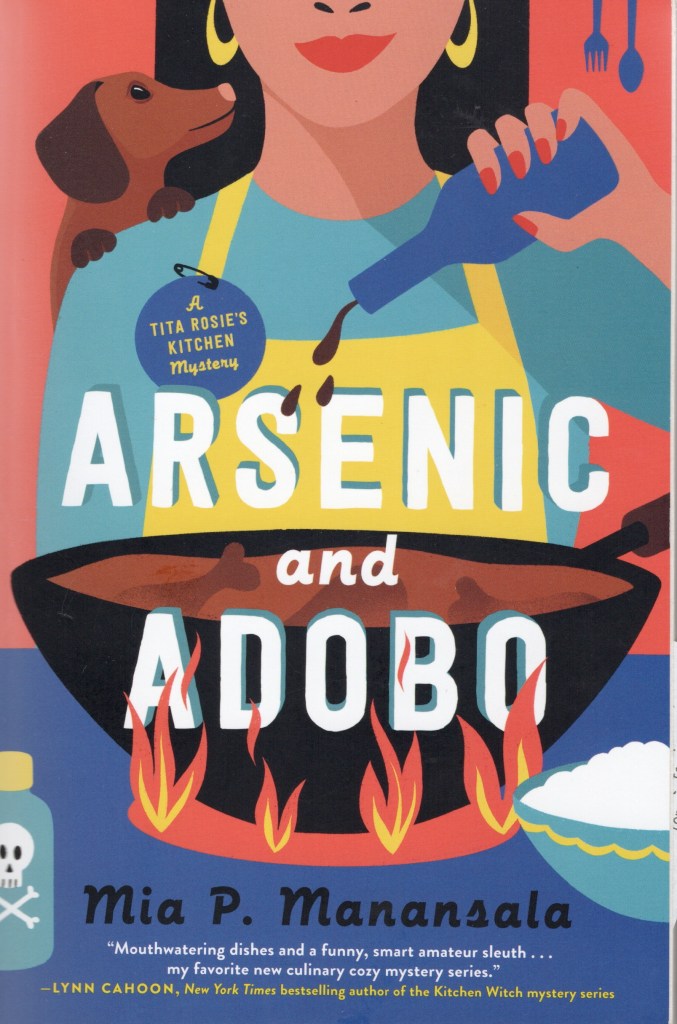
Mia P. Manansala nailed it in her debut.
My name is Lila Macapagal and my life has become a rom-com cliché.
Not many romantic comedies feature an Asian-American (or dead bodies, but more on that later), but all the hallmarks are there.
Girl from an improbably named small town in the Midwest moves to the big city to make a name for herself and find love? Check.
Girl achieves these things only for the world to come crashing down when she walks in on her fiancé getting down and dirty with their next-door neighbors (yes, plural)? Double check.
Girl then moves back home in disgrace and finds work reinvigorating her aunt’s failing business? Well now we’re up to a hat trick of clichés.
And to put the cherry on top, in the trope of all tropes, I even reconnected with my high school sweetheart after moving back to town and discovered the true meaning of Christmas.
Okay, that last part is a joke, but I really did run into my high school sweetheart. Derek Winter, my first love.
First of all, can we talk about the voice?
It is impossible not to fall in love with Lila’s voice from the very first sentence of the book. She is smart and funny and eminently likable, which is important in a traditional mystery (no one wants to read a cozy whose main character is an unlikable bitch) and much harder to do than most people who don’t actually write books think it is. Lila is a remarkable character; very clear-eyed about what she wants and what she doesn’t, as well as who she thinks she is and wants to be. She’s returned from her big escape to the big city to the small town she wasn’t terribly happy in when she was growing up–her past experiences continually are reminding her, and not in pleasant way, of why she left in the first place. She never intended to return home (as Thomas Wolfe said, you can’t go home again), but she is back and rather than focusing on what she is certain everyone she knows or is related to sees as her “failure,” she intends instead to focus on helping save her aunt’s restaurant business.
The immense strength of this story rests upon those family bonds, and Lila’s recognition of just how important those bonds–family, friends, community–actually are to her; and her growing realization, over the course of the books, that those things she once thought were strangling and restraining her are actually where her own power comes from.
The mystery itself is also strong: Lila’s wretched local ex, whose mother has since married a businessman who rents Tita Rosie’s building to her and is a total dick, has taken to writing shitty reviews of local restaurants, apparently targeting one and trying to destroy its business before moving on to another. Lila’s relationship with him is also strained; and she also doesn’t like the dickish stepfather either. It is while she is serving them lunch that her ex keels over face-first into his plate–dead from arsenic poisoning. In the food Lila fed him, and came from her aunt’s kitchen. The financially strapped business is shut down pending an investigation into the murder and a health department inspection, and there is the very real fear that Tita Rosie may lose her restaurant. Lila takes it upon herself to investigate and find the real culprit, to clear herself as well as her aunt and the beloved family business of any wrongdoing and scandal. The journey, which introduces us to her friends and family, and welcomes the reader into their charming world and community, twists and turns and is full of surprises every step along the way–as Lila also learns just how much the restaurant, her family, and her friends really mean to her.
This book is absolutely charming, well-written, and very fun. I cannot wait to revisit Lila and her crew in the second book, Homicide and Halo-Halo. Mia P. Manansala is definitely one to watch, and it’s going to be fun watching her career reaching even more heights than she has already achieved.














 Queer and Loathing in America