He met Marmalade down in old New Or-leenz, strutting her stuff on the street, she said “hello, hey Joe, you want to give it a go?“
That classic song by Labelle came out while I was in high school, during the early to mid-1970’s, and there was a lot of prurient young teenager thrill in knowing that the French lyrics translated to “do you wanna have sex with me tonight?” But the song–essentially about a hooker in New Orleans and a man’s experience with her–was an introduction to another side of New Orleans–one you wouldn’t find in the World Book Encyclopedia.
It was very important to me, for a variety of reasons, to make Scotty someone who embraced his sexual orientation and sexuality. I wanted to write someone who LOVED having sex, loved beautiful men, and felt no Puritan-American based shame about enjoying sex. Those kinds of characters were few and far between in gay fiction, let alone in gay crime fiction. After writing the typical miserable cynical bitter gay man with Chanse, I didn’t want to do that again. I wanted Scotty was to be the obverse of Chanse in everything, except their mutual love of New Orleans.
(This was, in part, in response to being briefly dropped by Alyson when I signed the Scotty series with Kensington, being told “two mystery series set in New Orleans would be too alike.” I took that personally, as an insult to my talent, ambition, creativity, and abilities…and I think I proved my point. Once Murder in the Rue Dauphine and Bourbon Street Blues were released–and Rue Dauphine sold super well for them and was nominated for a Lammy–Alyson changed their minds. I’m still mad at myself for not asking for more money.)
But while Scotty was highly sexually active, he never got paid for it. He also never did porn–although I did consider that at one point as an option; I thought a murder mystery built around a porn shoot would be interesting and kind of fun. And of course, in this book he mentions that he and the guys have recorded themselves having sex, and have sexted each other.
Scotty always preferred to keep his status amateur–but he was a go-go boy (stripper, exotic dancer, dick dancer, whatever you prefer to call the guys who dance for dollars in gay bars wearing various kinds of male undergarments), and he was certainly someone who was not averse to having a sexual encounter with a handsome stranger. (There’s a joke about this in Mississippi River Mischief where Frank comments after they’ve met someone, “I’ve been with you for almost twenty years. If you think I can’t tell by now that you’ve recognized someone but you’re not sure from where, which means you’ve probably slept with them, think again”–a paraphrase, but you get the gist; Scotty is often running into men who look vaguely familiar, and that usually does mean he slept with them a long time ago.)
New Orleans, despite it’s rather prim-and-proper high society set (on the surface, anyway), with the Pickwick Club and the Boston Club and the mysterious Mystick Krewes of Rex and Comus and so on, has always been a city of loose morals and freewheeling attitudes towards sex and sexuality. We had a zone where prostitution was legal for three decades or so (Storyville) and I wouldn’t be surprised if there were several bordellos operating within the city limits as we speak. There was the arrest of the Canal Street madam; and of course local author Chris Wiltz wrote The Last Madam, a biography of notorious Norma Wallace–the last well-known madam in the city. (Which I need to reread…) Bourbon Street was known for its strippers and vice for decades; there are still strip clubs on the infamous strip running from Canal downtown to Esplanade–and there are usually men in bikinis or something equally scanty on the bars of the gay clubs down down around the St. Ann/Bourbon queer nexus of the Quarter. When I was starting my deep dive into New Orleans/Quarter history, I wasn’t surprised to find out there were “stag” bars down along the riverfront along the levee; and if someone at one of the fancy houses in Storyville had a predilection for the Greek vice that needed scratching, the madam would send one of her bouncers down there to find someone willing to turn a trick, with a fair share going to the house, of course.
I think that’s fascinating, really; and something I want to explore in a story. I’ve started the story (it’s “The Blues Before Dawn” which I’ve mentioned from time to time) but can’t quite nail down the crime part of it. The set-up is great, though, he typed modestly.
I didn’t intend for Scotty to wind up in what is now known as a throuple–a three way couple, or a relationship of three people–on purpose. I wanted to create the dynamic of two men being interested in him at the same time, and have some fun with that in the first book. I absolutely did, and when I sent Colin away at the end of the first one, that was deliberate. I couldn’t decide who Scotty should wind up with, and I wanted Frank to be really who he logically should end up with–but this bad boy with a mysterious background who was so hot and sexy? I couldn’t NOT bring him back, and so I decided I had three books to wrap up the romantic dilemma. I wasn’t certain what the backstory of the dilemma would be, or how it would turn out, or how it would go–but when I was writing Jackson Square Jazz I found the perfect place and perfect way to bring Colin back. That book ended with them deciding to try a throuple to see how it works out. It was going pretty well until Mardi Gras Mambo–and I tried really hard with that book to not end the romantic story the way it ended in that book…and finally decided, since the series was actually turning out to be popular, that I would finish it by the end of the fourth book.
I’ve also not talked about it in the books or on this blog at all, but….they also have an open relationship. (Someone asked me about this at some point after the last book came out.) Nothing else would work for Scotty–he may not take advantage of the opportunities that pop up now the way he used to, but that’s because he has the freedom to make that choice. If he was forbidden from outside sexual relationships, he would cheat–and he doesn’t want to do that because that’s hurtful and wrong. He never wants to hurt Frank or Colin–but both of them are also away from New Orleans for long periods of time; Colin off doing his international agent stuff, while Frank is on the wrestling tour doing shows and promo events; so they are on their own a lot and temptation is always there–after all, all three of them are gorgeous–so while it is unspoken on the page, it’s an open throuple. And usually, Scotty finds outside sex to be kind of dull, unemotional, and not nearly as much fun as it is with one or both of the guys. That’s a character development arc. I also don’t show Scotty going out to clubs or waking up with hangovers with a stranger in his bed anymore, either. He does still go out–he loves dancing–but the gay bar scene has changed since he was younger and he doesn’t find it to be nearly as much fun as he used to.
Though he won’t say no to a hit of Ecstasy during Carnival or Decadence.
How subtle are the changes in Scotty as he has grown, aged and evolved? I think they are miniscule, but a revisit of the first two books in the series has shown a lot of change and growth over the years for him. He is definitely not that same flighty twenty-nine year old who booked a gig dancing at Southern Decadence all those years ago to make rent and wound up kidnapped by neo-Nazis deep in a swamp–I think he’s a little less flighty and a lot more responsible than he used to be…though he’s not as responsible as most people his age. Turning him into a property owner in the Quarter from a renter–and letting Millie and Velma ride off into the sunset in Florida as retirees–has also made him grow up, as now taking care of the property is his responsibility.
I will always be fond of my Scotty, though, and hope to keep writing him till I can no longer type into a computer or speak into a word-to-text app.
my neighborhood is so beautiful at night, isn’t it?
I am always delighted when people think I capture New Orleans perfectly in my work.
I love New Orleans, and while I, along with everyone else who lives here, reserve the right to be irritated, exasperated, and annoyed with the city–God help you if you talk shit about the city if you don’t live here (“bitch, you live in Metairie”) in front of people who do.
Trust me, it won’t end well.
I fell in love with New Orleans officially when I came here to visit for my thirty-third birthday, which was a lot of fun and probably one of the best birthday weekends of my life, if not the best one pre-Paul (we had yet to meet at that time). I do sometimes wonder when I think back to visiting, and then living, in New Orleans in the 1990’s, if there’s nostalgia involved in my memories. That New Orleans no longer exists; the flood waters from the levee failure after Hurricane Katrina ended that time with a very firm line of demarcation so that everything was thus defined ever after as before and after. There were also the post-flood years in which the city was being rebuilt and rescaled and rethought and repopulated, but it’s never been the same as it was before the flood and it never will go back to that. There was a definite sense before that New Orleans was stuck in time and nothing was going to change anything–something drastic was needed to solve all the problems. It was thought at the time that the one positive was that maybe New Orleans would rise from the ashes like the mythological phoenix; a hard reboot that could fix everything.
It didn’t. Some of the old problems remained, some of them were eliminated, and new ones arose. The streets still collapse into potholes and constantly need repair; the sidewalks still tilt and get broken up by ground subsidence and live oak tree roots. There’s always something for the locals to complain about when it comes to life and living here in New Orleans. When Paul and I first moved here all those years ago, we had no idea what we were in for–but the nice thing was it was the first place I’d ever lived where I felt like I chose it; Mom and Dad chose where I lived for most of my life. I chose Tampa over Houston, but it wasn’t from an overwhelming decision that I desperately wanted to live in Florida (I didn’t; I moved for my job). But New Orleans–New Orleans was the first place I ever visited that I wanted to live. It’s really the only place I’ve ever wanted to live, or had an opinion about, or actually felt anything for; I am a New Orleanian, and a Louisianan by extension.
It’s really beautiful here, and I thought so when we moved into this crumbling neighborhood in a decaying city whose best days looked to be past already. In the daylight the city’s scars and wounds and damage is clear; but in the night, with shadows dancing and the light limited, it was still so gorgeous it can steal your breath away–and great apartments were enormous, high-ceilinged, hardwood floored, and cheap.
1996 was a whole different world; Bill Clinton was about to be reelected, gay sex was still a crime, and “don’t ask don’t tell” didn’t solve anything; it just made the realities of being a queer in military service even more difficult. There was still the remains of the Camp Street on-ramp to the Crescent City Connection on the neutral ground on the other side of Martin Luther King Drive; the Coliseum Theater was still there–closed and shuttered, but still existing, and there was this incredibly beautiful old house that was a ruined, crumbling wreck that looked haunted and absolutely fascinated me; I wish I’d taken pictures of it. (It has obviously been renovated.) Paul and I moved into the Lower Garden District right before it’s renaissance and gentrification. We lived on the Square; the park was just outside our front door and down the walk and across the street. Coliseum Square was dark at night then; all the streetlights in the park were either shot out or burned out, and the fountains were dry and rusted. The beautiful, graceful live oaks were there, of course, resting some of their heavy branches on the grass. All the big gorgeous houses around the park were derelict and run down, gorgeous ruins waiting for a buyer with money and a love for old houses. A gay couple bought one of them and spent the next year renovating it; it’s still a stunningly beautiful house. One by one those old houses were bought up and remade–and now Jennifer Coolidge lives in a house fronting the park (she sometimes comes to our corner at St. Charles for parades during Carnival).
I always think of Scotty as kind of a gay personification of New Orleans; the two are always entwined in my brain. Uninhibited, unashamed, unabashed, and always up for a good time–you could say that easily about them both. It’s really funny that back when I created him I didn’t think there was enough story in him to be a series–and here we are, on the eve of the ninth being released. Obviously, people responded to him in the way that I wanted them to; they’ve embraced his weirdness and eccentricity, and that of New Orleans as well. I couldn’t create a character like Scotty who lived anywhere else; anywhere else he wouldn’t work, would be judged harshly and looked down on by people for his hedonistic attempts to suck all the juice out of life as he can.
And I’ll probably still be writing him when I die–which, hopefully, won’t be for a long time yet.
Friday morning work-at-home blog, and the weather is supposed to get more back to normal for this time of year—highs during the day anywhere from the lower 70s to the mid 80s, dropping to the 60’s at night. It makes it even harder to get out of bed in the chill of the morning–and my blankets are incredibly warm and comfortable, as is the bed. But li’l Tug expects to get fed every morning around six (and is more than happy to let me know six is nigh by leaping over Paul and landing on me, before curling up next to my head while waiting patiently for me to get up and feed him and give him fresh water), which is going to make the time change this weekend a bit irritating. I also hate going to work and coming home in the dark, which is also soul-destroying because you feel like you’ve lost the entire day at the office.
But I slept well last night and let myself go back to sleep after the daily six a.m. feed-me Tug attack, which felt great. There’s a mail run to do and Tug’s first vet visit to fit into the day, and we’re going to Costco after I finish my work at home chores later. The constant, on-going kitten-proofing of the apartment can also prove challenging because you never know what’s going to catch his inquisitive must-play-with-that eye, and he is very curious and adventurous about anything. Cabinets can’t be left open. He’ll climb into the dishwasher as I am loading it–but no curiosity about the dryer yet. He’s also fascinated by water, like Skittle was–but the shower was uninteresting to him; not the case with Tug. He’ll tightrope around the rim of the tub while I’m showering and also walk between the shower curtain and the liner. He’s adorable and completely in charge around here, if you haven’t figured that out yet.
And I love having a purring kitty donut sleeping in my lap while I watch television or read.
Last night we watched this week’s The Morning Show, which absolutely felt like a season finale; I’m not sure if it was or not but it felt like it. I wasn’t super-tired when I got home, but Tug was especially needy so I repaired to my easy chair where I watched this week’s Real Housewives of Beverly Hills–which was kind of dull; but the fun of watching these shows is watching and reading the reactions of the fans and the recaps and so forth. I was thinking yesterday that these shows create community within their fans, as people want to talk about the cast and what’s going on with them, happily judging their lives, their behavior, their clothes, their make-up, their hair, their homes and their families. I was thinking this was unique to reality shows–remembering how everyone used to talk about Survivor and The Bachelor and American Idol back in the day, similar to how soaps would have group watches on campus where everyone talked about the storylines and the characters and their interactions. But we also did that with Glee and Lost and Desperate Housewives and various other shows. I do wonder what is it about film and television that drives people with the urge and need to talk about it with other people?
Then again, I always wanted to talk about books with other people–so I guess I can get it.
I was realizing the other day that this year in December will mark nineteen years of this blog–first on Livejournal and then moved here when I’d finally had enough of the Russian propaganda and spam over there–which is a longer commitment than most straight relationships and marriages, which is an interesting way to look at it. I started keeping it around Christmas of 2004, while we were still living in the carriage house–we wouldn’t move into the main house until June or July 2005; only to be moved back into the carriage house by Hurricane Katrina later that year. It’s also hard to believe sometimes that Katrina–and the Incident with Paul–was so long ago now; just like the Virginia Incident was a long time ago. Time inevitably passes, and just going through your every day routine living your life as best you can one morning you realize a lot of time has passed. The pandemic shutdown was almost four years ago, for fuck’s sake. We are now in year three going on year four of the COVID-19 pandemic, although no one really talks about it anymore. I am going to write about that whole experience at some point–there are at least three more Scotty books I want and/or need to write, which will take New Orleans through the cursed Carnival of 2020 (and the Hard Rock hotel collapse) and the shutdown and then afterwards. I think that’s been part of the creative malaise lately; knowing that the Scotty series, about to debut its ninth volume, is finally winding down. There are a lot of things I’ve wanted to avoid with these books but with the series continually going, I don’t have a choice. Scotty’s grandparents are all in their nineties by now–so death is going to have to come to the family. On the page or off the page? I do think it might be interesting to explore the Bradley side of the family a bit more; perhaps the death of the Bradley grandparents and a struggle over the will or something could be the basis for a book; perhaps COVID-19 might claim them, I don’t know. But I know I’ve not written about the shutdown or the pandemic, and it feels kind of cowardly to not address it in fiction yet.
Maybe I should finish that pandemic short story I started, “The Flagellants.”
I’m also thinking about getting blinds for the kitchen windows at long last; a do-it-yourself project I think I can handle.
And on that note, I’m getting another cup of coffee and heading into the spice mines. Y’all have a great Friday, and I’ll be back later with more blatant self-promotion.
It does bother me sometimes that I become such a creature of habit, falling easily into ruts and the same-old same-old sort of routines all the time. “But Gregalicious,” Constant Reader might well reply, with at least eyebrow aloft, “you’re an author. A creative! How can such a person fall into a rut?”
It’s incredibly easy, just so you know, especially when you have all kinds of wiring issues in your brain–the kind that make completing tasks satisfying, for one example–and so there’s serenity and peace and safety in routine, in doing the same thing repeatedly, every day, that finds bliss and peace and an almost nirvana-like state while doing repetitive tasks, like making condom packs, filing, and so on. I don’t think there’s anything wrong with that, per se, but it also makes those ruts easier to get stuck in and that much harder to get out of. Take yesterday. I had my echo cardiogram (sonogram) yesterday morning, so I didn’t get to the office until later in the day than usual and thus felt off all day. It was fine; work was fine and I love my clients–I always have lovely experiences for the most part dealing with them and my co-workers–but because I didn’t get there until later, I felt off all day; not off the rails maybe, but like I was wobbling on those rails but staying on them. I thought about that a lot last night; but I did manage to get some things done. I edited a short story for a dear friend, so I felt like I did accomplish something in a cold, rainy, rather dreary day.
ANd it was a cold, dreary, rainy day. The rain started up around noon, and the temperature–already low–began dropping. I wore wear my office hoodie home–didn’t need the umbrella as it was just sprinkling when I left the office–but the wind had picked up by the time Paul went to the gym and came back. Our weather alert for yesterday was coastal flooding and dangerously high winds (gusts of up to 47 miles per hour) but once I was home I was fine. I did chores when I got home yesterday; laundry and dishes, oh my, and then basically wasted the evening scrolling through social media while watching Moonlighting on Hulu.
Sigh, Moonlighting. I loved this show when it aired originally, even if it did eventually jump the shark and the quality declined; it also had a big influence on me as a writer and is one of my influences that I rarely, if ever, acknowledge. I had already watched the pilot on Youtube over the summer, so now that it is finally streaming on Hulu, I decided to watch the second episode, “Gunfight at the So-So Corral,” and it holds up. The chemistry between Cybill Shepherd and Bruce Willis is absolutely off-the-charts, and David Addison was absolutely a star-making role for Willis. And the writing! So smart and witty and clever! I still love this show. I always loved how the show’s structure was basically very simple: each episode always began with David and Maddie arguing about something–a moral or ethical point–and absolutely refusing to see the other’s point. Then a case would land in their laps that illustrated the point they were arguing about–and by the end of the episode they were having the same discussion, only now they were arguing the other side but not quite as vigorously. I can’t wait to keep watching–I also want to reevaluate the episodes of the later seasons, which seemed lesser at the time but may not seem so now nearly forty years (!) later. I also had to giggle a little bit because this second episode was so much a part of the zeitgeist at the time–oh yes, I remember this show revived interest in some old music classics as well–I remember everyone was singing “She looked so good just a-walking down the street singing doo-wah-diddy-diddy-dum-diddy-doo” after it aired, and I also remember everyone watched and talked about the show. It was absolutely appointment television, and I am so glad I finally get the chance to rewatch one of the best crime shows every aired. Those of you who were too young to watch it the first time around, really need to watch it; I think you’ll be charmed as well as amazed at how far ahead of its time it was.
Today is also the four year anniversary of the collapse of the Hard Rock Hotel construction site on Canal and Rampart streets. Four workers were killed, and the nightmare of the disaster lived with us in New Orleans for months afterwards as they tried to figure out a way to not only recover the dead bodies (which is horrible to contemplate) but also closed both streets at the intersection because the site was dangerous. That final Carnival before the COVID shut down (and also a super-spreader event) seemed cursed; the parades had to be rerouted around the site and several people were killed at parades by floats that year. It seems like that happened to a different world, doesn’t it? That was also the year LSU fielded one of the greatest college football teams of all time–I remember thinking, after LSU won the national championship and the world shut down, jokingly but also a bit serious, “LSU fielded one of the greatest college teams of all time–so much so that it broke the world.”
We also watched this week’s episode of The Morning Show once Paul got home from the gym. I’m really enjoying this show, and the addition of Jon Hamm to the cast as an Elon Musk-type (only good-looking and sexy and charming) was really smart. We also binged the first three episodes of the second season of Our Flag Means Death this week, which is just genius. Sigh, I do love me some pirates.
I also ordered our new refrigerator yesterday morning, it will be delivered on Saturday and so on Friday I get to start moving the contents of the refrigerator into the carriage house refrigerator and will need to move shit out of the way Saturday morning. I’m hoping it comes relatively early so I’m not just sitting around all day waiting for them to come; LSU plays Auburn at night, so hopefully it will be in the apartment up and running by the time the sun finds its home in the western sky and it becomes SATURDAY NIGHT IN DEATH VALLEY. I don’t think we’ll be going to any games this year, but that’s fine. With all this medical stuff going on, it’s best that I spend my weekends at home resting and trying to get things done. I started making the list yesterday of what I need to get done and when it needs to be done by–I really need to finish revising that short story and writing the other one that’s due by the end of the month–and I want to finish the Sager this week so I can move on to my next Halloween Horror Month read.
And on that note, I am heading into the spice mines. Have a lovely Thursday, Constant Reader, and I will chat with you again tomorrow before my MRI.
(NOTE: I started writing this post back in January, after I’d returned to New Orleans from my last Mystery Writers of America board meeting–this is to give context to the opening paragraph– as you are no doubt well aware, Constant Reader, that I’ve not been back to New York since January; so this is that same trip where this happened and I started thinking about these things, which have never been far out of the forefront of my mind since then.)
While I was in New York recently, walking around to and fro, here and there, hither and yon, I was always checking my phone (and yes, I hate that I’ve become one of those people) and then shoving it back into my pants pocket without putting it to sleep first or closing the app that was open. As I walked around, of course this led to my phone doing all kinds of weird things –closing an app and opening another, etc.; but at least there were no butt dials, right? At one point, when I pulled out my phone as I took a seat on the subway, somehow what was open on the screen was a google search for my book A Streetcar Named Murder–and when I went to close that screen I touched one of the images by mistake, which took me to the Goodreads page for the book. Bear in mind, I never look at Goodreads for any of my books, let alone Amazon–the temptations to start reading the bad reviews is too great, and while I can usually laugh them off, occasionally–and it depends entirely on my mood, of course–one will get under my skin and it will annoy me, and that’s not good for anyone.
This particular day on the subway the Goodreads page opened to the bad reviews first–its average is four stars, which I will always take because I am not Lauren Hough–and the very first one made me laugh out loud on the subway. Paraphrased, it was basically someone taking umbrage at “someone who doesn’t live here or know the first thing about New Orleans” writing a book about New Orleans. The reason they had come to this conclusion was because Valerie referred to Mardi Gras as “Fat Tuesday”, and according to this one-star reviewer, no one from New Orleans would ever say Fat Tuesday instead of Mardi Gras.
Well, I’ve lived here for twenty-seven years and I have heard any number of locals say Fat Tuesday rather than Mardi Gras, and so of course I had to click on the reviewer’s profile…and grinned to myself when I saw that they actually live in Metairie, not New Orleans…which to locals is a bigger crime than getting something wrong about New Orleans: claiming to be from New Orleans when you actually live in Metairie. (the rejoinder is usually along the lines of “bitch, you live in Metairie.”)
It was also kind of fun to be accused of inauthenticity when it comes to writing about New Orleans, because I personally have never claimed to be an expert on anything New Orleans (others have said that about me, and I always am very quick to reply not even close); the more I learn about the city the more I realize how little I actually know about the city. There’s an extremely rich (and often incredibly dark) history here; it’s hard for me to wrap my mind around the fact that the New Basin canal was there as long as it was, or that there were several train stations around the French Quarter (including one that essentially was in Storyville–rather convenient for the whores and pimps, right?), or that where UNO is now used to be the lake shore resort of Milneburg, or that the only way across the river or the lake was by ferry until Huey Long built a bridge at the Rigolets (the narrow inlet between lakes Pontchartrain and Borgne).
I was on a panel once at the Tennessee Williams Festival with Bill Loefhelm (if you’re not reading Bill’s books, shame on you and correct that immediately) and the question of New Orleans authenticity came up, and Bill’s response (paraphrasing) was that New Orleanians have a tendency to play a game called “NOLier than Thou,” in which they try to one-up each other to see who the true New Orleanian actually is–which is, of course, gatekeeping. (And yes, I immediately turned to him and said, “I like that and am going to steal it” SO CONSIDER IT STOLEN.)
It does bother me somewhat when I read books set in New Orleans written by people who have never lived here; you can tell, but I also get over it pretty quickly; who is to say who can and can’t write about a place? There’s a significant difference between visiting and living here, which I realized almost immediately after we moved here, and that also becomes very apparent in fiction. I had started writing the book that would become Murder in the Rue Dauphine before I moved here, and I realized, once I did live here, that everything I’d written about New Orleans was completely wrong. I didn’t work on the book for another two years; and even then I wasn’t entirely sure I’d lived here long enough to write about the city. So…I kind of cheated by making Chanse MacLeod not a native either; he’d moved to New Orleans after getting his degree in Criminology from LSU, and had been here about six or seven years when the story opened. So he was an outsider, too; so his views on the city and how things work around here were from an outsider’s perspective, like mine; that was easier. With Bourbon Street Blues, I decided that Scotty was not only a native but came from two old-line society families, from the Garden District and Uptown. One of the greatest joys of my publishing career was having the Times-Picayune’s mystery reviewer, as well as the Books Editor, both say repeatedly that I got New Orleans right in my books. (Thanks again as always for all of your support, Diana Pinckley and Susan Larson!)
And I never really worried about it too much from then on. I wrote about New Orleans as I saw it–the potholes, the cracked sidewalks, the leaning houses, flooding streets, oppressive weather and hurricanes. As the years passed, I became more and more aware that my New Orleans writing was primarily confined to the Quarter, the Marigny, the CBD, the Lower Garden District, the Garden District, and Uptown–a very narrow slice of the city, but those were also my slices of the city, so that’s I wrote about. Sometimes I’d venture into another neighborhood–Lakeview, the Irish Channel, English Turn–and sometimes the story would take the characters to another part of Louisiana–the bayou and river parishes, the Maurepas swamp, the Atchafalaya Swamp, Baton Rouge–which, oddly enough, I had no qualms about fictionalizing. I’ve created numerous fictional towns and parishes surrounding New Orleans; I’ve even invented a sleazy gay bar in the Quarter (the Brass Rail).
So, was I doing New Orleans (and Louisiana) right by making stuff up, inventing places like the Royal Aquitaine Hotel, the Brass Rail, Bodytech Health Club, Riverview Fitness, etc.? Sometimes you have to fictionalize things, even if they are based on something that really exists. I never really thought much about it; I felt like I was getting the feel of New Orleans right, that my characters talked the way people in New Orleans do and react the way people here do, and that I was putting enough reality into the books for them to ring true to locals, natives, and tourists. Sometimes the cases are based on, in or around something that actually happened or exist; like the Cabildo Fire, the Fire at the Upstairs Lounge, Hurricane Katrina and the ensuing flood; termite swarms; Huey Long’s deduct box; and even the court case in, I think, Murder in the Irish Channel that triggered the murders was actually based on a civil trial I served as a juror on.
When I started writing A Streetcar Named Murder, I realized a lot of things I was writing about had to be fictionalized; I couldn’t set a murder at a Mardi Gras krewe ball and use an actual krewe that exists in real life, for one thing (like I had to invent a French Quarter hotel for a couple of murders to occur in) and while I didn’t want to use the cheat that Valerie had moved here again, like I did with Chanse, I wanted her to be of New Orleans but not be of New Orleans…so her parents are from Georgia and moved here after college and marriage, so Valerie was born here, went to school here, met and fell in love with and married her husband here–but her roots aren’t very deep, so she is both insider and outsider at the same time. I liked that idea; like how I am of the South but not of the South, she was of New Orleans but not of New Orleans at the same time. When creating Jem Richard in Death Drop, again, he’s a recent transplant to the city but his father is from New Orleans but relocated to Dallas, where Jem was born and raised. Jem spent a lot of his summers in New Orleans when he was growing up with his paternal grandmother, so he too is of New Orleans but not of New Orleans; which I am really liking as a method of storytelling about the city. I also moved Jem to a different part of the city; he lives in the 7th ward, on St. Roch Avenue in what is known as the St. Roch neighborhood (aka what realtors are trying to redefine and rename as the “new Marigny”, in order to raise prices) which is also very close to my office. Part of this was to move the action out of the neighborhoods I usually write about (although he does wind up in both Uptown and the Quarter) and so I could explore another neighborhood/part of the city than what I usually write about.
I also had recently–prior to the pandemic–started feeling more disconnected from the city than I ever had before. Primarily I think this was due to my office moving; we had been on Frenchmen Street in the Marigny, one block from the Quarter and where Scotty lives, so whenever I needed some Scotty inspiration I could walk a block, stand under the balconies of his building and just look around, drinking in the sights and sounds and smells of the block. To get past this, I started joining New Orleans history pages on Facebook, like Ain’t Dere No Mo New Orleans or the HNOC page and various others–you do occasionally run into Confederate apologists and racists there (they usually cry about the “crime” in New Orleans–you know, the usual dog-whistles from the white flight racists who fled to Jefferson Parish or the North Shore to escape desegregation of the public schools) and reading more histories of the city, state, and region–which are incredibly fascinating. That reading/research helped me write my historical Sherlock in New Orleans short story, “The Affair of the Purloined Rentboy”–but I have also since realized I got some things wrong in the story too, but there is just so much to know. I set the story in 1916 for example….without knowing New Orleans was hit by a MAJOR hurricane in 1915 that wiped out any number of settlements and villages around the lakes and the bay shores (that will turn up in a story sometime; the destruction of the lake front village of Freniere is just begging to be fictionalized and written about). When I mentioned this to another writer, who primarily does historicals, she snorted. “It’s impossible to know everything, and would people in 1916 still be talking about a hurricane from 1915?”
Probably, but if it doesn’t have anything to do with the story being told, why would I mention it?
A very valuable lesson, to be sure.
So, yes, lady from Metairie: you caught me. I’m not from New Orleans, you’re correct. But I’ve also published over twenty novels and umpteen short stories set here, and have even won awards for doing it.
And I’ll call it Fat Tuesday if I fucking want to.
The Huey P. Long Bridge at sunset, photo credit Marco Rasi
So, Greg, you have a book coming out from a new press in October, and the main character is a drag queen? What the actual hell?
Well, therein lies a tale.
I never thought I would write about a drag queen, in all honesty. It’s not that I’m opposed to drag or anything like that; drag has always been an important part of gay culture (I really wish someone would do a history of drag that’s not academic in tone and therefore accessible to everyone without a PhD) and I’ve always appreciated it as an art form. Yes, some queens are better at it than others, and there are some who are just really tragic…but I admire and respect every single one of them who puts on the dress and wig and heels and make-up and goes out there to perform. My own anxiety manifests itself whenever I have to perform or speak in public (although I managed to successfully control it and get through Boucheron panels swimmingly; I don’t think my stage fright is a thing of the past yet but I’m getting better); I can’t imagine the courage it takes to do drag that first time.
I also never considered doing drag because of my vanity–I wouldn’t look pretty in drag and I would want to be pretty. Shallow, party of one, your table is ready. I’ve seen many performances over the year and even have friends who do it, but my primary interest in drag has always primarily been in it as an art form and political statement critiquing gender roles, masculinity, and femininity; and it holds a very important place in queer culture. I once did drag, for a Showgirls-themed birthday party–I looked like Stockard Channing, which isn’t a bad thing–but it was more of a costume than a real attempt at doing drag. My friend Mark always wanted to make me up for Halloween or Fat Tuesday as Joan Crawford–it was the shoulders, the eyebrows, the narrow hips, and the shape of my face more than any striking resemblance to Ms. Crawford, I think–and while I was interested in being transformed into Ms. Crawford, one of the things I hated the most about doing plays in high school was the make-up. I hated having that shit all over my face, and it never did what it was supposed to in the first place (I inevitably always played old men, so they had to try to age me, and it’s not like we had make-up artists who knew what they were doing in high school.). And the padding? The wig? The dress? Not to mention the lack of pockets and the difficulty in using the bathroom– yeah, not for me. Drag does show up in my work sometimes–not very often–and the most fun thing for me about that is coming up with drag names for the characters. I know I’ve used Floretta Flynn a number of times, to the point where in my New Orleans universe she’s probably one of the bigger and most successful queens in New Orleans. Two of the biggest names in drag came from New Orleans–Varla Jean Merman and Bianca del Rio are both from here. We used to go to Drag Bingo hosted by Bianca and Blanche Debris at Oz on Sundays before she left for New York after Katrina–and Bianca was just as funny and just as big of a bitch then as she is now. She always drew crowds, and of course I met her a few times out of drag (I am quite sure Roy doesn’t remember me).
And believe me, I was very careful not to attract her attention while she was holding a microphone.
I also once wrote a short story that opened with one character saying in the Clover Grill, “You sure see a lot of tragic drag in this town at four a.m.”
Paul and I also were fans of RuPaul’s Drag Race for awhile, too–but like Project Runway, we stopped watching one season when it was obvious that it wasn’t being judged fairly (it was fucking blatantly obvious) and that was it for us. Don’t serve me competition reality when the competition is obviously rigged for a particular competitor. I do love some of the queens we did watch on there–it’s been amazing watching Jinkx Monsoon’s star take flight–and I always liked Tatianna, and just to name a few–Ben de la Creme, Adore Delano, and Manila Luzon are all fabulous. Paul follows a lot of them on Youtube, and of course I do enjoy Trixie and Katya’s We Like to Watch on Netflix.
And naturally, we love Bianca because she’s a New Orleans queen.
But it never crossed my mind to write about one as a main character. It wasn’t my milieu, so to speak (and just typing that made me want to bang my head on my desk. Take risks! I should always take risks in my work!), and so while every once in a while I’d think “maybe I should write a drag queen into this story”, I never did.
Last summer, I am not exactly sure when (2022 was pretty much a blur of misery), I got an email with a request for a ZOOM meeting with two very dear friends, along with another friend of theirs I may have met once over twenty years ago, James Conrad. He wrote Making Love to the Minor Poets of Chicago back in the days when I was a reviewer/worked for Lambda Book Report, and the purpose of the call was they wanted to talk about a possible project for me. You know me, I am always up for a new project and a new possibility…so you can imagine my surprise to find out what they wanted was for me to write a cozy with a drag queen main character. James owns and operates the Golden Notebook bookstore in Woodstock, and decided to start a publishing company through the store and wanted this to be their first venture into crime. I pointed out that I a) knew next to nothing about drag and b) I’m not really a cozy writer (the Scotty series can be classified that way except for a lot of cozy rule-breaking; and yes, I did write A Streetcar Named Murder, which wasn’t out yet and I wasn’t sure if it was even any good), they pointed out that I am a writer who can write anything (this is true, but there are some things I can’t and won’t ever write–and yes, as I typed that I was thinking there you go limiting yourself again–maybe those are the things you should be trying to take on), and then I also remembered a few things–some of my co-workers at the day job do drag, and in fact, my former supervisor had attend a “drag school” here locally, started by a queen who’d retired here from San Francisco after a lengthy and successful career in drag; Paul even knows the queen who runs it. I sent James an early electronic uncorrected proof of Streetcar, so he could get an idea of my writing style, and waited to hear back.
While waiting, I asked some of my co-workers if they’d be okay with me asking them questions–which of course they were more than happy to do–and the more I thought about it, the more it made sense for me to approach this in the same way I approached writing Streetcar–I knew nothing about antiques, so I made my character the same. So, if I am going to write about a drag queen, I needed to write her origin story first–and I decided to make her an accidental drag queen; forced to step in when a queen doesn’t show for a performance. But how would that work? I realized my character had to already know about hair and make-up, so I decided to make him a glam artist, hired to do make-up for women on special occasions and styling them. How did he wind up doing glam? His grandmother, who was from New Orleans, used to have her own Uptown beauty shop on Magazine Street that was frequented by upper class New Orleans women, who would also hire her for special occasions to style them. He spent his childhood summers in New Orleans; his grandmother was the only family member who had no problem with his sexuality, and she taught him all about hair and make-up (and classic Hollywood). He went to cosmetology school instead of college (his grandmother paid for it) and he worked in a high-end salon in Dallas until his grandmother died, leaving him the house and most of her money.
I also had a great idea for the opening, which I quickly wrote up and James liked it…and so we moved forward with the plans for it. I had a Scotty book under contract, and I knew I could juggle the two and get them both done on time.
Of course, I didn’t realize how much work it would be to turn MWA over to my successor, I didn’t know Mom was going to go into the final decline ending with her death during this time, and….well, hindsight is twenty-twenty, isn’t it?
“I don’t know, Jem,” Lauralee Dorgenois said, frowning and raising a perfectly plucked eyebrow as she looked back over her shoulder into the three-way mirror set-up in her dressing room. “You’re sure that this dress doesn’t make my butt look big?”
Okay, I’m going to take a sidebar right here to give y’all some free-of-charge advice that is more than worth its weight in gold. There is only one correct answer to be given without pause or hesitation any time a woman asks you if something she is wearing makes her butt look big: “No.”
You always, always,ALWAYSsay no.
If that is, in fact, a lie—you say “I don’t know if that cut drapes right” or “I don’t like what that color does to your skin”.
There are literally a thousand other options besides making the incredibly foolish mistake of saying ‘yes’ or the seemingly safe, non-comital ‘maybe.’ Marriages, engagements, friendships, and relationships have all ended over this question being answered incorrectly—and no, it’s not a trap question. Women are bombarded from childhood with images of what they are supposed to look like and what they are supposed to wear. They are taught to fear fat cells and fatty foods, spend millions on diets and gym memberships and personal trainers. They are gaslit into thinking that being any size larger than zero and not having big firm breasts and not having a wrinkle-free face aglow with the dewiness of youth means they are doomed to grow old alone and unloved. So, they try to fight aging—and the fear of being traded in for a younger model—by having poison injected into their faces, excess skin surgically removed, and their hair constantly colored and touched up. Centuries of societal and systemic misogyny, of telling women they don’t measure up, echo in those sad, simple words: does it make my butt look big?
My heart breaks a little every time I hear them.
However, I get paid to make them look good. My opinion must be honest, but I still need to be delicate. Why be hurtful when you don’t have to be?
I tilted my head to one side and brought my eyebrows together as I looked her up and down yet again. “You’re curvy, Lauralee,” I replied finally, fluffing the peacock feathers on her shoulders to spread them out further. It was true. Lauralee was about five seven, and maybe could stand to lose a pound here and there. Her hourglass figure had thickened a slight bit once she hit forty, but it was barely noticeable. I’d picked out a green silk dress for her because the color made her green eyes sparkle like emeralds. It clung perfectly to her hips and was cut low in the front to shove off the ample bosom, highlighted by an emerald pendant handing from a gold chain just above the cleavage. I’d braided her long auburn hair into a French braid that dropped about half-way down her back. I’d woven some extra pieces of auburn into the braid to make it thicker. “And there’s nothing wrong with that, you know. We’d put Marilyn Monroe on a diet today.”
Several years ago, I tried writing a third series set in New Orleans with a gay male protagonist. It was a character I had already created; he showed up in a couple of Scotty books: true crime writer Jerry Channing, who’d gotten rich on a true crime novel about a child murder case in the Garden District in the 1990’s called Garden District Gothic, (which also became a Scotty title when he and the boys got sucked into that ancient cold case) and wound up solving it. I had wanted to write a fictional story based on the very real Jeff Davis Eight murders, and thought who better to center in the story than a true crime writer researching the case for an article or perhaps even a follow-up book than Jerry Channing? But as I started developing the character out from the sketchy details provided in earlier Scotty books, I suddenly realized what I was actually doing was combining Chanse and Scotty into a single person, so I shelved the story–or at least, the new series, because if all I was going to do was just merge two previous characters into one, there was no point in bothering. I had then gone on to create a new series with a straight woman as the main character (A Streetcar Named Murder), and I was determined that, with this new potential series set in New Orleans, the last thing I needed was to just rip-off previous characters.
So meet Jem Richard, twenty-something glam artist and New Orleans home owner. Jem lives in the 7th Ward (not far from my day job office, actually; over on St. Roch Avenue between Claiborne and St. Claude), and the house flooded during Katrina–Jem remembers coming down with his family to help work on the house for his grandmother, Mee Maw of sainted memory–and I gave him a pole-dancing roommate who also works at Crescent Care. (Another Easter egg is the book opens with Jem being enormously disappointed to be ghosted by someone with whom he had several dates –a Tulane grad named Tradd. Bury Me in Shadows readers may remember Tradd as the asshole who broke up with Jake and sent him into the alcohol/drug spiral that landed him in the hospital when that story opens. I also want to use Tradd again somewhere else…but that is indeed a tale for another time.) Jem does well for himself, but has no health insurance and never is guaranteed work–but he also really doesn’t want to go back to working in a salon again, either. (He also sometimes books gigs with film, theater and television companies.) He’s kind of a lost soul, not really sure what he wants or what he wants to do with the rest of his life–but he also is lucky: he owns his own home, for one, and has several marketable skills. He kind of feels like he’s been spinning his wheels and not getting anywhere since coming to live in New Orleans. Jem has considered doing drag before–he’s very into costuming, and has won the Bourbon Street Award for Best Drag Costume on Fat Tuesday the previous two Carnivals–but he (like me) is haunted by stage fright. He did a play while in high school and the stage fright was such a horrible experience he gave up his dream of being a performer and started working as the make-up and hair person for the school productions.
So, when he’s hired to be a back-up glam artist for a fashion show at Designs by Marigny, only to find out the models were drag queens. A little taken aback, he rolls with the challenge, and when one doesn’t show, Jem gets pressed into service (he can fit into the dress). The show is being managed by the same person who runs the local drag school–a sweetheart named Ellis, whose drag name is Mary Queen of THOTS. Jem has a bad history with Marigny the fashion designer–she’d hired him todo the make-up for a previous show, and her check bounced–so the friend who recruited him to do the show makes sure he gets paid in advance. Of course, since the models are drag queens, the show attracts anti-drag protestors–there’s a suspicion that the designer, Marigny, deliberately used queens hoping to attract a protest and more publicity. Throughout the course of the evening Jem overhears Marigny arguing with several different people, and the next morning wakes up to the news she’s been murdered–and somehow Jem is not only a suspect but he’s also a target.
But why?
Jem also has a black cat named Shade.
As I said, while it had never occurred to me previously to write a drag queen character, the more I thought about it, the more I wanted to do so. Drag queens are currently under attack by the forces of bigoted evil. Part of this comes from the right-wing demonization of transwomen, spear-headed by hateful bigoted lying trash like Libs of TikTok (if you’ve ever retweeted the Axis Sally of the Proud Boys, know that’s why I blocked you and we will never, ever be friends again) and Moms for Liberty, who are both so fucking ignorant and clouded with hate that they think drag queens and transwomen are the same thing. The idea that children need to be protected from drag queens at all costs because it’s somehow sexualizing them is disgusting and ignorant and offensive on its face; merely rephrasing Anita Bryant’s vile claim that queers need to recruit children, i.e. all queers are pedophiles. They prove they’re liars on a daily basis and that it really has nothing to do with “concern” for children and everything to do with bigotry and hatred, because they never go after religious organizations, youth pastors, Boy Scout troop leaders, and Republicans–you know, the ones who are being convicted of child rape and child porn on a regular, almost daily basis –but only the queers are their primary concern. First off, not all drag queens are transwomen and not all transwomen were drag queens. Yes, some transpeople start their transition by doing drag, to get a better idea of whether or not they are more comfortable as a woman than as a man. I work with a lot of transpeople, and have for quite some time. I’ve witnessed people transition and evolve, and I’ve also seen the change in demeanor, confidence, and emotional well-being when they do.
What better way for a writer to fight back against ignorance than writing about it? And I loved the deliciousness of fighting homophobic and transphobic bigotry by writing a cozy series.
Thursday and my last day in the office for the week. I have a lot to get done over the weekend–errands and chores and things, oh my! I’ve arranged for medical appointments and examinations, have gathered everything I need for the OMV, and I even spent a little time writing yesterday. Who am I, and what have I done with Gregalicious?
I slept better on Tuesday night than the previous nights, and it felt great. I didn’t feel tired or worn out or dragged out–and of course, while it was still fucking hot here, it was normal August hot, not Satan’s taint hot. I can handle normal August hot. Sure, I’ll complain, but if this summer thus far has proven anything to me, it’s that I’ll be grateful for a regular Louisiana summer from now on. Yesterday was a good day at work as well; I feel like I helped some people and was able to be a good listener for some others who needed to get some things worked through. I love my job because I get to feel like I’ve made a difference in someone’s life, and there’s always at least one client per day who makes me feel that way. It’s a good feeling. I know I am helping everyone I see, but the ones where you have to go a bit deeper than is usually necessary are really special for me. That’s what I really needed from a job all along, and if I didn’t find that out until I was in my forties, at least I finally did find out. I’ve been at my day job longer than any job I’ve had previously, and by the time I retire at sixty-seven (roast in hell for all eternity, Ronald Reagan) I will have worked there longer than I worked at all my other jobs combined. (I’m not counting writing or editing in this, by the way; those are contract jobs, not a regular paycheck with benefits, which also includes fitness instruction. No benefits nor regular paycheck there, either.)
I also loved being a personal trainer because I enjoyed helping people feel better–so much of fitness training is mental, and reshaping mindsets and attitudes and mentalities, you have no idea. I used to actually write a syndicated queer-specific fitness column, which took a holistic approach to fitness and well-being, and so sometimes I would get into the mental health/self-image stuff. I always wanted to write a holistic health and fitness book targeted to a queer audience, but the performance aspect of promoting a health and fitness book wasn’t anything I was interested in; it would mean staying in shape constantly, watching everything that I put into my mouth and limiting myself, cutting out alcohol., and above all else, quitting smoking. Once I got myself back into shape, in 1994 and then again in 2001 (after that Horrible Year That We Never Discuss), I gradually became less obsessed about the regimen I needed to maintain to continue to work toward underwear model-type body and decided I was okay with a slight roll around the middle, and not having a six pack, or veins bulging out from under the skin everywhere. Fitness instruction, and fitness writing, weren’t my passion though; I wanted to be a fiction writer and I didn’t want to use my discipline and self-control and will to push myself into trying to compete for dollars and eyes and influence in the fitness world–I wanted to use that to write the best fiction I could and get it published so people could read it.
I was also thinking that I might want to think about doing something to mark Scotty’s turning twenty-one next year (I honestly cannot believe I’ve been writing this series this long. It was supposed to a stand alone!) I am thinking I should probably write another Scotty book, so the tenth will come out during his twenty-first year of existence, but I am not quite sure what I want to do with the boys next. I have some titles and possibilities–French Quarter Flambeaux about a Mardi Gras murderer; Quarter Quarantine Quadrille which of course takes place during the quarantine; and Bywater Bohemia Bougie, which would be a long look at real estate, gentrification, and how New Orleans has lost some of its soul since Katrina. I probably should write a Scotty every year. But I don’t want him or the series to get stale; that’s what happened with Chanse and I’d originally planned to only do seven, and I was on book seven so I said, fine, we’ll end it here. I do think there are more Chanse novellas to be written at some point; I think the shorter form will force me out of the “paint by numbers” way I was feeling with that series by the end. (For the record, I think the last two books of the series are just as strong, if not stronger, than the books that came before them. The quality wasn’t slipping, but the challenge of writing them wasn’t there anymore.)
The last thing I want to feel when I’m writing something is bored. Sick of it is one thing and is perfectly acceptable to feel; by the time you’re doing the page proofs you should be so fucking sick of your book and those characters that you don’t ever want to think about them again….and the time between turning in those final corrections and the release/promotion is just long enough of a time to pass so you don’t want to slit your wrists when the subject of the book comes up. I have yet to feel boredom with writing Scotty; the fact that the stories can be insanely ridiculous and completely over-the-top helps a lot in that regard. And yet…I’ve noticed things, looking back at the older books in the series, while I was writing Mississippi River Mischief, that I need to pay more attention to in the future. A reader asked me, sometime after the release of Royal Street Reveillon, “how many car accidents has Scotty been in?” And when I started thinking about it….was like yeeesh, quite a few–to the point where I probably wouldn’t get into the same car with him. I noticed that there are books where Frank and Colin’s presence is so minimal that they aren’t even supporting characters but rather cameos; and I don’t use Scotty’s family nearly as much in the later books as I did in the earlier ones. So, when I write the next Scottys, going into them I am going to be more conscious of these things, and I am going to try to work them out organically through the manuscript. Scotty’s getting older, as are the others (my editor was very enthusiastic about how much she loved that Scotty ages in real time), and I’ve started addressing that. I do think the next case is going to have to heavily involve Scotty’s family; I’m thinking it’s about time his sister Rain took center stage in one of his cases. I love Scotty’s entire family, to be honest, and I am really glad I brought his best friend David–missing from the last four or so books–back into this one.
As you can probably tell, I was a bit concerned about my editor’s response to this one. Someone who has anxiety to the degree I do probably shouldn’t be a fiction writer, but it’s too late now, over forty novels in. But….it’s never too late to enter a new chapter of my career, either.
I slept great again last night–the slight cooling off this week has been marvelous; the air conditioning finally caught up, and I was laughing last night because I was taking some stuff out to the recycling and realized…it was chilly enough in the apartment for me to wear a sweatshirt and sweatpants (which means the temperature inside is correct), and when I was walking the stuff out I didn’t break a sweat and thought it was actually pleasant outside…and it was 94. Today I have to get through, run some errands on the way home (post office mostly–I can’t decide about the grocery store but I don’t think we need anything; I have developed the habit of making groceries whenever I get the mail since I’m already uptown) and then settle in for the night. Paul was late last night working on a grant, so when he got home we watched the first episode of Only Murders in the Building, which was a very pleasant surprise (we weren’t wild about season two, but season three got off to a great start, and of course, Meryl Streep!), and finished the evening off with an episode of Awkwafina is Nora from Queens, which is just hysterically funny. It’s nice to feel rested before the last day of getting up early and going into the office.
And on that note, I am heading into the spice mines. Have a lovely day, Constant Reader, and I’ll check in with you again later.
Ah, Monday morning and back into the office with me. I slept a little late yesterday, got up feeling very refreshed and rested, then spent the morning doing research, some touch-up chores, and some reading. I also did some writing before my 5 pm EST panel, moderated by the marvelous John Copenhaver and including four of my favorite queer writers: Robyn Gigl, Renee James, Kelly J. Ford, and Margot Douaihy. They were all brilliant, and I was my usual incoherent rambling mess who then proceeds to forget what the actual question was. I should probably prepare for these things, but why start now? After all, no matter how much I prepare, my co-panelists will always be incisive and insightful and intelligent and I will be….Gregalicious.
I did finish reading the remaining short stories in Alfred Hitchcock Presents My Favorites in Suspense, and enjoyed all three–and again, like the others, reminded me the only thing limiting my short stories in what I write about and try to accomplish is my own insecurities as a writer and laziness about doing research. The final three stories (“Treasure Trove” by F. Tennyson Jesse, “The Body of the Crime” by Wilbur Daniel Steele, and “A Nice Touch” by Mann Rubin) were all marvelous, all containing that delightfully nasty twist at the end that is so reminiscent of so much of Hitchcock’s television shows and anthologies. Reading these stories–these old anthologies–has really been quite an education in short story writing–and I’ve also learned a lot about my own limitations when it comes to my creativity and what is possible. I need to, as I said the other day, write precisely the things I don’t think I can, or have the knowledge or skillset to tackle. If it’s a research issue, write the fucking story first if the research is fucking intimidating and make the research part of the editing/revision process. It’s really not as hard as I make it out to be for myself all the fucking time, seriously.
If there’s a way to make it harder I can assure you I will find it.
I also read the first story in Alfred Hitchcock Presents Stories to Be Read With the Door Locked, “Hijack” by Robert L. Fish. Mr. Fish was a prolific short story writer, and his estate endowed Mystery Writers of America to present an award in his honor every year to an outstanding short story by a first time published author every year (Rob Osler won this last year, the first of a lot of award recognition for him; his debut novel Devil’s Chew Toy has turned up on almost every awards short-list for the year). “Hijack” is a story that doesn’t hold up well; airline and airport security measures have amped up in the decades since the World Trade Center was bombed for the first time back in 1993 or 1994; ur could have been 1995. All I know is 1) I was in Manhattan when it happened and 2) I was working at the airport when the new security protocols were put into place. There probably aren’t many of us around who remember the hijacking plague of the late 1960s and early 1970s; it seemed like almost every day a flight to Miami was being hijacked to Cuba. It was so commonplace it became part of popular culture; comedians and movies and television shows constantly making hijacking jokes. But it’s a very good story with, as always, the requisite twist that comes at the end (hilariously, the ransom demand is for $250,000–a lot of money when the story was written but practically nothing in terms of today’s money and wealth) which I wasn’t quite expecting; it’s not a spoiler because the story is at least forty years old so–turns out the crew hijacked the plane themselves and killed a passenger to frame for it. It actually could have worked back then, too–and it made me want to read more of Mr. Fish.
I intended to try to write or edit before the panel yesterday, but as always with something like this, I was too antsy and nervous to focus, so I spent most of the day doing some more research–old New Orleans, Mayan gods, homosexuality in old Hollywood–and cleaning and picking things up. I also ordered some more of these Arctic Air hydration coolers; they really work well, and if you freeze the filter, well, they blow extremely cold air. I have three from several years ago before we got the new a/c system (summer of 2020, it must have been, as we got the new system after Mardi Gras in 2021), but lost the power cord for one of them. I’ve had them going since Paul left and they’ve really helped in the kitchen. I also bought a really powerful if small fan for the living room while making groceries Saturday afternoon, and it is super powerful, too–I also ordered another of those, too. I know I sound like a wimp, but you try cooling down your house when the heat index is 120+ every day for weeks on end–and of course, the kitchen add-on is always so much hotter than the rest of the apartment.
I slept okay last night, feel a bit groggy this morning, but hopefully the coffee with work its magic on me and I’ll be wide awake by the time I get to the office this morning. I think we have a busy schedule, my supervisor is back from having COVID (haven’t see her in over a week), and of course, after work today I ordered some things from Sam’s Club to be delivered. Next week I have my meeting with the orthopedic surgeon to see when we can schedule my biceps surgery–assuming I need it, which I am pretty certain I do–and then after the recovery for that I can start exercising again. I have to remember I am older and more frail than I used to be, so getting back into shape in my sixties is going to take far longer and be more painful and slow than it was in my thirties when I did it the first time. I didn’t write anything all weekend (or for most of the week last week, really) so I need to get back on that horse this week as well. Bouchercon is looming on the horizon as well.
And on that note, I am heading into the spice mines and getting another cup of coffee. Have a great Monday and I will check in with you again tomorrow.
I never really meant to write a vampire story. For one thing, Poppy Z. Brite and Anne Rice had already done the New Orleans vampire story and set the bar super-high for anyone else wishing to write about vampires in New Orleans; Charlaine Harris also kind of cornered the market on Louisiana supernatural novels, too. It really seemed cliché to do New Orleans vampires, and I never would have, had I not been asked, and offered a lot of money, to do so. I make no bones about writing for money; if that renders me an unreadable hack, so be it.
I was initially asked to write a New Orleans vampire novella for a collection of four to be called Midnight Thirsts, which Kensington was publishing. Once I signed the contract and got paid half the advance, I decided to adapt a vampire short story I’d written, probably in or around 1997 or 1998, called “The Nightwatchers”; the main character was a young wannabe actress with a lot of talent but a lot of insecurity, who discovers that the reason she hasn’t been getting good roles in her theater company is because the woman who does is fucking the director. The story wasn’t good–she is easy prey for a vampire looking for a companion, who kills the director and the competition actress before turning her–but there was some lovely stuff about the French Quarter in the fog and her crumbling apartment–this was when you could still get a decent enough apartment in a crumbling old building in the Quarter for a price that seems unbelievable and unrealistic today–that I thought I could use. I also like the title, and as is my wont, when I started world-building and creating, I went overboard on back story. There were two point of view characters; the main, Philip Rutledge, who works as an escort, and his best friend Rachel, an aspiring singer who works in a coffee shop on Frenchmen Street, as well as a third; an older man who is a “nightwatcher,” member of an ancient society that reins in supernatural threats to humanity all the while keeping them in the dark about the reality of supernatural creatures and beings in the world. He has followed a rogue vampire to New Orleans, who has set his sights on Philip. I left the ending open, because I thought there was more story–if not a book, if not an entire series–in this idea. I decided I was going to write the vampire novel after finishing Mardi Gras Mambo…which wound up being delayed over a year. Then Katrina happened, and by the time I was ready to write about vampires again, too much time had gone by, alas. But they were doing another collection of vampire novellas, and asked me to do a Todd Gregory story for them (they had started publishing the Todd Gregory fraternity novels by this time), and that story became the novella “Blood on the Moon.” But rather than starting fresh, I used the same structure and world I’d created with “The Nightwatchers”–and tied it into the fraternity novel world as well, making the main character a member of the fraternity’s University of Mississippi chapter, visiting New Orleans for Carnival and winding up getting turned (it’s a longer, more complicated story than that, but that’s the bottom line). I brought Rachel and the old man from “The Nightwatchers” back–and when I was doing the anthology Blood Sacraments, I wrote a short story “Bloodletting”, that basically picked up where “Blood on the Moon” left off.
So, when Kensington asked for an erotic vampire novel rather than another fraternity book, I decided to use “Bloodletting” as the first chapter and build on the story from there, also using “Blood on the Moon” as the foundational story and the supernatural world I’d created for “The Nightwatchers.” This was to serve as an introductory work to a new supernatural Todd Gregory series.
It’s working title was A Vampire’s Heart. The powers that be didn’t like that title, thinking it sounded more like a romance novel title (which wasn’t wrong), and suggested Need, which was a recurring theme in the book.
And I really loved the cover.
The damp air was thick with the scent of blood.
It had been days since I had last fed, and the desire was gnawing at my insides. I stood up, and my eyes focused on a young man walking a bicycle in front of the cathedral. He was talking on a cell phone, his face animated and agitated. He was wearing a T-shirt that read Who Dat Say They Gonna Beat Dem Saints? and a pair of ratty old paint-spattered jeans cut off at the knees. There was a tattoo of Tweetybird on his right calf, and another indistinguishable one on his left forearm. His hair was dark, combed to a peak in the center of his head, and his face was flushed. He stopped walking, his voice getting louder and louder as his face got darker.
I could smell his blood. I could almost hear his beating heart.
I could see the pulsing vein in his neck, beckoning me forward.
The sun was setting, and the lights around Jackson Square were starting to come on. The tarot card readers were folding up their tables, ready to disappear into the night. The band playing in front of the cathedral was putting their instruments away. The artists who hung their work on the iron fence around the park were long gone, as were the living statues. The square, so teeming with life just a short hour earlier, was emptying of people, and the setting sun was taking the warmth with it as it slowly disappeared in the west. The cold breeze coming from the river ruffled my hair a bit as I watched the young man with the bicycle. He started wheeling the bicycle forward again, still talking on the phone. He reached the concrete ramp leading up to Chartres Street. He stopped just as he reached the street, and I focused my hearing as he became more agitated. What do you want me to say? You’re just being a bitch, and anything I say you’re just going to turn around on me.
I felt the burning inside.
Desire was turning into need.
I knew it was best to satisfy the desire before it became need. I could feel the knots of pain from deprivation forming behind each of my temples and knew it was almost too late. I shouldn’t have let it go this long, but I wanted to test my limits, see how long I could put off the hunger. I’d been taught to feed daily, which would keep the hunger under control and keep me out of danger.
Need was dangerous. Need led a vampire to take risks he wouldn’t take ordinarily. And risks could lead to exposure, to a painful death.
You see why they suggested we rename it Need? That opening pretty much says it all.
I had never really put a lot of thought into writing about vampires, in all honesty. To date, I have only published two novellas, one short story, and the novel, of course, but while I was writing Need that world began to expand and grow in my head as I worked on the story. I wanted to tie both “The Nightwatchers” and “Blood on the Moon” together, with Need as the continuation, so I brought back both Rachel and Nigel from the former, while keeping Cord from the latter as the main character. Cord Logan (how is that for a gay porn star name) was, despite being young in terms of being a vampire, quite powerful and growing in his power exponentially by the day. Headstrong, he’d broken away from the coven of vampires that turned him during Carnival, without learning everything he needed to learn first. What he didn’t know–and his former coven also didn’t–was that because of the circumstances involved in his own turning–when a male witch also tried to steal his power from him, he inadvertently wound up transferring his own power to Cord, who was then turned into a vampire to save his own life. This combination of witch/vampire is actually quite dangerous–as are any vampires Cord himself might create, which was the entire problem he faced in the story “Bloodletting” and didn’t understand.
The Supreme Council wants Cord summarily executed, but Nigel wants to keep him alive, to study and learn from, as well as to try teaching him how to control his powers. For me, Need was the introductory tale to a much longer story, where I’d be able to bring in vampires and shifters and witches and faeries and pretty much every kind of supernatural being. The next book was going to be called Desire, and every book was going to have a one-word title. I had a lot of fun with writing Need, and was really getting excited and writing lots of note for Desire…but the book didn’t do very well. It did okay, but not in the kind of numbers that would make a sequel a no-brained, and by then I had already moved on to writing the young adult books. The reviews weren’t great, either–but I never really care or pay much attention to them. The real problem is that there were sex scenes, and I don’t write the kind of gay sex scenes people want to read anymore. Mine are physical, lots of sweats and smells and experiencing how it feels and so on…most people want the sex scenes to be more esoteric and romantic and sweet.
I don’t think I’ve ever had sweet, romantic sex. I’ve certainly never written it.
Every once in a while, when I am writing something more along the lines of horror or with a supernatural tones, I remember my vampires and the world I created for them with a slight ping of sadness.
Maybe someday I’ll write Desire, but it’s highly unlikely at this point.
I have a confession to make that is more than a little shameful. You see, I occasionally write books that are classified as “young adult fiction” because the protagonists are young; usually high school students, sometimes college. The shameful confession is that I write and publish young adult fiction without reading very much of it. Most of my reading time is devoted to crime novels for adults, the occasional horror novel, lots of history and non-fiction, and the occasional short story. My biggest influences on my y/a are Christopher Pike, R. L. Stine, and Jay Bennett (there will be much more on him at another time); and sometimes I do manage to slide a young adult crime novel into my TBR stack. But outside of crime and/or horror? I don’t read any y/a that can’t be classified as either of those genres.
I’ve also not had the pleasure of reading a great deal of young adult fiction set in New Orleans. The one thing I’ve not actually done–despite writing a lot about New Orleans and a lot of young adult novels–is write a young adult novel set in New Orleans. I read one about a decade ago that I simply loathed; it was a ghost story set around Lafayette #1 in the Garden District, and it just didn’t click with me. I kept thinking the whole time I was reading it, this could have been so much better. It’s not like I don’t have any ideas for young adult fiction set here; I’ve any number of those ideas sitting in my files–everything from Maid of New Orleans to Daughters of Bast, among others–but I think I am resistant to writing New Orleans-based y/a because I didn’t grow up here. It’s hard enough to have Scotty reminiscing about his days at Jesuit High School when I didn’t go there, let alone writing an entire book about a teenager in New Orleans.
So, imagine my delight this past year at Saints and Sinners when I discovered that one of my co-panelists on the y/a panel was a local named Chris Clarkson who’d just published his first young adult novel set in New Orleans. Naturally, I got a copy–I really liked him, and I owe him a text message–and have really looking forward to digging into it.
Constant Reader, it did not disappoint. And it’s neither crime nor horror.
I absolutely loved it.
Solange’s snakeskin pumps were abandoned by the door, one standing proud, and the other playing possum on its side. Beside her, crumpled in a heap of lavender and lace, was the dress we shopped for on Magazine Street last week. The dress she had been so thrilled to find.
“Excuse me, ma’am. You sashayed in here serving body and hair teased to the gods. Why did you change? I demand an encore! Body. Dress. Wig. Grace.” I pointed at the sad taupe button-down shirt she was wearing. “Put your high heels back on and act like you got some common sense.”
Solange wiped at her tears. “Jess, I’m not in the mood to fool with you.”
“Good, I’m not in the mood to fool with you either.” I sank down on the floor beside her. She sniffed and wiped at her nose. “Why’d you change?”
That Summer Night on Frenchmen Street is, of all things for me to read, a romance–on several different levels. Our two main point of view characters are Tennessee and Jessamine–great names for a couple, don’t you think–and they initially are in the same orbit because they are both having meals at Commander’s Palace when the book opens. Tennessee’s full name is Tennessee Rebel Williams, and he’s a child of wealth and privilege from Oxford, Mississippi. His dad is an alcoholic douchebag and his mother is a narcissistic author. The marriage is a non-stop battle royal, with Tennessee doing most of the suffering. His mother has decided she needs to move to New Orleans to finish her next book, and she brought Tennessee with her; they have a big house on St. Charles Avenue, and he’s enrolled in Magnolia Prep–the rich kids’ private school in the book. Tennessee also wants to be a writer but he’s also a bit adrift; getting ready for college but still not mature enough or strong enough to stand up to his awful parents.
Jessamine is a native New Orleanian with a twin brother and a deceased father. Jessamine also has some issues from her own past that are troubling her, making her behave in self-destructive patterns that could affect her future and college choices. She feels drawn to Tennessee–their developing relationship is one of the strongest parts of the book itself–but cannot commit. She cares about him but keeps him at arm’s length because she’s afraid she’ll just end up hurting him. As the story progresses, we slowly become aware that Jessamine suffered a horrific trauma as a child, one that she’s never really confronted or dealt with, and that trauma is the key to her self-destructive behavior. Her twin brother, Joel, is gay but not out yet; he’s not really sure who he is and what his sexuality is, which causes trouble for him and his love interest, a wealthy young Black kid named Saint Baptiste (who deserves a book of his own, really) goes to school with Tennessee and becomes one of his best friends–since they are falling for twins, how could they not?
There’s also a fantastic trans character, Joel and Jessamine’s cousin Solange–who also deserves her own book–that I couldn’t get enough of, either. Clarkson also does an excellent job of exploring–even if casually–the generational divide between the teens and their parents, through Solange’s tradition; the elders still dead name her, and the teens are always pleased whenever one of the older generation gets Solange’s gender and pronouns correct.
All the main characters, despite their faults and flaws and past traumas, are completely likable and people you can’t hope but root for; you want their love to conquer all, get their lives settled, and grow from their traumatic pasts. It was fun seeing New Orleans through teenaged eyes; I’ve always wondered what it would be like to grow up here, where New Orleans is your default to normality.
Highly recommended, and one of my favorite books set in New Orleans.
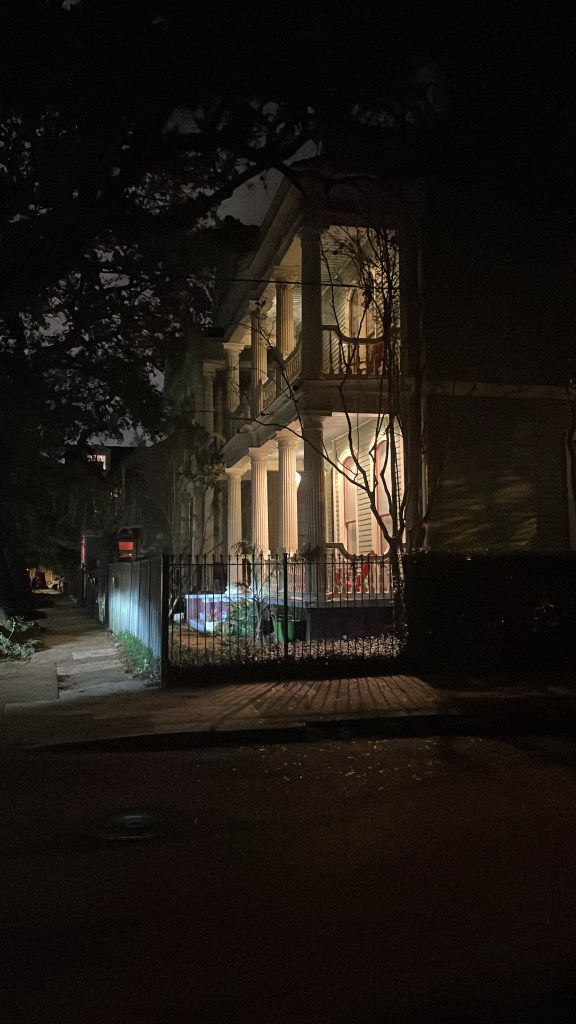
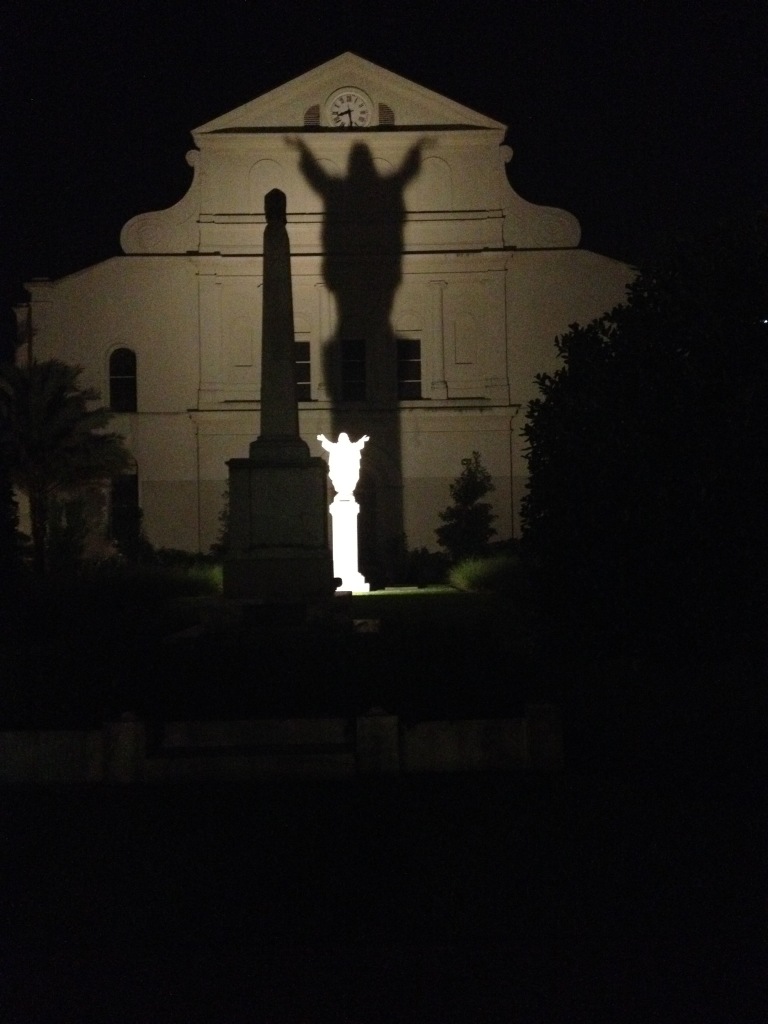

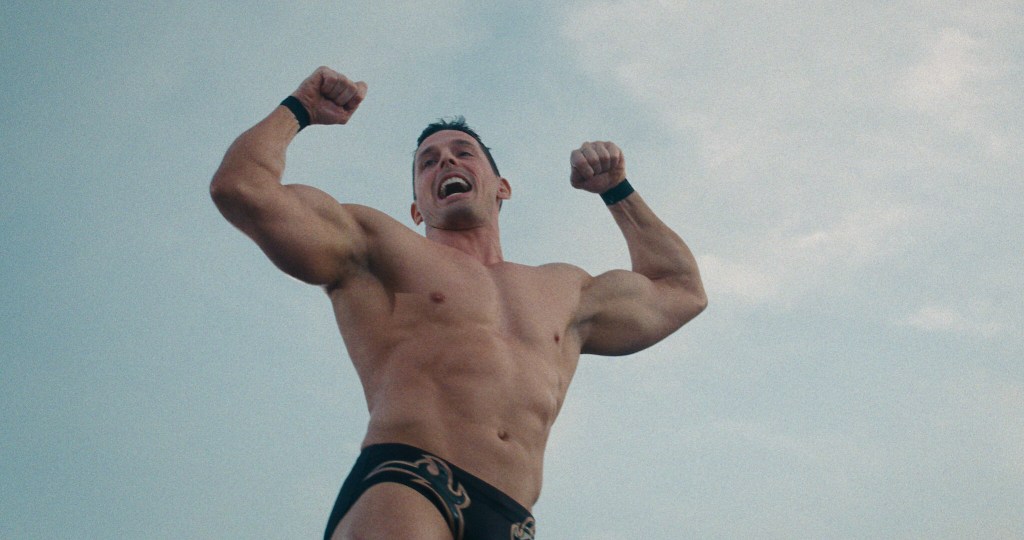

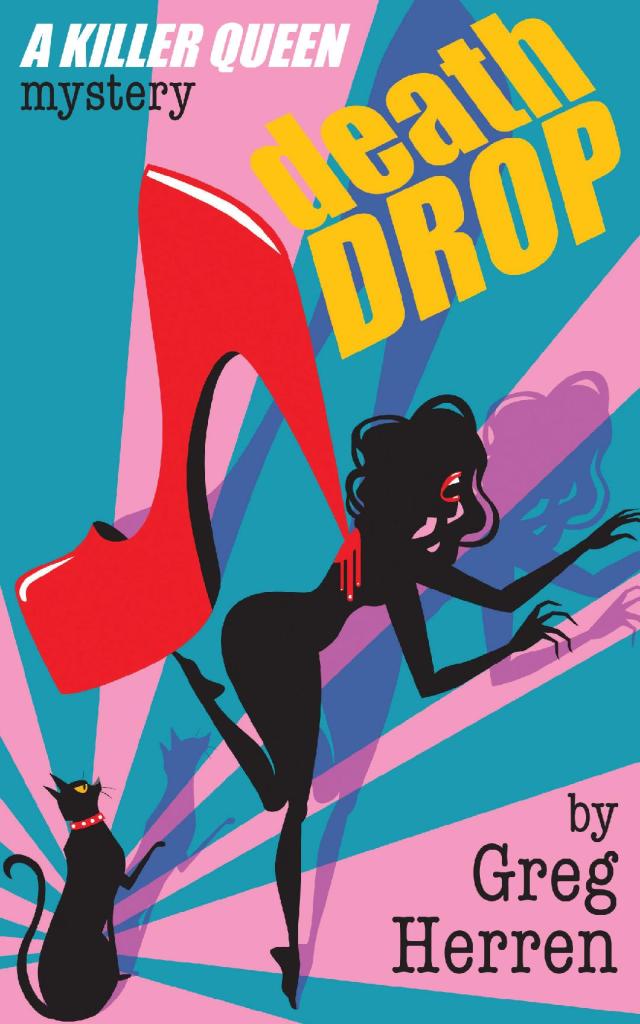


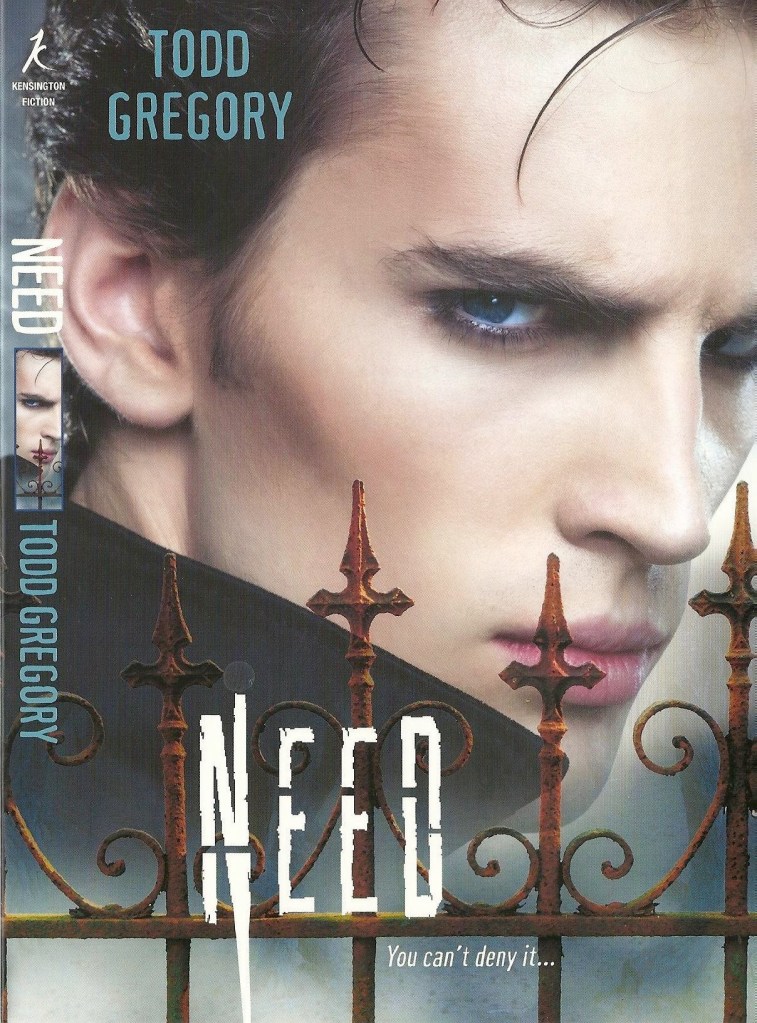
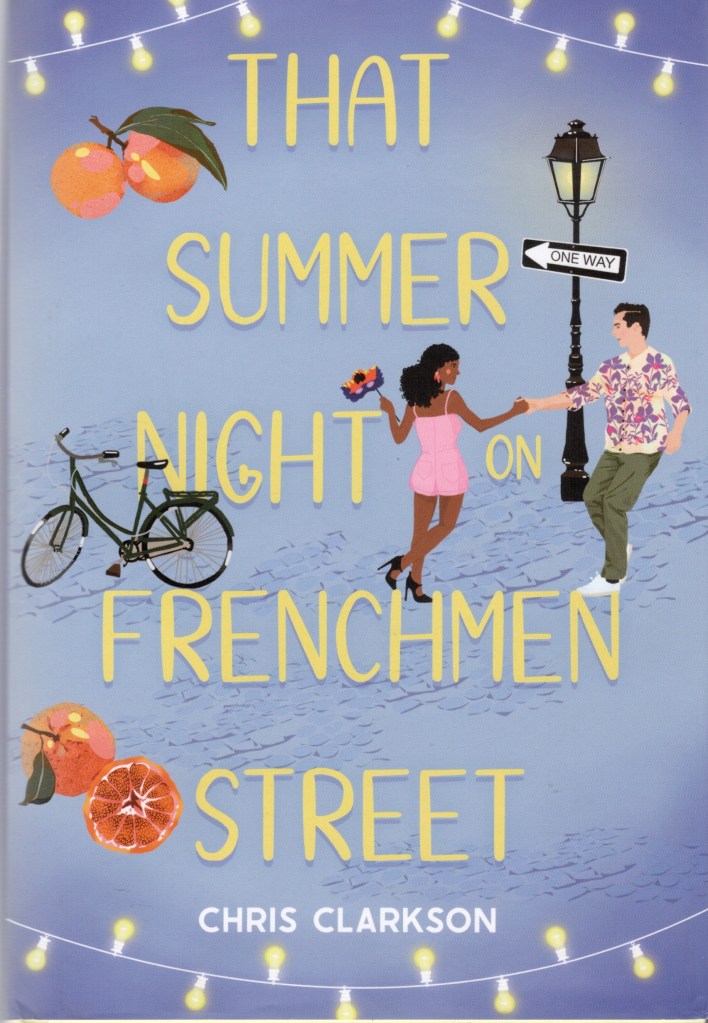
 Queer and Loathing in America