Truly

Tuesday! I made it through Monday. I also managed to get a big hunk of edits input into the manuscript, which means I am on the downward slope to getting that finished. I am most likely going to put aside working on Scotty until the edits are finished, now that I’m in a groove, and am very pleased, I must say. I would love to have this done by the weekend, so I can let it sit for another week while I work on Scotty; but I don’t know; that’s going to depend on two things: motivation and energy.

We’ll see how that turns out, won’t we?

Heavy sigh.

I am debating on whether I want to reread It. I bought it the day it was released, back in 1986 (as I have done with everything Stephen King has published since Different Seasons,  and I read it over the course of two days. (I binge-read King’s novels back then; each as they came out, on the day they were released; a habit I have sadly fallen out of.) I also used to reread King novels many times; I can’t count how many times I’ve reread, for example, The Stand, The Dead Zone, ‘salem’s Lot, etc. I still will reread one of those earlier novels on occasion; but I’ve never reread It, though, and I’m not sure why. I think I got out of the habit of rereading King sometime in the mid-1990’s; and what I wouldn’t give for the time to sit down and reread them all, beginning with Carrie and working my way through the most recent. But now that a new film version of It is out, and breaking records, and getting much critical acclaim; it may be time to reread the Big Novel. I loved It the first time, cherishing the characters more so than the story, which did terrify me; but I vaguely remember not liking the ending; which was a first for me with King.

I do love Stephen King, both as a person and as a writer; granted, what I know of him as a person is confined to news reports of things he does, and his Twitter account; plus, I did get to meet him at the Edgars several years ago, which was one of the biggest thrills of my life. It’s hard to describe what King’s work has meant to me; how it’s inspired me as a writer, and pushed me to not only find my own voice as a writer but made me want to figure out how to create characters that, no matter how bad they might be or how awful the things they do, the reader can find some sympathy for. His On Writing is the book I always recommend to beginning writers as a place to start learning to write, and ‘salem’s Lot (with Needful Things running right behind it) is one of the best novels about a small town, and small town life, I’ve ever read. “The Body” is one of my favorite novellas, if not the favorite; and of course the film version, Stand by Me, is one of my favorite films. His uncanny eye for human behavior, his insights into character that are so honest and real and true, are what make the books so damned brilliant for me.

We watched the first episode of American Horror Story: Cult last night as well; it was an excellent start to the season. But that doesn’t mean the show won’t go off the rails as it continues to unfold; it seems like it almost always does. And without the anchor of Jessica Lange giving a balls-out performance at the center, the post-Jessica seasons tend to lose my interest along the way. We never finished watching Hotel, but we did finish the mess that was Roanoke. As Halloween approaches–it’s certainly has felt more like fall around here since Labor Day, with temperatures in the low seventies and no humidity–my mind is turning more and more to reading horror; it’s almost time for my annual Halloween reread of The Haunting of Hill House, and I do have some other horror in my TBR pile I’d like to get through. I promised Katrina Holm I’d read Michael MacDowell’s The Elementals before Bouchercon so we could drink martinis and discuss it; I’ve got some unread Nick Cutter on my shelves, as well as some other things from ChiZine Press (which never disappoints), and there are some Stephen King novels in my collection I’ve yet to read. I also want to reread Peter Straub’s Ghost Story and Floating Dragon; as I said the other day, a horror novel I’ve been thinking about for about thirty years has been percolating in my frontal lobes the last week or so–I finally realized where I could set it, where it would make sense, as opposed to where I’d stubbornly been wanting to set it, where it wouldn’t work so I’ve never been able to write it–and I may start sketching some ideas for it.

And on that note, these edits aren’t going to input themselves.

Here’s a hunk for you, Constant Reader, Eddie Cibrian, in his underwear:

IMG_2636

Always Something There To Remind Me

Monday morning.

I didn’t get as much done as I wanted to this weekend–do I ever?–and now it’s Monday morning. Ah, well, ’tis life, isn’t it? We have friends coming in this week–we’re having brunch Saturday at Commander’s–and I’m not sure what other opportunities we’ll have to see them this week.

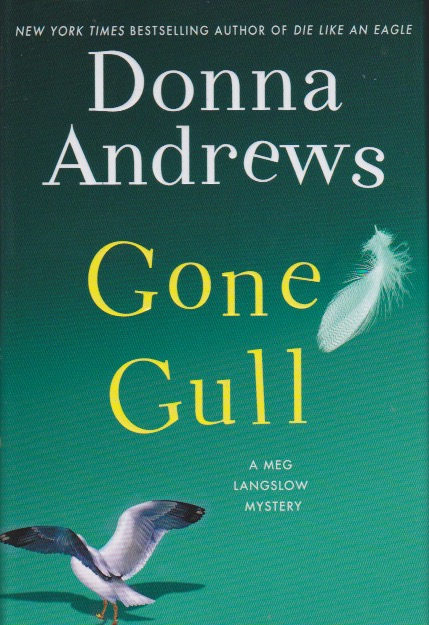
I did manage to finish reading Donna Andrews’ latest, Gone Gull, over the course of the weekend, which was fun.

gone gull

“Wow, you could kill someone with that thing! Doesn’t that worry you?”

I counted to ten before looking up from the anvil, where I’d been about to start hammering on an iron rod. I’d only finished heating the iron to the perfect temperature for shaping it. If I was working in my own barn, I’d have ignored Victor Winter’s remarks.

But I wasn’t in my own barn. I was at the Biscuit Mountain Craft Center being paid–quite handsomely–to teach Blacksmithing 101. And however annoying I found Victor, he was a student. If ignored, he’d start muttering again about complaining to management. I didn’t want him doing that. Management was my grandmother Cordelia, owner of the center, and I didn’t think she needed the aggravation today.

So when I’d reached ten I put my hammer down, set the rod safely on the anvil, and pushed up my safety goggles. Then I smiled, and did what I could to turn his question into a teaching moment.

“Yes, Victor,” I began. “You could kill someone with this metal rod–even if it wasn’t heated to its present temperature of approximately a thousand degrees Fahrenheit.”

I love the Meg Langslow series, and eagerly await each new volume (there’s another one coming out in October, The Finch That Stole Christmas, huzzah! The Christmas ones–there are two already–are amongst my favorites).  Meg is, as you can guess from the above opening, a highly skilled and trained blacksmith; if I had any complaint to make about the series, it’s that Meg’s blacksmithing has taken a backseat to all of the many other things she somehow manages to do. This book is also not set in the small college town of Caerphilly, Virginia (I pronounce it carefully, because it makes me laugh), but rather in the Blue Ridge mountains, where Meg’s long lost grandmother (introduced in The Good, the Bad, and the Emus, another favorite) lives. (Although I do miss Caerphilly, but I am hopeful the October release will be set there.) Meg has an enormous family, a wry sense of humor, and is uber-organized, which is why she also ends up running so many, many things–almost all of which result in someone being murdered and Meg having to use her highly honed organization and deduction skills to catch a killer.

The premise of every  cozy series, of course, is that the main character manages to catch the killer before the police do; this is a very difficult thing to pull off, and Andrews does it every single time. The books are witty, and clever, and I don’t think I’ve ever even tried to figure out who the killer is, or solve the crime (which is something I tend to do whenever I read a crime novel) because I am enjoying the ride so much.

Gone Gull is a fine addition to a series that I hope Andrews never grows tired of writing, because I’ll keep buying and reading as long as she does.

Stand Back

I have to work today, so am spending this morning catching up on chores around the house. After I get off work, we are heading up to Baton Rouge for tonight’s LSU game, which I am quite naturally excited about. It’s also my first time taking the new car to an LSU game in Baton Rouge! Woo-hoo!

GEAUX TIGERS!

I also started reading Donna Andrews’ latest, Gone Gull, last night, and am enjoying it pretty thoroughly already. I’ve already laughed out loud a couple of times in the first few chapters, an excellent sign, and am looking forward to reading more of it. Since I am working today and going to the game tonight, I have to do other errands–get groceries, etc–tomorrow, but I am also hoping to be able to carve out some time tomorrow to do some writing/inputting edits. I am so far behind on the inputting of the edits–it’s such a tedious process–but maybe if I just devote myself to it tomorrow, I can power through it, and then spend next weekend making the necessary tweaks the manuscript needs to have made before I start querying agents.

Ah, the joyous sting of rejection to come. Woo-hoo. But I’m much better about that sort of thing now than I used to be. Now, as long as the rejection is handled professionally, I no longer mind. And by professionally, I mean that you are notified. There’s nothing more infuriating than writing something for a market–say, an anthology–and finding out you didn’t get into the anthology when the book is released. This has happened to me more than once, and I am really tired of it. I am also really tired of the people involved turning around and saying oh, I just don’t time to contact everyone. Um, it’s part of the fucking job. I notified every single person who submitted a story to Blood on the Bayou–in fact, for every anthology I’ve ever been involved with–to let them know I wasn’t able to use their story, and to encourage them to submit it elsewhere.

There’s no fucking excuse, otherwise.

Agents who say on their website that ‘if you don’t hear from us in two months’ or some other time period? That’s different, because they are letting you know right up front they will only contact you if interested, and are giving you a timeline. Personally, I still think you should thank someone for submitting, but I’m also old school, and maybe agencies nowadays simply don’t have the staff or the time to do that anymore. I’m not an agent, have never been one, and have never worked for an agency, so I give them the benefit of the doubt.

And on that note, tis back to the spice mines.

Here’s a Saturday hunk for you, actor Caspar Van Dien.

21462493_10212914920364356_1506004771641280652_n

Allentown

I was so tired last night when I got home from work–and I worked a short day! After work yesterday, a friend and I went to lunch to a place on the corner of Tulane and Carrollton called Namese, and I had an enormous  bowl of beef pho, which was absolutely delicious. I was in the mood for noodles, and having never actually had pho before, was quite thrilled to try it, and it was amazing. I’ve been wanting to try pho since seeing a show on our local PBS channel, WYES, about the big Vietnamese community in New Orleans, and one of the things they talked about on the documentary was pho. I’d been wanting to try it ever since, and got my chance.

DAMN THAT WAS GOOD.

I’d known we have a big Vietnamese community in New Orleans for quite some time–most of them live in New Orleans East, and were devastated by the flooding after the levees failed back in 2005. Poppy Z. Brite wrote about that community in his brilliant (and deeply disturbing) Exquisite Corpse, doing it so well I never had the nerve to try to write about it myself. (Our first, and only,  Congressman from Orleans Parish was a Vietnamese; Joseph Cao, who defeated “Dollar Bill” Jefferson in the post-Katrina scandal created by the fifty thousand dollars in cash he had stored in his home freezer. Cao was born in Ho Chi Minh City (then called Saigon), and only served one term in Congress–but I liked Congressman Cao; he put New Orleans ahead of party, and I was sorry to see him go.

I have an idea for a noir involving the Vietnamese communities of the Gulf Coast that I hope to write some day. I’ve also been toying with an old idea for a horror novel that’s been dancing in my head for the last thirty years or so–I can tell that I am writing another book; my creativity always spikes when I am writing a book.

Honestly. One would think I could get that under control.

Anyway, I also finished reading Margaret Millar’s Do Evil in Return last night. It wasn’t the below edition I read, but rather one of the volumes of The Collected Millar; this volume also contains Fire Will Freeze, Experiment in Springtime, The Cannibal Heart, and Rose’s Last Summer. But I rather like that Gothic-style cover.

millar-do-evil-in-return-lancer

The afternoon was still hot but the wind carried a threat of fog to come in the night. It slid in through the open window and with curious, insinuating fingers it pried into the corners of the reception room and lifted the skirt of Miss Schiller’s white uniform and explored the dark hair of the girl sitting by the door. The girl held a magazine in her lap but she wasn’t reading it; she was pleating the corners of the pages one by one.

“I don’t know if Dr. Keating will be able to see you,” Miss Schiller said. “It’s quite late.”

The girl coughed nervously. “I couldn’t get here any sooner. I–couldn’t find the office.”

“Oh. You’re a stranger in town?”

“Yes.”

“Were you referred to Dr. Keating by anyone?”

“Referred?”

“Did anyone send you?”

Margaret Millar is a treasure, and her work, despite now being dated because of societal and social changes, are worthy of not only being read by modern audiences but also deserving of study. She, along with Dorothy B. Hughes and Charlotte Armstrong, formed a triumvirate of strong women writing suspense novels featuring women protagonists that were the equal of anything written by male contemporaries; there were numerous other women doing the same, but these three had longer careers and are now being rediscovered, in part thanks to the diligent work of Sarah Weinman and Jeffrey Marks. Library of America has released a two-volume collection of works by great women writers of the time; Soho Crime is releasing thick volumes collecting all of Millar’s work, which I am happily acquiring. I read Armstrong when I was young, and loved her; I am in the process of working my way through the canons of both Millar and Hughes, as well as two other great women writers of the same period, the incomparable Patricia Highsmith and my personal hero, Daphne du Maurier.

Do Evil in Return, originally published in 1950, is ultimately a novel about how society and its hypocritical misogynistic treatment of women can destroy them. The main character of the novel, Dr. Charlotte Keating, is a strong, independent woman with a successful practice in a small California coastal town. She is both single and hard-working; owns her own car and her own home–no small feat for a woman in 1950–and the book opens with a young woman coming to her for help. The woman, Violet O’Gorman, is only twenty and married, but finds herself with a particular problem; estranged from her husband, she had a one-night stand with a married man which has left her pregnant, and she is desperate for an abortion, which of course was illegal in 1950. Dr. Keating–Charley to her friends–refuses to break the law and perform this service, but her heart goes out to her patient and wants to help her, but while distracted by a phone call doesn’t notice the girl slipping out of her office. With a local address her only clue as to how to find Violet, she goes looking for her…and soon finds herself wrapped up in a terrible string of events beyond control, a noose tightening around her own neck. For, like her patient, Charley herself is involved in a love affair with a married man–a platonic one, to be sure, for she refuses to become intimate with him as he is married–and the similarities she sees between herself and young Violet is part of what drives her. The following morning, Violet’s body washes ashore, an apparent suicide, according to the police but Charley herself isn’t so sure.

And of course, she is right.

Millar’s particular genius lies in how casually she lays out her cards; she never tells her reader straight out what’s going on, but allows it to unfurl naturally, leaving it to her reader to figure it out. When we meet Charley’s platonic lover, there is no mention of his being married–Millar simply talks about the stifling existence he has at home with Gwen. As the story continues the reader slowly realizes that Gwen is actually his wife, and she is also one of Charley’s patients. Charley has tried to foist Gwen off on other doctors, but hypochondriac Gwen refuses to see anyone else–and is incredibly needy, ringing Charley for help at all hours of the day or night. Charley’s own feelings for Gwen’s husband also aren’t that simple; and in 1950 divorces weren’t as easy to obtain as they are today.

Perhaps the strongest part of the book is how Millar clearly depicts how claustrophobic a woman’s world was in 1950, and the delicate balance a single, independent professional woman had to maintain. Exposure of the relationship would ruin Charley, both personally and professionally; just as Violet’s unexpected pregnancy has ruined her. Society’s expectations of women, and their sexuality, are the true villains, the true evil in this novel; and the realization that this world Millar so brilliantly depicts was only sixty-seven years ago is truly chilling.

I think this book would be excellent reading for a Women’s Studies course; to let young women know how truly awful and misogynistic society was not so long ago, as a reminder to everyone today how far women have come in a short period of time, and how hard they fought to get to where they are today.


Stray Cat Strut

Friday!!!!

I have almost made it through this short week–I am working tomorrow before we head up to Baton Rouge for the LSU-UT Chattanooga game–and am pretty happy about it. It seemed off this week; I’m not sure what that’s about. We’ve had a chilly week here–for September, it’s been in the 70’s without humidity, which is November weather, really. I’ve slept fairly well, despite waking up a couple of times per night, and each morning have not wanted to get up. I may get up tomorrow morning so I can get the groceries and run errands prior to going to the office–get that out of the way so I can sleep late Sunday, since we’ll probably not get back from Baton Rouge until around midnight.

This week my short story “Keeper of the Flame” came out in Mystery Weekly magazine, and I am inordinately proud of this. Short stories are so hard for me to write, so each sale of one makes me feel like I’ve truly accomplished something.  I struggle so much with short stories…I have so many right now that aren’t finished, but I am trying to get the edits input and the first draft of the new Scotty written and … and…and…

I also got pretty deep into Margaret Millar’s sublime Do Evil in Return, and can’t wait to finish reading it so I can post about it. It’s so extraordinary!

Anyway, if you want to read “Keeper of the Flame”, you do have to pay for it, alas. This is the link to the preview of the story, to give you an idea of whether you want to read it or not:

http://mysteryweekly.com/issues/keeper.asp

You can buy the magazine in either print or e-form here:

https://www.amazon.com/dp/1549639919/

And you can also buy or subscribe here:

http://www.mysteryweekly.com/subscribe.asp

Do support markets that pay–even in a small amount–for short crime fiction!

Here’s a hunk to get your weekend rolling, former Tarzan actor Gordon Scott:

20728242_10212670337849946_4851579278645951324_n


1999

So, I had to go to the DMV this morning to renew my driver’s license, which had expired on my birthday and I hadn’t realized it, like an idiot. The DMV is never a great experience, and yesterday was no exception to that rule. But I was able to finish reading Christopher Golden’s Ararat while I was there, which made the time pass much faster (I was there slightly less than two hours) and I did end up taking what had to be the worst driver’s license photo in history–at least my personal history of driver’s license photos. Insult to injury? My last one looked terrific. Heavy heaving sigh.

Even more insult to injury? It looks like me.

Ah, well.

You have to hate that. Anyway, I managed to finish reading Ararat, which was enjoyable, and this evening I started reading Margaret Millar’s Do Evil in Return, which is quite marvelous.

ararat

Just past eight o’clock on the last morning of November, the mountain began to shake.

Feyiz froze, breath catching in his throat as he put his hands out to steady himself, waiting for the tremor to end. Instead it worsened. His clients shouted at him in German, a language he did not speak. One of the men panicked and began to scream at the others as if the devil himself were burrowing up through the heart of the mountain to reach them. They stood on the summit, vivid blue sky rolling out forever before them, the frigid air crisp and pure. An idyllic morning on Mount Ararat, if the world had not begun to tear itself apart.

“Down!” Feyiz shouted. “Get down!”

He dropped his trekking poles and sank to his knees on the icy snowpack. Grabbing the pick that hung at his hip, he sank it into the ice and wondered if the six men and three women in this group could even hear him over the throaty roar of the rumbling mountain.

The Germans mimicked his actions.

I read an essay recently which discussed how, out of all the types of genres and subgenres in literature, that horror is the most faith-based of them all. It sounded absurd at first, but as I read the essay and thought about it more–and have, obviously, continued to think about it–that premise is pretty spot-on. Not all horror is faith-based, of course; there’s nothing about faith in films like Halloween or any number of horror novels I could think of (The Other, for example); but so many of them actually are that it’s kind of fascinating; especially when you take into consideration the way religious groups generally condemn horror books and films. The Exorcist is deeply rooted in Catholicism; and to name two, neither The Omen nor Rosemary’s Baby could have been written without knowledge of the Christian Bible. Ghost stories are predicated on the idea that there is life after death; that the soul continues to live on and needs to move on to another plane–whether that be heaven or hell, those books rarely make the distinction. The existence of the supernatural in a lot of horror proves that faith, and religion, are real and true; and after all, isn’t religion itself supernatural? I have made the offensive (to Christians) joke about Easter being a celebration of a zombie; and if you can get past the faith and look at any religion and its rituals, you can see what I mean.

I blaspheme, of course. I am an apostate heretic who would have burned not so long ago in our history.

I’ve read Christopher Golden before; I greatly enjoyed his Dead Ringers, and have Snowblind in my TBR pile. This week I took his Ararat out of the pile to read, and it again put me in mind of how so much horror fiction is dependent on religion for its existence. The opening scene quoted above, of an earthquake shaking Mount Ararat in Turkey, ends with a tremendous landslide, one which greatly changes the geography and the face of the mountain itself, long purported to be the final resting place of Noah’s Ark. The existence of the Ark, of course, would prove that the Bible is, at least in this instance, literally true (although Christianity is not the only belief system from the Middle East that tells of an ancient flood); there have been reports in the past that it has been found; but the likelihood of wood thousands of years old surviving is not great. But this landslide opens a new cave on the side of the mountain, high up; and soon the race is on to be the first to scale the mountain and see what’s inside the cave. The first section of the book has to do with one particular team racing to beat several other’s to the cave; risking their lives in the process. But the team–lead by adventurous couple David and Meryam, who explore and write books and make documentaries about their exploits–that arrives first soon discovers that the cave isn’t really a cave but the Ark itself…and there’s something else there that should have never been discovered.

To tell anymore would, of course, risk spoiling the story; there are so many twists and turns and scares and shocks that to give away anything more than is contained in the cover jacket blurb would be a disservice to future readers and to author Golden. But I couldn’t stop reading; resented having to put the book down, and was very satisfied when it was finished. Golden also includes diversity of characters in all of his books and does it casually; I also appreciate the fact that he chooses not to describe non-white characters in terms of food or drink–I could go the rest of my life without reading about “cinnamon” or “chocolate” or “cafe-au-lait” skin.

But just think about it for a moment–if the story of Noah is actually true, the flood changed the world and refreshed it; a reboot by God, as it were, and there are some verses in Genesis that show how different the original world was before it was cleansed–the one that readily comes to mind is There were giants in those days.

I look forward to reading more of Mr. Golden’s work.


One on One

Thursday morning, and there’re storms out there putting lots of people and property in jeopardy. Best wishes, everyone–best to batten down those hatches and get the hell out of Dodge. A New Orleans evacuation would be troubling–usually there’s the options of either going west to Houston or north. This time, obviously, the only option is to go north. I will, of course, be making certain that the car is filled with gas at all times now; I filled it up yesterday morning just to be on the safe side; New Orleans still was in the Cone of Uncertainty for Irma, but as the day went on the model shifted completely and we appear to be in the clear–for this one, at least. Jose is out there, though, behind Irma, and Katia may be forming along the Mexican Coast near the Yucatan. Oy.

I did manage to get Chapter Four of the Scotty finished, and started Chapter Five.  I’ve also input another chapter or so of edits into the WIP as well. Pretty cool. I’ve also had some ideas for some new short stories over the last couple of days, but as always Labor Day weekend has sort of disrupted my life and I need to get my bearings back a bit. I did manage to get the bills paid today, and I have to head over to the West Bank to get my driver’s license renewed tomorrow–YAY–and then I have to work Saturday for a few hours, which is fine. I don’t mind working Saturdays that much, as long as I’m home in time to watch the LSU game. (yes, it’s Tennessee-Chattanooga, but what kind of fan would I be if I didn’t watch their games? Although going to see It in the theater is kind of sounding good…)

It’s also very exciting that four American women are all that are left in the draw for the US Open: four American women in the semi-finals. This hasn’t happened since 2002, I think they said–back when the US women were the juggernaut of Venus Williams, Serena Williams, Lindsay Davenport, Jennifer Capriati, and Monica Seles. Venus’ first trip to the semi-finals was twenty years ago. Seriously, the Williams Sisters are without question two of the greatest women tennis players of all time; if not for her sister, Venus would probably have the record for most majors won. So, we are assured an American woman will win the US Open this year, which is very coo. We watched Juan Martin del Potro knock Roger Federer out of the tournament last night; his semi-final with Rafa Nadal should be a final, really.

I do love tennis.

I had a major breakthrough about the WIP this week; long overdue, but better late than never. I realized that my underlying theme wasn’t what I originally thought it was, but rather, something else. It means some more tweaking–but I was going to do some more anyway once these line edits are put in, but knowing what the theme is will  make the query letter writing ever so much easier. I also realized that the crime that’s driving the narrative isn’t necessarily what the story is about; which will make it a trickier sale. But I am very very pleased, and very very excited.

And now, off to the spice mines.

Your Throwback Thursday hunk today–ME! LOL. From a photoshoot I did back in 2004, looking rough and tough. 😉

usafolded


You Can’t Hurry Love

I read a lot this weekend! I did work on the writing a little bit, but not nearly as much as I could/should have. I finished reading the Highsmith, reread The Exorcist, and finally got to Ross MacDonald’s The Drowning Pool, which I read yesterday afternoon, and then last night while watching the US Open I started reading Christopher Golden’s Ararat (which is great fun so far; I’m a little less than halfway through and having a great time reading it).

It might interest you to know, Constant Reader, that I’d never read Ross MacDonald until I was on a panel somewhere with Christopher Rice, either in 2002or 2003, and Chris mentioned MacDonald as one of his favorite writers/greatest influences. I’d read John D. MacDonald and Gregory McDonald; but had somehow never gotten around to Ross. I knew of the Lew Archer series, of course, but had never read any of them, nor any of his standalones. Based on Chris’ recommendation, I started reading them, and never looked back–although I have been slowly doling them out, as there is a limited amount of them and no new ones coming anytime soon. I was a little surprised, after finishing The Exorcist, to pick up The Drowning Pool and realize it was one I hadn’t read.

411U1dmvA2L

If you didn’t look at her face she was less than thirty, quick-bodied and slim as a girl. Her clothing drew attention to the fact: a tailored sharkskin suit and high heels that tensed her nylon-shadowed calves. But there was a pull of worry around her eyes and drawing at her mouth. The eyes were deep blue, with a sort of double vision. They saw you clearly, took you in completely, and at the same time looked beyond you. They had years to look back on, and more things to see in the years than a girl’s eyes had. About thirty-five, I thought, and still in the running.

She stood in the doorway without speaking long enough for me to think those things. Her teeth were nibbling the inside of her upper lip, and both of her hands were clutching her black suede bag at the level of her waist. I let the silence stretch out. She had knocked and I had opened the door. Undecided or not, she couldn’t expect me to lift her over the threshold. She was a big girl now, and she had come for a reason. Her stance was awkward with urgency.

“Mr. Archer?” she said at last.

“Yes. Will you come in?”

“Thank you, Forgive me for hanging back. It must make you feel like a dentist.”

“Everybody hates detectives and dentists. We hate them back.”

The Drowning Pool is hard-boiled, borderline noir (based on the fact that Archer works as a private eye), and can’t you imagine the above scene being played, in black-and-white by either Humphrey Bogart or Robert Mitchum, talking to either Gloria Grahame or Ida Lupino or Barbara Stanwyck? The story is simple: Archer is hired by the wealthy-seeming Mrs. Slocum to find out who has written her husband a poison-pen letter accusing her of adultery; back at the time the book was written, adultery was one of the few grounds for divorce recognized in every state. But as Archer begins to investigate, turns out Mrs. Slocum and her husband don’t have money; the money belongs to her mother-in-law, and she keeps them on a tight leash. Her estate is also sitting on a lot of oil, which she refuses to allow anyone to drill for, which would in turn make them even filthier rich. The elder Mrs. Slocum winds up dead in the swimming pool during a party, and soon the case begins twisting and turning left and right–and more bodies continue to pile up as Archer tries to get to the bottom of what is going on at the Slocum estate. It’s a great, fast read–and MacDonald’s grasp of language is extraordinary.

There’s a reason why MacDonald is up there with the greats of crime fiction.

There’s also an interesting subplot–almost a throwaway–about why the second Mrs. Slocum’s marriage is an abject failure. MacDonald doesn’t spend a lot of time on this, but it’s there for the queer reader to pick up on. It would be interesting to compare and contrast this book with MacDonald’s wife, Margaret Millar’s, Beast in View, released a few years later. There’s also an interesting comparison to be made between The Drowning Pool and James M. Cain’s Double Indemnity, in the character of Mrs. Slocum’s daughter Cathy, and the daughter in Cain’s book; also, an interesting comparison between this book could be made with Hammett’s The Maltese Falcon.

Maybe someday when I have more time.


Mickey

My wonderful book about the classic horror novels of the 1970’s thru the 1990s, Paperbacks from Hell, attributed the boom in horror fiction to three bestselling novels that set the stage: Thomas Tryon’s The Other, Ira Levin’s Rosemary’s Baby, and William Peter Blatty’s The Exorcist. I read all three of these books when I was in junior high school; the Tryon and the Levin remain two of my favorite novels, and I reread them periodically. But after reading The Exorcist one time, I’ve never felt the need to have a copy on hand, nor have I ever felt the desire to go back and reread it. It did occur to me sometime within the past few years that I should give it another go; my primary memory of the book is, of course, the crucifix masturbation scene which everyone in the seventh grade discussed in breathless whispers whenever someone new had read the book. I may not have ever owned a copy; I may have borrowed it from someone. There were any number of paperback copies floating around my junior high school, the binding bent and broken and covers battered as they were passed around from kid to kid. It also occurred to me that many of my memories of The Exorcist were not from the book, but from the incredibly disturbing film; it was a huge hit and was nominated for ten or eleven Oscars (winning maybe one or two). Mike Oldfield’s “Tubular Bells,” used extensively in the score, was also hugely popular. (All three of the books were made into films; The Other the only whose film version wasn’t a success–but it’s hard to see how it could have been filmed successfully; although it would be really cool if someone tried it again.) So, Labor Day morning, I took down the copy of The Exorcist that I bought recently and read it again.

the exorcist

The Exorcist is undoubtedly an important work in the horror genre; it helped create a boom and directly resulted in a lot of really talented writers getting some great books published over the next thirty years or so. I had noticed, though, that not many people who write horror ever include it on those “Best Horror” lists, or list it as an influence. I read a book in the last year or so that was undoubtedly influenced by The Exorcist; Paul Tremblay’s A Head Full of Ghosts, which I really enjoyed and also put me in mind of a reread of Blatty’s blockbuster. The fact that Blatty is a homophobe made me a bit uncomfortable going back to the book–okay, he may not be a homophobe, but he certainly felt welcoming and admitting LGBT students at Georgetown University meant the school had betrayed its Jesuit heritage and should be stripped of its standing as a Jesuit university (you can read about that here: http://www.nytimes.com/2013/08/04/education/edlife/how-georgetown-became-a-gay-friendly-campus.html?mcubz=1).

So making millions of dollars about a child masturbating with a crucifix is kosher–I guess because, literally, the devil made her do it–but treating LGBT college students as human beings is a crime against Catholicism. Got it.

And to be fair to Mr. Blatty, I only vaguely remembered the above incident; and wasn’t 100% sure I was correct, so that didn’t play into my reread of the book (I didn’t go looking into it until this morning, while actually writing this entry).

Part of the issue with The Exorcist is that once you are aware of it, it’s really not that shocking anymore. This book was a shocker when it was first released; it was denounced far and wide as demonic–including by the Catholic Church (which is even more perplexing on the reread, because the book is very very Catholic), and the scares involved how shocking it was. I seem to recall Blatty based the book on an actual case of an exorcism from the early 1960’s, or perhaps the 1950’s–I don’t recall exactly. So, after forty-odd years the shocks and scares are no longer shocking or scary; my memory of the first read of the book is vague so I cannot remember if it was more pruriently shocking or if it was, indeed, scary to the twelve year old who read it all those years ago. But knowing the story, and what is coming, and knowing that the shock value has completely worn off in the intervening years, I was able to read it and evaluate it simply as a novel.

And it doesn’t, sadly, hold up very well.

I was torn about blogging about The Exorcist, because I generally don’t like to criticize other writers and other books publicly; but it’s an old book, and the author has made a fortune off it. There’s also the suspicion that knowing how homophobic the author is might have played into my disappointment in the reread, but let me give you some sentences:

Looking down at the pain in those sensitive eyes, Chris surrendered; couldn’t tell her what she really believed. Which was nothing.

In fact, Chris had smelled nothing, but had made up her mind she would temporize, at least until the appointment with the doctor. She was also preoccupied with a number of other concerns.

She seemed to be thinking, and still in this posture, she stepped outside and joined her son, who was waiting on the stoop.

Her eyes still on her notes, Sharon probed at the silence in a strained, low voice.

Chris looked at him appraisingly, with gratitude and even with hope.

There are lots more examples; weird analogies, and strange character behavior. It’s also really hard to tell who is the main character. Chris MacNeil, the mother, is a divorced atheist actress; her marriage failed, according to the book, because her husband couldn’t bear being Mr. Chris MacNeil; his wife’s success and fame was too much for his ego to handle, and Chris not only understands but doesn’t blame him. He is a neglectful father to Regan, which also doesn’t bother her too much. She is renting the house in Georgetown because she’s appearing in a movie being filmed there, a musical remake of Mr. Smith Goes to Washington which has an added subplot about campus unrest and protests (which sounds absolutely terrible) shoe-horned in; her main home is in LA. Yet once her role in the movie is finished, she stays in Georgetown inexplicably; Regan is being home-schooled by Chris’ secretary, who does double duty as Regan’s teacher–so there’s no reason for them to stay other than the fact that it’s necessary to the plot for her to remain in close proximity to Georgetown University’s campus. The filming is over before the possession truly gets going; so…

There are also some bizarre behaviors exhibited by Chris as well–she will have an encounter with her strangely acting daughter, be terribly upset, and then go downstairs and have a pleasant conversation with her housekeepers about the film they went to see. It becomes very difficult to have sympathy for her, because she isn’t really fleshed out as a character. The book is also told from an omniscient point of view, so the reader has a very hard time engaging with the characters or feeling deep sympathy for them; certainly it’s hard to identify with any of them. Sharon, the secretary, is a complete cipher; as are the Swiss couple who work as housekeepers. Burke Demmings, the director of the film and a friend of Chris’, is a vicious and cruel drunk who openly mocks her servants; which she just dismisses as “oh, that’s just Burke.”

Because her housekeepers aren’t people who should at least be treated with a modicum of respect as human beings?

The police detective who becomes involved in the case–Burke ends up dead at the foot of the steep staircase down to M Street behind the house–is incredibly annoying; he never gets to the point and dances around the subject and is one of the most unbelievable cops I’ve ever encountered in fiction; he seems a bit like Columbo, but at least the viewer knew that Columbo was actually incredibly smart and that was his method. You never get that sense with Detective Wilderman; he’s just annoying.

Father Karras is by far the most likable and interesting character in the book; and I suppose the reason it’s called The Exorcist. Damien Karras (it’s funny; at the time the book was published the name was unusual but interesting; of course The Omen has forever altered the perception of that name) is having a crisis of faith; his own homosexuality is hinted at but subtextually; his ‘friendship’ with Father Dyer is hinted at, they have a lightly teasing homoerotic kind of friendship but it’s never really gotten into; although one of the insults the demon throws at Karras is an accusation of homosexuality, which rattles him. There’s also a scene where Father Dyer mentions that ‘the gays are leaving the priesthood in droves.’

But the underlying premise, and theme that drives the book, is that Catholicism is real, the one true Faith; even though the demon is apparently an old Babylonian god named Puzuzu–who predates Catholicism and Jesus–the power and faith can defeat him. The ultimate sacrifice of Father Karras in taking in the demon and then killing himself–what happened to the demon? What happened to his soul? Does he redeem himself with this act?

Father Karras was interesting to me (he is constantly described, not just in the text but by characters, as ‘looking like a boxer’–whatever that means: “they told me you looked like a boxer”.) as a character, and I would have loved to have seen the entire story through his eyes; the loss of faith, his struggle with choosing the church over his mother; the relationship with Father Dyer; his doubt that Regan is actually possessed and the slow dawning that demons, and therefore, his faith, are real; and why he would make that ultimate, final sacrifice.

I’m glad I reread the book, even though it was kind of disappointing. I greatly enjoyed the television series, which was recently renewed for a second season (yay!), and it is an important book in the genre; no matter what quibbles I have with it, its importance cannot be denied, and I think horror aficionados should read it.
The Safety Dance

Labor Day.

Paul and I went out for a while yesterday–the first time we’ve “done” Southern Decadence in years–because it was one of my co-worker’s birthdays and we ended up staying out WAY later than I’d thought we would. I was a little sick at first–I took a Claritin-D before leaving the house and then drank a beer on top of it and felt really nauseous and had to sit down for about an hour, but it was entertaining seeing the passing spectacle and then meeting my co-workers later. I’d never actually spent time at the 700 Club; a gay bar that opened in the twilight of the going out portion of my life. It’s a nice bar, if small, and of course they were playing some fun music–you can never go wrong with either classic Madonna or Gladys Knight & The Pips–and it was nice. I enjoyed myself tremendously, but also don’t feel the need to go out again anytime soon. It was…different, I suppose, in a way that I can’t truly explain. I guess the easiest way to say it is that I’m in a different place now, if that makes sense. There’s probably an essay in this; one that right now is amorphous and ethereal, dancing just outside my conscious self and perhaps will come to me so that I can write it down.

But for now, it just is, and I can leave it as I had a lovely time, and I am quite fond of my co-workers, and it was lovely to spend time with them outside the confines of the office and work.

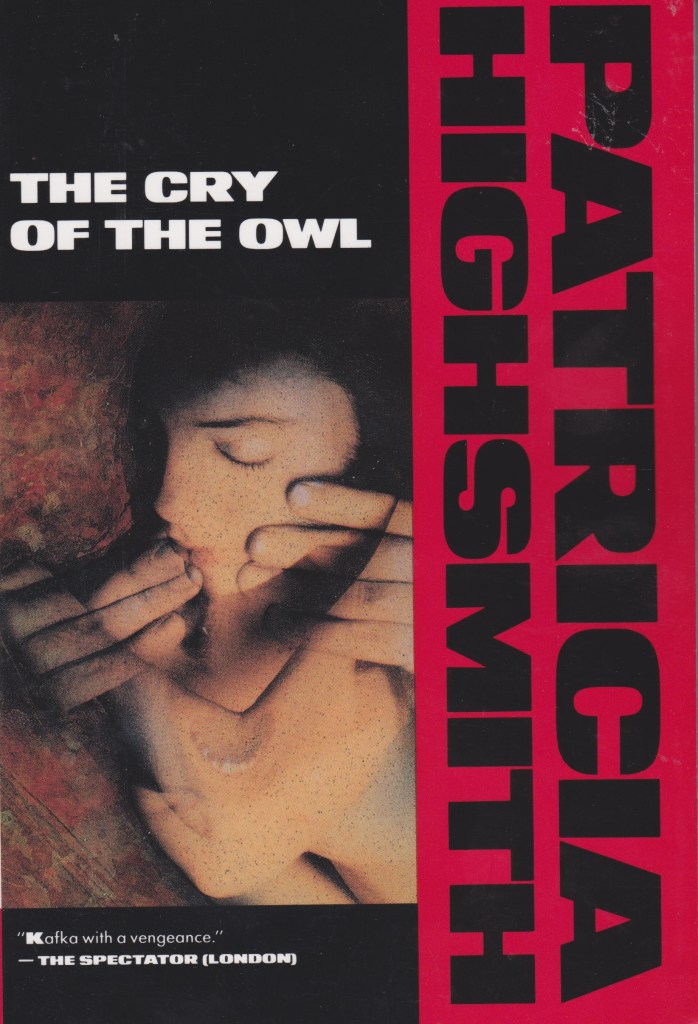
Before we went out yesterday, I spent the morning finishing reading Patricia Highsmith’s The Cry of the Owl.

the cry of the owl

Robert worked nearly an hour after quitting time at five. He had nothing to hurry home for and by staying on at his desk he avoided the chaos of employees’ cars that left the Langley Aeronautics parking lot between five and five-thirty. Jack Nielson was also working late, Robert noticed, and so was old Benson, who was usually the last. Robert turned off his fluorescent lamp.

“Wait for me,” Jack said. His voice sounded hollow across the empty drafting room.

Robert got his coat from his locker.

They said good night to Benson and walked toward the long, glass-enclosed reception hall, where the elevators were.

“So, you got your space shoes,” Robert said.

“Um-m.” Jack looked down at his big feet.

“You didn’t have them on at lunch, did you?”

“No, they were in my locker. You’re not supposed to wear them more than a couple of hours a day at first.”

They got into the automatic elevator.

“They look fine,” Robert said.

Jack laughed. “They look awful, but boy, they’re comfortable, I had something to ask you. Could you possibly loan me ten bucks till payday? Today happens to be–“

“Oh, sure.” Robert reached for his wallet.

“It’s Betty’s and my wedding anniversary and we’re going out to dinner, but could you come by for a drink with us? We’re going to open a bottle of champagne.”

Robert gave him the ten. “Wedding anniversaries–You and Betty out to be by yourselves.”

“Oh, come on. Just for a glass of champagne. I told Betty I’d try to get you to come over.”

“No, thanks, Jack. You’re sure that’s all you need if you’re going out to dinner?”

The book opens with this innocuous conversation between two co-workers who are friendly, but not close. Robert, as you can see, comes across as considerate and thoughtful, if a little bit unemotional. But Robert has another reason for not wanting to intrude on Jack and Betty’s wedding anniversary besides simple courtesy; he has become a bit obsessed with a young girl named Jenny, who lives in a small house out in the country. Robert is in the midst of a divorce, and has had problems with depression in the past; observing Jenny through her kitchen windows–doing dishes, making food, the little domestic chores every woman does in her kitchen–has a calming effect on him. He’s what used to be called, at least during the time the book was written, a ‘peeping Tom’; what would be called a stalker today. Jenny has a boyfriend named Greg; sometimes Robert watches the two of them interact in her kitchen. Robert knows what he’s doing is wrong, yet he is compelled to go there and risk exposure. Several times Jenny and Greg hear him make a slight noise, which concerns and worries them; but he never is caught until one night when Jenny, alone, catches him–and invites him in.

Before long, Robert is enmeshed in the troubled relationship between Jenny and Greg, as well as trying to get his own divorce from his wife settled–a wife who becomes more and more horrific as the novel continues. In fact, in a typical Highsmith switch, Robert–first seen as mentally troubled and damaged, might be the most sane person in the story. Jenny’s growing attachment to him, along with her obsession with death (a younger brother died as a child of meningitis), the equally troubled relationship with her violently dangerous fiance, Greg–continues to build in typical Highsmith fashion, using one of her favorite themes–the besieged innocent whom no one quite believes.

The book is also incredibly dark; Highsmith’s pessimism about her fellow human beings is evident on nearly every page. It’s quite wonderful, yet quite disturbing at the same time. It’s been filmed twice; one in the 1960’s, a French film (many of her works were made into French films) and an American version from 2010, with Julia Stiles.

I’ve enjoyed everything I’ve read of hers; I look forward to reading still more.

And on that note, I’d like to get some writing done today. Have a lovely Labor Day, Constant Reader!