Mr. Roboto

I finished the line edit yesterday, thanks be to the baby Jesus. Now I have to input it into the document, but the worst part–the actual line by line edit–is done done done. Huzzah! Huzzah!

I lived in Houston for two years, and of course, my parents lived there over ten. So, I feel connected to that city as well–not to mention all the friends I have there, and my favorite specialty bookstore, Murder by the Book, so my heart breaks every time I see the flooding pictures, videos, and the posts. Keep Houston in your hearts, everyone, and know they are going to need help. Twelve years ago it was New Orleans, and Houston opened its heart to us. Never forget. Rebuilding Houston is going to be a long and incredibly challenging process. We need to be there for our fellow Americans.

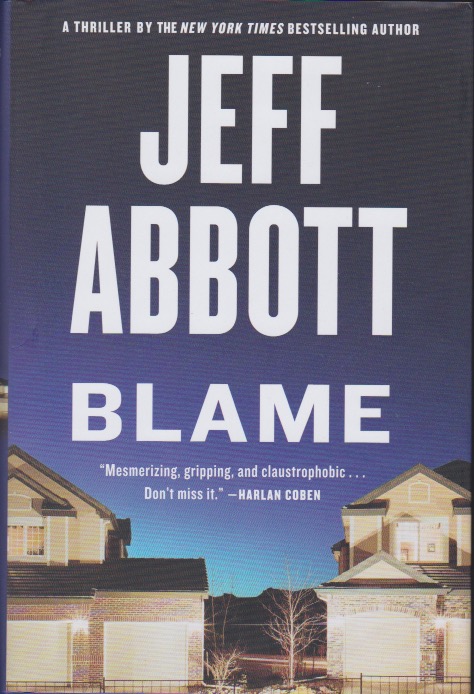
I spent the rest of Sunday–pre-Game of Thrones epic season finale, reading Jeff Abbott’s extraordinary Blame.
blame

What she would never remember: their broken screams starting with I love…and I hate…, the sudden wrenching pull, the oh-no-this-is happening-this-can’t be-happening feeling of falling as the SUV rocketed off the road, the horrifying downward slope of the hillside in the headlights, his hand tight over hers on the steering wheel, the smashing thunder of impact, the driver’s-side airbag exploding in her face, the rolling, the lights dying, the unforgiving rock, and then the blow to her head that undid her and wiped her clean and made her new.

The old Jane died; every version of David died. The new Jane, product of a dark night’s fury and tragedy, knew nothing more until she woke up four days later, remembering nothing, not her name, not her mother’s face, the crash, what had happened to her in that hospital bed, or any of her past seventeen years. Slowly the memories began to seep back: her birthdays when she was a child, cake sweet and soft on her lips; the smoky, rich aroma of her grandfather’s pipe matched with the woolly smell of his tweed jacket with leather elbow patches; her mother’s favorite lavender soap; the notebook she’d filled with short, dark adventure stories one summer and proudly read to her dad; the faces of her teachers; the smile of the librarian who’d give her stickers during the summer reading program; the feel of her hand in her father’s palm; the faces and the laughter of her friends when they were kids.

Sometimes the memories felt immediate; sometimes they felt like something she’d seen in a film, present but distant, nothing to do with the person she was now.

Except for the past three years.

Jane was seventeen, but as the memories surged back, she was stuck at fourteen. Those last three years were gone, all the joy and drama of her high school life, lost in the damage and the trauma. Including those mysterious, unexplained last few hours, when she was with a boy she wasn’t supposed to be with, when she was out doing God knows what. The girl lived and eventually limped back into the bright sunshine, and the boy died and went into the cold ground, a secret sleeping with him.

And so the world she knew turned against her.

Except someone watched, and waited, and wondered how much of that night Jane Norton really remembered.

Amnesia. While not nearly as common as soap operas make it seem, it’s an actual thing. I did a lot of research on amnesia when I was writing Sleeping Angel–most of which I’ve actually forgotten–but if done right, amnesia is an excellent foundation for a crime novel/thriller.

Jeff Abbott has done it right with Blame.

Two years have passed since the terrible accident that took Jane’s memory and killed her neighbor, David–one of the most popular boys in their high school in an affluent section of Houston. Jane’s early memories have come back, but she doesn’t remember high school before the accident, or the tragic accident that killed her father when she was a freshman. Hated and resented by many of her classmates, she’s now homeless, sometimes crashing in one of her few friend’s dorm rooms in a local college. Her mother is too much for her to handle–think Mildred Pierce on steroids–and of course, David’s parents also still live next door; his mother hates her and makes no bones about hating her. Her mother refuses to sell the house, and David’s parents are splitting up. On the anniversary of the accident Jane unfortunately encounters David’s mother Perri at David’s grave, which turns into an incredibly ugly altercation when Perri attacks her; Jane’s Uber driver records it all–and it goes viral.

At the same time, someone named “Liv Danger” is going after Perri on social media–Jane as well–and soon other people involved somehow, even peripherally, the night of the accident are under attack. Slowly but surely, Jane has to slowly start piecing together what happened that day as the Liv Danger’s behavior becomes more and more menacing and dangerous…and other dangerous characters are getting involved.

This book was, quite simply, an extraordinary read. The tension begins on Page One, and not only does it not let up, it builds. I literally took the book into the kitchen with me, reading while I was making dinner because I couldn’t stop, didn’t even want to take twenty minutes away from it because I had to know what happened that night! 

I cannot recommend this book highly enough, but along with that recommendation comes this warning: set aside a weekend to read it because you won’t want to put it down.

Easily one of my top reads of this year.


Up Where We Belong

Oh, Florida.

I am connected to Florida, and despite all the negative reactions just saying Florida can often trigger simply by saying the word, I have a genuine fondness for the pork chop shaped state. My grandparents retired there, to the Panhandle, when I was a kid; an aunt owned a summer house a few blocks from the Gulf in Panama City Beach. I spent a lot of time there during the summers when I was young (part of the annual jaunt to Alabama); and I wound up living there in the early 90’s when I worked for Continental Airlines. I visited Miami and South Beach frequently; I have many friends who live (or have residences) in Fort Lauderdale. I’d intended to set my novel Timothy there originally–the house was going to be on one of the islands across the Intercontinental Waterway from Miami. (I did have my couple meet and fall in love on South Beach, although the story moved them back to the beautiful house on Long Island, near the Hamptons.) I’ve always wanted to write about Florida, and I’ve always loved reading about Florida. There’s something noir and gritty and hardboiled about Florida, yet at the same time there’s this zany wackiness to Florida (so people will post link to bizarre news stories about things that happen there on social media and say “Oh, Florida.”)

There are so many wonderful books about Florida; so many amazing writers have set their novels there–from Robert Wilder’s Flamingo Road to John D. MacDonald’s noirs and Travis McGee novels to Elaine Viets’ badass Helen Hawthorne series to Edna Buchanan to the sublime Vicky Hendricks (you MUST read Miami Purity, Constant Reader) to Randy Wayne White’s Doc Ford series–the list could go on and on and on. Everything works in Florida; whether it’s hard-boiled crime or hilariously funny crime or noir.

There’s actually a Florida noir in my mind right now, that I am hoping to get to at some point this year (if I don’t run out of time; if I do, it’ll be next year.)

medium

On the fifteenth of March, two hours before sunrise, an emergency medical technician named Jimmy Campo found a sweaty stranger huddled in the back of his ambulance. It was parked in a service alley behind the Stefano Hotel, where Jimmy Campo and his partner had been summoned to treat a twenty-two-year-old white female who had swallowed an unwise mix of vodka, Red Bull, hydrocodone, birdseed and stool softener–in all respects a routine South Beach 911 call, until now.

The stranger in Jimmy Campo’s ambulance had two35-mm digital cameras hanging from his fleshy neck, and a bulky gear bag balanced on his ample lap. He wore a Dodgers cap and a Bluetooth ear set. His ripe, florid cheeks glistened damply and his body reeked like a prison laundry bag.

“Get out of my ambulance,” Jimmy Campo said.

“Is she dead?” the man asked excitedly.

And so begins my latest Carl Hiaasen read, Star Island. 

I chose to read another Hiaasen rather something heavier and darker because, quite frankly, this entire past week had been so crazy on every level–what with what was going on in the country in general, madness at home, madness at the office–that I wanted something that would help me escape from it all, and Hiaasen always delivers. His books, which seem so zany and wild and yes, fluffy, on the surface are actually much more; there are layers and depth there that may not be readily apparent. Star Island not only has the trademark Hiaasen wacky wit, but it’s also a very subtle critique of our current celebrity culture,  and how an entire media has built up around ‘entertainment news.’

Star Island focuses on the misadventures of a young pop star who rose to fame by selling sex in her videos at age fourteen: Cherry Pye, and her team of handlers who really see her as a cash cow and not as a human being. Cherry is beautiful and sexy, but not much talent–relying on autotune and back up vocalists being dubbed in and over her own off-tune warblings. Cherry is the worst kind of diva: spoiled, selfish, narcissistic, and used to having her team–which includes her awful parents–clean up her messes so she never has, and is wholly incapable of, taking any responsibility. Because she is so frequently in and out of rehab, her team has had to hire a look-alike, Annie DeLusian, an actress, play her in public to cover up overdoses, etc. The book opens with Cherry on the verge of another comeback with a new album, Skantily Klad, and also overdosing on the combination of things in the excerpt above while partying with a young three-named actor. Annie fills in for her to fool the paparazzi while the team slips the girl out the back–and the story is off to the races. Will her team be able to keep Cherry sober and out of trouble long enough for the investment in her new album put her back on top again? Will the paparazzo completely obsessed with her get the shots he needs to get himself out of the hole? And what about Annie, the only decent person in this whole mess? Tired of playing Cherry and dealing with her horrible team, will she be able to find her way out of this and maybe get some gigs that actually use her talent?

Star Island also brings back two Hiaasen characters from past books: Skink, the ex-governor of Florida who now lives in the wilderness and wreaks havoc on corrupt developers and others who work to destroy the complex Florida ecosystem; and Chemo, the criminal sociopath who lost a hand to a barracuda and had it replaced with a weed whacker. (Yes, it sounds crazy. The first Hiaasen I read, over twenty years ago, was Chemo’s first adventure, and was so silly and over-the-top that I refused to read another Hiaasen until I picked up Bad Monkey off a sale table at a Barnes and Noble in DC a few years ago; now I get what Hiaasen is doing with his work and enjoy it.)

Star Island made me laugh out loud several times, and somehow, with all of its twists and turns, everything was wrapped up at the end in a very satisfying package. Hiaasen novels are intricately and complexly plotted, which I admire–plot is always an issue for me, and I am always afraid I am leaving threads hanging when I finish writing a novel.

The book was exactly what I needed to read this weekend.


Back on the Chain Gang

Saturday morning, with Fleetwood Mac blaring through the stereo, a load of laundry going in the washer, another in the dishwasher, and I’m about to do the floors. This week was so insane–both personally and at work–that I’m glad that it’s the weekend; last week just needed to end. I woke up with a lot of energy this morning; hopefully it will see me through the cleaning and the errand I need to do today. Last night I was glued to the Weather Channel until I couldn’t watch anymore; I alternated between that and reading Star Island by Carl Hiaasen before retiring to bed relatively early. Paul’s going to spend the day doing errands and running around with a friend; I hope to get the line edit finished as well as Chapter Four (I hate transitional chapters); tomorrow I intend to edit some short stories and possibly get started on Chapter Five. Crescent City Charade isn’t coming along as quickly as I might have hoped; I think I’ll brainstorm the next few chapters this evening, as that should help.

Next weekend is Southern Decadence. Wow, this summer has just flown by, hasn’t it? The humidity should break in the weeks after Labor Day and then it’s the fall. Football season also starts (for LSU) this Saturday; the Tigers are supposed to play BYU in Houston; not sure how that’s going to work given Harvey and what it’s doing to southeastern Texas. Best as I can tell, Houston is getting hammered this morning, but at least it’s down to a Category 1–which, while not ideal, with it’s heavy rains and so forth–is better than the Category 4 that came ashore last night. Hurricane season sucks, y’all. As a friend said last night, hurricane season makes you into a bad person, as you’re always hoping and praying it will go somewhere else, which means wishing it on other people.

So fucking true, and so fucking sad.

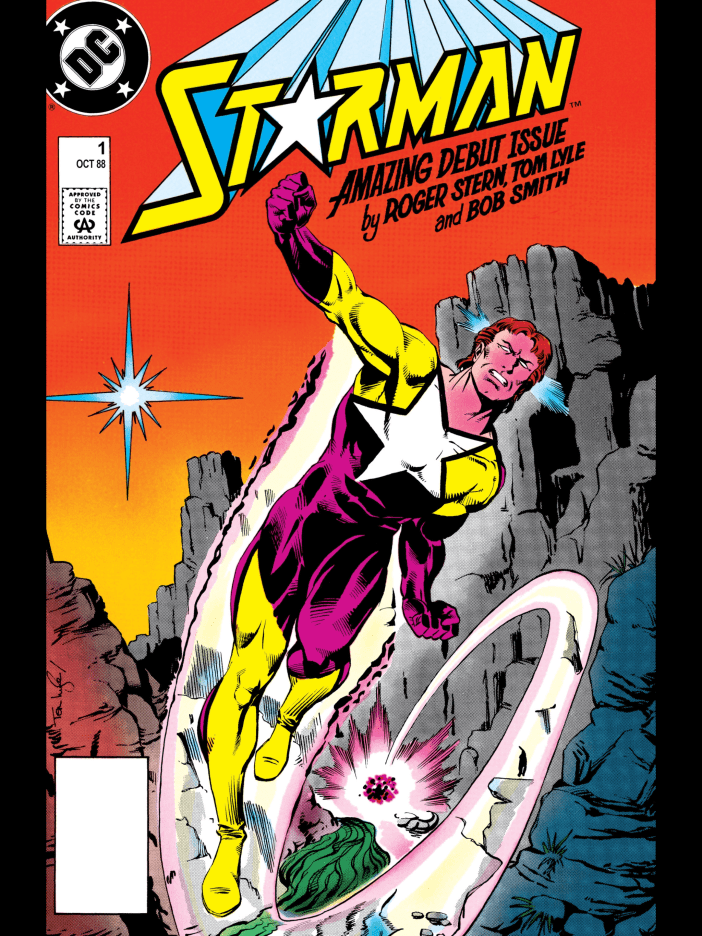
I read the first two digital issues of Starman this week; it’s not quite as good as I remembered, but on the other hand, I originally started reading it about seven or eight issues in. The first issues of a new superhero comic are always, like a television show, a bit wobbly as they try to find their legs and get on firm footing–notable exceptions being Ozark and Game of Thrones, but usually I’ll try to give a TV show a couple of episodes to find its way and gel. This iteration of Starman is about Will Payton, a recent college graduate, raised by a single mother with a younger sister. The mom sacrificed a lot to help put Will through college; he got a degree in Advertising and landed a great job with a major firm in Phoenix. But he hated the job, hated what he was doing, and much to his mother’s dismay and anger, he quit and tried to find something else. He went on a camping/hiking trip, and while on it, something happened that he doesn’t quite understand. He wakes up after thirty-two days in the morgue; he’s confused the authorities who found his dead body in the woods, and basically scares the crap out of them when he sits up and starts talking. He also has powers he doesn’t understand, and so he comes back home, confides in his sister…and has to face the wrath of his mother who demands that he find a job…all the while he’s trying to figure out what’s happened to him. He can fly, generate heat, withstand bullets…and can change his appearance by just thinking about it. His sister convinces him that he’s a superhero, and he needs to start fighting crime and helping people.

What Will doesn’t know is the proverbial mad scientist was conducting experiments in a lab, trying to create super-powered beings. But when he was ready to tap into power from a satellite, it was pushed off course by space debris—and rather than beaming back into his lab and into the bodies of his human volunteers–the energy was beamed into Will, where he was sleeping in the woods. The first two issues set this up, and set the stage for a coming conflict with the mad scientist and his creations.

That’s a lot to cram into two issues, so there’s that.

And now, back to the spice mines.

IMG_1786

Little Red Corvette

Finally, it’s Friday and this bizarre, crazy, insane week comes to an end. I am really looking forward to the weekend; although this hurricane heading for Texas has me concerned for friends there. We’ll get some heavy rain here at some point, most likely Monday, but since it’s pretty much rained here every day since May…nothing new there, right?

I finished the second quarter of the line edit yesterday; I have one quarter, the first, of the manuscript left to do. I really am pleased with the work I am doing with this line edit; I am very curious to see how much, when it’s finally all input, has been removed from the manuscript. Again, I am absolutely amazed at how repetitive I can be when I write; I am even further amazed that in various, previous edits I didn’t catch any of this stuff. This is precisely why one needs to–or at least, I need to–deconstruct my manuscripts and take it apart, editing it line by line, sentence by sentence, and not in order. Had I started this from Chapter One on, I’m betting I wouldn’t have caught all of this yet again.

Food for thought, at any rate.

Chapter Four still is stagnant, alas; I’ve said it before and I’ll say it again here: I hate transitional chapters. But I intend to plug my way forward through it, as it must be done before I can move on to the rest of the story. It is, alas, what it is. But this weekend–given the scary weather reports for Texas and the possibility of torrential downpours for us–I am planning on leaving the house as little as possible. I’ll have to get groceries, of course, at some point–always, it’s never ending–but other than that, I don’t think so. I intend to curl up inside my little nest, my oasis of Gregworld here in the Lost Apartment, and clean and edit and read, and maybe watch Guardians of the Galaxy Part 2.

 I love me some Groot.

And the Lost Apartment is definitely in need of some cleaning.

Bouchercon also released the schedule; I have two panels this year–the Anthony nominees for Best Anthology panel, and Reading the Rainbow; LGBTQ Crime Fiction. I will be sharing the stage with Jessie Chandler, Owen Laukkanen, Stephanie Gayle, John Copenhaver, and our moderator, Kristopher Zgorski, of BOLO Books blog. It should be an interesting discussion, methinks. I’ve never paneled with any of these folks before, so they might want to beware.  Mwa-ha-ha-ha!

Here’s the poster that was made for our panel:

21082806_1945639249038207_5574170399370633136_o

Pretty cool, eh?

And now I’d best get back to the spice mines.

Africa

Thursday morning, and it seems kind of gloomy out there outside the windows. The new dryer arrived–there was some drama involved, as always, but it was resolved in time for me to make it to my testing shift last night at the main office, and I have a working dryer again, so that all counts as a win. I did finish reading the Steve Berry yesterday; and am going to probably dive into either the new Laura Lippman (I am putting it off because then I’ll have to wait forever for the next one), one of the Rebecca Chances I’ve held back in reserve (Bad Sisters, Killer Queens, Killer Diamonds) or may just choose something random out of Mount TBR. I was thinking I may put off my reread of The Haunting of Hill House until October to celebrate Halloween; I do so enjoy doing a horror them for the entries that month.

I do have some thoughts about the Berry, but I need some more time to process them before I blog about the book. It was fun, but I had some issues with the actual story…

We also booked our tickets for Bouchercon in Toronto; and managed to get a decent price on the solitary non-stop from New Orleans to Toronto in each direction, which is absolutely lovely.  The older I get the less I enjoy air travel, plus I’ve learned to really despise changing planes. My antipathy for airports is undoubtedly based in having worked in one; I shudder every time I get near one. But that’s another thing to tick off the to-do list (huzzah!) and every little bit of progress helps. I didn’t work on either the line edit or the new book yesterday because of the dryer situation, but hopefully will be able to get back going again today. God, how I hate transition chapters.

I also hope everyone in Texas, and especially Houston, are getting ready for Tropical Storm possibly Hurricane Harvey. We’re supposed to get a lot of rain here in New Orleans from this system–yay–so I am planning on staying inside and safe from the storm.

And on that note, here’s a Throwback Thursday hunk for you, Constant Reader, the always delightful Marc Singer, about whom I had many prurient thoughts in the 1980’s:

IMG_2497

She Blinded Me with Science

Wednesday morning, and I’m groggy, but my new dryer was just installed so it was worth getting up early. I am doing a load of laundry as I type this; trying desperately to get caught up; the laundry never seems to end, does it? It is ridiculous, though, how happy it makes me to have a working dryer again. So bougie.

Yesterday was just plain weird on every level. I am blaming it on the aftermath of the eclipse and Mercury being in retrograde; everything was just whack yesterday. It seemed like every time I turned around something else crazy was happening; just batshit crazy. One lovely thing, though–my co-workers brought in cupcakes for my birthday, which was incredibly sweet. I was touched, and my blackened little heart was warmed.

I am still  chugging away at Steve Berry’s The Lincoln Myth, although the plot is making me uneasy; which I am more than willing to discuss once I’ve finished reading the book. I think I’m into the home stretch; the last quarter or so of the book. It really does move quickly; Berry certainly knows how to pace a thriller.

(I am definitely reading the new Lippman next; can’t wait!) I got started on Chapter Four of Scotty yesterday; a dreaded transition chapter, and God knows how much I hate writing those. The key is to just get it fucking done and move on to the next chapter, where the action will start picking up once again. Crescent City Charade is turning out to be vastly different than I thought it would be when I started writing it–quelle surprise, that happens with every Scotty, doesn’t it?

Heavy heaving sigh.

I also didn’t get nearly as much done yesterday as I had wanted to; primarily because I kept get sidetracked. I originally, for example, had asked for my dryer to be delivered yesterday morning; I got up early only to discover that despite my request it had been scheduled for this morning. You know, when I am supposed to be at work at eleven thirty. The only other option was to reschedule it for Saturday, but on Saturday the delivery window is anytime between eight and five, and cannot be narrowed. So, rather than spending my entire day at home on Saturday waiting, I decided to take the chance that it would come this morning in time for me to make it to work on time. What, I ask are the odds?

Not good, would be my answer.

And on that note, ’tis back to the spice mines.

IMG_2508


Electric Avenue

Tuesday, and tomorrow I get my new dryer. Heavy heaving sigh. The laundry is piling up.

But I did manage to write another chapter of the new Scotty yesterday, and got to bring up/set up the moral dilemma he’s going to experience through this book, which was kind of fun. It’s also a massive change-up from the opening of the book, which is also way fun to do. If I can manage a chapter a day, this book’s first draft will be finished in about three more weeks. How cool is that? I also managed to get the second half of the WIP line edited. Don’t get excited; I did the second half first, and now am going to do the first half–but am doing the second quarter first, and the first quarter last. Capisce? It makes sense (to me). I am trying not to get distracted by the story and focus more on the language more than anything else. Once I input all these cuts, I will go through it one last time. I also have one more scene to write, for the end. (No, I haven’t gotten the end right yet. It’s another reason I think I keep futzing with it. But it’s going to be much better now than it was.)

Ah, self-confidence. I wonder what that would be like, to have some?

I started reading Steve Berry’s The Lincoln Myth, which appears to be about the Mormons, the Civil War, and Abraham Lincoln; I am only about seventy pages in. I wanted to read Laura Lippman’s Sunburn next, but I only have an electronic copy and I forgot to charge my iPad, and that battery was deader than Lizzie Borden’s parents. I literally went over to the book case which is filled with books I’ve not read yet, closed my eyes, and reached for one. Hardly scientific, but there you have it. Sometimes you just have to let chance take you by the hand. It’s kind of interesting to read a book by Steve Berry with the Civil War as a plot point–given the latest bad publicity Berry is getting, about a memo he wrote when he was a prosecutor in Georgia, before he turned his attention to writing thrillers with a base in history–but as all Berry novels, it’s a quick read with lots of action. Berry also cross cuts between several different points of view, and you can never be absolutely certain who are the bad guys and who are the good. I am curious as to what the secret hidden away for almost two hundred years in the Utah desert is, what it has to do with the Civil War, and how it can affect the present (which is the basic plot structure of every Berry novel; some long hidden secret could have dangerous ramifications in the present unless Our Hero gets to it first before the Bad Guy), but I do enjoy the suspension of belief and getting on board that train. And he does research the books; there is always some semblance of historical truth buried in the books. (The Columbus Affair taught me a lot about Jamaica that I didn’t know, for example, and The King’s Deception likewise taught me some Tudor lore I hadn’t been aware of previously) So, we shall see. His series character (not all of the books belong to the series) Cotton Malone is kind of a James Bond/Jason Bourne/Jack Ryan hybrid, but like I said, I enjoy suspending my belief and going along for the ride. What can I say? It’s fun.

I don’t have to go to work until later today–bar testing–so I am hoping to get some cleaning done, serious work on the book(s), and maybe even take some time to read a bit more.

And so, it’s back to the spice mines with me. Have a lovely Tuesday, all. And here’s a Tuesday hottie for you:

IMG_2477


Jeopardy

So, yesterday was my birthday. Fifty-six officially; although I always add a year to my age on New Year’s Day for the sake of simplicity. I had some trouble falling asleep on Saturday night; a combination of restlessness and heartburn. I wound up sleeping in till almost ten; which is late for me but since I didn’t really fall asleep until around three in the morning it wasn’t that much sleep. But I had a lovely day, really. I kind of just laid around and reread In a Lonely Place by Dorothy B. Hughes, rewatched The Philadelphia Story on TCM (Katharine Hepburn and Cary Grant were both robbed of Oscars), then watched The Nineties and The History of Comedy on CNN before finally watching last night’s Game of Thrones.  I also thought about the new Scotty some; I have today off from work as my birthday gift to myself, so I plan on doing some writing, line editing, and revising, and thinking about what I’m going to write next before actually sitting down at the computer is always a wise thing to do (although usually I never had the time to do that, thanks to deadlines). There’s a serious moral dilemma coming for Scotty in this book; one that really has been needing to be dealt with in the series for quite some time, but I’ve dodged it and avoided it; this is the book where I am finally going to have to have him face up to it, the way I am bringing it to the forefront so he can no longer avoid it is, if I do say so myself, rather clever.

Or it’s just going to be a steaming pile of shit. There’s no middle ground, really.

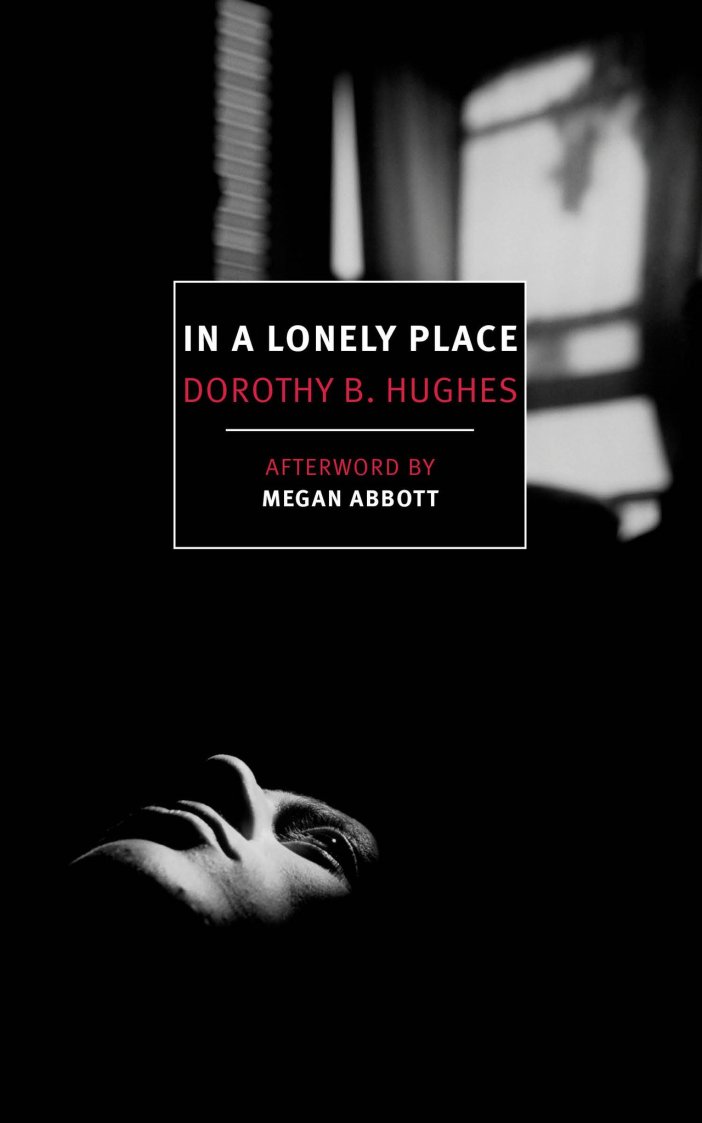
It was kind of fun to reread the Hughes novel; it is a masterpiece of noir that has been sadly overlooked for many years. Hughes was an exceptional writer, and I do admit that opinion is based on my having read only two of her novels, this and The Expendable Man (which, sadly, was her last and published in 1962). It’s not easy to find Hughes’ novels. I do feel safe in calling Hughes one of the best writers of her generation, and certainly one of the best noir writers of all time, based on those two books because they are just that good. I do have a copy of her The Blackbirder, which I want to read before the end of the year. In A Lonely Place was also filmed, directed by Nicholas Ray and starring Humphrey Bogart and Gloria Grahame; the film is significantly different from the novel, but it’s also outstanding. The new edition of the novel, from New York Review Books (who also have republished The Expendable Man and The Blackbirder), includes an afterward by the wonderful Megan Abbott, who is not only one of this generations greatest writers but also one of crime fiction’s most knowledgeable critics; her literary criticism is intelligent, thoughtful, incredibly well-written, and certainly puts me in my place whenever I am lucky enough to read some of it; I would love to read her study of literary and film noir, The Street Was Mine. (Whenever I read her criticism, any thoughts I might have about pursuing academic criticism–gay noir, gay representation in crime fiction, the heyday of romantic suspense from the 1950’s till its unfortunate death in the 1980’s–go out the window.)

Her all-too-short essay in the back of this edition alone makes the cover price worthwhile.

hughes.final_hi-res_2048x2048

It was good standing there on the promontory overlooking the evening sea, the fog lifting itself like gauzy veils to touch his face. There was something in it akin to flying; the sense of being lifted high above crawling earth, of being a part of the wildness of air. Something too of being closed within an unknown and strange world of mist and cloud and wind. He’d liked flying at night; he’d missed it after the war had crashed to a finish and dribbled to an end. It wasn’t the same flying a private little crate. He’d tried it; it was like returning to the stone ax after precision tools. He had found nothing yet to take the place of flying wild.

It wasn’t often he could capture any part of that feeling of power and exhilaration and freedom that came with loneness in the sky. There was a touch of it here, looking down at the ocean rolling endlessly in from the horizon; here  high above the beach road with its crawling traffic, its dotting of lights. The outline of beach houses zigzagged against the sky but did not obscure the pale waste of sand, the dark restless waters beyond.

He didn’t know why he hadn’t come out here before. It wasn’t far. He didn’t even know why he’d come tonight. When he got on the bus, he had no destination. Just the restlessness. And the bus brought him here.

Isn’t that an incredible opening?

Not being an expert in crime fiction–there’s so much of it to read, and there’s more new stuff all the time, so it’s hard to keep up with the new let alone trying to read everything already published–I am unable to place In A Lonely Place into any kind of context as far as the history of crime fiction is concerned, but Abbott does this beautifully in her afterward. But it’s very clear in this opening paragraphs that Hughes is addressing alienation in this book, and toxic masculinity, which may have seen its ultimate pinnacle in the second World War (the alienation of returning veterans, and the difficulty of readjusting from war to peace was also being addressed in films like The Best Years of Our Lives) and by having Dix, her main character, pretend to be writing a novel also took on the glut of post-war war novels that so many returning soldiers were writing; novels that continued to proliferate for several decades beyond the war.

The first time I read the book, having already seen the film, I was more focused on the story itself rather than an examination of how deftly Hughes creates her story, the language and imagery she chooses, and the nuanced way she creates her character. On this read, knowing how it’s going to end, I was able to pay more attention to these things, and was able to marvel at how brilliant the entire package is.

A recurring motif in the novel is fog; Hughes uses the fog as a metaphor for the fog in Dix’s brain; and we are never sure when Dix’s mind changed, making him lethal. He was raised by a puritanical uncle, Fergus, who is currently supporting him while he writes his novel–but there is a limit to the support, and while in our time $250 a month may not seem like much, at the time of the novel it was a fortune, just over $2500 in today’s dollars. Dix’s resentment of the uncle–we never learn what precisely happened to his parents–who is rough on him and has always made him work, even when he was in college at Princeton trying to fit in with the idle rich sons of privilege and then goes into detail how humiliating it all was, doing things for them for ‘tips’ until he could manipulate events to make it look as though he were the wealthy one and the sad unfortunate, unpopular boy he used for money were the dolt. In this way, Hughes also makes a sly commentary about class and privilege (which, in my opinion, she does far better than Fitzgerald did in an entire novel with The Great Gatsby, and she does it only in a few pages). So, there was always some kind of a chip on Dix’s shoulder; the war simply gave him a way to channel that anger and discontent and alienation. Now the way is over, and Dix is having to find a new way to channel those diabolical energies–and he does, in committing murder.

The entire tale is told through Dix’s perspective, which also makes him one of the first unreliable narrators in crime fiction. (It was done before, but never quite so lethally.) So, when we see the other characters–and there are only three: his old war buddy Brub, now a police detective; Brub’s wife Sylvia, whom Dix despises on first sightl and of course, the love interest, Laurel Gray–is she the femme fatale he thinks she is, or is that just a product of his own warped sense of right and wrong? Who is Laurel, of the reddish gold hair and the tempting figure? Is she the hard-as-nails user he thinks she is, or is she an entirely different character altogether?

In  A Lonely Place is a masterpiece of noir, and hopefully, this edition will elevate Hughes to the position both she and the book deserve in the annals of our genre.

And now back to the spice mines.


Twilight Zone

Ugh, my dryer is on the fritz, and I just can’t–in the ultimate of bougie problems–I just can’t function without a working washer and dryer. I can’t decide if it’s worth it to get a repair guy out here, or if we should just go ahead and get a new one. I know I called a repairman once for the washing machine–and it was only slightly less expensive than buying a new one. Heavy heaving sigh. I think we’ve already replaced the dryer once before. It’s so infuriating. I wish I were more handy, because I bet it is something that is really easy to fix; but I am not handy like that. I’m so glad my parents were so focused on my future that they wouldn’t let me take Shop or Auto Shop because they were too easy.

Yeah. They just would have saved me thousands of dollars over the years. But hey, those classes weren’t useful for my future.

Heavy heaving sigh.

So, I spent the evening trying to dry clothes in a faulty dryer–eventually they dried–while filing and washing dishes and also finishing reading Eric Ambler’s Journey Into Fear, which was quite fun.

journey into fear

The steamer, Sestri Levante, stood high above the dock side, and the watery sleet, carried on the wind blustening down from the Black Sea had drenched even the small shelter deck. In the after well, the Turkish stevedores, with sacking tied round their shoulders, were still loading cargo.

Graham saw the steward carry his suit-case through a door marked PASSEGGIERI, and turned aside to see if the two men who had shaken hands with him at the foot of the gangway were still there. They had not come aboard lest the the uniform of one of them should draw attention to him. Now they were walking away across the crane lines towards the warehouses and the dock gates beyond. As they reached the shelter of the first shed they looked back. He raised his left arm and saw an answering wave. They walked on out of sight.

For a moment he stood there shivering and staring out of the mist that shrouded the domes and spires of Stamboul. Behind the rumble and clatter of the winches, the Turkish foreman was shouting plaintively in bad Italian to one of the ship’s officers. Graham remembered that he had been told to go to his cabin and stay there until the ship sailed. He followed the steward through the door.

The man was waiting for him at the head of a short flight of stairs. There was no sign of any of the nine other passengers.

Eric Ambler, considered (per his bio) is considered the father of the modern thriller and was named a Grand Master by the Mystery Writers of America in 1975. His novels, focused on intrigue, espionage and spying, have been called influences by many writers, including John Le Carre and Robert Ludlum and Len Deighton. (I loved Ludlum, but am ashamed to admit I’ve never read Le Carre or Deighton; but I do have a copy of The Spy Who Came In From the Cold that I need to get around to reading.) I had never read Ambler; although my friend Pat, a huge fan of the crime genre, has recommended A Coffin for Demetrios to me on several different occasions, and usually one of Ambler’s works winds up on those lists of ‘crime novels everyone should read.’ I bought Epitaph for a Spy and several others a few years ago; I finally sat down and pulled Journey Into Fear out of the TBR Mountain and started reading it. It took me longer than it should have; it’s short, for one thing, but very engrossing. It’s also very…for want of a better term, it’s very British.

I love novels where normal, every day people going about their business and minding their own business are suddenly thrust into peril. Ludlum was a master of this, and I call it Hitchcockian; it was also a staple in many of his films. Journey into Fear also falls into this category; Graham, the main character, is a forty year old British man who works for an engineering firm and was sent to Turkey to help work on updating and refitting the Turkish fleet because of the outbreak of World War II. Graham, who is happily married and generally just goes about his business. What Graham, in his unassuming way, doesn’t realize or understand just how valuable he–and his work–are to the Allied forces; he is just doing his job. Then, on his last night in Istanbul, someone is waiting for him in his hotel room and shoots at him. Fortunately, he is only slightly wounded in his hand but this is when Turkish intelligence gets involved. It is a matter of vital Turkish importance to their defense that Graham make it back to England and his work not be interrupted; Graham doesn’t it take it seriously…at first. But once he is on the freighter traveling through the night to Genoa, he finds out just how much danger he is actually in.

The book is very tightly written, and not very long; but it also falls into the classic trope of suspense in a tight, controlled area with a very small cast of characters; like Murder on the Orient Express. This trope is very hard to pull off–even harder nowadays–and Ambler does it beautifully, even adding the element of “no one will believe me if I ask for help.” The other characters on the ship are richly drawn; Ambler is able to create a character with brief sentences that pretty much tell you everything you need to know about that character to make them real.

I am very much looking forward to reading more Ambler. Now I am going to give Dorothy B. Hughes’ sublime In a Lonely Place  a reread.

And now, back to the spice mines.


Let’s Dance

I managed, yesterday, to polish off Chapter Two; I wrote 1700 words or so in about an hour and fifteen minutes and voila! The pesky chapter was finished. I also started Chapter Three this morning; alas, maybe about a paragraph was all I was able to get done, but it was a start, and a start is always lovely. This weekend is my birthday; I will officially be fifty-six; but I’ve been saying I’m fifty-six for quite a while now. (I usually add the year after New Year’s; it’s just easier and I don’t really think of my birthday as a big deal, quite frankly). Paul and I are going to go see Dunkirk tomorrow night, and then out for dinner afterwards. I’ve taken Monday off, and I am working a late night on Tuesday, so I won’t have to be in to work until around three, which means I basically have a three and a half day weekend, which is lovely. I am hoping to be able to get a lot done this weekend; I want to finish reading the Ambler, which I am loving, then I am going to reread Dorothy B. Hughes’ In a Lonely Place, and then I am going to reread The Haunting of Hill House. After that, it’s either Jeff Abbott’s Blame or my advance copy of Laura Lippman’s newest, Sunburn.

One of the best perks of being a writer is that I get advance copies of books, or know people who do that can pass them along to me. My dear friend Lisa recently gave me an advance copy of this:

IMG_2507

I don’t consider myself to be a horror writer (SHUT UP BACK THERE! I said horror, not horrible), but I do consider myself to be a big fan of the genre. I read a lot of these books–not all, who knew there were so many? But I was a voracious reader, and I loved to read horror. The first horror novel I read was The Other–I still have the hardcover copy I originally read in junior high; I’m not sure I remember how I got a hardcover copy of it, maybe it was my grandmother’s–and I also read The Exorcist in junior high; everyone was reading it, and as all tweens (although we weren’t called that then) are wont to do, all we talked about was the crucifix masturbation scene. I always liked horror–I remember watching old black and white scary movies with my grandmother (she also likes mysteries) when I was a kid, but I never thought I could write it. I certainly never tried until the 1980’s, when my fandom of Stephen King made me give it a try. I still love reading horror, and there are certainly some amazing horror writers being published today whose books I greatly enjoy.

My inability to get any of it published is an indicator that crime was a better fit for my talents.

But what a wonderful resource this is! And a lovely trip down memory lane. To be honest, I thought I hadn’t read much horror throughout my life outside of the usual suspects (Stephen King, Peter Straub, Poppy Z. Brite) and some others that have come along more recently, but in going through this, I saw many titles I’d forgotten I’d read, and authors I’d forgotten.

This is a must for all horror fans; even those who are too young to remember the glory days of the mass market paperback boom of the 70’s and 80’s.

And now, back to the spice mines.