World in Motion

Ah, Sunday.

Last night I kept waking up, even though it felt like I was getting good rest, if that makes any sense. I finally got tired of trying to get some more sleep and went ahead and got up before eight–around quarter till, to be precise–because I have work to do and the deadline is ticking. I made some excellent progress yesterday, and have a lot more to do today. I am hoping to get the final chapters of the book completely refinished and rewritten today; so I can do mop up the rest of the week–and there will be lots of mopping up to do. This is maybe the ninth draft of the book since I wrote the first draft in 2015–but in complete fairness, all those revisions were of the first half of the book rather than the second; this is the third draft of the second half–I was struggling to find the right voice, to find the correct tense, and really, trying to figure out who my main character is or was. Most of this work has been, since I first wrote the first draft six years ago, scattered and disorganized and, in retrospect, primarily a case of me not trusting myself or my abilities and be intimidated by what I was writing about–with the occasional dose of imposter syndrome thrown in for good measure.

We watched the ice dancing final last night, and remain completely mystified by the results. Perhaps we’re partisan, but we simply failed to see the same magic in the routine by the Canadian team that resulted in them placing second in the free dance, and capturing the bronze medal somehow. But ice dance has always been controversial, and the judging has never made much sense. The Russian team that won was clearly the best in the competition; no question about that–but I also felt the second place Russian team, that finished fifth, was also better, more athletic, and more artistic, than the Canadians. But yesterday afternoon I also took some time to watch the men’s final, and it was delightful to see Nathan Chen make a comeback from a fall in the short program to win it all, his third world title in a row–the first American to do so since Scott Hamilton–and if he wins the Olympics and a fourth world title next year, he’ll be in even more elite company. The women also managed to earn the US three Olympic spots, which I wasn’t expecting to happen, so at least we’ll have as full a team as possible; I think Nathan winning automatically earns us three men for the team–but the rules may have changed, and I must confess I don’t pay nearly as much attention to figure skating as I used to. I hate this new points system; always have since it was implemented, and I don’t believe it forestalls arrangements between judges the way the old system did–not to mention the guarantee of anonymity so no one knows how any judge scored any competitor; I fail to see how this will stop collusion, but I am not the ISU.

The humidity has been ruinous on my sinuses lately; it’s so weird for it to be so hot and humid already this year. My windows are covered in condensation this morning, which is unusual for this time of year–that new HVAC system clearly works extremely well–an I am going to head to the gym later this morning for my weekend workout. The rain kept me from going earlier in the week, so for the last two weeks I’ve only had two workouts per week; not goo, but better than one and much better than not going at all. I need to get some new workout clothes, though; I haven’t bought workout shorts in well over ten years and thus they not only don’t fit properly but are also a little on the worn out side, and the more hot and humid it gets the less likely I am to want to wear sweat pants to the gym. I found some T-shirts in my T-shirt drawer back from the days when I could squeeze into a medium (I now wear extra large) and so I disposed of them as well. I really would like to get this book finished and turned in on Thursday the 1st (this week!) so I can spend my three day Easter weekend cleaning out books and going through my clothes.

I’d also like to spend some time finishing The Russia House. I read another chapter yesterday and greatly enjoyed it; I am really looking forward to spending more time with LeCarré. I also want to start reading more of these books that I keep buying and adding to my TBR pile, which is mostly out of control these days–I also need to recognize that many essays I have wanted to write about books and authors I enjoyed won’t ever happen because I will never have the time to write them, nor will I ever have the time to go back and reread the books; there simply isn’t enough time for all the reading I want to do, and I have to be more realistic. Some are simply too long–much as I loved Anya Seton’s Green Darkness, Arthur Hailey’s Airport, and Herman Wouk’s Youngblood Hawke, there’s simply no way I can (or will) ever find the time to reread those books; let alone anything by Michener (I’ve been wanting to reread my favorite Michener, Centennial, for quite some time, but probably will never happen).

And once I have this book finished and turned in, I have to do some revisions of Bury Me in Shadows by May 1; I don’t think it’s anything major, really; a much more thorough copy edit, an additional clarifying sentence here and there, and then it will be finished, and then comes the first draft of Chlorine….at long last. There are also some submission calls I want to write for as well; we’ll see how that turns out, won’t we? But I think my stories “Death and the Handmaidens”, “The Blues Before Dawn”, and “Le Feu Follet” might actually have homes I can try to get them into; and there’s another call for a humorous mystery I’d like to take a shot at as well; my stories always seem to turn out to be darkly comic anyway.

And on that note, I am heading into the spice mines. Have a lovely Sunday, Constant Reader, and I will check in with you tomorrow.

Walking After Midnight

Here I am, up at the crack of dawn–well, not really, but earlier than I usually get up on a Thursday–so I can catch a flight to New York later this morning. And I think I packed the clothes I intended to wear on the plane this morning–which is fine. Not particularly smart, but I’ve been running on accessory all week as it is, so it’s not particularly surprising, either.

I also woke up well before my alarm this morning, too. Not sure what that’s all about, but there you have it.

Today is also my first time flying out of the new terminal at Armstrong, so that’s also kind of exciting.

I am taking probably too many books with me on this trip: The Talented Mr, Ripley; Blanche on the Lam by Barbara Neely; Pretty as a Picture by Elizabeth Little; and Dread Journey by Dorothy B. Hughes. I’ll probably finish Ripley at the airport and get started on the Neely on the plane. I hope to have some free down time periodically in order to do some work on my secret project; but knowing how these trips usually go that’s most likely never going to happen. But hope springs eternal and all that nonsense.

Last night didn’t do much of anything once I got home. I packed and spent the evening in my easy chair, watching videos on Youtube–clips and analysis of the LSU game on Monday, as well as discussions on whether or not this team is one of the best of all time. It’s kind of hard to argue against it, really; given the teams they beat and how they beat them. The last three games of the season were against Number 4 Georgia (37-10); Number 4 Oklahoma (63-28), and Number 3 Clemson (42-25). They beat everyone in the preseason top 4 (Clemson, Alabama, Oklahoma, Georgia). Excluding the LSU losses, those three times they beat at the end of the season totaled 2 losses total; add Alabama into the mix and that would be three; adding Florida would make it 4.

Sorry, I know I tend to run on and on about this LSU team, but damn, they were amazing.

But I’ll be glad when this trip is over and I get home Sunday evening. I have Monday off–Martin Luther King Jr Day–and so I can relax and recover and get some things done before I return to work on Tuesday. Traveling has become more and more of a chore the older I get; I always wonder if getting older has just made me crankier, or if traveling has, indeed, gotten terrible. I suspect it’s a combination of the two–less patience and more stupidity and inefficiency. But I do love New York; I never feel more like a writer then I do when I am in New York; probably because as a child New York was the nexus for authors–and certainly in every book I read that had a writer as a character, that was certainly the case; everything from You Can’t Go Home Again to Youngblood Hawke to Peyton Place, for that matter; and of course the crown jewel, Rona Jaffe’s The Best of Everything. And I will be there this afternoon! It’s not that I mind trips–it’s the getting there, the actual travel, I’ve come to loathe–from getting to the airport to the check-in process to security to the seemingly endless wait at the gate; the gathering of luggage and transporting one’s self to the final destination.

And on that note, tis time to hop in the shower and make my final preparations for the departure. Have a lovely day, Constant Reader!

943324_255823204566659_1359177608_n

Don’t Expect Me To Be Your Friend

I’ve always been a voracious reader, and when I was a teenager I loved nothing more than those enormous books that could also be used to shore up the pilings of your house–epic novels with paperback editions that occasionally topped a thousand pages, so thick that reading them inevitably cracked the spine, leaving loose and sometimes lost pages in its wake. They always seemed to lose their book shape, these enormous and theoretically disposable books, and looked ugly on the shelf when you tried to put them back. I’ve always liked clean lines on my bookshelves, and those enormous paperbacks always messed up the ramrod straight line of spines I liked looking at, admiringly, my own personal library.

It was during this time I discovered Herman Wouk.

The first Wouk novel I read was The Winds of War. It was my father’s book, actually, although all the books in the house generally wound up in my room eventually. It was mountainous, enormous, and while I was aware of World War II history–it was still fairly recent, and I had many family members in my grandparents’ generation who served–but it wasn’t my favorite period of history (although I would eventually come around to it and become fascinated by it, a fascination I still hold to this day) and I was particularly interested in reading it. One Saturday I was sitting in the living room, bored, and rather than walking to my room to get the book I was currently reading,  I picked up The Winds of War and started reading. It was summer, we were living in Kansas, and we’d just moved there and I knew no one. Several hours later I was deep into the book, completely fascinated, mesmerized by this story of the Henry family–a Naval family–caught up in the sweep of oncoming war in Europe and in the Pacific. The book closed with the attack on Pearl Harbor and the United States finally entering the war.

And I became a Wouk fan. I started reading all the Wouk I could find, loved them all, from The Caine Mutiny to Youngblood Hawke, and couldn’t wait to check War and Remembrance, the sequel to The Winds of War, out from the library when it was released.

And then there was Marjorie Morningstar.

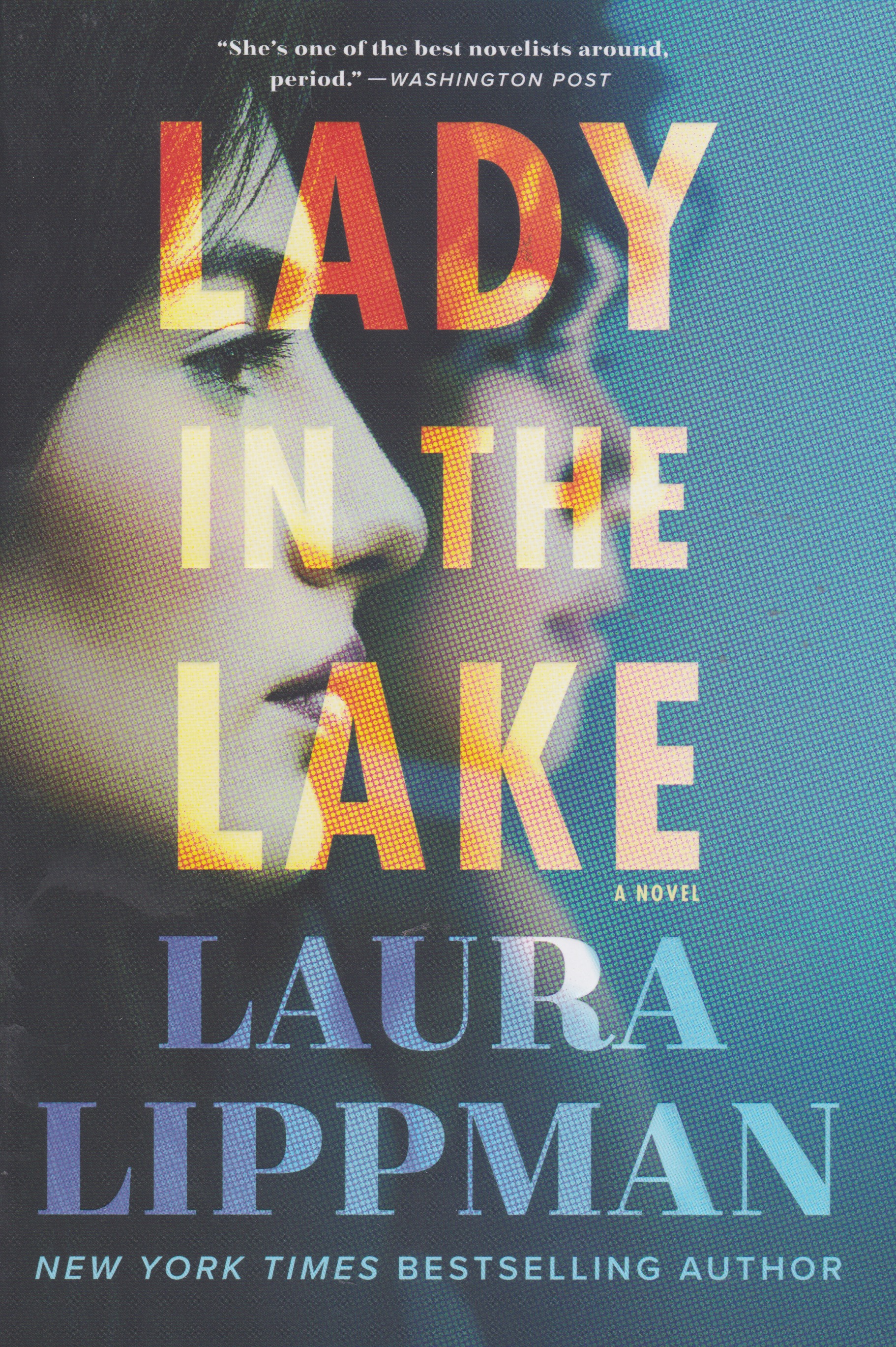
lady in the lake

I saw you once. I saw you and you noticed me because you caught me looking at you, seeing you. Back and forth, back and forth. Good-looking women do that. Lock eyes, then look one another up and down. I could tell at a glance you’ve never doubted you were good-looking and you still had the habit of checking a room to  make sure you were the best-looking. You scanned the crowd of people on the sidewalk and your eyes caught mine, if only for a moment, then dropped away. You saw me, you tallied up the points. Who won? My hunch is you gave yourself the crown because you saw a Negro woman, a poor one at that. In the animal kingdom, the male performs for the woman, woos her with his beautiful feathers or flowing mane, is always trying to out-strut the other men. Why do humans do it the other way? It doesn’t make sense. Men need us more than we need them.

You were in the minority that day, you were in our neighborhood and almost everyone there would have picked me. Maybe even your husband, Milton. Part of the reason I first noticed you was because you were next to him. He now looked exactly like his father, a man I remembered with some affection. I can’t say the same about Milton. I guessed, from the way people gathered around him on the temple steps, patted his back, clasped his hands in theirs, that it must have been his father who had died. And I could tell from the way that people waited to comfort him that Milton was a big shot.

Laura Lippman’s latest novel owes the same kind of debt to Wouk’s Marjorie Morningstar as her Wilde Lake did to To Kill a Mockingbird (and Thomas Thompson’s Celebrity); in some ways, her heroine, Maddie Schwartz, has a lot of the same history as Marjorie; the close strictures and mores of the 1950’s for a young Jewish woman in Baltimore molded and shaped her much as they did Marjorie. The book opens with Maddie walking out of her marriage and away from her young son; she just has a general sense of malaise and an unshakable sense there has to, needs to be, more in life for her. Maddie is beautiful and knows she is; she knows how to manipulate men and get them to do what she wants them to do. Needing money, she pretends her engagement and wedding rings were stolen for the insurance; one of the responding cops, a young black man named Ferdie, soon becomes her illicit lover. Maddie’s discovery of a missing young girl’s body is soon parlayed into a job at a Baltimore paper; she becomes interested in another murder–that of Cleo Sherwood, the so-called “lady in the lake”; a young woman of color murdered and dumped in the fountain in a park. Maddie eventually, in her careless way (one of the strongest character traits Maddie has is carelessness; she seems to just blunder her way ahead without giving a thought to the repercussions and fall out her actions might cause) she starts investigating Maddie’s death, using her position as a clerk at the paper to fool people into talking to her. SHe wants to be a reporter, you see, and this Cleo case–no matter how many people try to dissuade her, no matter how many roadblocks get put up in her way–is a way for her to get upgraded to reporter, and she doesn’t care what damage she might leave in her wake as she goes for what she wants.

Lippman has long been one of the leading lights of the crime fiction community; her Tess Monaghan series is one of the best, and her switch to stand-alone crime novels has firmly established her reputation as one of the best writers of our time. One of the great things about Lippman is how she pushes herself into new directions, new perspectives, and new approaches with every novel; each stand-alone is particularly distinct and exceptional in its own way. She explores in her work what it means to be a woman, whether in today’s world or in the recent past, and how societal mores and expectations can stifle a woman’s needs and ambitions. Her characters struggle against those strictures, but at heart her novels are about the complications, complexities, and layers of being a woman in American society. She’s explored love and marriage, the fallout from lust, what it means to be a mother, and above all else, the complicated relationships between women–whether it’s sisters, mother/daughter, or just friends. Maddie doesn’t regret walking out on her marriage for one moment; she doesn’t even seem particularly concerned that her teenaged son wants to stay with his father and her regular dinners with him are uncomfortable. She knows her leaving has damaged her relationship with her son, but she doesn’t really seem to care too much about that. Maddie is sometimes downright unlikable, yet what she wants, her confusion about who she really is and how to go about building the kind of life she thinks she wants make her sometimes unlikable actions and behaviors forgivable in the reader’s eyes; Lippman has constructed her so carefully the reader can’t help but care what happens to her.

Lady in the Lake is also a departure from other Lippman works in that it’s told in a vast array of points of view; when we are seeing things from Maddie’s point of view, it’s a remote third person pov–but everyone else is in a tight, first person present tense point of view. We even hear from the ghost of Cleo Sherwood from time to time. Multiple points of view are a hard row to hoe for even the best writers; Lippman somehow manages to imbue all these minor and supporting characters with unique voices and perspectives that make the reader regret, just a little, that we don’t get more than just a glimpse of these characters. In that respect, Lady in the Lake is a tour-de-force; a masterwork from a great writer at the top of her game. It’s one of the most unusual crime novels I’ve read, and its originality, along with Lippman’s cool expertise at her craft,  will result in it being one of the top books of the year.

It’s already been an exceptional year for readers–I’ve read so many amazing books this year so far, and am looking forward to reading more.