Dark Shadows (Josette’s Theme)

I always forget this when I am asked about major influences on my life, writing, and career–but probably the biggest influence on me was the television soap Dark Shadows.

“My name is Victoria Winters…”

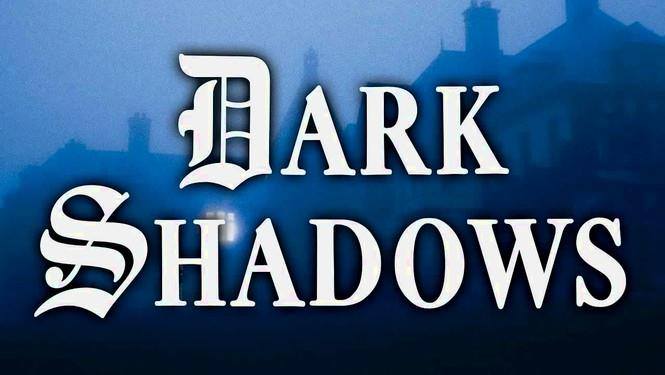
So began the first episode, with young heroine Victoria speaking over some rather spooky music, usually with a background scene of a light in the window at the great house of Collinwood in the fog, or waves crashing against the beach, or the family cemetery, or even the Old House.

Dark Shadows is probably the root or seed from which Bury Me in Shadows was grown from, now that I think about it more. A haunted old house, an even older house in ruins nearby in the woods that was the original family home, ghosts and secrets from the past–oh yes, the framework is absolutely there, and it never even occurred to me.
When my sister and I were kids, we moved to Chicago from Alabama. I was about two years old, give or take; I don’t remember moving up there nor do I remember ever living in Alabama; my sister was two years older. My parents both got jobs–the point of the move was for climbing the economic ladder; they both got really good jobs in factories while my dad finished his degree. But because they both worked (our friends and neighbors all felt sorry for us because our mom had to work; their moms all were housewives), we needed to be watched while they weren’t home. Our landlady recommended a woman down the street–a mother of six whose two youngest were in their last years of high school–and so we started spending our days with Mrs. Harris, who fed us breakfast and lunch, and Mom would pick us up on her way home from the bus stop. When we started school, we went there for breakfast and lunch but came home after school; school let out at 3:15 and Mom was usually home by 3:30. But it was Mrs. Harris–and my grandmother, who worked a night shift–who got me started watching soaps in the first place. One Life to Life and General Hospital sort of held my attention, but it was Dark Shadows I couldn’t wait for. I used to run home from school to try to catch the last five or ten minutes during school; it wasn’t a problem during the summer.

I loved Dark Shadows.

I was crushed when it was canceled.
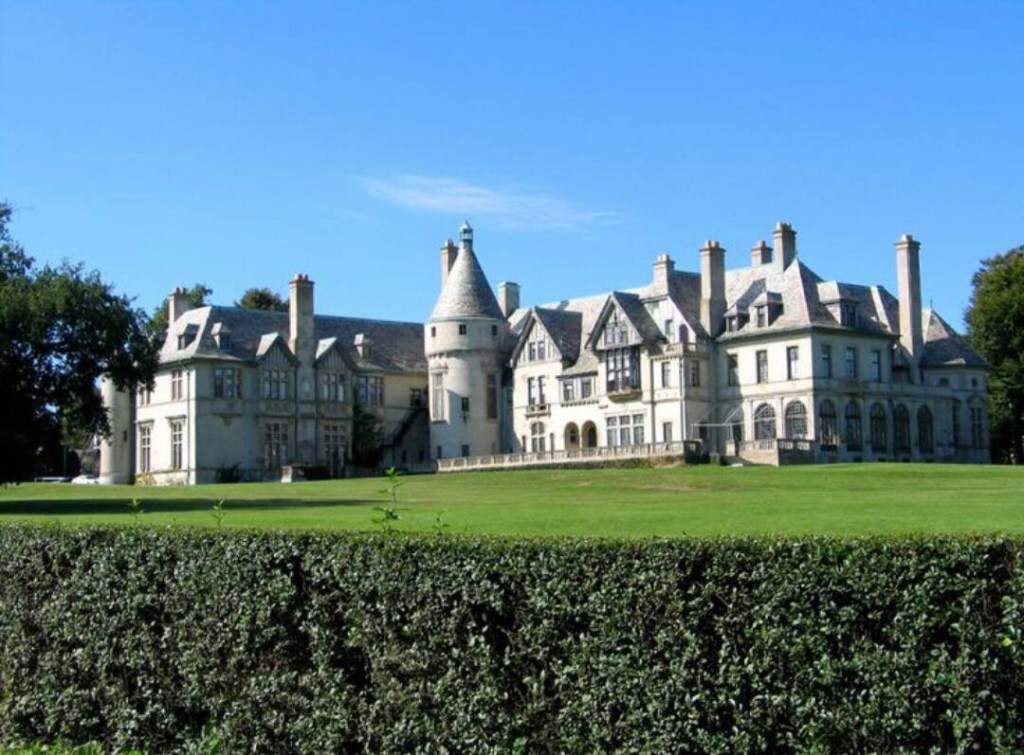
I mean, look at that house!!!!

The show wasn’t canceled, although the ratings were starting to slide a bit in the later years. The truism that Dark Shadows‘ producers and writers discovered is one that practically every other continuing series having to deal with the supernatural and supernatural creatures has had to deal with: how do you keep topping yourself and raising the stakes? True Blood, Supernatural, The Chilling Adventures of Sabrina, and countless others have all run headfirst into that wall. Once you’ve done time travel and vampires and witches and werewolves and Frankenstein and other dimensions, what is left to do? I admire them for pulling the plug rather than getting more and more desperate to get the ratings up and eventually damaging the legacy of the show.
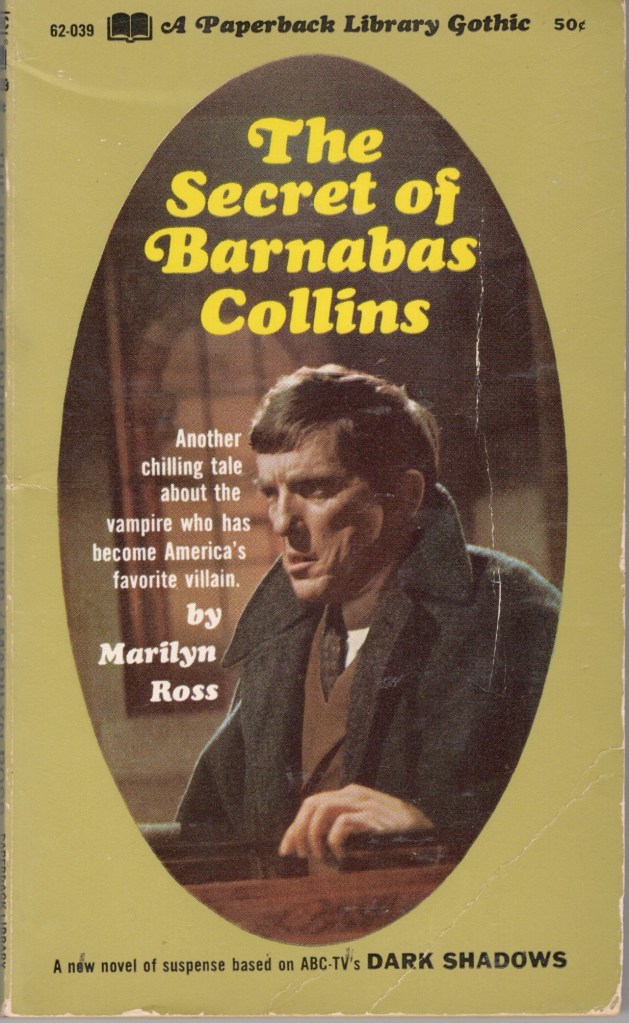
The show was a phenomenon the likes of which had never really been seen before in daytime–and the lesson learned from its success (go for the young audience!) would soon lead to the creation of youth-oriented shows like All My Children and The Young and the Restless–and of course in the mid-1970’s soaps would be forever changed when General Hospital introduced the character of teenager Laura Webber, played by an actual teenager, Genie Francis–and daytime was never the same. But Dark Shadows managed something that other soaps hadn’t–they created teen idols. Jonathan Frid as Barnabas, David Selby as Quentin, and even David Hennessey as David Collins were often on the covers of teen magazines like Tiger Beat and 16. The show even licensed FAN FICTION–a series of books based on the characters from the show, but thanks to all the fun stuff with time travel and parallel dimensions, Dark Shadows was perfect for spin-off books that took place in other Dark Shadows universe; one could even say Dark Shadows was one of the first shows to make use of a multi-verse.

The books were cheap–as you can see in the picture above (a copy sent to me by a friend with whom I bonded over our mutual love of the show) they ran between fifty cents and seventy-five cents a copy; they all had that same gold bordered cover with an oval image of characters from the show, and they were all written by “Marilyn Ross”, which was a pen name for a very prolific Canadian author named  William Edward Daniel Ross; he wrote over three hundred novels during his career, and Marilyn Ross was the name he used for Gothics–and the Dark Shadows books. (He also wrote as Clarissa Ross, and I read some of those novels as well, including The Spectral Mist.) They also weren’t particularly well written, and while they did take place outside the show’s continuity, there were also moments in some of them that didn’t make sense; in one of them, in which Barnabas shows up at Collinwood in the 1910’s, the only son of the family dies in a tragic accident…but if he was the only son, where did the present day Collinses come from? (The earlier books were told from the perspective of Victoria Winters, and in some cases the gimmick was some member of the family was telling Victoria a story about the family history.)

That’s the kind of shit that drives me insane.

But I remember when one of the off-brand television channels in Chicago (not affiliated with a major network) started running repeats of Dark Shadows from the very beginning when we lived in the suburbs in the evenings while the networks ran the evening news–guess what I was watching instead? Yup, Dark Shadows. (I always found it interesting, too, that the young actress who played Victoria Winters originally–Alexandra von Moltke–eventually became infamous as Klaus von Bulow’s mistress Alexandra Isles, who was, in the prosecutor’s theory, the reason Klaus injected Sunny with enough insulin to induce the coma from which she never woke up. But I digress.

I always wanted to write a vampire story similar to that of Barnabas Collins; I have an entire idea for a rural Louisiana version called Bayou Shadows that I’ve tinkered with off and on since the early 1990’s…but then Charlaine Harris started the Sookie Stackhouse series, which was essentially the same thing. I still might write about Bayou Shadows–the town called that has popped up from time to time in my books about New Orleans and Louisiana; most recently in A Streetcar Named Murder, actually–and if people think I’m ripping off Charlaine, so be it.

I’ll know that I’m really ripping off Dark Shadows.

The show also spawned two feature films, Night of Dark Shadows and House of Dark Shadows, each featuring one of the show’s leading men, Jonathan Frid and David Selby, respectively; the first did far better than the second. The show was revived in prime time for a single season in the late 1980’s; I watched it and loved it, of course–even got Paul to watch when it became available on DVD and I rewatched. I wish that show had been given more of a chance, because it was really quite good, and I was curious to see where the story went from that first season. It also had an excellent cast, including Hammer Film star Barbara Steele as Dr. Julia Hoffman. I did watch the Tim Burton film from this century, which had some clever moments but wasn’t quite as good; it went for the silly parody thing The Brady Bunch movies of the 1990’s did, but it didn’t land. The actress who played villainess Angelique in the original series, Lara Parker, has also written some Dark Shadows novels (I have copies but haven’t read them; I really should). Kathryn Leigh Scott, who played the original Maggie Evans on the soap (and in the first film) also has written novels; she was at Long Beach Bouchercon, where I met her and got a signed copy of her book Down and Out in Beverly Heels. She was lovely and couldn’t have been nicer; I really should read that book someday.

I’ve had Dark Shadows on my mind lately because I bonded with Carol Goodman at Bouchercon over our mutual love of Dark Shadows, and the Scotty book still in draft form takes place mostly in a rural parish outside of New Orleans; not the same parish where Bayou Shadows is located, but the next one over.

Sometimes I think it would be fun to reboot the show again, retelling the original story, or picking up from where the television series ended, or even doing a new generation, some forty years later, with David Collins as an adult with children and so forth…Carol and I have joked about coming up with a concept and trying to sell it and be the showrunners…which would be a dream.

Stand on the Rock

Thursday morning and I slept really well last night. About time, right? But it’s amazing what a good night’s sleep makes, especially coming after two consecutive nights of insomnia. It’s lovely not to feel tired, you know? I was so tired when I got home from work yesterday that my eyes were almost crossing. I was too tired to think, too tired to write, too tired to do much of anything, so I just collapsed into my easy chair–Scooter actually slept in my lap all evening, and when I got up, he’d curl up in the chair again waiting for me to come back, which was very sweet–and then I watched the documentary God Forbid, which focuses on the Jerry Falwell Jr. pool boy scandal that ended Falwell’s career, from the pool boy’s point of view, which made it a lot more interesting.

It also explored how Falwell’s father led the evangelicals into politics and set us on the downward path that put our entire democracy into the peril it still faces today. The original Falwell was a monster–racist, homophobic, misogynist–and perverted Christianity for money and power. He isn’t the first to do this–look up “Father Coughlin” sometime–and maybe not event the worst (anything is possible), but the damage done to the fabric of the culture and society, predicated on the evangelical desire to make this a Christofascist nation (definitely not what the Founders wanted), by this man and his son may even prove irreparable in the long run. Who knows? Falwell Jr. was important to the election of Trump and the evangelical embrace of this thrice-married ungodly and unChristian wannabe dictator, too. And it got the evangelicals what they’ve wanted since Falwell Senior realized that open racism wasn’t a winning ticket–but abortion could be: the overturn of Roe v. Wade. Would Falwell have backed Trump if Michael Cohen hadn’t known about the sick sexual games the Falwells were playing with a young, naïve young man named Giancarlo Granda? It would make an epic crime novel, truly–I loved John D. Macdonald’s examination of a Midwestern megachurch, One More Sunday, which I really enjoyed.

I have had this idea for a crime novel built around a cult-like church for quite some time. When I was living in Kansas, there was a college in Emporia that was owned and operated by just such a cult-like church. The College of Emporia, a Presbyterian school, had gone bankrupt and closed in 1973. A few years later it was purchased by The Way International and transformed into The Way College of Emporia. The Way College was strange. Their campus was closed to outsiders and patrolled at night by armed guards. There was all kinds of gossip around the county about what went on there and the kinds of things they believed and did; the students always wore name-tags and travelled in pairs–and would often try to corner other young people and proselytize. When I was working at McDonalds, for example, I observed them do this to a girl who was cleaning tables in the lobby. They essentially waited until she was in a part of the place that had only one way out, and once she was back there cleaning tables, they blocked the way out to talk to her. They always had this weird look on their faces, too–their eyes always seemed either glazed or vacant or both, and they always had a zombie-like smile that didn’t reach their eyes. One of the many iterations of the Kansas book took place over two time-lines, one in the 1970’s and the other the present day; where the quarterback’s murder in a sex scandal in the 1970’s gave rise to a megachurch in the town. I have done some research in the Way International (they sold the Way College and its campus to Emporia State University sometime after we left Kansas) and even have a book written by someone who belonged and got out.,,so I would never say never.

Oh, and thank you, Brazil, for ousting your Fascist. Well done!

Unfortunately, my exhaustion last night means that I have fallen another day behind on the book, which isn’t good. But it was really out of my hands, to be honest. I was so tired I don’t even really remember driving home from work last night–which is NOT a good thing at all. But I am hoping that feeling rested and not being exhausted will make a difference tonight. I am halfway done–it’s planned to be twenty chapters, and I finished Chapter Ten on Tuesday–so tonight I am going to go back and reread and edit the first half of the book. It’ll take some serious work–the kind where I have to close the Internet browsers to avoid distraction–because some of the earlier chapters need to be moved around and rearranged; the order in which the story unfolds needs to be switched up a bit–and I need to outline the first half as well as make a character list and due a timeline. I also realized that my usual Scotty thing to do–parody the opening of a famous novel–doesn’t have to be a parody of a famous novel opening–and I’ve always wanted to write something that opened the way Dark Shadows did (“My name is Victoria Winters”), so why not do that? “My name is Scotty Bradley” or something along those lines. I wonder if Victoria’s opening monologue from episode one is on-line anywhere? Better add that to the list.

And on that note, Constant Reader, I am going to head into the spice mines. Have a great Thursday, and I will talk to you again tomorrow.

All Over the World

One of the most popular tropes in, for want of a better word, women’s fiction from the mid-twentieth century through the 1980’s was the tale of the governess, ripped off and/or inspired from the mother of all governess novels, Jane Eyre. Victoria Holt returned to this well repeatedly, from her first novel Mistress of Mellyn through many others, including The King of the Castle. I even believe her heroine in On the Night of the Seventh Moon returned to the little German principality where she experienced whatever it was she experienced as a teenager as a governess to a young heir of the royal house; but it’s been years since I read the book so could easily be mistaken. Even the classic camp/horror soap Dark Shadows featured a governess as its young romantic lead, Victoria Winters. (Honey in the Trixie Belden series also has a governess, Miss Trask.) I don’t think there is such a job as governess anymore, or really, paid companions; I suspect everything like that, including private secretary, now falls under the title “personal assistant”, while the young women who were previously governesses are now “nannies.”

I could be wrong. It’s not like I know a lot of people who can afford either.

But for the genre known as “romantic suspense” (and I grudgingly include Mary Stewart in this genre; I think she was a terrific suspense writer more than anything else; and while her books did include some bits of romance they were never the driving force of the story–as I’ve said before, they sometimes seemed to be tacked on, to please publishers and readers and reviewers) the governess was an extremely popular trope, and very much Jane Eyre pastiches; inevitably she was young, orphaned and had nowhere to call home, making the job of the utmost importance. Inevitably the master of the house, who was borderline abusive to  her (definitely was in Jane Eyre) eventually was won over by her quiet beauty, charm and devotion to his child, fell in love with and/or married her, which inevitably put her life in some kind of danger–and she had to mistrust and fear that her husband, for some reason, wanted to kill her.

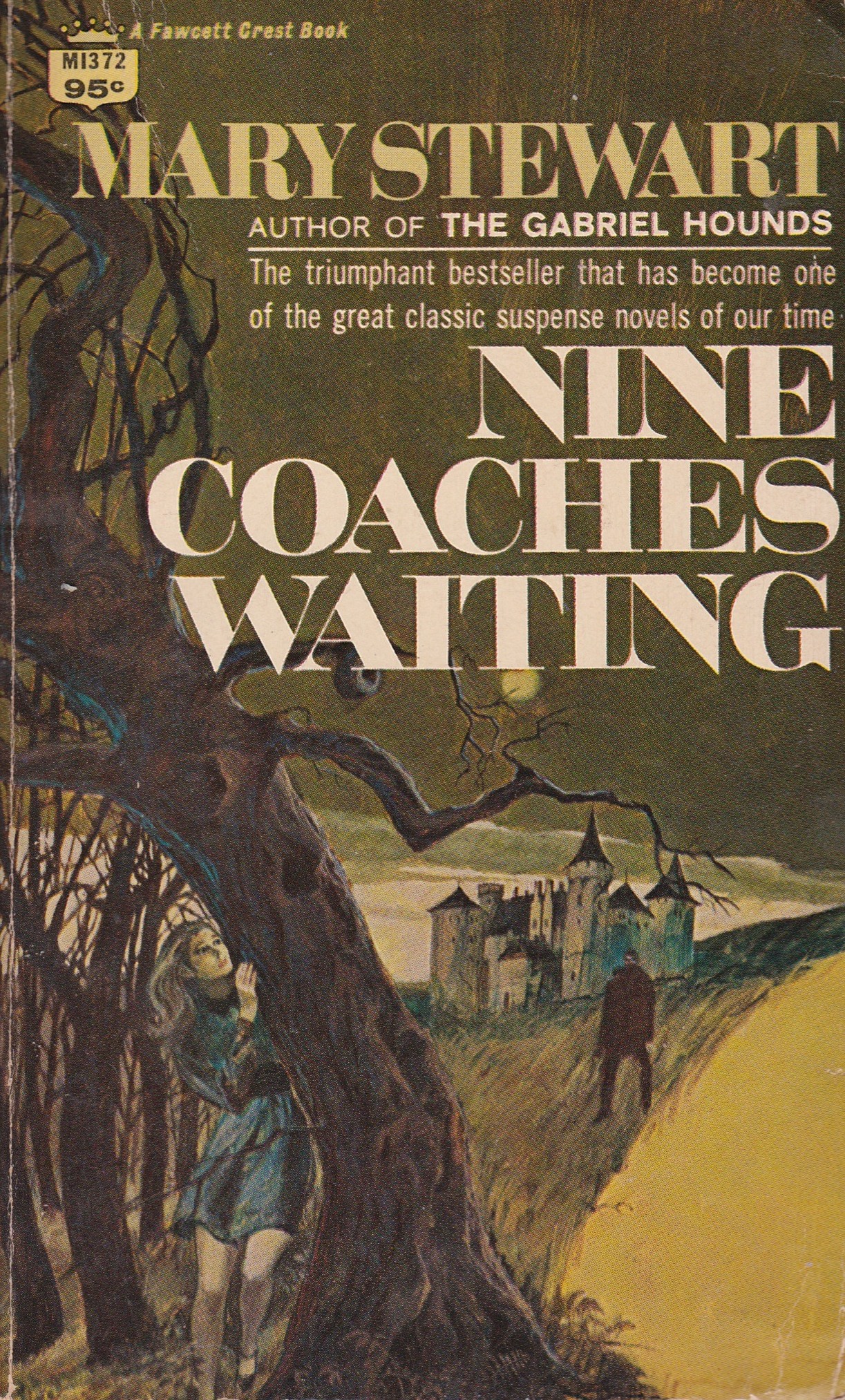
Mary Stewart took that trope and blew it to smithereens in Nine Coaches Waiting.

nine coaches waiting copy

I was thankful that nobody was there to meet me at the airport.

We reached Paris just as the light was fading. It had been a soft, gray March day, with the smell of spring in the air. The wet tarmac glistened underfootl over the airfield the sky looked very high, rinsed by the afternoon’s rain to a pale clear blue. Little trails of soft cloud drifted in the wet wind, and a late sunbeam touched them with a fleeting underglow. And beyond the airport buildings the telegraph wires swooped gleaming above the road where passing vehicles showed lights already.

Some of the baggage was out on the tarmac. I could see my own shabby case wedged between a brand new Revrobe and something huge and extravagant in cream-colored hide. Mine had been a good case once, good solid leather stamped deeply with Daddy’s initials, now half hidden under the new label smeared by London’s rain. Miss L. Martin, Paris. Symbolic, I thought, with an amusement that twisted a bit awry somewhere inside me. Miss L. Martin, Paris, trudging along the tarmac between a stour man in impeccable city clothes and a beautiful American girl with a blond mink coat slung carelessly over a suit that announced discreetly that she had been to Paris before, and recently. I myself must have just that drab, seen-better-days shabbiness that Daddy’s old case had, dumped there among the sleek cabin-class luggage.

But I was here, home after nine years. Nine years. More than a third of my lifetime.

And so we meet Melinda Martin, called Linda by everyone. Her father was English and her mother French; she was born and raised in Paris and after her parents were unfortunately killed when she was in her early teens she was sent to an English orphanage. She is fluent in both English and French, and after aging out of the orphanage, one of the women who took a charitable interest in the place helped her get a job she hated at a boys’ boarding school–but when Madame de Valmy was looking for an English girl to be her nephew’s governess, the woman remembered Linda and recommended her. During the interview it became clear to Linda that the Valmys were looking for an English girl who would only speak in English to the nephew, a nine year old who’d inherited the ancestral estate as well as the title of Comte de Valmy; desperate for the job and desperate to get back to Paris, Linda allows Madame Heloise to mistakenly believe she doesn’t speak French–and is worried she’ll slip and betray herself, and get fired. She arrives at the imposing Chateau Valmy, and also as governess finds herself in that weird in-between where she is not a member of the family but isn’t considered one of the regular servants, either. The young comte, Philippe, who usually lives with a different uncle who has been called away for a lecture series in Greece as well as to work on a dig there (Hippolyte is an archaeologist) is very subdued, clearly afraid of his disabled uncle Leon (Leon is a dynamic personality Linda comes to think of as Lucifer after the fall–later in the book she calls him the King of Demons), handsome and strong and confined to a wheelchair after a car accident. Heloise is his wife, and he has one son from a previous marriage, Raoul, who runs Bellevigne, a chateau with a vineyard and winery, for his father. There are three family estates, each of which was left to one of the three brothers; young Philippe is the only child of the eldest brother and so the title and the vast ancestral estate belongs to him; Leon merely serves as his trustee.

Linda manages to navigate her confusing place in the chateau with the remarkable aplomb all Stewart heroines are blessed with; these are strong young women more than capable of taking care of themselves in a man’s world, and these women are courageous and smart. When Linda realizes her young charge is in danger–someone is trying to kill him because of the complexities of the Valmy inheritance–she has no problem whatsoever in taking the child out of the house in the middle of the night and venturing out into the woods in a desperate attempt to keep him safe until his uncle Hippolyte returns–the next day, which leads the plot against the boy to amp up. The journey to safety–and not knowing who she can and cannot trust–cranks the suspense way up, until the denouement when all is revealed and the truth comes out, with the young boy safe and Linda in the arms of the man she has fallen in love with–but couldn’t be certain whether or not was involved in the plot to kill the child. Stewart manages to make it all seem absolutely real, and once Linda and Philippe were in the woods it was hard to look away.

This book is peak Stewart at the top of her game–and that is truly saying something. I am looking forward to rereading her other novels even more so now than i was before.