Wake Me Up Before You Go-Go

I overslept this morning, which is really fine; I feel very rested, which means I needed the sleep and my muscles, which have felt tired all week, don’t this morning; so there you have it. I have some errands to run in the early afternoon, and I also have some writing to do today; I need to finish a chapter in the WIP and finish one in the Scotty. I should probably do so organizing and of course, the Lost Apartment is a mess. I also need to revise two short stories, whose due dates are rapidly approaching. Next weekend I will be in Alabama for the Murder in the Magic City/Murder on the Menu events, and the next weekend is the final parade weekend of Carnival (yes I am missing the first weekend for the first time in years). I do hate missing the King Arthur parade; I have lots of friends and acquaintances in that one, so I generally get buried in beads. I can’t believe I agreed to miss that weekend, but I also was so busy making sure it wasn’t the final weekend of Carnival that I didn’t notice.

Stupid, stupid, stupid Gregalicious.

Heavy sigh. I finished watching the first season of Black Sails last night, both at the gym and then when I got home after; I am, as I have said, really enjoying the show. I can’t quite figure out why I didn’t like this show when I tried to watch it several years ago, but I am really enjoying it now and glad I gave it another chance. I suspect I didn’t pay enough attention to it as I watched, and you kind of need to pay attention. There’s a lot going on, there are a lot of cross-plots, and lots of scheming. I don’t think I much cared for the way the women were treated in the first episode or two, either; it appeared that the women were all whores or mistreated terribly by men. But that’s not the case; the women are stronger and smarter than the men, and Eleanor Guthrie, who runs Nassau, is developing into quite the cold-blooded manipulative she-devil, which I am also rather loving. And of course, you can never go wrong with a hot, sweaty men in tight leather pants. My favorite, of course, is Tom Hopper, but Zach MacGowan, who plays Captain Charles Vane (and also played Roan on The 100; I thought he looked familiar) isn’t a slouch either.

Zach-Mcgowan-main

I also read two short stories last night, both horror, to keep the Short Story Project going.

The first, “Minuke,” by Nigel Keale, is from a very thick book edited by Marvin Kaye called Ghosts:

The estate agent kept an uncomfortable silence until we reached his car. “Frankly, I wish you hadn’t gotten wind of that,” he said. “Don’t know how you did: I thought I had the whole thing carefully disposed of. Oh, please get in.”

He pulled his car forward and frowned. “It puts me in a rather awkward spot. I suppose I;d better tell you all I know about the case, or you’d be suspecting me of heaven-knows-what kinds of chicanery in your own.”

As we set off to see the property I was interested in, he shifted the cigarette to the side of his mouth,

“It’s quite a distance, so I can tell you on the way there,” he said. “We’ll pass the very spot, as a matter of fact, and you can see it for yourself. Such as there is to see.”

This is a ghost story, or more properly, the story of a haunting;  it was originally written and published in 1950–which makes the story sixty-eight! It’s also told in a classic horror trope that is hardly used anymore, because it’s become cliche–someone is telling the story of what happened to someone else, a disinterested party. Stephen King has used this method a time or two; most notably in his novella “The Breathing Method” from Different Seasons, and sometimes in short stories. It’s a very classic trope–Dracula is an epistolary novel, after all, told in diary entries and letters. But at the time “Minuke” was originally published, horror wasn’t considered a form of literature and as such tropes hadn’t evolved into cliches quite yet, and it’s a well-told tale. The house of the title is merely a bungalow, built in the housing boom of the post-war era, and therefore its tenants are the first to live there; it is too young of a house to have a haunting, and yet it does. It turns out, you see, when the foundations were being dug, they came across some ancient Norse grave markers…(of course, at the time the story was written Poltergeist was many years away in the future, and the ‘never build on an Indian burial ground’ theme hadn’t become deeply engrained in the culture).

(Aside: the collection Ghosts is a gorgeous, leather bound edition with gold inlay and a ribbon page marker that I purchased for a few bucks off a sale table at Borders many years ago; I don’t know why I’ve never dipped into it before, but it’s going to definitely play a role in this year’s Short Story Project.)

The second story I read was “Fallen Boys” by Mark Morris, from Best Horror of the Year Volume Three, compiled and selected by Ellen Datlow, and originally published in Jonathon Oliver anthology The End of the Line:

When the child screamed, Tess Morton felt guilty for having to repress the urge to snap at it. She was aware that it wasn’t Matthew Bellings who should be punished, but his tormentors, and yet the boy’s cry of pain or distress was so whiny that it grated on her nerves.

The reason she felt little compassion for the child was because she knew it took almost nothing to provoke a wail of complaint from him. Matthew would cry out whenever someone barged into him in the school corridor; whenever a football was kicked towards him in the playground; whenever a classmate flicked a paper pellet at him, or snatched a text book out of his hand, or pushed in front of him in the lunch queue. Indeed, the merest slight would cause Matthew’s red-cheeked, strangely wizened face to crumple, his mouth to twist open and that familiar, toe-curling bleat to emerge.

This story, about a class field trip to an abandoned tin mine (now open as a tourist attraction and advertised as an education experience for children), is predicated on a horrific truth about bullying that we don’t like to acknowledge or understand; one that Stephen King exposed and explored powerfully in his own debut novel, Carrie. 

When we read accounts about bullying, and how teachers and other adults look the other way, we are horrified by it; when we read short stories and novels about bullying  our hearts naturally go out to the victims and we loathe the bullies and their enablers; long for their comeuppance, and are infinitely satisfied when it does come. But that bears no resemblance to the reality. That comes from the emotional distance, and the pleasant lies we so often tell ourselves, the lies about who we are as people, and how we would behave in certain circumstances–we identify with heroes and see ourselves as heroes; part of the brilliance of Stephen King’s work is he so often lays bare that horrific truth that we aren’t all heroes.

Take Tess Morton, the teacher taking her kids on this field trip. The story is completely told from her point of view. She knows that kids are bullying Matthew, and she also knows that as the voice of authority she has to try to put a stop to it. She does try, but it’s not taking because Matthew himself irritates her and sometimes she herself wants nothing more than to give him a good slap. This is the same way Miss Desjardin, the gym teacher who stops the shower assault on Carrie White in the opening scene of Carrie, feels about the victim; she has to punish the girls who did it, but Carrie irritates her, she wants to smack her a good one, and she understands why Carrie is bullied.

This is also why school–the hallways, the playground, the cafeteria, the gym–is so scarring for so many people, because they are so evocative of Lord of the Flies or The Hunger Games.

This is a great story; Morris builds his suspense beautifully, and the denouement is rather sudden when it happens–more than a little reminiscent of EC Comics, but it’s also rather satisfying.

And now. back to the spice mines.

Careless Whisper

So, for those of you who are keeping score, I rewrote/revised/edited /redid whatever-the-hell-you-want-to-call-it-Chapter-One of the new Scotty last night and you know what? I found Scotty’s voice again. I don’t know, but when I opened the word document for this next attempt to write this book, I knew what the first sentence was going to be, and when I typed it: I love Christmas…somehow Scotty was there again; I could hear his voice, get into his head, everything I need to do in order to write a Scotty book. My God, I might actually get this thing finished.

Huzzah!

I also made it to the gym yesterday morning before work; without complaining, without once trying to think of a reason or rationale to not go. I just got up, had a couple of cups of coffee, did my morning toilette, and when it was time, I put on my sweats and went out the front door. It’s amazing how much better I feel; how much more energy I have,  I’ve not been sleeping as great as I would like this week–not sure what that’s all about–but maybe I just don’t need as much sleep as I used to? A possibility, no doubt. I’m seeing my doctor again next month; perhaps I can discuss it with her then. I know she’ll be pleased I’m working out more regularly.

I also did some things I’ve been procrastinating about–made an eye appointment, called AT&T because I am paying for cellular service on my iPad and not getting it, called my doctor for a prescription refill, cancelled a digital newspaper subscription–and so I am feeling rather proud of myself.  Yay, me!

I also read some Agatha Christie short stories, from her collection The Golden Ball and Other Stories. I originally read, and enjoyed, these stories when I was a teenager; and they were originally published in the 1920’s. To be honest, while I still enjoyed them, on some levels they bothered me. I’ve actually read criticism of Agatha Christie for being, among other things, classist in her writings; this can be problematic in a present-day reading (I didn’t notice when I originally read her). I also had some other issues with these stories that I didn’t originally; Christie, not only in her short stories but her novels, enjoyed romantic happy endings, which happens in a couple of these stories even though they aren’t a real pay-off and kind of clumsily tacked on.

Listen at me, criticizing Agatha Christie! Some nerve, huh?

The first story in the collection is “The Listerdale Mystery”:

Mrs. St. Vincent was adding up figures. Once or twice she sighed, and her hand stole to her aching forehead. She had always disliked arithmetic. It was unfortunate that nowadays her life seemed to be composed entirely of one particular kind of sum, the ceaseless adding together of small necessary items of expenditure making a total that never failed to surprise and alarm her.

Who hasn’t been there? The St. Vincents are what Christie calls “poor gentlefolk,” essentially, people who used to have money or are technically part of the upper classes but no longer have the funds to live the way they are used to, and are pretty much living hand-to-mouth. Her daughter has prospects–a young man with money–but they are living in shabby place they can’t even afford anymore which won’t “show her off properly.” Mrs. St. Vincent stumbles on a rental advertisement in the paper that seems too good to be true–servants the tenants won’t have to pay; a lovely home with rent so cheap there has to be a catch–but it’s only for the ‘right sort of tenant.’ The St. Vincents qualify; they move in, and everything is wonderful. The daughter, having a proper home that shows her off in the right way, gets engaged to her young man with money. But the son, Rupert, is certain something is wrong about the place and wrong with the deal. The owner, Lord Listerdale, has not been seen nor heard from in quite a while, and Rupert starts looking into things. The ending isn’t quite as sinister as one might think if this were a Stephen King short story, but it’s a pleasant little story. But you see what I mean about the classism; “the right sort of people”…and “poor gentlefolk who suffer in silence” as opposed to the working poor who aren’t the right sort of people and apparently suffer loudly?

“The Girl in the Train” is also quite fun; but again–our main character is a young man whose wealthy uncle has become irritated with him, fired him from his employ, and cut him off financially (shades of Wodehouse!). Our young hero takes this all in stride, and isn’t sure what to do with himself, so he gets on a train to a town that bears the family name: Rowland’s Castle. But before the train pulls out of the station a beautiful young woman leaps into his compartment, begs for help, and dives under the other seat. Thus begins a kind of fun adventure which inadvertently gets him involved not only with the possible kidnapping of an heiress, but with a Scotland Yard investigation into a gang of spies! It’s a fun tale, and all works out in the end….and it very much reminded me of Wodehouse, whom I love.

“The Manhood of Edward Robinson” is also quite fun–if dated. Edward has a good job, good prospects, and everything he could wish for–even if he is a little henpecked by his fiancee who wants to wait several years to get married, which is more sensible. He has won a contest with a prize of 500 pounds–and in a bit of rebelliousness against his fiancee, buys a sportscar, and then lies to her and goes driving out of London one night. He winds up on quite an adventure involving a stolen diamond necklace and a car switch (he winds up with someone else’s car–wouldn’t happen today, but could back then). He comes out of the whole adventure with a whole new outlook on life, and again, the end is quite satisfying.

The fourth, “Jane is Search of a Job,” is perhaps my favorite of the bunch. Jane is poor, needs a job, and finds an interesting advertisement, which she answers and soon finds herself body doubling for eastern European royalty. But all is not what it seems with Jane’s new high paying job, and soon she is off on an adventure all of her own. What makes this story work–along with other Christie novels of the time, like The Man in the Brown Suit–is the female character, who is quite realistic, doesn’t ever get hysterical or lose her head, and greets each new twist in the tale with determination, grit, and a very practical, level-headed  “okay, how do I get out of this” attitude. A very fun read, even if at the end she winds up riding off into the sunset with a man she’s just met and who has fallen madly in love with her. Farfetched as that may seem, though, it is a charming end to the story of Jane’s financial woes–although the message “have a wealthy man fall in love with you” isn’t the most practical of advice.

And now,  back to the spice mines.

IMG_3589


New Moon on Monday

I made it to the gym again yesterday, which felt fantastic–despite the fact that I added a set to everything, and upped the speed of the treadmill by .2 miles per hour. The stretching helps; I can’t believe I worked out all those years without bothering to ever take the time to stop and stretch (okay, yes, I was naturally flexible, but I wouldn’t have lost the level of flexibility I had if I’d been stretching all those years). I also organized a bit, did some chores around the house, and wrote the first draft of a story for an anthology with a deadline of February 15th. The story’s not quite there yet, but I think it’s not only a good idea but one that revisions and rewrites will only make stronger. Huzzah! And yay for me!

It was also in the seventies (!!!) yesterday; considering just three days ago we had a hard freeze…yeah, the weather in southeastern Louisiana might be a bit bipolar. I also had a breakthrough on how to revise the first chapter, not only of the WIP but of the Scotty as well. Hallelujah! I really think this focus and positivity mantra might actually be working. Granted, it’s still only January, but between the working out, and the writing…yeah, this is turning into a much better year already than last.

I also read some short stories!

First up was “Music for Chameleons.” by Truman Capote, from his collection Music for Chameleons:

She is tall and slender, perhaps seventy, silver-haired, soigne, neither black nor white, a pale golden rum color. She is a Martinique aristocrat who lives in Fort de France but also has an apartment in Paris. We are sitting on the terrace of her house, an airy, elegant house that looks as if it was made of wooden lace: it reminds me of certain old New Orleans houses. We are drinking iced mint tea slightly flavored with absinthe.

Three green chameleons race one another across the terrace; one pauses at Madame’s feet, flicking its forked tongue, and she comments: “Chameleons. Such exceptional creatures. The way they change color. Red. Yellow. Lime. Pink. Lavender. And did you know that are very fond of music?” She regards me with her fine black eyes. “You don’t believe me?”

During the course of the afternoon she had told me many curious things. How at night her garden with filled with mammoth night-flying moths. That her chauffeur, a dignified figure who had driven me to her house in a dark green Mercedes, was a wife-poisoner who had escaped from Devil’s Island. And she had described a village high in the norther mountains that is inhabited entirely by albinos: “Little pink-eyed people white as chalk. Occasionally one sees a few on the streets of Fort de France.”

I love Truman Capote’s work–I reread In Cold Blood every few years or so, and his short fiction is also pretty compelling. I started reading this story before, but never finished; but in reading it now I realize I kind of borrowed the opening of this one for the opening of a chapter of Garden District Gothic, when Scotty goes to see Vernita Godwin, who is sitting on her front gallery in the Garden District sipping absinthe. I really love that image, of two people on a gallery sipping absinthe while ceiling fans turn overhead. The story isn’t really a story, in the classic definition of what comprises a story; this is more of the slice of life school of short stories, because it’s really just about a conversation between two people after dinner, about life in Fort de France, Guadeloupe. Part of the conversation is about a homophobic hate crime that had occurred on the island in the past; surprisingly, justice was actually served because, as the lady puts it, ‘we don’t tolerate murder here.’ But the strongest image of this poetically written story is the lady, sitting at the piano playing classical music for the iguanas, who listen in the doorway to the terrace and bob their colored heads in time with the music. That’s what I read Capote for–those poetic images.

Next up was “The Intoxicated” by Shirley Jackson,  from The Lottery and Other Stories:

He was just tight enough and just familiar enough with the house to be able to go out into the kitchen alone, apparently to get ice, but actually to sober up a little; he was not quite enough a friend of the family to pass out on the living-room couch. He left the party behind without reluctance, the group by the piano singing “Stardust,” his hostess talking earnestly to a young man with thin clean glasses and a sullen mouth; he walked guardedly through the dining-room where a little group of four or five people sat on the stiff chairs reasoning something out carefully among themselves; the kitchen doors swung abruptly to his touch, and he sat down beside an enormous white enamel table, clean and cold under his hand. He put his glass on a good spot in the green pattern and looked up to find that a young girl was regarding him speculatively from across the table.

“Hello,” he said. “You the daughter?”

“I’m Eileen,” she said. “Yes.”

I’m also a huge fan of Shirley Jackson who, as Stephen King once said, ‘never had to raise her voice.’ This story, like the Capote, is a slice of life type story, with a bit of a bizarre twist to it. The drunk party guest and the teenaged daughter have a lengthy conversation about how his generation has ruined the world and how it is up to hers to burn everything to the ground so it can start over, and be the better for it. It’s unsettling, but the end–when he returns to the party a little more sober than when he left it–leaves you to wonder what is going to become of Eileen–and what that story would be like.

I haven’t read a lot of Jackson’s short fiction–I’ve not read “The Lottery,” although I’ve seen the short film made of it in grade school and in an Acting class in high school we did the play, but I intend to remedy this grave error and lack in my reading history during this Short Story Project.

The third story I read was “Pastorale” by James M. Cain,  included in Best American Noir of the Twentieth Century, by editors  James Ellroy and Otto Penzler;

Well, it looks like Burbie is going to get hung. And if he does; what he can lay it on is, he always figured he was so damned smart.

You see, Burbie, he left town when he was about sixteen years old. He run away with one of them traveling shows, “East Lynne” I think it was, and he stayed away about ten years. And when he came back he thought he knowed a lot. Burbie, he’d got them watery blue eyes what kind of stick out from his face, and how he killed the time was to sit around and listen to the boys talk down at the poolroom or over at the barber shop or a couple other places where he hung out, and then wink at you like they was all making a fool of theirself and nobody didn’t know it but him.

This was Cain’s first published story, and it is not only a macabre, dark little story but it also, as the editors point out, contains themes Cain would return to again and again in his short novels; amoral man has affair with beautiful woman and they plan together to kill her husband. “Pastorale” though, isn’t told from the point of view of the amoral man, like The Postman Always Rings Twice or Double Indemnity; the story is told by a third party, someone who knows what happened and is telling the story to someone–the reader, but it’s told almost entirely in vernacular and in that man’s voice, which is arresting and very strong and very rural; the voice reminded me a lot of his Appalachian saga of incest and murder, The Butterfly, and it also reminded me of Faulkner. The tale teller passes no judgment on Burbie or his lady love for their adultery and murder; if anything, he thinks they were fools because Burbie’s own vanity is what wound up bringing them down. It also gave me some thoughts about voice, and point of view, and story-telling.

If you cannot tell, Constant Reader, I am greatly enjoying my self-education in The Art of the Short Story, and I hope you are enjoying following me on this path half as much as I am enjoying going down it.

And now, back to the spice mines.

On the Dark Side

Sunday morning. I didn’t get as much done as I would have liked yesterday, but I did get some things checked off my to-do list, so i call that a win. I finished a first draft of my short story “The Trouble with Autofill,” which will need some serious revision and work–not a problem–but while I am displeased with the result, I am pleased that I got the first draft done. As I always say, you can always fix what you wrote–but you have to have something to fix. 

We finished watching Broadchurch last night, and my, was that series finale, wrapping up not only the story of the Latimers–whose son was murdered in Season One–but also the rape case that opened Season 3. I have to say, the show was really terrific; I greatly enjoyed it, and I thought it did a great job of putting real human faces on terrible tragedies. As I processed what I’d seen once it was finished, I realized that probably the reason I enjoy crime fiction so much is precisely that; it’s exploration of humanity through dealing with the unimaginable; and that’d also kind of what I’m doing with my short stories. I’m also really glad that I made the Short Story Project a year-long thing; I’m learning so much about short stories by reading so many different ones by so many different writers.

I also have to correct myself; I  do have a hard copy of Lawrence Block’s anthology In Sunlight or in Shadow. I was moving books around in the bookcases yesterday–and uncovering more anthologies and single-author collections as I went–and even though I’d spent a lot of time trying to find it over the past week to no avail, yesterday there it was, right next to Cary Elwes’ memoir of filming The Princess Bride, As You Wish. Why I hadn’t seen it or noticed it prior to this moment in time is one of the unsolved mysteries of my life and brain.

We also watched the first episode of American Crime Story: The Assassination of Gianni Versace, and I wasn’t overly impressed with it beyond the surprisingly strong performance of Darren Criss as Andrew Cunanan. Visually, it’s splendid, but…I’ll give it another episode or two before consigning it to the scrapheap. The beauty of our streaming society is I can always give it another shot later; maybe I’ll like it better at another time. Black Sails, for example, continues to be something I really am enjoying; I watched half of Episode 3, Season 1, on the treadmill Friday and yes, I can’t help but keep asking myself why on earth did you not like this the first time?

The only problem I’m really having with the Short Story Project is that I am not reading any novels; so my TBR pile is not being reduced in any way. I want to read John Morgan Wilson’s Moth and Flame, and it’s been sitting on my side table next to the easy chair for over a week now; but I’m in such a short story groove…anyway.

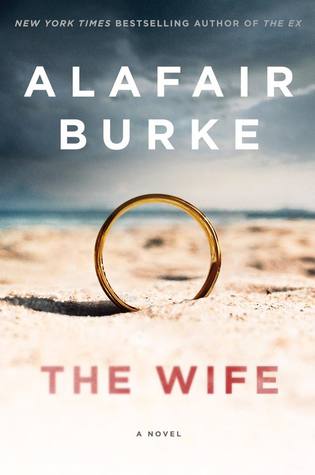
Tomorrow is the release day for a book I read in ARC (advanced reader copy) form months ago, The Wife by Alafair Burke.

34971475

In an instant, I became the woman the assumed I’d been along: the wife who lied to protect her husband.

I almost didn’t hear the knock on the front door. I had removed the brass knocker twelve days earlier, as if that would stop another reporter from showing up unannounced. Once I realized the source of the sound, I sat up straight in bed, hitting mute on the TV remote. Fighting the instinct to freeze, I forced myself to take a look. I parted the drawn bedroom curtains, squinting against the afternoon sun.

I saw the top of a head of short black hair on my stoop. The Impala in front of the fire hydrant across the street practically screamed “unmarked police car.” It was that same detective, back again. I still had her business card tucked away in my purse, where Jason wouldn’t see it. She kept knocking, and I kept watching her knock, until she sat on the front steps and started reading my paper.

Alafair Burke’s The Ex made my Top Ten list of 2016; it was the first of Alafair’s books I’d read (I have a bunch more in the TBR pile) and it absolutely blew me away. I wasn’t sure what to expect, and having met and liked Alafair, there was an element of worry; what if I don’t like her book? But it wasn’t an issue; from page one on, I was hooked and it was a book I deeply resented having to put down to do other things. Obviously, I was really looking forward to The Wife–maybe I’ll focus this year on reading the rest of her canon–and was thrilled when I got an ARC at Bouchercon this year.

The Wife does not disappoint, either, and boy is it ever timely! Angela Powell, the wife of the title, has a pretty terrific life; married to a very successful man who is getting even more successful every day, a beautiful home in Manhattan, good friends she can rely on, and a son she dotes on. Angela’s almost too-perfect, too-good-to-be-true life slowly but surely begins to unravel when one of her husband’s interns goes to the police and files a criminal complaint for sexual harassment against him. But Angela is not only rocked by the charges against her husband–she’s also worried about any investigation into their lives, particularly by the press…because she has some dark secrets in her own past that she doesn’t want seeing the light of day. No one, other than her husband and her mother, knows anything more about her past other than she was a catering service waitress who eventually started her own business and is a great chef–she met Jason at a party she was working at–but there is a lot more there. And as the truth about Angela’s past slowly is revealed to the reader, each revelation is even more shocking than the last.

The book has a powerful enough story, with just Angela dealing with this assault on their life and having to wonder if her husband has done what he’s being accused of, and if so, how did she not see it–or whether she should believe in his protestations of innocence and stand by his side? The exploration of what does a woman do in this instance might have been enough for a lesser novelist, but it’s not for Alafair Burke; there’s a reason why she has moved onto my ‘must-read’ list.

The Wife is going to be one of the best books of the year, and will be surely nominated for every crime writing award in 2019. I urge you to read it. You won’t be sorry.

Undercover of the Night

I didn’t get as much done this afternoon as I would have liked, alas. I am getting laundry done, and have pretty much cleaned out my email inbox, and I did finish the first draft of “The Trouble with Autofill”–it’s not good, but it will be, and I am going to work on another short story for a bit while vacuuming and preparing dinner and finishing the laundry. Tomorrow I want to get a lot more done, and tomorrow is also a go to the gym day; and since it’s the fourth workout, that means moving up to two sets of everything rather than one. Next week will be three, and then after that it remains at three, with weight increases every week. I haven’t had any issues with going to the gym–I even went when it was so cold on Wednesday morning–so I think I’m getting back into the swing of things. Let’s hope I stay motivated; I think I will.

I am also learning a lot from the Short Story Project! Once I get this second short story finished, and revise the other, I am going back to the WIP and some other manuscripts that need my attention. It’s great because I am reading all these different styles and types of short stories and writers, and I am learning a lot about how to construct a short story, and suspense building, and so forth.

An excellent example of building suspense is the first one up today, “The Stranger in the Car” by Elizabeth Sanxay Holding, from Troubled Daughters Twisted Wives, the fabulous anthology of post-war stories by the terrific women writing suspense back then.

Carrol Charleroy leaned back in his chair and closed his eyes; a big, stout, handsome man, olive-skinned, with a black mustache; a flamboyant look about him, in spite of his correct and conservative clothes. Miss Ewing was playing the piano for him, and he tried to relax, to enjoy this music, but a peculiar restlessness filled him. He frowned, opened his eyes, and took out his cigar case.

He and his wife Helen never sat here in the drawing-room unless they had guests; then the room would be pleasantly lighted, there would be people moving about, the sound of voices. Now the only light came from the gold-shaded lamp beside the piano at the other side of the long room, and, in spite of Miss Ewing’s music, he was aware, as never before, of the sounds from the New York street outside, the rush of wind, a car streaking past, the frantic piping of a doorman’s whistle, a man’s voice, hoarse and furious. This made him feel vulnerable, not comfortably shut away from the world in his own home.

“I don’t like this sending Helen off to the hospital,” he thought. “The flu is a treacherous disease, I grant you that. But Helen and I, and the children, and the servants, too, have all had it, at one time or the other, right here in the house, and we did very well. Can’t say I care much for Dr. Marcher. Too quizzical…”

The Holding story is one of the longest I’ve tackled during the Short Story Project thus far; and it’s a slow burn, and it’s so worth it. The story opens with our point of view character, a successful businessman, being entertained by the piano playing of a family friend; concerned about his wife’s hospitalization for the flu; and later that evening, his daughter arrives home under mysterious circumstances; with a black eye and several strange stories being told to him from other people who saw her out that evening, and were concerned. Before long Mr. Charleroy is convinced something terrible has happened to his daughter…and that she may have taken the law into her own hands. The best part of this slow burn of a story is that Mr. Charleroy literally has no idea what’s going on around him, but only sees and hears enough to make him worried and suspicious; but all of the women in the story are taking care of everything around him, and finally, at the end, very kindly let him know what the truth was once it’s all wrapped up rather neatly, in a slightly macabre fashion, but wrapped up nonetheless. Holding is best known for her novel The Blank Wall, which Weinman included in the Library of America omnibus of post-war female suspense writers, and now I am positively looking forward to reading it.

The second story for this entry is an Edgar nominee for this year’s Best Short Story statue, from Montana Noir, capably edited by Keir Graff and James Brady, is Eric Heidle’s “Ace in the Hole.”

Civic-pride billboards and the drab county jail swept past the chilly Greyhound’s windows as it dropped down the hill into the night of Great Falls. Through frosted glass, Chance watched the town pull him in as the Missouri passed below, the bus thrumming over dark water and skiffs of ice. Beyond the bridge he saw the OK Tire sign was gone; it’s cinder-block building was now something new.

The bus pulled a lazy turn toward downtown, rolling through blocks of low brick warehouses before banking hard into the alley behind the depot. It settled with a hiss in the garage as the passengers roused and began filing off.

The snap of deep cold hit him at the door. The driver’s breath huffed with each suitcase he tossed from the coach’s gut. Chance had only his green duffel. He split off from the line shuffling into the warmly lit lobby. Ducking under the half-open bay door at the front of the garage, he stepped onto the street and walked toward Central Avenue.

This is a terrific story, and it’s easy to see why it’s an Edgar finalist. Chance went to jail for possession with intent to sell, managing to get rid of most of the bales of marijuana before the cops caught up to him–but one bale didn’t land in the river but rather on a bridge support; bad luck for Chance. Even worse luck for Chance is that the supplier he got the marijuana from is still around and still wants his money for the lost shipment of weed. There doesn’t seem to be any way out for Chance–but it turns out that he does, indeed, have one ace up his sleeve, after all, and decides to play it in one last stand.

This is a great example of a dark, noir story; although whether it fits the actual definition of noir as I personally have come to understand it is questionable. But the thing about noir is that it defies labels and definitions, and this story is the best example of I can’t say what it is but I know it when I see it. This story is totally noir; I can even see it as a film, with its bleak but beautiful Montana landscapes, the cold, the mermaids swimming behind glass in the bar, the brutality of the violence; this would be a great role for a mid-to-late twenties actor–maybe even a career-making role. All kinds of awesome, really.

montana noir

Got a Hold on Me

Friday morning, and a short day at the office. I am very pleased to report that looking out my windows this morning I see no snow and ice, so I think perhaps this cold snap has finally come to its bitter end. We’re now having water pressure problems in the city, a boil water advisory, etc. etc. etc. Heavy heaving sigh. But other than that, things are going well. Like I said, I have a short day today; I am going to go to the gym this afternoon when I get home from the office, and I am going to spend the weekend writing and editing and reading. I started writing another short story yesterday, “The Trouble with Autofill,” which I think is kind of clever, and have lots of other editing and writing to do. Woo-hoo! Exciting weekend, no? I also want to get some reading and cleaning done. But I think as long as I keep going–sticking to my goal of positivity and focus, things will go well.

Maybe today’s blog should be titled When You Believe.

So, my agenda this morning is to get my kitchen cleaned up, get better organized, clean out my email, and do some writing. I’m going to get the mail before heading to the office, and I also need to pack my gym clothes so I can just ran in, grab the bag, and head back out the door. I also have lost three more pounds this week, finally breaking through that pesky 214 pound plateau I was at–I haven’t weighed 211 in years, so huzzah for working out! Now to keep going.

I started watching Black Sails again this week. I tried it several years ago, and just couldn’t get into it, even going so far as to think it kind of boring. I don’t know why; it has everything I love–pirates, beautiful locations, great period costumes, hot sweaty men in buccaneer outfits–but for whatever reason I just didn’t get into it. Maybe I wasn’t paying close enough attention? Something. Anyway, I am enjoying it a lot more this time around, so I am in for all four seasons. I love pirates–always have–despite having given up on the Pirates of the Caribbean franchise after the second movie–and while I am not sure why that is the case, I just have. I’ve always wanted to write a pirate novel; and I still have a Scotty adventure having to do with Jean Lafitte’s treasure still floating around in the back of my  head. I’m making all kinds of notes as I watch this show–reread Treasure Island, do some research on pirates, reread The Deep–so who knows? My creativity is certainly flowering these days; and I do think this go back to your roots thing is really working for me. I am doing that with my workout program–all the way back to how I got started, in 1994/1995; and carrying my little blank book around has certainly kick-started my creativity. How cool is that?

I’ve also added a lot of fun Alfred Hitchcock movies to my watchlist on Amazon Prime, some I haven’t seen and others I already have: Saboteur, The Birds, Shadow of a Doubt, Topaz, Frenzy, Psycho, Family Plot, and Vertigo.

The Short Story Project is also continuing; I read a shitload of short stories on my Snow Day Wednesday, but am still doling them out two at a time here. 😉 First up today: “Lord of Madison County by Jimmy Cajoleas, from Mississippi Noir, edited by Tom Franklin:

“Are yall ready to worship?” says Pastor Jerry. He’s got his eyes shut, one arm raised high to Jesus in some weird half-Nazi salute. Frosted hair slicked back, bald spots barely showing. Graphic T-shirt that says, Lord’s Gym, and has Christ bench-pressing a cross on it. Cargo shorts that he still thinks are cool.

I’m a little ways back in the youth room, chewing on a pen cap. The worship band kicks in; it’s all reverbed guitar and concert lights and the bullshit praise lyrics projected onto a screem behind them. You know, the songs that are the kind of crap you say to your girlfriend but it’s supposed to be about God? You are beautiful. You alone are my rock. You alone are my one and only. Oh, Jesus, baby!

Out in the crowd of youth-groupers are my customers. The girl with her hands up in the air giggling, singing louder than anyone? That’s Theresa. Everyone thinks she’s weird, that maybe she’s one of God’s holy fools, but they all agree that she’s on fire with Jesus.

Nah, she just popped a molly.

This is a great opening; I had wondered if anyone was going to address the Southern relationship with religion, and Christianity, in particular. My own psyche has been deeply scarred by a love-hate relationship with the Southern brand of Christianity; the entire nation was recently stunned by the Alabama evangelical embrace of pedophile Roy Moore–which was something that neither surprised nor shocked me. I need to write about religion; I do wish someone with a book called Religion in America: A History of the Turbulent American Relationship with God. Writing is very therapeutic, and I do have such a story that I’ve been working on for going on thirty years; I seriously doubt anyone would publish it. Anyway, I digress. This story, about a young drug dealer who has a fraught relationship with his mother, his father, and his mother’s boyfriend, is very clever and tightly written, with surprise twists and turns that take it in directions I didn’t see coming. Doug, kicked out of his wealthy private school where he was making money dealing to the rich kids, realized the best new market for his merchandise was the youth group at a local church. His dealing increased the youth group’s membership, and he has his own fraught relationship with Pastor Jerry, whom he rather despises, while dating Jerry’s daughter Kayla. Kayla is the big surprise here, a femme fatale right out of the James M. Cain classics, and a true delight. I’d love to read more about Kayla.

After Mississippi Noir, I took down The Best Horror of the Year Volume Four, edited by Ellen Datlow, and the first story there was Stephen King’s The Little Green God of Agony.”

“I was in an accident,” Newsome said.

Katherine MacDonald, sitting beside the bed and attaching one of the four TENS units to his scrawny thigh just below the basketball shorts he now always wore, did not look up. Her face was carefully blank. She was a piece of human furniture in this big house–in this big bedroom where she now spent most of her working life–and that was the way she liked it. Attracting Mr. Newsome’s attention was usually a bad idea, as any of his employees knew. But her thoughts ran on, just the same. Now you tell them that you actually caused the accident. Because you think taking responsibility makes you look like a hero.

“Actually,” Newsome said, “I caused the accident. Not so tight, Kat, please.”

There’s a reason why Stephen King is one of my favorite writers. One of the reasons is his uncanny ability to get into the heads of his characters, turning them into three dimensional beings that sound like someone you know. Kat, the physical therapist for an incredibly wealthy man–“the sixth wealthiest man in the world’–is tired of her job and tired of her patient. He won’t do the work required to get better and she is tired of watching him waste money and time on quick-fix quack cures that don’t do anything. This time, he’s brought in a small-time preacher from Arkansas who is going to exorcise the demon of pain from Newsome; it’s all she can do to keep a straight face and not say anything. Finally, she can’t resist and the preacher, Rideout, calls her out on a lot of things, seeing deep into her soul and telling her truths she doesn’t want to face herself, let alone share with anyone. And then the exorcism begins…in Danse Macabre, his later 1970’s/early 1980’s study of the genre, King talks about how horror comics of the 1950’s influenced his writing; as I was reading this story I could easily see it illustrated in Tales from the Crypt or House of Secrets. It’s terrific, absolutely terrific, and I was reminded again of why I love nothing more than curling up with Stephen King’s writing. It also vaguely reminded me of his novel Revival; I think this story may have triggered his creativity in that direction.

And now, I have spice to mine. Have a great Friday, Constant Reader!

IMG_3588

Head over Heels

Well, I survived yesterdays’ trip to Metairie and Target (shudder) and also spent way more money than I should have; which of course is part of the Target trap. But none of the money was wasted and it was all things we will use, and things we needed. So there’s that. I’m still flummoxed, though, at how much I spent. Heavy heaving sigh.

I wasn’t sore at all from my workout Sunday yesterday, although I did start feeling tired/sleepy early in the evening. I wrote two thousand words of a short story I got the idea for while watching Broadchurch Sunday evening (we finished season two, and started season three last night); the show and the story are kind of linked as the show gave me the idea for the story; it’s called “Neighborhood Warning” and the story really flowed, at least until I started getting sleepy. AT that point I retired to my easy chair to read; I worked on the Short Story Project while waiting for Paul to come home. I read  “Safety Rules” by Jill D. Block from Lawrence Block’s anthology Alive in Shape and Color.

Day One

This was my third time, and I knew exactly what to expect. I got downtown early, so I had time to stop at Starbucks when I got off the subway. I was upstairs, in the appointed room, at 8:55. I found a seat, took out my magazine, flipped past the fashion ads, and was already pretty well into Graydon Carter’s piece on Trump by the time things got started. The lady told us to tear our cards along the perforated fold, and after she collected the bottom piece, she turned on the instructional video.

I wasn’t at all surprised when a court officer came into the room, about thirty minutes after the video ended, to call for the first group. I knew the drill–twenty or twenty-five of us would be taken up to a courtroom where they’d be selecting a jury. Everyone else would stay here, and other groups would be called for throughout the day and maybe into tomorrow. Three days tops, and I’d have done my civic duty. I hoped that I would be called in this first group–early in, early out. Maybe I’d even have time to look for boots before I headed uptown.

Veronica Ellis, our main character, is following the rules; summoned for jury duty, she assumes it’s going to be the same as it always has been before. But this time is different, and she starts paying more attention as she realizes a lot more people have been called than she is used to, and soon enough the jury pool finds out that their case is the 1978 kidnapping and murder of Milo Richter, a young boy and the person who may have committed the crime at long last is being brought to trial. The Richter case is famous, but has even more resonance for Veronica–when she was young, around the same time as the Richter case, her best childhood friend Micheline was kidnapped and murdered. At first, Veronica sees that is a kind of karmic justice–she is meant to serve on this jury, as a way of getting justice for Micheline…but then she begins to wonder if she actually should serve on this jury. Block skillfully juggles her timelines between the present day going through the motions of jury duty with Veronica remembering Micheline and what happened when she was a little girl. I was totally sucked into this story, and enjoyed it very much.

I also read Barry Hannah’s “Testimony of Pilot,” from his collection Airships.

When I was ten, eleven and twelve, I did a good bit of my play in the backyard of a three-story wooden house my father bought and rented out, his first venture into real estate. We lived right across the street from it, but over here was the place to do your real play. Here there was a harrowed but overgrown garden, a vine-swallowed fence at the back end, and beyond the fence a cornfield which belonged to someone else. This was not the country. This was the town, Clinton, Mississippi between Jackson on the east and Vicksburg on the west. On this lot stood a few water oaks, a few plum bushes, and much overgrowth of honeysuckle vine. At the very back end, at the fence, stood three strong nude chinaberry trees.

I’ve always felt my lack of appreciation for the talents of Barry Hannah an obvious intellectual failure on my part. This edition of Airships, which was originally published in 1978, had an introduction–or rather, an “appreciation”–by Pulitzer Prize winner Richard Ford; the collections itself won the PEN/Malamud Award back when I was just graduating from high school. I bought my first copy of this collection back in the early 1980’s, when I was attending Fresno City College after flunking out of school in Kansas, to try to get my GPA up to a level that would warrant admission into the California State University system. I took another Creative Writing class there, after my first horrible attempt in Kansas, and there I found an instructor who not only believed in me and my talents, but actively encouraged me to take writing up as a profession; several of the stories I wrote for his class he encouraged me to submit to magazines and professional journals. None of those stories ever saw print, of course, but I always appreciated him as a teacher. He was very into Barry Hannah and Raymond Carver (the other text for the class besides Airships was Carver’s Will You Please Be Quiet Please), and while I could see why, at the time, he appreciated and loved Hannah’s writing style so much, it didn’r work for me. We were asked to read the story “Love Too Long” to discuss in class; the rest was independent reading, and after “Love Too Long” I never picked the book up again. Hannah didn’t resonate with me. I bought another copy of this book last year, along with Hannah’s novel Geronimo Rex when I was looking at Southern Gothic literature; I found a list of Southern Gothic writers somewhere and Hannah was listed. I thought, perhaps I can appreciate him now and bought the two books.

One of the things that has to be addressed right off the bat is the racism and homophobia in this story. I didn’t address the issue of racism in Faulkner’s story “Barn Burning” yesterday; primarily because the use of the n-word was only in dialogue and was only used in dialogue by the character of the asshole redneck father; it worked in that instance, even as it was jarring to read for me, and while Faulkner used the word “Negro” to refer to people of color in the text, at the time the story was written that was the commonly accepted, socially acceptable word to use. But Hannah’s character is very much a racist and very much a homophobe; the words fag and queer are used in this story as casually as the n-word. This automatically renders the main character of this story unlikable to me, and likewise unrelatable; I am predisposed to dislike him and he gets none of my sympathy. In fact, nothing he does in this story makes him sympathetic in any way. Maybe that was what Hannah was trying to do in this story, but I couldn’t help but think, as I read it, that the story was loosely slapped together and in a strong need of editorial guidance. I’m still not even sure what the point of the story was. The story opens when the main character is a kid, with his psychotic neighbor kid launched M-80’s from a makeshift cannon at a house where people of color live (lovely); turns out they are sending them at the wrong house and the kid who lives there for some reason comes across the field to tell them to stop and for some reason brings his saxophone with him–I guess that’s because it’s something kids would do? They launch an M-80 at him and injure him without much remorse. He then becomes friends with the main character when they are both in the high school band and the story keeps following them from point to point until the sax-player, Arden Quadberry, winds up a fighter pilot in the Nacy during Vietnam and…I guess this is a slice of life story.

It was originally published in Esquire, which paid what would be considered a lot of money now, let alone in the 1970’s, for short fiction.  Maybe Hannah was a writer of his time, who hasn’t aged well–Richard Ford notwithstanding–but it’s just more of the straight white cisgender male macho posturing to me, and his literary word choices/flourishes just don’t work for me, which is clearly my own failing; I ‘d rather read a genre short story than something like this. I’ll continue to read Hannah, hoping to have that aha moment where his genius will reveal itself to me–after all, they’re short stories so it’s not a colossal time suck if I never get it–but yeah, I just don’t get it.

And now, back to the spice mines.

26196451_321860411641954_3040436925599999815_n

Pink Houses

Another cold morning in New Orleans. The Saints are up in Minneapolis playing the Vikings today, with the winner going to the NFC championship game to play Philadelphia in Philadelphia, so I shouldn’t complain about how cold it is here! I am hoping to finish cleaning the kitchen this morning so I have to time to go lift weights for the first time since AUGUST before the game. And stretch, and do some cardio. I am taking this get back in shape goal for this year seriously, Constant Reader.

I also didn’t read a short story yesterday, but I started reading one of the Kinsey Millhone stories in Kinsey and Me, and it’s quite good; I look forward to finishing it today during the game, and reading another to get back on track. But I am doing much better this year on the Short Story Project than I ever have in past years, and I have so many short story collections and anthologies to choose from; which is part of the reason I decided to make 2018 the year of the short story. I was also inspired yesterday to start writing two short stories–“Sorry Wrong Email” (which is going to take a lot of work to get right) and “Neighborhood Warning”, which I think can be really really good. I also want to work on finishing the final draft of another short story today, and this week I need to start reading the submissions for Sunny Places Shady People. With no offense to my Blood on the Bayou contributors, I think this one might be even better, I also need to finish an interview for my Sisters newsletter column (basically, writing the introduction and putting the questions in the proper order for flow) and I also need to work on my two manuscripts, and of course the Scotty Bible languishes. Heavy heaving sigh, the work of a Gregalicious is never done. I also want to read a novel; another goal for the year is getting the TBR pile down to a workable size. Tomorrow I am going to Target, and probably going to make it Leg Day at the gym in the afternoon (I have a long work day on Tuesday, so I can’t do an every other day; the nice thing about Leg Day is no cardio; just stretch, do legs, and some abs).

I watched the 1970 film Airport yesterday, based on the Arthur Hailey novel, it was one of the year’s biggest hits and was nominated for lots of Academy Awards, and even got great reviews. It was also the movie that kicked off the ‘disaster movie’ trend of the 1970’s, and spawned several sequels. The opening sequence of the movie was pretty interesting, as they showed all the ticket counters for the various airlines at “Lincoln International” in Chicago; obviously a stand-in for O’Hare. What made it interesting was how none of the airlines whose counters were shown, or were mentioned in the PA announcements over the opening credits (Continental Airlines Flight 220 is now boarding) exist anymore: Northwest, Eastern, TWA, Continental, Braniff, Pan Am. It’s hard to imagine today, with our limited choices, but just twenty years ago they were a lot of options.

The movie had, as all these types of films usually did, what was called an ‘all-star cast’; Oscar winners Burt Lancaster, George Kennedy, Van Heflin, and Helen Hayes (who would win a second Oscar for her role); as well as other bankable stars as Dean Martin and Jean Seberg; newcomer Jacqueline Bisset, stunningly beautiful who would hit major stardom later in the decade in The Deep; stage actress Maureen Stapleton in one of her first roles and who would later win an Oscar of her own; and assorted others (Gary Collins, for example) in small parts early in their career. The premise of the film is simple: a major airport is in the throes of a several day long snowstorm; it was inspired by the blizzard of the winter of 1966 (which I remember), and how the airport operates in such a crisis, and the personal stories of the airport employees intercrossed with those of several people who pass through the airport. Burt Lancaster plays Mel Bakersfeld, general manager of the airport, who is married to his job and ignores his wife and family as a result. His marriage to Cindy (Dana Wynter) is in shambles, and he’s strongly attracted to the widowed Tanya Livingston (Jean Seberg) who is some sort of manager for Trans Global Airlines (her job is never really defined in the movie; it certainly was in the book–Hailey was nothing if not thorough). They of course don’t act on their attraction, but it’s there–and she is considering a transfer to San Francisco and  ‘fresh start’ since they have no future. He fights with his wife several times on the phone, mostly to show how unreasonable she is–obviously his job should come before his wife and family! Dean Martin plays asshole pilot Vernon Demerest, who also happens to be Mel’s brother-in-law, married to Mel’s sister (played by Barbara Hale, best known for playing Della Street on the original Perry Mason series). He’s a great pilot, but a dick–and he and Mel disagree frequently about airport operations, etc. He’s also having an affair–the latest of many–with co-worker Gwen Meighan (Jacqueline Bisset), who tells him before they work their flight to Rome that she’s pregnant–including the icy line “You can stop twisting your wedding ring, I know you’re married”–which in turn doesn’t really either of them sympathetic. The head of Customs and Immigration’s niece is also going to be on the Rome flight…as it soon becomes apparent that this particular flight is going to be the film’s focus and everyone’s paths are going to cross in some way regarding Trans Global Flight 22, The Golden Argosy. Helen Hayes plays Ada Quonsett, an older woman who stows away on flights to try to visit her daughter and grandchildren in New York, caught and being sent back to Los Angeles, but she manages to evade her watcher and sneak aboard Flight 22. Also on the flight is D. O. Guerrero, a bankrupt failure with mental problems and lots of debts who also happens to be a demolitions expert, and his briefcase, which contains a bomb. He wants to blow up the plane so his wife (coffee shop waitress Inez, played by Maureen Stapleton) will collect on his flight insurance. (He’s played by Van Heflin.) This is before security, metal detectors, etc., and the rash of hijackings in the late 1960’s and early 1970’s started the change to tighter airport security (so many New York to Florida flights were hijacked and redirected to Havana that it became a joke in the zeitgeist; “my flight was hijacked to Cuba.'” Of course, after the flight takes off it becomes apparent to those on the ground that he must have a bomb; the flight crew tries to get it from him with the end result he sets it off in the bathroom, blowing a hole in the side of the plane and causing explosive decompression. Gwen was trying to get into the bathroom to him when the bomb goes off and experiences severe injuries. The damaged plane has to return to Chicago as all other airports are closed; and of course, the issue of the big runway being blocked by a plane stuck in the snow that opens the movie now becomes crucial; the plane must be moved because the damaged aircraft needs as much room as possible to land, since its rudder, and steering are damaged which means the brakes might be as well.

Complicated, right? Of course the plane gets moved, and the flight lands safely. Mel’s wife admits she is having an affair and wants a divorce, and it looks like asshole Vern might do the right thing with Gwen after all. At least if Mel and Tanya get involved, they’ll be together at the airport all the time, although as they prepare to drive off together at the end, there’s another crisis…but this time Mel says “let him handle it” which means…what, exactly? He’s not going to be a workaholic anymore?

The acting in the movie isn’t good, but then again they aren’t really given a lot to work with. Hailey’s books probably don’t hold up, but they were huge bestsellers in their day–I read them all. He always focused on an industry or business–medicine, hotels, airports, hospitals, banks, power companies–did a lot of research, and then wrote enormous, sprawling books that not only showed how the businesses worked but told melodramatic stories about the people who worked there or were involved somehow. His novel Hotel was also filmed, and then turned into a Love Boat like weekly television series in the 1980’s; in the book and movie the St. Gregory Hotel was in New Orleans (based on the Monteleone, actually), in the TV show it was moved to San Francisco. The book, written in the 1960’s, also dealt with racial issues; I should really reread both it and Airport. The Moneychangers, which was about banking, I read when I worked for Bank of America, and I was amazed at how spot-on he got working in a bank. I should reread Airport to see how different airports were in the 1960’s than they were in the 1990’s, when I worked for Continental. But his male leads, who usually ran the business, were Ayn Rand-ian style supermen: married to their jobs, good at them, and devoted to the point there was no room in their lives for a personal life, which also kind of made them unlikable.

But back to the film–as corny and badly acted as it was, despite the terrible dialogue, they did a really great job of building up the suspense about the bomb as well as would the plane be able to land safely; and since that was the most important part of the film, it worked on that level. It was also hard to not laugh a bit from time to time, having seen the spoof Airplane! so many times I can speak the dialogue along with the movie when watching; it’s weird seeing this stuff not being played for laughs  (although Airplane! was primarily based on Zero Hour! with elements from Airplane 1975. In an interesting aside, Arthur Hailey did the novelization of Zero Hour!, which was called Runway Zero-Eight). It was also interesting seeing how much things have changed since this film was made: divorce isn’t the societal horror it was back then; people don’t stay in bad marriages “for the sake of the children” anymore; abortion wasn’t legal in the US when the film was made so Gwen’s abortion would have to be in Sweden, if she chose to have one; and of course, all the changes in airport security. The plane itself was a Boeing 707; which aren’t used anymore. Stowaways can’t really get onto planes anymore, either.

Plus, back in the day the concept that airline crews were boozing and sexing it up all the time, and that flight attendants (then stewardesses) were good time girls fucking every pilot they could lure into their clutches was such a stereotype–one the airlines actually bought into because they had age, size and looks standards for the women, and ran print and television ads playing up the sexiness of their stewardesses–that it took years for that to be changed…and it still exists to a certain extent.

It was certainly not something I learned from the Vicki Barr Stewardess mystery series for kids! I’ve always wanted to write a crime series about a flight attendant–kind of an update of Vicki Barr but not for kids–but can never really figure out how to make it work. Maybe someday.

Back to the spice mines! The kitchen ain’t going to clean itself!

26167850_2049469171964082_7159993896036773975_n

Wrapped Around Your Finger

The temperature took a dip here Thursday evening, and has kept falling, even further than was projected. That means the heat is on and my space heater is back at work here in the kitchen/office, as I try to get the kitchen cleaned and the bed linens laundered. I slept later than I’d intended this morning–not a big deal, just got me off to a later start on my day than I’d wanted–and am now in the process of getting the things done that were on my Saturday agenda. I remembered that the last cold snap, coupled with my illness, had knocked me off my daily abdominal workout plan, so I got that started again this afternoon after running my errands, and it really is amazing what a difference that makes. I have an errand to run on Monday, but tomorrow if I rise early enough to get the things done that I want to, I am going to venture out into the cold temperatures and head to the gym to lift weights, stretch, and get on the treadmill. (I have all those lovely films on Starz to watch; movies I want to rewatch and others–like Friday the 13th–that I’ve never seen. Yes, I’ve never seen any  of the Jason movies, can you believe that? Shame on me! Bad, bad Gregalicious!)

Also, when I was talking about watching The Towering Inferno, I neglected to mention that the film was based on two books (I am a firm believer in mentioning the source material; so many people don’t know films were based on books, which is a shame). Two novels about fires in skyscrapers were released in the same year, so when the film was being prepared Irwin Allen bought the screen rights to both books to protect against another similar, competitive film being made. The two books were The Tower by Richard Martin Stern (which I did read) and The Glass Inferno by Thomas N. Scortia and Frank M. Robinson (I didn’t see any need to read a second book about a fire in a skyscraper). Whew. I feel better having giving them credit now.

As you are probably aware, the Short Story Project is really proceeding apace. Last year I tried to read a short story a day for January; I am reading a lot more than two a day this year, particularly since I decided to expand the project to last the entire year. In fact, blogging only once a day (although I blogged twice yesterday) isn’t enough for me to devote an entire entry to simply one story; I am having to at the very least double them up per entry, and I am still getting behind on the blog entries! Madness!

But after these three stories, I am caught up through Saturday.

Whew! The pressure is so intense.

These next three stories, of course, are from Sarah Weinman’s anthology Troubled Daughters Twisted Wives. The first is Helen Nielsen’s “Don’t Sit Under the Apple Tree.”

It was exactly ten minutes before three when Loren returned to  her apartment. The foyer was empty–a glistening, white and black tile emptiness of Grecian simplicity which left no convenient nooks or alcoves where a late party-goer could linger with her escort in a prolonged embrace, or where the manager–in the unlikely event that he was concerned–could spy out the nocturnal habits of his tenants. Loren moved swiftly across the foyer, punctuating its silence with the sharp tattoo of her heels on the tile and the soft rustling of her black taffeta evening coat. Black for darkness; black for stealth. She stepped into the automatic elevator and pressed the button for the seventeenth floor. The door closed and the elevator began its silent climb. Only then did she breathe a bit easier, reassuring herself that she was almost safe.

There was an apex of terror, a crisis at which everything and every place became a pulsing threat. Loren wore her terror well.

Loren, you see, is a second wife; thoroughly organized and ruthlessly efficient as a secretary, she first became the other woman when he was married to another woman. When that marriage inevitably ended in divorce, Loren not only got her man but she also got a big promotion. But Loren, you see, has a secret past she doesn’t want her husband to know about, lest he might go back to his former wife. And when the man who knows her secrets shows up–in the company of the first wife–she knows she has to do something about it. So, thoroughly organized and ruthlessly efficient, Loren comes up with a plan. But…even the best planner can get caught off-guard by a twist of fate they never foresaw, never considered. And as the suspense rises, as does Loren’s paranoia and fear…well, what a fantastic story.

The next story is by Dorothy B. Hughes, the master of suspense who crafted such brillaint novels as In a Lonely Place, The Blackbirder, and The Expendable Man, amongst others. I can attest to the particular brilliance of the first and third mentioned novels; the middle is in my TBR pile. Her other books are sadly out of print, and hard to find; but I am on a quest to read her entire canon, and I will not be denied.

Her contribution in this collection is a strange little story called “Everybody Needs a Mink.”

One was dusty rose brocade, tranquil as an arras in a forsaken castle. One was a waterfall of gold, shimmering from a secret jungle cache. And there was, of course, the stiletto of black, cut to here and here–the practical one, as it would go everywhere–and she had the black evening slippers from last year, like new for they only went to the New Year’s Eve and Mardi Gras dances at the club, and the annual office executive dinner at the Biltmore. With her pearls, single strand, good cultured, Christmas present two years ago from Tashi–black and pearls, always good.

She selected the gold. She’d dash down to Florida and pick up a copper tan before the Christmas party, or maybe Hawaii. Or a week in Arizona, quite chic. She could buy gold slippers and hunky gold jewelry. When you were selecting, you didn’t have to think practical, you could let yourself go.

This is an excellent character study of the interior life of women, or at least this woman, shopping the before school sales for her children at a department store in Manhattan, pretending that she’s a socialite with money to burn, trying on clothes she couldn’t possible afford and pretending for a moment, before she has to get back to reality, get the sale items for her kids and catch the train to her little suburb north of the city, Larksville-nearly-on-the-Hudson and her life as a middle-class wife and mother who must scrimp and save…but she tries on a mink, encouraged by an older man. an eleven thousand dollar coat, which he buys for her without her knowledge and then disappears. Terrific stuff.

The last story to catch me up on the Short Story Project is a deeply disturbing little tale called “The Purple Shroud” by Joyce Carrington. Originally published in Ellery Queen’s Mystery Magazine, it won the Edgar for Best Short Story for 1972. Dark, told in a distant, observational voice, it’s the kind of dark little story with a twist that would have been perfect for an episode of Alfred Hitchcock Presents.

Mrs. Moon threw the shuttle back and forth and pumped the treadles of the big four-harness loom as if her life depended on it. When they asked her what she was weaving so furiously, she would laugh silently and say it was a shroud.

“No, really, what is it?”

“My house needs new draperies,” Mrs. Moon would smile and the shuttle would fly and the beater would thump the newly woven threads tightly into place. The muffled, steady sounds of her craft could be heard from early morning until very late at night, until the sounds became an accepted and expected background noise and were only noticed in their absence.

Then they would say, “I wonder what Mrs. Moon is doing now.”

You see, every summer Mr. and Mrs. Moon come to an art colony at a remote lake in the woods, and Mrs. Moon weaves while her husband George instructs others in art, because he is the best instructor the art colony has ever had. But George has a bad habit of having affairs with young girl students at the colony every summer, ending them when it’s time to go home again, of course, and everyone knows and kind of feels sorry for Mrs. Moon, but this summer…this summer it’s different.

And now back to the spice mines.

23032766_10159569670925290_5398154575532610393_n

Time Will Reveal

Last night I got home from work early; after stopping at the grocery store to alleviate some of the errands I must run today. I cleaned the living room and worked on organizing the books some, did some laundry, and did the living room floor, as well as laundered the living room blankets and vacuumed the love seat and my easy chair. Mindless chores, as I mentioned on both my panels at Comic Con last weekend, are marvelous for brainstorming and thinking; which I did a lot of. The Short Story Project is also inspiring me, which is really cool, too. The Facebook ban is freeing me up to do a lot more reading, a lot more brainstorming, and so really, I have to thank not only the Puritan trash who keep reporting my pictures of shirtless men but the equally puritanical censors at Facebook, whose word is law and cannot be questioned. As I mused early on in the ban, all this is really succeeding in doing is breaking me of the Facebook habit. How horrible! What a punishment!

Assholes.

So, last night I repaired to my easy chair once I had made myself something to eat and the living room was cleaned and organized. I started looking through my Amazon Prime app on the Apple TV–I can’t tell you how nice it is to have that app now, so I don’t have to switch over to the Prime function of the TV, which doesn’t work as well–and realized that I had subscriptions to both Acorn and Starz through it! I found a bunch of wonderful movies that I’d like to see again, or haven’t seen and want to, on the Starz menu; likewise for some series on Acorn. I settled in with my book and started watching The Towering Inferno, which I had actually never seen. Highly entertaining, badly acted, and starring a smorgasbord of Oscar winners and other interesting casting choices (O.J. Simpson! Mike Lookinland! Soap diva Susan Flannery! Susan Blakely! Richard Chamberlain! Robert Vaughn!), I kept rolling my eyes at the terrible dialogue and immensely stupid situations, not to mention the insane solutions to the fire they kept coming up with–um, it was an electrical fire; yes by all means use water so people will get electrocuted. 

Seriously.

I also noticed a rather obvious theme that runs through all disaster movies–human hubris, and human greed and incompetence always seem to play a part in the disaster. To bring the construction in under budget, Richard Chamberlain cut corners in safety features  as well as in the specifications for electrical wiring. In The Poseidon Adventure the ship is top-heavy because they didn’t take on enough ballast-in fact, removing some–to try to make it to their final port on time as they are running behind; which of course made the ship prone to capsizing in the case of a tidal wave. But next up on my Starz viewing is the 1969 film Airport, based on the Arthur Hailey novel and the blockbuster hit that really kicked the Disaster Movie craze of the 1970’s off–even though the movie is about more than just the imperiled airplane. I’ve not seen this movie, or reread the book, since I myself worked for an airline at an airport; this could make it really interesting.

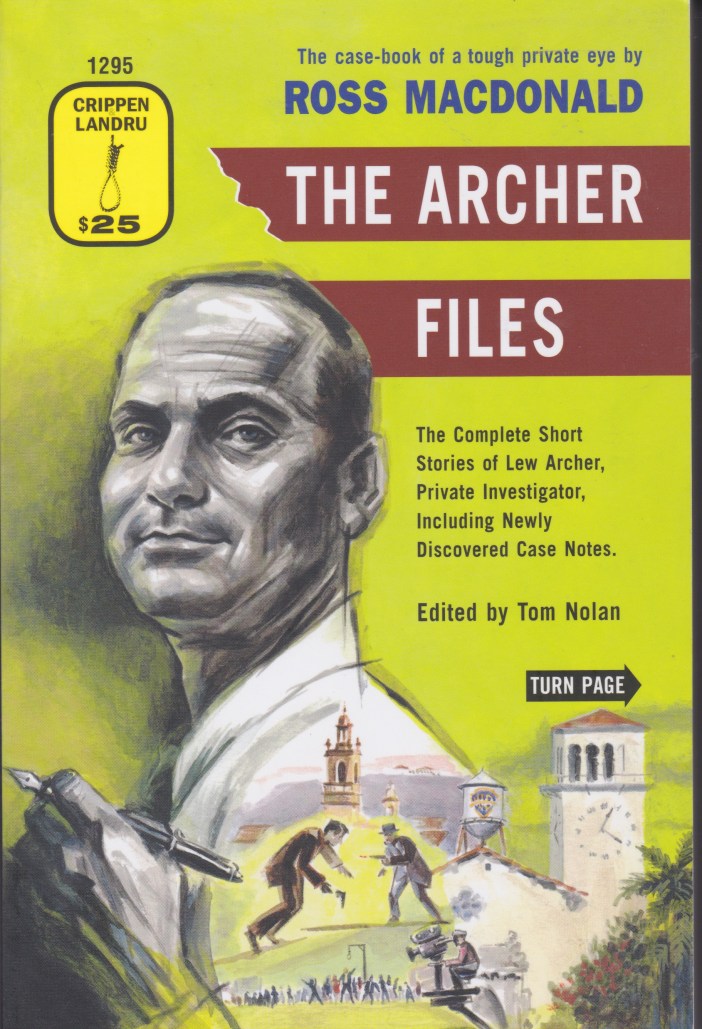
As for the Short Story Project, I may have mentioned sometime this week that I discovered a collection of Ross MacDonald short stories on my shelves that I’d forgotten I had, The Archer Files.  I read the first two stories in that collection this week. I came to MacDonald rather late in life; I became aware of him in the 1970’s, but his book covers, with their lurid scantily clad women and back cover blurbs that promised machismo and tough guy behavior, didn’t interest me. I didn’t start reading MacDonald until years later, when Christopher Rice recommended him on a panel we both were on. I’d come to love John D. MacDonald in the 1970’s, and so I decided to give Ross a whirl. I think the first one I read was The Drowning Pool, and after that, I was completely in on Ross MacDonald. I have also come to a great appreciation for the extraordinary talent that was his wife, Margaret Millar…I love to imagine what their dinner conversation was like.

the archer files

The two stories, “Find the Woman” and “Death by Water,” were not originally written or published as Archer stories; they were adapted and turned into Archer stories later, after MacDonald was dead and this was authorized by the estate. The stories work as Archer stories, which is really all that matters. I’ve not yet read any of his non-Archer novels, but some of them are in the TBR pile; I’ll be curious to see if there’s a stylistic difference, or a significant change in voice.

I sat in my brand-new office with the odor of paint in my nostrils and waited for something to happen. I had been back on the Boulevard for one day. This was the beginning of the second day. Back in the window, flashing in the morning sun, the traffic raced and roared with a noise like battle. It made me nervous. It made me want to move. I was all dressed up in civilian clothes with no place to go and nobody to go with.

Then Millicent Breen came in.

I had seen her before, on the Strip with various escorts, and knew who she was; publicity director for Tele-Pictures. Mrs. Dreen was over forty and looked it, but there was electricity in her, plugged into to a secret source that time could never wear out. Look how high and tight I carry my body, her movements said. My hair is hennaed but comely, said her coiffure, inviting not to conviction but to suspension of disbelief. Her eyes were green and inconstant like the sea. They said what the hell.

That is how “Find the Woman” opens, and what a great example of the hardboiled, noirish style of crime writing. Not a lot of words, not a lot of sentences, and yet we get a strong sense of Archer’s character, just out of the war and chafing restlessly at his new life and existence, and the danger inherent in Millicent Breen. She is beautiful, older, sexy and dangerous; she wants Archer to find her daughter, a movie starlet who has disappeared, and this leads Archer into the  dangerous world of movie stars and film people, of love gone astray and a slightly sexist depiction of restless women who might love but need someone in their bed every night. I enjoyed it, not only as an example of the writing style but as a time capsule; it was easy to picture this in black-and-white, with Bogart as Archer and maybe Myrna Loy as Millicent Breen.

He was old, but he didn’t look as if he were about to die. For a man of his age, which couldn’t have been less than seventy, he was doing very well for himself. He was sitting at the bar buying drinks for three young sailors, and he was the life of the party in more than the financial sense. In the hour or so that I  had been watching him, he must have had at least five martinis, and it was long past dinner time.

“The old man can carry his liquor,” I said to Al.

“Mr. Ralston you mean? He’s in here every night from eight to midnight, and it never seems to get him down. Of course some nights he gets too much, and I have to take him home and put him to bed. But next day he’s bright as ever.”

And so begins “Death by Water.” Again, note the writing style; the sparse use of words to get a point across, the inherent toughness in the words chosen and how they are put together. Mr. Ralston ends up dead later on, of course; drowned in the swimming pool, and Archer is on the case. It’s a great little crime procedural, with Archer taking mental notes as he talks to witnesses and the people involved, and once the case is actually solved, it’s pretty clear that the solution was right there in front of our faces all along. Well done!

And now, back to the spice mines with me. Paul’s going into the office, I have some errands to run, and we’re going to go see I, Tonya tonight; I intend to do a deep, overdue cleaning of the kitchen today as well, around writing and editing.