Generic Jingle

Phyllis A. Whitney is one of my all-time favorite authors.

I first discovered her, as Constant Reader is probably already aware, when I was a kid looking for mysteries in the school library. I distinctly remember that day in the fourth grade when I found The Mystery of the Hidden Hand on the shelves at the Eli Whitney Elementary School library; this was during my period of fascination with the ancient world (I was getting the Time-Life series Great Ages of Man; and had just gotten the volume Classical Greece). The description on the back of the book told me it was set in Greece, and had to do with antiquities and Greek history; that was all I needed and I signed it out. (I have, in the past, mistakenly identified The Secret of the Tiger’s Eye as my gateway drug into Whitney’s novels; I remembered incorrectly.) I enjoyed the book tremendously; I returned it and checked out The Secret of the Tiger’s Eye. I went on to read many of her children’s mysteries; she won two Edgars for Best Juvenile and was nominated twice more. After we’d moved to the suburbs, Signet started reissuing her children’s mysteries, and I started buying them at Zayre’s: The Mystery of the Angry Idol, The Secret of the Spotted Shell, The Mystery of the Black Diamonds, The Mystery of the Golden Horn, The Mystery of the Gulls, and numerous others. (I started collecting them again as an adult, thanks to eBay.)

I won’t tell the story again of how I rediscovered Whitney as a romantic suspense writer for adults; I’ve told that story any number of times, and I read almost everything she wrote for adults–but with The Ebony Swan I noted a decline in the quality of her writing, and never read anything she published after that. (I do intend, at some point, to read the ones I’ve never read–it’s the completist in me.)

ea0a5236e1de7732223993bee68f37c8

Cunningham’s department store is quiet again now. Sylvester Haring still puts his head in the door of my office whenever he goes by, to call out “Hi, Linell!” and perhaps to linger and study the pictures on my walls, to speak briefly of the past. But his days are given over to the humdrum of catching shoplifters and petty thieves, instead of trailing a murderer.

He never mentions that one picture we hunted down together, or the tragic denouement to which it led. But now and then we cock an eyebrow at each other because we are conspirators and know it.

Not that the law was in any way defeated. Payment in full was made for all those terrible things that happened. But still, Haring and I know what we know and the case as it broke in the papers told only half the story.

There are still things about Cunningham’s that make me shiver. I can never cross that narrow passageway that leads past the freight elevators into the display department without a feeling of uneasiness. I cannot bear the mannequin room at all, and I will go to any length to avoid setting foot in it. But most of all I am haunted by the symbols that came into being during the case.

The color red, for instance. I never wear it anymore, because it was the theme of those dreadful days. It ran beneath the surface of our lives like a bright network of veins, spilling out into the open now and then to accent with horror. And there are the owls. Sometimes in my dreams that eerie moment returns when I stood there in the gloom with all those plaster creatures crowding about me, cutting off my escape.

Nor will I ever again breathe the scent of pine without remembering the way the light went out and those groping hands came toward me. Strange to have your life saved by the odor of Christmas trees.

But the worst thing of all is when I imagine I hear the strains of Sondo’s phonograph. For me, those rooms will never be free of ghostly music and I break into cold chills in broad daylight whenever a radio plays Begin the Beguine.

And while there are some romantic aspects to The Red Carnelian, it’s probably one of the least romantic suspense-like novels she published (Skye Cameron, The Quicksilver Pool, and The Trembling Hills were not mysteries, at least not that I recall; but they were also early in her career and once she hit her stride, she became enormously successful). It’s a straight-up murder mystery, told in the first person point of view of Linell Wynn, who works at Cunningham’s Department Store on State Street in Chicago, writing copy for advertising posters, ads, and so forth. When the story opens, the entire store is on edge, because the window display manager, Michael “Monty” Montgomery, is returning to work that day from his surprise honeymoon; he and Linell had been a thing before his sudden elopement caught everyone by surprise. He’d married Chris Gardner, whose father Owen ran the luxury floor–the 4th–evening gowns and jewelry and furs. Linell claims that she and Monty were cooling things off when he suddenly eloped; I’m not entirely convinced that’s not something she claims to salvage her damaged pride. Naturally, later that day Monty is murdered, and of course, Linell finds the body; a fact which she, on the advice of Bill Thorne (one of the store’s vendors) keeps quiet from the police. He was killed near one of the window displays, by a golf club; Linell found the broken end of it in the window before she finds the body and put it back in the golf bag, thus handling the murder weapon. She also finds a piece of stone, a red carnelian, in the window display and puts it in her smock pocket and forgets about it.

Linell, of course, immediately becomes suspect number one–but it doesn’t take long for her, her store detective buddy Sylvester Haring, and new love interest Bill (who she does suspect from time to time) to find out almost every single person working in the store who’s a character in the book has a reason for hating Monty and wanting to see him dead. Linell of course also finds herself targeted from time to time by the killer–who never actually kills her (obviously)–as she sort of starts figuring out the who’s and what’s and why’s of the story.

It’s quite a good read; the characters are very well fleshed out, and the writing itself is pretty good. Whitney always wrote in a more Gothic style, in her books for adults; a style that seems a little dated now as well but still manages to hold your interest. I also would imagine a teenager reading the book today would have to look up what a “phonograph” was–although its usage makes it fairly clear to me what it is; but of course I grew up with phonographs and vinyl records and needles and all the accoutrement that goes along with them.

I’d recommend it as a gateway to Whitney’s other, more romantic suspense type work; it works very well as a stand-alone cozy type mystery novel.

It’s A Sin

Ah, SIN.

The human concept of sin is something that has alays fascinated me; as does the societal distinction that sin isn’t necessarily a crime. Adultery, after all, made the Top Ten in the Bible; but adultery isn’t a crime, at least in our country. Maybe I’ve been reading too much medieval plague history, but as a result the entire concept of sin v. crime has been running through my head a lot. We also always tend to speak and think of historical as being more religious and superstitious than our modern, “rational” time; which is why when the religious superstitions start finding their way out of the woodwork, people are always surprised. I’ve seen that a lot, actually, since 2008; the surprise of people who were just now noticing that much of organized religion is steeped in bigotry propped up by skillful, selective usage of their “holy” book while ignoring the parts that do not prove their bigotry and ignorance as holy. I’ve been toying, since the start of this current pandemic and the beginning of my own plague readings, with a story called “The Flagellants,” based on an idea obtained from rereading Barbara Tuchman’s A Distant Mirror and it’s plague chapter–about a movement of religious fanatics who believed God had sent the plague as a punishment for mankind’s sin (as fanatics have always believed in divine punishment as long as they have believed there are gods in the sky), and marched through the streets praying and repenting loudly while flogging themselves; their theory (if one can call it that) was that they were representing mankind’s penitence to God and therefore their behavior was intended to get God to take the scourge away. This set me to thinking about that Christian group that loves to show up here in the Quarter during Southern Decadence and Carnival to loudly tell us all, through megaphones and over amplifiers, that we are all sinners that need to repent and find our way back to the Lord, and wondering why they weren’t parading through the streets of the Quarter, doing something similar. (Their faith isn’t as strong as they would have us believe, apparently.) And so I started writing said story, but wasn’t really sure where to take it…I have some ideas; hopefully this weekend will help me sketch some of those ideas out.

Ah, sin.

A three day weekend is always a delight; I’m of the mind that every weekend should be three days rather than two. It generally takes me one day to rest and recover from the weekend, which is when I do my errands and clean and so forth, and then I am centered enough and rested enough (after two good night’s sleep) to get some work done on Sunday. With a three day weekend, that gives me an extra day to simply focus on writing. Naturally, of course, if every weekend was a three day weekend it would eventually prove also to not be enough time for me, I suppose, and so probably best to leave things as they are and simply enjoy those weekends when they come around. I have some plans for today; primarily a grocery run and perhaps a trip to the gym, along with some cleaning and organizing and perhaps some writing/brainstorming.

We continue to enjoy The Great on Hulu; I do recommend it, it’s very entertaining if not always the most historically accurate–and as I have stated many times, when it comes to television or film adaptations of actual historical events, accuracy inevitably goes out the window (the most egregious example of this being The Tudors. By combining Henry VIII’s sisters Margaret and Mary into one person, and then having her die without children, they essentially erased not only the Brandon/Grey line–no Nine Days’ Queen Jane Grey–but also the Scottish Stewarts; so no Mary Queen of Scots or any of the royalty since the death of Elizabeth I); and complaining about historical inaccuracies in fictional representations of actual history is low-hanging fruit, as it were.

I also want to finish reading Phyllis A. Whitney’s The Red Carnelian, and I’ve also started rereading a book from one of my favorite kids’ series, the Ken Holt mysteries by Bruce Campbell. The Ken Holt series is always neck and neck with The Three Investigators as my favorite kids’ series; they are very well written, action-packed, and well plotted as well; with a kind of hard-boiled edge to them. The first book in the series, The Secret of Skeleton Island, (a title also used in The Three Investigators series) introduces us not only to our young hero but to the people at Global News (Ken’s father is a globe trotting reporter; his mother is dead, and since his father is gone a lot Ken is at a boarding school somewhere outside of New York; I always assumed it was up the Hudson valley but it may have actually been Long Island), and how Ken meets up with, and basically is adopted into, the Allen family. I’m actually enjoying the book–and considering it was written for 9-12 year olds in the late 1940’s/early 1950’s, and it still holds up, is saying quite a bit. The fact these books never caught on or were as popular as, say the Hardy Boys, and have been out of print for decades, is disgraceful.

And on that note, I am going to head into the spice mines. Have a lovely Saturday, Constant Reader, and I look forward to speaking to you again this weekend.

IMG_1305

Happiness is An Option

I’ve always enjoyed a good mystery with a supernatural edge to it; the line between crime fiction and horror is often blurred. Take, for example, The Silence of the Lambs. It’s often lauded as the first horror film to win an Oscar–but there’s no supernatural beings involved, no ghosts or vampires, or anything like that; the protagonist is an FBI agent trying to catch a serial killer…so is it really horror? Are slasher films/books actually horror or crime? (I think it depends on whether or not the slasher is actually something not human–like Freddy Krueger and Michael Myers, or just crazed human killers, like the Scream movies or even the first Friday the 13th, which is the only one I’ve actually seen.)

But then it’s really hard to define and delineate what work falls into what genre; and oft-times, there’s crossover between the various ones–there’s western horror, for example, just like romantic suspense bridges the line between romance and mystery. So where precisely on the spectrum of genre does the work of Barbara Michaels lay? There are often supernatural elements to her fiction; sometimes there aren’t. Ammie Come Home is my favorite ghost story of the many I’ve read–and I enjoy it just as much every time I reread it–but it’s also a mystery, and there’s also some romance in the book. The romance itself is rarely the focus of her books, but it is there and cannot be ignored; likewise, most stories that have supernatural elements (ones that are actually supernatural in origin or man-made frauds) inevitably have some mystery to them; what do the supernatural forces want–or in the case of fraud, what are those who are committing the fraud after? What do they want?

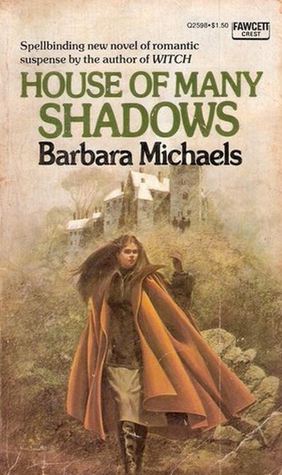
House of Many Shadows was the second Barbara Michaels novel I read, and remains one of my favorites to this day.

2657164

The sounds bothered Meg most. Calling them auditory hallucinations helped a little–a phenomenon is less alarming when it has a proper technical name. Meg had always thought of hallucinations as something one saw. She had those, too, but for some illogical reason it was easier for her to accept visual illusions as nonreal than to ignore the hallucinatory sounds. When you were concentrating on typing a letter, and a voice says something in your ear, it was impossible not to be distracted.

The problem was hard to explain, and Meg wasn’t doing a good job of explaining. But then it had always been difficult to explain anything to Sylvia. Sylvia knew all the answers.

“The dictaphone was absolutely impossible. I couldn’t hear what Mr. Phillips had said. Voices kept mumbling, drowning out his voice. Once the whole Mormon Tabernacle Choir cut out the second paragraph of a very important memo.”

She smiled as she spoke. It sounded funny now, but at the time it had not been at all amusing.

Sylvia didn’t smile. “The Mormon Tabernacle Choir? Why them?”

Meg shrugged helplessly. “No reason. That’s the point; they are meaningless hallucinations. The doctor says they’ll go away eventually, but in the meantime…Mr. Phillips was very nice about it, he said he’d try to find an opening for me when I’m ready to work again, but I couldn’t expect him to keep me on. I had to listen to some of those tapes three times before I got the message clear, and there was always the chance I’d miss something important. And I’d already used up all my sick leave. Three weeks in the hospital…”

“You should be thankful you weren’t killed,” said Sylvia. “To think they never caught the man who was driving the car! New York is an absolute jungle. I don’t know how you can stand living here. May I have another cup of tea?”

Meg poured, biting back an irritated retort. She couldn’t afford to offend Sylvia, especially now, when she was about to ask a favor, but the cliches that were Sylvia’s sole means of communications had never annoyed her more. Why should she be thankful she hadn’t been killed? She might as well be thankful she didn’t have leprosy, or seven-year itch; or thank God because she had not been born with two heads. It was just as reasonable, and a lot more human, to feel vexation instead of gratitude. Why me, God? The old question, to which there was never any answer…Why did it have to be me in the path of that fool driver; why did I have to land on my head instead of some less vulnerable part of my anatomy; and why, oh, why, God, did Ihave to have these exotic symptoms instead of a nice simple concussion? Why do I have to be the poor relation, with no savings to fall back on, while Sylvia…

Sylvia’s close-set gray eyes were intent on the teapot. “Such a nice piece of silver,” she murmured.

I love Barbara Michaels’ work, and one of the happiest days of my reading life was the day I discovered she also wrote as Elizabeth Peters, which meant even more reading joy for me (and eventually, I came to prefer the Peters books to the Michaels; but make no mistake, I love all the books). The set-up for House of Many Shadows is right there in the beginning; poor Meg’s life has been upended by being hit by a driver who didn’t stop, and because of the hallucinations she suffers from as a result–with no idea of how long she will suffer through them–she is unable to work, and her distant relative Sylvia–whom she doesn’t seem to care much for–is her only hope. Sylvia–we all know people like Sylvia; without a sense of humor and whose response to any crisis is to come up with a plan and make it work–has a house in the Pennsylvania Dutch country, she’s not sure what she wants to do with it, but Meg can stay there rent-free, and Sylvia even comes up with a “make-work” solution so Meg won’t feel like she’s freeloading (it isn’t until much later she realizes that is what Sylvia was doing; at the time she kind of resents it); doing an inventory of the contents of the house and its attic, as Sylvia is thinking of donating the house to the local historical association. Sylvia’s stepson from the previous marriage that wound up with her owning the house is living on the property as a caretaker, in a cottage behind the main house–Meg remembers him from their childhood as a horrible tease she couldn’t much stand–and soon she is off to the wilds of the Pennsylvania country side.

At the end of the second chapter-the first after she arrives at the house–Meg experiences a hallucination in front of Andy, the stepson, and their relationship hasn’t changed much, apparently–which rattles Andy terribly; when it happens again a chapter or so later is when Andy confesses that he, too, has seen the same hallucinations she did–so are they hallucinations? Or are they seeing ghosts?

This set-up, of course, is absolutely brilliant: what better heroine for a supernatural story than a woman who’s had a brain injury that causes her to see hallucinations? The chilling touch that Andy has also seen the same hallucinations in the house that she has is terrifying; and as she slowly gets to work in the attic, she and Andy start discovering things about the history of the house, including the fact that the original property owners, back before the American Revolution, were brutally murdered in the original house that stood on the property; the current one was built over it. So, what happened 250 years earlier? Both Meg and Andy become a bit obsessed with the ancient murders, and as they continue to see things in the house, they slowly but surely start putting together the truth of what happened to the original property owners–while falling in love, of course.

One of the great things about the Michaels books is that she brooks no foolishness with her supernatural elements; it’s clear Dr. Mertz (her real name) was well read on the subject of the occult and other belief systems–they pop up, again and again, throughout the Michaels novels, and in many instances, I first heard of certain occult books and cults from reading them. I know I first read of The Golden Bough in a Michaels novel; Dr, Mertz knew her folklore and occult religions, and made very good use of that knowledge, not just in this book but in others–Prince of Darkness comes to mind–and of course, she was an excellent, excellent writer.

House of Many Shadows also holds up; despite the dated quality of the book–no Internet or computers or cell phones–it’s still a great story.

Home and Dry

And here we are at Friday once again. Lovely, isn’t it?

Yesterday I had a massive breakthrough on the Secret Project; I found the character’s voice and precisely how to write the opening. I also immediately realized that the plot I was planning on recycling here doesn’t necessarily work as easily as I might like, and then I realized precisely what the story was. I even wrote a few paragraphs, and as I wrote them the characters began taking form in my head; I could hear her voice and I knew exactly who she was.

It was such an enormous relief; I am always terrified that the “Eureka!” moment will stop coming to me and the well will, finally, once and for all, run dry. I don’t know if other authors worry about things like that–but it happens whenever the work isn’t coming well for me, and it affects my moods and everything else, every other aspect of my life–and not in a positive way. You’d think by now I’d recognize all the symptoms of the work not going well, and the subconscious worry involved; the restless sleep, the exhaustion, the grouchiness and deepening of my auto-pilot snarkiness, and the lackadaisical approach to everything else in my life. It always means the work isn’t going well and I am starting to get worried about it deep inside the inner recesses of my psyche–and it’s always such an enormous relief when the breakthrough comes and the sun begins to shine again after the dark night of the soul.

We had a horrific thunderstorm last night before I went to bed–long lasting rolls of thunder that seemed to never end. I could feel the pressure change, and I also knew that the combination of thunderstorm at bedtime and writing breakthrough meant I would also sleep deeply and well and restfully. Apparently, the surrounding parishes flooded and still have standing water this morning. Yikes! But it also meant that I slept well, which was good for me if horrible for the poor people impacted by the downpour.

I finished reading House of Many Shadows yesterday. I had a doctor’s appointment that was a bit of a clusterfuck (I won’t go into the details here, but I’ll leave it at I didn’t see the doctor today), and afterwards I ran a few errands. Once I was home–it did sprinkle on me during the errands, but I was able to get everything out of the car and into the house without being rained upon; I don’t think it ever did much more than sprinkle, but once the groceries were put away, I relaxed in my easy chair and finished reading my book. I was much closer to the end than I thought I was, and immediately after I started another reread, The Red Carnelian by Phyllis A. Whitney; the book originally published as Red is for Murder. It was Mrs. Whitney’s first novel for adults, and was more of a straight-up mystery than the novels that took her to the top of the New York Times list and to the pinnacle of success. I thought of it because of an odd thing; someone–Scott Heim, perhaps?–had posted a link on social media to an article about a cafe or restaurant that was seating mannequins in the dining room to help with social distancing as well as make it seem less empty; it reminded me of a truly terrifying scene in this book (as I remember it) that takes place in a darkened room filled with unused mannequins; the heroine is alone in the room with the killer. I’ve never quite been able to not see mannequins as something terrifying ever since. The book is set in a large department store in Chicago; which I also thought was an interesting setting for a mystery novel. (I came up with an idea for a soap built around a department store dynasty, back in the days when I wanted to be a soap writer; it was probably born of reading this book. Now that I think about it more, my “soap” was also set in Chicago. Hmmm. Well, if you’re going to steal, steal from the best.)

And on that note, tis back to the spice mines with me. Have a lovely Friday, Constant Reader!

IMG_1029

I’m In Love with a German Film Star

Thursday morning, how you doing?

So New Orleans is slowly beginning to open up this Saturday morning–I’m kind of skeptical, quite frankly, but at the same time, I’m also kind of happy that my gym will be open again. Yes, I’m that shallow gay man. But I had really gotten into a groove working out before the country shut down for the first time in over ten years, and my body was actually responding to it. So, yes, I’ll put on my mask and go to the gym, cleaning everything before and after I use it, and try to maintain distance from people as much as I can.

Does that sound selfish? Now that I’m putting it own into words, it kind of does.

And of course, the irony of catching a potentially lethal virus while working out to be healthier does not escape me.

But I’ve tried to maintain some sort of exercise; taking walks, stretching every other day, and when I’m feeling particularly ambitious, some crunches and push-ups. And the fact that I’ve missed going to the gym, and am anxious to get back to it, is a good thing, right? And yet at the same time, I can’t help but feel maybe I’m being stupid? Ah, the conflict and inner turmoil! I can also be smarter about this, too–going when there isn’t as many people there, for one, and determining whether I feel it’s safe or not to go ahead and work out after getting there and seeing how many people are there and so forth. I suspect with the gym opening up it’ll be similar to January–always crowded at first as people try to stick to their resolutions and then gradually tapering off to normal. I don’t know, I’m really torn. While continuing to do my best while at work to reduce my risk of exposure, is it really smart to be at risk for exposure while at work and then go to the gym?

Well, I have until Saturday to figure it all out and decide.

I slept really well last night, probably the best night’s sleep I’ve had in ages, frankly, and it was lovely. I am still a bit groggy this morning, but that good groggy feeling from sleeping well and wishing I could have stayed in bed a lot longer this morning. I was tired yesterday; and hopefully that will carry over into another good night’s sleep tonight. One can hope, at any rate. But the coffee is tasting particularly good this morning–another sign that I’m still groggy–and I have to leave work early today because I have a doctor’s appointment this afternoon, after which I’ll run some errands before heading home.

I almost finished reading House of Many Shadows last night–I am, according to my Kindle, about 85% finished with the book, so it shouldn’t be an issue to finish reading it tonight. I am also now wondering what I should reread next. I was leaning toward another Mary Stewart–Madam Will You Talk?–but I’ve reread a lot of Mary Stewarts since beginning the Reread Project (each of which was a gem and a total pleasure to reread), and perhaps it’s time to move on to another writer for now, and save the Stewarts for later in the year? I do have an awful lot of Phyllis Whitneys on my Kindle, as well as some other terrific books I would love to reread–there’s also some Agatha Christies, including one that never gets talked about much but was always a favorite of mine, The Man in the Brown Suit–and there are any number of others as well.

Paul was working on things last night, so I watched One for the Ages, the ESPN 30 for 30 documentary recapping LSU’s 2019 football season (I still can’t believe how amazingly good they were; better than my wildest dreams for an LSU football season) and then they replayed the national title game between LSU and Clemson. And no, I wasn’t really watching the game again, it was just on for background noise while I read. (I will admit to having watched it again more than once, but primarily skipping the parts when Clemson played well and scored; while I was doing my data entry yesterday in my easy chair I played through the games with Florida and Alabama on Youtube)

I am also hoping to get back to work on the Secret Project tonight. It took me awhile, but I think I have a better way to open the first chapter than the original way I had.

And on that note, tis back to the spice mines with yours truly. Have a happy Thursday, Constant Reader!

IMG_0998

I Don’t Know What You Want But I Can’t Give It Anymore

And so it is now Wednesday, and we’re already about halfway finished with this week. Isn’t that lovely? Of course, I always hear my mother’s voice in the back of my head whenever I say things like that–you know you’re just wishing your life away when you do that–ah, my mother. Someday I’ll stop hearing her voice in my head.

Although I still do and am staring down fifty-nine this year, so chances are that voice is never going to get out of my head.

We finished watching Little Fires Everywhere, and I have to say, Reese Witherspoon makes a terrific villainess. It’s extremely well done–the writing and acting are top notch–and it really is amazing what you can do with a soap-opera style plot with strong writing and an excellent cast and good directing. As I watched, I couldn’t help thinking what a great Abby Reese Witherspoon would make in a reboot of Knots Landing. But I do encourage everyone to watch. It’s a terrific show, Kerry Washington is also fantastic, as are all the young actors playing the teenagers, and while it reminded me some of Big Little Lies, it’s a completely different plot and a completely different story–although the character Witherspoon plays is remarkably similar in both (although in Big Little Lies she never went completely to the dark side the way she did in this). It also handles class and race and gender issues over the course of the story, showing that it can be done–and done well–with the right creative team in place, particularly if they are committed to properly handling the issues.

Now I think tonight we’ll go back to Gold Digger–I think the next two episodes dropped Monday–and see if it continues to hold our interest as well.

I slept deeply and well last night. I woke up at seven this morning, and was actually awake, but chose to lightly nap in bed for another hour because the bed felt so relaxing and comfortable–plus, I wasn’t really feeling the day, you know? The longer I stayed in bed relaxing the longer I could put off dealing with anything this morning. Not that there is anything I don’t want to deal with– as I am particularly fortunate in that nothing I have to deal with is terrible; I just get lazy periodically–which is why being described as hard working or prolific amuses me endlessly. Granted, I hold myself to a much higher standard than perhaps I should; on the other hand, sometimes I think I wouldn’t get nearly as much done if I were easier, and kinder, on myself.

I also started rereading House of Many Shadows by Barbara Michaels this week, and I am now getting to the meat of the story; all the characters are in place, in the enormous house in the Pennsylvania countryside; it’s established that Meg, the heroine, has been in a car accident that caused some sort of brain damage which causes her to have either visual or audial hallucinations; the caretaker of the place is the owner’s stepson, whom she knew when they were children and didn’t like each other; and the previous tenants were evicted and not happy about it. It’s interesting–I’ve been very careful with Bury Me in Shadows to not mimic Barbara Michaels, and yet…in rereading this one I realize how incredibly similar the set-up of my work-in-progress is to this particular Michaels novel. Not that I’m plagiarizing her by any means, and there are only so many story situations and set-ups one can come up with; but similar enough for me to be a teeny bit concerned.

And now, back to the spice mines.

IMG_1023

DJ Culture

Ah, Kansas.

I only spent five and a half years there, and yet somehow, it more shaped my psyche and who I am than the years as a child in Chicago or the four and a half years in its suburbs; even more so than the eight years spent in California. I’m not entirely sure why precisely that is, but it’s true. I think perhaps it’s because it was there I really and truly started writing, and started seriously thinking that my both life and career were going to be about writing. By the time we took the 1:30 a.m. train out of Emporia for California, my identity as a writer was firmly fixed in my head; when I stepped off the train into the California sunshine, I knew I was going to be a writer someday, somehow, some way.

And when I lived there, in Kansas, I wasn’t really aware of other Kansas writers. (I also wasn’t aware of other gay people there, either.) Now, of course, I know Sara Paretsky is a Kansan, along with Nancy Pickard and Kay Kendall and Lori Roy; I don’t know if Scott Phillips is a native, but he writes about Kansas. Alafair Burke grew up in Wichita.

And of course, there’s Scott Heim.

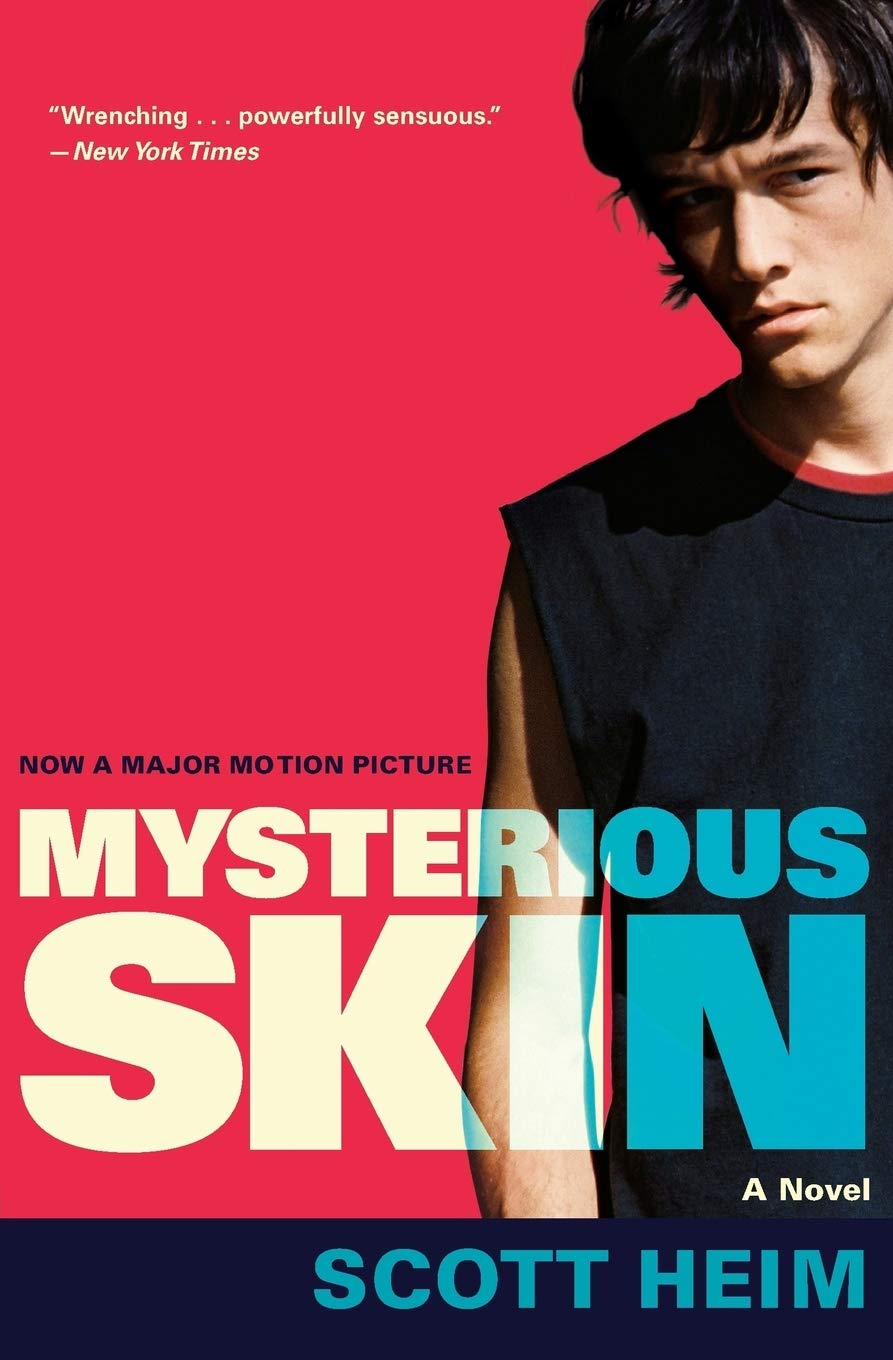
I recently read a novella by Scott, “Loam”, which was really good, and it put me to thinking about Mysterious Skin, the first of three novels he published, and alas, the only one that I’v actually read. I read it back in the late 1990’s, methinks, when I was scrabbling around trying to get caught up on gay lit and read as much of it as I could. I also saw the film (I’ll watch anything with Joseph Gordon-Leavitt in it, quite frankly), and while I have met him and spent a little time with him, and we follow each other on both Facebook and Twitter, I don’t know that I would safe in referring to him as a friend, I do consider him an acquaintance of whom I am very fond. He’s quite witty on social media, and I admire his skill as a writer…so I thought I should take a reread whirl with Mysterious Skin. 

I also wanted to read it as a dark crime novel, borderline noir; I was certain the story would hold up, but since Mystery Writers of America classifies it’s definition of a mystery as writing about the commission, solving, and/or aftermath of a crime….while it can be a stretch, Mysterious Skin kind of fits into that broad definition. Laura Lippman thinks we need to stop claiming literary works, like Crime and Punishment and Sanctuary as crime novels; but I honestly believe Sanctuary absolutely and positively is a masterwork of literary noir; the line between “Southern Gothic” and “crime fiction” is relatively tiny and there is a lot of crossover. Some of Flannery O’Connor’s work, definitely Southern Gothic, crosses over that fine line between literary fiction and crime.

I am not defining literary works, or works from other fields, as crime fiction to try to elevate crime fiction; it doesn’t need elevating to get respect, which was Laura’s point. Crime fiction deserves respect because it is good, and those who dismiss sneeringly as genre need to remember that literary fiction is just as much a genre as anything else.

As Nevada Barr said, “It’s either mystery or romance or just plain boring.”

6132sc9ejNL

The summer I was eight years old, five hours disappeared from my life. I can’t explain.  I remember this: first, sitting on the bench during my Little League team’s 7 P.M. game, and second, waking in the crawl space of my house near midnight. Whatever happened during that empty expanse of time remains a blur.

When I came to, I opened my eyes to darkness. I sat with my legs pushed to my chest, my arms wrapped around them, my head sandwiched between my knees. My hands were clasped so tightly they hurt. I unfolded slowly, like a butterfly from its cocoon.

I brushed a sleeve over my glasses, and my eyes adjusted. To my right, I saw diagonal slits of light from a small door. Zillions of dust motes fluttered through the rays. The light stretched ribbons across a cement floor to illuminate my sneaker’s rubber toe. The room around me seemed to shrink, cramped with shadows, its ceiling less than three feet tall. A network of rusty popes lined a paint-spattered wall. Cobwebs clogged their upper corners.

My thoughts clarified. I was sitting in the crawl space of our house, that murky crevice beneath the porch. I wore my Little League uniform and cap, my Rawlings glove on my left hand. My stomach ached. The skin on both wrists was rubbed raw. When I breathed, I felt flakes of dried blood inside my nose.

Like some of the best crime novels, Mysterious Skin is about survivors of a trauma, and the different ways people react to suffering through trauma. It actually isn’t a stretch to call it a crime or mystery novel; the central story is trying to determine what happened to Brian Lackey when he was seven years old and lost five hours of time. Brian at first becomes obsessed with UFO’s and alien encounters, as those are the only places he can find where other people also lost time; so he becomes convinced that he was kidnapped by a UFO and experimented on; all the evidence, such as it is, certainly points to that. The other boy, Neil, had a sexual relationship with his Little League coach, which he believed was consensual and that Coach loved him; as he grows up he becomes a hustler, tricking with johns cruising a park in Hutchinson (all these small cities in Kansas have/had gay cruising places; Emporia even had one) and eventually moving away to New York, where he continues hustling. Neil’s trauma is actually even unknown to him; he’s convinced himself that he was special and that Coach loved him; their sexual relationship wasn’t perverse or perverted or anything wrong, but rather based in love and consent; his own memories are very clouded, and as a young adult hustler he finds himself drawn to older men, much like Coach was.

It’s very definitely a literary novel, make no mistake, but it is, at heart, a novel about a crime and the trauma that comes from that crime and its aftermath; which fits the definition of “mystery” that comes from Mystery Writers of America. I doubt very seriously the panel of judges for the Best First Novel Edgar the year this was released would have picked it as a finalist (which it deserved to be); the subject matter is hard enough for people to deal with, let alone the sexuality of Neil, who is essentially a teen hustler, getting paid by older men for sex.

Beautifully written with a sparsity of language that Megan Abbott or James M. Cain or Shirley Jackson would embrace; Heim chooses words carefully to evoke powerful images and emotions and realities in as few words as possible, and while some might think the ending a bit of a cheat, leaving the door open to many possibilities–I feel like he found the absolute perfect place to end his novel: Neil coming to realize that what he experienced with Coach wasn’t love (something he has been adamantly refusing to understand since it happened–that whole I’m different than the others thing so many children feel under those circumstances–I’ve known any number of gay men who had relationships with adults when they were very young and didn’t realize it wasn’t love until they aged out of their Lolita-like relationships) and Brian finally piercing through the veil his mind has hidden the truth from all these years because it was too much for him to handle…until he could handle it.

Mysterious Skin is also an incredibly powerful depiction of what it’s like to be grow up working class in a sparsely populated state like Kansas–the worries about money, the beater cars you keep coaxing more life out of, that college might not be an option, and there aren’t that many good jobs to be had–and what it’s like to grow up queer under those circumstances. At one point in the book Heim says something incredibly smart and true–about how the stuff that is hip and cool on the coasts takes about three years to get to the center of the country; which is something I learned very quickly when I moved to California and all of my clothes were dated and wrong and out of style.

This is a truly terrific book, and I encourage you to read it, if you haven’t already.

Electricity

Good morning, Tuesday, how it’s going with you, Constant Reader, on this lovely early May morning?

I sent out another story yesterday–why, yes, I am on a roll, kind of, thank you for asking. I could also easily go 0 for 4, which is certainly more likely than 4 for 4 (I know, I know, self-deprecation there, and yes, it’s a very hard habit to break but I am working on it).

Last night I managed to work througb some of my my computer frustrations. Apparently, at some point in the last few months or so, there was yet another Mohave update–I remember when it happened, and I didn’t install it, it somehow just happened–that rendered my flash drive unreadable or unworkable with Mac computers. Fortunately I have that shitty little PC laptop, which can still read it. So I then had to download a Cloud for PC app, which needed a Windows update to work, and–long story short, I found a backup to the flash drive from November backed up in the Cloud, and I honestly don’t think I worked on anything on the flash drive that wasn’t backed up to the Cloud already, so it was simply a matter of moving the working files from the back-up folder in the Cloud to the active area. An enormous pain in the ass, but there you have it–and I now have the files I need accessible. At some point I’ll be able to get that PC Cloud app working and save yet another back-up, but until then I am able to work with what I have, thank you.

Today is another early morning for me, but truth to be told, I’m pretty much starting to adapt to these mornings and they aren’t nearly as painful as they used to be. I’m actually getting rather used to this sort of 9 to 5 thing, which I never expected to ever happen in a million years. Last night I was home shortly after five, and had some time thus to work on these computer issues. And since it was May 4th, and Rise of Skywalker was newly available to stream last night on Disney, I decided to watch it again–more critically this time than when I saw it in the theater, and yeah. I enjoyed it on the big screen—I always enjoy Star Wars on the big screen, as a general rule, but when I was rewatching it, it seemed disjointed, poorly written and planned, and kind of all over the place. So, all those people who were so critical of it? Yeah, they were probably right, but this sequel trilogy didn’t “ruin my childhood” or anything; it was just disappointing on a rewatch. I’ll probably have some more thoughts about the whole thing later.

I also finished reading Scott Heim’s Mysterious Skin last night, and it really is quite a wonderful book. Reading it as a crime novel was an interesting take, and I think I can quite solidly back up my theory that it is, in fact, while a very literary book to be sure, a crime novel. It certainly is structured and written kind of like one, and the mood and tone of the book is very dreamlike yet terrifying, like Megan Abbott’s The End of Everything, which I think is a good companion book for Mysterious Skin. There will, of course, be a blog entry devoted to the book; I’m still gathering my thoughts about it and trying to order them in some way. Afterwards, I tried to find my copy of We Disappear, but couldn’t put my hands on it–even though I am absolutely positive I located it the moment I started rereading Mysterious Skin…it’ll turn up, I’m sure.

I also started rereading Mary Stewart’s Thunder on the Right, which has some rather razor-sharp wit going on in the very beginning, which immediately (to me) added to its charm, and drew me in already. I also remember Thunder on the Right as being a “lesser” Stewart novel–kind of like The Moon-spinners and This Rough Magic, both of which I loved on the reread.

Tonight we’ll probably go back to watching Defending Jacob; I was already watching Skywalker when Paul got home, and he just fell asleep while watching that–he also pointed out that he doesn’t remember watching it in the theater at all; which is really not a sign of a movie that resonated with the viewers, really–so tonight it’ll be back to Defending Jacob. Apple is really putting a lot of cash into their streaming service, a and there are certainly a lot of impressive names being put to work on their shows, so who knows? I also need to sign into my CBS app so we can start watching their All Access Star Trek shows, as well as the reboot of The Twilight Zone from Jordan Peele.

There’s really so much good stuff to watch–and that’s only the stuff I know about. We’ve stumbled onto so many good shows over the years that we’d not heard about, and of course, season 3 of Killing Eve is also up now.

And on that note, tis time to get ready for the spice mines. Have a most lovely Tuesday, Constant Reader, and I’ll talk to you later.

IMG_0858 copy

Footsteps

I wound up deciding to take yesterday off from the world–computer, social media, you name it–because for whatever reason my desktop was acting wonky yesterday morning and eventually I grew so irritated I decided to run my errands. When I got home from that further irritation–nothing like people not only not wearing masks in public but not maintaining social distance as well–and I just wanted to scream at everyone: “do you want us to be on lockdown through September? What the fuck is wrong with you?”

But then I remember–this is New Orleans and nobody follows rules here; or at least, they ignore them when they’re inconvenient. It’s sadly part of the charm here, and now that it’s something important…I see how dangerous that can be. But it was nevertheless more fuel for my irritation, and by the time I got home my computer was still wonky so I decided to say fuck it and take the day away from the computer and social media. It was kind of nice–I fell into a Youtube hole of history videos (I am really glad to be studying history again; as I’ve said before, I kind of wish I’d majored in History in college–but would have never been able to narrow down a field of majority interest). I spent most of the afternoon moving and rearranging books and filing and cleaning while this Youtube videos played on continually; I learned some more about the Byzantine empire, the plague, and the Hapsburgs–who are so fascinating to me. Let other wars, you, happy Austria, marry.  Someday I’d still like to do a book about the powerful women of the sixteenth century; and many of those important women were Hapsburgs.

One of the things I’ve found interesting is how writers are engaging with their lockdown situation and their social media. Lists are popping up everywhere; and as I daydreamed yesterday while doing my chores and so forth, I started thinking about my own lists–rather than ten albums or books or movies that shaped me, I wanted to come up with more specifics: My Ten Favorite Agatha Christie novels, my favorite romantic suspense novels, my favorite crime novels by women, and so on. The reboot of Perry Mason, coming this summer from HBO (it looks worth a look, frankly; although I imagine there are any number of Mason purists who will naturally hate it; there always are), might be worth taking a look at some Perry Mason novels–I feel the books don’t get nearly as much attention as the TV series based on them; and the books don’t get talked about nearly enough, either. Talk about puzzles–Erle Stanley Gardner was a master of crime plotting, and red herrings, and confusing the reader; I don’t think I ever correctly solved a Perry Mason case until Perry revealed their identity, dramatically, in the court room (which is, of course, where that trope originated); and I do have a couple of them lying around on the shelves in the laundry room–The Case of the Calendar Girl and The Case of the Crying Swallow–so perhaps, as part of the Reread Project, I should revisit them both.

I also spent some time thinking about The Plot Against America–which is directly related to our finishing Ryan Murphy’s Hollywood last night on Netflix. Both are alternate histories, but one of the things about Hollywood is that it was an alternate history that was actually appealing; usually, alternate histories inevitably paint an uglier reality than the one that actually happened (although it’s hard to imagine a more dystopian alternate history for the present day than the actuality); Hollywood didn’t do that. Instead, it showed how horribly racist, homophobic, and misogynist the country was, and how Hollywood reflected that…and then gave us a lovely alternate history where a Hollywood studio saw its duty to change those things and open up society in the late 1940’s. It’s quite marvelous, actually; I kept waiting for reality to break over them, but it never did. It’s very well done, and it’s shot in the style of Hollywood films of the time, right up to the obligatory happy Hollywood ending. And of course, the boys were beautiful. The Plot Against America, on the other hand, was completely horrifying because it was so easy to imagine that we as a country could have gone that way. I don’t know how the novel ends–I never finished it; I have said before that I am not a fan of Roth and I never got past the first chapter of this one–but I thought the way the show ended was perfect, even if it was terrifying at the same time; it was more of an indictment of the United States (as I said to Paul, “this show is terrifying because it could so easily have gone this way here”) and humanity than anything else.  Hollywood also could be seen as an indictment of the way things used to be–its message seemed to be this could have all changed so much earlier if anyone in Hollywood had the courage to make these changes–and that is just as damning as The Plot Against America.

Today I am going to write and edit and revise and get things done. I think I am always teetering on the edge on Saturdays anyway; still leftover tired and so forth from the week, and then having to deal with the general public on top of that is always draining and rough on my moods. Computer issues on top only heightens the aggravation, and being already on the razor’s edge doesn’t make it any easier. I kind of have a mess here in the kitchen that needs to be handled–I deliberately avoided my desk yesterday, so there’s sorting and filing that needs to be done around here as well–but this morning, after I finish this, I am going to abjure to my easy chair and read for a bit. I want to get further into Mysterious Skin, and then I am most likely going to move on to another Mary Stewart reread, either Thunder on the Right (which I don’t remember at all) or Madam Will You Talk?, which I have some memory of; and there are also short stories I’d like to sink my teeth into. I haven’t touched the most recent Lawrence Block anthology, which looks terrific and has some amazing contributors. I want to get my story “Night Follows Night” revised today and possibly submitted somewhere; I’d also love to get some revisions done on “This Thing of Darkness” and “Never Kiss a Stranger.”

And of course, the Secret Project. I really need to get back to work on the Secret Project.

So, yes, I have my work cut out for me today. I also should spend some time drafting the replies to the massive amounts of emails I’ve accumulated over the last day or so. And then I feel like I can face Monday with a clear conscience.

Have a lovely Sunday, Constant Reader. I plan to.

IMG_0822

Before

As Constant Reader is no doubt aware, I’ve been worried recently about my inability to sit down and write. I’ve done some writing, of course, in drabs and dribs here and there; applauding myself for getting as many as a thousand written in a day–which is a major drop off from what I used to be able to manage, pre-pandemic, although I must confess it’s been quite a while since I’d had one of those days before the world shut down. But I am very pleased to report–despite innumerable, continuous frustrations with my computer and its inability to function properly (thank again, Apple Mojave update; may your code-writers burn in hell for all eternity without respite or mercy)–that yesterday I managed to not only write, but I put down over three thousand words in slightly more than an hour and finished the first draft of the Sherlock story–thank you, baby Jesus–and now can let it sit for a while before I revise it again. It’s very rough, and probably more than a little bit jumbled, but I have it done and with a few reminders this week of Doyle’s style, I should be able to get it finished and turned in on time.

Huzzah!

I cannot tell you how nice it felt to get three thousand or so words down in such a short period of time, Constant Reader. It’s nice to know those muscles haven’t atrophied, and are still there when I need to call upon them. I’m also really glad to have the story draft finished; regardless of how good or bad it might be, it’s lovely to have a draft done so I can revise it and fix it at leisure during the last few days (eleven, actually) before the deadline hits. It’s caused me so much stress, quite frankly, and I am so relieved to know that I can still write, and my usual amount at that, even during a pandemic with all these additional stressors and irritants going on. And believe you me, there are plenty of those enough to go around.

I did start rereading Mysterious Skin again yesterday afternoon–after finishing the story, doing a load of dishes, folding clothes, and straightening the kitchen–and I am totally loving it. It’s weird–I do remember reading it before; I distinctly remember the cover, with pieces of cereal scattered across it, but I don’t remember actually reading it. I also remember the story, but mostly from the film. The reason I am finding it strange that I don’t remember reading it before (and to be fair, I didn’t remember a lot of things in the books I’ve reread in the Reread Project so far–I didn’t remember that there was a living mummy in Crocodile in the Sandbank; I thought the dolphin rescue was in Mary Stewart’s The Moon-spinners but it was actually in This Rough Magic; I didn’t remember there being a love interest in Nine Coaches Waiting…etc. etc. etc.) is because it’s resonating with me as I read it; I was a teenager living in Kansas during the time the book is set; I’d been to the state fair in Hutchinson; I’ve been to Pretty Prairie and I’vve even been through Little River, and the way Heim describes the countryside–it’s like being there again. Maybe when I first read the book I was still compartmentalizing my past; I used to do that quite a bit, shutting the door on painful memories of a deeply unhappy past, and lately I’ve begun unpacking all of those memories a bit more–not sure why, but that’s a subject for another time. But I am enjoying the book a lot, as I thought I would, and am really looking forward to getting deeper into it.

And reading it is making think about my own novel, Sara, to date the only novel I’ve published that is set in Kansas. Maybe I should reread some of my own work for the Reread Project? There’s quite a bit about my old books I honestly don’t remember–and I really should start keeping a list of my character names, at the very least. I think when I started up on the Kansas book again a few years ago, I had reread Sara and was horrified to realize I was using the exact same character names I’d used in it; in fairness, those character names have been hanging around in my head since I wrote my first novel forty years ago–the terribly written, highly cliched, trite handwritten manuscript that no one will ever see because I am not going to include it in my papers, should I ever get my shit together and get those donated–and I always recycle from unpublished work. I just started writing about Kansas and of course those names popped out–and so later, when I went back to work on another Kansas book those names popped right out again.

And oh, those Kansas memories, of towns named Council Grove and Salina and Cottonwood Falls; Neosho Rapids and Hiawatha and Yates Center; Garden City and Great Bend and Junction City; Derby and Newton and Pratt. The six towns that consolidated into my high school: Americus, Bushong, Allen, Dunlap, Admire and Miller. The other high schools we played against–Olpe and Madison and Hartford, Waverly and Lebo and Reading. Little towns that were drying up and blowing away; a couple of blocks, some abandoned buildings, maybe a little post office and a gas station. Bushong was just off the road the bus took from Americus to Northern Heights High School, which was about a half-mile or so east of Allen–which there wasn’t much to, either. You couldn’t see much of Bushong from the road; there were railroad tracks there when I was a teenager, and so the bus always had to stop, open the folding doors, and see if there was a train coming or not. There were bushes and trees hiding the remnants of the town from the state road–the Americus Road, is what we called it–but you could still see the roof of the abandoned all-grades-in-one school. Back when we lived in Americus we didn’t have street names or house numbers; Google Earth assures me that is no longer the case. We used to have to pick up our mail at the post office; everyone had a post office box. I remember our combination: three turns right, stop on 3,  a full left turn and stop between 8 and 9, turn back to the right and stop on 5.

The things you remember, right? But I’m sure I am remembering some things wrong; I invariably do, as I said the other day.

But, as I said, the thing is I am remembering, and I am not recoiling from the memories, which is also really nice. I’m not sure when the exorcism of my old demons from past lives occurred, but it did; I’m kind of sorry I shut all the memories away for so long. I think some of it has to do with writing Bury Me in Shadows, which started making me remember Alabama–I have no memories of living there, but I used to spend a few weeks down there every summer until we moved to the suburbs, at my grandmother’s house; I am setting the book in a county based on where we are from and my grandmother’s house is located precisely where my character’s grandmother’s house is located. (The funny thing is I keep trying to make things fit, but the truth is I don’t have to make anything fit into what I remember; it’s fiction, so I have the freedom to change whatever the hell I want to; the story itself is patched together from stories my other grandmother used to tell me when I was a kid–probably half-truths at best, outright lies at worse; perhaps some family legends? I don’t know, but those stories have hung around in my head for most of my life.) I’ve been wanting to write this story for quite some time, and even wrote it as a short story called “Ruins” back in my twenties, while I lived in Fresno.

The one thing I need to be careful about is I don’t want to mirror the ghost story I told in Lake Thirteen, which kind of makes me nervous. I’m always worried that I repeat myself; as a very kind reader gently asked me recently, how many car accidents has Scotty been in? 

Sadly, more than I want to admit.

And on that note, tis back to the spice mines with me.

IMG_0246