Reindeer Boogie

Up ungodly early on a Saturday because I have to cross the river to the West Bank to get my oil changed. One of the most interesting things about this surgery recovery is it seems to have wiped my memory banks or something–kind of like an Apple OS update. Yesterday on my way to PT I checked the car’s systems and was stunned to see that I was due for an oil change. It seemed like I’d just had it done, but now that I think about it, it may have been as far back as June, when I went to Alabama and Kentucky and back. I’ve done a lot of driving since then, including a weekend drive over to Panama City Beach in October, and so it’s not really surprising that it’s due again–and thank God I checked, right?

But I continue to sleep well, and I am really looking forward to sleeping late tomorrow and just lazing around until I feel like getting up. Monday morning I have PT early, and then have to head into the office for my paperwork day. It’ll be a great and interesting week of trying to get everything caught up so I can take my four day Christmas break with a clear conscience–at least as far as work is concerned. My PT visits continue to go well, and I like both therapists I’ve worked with so far. (If you’re local to New Orleans and need physical therapy, I highly recommend Physiofit in Uptown on Magazine Street.) I am hoping I won’t need the brace after I see my surgeon again next Friday, and what a lovely Christmas gift that would be, wouldn’t it? It’s just cumbersome and awkward now, and the greater dexterity I get with my hand the more annoying it is to have to type around having it on. I also have noticed how easily I tire now, too–but I also know my body had a major trauma that it hasn’t completely recovered from just yet, and three weeks of being sedentary wasn’t a huge help; I have to build my stamina back up.

We watched the final episode of Fellow Travelers last night and while it was terribly sad, there was a kind of release at the end as well. It’s an incredible show, and both Matt Bohmer and Jonathan Bailey deserve to be nominated for Emmys next time around. I doubt that it will get a lot of Emmy nods–It’s a Sin, which was also brilliantly done and brilliantly acted, was completely snubbed by the Emmys. Twenty years ago it would have not only gotten a lot of nominations, it would have probably run a clean sweep on award night, but sadly, the history of AIDS and gay suffering simply doesn’t have the cachet it did when everyone wore red ribbons to awards shows and red carpets. I do recommend the show, and I want to move the book up in my TBR pile. (I am taking Raquel’s Calypso, Corpses and Cooking with me this morning and I am hoping I’ll be able to finish it while I wait to get the car back.)

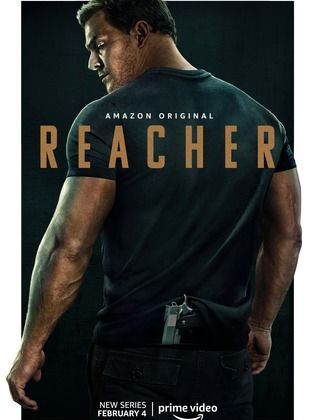
We also started watching the second season of Reacher, which is very fun. Alan Ritchson, who was already huge in the first season, used the time between filming to bulk up even more. He certainly embodies the character physically far better than Tom Cruise could ever hope to, with no offense to Cruise; he’s just not the right physical type, and since one of the best known facts about the character is his enormous size, well…he was never going to please fans of the books. I stopped reading the series about ten or so years ago–I have no grasp of the passage of time, so you’ll have to give me some grace on that, nor do I recall why I stopped reading it. Obviously, Lee Child isn’t missing my money, but I was a big fan of the series and still remember it fondly; there were some terrific books in that series, and The Killing Floor may be one of the best series-launch novels of all time.

I have to work today when I get home from the oil change and other errands this morning; I really need to spend some time with the book today and I also need to work on the house a lot more. The apartment has really slid, and allowing Sparky free range to do as he pleases has resulted in a lot of debris on the floor–and all of my good pens are missing. Paul’s cigarette lighters, highlighters, scissors, spoons, plastic wrap, plastic bags, dryer sheets, and a lot of other miscellaneous stuff is scattered all over the floors both up and downstairs…and he’s also wreaked havoc in the laundry room and the bathroom. The kitchen floor has never really been completely cleaned up since the ceiling collapse, either. I have decided, though, that this year’s Christmas present to myself is going to be a new microwave. My current one is well over ten years old, and it works fine…but I never read the manual and so am never sure how to use for anything than reheating something. Paul uses it more than I do, and he also never cleans it, so it’s always a filthy mess. Since I never really use it, I tend to not pay attention and then I always notice it when I don’t have time to clean it, and then forget. They had a great one on-line at Costco, so I think next weekend I’ll go pick it up, and then donate the old one (after a thorough cleaning) to work so we have one in our department.

And that’s how I know I am officially old: appliances are my preferred gift.

The Weight

While I am a Reacher fan, I would not go so far as to claim “Reacher Creature” status.

I stopped reading the series after it got into the late teens; I don’t remember why I stopped, but I did and then I got so far behind I couldn’t remember where I left off in the series (even now, looking through a list with synopses I don’t remember where I stopped reading), and while I know I enjoyed each Reacher story I read, I don’t have the time to go back and try to figure out where I stopped. I clearly remember Gone Tomorrow–I remember the set-up with the woman he thinks is a suicide bomber on the subway at the beginning, which is almost the entire synopsis–but the last one I think I read ended up with him in a mansion on an island with a causeway leading out to it; with no other way off the island and it’s basically an armed stronghold (reminded me of Tintagel from Arthurian legends); the synopses of the next two books don’t ring any bells.

Maybe when I retire I’ll have time to revisit the series and get caught up. Lee Child is one of the loveliest men in the crime genre–he was in New Orleans years ago for a romance convention–and Alafair Burke (God, I am namedropping!) had invited me to join her for lunch, as she was also in town for the romance event (I think it was Romantic Times’ conference?), and so I met her at the Marriott on Canal (which was hosting) and as we walked to Green Goddess for lunch, we ran into Lee on the street and Alafair invited him to join us.

I don’t think I spoke much as I sat there at lunch with LEE CHILD and ALAFAIR BURKE, completely starstruck and not believing the incredible luck of my life. (Seriously, am I the luckiest homo on the planet or what?)

But I always remember fondly the first book in the series, The Killing Floor, which set the tone for the entire series, and I fell in love with the character–which was unusual for me. As a gay man, I tend to avoid books with these alpha male types; toxic masculinity and misogyny (as well as homophobia) tends to run in these kinds of books and I ain’t got time for reading that shit. But Reacher wasn’t like that–yes, he was an enormous man (250 pounds of solid muscle, 6′ 5) and he could kill you with his bare hands in less than three seconds, but he was more of a knight-errant; traveling around the country with just the clothes on his back, some money, an old war medal of his father’s, and coming to the rescue of countless people who need help. He had a code of honor that he lived by, and I respected that…not to mention the imagery of what he looked like as I dreamed him up in my head as I read (I’ve always, always, had a thing for big men–but that’s a subject for another time) and yes, he became a bit of a fantasy type for me. (I will not discuss the films based on the novels or the casting of those films, as so many others have inevitably done in the wake of the Amazon Prime series arriving; it’s really not necessary and the show should be judged on its own merits, not how it stacks up against the films–good or bad.)

But when I heard they had cast Alan Ritchson as Reacher, I may have done a fist pump.

I mean….

I first became aware of him when we were binge-watching Smallville. He had a small role as Aquaman in one season (just as the equally gorgeous Justin Hartley was cast in a recurring role as Green Arrow for several seasons–was delighted to see Hartley’s career take off with This Is Us), and I remembered thinking, he should be spun off into his own series (just as I thought about Hartley’s Green Arrow; I was bummed when Arrow was announced with Stephen Amell as Oliver Queen–but was also incredibly wrong about being bummed about that casting), but Aquaman would be a hard television series to produce, particularly budget-wise, since there would inevitably have to be a lot of underwater scenes shot, which also makes dialogue difficult to pull off. I would have watched Titans anyway–Teen Titans was always one of my favorite teams–but was delighted to see Ritchson playing Hawk, and was horribly disappointed when (SPOILER) they killed him off.

But had they not killed him off, he couldn’t have gotten the lead in Reacher, and it’s a star-making turn…so hopefully this will mean more Reacher, and more Alan Ritchson projects.

We’ve only watched the first episode, but we are hooked. Ritchson is perfect at the role, and even if he is a few inches shorter than the character in the novels, the way they shoot the show makes him seem much bigger than he actually is (I also wonder if they deliberately cast shorter actors to make him seem bigger, but it’s an effective optical illusion). The big takeaway for me always about Reacher was his size; he was a physical giant that you couldn’t NOT notice. The script is good, the direction and cinematography great, and the rest of the cast is also good (it includes Willa Fitzgerald, a favorite of mine after her turns on Scream the television show and Dare Me), and it has everything it could possibly need to be a hit.

And now I kind of want to read The Killing Floor again.

Also: while watching, it occurred to me that Ritchson would make a terrific Travis McGee.

Loverboy

The ballet last night was exquisite.

I’ve seen ballets–or parts of them–on television or Youtube; and I remember, as a child, being taken to see The Nutcracker (isn’t everyone dragged to that as a child?), which I hated (interestingly enough, many things that most children love are things that I didn’t; The Nutcracker is one; The Wizard of Oz another). But as lovely and awe-inspiring as seeing ballets on Youtube or on television can be, there is nothing like being in an auditorium and watching one being performed live on the stage in front of you. I liken it to the difference between watching figure skating on television and then watching it in person; it’s very different, and you never watch it on television in quite the same way again. Romeo and Juliet is, of course, an ubiquitous story; everyone knows it, to the point that it has become almost trite and hackneyed; it’s been adapted for everything imaginable–opera, ballet, film, and of course West Side Story–but, at its heart, it is still a beautiful and sad story.

The opening sequence of the ballet reminded me so much of the opening of West Side Story that I couldn’t help wonder how much the ballet influenced the musical’s choreography, or vice versa.

sw-romeo-george-oliveira-alexis-oliveira-alvaro-prieto-taunt_1000

I read Romeo and Juliet when I was a sophomore in high school. I’d taken a class called Dramatic Literature; a class in which we read plays. Romeo and Juliet was paired with West Side Story (it’s also the class where I first read Tennessee Williams; A Streetcar Named Desire and Cat on a Hot Tin Roof, to be exact); we even watched the films (the version of Romeo and Juliet was the 1968 Franco Zeffirelli production, with Leonard Whiting and Olivia Hussey with the gorgeous score by Michel Legrand). Shakespeare’s language was, to me at fourteen, a mysterious puzzle I couldn’t unlock; archaic references I didn’t understand written in verse, yet somehow beautiful in how the words were put together. At the time, I didn’t understand how two families could feud so bitterly and violently in an Italian city during the Renaissance; of course, now that I’ve read so many Italian histories (I am still greatly enjoying The Black Prince of Florence), I am more than a little surprised that the feud between Capulet and Montague was so bloodless (see the Pazzi-Medici feud, circa fifteen century).

Yet, despite the overwhelming familiarity with the story, it was impossible not to be drawn into last night’s version of it; despite there being no dialogue, no words. The entire story was, as is typical with the ballet, acted out without words and through dance. The choreographer’s choices in telling the story were quite interesting; the stage setting was incredibly minimalist, with emotions and passions being evoked through the movement of the two curved walls that served as set pieces; the long rising ramp that served as not a way to exit the stage but as Juliet’s fabled balcony; and the use of costume and lighting.

sw-romeo-noelani-pantastico-lucien-postlewaite-balcony_1000

The friar was used as a connective device throughout each scene; he was, if anything, the true star of the show, and its emotional heart. The dancer who played the role was magnificent. The ballet was a thing of beauty; I couldn’t stop marveling at how fantastic the dancers were, the exceptional shapes and lines they could form with their bodies, the almost super-human stretches and leaps and twirls and spins, the intimacy of their lifts and how they could mold their bodies around one another’s.

Les-Ballets-De-Monte-Carlo-London-Coliseum-dance-review-Jeffery-Taylor-574512

It was also my first time inside the Mahalia Jackson Theater for the Performing Arts since Katrina; ironically, it was also the first time the Ballet des Monte-Carlo performed there since 2005. Both the outgoing and incoming mayor were there; the Honorary Consul for Monaco, and the ambassador from Monaco were all introduced and thanked from the stage.

_dsc3014cab_0

And yet, as a crime writer, and someone with a vested interest in group dynamics and politics, who has viewed documentaries about ballet companies, with a knowledge of human nature and interaction,I couldn’t help wondering, as the company took its well-deserved bows to a long standing ovation last night,  what turmoils and temperaments boiled beneath the surface of the linked hands and bowing bodies; what slights and grudges boiled behind the smiling faces; which members of the company were friends and which were enemies; who were lovers and friends and who were enemies and rivals, who was gay and who was straight.

I definitely want to write a ballet noir.

And here are two short stories, for the continuation of the Short Story Project.

First up is “Split Second” by Daphne du Maurier,  from the New York Review of Books collection of Don’t Look Now and Other Stories:

Mrs. Ellis was methodical and tidy. Unanswered letters, unpaid bills, the litter and rummage of a slovenly writing-desk were things she abhorred. Today, more than usual, she was in what her late husband used to call her “clearing” mood. She had wakened to this mood; it remained with her throughout the morning. Besides, it was the first of the month, and as she ripped off the page of her daily calendar and saw the bright clean 1 staring at her, it seemed to symbolize a new start tom her day.

The hours ahead of her must somehow seem untarnished like the date; she must let nothing slide.

“Split Second” is an exceptional exercise in character. Du Maurier thoroughly examines and exposes Mrs. Ellis’ character from beginning to end, and while she doesn’t go into a great amount of detail, it isn’t hard to figure out exactly whom she is from what we are told as readers. She’s a widow and her entire world revolves around her daughter, who is off at school; she decides, after a thorough cleaning of her home to go for a walk and is almost run down by the laundry truck as she walks back home. But when she gets back to her house, things are different. It is her house, but it’s no longer the house she left behind; other people are living there, her neighbors are gone–the entire world has changed and shifted as she walked home. It’s a horrifying story, even as the reader begins to glean what has actually happened long before Mrs. Ellis does; not that she ever does, even by the end of the story, and that is part of what makes it so sad, so effective, so powerful; no one has ever quite captured that elegant, melancholy sadness the way du Maurier does.

I then moved on to “The Picture of the Lonely Diner” by Lee Child,  from the Mystery Writers of America anthology, Manhattan Mayhem:

Jack Reacher got out of the R train at Twenty-Third Street and found the nearest stairwell blocked off with plastic police tape. It was striped blue and white, tied between one handrail and the other, and it was moving in the subway wind. It said: POLICE DO NOT ENTER. Which, technically, Reacher didn’t want to do anyway. He wanted to exit. Although to exit, he would need to enter the stairwell. Which was a linguistic complexity. In which context, he sympathized with the cops. They didn’t have different kinds of tape for different situations. POLICE DO NOT ENTER IN ORDER TO EXIT was not in their inventory.

Lee Child is one of the most successful writers in our genre today; everything he publishes is a New York Times best seller, and his character, Jack Reacher, is one of those ubiquitous characters that will go down in the history of the genre, like Poirot, James Bond, and Kinsey Millhone. I am years behind on Lee’s novels; but if you’ve not read Lee Child, you simply must read The Killing Floor, the first Reacher novel. It is quite superb. This story isn’t Child at his best, but Reacher the character is at his best at novel-length, with the labyrinthian plots Child somehow concocts and manages to keep track of (one of my favorite fanboy moments was having lunch with him and Alafair Burke at the Green Goddess here in New Orleans several years ago; while I just sat there wide-eyed and listened to the two of them talk about writing and publishing, praying that I didn’t have sauce running down my chin), but this story does evoke the melancholy that Child evokes in his novels; the inevitability of fate and the powerlessness of humans to counteract it once the gears are moving. I do recommend the story; there is some amazing imagery in it as well.

And on that note, I am back to the spice mines. There are bed linens to launder, and short stories to edit, and a chapter to write; it is rainy and gloomy outside my windows this morning but I am well-rested and ready to work.

Or maybe it’s just the caffeine kicking in. Who knows?