Ode to Billy Joe

Robby Benson. Swoon. I mean, LOOK at him.

Eat your heart out, David Cassidy!

I don’t know when I first became aware of one Mr. Robby Benson, but I do know he was a major crush of mine when I was a teenager–he and Jan-Michael Vincent–and I also think he’s another one of those who definitely helped create a type for me; dark hair and bright blue eyes, and that smile! Jesus Mary and Joseph!

I wasn’t alone in my teen years crushing on Robby; I think most teenaged girls of my generation all had a bit of a crush on him. For one, he was ridiculously beautiful; it kind of should be against the law to look that good. He was also photogenic and telegenic, and I loved his speaking voice. I know my teen years are also when I developed my love of jeans cut Daisy Duke short; and as you can see from the pictures above, Robby’s were cut so short they were basically speedo-sized. Years later, Daisy Dukes were my favorite shorts to wear, because all modesty aside, I’ve always had muscular legs; assets best displayed in shorts cut immodestly short.

But in looking up information on Robby Benson for this post, I realized I had never seen the movie Ode to Billy Joe, which was one of his best-known films. I knew about the movie, of course, but never saw it. It was released the summer we moved to Kansas and it never played in Emporia, and I never saw it on television, either. So, yesterday, I remedied that by watching it on Youtube, which has the entire movie uploaded for free.

The movie itself is simple. Based on the story song by Bobbie Gentry that is probably one of the biggest and best-known hits of all time, it’s ethereal and mysterious and unclear; and the lyrics themselves create an indelible image of a rural Southern lunch and the casual, unknown to anyone speaking, cruelty of the conversation. The narrator had a strong connection to Billy Joe, and his suicide affects her deeply, but nobody really notices. It’s genius in exposing that Southern mentality of “the girls don’t matter”–no one’s noticed that she is connected to him in some way, no one notices that she’s upset, and the way Gentry sings the lyrics is so matter-of-fact yet horrible as she recounts an emotionally troubling experience for herself, and paints such a powerful image of the invisible daughter, left to grieve on her own for the boy she loved, and does she know the reason he jumped? I’ve always liked the song, even if it doesn’t work for me musically (the lyrics don’t match the melody), because it tells so many truths about rural Southern girls that what actually happened isn’t the point–the point is the isolation and loneliness she feels, and the alienation from her own family.

The movie, screenplay and novelization by Herman Raucher of Summer of ’42 fame, fleshed out all those mysteries. It was from the movie and book that turned Ode to Billy Joe into a queer story and a tragedy; it’s also interesting that it wasn’t more of a scandal when the movie was released in 1976; maybe him having had a sexual encounter with another man and committing suicide took the sting and shock of the gay twist; after all, misery and suicide were the only possible outcomes for most queers in movies at the time. Watching the movie, but taking away my own quibbles about its depiction of southern rural life to talk about it as it stands as a queer film, it was really quite revolutionary. First of all, Robby Benson was a full-fledged teen heart throb with photo shoots in every magazine like 16 and Tiger Beat, and having someone who didn’t telegraph gay (or the societal images of what gay looked like then) who was also a heart throb playing the part was putting an acceptable face on a (at the very least) bisexual character. What was also interesting to me about the film was that it was produced by Max Baer (aka Jethro from The Beverly Hillbillies), and the man Bobby Joe had the encounter with was played by James Best, who would go on to greater celebrity and fame as Sheriff Roscoe P. Coltrane on The Dukes of Hazzard later on in the decade. Glynis O’Connor is fine as Billie Lee (seriously, Bobby Joe and Billie Lee? I have an army of relatives from the rural south, and out of all of them there is exactly ONE who has that stereotyped Southern two first names thing), but Benson’s appeal is clearly on display here–and I understand why girls loved him so much: he always played sensitive and vulnerable young men, which girls love.

And he is just stunningly beautiful in this movie.

Benson’s most successful role of all time was, ironically, from voice work: he voiced the Beast in Disney’s Beauty and the Beast.

I also found it interesting the Bobby Joe committed suicide in the Tallahatchee River, which was also where the white supremacists dumped Emmett Till’s body…so that river is kind of hexed, wouldn’t you think?

He also aged incredibly well–Benson is still quite beautiful.
Jambalaya

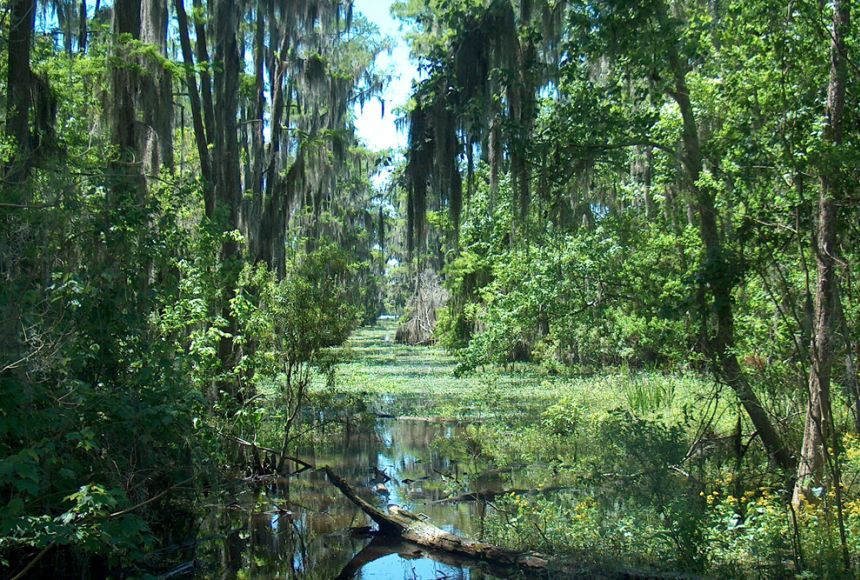
Louisiana is beautiful.

The state’s nickname is “sportsmen’s paradise,” because all of the macho male outdoor sports–hunting, boating, fishing–are available here in abundance. We’re also called the Pelican State (most prevalent) and several other nicknames, not all of which are complimentary.

Louisiana has always been a conservative state, despite the existence of New Orleans. Originally French then Spanish before becoming American, Louisiana also was a part of the Confederacy and had an economy based on enslavement. We weren’t that far removed from David Duke’s gubernatorial bid (which came all too close to succeeding), and I remember Paul had gone on site visits with his boss at the Arts Council south of the city, and came home saying, completely in disbelief, that “people had yard signs saying ‘this is Duke country’–and me replying, sadly, “in the South they don’t bother to hide the racism–they see it as a positive.” But you cannot really go anywhere in Louisiana without being awed by the natural beauty on display here. I love Madisonville, and the Tchefuncte River area. It’s always a lovely drive to take 90 east when you head north (yes, I am aware I am saying you take an east-west highway to go north; welcome to New Orleans), and head out through the Venetian Isles area and drive along that narrow strip of land separating the lakes, crossing the Rigolets bridge and heading into Slidell.

A while ago, I was following a Twitter conversation about Burt Reynolds movies from the 1970s. Mind you, when I was living in Kansas our movie options were limited. There was a drive-in movie theater on the way from our little town Americus to the county seat of Emporia, and there was a small twin cinema on Commercial Street. The summer before my senior year Smokey and the Bandit opened on a Friday, and the following Friday Star Wars opened in the other theater. Both movies ran for about three months….so I saw them both repeatedly as there was very little else to do. The 1970’s were an interesting time for depictions of rural Southern sheriffs; Jackie Gleason hamming it up and going completely over the top. This was also the same time period that gave us corrupt politician Boss Hogg and the inept sheriff and deputies he controlled. These were always played for laughs, but the thing is–there really wasn’t anything funny about these types of characters in real life. Political and police corruption have always gone hand-in-hand in the Southern states; the police merely existing to enforce and enable the existing power structure. That Twitter conversation, along with reading Ethan Brown’s Murder on the Bayou and the various true crime documentaries about the Jeff Davis 8, put me in mind of writing about that kind of corruption. But I also kept wondering, but is this still true in the South? Do these kind of corrupt power structures still exist in the South? Would this read like a period piece?

And then the Murtaugh scandal broke.

Guess what? It IS still like this in the rural South. Thanks, Murtaughs!

I already had an idea for the next Scotty, and was pulling it all together, using a relatively minor political scandal here locally as the starting point for the story–which involved a conservative politician getting involved with a teenaged boy who worked at the food court at a mall, mostly buying him presents–clothes, underwear, swimsuits–and having the kid send him pictures wearing it. The age of consent in Louisiana is seventeen, and the kid was over seventeen, but while still being an icky thing, it wasn’t illegal–and they never did anything beyond that. It was mostly a harmless flirtation, until the kid, who was gay, realized that the nice man buying him gifts was actually a hardcore far right family values politician, so he went public. I still needed a murder, but I thought it would be simple to come up with one–the politician would have every reason in the world to kill to protect his secret, and he had his parish sheriff’s department to help commit and/or cover up the crime.

I did borrow two of the Murtaugh crimes for the book, but as starting points more than anything else, and came up with my own theories of said crimes for my own story–I wasn’t writing true crime, after all, and I wasn’t interested in proving the guilt of the Murtaughs. What I was interested in was exploring the decline and fall of a politically powerful family that had controlled a parish in Louisiana for well over a hundred years, almost like an absolute monarchy with primogeniture. I had also originally started the story with the kid coming to Scotty and Frank (through Scotty’s old buddy and former workout partner, David, who now teaches at NOCCA) because he gets a text from an unknown number which contains one of the pictures he has sent his older male friend (that he doesn’t know is a family values politician), and is worried about his own future if the information comes out. I wrote an entire draft of this story, but it didn’t work and I didn’t care for it…which was when it clicked into place: use two of the Murtaugh crimes to start with, and built it out from there. I decided that the kid at the mall wasn’t the original target of the politician, and that the original target was killed in a hit-and-run accident the year before; I also used the boat crash, turning it from a boat hitting a bridge to a pick-up truck hitting a bridge and pitching the passengers in the back into the bayou.

I also liked the teenager/older man dynamic, because it had played out with Taylor in the previous book–and Scotty had his own past with an older man when he was a teenager, which I was finally able to circle back around to.

I also invented the parish–surprisingly enough, there is no St. Jeanne d’Arc Parish in Louisiana–but it’s based loosely on what are known as the bayou and river parishes (Terrebone, Lafourche, St. Charles, St. John the Baptist). I already had a fictional parish on that side of the river (Redemption), but I decided Redemption wouldn’t work for this book, so I made it a neighboring parish.